Why Zelenskyy slammed Trump

Why Zelenskyy slammed Trump’s Russian diesel deal after deadly strikes on Ukraine

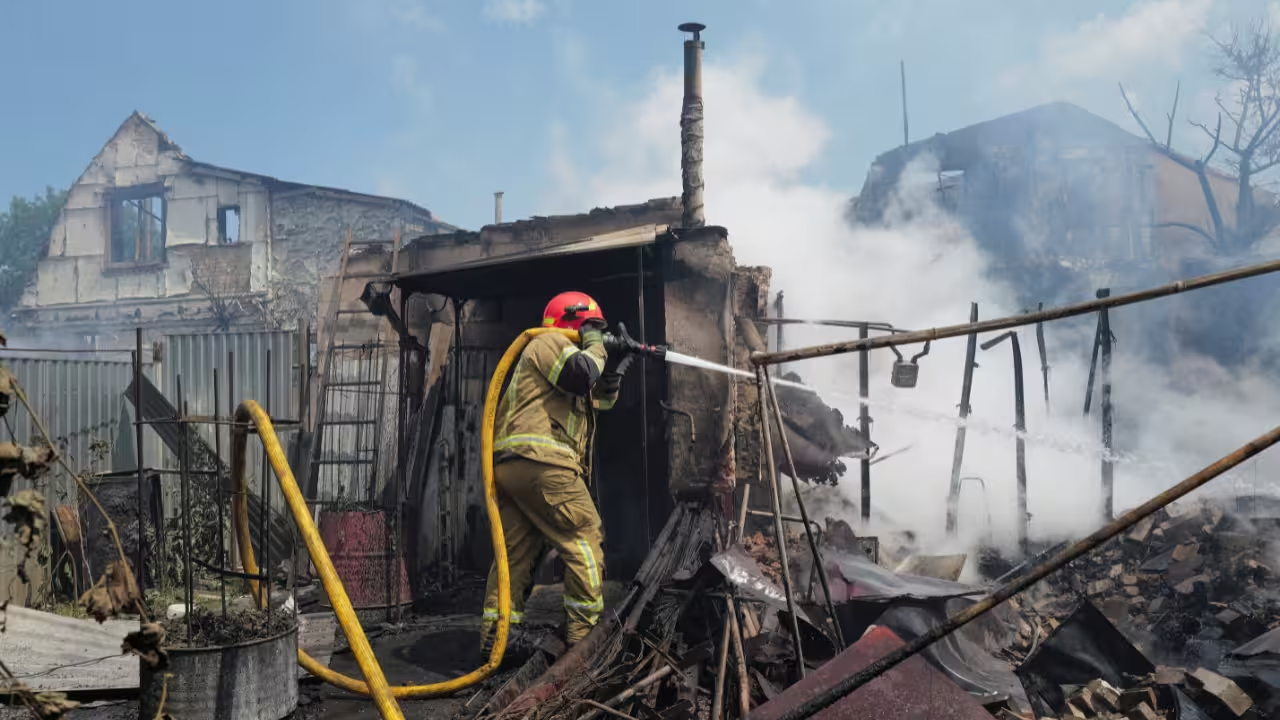
Russia launched strikes on Ukrainian cities, including an attack on residential buildings in Zaporizhzhia that killed 15 people, including three children, a day after US President Donald Trump agreed to help Russian diesel fuel reach global markets following a phone call with Russian President Vladimir Putin, Bloomberg reported.

Ukrainian President Volodymyr Zelenskyy described the strikes as Russia’s way of “saying thank you” for the easing of restrictions on diesel exports. In a social media post on Saturday, he criticised the US decision, arguing that it would give Moscow additional revenue to sustain its war against Ukraine.

Trump said on Friday that increasing Russian diesel supplies to global markets would help lower fuel costs for American farmers, ranchers and truckers, key voting blocs ahead of next month’s US midterm elections.

The Russian strikes extended beyond Zaporizhzhia. Russian forces launched 160 drones at Ukraine overnight, according to Ukraine’s Air Force Command. Ukrainian forces intercepted most of them, but some drones breached air defences and hit targets across 14 settlements, the command said.

Russian attacks also caused widespread power outages in Kyiv and the surrounding region on Saturday, energy company DTEK said. Water supplies in parts of the capital were also disrupted after a Russian strike hit an energy facility near Kyiv, Mayor Vitali Klitschko said, without identifying the site.

Zelenskyy said the US decision to facilitate Russian diesel exports was a mistake that would help finance Moscow’s military campaign.

“It only feeds Putin and gives him the ability to fight even more,” he said in audio comments sent to reporters via WhatsApp on Friday evening.

Diesel deal comes amid Ukraine peace talks

Trump’s agreement with Putin came as Ukrainian negotiators were in Florida for peace talks. Zelenskyy said the discussions could consider a potential ceasefire on attacks against energy infrastructure as a first step towards ending the war.

However, he questioned whether Ukraine’s participation in the negotiations was being used to create an impression of progress while Washington pursued its own discussions with Moscow.

“I believe our team is simply being used as a smokescreen,” Zelenskyy said. “And that is certainly not fair. It is certainly not how partners should treat each other.”
Tags: , , , , , , , ,
‘UN largely irrelevant’ to major decisions: Jaishankar cites Ukraine, Gulf, calls for Security Council reform

Jaishankar cites Ukraine, Gulf, calls for Security Council reform

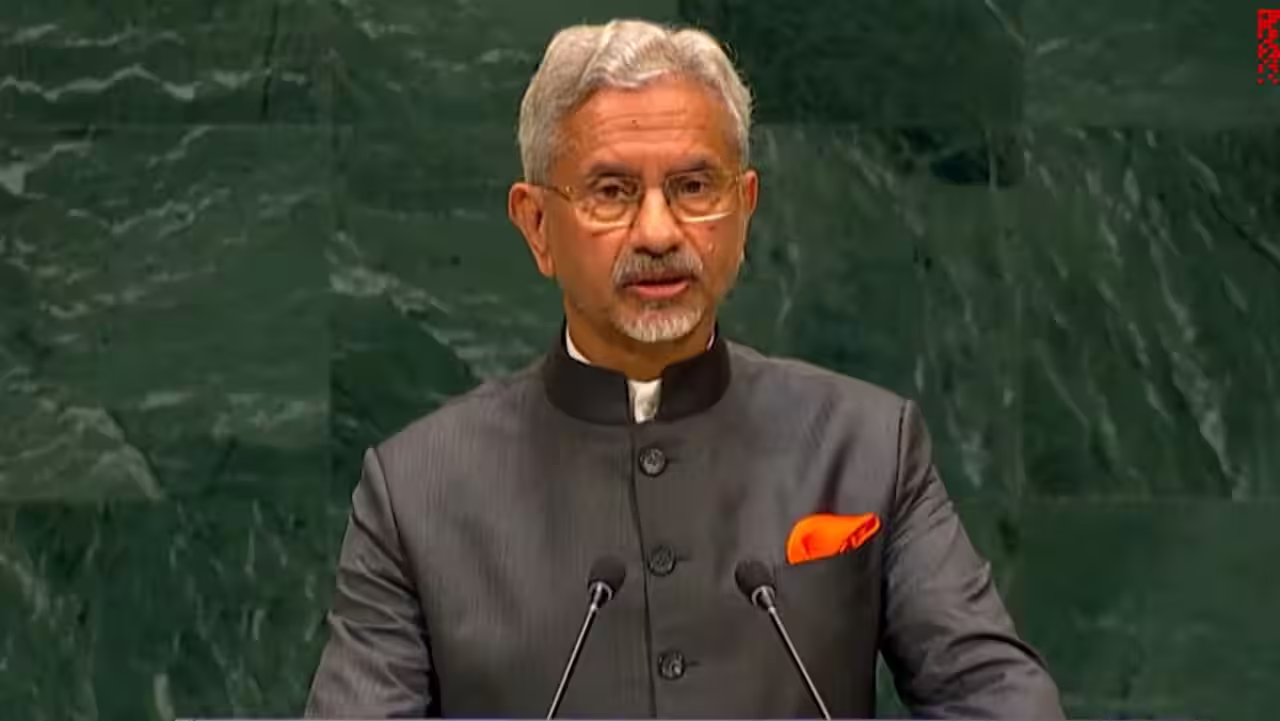
External Affairs Minister S Jaishankar has said the United Nations has become ‘largely irrelevant’ to decision-making on major global crises, blaming a gridlocked Security Council whose composition, he argued, no longer reflects the world it is meant to represent.

Speaking at the 5th Kautilya Economic Conclave in New Delhi on Monday, Jaishankar cited the conflicts in Ukraine and the Gulf, crises in Africa and the Covid pandemic while questioning the UN’s effectiveness in responding to major international challenges.

“Where the UN is concerned, it’s obvious to everybody by now that the UN is gridlocked, that if you look at the big issues of the day, whether you look at the conflict in the Gulf, whether you look at the conflict in Ukraine, whether you look at other issues in Africa, or whether you look at COVID, actually the United Nations has been largely irrelevant to the decision-making,” Jaishankar said.

He traced much of the problem to deadlock in the Security Council and argued that the institution has failed to keep pace with the expansion of UN membership.

“The Security Council no longer represents the entirety of the global interest. The UN started with 51 members; it’s got almost four times that number today. So, if you have grown four times and you want to keep the old board of management, it’s not going to work. It’s common sense,” he said.

The UN currently has 193 member states, up from 51 founding members in 1945. The Security Council has 15 members, including five permanent members: China, France, Russia, the United Kingdom and the United States.

Jaishankar says countries using Africa to resist reform

Jaishankar also accused some countries of resisting UN reform while invoking Africa’s interests as an argument against change. He did not name the countries.

“The problem is there are a few players, a few countries who are resistant to the reform of the UN, and they are using the name of Africa. They’re using Africa’s interest as an argument to block the reform of the UN,” he said.

Jaishankar said the argument was at odds with Africa having articulated its own position in negotiations over Security Council reform.

“The irony is Africa actually now has a clear position. Africa has actually come to the intergovernmental negotiations and indicated what they would like to see; they’ve laid out their position,” he said.

Africa currently has no permanent seat on the Security Council. The Common African Position seeks greater African representation in both permanent and non-permanent categories.

India formally welcomed the presentation of the African model during intergovernmental negotiations in April and reiterated its support for expanding both categories of Security Council membership.

‘Our job must be to fix the UN’

Despite his criticism, Jaishankar argued against bypassing the institution, saying the objective should instead be to make it more effective.

“We need to see whether we will continue to watch, in a sense, the irrelevance or, I would say, ineffectiveness of the UN,” he said.

“And it’s an important question because we need the UN. The UN has done a big service to the international community. Our job must be to fix the UN, not to work around the UN; the UN itself has to help with that process.”

India has for years sought comprehensive reform of the Security Council and a permanent seat on an expanded body. New Delhi works with Brazil, Germany and Japan through the G4 and with developing countries through the L.69 grouping to press for changes to the Council’s composition.

Changing the Security Council’s structure is a particularly high hurdle. Under Article 108 of the UN Charter, an amendment must receive the support of two-thirds of the General Assembly and then be ratified by two-thirds of UN members, including all five permanent members of the Security Council.

Tags: , , , , , , ,
Best oLive
Privacy Overview

This website uses cookies so that we can provide you with the best user experience possible. Cookie information is stored in your browser and performs functions such as recognising you when you return to our website and helping our team to understand which sections of the website you find most interesting and useful.
