The Best Non-Toxic Leggings (After 18+ Months of Testing)

The Best Non-Toxic Leggings (After 18+ Months of Testing)

When I decided to stop drinking out of BPA-infused disposable water bottles, I had no idea that I also needed to stop wearing them. Yep, as weird as it sounds, recycled water bottles often get a second life as leggings.

In fact, most activewear is made with plastic-based synthetic fabrics. And while they’re comfortable, they come with a hidden downside: many contain hormone-disrupting chemicals and other toxins that can leach into our skin, especially when we’re sweating. (1)

Personally, I want my exercise sessions to support healthy hormone balance, not work against it. That’s why, on a weekend leading up to Black Friday, I sat down with a cup of tea, a budget, and a mission: order as many non-toxic leggings as possible, then wear-test them for months on end.

I’m literally wearing one of those pairs right now as I type this, and I’m happy to report I found several comfy, breathable, high-quality options that I can wholeheartedly recommend. But first, let’s talk about why I even went looking in the first place.

Originally published in November 2025. Updated in November 2026 with additional insights from long-term wear testing and a new brand review.

My Quick Picks

Best affordable pick

Pact

Thicker, denser, and more cotton-forward rather than silky. Overall, I think they’re a great value, especially at their price point

Best breathable lightweight pick

MATE

For non-toxic leggings that have that soft, lightweight second skin feelbut still look pulled together, MATE’s MOVE line is a solid pick.

Best for high sweat workouts

Tripulse

Lightweight, breathable leggings that feel silky smooth against your skin without relying on conventional polyester or nylon. Definitely worth considering.

Thread Carefully: Your Activewear Could Be Leaching Toxins

In recent years, researchers have found chemicals like BPA, phthalates and PFAS “forever chemicals” in workout clothing (including big-name brands). The Center for Environmental Health (CEH) has even filed lawsuits against companies like Athleta, Nike, and The North Face after tests showed their products could expose individuals to up to 40 times the safe limit of BPA under California law. (2)

BPA is a hormone disruptor that mimics estrogen, and has been linked to reproductive harm, breast and prostate cancer, and immune system suppression. (3) (4) (5) (6) It’s also classified as an “obesogen,” which is a chemical that contributes to weight gain by disrupting normal metabolic functions. (7) (8)

Unfortunately, “eco-friendly” leggings made from recycled plastic bottles sound great in theory, but they still shed microplastics and can contain the same hormone-disrupting chemicals as virgin plastic.

Microplastics: Tiny Particles, Big Problem

About 70% of clothes produced worldwide are made from plastic fibers like polyester, nylon, acrylic, and spandex. When we wash and wear these clothes, tiny fibers break off and become microplastics – which account for about 35% of all primary microplastics released into the environment. (9) (1)

Here’s why that matters:

Because of their chemical structure, microplastics attach easily to known endocrine-disrupting chemicals—including dioxins, pesticides (like DDT), brominated flame retardants, phthalates, and bisphenol A (BPA)—in the environment. That means that the endocrine disruptors go everywhere that microplastics do.” – Center for Environmental Health (1)

Workout clothes pose an extra concern because they’re tight-fitting, worn against the skin, and often drenched in sweat. Research suggests sweat may increase the chance of toxins entering the body through hair follicles, sweat glands, or skin wounds. (10) (11)

That doesn’t mean we need to banish every stretchy waistband or sports bra from our closets. Many sustainable clothing companies use a small amount of spandex or nylon to make clothing more supportive or long-lasting, especially when they’re producing activewear.

In those cases, the amount of synthetic fiber used is free of chemicals like BPA/PFAS and makes up around 5-15% of the total fabric – the rest is something like cotton or wool. That’s essentially a microplastic reduction of 85-95% for that garment, which is a big win in my book.

Also, as you’ll see below, many companies are working to transition toward natural rubber or elastane that is biodegradable.

Healthier Activewear: What To Look For

When it comes to activewear, the fabrics I prefer are made with:

  • Organic cotton, which is soft and breathable, though it can lose shape if it’s not blended with stretch fibers.
  • Merino wool, a naturally odor-resistant, moisture-wicking, and temperature-regulating option
  • TENCEL™ branded lyocell and modal fibers

For certain pieces – especially leggings and sports bras that need to sit skin-tight and move with you – a bit of stretch is essential.

That stretch usually comes from conventional elastane (aka spandex). As I mentioned above, the key is using it sparingly – just enough to support natural fibers rather than dominate the blend.

Many non-toxic brands have announced that they are working toward safer spandex options like ROICA™ V550 and ROICA™ EF, which are both certified non-toxic and lower impact on the environment. It’s a process that takes time, but a step in the right direction.

The Best Organic & Natural Women’s Leggings

Before I dive into each brand, I want to share a little about my testing process. To make sure I wasn’t recommending leggings that are made with good stuff but don’t hold up in daily life, I:

  • Wore each pair on long daily walks (often with my weighted vest)
  • Used them for weight training, yoga, errands, lounging, and daily life
  • Washed them in the washing machine and line dried to reduce wear

I also asked my daughter to help me complete a “Squat Check” for transparency issues. When we move and the fabric of our leggings stretches – think squats, lunges, or even tying a shoe – thinner materials can become see-through. That’s what people mean when they say a pair isn’t “squat proof.”

If you can bend, stretch, and squat without revealing your underwear, congratulations – your leggings pass the squat test. To complete the check, I wore patterned underwear and squatted in good lighting while my daughter laughed . . . and checked for transparency.

After 18+ months of testing, here are my thoughts:

MATE

What it’s made of: 92% Organic Cotton, 8% Spandex

Size range: XS-XL (Biker shorts go up to 3X)

Durability: After 18+ months of regular wear, mine still look and feel great. The fabric has held its shape very well and is still buttery soft.

Squat test: Not completely opaque, but they possibly would have passed if I sized up. If you’re doing deep squats or downward dog, pair with dark underwear just to be safe.

Mate’s MOVE collection covers the full activewear spectrum – leggings, sports bras, shorts, and even socks – all made from organic cotton and non-toxic dyes. Their leggings are buttery soft, breathable, and come in several earthy neutrals plus limited-edition seasonal colors.

They offer both full-length and midi options, each available with or without side pockets, as well as capri leggings and bootcut/flare leggings (no pockets on those).

The 8% spandex adds gentle stretch and resilience while keeping the organic cotton front and center – ideal for a more natural fabric that still moves with you.

I ordered my usual size (M) and decided to exchange them for a small because they were a little loose around the ankles. They very nearly passed the squat test even though I sized down, so I think if I’d kept the mediums they would have likely been fully opaque. If you’re doing a lot of downward dog or deep squats, I suggest pairing with dark underwear just to be safe.

Bottom line: If you’re looking for non-toxic leggings that feel like soft, breathable loungewear but still look pulled together, MATE’s MOVE line is a solid pick.

Pact

What it’s made of: 90% Organic Cotton, 10% Elastane

Size range: XS-2XL

Durability: After 18+ months, the color has faded a smidge, there’s no pilling, the seams are strong, and the leggins have held their shape well. I wear and wash them at least a couple of times a week, and plan to continue!

Squat test: Mostly pass. The thicker cotton fabric gives good coverage for daily movement, but if you’re planning on lots of deep squats or downward dogs, I recommend either sizing up and/or choosing darker colors and pairing them with dark underwear for extra peace of mind.

Pact’s full-length On the Go-To Leggings come in pocketed and non-pocketed versions, plus a bootcut option. You can also grab matching crop tanks or cardigans that make everything feel effortlessly coordinated.

The leggings are made with organic cotton in a Fair Trade Certified factory, using sustainable materials and ethical manufacturing practices. Pact’s production uses about 81% less water and 62% less energy than conventional cotton.

Even though the fiber blend is almost identical to MATE’s, the feel is noticeably different – thicker, denser, and more cotton-forward rather than silky. They’re perfect for yoga (especially paired with a non-toxic yoga mat), walking, medium-intensity workouts and errands, but they’re not my top pick for high-drip workouts since the heavier fabric can absorb sweat. (BRANWYN is my top pick for super sweaty workouts.)

I ordered a medium in French Navy and found them to be true to size and very comfy. Here’s an updated photo of them after nearly two years of wear.

Overall, I think they’re a great value, especially at their price point, and I love that Pact is also an affordable source for basics like t-shirts, knit sweaters, joggers and more.

Tripulse

What it’s made of:

  • Original: 84% TENCEL™ Lyocell, 16% ROICA® V550
  • Pro: 86% TENCEL™ Lyocell, 14% ROICA® EF385

Size range: XXS–XXXL

Durability: Too soon to tell, but the quality of the fabric and construction is excellent. I’ll update this section after more extended wear.

Squat test: Passed!

Last year I mentioned Tripulse as a brand I wanted to try, and a few weeks ago they offered to send me a pair to test. They gifted me their Pro Leggings, which are lighter and less compressive than their Original Leggings. The Pro version is ideal for warmer climates (like mine) and nearly year-round wear, while the Originals offer a little more warmth and support for cooler weather.

The fabric is silky, smooth, and cool to the touch, with a subtle matte sheen. I chose the Midnight Navy color, which is a gorgeous, deep, saturated blue that’s even prettier in person.

They’re great for extra sweaty workouts – they wick moisture well while still feeling breathable.

Designed in Sweden and responsibly made in Portugal, Tripulse leggings are made mostly from TENCEL™ Lyocell, a breathable, plant-derived fiber that feels wonderful against the skin. The difference between the two styles is in the stretch material: the Originals use ROICA® V550, an alternative to conventional elastane that’s designed for improved degradability, while the Pro version uses ROICA® EF385, which is made with recycled pre-consumer materials.

I love that Tripulse is finding ways to reduce manufacturing waste, especially because they’ve found a way to do it while maintaining their standards for the finished fabric. Their Pro leggings are OEKO-TEX® STANDARD 100 certified, meaning they’ve been tested for more than 1,000 potentially harmful substances, including formaldehyde and endocrine disruptors. Independent testing has also shown them to be free of PFAS and BPA.

Since the the leggings just arrived, I can’t comment on durability from personal experience, but they feel incredibly well-made and I expect them to last a long time. They also passed my squat test, which is definitely a plus!

Bottom line: If you’re looking for lightweight, breathable leggings that feel silky smooth against your skin without relying on conventional polyester or nylon, Tripulse is definitely worth considering.

Boody

What it’s made of: 79% Viscose made from bamboo, 15% Nylon, 6% Elastane

Durability: Good – both pairs have held up well with no fading or pilling. I don’t wear these as often as the MATE and Pact, so they haven’t been washed as much.

Size range: XS-XL

Squat test: Transparency has been noted in newer styles (more on that below).

I ordered the Motivate Full-Length High-Waist Tights in Dark Marl (size medium) and the Full-Length Active Tights 2.0 in black (size large). I couldn’t tell a difference in sizing, but I liked the fabric blend — 61% bamboo viscose, 27% organic cotton, and 12% elastane.

Unfortunately, Boody has since reformulated that blend, replacing the cotton with nylon, which is a bit of a disappointment since I thought the original cotton mix was excellent. Some newer reviews also mention transparency issues, which may be related to that fabric change.

Currently, Boody offers two styles – full-length and ¾ length, both with a mid-rise cut. The mid-rise design may roll down slightly on curvier bodies, and black is currently the only color option.

I was originally drawn to Boody because they’re budget-friendly and seem to make a genuine effort toward sustainability. According to the company, their bamboo viscose is produced in a closed-loop system, meaning the water and solvents used to create the fabric are captured, recycled, and reused rather than released as waste. The finished fabric is OEKO-TEX® Standard 100 certified, ensuring it’s free from harmful chemicals. Boody also encourages customers to recycle worn-out pieces through their Goodness Loop take-back program.

With that said, I would love to see more information on how their closed loop process compares to the lyocell process used to make TENCEL™ fibers.

For now, I’ll be keeping an eye on Boody to see if they reformulate their fabric or expand their color and high-rise legging options. If they do, I’ll update this section.

Brands I’d Like To Test

It’s frustrating that we even have to think about whether our leggings are safe. Clothing shouldn’t come with a side of endocrine disruptors. But the upside is that as awareness grows, better options do, too.

Healthier, high-performing leggings are out there – and they’re getting easier to find every year. Over the past year, I’ve come across several brands that look promising:

Wellicious (Code HP10 for 10% off) – Made from 87% GOTS-certified organic cotton and 13% biodegradable elastane, these vibrantly colored leggings use dyes and finishes that are completely toxin-free. Wellicious says their fabric produces zero microplastic shedding thanks to their use of biodegradable elastane.

Maggie’s Organics – I bought some socks from Maggie’s this year, and they are ridiculously comfortable. Now I’m curious if their leggings are just as comfy.

Reprise – Their highly-rated Aspen and Sage leggings are made with 93% TENCEL™ Lyocell and 7% Spandex. I’ve heard great things about the comfort level, so they’re high on my list to try next.

AYA – According to the brand, “Not a single drop of plastic is used in our clothes.” Their leggings are made from 100% cotton — no elastane at all — and they disclose every component right down to the label ink. I’m especially curious to see how well they hold their shape over time. AYA also makes alpaca wool leggings, which sound like a cozy option for cooler weather.

Beyond Leggings: My Favorite Non-Toxic Clothing Basics

If you’re ready to upgrade more than just your leggings, check out my guides on toxins to avoid in clothing, the best natural fibers, and my favorite non-toxic clothing brands to help you make more informed choices over time.

Sources

  1. Center for Environmental Health (CEH). (2024). Do your workout clothes contain endocrine-disrupting microplastics?
  2. Center for Environmental Health. (2022). New Testing Shows High Levels of BPA in Sports Bras and Athletic Shirts.
  3. Gao, H., et al. (2015). Bisphenol A and hormone-associated cancers: current progress and perspectives. Medicine.
  4. Salami, E. A., & Rotimi, O. A. (2024). The impact of Bisphenol-A on human reproductive health. Toxicology Reports.
  5. Samova, S., & Doctor, H. (2025). The silent threat of BPA: Its pervasive presence and impact on reproductive health. Environmental Health Insights.
  6. Manzoor, M. F., Tariq, T., Fatima, B., et. al. (2022). An insight into bisphenol A, food exposure and its adverse effects on health: A review. Frontiers in Nutrition
  7. Mohajer, N., Du, C.-Y., Checkcinco, C., & Blumberg, B. (2021). Obesogens: How they are identified and molecular mechanisms underlying their action. Frontiers in Endocrinology.
  8. Thoene, M., Dzika, E., Gonkowski, S., & Wojtkiewicz, J. (2020). Bisphenol S in food causes hormonal and obesogenic effects comparable to or worse than bisphenol A: A literature review. Nutrients.
  9. Boucher, J., & Friot, D. (2017). Primary Microplastics in the Oceans: A Global Evaluation of Sources. Gland, Switzerland: International Union for Conservation of Nature.
  10. ScienceDaily. (2024). Toxic microplastics in clothing: Study finds humans may absorb endocrine-disrupting particles through skin.
  11. University of Birmingham. (2023). Sweat leaches flame-retardant chemicals from microplastics.
Share with a friend! 👇

Tags: , , ,
Is your 10-step skincare routine hurting your skin? A dermatologist reveals everything about need-based care

Is your 10-step skincare routine hurting your skin? A dermatologist reveals everything about need-based care

What is a dermatologist-recommended skincare routine? (Adobe Stock)

Tavishi Dogra is a Deputy Chief Content Producer, Health & Wellness, at Hindustan Times. She has over 9 years of experience writing about fitness, nutrition, and mental well-being, translating medical research and expert insights into practical advice readers can trust.

Career journey and experience
Tavishi began her health journalism journey in 2017, and has since reported for RSTV, Financial Express, Jagran, HT Media Labs and Zee. She joined Hindustan Times to simplify wellness subjects by cutting through jargon.

From decoding health trends and interviewing doctors to testing fitness routines herself, Tavishi always approaches content with one filter: “Will this help someone make a better decision today?”

Subject expertise
With 9+ years tracking India’s health conversations, Tavishi knows the gap between clinical advice and daily life. She knows fads from fundamentals and curates science-backed, expert-recommended solutions.

In fitness, she breaks down bodyweight training, recovery, and posture fixes for desk-bound readers. In nutrition, she translates guidelines into affordable, desi meal tweaks. In mental well-being, she focuses on stigma-free, actionable tools — all backed by research, expert input, and lived context.

Education and professional background
Tavishi holds a Master’s degree in Journalism and Mass Communication and began her career reporting on public affairs for broadcast. Those early years in policy and TV shaped how she writes today: fast, factual, and human-first.

Editorial Philosophy
I write with one single goal: To simplify health in a world full of noise by finding what’s actually doable, safe, and evidence-based for my readers. I test claims against research and user experiences. When all else fails, I speak to the expert who sees 50 patients a day, not the one with the most followers.

Read moreRead less

Does healthy skin really need a shelf full of products? For years, skincare advice has encouraged consumers to build increasingly elaborate routines, layering cleansers, toners, essences, serums, exfoliants, and moisturizers. Yet the number of products in a routine tells us very little about how well it supports the skin.

A more useful starting point is to ask what the skin actually needs. Is it dry, acne-prone, sensitive, or showing uneven pigmentation? Does each product address a specific concern, or does it duplicate something already in the routine? This is the principle behind need-based skincare: choosing products with a clear purpose and using them consistently.

A growing market and more complex choices

India’s skincare market continues to expand. Euromonitor International’s May 2026 Skin Care in India report recorded 13% value growth in 2025, reaching ₹32,210 crore in retail sales.

  • Mintel research published in August 2024 found that 23% of Indian Gen Z consumers aged 18–27 struggled to select suitable skincare products. It also found that 33% were increasingly prioritizing lifestyle changes, such as healthier diets and better sleep, over products to manage their skin concerns.
  • These findings point to consumer uncertainty and a broader interest in skin health. They do not, by themselves, establish that elaborate routines are disappearing. Instead, they highlight the need for clearer guidance about which products are useful, for whom, and why.

What minimal skincare really means?

Minimal skincare has no fixed number of products. Someone with healthy, comfortable skin may need only a basic routine, while someone with acne, rosacea, or pigmentation may need several complementary treatments. The aim is to remove unnecessary steps without overlooking necessary care.

“It is also important to distinguish fewer products from fewer ingredients,” Dermatologist Dr Chytra V Anand, co-founderof SKINQ, tells Health Shots.

A well-formulated moisturizer can combine humectants, barrier-supporting lipids, and other useful ingredients. Similarly, a serum with a short ingredient list isn’t automatically gentler or more effective. The right question is whether the finished formula suits the individual’s skin and delivers its intended benefit.

Why overdoing skincare can be counterproductive?

Repeated exfoliation, frequent product changes and layering several potentially irritating treatments can leave skin dry, uncomfortable or inflamed. This is especially true for skin of color, where irritation can trigger post-inflammatory hyperpigmentation.

“A routine intended to improve uneven tone may therefore create additional dark marks if it is poorly tolerated,” says the expert.

Persistent burning, redness, itching, or peeling should prompt a reassessment of the routine. Don’t accept these symptoms as proof that a product is working. Simplifying also makes it easier to identify which products help and which may be causing a problem.

Ingredients matter, but formulation matters too

  • Hyaluronic acid and glycerin attract water and support skin hydration.
  • Niacinamide can support barrier function and may help improve uneven tone and regulate excess sebum.
  • Salicylic acid helps unclog pores, especially in skin prone to blackheads and whiteheads.
  • Retinoids have established roles in acne treatment and improving signs of photodamage, but can cause irritation and should be avoided during pregnancy.
  • Vitamin C provides antioxidant support and may help improve uneven pigmentation, depending on its form and formulation.

However, recognizing an ingredient on a label is only the beginning. Concentration, stability, delivery system, the overall formula, and individual tolerance all influence performance. A higher percentage isn’t automatically better. Nor does every ingredient need its own serum.

Building a need-based routine

A practical routine starts with three functions: cleansing, moisturizing, and sun protection. Then add targeted treatments when there is a clear reason.

1. Cleanse gently

Choose a gentle, pH-balanced cleanser suited to your skin type. The aim is to remove sweat, excess oil, makeup, and surface impurities without leaving the skin tight or uncomfortable. Add extra cleansing steps only when needed, such as to remove heavy makeup or stubborn sunscreen, rather than including them automatically.

2. Support the skin barrier

Choose a moisturizer according to how your skin feels and behaves. Dry skin may benefit from a richer formulation, while oily or acne-prone skin may prefer a lightweight product. Ceramides, glycerin, and hyaluronic acid can help. The overall formulation matters more than whether one fashionable ingredient appears on the label.

3. Protect against sun exposure

Choose a broad-spectrum sunscreen with SPF 30 or higher; SPF 50 is a practical option for daily use. Water resistance is useful when swimming or sweating. Apply enough to cover exposed skin, and reapply about every two hours when outdoors and after swimming or sweating, as directed on the product label. Shade, clothing,ng and hats provide additional protection. SPF primarily describes UVB protection. Broad-spectrum coverage is therefore essential; don’t choose a product based on its SPF number alone.

4. Add treatment where needed

Acne, pigmentation, and other concerns may require a targeted treatment. Compatibility also depends on how much treatment your skin can comfortably tolerate. Two products may be usable together, yet their combined effects may still cause excessive dryness or irritation. If a dermatologist prescribes combination treatment, follow their plan rather than removing necessary medicines to simplify the routine.

Personalization begins with the right assessment

  • Online skincare education can help, but an influencer’s routine cannot account for another person’s diagnosis, treatment history, or skin sensitivity.
  • Persistent acne, recurrent rashes, rosacea, and worsening pigmentation warrant a proper assessment. In these situations, repeatedly adding over-the-counter products can delay effective treatment.
  • Dermatological guidance helps distinguish a cosmetic concern from a condition that requires medical care. It can also help consumers decide what to use, what to stop, and how to maintain results.
  • Digital tools may support education and initial assessment, but their usefulness depends on their validation and an understanding of their limitations. They should complement professional care when needed.

The future is more purposeful skincare

Innovation has an important role in developing stable, well-tolerated formulations that address meaningful concerns. Personalization can make those innovations more useful by matching them to the right person. A simpler routine may be easier to follow consistently, but simplicity should remain flexible. Skin needs can change with climate, age, pregnancy, medication, and underlying conditions. The goal is a routine in which every step earns its place. Healthy skin does not require an overflowing shelf. It requires appropriate care, protection, and consistency, and the judgment to recognize when a specific problem needs treatment.

(Disclaimer: At Hindustan Times, we help you stay up to date with the latest trends and products. Hindustan Times has an affiliate partnership, so we may get a part of the revenue when you make a purchase. We shall not be liable for any claim under applicable laws, including but not limited to the Consumer Protection Act, 2019, with respect to the products. The products listed in this article are in no particular order of priority. The brand provided them to HT Shop Now for testing and evaluation. Our opinions remain independent and based on our personal experience with the items. Please patch test the products before use.)

Tags: , , , , , , , ,
Key Points to Consider for Men's Skincare from Your 30s|Kingly【メンズ美容】

Key Points to Consider for Men’s Skincare from Your 30s|Kingly【メンズ美容】

Kingly Skincare Column: Key Points to Consider for Men’s Skincare from Your 30s

In your daily life, do you ever suddenly notice dryness, stickiness, or roughness on your skin? The accumulation of daily care is a major key to nurturing a healthy skin impression for the future.

1. Main causes and mechanisms that trigger skin problems

The stratum corneum on the surface of the skin acts as a “barrier function” that prevents external irritation and prevents moisture from evaporating from within. However, when affected by friction, ultraviolet rays, seasonal temperature changes, or irregular lifestyle habits, this barrier function can easily decline.

See product details on the official Kingly website

Bring out your skin’s natural beauty with careful daily moisturizing care

2. Concrete approaches to maintaining healthy skin

When washing your face, the basic rule is to wash gently with lukewarm water without scrubbing. After washing, it is important to moisturize sufficiently without delay to maintain the balance of moisture and oil.

3. Future skin impressions that change with daily habits

Rather than expecting rapid changes in a short period, it is more important than anything to continue daily skincare without strain. Let’s make comfortable care a habit with simple steps that suit you.

Kingly care aimed at high-quality, clean-looking skin

See the product page on the official Kingly Amazon store

Reviewing your routine starting with daily observation

Skin condition changes due to multiple factors such as the season, indoor environment, sleep, and how you wash your face. It is important to look back on times when you felt tightness or stickiness, and to organize the basics without adding too many steps. Wash gently with lukewarm water, spread the necessary amount with clean hands, and blend it in without rubbing.

Linking it to fixed morning and evening actions makes it easier to continue without strain. Do not change too much at once, and choose a method that fits your life while checking how it feels to use. If redness or strong itching persists, do not continue to judge for yourself; please consult a dermatologist.

Reviewing your routine starting with daily observation

Skin condition changes due to multiple factors such as the season, indoor environment, sleep, and how you wash your face. It is important to reflect on times when you felt tightness or stickiness, and to focus on the basics without adding too many steps. Wash gently with lukewarm water, spread the necessary amount with clean hands, and blend it in without rubbing.

Linking it to fixed morning and evening routines makes it easier to continue without strain. Do not change too much at once, and choose a method that fits your lifestyle while checking how it feels to use. If redness or strong itching persists, do not rely on your own judgment; consult a dermatologist.

Reviewing by starting with daily observation

Skin condition changes due to multiple factors such as the season, indoor environment, sleep, and how you wash your face. It is important to reflect on times when you felt tightness or stickiness, and to focus on the basics without adding too many steps. Wash gently with lukewarm water, spread the necessary amount with clean hands, and blend it in without rubbing.

Linking it to fixed morning and evening routines makes it easier to continue without strain. Do not change too much at once, and choose a method that fits your lifestyle while checking how it feels to use. If redness or strong itching persists, do not rely on your own judgment; consult a dermatologist.

In daily care, avoid strong friction and excessive washing, and review your moisturizing and UV protection according to your skin’s condition. Choose simple steps that you can continue, and observe changes calmly over a period of several weeks.

In daily care, avoid strong friction and excessive washing, and review your moisturizing and UV protection according to your skin’s condition. Choose simple steps that you can continue, and observe changes calmly over a period of several weeks.

In daily care, avoid strong friction and excessive washing, and review your moisturizing and UV protection according to your skin’s condition. Choose simple steps that you can continue, and observe changes calmly over a period of several weeks.

Skin condition changes daily. Continue face washing, moisturizing, and UV protection within a range that fits your life, and review your steps if you feel irritation. Do not push yourself, and consult a professional if concerning symptoms persist.

Skin condition changes daily. Continue face washing, moisturizing, and UV protection within a range that fits your life, and review your steps if you feel irritation. Do not push yourself, and consult a professional if concerning symptoms persist.

Skin condition changes daily. Continue face washing, moisturizing, and UV protection within a range that fits your life, and review your steps if you feel irritation. Do not push yourself, and consult a professional if concerning symptoms persist.

#Kingly #MensSkincare #MoisturizingCare #SkincareHabits #DrySkinCare

Tags: , , , ,
Diwali 2026 Beauty Guide: Expert Shares 5 Simple Skincare Tips For Natural Festive Glow Like Deepika-Priyanka

Diwali 2026 Beauty Guide: Expert Shares 5 Simple Skincare Tips For Natural Festive Glow Like Deepika-Priyanka

Diwali 2026 skincare tips: The festive season brings with it celebrations, social gatherings, and a fair share of indulgence. Amid the busy calendars and long days, however, personal care routines can often take a back seat or become unnecessarily elaborate.

A simpler, more mindful approach to self-care can help maintain a sense of balance, allowing everyday wellness to remain a part of the celebrations rather than another task on the list. Want to have the perfect glowing skin like Deepika Padukone or Priyanka Chopra, you need to follow a certain routine and not overdo a few things.

In an exclusive conversation with Filmibeat Assistant Editor Abhishek Ranjit, Ms. Nagaveni K.S., Research Scientist, Personal Care R&D, Himalaya Wellness, shared skincare tips and stated how keeping things simple can make a difference.

Go back to time-tested ingredients

Nature has long been a source of everyday self-care, with ingredients such as turmeric, neem, and aloe vera finding a place in traditional wellness practices. Choosing thoughtfully formulated products with familiar, purpose-led ingredients can be one way to bring this simple, nature-inspired approach into everyday routines.

Keep your routine simple and intentional –

With festive preparations already demanding time and attention, self-care does not need to involve an elaborate line-up of products. Focusing on a few essentials that suit individual needs can make routines easier to follow while avoiding unnecessary product overload.

Prioritise consistency over quick fixes

The desire for a festive glow can often lead to last-minute treatments and intensive routines. Instead, staying consistent with everyday basics such as cleansing, hydration, nourishment and personal care can help support healthy-looking skin and hair through the season.

Make mindful wellness part of the celebration

Festivities naturally come with indulgent meals, late nights and busy schedules. Rather than striving for perfection, small everyday rituals, from personal and oral care to skin, hair, and overall wellness, can help create moments of balance and make self-care feel less like a chore and more like a natural part of the festive experience.

Here’s wishing everyone a very Happy Diwali! Don’t forget to take care of your skin

Tags: , , , , , , , , , , ,
What should I do about atopic dermatitis? From treatment and skincare to cosmetic procedures|桃子|薬剤師・美容ライター フォロバ100

What should I do about atopic dermatitis? From treatment and skincare to cosmetic procedures|桃子|薬剤師・美容ライター フォロバ100

“I received medication from the dermatologist, but what kind of cosmetics should I use on a daily basis?”

“Can I receive cosmetic procedures even if I have atopic skin?”

Have you ever had such questions?

Also, if you work in the beauty industry,

“Is it okay to recommend the same treatments to customers with atopic dermatitis?”

“I want to suggest care tailored to their skin condition, but what criteria should I use to judge?”

You might sometimes worry about these things.

Even if you research atopic dermatitis, information about the disease and its treatment often remains separate from information about skincare and beauty.

Even if you can understand the treatment, you may not know what criteria to use when it comes to daily skincare or cosmetic procedures.

There are probably quite a few people who feel this way.

Therefore, in this article, we have compiled the necessary knowledge into one place, from the mechanisms of atopic dermatitis to diagnosis, treatment, how to choose cosmetics, and precautions for cosmetic procedures.

Drawing on my experience as a pharmacist at a university hospital and my experience in product development and academic affairs at a cosmetics manufacturer, I explain this from both medical and beauty perspectives.

“Why is this treatment necessary?”

“What should I be careful about when choosing cosmetics?”

“When should I refrain from cosmetic procedures?”

I will explain these questions one by one based on medical and scientific evidence.

My goal was not just to increase knowledge, but to enable you to apply what you have learned to actual skincare and beauty decisions.

You can reduce the hassle of searching here and there and learn systematically from pathology to beauty with just this one article.

The content is designed so that both those suffering from atopic dermatitis and those working in the beauty field can read it again and again whenever necessary.

By reading this article, you will be able to understand the following

● Understand the causes and mechanisms of atopic dermatitis and explain why treatment is necessary

● Consider daily skincare based on skin condition and cosmetic characteristics

● Know the points to check and precautions when receiving or recommending cosmetic procedures

● Connect medical and beauty knowledge to apply it to daily life and beauty work

This article explains the following topics in detail.

From treatments for atopic dermatitis to choosing daily cosmetics and points to consider when thinking about cosmetic procedures.

We have connected medical and aesthetic knowledge into one resource, summarized in a way that you can check as many times as needed.

Now, let’s start by learning the basics of atopic dermatitis together.

Tags: , , , , , ,
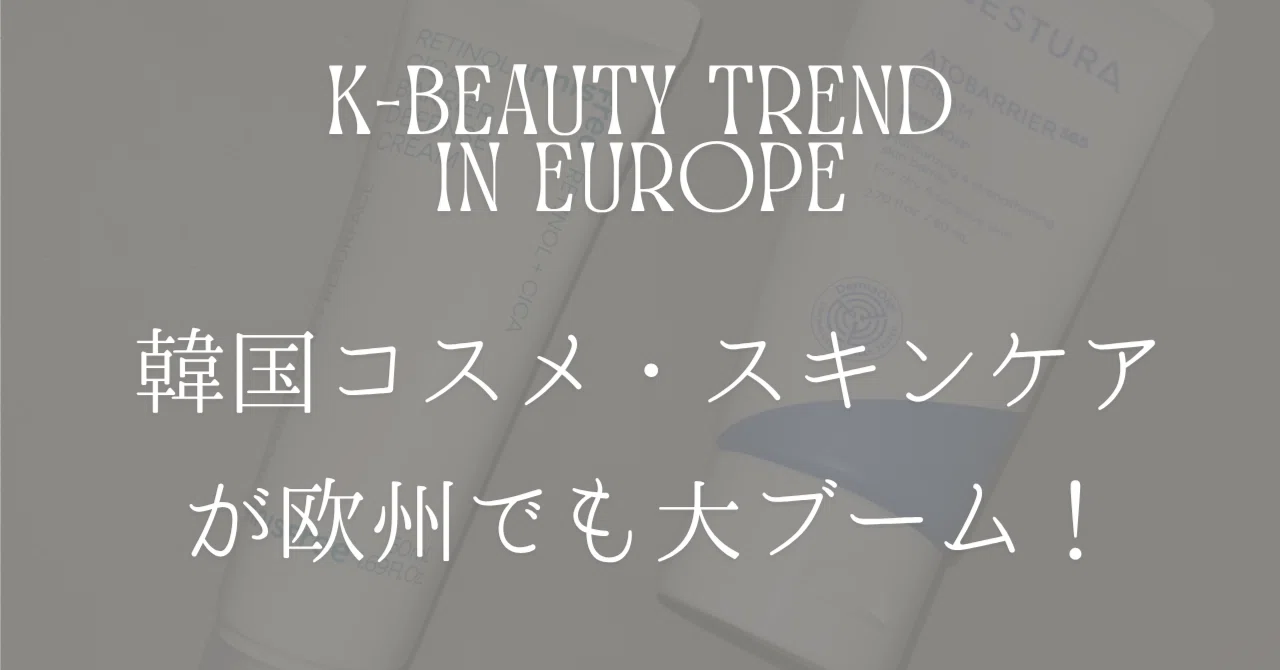
An Objective Observation of the Korean Cosmetics and Skincare Boom in Europe|シマザキ エリ|ドイツ・欧州コスメと美容

An Objective Observation of the Korean Cosmetics and Skincare Boom in Europe|シマザキ エリ|ドイツ・欧州コスメと美容

A writer living in Germany examines the context and scale of the K-Beauty (Korean cosmetics and skincare) trend in Europe.

In this first part, we will unravel ‘why K-Beauty is trending now’ by looking at past European skincare trends.

Conclusion: The rapid expansion of Korean cosmetics, which were once known only to a select few, can be attributed to three factors: ‘filling the gap in European trends as they shifted from organic to ingredient-focused and barrier care,’ ‘generous export support from the Korean government,’ and ‘bringing an unprecedented user experience to the European market, which struggles with hard water and dryness.’

The influence of the ‘K-Beauty’ trend as felt by a writer living in Germany

In Japan, Korean cosmetics and skincare have firmly established themselves as a beauty category. They have also become a trend in the United States in recent years, and there isn’t a day where you don’t see posts about K-Beauty on social media; however, compared to that, the distribution of Korean items in Europe felt almost non-existent.

I live in Berlin. Because of my work, I have many opportunities to interact with people who love beauty, but even so, I had only met a handful of people who actually used Korean skincare up until 2024. (It might be a little different in Paris or London, where there are many East Asians.)

However, that atmosphere changed dramatically around 2025.

Serums from brands that are also popular in Japan have become easily available at major beauty shops and online stores in Germany. Before that, I think it hadn’t penetrated the general public at all, except for serious Asia enthusiasts or some beauty geeks who would access YesStyle (an Asian beauty and cosmetics e-commerce site), which was known only to those in the know.

The flow of skincare trends in Europe to date

Before considering ‘why K-Beauty has rapidly flowed into the European market since 2025,’ let’s take a rough look at skincare trends in Europe since the late 2010s.

Demand for natural cosmetics (until around 2015)

Long-established organic brands like WELEDA and Dr. Hauschka, as well as French dermatology brands (La Roche-Posay, Avène, etc.), monopolized the support of consumers seeking ‘safety, security, and sustainability.’

It was also around this time that the concept of clean beauty began to attract attention.

Eliminating parabens (preservatives), sulfates, synthetic fragrances, and microplastics, as well as formulations that can be used safely even on sensitive skin and environmentally conscious production, became important.

Growing interest in aggressive beauty with ‘scientific evidence’ (from around 2016)

The influence of the Canadian skincare brand The Ordinary was enormous.

With the spread of social media, consumers began to ‘learn.’ And they started seeking transparency in ingredients, thinking, ‘It is more effective to apply ingredients with scientific evidence directly.’

Through The Ordinary and the ingredient-focused brands that followed, ingredient names like ‘retinol,’ ‘niacinamide,’ and ‘salicylic acid’ became generalized, and minimalist, high-concentration, and low-priced products became explosive hits.

I also believe this was when the trend of North American trends being adopted in Europe began to strengthen.

Return to ‘skin barrier protection and dermatology’ (from around 2018). The leading player here is surely CeraVe. In 2017, the French L’Oréal Group acquired the American skincare brand for sensitive skin, CeraVe. The company began full-scale expansion into Europe in 2018. Since then, terms like skin barrier protection and human-type ceramide replenishment have spread throughout Europe. In the aforementioned ingredient-focused ‘aggressive’ skincare, it was also seen as a problem that people were causing skin irritation by using high-concentration products without having the correct knowledge. The trend shifted rapidly from ‘aggressive’ to ‘defensive.’ While not flashy, the sense of security that dermatologists recommend (in other words, authority) and the approach of ‘strengthening defenses’ became established across all generations. That leads to the current K-Beauty (Korean cosmetics) boom.

An unprecedented K-Beauty boom!

And now (2025–).
Korean cosmetics and skincare have been introduced to Europe in a very well-balanced way that takes the ‘best of’ previous trends.

Elements such as a focus on soothing and scientific research, as well as the ‘affordable price while maintaining high ingredient transparency’—the biggest reason for The Ordinary’s boom—were likely easily incorporated into the consumption habits of beauty-conscious individuals.

Two of my personal favorites from the many Korean ‘barrier protection’ skincare products I use.
Innisfree’s Retinol Cica Barrier Cream and Aestura’s Atobarrier 365 Cream.

Why is K-Beauty so popular right now?

I can understand why Korean cosmetics and skincare are novel to European consumers, but ‘why’ is it this popular?
Europe has creams specialized in barrier function protection, and after all, Europe is home to France, a skincare powerhouse…

‘Why’ Korean cosmetics? I have thought of three reasons based on my own subjective perspective.

1. South Korea’s policies

It is well known among beauty enthusiasts that Korean skincare and cosmetics exports receive significant government support and are treated as one of the country’s key national projects.

Following the contraction of the Chinese market, which previously accounted for more than half of exports, the focus shifted to developing the U.S. market. As a result, in 2024–2025, South Korea surpassed France, which had held the top spot for many years, to become the ‘largest exporter of cosmetics to the U.S.’

However, with concerns remaining over new U.S. tariff regulations, the potential for further exports is shifting toward the European and Latin American markets.

Export statistics from the Ministry of SMEs and Startups (MSS) of South Korea.
Cosmetic exports to the European Union (EU) by South Korean SMEs (which house many K-Beauty brands) have shown a record-breaking surge, up 62.4% compared to the same period last year.
Since exports to Japan have remained around 6%, the rapid growth of the European market is clear.

Data source: SME Export Trends Report, Q3 2026

Also, the biggest barrier for overseas brands entering the European market is the EU’s strict cosmetics regulations.

Regarding EU cosmetics regulations…
There are over 1,600 to 1,700 prohibited ingredients. Because they follow the ‘guilty until proven innocent’ principle, many ingredients permitted in Japan, the U.S., and other countries are banned.
Furthermore, before a product can be placed on the market, a qualified professional must check all ingredient combinations and toxicity to create a Cosmetic Product Safety Report (CPSR), and it is mandatory to register product information on the European Commission’s online portal (CPNP registration) before distributing cosmetics in the EU market.

There is a mechanism where the South Korean government directly subsidizes 50% to 70% of the costs required to clear these processes for the EU market.

On top of that, the South Korean Ministry of Health and Welfare has opened ‘K-Beauty Official Experience and Sales Hubs’ in Paris, Milan, and Stuttgart one after another. They are using national funds to penetrate local retail at a scale impossible for a single company.

As a beauty geek living in Europe, I am overjoyed that Korean skincare is becoming easier to buy here! On the other hand, it is frustrating to wonder why the Japanese government doesn’t work a bit harder to support cosmetics companies in their overseas expansion.

2. Rapid expansion of brand marketing

One of the major factors that explosively permeated K-Beauty among general European consumers is the presence of social media, centered on TikTok, and influencers.

As a movement separate from the already mature Korean and Japanese markets, many brands are conducting new marketing for the Western and European markets.

Gifting and PR projects for Western TikTokers and influencers have visibly surged. As a result, the boom has accelerated even further.

For example, ‘Glass Skin,’ which recently became a trend in the West.
These are before-and-after videos of finishes that look like they are glowing from within, using Korean skincare. It spread rapidly among the Western MZ generation and was recognized as ‘new beauty potential’ along with its visual impact.

3. Because the usage experience was ‘new’ for European consumers

The climate in Europe is dry, and because the tap water is hard, skin tends to become rough. The mainstream approach of traditional European products has been to cover this with ‘oil’.

Korean skincare introduced the concept of ‘moisturizing the skin with light, fresh hydration’ to this market.

It might not seem like a big deal to those who use Korean and Japanese skincare daily, but a texture that moisturizes without being sticky was something that had never existed in Europe before.

The traditional method of ‘dealing with dryness using oil’ inevitably leaves a sticky feeling, and for some, it even increases acne. Therefore, the quality of the texture, which is taken for granted in Korea and Japan, must have been a ‘discovery’ for many Europeans.

Thank you for reading until the end!

In the next article, I will introduce what kind of Korean cosmetics are actually in demand in Europe.

Tags: , , , , , , ,
Dermatologists Recommend 3 Essential Skincare Products for Healthy Skin

Dermatologists Recommend 3 Essential Skincare Products for Healthy Skin

If your morning skincare routine involves 10 different products, multiple serums and more time than your morning coffee, you might be doing more than your skin actually needs.

Between TikTok’s elaborate skincare routines, celebrity-endorsed beauty products and seemingly endless promises of brighter, smoother, younger-looking skin, it’s easy to believe that more products equal better results.

But dermatologists say that’s not necessarily true.

Advertisement

Advertisement

In fact, a complicated skincare routine can sometimes do more harm than good, especially when you’re layering multiple active ingredients without understanding how they interact.

The good news? Healthy skin doesn’t require an overflowing bathroom cabinet or an expensive collection of products. For most people, three basics are a good place to start.

Related: We Asked 6 Dermatologists Which Anti-Aging Ingredient They’d Never Skip—They All Said the Same Thing

The 3 Skincare Products Dermatologists Say You Actually Need

If you’re looking to simplify your routine, start with a gentle cleanser, moisturizer and broad-spectrum sunscreen.

“Your skin doesn’t need ten products to stay healthy. For most people, a gentle cleanser, a moisturizer and a broad-spectrum sunscreen with SPF 30 or higher are enough,” says Dr. Priyanka Sutariya, MD, of Skin Experts Advanced Skin, Laser & Cosmetology Clinic.

Advertisement

Advertisement

“The cleanser removes excess oil and impurities, the moisturizer supports your skin barrier, and the sunscreen protects against pigmentation and premature aging.”

Here’s why each product deserves a place in your routine.

1. A Gentle Cleanser

Think of your cleanser as the foundation of your skincare routine.

Throughout the day, your skin accumulates oil, sweat, dirt, makeup and sunscreen. A gentle cleanser helps remove those impurities without stripping away the natural oils that help keep your skin comfortable.

But there’s a difference between clean skin and overly cleansed skin.

If your face feels tight, dry or irritated after washing, your cleanser may be too harsh.

Advertisement

Advertisement

Look for a gentle formula suited to your skin type. If you regularly wear heavy makeup or water-resistant sunscreen, you may benefit from using a cleansing balm or oil before your regular cleanser.

The goal isn’t to make your skin feel squeaky clean. It’s to remove buildup without disrupting your skin barrier.

2. A Moisturizer That Works for Your Skin Type

One of the biggest skincare misconceptions is that people with oily skin don’t need moisturizer.

In reality, moisturizing can benefit a variety of skin types, including oily, combination and sensitive skin.

Moisturizers help maintain hydration and support the skin’s protective barrier, which helps limit moisture loss and protect against environmental irritants.

Advertisement

Advertisement

The trick is choosing the right formula.

People with dry skin may prefer a richer cream, while those with oily skin might find a lightweight, noncomedogenic lotion or gel more comfortable.

Ingredients such as glycerin, hyaluronic acid and ceramides can help support hydration, depending on the formulation.

You don’t necessarily need the most expensive moisturizer on the shelf. You need one that works for your skin.

Related: The 15 Best Retinol Body Lotions, According to Celebrity Dermatologists

3. Broad-Spectrum Sunscreen With SPF 30 or Higher

If there’s one skincare step dermatologists consistently emphasize, it’s sunscreen.

Broad-spectrum sunscreen with SPF 30 or higher helps protect against UVA and UVB rays, which contribute to sun damage, premature skin aging and skin cancer.

Advertisement

Advertisement

And no, sunscreen isn’t just for beach days.

UV exposure can occur during everyday activities, including walking the dog, running errands or spending time outdoors on a cloudy afternoon.

Apply sunscreen as the final step of your morning skincare routine, before makeup, and reapply approximately every two hours when outdoors, as well as after swimming or sweating.

Consistency matters more than how many other products you’re using.

Do You Really Need Vitamin C, Retinol or Toner?

Once you’ve established the basics, you can consider adding targeted treatments based on your skin concerns.

But just because an ingredient is trending doesn’t mean it belongs in everyone’s routine.

Vitamin C Serum

Vitamin C is a popular antioxidant ingredient that may help improve the appearance of uneven skin tone, dark spots and dullness.

Advertisement

Advertisement

It’s often included in morning skincare routines, although the effectiveness of a vitamin C product depends on its formulation, concentration and stability.

If hyperpigmentation or uneven tone is a concern, vitamin C may be worth considering.

But if your skin is already healthy and you’re primarily focused on maintaining hydration, it isn’t necessarily essential.

Related: 11 Best Skin-Tightening Moisturizers, According to Celebrity Derms

Retinol

Retinol is a vitamin A derivative commonly used to address fine lines, uneven skin texture and certain acne concerns.

It can be effective, but it can also cause dryness, peeling, redness and irritation, particularly when first introduced.

Advertisement

Advertisement

If you’re new to retinol, start with a lower-strength formula, use it gradually and avoid combining it with multiple potentially irritating active ingredients until you understand how your skin responds.

Retinoids should generally be avoided during pregnancy, so check with your healthcare provider if that applies to you.

Toner

Toners have changed considerably over the years.

While older formulas were often associated with removing excess oil, today’s toners can contain hydrating ingredients, exfoliating acids or other targeted treatments.

Some people enjoy using them, and certain formulations may address specific concerns.

Advertisement

Advertisement

But if your cleanser, moisturizer and other treatments are already working, there’s no reason to add toner simply because it’s popular.

Can Using Too Many Skincare Products Actually Damage Your Skin?

Surprisingly, yes.

A 10-step routine isn’t automatically harmful, but using more products increases the number of ingredients your skin encounters, potentially raising the risk of irritation or allergic reactions.

Layering multiple exfoliating acids, retinoids and other active ingredients can be particularly problematic for people with sensitive skin.

“Actives like retinol, vitamin C, or salicylic acid can be added for specific concerns, but too many at once often lead to irritation, dryness, and a damaged barrier,” Sutariya explains.

Advertisement

Advertisement

Signs that your routine may be too aggressive include persistent redness, stinging, flaking, tightness and increased sensitivity.

If these symptoms develop, consider simplifying your routine and temporarily avoiding potentially irritating treatments. Persistent or severe symptoms warrant a dermatologist’s evaluation.

How to Build a Simple Morning and Nighttime Skincare Routine

You don’t need an elaborate schedule to take care of your skin.

For many people, a straightforward routine looks like this:

Morning:

  1. Gentle cleanser, if needed

  2. Broad-spectrum sunscreen with SPF 30 or higher

Evening:

  1. Targeted treatment, if needed

Depending on your skin type and concerns, your dermatologist may recommend additional steps or prescription treatments.

The important thing is to introduce new products thoughtfully rather than adding several at once.

The Bottom Line

You don’t need to follow every viral skincare trend to maintain healthy skin.

For many people, a gentle cleanser, moisturizer and daily sunscreen provide a practical foundation. Additional treatments can be useful, but they should serve a specific purpose.

And if your current routine is working? There’s no need to complicate it just because someone on social media uses 10 products.

When it comes to skincare, more isn’t always better—and consistency often matters more than complexity.

Sources:

Next: 9 Drugstore Serums That Target Sagging Skin, According to Dermatologists

This story was originally published by Parade on Nov 6, 2026, where it first appeared in the Beauty section. Add Parade as a Preferred Source by clicking here.

Tags: , , , , , ,
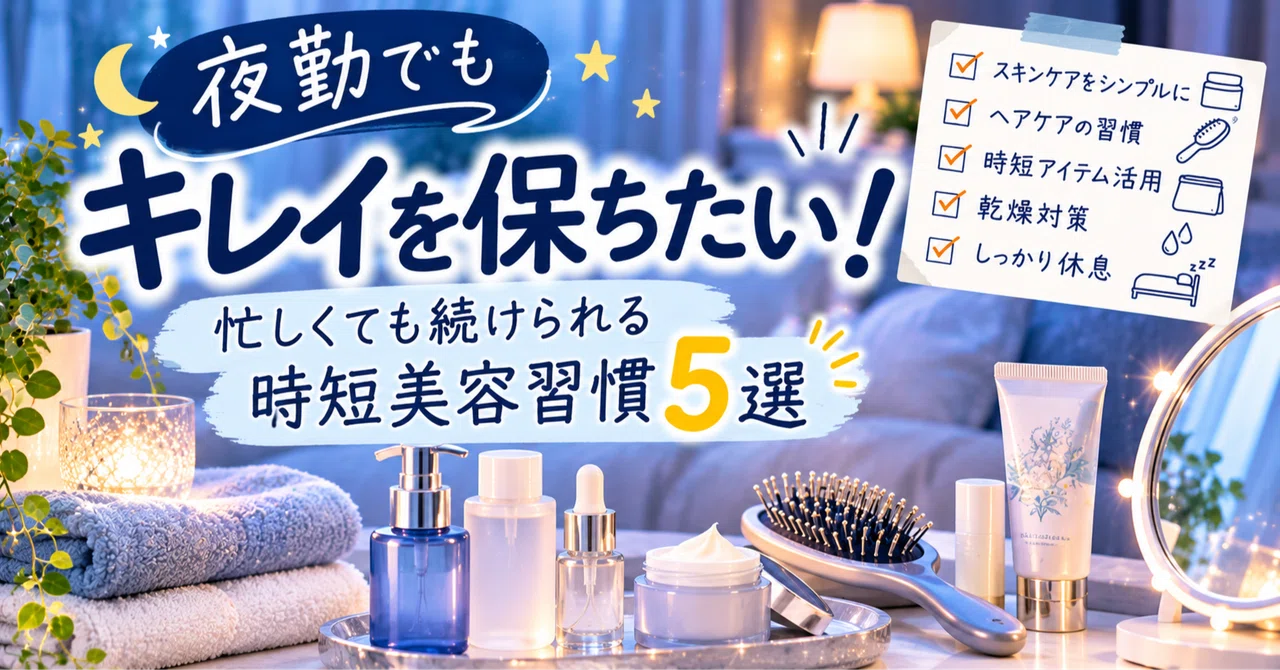
I want to stay beautiful even while working night shifts!

I want to stay beautiful even while working night shifts!

When working night shifts, do you ever feel like you are just barely getting by with your daily life?

When you get home after work, you are so tired that you just breeze through your skincare routine.

You don’t have time to style your hair, or on your days off, you are too exhausted to even think about beauty routines…

“I want to take better care of myself, but I just don’t have the time.”

Perhaps there are many of you who feel that way.

However, you don’t need to spend a lot of time or money every day for beauty.

What is important is finding habits that you can continue without strain, even in a busy life.

In this article, I will introduce 5 easy-to-adopt, time-saving beauty habits for women working night shifts.

1. Keep skincare simple and consistent

In a night shift lifestyle, you might get tired after coming home and find skincare to be a chore.

In such cases, try focusing on continuing the basics rather than using many items.

The basics are the following three:

  • Cleansing: Remove dirt according to your skin’s condition

  • Moisturizing: Replenish moisture with lotion, emulsion, or cream

  • UV protection: Use sunscreen when going out during the day

Especially after a night shift, I think there are times when you just want to go straight to sleep after getting home.

To avoid sleeping with your makeup on, it is convenient to have a cleanser ready that you can use easily upon returning home.

Choosing items that are easy to use even on days when you are tired can lower the hurdle for your skincare routine.

There is no need to stock up on expensive cosmetics.

It is important to use products that suit your skin and that you can continue using without difficulty.

2. Hair care starts with small daily habits

During work, you may have to tie your hair back or wear a hat or hairnet.

Some of you might be concerned about messy or dry hair after your shift.

In such cases, let’s take a look at your daily hair care routine.

Here are some recommended habits.

  • Dry your hair and scalp thoroughly after shampooing

  • Moisturize with hair oil or similar products, focusing on the ends

  • Tie your hair back without pulling it too tightly

  • Brush gently, starting from the ends

  • Trim your ends regularly

In particular, you want to avoid leaving your hair wet for long periods.

If you want to shorten the time spent using a hair dryer, you can also use a highly absorbent towel.

You don’t need to have a perfect routine every day.

Start by focusing on trimming your ends and making sure you dry your hair properly.

3. Use “time-saving items” for your pre-shift grooming

Before a night shift, you surprisingly don’t have much time due to meals, chores, and getting ready for work.

Even if you want to spend time on beauty and grooming, you might end up feeling exhausted just from getting ready.

That’s why I recommend using items that reduce the hassle of preparation.

For example,

  • Base makeup items that serve multiple purposes

  • Eyebrow products that make grooming easy

  • Hair mist for fixing bedhead

  • A hairbrush you can use quickly

  • Lip balm for moisturizing

and so on.

You don’t need to do a full face of makeup every day.

Just grooming the parts you are concerned about can change your mood.

Please try incorporating these within a reasonable range while following work rules and workplace hygiene standards.

4. Start with what you can do for dryness while at work

Depending on your workplace environment, such as a warehouse or office, you may be concerned about dryness due to air conditioning or the season.

In such cases, it is convenient to have care items that are easy to use while working.

For example,

Hands, in particular, can easily become dry due to hand washing and alcohol disinfection.

If you keep a small hand cream in your bag, it is easy to use during breaks.

However, since there are products with strong scents or items that cannot be used in the workplace, choose according to your workplace rules.

5. Make time to rest yourself for the sake of beauty

When we think of beauty, we tend to think of skincare, makeup, and hair care.

However, in a busy night shift lifestyle, resting your body is also an important form of self-care.

When you lack sleep or accumulate fatigue, you lose the energy to take care of your skin and hair.

First, try to be conscious of ensuring you get enough sleep.

On days when you have extra time, it is also recommended to use items with your favorite scents or take a long, relaxing bath.

On days when you don’t want to do anything, it’s okay not to force yourself to pack in beauty routines.

Just finishing your skincare and resting early is also a great form of self-care.

It would be counterproductive to push yourself and get exhausted just to make yourself look beautiful.

Let’s find ways that you can continue at your own pace.

Summary | Find beauty habits that don’t require too much effort

Even during a night shift lifestyle, you can enjoy beauty and grooming.

Let’s look back at the five habits introduced this time.

  • Keep your skincare simple

  • Make hair care a daily habit

  • Make pre-work preparation easier with time-saving items

  • Be conscious of moisturizing even while at work

  • Value sleep and rest as well

You don’t need to do perfect maintenance every day.

You don’t need to buy a lot of expensive beauty items either.

Start with small things, like making moisturizing after coming home a habit or trying out hair oil.

Because you work hard in both your job and your life, I want you to cherish the time you take to care for yourself.

Even in the midst of a busy daily life, let’s enjoy being beautiful in our own way.

Thank you for reading until the end.

I hope this serves as a helpful reference for those who are also living a night shift lifestyle.

Tags: , , , ,
7 Beauty Habits a 30-Year-Old Beauty-Loving Office Worker Keeps Every Day

7 Beauty Habits a 30-Year-Old Beauty-Loving Office Worker Keeps Every Day

Now that I’ve turned 30, I feel once again how important daily beauty habits are.

I’ve always loved beauty, and I’ve tried various things that caught my interest, including skincare, inner care, and beauty appliances.

I have also spent about 2.1 million yen on aesthetic medicine so far. I still visit a beauty clinic regularly, and sometimes I receive treatments like Botox or skin-boosting injections depending on my concerns at the time.

It’s fun to feel the changes in my skin through aesthetic medicine, and I also like trying new beauty methods.

However, precisely because I have experienced so many things, I feel that it’s not just aesthetic medicine or high-end skincare, but daily lifestyle habits that are truly important.

What I eat every day, what I drink, whether I move my body, and whether I am sleeping properly.

I believe that the accumulation of these casual things leads to my daily condition.

This time, I will introduce 7 beauty habits that I, as a 30-year-old, continue to practice.

They are not all special things. Please try incorporating the ones you can.

1. Tomato juice + olive oil + banana in the morning

My morning staples are tomato juice and a banana.

Every morning, I drink Kagome’s salt-free tomato juice with a spoonful of olive oil added to it.

The purpose of incorporating this is the lycopene contained in tomatoes.

I continue this as a form of inner care, keeping skin clarity and whitening in mind.

It is said that lycopene is more easily absorbed when taken with oil, so I incorporate olive oil as well.

A method I recommend for winter is to warm up the tomato juice before drinking it.

When warmed, it tastes just like minestrone.

This is a way of drinking I want people who don’t like cold tomato juice to try. It’s perfect for cold mornings, too.

And I eat a banana with it as well.

It’s hard to prepare something elaborate from the morning, but this is easy. The good thing is that it’s easy to continue even on busy mornings.

Rather than preparing special meals for beauty, I choose things that I can easily incorporate into my regular breakfast.

It is a small daily habit, but I also value this kind of inner care.

2. Drink water frequently, aiming for 1.5L a day

My usual drink is basically room-temperature water.

I aim to drink about 1.5L every day.

I don’t have any specific times set for drinking.

I hydrate frequently throughout the day, such as when I wake up in the morning, while at work, and before or after going to the gym.

I don’t usually drink sweet juices or sugary drinks.

Of course, I enjoy whatever I want to drink at a cafe, but my daily routine centers on water or tea.

Hydration is one of the things I am conscious of to regulate my bowel movements and overall body condition.

When I’m concerned about my skin, I tend to focus on external care like lotions and serums, but I make sure not to forget daily hydration.

You can start without buying expensive beauty items, and no special preparation is needed.

I think just reviewing your usual drinks is a good place to start.

3. Moisturize during the day whenever you feel dryness

Even if I do a thorough skincare routine in the morning, I sometimes feel my skin getting dry during the day.

Especially at the office, where the air conditioning is often on, I am conscious of moisturizing during the day as well.

I love using the Sofina iP moisturizing mist.

Whenever I feel my skin getting dry, I spray it over my makeup. I’m happy that I can use it over makeup 😃

I don’t have specific times set for using it; my style is to use it according to the condition of my skin at that moment.

It’s an item that’s easy to incorporate while working because you can easily moisturize even during the day.

And another essential item is hand cream.

I love using HETRAS hand cream in the Artist scent.

I just love the scent of this!

It has an elegant, perfume-like fragrance that soothes me every time I apply it. It’s also great that the scent lasts a long time!

Plus, I like that it’s moisturizing yet feels refreshing and isn’t sticky.

It’s easy to use even while working, so I keep it on my desk.

Not just my face, but my hands are also an area that surprisingly gets dry.

Since it will get especially dry in the coming season, moisturizing during the day is a habit I want to continue.

4. Make exercise after work a habit

For beauty and maintaining my figure, I value my exercise routine.

I’ve made going to the gym after work part of my daily routine.

At the gym, I do some stretching, then strength training, and sometimes finish with a sauna or a bath.

I also go swimming once a week.

I also make a conscious effort to walk 10,000 steps a day.

However, I don’t think it’s necessary to push myself on busy or tiring days.

Try using the stairs instead of the elevator, or take a slightly longer route when walking.

Those small, consistent efforts are also important.

Exercise is hardest when you’ve just started.

I wasn’t able to keep it up as a matter of course from the very beginning either.

I believe that everything is difficult until it becomes a habit, and the first three months or so are the time to really put in the effort.

However, once it becomes a part of your life, you will be able to continue it more naturally than before.

Now, going to the gym after work has become a natural habit for me.

It’s not just for maintaining my figure, but also for a change of pace, so I want to continue doing it within a reasonable range.

5. Use different skincare products in the morning and at night depending on the day’s skin condition

The thing I am most conscious of in my skincare is moisturizing above all else.

Since I am prone to dryness, I use different items depending on the condition of my skin that day.

Morning Skincare

I start my morning with SK-II facial treatment essence.

After that, I use a brightening serum and finish with Curél moisturizing cream.

In the morning, I make sure to moisturize thoroughly, keeping in mind the dryness I might face during the day.

Night Skincare

At night, there are days when I use an Anua face mask, and days when I use IPSA lotion.

After that, I use a DECORTÉ brightening serum, and finish with either Sofina iP or Curél cream.

I use Curél on days when I’m concerned about dryness or want to prioritize moisturizing.

I use Sofina iP on days when I want to incorporate a serum into my care routine.

Rather than using the exact same products every day, I try to choose them while observing my skin’s condition that day.

Since I love beauty, trying out various items is one of my pleasures.

However, it’s not about using as much as possible, so I make sure to continue without overdoing it while observing my skin’s condition.

I believe that rather than using an expensive item just once, it is more important to find what suits your skin and continue using it carefully every day.

6. Soak in the bathtub. Bath salts are also essential

On days when I take a bath at home, I try to soak in the tub as much as possible.

There are days when I just take a shower, but soaking in the tub really makes a difference in how I feel.

It is an important time for me, like resetting the fatigue of the day.

Bath salts are also indispensable.

My favorite is Kneipp’s Gute Nacht, sandalwood scent.

I like the calm scent, and I use it on days when I want to take a long, relaxing bath.

In particular, I often choose this on days when I want to sleep well.

In my case, I feel like I sleep soundly on days when I add Kneipp and take a slow bath.

I’m not saying that bath salts themselves have a sleep-inducing effect, but the time spent relaxing while wrapped in a favorite scent is important.

Especially on busy days, I want to make sure I set aside time like this.

7. Wear MediQtto before going to bed

Finally, a habit before going to sleep.

MediQtto is indispensable to me.

Whether I’ve been sitting at work all day, exercising at the gym, or walking a lot, I make sure to wear it before going to bed.

It is truly essential, especially when traveling.

During my trip to Taiwan, there were days when I walked over 20,000 steps, but I would wear MediQtto to rest once I got back to the hotel.

The lightness of my legs the next morning feels completely different to me.

If I sleep without wearing it, I think the next morning, ‘Oh, I should have worn it yesterday.’

It has now become an essential item that I even take with me on trips.

Since compression items have different wearing times and usage methods depending on the type, I choose a type that can be used while sleeping and follow the product’s usage instructions.

Taking time to care for my legs at the end of the day is also one of my important beauty habits.

Summary | It’s Not About Anything Special, But Daily Consistency

In this article, I introduced 7 beauty habits that I, as a 30-year-old, continue every day.

  • Tomato juice + olive oil + banana in the morning

  • Drink 1.5L of water a day as a guideline

  • Moisturize my face and hands during the day as well

  • Make exercising after work a habit

  • Use different skincare products according to my skin’s condition that day

  • Soak in the bathtub to relax

  • Wear MediQtto before going to bed

I also go to beauty clinics and try out various beauty items that interest me.

But in the end, I feel that my daily life is the foundation.

Using expensive serums and undergoing cosmetic medical procedures are, of course, fun.

Just as much as that, I want to value drinking water every day, walking a little, moisturizing thoroughly, and sleeping properly.

It is okay if you don’t start everything at once.

Start by changing your morning drink, drinking water during the day, or soaking in the bathtub before bed.

I think starting with such small things is enough.

In my 30s, I want to continue enjoying beauty at my own pace while valuing the accumulation of daily habits.

Thank you for reading until the end.

※Beauty habits and usage experiences are personal opinions. Please incorporate them within a reasonable range according to the condition of your skin and body.

Tags: , , , , , ,

Easily Forgotten? 5 Care Habits to Protect Ear Beauty and Health|キレイ貯金 | 未来の自分に、キレイを貯金🪞

You take care of your face, hair, and skin every day, but what about your ears?

In fact, the ears are also affected by sebum, sweat, and dryness.

Surprisingly few people consciously care for their earlobes and the area behind their ears.

In this article, we will introduce five care habits that are easy to incorporate into your daily life, focusing on “ear beauty and health,” which we often don’t think about.

1. Moisturize your earlobes and the area around your ears

Even if you use lotion or milky lotion on your face, few people moisturize their ears.

Your earlobes and the area around your ears are also part of your skin.

When you are concerned about dryness, try using a small amount of the low-irritation moisturizing cream you usually use.

Recommended care

  • Gently apply moisturizing cream to your earlobes

  • Check if the base of your ears and the surrounding area are dry

  • Apply gently without rubbing

However, avoid applying cream inside the ear canal.

2. It is important not to overdo ear cleaning

When you want to clean your ears, you might be tempted to clean them thoroughly with a cotton swab.

But actually, earwax plays a role in protecting the inside of the ear.

Cleaning your ears too much can damage the inside of your ears or push earwax deeper inside.

Points for ear cleaning

  • Gently wipe the entrance of the ear and the visible area

  • Do not insert cotton swabs deep into the ear

  • There is no need to clean them every day

  • If you feel discomfort inside your ear, do not force a cleaning

When cleaning your ears, it is more important to “not overdo it” than to “remove everything completely.”

3. Relaxing time with a massage around the ears

Gently pinching your earlobes or softly touching the area around your ears is also recommended as a daily relaxation habit.

Try taking a little time for this after a bath or while doing your skincare routine.

Simple ear area care

  1. Gently pinch your earlobes

  2. Move them lightly without causing pain

  3. Gently stroke the area around the base of your ears with your fingertips

There is no need to pull hard or massage them forcefully.

Do not expect effects like a smaller face or improved facial sagging; incorporate this strictly as a habit for relaxation.

4. Don’t forget to wash behind your ears

The area behind the ears is surprisingly easy to overlook.

Sebum, sweat, and dirt can remain behind the ears.

This is a spot to be particularly mindful of, especially for those with long hair or those who use hair styling products.

Recommended care

  • Gently wash behind your ears while bathing

  • Ensure no shampoo or facial cleanser residue remains

  • Wipe away moisture with a soft towel after bathing

There is no need to rub strongly.

If you do this while washing your face or bathing every day, you won’t need any special tools.

5. Be mindful of how you use earphones

When we think of ear beauty, we tend to imagine skincare, but the health of the ears themselves is also important.

Recently, there have been more opportunities to use earphones and headphones.

Listening to music at high volumes for long periods can affect your hearing.

Habits to protect your ears

  • Do not turn the volume up too high

  • Do not use them continuously for long periods

  • Take off your earphones occasionally to let your ears rest

  • Keep the parts of the earphones that touch your ears clean

To continue enjoying your favorite music for a long time, you should develop habits that take care of your ears.

Summary | Ear care is also an investment in your future beauty

In this article, we introduced ear beauty and health, which we don’t usually pay much attention to.

Let’s look back at these five points.

If you experience pain, itching, discharge, or difficulty hearing in your ears, do not force self-care and consult an otolaryngologist.

When it comes to beauty, we tend to focus on our face, hair, and skin.

However, it may be important to pay a little attention to areas we don’t usually think about.

Small daily care habits will lead to the future you.

Why not start saving up for a little beauty for your ears starting today?

🪞 Beauty Savings | Saving beauty for your future self

Beauty and health come from small, daily habits.

We will continue to introduce beauty habits that you can easily maintain.

Tags: , , , , , , , ,
Best oLive
Privacy Overview

This website uses cookies so that we can provide you with the best user experience possible. Cookie information is stored in your browser and performs functions such as recognising you when you return to our website and helping our team to understand which sections of the website you find most interesting and useful.