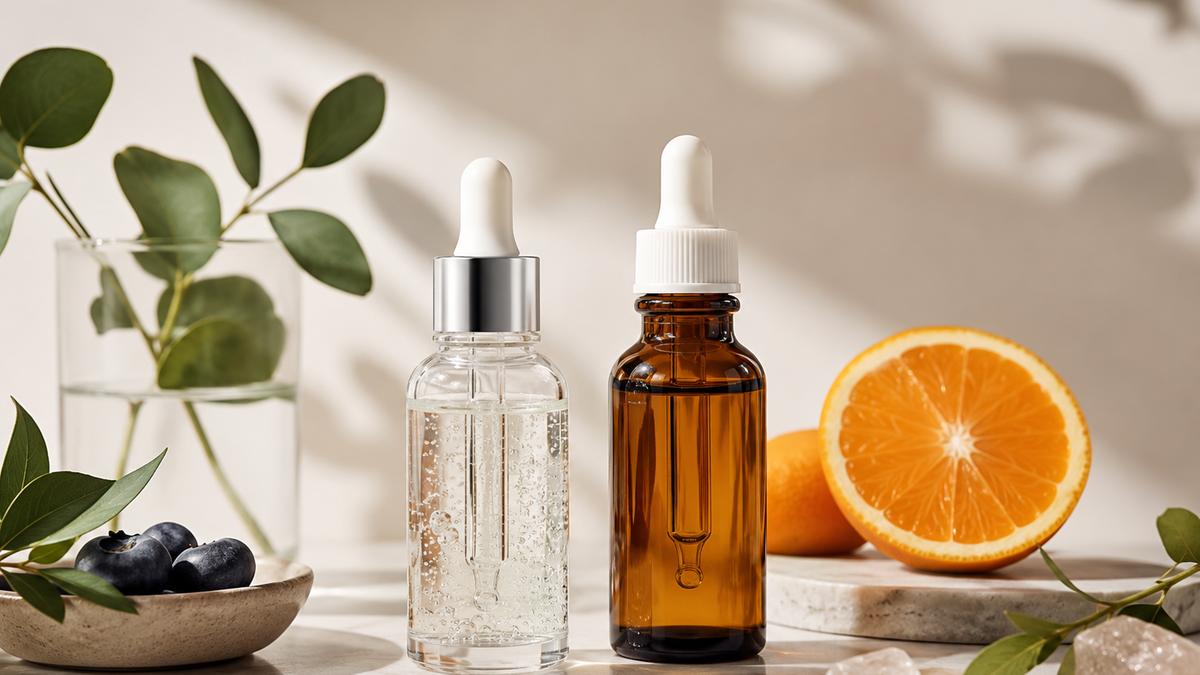
How daily

How daily skincare habits can help prevent facial dark spots

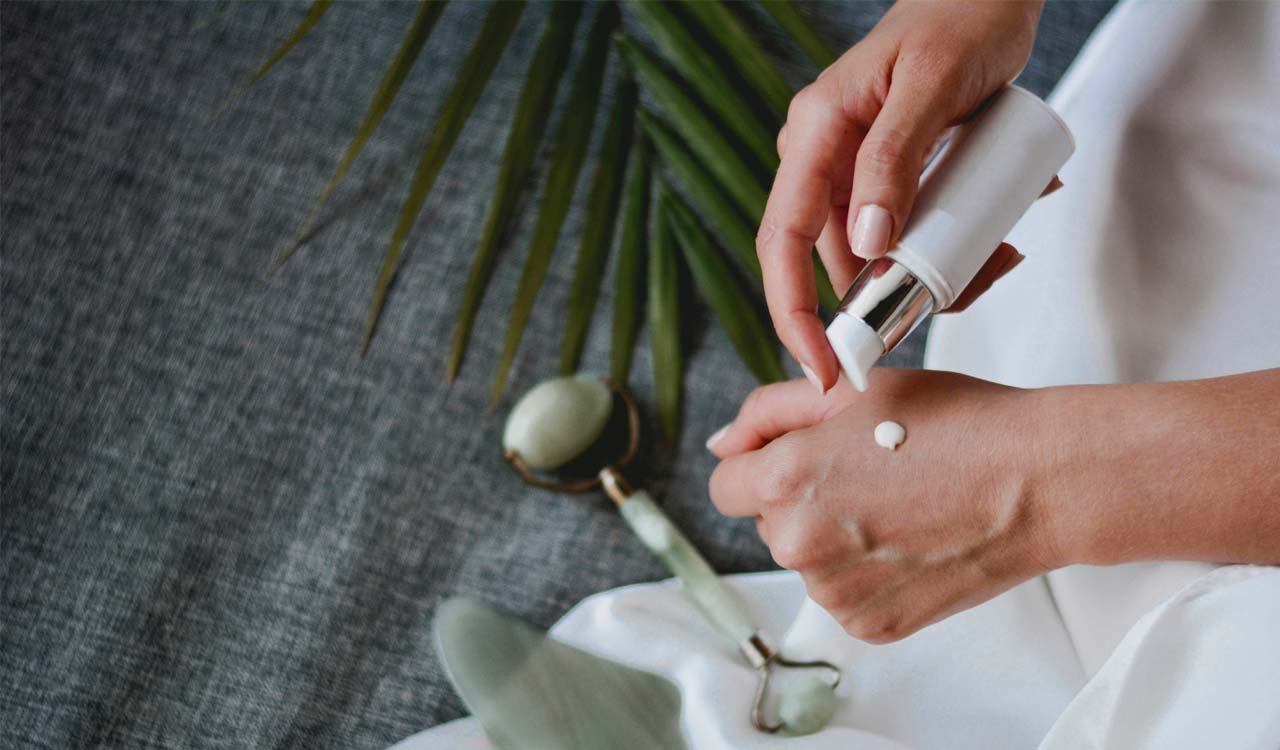
Dark spots on the face are a common skincare concern, often caused by acne scars, sun exposure, hormonal changes, skin irritation, or inflammation. While many people turn to home remedies or over-the-counter creams for quick results, experts say consistent skincare and proper treatment are more effective than temporary fixes.

According to dermatology guidance, understanding the underlying cause of skin discoloration is essential before choosing a treatment. In some cases, harsh or unsuitable skincare products can worsen irritation and make pigmentation more noticeable.

Common Causes of Dark Spots

Facial pigmentation may develop after acne heals, following skin injuries or irritation, due to hormonal changes, or from prolonged exposure to ultraviolet (UV) rays. Certain skincare products can also trigger inflammation that leads to discoloration.

Healthy Habits for Clearer Skin

Experts recommend cleansing the face daily to remove dirt, sweat, sunscreen, and makeup, especially before bedtime. Regular use of sunscreen is also considered one of the most effective ways to prevent existing dark spots from becoming darker and to reduce the risk of new pigmentation caused by sun exposure.

Be Cautious With Home Remedies

Traditional ingredients such as rose water, honey, and yogurt are commonly used in home skincare routines, but they may not be suitable for everyone.

Experts advise avoiding the direct application of lemon juice or other highly acidic ingredients to the face, as they can irritate the skin and potentially worsen pigmentation. If any product causes redness, burning, or irritation, it should be discontinued immediately.

When to See a Dermatologist

If dark spots continue to spread, repeatedly return, or fail to improve despite regular skincare, consulting a dermatologist is recommended.

More read, Simple daily habits to reduce sagging skin and maintain youthful glow

A medical evaluation can help identify the underlying cause and determine the most appropriate treatment.

Tags: , , , , , ,
Best skincare products for the monsoon: 7 essentials to keep your skin healthy this rainy season

Best skincare products for the monsoon: 7 essentials to keep your skin healthy this rainy season

Humidity, rain and pollution can take a toll on the skin during the monsoon. From cleansers and serums to lip care and body moisturisers, these seven skincare essentials help cleanse, hydrate and protect the skin barrier throughout the rainy season.

Updated On – 31 July 2026, 11:51 AM


Hyderabad: The monsoon may bring relief from the scorching summer, but it also brings a new set of skincare challenges. Increased humidity, sudden showers, pollution and constant temperature changes can leave skin feeling oily, dehydrated or irritated all at once. The key to healthy skin during this season is choosing products that hydrate without feeling heavy, cleanse effectively and protect the skin barrier. Here are a few skincare essentials that deserve a place in your monsoon routine.

L’Occitane Shea Butter Hand Cream
Frequent hand washing and damp weather can leave hands feeling rough and dry. Enriched with shea butter, this nourishing hand cream restores moisture while absorbing quickly, making it ideal for daily use without any greasy feel.

Estée Lauder Advanced Night Repair Serum
Night-time is when skin naturally repairs itself, making a good serum a worthwhile investment. This lightweight formula helps improve dullness, uneven texture and early signs of ageing caused by daily exposure to pollution and environmental stress. Suitable for most skin types, it blends easily into any skincare routine.

The Derma Co X Dr V Skin Renew Peptide Under Eye Cream
Late nights and endless screen time often show up first around the eyes. Packed with peptides, this under-eye cream targets puffiness, dark circles and fine lines, helping the delicate area appear brighter and more refreshed with regular use.

Skinvest Melts SPF 30 PA++++ Tinted Lip Balm + Gloss
Monsoon weather can still leave lips dry despite the humidity. This tinted lip balm hydrates while offering sun protection and helping strengthen the skin barrier, making it a practical everyday essential.

CeraVe Foaming Cleanser
A gentle cleanser is the foundation of any skincare routine. This foaming cleanser removes dirt, excess oil and makeup without stripping away the skin’s natural moisture, leaving the face feeling clean and balanced after every wash.

The Pink Foundry Melt to Foam Cleansing Balm
Waterproof sunscreen, makeup and pollution can be difficult to remove during the rainy season. This cleansing balm melts away impurities before transforming into a soft foam that rinses off easily, simplifying the evening cleansing routine.

Forest Essentials Ultra Rich Body Milk Lime Saffron and Oudh
Heavy body lotions often feel uncomfortable in humid weather, but this lightweight body milk absorbs quickly while keeping skin hydrated. Infused with lime, saffron and oudh, it leaves behind soft, nourished skin with a subtle, long-lasting fragrance.

Tags: , , , , , , ,
5 Expert Tips To Protect Skin Barrier in Monsoon

5 Expert Tips To Protect Skin Barrier in Monsoon

High humidity and trapped sweat during the rainy months harms your skin in more ways than one. This is why, during monsoon, issues such as fungal infections, acne breakouts, and prickly heat are extremely common. This season is also the perfect breeding ground for skin barrier damage. In simple terms, the outermost layer of your skin gets harmed, which can lead to different skin woes. How can you protect your skin during monsoon season? This article will answer this for you.


To get a better understanding of this, we interacted with our experts, Dr Shitij Goel,  Senior Consultant, Dermatology, Shardacare-HealthCity.

5 Tips To Protect Your Skin Barrier During Monsoon

Dr Goel shares 5 practical tips that can help your protect your skin barrier in the rainy months:

Use a Gentle Cleanser

Gentle skincare is the foundation of maintaining a healthy skin barrier. Cleanse the skin with a mild, soap-free, pH-balanced cleanser that removes sweat, sebum, and pollutants without stripping away essential barrier lipids. 

Avoid Harsh Elements

Avoid overwashing, harsh soaps, exfoliating scrubs, and very hot water, all of which increase transepidermal water loss and impair barrier function. 

Use a Gentle Moisturiser

A lightweight, fragrance-free, non-comedogenic moisturiser containing ceramides, glycerin, hyaluronic acid, or niacinamide helps replenish epidermal lipids, restore hydration, and improve barrier repair.

Avoid Skipping Sunscreen

One common mistake frequently encountered in dermatology clinics is skipping sunscreen during the monsoon. Ultraviolet rays readily penetrate cloud cover and contribute to pigmentation, photoageing, and exacerbation of several dermatoses. Daily use of a broad-spectrum SPF 30 or higher is recommended.

Avoid Damp Clothes

Keep body folds dry, change out of damp clothing promptly, wear breathable fabrics, and avoid self-medicating with steroid-containing combination creams. 

“If redness, itching, scaling, or recurrent rashes persist, consult a dermatologist promptly. Healthy skin begins with a healthy barrier: protect it, and your skin will remain resilient throughout the rainy season,” concludes Dr Goel.

Why Skin Barrier Weakens During Monsoon

Dr Goel says that monsoon brings welcome relief from the summer heat, but it also creates conditions that can weaken the skin barrier. The expert explains, “Persistent humidity, excessive sweating, and increased bacterial and fungal growth compromise this protective outer layer, making the skin more susceptible to irritation, eczema flares, acne, fungal infections, and sensitivity.”

Shedding light on what exactly the skin barrier is, Dr Goel says, “It is the body’s first line of defence, preventing excessive water loss while protecting against irritants, allergens, and microorganisms. Once damaged, it struggles to retain moisture and becomes more vulnerable to environmental insults.”

According to the Journal of Clinical and Aesthetic Dermatology, the term skin barrier is also commonly referred to as the epidermal barrier. The skin barrier, in simple language, acts as the security guard and the brick wall of your body. It is the very top layer of your skin that has two main functions:

  • It locks in your natural moisture and hydration.
  • It blocks out environmental pollution, harmful bacteria, and harsh chemicals.

The report notes that when this wall is strong and intact, your skin appears plump, smooth, and naturally healthy. However, when it gets damaged (which usually happens from over-washing, harsh winter weather, or using too many strong skincare acids) the bricks become loose. This lets the vital water to escape and invisible irritants to sneak in, which is why a damaged barrier leaves your skin feeling tight, dry, visibly red, and highly prone to unexpected breakouts.

How Environment and Weather Impacts Skin Barrier

A 2015 study, published in the Journal of the European Academy of Dermatology and Venereology, examined existing research to understand how different levels of humidity and temperature impacts skin barrier function. The researchers found out that exposure to low environmental humidity and freezing temperatures can weaken the skin’s natural protective abilities. These harsh weather conditions can lead to a significant increase in transepidermal water loss, which means vital moisture escapes from the skin much faster. 

Moreover, cold and dry environments actively minimise the essential fats and ceramides that hold the top layers of the skin together. With these protective oils reduced, the skin becomes visibly dry, less flexible, and much more fragile. The study also disclosed that such environmental stress makes the skin highly vulnerable to external irritants and physical friction. 

When the skin barrier breaks down, the body responds by increasing inflammatory signals. This often leads to redness and discomfort. The study noted that moderate humidity generally retains the skin, maintains its hydration and shed dead cells smoothly. To conclude, these findings prove that seasonal climate changes definitely dictate the physical integrity of our skin, highlighting the need for changes in our skincare routine accordingly. 

ALSO READ- Can Oral Supplements Really Fade Pigmentation? Here’s What a Dermatologist Wants You to Know

Conclusion

The monsoon season provides a refreshing break from the summer heat. However, its high humidity and trapped sweat can severely compromise your skin’s natural protective barrier. By choosing a gentle skincare routine that includes a mild cleanser, a repairing moisturiser, and daily sunscreen, you can successfully defend your skin against these harsh seasonal shifts. Choosing these simple yet powerful skincare habits can help lock in essential moisture and prevent unwanted irritants, ensuring your skin remains healthy during monsoon. 

FAQ

  • How to fix if the skin barrier is damaged? 

    Fixing a damaged skin barrier requires stopping all active treatments, switching to a gentle cleanser, and moisturising frequently. 

  • Can a skin barrier be permanently damaged? 

    No, skin barrier damage is almost never permanent.  

Read Next

Tanning Removal Soaps: Do They Really Work and Who Should Avoid Them?

Disclaimer

All possible measures have been taken to ensure accuracy, reliability, timeliness and authenticity of the information; however Onlymyhealth.com does not take any liability for the same. Using any information provided by the website is solely at the viewers’ discretion. In case of any medical exigencies/ persistent health issues, we advise you to seek a qualified medical practitioner before putting to use any advice/tips given by our team or any third party in form of answers/comments on the above mentioned website.

Shruti is a lifestyle journalist with over seven years of experience, covering everything from diseases to diets. She specialises in human interest stories that combine compelling narratives with expert insights, scientific research, and credible sources. Previously associated with HTCity, Storytailors and Patriot, she is committed to producing accurate, engaging, and trustworthy health content that informs and inspires readers.
Editorial Policy: All articles authored by Shruti are fact-checked by our editorial team and reviewed by relevant subject matter experts when necessary.

Read More..

How we keep this article up to date:

We work with experts and keep a close eye on the latest in health and wellness. Whenever there is a new research or helpful information, we update our articles with accurate and useful advice.


  • Current Version

    Jul 30, 2026 19:01 IST

    Published By : Shruti Das
    Reviewed By : Dr Shitij Goel

Tags: , , , , ,
The rise of skin minimalism: Why less is becoming more in modern skincare |

The rise of skin minimalism: Why less is becoming more in modern skincare |

(Image Credits: Pinterest) For decades, skincare has meant an involved process of using many serums, toners, exfoliators, masks, and strong active ingredients. The concept of social media has only added to the perception that the more products you have, the better your results will be. But consumer trends have started moving toward a conscious method called skin minimalism. The central principle of minimalistic skincare is to rely on a smaller number of more efficacious products that can act together.The primary catalyst for such a trend lies in increasing concern about skin barrier conditions. Although active components have revolutionised the skincare industry, there is still a danger of over-layering, excessive exfoliation, and many strong formulations at once. As a result, skin barrier function gets undermined, and irritation, inflammation, and dryness occur.

(Image Credits: Pinterest)

Skin minimalism advocates a back-to-basics approach centred on consistency rather than complexity.Such a balanced routine would include a mild cleanser, a moisturiser, a broad-spectrum sunscreen, and treatment products based on one’s individual skin issues. The emphasis should be on comprehending one’s skin rather than following all the latest trends and fads. It is important to remember that minimalist skincare is not about forgetting about your skincare at all but about making thoughtful product choices.The importance of making knowledgeable choices cannot be underestimated when it comes to skincare.The future of skincare will be determined by scientifically substantiated products, a personal approach to treatment, and skin barrier integrity preservation. Dermatology slowly progresses from unnecessary complexity to evidence-based practice. In essence, healthy skin does not come from having too many products but from having the correct ones used properly.

(Image Credits: Pinterest)

For better understanding of this topic, we approached Dr Rinky Kapoor, Director & Co-Founder of The Esthetic Clinics, who explained, “As skincare evolves further, the new role of dermatology clinics will involve not just recommending products but creating skin health programmes for each patient. The custom combination of dermatologically formulated skincare products, laser treatments, skin tightening, and injectable treatments is allowing patients to enjoy improved results while still keeping their skincare regimen simple and efficient.”

Tags: , , , ,
Mediterranean_Bean_Salad

Mediterannean Bean Salad

I’m always on the lookout for simple, easy, yet flavorful meals. Even better if I can prep them ahead of time. This Mediterranean bean salad is one of those dishes.

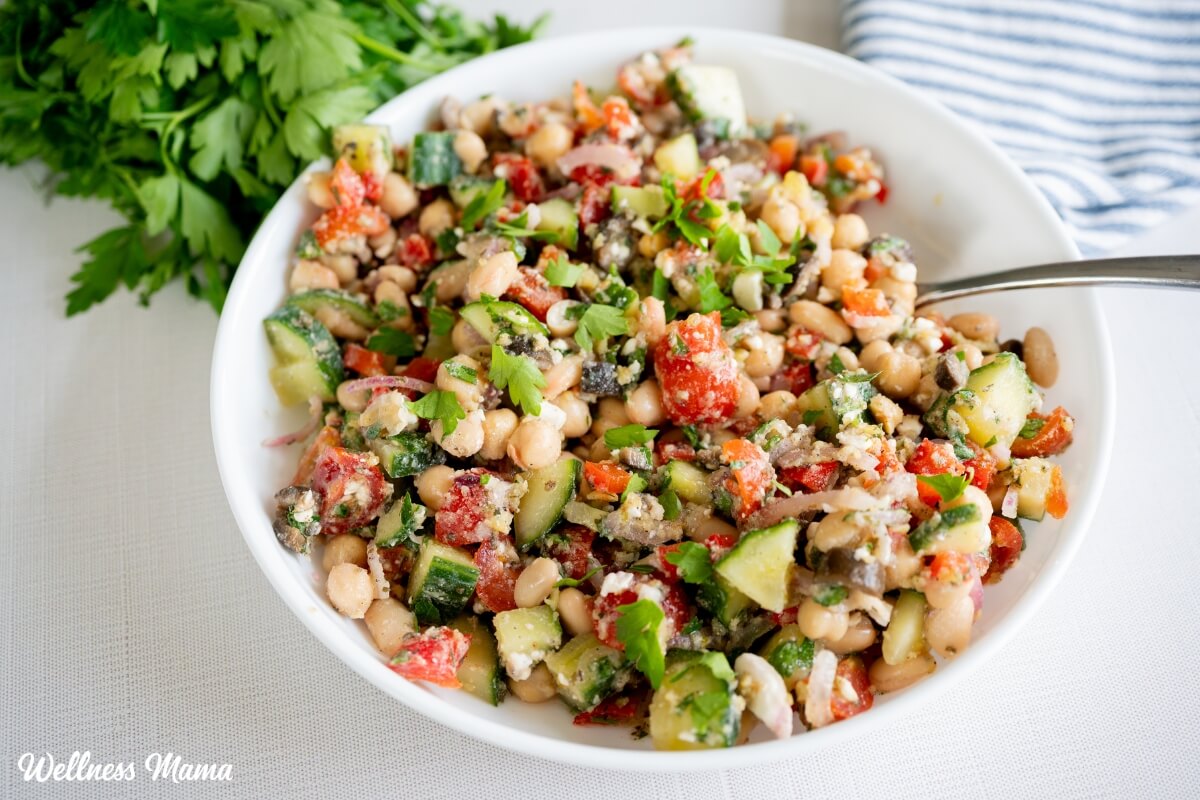
I love that it’s full of tasty flavors and chock full of veggies. The beans offer fiber and healthy carbs to fill hungry bellies. The dressing has olive oil for Omega-3 fatty acids and lemon juice for tang. Then there’s the mint, oregano, garlic, parsley, and feta cheese for a Mediterranean inspired flavor.

Mediterranean Bean Salad

This is a great recipe for meal prep as it keeps well in the refrigerator for 3–4 days, making it perfect for lunches or quick dinners throughout the week. The flavors actually improve by the next day.

The mix of chickpeas and cannellini beans adds satisfying texture, protein, and fiber. Then there’s plenty of fresh vegetables like cucumber, tomatoes, and bell pepper for crunch and color. The olives and feta add a savory, salty bite to tie everything together and really add to the Greek theme. 

Add one of the following to make it a complete meal:

  • Grilled chicken
  • Wild-caught salmon
  • Sardines
  • Hard-boiled eggs

Why This Salad is My New Favorite

One of the best things about this recipe is how flexible it is. It works as an easy side dish for grilled meats, a light lunch, or a make-ahead dinner on busy evenings. Since it doesn’t rely on leafy greens, you don’t have to worry about it getting soggy after a day (or more) in the refrigerator.

I make a lot of my salad dressings because they’re so much fresher, simpler, and affordable than buying them. You can either dump the ingredients into a bowl and whisk or use a jar like I do. After the ingredients are in a pint-size Mason jar I cap it tightly and give it a good shake. 

Real olive oil forms the dressing base. I use this brand which is authentic and has incredible flavor and nutrition! The lemon cuts through and adds a little tang to the dressing and blends nicely with the added herbs. 

Easy Ways to Customize It

I’m not a big fan of single use items in my kitchen, including ingredients. So like most things I make, feel free to adapt this Mediterranean bean salad with what you have. Swap the cannellini beans for Great Northern beans or butter beans. Use Kalamata olives if you prefer a stronger flavor. Try some diced avocado just before serving for extra creaminess.

If you’re serving a crowd, you can easily double the recipe. It’s also a great option to bring to potlucks, picnics, or barbecues since you can make it ahead. Plus, it tastes delicious chilled or at room temperature.

For the best flavor, let the salad rest for at least 15 minutes before serving. This gives the dressing time to soak into the beans and vegetables so every bite is well seasoned. If you’re making it ahead, give it a quick toss before serving and add an extra squeeze of fresh lemon juice if needed.

We love this as a healthy lunch side thanks to all of the complex flavors, yet simple ingredients. It’s fresh, colorful, packed with wholesome ingredients, and comes together in just minutes. Perfect for busy schedules!

Mediterranean Bean Salad

A hearty bean salad with Mediterannean flavors. Great for making ahead for a quick lunch or supper side!

Bean Salad

  • 15 oz cooked chickpeas (drained and rinsed)
  • 15 oz cooked cannellini beans (drained and rinsed)
  • 1 English cucumber (diced)
  • 1 cup cherry tomatoes (halved)
  • 1 red bell pepper (diced)
  • ¼ red onion (thinly sliced)
  • ½ cup feta cheese (crumbled)
  • ½ cup black olives (sliced or whole)
  • ¼ cup fresh parsley (chopped)
  • 2 TBSP fresh mint (chopped)
  • Add the chickpeas, white beans, cucumber, tomatoes, bell pepper, onion, feta, olives, parsley, and mint to a large bowl.

  • In a small jar or bowl, whisk together the olive oil, lemon juice, sea salt, pepper, garlic, and oregano.

  • Pour the dressing over the salad and toss until everything is well coated.

  • Let it sit for at least 15–30 minutes before serving so the flavors can meld.

Nutrition Facts

Mediterranean Bean Salad

Amount Per Serving (1 cup)

Calories 200
Calories from Fat 99

% Daily Value*

Fat 11g17%

Saturated Fat 2g13%

Polyunsaturated Fat 1g

Monounsaturated Fat 7g

Cholesterol 8mg3%

Sodium 797mg35%

Potassium 246mg7%

Carbohydrates 20g7%

Fiber 6g25%

Sugar 2g2%

Protein 8g16%

Vitamin A 893IU18%

Vitamin C 29mg35%

Calcium 122mg12%

Iron 3mg17%

* Percent Daily Values are based on a 2000 calorie diet.

This tastes even better if it’s sat in the fridge overnight. 

What are some of your favorite, simple side dishes to make? Leave a comment and let us know!

Tags: , ,
Nearly half of Americans would go into debt to maintain their beauty routines, survey finds | Local News

Nearly half of Americans would go into debt to maintain their beauty routines, survey finds | Local News

(WDRB/InvestigateTV) — Forty-six percent of Americans say they would go into debt to maintain their beauty routines, according to a new survey by Zenoti, a beauty and wellness software company.

The survey of 1,000 adults also found 22 percent are cutting back on groceries to afford beauty spending, and 33percent said workplace stress and burnout is pushing them to increase their wellness routines.

Sarah Simonelli of Zenoti said consumers are not abandoning their beauty regimens — but they are becoming more deliberate about how much they spend.

“They’re not willing to sacrifice, because that means sacrificing their own wellness, their self-esteem, how they look and feel about themselves as they’re going throughout their daily lives,” Simonelli said. “And the value and importance of that is significant, especially — the beauty business has been around for decades, if not centuries.”

Rather than cutting beauty routines entirely, many consumers are adjusting how and when they spend. Simonelli said visits are being spaced out to reduce costs, and more people are signing up for memberships in search of better value. Use of “buy now, pay later” options to cover services is also on the rise.

“Thirty-two percent, we’re seeing, are actually trading down to a more comfortable price point — where maybe years in the past they were investing or indulging in high luxury services,” Simonelli said. “Now they’re thinking a little bit more practical so that it’s tangible and impactful but not overstretching their beauty spend.”

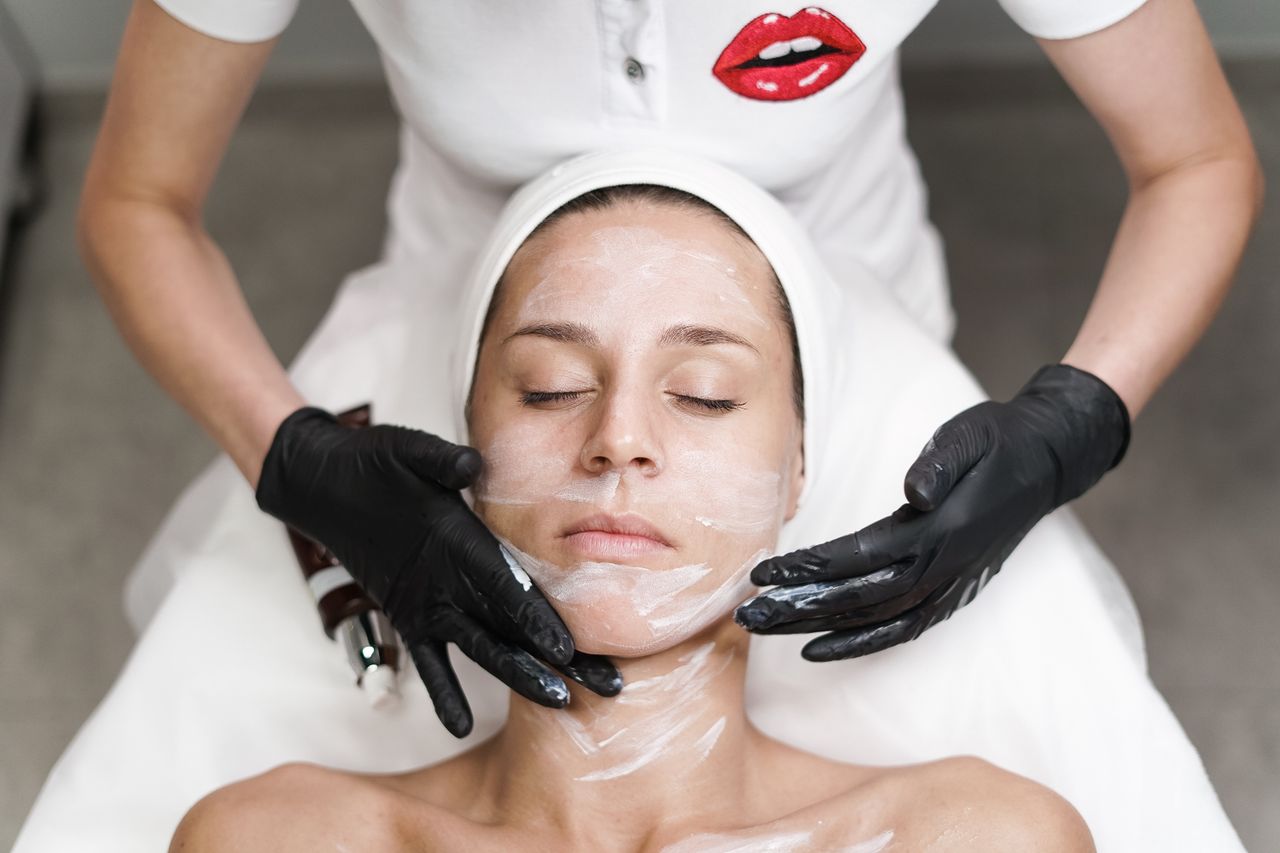
At-home beauty treatments are becoming increasingly common. The survey found 44 percent of respondents are doing at-home facials, 43 percent are coloring their own hair at home and 33 percent are opting for at-home waxing instead of professional services.

Copyright 2026 Gray Media Group, Inc. All Rights Reserved.

Tags: , , , , , , , ,
4 Magic Recipes for Rest and Relaxation

4 Magic Recipes for Rest and Relaxation

I’m all about the nervous system these days. Over the last decade, life has become increasingly challenging-I think everyone experiences a season like that, especially in middle age. Today I’m sharing a sleep/relaxation roll on recipe, pillow spray, essential oil inhaler and diffuser recipe to help improve sleep, support the nervous system and relax your mind. 

First, can I just say that blogging has become about pleasing Google (fact checking, robot/AI like posts) for a long time now. In fact, blogging all together has become a thing of the past. Most people don’t want to take the time to read a full blog post-bite sized video clips on social media have become the only content that is effective. However, I’m hanging in there and when I share a post about health, I by no means come from a place of authority. I like to write as though we are close and personal friends and am sharing my personal experiences. This is one of those  posts. I research and come to my own conclusions and sometimes it feels worth sharing. I have no credentials when it comes to giving health advice. I just like to share what works for me in the hopes it may work for you too. 

My nervous system has been a big concern of mine for years and so I’m encouraging self awareness and suggesting using essential oils as a tool to start calming the system. It’s always a favorite part of my journey to getting back to a calm nervous system. 

Are You In Fight or Flight?

You’ve probably heard of fight or flight. It is when a stressful life event can cause your body to stay in alert mode in order to protect itself. It’s a self preservation tactic our bodies do to help but when a stressor lingers for weeks, months or even years our nervous system can get stuck. Our body goes into fight or flight by producing too much cortisol. 

A few indicators that your nervous system is stuck in fight or flight:

  • Scaring easily if there is a loud noise or someone sneaks up on you.
  • Gaining belly fat
  • Low energy
  • Waking at 3 am
  • Slow digestion
  • Muscle tension
  • Racing thoughts
  • Shallow breathing

Supporting the body and letting it know it’s safe to come out of fight or flight usually just takes time. However, I proactively work on nurturing myself back to normal, also known as “rest and digest”. 

My tools to calm my nervous system are prayer, reading, jigsaw puzzles, walking, getting in bed early with lots of cats, essential oils, dim lighting and good TV, saying NO to invitations that may heighten stress, THC micro dosed gummies etc. Your tools may look different. The key is to find out healthy ways to relax your mind and body and do those things as much as possible. 

The point of saying all of this is to share a series of DIYs I’ve been loving in my nighttime routine. I love using essential oils and truly believe aromatherapy is a very powerful tools when it comes to relaxing and sleep. 

Related Post: Tips for a Better Night’s Sleep 

4 Best Essential Oils for Relaxation and Sleep:

  • Lavender: Lowers anxiety and heart rate to help you fall asleep faster. Many studies have shown lavender is effective when it comes to the nervous system.
  • Roman Chamomile: Soothes the nervous system, relieves physical tension and stops nighttime waking.
  • Cedarwood: Grounds the body and encourages melatonin production.
  • Ylang Ylang: Helps lower blood pressure and heart rate, encouraging relaxation.

Nervous System Reset Roll On Recipe:

  • 15 drops Lavender
  • 5 drops Roman Chamomile
  • 5 drops Cedarwood 
  • 2 drops Ylang Ylang
  • Top off w/ carrier oil (Fractionated Coconut Oil, Olive Oil, Jojoba, Sweet Almond, Avocado etc.)
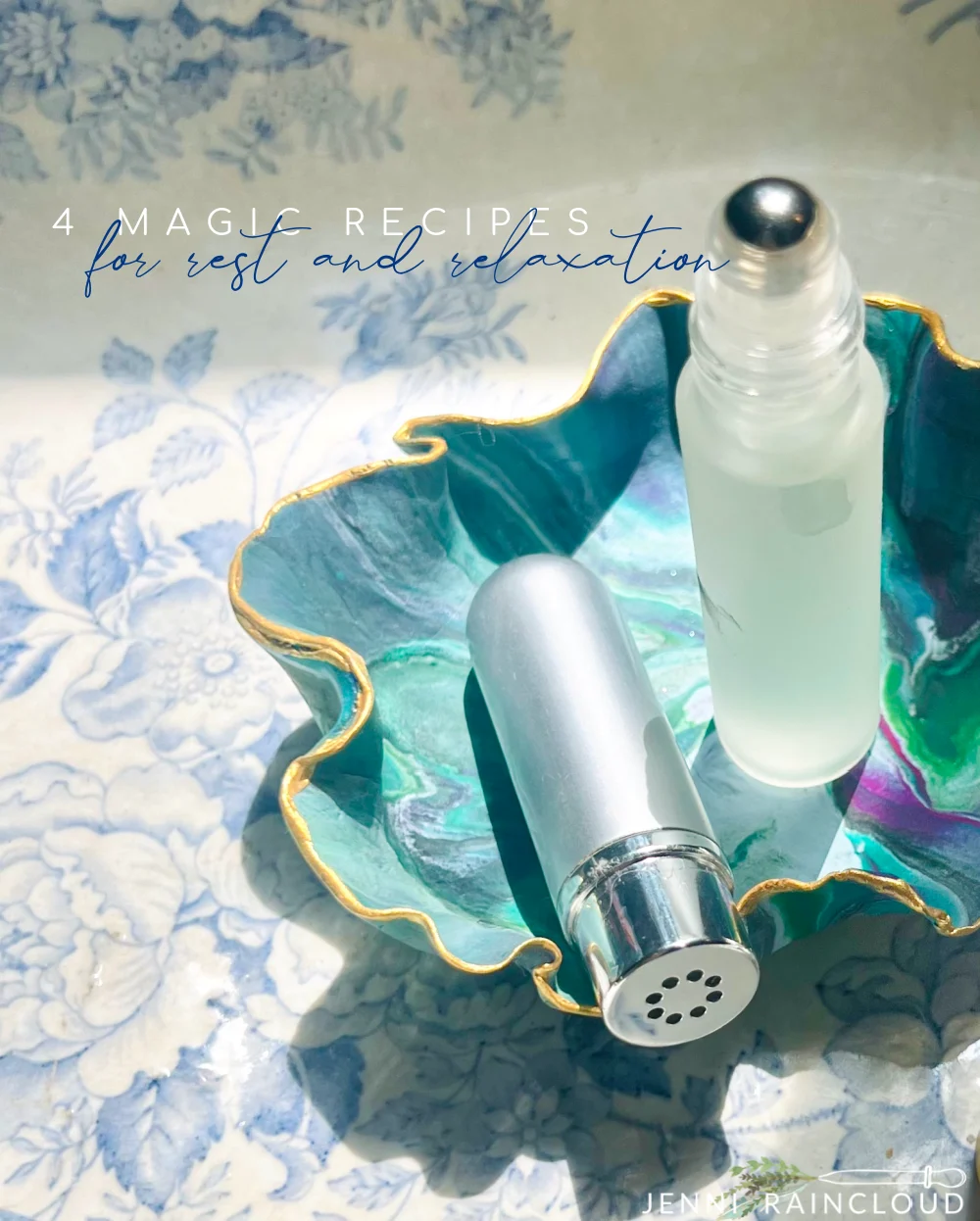
  • 10ml glass roll on bottle

I sometimes like to call this roll on, “Liquid Xanax”.  You can carry it with you during the day and/or use it before bed. Roll it on pulse points and on the bottoms of the feet before bed. You should also inhale it by taking slow, deep breaths.

If you’d like to make this for a child, I recommend reducing the amount of essential oils by half. 

TIP: If you’d like to make this in a 1 ounce roller bottle just triple the amount of drops. I found 1 ounce glass roller bottles with rose quartz balls that I’m wanting to use for other recipes-they’re so cool!

Related Post: DIY or BUY Badger’s Sleep Balm Recipe

Sleepy Time Diffuser Blend:

  • 7 drops Lavender 
  • 3 drops Roman 
  • 1 drops Ylang Ylang

Add essential oil drops and water to a diffuser 1 hour before bedtime. Allow to run through the night. 

TIP: If you love the Young Living glass diffuser but don’t want to spend $350+, I’ve had THIS ONE for 2 years now and it’s still going strong. It is identical. 

Related Post: Essential Oil Hack-Diffuser Stations

Time to Unwind Inhaler Recipe:

  • 6 drops Lavender
  • 3 drop Cedarwood
  • 3 drops Roman Chamomile
  • 2 drops Ylang Ylang
  • Inhalers

I love making essential oil inhalers. They are a wonderful (and easy) tool to have on hand for many different occasions. You can use an inhaler as often as needed. You simply remove the lid, hold it under your nose and breath deeply for 1-2 minutes. You can find more information in my Essential Oil Inhaler post along with quite a few inhaler recipes (and cute labels) including an allergy inhaler, an illness inhaler and a nausea inhaler.

Sweet Dreams Pillow Spray Recipe:

Add all ingredients to a glass spray bottle and generously spray your linens, especially your pillows before getting into bed. 

TIP: You can always add more essential oils if you feel the scent isn’t strong enough. I love lavender so I often sneak a bit more after a few sprays. 

Where To Get The Best Essential Oils:

I typically get my essential oils from Plant Therapy. Sometimes I’m in a hurry and get them on Amazon but honestly, ordering them from their website is just as quick and free shipping. Plus, going to their website gives me a chance to check for sales which happen often. I also love Mountain Rose Herbs essential oils. They are great quality as well. Both companies are 3rd party tested, organic and reasonably priced. 

I hope this post has been helpful. I’m very inspired by the art of relaxing. I think it is easier said than done and so many of us live in a stressful environment that is taking a great toll on our overall health. I’d love to start a discussion in the comments and hear how you de-stress and nurture your nervous system! 

xx, Jenni

Jennifer Phillips

Jennifer Phillips worked as a licensed aesthetician for over 8 years before creating the DIY skincare blog, Jenni Raincloud and her natural skin care line, J. Raincloud Organics. Jennifer has been blogging full time for 16 years and loves to gain and share knowledge on how to achieve beautiful skin the natural way.

Find me on: Instagram | Facebook

Tags: , , ,
Homestead Blog Hop - Homestead tips, ideas, animal care, and recipes every Wednesday

Homestead Blog Hop 610 – Strawberry Cake and Kitchen DIYs

Welcome to Homestead Blog Hop, a weekly gathering for homesteaders and simple living enthusiasts to share DIY projects, from-scratch recipes, and creative inspiration. This week’s hop features cozy homesteading tips, along with practical ideas that celebrate handmade living and self-sufficiency.

Whether you’re looking for seasonal crafts, homemade treats, or encouragement on your homesteading journey, you’ll find plenty of inspiration to carry into the new year. Grab a cup of tea, explore the featured posts, and join us in sharing your own homestead creations.

Meet Your Homesteading Hosts

We’re Kelly from Simple Life Mom, Liz from The Cape Coop, Natasha from Houseful of Nicholes, and Laurie from Ridgehaven Homestead. Together, we’re passionate about from-scratch living, simple ingredients, frugal habits, and intentional homesteading. We’re delighted to host the Homestead Blog Hop, where you can find fresh inspiration each week for DIY projects, homemade recipes, and practical simple living ideas.

Follow Us for More Homestead Inspiration

Natasha – Houseful of Nicholes
Facebook | Pinterest | X | Instagram

Laurie – Ridge Haven Homestead
Facebook | Pinterest | Instagram

Liz – The Cape Coop
Facebook | Pinterest | X | Instagram

Kelly – Simple Life Mom
Facebook | Pinterest | X | Instagram

FEATURED POSTS from the Last Homestead Blog Hop

Each week, we take turns selecting three featured posts from the Homestead Blog Hop. These features are shared across all of our social media platforms, helping spotlight the creativity and hard work of our fellow homesteaders. Here are the featured posts from last week’s hop:

1. How to Wallpaper a Refrigerator (No Tools, No Damage!) from Sonata Home Designs

2. Homemade Strawberry Cake Recipe from Ann’s Entitled Life

3. Functional Countertop Storage: A Thrifting Guide from Thrifting Wonderland

Congrats! Feel free to grab the featured on button for your post.

Just right click and ‘save image as…‘

Guidelines for the Homestead Blog Hop

  1. Click the “Add Your Link” button below and upload a clear, eye-catching image from your project or recipe. Please link directly to the family-friendly post itself, not your blog’s homepage.
  2. You may link up up to three posts each week.
  3. Take time to visit a few other blogs in the hop and leave a thoughtful comment to let them know you stopped by. Community support makes this hop special!
  4. Please include a link back to the Homestead Blog Hop in your post. Posts without a backlink are not eligible to be featured. All featured posts are shared across all hosts’ social media channels.
  5. Share posts that haven’t been linked to the hop before. Older posts are welcome as long as they are new to the hop.
  6. By joining the Homestead Blog Hop, you grant the hosts permission to use one image from your post, with a link back to your site, if your post is selected as a feature next week.
  7. This is a family-friendly link-up designed to encourage, inspire, and support the homesteader in all of us.

Let the Party Begin!

Which project are you excited to try this week? Leave a comment below.

Join Our Homestead Blog Hop Pinterest Board

Follow all of your hosts on Pinterest and send a message if you’d like to be added to our Homestead Blog Hop group board. This board is a great place to share your DIY projects, crafts, and from-scratch recipes with the homesteading community.

Guideline: Only pin posts that you’ve linked up to the Homestead Blog Hop.

Tags: , , , , , ,
Niacinamide vs Vitamin C: What's the Difference and Which Is Better for Your Skin?

Niacinamide vs Vitamin C: What’s the Difference and Which Is Better for Your Skin?

Living in India means your skin has a lot to deal with. One day it’s the sun, the next it’s humidity, dust, pollution or hard water. And if you’ve decided to add your first serum to your skin care routine, you’ve probably come across two names more than any others: niacinamide and vitamin C. They sound similar, but they do very different jobs.

One promises brighter skin. The other claims to reduce oil, calm acne and strengthen your skin barrier. Both have loyal fan clubs, and both are backed by research. So, if you’re only planning to add one serum to your routine, which one deserves a spot on your shelf?

The answer is less about which ingredient is “better” and more about what your skin is trying to tell you.

Also Read: The ultimate beginner’s guide to skincare for men in India

Let’s clear up one of the biggest misconceptions. Niacinamide and vitamin C aren’t rivals. Think of them as two colleagues working on different tasks.

One helps your skin defend itself and stay balanced. The other helps protect it from environmental damage while improving brightness. They can even complement each other when used correctly.

The old belief that the two ingredients cancel each other out came from older laboratory studies conducted under conditions that don’t reflect how modern skincare products are formulated or used. Most dermatologists today agree that they can be used together.

So if you’ve been avoiding one because someone on social media said they “don’t mix”, you can stop worrying.

What exactly is niacinamide?

Niacinamide is a form of vitamin B3, and it’s one of the gentlest skincare ingredients around.

If your skin often feels oily by lunchtime, breaks out during humid weather or gets irritated easily, niacinamide is worth considering.

Research has shown that niacinamide can help strengthen the skin barrier, reduce water loss, regulate oil production and improve the appearance of enlarged pores over time. It also has anti-inflammatory properties, which is why it’s commonly recommended for people with acne-prone or sensitive skin.

Also Read: Sharing skincare with friends? Doctors say think again 

Imagine commuting through traffic in Bengaluru, Delhi or Mumbai every day. Between the heat, dust, pollution and air conditioning, your skin goes through a lot. Niacinamide works like a support system, helping your skin recover from those daily stressors.

Niacinamide may be a good choice if:

  • Your skin gets oily easily.
  • You have mild acne or frequent breakouts.
  • Your skin barrier feels damaged after trying too many products.
  • You want a gentle ingredient that’s suitable for beginners.
  • You have redness or sensitive skin.

What about vitamin C?

Vitamin C has earned its place as one of skincare’s most popular ingredients for good reason.

It’s a powerful antioxidant, which means it helps protect the skin from damage caused by UV rays and pollution. It also supports collagen production and helps improve uneven skin tone and pigmentation.

If you’ve noticed your skin looking dull after weeks of commuting in the sun or you’ve been left with stubborn marks after old pimples, vitamin C may be the ingredient you’re looking for.

It’s especially popular among people who want brighter, more even-looking skin.

Vitamin C may be a better choice if:

  • Your skin looks dull or tired.
  • You have pigmentation or post-acne marks.
  • You’re concerned about early signs of ageing.
  • You spend a lot of time outdoors.
  • You already wear sunscreen every day.

If you live in India, your skin has its own challenges

One thing that skincare conversations often forget is geography.

Indian skin deals with a combination of strong UV exposure, humidity, pollution and, in many cities, hard water. These factors can contribute to tanning, pigmentation, oiliness and a weakened skin barrier.

That’s why there’s no universal “best” ingredient.

Someone in Chennai struggling with oily skin during the summer may benefit more from niacinamide. Someone in Jaipur trying to fade sun-induced pigmentation may notice better results with vitamin C.

Your environment matters just as much as your skin type.

Can you use both?

In fact, many dermatologists recommend using vitamin C in the morning because of its antioxidant benefits, followed by sunscreen. Niacinamide can be used either in the morning or evening and pairs well with many skincare ingredients.

Also Read: Dry or dehydrated skin? How to tell what you really need 

If your skin is sensitive, introduce one ingredient first and use it consistently for a few weeks before adding another. That way, if irritation occurs, you’ll know which product is responsible.

Don’t expect overnight miracles

One reason people give up on skincare is unrealistic expectations.

You start using a serum on Monday and by Friday you’re checking the mirror wondering why your dark spots haven’t disappeared.

That’s not how skin works.

Research on topical skincare ingredients generally measures improvement over weeks rather than days. Consistency matters much more than constantly switching products.

Which one should you buy first?

If you’re still wondering which bottle to pick, here’s a simple way to decide.

Choose niacinamide if your biggest concern is:

  • Oily skin
  • Acne
  • Enlarged-looking pores
  • Redness
  • A weakened skin barrier

Choose vitamin C if your biggest concern is:

  • Dullness
  • Uneven skin tone
  • Pigmentation
  • Post-acne marks
  • Protecting skin from everyday environmental damage

If your skin concerns overlap, you don’t necessarily have to choose one forever. Many people eventually use both.

One ingredient won’t fix everything

It’s tempting to believe one serum will solve every skin concern.

The reality is much less exciting but far more reassuring. Healthy skin usually comes down to a few basics: a gentle cleanser, a moisturiser that suits your skin, daily sunscreen and one active ingredient that addresses your biggest concern.

Also Read: Why drinking pomegranate juice every morning is a game changer 

Whether you choose niacinamide or vitamin C, remember that skincare isn’t about chasing flawless skin or copying someone else’s routine. It’s about understanding your own skin and giving it what it actually needs.

(Disclaimer: This article is intended for informational purposes only and should not be considered medical advice. Always perform a patch test before using a new product and seek advice from a qualified dermatologist if you have sensitive skin or an underlying skin condition)

Tags: , , , ,
Best oLive
Privacy Overview

This website uses cookies so that we can provide you with the best user experience possible. Cookie information is stored in your browser and performs functions such as recognising you when you return to our website and helping our team to understand which sections of the website you find most interesting and useful.