The rise of skin minimalism: Why less is becoming more in modern skincare |

The rise of skin minimalism: Why less is becoming more in modern skincare |

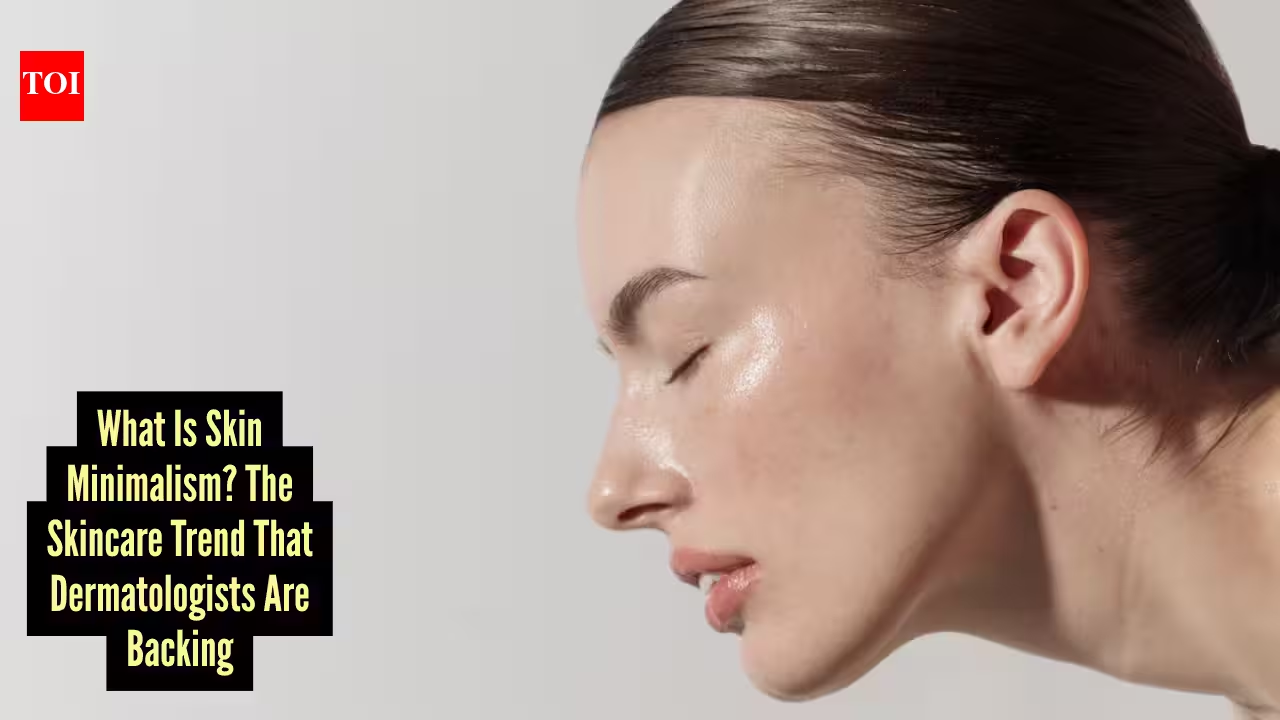
(Image Credits: Pinterest) For decades, skincare has meant an involved process of using many serums, toners, exfoliators, masks, and strong active ingredients. The concept of social media has only added to the perception that the more products you have, the better your results will be. But consumer trends have started moving toward a conscious method called skin minimalism. The central principle of minimalistic skincare is to rely on a smaller number of more efficacious products that can act together.The primary catalyst for such a trend lies in increasing concern about skin barrier conditions. Although active components have revolutionised the skincare industry, there is still a danger of over-layering, excessive exfoliation, and many strong formulations at once. As a result, skin barrier function gets undermined, and irritation, inflammation, and dryness occur.

(Image Credits: Pinterest)

Skin minimalism advocates a back-to-basics approach centred on consistency rather than complexity.Such a balanced routine would include a mild cleanser, a moisturiser, a broad-spectrum sunscreen, and treatment products based on one’s individual skin issues. The emphasis should be on comprehending one’s skin rather than following all the latest trends and fads. It is important to remember that minimalist skincare is not about forgetting about your skincare at all but about making thoughtful product choices.The importance of making knowledgeable choices cannot be underestimated when it comes to skincare.The future of skincare will be determined by scientifically substantiated products, a personal approach to treatment, and skin barrier integrity preservation. Dermatology slowly progresses from unnecessary complexity to evidence-based practice. In essence, healthy skin does not come from having too many products but from having the correct ones used properly.

(Image Credits: Pinterest)

For better understanding of this topic, we approached Dr Rinky Kapoor, Director & Co-Founder of The Esthetic Clinics, who explained, “As skincare evolves further, the new role of dermatology clinics will involve not just recommending products but creating skin health programmes for each patient. The custom combination of dermatologically formulated skincare products, laser treatments, skin tightening, and injectable treatments is allowing patients to enjoy improved results while still keeping their skincare regimen simple and efficient.”

Tags: , , , ,
7 Top K-Beauty Trends for 2026: Minimalism, PDRN, and Bioactives

7 Top K-Beauty Trends for 2026: Minimalism, PDRN, and Bioactives

TEMPO.CO, Jakarta – Korean beauty, or K-Beauty, has changed how we see skincare. It gave us “glass skin” and the famous multi-step routine. K-Beauty turns daily habits into a ritual of care. It uses specific active ingredients to solve real skin concerns. This influence has made Korean products a global staple.

By 2026, K-Beauty moves toward efficiency. Science leads the way with bioactive beauty and new ingredients. The industry is also looking closer at scalp health. These trends promise cleaner skin and hair that looks thick and healthy. The focus is now on deep, biological health.

Caroline Choi, founder of Mizz Korea, calls this smart minimalism. “Skin care that’s luxurious, multitasking, and deeply intuitive,” she told Elle.

Choi believes next year will focus on new ingredients and transformative textures. We will see products that change shape during use. Fun formats, like jelly nails, will also trend. Meanwhile, long routines with too many steps are fading. Consumers want results without the clutter.

Top K-Beauty Trends 2026

Here are the top K-Beauty trends predicted for 2026.

1. Hair Essence

Essence is a classic K-Beauty step for the face. It is a liquid that boosts hydration and plumps the skin. In 2026, this concept moves to hair care. People are treating their scalp like their face. They want the same care for hair follicles as they do for pores.

Dr. Jae Yong Ban, CEO of Bano Cosmetics, says the essence format is ready for hair.

“The hair essence market, in particular, seems poised for growth, with potential trends including essence products containing cica to help soothe scalp irritation and root-strengthening essences formulated to help reduce hair loss,” Ban told Elle.

Early versions of these products are already appearing. They offer a light way to treat hair without heavy oils.

2. PDRN

PDRN is a substance from salmon DNA fragments. Doctors have used it for years to heal skin after surgery. Now, in 2026, it is reaching the general public. It is no longer just for clinics. It is coming to your vanity.

Dr. Ban expects PDRN to become a household name. This ingredient fights inflammation and helps the body make collagen. It speeds up skin repair. While few brands use it now, Ban predicts more PDRN creams and serums will hit the market soon. It is the next big step in regenerative beauty.

3. Exosomes

Exosomes are the latest “it” ingredient in bioactive science. Ban predicts their popularity will peak soon. These are tiny bubbles released by cells. They carry proteins and genetic data to other cells. They act like a messenger system, telling cells how to repair themselves.

In skincare, exosomes boost collagen and repair tissue. The challenge is quality. Only human-derived exosomes work well on human skin. This means the cell source and growth environment are vital. To solve this, brands are moving toward bioengineered exosomes. You can see this in treatments like AnteAGE PEARL, which combines microneedling with exosomes and PDRN.

4. Skin Barrier Focus

Protecting the skin barrier is the top priority for 2026. Dr. Y. Claire Chang, a dermatologist at UnionDerm, says barrier products will evolve. The goal is to keep the skin’s natural shield strong against pollution and stress.

“This aligns with what Korean dermatologists have emphasized for years: Gentle, consistent skin care that focuses on skin health,” she says.

Caroline Choi also backs this shift. She believes using the right prep products is essential. When the barrier is strong, skin is less likely to react to external triggers. Health is now more important than a temporary glow.

5. Poly-L-Lactic Acid (PLLA)

PLLA is famous as the main ingredient in fillers like Sculptra. It stimulates the body to create its own collagen. Ban predicts that 2026 will see PLLA move into over-the-counter creams. You won’t need a needle for these benefits.

Topical PLLA is not as strong as an injection, but it still works. It provides light exfoliation and deep hydration. It gives the skin an immediate smooth look. Over time, it helps the skin stay elastic and firm. It is a slow beauty ingredient that builds lasting results.

6. Plant-Based Active Ingredients

Plant ingredients are a K-Beauty staple, but the technology is improving. The 2026 approach uses functional proteins that mimic how skin works. It is about the harmony between nature and biology. Science is now extracting the most potent parts of plants.

“Oat protein has become a true star for its ability to lock in moisture, strengthen the barrier, and calm irritation, while hydrolyzed protein helps the skin appear plumper and more youthful thanks to its high absorbability,” Choi explains.

She also points to Orchistem, a plant stem cell extract. “It boosts collagen production and supports skin elasticity, helping achieve that natural, glass-skin luminosity K-Beauty is known for, but in a smarter, more sustainable way,” she added.

7. Shorter, Targeted Routines

The 10-step routine is officially changing. Experts say the era of “more is more” is over. Viral TikTok trends and “layering for the sake of layering” are losing fans. Consumers are tired of complicated steps that lack clear results.

“In 2026, we will see fewer, smarter steps with multi-functional products and an evidence-backed approach to skin care,” says Dr. Chang.

People are becoming more selective. They want products developed by dermatologists and tested in labs. The focus has shifted to long-term health. Quality is finally winning over quantity.

ELLE | HARPERS BAZAAR

Read: Apples or Oranges: Which Is Better for Immune Health?

Click here to get the latest news updates from Tempo on Google News

Tags: , , , , ,
The Case For Skin Minimalism In An Age Of Excess

The Case For Skin Minimalism In An Age Of Excess

There’s something quietly radical about doing less. In a culture that sells twenty-step routines and micro-targeted serums for every mood, skin minimalism sounds almost defiant. But dermatologists and beauty insiders alike are realizing that cutting back can be the most luxurious thing you do for your face. Not in a trendy, “clean girl” sense, but in a restorative, science-backed way that puts skin health before obsession.

When Too Much Becomes Too Much

The irony is that our skincare frenzy began with good intentions. We wanted hydration, clarity, and glow. But in the process, we’ve layered active ingredients until our moisture barriers cried for help. Peeling, redness, chronic dryness, these aren’t signs of commitment. They’re signs of confusion. Many of the so-called miracles we chase end up tripping over one another, weakening the very balance we’re trying to protect. The minimal approach doesn’t reject science; it respects sequencing, patience, and restraint.

If your bathroom shelf looks like a lab, your skin’s probably overworked. Just because an ingredient can do something doesn’t mean it should, at least not all at once. Acids, retinoids, and exfoliants have their place, but it’s the constant swapping, layering, and doubling up that creates chaos.

Why Less Feels Better

Minimal skincare is less about what you remove and more about what you let your skin relearn. The skin barrier, that paper-thin yet powerful layer of lipids and cells, is naturally intelligent. When it’s overloaded with harsh ingredients, it loses its ability to regulate oil, hydration, and defense. Pulling back allows it to reset. Think of it like giving your skin a break from background noise so it can find its rhythm again.

People often underestimate how much skin can self-correct when left alone. When products stop competing for attention, your barrier rebuilds, your microbiome recalibrates, and inflammation quiets. In turn, skin looks smoother and calmer, not because it’s been micromanaged, but because it’s been respected.

Rethinking The Everyday Routine

The minimalist mindset doesn’t mean abandoning care altogether. It’s about being intentional. A gentle cleanser, a nourishing moisturizer, and sunscreen, those three form the foundation that never goes out of style. And yes, mineral sunscreens are a must, year-round, whether you’re running errands or sitting by a window on a cloudy day. Zinc oxide and titanium dioxide are old-school heroes for a reason: they protect without the irritation many chemical filters can bring.

Beyond that, it’s about listening. If your skin feels tight, add a hydrating serum with humectants like glycerin or hyaluronic acid. If it feels oily, swap heavy creams for lighter emulsions instead of reaching for another acid. You’re working with your skin, not against it.

The Connection Between Nutrition And Skin Health

Here’s the part many skincare enthusiasts skip: the link between what you eat and what shows up on your face. Nutrition and skin health are inseparable. When your body runs low on antioxidants, fatty acids, or hydration, it’s written all over your complexion. Eating whole foods rich in vitamin C, omega-3s, and polyphenols supports the same barrier you’re trying to protect topically.

It’s not about chasing beauty from the inside out like a cliché. It’s about realizing that the skin barrier’s strength starts with the nutrients fueling it. A diet heavy in processed foods and sugars encourages inflammation, while one filled with plants, clean proteins, and healthy fats supports a calm, even-toned complexion. The most radiant skin routines are the ones that don’t end at the bathroom sink.

How Simplicity Becomes Luxury

Minimalism is often mistaken for austerity, but in skincare, it’s the opposite. A curated routine feels indulgent because it’s mindful. When you only use what truly works, each product becomes intentional, not background clutter. You start enjoying the ritual again instead of sprinting through steps like a checklist.

The luxury of less lies in the awareness it creates. When your skin looks and feels good without constant intervention, there’s a quiet confidence in that. It’s not about perfection. It’s about alignment, your products, your habits, and your skin all working together instead of competing.

In the end, skin minimalism isn’t a movement or a rulebook. It’s a reset button. It’s choosing presence over panic, progress over performance. The skincare industry will always evolve, offering new ingredients, new textures, new promises. But the timeless truth remains: balance wins.

Tags: , , , ,
Best oLive
Privacy Overview

This website uses cookies so that we can provide you with the best user experience possible. Cookie information is stored in your browser and performs functions such as recognising you when you return to our website and helping our team to understand which sections of the website you find most interesting and useful.