Samsung Newsroom

Parasol Culture Spreads to U.S. as K-Beauty Fuels Sun-Avoidance Habit

Foreign tourists walk while holding parasols at Gwanghwamun Square in Jongno-gu, Seoul. Newsis

The parasol culture long familiar across Asia, including South Korea and Japan, is spreading to the United States. Analysts say record heat has driven demand to avoid ultraviolet exposure, while the K-beauty boom is expanding skincare habits from applying sunscreen to avoiding sunlight altogether.

Umbrellas Even Without Rain

According to industry sources on the 21st, The New York Times recently reported that a growing number of U.S. consumers are using parasols to shield themselves from strong sunlight and ultraviolet rays even on days without rain.

While the sight of parasols in summer is familiar across Asia in countries such as South Korea, China and Japan, it was a relatively unfamiliar practice in the United States and Europe. The mood is shifting, however, as record heat waves recur and awareness of ultraviolet exposure grows.

Social media has also driven the spread. On platforms such as TikTok and Instagram, users are sharing content that treats parasols not simply as tools to block sunlight but as fashion items to match an outfit. Dermatologists’ emphasis on ultraviolet protection is also cited as a factor boosting demand.

Citizens hold parasols in front of Yongsan Station in Seoul. Yonhap News

Sales figures are climbing as well. Sales of ultraviolet-blocking umbrellas by New Zealand umbrella brand Blunt rose 60% from a year earlier. U.S. umbrella maker Davek, which launched its first parasol last year, said sales this year doubled from the previous year.

Blunt’s founder told the NYT that one factor behind rising parasol demand was Korean-style skincare culture, which has spread through social media and content creators. The founder explained that under the influence of K-beauty, the habit of not just applying sunscreen but avoiding sunlight itself is spreading alongside it.

Market research firm Market Intelo projected that the global ultraviolet-blocking umbrella market would grow from $1.8 billion last year to $2.9 billion (about 4.03 trillion won) by 2034. While the Asia-Pacific region accounted for most of the market last year, North America’s share already reached 18.5%.

Beyond Sunscreen: A Habit K-Beauty Changed

Analysts point to K-beauty, whose global influence has grown, as one axis of the parasol boom. As the Korean skincare approach of meticulously using sunscreen to prevent skin aging becomes known, interest is also spreading to methods of reducing sun exposure itself using hats, clothing and parasols.

K-beauty’s growth is also evident in exports. A comparison of Korea Customs Service and French customs data for the same product category (HS code 3304) on the 21st showed that Korea’s exports of skincare and color cosmetics in the first half of this year totaled $5.72453 billion (about 7.99 trillion won). France still leads at 5.69401 billion euros (about 9.28 trillion won), but the gap is narrowing.

In the United States, the world’s largest cosmetics market, the rankings have already flipped. Korea’s cosmetics exports to the U.S. stood at $1.02304 billion in 2023, falling short of France’s $1.17167 billion, but rose to $1.54759 billion in 2024, overtaking France. Last year, Korea recorded $1.74881 billion, while France came in at $1.06228 billion.

French daily Le Monde reported that France’s exports of cosmetics such as perfume and skincare fell last year for the first time in 20 years. Competition from K-beauty, which has rapidly expanded its influence in the U.S. skincare market, was cited as one cause alongside U.S. tariff policy.

Record Heat, Then Record Rain: Korean Searches for Sun-and-Rain Umbrellas Surge 27-Fold

At home, recent extreme weather swings have been driving demand for sun-and-rain umbrellas. Their practicality has come to the fore, as they can be carried to block hot sunlight and also used in sudden downpours.

The daytime high in Yangsan, South Gyeongsang Province, topped 40 degrees Celsius on the 29th of last month, then soared to 42.5 degrees on the 2nd of this month. Extreme weather followed, with record rainfall pouring on southern regions from the 15th to the 17th.

According to fashion platform 29CM, searches for “UV-blocking parasols” in June and July this year surged 27-fold from the same period a year earlier. Over the same period, searches for “ultra-light sun-and-rain umbrellas” rose 188% and “blackout sun-and-rain umbrellas” rose 135%.

The industry expects related demand to continue as climate change combines with heightened interest in ultraviolet protection driven by K-beauty. Analysts say that as skincare expands beyond applying sunscreen to blocking sunlight itself with parasols, hats and clothing, new consumption is being created in the umbrella market.

Tags: , , , , , , ,
How K-beauty moved into the UK skincare mainstream

How K-beauty moved into the UK skincare mainstream

The difference is that shoppers are no longer just curious about Korean skincare. They are actively buying into the category, learning how products fit together and searching for formulas that match specific concerns. That move from discovery to repeat purchase is what has helped K-beauty become more than a passing trend.

The numbers reflect this shift. Cosmetics Business reported that searches for Korean skin care on TikTok Shop UK rose 125% in the second half of 2025, while K-beauty baskets were almost 35% higher in value than the overall skin care average. For retailers, that suggests a category with both strong visibility and serious commercial pull.

From Social Discovery to Serious Skincare Demand

Social platforms have played a major role in bringing K-beauty to wider UK audiences. A viral cleanser, toner pad, serum or SPF can introduce shoppers to a brand almost instantly. But social discovery alone does not explain why the category has lasted.

The real strength of K-beauty is that it gives consumers a practical way to approach skincare. Products are often understood through skin concerns, textures and steps: cleansing, hydration, barrier support, sun protection or targeted treatment. That makes the category easy to explore, but also useful enough to return to.

This is why K-beauty now feels less like a novelty and more like part of everyday skincare. UK shoppers are becoming more confident about asking which ingredients suit their skin, how products should be layered and what role each step plays in their daily habits.

Why K-Beauty Is Becoming Easier to Buy in the UK

Availability has also changed the market. A few years ago, many Korean skincare products felt specialist or difficult to access. Now, UK consumers can find K-beauty through high-street retailers, social commerce platforms and dedicated online stores.

Cosmetics Business has reported that Boots expanded its K-beauty range with brands including Anua, Skin1004 and Mixsoon, alongside existing customer favourites such as Laneige and Beauty of Joseon. That kind of retail presence matters because it gives the category more credibility with everyday shoppers. It also makes trial easier, especially for consumers who may have first seen a product online but want to buy from a retailer they recognise.

Specialist retailers still have an important role to play, particularly as the market becomes more crowded. Shoppers may know they are interested in Korean skincare, but still need help choosing between brands, ingredients, product types and skincare steps. As interest grows, specialist Korean skincare UK retailers can help shoppers navigate brands, ingredients, product types and skincare steps with more confidence.

What UK Shoppers Now Expect From K-Beauty

As K-beauty becomes more established, UK shoppers are becoming more selective. They increasingly expect:

  • Clear product information around ingredients, skin concerns and skincare steps
  • Reliable UK availability, rather than products that are difficult to source
  • Confidence that products are authentic and from trusted channels
  • Curated product edits that help shoppers move from viral discovery to confident repeat purchase

This is where K-beauty has an advantage over many trend-led categories. It has the excitement of discovery, but it also has enough structure to support long-term buying behaviour. A shopper might start with one viral product, then gradually explore hydration, SPF, soothing ingredients or barrier care in a more considered way.

What This Means for the Next Phase of UK Skincare

K-beauty’s rise also sits within a wider shift in facial skincare. Mintel estimates that the UK facial skincare category grew by 8.6% in 2025, with trial of K-beauty listed among the factors contributing to that growth. That points to a category that is not sitting outside the mainstream market, but actively influencing how consumers shop for skincare.

For beauty retailers, the opportunity is not simply to add more Korean products to the shelf. The more valuable opportunity is to present them clearly. That means merchandising by concern and product type, explaining benefits in plain language and helping shoppers understand how different items work together.

The next phase of K-beauty in the UK is likely to be shaped by this mix of excitement and education. Social platforms will continue to drive discovery, but long-term growth will depend on trust, availability and useful guidance.

That is how K-beauty has moved into the UK skincare mainstream. It gives consumers the appeal of discovery, while making everyday skincare easier to understand and return to.

Tags: , , ,
Hindustan Times News

K-Beauty doesn’t always work for Indian skin: Dermatologist explains how to safely adapt Korean skincare trends

Korean skincare has gained massive popularity worldwide, with terms like glass skin, skin flooding, and 10-step routines becoming part of everyday beauty conversations. From sheet masks to snail mucin and fermented ingredients, Korean beauty or K-beauty, promises glowing, hydrated, flawless skin. But an important question remains: Are Korean skincare trends truly suitable for Indian skin? The answer is not a simple yes or no.

Is Korean skincare better than Indian skincare? (Adobe Stock)

Tavishi Dogra is a health and wellness journalist with over eight years of experience in the field of health and wellness journalism. She knows how to explain complex health topics in a way that is easy to understand for many readers. Tavishi has written for respected publications like RSTV, Financial Express, Jagran, and Zee. She has a strong understanding of current health trends and social issues. Tavishi is dedicated to promoting holistic health and wellness solutions, which she shares in her articles about fitness, nutrition, and mental well-being. For more insights and updates on health, you can follow her work in the Hindustan Times.

Read moreRead less

“Skincare trends can be exciting, but healthy skin is not achieved by copying routines blindly. What works for one skin type or climate may not necessarily suit another,” Dermatologist Dr Nivedita Dadu of Dadu Medical Centre, tells Health Shots.

Indian and Korean skin are not the same

Skin concerns are shaped by genetics, climate, lifestyle, and environmental exposure. Korean skincare is largely designed around East Asian skin types and cooler, less humid environments. Indian skin, on the other hand, has its own unique characteristics.

Indian skin usually contains higher melanin levels, which provide some natural protection against sun damage but also make it more prone to pigmentation, tanning, melasma, and post-inflammatory hyperpigmentation.

This means even minor acne or irritation can leave behind stubborn dark marks. At the same time, many parts of India experience intense heat, humidity, pollution, and prolonged sun exposure, all of which significantly influence skincare needs.

Why does K-beauty appeal to so many?

One reason Korean skincare has become popular is its focus on prevention and hydration. Unlike harsh skincare routines that aggressively target flaws, K-beauty emphasises maintaining the skin barrier and supporting long-term skin health. Hydrating toners, lightweight essences, ceramide-based moisturisers, and sunscreen are often beneficial for many skin types, including Indian skin.

“Korean skincare introduced people to the importance of hydration and barrier repair, which are valuable concepts in dermatology,” says Dr Dadu. However, appreciating the philosophy does not mean every trend should be adopted without thought.

How to use Korean skincare trends safely?

Please note these pointers before trying anything on your own:

  • Many people attempt elaborate Korean routines seen online without understanding their own skin condition.
  • A 10-step routine may sound luxurious, but layering multiple products can overwhelm the skin, especially in India’s hot, humid weather. Excessive layering may lead to clogged pores, irritation, breakouts, or increased oiliness.
  • People with acne-prone or sensitive skin often make the mistake of experimenting with multiple active ingredients at once, assuming that more products mean better results.
  • In reality, overdoing skincare can compromise the skin barrier and trigger inflammation.

Pigmentation and acne need special attention

Another big differences between Korean and Indian skin concerns is the frequency of pigmentation disorders. Indian patients commonly struggle with melasma, tanning, acne marks, and uneven skin tone. While many Korean products prioritise glow and hydration, they may not always address these concerns effectively.

For Indian skin, ingredients such as niacinamide, azelaic acid, retinoids, vitamin C, and carefully prescribed pigmentation treatments often play a more central role. Similarly, acne management must be personalised. Viral skincare products promoted online may not suit acne-prone Indian skin and can sometimes worsen breakouts.

Sunscreen matters more than trends

If there is one skincare lesson Indian consumers should prioritise, it is sunscreen. Sun exposure remains one of the leading causes of pigmentation, premature ageing, and skin damage. While Korean sunscreens are often praised for their elegant textures, the most effective sunscreen is ultimately the one that suits your skin and is used consistently. “People chase trending products but neglect daily sun protection. No skincare routine can succeed without sunscreen,” Dr Dadu explains.

Keep skincare simple and personalised

Healthy skin does not depend on following social media trends or owning dozens of products.

A practical skincare routine for most Indian skin types usually includes:

  • A gentle cleanser
  • A moisturiser suited to the skin type
  • Broad-spectrum sunscreen
  • Targeted treatments only when required

The focus should remain on skin health rather than chasing perfection.

“Korean skincare offers useful ideas, but skincare should never be trend-driven. Understanding your own skin and choosing treatments suited to Indian conditions will always give better and safer results than copying routines seen online,” concluded Dr Nivedita Dadu.

(Disclaimer: At Hindustan Times, we help you stay up-to-date with the latest trends and products. Hindustan Times has an affiliate partnership, so we may get a part of the revenue when you make a purchase. We shall not be liable for any claim under applicable laws, including, but not limited to, the Consumer Protection Act, 2019, arising from the products. The products listed in this article are in no particular order of priority.)

Tags: , , , , , , , , , , ,
Field Level Media

From PDRN to Peptides, These 10 K-Beauty Ingredients Are Defining 2026 Skincare

Key Takeaways

  • As worldwide interest in K-beauty increases, Korean skincare brands are staying ahead of the curve with innovations that prioritize skin longevity, barrier support, and more.

  • No longer just about hydration and “glass skin,” the latest in K-beauty is helping us age smarter with regenerative ingredients like exosomes, PDRN, and biomimetic peptides.

K-beauty has officially moved beyond its glass skin and hydration-first era. In 2026, the category is getting a whole lot more high-tech. Across Seoul’s skincare labs, formulators and cosmetic chemists are leaning into biotech, regenerative aesthetics, and next-generation delivery systems where the conversation is no longer just about what’s in a formula, but how that formula communicates with skin.

Ingredients like PDRN, exosomes, and spicules have already started making their way into the global beauty lexicon, but in Korea, they’re just the beginning. The latest innovation is centered around “slow aging,” skin longevity, and barrier-first treatments that blur the line between skincare and in-office procedures–all while maintaining the gentle, skin-respecting philosophy K-beauty is known for.

What’s emerging now is a deeper, more sophisticated layer of K-beauty innovation: fermented actives engineered for better absorption, hanbang herbal ingredients backed by modern clinical testing, cryo-inspired cooling formats, and bio-intelligent ingredients designed to support the skin rather than aggressively “fix” it. In other words, K-beauty’s next chapter is all about optimization.

Below, experts break down 10 K-beauty ingredients and technologies they expect to define the next wave.

Meet the Experts

  • Amy Miller is the senior manager of product at Rael. 

  • Alicia Yoon is the chief executive officer and founder of Peach and Lily.

01 of 10

Exosomes

If there’s one ingredient category poised to completely dominate skincare conversations in 2026, it’s exosomes. The regenerative ingredient—which encompasses tiny extracellular vesicles that help cells communicate by carrying proteins, peptides, and signaling molecules—has quickly become a top buzzword across K-beauty and dermatology.

But according to experts, we’re still only scratching the surface. “Consumers are beginning to understand concepts like exosomes and regenerative skincare, but we’re only scratching the surface of where this category is headed,” says Peach and Lily founder and CEO Alicia Yoon.

What’s making exosomes especially interesting in K-beauty is the level of sophistication behind the scenes. Korean labs are focused on sourcing, stabilization methods, and delivery, going far beyond simply including the ingredient.

Still, dermatologists caution that the science around topical exosome skincare is changing. “For at-home skincare, the science is still evolving,” says board-certified dermatologist Joyce Park, MD, FAAD. “Factors like sourcing, stability, formulation, and delivery system matter tremendously.”

02 of 10

PDRN

PDRN has rapidly become one of the defining ingredients of the “regenerative skincare” era. Derived from salmon DNA, the ingredient is commonly associated with skin repair, wound healing, and collagen support. It’s become a staple ingredient in Korean clinics and med-spa-inspired skincare alike.

According to Rael’s senior manager of product, Amy Miller, consumers are gravitating toward ingredients tied to “skin longevity” rather than traditional anti-aging. “We’ve seen a big cultural pivot away from aggressive ‘anti-aging’ language,” she says. “The modern consumer wants skin health and resilience.”

That shift has pushed ingredients like PDRN into the mainstream, especially among younger consumers focused on “slow aging” and maintaining skin health long-term.

03 of 10

Spicules

Spicules–microscopic, needle-like structures often derived from marine sponges–have become one of the biggest delivery-system innovations to emerge from K-beauty recently. Often marketed as “liquid microneedling,” spicules work by creating micro-channels on the surface of the skin to help active ingredients penetrate more effectively.

But according to Park, the comparison to professional microneedling treatments is a little misleading. “Spicules can create some similar resurfacing effects, but they are not the same as an in-office microneedling treatment that reaches deeper layers of the skin,” she explains.

Instead, experts say the real innovation lies in the delivery system itself. “Spicules are exciting because they act as a natural microscopic delivery system to help active ingredients penetrate better,” Miller says. As K-beauty continues leaning into treatment-inspired skin care, spicules are expected to become far more mainstream in 2026.

04 of 10

Fermented Ingredients

Fermented skincare has been a staple in K-beauty for years, but experts say the category is entering a much more advanced era. “Korean labs are becoming more sophisticated in fermentation science,” Yoon tells us. “Fermentation can help ingredients become more bioavailable and skin-compatible.”

In practice, that means fermented ingredients may absorb more effectively while remaining gentler and less irritating than harsher actives. Miller says fermentation technology is especially appealing because it allows brands to create “high-performance, results-driven ingredients” without compromising the skin barrier.

As consumers continue moving away from aggressive skincare routines, fermented actives are likely to become even more central to K-beauty’s treatment philosophy.

05 of 10

Biomimetic Peptides

Peptides are hardly new, but next-generation biomimetic peptides are shaping up to be one of the biggest ingredient categories to watch. “If I had to choose one category specifically, I think biomimetic peptides and next-generation peptide technologies are going to become much bigger editorial conversations,” Yoon shares.

Unlike traditional peptides, biomimetic peptides are designed to mimic natural biological processes in the skin, supporting collagen production, elasticity, and barrier function in more targeted ways. Park says that peptides are also appearing outside of facial skincare, particularly in scalp and hair products as the line between skin and hair care continues to blur.

06 of 10

Madecassoside

Centella asiatica (aka cica) has already become a skin care staple, but experts predict one of its active compounds—madecassoside—is poised for a breakout moment of its own. “I love this ingredient because it’s anti-inflammatory, antioxidant, and incredibly calming for the skin,” Park tells us.

Madecassoside is especially popular for redness, irritation, dryness, and barrier repair, making it particularly appealing as consumers become more focused on skin recovery and resilience.

07 of 10

Glutathione

Already hugely popular in Korea, glutathione is finally beginning to gain real traction in the U.S. market. Known as the body’s “master antioxidant,” glutathione has become increasingly associated with brightening, antioxidant protection, and achieving the ultra-radiant “glass skin” effect consumers continue to chase.

According to Miller, glutathione is also part of Korea’s growing “inside-out beauty” philosophy, where skincare increasingly overlaps with wellness and ingestible beauty supplements. “Glutathione and tranexamic acid are transitioning from niche innovations to mainstream essentials,” she says.

08 of 10

Ginseng

Korean herbal ingredients—often referred to as hanbang ingredients—are also entering a new era. While ginseng has been part of Korean herbal medicine for centuries, Yoon says modern extraction technologies and clinical research are helping reposition the ingredient for a global audience. “Ginseng is going to have another major resurgence globally,” she says.

Today’s formulations are focusing on preserving active compounds through more advanced cultivation and extraction processes, allowing brands to highlight ginseng’s benefits for firmness, radiance, and skin resilience in a much more science-forward way.

09 of 10

Cryo-Inspired Cooling Ingredients

One of the more under-the-radar trends experts are watching? Cooling skincare. According to Miller, cryo-inspired formats are rapidly gaining traction in Korea as consumers increasingly look for products that soothe irritation, redness, and heat-stressed skin. “Rising global temperatures and frequent heat waves are driving demand for cooling treatments that deliver instant calming and depuffing benefits,” she explains.

Hydrogel masks, cooling toner pads, and ice-inspired formulations are all expected to grow significantly in 2026—particularly as skincare continues merging with wellness rituals.

10 of 10

NAD and NMN

Perhaps the most futuristic on the list, NAD and NMN are longevity-focused ingredients gaining momentum as skin care becomes influenced by the wellness world. “I definitely see NAD and NMN having a major breakout moment soon,” Miller says.

Both ingredients are associated with cellular energy and longevity research, making them especially appealing as consumers embrace “slow aging” and preventative skin care philosophies. While the category is still early, experts say it reflects a much larger shift happening in K-beauty overall: skincare designed not just to improve appearance, but to support skin function over time.

Read the original article on Byrdie

Tags: , , , , ,
Land of the rising sunscreen: Move over K-beauty, Japanese skincare products are India’s next big obsession

Land of the rising sunscreen: Move over K-beauty, Japanese skincare products are India’s next big obsession

Haircare and sun care have emerged as key growth segments within J-beauty, led by products centred on scalp health, hydration and lightweight formulations. Myntra hosts sunscreen, scalp-care and cleansing oil products and premium haircare treatments like Shiseido, Biore, DHC, Tsubaki, Fino and &honey. While K-beauty popularized trend-led, multi-step skincare routines, J-beauty is more closely associated with minimalist, efficacy-led products focused on long-term skin health.

Tags: , , , , , , , , , ,
Inside the Boots K-Beauty Edit featuring viral skincare heroes

Inside the Boots K-Beauty Edit featuring viral skincare heroes

I tried the Boots K-Beauty skincare edit to get that Korean glow (aff) | Boots

This article contains affiliate links. We may earn a small commission on items purchased through this article, but that does not affect our editorial judgement.

A closer look at the Boots Korean skincare essentials that will hydrate, soothe and reveal glass-like skin.

K-Beauty has taken the global skincare scene by storm and for good reason. Known for its skin-first philosophy, innovative ingredients and multi-step routines focused on hydration and barrier care, Korean skincare prioritises long-term skin health over quick fixes.

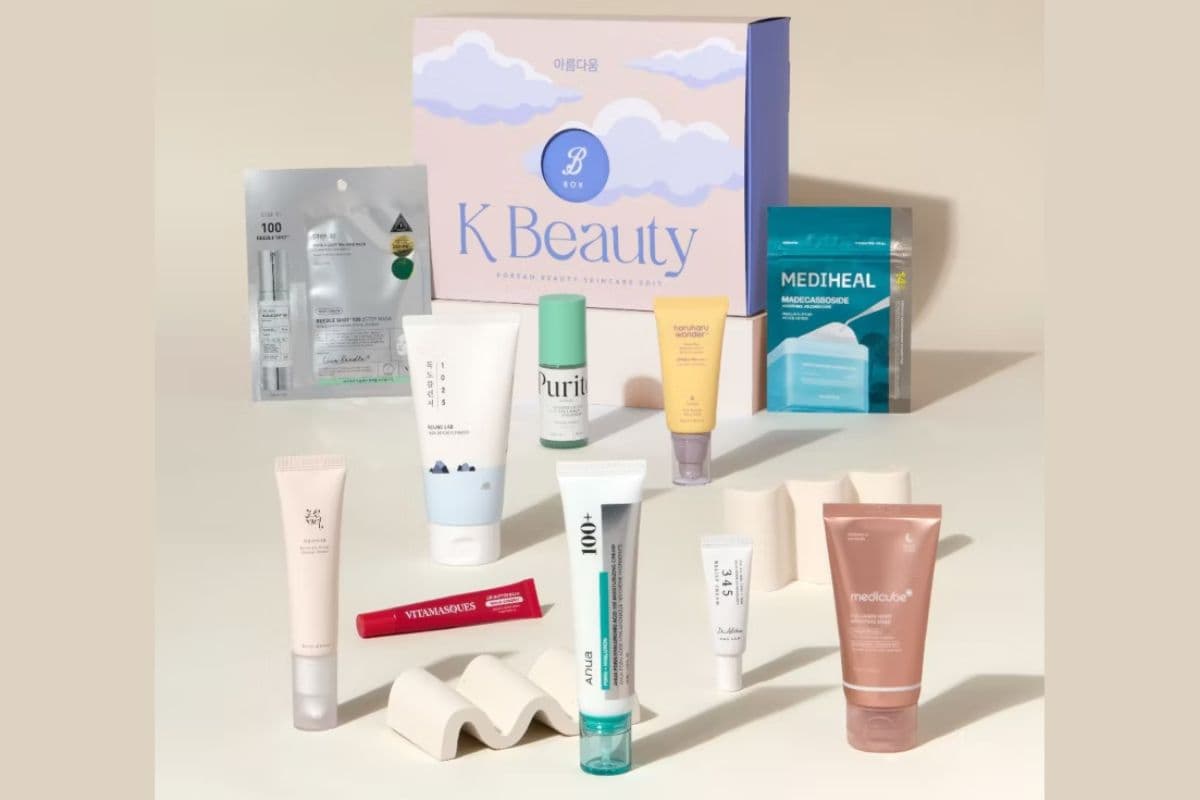
For anyone curious about trying Korean skincare without committing to a full routine overhaul, the Boots K-Beauty Korean Skincare Edit £36 (worth £132.47). This curated collection introduces some of Korea’s most-loved brands and viral products in one beautifully balanced set. Designed to soothe, strengthen and deeply hydrate, it offers a complete pathway into the world of glow-enhancing skincare.

This thoughtfully assembled edit includes 10 products eight of them full-size making it an exceptional value and a practical way to experiment with trending formulas. Whether you’re new to Korean skincare or looking to refine your existing routine, this collection delivers a complete experience from cleansing to sun protection.

Delivery at Boots costs £3.95, or is free on orders over £25. Click & Collect costs £1.50, or is free when you spend £15 or more.

Read More

Boots K-Beauty Korean Skincare Edit | Boots

The beauty box combines cult favourites with rising viral heroes allowing you to test different textures, actives and formats.

  • Beauty of Joseon Revive Eye Serum (Ginseng + Retinal) – Full SizeA lightweight yet potent eye treatment that pairs traditional herbal extracts with modern retinoid technology to smooth fine lines and brighten tired eyes.
  • Anua PDRN Hyaluronic Acid Moisturising Cream – Full SizeDeeply hydrating and barrier-supportive, this cream helps maintain plump, resilient skin while reinforcing moisture retention.
  • VT Reedle Shot 100 2-Step Mask – Full SizeA trending treatment mask designed to enhance absorption and deliver intensive nourishment for a revitalised complexion.
  • Purito Wonder Releaf Centella Serum (Unscented) – Full SizeA calming, sensitive-skin-friendly serum packed with centella asiatica to soothe redness and strengthen the skin barrier.
  • Vitamasques Lip Butter Balm (Wild Cherry) – Full SizeA nourishing balm that locks in hydration while adding a soft, healthy sheen.
  • Round Lab 1025 Dokdo Cleanser – Full SizeA gentle daily cleanser that purifies without stripping, making it ideal for maintaining skin balance.
  • Dr. Althea 345 CreamA comforting moisturiser designed to restore and protect stressed or dehydrated skin.
  • Mediheal Madecassoside Toner PadsConvenient, pre-soaked pads that tone, soothe and prep the skin in one step.
  • Medicube Collagen Night Wrapping MaskAn overnight treatment aimed at improving elasticity and delivering intensive nourishment while you sleep
  • Haruharu Wonder Black Rice Moisture Airyfit Daily Sunscreen SPF50+ / PA++++ – Full SizeA featherlight sunscreen that protects against UV damage while maintaining hydration a signature priority in Korean routines.

The Boots K-Beauty Korean Skincare Edit is more than just a value set it’s a gateway into one of the most influential beauty movements in the world. With high-performance ingredients, full-size hero products and a routine-building approach, it delivers both education and results.

This article was produced with the support of AI tools to assist in sourcing and structuring information. All content has been reviewed, verified and completed by a journalist prior to publication.

Parkdean Resorts

Buy now

Looking for a quick and affordable getaway? 🏖️ Parkdean Resorts has launched a batch of £99 last-minute breaks across selected UK parks, giving families and friends the chance to escape to the coast or countryside for less

The deals cover three-night stays in caravans, chalets, apartments or bungalows, with some sleeping up to six people. Split between a group, that works out at around £5.50 per person per night – about the price of a drink at the resort bar. 🍺

With dates across March and limited availability, the cheapest options are expected to go quickly.

Gut Wealth

Gut health breakthrough – 25% off Gut Wealth until March 24💛

Buy now

Buy now

More than 6.5 million people in the UK struggle with gut problems, and for many, daily life can revolve around bloating, urgency and discomfort. Gut Wealth’s award-winning liquid supplement – winner of Medtech and Healthtech StartUp of the Year 2024 – is designed to support bowel regularity, reduce urgency and improve overall gut health.

For a limited time, shoppers can get 25% off their first order when purchasing by March 8 ⏳. The orange-flavoured, vegan-friendly sachets contain nine digestion-supporting ingredients, including a postbiotic ‘good bacteria’, plus Vitamins B1, B5, B6, B12 and Vitamin C. Rated 4.7 stars from 900+ reviews ⭐, many users report reduced bloating and better regularity within weeks, though individual results vary.

Continue Reading

Tags: , , , , , ,
What is PDRN skincare? The K-beauty trend that promises glass skin

What is PDRN skincare? The K-beauty trend that promises glass skin

Polynucleotides are one of the fastest growing aesthetic treatments of the past half-decade. In fact, according to one report by Two Face Aesthetics, Google Trends has shown a significant increase in searches for the procedure – 1,566% more, to be exact.

Perfectly in line with our continued evolving taste in more natural-looking injectables that boost longevity and skin wellbeing overall (rather than ‘obvious’ enhancements), polynucleotides help with hydration, collagen production, skin repair, and regeneration.

However, as with all injectables, there is a cost associated with these procedures – and they’re not exactly affordable. Considering most patients will require two to three appointments to really reap the rewards from their treatment, the financial implications of signing up to these can often deter beauty fans.

Luckily, you’ve got alternatives if you want to achieve that revered polynucleotides glow. While topical products won’t offer the depth and longevity that injectables can, they are a great place to start, and the rise of PDRN-powered products are proof of this.

Beloved by derms and doctors (and rumoured to be used by celebrities like Kim Kardashian and Jennifer Aniston), this is an ingredient you should take note of if you’re looking to unveil stronger, healthier skin.

What is PDRN and how can it benefit your skin?

PDRN is an acronym for PolyDeoxyRiboNucleotide, which is a DNA fragment typically derived from fish like salmon or trout. It is a form of polynucleotide with a slightly lower molecular weight, and can be used in aesthetic treatments or at-home skincare routines.

“When injected, PDRN stimulates fibroblasts, cells responsible for producing collagen and repairing damaged skin. In skincare it’s gaining popularity for its restorative and soothing effects, even when used in topical form,” explains Dr Christine Hall, Aesthetic Doctor and Korean skincare expert at Taktouk Clinic.

PDRN – which first gained traction and popularity in South Korea – has been hailed for its skin healing and regenerative properties, both in a medical and cosmetic sense.

When used topically as part of your skincare routine, it can do everything from boosting hydration, increasing collagen production (hence, aiding in anti-ageing), brightening, and improving skin tone, texture and resilience.

“It hydrates the skin, reduces inflammation and helps to support the skin’s natural repair processes,” notes Dr Hall. “These effects are particularly valuable for compromised or post-procedure skin where it can aid recovery and improve skin texture and comfort.”

James Devaney//Getty Images

Can PDRN replace polynucleotides treatments?

In short, yes and no. In terms of skin penetration, there’s no contest between injectable absorption of PDRN and topical application, the experts agree. “It won’t penetrate as deeply or work as dramatically as injectables,” says Cosmetic Doctor Dr Raquel Amado.

“Results may take longer and be less pronounced,” when using PDRN skincare, she adds. This is largely due to PDRN’s larger molecular size, meaning it cannot penetrate as deeply when applied at the surface versus injected beneath. However, she says, “while it won’t deliver the same depth of regeneration since it cannot penetrate the skin barrier effectively, it can still offer visible improvements in hydration, calmness and surface repair.”

It therefore “provides a more affordable and non-invasive alternative to injectable treatments,” and is “a worthwhile addition to a skincare routine, particularly for maintaining skin health and supporting recovery.”

In addition, PDRN topical application can be a great complementary skincare addition for those attending Polynucleotides appointments. Together, they can offer the best possible results.

“Polynucleotides (PNs) are longer DNA chains with deep regenerative abilities. PDRN, being a shorter fragment, acts more rapidly and is easier to absorb topically,” explains Dr Amado.

“When combined, PDRN can be used between injectable PN treatments to maintain and enhance effects. It can prep the skin before procedures, improving skin condition and tolerance, and works synergistically to amplify wound healing, hydration, and collagen synthesis.”

Who can use PDRN skincare?

Luckily, PDRN is well-tolerated by most, and because it’s an ingredient that’s used to hydrate and heal skin, it’s relatively gentle. In saying that, there are some who may wish to steer clear of it. For example, due to the fact it is derived from fish like salmon, anyone with a fish allergy will find it not to be suitable. In addition, says Dr Hall, “it may also not be appropriate for vegans, vegetarians, or those with religious or ethical concerns regarding animal-derived ingredients.”

Dr Amado adds that those who are pregnant or breastfeeding, immunocompromised or experiencing severe skin conditions, should always consult a doctor before trying the ingredient.

How to use PDRN in your routine

As PDRN is all about hydration, rejuvenation and healing, it’s best to try a leave-on product like a serum or cream – note too that serums are often the greatest vehicles for delivery as they can penetrate more deeply into the skin due to their make-up of smaller molecule sizes. Korean skincare brands are known for their inclusion of PDRN, making them a great place to start.

Banobagi PDRN Repair Real Balm

Credit: Banobagi

Focused on reparative care for dry, delicate skin, this balm is like a soothing salve for the face.

Medicube Medicube PDRN Pink Peptide Serum

Credit: Medicube

A popular formula that’s both lightweight and non-sticky, Medicube’s serum delivers bouncier skin with better elasticity.

Anua PDRN Hyaluronic Acid Capsule 100 Serum

Credit: Anua

For just £20, you can get in on the salmon sperm trend with this serum, which you can pick up at Boots.

Genabelle PDRN Rejuvenating Cream

Credit: Genabelle

Want something even more hydrating? Genabelle’s cream is suitable for all skin types, and helps with hydration and skin cell regeneration.

Tags: , , , , , ,
7 Biggest K-Beauty Trends of 2025, According to Experts

7 Biggest K-Beauty Trends of 2025, According to Experts

Lee’s a fan of it too, adding that milky toners were a common addition for an adjacent TikTok trend that gained traction this year. “Skin flooding is a hydration stacking technique where you apply multiple layers of hydrating products onto damp skin to ‘flood’ it with moisture before sealing it in [with a cream or gel moisturizer].” Another viral option comes from TirTir, which adds niacinamide to its formula for added brightening.

Flushed Blush

Blush was a major beauty trend everywhere, including Seoul’s It girls—who, of course, put their own spin on it. In Korea, makeup leans toward a soft-matte, diffused look, and blush is no different. What sets it apart is the placement when applied and unique textures—think bouncy, mousse-like formulas and roller-ball blushes.

“Blush had a real moment in 2025, with lots of cool girls in Korea wearing blush high up on their cheeks, right below their eyes,” says Lee. “The result was a fresh, youthful look. We saw lots of great new textures and formats for blush, whether it was bouncy Pudding Pots from FWEE, Dewy Roll Cheeks from Rom & amp;.”

Fwee

Lip&Cheek Blurry Pudding Pot

PDRN and Vegan Alternatives

“PDRN has been a major trending ingredient in 2025. PDRN (also known as salmon DNA) has been incorporated into serums, mists, creams, masks—and it all happened at record speed,” explains Lee, noting that brands like Reju-all were completely sold out at many pharmacies in Seoul when she visited over the summer. She suspected the ingredient would gain widespread attention given the buzz it was already generating on social media—even Kim Kardashian revealed that she’d tried a professional PDRN treatment. “Today, we see PDRN in every category, from serums and mists to creams and even sunscreens.” One PDRN product in particular that took over TikTok was Medicube’s bright pink serum.

And in keeping with that rapid pace of innovation, PDRN has since expanded into vegan alternatives. “PDRN is no longer limited to salmon-derived sources, thanks to advances in biotechnology that are unlocking non-animal ways to deliver the same regenerative benefits,” says Chung Park. Case in point: both she and Lee count Mixsoon’s plant-derived, rice-based PDRN among their favorites.

Blurred Lips

“Some iteration of blurred lips has been popular in Korea for years, but the twist in 2025 was a softer take on the look,” says Lee, noting that formulas like Peripera’s Ink Velvet reigned supreme—and still do. “Rather than a sharp ombré effect, blurry lips were defined with a chunky, rounded, soft lip liner and subtly blended.” The result, she explains, is pretty and plumped, aligning seamlessly with the clean-girl aesthetic that dominated 2025.

Tags: , , ,
The K-beauty trends expected to explode in 2026, according to a Korean skincare expert

The K-beauty trends expected to explode in 2026, according to a Korean skincare expert

Long before ‘skin barrier’, ‘slugging’ or ‘glass skin’ entered our everyday beauty vocabulary, Korean skincare was quietly setting the standard, rewriting the rules of what effective (and fun) skincare could look like. This year, K-beauty continued to inform skincare trends. And according to the experts, 2026 will show no sign of that interest slowing down. In fact, they believe that the influence of K-beauty is only set to deepen in 2026. As beauty lovers become savvier, the desire for results-driven routines that still feel sensorial has never been stronger. Next year, it’s all about fewer steps, smarter formulas and a focus on long term skin health. 

© Biodance

So what’s next? To get a pulse on the trends set to take over our bathroom shelves in the year ahead, K-beauty expert and Skin Cupid CEO and founder, Melody Yuan, exclusively shares her predictions on the innovations, ingredients and philosophies set to define 2026.

Melody tells H! Fashion: “Having already set the global stage for skin care, K-beauty continues to set the benchmark for innovation. UK consumers are becoming more ingredient-savvy, gravitating towards the gentle formulations and advanced technology that Korean skincare is celebrated for. 2026 will be a year defined by personalisation, skin health, and sustainable luxury.”

Keep reading for all the need to know trends, ingredients and innovations in K-beauty for 2026…

 AI-Driven Skin Personalisation

K-beauty is set to embrace next-level personalisation in 2026, driven by rapid advances in beauty tech. Melody explains that tech-integrated skincare will soon deliver truly tailored routines for UK consumers. “With tech-integrated beauty on the rise, 2026 is set to bring personalised routines to UK consumers,” says Melody, pointing to advanced diagnostic tools, app-linked routines, and AI-generated custom formulations that adapt in real time to lifestyle and environmental factors.

Barrier-First

Barrier repair continues to dominate the global skincare conversation and K-beauty is taking it a step further. “Barrier-repair skincare is rising across the globe, and K-beauty will be pushing it further with new-generation strengthening complexes,” notes the expert. She explains that ultra-gentle, microbiome-supporting formulas, particularly those using fermented ingredients, ceramides, and postbiotic blends, will become central to everyday routines. However, she adds that consumers will need to be mindful about how they protect and restore the skin barrier, rather than overdoing it.

Poly-L-Lactic Acid (PLLA)

PLLA, long associated with in-clinic treatments, is also moving into mainstream skincare. “You may have heard of this ingredient, which is often used in injectable fillers and other dermatology treatments, and we can expect to see more over-the-counter cosmetic products formulated with PLLA in 2026,” she explains. While topical formulas can’t replicate the results of injectables, the expert  explains they can still help exfoliate, hydrate, and improve elasticity for smoother-looking skin.

Hybrid-Skincare Products

The ‘glass skin’ aesthetic continues to dominate, and hybrid skincare is playing a major role in achieving the look. Already gaining momentum, these multitasking formulas are set to become even more prevalent in the year ahead. “We’ve seen a rise in the ‘glass skin’ aesthetic this year, and this is formed by using hybrid-skincare products,” she says. As the category grows, Skin Cupid’s founder explains that hybrid formulas promote wearable, multi-layered radiance through a mix of skincare and makeup benefits. “Think soft-focus glow and skin-boosting luminisers – products that deliver long-term skin health benefits alongside instant luminosity.”

Traditional Ingredients

Modernised hanbang (traditional Korean herbal medicine) is also set to make a strong comeback in 2026, reimagined through a contemporary lens. “We expect that 2026 will see a major surge in modernised hanbang formulas,” says the expert. Ingredients such as ginseng, mugwort, and bamboo sap will rise in popularity, she explains, paired with peptides and advanced encapsulation technologies to improve stability and ingredient delivery.

Sensorial Skincare

As skincare culture continues to thrive on TikTok, sensorial experiences are becoming just as important as results. “With the rise of sensorial skincare on TikTok, Korean beauty brands are set to introduce more sensorial textures, uplifting aromas, and mood-enhancing formulations,” she tells us. By transforming daily routines into moments of self-care, Melody believes sensorial skincare will add an entirely new dimension to the K-beauty market and is one of the most exciting trends to watch in the new year.

An expert’s K-beauty product recommendations for 2026: 

PURCELL PIxcell Biom 2Billion/ml

© Purcell

Melody’s Expert Opinion: “PURCELL’s PIXCELL BIOM 2BILLION/ml is a powerhouse treatment crafted to restore, protect, and strengthen your skin from the inside out – starting with the barrier. Formulated with a remarkable 90% concentration of 2 probiotic ingredients, Bifida Ferment Lysate and Lactobacillus Ferment Lysate, this potent treatment delivers intensive care for stressed, sensitive, or acne-prone skin.”

MA:NYO Bifida Biome Aqua Barrier Cream 

© Amazon

Melody’s Expert Opinion: “MA:NYO’s Bifida Biome Aqua Barrier Cream is a refreshing, lightweight moisturiser that delivers deep hydration while helping to keep skin balanced and soothed, even in hot and humid conditions. Specially designed for year-round use, it’s particularly effective in summer when skin can become dry, flaky, and overheated from excessive sun exposure.”

PARNELL Cicamanu Serum Cushion

© Parnell

Melody’s Expert Opinion: “Meet PARNELL’s Cicamanu Serum Cushion, Korea’s No.1 cushion foundation, and your shortcut to glowing, calm, and hydrated skin – even on your most sensitive days. This innovative base combines the featherlight coverage of a cushion with the power of a full serum, creating a radiant finish that looks like your skin, only better.”

Tags: , , , , , ,
7 Top K-Beauty Trends for 2026: Minimalism, PDRN, and Bioactives

7 Top K-Beauty Trends for 2026: Minimalism, PDRN, and Bioactives

TEMPO.CO, Jakarta – Korean beauty, or K-Beauty, has changed how we see skincare. It gave us “glass skin” and the famous multi-step routine. K-Beauty turns daily habits into a ritual of care. It uses specific active ingredients to solve real skin concerns. This influence has made Korean products a global staple.

By 2026, K-Beauty moves toward efficiency. Science leads the way with bioactive beauty and new ingredients. The industry is also looking closer at scalp health. These trends promise cleaner skin and hair that looks thick and healthy. The focus is now on deep, biological health.

Caroline Choi, founder of Mizz Korea, calls this smart minimalism. “Skin care that’s luxurious, multitasking, and deeply intuitive,” she told Elle.

Choi believes next year will focus on new ingredients and transformative textures. We will see products that change shape during use. Fun formats, like jelly nails, will also trend. Meanwhile, long routines with too many steps are fading. Consumers want results without the clutter.

Top K-Beauty Trends 2026

Here are the top K-Beauty trends predicted for 2026.

1. Hair Essence

Essence is a classic K-Beauty step for the face. It is a liquid that boosts hydration and plumps the skin. In 2026, this concept moves to hair care. People are treating their scalp like their face. They want the same care for hair follicles as they do for pores.

Dr. Jae Yong Ban, CEO of Bano Cosmetics, says the essence format is ready for hair.

“The hair essence market, in particular, seems poised for growth, with potential trends including essence products containing cica to help soothe scalp irritation and root-strengthening essences formulated to help reduce hair loss,” Ban told Elle.

Early versions of these products are already appearing. They offer a light way to treat hair without heavy oils.

2. PDRN

PDRN is a substance from salmon DNA fragments. Doctors have used it for years to heal skin after surgery. Now, in 2026, it is reaching the general public. It is no longer just for clinics. It is coming to your vanity.

Dr. Ban expects PDRN to become a household name. This ingredient fights inflammation and helps the body make collagen. It speeds up skin repair. While few brands use it now, Ban predicts more PDRN creams and serums will hit the market soon. It is the next big step in regenerative beauty.

3. Exosomes

Exosomes are the latest “it” ingredient in bioactive science. Ban predicts their popularity will peak soon. These are tiny bubbles released by cells. They carry proteins and genetic data to other cells. They act like a messenger system, telling cells how to repair themselves.

In skincare, exosomes boost collagen and repair tissue. The challenge is quality. Only human-derived exosomes work well on human skin. This means the cell source and growth environment are vital. To solve this, brands are moving toward bioengineered exosomes. You can see this in treatments like AnteAGE PEARL, which combines microneedling with exosomes and PDRN.

4. Skin Barrier Focus

Protecting the skin barrier is the top priority for 2026. Dr. Y. Claire Chang, a dermatologist at UnionDerm, says barrier products will evolve. The goal is to keep the skin’s natural shield strong against pollution and stress.

“This aligns with what Korean dermatologists have emphasized for years: Gentle, consistent skin care that focuses on skin health,” she says.

Caroline Choi also backs this shift. She believes using the right prep products is essential. When the barrier is strong, skin is less likely to react to external triggers. Health is now more important than a temporary glow.

5. Poly-L-Lactic Acid (PLLA)

PLLA is famous as the main ingredient in fillers like Sculptra. It stimulates the body to create its own collagen. Ban predicts that 2026 will see PLLA move into over-the-counter creams. You won’t need a needle for these benefits.

Topical PLLA is not as strong as an injection, but it still works. It provides light exfoliation and deep hydration. It gives the skin an immediate smooth look. Over time, it helps the skin stay elastic and firm. It is a slow beauty ingredient that builds lasting results.

6. Plant-Based Active Ingredients

Plant ingredients are a K-Beauty staple, but the technology is improving. The 2026 approach uses functional proteins that mimic how skin works. It is about the harmony between nature and biology. Science is now extracting the most potent parts of plants.

“Oat protein has become a true star for its ability to lock in moisture, strengthen the barrier, and calm irritation, while hydrolyzed protein helps the skin appear plumper and more youthful thanks to its high absorbability,” Choi explains.

She also points to Orchistem, a plant stem cell extract. “It boosts collagen production and supports skin elasticity, helping achieve that natural, glass-skin luminosity K-Beauty is known for, but in a smarter, more sustainable way,” she added.

7. Shorter, Targeted Routines

The 10-step routine is officially changing. Experts say the era of “more is more” is over. Viral TikTok trends and “layering for the sake of layering” are losing fans. Consumers are tired of complicated steps that lack clear results.

“In 2026, we will see fewer, smarter steps with multi-functional products and an evidence-backed approach to skin care,” says Dr. Chang.

People are becoming more selective. They want products developed by dermatologists and tested in labs. The focus has shifted to long-term health. Quality is finally winning over quantity.

ELLE | HARPERS BAZAAR

Read: Apples or Oranges: Which Is Better for Immune Health?

Click here to get the latest news updates from Tempo on Google News

Tags: , , , , ,
Best oLive
Privacy Overview

This website uses cookies so that we can provide you with the best user experience possible. Cookie information is stored in your browser and performs functions such as recognising you when you return to our website and helping our team to understand which sections of the website you find most interesting and useful.