Chrome Makeup

The Most Wearable Way To Rock The Chrome Makeup Trend

Photo via @sydneyjharper

Cool-toned makeup dominated 2025 as the beauty scene leaned into moodier, goth-adjacent aesthetics. And as we settle into the new year, that energy is still going strong. One of the most standout looks leading the way is chrome makeup, a futuristic take on icy silvers that feels fresh and surprisingly wearable. If you’re usually loyal to warm neutrals and don’t know where to start, this look is your entry point. It’s beginner-friendly, night-out ready, and strikes the perfect balance between subtle shimmer and full-on drama. Expect glowing skin and metallic lids that turns heads without weighing you down. Ahead, the step-by-step breakdown to get the chrome effect right.

Base

Start with a base that acts as both skincare and primer, e.g. the Bobbi Brown Vitamin Enriched Face Base, to give your skin a luminous, hydrated glow. Apply a light layer of high-coverage foundation, being careful not to overdo it so the skin still looks natural and fresh. Apply concealer only where you need brightness or coverage. Lightly set the under-eye area with powder, then add a touch of bronzer to the forehead and cheekbones for warmth. You can skip blush entirely or apply just a hint, blending it softly into the bronzer for a seamless gradient. Finish with a light mist of setting spray before moving on.

Eyes

Groom and fill in your brows, keeping them clean and softly defined. To begin the eye look, blend a dusting of medium gray eyeshadow into the crease to create depth. Next comes the chrome hero product. For a smooth, liquid-metal finish, opt for a chrome eyeshadow like Danessa Myricks Colorfix. If you prefer a more textured, high-impact sparkle, a glitter formula like Make Up For Ever Cream Eyeshadow delivers that signature shine. Line the waterline with eyeliner and curl your lashes. This pared-back approach keeps the focus on the reflective silver tones. Finish with minimal, neutral lips to avoid competing with the eyes – we love a creamy nude lipstick topped with high-shine gloss.

This wearable take on chrome makeup is such a fun way to switch things up!


  • Susan Hang

    Susan is an experienced fashion and beauty writer with a knack for sharing insider tips and tricks. With a wealth of industry knowledge and a passion for all things style-related, she is here to guide you on your fashion and beauty journey. Susan has attended several fashion weeks and gained a behind-the-scenes look at countless beauty teams, witnessing the magic that happens both on and off the runway. Having collaborated with top beauty brands and ghostwriting for renowned influencers, there’s no doubt she has valuable insights into the exclusive world of fashion and beauty. Susan’s distinctive voice combines an editorial edge with a conversational and lighthearted tone, making her advice accessible and enjoyable. She understands that fashion and beauty are about self-expression and feeling confident in your own skin so she is committed to empowering you to embrace your own aesthetic and enhance your inner beauty. Tune into her musings to stay up to date on the latest fashion obsessions, discover beauty secrets, and obtain expert advice that will make you feel like a superstar on the daily. Whether you’re seeking fashion-forward tips, the perfect skincare routine, or a dose of style inspiration, Susan has you covered. Get ready to decode the hottest trends and uncover game-changing products with her guidance.

    Lead Editor | Trend Reports & Beauty

(Visited 1 times, 4 visits today)

Tags: , , , ,
From Geishas To Glass Skin: Why An Ancient Asian Ingredient Is Skincare’s Hottest Trend | Lifestyle News

From Geishas To Glass Skin: Why An Ancient Asian Ingredient Is Skincare’s Hottest Trend | Lifestyle News

Last Updated:January 31, 2026, 13:31 IST

Rice-based products tend to suit a wide range of skin types, especially those dealing with dryness, sensitivity, or dullness.

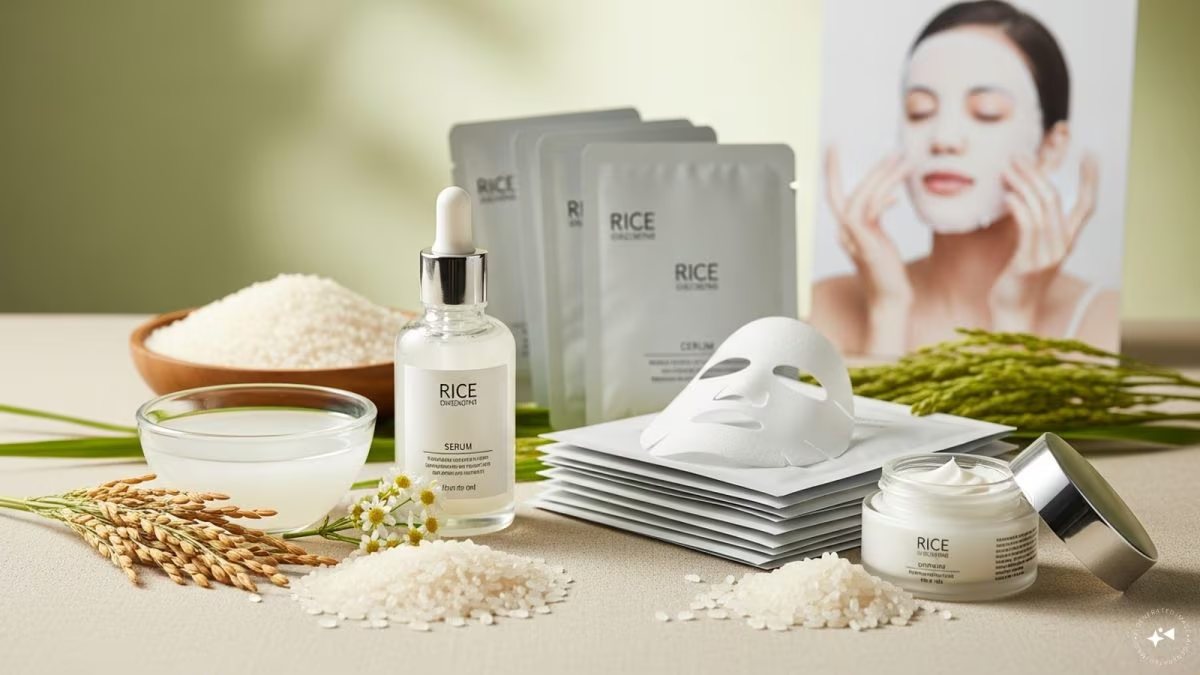
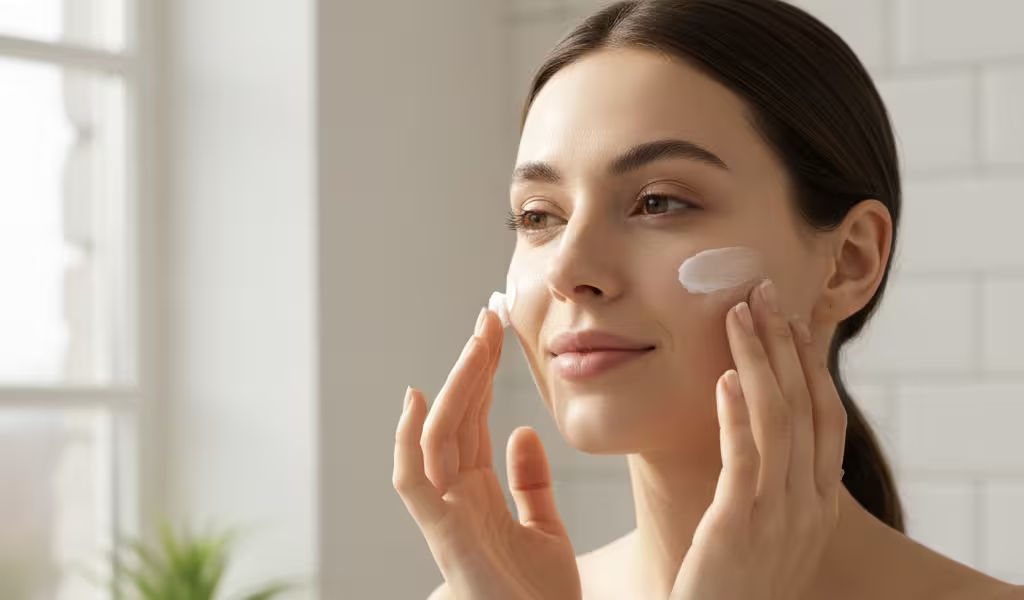
You don’t need a complete overhaul to add rice to your skincare routine; a simple rice water–based toner is a good starting point. (Representative image: AI-generated)

Rice has always been more than just a staple food across Asia. For centuries, it has been used for beauty and skin care purposes, long before the social media trend popularised its serum, sheet masks and other products.

Today, as the beauty world chases “glass skin” and gentle, effective ingredients, rice has re-emerged as an unlikely hero. What was once passed down through tradition is now being validated by modern science, turning an ancient beauty secret into one of skincare’s hottest trends.

The Story Of Rice In Beauty

Centuries ago in Japan, geishas relied on rice water to soothe their skin after long hours of wearing heavy makeup.

The practice was simple: rice was washed or soaked, and the milky water was saved and used on the skin and hair.

Over time, women noticed that their hands felt softer, their skin calmer, and their complexion clearer.

In Korea, rice bran and rice oil were similarly prized for their nourishing and brightening qualities, especially in royal households.

These rituals were not labelled as “skincare routines” back then; they were everyday practices rooted in observation and experience.

What Makes Rice Suitable For Skin Care

The renewed interest in rice is not driven by nostalgia alone. Scientists and dermatologists now understand that rice contains compounds that genuinely benefit the skin.

It is rich in antioxidants that help protect against environmental stress, while natural vitamins and amino acids support hydration and skin repair. Rice bran oil, in particular, is known for its ability to nourish dry skin and improve softness without clogging pores.

This combination makes rice especially appealing for people who want visible results without harsh activities. Instead of aggressively exfoliating or stripping the skin, rice-based ingredients work gently, supporting the skin’s natural functions over time.

From Homemade Rituals To Modern Formulations

The beauty industry’s rediscovery of rice did not begin in laboratories, but it began online.  DIY rice water routines flooded social media, with users claiming brighter, calmer skin after just a few weeks.

While these homemade methods reflect traditional practices, they also come with risks. Improperly stored rice water can spoil quickly, and uncontrolled fermentation may irritate sensitive skin.

Skincare brands took inspiration from these rituals and refined them, producinga range of products from toners and serums, to sheet masks and moisturisers under controlled conditions of laboratories.

What Makes Rice Effective In Skincare

Dermatologists largely agree that rice-derived ingredients can be beneficial, particularly for hydration, mild brightening, and soothing sensitive skin.

Studies suggest that compounds found in rice help strengthen the skin barrier and reduce moisture loss, which is key to achieving that sought-after “glass skin” look.

However, experts are careful to manage expectations. Rice isn’t a miracle ingredient that can erase deep pigmentation, acne scars, or signs of ageing overnight. Instead, it works best as a supportive ingredient—one that enhances skin health gradually and complements stronger actives when needed.

What Makes Rice Popular In Skin Care

Rice in skincare isn’t just another fleeting beauty fad. It is likely to stay in the skincare industry because it is not a new invention, but a traditional practice that has been recalibrated in modern laboratories.

Its traditional roots, simple ingredient profile, and natural appeal make people more comfortable choosing it as part of their skincare routine.

In an era of complex chemical formulations, rice offers simplicity and comfort. It aligns perfectly with the minimalist skincare movement, where fewer products with gentle ingredients are preferred over aggressive routines.

Cultural curiosity plays a role, too. As Korean and Japanese beauty philosophies gain global attention, traditional ingredients like rice are being reintroduced to a wider audience. Add the influence of social media, where glowing skin routines go viral overnight, and rice’s comeback feels almost inevitable.

How You Can Add Rice To Your Routine

Rice-based products tend to suit a wide range of skin types, especially those dealing with dryness, sensitivity, or dullness. Because the ingredient is naturally gentle, it’s often recommended for people whose skin reacts poorly to strong actives.

That said, those with severe acne or stubborn pigmentation may need additional treatments alongside rice-infused products for visible results.

Incorporating rice into a skincare routine doesn’t require a complete overhaul. A rice-based toner can be a good starting point, followed by a moisturiser or serum that contains rice extract or rice bran oil.

Used consistently, these products help improve hydration and overall skin texture. As with any skincare routine, sunscreen remains essential, especially when using products aimed at brightening the skin.

Handpicked stories, in your inbox

A newsletter with the best of our journalism

submit

First Published:

January 31, 2026, 13:14 IST

News lifestyle From Geishas To Glass Skin: Why An Ancient Asian Ingredient Is Skincare’s Hottest TrendDisclaimer: Comments reflect users’ views, not News18’s. Please keep discussions respectful and constructive. Abusive, defamatory, or illegal comments will be removed. News18 may disable any comment at its discretion. By posting, you agree to our Terms of Use and Privacy Policy.

The Story Of Rice In Beauty

Centuries ago in Japan, geishas relied on rice water to soothe their skin after long hours of wearing heavy makeup.

The practice was simple: rice was washed or soaked, and the milky water was saved and used on the skin and hair.

Over time, women noticed that their hands felt softer, their skin calmer, and their complexion clearer.

In Korea, rice bran and rice oil were similarly prized for their nourishing and brightening qualities, especially in royal households.

These rituals were not labelled as “skincare routines” back then; they were everyday practices rooted in observation and experience.

What Makes Rice Suitable For Skin Care

The renewed interest in rice is not driven by nostalgia alone. Scientists and dermatologists now understand that rice contains compounds that genuinely benefit the skin.

It is rich in antioxidants that help protect against environmental stress, while natural vitamins and amino acids support hydration and skin repair. Rice bran oil, in particular, is known for its ability to nourish dry skin and improve softness without clogging pores.

This combination makes rice especially appealing for people who want visible results without harsh activities. Instead of aggressively exfoliating or stripping the skin, rice-based ingredients work gently, supporting the skin’s natural functions over time.

From Homemade Rituals To Modern Formulations

The beauty industry’s rediscovery of rice did not begin in laboratories, but it began online.  DIY rice water routines flooded social media, with users claiming brighter, calmer skin after just a few weeks.

While these homemade methods reflect traditional practices, they also come with risks. Improperly stored rice water can spoil quickly, and uncontrolled fermentation may irritate sensitive skin.

Skincare brands took inspiration from these rituals and refined them, producinga range of products from toners and serums, to sheet masks and moisturisers under controlled conditions of laboratories.

What Makes Rice Effective In Skincare

Dermatologists largely agree that rice-derived ingredients can be beneficial, particularly for hydration, mild brightening, and soothing sensitive skin.

Studies suggest that compounds found in rice help strengthen the skin barrier and reduce moisture loss, which is key to achieving that sought-after “glass skin” look.

However, experts are careful to manage expectations. Rice isn’t a miracle ingredient that can erase deep pigmentation, acne scars, or signs of ageing overnight. Instead, it works best as a supportive ingredient—one that enhances skin health gradually and complements stronger actives when needed.

What Makes Rice Popular In Skin Care

Rice in skincare isn’t just another fleeting beauty fad. It is likely to stay in the skincare industry because it is not a new invention, but a traditional practice that has been recalibrated in modern laboratories.

Its traditional roots, simple ingredient profile, and natural appeal make people more comfortable choosing it as part of their skincare routine.

In an era of complex chemical formulations, rice offers simplicity and comfort. It aligns perfectly with the minimalist skincare movement, where fewer products with gentle ingredients are preferred over aggressive routines.

Cultural curiosity plays a role, too. As Korean and Japanese beauty philosophies gain global attention, traditional ingredients like rice are being reintroduced to a wider audience. Add the influence of social media, where glowing skin routines go viral overnight, and rice’s comeback feels almost inevitable.

How You Can Add Rice To Your Routine

Rice-based products tend to suit a wide range of skin types, especially those dealing with dryness, sensitivity, or dullness. Because the ingredient is naturally gentle, it’s often recommended for people whose skin reacts poorly to strong actives.

That said, those with severe acne or stubborn pigmentation may need additional treatments alongside rice-infused products for visible results.

Incorporating rice into a skincare routine doesn’t require a complete overhaul. A rice-based toner can be a good starting point, followed by a moisturiser or serum that contains rice extract or rice bran oil.

Used consistently, these products help improve hydration and overall skin texture. As with any skincare routine, sunscreen remains essential, especially when using products aimed at brightening the skin.

Stay Ahead, Read Faster

Scan the QR code to download the News18 app and enjoy a seamless news experience anytime, anywhere.

login

Tags: , , , , , , , , , ,
Easy Potato Face Packs for Healthy, Radiant Skin

Easy Potato Face Packs for Healthy, Radiant Skin

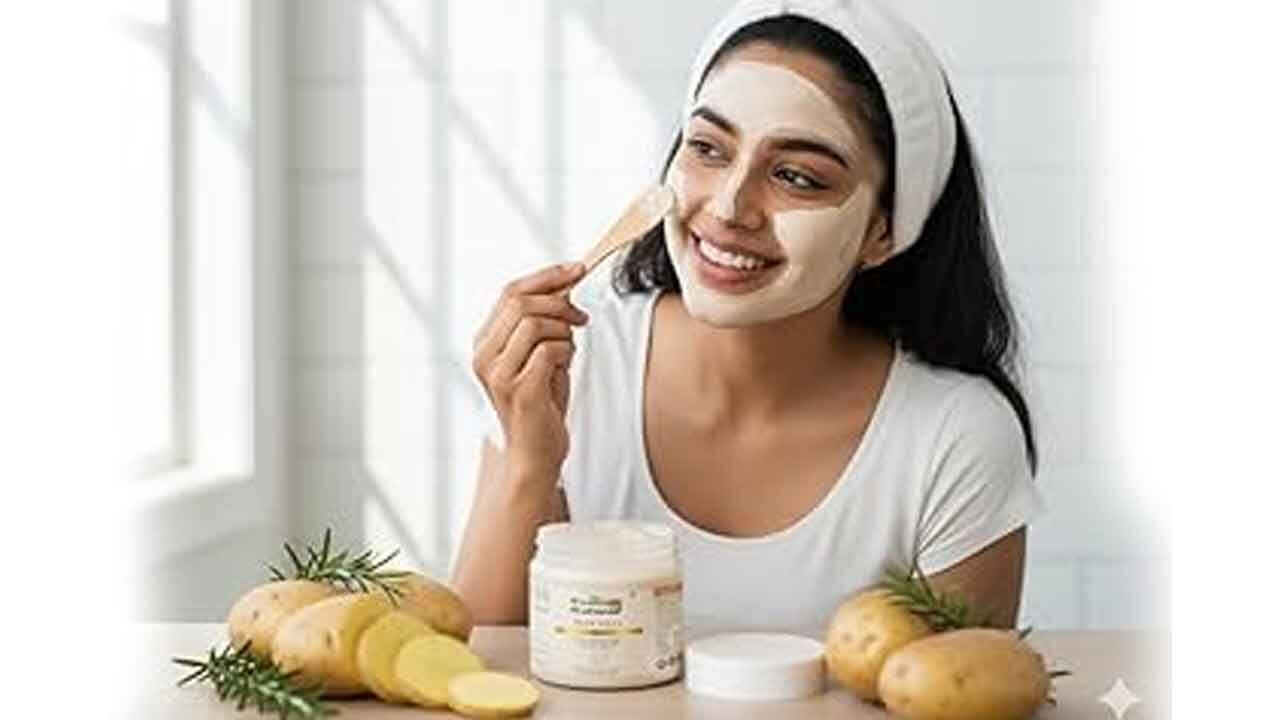
In the world of skincare, not every solution has to come from an expensive jar or bottle. Sometimes, the most effective remedies are sitting quietly in your kitchen. Potatoes, often overlooked as just a cooking staple, are packed with nutrients that can do wonders for your skin. Rich in vitamins, antioxidants, and natural bleaching properties, potatoes have long been used in traditional beauty routines to brighten, calm, and refresh tired-looking skin.

Easy to prepare and gentle when used correctly, potato-based face packs can help tackle common concerns like pigmentation, tanning, dark spots, and uneven texture. If you enjoy simple, homemade skincare, these potato blends are worth adding to your routine.

Potato and Honey for Soft, Supple Skin

When your skin feels dry or lifeless, combining potato juice with honey can provide much-needed hydration. Potato helps brighten and cleanse, while honey locks in moisture and keeps the skin smooth.

To prepare, grate a raw potato and extract its juice, then mix it with a spoonful of honey. Apply evenly and leave it on for about 15 minutes before rinsing. This pack helps restore softness and leaves your skin looking naturally fresh and nourished.

Potato and Yogurt for Gentle Brightening

Yogurt is known for its mild exfoliating effect due to lactic acid, which removes dead skin cells and improves texture. Pairing it with potato enhances the brightening benefits.

This combination works well for dull or uneven skin. The yogurt smooths rough patches, while the potato helps lighten dark spots and tanning. Used once or twice a week, this pack can give your skin a healthy, even-toned glow over time.

Potato and Lemon for Tan Removal

If sun exposure has left your skin looking darker or patchy, a potato and lemon mix can help. Both ingredients are known for their natural lightening properties.

Add a few drops of lemon juice to fresh potato juice and apply carefully. Since lemon can be strong, keep the application brief and avoid sensitive areas. Follow up with a moisturizer. This remedy is best used occasionally to gently reduce tan and brighten the complexion.

Potato and Aloe Vera for Soothing Care

For those with sensitive or irritated skin, aloe vera is a trusted ingredient. It cools, hydrates, and calms redness, making it a perfect partner for potato.

Mix potato juice with fresh aloe gel to create a light, soothing mask. This blend refreshes the skin while helping reduce puffiness and minor inflammation. After washing it off, your skin may feel calm, relaxed, and visibly healthier.

Potato and Gram Flour for Deep Cleansing

Gram flour, also known as besan, is a traditional favorite for removing excess oil and impurities. When combined with potato juice, it forms a thick paste that works as a gentle cleansing mask.

This pack is ideal for oily or acne-prone skin. It helps absorb extra sebum, unclog pores, and improve texture. Regular use can leave your face feeling clean, matte, and refreshed without stripping away natural moisture.

Potato and Rose Water for Toning

Rose water adds a cooling and toning effect to any skincare routine. When mixed with potato juice, it creates a simple yet effective pack that tightens pores and revives dull skin.

This lightweight blend is perfect for days when your skin feels tired. It refreshes instantly and gives a subtle glow, making your face look brighter and more awake.

Potato and Turmeric for Clearer Complexion

Turmeric has been used for centuries for its antibacterial and anti-inflammatory properties. Adding a small pinch to potato juice can help combat blemishes and improve overall clarity.

This mask supports a more even complexion and healthy glow. Because turmeric is potent, use it sparingly and always patch test first to avoid staining or irritation.

A Gentle Reminder

While potato face packs are natural and affordable, everyone’s skin reacts differently. Always test a small area first and avoid overuse. With patience and consistency, these easy kitchen remedies can help you achieve fresh, glowing skin the simple way — naturally.

Tags: , , , , , ,
Bustle's 2026 Beauty Icon Awards: Wellness Heroes

Bustle’s 2026 Beauty Icon Awards: Wellness Heroes

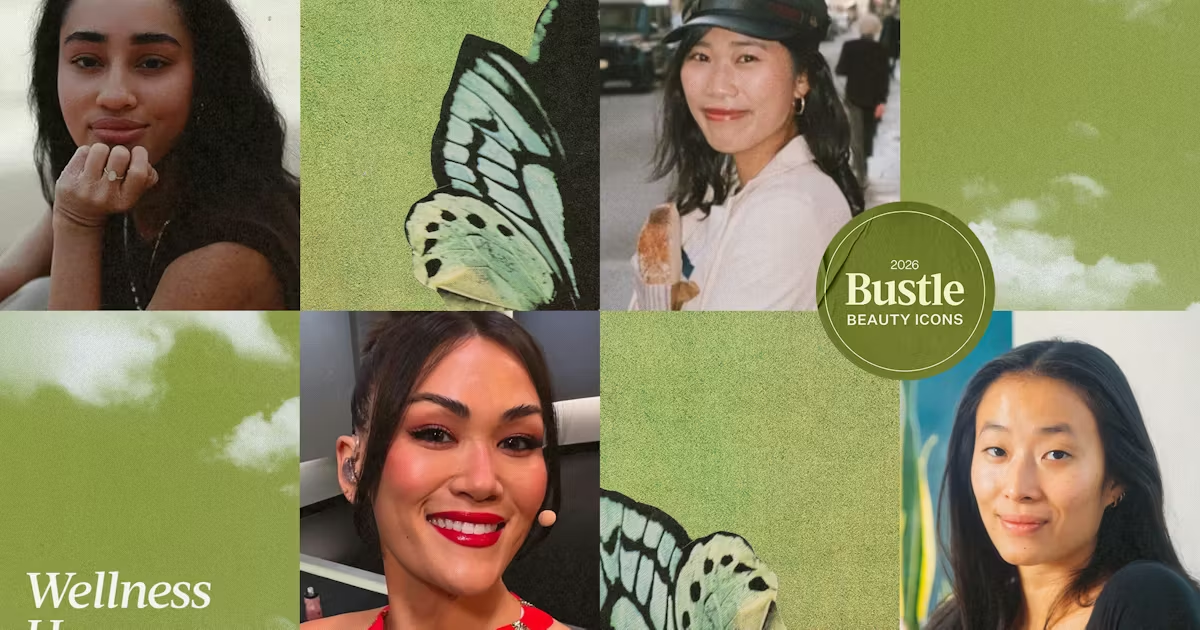
Beauty has never really been just about the products you swipe on. The creators shaping the conversation today — the ones shifting beyond perfection — understand that what resonates is what lies beneath the filters. People want the stories, the struggles, the hacks that actually work, and the ones that don’t.

That’s where “wellness” comes in — a word that’s come to mean everything and nothing at once. It encompasses everything self-care related, from morning juices to meditation guides, workout routines, and luxury skin care, yet no one knows exactly how to define it. But for Bustle’s Beauty Icons, wellness is about the choices that help them show up for themselves and others, whether that’s doing glam after a Peloton workout, hosting a book club podcast, or building community around chronic illnesses.

Icons are creators who have been there, done that. But their experiences aren’t just fodder for content — these nine women are actively shifting the culture, creating spaces where their followers can laugh, learn, and feel seen. They turn vulnerability into empowerment, honesty into empathy, and everyday routines into inspiration, proving that wellness isn’t just a beauty trend. It’s an appreciation of all the little things that add up.

Ahead, meet the wellness heroes of Bustle’s Beauty Icon Awards who are redefining what it really means to be beautiful — inside and out.

The Tampon Tax Warrior: Nadya Okamoto

Courtesy of Nadya Okamoto

Follow: @nadyaokamoto

Followers: 4.4 million

In 18 states, period products are still taxed as luxury items instead of essential goods that “literally make human life possible,” according to Nadya Okamoto. Her company, August, is working to eliminate that financial burden once and for all. Founded in 2021, the gender-inclusive period care brand offers a reimbursement program on any purchase — even now that its organic cotton products are stocked at Target, Whole Foods, and Gopuff. All you have to do is enter your phone number, upload a photo of your receipt, and wait up to 48 hours to receive the refund via Venmo or PayPal. On TikTok, Okamoto shares day-in-the-life videos behind running the brand, from donating surplus items at a food bank to changing her own tampons and pads— content that’s even been controversially taken down for showing real blood on screen. But as a period-equity advocate, Okamoto proves that beauty is political, and a wellness mindset can enact real cultural change.

The Facial Fitness Guru: Olivia Szmidt

Courtesy of Olivia Szmidt

Follow: @oliviaszmidt

Followers: 304,000

Austria-based facial massage expert Olivia Szmidt is bringing her cult-favorite brand, Get Face Fit, stateside this month, introducing U.S. audiences to her non-invasive approach to skin sculpting, longevity, and stress release. Previously the facialist-in-residence at Dauphin Paris, Szmidt now offers her expertise through weeks-long online courses like “7 Day Face Lift” and “Reverse Aging,” building a global community that swears by the transformative power of her facial exercises. Szmidt recently released an ox-horn gua sha for scalp stimulation alongside a massaging balm that makes at-home sculpting more acceptable — reflecting her belief that “there’s no technology that can replace the power of hands.” In a wellness landscape obsessed with devices and quick fixes, Szmidt is redefining modern anti-aging as something slower, smarter, and deeply intertwined with self-care.

The Literary It Girl: Olivia Ponton

Courtesy of Olivia Ponton

Follow: @iamoliviaponton

Followers: 7.5 million

Hot girls read, and if you need proof, look no further than Olivia Ponton’s new podcast Booked & Busy. On it, the Sports Illustrated Swim breakout star and Victoria’s Secret angel shares her favorite reads with book club-style discussions between authors and friends — providing the perfect soundtrack for any evening wind-down. On TikTok, she shares things like her “winter arc,” a self-care challenge designed to beat seasonal blues. One of her favorite rules? Doing a lip stain a day, something quick and easy that still makes her feel put together. Because for Ponton, confidence — like a good book club — comes from showing up for yourself.

The Burnout Buster: Katriona Li

Courtesy of Katriona Li

Follow: @mindfulnesswithkat

Followers: 90,100

Katriona Li is on a mission to help young professionals reset, recharge, and fight workday fatigue — all with a few “Chinese Aunty” exercises. On her TikTok, she shares yin yoga poses designed to release joint tension and restore mental clarity — grounded in “ancient Chinese wisdom for modern burnout,” as she puts it in her bio. Li’s approach is refreshingly simple: Slowing down doesn’t have to be complicated, and wellness exercises don’t require a full studio or expensive equipment. From desk-friendly stretches to longer evening programs that help you decompress from mind to body, she demonstrates how consistent, accessible practices can breathe new life into your day. With her, slowing down feels playful, interactive, and achievable.

The Body Neutrality Advocate: Samyra Miller

Courtesy of Samyra

Follow: @samyra

Followers: 2.3 million

Samyra Miller knows exactly who she is — and she’s unapologetic about taking up space. Her TikTok videos always start with the same pointed question: “Excuse me, where are your plus sizes?” signaling to her millions of followers that she’s about to put another so-called “inclusive” brand to the test. Miller uses her platform to champion body neutrality, an alternative framework to body positivity that acknowledges systemic weight-based biases and demands real inclusivity for (literally) everybody. She once went viral for calling out an airline after they denied her entry to a flight due to inadequate size accommodations — a moment that crystallized her larger mission. Through humor and unflinching honesty, Miller highlights the absurdity of everyday fatphobia while empowering her audience to demand accountability and move through the world without shrinking themselves.

The Fertility Educator: Adriana Wong

Courtesy of Adriana Wong

Follow: @adrianawongmd

Followers: 25,300

Dr. Adriana Wong, M.D., is the OB-GYN everyone wishes they had on speed dial. On TikTok and Instagram, she tackles the questions you’re too embarrassed to ask — from spotting endometriosis symptoms to navigating IVF — with clarity, empathy, and no judgment. As the self-proclaimed “BFF fertility doc,” nothing is off-limits, and her advice comes straight from an actual medical professional, which feels especially grounding in today’s algorithm-driven wellness space. Postpartum herself, Wong also shares candid tips on how she’s “reclaiming” her identity as a new mom, whether it’s a weekly blowout, strength training, or doing her makeup every day. Her message is clear: wellness includes medical truth, self-expression, and showing up for yourself in ways that feel sustainable.

The Peloton Princess: Katie Wang

Courtesy of Katie Wang

Follow: @katiewongspelledwang

Followers: 128,600

If you’re a Peloton stan, you already know Katie Wang — the resident strength-training instructor whose classes leave even the most dedicated exercisers with sore muscles. But off the bike, she’s proving that fitness girls get glammed, too. On TikTok, Wang has become a product review queen, sharing makeup picks with the same upbeat energy she brings to every workout. Her content goes to show that strength, self-care, and style aren’t mutually exclusive. Wang encourages her followers to push themselves physically while still making space for fun, expressive beauty routines — because for her, sweating and glowing go hand in hand.

The Skin Detox Diarist: Jada Jones

Courtesy of Jada Jones

Follow: @_jadajonesss_

Followers: 255,400

OG followers will remember Jada Jones at the height of her topical steroid withdrawal in 2024, as she documented the painful, raw reality of chronic eczema after stopping her prescribed creams. Her skin was cracked, inflamed, and tender — and she never hid it. Determined to find a solution, she traveled the world, exploring holistic remedies that could give her some relief. Today, she’s back with glowing, radiant skin, crediting part of her recovery to salt water therapy. Now, Jones uses her platform to help others navigating chronic skin conditions, even hosting a biweekly support group via Instagram. Her page is an empowering reminder that healing isn’t linear, and wellness starts with finding community.

The Beauty Big Sis: Tatyana Lafata

Courtesy of Tatyana Lafata

Follow: @tatlafata

Followers: 1.2 million

Tatyana Lafata shares her beauty secrets as freely as her life updates — from heatless rollers and brow-dye hacks to her favorite scent pairings. Since she got diagnosed with PCOS in 2024, it was only natural that she would share that with her followers, too. After a year of experimenting, she revealed the lifestyle changes that helped her: eating an unprocessed diet, lowering cortisol by skipping coffee on an empty stomach, and swapping intense weight training for low-impact workouts like Pilates. Lafata’s platform has become a judgment-free space for PCOS education and her characteristic “big sis” advice, all without product pushing. It’s effortless glam with substance — proof that managing your hormones and feeling good in your skin can coexist.

Tags: , , , , ,
How To Use Vitamin C In Your Skincare Routine

How To Use Vitamin C In Your Skincare Routine

Seeing multi-ingredient formulations on the market? If you see vitamin C plus an exfoliating acid or other active ingredient in the same product, don’t panic. Instead, take note that some may be formulated this way “to offer synergistic benefits, but these products have been pre-formulated and safety-tested,” says Dr. Zeichner. “When separate products are combined, especially at higher concentrations, they are more likely to cause irritation.”

Ingredients like ferulic acid, hyaluronic acid, vitamin E, and niacinamide also often sit alongside vitamin C in the same bottle to help boost the effects or provide additional hydration.

How do you choose a vitamin C serum?

In skincare products, topical vitamin C comes in two forms: as pure ascorbic acid or in its ester form, explains Dr. Zeichner. “Pure ascorbic acid is more potent but more unstable and potentially irritating,” he says. If your skin has a high tolerance for vitamin C, or you want stronger antioxidant power, look for ascorbic acid or l-ascorbic acid on the label.

Meanwhile, “vitamin C esters like sodium ascorbyl phosphate and other compounds with the word ascorbyl in them are more stable and better tolerated but less potent,” he says. “They need to be converted into the active ascorbic acid by the skin after application.” He recommends dry and sensitive skin types use vitamin C esters.

As much as we love our vitamin C, the skincare ingredient can be a finicky one sometimes. “Pure vitamin C is a very temperamental ingredient that can easily be inactivated,” says Dr. Zeichner. Make sure your vitamin C serum comes in a dark or opaque bottle: “Pure ascorbic acid is particularly sensitive to changes in pH, temperature, and UV light. This is why pure ascorbic acid comes in opaque bottles, as UV will inactivate the molecule.”

As with sunscreen, pay attention to the expiration date on the bottle. “The formulas tend to turn orange as the vitamin C oxidises,” Dr. Zeichner says. “If you have a formula that does not look, smell, or feel as it did when you purchased it, toss it.”

Here are some of the best vitamin C serums we tested:

SkinCeuticals C E Ferulic Serum

Tags: , ,
Hydrating Face Moisturizers with Hyaluronic Acid and Barrier Repair | Personal-care News

Hydrating Face Moisturizers with Hyaluronic Acid and Barrier Repair | Personal-care News

Suitable for all skin types, they can be used daily to protect the skin from environmental stressors and premature aging while keeping it soft, smooth, and healthy.

Image Source: Myntra


Order Now

The DOT & KEY Ceramides & Hyaluronic Barrier Repair Moisturizer is designed to restore and strengthen the skin’s natural barrier while providing deep hydration. Formulated with ceramides and hyaluronic acid, it helps retain moisture, repair dryness, and protect against environmental stressors. Lightweight and non-greasy, it absorbs quickly, making it suitable for daily use on all skin types, including sensitive skin.

Key Features

  • Contains ceramides and hyaluronic acid for hydration and barrier repair
  • Lightweight, non-greasy, and fast-absorbing
  • Suitable for all skin types, including sensitive skin
  • Helps reduce dryness and flakiness
  • Protects against environmental stress and pollutants
  • May feel slightly sticky for very oily skin
  • Higher price point compared to basic moisturizers

Image Source: Myntra


Order Now

Neutrogena Hydro Boost Water Gel is a popular, lightweight moisturizer formulated with hyaluronic acid to provide intense hydration. Its gel-based formula is quickly absorbed, leaving the skin soft and refreshed without a greasy residue. Ideal for normal to oily skin types, it helps maintain moisture balance while keeping the skin plump and smooth throughout the day.

Key Features

  • Gel-based formula with hyaluronic acid for hydration
  • Lightweight and non-greasy texture
  • Quick absorption for daily use
  • Suitable for normal to oily skin types
  • Keeps skin plump, smooth, and refreshed
  • May not provide enough moisture for very dry skin
  • Fragrance in the formula may irritate sensitive skin

Image Source: Myntra


Order Now

The Chemist at Play Intensely Hydrating Face Moisturizer is crafted for deep and long-lasting hydration. Enriched with hyaluronic acid, it helps attract and retain moisture, improving skin elasticity and softness. This moisturizer is ideal for daily use and is gentle enough for sensitive skin, providing a healthy, radiant appearance without clogging pores.

Key Features

  • Contains hyaluronic acid for deep hydration
  • Non-comedogenic and gentle on sensitive skin
  • Enhances skin elasticity and softness
  • Lightweight formula suitable for daily use
  • Helps maintain skin’s natural moisture balance
  • Slightly thick texture may take time to absorb
  • May not suit oily skin during hot, humid conditions

Image Source: Myntra


Order Now

Add Zee News as a Preferred Source

WishCare 2:1:3 NMF Water Gel Moisturizer is a hydrating formula designed to mimic the skin’s natural moisturizing factors (NMF). Its lightweight gel texture delivers moisture quickly and efficiently, leaving skin refreshed and smooth. Suitable for combination to oily skin, it strengthens the skin barrier and helps maintain hydration throughout the day without leaving a greasy residue.

Key Features

  • Water gel formula with natural moisturizing factors (NMF)
  • Lightweight, fast-absorbing, and non-greasy
  • Supports skin barrier and long-lasting hydration
  • Suitable for combination to oily skin types
  • Keeps skin smooth, soft, and refreshed
  • May not provide enough hydration for very dry skin
  • Limited availability in some regions

Moisturizers play a vital role in maintaining healthy, radiant skin. Regular use can prevent dryness, enhance skin elasticity, and protect against environmental damage. By choosing the right moisturizer for your skin type, you can ensure long-term skin health, a balanced complexion, and a smooth, nourished appearance, making it an indispensable part of any skincare routine.

Disclaimer: At IDPL, we help you stay up-to-date with the latest trends and products. It should not be construed as an endorsement to buy. IDPL may make a very small commission from its sale if one chooses to buy the product from any of the links in this article.


Tags: , , , , , , , ,
vritilife by Herbalife India Onboards Dr. Shivangi Rana to Drive Holistic Skincare and Wellness Education

vritilife by Herbalife India Onboards Dr. Shivangi Rana to Drive Holistic Skincare and Wellness Education

BENGALURU, India, Jan. 30, 2026 /PRNewswire/ — Herbalife India, a premier health and wellness company and community, has onboarded Dr. Shivangi Rana as the Skincare Expert for vritilife, an Ayurveda-inspired skincare range. The association is part of Herbalife’s focus on promoting knowledge-led conversations around skincare, wellness, and preventive health.

With clinical experience in areas such as skin, hair, pigmentation, aesthetics and anti-aging, Dr. Shivangi Rana, an accomplished dermatologist, focuses on addressing everyday skin issues through daily skin care routines, the right lifestyle choices, and healthy nutrition. As part of this engagement, Dr. Rana will curate digital content around common skin concerns, daily skincare routines, nutrition-led wellness, and expert perspectives on the vritilife range. She will also contribute to vritilife’s training and education initiatives led by Herbalife India.

Ajay Khanna, Managing Director, Herbalife India, said, “At Herbalife, we believe that long-term wellness is built at the intersection of tradition, science, and education. With vritilife, our aim is to present Ayurveda in a way that fits into modern lifestyles, making it relevant for today’s consumer. Dr. Shivangi Rana’s approach towards skin health, nutrition, and preventive care aligns strongly with this philosophy and will help in strengthening consumer education for skincare and informed self-care.”

Commenting on her association with Herbalife India, Dr. Shivangi Rana, Consultant Dermatologist said, “My approach to dermatology and wellness aligns closely with vritilife’s contemporary interpretation of Ayurveda. I believe, traditional systems are most effective when they are clinically evaluated and applied through modern medical practice. Nutrition and overall wellbeing are closely interconnected. My focus remains on long-term skin health rather than short-term solutions. This integrated approach is the core to guiding consumers toward sustainable health outcomes.”

Previously, Herbalife India has collaborated with prominent Indian athletes to strengthen the vritilife brand’s association with wellness and performance. Smriti Mandhana, Indian women’s cricket vice-captain, and Manika Batra, India’s table tennis star, were onboarded as brand ambassadors for vritilife’s Ayurvedic skincare range. Together, these associations reinforce Herbalife’s belief that sustainable wellness is built through education, everyday discipline, and choices that support long-term health.

About Herbalife International India Private Ltd.

Herbalife (NYSE: HLF) is a premier health and wellness company, community and platform that has been changing people’s lives with great nutrition products and a business opportunity for its independent distributors since 1980. The Company offers science-backed food products to consumers in more than 90 markets through entrepreneurial distributors who provide one-on-one coaching and a supportive community that inspires their customers to embrace a healthier, more active lifestyle to live their best life. For more information, visit https://www.herbalife.com/en-in

Photo: https://mma.prnewswire.com/media/2873287/vritilife_Herbalife_India.jpg

Logo: https://mma.prnewswire.com/media/2238437/5743895/Herbalife_Logo.jpg

(Disclaimer: The above press release comes to you under an arrangement with PRNewswire and PTI takes no editorial responsibility for the same.). PTI

(This content is sourced from a syndicated feed and is published as received. The Tribune assumes no responsibility or liability for its accuracy, completeness, or content.)

Tags: , , , , , , , , , ,
Hydrating and Tinted Lip Balms for Soft, Nourished Lips | Personal-care News

Hydrating and Tinted Lip Balms for Soft, Nourished Lips | Personal-care News

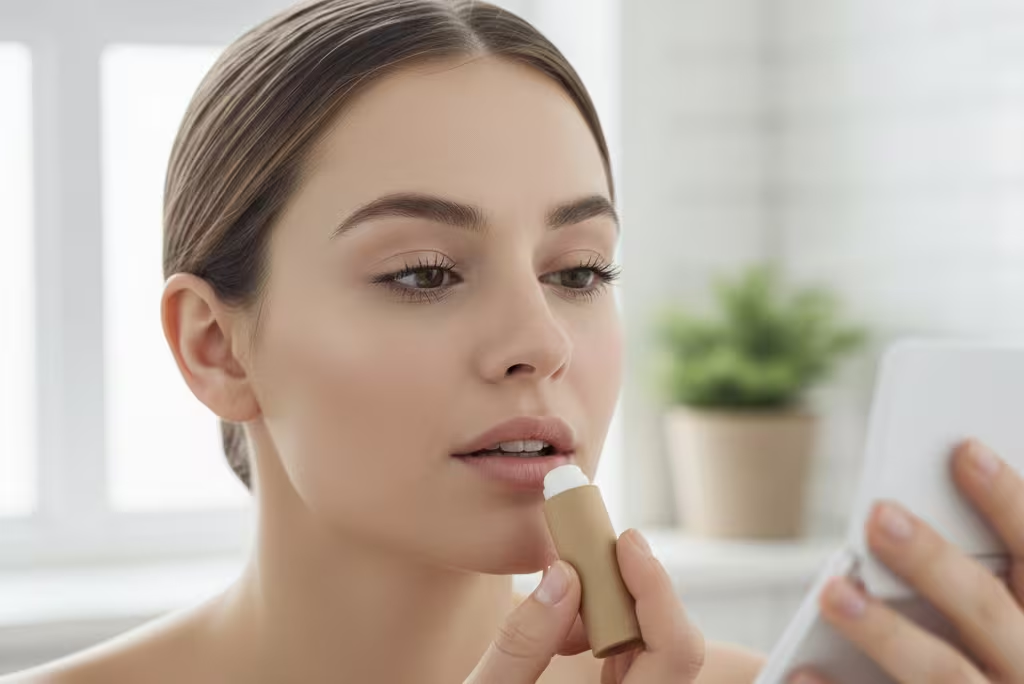
Many modern lip balms also include SPF protection, antioxidants, and subtle tints to enhance both lip health and appearance. Regular use of lip balm maintains softness, hydration, and smoothness, making lips more comfortable and visually appealing. It is suitable for daily use and can be applied as a base before lipstick or worn alone for a natural, healthy look.

Image Source: Myntra


Order Now

The Typsy Beauty Pout Polish Peptide Lip Treatment Balm is a nourishing and reparative lip balm designed to hydrate and rejuvenate dry, chapped lips. Enriched with peptides, it helps improve lip elasticity and smoothness over time while providing an immediate boost of moisture. Its lightweight formula glides on easily, leaving lips soft, supple, and subtly glossy.

Key Features

  • Contains peptides for lip repair and elasticity
  • Deeply hydrates and smoothens dry, chapped lips
  • Lightweight, non-sticky formula
  • Provides a subtle natural shine
  • Suitable for daily use
  • May need frequent reapplication in extremely dry conditions
  • Limited shade options

Image Source: Myntra


Order Now

The Unleashia Glacier Glossy Vegan Lip Balm is a vegan-friendly, hydrating balm infused with olive oil to nourish and protect lips. Its glossy finish gives a natural shine while keeping lips moisturized throughout the day. The balm is free from animal-derived ingredients and harmful chemicals, making it suitable for sensitive skin and conscious beauty users.

Key Features

  • Vegan and cruelty-free formula
  • Enriched with olive oil for hydration and nourishment
  • Adds glossy, natural shine to lips
  • Free from parabens, sulfates, and harsh chemicals
  • Suitable for daily wear and sensitive skin
  • Glossy finish may not appeal to those preferring a matte look
  • Requires reapplication for long-lasting hydration

Image Source: Myntra


Order Now

The Vaseline Emily in Paris Tinted Lip Balm Stick combines lip care with a hint of color. Formulated with petroleum jelly, it deeply moisturizes and protects lips while providing a sheer, flattering tint. Its compact stick design makes it easy to carry and apply on the go, offering both hydration and a subtle pop of color for everyday use.

Key Features

  • Provides hydration and a sheer tint
  • Enriched with petroleum jelly for long-lasting moisture
  • Limited edition “Emily in Paris” design
  • Easy-to-use stick format for on-the-go application
  • Suitable for all skin types
  • Tint is very subtle; may not satisfy users wanting bold color
  • Petroleum jelly formula may feel heavy for some

Image Source: Myntra


Order Now

Add Zee News as a Preferred Source

Vaseline Lip Care Nude Lip Balm is formulated for long-lasting hydration, offering up to 72 hours of moisturization. Its lightweight, non-greasy formula penetrates deeply to prevent dryness and chapping. The nude shade provides a natural, effortless look, making it perfect for daily use and as a base before lipstick or lip gloss.

Key Features

  • Provides up to 72 hours of moisturization
  • Lightweight and non-greasy formula
  • Nude tint for a natural, everyday look
  • Protects lips from dryness and chapping
  • Suitable for all skin types
  • 72-hour claim may vary depending on environmental conditions
  • Nude shade may not suit all skin tones

Lip balm is an indispensable product for maintaining soft, hydrated, and healthy lips. Beyond basic moisture, it provides protection against environmental stressors such as sun, wind, and cold weather. By incorporating lip balm into a daily skincare routine, individuals can prevent discomfort from dry or chapped lips while enhancing their overall lip appearance. Choosing a high-quality lip balm ensures long-lasting hydration, protection, and a natural, supple look, making it a small but essential step in comprehensive lip care.

Disclaimer: At IDPL, we help you stay up-to-date with the latest trends and products. It should not be construed as an endorsement to buy. IDPL may make a very small commission from its sale if one chooses to buy the product from any of the links in this article.


Tags: , , , , , , , ,
Self-care beyond beauty – The Daily Texan

Self-care beyond beauty – The Daily Texan

For women, self-care is often synonymous with physical upkeep. Skincare products, hair treatments, nail enhancements, hair removal, workouts and makeup are some of the many ways self-care is marketed to women. On social media platforms like TikTok, searching “#SelfCare” yields countless videos of influencers promoting products, routines and services that presumably helps users better themselves. Yet, this notion of improvement rarely extends beyond the physical.

This focus on the trappings of beauty — skin, hair, body and cosmetics — neglects true self-improvement in favor of adhering to external beauty standards. In online content targeted towards women, there’s relatively little mention of caring for yourself emotionally or mentally. Instead, women are bombarded with the idea that physical attractiveness can, and should, be enough to fulfill them.

Mehdi Haghshenas, associate professor of sociology, argues that beauty rituals often act as a form of social conditioning that works to reinforce norms of femininity.

“When women conform to beauty norms, they are often rewarded with approval, professionalism or social ease,” Haghshenas said. “When they don’t, they may be judged as lazy, unkempt, unfit (or) unfeminine. … Therefore, consequences are very subtle but extremely powerful. Beauty rituals shift from optional practices into baseline requirements for social legitimacy.”

Corporate communications junior Michelle Veneros has noticed self-care often goes hand-in-hand with beauty, especially in terms of what’s marketed to women her age.

“(Self-care is) mainly promoted as beauty-centric,” Veneros said. “I think it works for some people. If they look good on the outside, they’ll feel good on the inside. But I think it’s also really important to not neglect other parts of your personality, or who you are besides what you look like.”

For men, self-care doesn’t have nearly the same connotation. While those of all genders face pressure towards physical optimization, the pursuit of beauty through extensive products and services typically isn’t expected of men.

“For men, it might not be so appearance-focused, (like for younger women),” Veneros said. “It might be developing a healthier diet, working out or finding different hobbies. ”

External beauty standards can be exhausting—and expensive. According to the Global Wellness Institute, the global wellness economy was worth $6.8 trillion in 2024. The highest-valued wellness sector, surpassing healthy eating and physical activity, was personal care and beauty at $1,350 billion. 

It’s clear that promoting beauty as a form of self-care is profitable. However, the normalization of this attitude leaves women with a skewed sense of what self-care truly means. Rather than focusing on the mental, emotional and spiritual aspects of themselves, caring for their attractiveness is prioritized above all else.

“Grooming, makeup, hair removal (and) clothing become routines, not because they are necessary, but because they are expected,” Haghshenas said. “Over time, these expectations feel completely natural, and it becomes highly personal.”

Ultimately, women should care for themselves beyond these superficial expectations of beauty. While physical attractiveness may be desirable, pursuing it exclusively neglects true self-improvement. Finding new hobbies, pursuing therapy, practicing meditation, connecting with your community and educating yourself are just as important as your body.

In a world that often reduces women to their physical appearance, it’s crucial that their self-care doesn’t stop there.

Tuscano is a government sophomore from Round Rock, Texas.

Tags: , , ,
grow microgreens

How to Grow Microgreens at Home (the Easy Way)

Maybe you’ve seen microgreens at your local farmer’s market or farm to table restaurant. These little green plants are similar to sprouts, and just as packed with nutrients. Growing microgreens at home is really easy and offers so many health benefits!

What are Microgreens?

Microgreens are miniature plants of greens, herbs, or other vegetables. Like sprouts, they’re a concentrated nutrient source and packed with beneficial enzymes thanks to their rapid growth. While sprouts are grown without soil and are sprouted seeds, microgreens rely on soil or another growing medium. 

Microgreens are popular at gourmet restaurants because of their distinct flavor and presentation. You don’t have to go to a fancy restaurant though to eat microgreens! Our local health food stores sell them, but I’ll often grow my own microgreens because it’s much cheaper. 

They’re simple enough to grow that you can easily have a fresh plant source in your kitchen year round. One downside to sprouts is their potential to grow bacteria (which is rare) because they’re grown in the air and not soil. With microgreens you’re eating the stem and leaves, not the seed and root. 

Are Microgreens Good For You?

In a word, yes. Research shows that microgreens have 4-40% more micronutrients compared to full grown herbs and veggies. Microgreen benefits include getting fiber, minerals, and vitamins our cells need to thrive. And the benefits of microgreens don’t stop there. You’ll also find antioxidants to fight free radical damage. 

Types of Microgreens to Grow

The most commonly used plants for growing microgreens are:

  • Lettuce
  • Kale
  • Spinach
  • Radish
  • Beet
  • Watercress
  • Herbs
  • Greens
  • Cabbage
  • Mustard
  • Chia
  • Sunflower
  • Buckwheat
  • Clover
  • Kholorabi
  • Peas

Any edible plant that is entirely edible (root to leaves) can technically be used, but the ones above are the most common and taste the best. If you’re looking for the best microgreens for beginners, broccoli and radish stand out. 

Can I Grow Microgreens in Potting Soil?

Yes, potting soil works well with microgreens, but it can get a little messy. I prefer organic potting soil to avoid unwanted pesticide residue. Potting soil usually has some fertilizer mixed in for faster grow time. Just be sure when you’re trimming off the microgreens not to get the dirt along with it.

Another option is coconut coir or coco coir. Made from fibrous coconut hulls, it holds up to ten times its weight in water and is naturally resistant to fungus. It does not have a lot of nutrition in it so you can mix in a little fertilizer or use a 50/50 blend of soil and coco coir. 

If you want to grow microgreens at home without soil (hydroponically), then a hemp mat is a great option. You can grow microgreens in water with a hemp mat and sow the microgreen seeds directly onto that. For this tutorial though I’m focusing on growing seeds in soil (which can impart more nutrients). 

How to Grow Microgreens in a Mason Jar

You can grow seed sprouts in a jar, but you can also grow microgreens that way. Simply follow the same steps as below, but instead of using a shallow container, use a wide mouth jar. The downside to using a jar is that depending on the jar’s size you might not get many greens and they can be harder to harvest.

How to Grow Microgreens in a Tray

This is my preferred method. You just need a shallow, sturdy tray. Some people use plastic microgreen trays, but you can also use glass or compostable ones. 

Here’s how to grow your own microgreens!

What You Need to Grow Microgreens at Home

How to Grow Microgreens:

  1. Find a south-facing window with plenty of sunlight or install a growlight. I’ve found that a growlight mounted under kitchen cabinets works perfectly for growing greens on the counter if you have the space to do it. In warmer months, these can also be easily grown outside.
  2. Place an inch of organic potting mix in the bottom of a shallow tray or planter. You can also use a 50/50 mix of soil and coco coir. Smooth the soil out evenly. 
  3. Thickly scatter seeds evenly over the soil surface. 
  4. Cover the seeds with a thin layer of soil and spray the surface with clean, filtered water. I use a glass spray bottle.
  5. Place on the warming mat, if using, and under the grow light or near a sunny window.
  6. Mist the seeds a few times a day to keep the soil evenly moist while waiting for the seeds to germinate. You can also put a small fan on them to give them a gentle breeze, deter mold, and improve growth. 
  7. Greens are usually ready to harvest in 2-4 weeks, depending on the type of seed used.
  8. To grow another crop, either remove the roots and replant or dump the entire tray in the compost and fill with more soil mix to replant. If you dump in the compost, some straggler seeds usually volunteer and make a crop of their own a few weeks later.
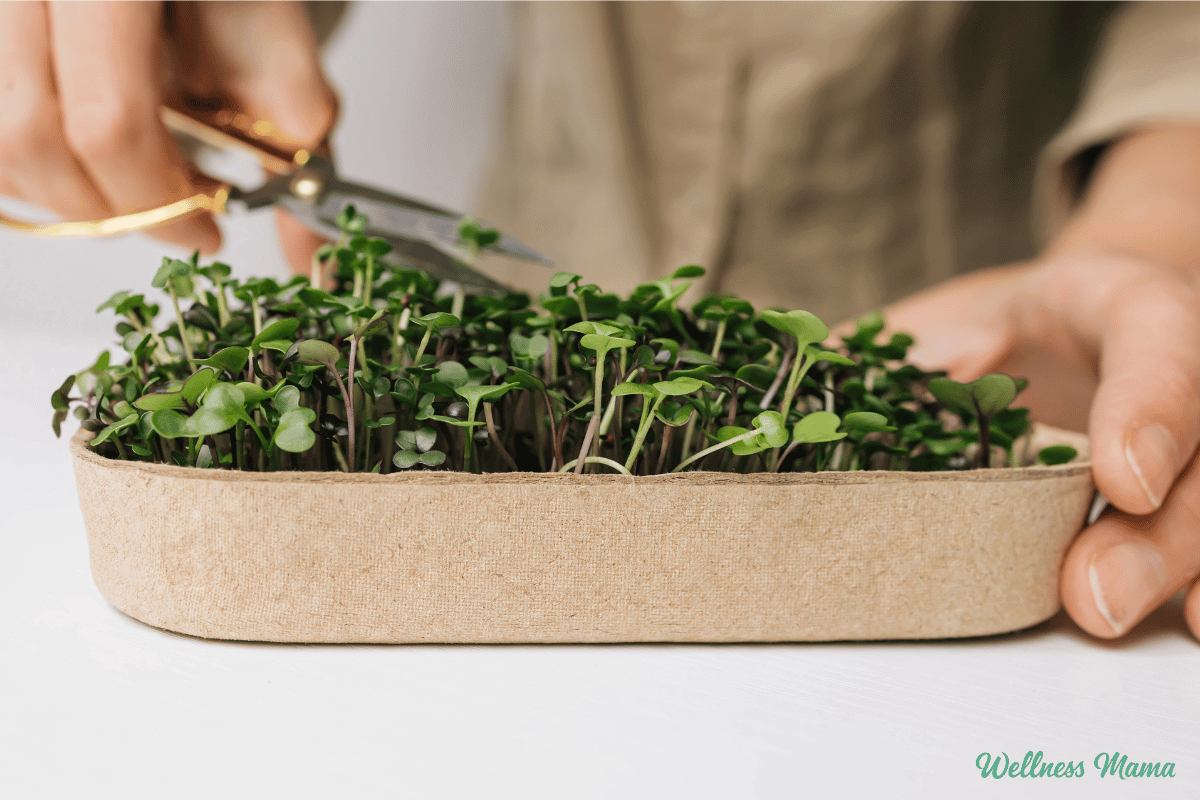
  9. Cut microgreens right above soil level with kitchen shears. Store in the fridge and rinse right before use. 

TIP: Soaking the seeds overnight will speed sprouting time, but make it more difficult to scatter them.

You’ll spread more seeds than you would if just planting the seeds to grow to full size. Since they’ll only get 1-2 inches tall and you want to harvest as many as possible from each tray.

Troubleshooting Common Microgreen Growing Problems

My seeds won’t sprout – They may not be getting enough light or it may not be the right temperature. Microgreens are versatile, but the ideal soil temperature for seed germination is 60-75 degrees. The air around the soil should ideally be between 60-70 degrees. Microgreens take 7-21 days before they’re ready to harvest. Or your seeds may be too old to germinate.

Why are my sprouts fuzzy? – The seed roots are often naturally fuzzy, this doesn’t necessarily mean it’s mold. If it’s slimy, doesn’t wash off, and is growing on the greens, then it’s mold. 

There’s mold growing on the soil – If you do have a mold problem, this can be due to too much water or a drainage issue. Your microgreen trays also need good airflow to deter fungal growth. Mixing some coco coir into the potting soil helps improve drainage too.  

Do I need plant growing lights? – You don’t need them, but they can be helpful, especially on darker winter days. If you don’t have a plant light, pick a very sunny windowsill. 

My microgreens are tall and falling over – If you’re using a light source that’s too far above the microgreens or poor quality, it can cause them to get “leggy.” The stalks have to stretch too high to reach the plant growing light. 

Do Microgreens Regrow After Cutting?

Certain seeds might give you a little bit of a crop after harvesting, but not much. It’s best to compost the soil medium after you harvest and start fresh. Experts generally recommend not reusing the same soil for microgreens because of disease risk and lower yields. If you have a compost pile going in the backyard though, then you can incorporate some of your finished compost into your microgreen soil mix. 

How to Eat Microgreens

You don’t need any special microgreens recipes to use them. They work well on top of any kind of salad and most dishes. Try them on top of some grain-free eggs benedict, a burger bowl, or garnish for some soup. Microgreens can work on top of almost any savory dish!

Have you ever grown your own herbs or plants inside? What are your favorite ways to use microgreens? Leave a comment and let us know!

Tags: , , ,
Best oLive
Privacy Overview

This website uses cookies so that we can provide you with the best user experience possible. Cookie information is stored in your browser and performs functions such as recognising you when you return to our website and helping our team to understand which sections of the website you find most interesting and useful.