5 Skincare Habits You Actually Don't Need to Do, According to Beauty Pros|shiori|大人の美容哲学

5 Skincare Habits You Actually Don’t Need to Do, According to Beauty Pros|shiori|大人の美容哲学

Is the daily routine you work so hard on really benefiting your skin?

“I want to have beautiful skin.”

With that in mind, you might layer on toner multiple times, add more serums, or carefully exfoliate every single day.

The more interested you are in beauty, the more time and money you likely spend on your skincare routine.

However, from my experience facing various skin concerns in the beauty industry, I feel that skincare is not necessarily better just because you put more effort into it.

What your skin needs is not a lot of care, but care that matches its current condition.

In this article, I will introduce five skincare habits that you don’t actually need to force yourself to do, from the perspective of a beauty professional.

1. Layering toner multiple times

“Because my skin is dry, I layer toner three or even five times.”

I sometimes hear stories like that.

Of course, there is nothing inherently wrong with layering toner.

However, applying toner multiple times does not necessarily mean that the skin’s moisture level will be maintained for a longer period.

What is important for protecting skin moisture is the barrier function of the stratum corneum and maintaining a state where moisture does not easily escape.

When you are concerned about dryness, try reviewing your moisturizing routine with emulsions or creams instead of just increasing the number of times you apply toner.

What matters is not the number of times you apply toner, but the combination that can keep your skin moisturized.

2. Daily scrubbing or peeling

When you are concerned about rough pores or dullness, you naturally want to exfoliate.

Scrubs and peeling products work to remove old dead skin cells and smooth out the skin.

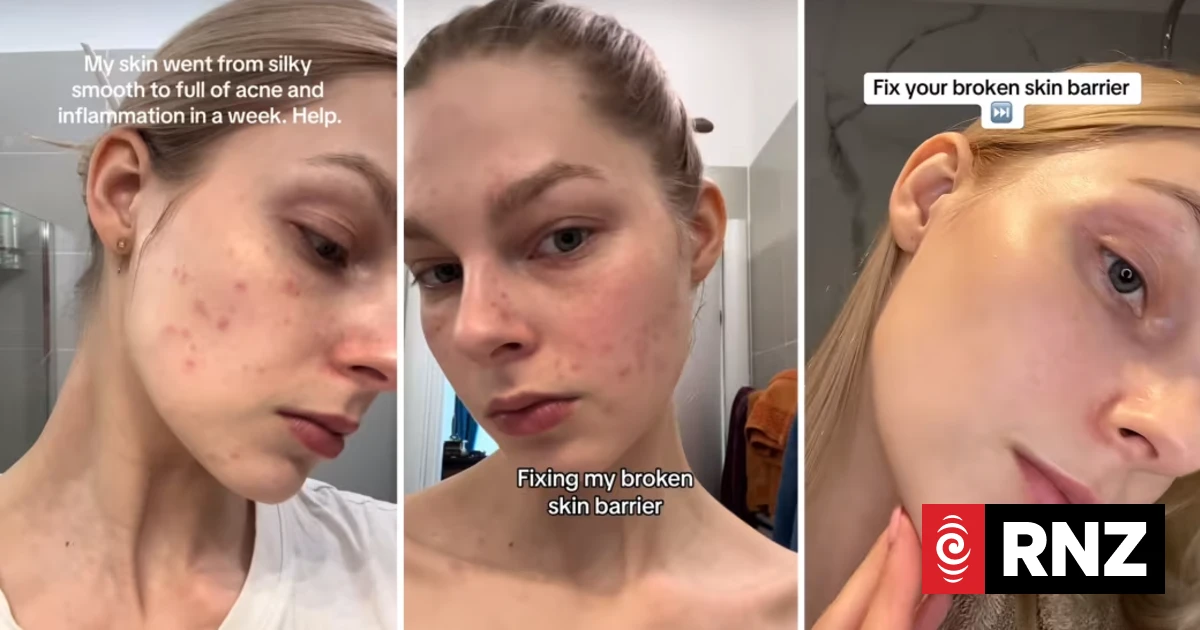
However, repeating this more than necessary can irritate the skin and lead to dryness or redness.

In particular, those who are prone to dryness or sensitive to irritation should be careful.

The appropriate frequency for exfoliation depends on the type and concentration of the product used, as well as your skin condition.

Do not aim to do it every day; instead, follow the product’s usage instructions and your skin’s reaction.

This is also a perfectly valid form of skincare.

3. Layering multiple types of serums

Vitamin C, retinol, niacinamide, ceramide…

The more you research beauty ingredients, the more you’ll want to try various serums.

However, incorporating many ingredients at once does not necessarily increase effectiveness.

Depending on the product, layering multiple items can sometimes make your skin more prone to irritation.

Also, if you start using several new serums at once, it becomes difficult to identify the cause if one doesn’t agree with your skin.

First, organize your thoughts on the skin concerns that bother you the most.

Then, it is important to incorporate items that address those concerns as needed.

Choose serums based on whether they suit your goals, not on how many you use.

4. Washing your face until it feels ‘squeaky clean’

After washing your face, it feels refreshing when your skin is squeaky clean, doesn’t it?

However, that sensation is not necessarily ideal for your skin.

Products with overly strong cleansing power, washing for too long, or the habit of scrubbing can lead to dryness and irritation.

The purpose of washing your face is to properly remove sweat, excess sebum, and dirt.

There is no need to excessively strip away the moisture your skin actually needs.

If your skin continues to feel tight after washing, it might be a sign to reconsider your cleanser or your washing method.

When washing your face, it is also important not to over-cleanse.

5. Constantly switching to expensive cosmetics

“Maybe if I use a more expensive serum, my skin will change.”

Have you ever felt that way?

Of course, there are many attractive products among high-priced cosmetics.

However, you cannot judge whether a product is right for your skin based on price alone.

When choosing cosmetics, it is important to consider not just the price, but also the ingredients, formulation, feel, and compatibility with your skin.

And you must not forget to continue the basics of skincare: moisturizing and UV protection.

Before buying new cosmetics, take a moment to re-evaluate whether the items you are currently using are right for your skin.

Understanding your skin and choosing accordingly is more important than using expensive products.

I believe that is what is important for adult skincare.

What adult beauty needs isn’t just “adding more”

As you age, you start to worry about various skin concerns such as dryness, lack of firmness, dark spots, and pores.

When that happens, you tend to think you need to add some new treatment.

But that is exactly when you should take a moment to review your current skincare routine.

  • Are you using the items you truly need?

  • Are there any habits that are putting a strain on your skin?

  • Are you maintaining your moisturizing and UV protection?

  • Are you adjusting your care to match changes in your skin?

The important thing is not the act of reducing your skincare itself.

It is about incorporating the necessary care, only as much as is needed.

And, it is about knowing your own skin.

Beauty should not be something you have to keep struggling with, but a habit for cherishing yourself.

With that in mind, I will continue to share beauty knowledge.

Read also

“Differences Between 4 Types of Beauty Ingredients”

We introduce the characteristics and how to choose between Vitamin C, Retinol, Niacinamide, and Ceramide.

“Is That Dark Spot Care Really Right for You? Home Care Based on Spot Type” [Paid, 300 yen]

We have summarized what you should know before starting dark spot care and how to think about daily home care.

For those who want to rethink their daily skincare

Even if you understand the characteristics of beauty ingredients and cosmetics,
“In the end, what should I use in the morning and at night?”
“How should I combine the cosmetics I currently have?”
Do you ever feel lost?
For those people, I have created a Morning and Night Skincare Practical Manual. It includes everything from basic care steps to adjustment methods based on skin condition, a 7-day review program, and a printable checklist.

▶ Morning and Night Skincare Practical Manual by a Beauty Professional [500 yen]

Recommended for those who want to learn how to build their own daily skincare routine. Beauty begins with knowledge.

shiori | Adult Beauty Philosophy

*This article contains general beauty information. Skin conditions vary by individual. If symptoms such as redness or itching persist, please consult a dermatologist.

Tags: , , , ,
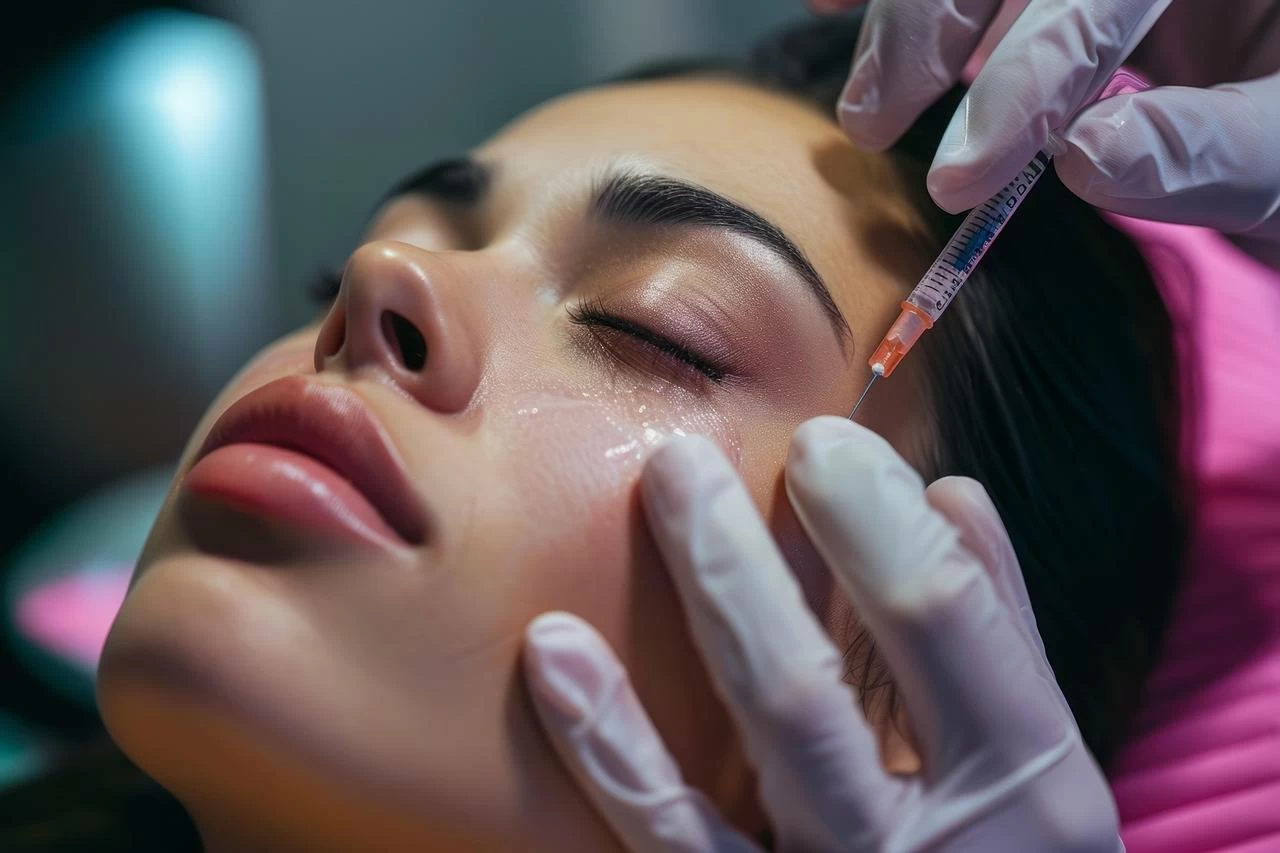
Doctors have warned against being influenced by advertisements promoting so-called miracle beauty treatments on digital platforms, noting that filters and edited images on social media have helped create unrealistic beauty standards, raised expectations and reduced acceptance of natural differences in facial and body features. Picture used for illustrative purpose only.

Doctors warn against social media beauty myths and overreliance on cosmetic procedures

Experts urge patients to prioritise skin health, realistic expectations and medical qualifications over online trends and marketing claims

Dubai: Doctors have warned against being influenced by advertisements promoting so-called miracle beauty treatments on digital platforms, noting that filters and edited images on social media have helped create unrealistic beauty standards, raised expectations and reduced acceptance of natural differences in facial and body features.

They also cautioned against a growing tendency among some dermatologists, particularly recent graduates, to focus on cosmetic procedures at the expense of diagnosing and treating skin diseases, despite increasing social and psychological pressures related to appearance.

Experts said several factors are driving this shift, including the quick financial returns associated with cosmetic procedures, rising demand for aesthetic treatments, advances in minimally invasive techniques, ease of performing such procedures and shorter recovery periods.

They stressed that addressing the trend requires a shared effort from patients, doctors and the beauty industry, with skin health and patient safety taking precedence over commercial considerations. They also urged patients to choose doctors based on qualifications and experience rather than social media popularity or advertising exposure.

Dermatology consultant Dr Anwar Al Hammadi

Dermatology consultant Dr Anwar Al Hammadi said the growing obsession with cosmetic procedures has negatively affected the core of dermatology, with some doctors focusing on Botox, filler injections and other high-demand treatments that generate rapid returns while neglecting the treatment of skin diseases.

He stressed the need to maintain a balance between cosmetic and therapeutic dermatology.

“A doctor who has spent many years studying medicine and specialising should not limit their professional ambition to quick cosmetic procedures,” he said.

Al Hammadi described dermatology as a broad medical specialty closely linked to both physical and mental wellbeing. He noted that it overlaps with several disciplines, including internal medicine, rheumatology, psychiatry and surgery, and continues to evolve through rapid scientific and therapeutic advances.

“We want the real dermatology that patients need. If everyone turns to cosmetics, who will treat skin diseases?” he said. “There is no objection to practising cosmetic medicine, provided it is not at the expense of the specialty’s medical and humanitarian mission.”

He explained that the skin can serve as a window into overall health, with changes in the skin and nails sometimes indicating conditions such as iron deficiency or liver and kidney diseases.

Al Hammadi added that patients often visit dermatology clinics carrying emotional burdens as well as physical concerns.

“A patient may come burdened with anxiety, fear and a loss of self-confidence because of a slight change in appearance,” he said.

He warned about the psychological impact of bullying and negative comments about appearance, even when made jokingly by friends or family members. Such experiences can drive people towards unsafe practices, including the use of unverified products, unsuitable treatments or potentially harmful cosmetic solutions.

According to Al Hammadi, the role of a dermatologist often extends beyond improving physical appearance to helping patients regain confidence and develop a healthier self-image.

He said social media filters and heavily edited images have reinforced unrealistic beauty ideals, encouraging some people to focus excessively on perceived imperfections.

“Beauty does not mean perfection,” he said. “It is based on harmony between outward appearance, self-confidence, intellect and spirit.”

Al Hammadi also warned against advertisements claiming guaranteed results for skin and hair treatments, particularly those promoting complete skin-tone uniformity.

“There is no such thing as perfectly uniform skin tone in a healthy person. Variations and tanning are natural and genetic,” he said.

He cautioned against excessive scrutiny of facial features in mirrors or under magnifying lights, noting that some individuals become fixated on minor or even imagined flaws to the extent that it affects their quality of life.

Al Hammadi stressed that expensive or newly introduced treatments are not automatically the best option for every patient. He said treatment decisions should be guided by accurate diagnosis, scientific evidence and individual medical needs rather than marketing claims.

He also advised patients to select doctors based on qualifications, experience and professional practice rather than the size of their social media following.

“Taking care of one’s appearance is legitimate, but it should not become a source of psychological stress or self-rejection,” he said.

Dermatology consultant Dr Marwa Al Badawi

Dermatology consultant Dr Marwa Al Badawi said social changes in recent years have altered perceptions of ageing and appearance, amid growing pressure to look youthful and idealised.

She noted that the desire to improve appearance is often linked to self-confidence and personal satisfaction, making it important for doctors to understand the motivations behind requests for cosmetic procedures rather than focusing solely on physical changes.

Al Badawi said advances in minimally invasive procedures, including injectables and laser treatments, have made cosmetic treatments more accessible and popular by reducing recovery times.

She added that dermatology has undergone a significant transformation over the past two decades, with demand for aesthetic and preventive treatments increasing alongside the continued need to treat conditions such as acne, eczema, psoriasis and skin cancer.

“The growth of cosmetic dermatology should not come at the expense of therapeutic dermatology, which remains a fundamental pillar of the specialty,” she said.

Al Badawi stressed that doctors must set realistic expectations and be prepared to decline requests when desired outcomes are unattainable or unsafe, particularly when motivations stem from social pressures or dissatisfaction with appearance.

She said doctors have a responsibility to educate patients about the natural effects of ageing and to explain realistically what medical procedures can and cannot achieve.

“The ethical medical decision must place a patient’s physical and psychological wellbeing above commercial considerations and financial returns,” she said.

Looking ahead, Al Badawi warned that if large numbers of dermatologists focus exclusively on cosmetic procedures, it could affect the availability of specialists capable of managing complex skin diseases and participating in clinical research and treatment development.

“Cosmetics are part of dermatology, but they should not overshadow the rest of the specialty or turn it into a purely commercial practice divorced from its therapeutic and humanitarian mission,” she said.

Dermatology consultant Dr Rana Abu Tarab

Dermatology consultant Dr Rana Abu Tarab said meaningful change requires the combined efforts of patients, doctors and the beauty industry.

She emphasised that health awareness should be the starting point.

“An informed patient is interested not only in having more beautiful skin, but also in understanding skin health, the causes of their condition and the most appropriate treatment based on an accurate medical diagnosis,” she said.

Abu Tarab added that doctors have a responsibility to uphold professional ethics and recommend treatments that genuinely meet patients’ needs, while the beauty industry must promote safe and responsible practices that prioritise health and safety.

She said the success of a dermatologist should not be measured by the number of cosmetic procedures performed but by the ability to diagnose and treat skin diseases and improve patients’ quality of life.

Dermatology and skincare

Beauty expert Raja Atlas

Beauty expert Raja Atlas said achieving a balance between dermatology and cosmetic skincare requires close cooperation between dermatologists and skincare specialists, with each working within their area of expertise.

She explained that dermatologists are responsible for diagnosing and treating skin diseases, while skincare specialists help improve appearance and maintain treatment results. Cosmetic procedures, she said, should never replace medical treatment where specialised care is required.

Atlas stressed that greater public awareness is essential to correcting misconceptions about beauty and skincare.

“Beautiful skin starts with healthy skin,” she said, adding that understanding the skin’s needs helps people choose suitable products and treatments while avoiding unnecessary procedures and passing beauty trends.

She said responsibility is shared between patients and healthcare professionals, who should provide realistic advice and encourage people to prioritise skin health before pursuing cosmetic enhancement.

Tags: , , , , , , , ,
The Everyday Beauty and Wellness Traditions That Shape Latin American Culture

The Everyday Beauty and Wellness Traditions That Shape Latin American Culture

By Sounds and Colours
12 October, 2026

Beauty and wellness traditions across Latin America are shaped by far more than products or passing trends. Family habits, climate, social life and regional customs all influence the way people think about grooming, personal care and presentation.

There is no single Latin American beauty routine. Practices vary widely between countries, cities and generations. Still, certain themes appear repeatedly: attention to hair and skin, regular grooming, strong social connections and an emphasis on looking cared for without necessarily making the process feel formal.

Many of these habits are learned at home. Advice is passed between relatives, familiar routines become part of daily life and personal care often blends naturally with broader ideas about confidence, health and social connection.

Skin Care Often Responds to Climate and Everyday Comfort

Latin America includes humid coastal regions, dry highlands, tropical climates and cooler southern areas, so skin care habits naturally differ by location.

The basic principle is often practical: people adjust routines according to how their skin feels in the environment around them. Someone dealing with tightness or seasonal dryness might choose a dry skin moisturizer as part of a straightforward routine focused on maintaining comfort and supporting the skin barrier.

Sun exposure also influences everyday care in many regions, particularly where strong sunlight is part of daily life.

Rather than following one universal routine, the most sustainable approach is usually adapting products and habits to climate, lifestyle and individual skin needs.

Oral Care Is Part of the Wider Grooming Routine

Personal presentation is not limited to hair, makeup or clothing.

Oral hygiene is another everyday habit that can influence how confident someone feels during close social interactions, particularly in cultures where conversation, family gatherings and shared meals play such a central role.

Resources such as https://getlivfresh.com/ fit into that broader wellness picture by reflecting the attention many people give to maintaining a consistent oral-care routine alongside other forms of grooming.

The important factor is regularity.

Brushing, appropriate dental care and routine professional checkups are not glamorous beauty rituals, but they form part of the same wider idea of looking after oneself consistently rather than only preparing for special occasions.

Hair Care Often Carries Personal and Cultural Meaning

Hair can be one of the most visible parts of personal identity.

Across Latin America, hair textures range widely, and routines may involve curls, waves, straight hair or combinations that respond differently to humidity, heat and styling.

Family knowledge often plays an important role.

Techniques for washing, conditioning, braiding or styling may be learned from parents, grandparents or siblings long before someone starts following professional beauty advice.

Salon culture is also important in many communities.

A salon visit can be practical, social and restorative at the same time, turning routine grooming into an opportunity to talk, exchange news and maintain familiar relationships.

That social element helps explain why beauty spaces can become part of community life rather than simply service businesses.

Beauty Rituals Often Begin at Home

Many personal-care traditions are informal.

They may start with a family member recommending a particular way to care for the hair, prepare for an event or maintain a simple skin routine.

Those habits can remain influential even when modern products and online trends enter the picture.

Home routines also create continuity between generations.

A technique may change over time, but the idea of setting aside time for grooming before a family gathering, celebration or weekend outing can remain familiar.

This is one reason beauty traditions are difficult to separate from culture.

They are not only about appearance. They can carry memories of relatives, childhood routines and the way people learned to prepare themselves for social life.

Social Occasions Give Grooming a Stronger Role

Family gatherings, weddings, birthdays, religious celebrations and weekend social events are important parts of life across many Latin American communities.

These occasions often make grooming feel like part of the preparation.

Hair may be styled more carefully, clothing chosen deliberately and makeup adjusted to suit the event.

That does not mean everyday beauty is always elaborate.

In fact, regular maintenance can make special-event preparation easier because the basic routine is already established.

Looking polished becomes less about dramatic transformation and more about building on habits that are already part of daily life.

Modern Wellness Is Adding New Layers to Old Habits

Digital media has introduced new beauty and wellness influences across Latin America, just as it has elsewhere.

Skincare ingredients, fitness routines and international beauty trends can spread quickly through social platforms, often reaching younger audiences before traditional media does.

At the same time, older habits have not disappeared.

Family advice, local beauty businesses and established social routines continue to shape how people interpret new trends.

The result is often a blend rather than a replacement.

A modern skincare product may sit beside a long-standing hair ritual, while a new wellness habit becomes part of a family routine that has existed for years.

That combination is what makes everyday beauty culture so dynamic.

Across Latin America, beauty and wellness are rarely only about appearance. They are connected with routine, confidence, family knowledge and social life.

The specific practices may differ from one place to another, but the underlying pattern is consistent: care becomes meaningful when it is woven into everyday life rather than reserved only for special occasions.

Subscribe to the Sounds and Colours Newsletter for regular updates, news and competitions bringing the best of Latin American culture direct to your Inbox.

Share:

Tags: , , , , , , ,
BLOOME, a Beauty Habit That Makes You Glow from Within with Triple Fermentation|ふゆママ

BLOOME, a Beauty Habit That Makes You Glow from Within with Triple Fermentation|ふゆママ

Summary

A new beauty habit using triple fermentation that answers the concerns of women in their 30s and 40s who feel they are too busy to keep up with their skincare. With BLOOME stick jelly, which uses proprietary technology to make ingredients easier to absorb, you can achieve smart anti-aging care anywhere. Why not start a daily routine that fills you with confidence from the inside out with inner care that is easy to maintain? Make your busy days your ally and start incorporating a small system to take care of yourself today.

Table of Contents

A Must-See for Women in Their 30s and 40s: BLOOME, a Beauty Habit That Makes You Glow from Within with Triple Fermentation

As I have entered my 30s and 40s, there have been more moments where I have felt less confident looking at myself in the mirror with my usual care routine. With increased responsibilities at work and a busy life at home, even if I want to take my time with skincare, the reality is that I am often exhausted just getting through my hectic post-work routine. I myself have struggled with the frustration of not being able to find effective measures while worrying about how fatigue shows on my face.

In the midst of such a busy daily life, the solution I arrived at is an “approach from within.” In particular, care that utilizes the power of triple fermentation, which has been attracting attention recently, is a habit perfect for our generation that values efficiency. In this article, I will talk in detail about why fermented ingredients are the key to our beauty, why the stick jelly format lowers the hurdle for consistency, and the appeal of BLOOME, which brings positive changes to life, based on the recommended inner care methods I have actually tried and felt were easy to continue.

You don’t need to spend a lot of time on beauty. What’s important is to incorporate a small system of self-care into your daily life. Efficient and satisfying anti-aging care habits By acquiring these, why not aim for a comfortable lifestyle that fulfills you from within? I will explain the smart options for turning your busy days into your ally.

Conditioning Your Body with the Power of Triple Fermentation: Why Inner Care Is Necessary Now

Smarter Anti-Aging Care with a Unique Triple Fermentation Mechanism

As you enter your 30s and 40s, do you ever feel that your usual care is no longer enough? In the days chased by work and family, I myself have increasingly sighed while looking in the mirror, feeling that “something is missing.” That was when I encountered inner care using triple fermentation that incorporates proprietary technology.

Why are fermented ingredients good for beauty in the first place? It is because the power of microorganisms breaks down the ingredients into smaller molecules, making it easier for them to align with the “receptive power” we naturally possess. While general supplements are often taken as they are, this triple fermentation technology transforms materials into a more microscopic and easily absorbable state. To use an analogy, it might be similar to a cooking method where hard ingredients are simmered slowly to make them easier to digest. It is because of this ingenuity that an efficient and satisfying beauty habit is possible.

Especially for those of us living busy lives, Triple Fermentation Beauty Habit Stick Jelly is a very reliable presence. Even when you don’t have the time to prepare water to swallow pills, you can quickly take out the stick jelly from your bag and consume it anywhere. It tastes good, and even someone like me who gets bored easily could keep it up. In fact, by incorporating it into my busy mornings or my refreshment time between work, I have come to feel as if I am being conditioned from within.

Anti-aging care does not produce results overnight. That is why sustainability—*”how easily it can be continued”*—is the key. I feel that the reason why fermented ingredient beauty jellies have a good reputation in reviews is not just because the ingredients are excellent, but because this “ease of blending into daily life” is highly valued. Because we are busy, we want to make smart choices to take care of ourselves. This product is the embodiment of that desire.

I have tried and failed with many supplements in the past, but I feel a definite response to this method that can be naturally incorporated into my current lifestyle. Why not choose something you can be satisfied with and, above all, something you can continue comfortably for the sake of your own body? The first step toward your ideal self begins with the accumulation of such small habits. Please try it as an option to color your busy days positively.

You can check details and purchase information on the official website.

Perfect for a Busy Daily Life: The Choice of Efficient “Beauty Habit Stick Jelly”

When you are chased by work and housework, the thing that inevitably gets pushed to the back burner is your own self-care. It is difficult to spend time on skincare in the midst of busy days. I myself used to be shocked when I looked in the mirror after returning home and saw my exhausted expression. That is exactly when it is important to adopt the recommended inner care mindset and have a habit of conditioning from within. Once you make an approach from within your body a habit, it will be a great help even when you are busy.

In skincare for working women, time-saving is a very important theme. However, it is a waste to give up on care just because you are busy. Therefore, I would like to recommend the “Beauty Habit Stick Jelly [BLOOME]” that allows you to easily incorporate the power of triple fermentation. What is wonderful about this product is, above all, its time performance. Since it is an individually wrapped stick type, if you keep it in your pouch, you can quickly consume it without water while commuting or during a break at the office. The flexibility of being able to take it out of your bag and care for yourself immediately even if you forget to take it in the busy morning is perfect for the modern lifestyle.

To give a concrete example, I try to eat this jelly when my morning preparations are hectic or when I am a little tired after lunch. Since it tastes delicious like a dessert, I can continue it every day naturally without feeling a sense of obligation. Since it eliminates the hassle of preparing water and swallowing pills like conventional supplements, the psychological hurdle has been significantly lowered. Even when I don’t have time for skincare, the peace of mind that I am eating this leads to mental leeway.

They say consistency is key, and this is certainly true for beauty as well. I have realized that consistently replenishing nutrients from within every day is more likely to lead to long-term changes than occasionally using expensive serums. The unique triple fermentation technology makes ingredients easier to absorb, providing solid support for your body even during busy periods when your lifestyle tends to become irregular. Efficient beauty habitIncorporating stick jelly as a is a reliable investment in your future self.

If you are thinking about incorporating “extra care” into your current lifestyle, why not start with this simple method? Cherishing your own time while nurturing your beauty within reasonable limits. I recommend starting such a mindful lifestyle with BLOOME. You can find more details on the official page, so please be sure to check it out.

Official Sales Site: https://bloome-beauty.jp/

Life with BLOOME: Turning busy days into “time to pamper yourself”

BLOOME for balancing mind and body: A positive habit that starts with portability

When you lead a busy life, it is difficult to make time to pamper yourself. I used to fall into self-loathing after returning home, thinking, “I ended up putting off my own care again today.” The answer I reached as a busy person is to make the most of small gaps in time. By incorporating small “mechanisms” into my life, I was able to establish comfortable habits without strain.

Indispensable to my daily life is the beauty habit stick jelly, BLOOME, which makes you shine from within with triple fermentation! The price is 3,500 yen. The biggest feature of this product is its surprisingly light portability. Because it is a compact stick type, it fits easily into work bags or small pouches. This means you don’t have to feel pressured to wait until you get home; you can turn your “gap time,” such as on the train during your commute or between desk work in the afternoon, into a chance for self-improvement.

For example, taking it out of your bag and consuming it before an important meeting. Just doing that gives you a sense of relief in a mind that tends to be cluttered by busyness. The fact that it requires no water and can be consumed smartly anywhere is a major benefit for modern women seeking efficiency. Since I started incorporating the inner-glow habit of BLOOME, what has changed most of all might be my own mindset. The small sense of accomplishment that “I was able to take care of myself properly today” accumulates and leads to confidence.

Even for me, who has tried and failed at many beauty habits, this stick jelly was able to naturally blend into my life. No special preparation or long time is required. Just keep it in your bag like you would your favorite lipstick. I have realized that this simplicity is the key to maintaining beauty for a long time.

Instead of giving up because of busyness, think about how to sneak “your own time” into your current lifestyle. That ingenuity is the first step toward positive changes that balance mind and body. If you feel something is missing from your daily routine, please try this recommended portable beauty jelly option. In a fleeting moment, the person in the mirror should look a little brighter. Let’s stack up comfortable days at a pace that works for you.

Shine from within with triple fermentation! Click here for details on the beauty habit stick jelly [BLOOME]

Satisfied from within: The first step to a wellness life brought by consistency

The “fatigue” or “lack of something” you feel when you look in the mirror during your busy days is an important sign for us to face ourselves. In our 30s and 40s, when responsibilities at work and home increase, we tend to put ourselves last, but I have realized that it is precisely because of this period that it is important to review our anti-aging care habits to balance our physical and mental condition.

The habit I arrived at after trying and failing at numerous inner care routines was one that felt like a “reward” that I could continue without strain. No matter how excellent the ingredients are, it is meaningless if taking them becomes a burden. In that respect, BLOOME, which supports health from within with the power of triple fermentation, is surprisingly easy and yet provides a solid sense of satisfaction.

For example, quickly opening a stick and consuming it during a busy morning commute or a short break at your desk. The ease of being able to eat it as is, without the need to prepare water, naturally blends into your daily routine. I feel that this “ease” is the key to turning supplement intake from an “obligation” into a “pleasure.” By accumulating the feeling of being satisfied from within little by little every day, my view of myself in the mirror gradually changed to a more positive one.

Delicious beauty supplement that is easy to continue Meeting the condition of is the first step to building a long-term wellness life. The changes you can only realize by continuing will bring peace of mind, and as a result, lead to improved daily performance. Instead of a temporary solution, why not incorporate BLOOME into your life as an investment in your future self?

BLOOME does more than just supplement ingredients. It becomes a sophisticated partner for incorporating “time to cherish yourself” into your busy days. As a new habit for the future, please start a wellness life that shines from within with BLOOME.

You can check the official website for details and purchases.

Summary

A smart choice to turn your busy days into an ally

So far, I have explained the mechanism of triple fermentation and tips for making BLOOME a part of your routine. I truly understand the feeling of putting your own care on the back burner because you are so busy. I used to be the same way. However, I realized that what is important is not ‘taking perfect time’ but ‘having a system to cherish yourself’.

The absorption power enhanced by triple fermentation technology and the convenience unique to the jelly type are exactly the form of care we are looking for right now. Just by keeping it in your bag, you will accumulate small bits of confidence that ‘I was able to take care of myself today too.’ That accumulation will surely lead to a healthy radiance that overflows from within.

This inner care you start with BLOOME is not just a beauty method, but a positive promise to yourself for working hard every day.

Now that you feel like changing something is the best time to start. Why not add one small habit to your pouch starting today? If you are interested, please check the details on the official website below.

See details on the BLOOME official website

Tags: , , , , ,
5-Minute Daily Beauty Habits for Busy Office Workers|riyu

5-Minute Daily Beauty Habits for Busy Office Workers|riyu

It is okay even if you are tired. Skincare you can start today and keep up with easily.

When you get home from work, you just don’t want to do anything anymore.

In the morning, you don’t have enough time, so your skincare routine ends up being haphazard.

When you look at social media, there are so many beauty items and care methods introduced that you don’t know where to start.

Have you ever felt that way?

You really want to keep your skin beautiful. You want to spend time on yourself. But when you are tired from work and commuting, you don’t have the energy to put effort into beauty, do you?

For those people, I recommend simple beauty habits that start from 5 minutes a day.

When you think of beauty, you might have an image of using expensive cosmetics or going through many steps.

However, there is no need to aim for perfection from the start.

First, let’s start by organizing the basics—cleansing, moisturizing, and UV protection—to fit your lifestyle.

In this article, I will introduce morning and evening skincare routines that are easy for busy office workers to practice, tips for saving time, and a 7-day plan to help you keep it up.

“I want to put effort into beauty, but I don’t have the time.”

I would be happy if this could be a starting point for those people to find beauty habits that suit them.

Tags: , , , , , ,
Skincare is self-care: When beauty becomes a ritual for rest and wellbeing

Skincare is self-care: When beauty becomes a ritual for rest and wellbeing

Skincare has traditionally – and is primarily – driven by results that can be “seen”.

Clearer complexions, fewer breakouts, smoother texture and brighter skin have long shaped the way products and treatments are marketed, often accompanied by the suggestion that there is always something that could be improved.

But as conversations around wellness and self-care become part of everyday life, the way people approach caring for their skin may also be changing.

It may also signal a shift away from social media’s expectation of perfection when it comes to all aspects of beauty.

Rather than simply pursuing flawless skin, skincare can offer something else: a few quiet minutes at the beginning or end of the day, the comfort of a familiar routine, or an opportunity to step away from work, screens and other demands.

Professional skincare treatments can serve a similar purpose. While people still expect results, the time spent having someone else care for their skin can provide a rare chance to do very little at all.

Wilson Lee, chief executive officer of Emax Beaute International, the parent company of B+ Clinic, believes this requires moving away from the idea that skincare should always be about correcting perceived imperfections.

“‘Skincare as therapy’ means recognising that skincare is not only about addressing a concern, but also about how we choose to care for ourselves,” he says.

“As an industry, we have often focused on what people need to fix or improve. We want to shift that conversation towards understanding, personalisation and care, because there should not be one definition of what healthy, beautiful skin needs to look like.”

Read more: Beyond straight hair: Malaysians are rethinking beauty standards around curls

A daily ritual

Unlike occasional wellness activities, skincare is already built into many people’s everyday routines.

Cleansing and applying skincare in the morning and evening may take only a few minutes, but the repetition itself can create a small ritual – particularly when it is approached without rushing.

Rather than simply offering flawless skin, beauty routines can be about the quiet moments to slow down, reset and switch off – all on your own terms. Photo: Pexels

For Menard senior sales and marketing manager Calvin Sim, these everyday moments are an important part of what makes skincare restorative.

“Skincare goes beyond fixing breakouts, dullness or dryness. It is a moment to slow down, and the few minutes we spend cleansing and applying products are among the few times in a day that truly belong to us,” Sim says.

This also shifts attention from simply what people put on their skin towards how they care for it.

Sim points to cleansing as an example.

Too much pressure or poor technique can potentially compromise the skin barrier, while gentler, more considered movements can turn an otherwise functional step into a slower experience.

“So skincare is not only about what you apply, but how you apply it,” he says.

“When our hands care for the skin in the right way, we relax too and stress eases. That is what ‘skincare as therapy’ means to me.”

Seen this way, skincare does not necessarily need to be elaborate to feel restorative.

The therapeutic element may lie less in having an extensive routine than in giving an everyday activity greater attention – taking several minutes to focus on the physical sensations of cleansing, massaging or applying skincare rather than simultaneously thinking about the next task.

Nadia Nasimuddin, founder of homegrown personal care brand Pop Neutral, shares this view, particularly when skincare is fitted around the demands of work and family.

“For me it’s about the few minutes that belong only to you. Most of us spend the day looking after everyone else, our families, our teams, our deadlines,” she says. “Putting on a body oil or lotion at the end of the day is one of the rare moments where you slow down and look after yourself, without anyone asking you to. The product matters, but the pause matters just as much.”

For Nadia, even five or 10 minutes devoted to oneself can make a difference to how a person feels.

Routine itself can also provide a sense of familiarity at the beginning or end of a busy day.

“I think routine itself can be very grounding. There’s something comforting about having these small rituals at the beginning or end of your day that are purely about taking care of yourself,” she says.

Skincare can be less about the mirror and more about taking a moment to unwind at the end of the day. Photo: Pexels

Time to switch off

Home routines, however, offer a different experience from having someone else care for your skin.

With sophisticated skincare products, devices and information now readily available, much can be done without leaving home.

Yet professional treatments continue to appeal to many, partly because they provide something that is increasingly difficult to replicate in everyday life: uninterrupted time.

“I think there is still a strong value in the professional experience itself,” says Lee.

“People may have access to good products and tools at home, but a professional facial gives them the opportunity to step away from their daily routine and have their skin cared for by someone with the right knowledge and experience.

“It is also about the trust that comes with knowing you are in the hands of a professional.”

That separation from daily responsibilities may be as important to the experience as the treatment itself.

At home, even a carefully planned skincare routine can take place between answering messages, preparing for work, looking after family members or getting ready for bed.

Setting aside time for a treatment creates a defined pause in which those responsibilities temporarily recede.

Expertise remains another reason people seek professional care. With new ingredients, products and skincare trends appearing constantly, deciding what the skin actually needs can become overwhelming.

“I think the value of a professional facial goes beyond the treatment itself,” Lee says.

“It is about having someone with the expertise to look at your skin, understand its current needs and guide you towards the right approach.

“With so many trends and products available today, that personal understanding can make a real difference. Ultimately, good skincare should be about what works for the individual, not simply what everyone else is doing.”

Sim similarly points to assessment and technique as elements that are harder to reproduce at home, particularly when it comes to understanding changes in the skin and applying the appropriate amount of pressure during a treatment.

“I worked as a beauty consultant for more than 10 years and now lead training, so I have seen first-hand that with the same product, a different technique or pressure gives a very different experience and result,” says Sim.

“Many customers only realise after a treatment that the right technique can relax both the skin and the mind.”

Read more: What are multitasking cosmetics and why are they now a go-to beauty choice?

Care beyond the skin

The connection between skincare and well-being can also be found in its sensory qualities.

For Nadia, something as simple as a shower, a familiar scent or taking time to massage a product into the skin can help mark the transition from a busy day to a quieter part of it.

“A warm shower, a scent you love, massaging a product into your skin are little things that signal it’s time to slow down, unwind or transition out of a busy day,” she says.

“The physical benefit is obviously important, but I think how a product makes you feel is just as important.”

Perhaps the strongest connection between skincare and wellness, however, comes from the experience of simply being cared for.

Touch, quiet and the absence of everyday distractions can create an environment in which people naturally begin to unwind.

While social media influencers might have you thinking otherwise, it is alright not to look Instagram-worthy all the time. Your beauty routine should serve you, not everyone else. Photo: Pexels  

For some, that relationship also becomes unexpectedly personal.

“Yes, the trend is clear. Life today is fast and stressful, and people need a space where they can truly relax and be looked after,” says Sim.

“In my work, I have found that many customers come to the salon not only to improve their skin, but also to release stress. The treatment is quiet and comforting, and gentle touch helps people unwind naturally.”

Over time, the familiarity between client and therapist can create another form of connection.

“Many customers begin to open up about their lives and worries, because they trust their therapist, and being heard is itself a way of relieving stress,” says Sim.

“So besides professional technique, a beauty therapist also needs to be a good listener.”

It is a reminder that self-care does not always have to involve dramatic changes or elaborate wellness practices. Sometimes it can simply mean allowing someone else to take care of you for an hour.

Lee similarly sees professional skincare becoming increasingly connected to this idea of taking time for oneself.

“Absolutely. A facial can address the skin, but the experience can also give someone an opportunity to step away from a busy day and focus on themselves,” he says.

“I think that is why professional skincare has become increasingly connected to self-care. It is not necessarily about pursuing a particular outcome every time. Sometimes, giving yourself the time and attention to feel refreshed is valuable in itself.”

A changing idea of self-care

In Malaysia, Nadia believes the way people think about beauty and self-care is evolving alongside wider conversations about well-being.

“People are still interested in results, of course, but they’re also thinking more about wellness, stress, sleep and how they feel overall,” she says.

That may be partly a response to increasingly connected lives, where opportunities to properly switch off can be difficult to

find.

“Life has become incredibly fast-paced and we’re constantly connected, so people are looking for simple ways to create moments of calm within their everyday routines,” Nadia says.

“Skincare and body care naturally fit into that because they’re already part of our day.”

It is also an approach to self-care that does not necessarily require lengthy appointments, complicated routines or an extensive collection of products.

Ultimately, skincare will always have a practical purpose. People want products and treatments that address their concerns and help keep their skin healthy.

But then again, the changing conversation lies in recognising that this does not have to be its only purpose.

Tags: , , , , ,
Global Shea Butter Market Set to Reach USD 8.57 Billion by 2034 as Clean Beauty, Sustainable Sourcing and Food-Grade Applications Strengthen, says Maximize Market Research

Global Shea Butter Market Set to Reach USD 8.57 Billion by 2034 as Clean Beauty, Sustainable Sourcing and Food-Grade Applications Strengthen, says Maximize Market Research

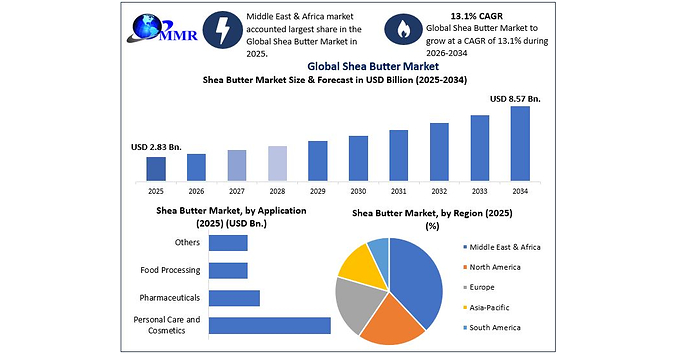
PUNE, India, Oct. 6, 2026 /PRNewswire/ — The Global Shea Butter Market was valued at USD 2.83 Billion in 2025 and is projected to grow at a CAGR of 13.1% from 2026 to 2034, reaching USD 8.57 Billion by 2034, according to a new analysis by Maximize Market Research.

Explore 125 market data tables and 60 figures across 324 pages, along with a detailed Table of Contents covering the Global Shea Butter Market.

Global Shea Butter Market Size

Global Shea Butter Market Size & Forecast
Market Size (Base Year 2025): USD 2.83 Billion
Forecast Market Size (2034): USD 8.57 Billion
CAGR (2026–2034): 13.1%
Base Year: 2025
Forecast Period: 2026–2034
Historical Period: 2020–2025

Global Shea Butter Market Overview

The Global Shea Butter Market continues to expand as demand rises for natural ingredients, plant-based raw materials, clean-label products, sustainable personal care ingredients, and functional food fats. Shea butter is widely used across cosmetics and personal care, food processing, pharmaceuticals, bakery products, confectionery, skincare, haircare, medicinal ointments, and cocoa butter equivalent applications. The Shea Butter Market growth is supported by increasing consumer preference for raw and unrefined shea butter, refined shea butter, organic shea butter, cosmetic-grade shea butter, food-grade shea butter, and ethically sourced shea products. Growing demand for moisturizing ingredients, natural antioxidants, essential fatty acids, and plant-derived emollients is strengthening the Global Shea Butter Market size, market share, market demand, and long-term Shea Butter Market forecast.

The market is also being shaped by organic certification, fair-trade sourcing, sustainable shea butter production, transparent supply chains, digital traceability, women-led cooperatives, regenerative sourcing practices, and increasing investment in West African processing infrastructure. The rising use of shea butter in clean beauty, natural skincare, premium haircare, pharmaceutical formulations, chocolate, bakery, and cocoa butter equivalent products is creating strong Shea Butter Market opportunities. The Middle East and Africa remain the leading regional market due to the concentration of shea cultivation, harvesting, and processing across the West African Shea Belt, while demand from North America, Europe, and Asia Pacific continues to strengthen the global Shea Butter Industry outlook. Companies are increasingly focusing on supply reliability, quality consistency, organic and fair-trade certification, product innovation, refined and ultra-refined grades, and value-added shea butter solutions to improve their competitive position in the Shea Butter Market.

Get Full PDF Sample Copy of Report: (Including Full TOC, List of Tables & Figures, Chart) @https://www.maximizemarketresearch.com/request-sample/23770/

The Global Shea Butter Market is evolving as cosmetics, food, pharmaceutical, and confectionery companies increase their use of natural, sustainable, traceable, and plant-based ingredients. Organic shea butter, fair-trade shea butter, cosmetic-grade shea butter, food-grade shea butter, cocoa butter equivalents, clean beauty formulations, sustainable sourcing, and supply-chain modernization are creating stronger market opportunities. Companies that combine product quality, ethical sourcing, traceability, consistent supply, advanced processing, organic certification, and application-focused innovation are likely to shape the Shea Butter Market through 2034.

Shea Butter Market Growth Drivers, Opportunities & Key Highlights

The Global Shea Butter Market is expanding as demand rises for natural ingredients, clean-label cosmetics, plant-based emollients, sustainable raw materials, and cocoa butter equivalents. Raw and unrefined shea butter remains a key category due to its strong use in skincare, haircare, balms, soaps, and body butter, while refined shea butter supports food processing, confectionery, pharmaceuticals, and large-scale cosmetic production.

New market opportunities are emerging through organic certification, fair-trade sourcing, digital traceability, women-led cooperatives, and supply-chain modernization. AAK introduced new liquid shea butter solutions in 2025, while Bunge Loders Croklaan strengthened localized processing in West Africa through its partnership with Mali Shi.

Key Market Highlights

  • USD 2.83 Billion: Market size in 2025
  • USD 8.57 Billion: Projected market size by 2034
  • 13.1% CAGR: Growth during 2026–2034
  • 16 million+ women: Engaged in shea collection and processing across West Africa
  • 26,000+ women collectors: Supported through the Mali Shi partnership
  • 250,000–350,000 tons: Annual dry kernel production in the leading MEA region
  • Middle East & Africa: Leading regional market
  • Raw and Unrefined Shea Butter: Leading type segment

Germany Shea Butter Market Strengthens with Sustainable Sourcing Partnership

In Germany, the Shea Butter Market gained momentum in 2026 as Beiersdorf and AAK extended their partnership to strengthen sustainable shea sourcing in West Africa. The initiative has already supported more than 10,500 women in Ghana and Burkina Faso through training, savings programs, improved processing support, and sustainable production practices. The next phase focuses on sustainable land management, water infrastructure restoration, and new processing equipment. These developments reflect rising demand for traceable, ethically sourced, fair-trade, and sustainable shea butter for skincare, body care, and lip-care applications, while reinforcing Germany’s role in clean-beauty innovation and responsible shea supply chains.

The Global Shea Butter Market is segmented by Type, Nature, Application, Distribution Channel, and Region.

By Type, Raw and Unrefined Shea Butter holds the leading position in 2025 due to higher nutrient retention, natural aroma, and strong demand from clean-beauty and organic personal care brands. It is widely used in skincare, haircare, balms, soaps, and artisanal formulations because of its vitamins, antioxidants, and bioactive compounds. Refined Shea Butter also maintains strong demand across food processing, confectionery, pharmaceuticals, and large-scale cosmetic manufacturing where consistent color, odor, texture, purity, and stability are important.

By Nature, Conventional Shea Butter accounts for a major share because of its broad availability, cost-effectiveness, and wide use in food processing, bakery, confectionery, commercial cosmetics, and cocoa butter equivalent applications. Organic Shea Butter is the fastest-growing category, supported by rising demand for clean, traceable, chemical-free, fair-trade, and sustainably sourced ingredients in premium skincare, haircare, and therapeutic products.

Get Insightful Data on Regions, Market Segments, Customer Landscape, and Top Companies (Charts, Tables, Figures and More) https://www.maximizemarketresearch.com/request-sample/23770/ 

Middle East & Africa Leads the Shea Butter Market as West African Production and Sustainable Sourcing Strengthen

Middle East & Africa remains the leading region in the Global Shea Butter Market, supported by the concentration of shea cultivation, harvesting, and primary processing across the West African Shea Belt. Ghana, Burkina Faso, Nigeria, Mali, Benin, and Togo remain major production and export centers, while annual dry kernel production of more than 250,000–350,000 tons supports the region’s dominant market share. Rising demand for raw and unrefined shea butter, organic shea butter, cosmetic-grade shea butter, and food-grade shea butter is strengthening regional exports to cosmetics, pharmaceuticals, food processing, bakery, confectionery, and cocoa butter equivalent applications.

North America and Europe remain important demand markets, supported by strong adoption of natural skincare, clean-label cosmetics, premium personal care, sustainable ingredients, and cocoa butter equivalents. Asia Pacific is also expanding as beauty, haircare, food processing, and pharmaceutical industries increase their use of plant-based and natural ingredients. South America continues to develop through growing demand for natural personal-care products, specialty ingredients, and sustainable raw materials, supporting wider global Shea Butter Market opportunities.

Global Shea Butter Market Competitive Landscape

The Global Shea Butter Market is highly competitive, with major companies focusing on sustainable sourcing, product purity, processing quality, supply reliability, organic certification, fair-trade practices, and application-specific shea butter solutions. Competition is increasingly centered on raw and unrefined shea butter, refined and ultra-refined shea butter, cosmetic-grade shea butter, food-grade shea butter, traceable supply chains, and clean-label ingredients across cosmetics, food, pharmaceuticals, bakery, and confectionery applications.

Major players include AAK, Bunge Loders Croklaan, Fuji Oil, BASF, Croda, Clariant, OLVEA, and Ghana Nuts Company. Recent developments show that competition is shifting toward product innovation, localized processing, ethical sourcing, and stronger West African supply networks. In 2025, AAK introduced LIPEX 205, LIPEX SheaLiquid TR, and LIPEX SheaClear, expanding liquid shea butter options for personal-care formulations, while Bunge Loders Croklaan strengthened its partnership with Mali Shi, supporting local processing, more than 100 direct jobs, and over 26,000 women collectors. Across the market, companies are strengthening their positions through sustainable sourcing programs, advanced refining, traceability, community partnerships, and value-added shea butter products.

Global Shea Butter Market Recent Development

In October 2025, AAK AB introduced its new Liquid Shea Butter Solutions portfolio, including LIPEX 205, LIPEX SheaLiquid TR, and LIPEX SheaClear, marking one of the most notable recent developments in the Global Shea Butter Market. The new solutions are designed to deliver the moisturizing and barrier-supporting benefits of traditional shea butter in a pumpable, non-crystallizing liquid format that simplifies processing, improves formulation stability, and supports lighter and transparent personal-care products. The development strengthens AAK’s position in cosmetic-grade shea butter and reflects the market’s growing focus on innovation, clean-label formulations, traceable sourcing, and value-added shea ingredients for premium skincare and personal-care applications.

Immediate Delivery Available | Buy this Research Report (Insights, Charts, Tables, Figures and More) https://www.maximizemarketresearch.com/checkout/23770/ 

Global Shea Butter Market – Key Players

  1. AAK AB
  2. BASF SE
  3. Bunge Limited
  4. Cargill, Incorporated
  5. Croda International Plc
  6. Fuji Oil Holdings Inc.
  7. Ghana Nuts Company Limited
  8. IOI Loders Croklaan Group BV
  9. Clariant AG
  10. OLVEA Group
  11. SOPHIM S.A.
  12. Olam International
  13. Manorama Industries Limited
  14. The Savannah Fruits Company
  15. Baraka Impact
  16. SheaMoisture (Unilever)
  17. L’Occitane en Provence
  18. The Body Shop
  19. Agrobotanicals, LLC
  20. Suru Chemicals and Pharmaceuticals Pvt. Ltd.
  21. Medaure Limited
  22. All Organic Treasures GmbH
  23. Sekaf Ghana Ltd.
  24. Shea Radiance LLC
  25. Pameri Organic US
  26. 3F Industries Limited
  27. Wilmar Africa Limited
  28. International Oils & Fats Limited
  29. Akoma International Ltd.
  30. Better Butter Company
  31. Shebu Industries
  32. Makers Ingredients Limited
  33. Purenso Select
  34. NOW Foods
  35. Bulk Apothecary
  36. Green Leaf Naturals
  37. Zoic Cosmetics
  38. Gombella Integrated Services
  39. Natural Sourcing, LLC
  40. Right Shea
  41. Hallstar (Biochemica)
  42. Synthite Industries Pvt. Ltd.
  43. Cornelius Group PLC
  44. Enkay Indo-Nigerian Industries Ltd.
  45. Mary Tylor Naturals LLC
  46. Medikonda Nutrients
  47. VedaOils
  48. A.G. Organica Private Limited
  49. Alaffia
  50. Naasakle International LLC

Access Full Summary: https://www.maximizemarketresearch.com/market-report/global-shea-butter-market/23770/ 

Analyst Perspective

Analyst highlights that the Global Shea Butter Market is gaining importance as demand for natural ingredients, clean-label cosmetics, sustainable raw materials, plant-based emollients, food-grade fats, and cocoa butter equivalents continues to support market growth. Product innovation in organic shea butter, fair-trade sourcing, traceable supply chains, refined and ultra-refined grades, and liquid shea solutions is strengthening the market, while Middle East & Africa remains the leading region due to the strong West African production base. Companies that improve product quality, strengthen sustainable sourcing, expand processing capacity, invest in traceability, and develop value-added shea butter solutions are likely to shape the market through 2034.

Related Reports:

Moisturizing Cream Market by Product Type, Distribution Channel, Consumer Group, and Region – Global Forecast to 2034.

Cosmetic Ingredients Market by Type, Ingredient Type, Application, and Region – Global Forecast to 2034.

Natural Skin Care Products Market by Type, Product, End-User, and Region – Global Forecast to 2034.

Cosmetic Skin Care Market is segmented by Product, Gender, Distribution Channel, Application, and Region – Global Forecast to 2034.

Vegan Cosmetics Market by Product, Price Point, End User, Distribution Channel, and Region – Global Forecast to 2034.

Lip Care Products Market is segmented by Product Type, Distribution Channel, Application, End-User, and Region – Global Forecast to 2034.

Lip Balm Market by Product, Type, Usage, Application, and Region – Global Forecast to 2034.

Baby Care Products Market by Product, Age Group, Distribution Channel, and Region – Global Forecast to 2034.

Aloe Vera Products Market by Product Type, Category, Distribution Channel, End-User, and Region – Global Forecast to 2034.

Facial Care Market by Age, Product, Gender, Distribution Channel, and Region – Global Forecast to 2034.

About Maximize Market Research – Global Shea Butter Market

Maximize Market Research is a global market research and business consulting firm providing data-driven insights across consumer goods & services, beauty & personal care, food processing, pharmaceuticals, and natural ingredients. Its Global Shea Butter Market research covers raw and refined shea butter, organic and conventional products, cosmetics, food, pharmaceuticals, distribution channels, regional demand, sustainable sourcing, fair-trade practices, cocoa butter equivalents, competitive strategies, and recent industry developments. The report helps businesses understand market trends, product innovation, ethical sourcing, supply-chain developments, and long-term opportunities through 2034.

Global Seismic Services Market 2025–2032: Expanding Oil & Gas Exploration, Advanced 3D/4D Seismic Imaging, Renewable Energy Surveys, and AI-Driven Reservoir Analytics – MMR Statistics

MMR Statistics is a part of Maximize Market Research, developed to provide quick access to market size, industry data, forecasts, trends, and statistical insights across a wide range of sectors. It presents research data in multiple formats, making it easier for businesses, analysts, and decision-makers to use market intelligence for presentations, strategy, benchmarking, and business planning.

Global Eyeglasses Market (2026–2032) Market Size, Trends & Key Players – Stellar Market Research

Stellar Market Research is a strategic partner of Maximize Market Research, providing global and region-wise market research reports across multiple industries. Its research focuses on market trends, competitive developments, regional opportunities, industry dynamics, and growth outlooks, complementing Maximize Market Research with broader market coverage and region-specific business intelligence.

Contact:
Lumawant Godage
MAXIMIZE MARKET RESEARCH PVT. LTD.
+91 96073 65656
Email: [email protected]
Visit Our Web Site: https://www.maximizemarketresearch.com/

SOURCE Maximize Market Research Pvt. Ltd.

Tags: , , , , , , , , , , , , , , , ,
Facial Treatments in Warsaw: Which One Is Best? — Tips from the Estheticians at LEO BEAUTY CLUB

Facial Treatments in Warsaw: Which One Is Best? — Tips from the Estheticians at LEO BEAUTY CLUB

Effective skincare for a healthy, naturally radiant complexion begins with cleansing. A professional facial not only removes impurities but also stimulates metabolism, improves blood circulation, and boosts cellular regeneration. Today, this encompasses a whole range of treatments—from gentle manual cleansing to machine-assisted hydropeeling, oxygen therapy, and combined protocols.

UA.News has compiled recommendations from experts at the best premium-class salons in Warsaw, including LEO BEAUTY CLUB, where they’ll help you choose a professional facial cleansing treatment tailored to your individual needs.
 

How often should you get a professional facial
 ?

A facial cleansing treatment every 4–6 weeks is often cited as a universal standard for skin care. However, this interval should be adjusted according to your skin type and the specific treatment method.

Oily and combination skin, prone to blackheads and excessive sebum production, may require more frequent professional care. For dry, sensitive, or reactive skin, on the other hand, overly frequent or aggressive cleansing can damage the skin’s protective barrier.

It’s important to distinguish between a standard facial, deep mechanical cleansing, hydropeeling, microdermabrasion, and chemical peels. These are procedures of varying intensity, so it’s incorrect to apply the “once a month” recommendation to each of them.

The main principle of modern cosmetology is not to cleanse the skin “until it squeaks,” but to maintain its balance. Excessive exfoliation and overly frequent extractions can weaken the skin barrier, leading to dryness and irritation.

Types of Professional Facial Cleansings 
 

Manual cleansing. A classic procedure in which, after preparing the skin, the esthetician manually removes blackheads, excess sebum, and other impurities. Its advantage is the ability to target specific areas and problem zones. At the same time, this is one of the most intensive techniques, so it’s especially important that it be performed by a qualified specialist. In modern practice, manual cleansing may be supplemented with enzymatic or acid-based products, masks, and soothing skincare treatments.

Ultrasonic cleansing. A gentler machine-based option that uses ultrasonic vibrations to cleanse the skin’s surface and gently exfoliate. This procedure may be of interest to those who do not wish to undergo intensive mechanical extraction.

Water-based or hydropeeling cleansing. One of the most notable trends in modern cosmetology. A special attachment combines cleansing, exfoliation, and the application of active solutions, often using vacuum technology. For example, AquaPure systems operate on the principle of vacuum hydropeeling: they combine water-based microdermabrasion, vacuum suction, and the application of active ingredients.

Microdermabrasion. This is the mechanical exfoliation of the surface layer of dead skin cells. It helps make the skin smoother, visually even out its texture, and prepare it for further care.

Chemical and enzymatic peels. Their purpose is not simply to “clean the pores,” but to exfoliate the surface layers of the skin in a controlled manner using acids or enzymes. The choice of product depends on your skin’s condition and the desired result. Such procedures can be part of a comprehensive cleansing routine, but you shouldn’t perform them on yourself—especially if your skin is sensitive or prone to inflammation.

Preparing for a facial
 

No special or complicated preparation is usually required. On the contrary, you shouldn’t experiment with your skin the day before.

A few days before the procedure, it is advisable to:

  • avoid using harsh at-home peels and scrubs;  

  • not try to squeeze out blackheads on your own;  

  • avoid introducing new active products that may cause irritation;  

  • inform your esthetician about retinoids, acids, medications, and any recent cosmetic procedures;

  •  arrive for the procedure without heavy makeup or be prepared to have it completely removed.                
     

If your skin is irritated, sunburned, actively inflamed, or damaged, it’s best to reschedule the treatment and consult with a specialist first.

Professional Facial Cleansing at LEO Beauty Club in Warsaw

Almost all cosmetology and device-based procedures in the beauty industry with proven high effectiveness are offered at the international chain of premium-class Leo Beauty Club salons, where visitors receive personalized care to maintain beauty and youthfulness year-round.

Professional facial cleansing is also among the popular cosmetic procedures offered at the Warsaw LEO BEAUTY CLUB, located at Ogrodowa 58 in the Wola district.

The modern beauty industry is increasingly shifting from a single, one-size-fits-all protocol to combined treatments. This comprehensive approach is one of the core principles of Leo Beauty Club. 

“We don’t want clients to have to try to piece together a puzzle of dozens of different treatments on their own.For example, when it comes to the face, a specialist assesses the skin’s condition, hydration, tone, pigmentation, and facial expressions, and only then can they recommend a combination of professional skincare treatments, device-based procedures, and, if necessary, injectable treatments,” — says Yulia Chukaeva, manager of the Leo Beauty Club salon in Warsaw. 

The salon’s wide selection of treatments allows clients to choose a personalized cleansing regimen based on their skin’s condition. 

Cleansing + AquaPure
 

This is one of the most technologically advanced options on the salon’s menu. AquaPure uses vacuum hydropeeling, water-based microdermabrasion, and active solutions. The AquaPure hydrogen cleansing protocol is also offered separately.

AquaPure Hydropeeling + Dermadrop
 

For those who want not only to cleanse their skin but also to combine the treatment with follow-up care, the salon offers a combined AquaPure Hydropeeling + Dermadrop protocol.

Geneo
  Device Treatment

Another modern treatment is Geneo, which works in three ways simultaneously: exfoliation, delivery of active ingredients, and skin oxygenation. LEO Beauty Club offers the Geneo protocol with RF and ultrasound.

The advantage of these technologies is that they make the procedure less reliant on intense mechanical manipulation while simultaneously combining cleansing with skincare.

But it’s important to remember: a modern device alone does not guarantee perfect results. What matters is the right choice of protocol, the condition of the skin, and the specialist’s expertise.

Cleansing Combined with PRX-T33
 

LEO Beauty Club also offers the “Facial Cleansing + PRX-T33” treatment. This is more than just a cleansing treatment—it’s a combined protocol that includes a PRX-T33-based cosmetic procedure.

In addition, the salon’s menu features professional peels and skincare treatments, including iS Clinical Fire & Ice, Casmara Purifying, and the iS Clinical enzyme protocol.

How to Care for Your Skin After a Cleansing
  Treatment

After a professional facial, the most important thing is not to try to “amplify” the effect with a dozen active products.

The optimal routine for the first few days is gentle cleansing, moisturizing, and sun protection.

In the morning: a gentle cleanser, moisturizer, and SPF. In the evening: gentle cleansing and a cream that supports the skin’s protective barrier.

If you experience dryness or tightness after the procedure, focus on soothing and restorative care.

And most importantly—don’t rely on a one-size-fits-all routine from social media, but rather on the recommendations of a dermatologist who examined your skin right before the procedure.

Cleansing as Part of Your Beauty Routine
 

Professional facial cleansing should be viewed not as a last-minute treatment before an important event, but as part of a systematic skincare regimen. Its purpose isn’t to make the skin as “clean” as possible at any cost, but to help keep pores free of excess sebum and dead skin cells, improve skin texture, and prepare the skin for further care.

In modern salons, the choice is increasingly not between “whether or not to do a facial,” but between different technologies and levels of intensity. For one skin type, a gentle hydropeel may be optimal; for another, manual extraction; and for a third, a combined treatment protocol.

That’s why the best facial isn’t the one that leaves the skin the most red, but the one that leaves it looking fresh, smooth, and feeling comfortable.

Read also: 

UA.News has compiled a selection of the best premium-class salons in Warsaw, including LEO BEAUTY CLUB and other well-known beauty spots in the Polish capital

How to properly plan your beauty salon visits: Yulia Chukaeva, manager of Leo Beauty Club in Warsaw, explains


Read us on

Download our app

Tags: , , , , , , ,
Nail polish bottles and lightbox sign on pink background with shopping bag

What Your Beauty Routine Can Do for Your Health—and Where Its Limits Begin

Beauty products are usually judged by what can be seen: smoother skin, shinier hair, cleaner teeth, or a more polished appearance. Yet many products used for beauty and personal care also sit surprisingly close to everyday health. Sunscreen can help protect skin from ultraviolet radiation, moisturizers support the skin barrier, and good oral care influences more than the brightness of a smile. The important distinction is knowing where personal care supports health and where marketing begins promising more than a product can realistically deliver. A thoughtful beauty routine starts with function, then considers appearance.

Look Beyond the Beauty Label When Choosing Products

The boundary between beauty and wellness is not always clear. Shampoo is cosmetic, but scalp health can influence how comfortable and manageable hair feels. Moisturizer changes appearance while also helping dry skin retain moisture. Oral-care products may improve freshness while supporting daily hygiene.

That overlap has encouraged some companies to position personal-care products within a broader wellness philosophy. Melaleuca: the Wellness Company, for example, has built a product portfolio around wellness and household categories while emphasizing quality and value in how its products are positioned.

For consumers, the larger lesson is to evaluate what a product actually does rather than relying on the category printed on its packaging. Start with the problem you are trying to address. Then examine ingredients, directions, potential sensitivities, and whether the claimed benefit is realistic.

A product does not become healthier simply because it carries the language of wellness.

Treat Skin Care as Barrier Care First

Skin is not merely a surface to make look smoother. It performs important protective functions, and an aggressive beauty routine can sometimes work against them.

Frequent exfoliation, harsh cleansing, or layering too many active ingredients may leave some people with irritation, dryness, or sensitivity. Adding more products is not necessarily the solution.

A simpler routine often begins with cleansing appropriate for the individual’s skin, moisturizing when needed, and sun protection. Additional products can then address particular concerns without turning every morning and evening into an experiment.

Pay attention to how the skin responds. Burning, persistent redness, swelling, or worsening irritation should not be interpreted as proof that a product is “working.”

People with persistent acne, eczema-like symptoms, unexplained rashes, or other significant skin concerns may benefit from professional evaluation rather than repeatedly switching cosmetic products in search of a solution.

Make Sun Protection Part of Beauty Maintenance

Many beauty routines focus on correcting visible changes after they appear. Sun protection takes the opposite approach.

Ultraviolet exposure contributes to premature skin aging and can damage skin over time. That makes sun protection relevant whether someone’s priority is appearance, health, or both.

Sunscreen works best as part of a broader strategy. Shade, appropriate clothing, hats, and avoiding unnecessary intense exposure can contribute as well. When choosing sunscreen, people should look for appropriate broad-spectrum protection and use it according to directions rather than assuming a small amount applied in the morning provides unlimited protection.

Beauty routines sometimes become complicated because people search for products that reverse every visible sign of aging. Protecting the skin consistently may be less exciting than purchasing the newest serum, but prevention deserves a central place in long-term skin care.

Remember That Healthy Hair Begins at the Scalp

Hair products can change texture, shine, volume, and manageability almost immediately. That does not necessarily mean they have changed the health of the hair follicle.

Hair itself can be conditioned and protected from some forms of physical damage, but unexplained changes in hair growth or shedding can involve factors that extend beyond cosmetic care.

The scalp deserves attention too. Product buildup, irritation, excessive dryness, or certain scalp conditions can create discomfort that another styling product will not solve.

Choose cleansing and conditioning products according to actual hair and scalp needs rather than trends alone. Frequent heat styling, tight hairstyles, bleaching, and chemical treatments can also affect hair condition, so technique matters alongside product choice.

Sudden or substantial hair loss deserves a different response from ordinary cosmetic dissatisfaction. Medical conditions, stress, nutritional issues, medications, hormonal changes, and other factors can contribute, making professional assessment more appropriate than relying solely on beauty products.

Be Skeptical When Cosmetics Start Making Medical Promises

The language surrounding beauty has become increasingly scientific. Packaging may refer to cellular processes, detoxification, clinical ingredients, repair, renewal, or other concepts that sound medical.

Scientific language does not automatically make a claim meaningful.

Consumers should distinguish between improving appearance and treating a medical condition. A cosmetic may temporarily make skin look smoother, for example, without altering the underlying cause of a dermatological problem.

The same principle applies to dramatic claims about eliminating toxins, permanently reversing aging, or producing major physiological changes through ordinary topical use.

Look for specific claims rather than impressive vocabulary. Ask what outcome is promised, how quickly it is supposed to occur, and whether that outcome is plausible for the type of product being sold.

When the concern is genuinely medical, qualified healthcare professionals are better sources of diagnosis and treatment than advertising copy.

Give Oral Care a Place in the Beauty Conversation

A bright smile is often treated as an aesthetic goal, but the daily habits behind it have a much broader purpose.

Brushing, interdental cleaning, and appropriate dental care help manage plaque and support oral health. Cosmetic concerns such as staining should come after the fundamentals rather than replacing them.

This distinction matters with whitening. Someone can become focused on tooth color while overlooking sensitivity, gum problems, cavities, or other concerns requiring attention.

More aggressive is not necessarily better. Overusing certain products or applying treatments incorrectly can create problems rather than improving a smile.

Regular dental examinations also provide something beauty products cannot: professional assessment of the teeth and surrounding tissues.

A useful personal-care routine therefore considers what cannot be seen in a mirror. Appearance may motivate someone to pay attention to oral care, but maintaining healthy teeth and gums is the more important long-term objective.

Introduce New Products With More Patience

One reason beauty routines become difficult to troubleshoot is that several products are often introduced at once.

If irritation develops, identifying the cause becomes complicated. The same problem occurs when someone changes cleanser, moisturizer, serum, and makeup simultaneously and then tries to determine which product produced an improvement.

Introducing products gradually makes reactions easier to identify.

Patch testing may also be appropriate for certain products, particularly for people with sensitive skin or a history of reactions. Product directions and warnings deserve attention even when an item is marketed as natural or gentle.

“Natural” should not be treated as a synonym for harmless. Plant-derived substances can still irritate skin or trigger allergic reactions in susceptible individuals.

A slower approach may seem less exciting, but it provides better information about what the skin or scalp actually tolerates.

Build a Routine Around Health Instead of Hype

Beauty trends move quickly because novelty sells. A product can dominate social media for several months and then disappear when the next ingredient, device, or routine becomes fashionable.

Your body does not need to follow that schedule.

A sustainable personal-care routine should be based on needs that remain relatively consistent: cleanliness, skin-barrier support, sun protection, oral hygiene, appropriate hair and scalp care, and targeted products for concerns that genuinely matter to you.

Lifestyle matters as well. Sleep, nutrition, hydration, stress management, smoking status, medical conditions, and environmental exposure can all influence aspects of appearance. A cosmetic routine cannot compensate for every factor affecting health.

That does not make beauty products frivolous. Looking after appearance can contribute to comfort, confidence, self-expression, and enjoyable daily rituals. The problem begins when cosmetic products are expected to perform jobs they were never designed to do.

The healthiest approach is therefore neither rejecting beauty products nor buying every product marketed as wellness. It is understanding the difference between appearance, personal care, prevention, and medical treatment. Once those boundaries are clear, choosing products becomes less about chasing promises and more about building a routine that genuinely supports how you want to look and feel.

Tags: , , ,
Best oLive
Privacy Overview

This website uses cookies so that we can provide you with the best user experience possible. Cookie information is stored in your browser and performs functions such as recognising you when you return to our website and helping our team to understand which sections of the website you find most interesting and useful.