The Best Natural & Organic Underwear Brands

The Best Natural & Organic Underwear Brands

Have you ever wondered why so many pairs of women’s underwear have a tiny bow sewn onto the front? 🎀

It’s a throwback to the days before elastic waistbands, when women’s undergarments were held up with ribbons or drawstrings tied at the waist.

Thankfully, we’ve come a long way in the stretch department since then . . . but not every change has been an upgrade.

Instead of simple natural fibers, many modern pairs are made with polyester and other synthetics – which are essentially forms of plastic. As they’re worn and washed, these fabrics can shed tiny plastic fibers known as microfibers or microplastics.

Also, depending on how a garment is dyed, finished, or treated, it may contain substances like PFAS, phthalates, formaldehyde, and certain heavy metals.

That’s especially important when it comes to foundational pieces like underwear because, well, they’re FOUNDATIONAL.

They’re worn directly against sensitive skin for hours every day, in an area that’s naturally warm, moist, and more absorbent than many other parts of the body – so this is one item where I think the materials deserve extra consideration.

Of course, none of that matters much if the underwear is destined to sit untouched in the back of a drawer because it digs in, rides up, falls down, or somehow manages to do all three.

So for this guide, I’ve put together a list of brands that check both boxes: thoughtfully made and actually comfortable to wear.

We’ll look at affordable organic cotton basics, other natural-fiber options, undyed choices for sensitive skin, and even underwear made without conventional elastic or spandex.

Along the way, we’ll also cover what certifications like GOTS and OEKO-TEX actually tell us, and when a little elastane might be a reasonable tradeoff.

Because if we’re going to rethink what’s in our underwear drawer, I’d really like the replacement pairs to be soft, flattering, comfortable . . . and capable of staying up without a drawstring.

✋ Quick Picks

If you’re short on time and want to skip to my top recommendations, here are the options I’d look at first.

Best place to start

Pact

Soft, comfortable organic cotton basics with GOTS-certified fabric, lots of everyday styles, and prices that make replacing a few pairs at a time pretty reasonable.

Best budget pick

Quince

Their organic cotton six-packs are by far one of the most affordable options I found, and the hipsters I tried are soft, lightweight, and stay put.

Best plastic-free pick

The Very Good Bra

Despite the name, they also make underwear and are a standout if you want to avoid conventional synthetic fibers altogether. 100% organic cotton or Lenzing TENCEL™.

Why Underwear Materials Matter More

Our skin is designed to protect us, but it’s also semipermeable. Certain substances can cross that barrier – which is why topical hormone creams and patches are able to deliver active ingredients through the skin and into the body.

The barrier isn’t the same everywhere, though. Some areas are more permeable than others, including the sensitive skin and tissue covered by underwear.

Part of the reason is structural. The tissue in this area tends to be more hydrated and, in some places, has a thinner or less keratinized protective layer than ordinary exposed skin. Researchers have also pointed to factors like prolonged coverage, moisture, friction, and increased blood flow as reasons the area may be more susceptible to substances that come in contact with it. (1) (2) (3)

In other words, underwear sits close to the body for hours at a time in an area that tends to be warm and moist, with plenty of movement and friction throughout the day. Whatever’s present in or on the fabric – from dyes and textile finishes to residues left behind by laundry products – can remain in close contact with sensitive tissue for a long stretch of time.

That doesn’t mean everything in our underwear is absorbed into the bloodstream. Whether a substance transfers from fabric and passes through the skin depends on what it is, how much is present, and other factors.

But taken together, there are enough reasons for me to give underwear more consideration than, say, an outer-layer coat.

That’s why I prioritize breathable natural fibers when possible, pay attention to how fabrics are dyed and finished, and look for third-party standards that tell me more about what went into making them.

What I Look For In Natural & Organic Underwear

When I’m comparing underwear, here are the details I pay the most attention to:

1. Natural fibers as the foundation

At this point, I pretty much stick with underwear that’s at least 90% natural fiber – and fortunately, there are plenty of options across a wide range of styles and price points.

Cotton is the most common option, and it makes a lot of sense for underwear because it’s soft, breathable, and comfy. Organic cotton is my first choice, but as I explain here, I think conventionally grown cotton is still a better choice than synthetics like polyester.

Hemp is another interesting choice because it’s breathable, moisture-wicking, durable and tends to resist odors well.

Bamboo viscose is a slightly different category. It’s considered a semi-synthetic because it doesn’t fit neatly under the “natural” or “synthetic” label – it’s made from natural materials but highly processed . . . and the type of processing is what I look for when I’m deciding whether to place an order.

Lenzing’s TENCEL™ lyocell is the most widely recognized and respected way of making bamboo into a fabric that is known for its silky texture, breathability, moisture-wicking properties and strength. It’s biodegradable, gentle on sensitive skin, and often blended with organic cotton or wool for softness and durability. I explain the differences between bamboo processing methods here.

For underwear especially, a little stretch can be useful, so you’ll see some options that are around 95% natural fiber with 5% elastane or spandex. That’s a tradeoff I’m comfortable making when the synthetic fiber is there to support the natural material rather than dominate the blend.

And for anyone looking to eliminate synthetics altogether, I’ve included some 100% natural-fiber options too.

2. Certifications ✅

GOTS (Global Organic Textile Standard) is one of the certifications I look for most often. It covers certified organic fibers along with processing requirements for dyes, finishes, and other chemical inputs, plus environmental and social criteria throughout the certified supply chain.

It’s the kind of third-party verification that follows a fiber from its certified organic origin through the sewing machine, instead of just telling us what percentage of the finished fabric is cotton.

OEKO-TEX® STANDARD 100 focuses on testing textile products and their components for harmful substances. Underwear falls into its direct-skin-contact category, which has stricter requirements than products with less skin contact.

OCS (Organic Content Standard) verifies the presence and amount of organically grown material in a finished product and tracks it through the supply chain. It doesn’t regulate textile processing in the same way GOTS does, but it does provide third-party verification that the organic fiber is actually there.

You’ll see different combinations of these certifications throughout the guide, so I’ll point them out with each brand.

3. Elastics, Dyes & Other Components

Elastic waistbands, sewing thread, dyes, and textile finishes can all introduce materials that aren’t obvious from a label that simply says “100% cotton.”

Some of those details matter more to me than others. I’m not going to lose sleep over 5% elastane, but I do love that some brands are switching to natural rubber – and I’d be happy to see more of that.

What I pay much closer attention to is transparency around dyes, finishes, and other treatments that stay in or on the fabric.

A few brands go unusually far in explaining exactly what’s in the finished garment, right down to things like thread, elastic, and dye choices, so I’ll highlight those details below.

The Best Non-Toxic Underwear Brands

The most sophisticated certification system in the world can’t rescue a pair of underwear that’s constantly wedged somewhere it doesn’t belong.

I want natural and organic underwear to be something I reach for because it feels good – not something I tolerate because the material list looks impressive. That’s why I’ve only included brands I’ve personally tested or that are highly rated for comfort.

Whenever I’ve personally tried a brand, I’ll share what I think about softness, fit, coverage, support, and how it actually feels to wear.

For brands I haven’t personally tried yet, I’ll stick to what I can verify about the materials, construction, certifications, and company practices.

I’ve included additional recommendations for extra sensitive skin + different colors and styles later in the article.

Pact – Affordable Organic Cotton Basics

What it’s made of: Most Everyday underwear styles are 95% organic cotton and 5% elastane, with a 100% organic cotton gusset.
Certifications: GOTS-certified fabric; Fair Trade Certified production for the vast majority of core apparel.
Sizes: Many women’s underwear styles extend through 3X.
Price: Individual Everyday briefs have recently been listed around $16, while five-packs averaged to about $13/pair when I checked. Prices and promotions change frequently.
Best for: Affordable everyday organic cotton underwear with meaningful third-party certification.

Why Pact Made The List

Pact is probably the easiest starting point for someone who wants to switch to carefully sourced organic cotton without spending $25-$30 per pair.

Their Everyday collection comes in mid-rise hipster, classic bikini, high rise brief and thong styles, all made with a straightforward blend of 95% organic cotton with 5% elastane.

That’s a ratio you’ll see several times in this guide. It keeps the overwhelming majority of the fabric cotton, with just enough stretch to help everything fit well and stay where it’s supposed to. The gusset is 100% organic cotton.

Their Lace collection adds a pretty lace waistband, which gives it a slightly more special feel without sacrificing comfort. I have this style, and they’re so well made and comfortable. They also stay exactly where they’re supposed to, which is my most important requirement for underwear. 😄

I also have this Classic T-Shirt Bra, which is soft and supportive with just the right amount of stretch. It has adjustable straps, which I love, and it’s wire-free, which I also love.

The fabric is double-layered, so it offers a pretty good amount of coverage, but it doesn’t come with pads. That may or may not matter depending on what you prefer, but it’s worth knowing before you order.

What sets Pact apart from some of the other budget-friendly brands is the combination of GOTS-certified organic cotton and strong labor standards. Pact says all of the cut-and-sew factories it works with are Fair Trade Certified, while a small number of specialty items are sourced separately and don’t carry that certification. You can read more about Pact’s standards here.

Quince – Best Budget Multipacks

What it’s made of: Typically 95% organic cotton and 5% spandex, plus elastic at the waist/legs depending on the style.
Certifications: Organic Content Standard (OCS) certified cotton fiber and OEKO-TEX STANDARD 100 material..
Manufacturing: The hipsters I checked are made in a WRAP-certified facility in Sri Lanka.
Sizes: XS-XL for the organic cotton hipster.
Price: $29.90 for a six-pack when I checked – just under $5 per pair.
Best for: Building an organic cotton underwear drawer on a budget.

Why Quince Made The List

Quince is the budget outlier in this guide.

A six-pack of their organic cotton hipsters was $29.90 when I checked, which works out to less than the price of a single pair from some of the other brands I’ve included.

I first tried Quince when I recommended their swimsuits. Since then, the company has gifted me store credit to try several additional pieces, so I clicked “add to cart” on these hipsters and I have thoughts.

They’re soft and comfy with a “barely there” fit, but still substantial enough to feel well-made. They stay put and come in lots of soft neutrals, plus some standouts like ocean.

If hipsters aren’t your favorite, they also make high-waisted briefs, bikini, boyshort, and thong styles.

I’ve also tried their Organic Cotton Tank Bralette, which is also made with 95% organic cotton and 5% spandex. It’s so comfortable that I forget I’m wearing it, although I would love to see a version with adjustable straps someday.

It’s unlined and doesn’t have removable cups, so if you prefer a little more shaping or coverage, I’ll point out some better options in the sections below.

They do offer a similar version with adjustable straps, which is on my list to test. I’m not in a huge rush, though, because the one I already have works really well for everyday wear.

Although Quince does offer some GOTS-certified products, these particular pieces are not, which is an important distinction from Pact and several others on this list.

Instead, they’re made with OCS-certified organic cotton fiber, and the material is certified to OEKO-TEX STANDARD 100. All the organic cotton underwear and bras I looked at were also produced in a WRAP (Worldwide Responsible Accredited Production) certified factory. WRAP Is an organization that trains and audits production facilities to ensure they are operating in a safe, responsible, and ethical way.

So although I consider GOTS certification to be the gold standard, there’s considerably more third-party verification here than you’ll usually see, and the overall value is hard to beat.

Also, just an overall note: Quince also sells products that are made with materials including 100% recycled polyester. Although that sounds like a good idea in theory, it can still shed microplastics, so I recommend checking the fabric description and certifications on individual products before purchasing.

Stonekin – Best For Colorful, Coastal Organic Cotton Basics

Best for: Colorful organic cotton underwear with a relaxed, coastal feel
Materials: Most women’s rib styles are 95% organic cotton and 5% elastane
Certifications: GOTS-certified organic cotton and OEKO-TEX® certification on the styles I checked
Synthetic content: Typically 5% elastane
Sizes: S-XL on the women’s styles I checked
Price: Bras are generally around $26-47 and briefs around $20-47 when I checked
Best for: Anyone who wants natural-fiber basics that don’t look quite so . . . basic 🙂

Why Stonekin Made The List

Stonekin makes plenty of earthy neutrals, but they also offer colors like Lake, Papaya, Rust, Mustard, Teal, and Pandanus – and some of my favorite pieces are the two-toned styles that mix them together. They feel a little more fun than the typical organic-cotton basic.

They’re Australian, they use Australian cotton, and the whole collection has a relaxed, coastal feel that makes sense for the brand.

Their briefs and bralettes are made with 95% GOTS-certified organic cotton and 5% elastane. That’s right in the range I’m comfortable with: mostly natural fiber, with just enough stretch to help with fit and shape retention.

They carry several different cuts, including low-rise briefs, high briefs, cheekies, thongs, triangle bralettes, scoop-back bralettes, and bodysuits that have a bit of a unique style compared with, for example, simple mid-rise briefs.

The brand emphasizes Australian-grown cotton and supports family-run farms, and they’ve put thought into the dyeing process, too. Their underwear is made with natural dyes, with third-party certification providing additional screening for substances like banned azo colorants, PFAS, lead, and cadmium.

One practical thing to know before ordering: Stonekin offers free shipping over its stated threshold, but international customers may still be responsible for import duties or customs charges depending on the destination country. Those fees aren’t included in the shipping price and can vary by location.

For me, Stonekin made the list because they’ve managed to combine the certifications and material standards I’m looking for with pieces that have a distinctive, fun style.

I especially like the two-toned bras and briefs – they’re beautiful, refreshingly colorful, and have an easy surfer/coastal feel that makes them stand out from the more minimalist undie options in this guide.

The Very Good Bra – Best Plastic-Free, Vintage-Inspired Basics

Best for: Plastic-free bras and underwear with a feminine, vintage-inspired feel
Materials: 100% organic cotton or Lenzing TENCEL™, depending on the style; natural rubber/organic cotton elastic; cellulose sewing thread
Certifications: Certified B Corp; OEKO-TEX-certified inks/components where noted
Synthetic content: None in the bras and underwear themselves; removable pads offered with some V for Victory bras are polyester
Sizes: Bras are available in 34 sizes, depending on style; underwear sizing varies by cut
Price: Bras are generally around $60-99 and briefs around $30-40 when I checked

Why The Very Good Bra Made The List

The Very Good Bra – which, as you’ve already figured out, also makes underwear – is one of the more unusual companies on this list.

Founder Stephanie Devine started looking for better options after going through breast cancer treatment and finding that she couldn’t source a wire-free bra made with natural fibers in a proper cup size. That experience eventually led her to create The Very Good Bra, with the goal of making lingerie without the polyester, nylon, spandex, and other synthetic materials.

And her investment in getting the details right really comes through.

The bras have a beautiful vintage-inspired shape, but they don’t feel stuck in the past. Colors like Poppy, Sage, Wisteria, and Rum & Raisin give them a fresh, happy feel, and certain versions of the V for Victory Bra (latte and rum raisin) include removable pads – which is surprisingly hard to find in natural-fiber bras. The pads themselves are polyester, but they’re removable, so the rest of the bra remains plastic-free and can be separated from the pads at the end of its life.

The underwear lineup includes Very Big Knickers, Big Knickers, High-Leg Briefs, Regular Briefs, and The Very Good Undies, with options made from either organic cotton or 100% Lenzing TENCEL™, which is made from eucalyptus using a similar process to the bamboo I recommend.

What really sets this brand apart, though, is everything you don’t see on the main fabric label.

A garment that contains 5% elastane may still be mostly natural fiber, and that’s a tradeoff I’m generally comfortable with. But talking with Stephanie made me realize how much work goes into eliminating that last little bit of synthetic material.

Instead of conventional elastic, The Very Good Bra uses natural rubber knitted into organic cotton. They also use cellulose sewing thread and avoid synthetic components wherever possible, so the entire garment – not just the main fabric – is designed with what happens at the end of its life in mind.

When our kids were little, my husband and I ran a 40-acre farm with chickens, goats, a garden, mushroom logs, and some truly enormous compost bins.

I can confidently say I never put underwear in them, but if I’d owned pieces made this way and they’d reached the end of their useful life, I probably would have. 😄

Stephanie has actually tested the garments in a worm farm, where the worms were able to break them down completely. As she put it to me, worms are a pretty good test because they won’t eat synthetic fibers.

That doesn’t mean the company labels its products as “compostable,” though – and this is where the company’s commitment to integrity over marketing spink comes through.

Stephanie told me they spent a lot of time trying to develop a meaningful standard for post-consumer textile compostability. The problem is that once a garment has been washed and worn, detergents, fabric softeners, and other laundry products introduce variables that the manufacturer can no longer control.

So even if every component of a garment is capable of breaking down, there currently isn’t an agreed-upon testing standard that accounts for everything that may be added to it after purchase.

So, instead of relying on a broad “compostable” claim, The Very Good Bra focuses on removing synthetic materials in the first place and designing pieces that can break down at the end of their useful life under appropriate conditions.

Of course, the best part is they’ve managed to do all of that while making pieces with a beautiful vintage feel in gorgeous colors. 

While Stephanie and I were emailing, she offered to send me the V for Victory Bra WIth Removable Pads in Latte along with a matching pair of Very Big Knickers.

The bra fit so much better than anything I’ve ever tried on in a store, even after going through the process of having someone help me find the “right “size. I was between sizes in the Very Big Knickers and decided to size up because I don’t like snug elastic around my thighs. That was the right call, and I really like the fit.

These pieces are unlike anything else I own, and I wasn’t sure if I’d like them as much in-person as I did in theory.

Turn out, I like them even more.

Subset – Best For Fit Variety & Recycling

Best for: Trying different cuts to find your favorite fit, plus an easy textile recycling option
Materials: Underwear fabric is 95% certified organic cotton and 5% elastane; elastic components vary by style
Certifications: GOTS-certified supply chain; Fair Trade Certified manufacturing
Synthetic content: 5% elastane in the main fabric, plus nylon/elastane in waistbands and some leg elastics
Sizes: Most underwear styles are available in XS-3XL; bras offer additional sizes for more cup room
Price: Individual underwear is around $20; the five-style Starter Set is $85; Keyhole Soft Bras are around $62 when I checked

Why Subset Made The List

Subset is one of my favorite options for anyone who isn’t quite sure which underwear cut they actually like.

They make thongs, bikinis, hipsters, briefs, and shorties, and their Starter Set includes one of each plus a lingerie bag. So instead of ordering six pairs of a style and discovering that you’re apparently not a bikini person after all, you can try the whole lineup first.

I started with their Low-Rise Bikini because it came in a color I wanted to try The leg elastic felt a little snug when I first put it on, but it has relaxed over time and I like the fit much better now.

On my next order, I’m planning to try the hipster. Unlike the bikini I bought, it uses a self-edge leg hem instead of elastic, so I’m curious to see how that changes the feel and fit. Subset also uses that elastic-free leg construction on its thong and shortie styles.

The main fabric for all these styles is 95% certified organic cotton and 5% elastane. The waistband is nylon/elastane, and styles with leg elastic contain additional nylon and elastane there too.

They also make several soft bras, including the Keyhole Soft Bra, which has adjustable straps, a hook-and-eye back, double-lined cups, and an expanded cup size range . The bra fabric is also 95% organic cotton and 5% elastane, and the straps, band, closure, and hardware are made with recycled synthetic materials.

Another thing that sets Subset apart is its recycling program.

The company started recycling intimate apparel back in 2018 and has since expanded the program through Trashie. Their Take Back Bag costs $20 and can hold up to 15 pounds of clean clothing and textiles in any condition – including underwear, bras, socks, sheets, towels, and items from other brands.

Once you register and send the bag in, you earn 20% off your next Subset order. So if you were already planning to spend around $100 on underwear, the discount essentially covers the cost of the bag – while giving you a way to divert quite a lot of worn-out clothing and textiles from the landfill.

The items are sorted to find the best available next use. Depending on their condition and material, that may mean reuse or donation, downcycling into things like insulation or furniture batting, or – in some cases – recycling into new textiles.

Subset says its recycling program has now diverted more than 2 million items, which is pretty impressive (at least to me).

On the production side, Subset uses a GOTS-certified supply chain, and its manufacturing facility in India is Fair Trade Certified. The company also requires its Tier 1 and Tier 2 manufacturers to sign a Supplier Code of Conduct covering things like wages, working conditions, and the right to organize.

They also release limited-edition colors throughout the year, which is how they got me in the first place. 😄

Overall, I think Subset can be a good place to start if fit has been the frustrating part of switching to natural-fiber underwear. There are enough cuts to experiment with, the Starter Set makes that experimentation easier, and the recycling program gives you somewhere to send the pairs you’re finally ready to retire.

Organic Basics – Best For Mixing & Matching Styles

Best for: A wide range of natural-fiber underwear and bra styles
Materials: Many Core styles are 95% organic cotton and 5% elastane; Soft Touch styles use TENCEL™ Lyocell blends. Other collections use recycled synthetics, so check individual product details.
Certifications: Many products are GOTS certified; Organic Basics also uses OCS, GRS, and other product-specific certifications
Synthetic content: Varies significantly by collection
Sizes: Many underwear styles extend from XXS-XXXL or XXXXL; bra sizing varies by style
Price: Around $15-$28 for underwear and $24-$60 for bras when I checked

Why Organic Basics Made The List

Remember going to an actual store and digging through bins and racks of underwear until something caught your eye?

Shopping at Organic Basics feels a little like that to me.

They have a lot of options – briefs, high-leg briefs, Brazilian cuts, thongs, ribbed styles, bralettes, wireless bras, padded bras, and more, often in several colors and multi-packs.

The one thing to know upfront is that, despite the name, not everything Organic Basics sells is made with organic cotton – or even necessarily natural fibers.

Some collections are made with recycled nylon and other synthetics, but they do also have a huge selection of styles that are made with 95% organic cotton and 5% elastane. They also offer a Soft Touch collection that uses TENCEL™ Lyocell, which gives you another low-plastic option with a smooth, silky feel.

In other words, this is definitely a brand where I recommend checking the materials on the individual product page rather than assuming everything fits the same criteria.

The good news is that they make that pretty easy.

Their Core underwear collection includes a wide range of organic cotton styles, and many are GOTS certified. The certified products are clearly labeled on the product page, which makes it easy to quickly check anything you’re interested in.

Their GOTS Certified Core Briefs, for example, are made with 95% organic cotton with 5% elastane, and they come in a wide range of sizes and colors. The same collection includes high-leg briefs, Brazilian styles, ribbed options, thongs and several different bra shapes.

If you find a style you like, they also offer discounted multi-packs for many of the basics, which makes it easier to stock up without paying full price for every pair.

For me, the best part about shopping at Organic Basics is that it feels like shopping in a bustling department store during the holidays. There are so many colors and styles, and a lot of clothing options worth browsing, too.

Just remember to read the product details before you hit “add to cart.”

Cottonique – Best For Ultra-Sensitive Skin

Best for: Anyone trying to avoid latex, spandex, dyes, conventional elastic, or other common clothing irritants
Materials: 100% GOTS-certified organic cotton on many styles; some products use latex-free/spandex-free elastic fully wrapped in organic cotton
Certifications: GOTS-certified organic cotton; OEKO-TEX® STANDARD 100 thread on many styles; selected products also carry MyMicrobiome textile certification
Synthetic content: Some styles contain none; others use synthetic elastic, polyester-core thread, or plastic bra components depending on the design
Sizes: Varies by style; women’s briefs extend through size 12 on some cuts, while bras are offered in band/cup sizing
Price: Around $36-$45 for most underwear 2-packs and $30-$50 for bras when I checked

Why Cottonique Made The List

Remember that little drawstring bow 🎀 I mentioned at the beginning of this article?

With Cottonique, the drawstring isn’t just a throwback.

The brand makes several underwear and bra styles designed specifically for people who react to latex, spandex, elastic, dyes, or conventional textile finishes. Some of their natural-colored boyshorts and briefs are made entirely from organic cotton – including the fabric, sewing thread, labels, and drawstrings – with no elastic at all.

Other styles use a specially sourced latex-free and spandex-free elastic that’s completely wrapped in organic cotton, so the elastic itself doesn’t touch the skin.

The natural-colored collection is completely dye-free. Colored styles use GOTS-compliant low-impact dyes, and newer colorways are sewn with 100% cotton thread (some older colors use cotton-wrapped polyester-core thread).

Cottonique is very transparent about garment construction. They make it easy to find details like what kind of sewing thread is used, what the elastic is made from, which fasteners appear in the bras, and even what’s inside the removable pads.

Those pads are made with polyurethane foam, by the way. I haven’t found a brand using a truly natural alternative yet, so that seems to be one of the harder pieces to replace.

For me, Cottonique makes the most sense for someone whose priorities go beyond just choosing organic cotton – especially if latex, spandex, elastic, dyes, or textile finishes have been difficult to tolerate.

And if you want to go all-in on cotton, their drawstring styles are the best option I’ve found.

Maggie’s Organics – Best Employee-Owned Brand

Best for: Shoppers who like supporting a long-established, employee-owned organic clothing company
Materials: 90% organic cotton and 10% spandex
Certifications: GOTS certified
Synthetic content: 10% spandex
Sizes: S-XXL on the women’s bikini styles I checked
Price: Around $17 per pair or $33 for a two-pack when I checked

Why Maggie’s Organics Made The List

Maggie’s has been making organic clothing since 1992, which gives it a much longer track record than most of the brands in this guide.

One thing I really like about Maggie’s is that the company is employee-owned.

When the founder retired, ownership began transitioning to the employees. That means the people who work there have a real stake in the long-term health of the business – something I like because it naturally encourages a different kind of thinking than chasing short-term growth at all costs.

Their women’s underwear is made with 90% organic cotton and 10% spandex, which puts it within the natural-fiber percentage I look for. The styles are GOTS certified, and Maggie’s also offers a completely undyed “Natural” option. For colored styles, the company uses low-impact, colorfast dyes that meet GOTS requirements.

They make an elastic-free low-rise bikini, which could be worth a look if you dislike conventional waist or leg elastic. The fabric itself still contains 10% spandex, but the design skips separate elastic at the waist and leg openings, so there are fewer places for the garment to feel tight or dig in. The other two styles available are regular bikini and boyshort.

They also offer mens boxers and boxer briefs made with 95% organic cotton and 5% spandex.

For me, Maggie’s stands because it has been making organic basics for decades while building a company that its employees actually own.

That combination of longevity, thoughtful materials, and employee ownership is what earned it a spot here.

KENT – Plastic-Free Essentials

Best for: Anyone who wants underwear made without conventional spandex, elastane, nylon, or polyester
Materials: 100% GOTS-certified organic Supima cotton with plant-based thread and bio-based elastic
Certifications: GOTS-certified organic cotton; made in a Fairtrade and GOTS-certified facility
Synthetic content: No petroleum-based synthetics; uses biodegradable bio-based elastic
Sizes: XS-3XL on the women’s styles I checked
Price: Around $28 per pair; multipacks offer a lower per-pair price

Why KENT Made The List

Most of the organic cotton underwear in this guide contains a small amount of elastane or spandex blended directly into the fabric. That can make the whole garment feel smoother, stretchier, and more body-hugging.

KENT takes a different approach. The main fabric is 100% GOTS-certified organic Supima cotton, while separate bio-based elastic at the waist and leg openings helps the underwear stay in place.

That means the fit and feel are a little different from a 95% cotton, 5% elastane blend. Reviewers often describe KENT as more substantial, and the stitching as thicker or heavier than what they’re used to. Some love that sturdier feel, while others prefer something lighter and more seamless-feeling.

They offer bikinis, hipsters, boyshorts, high-cut briefs, tangas, high-waist briefs and thongs, along with undyed options. For dyed pieces, KENT uses GOTS-approved dyes, with some plant-dyed colors noted separately.

They also make soft, unlined triangle and scoop neck bras, as well as underwear and t-shirts for men.

KENT is very focused on what happens at the end of the garment’s life. KENT describes its underwear as compostable and says a pair tested with LA Compost broke down in about 90 days.

I would add one caveat, though.

As I mentioned earlier, I recently spoke with another natural-underwear founder who spent a lot of time trying to establish a meaningful post-consumer textile compostability standard. One problem is that detergents, fabric softeners, and other laundry products can introduce substances after purchase, and there still isn’t a broadly accepted testing standard that accounts for all of that variability.

So I personally think of KENT less as “guaranteed compostable in X number of days” and more as underwear designed entirely from materials that are capable of breaking down under the right conditions.

And just as importantly, that doesn’t mean the fall apart quickly. KENT underwear is designed to be stronger and last longer than conventional basics.

A Few Final Thoughts

After spending what is probably an unreasonable amount of time thinking about underwear, my biggest takeaway is that there isn’t one perfect option. 😄

For some people, 95% organic cotton with a little elastane is going to be the sweet spot because it’s gives fabric a soft, stretchy, barely-there fit. Someone else may really want to eliminate petroleum-based synthetics altogether, while someone with very sensitive skin may care most about dyes, elastic, or even sewing thread.

All totally reasonable priorities.

Thankfully, we now have quite a few options for all of those priorities without requiring a drawstring tied around the waist . . . though that’s an option too if you want it! 🎀

Keep Reading

If you’re curious about better options for the rest of your closet, I’ve got you covered there too.

My guide to non-toxic clothing brands covers everything from everyday basics to sweaters, dresses, and activewear, while my non-toxic leggings guide takes a closer look at the pairs I’ve actually worn and tested.

✋ Before You Go, Grab This Free Midlife Guide

If you’ve ever found yourself thinking, “Why doesn’t my body respond the way it used to?” . . . this guide was written for you.

Midlife can change the rules for everything from sleep and energy to workouts, recovery, body composition, and more. Knowing what’s changing can help you let go of strategies that no longer fit – and start focusing on what supports your body now.

Inside, I’ll walk you through 10 things I wish I’d known sooner, so you can make more sense of what you’re experiencing and get clearer about where to go from here.

Enter your email below and I’ll send it right over. You’ll also receive my weekly newsletter with practical wellness tips, recipes, and new guides like this one.

Sources

  1. Chen, Y., Bruning, E., Rubino, J., & Eder, S. E. (2017). Role of female intimate hygiene in vulvovaginal health: Global hygiene practices and product usage. Women’s Health.
  2. Farage, M. A. (2019). Sensitive skin in the genital area. Frontiers in Medicine
  3. Machado, R. M., Palmeira-de-Oliveira, A., Gaspar, C., Martinez-de-Oliveira, J., & Palmeira-de-Oliveira, R. (2015). Studies and methodologies on vaginal drug permeation. Advanced Drug Delivery Reviews

Share with a friend! 👇

Tags: , , ,
Selection of herbal powders in brown bowls with greenery, beside a man indoors

Natural Care for Skin & Hair

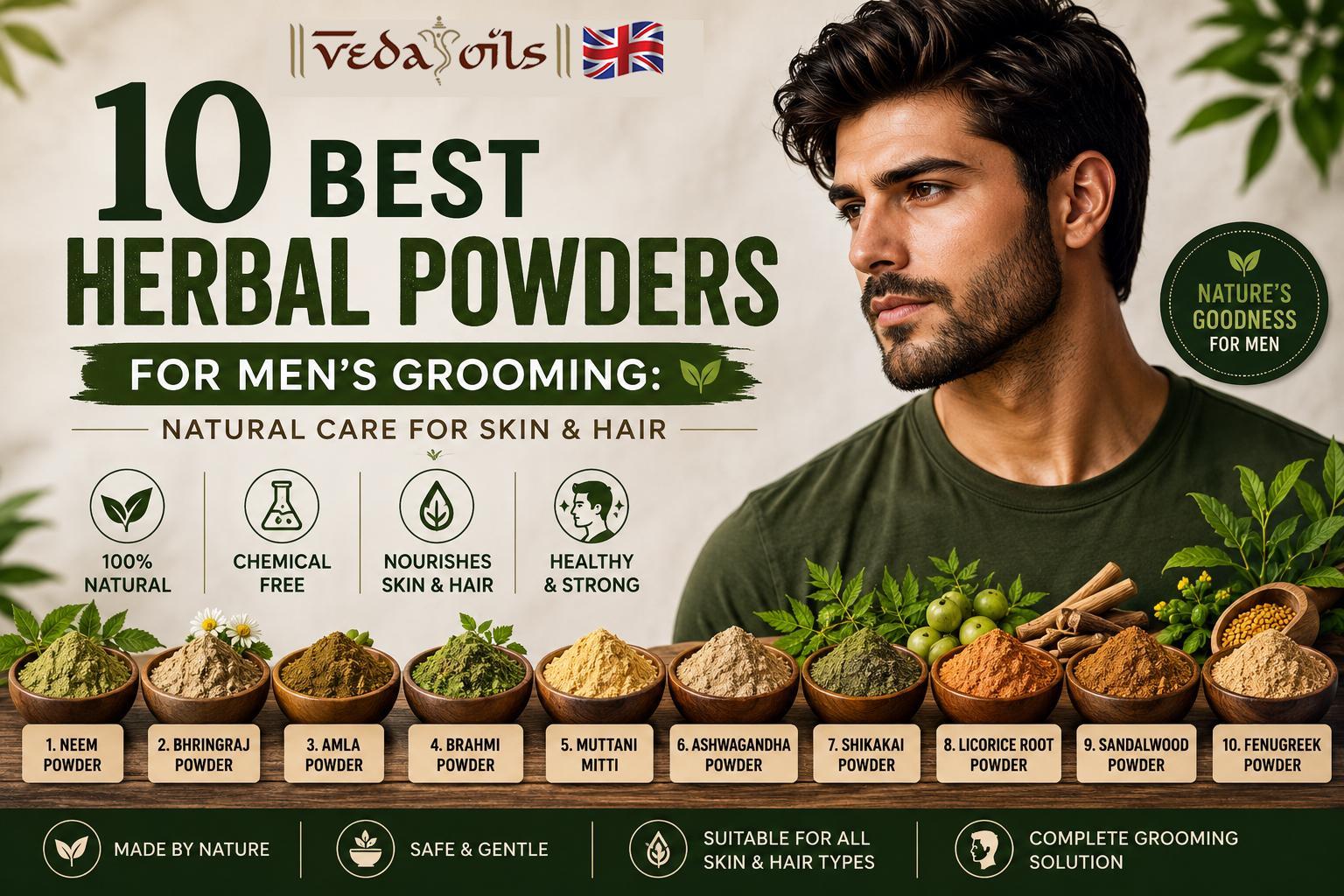
Men have started taking their grooming routine seriously these days. Therefore, they try to incorporate products made only from natural ingredients that do not harm their skin and hair in the long term. DIY skincare and hair care has also become quite popular among men these days. This has increased the demand for ingredients such as herbal powders that can be integrated seamlessly in your skincare and hair routines. You can make a DIY face pack, hair mask, and numerous other products from these herbal powders to make your grooming routine better. In this blog, we will look at the top 10 best herbal powders when it comes to men’s grooming requirements.

Why Should Men Consider Herbal Powders for Grooming?

Men must consider herbal powders for grooming because of these reasons:

Natural Ingredients for Everyday Grooming

Plant-based ingredients are healthy and safe for daily use. Also, they can be included for making simple DIY formulations that do not alter their skin or hair health in any way. Also, these natural herbal powders are suitable for a wide range of men’ s grooming needs.

Benefits for Skin and Hair

Herbal powders possess deep cleansing abilities due to their exfoliation properties. Due to this, they can be used for cleansing your skin and hair deeply. Their conditioning properties ensure that your hair becomes dense, soft, and manageable. These powders contain nutrients that enrich your scalp and prevent issues like dandruff. So, you can use them for supporting your hair and skin health.

10 Best Herbal Powders for Men’s Grooming

These are the 10 best herbal powders suitable for men’s grooming needs:

Neem Powder

Neem powder has natural antibacterial properties due to which it can be integrated in your skin and scalp care routines. You can integrate neem powder into these routines by using it via DIY face packs and hair masks. It is mostly recommended for people who have oily or blemish-prone skin.

Amla Powder

Amla powder is being used traditionally in hair care because of its hair rejuvenating properties. It is mostly used for hair and scalp care applications. A simple hair mask using curd, amla powder, aloe vera gel, and other soothing ingredients can be created for nourishing your scalp and hair. These properties make amla powder one of the best herbal powders for regular hair care routines.

Brahmi Powder

Brahmi powder is known for its calming properties that make it effective for reducing scalp itching or irritation. Its rejuvenating properties ensure that your hair roots become strong. You can use it in natural hair masks by blending it with ingredients such as coconut oil, aloe vera gel, etc.

Shikakai Powder

Shikakai powder is a natural hair cleanser that has been traditionally integrated in hair cleansing routines in Indian households. You can mix Shikakai powder with botanical extracts or water-based ingredients to cleanse your hair and scalp deeply.

Hibiscus Powder

Hibiscus powder is an excellent solution for hair conditioning and can be mixed with other herbal powders like amla or shikakai powder to achieve the desired benefits. It is mostly used in hair masks and is effective in maintaining the texture and strength of your hair strands.

Fenugreek Powder

Fenugreek powder is effective for scalp rejuvenation as it helps to boost the circulation of blood in the scalp. It is popularly used in scalp and hair masks because of its rejuvenating properties. You can use it regularly in your hair care and scalp care routine by mixing it with yogurt, aloe vera, and other herbal ingredients.

Turmeric Powder

Turmeric powder is known for its strong anti-inflammatory properties. It is mostly added to DIY face masks and face cleansers. Ensure that you mix it with hydrating ingredients such as aloe vera gel or coconut oil for maximising the benefits without any issues.

Licorice Root Powder

The revitalising effect of licorice root powder on your skin has made it a popular ingredient in various traditional skincare applications. It is used extensively in face masks and formulations. It blends perfectly with soothing ingredients such as honey, rose water, and glycerin.

Moringa Powder

Moringa powder is known as a powerful herbal powder because of its ability to boost the nourishment of your skin and hair. It can be mixed with raw honey and rosewater and applied on the face for rejuvenating it. You can mix it with curd and coconut oil and use it as a hair mask for nourishing dry and dull hair.

Rose Petal Powder

Rose petal powder is ideal for gentle skincare applications. It is mostly used in cleansing blends and face masks. It can also be combined with other herbal powders when using it for your regular skincare, scalp care, and hair care routines.

How to Use Herbal Powders in a Men’s Grooming Routine?

Here’s how herbal powders can be used in the grooming routines of men:

Herbal Face Masks

You can use any herbal powder that matches your skin type and concerns and mix it with plain water or rose water to create a simple yet effective face mask. Bases such as aloe vera gel or coconut oil can also be used for extra nourishment and rejuvenating the dry skin.

Natural Hair Masks

Amla powder, moringa powder, or any other herbal powder of your choice can be mixed with coconut oil, curd, or any other natural ingredient with conditioning properties. Once you apply these hair masks, you can rinse it with a mild shampoo after 10 or 12 minutes.

Herbal Scalp Treatments

Herbal powders such as shikakai powder, brahmi powder, reetha powder, etc. can be blended together to create a rich powder-based blend for your scalp. Massage this gently on your scalp after mixing it with plain water.

DIY Cleansers and Scrubs

For making DIY face cleansers and scrubs, you can select the herbal powders that suit your skin type. Rub the DIY face scrub or cleanser on your face gently and rise it afterwards with water to exfoliate dead skin cells, excess oil, dirt, and other toxins from your pores.

Best Herbal Powders for Different Grooming Needs

The below table suggests different types of herbal powders that can be chosen according to your grooming requirements:

Grooming Need

Herbal Powder Options

Oily Skin

Neem, Turmeric

Hair Care

Amla, Brahmi, Shikakai

Scalp Care

Neem, Fenugreek, Brahmi

Skin Cleansing

Neem, Turmeric

Gentle Skin Care

Rose Petal, Licorice

DIY Hair Masks

Hibiscus, Amla, Fenugreek

How to Choose the Right Herbal Powder?

Follow these insights to choose the right herbal powder for your daily grooming routines:

Consider Your Skin Type

Choose the herbal powder that suits your skin type i.e. depending upon whether it is oily, dry, sensitive, or combination skin. For instance, people with dry skin should choose rose petal or hibiscus powder that possess rejuvenating properties. Similarly, people who have oily skin can prefer neem or turmeric powder for their daily skincare routine.

Consider Your Hair Type

For haircare routines, the herbal powder should be chosen according to your hair type. If your hair is dry, use herbal powders such as moringa or brahmi that possess moisturising properties. People with oily scalp can use soapnut or shikakai powder that are known for their cleansing properties. Herbal powders with deep conditioning properties such as neem and amla are suitable for frizzy hair. Similarly, you can choose the right type of herbal powder for your normal hair.

Check Ingredient Quality

Only high-quality herbal powders will deliver the required results. So, always confirm the purity, freshness, botanical name, packaging standards, and processing methods used for producing the herbal powders before purchasing them.

Choose Powders Suitable for Your Intended Use

Different types of herbal powders can be used for different purposes. For instance, amla or hibiscus powders can be ideal for regular hair care routines. Similarly, neem and turmeric powder can be ideal for skin care routines. The reetha or soapnut powder can be ideal for making soaps. Similarly, choose the right herbal powders as per your DIY grooming and cosmetic formulation requirements.

Where to Buy Herbal Powders for Men’s Grooming?

Get herbal powders from reputed platforms that specialise in providing high-quality herbal powders at reasonable rates. The supplier must maintain the quality of the herbal powder and packaging consistently.

The ingredient information must be specified on the labels and the supplier must be able to provide the herbal powder in bulk quantities too. Also, the supplier must be able to produce product documentation and necessary product certifications if required. VedaOils UK is one such supplier of herbal powders and other organic ingredients for skincare, haircare, soap making supplies, essential oils, fragrance oils and DIY formulations..

Tips for Using Herbal Powders Safely

Follow these tips for using herbal powders safely for your skin, scalp, and hair:

  • Conduct a patch test to confirm if the herbal powder suits your skin or not.
  • Do not bring the herbal powders near your eyes as they might cause irritation.
  • Always prepare the DIY herbal powder blends in sanitised utensils.
  • Adhere to the instructions provided by the supplier on the packaging thoroughly when it comes to using and storing the herbal powders.
  • Store the herbal powders in a cool and dry place to maintain their quality for a long time.
  • Do not continue to use the herbal powders if you experience any inflammation or irritation while using them.

Conclusion

These were the top 10 herbal powders for men’s grooming needs. You can integrate these herbal powders in your grooming routines to make them more flexible. Select the ingredients according to your specific skin and hair type and concerns. Also, ensure that you get from trusted suppliers who are known for providing high-quality herbal powders in the market.

FAQs

  1. What are the best herbal powders for men’s grooming?

Amla, hibiscus, brahmi, shikakai, neem, and turmeric powder are the best herbal powders when it comes to the grooming needs of men.

  1. Which herbal powder is best for men’s hair care?

Amla, hibiscus, moringa, and shikakai powder are best for men’s hair care requirements.

  1. Can men use herbal powders on their face?

Yes, men can use herbal powders on their face via face masks and face packs.

  1. Which herbal powders are good for scalp care?

Neem, moringa, and hibiscus powder are good for scalp care purposes.

  1. How often should men use herbal powder for their face?

Men can use herbal powders daily for face and skin after ensuring that the specific herbal powder suits their skin or not.

Tags: , , ,
Detox bath recipes

5 Simple & Natural Detox Bath Recipes

Nothing is more relaxing than a warm bath… except a relaxing detox bath. These are a great option for anyone who struggles with skin issues or other signs of toxin overwhelm. It’s also an inexpensive way to boost health.

I’m always up for a warm bath, and these natural add-ons help improve health while you chill out. Don’t have time for a full soak? You can also do a foot bath with these and get some of the benefits. 

I’ve found that detoxing usually makes me tired, so I like to do this as part of an evening/bedtime routine. They’re also good for kids to give their body’s natural defenses some natural support. If you have any health conditions or are pregnant or nursing, be sure to check with your healthcare professional first! 

Natural Detox Bath Recipes

Over the years my opinions on what detox even is have changed. I now see detox as something our body innately knows how to do on its own. Our liver, kidneys, skin, and other organs all work to remove toxins on a regular basis. 

However, with modern life, sometimes they need a little more targeted support.  

You may have heard of an Epsom salt bath (and that is our base recipe here), but what about a clay bath, vinegar bath, or even a mustard bath?! You’ll find many of these ingredients already in your pantry, but they serve more than one purpose. Ingredients like salt, baking soda, essential oils, and vinegar boost circulation, aid detox and provide soothing relaxation. I also like using Epsom salts as a way to boost magnesium stores. 

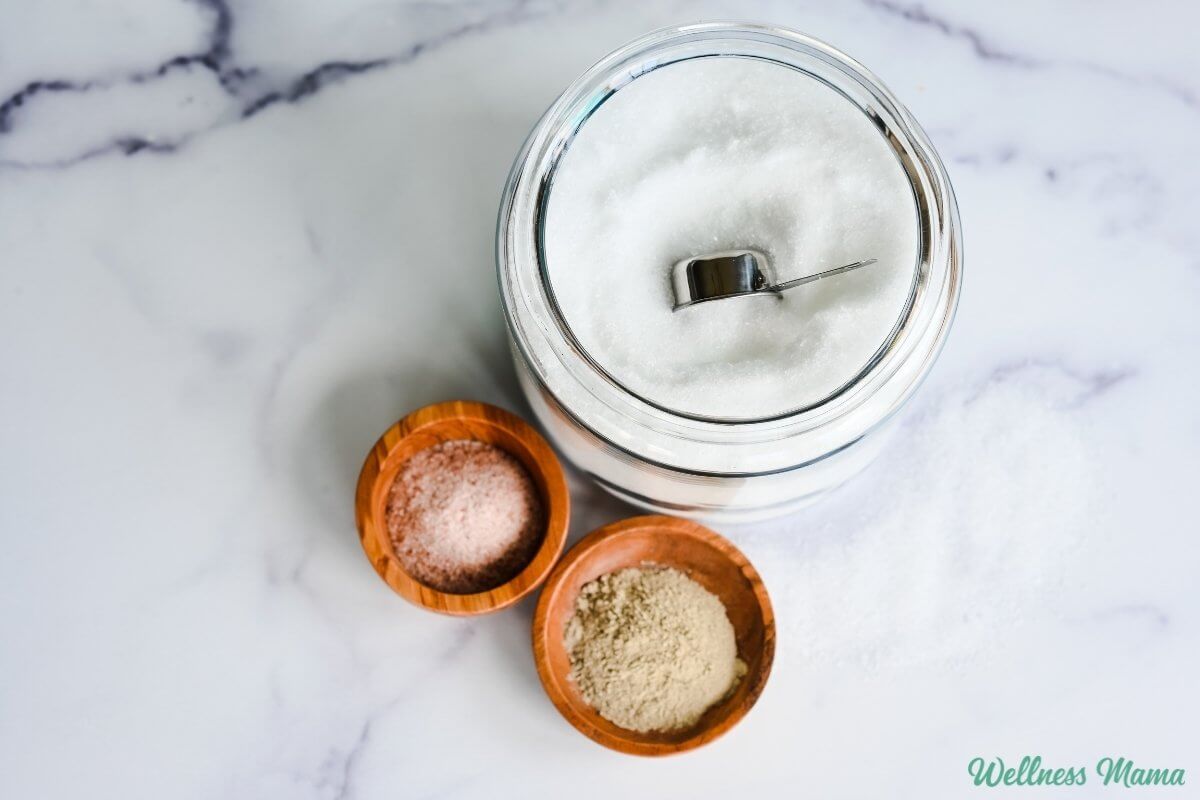
You only need a few simple ingredients to make some or all of these detox bath recipes:

  • Epsom salt
  • apple cider vinegar
  • baking soda
  • bentonite clay (it also has lots of other uses, so consider stocking up!)
  • mustard powder or ginger powder
  • essential oils (mix with powder or salt rather than directly to the bath)

These recipes are also safe and soothing for kids too! (But choose your essential oils wisely.)

Basic Epsom Salt Detox Bath Recipe

Here’s my basic detox bath recipe. Find the other variations below. Mix and match, or find your favorite!

Salt Detox Bath Recipe

This simple salt bath recipe is great for soothing skin irritation, boosting magnesium levels, and overall detoxing.

Yield: 1 bath

Author: Katie Wells

  • In a small pan, bring 2 cups of water to a boil.

  • Add the sea salt, Epsom salt, and baking soda to a quart-size Mason jar.

  • SLOWLY pour the hot water into the jar. The mixture will foam up, so be sure to do this slowly and do not hold the jar to avoid burning.

  • Fill the bathtub with warm/hot water.

  • Add the apple cider vinegar.

  • Pour the salt mixture in and add essential oils if using.

  • Soak in the bath for 30 minutes or as long as desired.

  • With any detox bath, you may feel tired or lightheaded when you get out. I don’t recommend doing this while home alone or before going somewhere in case you are tired or need help.
  • Avoid essential oils that are harsher on mucous membranes, like mint, cinnamon, oregano, or lemongrass. They can cause an unpleasant burning sensation. 

Clay Detox Bath Recipe

Bentonite clay is an ingredient I use in a lot of different recipes, from face masks to toothpaste. It does a really good job of absorbing heavy metals that can accumulate in our body.

It’s recommended to use a drain filter or cloth filter in the drain when doing a clay bath. This helps prevent the bentonite from accumulating in the pipes and potentially causing a clog. 

Clay Detox Bath Instructions

Dissolve the Epsom salts in a warm/hot bath and add essential oils if desired. For the clay, there are two options:

  1. Vigorously mix the clay into a small amount of water until the clumps are mostly dissolved.  Bentonite can react to metal, so I use plastic or wooden spoons to mix. Add the clay mix to the bath and soak for at least 20 minutes.
  2. Mix that clay with a small amount of water to make a paste. Stand in the tub full of water and rub the clay mix all over your body to create a skin mask and let it dry for 5 minutes before sitting down. This provides direct contact with the skin and effectively pulls toxins from the skin. Soak in the bath for at least 20 minutes or as long as desired. While soaking, use a washcloth to scrub any remaining clay off the skin.

This bath is great for removing a lot of toxins as the clay binds to heavy metals. The Epsom salts help pull a variety of toxins from the body while replenishing magnesium levels.

Oxygen Detox Bath Recipe

This bath is especially helpful during illness. Ginger helps clear congestion, alleviate body aches, and stimulate circulation for faster healing times. It can also be helpful for allergies or skin irritation. You can also make a strong tea with the ginger, strain after 15 minutes, then add the ginger tea to the bath. 

Oxygen Detox Bath Instructions

  1. Fill the tub with warm/hot water and add the hydrogen peroxide and dried ginger.
  2. Soak in tub for 30 minutes or as long as desired.

Vinegar Detox Bath Recipe

This is an excellent bath for soothing skin problems since vinegar balances the skin’s pH. While I don’t love the smell of vinegar, if anyone in the family has sunburn, eczema, dandruff, or dry itchy skin, we take a vinegar bath.

Apple cider vinegar has a whole host of benefits, and I find it not only leaves me with soft skin, but shiny hair as well.

Vinegar Bath Instructions

  1. Once or twice a week, I fill a tub with warm to hot water and add 1-2 cups of apple cider vinegar.
  2. I soak for 20-30 minutes, using a washcloth to clean my face and making sure to get my hair wet as well.

After bathing, I rinse off in a cool shower, though some recommend letting the vinegar water dry on the skin.

Mustard Detox Bath Recipe

I know, I’ve lost my mind, right? If it helps, I’m talking about organic mustard powder, not the yellow stuff in a bottle! Ancient cultures often used this spice in preparations to soothe colds, flus, and sore muscles, thanks to its circulation-stimulating properties.

Magnesium and essential oils make this bath both detoxifying and aromatic.

Mustard Bath Instructions

I use this recipe which uses organic mustard powder, Epsom salts, and a mix of essential oils.

Additional Detox Bath Notes

  • The warmer the water, the more powerful the detox effect will be.
  • If you have chlorine and fluoride in your water, I recommend adding a few tablespoons of bentonite clay to any of these baths to help absorb the chemicals so they aren’t absorbed into the skin. A home filter or bath filter are good options too. 
  • Any of these natural ingredients can be used alone or in combination for a cleansing effect.
  • All recipes can be doubled or tripled, but this will increase the detox effect.

More Bath Recipes for Natural Detoxification

I recommend starting slowly with these bath detox recipes or any health change. To help, I’ve compiled all of my ideas for detoxing your body and your home in my book The Wellness Mama 5-Step Lifestyle Detox.

If you need a high-quality bathtub filter for safer bath water, I use Canopy.

This article was medically reviewed by Madiha Saeed, MD, a board certified family physician. As always, this is not personal medical advice and we recommend that you talk with your doctor.

Ever taken a detox bath? Got a different recipe you use? Share below!

Tags: , , , ,
Homestead Blog Hop - Homestead tips, ideas, animal care, and recipes every Wednesday

Homestead Blog Hop 608 – Make Copycat Oreos and Natural Cleaners

Welcome to Homestead Blog Hop, a weekly gathering for homesteaders and simple living enthusiasts to share DIY projects, from-scratch recipes, and creative inspiration. This week’s hop features cozy homesteading tips, along with practical ideas that celebrate handmade living and self-sufficiency.

Whether you’re looking for seasonal crafts, homemade treats, or encouragement on your homesteading journey, you’ll find plenty of inspiration to carry into the new year. Grab a cup of tea, explore the featured posts, and join us in sharing your own homestead creations.

Meet Your Homesteading Hosts

We’re Kelly from Simple Life Mom, Liz from The Cape Coop, Natasha from Houseful of Nicholes, and Laurie from Ridgehaven Homestead. Together, we’re passionate about from-scratch living, simple ingredients, frugal habits, and intentional homesteading. We’re delighted to host the Homestead Blog Hop, where you can find fresh inspiration each week for DIY projects, homemade recipes, and practical simple living ideas.

Follow Us for More Homestead Inspiration

Natasha – Houseful of Nicholes
Facebook | Pinterest | X | Instagram

Laurie – Ridge Haven Homestead
Facebook | Pinterest | Instagram

Liz – The Cape Coop
Facebook | Pinterest | X | Instagram

Kelly – Simple Life Mom
Facebook | Pinterest | X | Instagram

FEATURED POSTS from the Last Homestead Blog Hop

Each week, we take turns selecting three featured posts from the Homestead Blog Hop. These features are shared across all of our social media platforms, helping spotlight the creativity and hard work of our fellow homesteaders. Here are the featured posts from last week’s hop:

1. Four Pantry Ingredients That Replace Most Household Cleaners from The Once and Future Homestead

2. Easy Homemade Oreo Cookies Recipe – Copycat Oreos from Ann’s Entitled Life

3. Blistered Green Bean Salad with Smoked Paprika Vinaigrette Feta and Chopped Almonds from Scratch Made Food

Congrats! Feel free to grab the featured on button for your post.

Just right click and ‘save image as…‘

Guidelines for the Homestead Blog Hop

  1. Click the “Add Your Link” button below and upload a clear, eye-catching image from your project or recipe. Please link directly to the family-friendly post itself, not your blog’s homepage.
  2. You may link up up to three posts each week.
  3. Take time to visit a few other blogs in the hop and leave a thoughtful comment to let them know you stopped by. Community support makes this hop special!
  4. Please include a link back to the Homestead Blog Hop in your post. Posts without a backlink are not eligible to be featured. All featured posts are shared across all hosts’ social media channels.
  5. Share posts that haven’t been linked to the hop before. Older posts are welcome as long as they are new to the hop.
  6. By joining the Homestead Blog Hop, you grant the hosts permission to use one image from your post, with a link back to your site, if your post is selected as a feature next week.
  7. This is a family-friendly link-up designed to encourage, inspire, and support the homesteader in all of us.

Let the Party Begin!

Which project are you excited to try this week? Leave a comment below.

Join Our Homestead Blog Hop Pinterest Board

Follow all of your hosts on Pinterest and send a message if you’d like to be added to our Homestead Blog Hop group board. This board is a great place to share your DIY projects, crafts, and from-scratch recipes with the homesteading community.

Guideline: Only pin posts that you’ve linked up to the Homestead Blog Hop.

Tags: , , , , , ,
tinted lip sunscreen

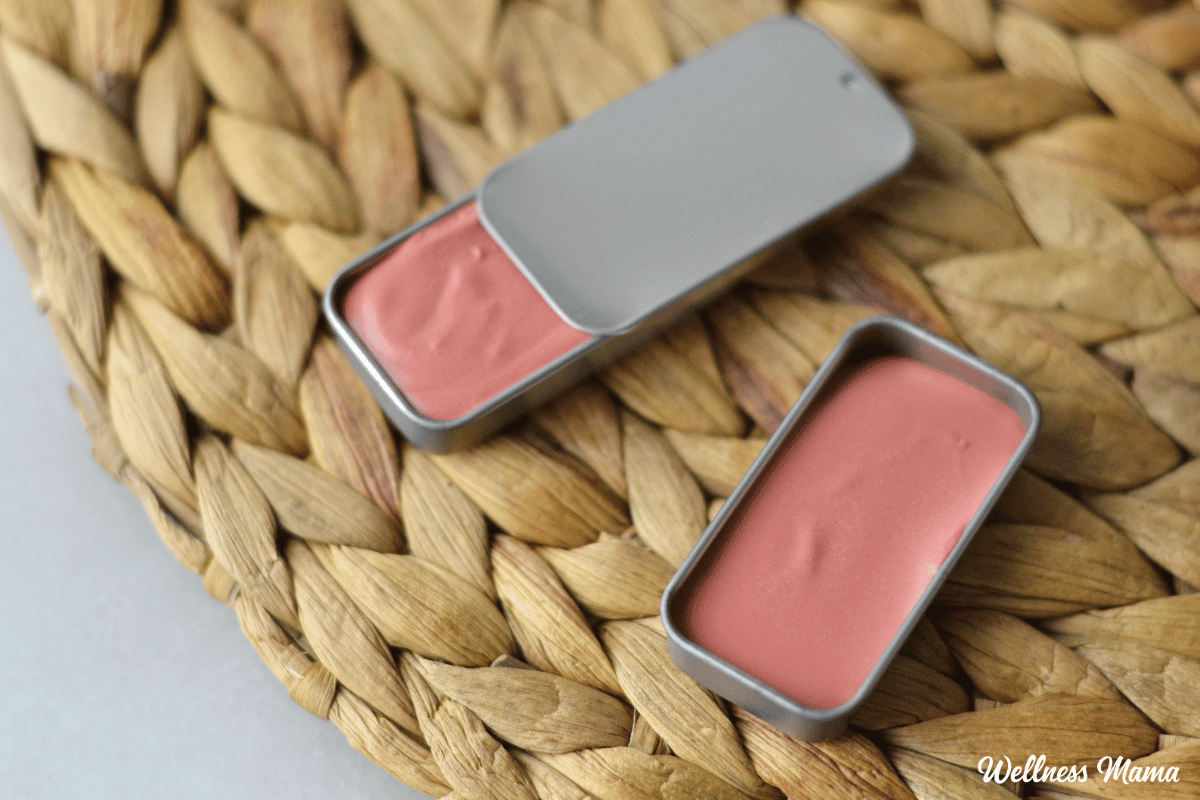
DIY Natural Tinted Lip Sunscreen

For many years now I’ve preached about the benefits of safe sun exposure. The keyword here is safe! And while it has a lot of benefits, sometimes on occasion, I’ll pull out the homemade sunscreen. Many of you have asked for a lip sunscreen with SPF, so I finally got to work in the kitchen and came up with one. 

Why You Should Not (and Should) Use Lip Sunscreen

I’m not usually a fan of sunscreen for several reasons. We need the sun to make the hormone vitamin D, have a strong immune system, regulate hormones, and so much more. Even something as seemingly simple as sunglasses can interfere with that signalling by blocking light receptors in the eyes. 

Most of the time I’ll either seek shade or cover up once my body has had enough sun for the day. While I think the science is clear on the sun’s benefits, it’s also clear that sunburns are damaging! However, if you live in a really sunny climate and you’re outside a lot, out on the boat, surfing, etc., then sunscreen can be helpful sometimes. 

My homemade sunscreen recipe is a fan favorite, but many of you have asked if it can be used on lips. Technically yes, but it might leave a white cast, be hard to apply, and taste kind of funky. Even if you’re not eating it (the ingredients are clean though), small amounts of lip balm still end up in the mouth. But we probably all knew that one kid in grade school who liked eating Chapstick…

Mineral Lip Balm With Sunscreen Ingredients

A lot of the store-bought brands use a whole slew of synthetic ingredients I really don’t want in my mouth (or in my kids’!). Certain UV-blocking ingredients go smoothly onto skin and absorb quickly, which sounds great. However, these sunscreen ingredients like oxybenzone and avobenzone are also toxic to coral reefs, which are essential to ocean life and life on Earth. Not to mention what they do to us once they’re absorbed. 

This lip sunscreen instead uses non-nano and uncoated zinc oxide. It creates a skin barrier and sits on top of skin/lips, reflecting UV rays. It’s one of the safest UV barriers out there. In fact, it’s one of only two that the FDA considers safe and effective for sunscreen. I don’t always agree with the FDA, but I’m with them on this one. The zinc oxide is at 20%, which translates to roughly 10 SPF when you add up all of the ingredients. 10 SPF may not sound like much, but it blocks about 90% of UV rays.

I’ve also added red raspberry seed oil. It has a slight SPF and it’s full of antioxidants that protect the lips from sun damage. You’ll also find this ingredient in my homemade sunscreen recipe. Shea butter is smooth and creamy, nourishes lips, and helps firm up the lip balm. Beeswax provides a protective layer over the lips. 

Lastly, avocado oil provides the bulk of the lip balm and supports collagen to prevent weakened skin cells. Avocado oil also helps calm inflammation, regenerate skin cells, and protect the skin barrier. It’s also rich in carotenoids that offer some UV ray protection. 

Tinted Sunscreen Lip Balm

My original sunscreen recipe is white due to the zinc oxide. Some people are ok with a white cast on their lips, but there’s an easy fix. You can add iron oxide and/or mica to give it a bit of color. Mica reflects light so it will give it a little sparkle.

Iron oxides are nature-identical pigments that lend a rich, burgundy red color. Oxides that naturally come straight from the soil also come with lead and other heavy metal contaminants. Things I don’t want in a lip balm! That’s why iron oxides are now made in a lab to be nature-identical. 

If you don’t have iron oxide on hand, rose kaolin clay offers a similar effect.

DIY Natural Lip Sunscreen

This smooth and creamy lip sunscreen helps protect lips from UV damage.

Prep Time5 minutes

Active Time12 minutes

Cooling Time2 hours

Total Time2 hours 17 minutes

Yield: 1.7 ounces

Author: Katie Wells

  • Add the beeswax, shea butter, and avocado oil to the top of the double boiler or glass bowl. Stir occasionally until melted.

  • Turn off the heat and add the raspberry seed oil and essential oils.

  • Whisk in the powders: zinc oxide, iron oxide, and mica.

  • Remove from heat and stir occasionally as it cools. The powders will want to sink to the bottom so they’ll need to stay mixed in.

  • Once the lip sunscreen is mostly cooled, but still soft enough to pour, pour the mixture into your containers.

The iron oxide adds a pink color and the mica adds a little sparkle. You can use both or neither, but it will have a white cast without any iron oxide. 

Important Note on Photoxic Essential Oils

Certain essential oils can increase the risk of sunburn and skin damage. Needless to say, they should not be used in lip balms! Photoxic essential oils include bergamot, lime, lemon, and grapefruit. Learn more about this topic here.

More Sun Protection

Here are some more DIY sunscreen recipes, plus info on sunscreen pros and cons.

What’s your approach to sun exposure? Leave a comment and let us know!

Tags: , , , ,
Shea nut shells: A natural exfoliant for glowing skin

A natural exfoliant for glowing skin

Follow this guide

What’s the story

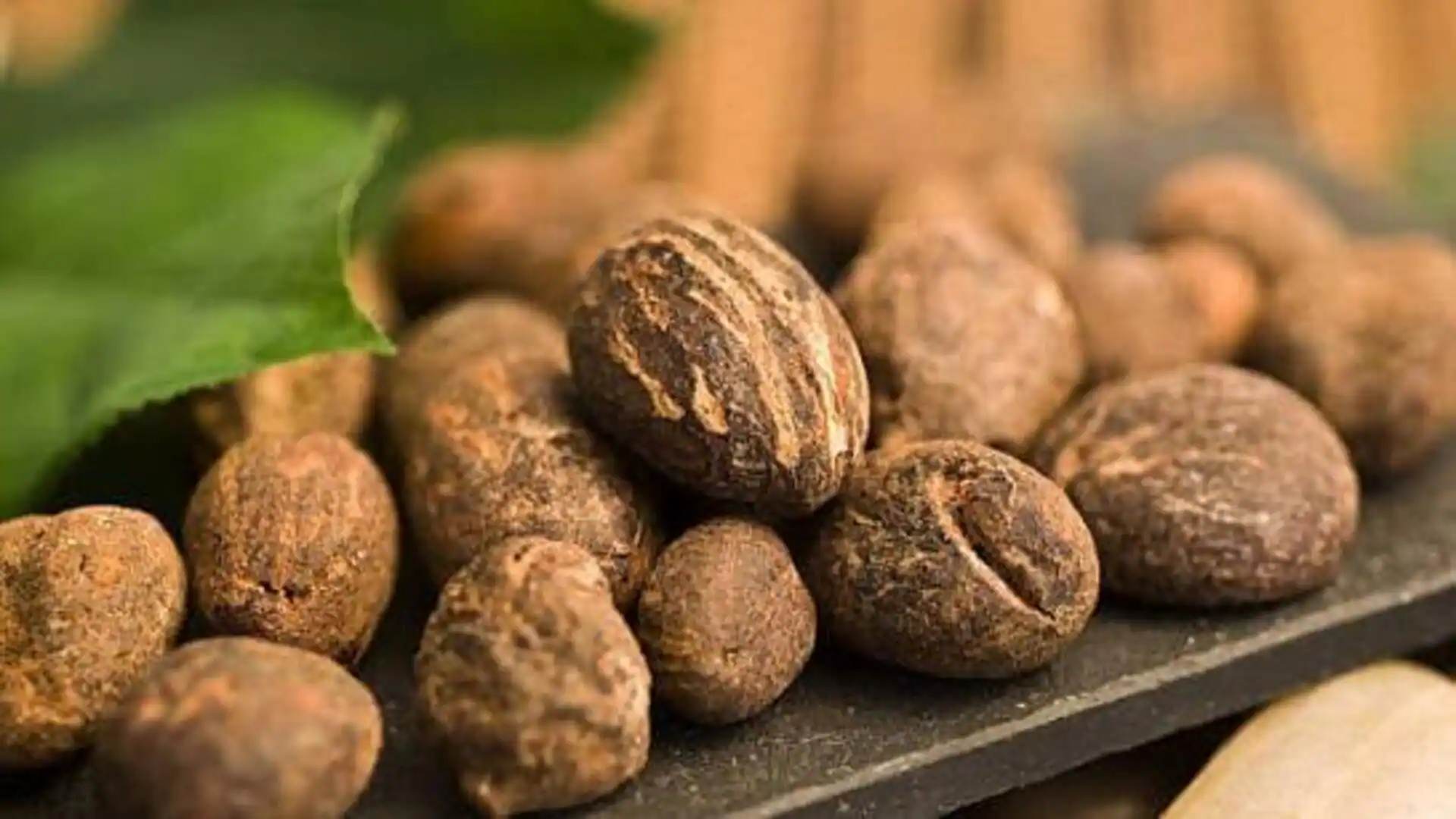
African shea nut shells have been used for centuries in skincare, thanks to their rich nutrient profile.
The shells, which are a byproduct of shea butter production, are loaded with vitamins and minerals that can promote healthy skin.
They offer a natural, eco-friendly alternative to synthetic skincare products.
Here’s how you can use them to improve your skincare routine.

Tags: , , ,
fizzy toilet tablets

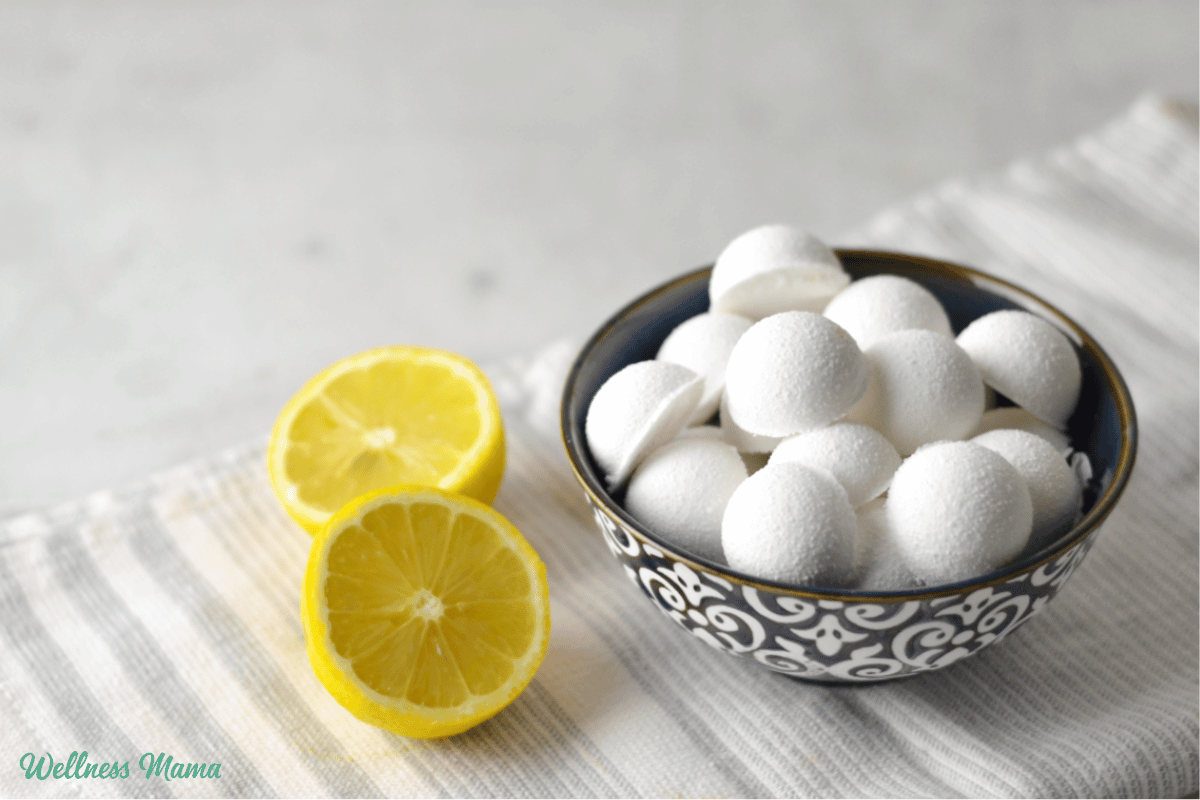
Natural Toilet Bowl Cleaner Tablets

I accidentally discovered this recipe for DIY toilet bowl cleaner tablets thanks to one of my children. Anyone else have kids who throw everything in the toilet?? And while it might have been unintentional, this happy accident has saved me a whole lot of scrubbing over the years. 

How I (Accidentally) Discovered DIY Toilet Cleaning Tablets

Once upon a time, I made a giant batch of my regular sea salt bath fizzies and postpartum bath fizzies. I had some friends expecting babies and wanted to give them as gifts.

I kept a few of the broken ones when I removed them from the molds and was planning to use them myself. I had them in a bag by my bathtub and my then one year old got into them (in true one-year old fashion). She was going through a phase of putting everything in the toilet, and these were no exception.

My first reaction was to stifle my annoyance for yet another thing being thrown in the toilet. And then I was angry that I wouldn’t get to use the bath fizzies myself.

I didn’t want to flush the toilet until they finished fizzing since I wasn’t sure that would be good for the pipes. As I stood there watching them fizz and mourning the loss of my relaxing bath, I noticed that the toilet seemed to be getting cleaner as they fizzed.

I used the toilet brush to make sure they had all dissolved and when I flushed the toilet, I was shocked how clean it was. I realized that the bath fizzies had a lot of ingredients that were naturally detoxing, and that these ingredients also worked great for detoxing and cleaning toilettes.

An Effective Toilet Bowl Cleaner

I played with the recipe to make it a little more potent since it doesn’t need to be gentle enough for skin. The result is an inexpensive, easy-to-make, highly effective toilet cleaning tablet. The best part? The little kids loved using these because they’re fun, so my toilets were cleaned frequently. 

These toilet bowl cleaner tablets freshen the bathroom and leave the toilet sparkling. I store them in an air-tight glass jar in the bathroom and use them as needed. I’ve found that if stored correctly, they keep for months.

Baking soda is great for gently scrubbing messes and deodorizing. Citric acid is naturally found in citrus fruits and helps dissolve mineral deposits. Together, they make an effective, natural toilet bowl cleaner. 

And while I don’t make homemade cleaners as much anymore now that I’ve found healthy versions, I still enjoy pulling them out on occasion. 

Natural Toilet Cleaning

If you’re still using the “call poison control if you drink, inhale or look at this wrong” type cleaners, try these instead. All of the ingredients are food grade and can technically be used in cooking. Though I definitely wouldn’t eat them because of the concentration of baking soda and citric acid.

I give some more toilet (and bathroom) cleaning options in this post. And if you don’t feel like DIYing it, there are some really good pre-made options now. One of my favorite natural cleaners, Branch Basics, also works for toilet bowls. And you can add some of their Oxygen Boost powder if you need something a little stronger. 

Note: I haven’t tried flushing the toilet before this has fully dissolved, but I wouldn’t suggest trying it. I’m thinking that kind of pressure in pipes isn’t the best idea! The toilet bowl cleaner tablet also needs a little time to work and clean the bowl. 

These are not the kind of toilet tablets that go in the toilet tank, in case you were wondering. They go directly into the bowl to clean as needed.

Natural Toilet Bowl Cleaner Tablets Recipe

Make natural toilet cleaner using food grade ingredients such as baking soda, citric acid, and essential oils.

Prep Time15 minutes

Drying Time8 hours

Total Time8 hours 15 minutes

Yield: 40 toilet tablets

Author: Katie Wells

  • In a glass bowl, mix together the baking soda and citric acid in a glass bowl. I suggest wearing a mask and some latex gloves for this to protect your skin and eyes.

  • Slowly mist the dry powder with water, mixing as you go. You want to barely wet the powder to get it to stick together in the mold. I used a small, fine mist spray bottle and about 8 sprays. Too much will cause fizzing.

  • Add the essential oils and continue mixing.

  • Using a 1 teaspoon measure (or larger), scoop out spoonfuls and place them on a piece of parchment paper until dry. You could also use a silicone mold for this step.

  • Let the toilet tablets dry overnight and carefully place in an airtight container to use as needed.

  • I haven’t tried flushing the toilet before this has fully dissolved, but I would not suggest trying it (I’m thinking that kind of pressure in pipes isn’t the best idea!)
  • I usually use a 1 teaspoon measuring spoon for these, but I’ve also used a 1/2 Tablespoon. You’ll get fewer toilet tablets, but stronger cleaning power with a bigger scoop. 

Tips For Making Toilet Bowl Cleaner Tablets

The number one mistake people make with bath bombs and similar recipes like this is adding too much water. The mixture should feel like damp sand when you squish it together. Too much water will cause the citric acid to prematurely react and fizz.  

I use water, but some people use a mix of alcohol and water. The alcohol adds some moisture to help the powders stick together, without making it too wet. If it’s a really humid day or you live in an area with more moist air it can also affect the recipe.  

If your toilet bowl tablets break apart after drying, the pieces still work for cleaning!

More Cleaning Recipes

Want some more natural cleaner recipes? Here are some DIY’s I’ve used for the bathroom over the years.

What do you use to clean your bathroom? Leave a comment and share below!

Tags: , , , ,
Apple App Store

10 ways confidence can enhance your natural beauty

10 Ways Confidence Can Enhance Your Natural Beauty

Beauty is often discussed in terms of skincare, makeup, fashion, or physical features. But confidence plays a powerful role in how we perceive both ourselves and others. In fact, studies have consistently found that traits like self-assurance, authenticity, and positive body language can influence perceptions of attractiveness just as much as appearance alone.

While confidence doesn’t magically erase insecurities, it can change the way you carry yourself, interact with others, and experience the world. Here are 10 ways confidence and beauty are closely connected.

Pexels

1. Confidence Changes First Impressions

People often form impressions within seconds of meeting someone. Confident body language, steady eye contact, and a genuine smile can make a strong impact before a word is spoken.

These nonverbal cues communicate comfort, approachability, and self-assurance, qualities many people naturally find attractive.

Pexels

2. Good Posture Enhances Your Presence

The way you hold yourself affects how others perceive you and how you feel about yourself.

Standing tall with relaxed shoulders and an open posture can make you appear more confident and engaged. It also helps highlight your natural features more effectively than slouching or trying to make yourself appear smaller.

Unsplash

3. Self-Acceptance Creates Authentic Beauty

Many people spend years trying to hide perceived flaws rather than appreciating what makes them unique.

Confidence often grows when you shift your focus from chasing perfection to embracing individuality. Features you once viewed as imperfections can become part of the qualities that make you memorable and distinctive.

Pexels

4. Confidence Makes Your Smile More Powerful

A smile is one of the most universally recognized signs of warmth and connection.

When someone smiles naturally and confidently, it often appears more attractive than even the most carefully applied makeup. Confidence allows expressions to feel genuine rather than forced.

Pexels

5. People Notice Energy as Much as Appearance

Physical appearance may attract attention initially, but personality and energy often determine how memorable someone becomes.

Confident people frequently project enthusiasm, curiosity, and engagement. These qualities can leave a lasting impression long after specific physical features are forgotten.

Pexels

6. Confidence Helps Reduce Comparison

Constant comparison can undermine both self-esteem and personal style.

Confident individuals tend to focus less on measuring themselves against others and more on expressing who they are. This often leads to more authentic beauty choices, whether that’s a signature hairstyle, minimal makeup routine, or personal fashion sense.

Pexels

7. Taking Care of Yourself Builds Self-Trust

Confidence isn’t always something you’re born with. Often, it develops through consistent acts of self-care.

Simple habits can reinforce self-worth, including:

  • Following a skincare routine

  • Taking time for hobbies and interests

These actions send a message that you’re worth caring for.

Unsplash

8. Confidence Improves Social Interactions

People who feel comfortable with themselves often communicate more openly and naturally.

Confidence can make conversations flow more easily, reduce self-consciousness, and help you connect with others. These social skills frequently enhance attractiveness in both professional and personal settings.

Pexels

9. Inner Confidence Can Reduce Stress

Chronic stress can affect everything from sleep quality to skin appearance.

While confidence doesn’t eliminate life’s challenges, it can help you approach difficulties with greater resilience and perspective. Feeling secure in yourself often leads to healthier coping strategies and less emotional wear and tear over time.

Pexels

10. Beauty Becomes More Sustainable

Appearance-based confidence can be fragile because looks naturally change over time.

Confidence rooted in character, values, skills, and self-acceptance tends to be more lasting. When self-worth comes from multiple sources, beauty becomes less about meeting external standards and more about feeling comfortable in your own skin.

Pexels

The Confidence-Beauty Cycle

Confidence and beauty often reinforce one another. Taking care of yourself can boost confidence, while confidence can enhance how others perceive your appearance.

The most attractive quality isn’t flawless skin, perfect hair, or a carefully curated wardrobe. It’s the ability to show up as yourself with self-respect, authenticity, and ease. While beauty trends come and go, genuine confidence never goes out of style.

Read More:

Ask us! What questions do you have about content, strategy, pop culture, lifestyle, wellness, history or more? We may use your question in an upcoming article!

Ask us a question

Like MediaFeed’s content? Be sure to follow us.

This article originally appeared onResourcebuzzand was syndicated byMediaFeed.co.

Tags: , , , ,
Sweet potato peel scrub: A natural skincare secret

Sweet potato peel scrub: A natural skincare secret

Follow this guide

What’s the story

Sweet potato peel scrub is a natural beauty secret from Africa. It is said to be effective in exfoliating and rejuvenating the skin.
The scrub is made from sweet potato peels, which are rich in vitamins and antioxidants. These nutrients are believed to help improve skin texture and tone.
Using this scrub regularly can give you a fresh, radiant complexion without the use of harsh chemicals.

Tags: , , , , , ,
Best oLive
Privacy Overview

This website uses cookies so that we can provide you with the best user experience possible. Cookie information is stored in your browser and performs functions such as recognising you when you return to our website and helping our team to understand which sections of the website you find most interesting and useful.