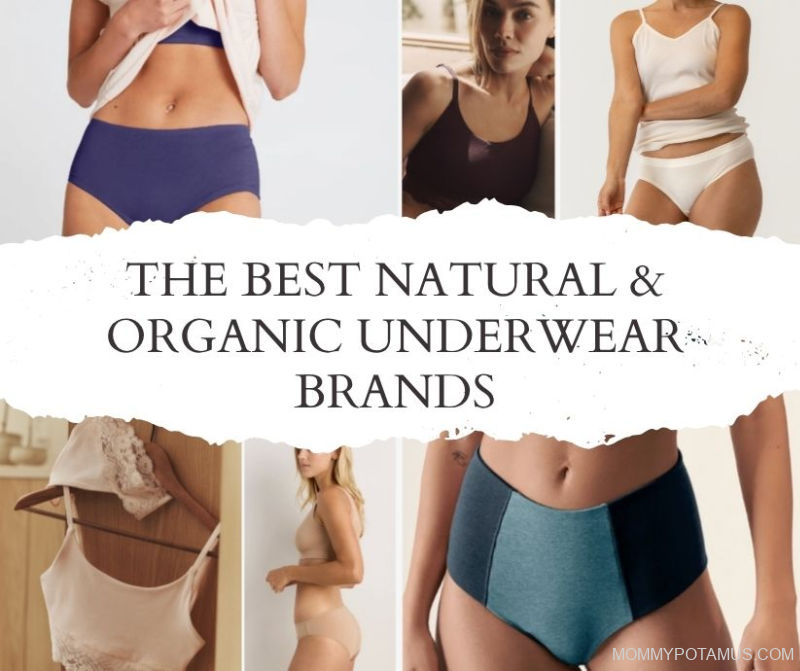
The Best Natural & Organic Underwear Brands

The Best Natural & Organic Underwear Brands

Have you ever wondered why so many pairs of women’s underwear have a tiny bow sewn onto the front? 🎀

It’s a throwback to the days before elastic waistbands, when women’s undergarments were held up with ribbons or drawstrings tied at the waist.

Thankfully, we’ve come a long way in the stretch department since then . . . but not every change has been an upgrade.

Instead of simple natural fibers, many modern pairs are made with polyester and other synthetics – which are essentially forms of plastic. As they’re worn and washed, these fabrics can shed tiny plastic fibers known as microfibers or microplastics.

Also, depending on how a garment is dyed, finished, or treated, it may contain substances like PFAS, phthalates, formaldehyde, and certain heavy metals.

That’s especially important when it comes to foundational pieces like underwear because, well, they’re FOUNDATIONAL.

They’re worn directly against sensitive skin for hours every day, in an area that’s naturally warm, moist, and more absorbent than many other parts of the body – so this is one item where I think the materials deserve extra consideration.

Of course, none of that matters much if the underwear is destined to sit untouched in the back of a drawer because it digs in, rides up, falls down, or somehow manages to do all three.

So for this guide, I’ve put together a list of brands that check both boxes: thoughtfully made and actually comfortable to wear.

We’ll look at affordable organic cotton basics, other natural-fiber options, undyed choices for sensitive skin, and even underwear made without conventional elastic or spandex.

Along the way, we’ll also cover what certifications like GOTS and OEKO-TEX actually tell us, and when a little elastane might be a reasonable tradeoff.

Because if we’re going to rethink what’s in our underwear drawer, I’d really like the replacement pairs to be soft, flattering, comfortable . . . and capable of staying up without a drawstring.

✋ Quick Picks

If you’re short on time and want to skip to my top recommendations, here are the options I’d look at first.

Best place to start

Pact

Soft, comfortable organic cotton basics with GOTS-certified fabric, lots of everyday styles, and prices that make replacing a few pairs at a time pretty reasonable.

Best budget pick

Quince

Their organic cotton six-packs are by far one of the most affordable options I found, and the hipsters I tried are soft, lightweight, and stay put.

Best plastic-free pick

The Very Good Bra

Despite the name, they also make underwear and are a standout if you want to avoid conventional synthetic fibers altogether. 100% organic cotton or Lenzing TENCEL™.

Why Underwear Materials Matter More

Our skin is designed to protect us, but it’s also semipermeable. Certain substances can cross that barrier – which is why topical hormone creams and patches are able to deliver active ingredients through the skin and into the body.

The barrier isn’t the same everywhere, though. Some areas are more permeable than others, including the sensitive skin and tissue covered by underwear.

Part of the reason is structural. The tissue in this area tends to be more hydrated and, in some places, has a thinner or less keratinized protective layer than ordinary exposed skin. Researchers have also pointed to factors like prolonged coverage, moisture, friction, and increased blood flow as reasons the area may be more susceptible to substances that come in contact with it. (1) (2) (3)

In other words, underwear sits close to the body for hours at a time in an area that tends to be warm and moist, with plenty of movement and friction throughout the day. Whatever’s present in or on the fabric – from dyes and textile finishes to residues left behind by laundry products – can remain in close contact with sensitive tissue for a long stretch of time.

That doesn’t mean everything in our underwear is absorbed into the bloodstream. Whether a substance transfers from fabric and passes through the skin depends on what it is, how much is present, and other factors.

But taken together, there are enough reasons for me to give underwear more consideration than, say, an outer-layer coat.

That’s why I prioritize breathable natural fibers when possible, pay attention to how fabrics are dyed and finished, and look for third-party standards that tell me more about what went into making them.

What I Look For In Natural & Organic Underwear

When I’m comparing underwear, here are the details I pay the most attention to:

1. Natural fibers as the foundation

At this point, I pretty much stick with underwear that’s at least 90% natural fiber – and fortunately, there are plenty of options across a wide range of styles and price points.

Cotton is the most common option, and it makes a lot of sense for underwear because it’s soft, breathable, and comfy. Organic cotton is my first choice, but as I explain here, I think conventionally grown cotton is still a better choice than synthetics like polyester.

Hemp is another interesting choice because it’s breathable, moisture-wicking, durable and tends to resist odors well.

Bamboo viscose is a slightly different category. It’s considered a semi-synthetic because it doesn’t fit neatly under the “natural” or “synthetic” label – it’s made from natural materials but highly processed . . . and the type of processing is what I look for when I’m deciding whether to place an order.

Lenzing’s TENCEL™ lyocell is the most widely recognized and respected way of making bamboo into a fabric that is known for its silky texture, breathability, moisture-wicking properties and strength. It’s biodegradable, gentle on sensitive skin, and often blended with organic cotton or wool for softness and durability. I explain the differences between bamboo processing methods here.

For underwear especially, a little stretch can be useful, so you’ll see some options that are around 95% natural fiber with 5% elastane or spandex. That’s a tradeoff I’m comfortable making when the synthetic fiber is there to support the natural material rather than dominate the blend.

And for anyone looking to eliminate synthetics altogether, I’ve included some 100% natural-fiber options too.

2. Certifications ✅

GOTS (Global Organic Textile Standard) is one of the certifications I look for most often. It covers certified organic fibers along with processing requirements for dyes, finishes, and other chemical inputs, plus environmental and social criteria throughout the certified supply chain.

It’s the kind of third-party verification that follows a fiber from its certified organic origin through the sewing machine, instead of just telling us what percentage of the finished fabric is cotton.

OEKO-TEX® STANDARD 100 focuses on testing textile products and their components for harmful substances. Underwear falls into its direct-skin-contact category, which has stricter requirements than products with less skin contact.

OCS (Organic Content Standard) verifies the presence and amount of organically grown material in a finished product and tracks it through the supply chain. It doesn’t regulate textile processing in the same way GOTS does, but it does provide third-party verification that the organic fiber is actually there.

You’ll see different combinations of these certifications throughout the guide, so I’ll point them out with each brand.

3. Elastics, Dyes & Other Components

Elastic waistbands, sewing thread, dyes, and textile finishes can all introduce materials that aren’t obvious from a label that simply says “100% cotton.”

Some of those details matter more to me than others. I’m not going to lose sleep over 5% elastane, but I do love that some brands are switching to natural rubber – and I’d be happy to see more of that.

What I pay much closer attention to is transparency around dyes, finishes, and other treatments that stay in or on the fabric.

A few brands go unusually far in explaining exactly what’s in the finished garment, right down to things like thread, elastic, and dye choices, so I’ll highlight those details below.

The Best Non-Toxic Underwear Brands

The most sophisticated certification system in the world can’t rescue a pair of underwear that’s constantly wedged somewhere it doesn’t belong.

I want natural and organic underwear to be something I reach for because it feels good – not something I tolerate because the material list looks impressive. That’s why I’ve only included brands I’ve personally tested or that are highly rated for comfort.

Whenever I’ve personally tried a brand, I’ll share what I think about softness, fit, coverage, support, and how it actually feels to wear.

For brands I haven’t personally tried yet, I’ll stick to what I can verify about the materials, construction, certifications, and company practices.

I’ve included additional recommendations for extra sensitive skin + different colors and styles later in the article.

Pact – Affordable Organic Cotton Basics

What it’s made of: Most Everyday underwear styles are 95% organic cotton and 5% elastane, with a 100% organic cotton gusset.
Certifications: GOTS-certified fabric; Fair Trade Certified production for the vast majority of core apparel.
Sizes: Many women’s underwear styles extend through 3X.
Price: Individual Everyday briefs have recently been listed around $16, while five-packs averaged to about $13/pair when I checked. Prices and promotions change frequently.
Best for: Affordable everyday organic cotton underwear with meaningful third-party certification.

Why Pact Made The List

Pact is probably the easiest starting point for someone who wants to switch to carefully sourced organic cotton without spending $25-$30 per pair.

Their Everyday collection comes in mid-rise hipster, classic bikini, high rise brief and thong styles, all made with a straightforward blend of 95% organic cotton with 5% elastane.

That’s a ratio you’ll see several times in this guide. It keeps the overwhelming majority of the fabric cotton, with just enough stretch to help everything fit well and stay where it’s supposed to. The gusset is 100% organic cotton.

Their Lace collection adds a pretty lace waistband, which gives it a slightly more special feel without sacrificing comfort. I have this style, and they’re so well made and comfortable. They also stay exactly where they’re supposed to, which is my most important requirement for underwear. 😄

I also have this Classic T-Shirt Bra, which is soft and supportive with just the right amount of stretch. It has adjustable straps, which I love, and it’s wire-free, which I also love.

The fabric is double-layered, so it offers a pretty good amount of coverage, but it doesn’t come with pads. That may or may not matter depending on what you prefer, but it’s worth knowing before you order.

What sets Pact apart from some of the other budget-friendly brands is the combination of GOTS-certified organic cotton and strong labor standards. Pact says all of the cut-and-sew factories it works with are Fair Trade Certified, while a small number of specialty items are sourced separately and don’t carry that certification. You can read more about Pact’s standards here.

Quince – Best Budget Multipacks

What it’s made of: Typically 95% organic cotton and 5% spandex, plus elastic at the waist/legs depending on the style.
Certifications: Organic Content Standard (OCS) certified cotton fiber and OEKO-TEX STANDARD 100 material..
Manufacturing: The hipsters I checked are made in a WRAP-certified facility in Sri Lanka.
Sizes: XS-XL for the organic cotton hipster.
Price: $29.90 for a six-pack when I checked – just under $5 per pair.
Best for: Building an organic cotton underwear drawer on a budget.

Why Quince Made The List

Quince is the budget outlier in this guide.

A six-pack of their organic cotton hipsters was $29.90 when I checked, which works out to less than the price of a single pair from some of the other brands I’ve included.

I first tried Quince when I recommended their swimsuits. Since then, the company has gifted me store credit to try several additional pieces, so I clicked “add to cart” on these hipsters and I have thoughts.

They’re soft and comfy with a “barely there” fit, but still substantial enough to feel well-made. They stay put and come in lots of soft neutrals, plus some standouts like ocean.

If hipsters aren’t your favorite, they also make high-waisted briefs, bikini, boyshort, and thong styles.

I’ve also tried their Organic Cotton Tank Bralette, which is also made with 95% organic cotton and 5% spandex. It’s so comfortable that I forget I’m wearing it, although I would love to see a version with adjustable straps someday.

It’s unlined and doesn’t have removable cups, so if you prefer a little more shaping or coverage, I’ll point out some better options in the sections below.

They do offer a similar version with adjustable straps, which is on my list to test. I’m not in a huge rush, though, because the one I already have works really well for everyday wear.

Although Quince does offer some GOTS-certified products, these particular pieces are not, which is an important distinction from Pact and several others on this list.

Instead, they’re made with OCS-certified organic cotton fiber, and the material is certified to OEKO-TEX STANDARD 100. All the organic cotton underwear and bras I looked at were also produced in a WRAP (Worldwide Responsible Accredited Production) certified factory. WRAP Is an organization that trains and audits production facilities to ensure they are operating in a safe, responsible, and ethical way.

So although I consider GOTS certification to be the gold standard, there’s considerably more third-party verification here than you’ll usually see, and the overall value is hard to beat.

Also, just an overall note: Quince also sells products that are made with materials including 100% recycled polyester. Although that sounds like a good idea in theory, it can still shed microplastics, so I recommend checking the fabric description and certifications on individual products before purchasing.

Stonekin – Best For Colorful, Coastal Organic Cotton Basics

Best for: Colorful organic cotton underwear with a relaxed, coastal feel
Materials: Most women’s rib styles are 95% organic cotton and 5% elastane
Certifications: GOTS-certified organic cotton and OEKO-TEX® certification on the styles I checked
Synthetic content: Typically 5% elastane
Sizes: S-XL on the women’s styles I checked
Price: Bras are generally around $26-47 and briefs around $20-47 when I checked
Best for: Anyone who wants natural-fiber basics that don’t look quite so . . . basic 🙂

Why Stonekin Made The List

Stonekin makes plenty of earthy neutrals, but they also offer colors like Lake, Papaya, Rust, Mustard, Teal, and Pandanus – and some of my favorite pieces are the two-toned styles that mix them together. They feel a little more fun than the typical organic-cotton basic.

They’re Australian, they use Australian cotton, and the whole collection has a relaxed, coastal feel that makes sense for the brand.

Their briefs and bralettes are made with 95% GOTS-certified organic cotton and 5% elastane. That’s right in the range I’m comfortable with: mostly natural fiber, with just enough stretch to help with fit and shape retention.

They carry several different cuts, including low-rise briefs, high briefs, cheekies, thongs, triangle bralettes, scoop-back bralettes, and bodysuits that have a bit of a unique style compared with, for example, simple mid-rise briefs.

The brand emphasizes Australian-grown cotton and supports family-run farms, and they’ve put thought into the dyeing process, too. Their underwear is made with natural dyes, with third-party certification providing additional screening for substances like banned azo colorants, PFAS, lead, and cadmium.

One practical thing to know before ordering: Stonekin offers free shipping over its stated threshold, but international customers may still be responsible for import duties or customs charges depending on the destination country. Those fees aren’t included in the shipping price and can vary by location.

For me, Stonekin made the list because they’ve managed to combine the certifications and material standards I’m looking for with pieces that have a distinctive, fun style.

I especially like the two-toned bras and briefs – they’re beautiful, refreshingly colorful, and have an easy surfer/coastal feel that makes them stand out from the more minimalist undie options in this guide.

The Very Good Bra – Best Plastic-Free, Vintage-Inspired Basics

Best for: Plastic-free bras and underwear with a feminine, vintage-inspired feel
Materials: 100% organic cotton or Lenzing TENCEL™, depending on the style; natural rubber/organic cotton elastic; cellulose sewing thread
Certifications: Certified B Corp; OEKO-TEX-certified inks/components where noted
Synthetic content: None in the bras and underwear themselves; removable pads offered with some V for Victory bras are polyester
Sizes: Bras are available in 34 sizes, depending on style; underwear sizing varies by cut
Price: Bras are generally around $60-99 and briefs around $30-40 when I checked

Why The Very Good Bra Made The List

The Very Good Bra – which, as you’ve already figured out, also makes underwear – is one of the more unusual companies on this list.

Founder Stephanie Devine started looking for better options after going through breast cancer treatment and finding that she couldn’t source a wire-free bra made with natural fibers in a proper cup size. That experience eventually led her to create The Very Good Bra, with the goal of making lingerie without the polyester, nylon, spandex, and other synthetic materials.

And her investment in getting the details right really comes through.

The bras have a beautiful vintage-inspired shape, but they don’t feel stuck in the past. Colors like Poppy, Sage, Wisteria, and Rum & Raisin give them a fresh, happy feel, and certain versions of the V for Victory Bra (latte and rum raisin) include removable pads – which is surprisingly hard to find in natural-fiber bras. The pads themselves are polyester, but they’re removable, so the rest of the bra remains plastic-free and can be separated from the pads at the end of its life.

The underwear lineup includes Very Big Knickers, Big Knickers, High-Leg Briefs, Regular Briefs, and The Very Good Undies, with options made from either organic cotton or 100% Lenzing TENCEL™, which is made from eucalyptus using a similar process to the bamboo I recommend.

What really sets this brand apart, though, is everything you don’t see on the main fabric label.

A garment that contains 5% elastane may still be mostly natural fiber, and that’s a tradeoff I’m generally comfortable with. But talking with Stephanie made me realize how much work goes into eliminating that last little bit of synthetic material.

Instead of conventional elastic, The Very Good Bra uses natural rubber knitted into organic cotton. They also use cellulose sewing thread and avoid synthetic components wherever possible, so the entire garment – not just the main fabric – is designed with what happens at the end of its life in mind.

When our kids were little, my husband and I ran a 40-acre farm with chickens, goats, a garden, mushroom logs, and some truly enormous compost bins.

I can confidently say I never put underwear in them, but if I’d owned pieces made this way and they’d reached the end of their useful life, I probably would have. 😄

Stephanie has actually tested the garments in a worm farm, where the worms were able to break them down completely. As she put it to me, worms are a pretty good test because they won’t eat synthetic fibers.

That doesn’t mean the company labels its products as “compostable,” though – and this is where the company’s commitment to integrity over marketing spink comes through.

Stephanie told me they spent a lot of time trying to develop a meaningful standard for post-consumer textile compostability. The problem is that once a garment has been washed and worn, detergents, fabric softeners, and other laundry products introduce variables that the manufacturer can no longer control.

So even if every component of a garment is capable of breaking down, there currently isn’t an agreed-upon testing standard that accounts for everything that may be added to it after purchase.

So, instead of relying on a broad “compostable” claim, The Very Good Bra focuses on removing synthetic materials in the first place and designing pieces that can break down at the end of their useful life under appropriate conditions.

Of course, the best part is they’ve managed to do all of that while making pieces with a beautiful vintage feel in gorgeous colors. 

While Stephanie and I were emailing, she offered to send me the V for Victory Bra WIth Removable Pads in Latte along with a matching pair of Very Big Knickers.

The bra fit so much better than anything I’ve ever tried on in a store, even after going through the process of having someone help me find the “right “size. I was between sizes in the Very Big Knickers and decided to size up because I don’t like snug elastic around my thighs. That was the right call, and I really like the fit.

These pieces are unlike anything else I own, and I wasn’t sure if I’d like them as much in-person as I did in theory.

Turn out, I like them even more.

Subset – Best For Fit Variety & Recycling

Best for: Trying different cuts to find your favorite fit, plus an easy textile recycling option
Materials: Underwear fabric is 95% certified organic cotton and 5% elastane; elastic components vary by style
Certifications: GOTS-certified supply chain; Fair Trade Certified manufacturing
Synthetic content: 5% elastane in the main fabric, plus nylon/elastane in waistbands and some leg elastics
Sizes: Most underwear styles are available in XS-3XL; bras offer additional sizes for more cup room
Price: Individual underwear is around $20; the five-style Starter Set is $85; Keyhole Soft Bras are around $62 when I checked

Why Subset Made The List

Subset is one of my favorite options for anyone who isn’t quite sure which underwear cut they actually like.

They make thongs, bikinis, hipsters, briefs, and shorties, and their Starter Set includes one of each plus a lingerie bag. So instead of ordering six pairs of a style and discovering that you’re apparently not a bikini person after all, you can try the whole lineup first.

I started with their Low-Rise Bikini because it came in a color I wanted to try The leg elastic felt a little snug when I first put it on, but it has relaxed over time and I like the fit much better now.

On my next order, I’m planning to try the hipster. Unlike the bikini I bought, it uses a self-edge leg hem instead of elastic, so I’m curious to see how that changes the feel and fit. Subset also uses that elastic-free leg construction on its thong and shortie styles.

The main fabric for all these styles is 95% certified organic cotton and 5% elastane. The waistband is nylon/elastane, and styles with leg elastic contain additional nylon and elastane there too.

They also make several soft bras, including the Keyhole Soft Bra, which has adjustable straps, a hook-and-eye back, double-lined cups, and an expanded cup size range . The bra fabric is also 95% organic cotton and 5% elastane, and the straps, band, closure, and hardware are made with recycled synthetic materials.

Another thing that sets Subset apart is its recycling program.

The company started recycling intimate apparel back in 2018 and has since expanded the program through Trashie. Their Take Back Bag costs $20 and can hold up to 15 pounds of clean clothing and textiles in any condition – including underwear, bras, socks, sheets, towels, and items from other brands.

Once you register and send the bag in, you earn 20% off your next Subset order. So if you were already planning to spend around $100 on underwear, the discount essentially covers the cost of the bag – while giving you a way to divert quite a lot of worn-out clothing and textiles from the landfill.

The items are sorted to find the best available next use. Depending on their condition and material, that may mean reuse or donation, downcycling into things like insulation or furniture batting, or – in some cases – recycling into new textiles.

Subset says its recycling program has now diverted more than 2 million items, which is pretty impressive (at least to me).

On the production side, Subset uses a GOTS-certified supply chain, and its manufacturing facility in India is Fair Trade Certified. The company also requires its Tier 1 and Tier 2 manufacturers to sign a Supplier Code of Conduct covering things like wages, working conditions, and the right to organize.

They also release limited-edition colors throughout the year, which is how they got me in the first place. 😄

Overall, I think Subset can be a good place to start if fit has been the frustrating part of switching to natural-fiber underwear. There are enough cuts to experiment with, the Starter Set makes that experimentation easier, and the recycling program gives you somewhere to send the pairs you’re finally ready to retire.

Organic Basics – Best For Mixing & Matching Styles

Best for: A wide range of natural-fiber underwear and bra styles
Materials: Many Core styles are 95% organic cotton and 5% elastane; Soft Touch styles use TENCEL™ Lyocell blends. Other collections use recycled synthetics, so check individual product details.
Certifications: Many products are GOTS certified; Organic Basics also uses OCS, GRS, and other product-specific certifications
Synthetic content: Varies significantly by collection
Sizes: Many underwear styles extend from XXS-XXXL or XXXXL; bra sizing varies by style
Price: Around $15-$28 for underwear and $24-$60 for bras when I checked

Why Organic Basics Made The List

Remember going to an actual store and digging through bins and racks of underwear until something caught your eye?

Shopping at Organic Basics feels a little like that to me.

They have a lot of options – briefs, high-leg briefs, Brazilian cuts, thongs, ribbed styles, bralettes, wireless bras, padded bras, and more, often in several colors and multi-packs.

The one thing to know upfront is that, despite the name, not everything Organic Basics sells is made with organic cotton – or even necessarily natural fibers.

Some collections are made with recycled nylon and other synthetics, but they do also have a huge selection of styles that are made with 95% organic cotton and 5% elastane. They also offer a Soft Touch collection that uses TENCEL™ Lyocell, which gives you another low-plastic option with a smooth, silky feel.

In other words, this is definitely a brand where I recommend checking the materials on the individual product page rather than assuming everything fits the same criteria.

The good news is that they make that pretty easy.

Their Core underwear collection includes a wide range of organic cotton styles, and many are GOTS certified. The certified products are clearly labeled on the product page, which makes it easy to quickly check anything you’re interested in.

Their GOTS Certified Core Briefs, for example, are made with 95% organic cotton with 5% elastane, and they come in a wide range of sizes and colors. The same collection includes high-leg briefs, Brazilian styles, ribbed options, thongs and several different bra shapes.

If you find a style you like, they also offer discounted multi-packs for many of the basics, which makes it easier to stock up without paying full price for every pair.

For me, the best part about shopping at Organic Basics is that it feels like shopping in a bustling department store during the holidays. There are so many colors and styles, and a lot of clothing options worth browsing, too.

Just remember to read the product details before you hit “add to cart.”

Cottonique – Best For Ultra-Sensitive Skin

Best for: Anyone trying to avoid latex, spandex, dyes, conventional elastic, or other common clothing irritants
Materials: 100% GOTS-certified organic cotton on many styles; some products use latex-free/spandex-free elastic fully wrapped in organic cotton
Certifications: GOTS-certified organic cotton; OEKO-TEX® STANDARD 100 thread on many styles; selected products also carry MyMicrobiome textile certification
Synthetic content: Some styles contain none; others use synthetic elastic, polyester-core thread, or plastic bra components depending on the design
Sizes: Varies by style; women’s briefs extend through size 12 on some cuts, while bras are offered in band/cup sizing
Price: Around $36-$45 for most underwear 2-packs and $30-$50 for bras when I checked

Why Cottonique Made The List

Remember that little drawstring bow 🎀 I mentioned at the beginning of this article?

With Cottonique, the drawstring isn’t just a throwback.

The brand makes several underwear and bra styles designed specifically for people who react to latex, spandex, elastic, dyes, or conventional textile finishes. Some of their natural-colored boyshorts and briefs are made entirely from organic cotton – including the fabric, sewing thread, labels, and drawstrings – with no elastic at all.

Other styles use a specially sourced latex-free and spandex-free elastic that’s completely wrapped in organic cotton, so the elastic itself doesn’t touch the skin.

The natural-colored collection is completely dye-free. Colored styles use GOTS-compliant low-impact dyes, and newer colorways are sewn with 100% cotton thread (some older colors use cotton-wrapped polyester-core thread).

Cottonique is very transparent about garment construction. They make it easy to find details like what kind of sewing thread is used, what the elastic is made from, which fasteners appear in the bras, and even what’s inside the removable pads.

Those pads are made with polyurethane foam, by the way. I haven’t found a brand using a truly natural alternative yet, so that seems to be one of the harder pieces to replace.

For me, Cottonique makes the most sense for someone whose priorities go beyond just choosing organic cotton – especially if latex, spandex, elastic, dyes, or textile finishes have been difficult to tolerate.

And if you want to go all-in on cotton, their drawstring styles are the best option I’ve found.

Maggie’s Organics – Best Employee-Owned Brand

Best for: Shoppers who like supporting a long-established, employee-owned organic clothing company
Materials: 90% organic cotton and 10% spandex
Certifications: GOTS certified
Synthetic content: 10% spandex
Sizes: S-XXL on the women’s bikini styles I checked
Price: Around $17 per pair or $33 for a two-pack when I checked

Why Maggie’s Organics Made The List

Maggie’s has been making organic clothing since 1992, which gives it a much longer track record than most of the brands in this guide.

One thing I really like about Maggie’s is that the company is employee-owned.

When the founder retired, ownership began transitioning to the employees. That means the people who work there have a real stake in the long-term health of the business – something I like because it naturally encourages a different kind of thinking than chasing short-term growth at all costs.

Their women’s underwear is made with 90% organic cotton and 10% spandex, which puts it within the natural-fiber percentage I look for. The styles are GOTS certified, and Maggie’s also offers a completely undyed “Natural” option. For colored styles, the company uses low-impact, colorfast dyes that meet GOTS requirements.

They make an elastic-free low-rise bikini, which could be worth a look if you dislike conventional waist or leg elastic. The fabric itself still contains 10% spandex, but the design skips separate elastic at the waist and leg openings, so there are fewer places for the garment to feel tight or dig in. The other two styles available are regular bikini and boyshort.

They also offer mens boxers and boxer briefs made with 95% organic cotton and 5% spandex.

For me, Maggie’s stands because it has been making organic basics for decades while building a company that its employees actually own.

That combination of longevity, thoughtful materials, and employee ownership is what earned it a spot here.

KENT – Plastic-Free Essentials

Best for: Anyone who wants underwear made without conventional spandex, elastane, nylon, or polyester
Materials: 100% GOTS-certified organic Supima cotton with plant-based thread and bio-based elastic
Certifications: GOTS-certified organic cotton; made in a Fairtrade and GOTS-certified facility
Synthetic content: No petroleum-based synthetics; uses biodegradable bio-based elastic
Sizes: XS-3XL on the women’s styles I checked
Price: Around $28 per pair; multipacks offer a lower per-pair price

Why KENT Made The List

Most of the organic cotton underwear in this guide contains a small amount of elastane or spandex blended directly into the fabric. That can make the whole garment feel smoother, stretchier, and more body-hugging.

KENT takes a different approach. The main fabric is 100% GOTS-certified organic Supima cotton, while separate bio-based elastic at the waist and leg openings helps the underwear stay in place.

That means the fit and feel are a little different from a 95% cotton, 5% elastane blend. Reviewers often describe KENT as more substantial, and the stitching as thicker or heavier than what they’re used to. Some love that sturdier feel, while others prefer something lighter and more seamless-feeling.

They offer bikinis, hipsters, boyshorts, high-cut briefs, tangas, high-waist briefs and thongs, along with undyed options. For dyed pieces, KENT uses GOTS-approved dyes, with some plant-dyed colors noted separately.

They also make soft, unlined triangle and scoop neck bras, as well as underwear and t-shirts for men.

KENT is very focused on what happens at the end of the garment’s life. KENT describes its underwear as compostable and says a pair tested with LA Compost broke down in about 90 days.

I would add one caveat, though.

As I mentioned earlier, I recently spoke with another natural-underwear founder who spent a lot of time trying to establish a meaningful post-consumer textile compostability standard. One problem is that detergents, fabric softeners, and other laundry products can introduce substances after purchase, and there still isn’t a broadly accepted testing standard that accounts for all of that variability.

So I personally think of KENT less as “guaranteed compostable in X number of days” and more as underwear designed entirely from materials that are capable of breaking down under the right conditions.

And just as importantly, that doesn’t mean the fall apart quickly. KENT underwear is designed to be stronger and last longer than conventional basics.

A Few Final Thoughts

After spending what is probably an unreasonable amount of time thinking about underwear, my biggest takeaway is that there isn’t one perfect option. 😄

For some people, 95% organic cotton with a little elastane is going to be the sweet spot because it’s gives fabric a soft, stretchy, barely-there fit. Someone else may really want to eliminate petroleum-based synthetics altogether, while someone with very sensitive skin may care most about dyes, elastic, or even sewing thread.

All totally reasonable priorities.

Thankfully, we now have quite a few options for all of those priorities without requiring a drawstring tied around the waist . . . though that’s an option too if you want it! 🎀

Keep Reading

If you’re curious about better options for the rest of your closet, I’ve got you covered there too.

My guide to non-toxic clothing brands covers everything from everyday basics to sweaters, dresses, and activewear, while my non-toxic leggings guide takes a closer look at the pairs I’ve actually worn and tested.

✋ Before You Go, Grab This Free Midlife Guide

If you’ve ever found yourself thinking, “Why doesn’t my body respond the way it used to?” . . . this guide was written for you.

Midlife can change the rules for everything from sleep and energy to workouts, recovery, body composition, and more. Knowing what’s changing can help you let go of strategies that no longer fit – and start focusing on what supports your body now.

Inside, I’ll walk you through 10 things I wish I’d known sooner, so you can make more sense of what you’re experiencing and get clearer about where to go from here.

Enter your email below and I’ll send it right over. You’ll also receive my weekly newsletter with practical wellness tips, recipes, and new guides like this one.

Sources

  1. Chen, Y., Bruning, E., Rubino, J., & Eder, S. E. (2017). Role of female intimate hygiene in vulvovaginal health: Global hygiene practices and product usage. Women’s Health.
  2. Farage, M. A. (2019). Sensitive skin in the genital area. Frontiers in Medicine
  3. Machado, R. M., Palmeira-de-Oliveira, A., Gaspar, C., Martinez-de-Oliveira, J., & Palmeira-de-Oliveira, R. (2015). Studies and methodologies on vaginal drug permeation. Advanced Drug Delivery Reviews

Share with a friend! 👇

Tags: , , ,
LURÈ Beauty Introduces A New Era Of Luxury Organic Body Care

LURÈ Beauty Introduces A New Era Of Luxury Organic Body Care

LURE BEAUTY proudly unveils its premium collection of luxurious organic skincare essentials designed to nourish, exfoliate, hydrate, and reveal naturally radiant skin. Inspired by the harmony of nature and self-care, the collection combines high-quality organic ingredients with elegant formulations created for modern beauty lovers who desire healthy, glowing skin without compromise.

The New LURÈ BEAUTY Collection Features:

  • Organic Shea Butter
  • Organic Vanilla & Shea Body Butter
  • LURE Golden Caress Coconut Elixir
  • Radiant Orange Foaming Exfoliating Sugar Scrub
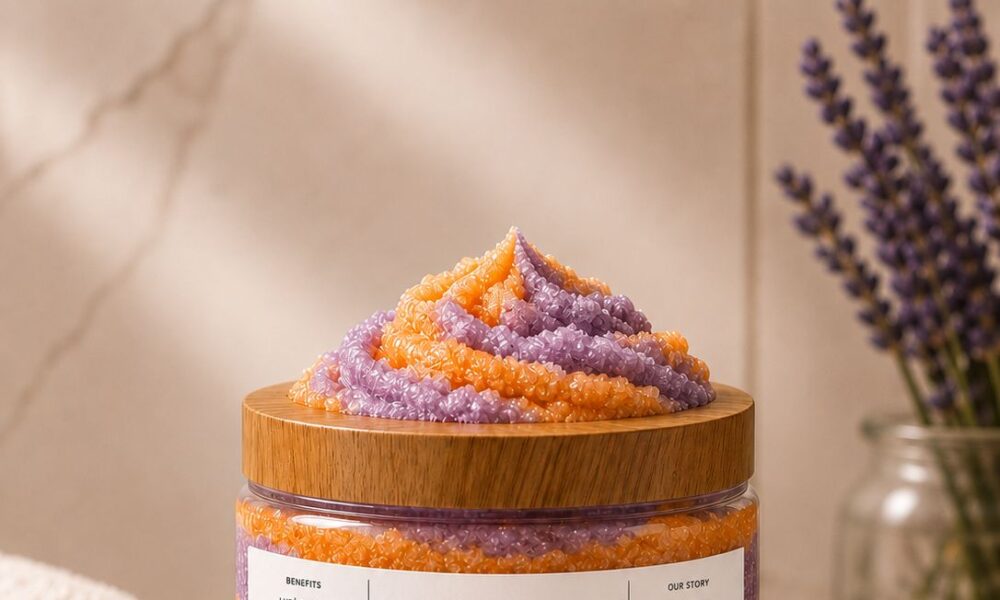
  • Radiant Lavender Foaming Exfoliating Sugar Scrub
  • Lumière Citrus Lavender Sugar Serub

Each product is thoughtfully crafted to deliver a spa-like skincare experience while promoting softness, hydration, skin renewal, and lasting radiance. Rich in nourishing botanicals, vitamins, essential oils, and natural extracts, every formula is designed to elevate everyday body care into luxurious self-care ritual.

At the heart of LURÈ BEAUTY is a commitment to clean beauty, premium self-care, and confidence through skincare. The brand celebrates the transformative power of nature-inspired ingredients while embracing elegance, wellness, and visible results.

“Our vision with LURE BEAUTY is to create products that not only enhance the skin but also inspire confidence, self-love, and intentional self-care,” says the Founder of LURE BEAUTY. “We believe beauty should feel luxurious, effective, and naturally radiant. Every product is created te help our customers embrace healthy, glowing skin while enjoying a truly indulgent experience.”

The LURE BEAUTY collection is cruelty-free, thoughtfully formulated, and suitable for all skin types. With elegant textures, captivating scents, ar skin-loving ingredients, the brand is redefining organic body care through sophistication, wellness, and exceptional quality.

LURÈ BEAUTY invites beauty editors, skincare enthusiasts, influencers, retailers, distributors, and customers worldwide to experience the futu of luxury organic skincare.

About LURE BEAUTY

Founded with a passion for natural beauty and effective skincare, LURÈ BEAUTY is dedicated to creating luxurious organic body care products ti nourish the skin and inspire confidence. Through carefully selected ingredients and premium formulations, the brand delivers skincare solutions designed to promote healthy, radiant skin while transforming everyday routines into moments of indulgence.

To place an order, send us a direct message on Instagram or contact our customer care team via WhatsApp at +234 815 536 8802.

LURÈ BEAUTY LIMITED

Phone/WhatsApp: +234 815 536 8802
Instagram: @shoplurebeauty
Website: www.shoplurebeauty.com (Coming Soon)
Email: [email protected]

Sponsored Content

Tags: , , , , , , ,
dropdown

SHA’S ORGANIC SKINCARE Expands Wellness Brand

SHA’S ORGANIC SKINCARE and MedSpa continues expanding its skincare and wellness brand through corrective treatments, skincare education, wellness services, personalized consultations, and community engagement focused on long-term skin health and confidence.

— SHA’S ORGANIC SKINCARE and MedSpa continues expanding its presence within the beauty and wellness industry through a combination of corrective skincare services, wellness education, e-commerce operations, and community-focused client engagement. Founded in 2017 by Aisha Jamila Khadar Bangurah, the company has evolved from a home-based skincare business into a nationally recognized skincare and wellness brand headquartered in Silver Spring, Maryland.

What began as a personal passion project focused on helping individuals manage difficult skin concerns has developed into a vertically integrated skincare company serving clients through professional spa services, consultations, digital education, and online retail operations. The company specializes in addressing hyperpigmentation, melasma, acne, uneven skin tone, and skin damage through organic, science-informed skincare practices designed to support long-term skin health.

Founder Aisha Jamila Khadar Bangurah established the company with the goal of creating skincare systems that emphasized consistency, education, and individualized care. In the early years of the business, products were developed from home while the client base expanded through direct customer engagement and referrals. As demand increased, the business transitioned into a full-service medical spa model that combined advanced skincare treatments with holistic wellness principles.

Today, the company operates across multiple areas of the skincare industry, including e-commerce, live selling, skincare consultations, corrective treatment programs, and educational content designed to help clients better understand skincare maintenance and long-term skin wellness. The business has also developed a dedicated customer community referred to internally as the “Mama Sha Babies,” reflecting the close relationship between the company and its returning clientele.

Building a Corrective Skincare Approach

The company’s growth has been closely tied to its focus on corrective skincare solutions for clients who have struggled to find effective treatment options elsewhere. Rather than focusing on trend-driven beauty products, the brand centers its approach on long-term skincare routines supported by personalized treatment plans and ongoing education.

According to the company, many clients initially seek treatment after experiencing frustration with harsh chemical products or inconsistent skincare results. SHA’S ORGANIC SKINCARE and MedSpa developed its service structure around helping clients simplify their routines while maintaining effective skincare management practices.

The company states that its skincare systems are designed to support clients dealing with complex concerns such as melasma, acne scarring, hyperpigmentation, and uneven skin texture. By combining organic formulations with professional skincare services, the business aims to provide solutions that remain accessible and manageable over time.

Aisha Jamila Khadar Bangurah said the business was built around helping individuals regain confidence while improving the condition of their skin naturally.

“For the love of skincare and aesthetics makes us family,” she said.

Growth Through Education and Community

In addition to skincare treatments and products, the company has expanded its operations through educational content and customer engagement initiatives. Through consultations, live selling sessions, and digital outreach, the business provides skincare guidance intended to help consumers better understand their individual skincare needs.

The company maintains an active online presence through its official website at SHA’S ORGANIC SKINCARE and MedSpa while also engaging with audiences across Instagram, TikTok, YouTube, and X, where product updates, educational content, and client experiences are regularly shared.

The business reports that its combination of educational support and personalized skincare planning has contributed to strong customer retention and community engagement. Clients frequently return for ongoing consultations and skincare management programs designed to address evolving skincare concerns over time.

The company also attributes part of its continued growth to the operational structure developed over the last several years. Rather than separating products from treatments, SHA’S ORGANIC SKINCARE and MedSpa integrate skincare consultations, professional services, and product recommendations into a unified client experience.

Recognition and Long-Term Expansion

As the business expanded, the company pursued formal licensing, trademark registration, and patent-related protections associated with its products and operational systems. According to the company, these efforts reflect a broader focus on sustainability, professionalism, and long-term business development within the skincare and wellness sector.

The company states that its growth reflects broader consumer interest in wellness-oriented skincare solutions and personalized treatment experiences. By combining skincare correction, education, and wellness support, the business continues positioning itself within the evolving skincare industry while expanding both its physical and digital operations.

The founder also emphasized the importance of resilience and consistency throughout the company’s development.

According to Aisha Jamila Khadar Bangurah, the company’s long-term objective extends beyond skincare products and treatments alone. She stated that the broader mission focuses on helping individuals rebuild confidence while encouraging aspiring entrepreneurs and beauty professionals to pursue sustainable business growth through discipline, education, and purpose-driven leadership.

ABOUT SHA’S ORGANIC SKINCARE and MedSpa

Founded in 2017, SHA’S ORGANIC SKINCARE and MedSpa is a Silver Spring, Maryland-based skincare and wellness company specializing in corrective skincare services, organic skincare solutions, consultations, and wellness education. The company focuses on treating hyperpigmentation, melasma, acne, uneven skin tone, and related skincare concerns through personalized skincare systems and professional treatments. The company operates through e-commerce, medical spa services, consultations, and educational platforms. Contact information and company updates are available through [email protected] and the company website at SHA’S ORGANIC SKINCARE and MedSpa while additional updates are shared across Instagram, YouTube, TikTok, and X.

Contact Info:
Name: Aisha Khadar
Email: Send Email
Organization: SHA’S ORGANIC SKINCARE and MedSpa
Website: https://shasorganicskincareandmedspa.com/

Release ID: 89192847

Tags: , , , , ,
A Balanced Guide to Organic Self-Tanners

A Balanced Guide to Organic Self-Tanners

When it comes to dressing up, I am generally of the opinion that we should choose clothing that complements our skin tone.

The key word though is complement, not match.

Which brings me to graduation season.

This spring, my daughter is graduating not once but twice – first with her associate’s degree, then from high school – and that’s how I learned that graduation dresses are almost always white.

My legs are also pasty white, as are the legs of Miss High School Valedictorian, Class of 1.

The Usual Advice (And Why I Question It)

In most reviews, this is the part where someone says that we all need to avoid UV rays for our health, and the best way to achieve a healthy, sun-kissed glow is to use self-tanner.

However, there’s a growing body of research that suggests there’s a “sweet spot” for sun exposure. Too much can be harmful – but according to respected researchers including Dutch dermatologist Han J. van der Rhee – so can too little. (1)

That’s why, especially in the summer, my family makes it a goal to get sunshine every day. Now, don’t come for me – we do use sunscreen and other strategies like covering up and/or finding shade to avoid overexposure. This article is not about that, though – this one is, if you’re interested.

Now back to the special occasion situation. My daughter found a white dress that’s perfect for senior photos and graduation, and she wanted a safe sunless tanning option, so I decided now is the time to dive deep into the research on what’s available.

What I Found

Over the past couple of years, I’ve seen a lot of ads for organic self-tanners and wondered if they’re truly non-toxic and as good as reviewers say.

The short answer is that there are versions with truly non-toxic ingredients, but the actual biological impact varies depending on when (and possibly how) they’re applied.

The long answer starts with something you’ll see on almost every sunless tanner label – dihydroxyacetone.

Meet DHA, The Active Ingredient

If you’ve looked into self-tanners at all, you’ve probably come across DHA (dihydroxyacetone). It’s the most common active ingredient used to achieve a bronze glow.

DHA is a sugar molecule that reacts with amino acids on your skin’s surface to produce melanoidins, which are brown-pigmented molecules that mimic the look of a natural tan. (2) This surface-level bronzing effect essentially “stains” the top layer of skin.

Some DHA is synthetic, but the form found in organic and natural products is derived from non-GMO sugar beets or sugarcane. It’s generally considered safe for topical use, and has been approved by the U.S. Food and Drug Administration for use in self-tanning lotions.

However, there are a few nuances that don’t get talked about very often.

#1: Sunless Tanning May Reduce Vitamin D Production

Melanoidins might sound similar to melanin, but they’re functionally different.

Melanin formation happens when skin absorbs UV light – it’s a responsive biological process.

Melanoidin is formed when sugars and amino acids combine through the Maillard reaction – the same process that creates a browning effect on toast and roasted potatoes. According to one pilot study, when DHA creates a layer of melanoidins on the skin, it acts as a mild natural sunscreen that can reduce UVB penetration enough to decrease vitamin D production by an average of 24%. (3) (4)

Now, this was a small study, so we need more research to confirm and clarify the details.

However, since more than half of the U.S. adult population already has insufficient levels of vitamin D, I would personally keep an eye on my levels if I was using sunless tanning products on a consistent basis. (5)

For special occasions, when the effect will wear off after about a week, I’m 0% worried about vitamin D. However, I will be following an unofficial 24 hour rule, which leads me to an important caveat:

#2: Sunless Tanning & Sunlight Exposure

If you’re planning to apply sunless tanner before heading to the beach, you might want to do it a couple of days in advance.

Here’s why: Some studies have found that DHA-treated skin may temporarily produce more free radicals when exposed to UV light. (6) The window is estimated to be about 24 hours. (7)

Now, maybe you’re wondering whether erythrulose – a DHA alternative derived from fermented raspberries – has the same impact. The answer is . . probably. We don’t have any research on it specifically, but it works the same way that DHA does – via melanoidins and the Maillard reaction. It’s reasonable to presume that it also temporarily reduces UV tolerance, at least until we have more data.

So what does this mean in practical terms? Many experts recommend applying sunless tanner at night, allowing it to set, and using sunscreen the next day.

This is when thoughtful formulation matters – not just the active ingredient. Many brands now intentionally add antioxidant-rich ingredients to their products to help reduce and/or neutralize free radicals. (8)

#3: A Note On Spray Tans

While lotions and creams are applied topically, spray tans can introduce DHA into areas it wasn’t designed for, like the lungs or mucous membranes.

The FDA has specifically noted that DHA is not approved for inhalation, which is why protective measures (like nose plugs and eye protection) are often recommended during spray applications. I personally think this is more of a concern with commercial spray tans – which use an aerosolized mist with very fine droplets – not at home spray products in pump bottles that release larger droplets.

I personally wouldn’t take a deep breath while spraying my face, though. 🙂

What “Organic” Means (and Doesn’t Mean) in Self-Tanners

Now that we’ve talked about active ingredient, DHA, let’s talk about what else is in the bottle.

For a product to be “certified organic,” it usually needs to contain a very high percentage of organic ingredients.

Some self-tanners meet that standard. Others combine organic ingredients with naturally derived, plant-based components that aren’t certified but improve the formula (like vanilla fruit extract for scent).

Either way, the goal is the same: to create nourishing, skin-friendly blends that don’t include problematic ingredients like:

Parabens
These artificial preservatives can mimic estrogen in the body and have been linked to hormone imbalances, reproductive problems, developmental problems, and other health issues. They also cause significant ecological disruption by acting as endocrine disruptors in wildlife, especially aquatic life, where they cause reproductive and/or developmental problems. (9)

Fragrance (a.k.a. parfum)
Thanks to a loophole in U.S. labeling rules, companies can hide undisclosed chemicals under the catch-all term “fragrance.”

Formaldehyde-Releasing Preservatives
In personal care products, formaldehyde can be added to products to extend their shelf life. But if you’re like me, you’d immediately put back any product that listed formaldehyde on the label. Companies know that, which is why they use formaldehyde-releasing preservatives.

Yep, ingredients like sodium hydroxymethylglycinate don’t contain formaldehyde outright – but they slowly release small amounts over time as they break down. There’s no formaldehyde on the label, but exposure is still happening, and according to the Campaign for Safe Cosmetics even low levels – around 250 parts per million (ppm) or even 200 ppm in sensitized individuals – are cause for concern. (10)

Artificial Dyes
Many self-tanners use added colorants to create an instant “bronzed” look before the active ingredient develops.

These dyes are often petroleum-derived and can trigger redness, itching, or sensitivity.

Common examples include:

  • FD&C Red 40
  • FD&C Yellow 5
  • FD&C Blue 1
  • Coal tar–derived colorants

What I’d Want My Daughter to Know

That was a lot . . . probably more than you were looking for!

Here’s why: when my mom, sister, or daughter asks me for a recommendation, I want them to have the important details before deciding what works best for them. I want the same for you, too.

With all of that in mind, here’s what I’d say to my daughter about sunless tanners (actually, it’s what I did say):

  • They’re great for special occasions.
  • Apply them at night, then avoid heavy sun exposure the next day. Use sunscreen if you’re going to be outside.
  • Pay attention to the overall formulation, not just the active ingredient. I’d look for products that intentionally include antioxidants.
  • If you start using self-tanner often, it may be worth keeping an eye on your vitamin D levels.

My Top 3 Picks for Organic Self-Tanners

Navigating the “natural” beauty landscape can be overwhelming. Many brands greenwash, and there are so many to sift through it can be difficult to even know where to start.

To narrow down my list, I looked for:

  • High Percentage of Organic/Natural Ingredients: Obviously. Antioxidant-rich formulas were also a high priority.
  • Absence of “Red Flag” Ingredients: No parabens, phthalates, synthetic fragrances, etc.
  • Performance: The goal is sun-kissed, not orange.
  • Streak-Free Application: Nobody wants zebra stripes.
  • Positive Reviews: Does it consistently perform well for real users?

I ended up ruling out several popular “clean” self-tanners that rely on frequent reapplication or ingredient bases I wasn’t comfortable with. The ones below are the few that met my criteria for both formulation and real-world performance.

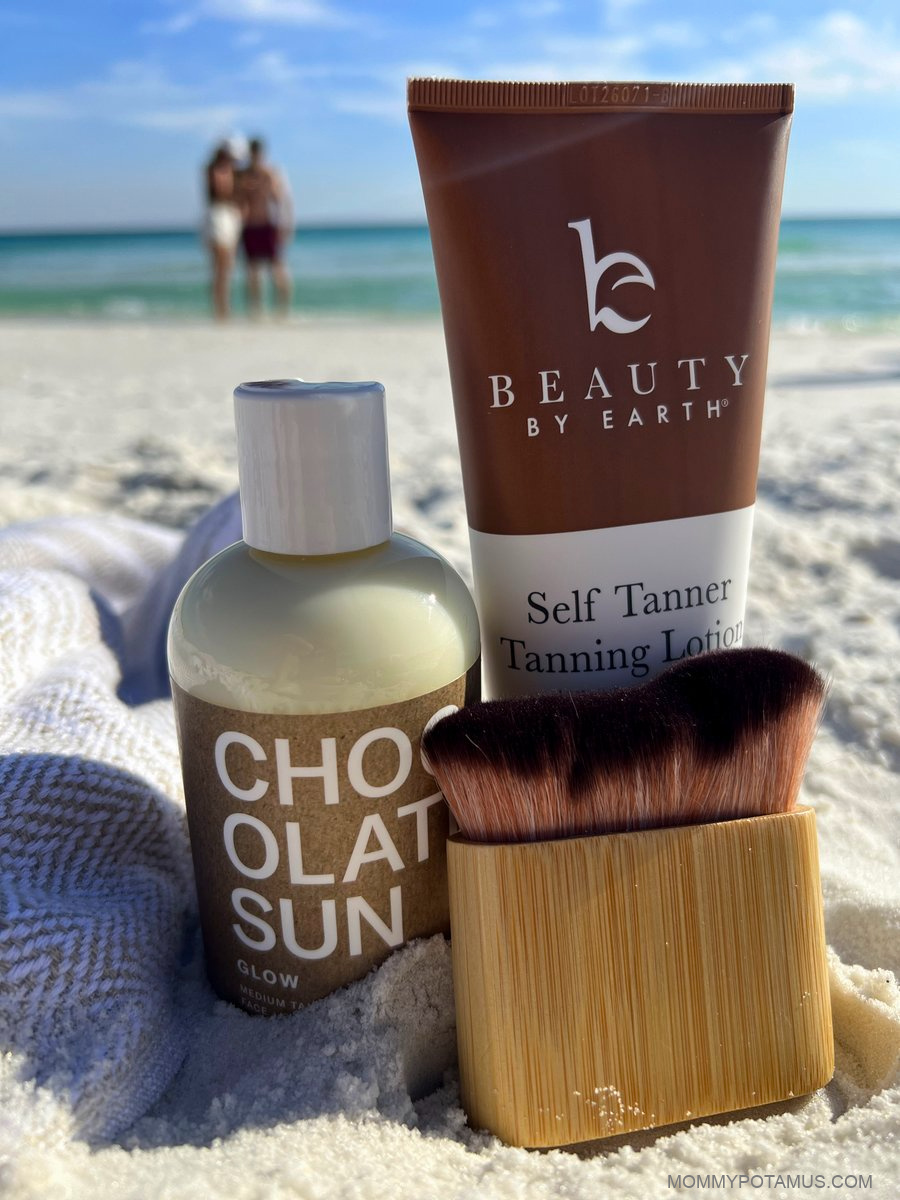
🥇 Beauty by Earth Self Tanner Body Lotion

Best overall balance of pure ingredients + performance

This body lotion is a crowd favorite for good reason. It gives skin a natural-looking glow without veering orange, and is versatile enough to be used on the face as well as the body. Beauty By Earth does make a separate face lotion for sensitive, dry, or breakout-prone skin, but to keep things simple I just used the body lotion and it worked well for me.

The organic aloe and shea butter base leaves skin feeling soft and supple – not dry – and the formula also includes antioxidants like green tea extract, pomegranate extract, and witch hazel extract.

It’s user-friendly, making it a great option for people (like me) who don’t use it enough to have expert-level applications skills. The scent is subtle and pleasant.

Why it stands out:

  • Simple ingredients
  • Good color (not orange-heavy)
  • Consistently strong user feedback
  • Pregnancy safe

Key Ingredients

  • Organic Aloe Vera: Hydrates and soothes.
  • Organic Shea Butter: Deeply moisturizes and improves skin elasticity.
  • Organic Coconut Oil: Nourishes and provides a lovely scent.
  • DHA from sugar beets: The bronzing ingredient.
  • Antioxidants: Green tea extract, pomegranate extract, and witch hazel extract.

🥈 Chocolate Sun Tanning Cream (Face & Body)

Chocolate Sun uses a moisturizing base of organic aloe, coconut oil, jojoba oil, and other skin-conditioning botanicals to support hydration while the color develops.

What I like most about it is that it doesn’t rely on repeated applications to work. You’ll typically start to see color within a few hours, with a deeper, natural-looking tan developing over time – making it a great option for occasional use rather than something you have to maintain throughout the week.

The texture is easy to work with, which makes application very forgiving (especially if you’re not using self-tanner regularly).

Why it stands out:

  • 89% Organic Ingredients
  • Designed to work well with a single application
  • Simple, botanical-focused formula
  • Good color
  • Hydrating base that supports skin during development

Key Ingredients

  • Aloe Vera: Hydrates and supports skin barrier
  • Coconut Oil: Nourishes and helps with even application
  • Jojoba Oil: Mimics skin’s natural oils for a balanced feel.
  • Sweet Almond & Sunflower Oil: Lighter oils for absorption
  • DHA (naturally derived): Active tanning ingredient
  • Antioxidant: Green Tea Leaf Extract

🥉Eco Tan Invisible Tan Cream

Best certified organic option

This brand is certified organic in Australia, where it was founded along the Gold Coast by Sonya Driver. I haven’t personally tried their highly rated Invisible Tan cream because it’s currently out of stock in many places.

However, it’s consistently one of the highest-rated options in the natural beauty space, and reviewers say it’s rich, glides on smoothly, and develops into a beautiful, natural-looking bronze overnight.

From a formulation standpoint, it checks a lot of boxes: certified organic ingredients, a nourishing base (including aloe and plant oils), and a focus on antioxidants.

They do offer other products as well, like Hempitan, but reviews are more mixed. I’m waiting for the Invisible Tan Cream to come back in stock, then I will test it out and report back.

Why it stands out:

  • Certified organic (In Australia)
  • Good mid-tone color

Key Ingredients

  • Organic Aloe Vera: Soothes and hydrates the skin.
  • Macadamia Seed Oil: High in fatty acids that are highly moisturising, and work to regenerate and soften the skin.
  • Organic Avocado Oil: Rich in vitamin E, deeply moisturizing.
  • Antioxidants: Elderberry extract, geranium oil, chamomile extract
  • DHA (Dihydroxyacetone) derived from natural sugar beet: The active bronzing agent.

How to Get the Best Results (Without Overcomplicating Things)

You don’t need a 15-step routine to get a good result, but a few small things make a big difference.

Start with smooth skin
Exfoliating ahead of time helps the color go on evenly and fade more naturally. A natural-fiber mitt (made with loofah, hemp or sisal) works well for this.

Moisturize dry areas first
Elbows, knees, ankles, and hands tend to grab more color. A light layer of moisturizer in those spots helps keep things even.

Apply like you would a body lotion
Work in sections and blend well. You don’t need perfect technique – just take your time and don’t rush it.

About mitts and brushes
Most brands recommend using an application mitt or kabuki brush for the smoothest finish. As far as I can tell, those are almost always made with synthetic fibers, which isn’t ideal from a microplastics standpoint.

That said, for occasional use, I think it’s a reasonable tradeoff if it helps you avoid streaks. If you’d rather skip it, applying with clean hands and washing thoroughly afterward works just fine.

Give it time to develop
I prefer applying at night and letting it develop while I sleep. It’s simpler, and it lines up with the earlier point about avoiding sun exposure right after application.

FREE Ebook: DIY Body Care Gifts Made Simple

Do you want to give gorgeous, handcrafted gifts for family and friends, without spending a bunch of time on them?

Then I’d love to give you a free copy of DIY Body Care Gifts Made Simple – my step-by-step guide to making gorgeous handcrafted gifts without stressing yourself out – as a gift for signing up for my newsletter. I’ll show you how to make vintage labels, luxurious lotion bars, lip balms, sugar scrubs, body sprays and more like a pro. Sign up for my newsletter and you’ll be redirected to the download page immediately!

Sources

  1. van der Rhee H, de Vries E, Coomans C, van de Velde P, Coebergh JW. (2016). Sunlight: For Better or For Worse? A Review of Positive and Negative Effects of Sun Exposure. Cancer Research Frontiers.
  2. Turner J, Schalla W, Tosca M, Rosado C. (2023). In search of the perfect tan: Chemical activity, biological effects, business considerations, and consumer implications of dihydroxyacetone sunless tanning products. Journal of Cosmetic Dermatology.
  3. Armas LAG, Fusaro RM, Sayre RM, Huerter CJ, Heaney RP. (2009). Do melanoidins induced by topical 9% dihydroxyacetone sunless tanning spray inhibit vitamin D production? A pilot study. Photochemistry and Photobiology.
  4. Laferté C, Oliel S, Pehr K. (2026). Clinical Use and Safety of Self-Tanner (Topical Dihydroxyacetone) in Dermatology: A Systematic Review. Journal of Cutaneous Medicine and Surgery.
  5. Cui A, Xiao P, Ma Y, Fan Z, Zhou F, Zheng J, Zhang L. (2022). Prevalence, trend, and predictor analyses of vitamin D deficiency in the US population, 2001–2018. Frontiers in Nutrition.
  6. Garone M, Howard J, Fabrikant J. (2015). A review of common tanning methods. Journal of Clinical and Aesthetic Dermatology.
  7. Gallagher M. (2018). Exposure to Dihydroxyacetone in Sunless Tanning Products: Understanding the Risks. Journal of the Dermatology Nurses’ Association.
  8. Dobos K. (2013). Formulating Sunless Tanning Products with DHA: Current Challenges. Cosmetics & Toiletries.
  9. Agarwal D, Bhatt U, Soni V. (2025). Ecotoxicological impacts of parabens on flora and fauna. npj Emerging Contaminants.
  10. Campaign for Safe Cosmetics. Formaldehyde and Formaldehyde-Releasing Preservatives.

Share with a friend! 👇

Tags: , , ,
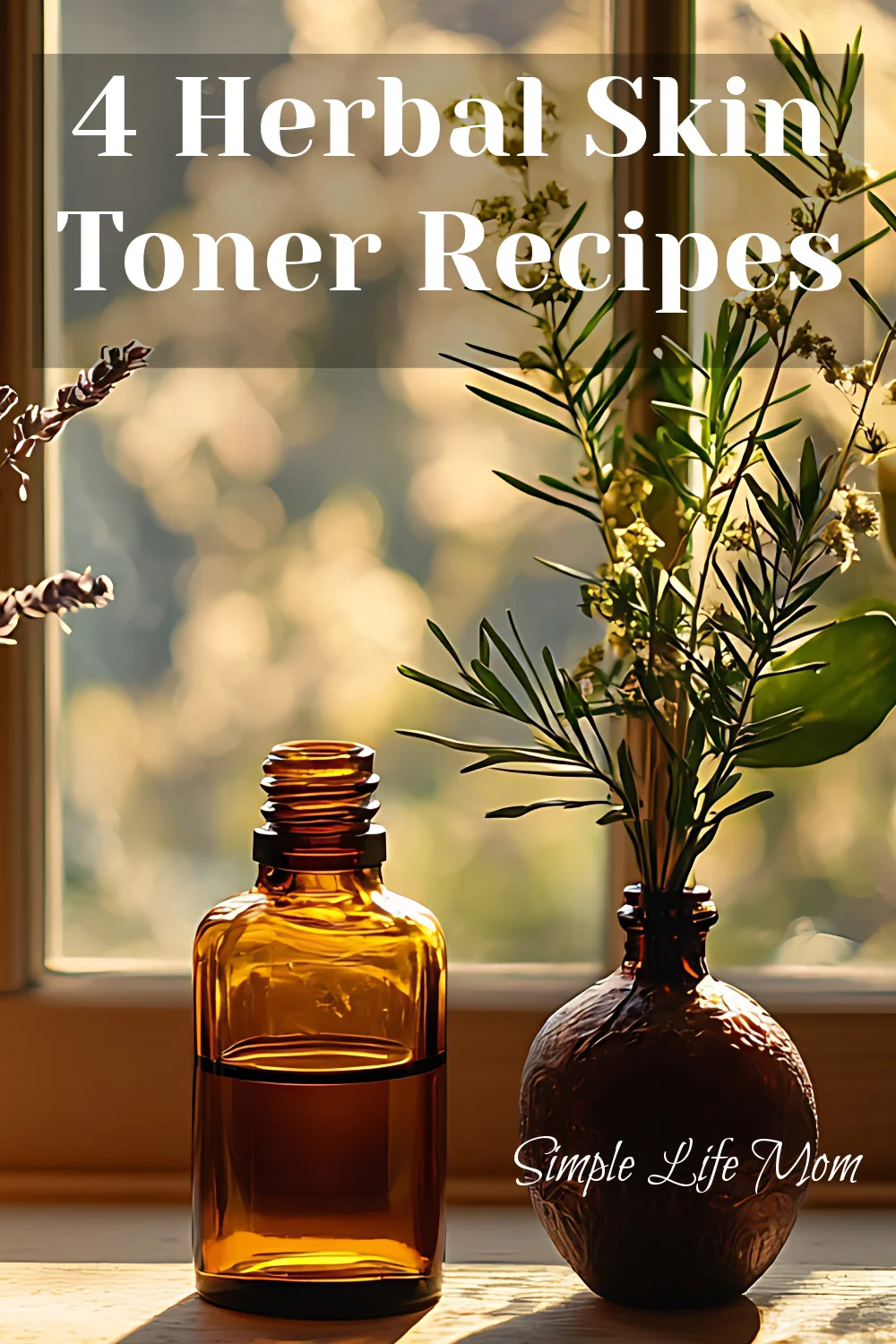
4 Herbal Skin Toners - recipes with natural ingredients for all skin types.

4 Herbal Skin Toners: How to Make Organic Astringents

These 4 herbal skin toners are beneficial for every skin type and play an important role in a natural skincare routine. Before I started using homemade skincare products, my face often felt tight and stripped after washing—especially since I’ve always had dry skin. Using a natural toner helps restore balance, refresh the skin, minimize the appearance of pores, and prepare your face to better absorb lotions or facial oils.

I especially like the last toner recipe below: Acne Astringent Toner, because it shrinks my pores lovely and goes great with my Anti-Aging Serum recipe.  I think I look younger now than I did ten years ago when my body was under so much stress.

You can also try before you make your own by checking out the ones I have in my shop: Anti-Aging Toner & Acne Toner. OR grab a cleanser and toner combo Gift Set.

Why Use Herbal Toners?

Before recipes, here’s what herbal toners can do for your skin:

  • Balance pH after cleansing (important for barrier health).
  • Hydrate and calm with natural botanicals like chamomile or aloe.
  • Minimize appearance of pores gently.
  • Prep skin for serums and moisturizers to absorb better.

Frequently Asked Questions About Herbal Skin Toners

What does a skin toner do?

A skin toner helps restore balance after cleansing by removing leftover residue, refreshing the skin, and helping pores to close. Using a toner also prepares your skin to better absorb lotions and oils applied afterward.

Are herbal skin toners good for all skin types?

Yes, herbal skin toners can benefit all skin types when made with the right ingredients. Dry skin may benefit from soothing herbs like chamomile or comfrey, while oily or acne-prone skin often responds well to astringent herbs such as mint or witch hazel.

Can I use a homemade toner every day?

Most homemade herbal toners are gentle enough for daily use, once or twice a day. If you have sensitive skin, start by using the toner once a day and monitor how your skin responds.

How long do homemade herbal toners last?

Because homemade toners do not contain preservatives, they usually last a month if kept clean. For longer shelf life, you can make smaller batches or use ingredients like the apple cider vinegar in some of the recipes below.

How do I apply a natural skin toner?

Apply toner after cleansing your face. You can use a cotton pad, reusable cloth, or gently pat it onto your skin with clean hands. Allow it to absorb before applying lotion or facial oils.

Is toner necessary if I already moisturize?

While not required, using a toner can significantly improve how well your skin absorbs moisture. Toners help prep the skin, making your lotion or oils more effective and reducing dryness or irritation.

Mint and vinegar toner – in process. Final product is strained

4 Herbal Skin Toners

1. DIY Comfrey & Oat Herbal Toner for Gentle Exfoliation

This comfrey and oat skin toner is quick and easy to prepare, making it ideal for a simple DIY skincare routine. Comfrey helps soothe and heal the skin, while oats gently absorb excess oil and remove impurities.1 Stored dry, this natural blend works as both a gentle facial scrub and an herbal toner, leaving skin clean, balanced, and refreshed.

Best for: Dry to normal skin
Benefits: Oats calm irritation; comfrey supports healing and softness.

Ingredients:

Instructions:

  1. Blend the comfrey and oats in a mixer until they make a fine powder. Store this in an airtight jar.
  2. Place 1 tablespoon of the scrub on the palm of your hand.  Pour about 1/2 tablespoon of rose water (or yogurt) on top and mix with your finger until it is a creamy paste.
  3. Rub onto your face with your hands, or a soft, wet cloth or sponge. Gently scrub face.
  4. Rinse with water.
  5. Store and use for 10 months by keeping sterile.  Always use a clean dry tablespoon to dip it out and never your hand.

2. DIY Apple Cider Vinegar & Chamomile Herbal Skin Toner

This apple cider vinegar and chamomile toner goes a long way, making it an easy and mess-free addition to your natural skincare routine. Apple cider vinegar helps tone and balance the skin without over-drying, while gently conditioning the complexion. Chamomile adds powerful soothing benefits by reducing inflammation, calming irritated skin, and helping relieve puffiness and acne.2

Best for: Sensitive or redness-prone skin
Benefits: Chamomile eases puffiness and irritation; apple cider vinegar tones.

Ingredients:

• 2 cups filtered water
• 1/2 cup raw apple cider vinegar
• 1/2 cup dried chamomile flowers

Instructions:

  1. Heat water in a kettle until it is hot.  It does not need to boil.
  2. Pour water into a jar and add chamomile flowers.
  3. Screw on an airtight lid and shake.
  4. Allow mixture to cool.
  5. Add vinegar and place in a warm, dark place for 1 week, shaking daily.
  6. After the one week, strain the toner through a mesh strainer and discard chamomile leaves.
  7. I pour about 1 Tablespoon into the palm of my hand after washing my face, rub my hands together and rub all over my face. You can also put it in a spray bottle and spray your face after washing.

3. DIY Mint & Vinegar Toner for Refreshing Skin

This vinegar and mint toner helps restore the skin’s natural balance. Vinegar works well for all skin types, helping oily skin stay clear while also easing dryness and flakiness, so I really like to use it as part of my toner recipes. The fresh mint adds a light, cooling feel that leaves your skin refreshed without being harsh.

Best for: Combination to oily skin
Benefits: Mint cools, vinegar helps control oil and restore skin acidity.

Ingredients:

Instructions:

  1. Mix together all ingredients, then pour into a clean container and let sit for 3 days.
  2. Strain or filter out all solids and pour into a clean bottle with a tight-fitting lid.
  3. To use: Apply to clean skin with a cotton pad or put it in a spray bottle.

4. Homemade Witch Hazel Toner with Healing Herbs

I love this toner because it works well for just about any skin type. The witch hazel acts as a gentle astringent, helping to tighten and close pores, while the herbs work to heal, soothe, and naturally purify the skin. It’s a simple, well-rounded option that’s easy to use and easy on your skin.

Best for: Acne-prone or blemish-forming skin
Benefits: Witch hazel tightens pores; herbs help purify and soothe.

Ingredients:

Instructions:

  1. Combine all ingredients in an airtight jar and shake.
  2. Place jar in a dark, warm place and shake daily for 2 to 3 weeks.
  3. The mixture will be the color of iced tea when ready. Strain.
  4. Apply astringent with a cotton ball, up to twice daily. Use for 6 months to 1 year.

Bonus Recipe:

Herbal Geranium Facial Toner for All Skin Types

Ingredients:

Instructions:

  • Combine the apple cider vinegar and rose water.
  • Add the essential oils.
  • Keep in a jar and dip a clean cotton ball into it for application on a clean face each time.

How to Use Herbal Toners (Best Practices)

✔ After cleansing: Apply toner before serums or oils to help absorption.
✔ Patch test first: You could be allergic to anything. Always test new ingredients on a small area like your wrist before using all over your face.
✔ Store safely: Homemade toners lack preservatives—keep airtight and refrigerate when needed.

Try my Other Specialized Toners

For acne-prone skin, try our homemade acne toner.

For anti-aging benefits, see our rose water anti-aging toner.

Tags: , , , ,
dropdown

Earthy Essentials Launches Handcrafted Organic Soap Set Designed for Natural Self-Care and Eco-Conscious Living

— A new 3-bar soap collection crafted with organic oils and pure essential oils brings sustainable luxury to everyday routines.

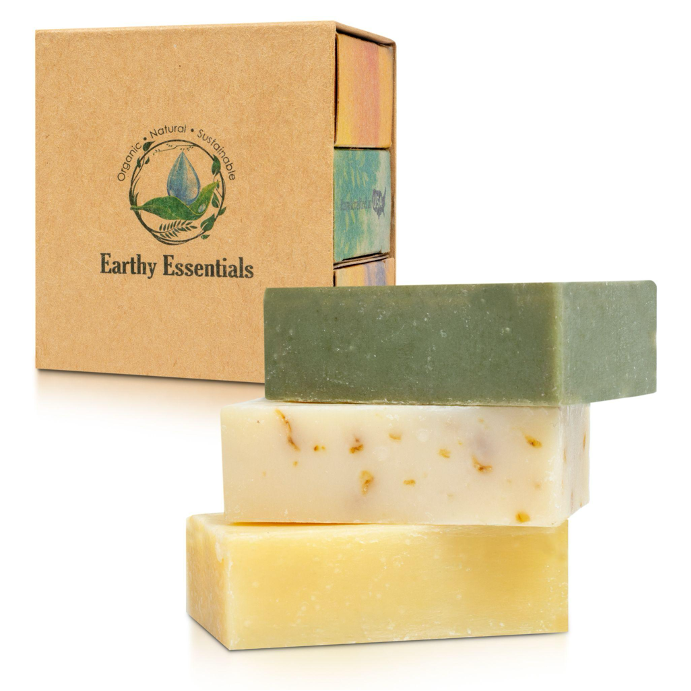
Earthy Essentials, a rising natural wellness brand dedicated to pure and sustainable self-care, announces the launch of its 3-Pack Organic Soap Set, handcrafted in small batches using organic saponified oils and therapeutic essential oils. Designed for consumers seeking cleaner ingredients and eco-friendly products, the collection delivers a spa-quality experience through nature-inspired scents and gentle, moisturizing formulas.

Each set includes three 3.25 oz bars in beautifully biodegradable kraft packaging. The scent trio — Green Tea & Peppermint, Oatmeal Lavender, and Lemongrass — reflects the brand’s commitment to natural aromatherapy and skin-nourishing botanicals. All bars are made from organic oils of palm, coconut, olive, and palm kernel, blended with essential oils and natural extracts, with no parabens, sulfates, synthetic dyes, or artificial fragrances.

“Our goal is simple: create products that honor the earth while elevating everyday self-care,” said the founder of Earthy Essentials. “This new soap collection represents the heart of our brand — natural, honest, and crafted with intention.”

The soaps are packaged in a plastic-free, kraft brown box designed to reduce environmental impact while offering a premium, gift-ready appearance. Ideal for daily use, gifts, and wellness routines, the collection caters to customers who value sustainability, purity, and artisan craftsmanship.

The Earthy Essentials Organic Soap Set is now available on Amazon, bringing accessible natural self-care to households nationwide.

About Earthy Essentials

Earthy Essentials is a natural self-care brand focused on clean ingredients, sustainable packaging, and handcrafted quality. Inspired by the beauty and simplicity of nature, the brand creates products that are gentle, effective, and environmentally responsible. Earthy Essentials believes self-care should be pure, honest, and kind — to both people and the planet.

Contact Info:
Name: Earthy Essentials
Email: Send Email
Organization: Earthy Essentials
Website: https://www.amazon.com/dp/B0FYW8TGP8

Release ID: 89177132

Tags: , , , , , , , , , , ,
Bright Skin Cosmetics Launches Organic Skincare Solutions

Bright Skin Cosmetics Launches Organic Skincare Solutions

Introduction to Bright Skin Cosmetics

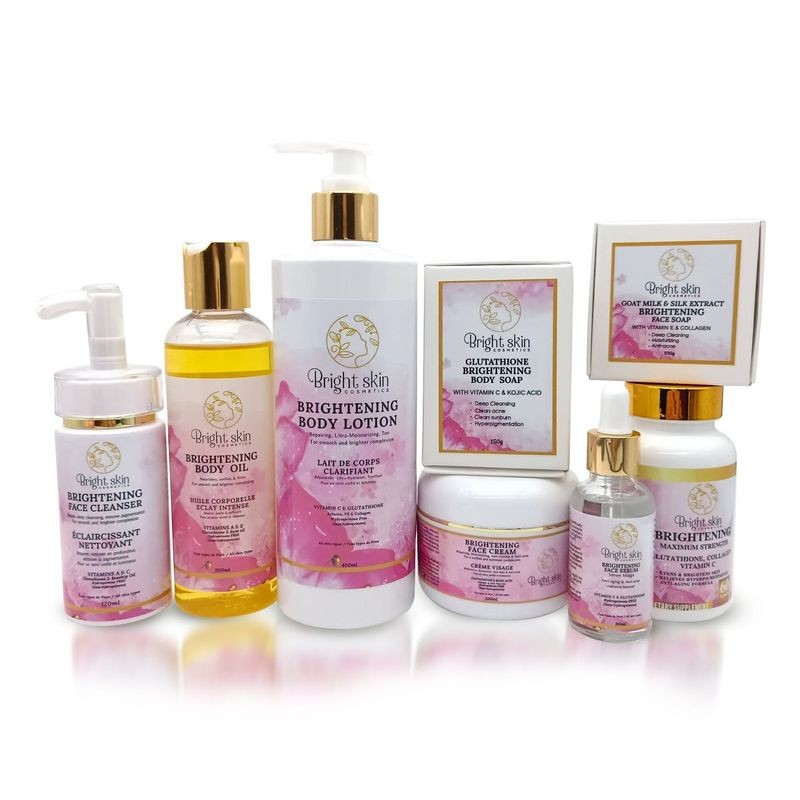
Bright Skin Cosmetics, founded by CEO Ornella Wotto, is revolutionizing the skincare industry with a line of organic, plant-based products designed to address common skin concerns, such as dark spots, hyperpigmentation, and dry skin. Committed to combining the healing powers of nature with cutting-edge skincare science, Bright Skin Cosmetics offers solutions for all skin types. The brand’s mission is not only to help individuals achieve glowing, healthy skin, but also to promote sustainability and eco-conscious practices within the skincare industry.

Bright Skin Cosmetics is built on the belief that skincare should be a holistic, wellness-focused experience. The company’s philosophy emphasizes self-care and empowerment, with a focus on natural ingredients that nurture the skin while promoting environmental responsibility. The result is a skincare brand that offers solutions for a wide range of concerns while maintaining a commitment to ethical practices.

Organic and Holistic Ingredients for Every Skin Type

One of the standout features of Bright Skin Cosmetics is its dedication to using organic, plant-based ingredients that are free from harsh chemicals. The brand’s products are carefully formulated to ensure efficacy while remaining safe for even the most sensitive skin. Free from artificial fragrances, parabens, and sulfates, Bright Skin Cosmetics stands apart from many skincare brands that rely on potentially harmful additives.

The product line includes a range of serums, creams, soaps, and scrubs, each designed to provide deep hydration, nourishment, and healing for all skin types. Bright Skin Cosmetics offers a comprehensive and natural approach to skincare, helping individuals achieve their skin goals with products that restore balance, moisture, and vibrancy.

Addressing Common Skin Concerns

Hyperpigmentation and Dark Spots

Hyperpigmentation and dark spots are common skin concerns that many individuals face, often caused by sun exposure, acne scars, or the aging process. Bright Skin Cosmetics has formulated solutions enriched with ingredients like vitamin C, glutathione, and licorice extract to help brighten the skin and fade dark spots over time. These ingredients are known for their ability to improve skin tone, restore radiance, and enhance overall skin luminosity.

Deep Hydration for Dry Skin

Dry skin can often feel tight and uncomfortable, especially in harsh weather conditions. Bright Skin Cosmetics’ products, such as those containing organic oils like argan oil, jojoba oil, and shea butter, offer intense hydration. These oils are rich in essential fatty acids and vitamins that replenish moisture and lock it in for long-lasting hydration, leaving the skin soft, smooth, and nourished.

Suitable for All Skin Types

Bright Skin Cosmetics is designed to cater to all skin types, including oily, dry, sensitive, and combination skin. The brand’s formulas are non-irritating, hypoallergenic, and dermatologist-tested to ensure safety and effectiveness. Whether users are combating acne, seeking to reduce redness, or simply maintaining healthy skin, Bright Skin Cosmetics offers a product for everyone.

The Bright Skin Promise: Sustainable and Ethical Practices

Bright Skin Cosmetics operates with a firm commitment to sustainability and ethical sourcing. The company ensures that all ingredients are sustainably sourced and adheres to the highest standards of vegan-friendly and cruelty-free skincare. No animal testing is involved in the production of their products, making them a responsible choice for conscious consumers.

In addition, Bright Skin Cosmetics uses eco-friendly packaging to minimize waste and reduce its environmental footprint. Every product is crafted with care to not only benefit the skin but also support a healthier planet. This approach reflects the brand’s dedication to aligning beauty and wellness with environmental responsibility.

Spotlight on the Brightening Collection

One of Bright Skin Cosmetics’ standout product lines is the Brightening Collection, specifically designed to tackle uneven skin tone, dark spots, and discoloration. These products work together to help users achieve a radiant, glowing complexion.

  • Brightening Face Serum: Packed with antioxidants like vitamin C and green tea extract, this serum helps brighten the skin and reduce the appearance of dark spots. It works in synergy with other products in the collection to enhance overall radiance.
  • Brightening Face Cream: A rich moisturizer that helps even out skin tone and restore hydration. Infused with glutathione and licorice extract, it helps fade discoloration and promote a more luminous complexion.
  • Brightening Body Oil: Perfect for dry skin, this nourishing oil provides hydration while targeting hyperpigmentation on areas like the elbows, knees, and legs. It leaves the skin soft and radiant, with a smooth finish.

These products work together to brighten and hydrate the skin, ensuring that users achieve a more youthful, glowing appearance.

Empowering Women Through Skincare

Under the leadership of Ornella Wotto, Bright Skin Cosmetics has grown to become more than just a skincare brand, it is a movement focused on empowering women worldwide. The company’s mission extends beyond providing high-quality skincare; it aims to inspire confidence and encourage women to embrace their natural beauty. In an industry often dominated by unrealistic beauty standards, Bright Skin Cosmetics offers an inclusive and refreshing perspective, promoting self-love and wellness.

Bright Skin Cosmetics is dedicated to providing products that empower women to feel confident in their own skin. With a focus on natural ingredients, sustainability, and ethical practices, the company is shaping the future of skincare for generations to come.

Looking Ahead: The Future of Bright Skin Cosmetics

As the brand continues to grow, Bright Skin Cosmetics aims to expand its reach and impact, touching more women around the world. By prioritizing sustainability, ethical sourcing, and holistic beauty, the company’s mission remains clear: to provide women with effective skincare solutions that align with their values and enhance their natural beauty.

Shop Bright Skin Cosmetics Today

Discover the transformative power of organic skincare and explore the full range of products offered by Bright Skin Cosmetics. Whether you’re looking to brighten your complexion, hydrate dry skin, or restore your natural glow, Bright Skin Cosmetics has the perfect solution for every skincare need. Visit brightskincosmetics.com to shop and learn more about the brand’s commitment to sustainable, effective skincare.

About Bright Skin Cosmetics

Bright Skin Cosmetics, founded by CEO Ornella Wotto, is an organic skincare brand focused on offering holistic, plant-based solutions for various skin concerns. With an emphasis on natural ingredients, sustainability, and ethical practices, the company’s mission is to help individuals achieve healthy, glowing skin while promoting environmental responsibility.

Media Contact

Ornella Wotto, CEO
Bright Skin Cosmetics
Email: support@brightskincosmetics.com
Phone: 3175183779
Website

Social Media:

Instagram
Facebook
TikTok


Post navigation

Tags: , , , , , ,
QrCode for Blockchain Registration Graphic

Exciting Expansion: Rhug Wild Beauty Brings Its Certified Organic Skincare Collection to OneLavi.com

Rhug Wild Beauty, the award-winning luxury organic skincare brand from the historic Rhug Estate in beautiful North Wales, is thrilled to announce its availability on OneLavi.com, a trusted online destination for premium health, beauty, and wellness products. Notably, Rhug Estate is the only rural estate in the United Kingdom to be appointed a Royal Warrant by His Royal Highness the King of England, highlighting our commitment to quality and excellence.

Rhug Wild Beauty was founded by Lord Robert Newborough, a pioneer in organic and regenerative farming.

“A presence on OneLavi.com allows us to reach more conscious consumers who seek authenticity, transparency, and real results from their skincare.” – Lord Robert Newborough

This partnership marks a significant milestone in Rhug Wild Beauty’s growing presence in the United States, following their successful launch on Amazon. Through OneLavi.com, American consumers can now explore and purchase Rhug Wild Beauty’s highly efficacious and luxurious range of organic skincare products that skillfully unite proven efficacy with sustainable purity.

Founded by Lord Robert Newborough, a pioneer in organic and regenerative farming, Rhug Wild Beauty represents the next evolution of clean beauty—blending wild-foraged botanicals from our expansive 12,000-acre Rhug Estate with meticulously selected natural actives sourced globally for their clinically validated skin benefits.

“A presence on OneLavi.com allows us to reach more conscious consumers who seek authenticity, transparency, and real results from their skincare,” said Lord Robert Newborough, Founder of Rhug Wild Beauty. “Every Rhug Wild Beauty formula is rooted in nature, refined by science, and crafted to deliver visible, measurable results while honoring the planet.”

Rhug Wild Beauty’s luxurious collection features the Deep Cleansing Balm with Wild Berries, Protecting Day Cream, Active Treatment Serum, and Reviving Skin Tonic—each COSMOS Organic certified, vegan, cruelty-free, and halal. Every product is clinically tested across skin types to hydrate, protect, and restore balance using nature’s most powerful ingredients.

Recognized by Vogue, Tatler, and Country & Town House for redefining luxury clean skincare, Rhug Wild Beauty continues to set itself apart with the guiding principle: “Rooted in Nature, Refined by Science.” Rhug Wild Beauty’s commitment to high efficacy ensures that each product not only looks and feels luxurious but also delivers outstanding results.

Don’t miss out—shop Rhug Wild Beauty on OneLavi.com and on Amazon.

Follow Rhug Wild Beauty on Instagram and Facebook for the latest brand news, skincare tips, and behind-the-scenes insights from the Rhug Estate.

About Rhug Wild Beauty

Rhug Wild Beauty is a luxury organic skincare brand rooted in the wild landscapes of North Wales. Each formula is crafted using a thoughtful combination of wild-foraged botanicals from the Rhug Estate and meticulously selected natural actives sourced globally for their proven efficacy. Hand-crafted in the UK, the brand’s COSMOS-certified products are vegan, cruelty-free, and halal. Founded by Lord Robert Newborough, Rhug Wild Beauty embodies clean beauty that is ethical, sustainable, and scientifically proven to deliver visible results.


Tags: , , , , , , , , , ,
Best oLive
Privacy Overview

This website uses cookies so that we can provide you with the best user experience possible. Cookie information is stored in your browser and performs functions such as recognising you when you return to our website and helping our team to understand which sections of the website you find most interesting and useful.