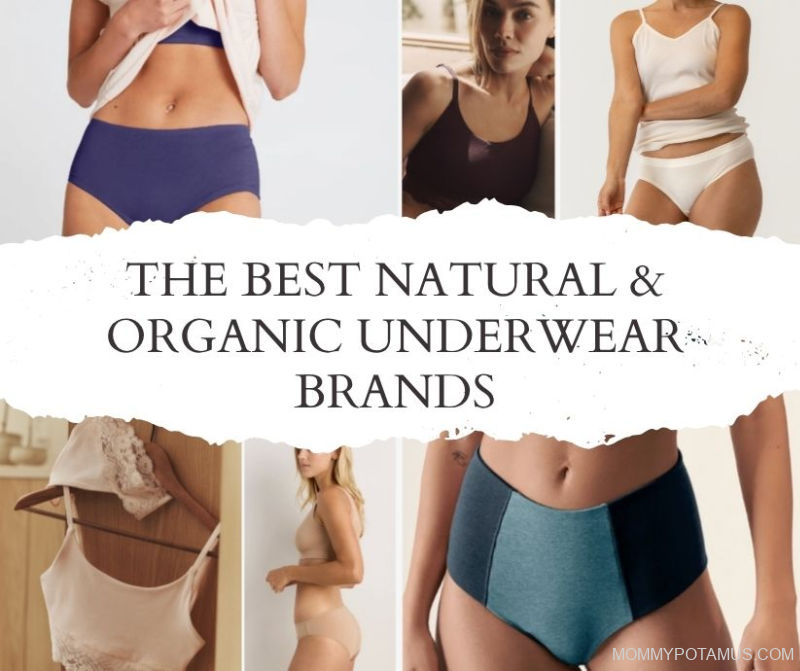
The Best Natural & Organic Underwear Brands

The Best Natural & Organic Underwear Brands

Have you ever wondered why so many pairs of women’s underwear have a tiny bow sewn onto the front? 🎀

It’s a throwback to the days before elastic waistbands, when women’s undergarments were held up with ribbons or drawstrings tied at the waist.

Thankfully, we’ve come a long way in the stretch department since then . . . but not every change has been an upgrade.

Instead of simple natural fibers, many modern pairs are made with polyester and other synthetics – which are essentially forms of plastic. As they’re worn and washed, these fabrics can shed tiny plastic fibers known as microfibers or microplastics.

Also, depending on how a garment is dyed, finished, or treated, it may contain substances like PFAS, phthalates, formaldehyde, and certain heavy metals.

That’s especially important when it comes to foundational pieces like underwear because, well, they’re FOUNDATIONAL.

They’re worn directly against sensitive skin for hours every day, in an area that’s naturally warm, moist, and more absorbent than many other parts of the body – so this is one item where I think the materials deserve extra consideration.

Of course, none of that matters much if the underwear is destined to sit untouched in the back of a drawer because it digs in, rides up, falls down, or somehow manages to do all three.

So for this guide, I’ve put together a list of brands that check both boxes: thoughtfully made and actually comfortable to wear.

We’ll look at affordable organic cotton basics, other natural-fiber options, undyed choices for sensitive skin, and even underwear made without conventional elastic or spandex.

Along the way, we’ll also cover what certifications like GOTS and OEKO-TEX actually tell us, and when a little elastane might be a reasonable tradeoff.

Because if we’re going to rethink what’s in our underwear drawer, I’d really like the replacement pairs to be soft, flattering, comfortable . . . and capable of staying up without a drawstring.

✋ Quick Picks

If you’re short on time and want to skip to my top recommendations, here are the options I’d look at first.

Best place to start

Pact

Soft, comfortable organic cotton basics with GOTS-certified fabric, lots of everyday styles, and prices that make replacing a few pairs at a time pretty reasonable.

Best budget pick

Quince

Their organic cotton six-packs are by far one of the most affordable options I found, and the hipsters I tried are soft, lightweight, and stay put.

Best plastic-free pick

The Very Good Bra

Despite the name, they also make underwear and are a standout if you want to avoid conventional synthetic fibers altogether. 100% organic cotton or Lenzing TENCEL™.

Why Underwear Materials Matter More

Our skin is designed to protect us, but it’s also semipermeable. Certain substances can cross that barrier – which is why topical hormone creams and patches are able to deliver active ingredients through the skin and into the body.

The barrier isn’t the same everywhere, though. Some areas are more permeable than others, including the sensitive skin and tissue covered by underwear.

Part of the reason is structural. The tissue in this area tends to be more hydrated and, in some places, has a thinner or less keratinized protective layer than ordinary exposed skin. Researchers have also pointed to factors like prolonged coverage, moisture, friction, and increased blood flow as reasons the area may be more susceptible to substances that come in contact with it. (1) (2) (3)

In other words, underwear sits close to the body for hours at a time in an area that tends to be warm and moist, with plenty of movement and friction throughout the day. Whatever’s present in or on the fabric – from dyes and textile finishes to residues left behind by laundry products – can remain in close contact with sensitive tissue for a long stretch of time.

That doesn’t mean everything in our underwear is absorbed into the bloodstream. Whether a substance transfers from fabric and passes through the skin depends on what it is, how much is present, and other factors.

But taken together, there are enough reasons for me to give underwear more consideration than, say, an outer-layer coat.

That’s why I prioritize breathable natural fibers when possible, pay attention to how fabrics are dyed and finished, and look for third-party standards that tell me more about what went into making them.

What I Look For In Natural & Organic Underwear

When I’m comparing underwear, here are the details I pay the most attention to:

1. Natural fibers as the foundation

At this point, I pretty much stick with underwear that’s at least 90% natural fiber – and fortunately, there are plenty of options across a wide range of styles and price points.

Cotton is the most common option, and it makes a lot of sense for underwear because it’s soft, breathable, and comfy. Organic cotton is my first choice, but as I explain here, I think conventionally grown cotton is still a better choice than synthetics like polyester.

Hemp is another interesting choice because it’s breathable, moisture-wicking, durable and tends to resist odors well.

Bamboo viscose is a slightly different category. It’s considered a semi-synthetic because it doesn’t fit neatly under the “natural” or “synthetic” label – it’s made from natural materials but highly processed . . . and the type of processing is what I look for when I’m deciding whether to place an order.

Lenzing’s TENCEL™ lyocell is the most widely recognized and respected way of making bamboo into a fabric that is known for its silky texture, breathability, moisture-wicking properties and strength. It’s biodegradable, gentle on sensitive skin, and often blended with organic cotton or wool for softness and durability. I explain the differences between bamboo processing methods here.

For underwear especially, a little stretch can be useful, so you’ll see some options that are around 95% natural fiber with 5% elastane or spandex. That’s a tradeoff I’m comfortable making when the synthetic fiber is there to support the natural material rather than dominate the blend.

And for anyone looking to eliminate synthetics altogether, I’ve included some 100% natural-fiber options too.

2. Certifications ✅

GOTS (Global Organic Textile Standard) is one of the certifications I look for most often. It covers certified organic fibers along with processing requirements for dyes, finishes, and other chemical inputs, plus environmental and social criteria throughout the certified supply chain.

It’s the kind of third-party verification that follows a fiber from its certified organic origin through the sewing machine, instead of just telling us what percentage of the finished fabric is cotton.

OEKO-TEX® STANDARD 100 focuses on testing textile products and their components for harmful substances. Underwear falls into its direct-skin-contact category, which has stricter requirements than products with less skin contact.

OCS (Organic Content Standard) verifies the presence and amount of organically grown material in a finished product and tracks it through the supply chain. It doesn’t regulate textile processing in the same way GOTS does, but it does provide third-party verification that the organic fiber is actually there.

You’ll see different combinations of these certifications throughout the guide, so I’ll point them out with each brand.

3. Elastics, Dyes & Other Components

Elastic waistbands, sewing thread, dyes, and textile finishes can all introduce materials that aren’t obvious from a label that simply says “100% cotton.”

Some of those details matter more to me than others. I’m not going to lose sleep over 5% elastane, but I do love that some brands are switching to natural rubber – and I’d be happy to see more of that.

What I pay much closer attention to is transparency around dyes, finishes, and other treatments that stay in or on the fabric.

A few brands go unusually far in explaining exactly what’s in the finished garment, right down to things like thread, elastic, and dye choices, so I’ll highlight those details below.

The Best Non-Toxic Underwear Brands

The most sophisticated certification system in the world can’t rescue a pair of underwear that’s constantly wedged somewhere it doesn’t belong.

I want natural and organic underwear to be something I reach for because it feels good – not something I tolerate because the material list looks impressive. That’s why I’ve only included brands I’ve personally tested or that are highly rated for comfort.

Whenever I’ve personally tried a brand, I’ll share what I think about softness, fit, coverage, support, and how it actually feels to wear.

For brands I haven’t personally tried yet, I’ll stick to what I can verify about the materials, construction, certifications, and company practices.

I’ve included additional recommendations for extra sensitive skin + different colors and styles later in the article.

Pact – Affordable Organic Cotton Basics

What it’s made of: Most Everyday underwear styles are 95% organic cotton and 5% elastane, with a 100% organic cotton gusset.
Certifications: GOTS-certified fabric; Fair Trade Certified production for the vast majority of core apparel.
Sizes: Many women’s underwear styles extend through 3X.
Price: Individual Everyday briefs have recently been listed around $16, while five-packs averaged to about $13/pair when I checked. Prices and promotions change frequently.
Best for: Affordable everyday organic cotton underwear with meaningful third-party certification.

Why Pact Made The List

Pact is probably the easiest starting point for someone who wants to switch to carefully sourced organic cotton without spending $25-$30 per pair.

Their Everyday collection comes in mid-rise hipster, classic bikini, high rise brief and thong styles, all made with a straightforward blend of 95% organic cotton with 5% elastane.

That’s a ratio you’ll see several times in this guide. It keeps the overwhelming majority of the fabric cotton, with just enough stretch to help everything fit well and stay where it’s supposed to. The gusset is 100% organic cotton.

Their Lace collection adds a pretty lace waistband, which gives it a slightly more special feel without sacrificing comfort. I have this style, and they’re so well made and comfortable. They also stay exactly where they’re supposed to, which is my most important requirement for underwear. 😄

I also have this Classic T-Shirt Bra, which is soft and supportive with just the right amount of stretch. It has adjustable straps, which I love, and it’s wire-free, which I also love.

The fabric is double-layered, so it offers a pretty good amount of coverage, but it doesn’t come with pads. That may or may not matter depending on what you prefer, but it’s worth knowing before you order.

What sets Pact apart from some of the other budget-friendly brands is the combination of GOTS-certified organic cotton and strong labor standards. Pact says all of the cut-and-sew factories it works with are Fair Trade Certified, while a small number of specialty items are sourced separately and don’t carry that certification. You can read more about Pact’s standards here.

Quince – Best Budget Multipacks

What it’s made of: Typically 95% organic cotton and 5% spandex, plus elastic at the waist/legs depending on the style.
Certifications: Organic Content Standard (OCS) certified cotton fiber and OEKO-TEX STANDARD 100 material..
Manufacturing: The hipsters I checked are made in a WRAP-certified facility in Sri Lanka.
Sizes: XS-XL for the organic cotton hipster.
Price: $29.90 for a six-pack when I checked – just under $5 per pair.
Best for: Building an organic cotton underwear drawer on a budget.

Why Quince Made The List

Quince is the budget outlier in this guide.

A six-pack of their organic cotton hipsters was $29.90 when I checked, which works out to less than the price of a single pair from some of the other brands I’ve included.

I first tried Quince when I recommended their swimsuits. Since then, the company has gifted me store credit to try several additional pieces, so I clicked “add to cart” on these hipsters and I have thoughts.

They’re soft and comfy with a “barely there” fit, but still substantial enough to feel well-made. They stay put and come in lots of soft neutrals, plus some standouts like ocean.

If hipsters aren’t your favorite, they also make high-waisted briefs, bikini, boyshort, and thong styles.

I’ve also tried their Organic Cotton Tank Bralette, which is also made with 95% organic cotton and 5% spandex. It’s so comfortable that I forget I’m wearing it, although I would love to see a version with adjustable straps someday.

It’s unlined and doesn’t have removable cups, so if you prefer a little more shaping or coverage, I’ll point out some better options in the sections below.

They do offer a similar version with adjustable straps, which is on my list to test. I’m not in a huge rush, though, because the one I already have works really well for everyday wear.

Although Quince does offer some GOTS-certified products, these particular pieces are not, which is an important distinction from Pact and several others on this list.

Instead, they’re made with OCS-certified organic cotton fiber, and the material is certified to OEKO-TEX STANDARD 100. All the organic cotton underwear and bras I looked at were also produced in a WRAP (Worldwide Responsible Accredited Production) certified factory. WRAP Is an organization that trains and audits production facilities to ensure they are operating in a safe, responsible, and ethical way.

So although I consider GOTS certification to be the gold standard, there’s considerably more third-party verification here than you’ll usually see, and the overall value is hard to beat.

Also, just an overall note: Quince also sells products that are made with materials including 100% recycled polyester. Although that sounds like a good idea in theory, it can still shed microplastics, so I recommend checking the fabric description and certifications on individual products before purchasing.

Stonekin – Best For Colorful, Coastal Organic Cotton Basics

Best for: Colorful organic cotton underwear with a relaxed, coastal feel
Materials: Most women’s rib styles are 95% organic cotton and 5% elastane
Certifications: GOTS-certified organic cotton and OEKO-TEX® certification on the styles I checked
Synthetic content: Typically 5% elastane
Sizes: S-XL on the women’s styles I checked
Price: Bras are generally around $26-47 and briefs around $20-47 when I checked
Best for: Anyone who wants natural-fiber basics that don’t look quite so . . . basic 🙂

Why Stonekin Made The List

Stonekin makes plenty of earthy neutrals, but they also offer colors like Lake, Papaya, Rust, Mustard, Teal, and Pandanus – and some of my favorite pieces are the two-toned styles that mix them together. They feel a little more fun than the typical organic-cotton basic.

They’re Australian, they use Australian cotton, and the whole collection has a relaxed, coastal feel that makes sense for the brand.

Their briefs and bralettes are made with 95% GOTS-certified organic cotton and 5% elastane. That’s right in the range I’m comfortable with: mostly natural fiber, with just enough stretch to help with fit and shape retention.

They carry several different cuts, including low-rise briefs, high briefs, cheekies, thongs, triangle bralettes, scoop-back bralettes, and bodysuits that have a bit of a unique style compared with, for example, simple mid-rise briefs.

The brand emphasizes Australian-grown cotton and supports family-run farms, and they’ve put thought into the dyeing process, too. Their underwear is made with natural dyes, with third-party certification providing additional screening for substances like banned azo colorants, PFAS, lead, and cadmium.

One practical thing to know before ordering: Stonekin offers free shipping over its stated threshold, but international customers may still be responsible for import duties or customs charges depending on the destination country. Those fees aren’t included in the shipping price and can vary by location.

For me, Stonekin made the list because they’ve managed to combine the certifications and material standards I’m looking for with pieces that have a distinctive, fun style.

I especially like the two-toned bras and briefs – they’re beautiful, refreshingly colorful, and have an easy surfer/coastal feel that makes them stand out from the more minimalist undie options in this guide.

The Very Good Bra – Best Plastic-Free, Vintage-Inspired Basics

Best for: Plastic-free bras and underwear with a feminine, vintage-inspired feel
Materials: 100% organic cotton or Lenzing TENCEL™, depending on the style; natural rubber/organic cotton elastic; cellulose sewing thread
Certifications: Certified B Corp; OEKO-TEX-certified inks/components where noted
Synthetic content: None in the bras and underwear themselves; removable pads offered with some V for Victory bras are polyester
Sizes: Bras are available in 34 sizes, depending on style; underwear sizing varies by cut
Price: Bras are generally around $60-99 and briefs around $30-40 when I checked

Why The Very Good Bra Made The List

The Very Good Bra – which, as you’ve already figured out, also makes underwear – is one of the more unusual companies on this list.

Founder Stephanie Devine started looking for better options after going through breast cancer treatment and finding that she couldn’t source a wire-free bra made with natural fibers in a proper cup size. That experience eventually led her to create The Very Good Bra, with the goal of making lingerie without the polyester, nylon, spandex, and other synthetic materials.

And her investment in getting the details right really comes through.

The bras have a beautiful vintage-inspired shape, but they don’t feel stuck in the past. Colors like Poppy, Sage, Wisteria, and Rum & Raisin give them a fresh, happy feel, and certain versions of the V for Victory Bra (latte and rum raisin) include removable pads – which is surprisingly hard to find in natural-fiber bras. The pads themselves are polyester, but they’re removable, so the rest of the bra remains plastic-free and can be separated from the pads at the end of its life.

The underwear lineup includes Very Big Knickers, Big Knickers, High-Leg Briefs, Regular Briefs, and The Very Good Undies, with options made from either organic cotton or 100% Lenzing TENCEL™, which is made from eucalyptus using a similar process to the bamboo I recommend.

What really sets this brand apart, though, is everything you don’t see on the main fabric label.

A garment that contains 5% elastane may still be mostly natural fiber, and that’s a tradeoff I’m generally comfortable with. But talking with Stephanie made me realize how much work goes into eliminating that last little bit of synthetic material.

Instead of conventional elastic, The Very Good Bra uses natural rubber knitted into organic cotton. They also use cellulose sewing thread and avoid synthetic components wherever possible, so the entire garment – not just the main fabric – is designed with what happens at the end of its life in mind.

When our kids were little, my husband and I ran a 40-acre farm with chickens, goats, a garden, mushroom logs, and some truly enormous compost bins.

I can confidently say I never put underwear in them, but if I’d owned pieces made this way and they’d reached the end of their useful life, I probably would have. 😄

Stephanie has actually tested the garments in a worm farm, where the worms were able to break them down completely. As she put it to me, worms are a pretty good test because they won’t eat synthetic fibers.

That doesn’t mean the company labels its products as “compostable,” though – and this is where the company’s commitment to integrity over marketing spink comes through.

Stephanie told me they spent a lot of time trying to develop a meaningful standard for post-consumer textile compostability. The problem is that once a garment has been washed and worn, detergents, fabric softeners, and other laundry products introduce variables that the manufacturer can no longer control.

So even if every component of a garment is capable of breaking down, there currently isn’t an agreed-upon testing standard that accounts for everything that may be added to it after purchase.

So, instead of relying on a broad “compostable” claim, The Very Good Bra focuses on removing synthetic materials in the first place and designing pieces that can break down at the end of their useful life under appropriate conditions.

Of course, the best part is they’ve managed to do all of that while making pieces with a beautiful vintage feel in gorgeous colors. 

While Stephanie and I were emailing, she offered to send me the V for Victory Bra WIth Removable Pads in Latte along with a matching pair of Very Big Knickers.

The bra fit so much better than anything I’ve ever tried on in a store, even after going through the process of having someone help me find the “right “size. I was between sizes in the Very Big Knickers and decided to size up because I don’t like snug elastic around my thighs. That was the right call, and I really like the fit.

These pieces are unlike anything else I own, and I wasn’t sure if I’d like them as much in-person as I did in theory.

Turn out, I like them even more.

Subset – Best For Fit Variety & Recycling

Best for: Trying different cuts to find your favorite fit, plus an easy textile recycling option
Materials: Underwear fabric is 95% certified organic cotton and 5% elastane; elastic components vary by style
Certifications: GOTS-certified supply chain; Fair Trade Certified manufacturing
Synthetic content: 5% elastane in the main fabric, plus nylon/elastane in waistbands and some leg elastics
Sizes: Most underwear styles are available in XS-3XL; bras offer additional sizes for more cup room
Price: Individual underwear is around $20; the five-style Starter Set is $85; Keyhole Soft Bras are around $62 when I checked

Why Subset Made The List

Subset is one of my favorite options for anyone who isn’t quite sure which underwear cut they actually like.

They make thongs, bikinis, hipsters, briefs, and shorties, and their Starter Set includes one of each plus a lingerie bag. So instead of ordering six pairs of a style and discovering that you’re apparently not a bikini person after all, you can try the whole lineup first.

I started with their Low-Rise Bikini because it came in a color I wanted to try The leg elastic felt a little snug when I first put it on, but it has relaxed over time and I like the fit much better now.

On my next order, I’m planning to try the hipster. Unlike the bikini I bought, it uses a self-edge leg hem instead of elastic, so I’m curious to see how that changes the feel and fit. Subset also uses that elastic-free leg construction on its thong and shortie styles.

The main fabric for all these styles is 95% certified organic cotton and 5% elastane. The waistband is nylon/elastane, and styles with leg elastic contain additional nylon and elastane there too.

They also make several soft bras, including the Keyhole Soft Bra, which has adjustable straps, a hook-and-eye back, double-lined cups, and an expanded cup size range . The bra fabric is also 95% organic cotton and 5% elastane, and the straps, band, closure, and hardware are made with recycled synthetic materials.

Another thing that sets Subset apart is its recycling program.

The company started recycling intimate apparel back in 2018 and has since expanded the program through Trashie. Their Take Back Bag costs $20 and can hold up to 15 pounds of clean clothing and textiles in any condition – including underwear, bras, socks, sheets, towels, and items from other brands.

Once you register and send the bag in, you earn 20% off your next Subset order. So if you were already planning to spend around $100 on underwear, the discount essentially covers the cost of the bag – while giving you a way to divert quite a lot of worn-out clothing and textiles from the landfill.

The items are sorted to find the best available next use. Depending on their condition and material, that may mean reuse or donation, downcycling into things like insulation or furniture batting, or – in some cases – recycling into new textiles.

Subset says its recycling program has now diverted more than 2 million items, which is pretty impressive (at least to me).

On the production side, Subset uses a GOTS-certified supply chain, and its manufacturing facility in India is Fair Trade Certified. The company also requires its Tier 1 and Tier 2 manufacturers to sign a Supplier Code of Conduct covering things like wages, working conditions, and the right to organize.

They also release limited-edition colors throughout the year, which is how they got me in the first place. 😄

Overall, I think Subset can be a good place to start if fit has been the frustrating part of switching to natural-fiber underwear. There are enough cuts to experiment with, the Starter Set makes that experimentation easier, and the recycling program gives you somewhere to send the pairs you’re finally ready to retire.

Organic Basics – Best For Mixing & Matching Styles

Best for: A wide range of natural-fiber underwear and bra styles
Materials: Many Core styles are 95% organic cotton and 5% elastane; Soft Touch styles use TENCEL™ Lyocell blends. Other collections use recycled synthetics, so check individual product details.
Certifications: Many products are GOTS certified; Organic Basics also uses OCS, GRS, and other product-specific certifications
Synthetic content: Varies significantly by collection
Sizes: Many underwear styles extend from XXS-XXXL or XXXXL; bra sizing varies by style
Price: Around $15-$28 for underwear and $24-$60 for bras when I checked

Why Organic Basics Made The List

Remember going to an actual store and digging through bins and racks of underwear until something caught your eye?

Shopping at Organic Basics feels a little like that to me.

They have a lot of options – briefs, high-leg briefs, Brazilian cuts, thongs, ribbed styles, bralettes, wireless bras, padded bras, and more, often in several colors and multi-packs.

The one thing to know upfront is that, despite the name, not everything Organic Basics sells is made with organic cotton – or even necessarily natural fibers.

Some collections are made with recycled nylon and other synthetics, but they do also have a huge selection of styles that are made with 95% organic cotton and 5% elastane. They also offer a Soft Touch collection that uses TENCEL™ Lyocell, which gives you another low-plastic option with a smooth, silky feel.

In other words, this is definitely a brand where I recommend checking the materials on the individual product page rather than assuming everything fits the same criteria.

The good news is that they make that pretty easy.

Their Core underwear collection includes a wide range of organic cotton styles, and many are GOTS certified. The certified products are clearly labeled on the product page, which makes it easy to quickly check anything you’re interested in.

Their GOTS Certified Core Briefs, for example, are made with 95% organic cotton with 5% elastane, and they come in a wide range of sizes and colors. The same collection includes high-leg briefs, Brazilian styles, ribbed options, thongs and several different bra shapes.

If you find a style you like, they also offer discounted multi-packs for many of the basics, which makes it easier to stock up without paying full price for every pair.

For me, the best part about shopping at Organic Basics is that it feels like shopping in a bustling department store during the holidays. There are so many colors and styles, and a lot of clothing options worth browsing, too.

Just remember to read the product details before you hit “add to cart.”

Cottonique – Best For Ultra-Sensitive Skin

Best for: Anyone trying to avoid latex, spandex, dyes, conventional elastic, or other common clothing irritants
Materials: 100% GOTS-certified organic cotton on many styles; some products use latex-free/spandex-free elastic fully wrapped in organic cotton
Certifications: GOTS-certified organic cotton; OEKO-TEX® STANDARD 100 thread on many styles; selected products also carry MyMicrobiome textile certification
Synthetic content: Some styles contain none; others use synthetic elastic, polyester-core thread, or plastic bra components depending on the design
Sizes: Varies by style; women’s briefs extend through size 12 on some cuts, while bras are offered in band/cup sizing
Price: Around $36-$45 for most underwear 2-packs and $30-$50 for bras when I checked

Why Cottonique Made The List

Remember that little drawstring bow 🎀 I mentioned at the beginning of this article?

With Cottonique, the drawstring isn’t just a throwback.

The brand makes several underwear and bra styles designed specifically for people who react to latex, spandex, elastic, dyes, or conventional textile finishes. Some of their natural-colored boyshorts and briefs are made entirely from organic cotton – including the fabric, sewing thread, labels, and drawstrings – with no elastic at all.

Other styles use a specially sourced latex-free and spandex-free elastic that’s completely wrapped in organic cotton, so the elastic itself doesn’t touch the skin.

The natural-colored collection is completely dye-free. Colored styles use GOTS-compliant low-impact dyes, and newer colorways are sewn with 100% cotton thread (some older colors use cotton-wrapped polyester-core thread).

Cottonique is very transparent about garment construction. They make it easy to find details like what kind of sewing thread is used, what the elastic is made from, which fasteners appear in the bras, and even what’s inside the removable pads.

Those pads are made with polyurethane foam, by the way. I haven’t found a brand using a truly natural alternative yet, so that seems to be one of the harder pieces to replace.

For me, Cottonique makes the most sense for someone whose priorities go beyond just choosing organic cotton – especially if latex, spandex, elastic, dyes, or textile finishes have been difficult to tolerate.

And if you want to go all-in on cotton, their drawstring styles are the best option I’ve found.

Maggie’s Organics – Best Employee-Owned Brand

Best for: Shoppers who like supporting a long-established, employee-owned organic clothing company
Materials: 90% organic cotton and 10% spandex
Certifications: GOTS certified
Synthetic content: 10% spandex
Sizes: S-XXL on the women’s bikini styles I checked
Price: Around $17 per pair or $33 for a two-pack when I checked

Why Maggie’s Organics Made The List

Maggie’s has been making organic clothing since 1992, which gives it a much longer track record than most of the brands in this guide.

One thing I really like about Maggie’s is that the company is employee-owned.

When the founder retired, ownership began transitioning to the employees. That means the people who work there have a real stake in the long-term health of the business – something I like because it naturally encourages a different kind of thinking than chasing short-term growth at all costs.

Their women’s underwear is made with 90% organic cotton and 10% spandex, which puts it within the natural-fiber percentage I look for. The styles are GOTS certified, and Maggie’s also offers a completely undyed “Natural” option. For colored styles, the company uses low-impact, colorfast dyes that meet GOTS requirements.

They make an elastic-free low-rise bikini, which could be worth a look if you dislike conventional waist or leg elastic. The fabric itself still contains 10% spandex, but the design skips separate elastic at the waist and leg openings, so there are fewer places for the garment to feel tight or dig in. The other two styles available are regular bikini and boyshort.

They also offer mens boxers and boxer briefs made with 95% organic cotton and 5% spandex.

For me, Maggie’s stands because it has been making organic basics for decades while building a company that its employees actually own.

That combination of longevity, thoughtful materials, and employee ownership is what earned it a spot here.

KENT – Plastic-Free Essentials

Best for: Anyone who wants underwear made without conventional spandex, elastane, nylon, or polyester
Materials: 100% GOTS-certified organic Supima cotton with plant-based thread and bio-based elastic
Certifications: GOTS-certified organic cotton; made in a Fairtrade and GOTS-certified facility
Synthetic content: No petroleum-based synthetics; uses biodegradable bio-based elastic
Sizes: XS-3XL on the women’s styles I checked
Price: Around $28 per pair; multipacks offer a lower per-pair price

Why KENT Made The List

Most of the organic cotton underwear in this guide contains a small amount of elastane or spandex blended directly into the fabric. That can make the whole garment feel smoother, stretchier, and more body-hugging.

KENT takes a different approach. The main fabric is 100% GOTS-certified organic Supima cotton, while separate bio-based elastic at the waist and leg openings helps the underwear stay in place.

That means the fit and feel are a little different from a 95% cotton, 5% elastane blend. Reviewers often describe KENT as more substantial, and the stitching as thicker or heavier than what they’re used to. Some love that sturdier feel, while others prefer something lighter and more seamless-feeling.

They offer bikinis, hipsters, boyshorts, high-cut briefs, tangas, high-waist briefs and thongs, along with undyed options. For dyed pieces, KENT uses GOTS-approved dyes, with some plant-dyed colors noted separately.

They also make soft, unlined triangle and scoop neck bras, as well as underwear and t-shirts for men.

KENT is very focused on what happens at the end of the garment’s life. KENT describes its underwear as compostable and says a pair tested with LA Compost broke down in about 90 days.

I would add one caveat, though.

As I mentioned earlier, I recently spoke with another natural-underwear founder who spent a lot of time trying to establish a meaningful post-consumer textile compostability standard. One problem is that detergents, fabric softeners, and other laundry products can introduce substances after purchase, and there still isn’t a broadly accepted testing standard that accounts for all of that variability.

So I personally think of KENT less as “guaranteed compostable in X number of days” and more as underwear designed entirely from materials that are capable of breaking down under the right conditions.

And just as importantly, that doesn’t mean the fall apart quickly. KENT underwear is designed to be stronger and last longer than conventional basics.

A Few Final Thoughts

After spending what is probably an unreasonable amount of time thinking about underwear, my biggest takeaway is that there isn’t one perfect option. 😄

For some people, 95% organic cotton with a little elastane is going to be the sweet spot because it’s gives fabric a soft, stretchy, barely-there fit. Someone else may really want to eliminate petroleum-based synthetics altogether, while someone with very sensitive skin may care most about dyes, elastic, or even sewing thread.

All totally reasonable priorities.

Thankfully, we now have quite a few options for all of those priorities without requiring a drawstring tied around the waist . . . though that’s an option too if you want it! 🎀

Keep Reading

If you’re curious about better options for the rest of your closet, I’ve got you covered there too.

My guide to non-toxic clothing brands covers everything from everyday basics to sweaters, dresses, and activewear, while my non-toxic leggings guide takes a closer look at the pairs I’ve actually worn and tested.

✋ Before You Go, Grab This Free Midlife Guide

If you’ve ever found yourself thinking, “Why doesn’t my body respond the way it used to?” . . . this guide was written for you.

Midlife can change the rules for everything from sleep and energy to workouts, recovery, body composition, and more. Knowing what’s changing can help you let go of strategies that no longer fit – and start focusing on what supports your body now.

Inside, I’ll walk you through 10 things I wish I’d known sooner, so you can make more sense of what you’re experiencing and get clearer about where to go from here.

Enter your email below and I’ll send it right over. You’ll also receive my weekly newsletter with practical wellness tips, recipes, and new guides like this one.

Sources

  1. Chen, Y., Bruning, E., Rubino, J., & Eder, S. E. (2017). Role of female intimate hygiene in vulvovaginal health: Global hygiene practices and product usage. Women’s Health.
  2. Farage, M. A. (2019). Sensitive skin in the genital area. Frontiers in Medicine
  3. Machado, R. M., Palmeira-de-Oliveira, A., Gaspar, C., Martinez-de-Oliveira, J., & Palmeira-de-Oliveira, R. (2015). Studies and methodologies on vaginal drug permeation. Advanced Drug Delivery Reviews
Share with a friend! 👇

Tags: , , ,
A modern skincare brand’s guide to sensitive skin

A modern skincare brand’s guide to sensitive skin

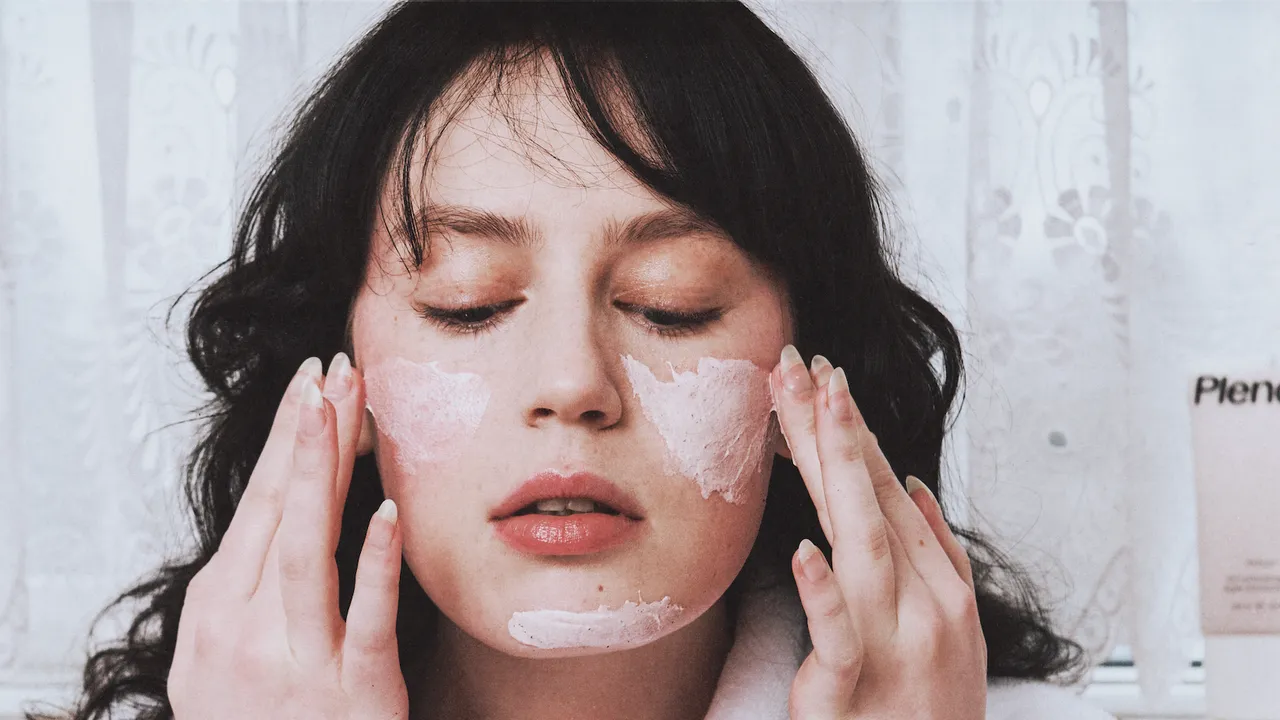
If you’re a beauty enthusiast with sensitive skin, then you are probably familiar with the struggle of trying new products. One wrong ingredient can cause breakouts, dryness, rashes, bumps, or a combination of all. For sensitive skin, creating a healthy skin barrier with products that combine high-performance actives with gentle formulations is essential. Built on this philosophy, British-made skincare brand Plenaire launched in India with a forward-thinking approach that blends science, transparency and emotional wellbeing. Inspired by the French philosophy of “en plein air”, which translates to “in the open air,” Plenaire’s selection of products is designed for a new generation of beauty lovers who value self-care as much as self-expression. Think barrier-first beauty, modular routines, and science-backed formulations that work with the skin barrier rather than overstimulating it. Because when it comes to sensitive skin, less is more.
Read along to unveil your new AM and PM skincare routine.

Images courtesy: Plenaire

A modern solution

At Plenaire, the secret to unlocking a healthier skin barrier begins with Éclat Botanique™, a unique product philosophy. Here, “éclat” translates to radiance, while “botanique” puts an emphasis on plant-derived and naturally sourced ingredients. Bringing together actives, bio-plant and marine components, these ingredients seamlessly combine to protect the skin barrier and maintain a natural glow. Rooted in modern science, actives such as BHA’s, Glycolic acid, Ceramides, and Hyaluronic acid help support the skin’s natural repair cycle. They work gently to calm irritation, reinforce the skin barrier, and provide long-term nourishment for a balanced, healthy-looking complexion.

For AM

Start your day with a two-step skincare ritual that promises clean and balanced skin. The ritual begins with Plenaire’s Duelle 2-in-1 Brightening Cleanser, a gentle daily cleanser with a pH of 5.5 that removes impurities and excess oil. With the goodness of Niacinamide, it helps brighten the skin without stripping it of moisture. Enriched with upcycled Jojoba micro-grains, it exfoliates to help smooth skin and restore its natural glow.

Tags: , , , , ,
Apple App Store

10 budget-friendly skincare brands that deliver results

10 Budget-Friendly Skincare Brands That Deliver Results

Effective skincare doesn’t require luxury price tags. Many affordable brands now offer ingredients backed by research, straightforward formulas, and products that dermatologists regularly recommend.

Whether you’re building your first skincare routine or looking to save money without sacrificing quality, these brands offer reliable options across cleansers, moisturizers, serums, and sunscreens.

Unsplash

1. The Ordinary

The Ordinary helped popularize ingredient-focused skincare by offering products centered around individual actives like niacinamide, hyaluronic acid, azelaic acid, and retinoids.

The brand’s simple packaging and transparent ingredient concentrations have made it a favorite among skincare enthusiasts looking for targeted treatments at accessible prices.

Best known for:

  • Budget-friendly active ingredients

2. CeraVe

Developed with dermatologists, CeraVe has built a reputation around barrier-supporting skincare. Many of its products contain ceramides, cholesterol, and hyaluronic acid to help maintain healthy skin.

Its gentle cleansers and moisturizers are frequently recommended for dry, sensitive, and eczema-prone skin.

Best known for:

Pexels

3. e.l.f. Skin

After finding success in affordable cosmetics, e.l.f. expanded into skincare with products that emphasize accessibility and ingredient-focused formulas.

The line includes cleansers, moisturizers, serums, and sunscreen products at prices that are often significantly lower than prestige brands.

Best known for:

Pexels

4. Neutrogena

Neutrogena remains one of the most recognizable names in drugstore skincare. The brand offers products for hydration, acne care, cleansing, and sun protection.

Its Hydro Boost collection helped popularize hyaluronic acid-based hydration products for mainstream consumers.

Best known for:

Unsplash

5. Simple

Simple focuses on minimal, fragrance-free formulations designed for sensitive skin.

Many of its products avoid added dyes and unnecessary ingredients, making them appealing to consumers who want straightforward skincare routines.

Best known for:

Openverse

6. Cetaphil

Cetaphil has long been a dermatologist favorite for people dealing with sensitivity, dryness, or compromised skin barriers.

Its cleansers and moisturizers are designed to cleanse effectively while minimizing irritation.

Best known for:

  • Barrier-friendly formulas

7. Versed

Versed positions itself between traditional drugstore skincare and prestige beauty, offering modern formulations at relatively affordable prices.

The brand focuses on ingredient transparency and straightforward routines rather than complicated multi-step regimens.

Best known for:

  • Accessible ingredient education

Openverse

8. Burt’s Bees

Burt’s Bees incorporates naturally derived ingredients into many of its skincare products, including botanical oils, beeswax, and plant extracts.

While best known for its lip balms, the brand also offers facial cleansers, creams, and body care products.

Best known for:

  • Natural-inspired skincare

Unsplash

9. La Roche-Posay

While often priced slightly above traditional drugstore brands, La Roche-Posay is still significantly more affordable than many luxury skincare lines.

The brand is frequently recommended by dermatologists, particularly for sensitive skin and sunscreen protection.

Best known for:

  • Moisturizers for compromised skin barriers

Pexels

10. Garnier

Garnier has expanded beyond haircare to become a major player in affordable skincare.

Its micellar waters remain among the most popular makeup-removal products worldwide, and the brand continues to introduce vitamin C and hydration-focused skincare options.

Best known for:

Pexels

What Matters More Than Brand Name

While these brands offer strong value, no single skincare line works perfectly for everyone. Skin type, sensitivity, age, climate, and specific concerns all influence which products will perform best.

When building a routine, focus on the basics first:

  • A moisturizer suited to your skin type

  • One or two targeted treatment products if needed

A consistent routine built around proven ingredients often delivers better results than an expensive cabinet full of products. The good news is that many of today’s most trusted skincare options can be found at surprisingly affordable prices.

Read More:

Ask us! What questions do you have about content, strategy, pop culture, lifestyle, wellness, history or more? We may use your question in an upcoming article!

Ask us a question

Like MediaFeed’s content? Be sure to follow us.

This article originally appeared onResourcebuzzand was syndicated byMediaFeed.co.

Tags: , , , ,
7 international clean skincare brands that are available in the UAE   – Emirates Woman

7 international clean skincare brands that are available in the UAE   – Emirates Woman

Beauty

In the world of luxury beauty, clean skincare is no longer a trend, it’s a lifestyle. For today’s woman, a radiant complexion begins with conscious choices. Ethically sourced ingredients, sustainable packaging, and science-backed formulations that deliver real results are a must. Whether you’re targeting hyperpigmentation, fine lines, or simply seeking a glow that speaks volumes, the right skincare can transform your routine into a ritual.

Here, we’ve curated a selection of international niche clean skincare brands available in the UAE, each offering a unique blend of efficacy, sustainability, and luxury.

Cocokind

For those who believe clean beauty shouldn’t come at a premium, Cocokind delivers high-performance skincare with certified organic and natural ingredients. The brand is cruelty-free, gluten-free, and designed to cater to all skin types, proving that efficacy and affordability can coexist.

Forest Essentials

A pioneer in Luxurious Ayurveda, Forest Essentials seamlessly blends ancient Indian beauty rituals with contemporary elegance. Each product is crafted with time-honored ingredients like rose, saffron, and sandalwood, offering a sensorial experience that’s as indulgent as it is effective.

OSEA

Founded 25 years ago, OSEA harnesses the power of sustainably harvested seaweed—a nutrient-rich marine superfood—to create vegan, toxin-free skincare. The brand is Climate Neutral Certified, uses renewable energy, and packages its products in recyclable glass.

True Botanicals

True Botanicals sets the bar high with its MADE SAFE certified, wildcrafted, and organic formulations. Their potent anti-aging oils and serums are beloved by beauty editors and skincare enthusiasts alike for their ability to rejuvenate skin without compromise.

Origins

With a commitment to plant-based ingredients and eco-conscious practices, Origins crafts vegetarian (and some vegan) formulas that deliver visible results. The brand champions sustainability through renewable energy, carbon reduction, and tree-planting initiatives.

Aesop

A benchmark in ethical luxury, Aesop has long been revered for its minimalist yet highly effective skincare, body, and hair care. The brand is fully vegan, cruelty-free, and prioritizes recycled packaging, even offering refill stations at select locations.

Natureofthings

A modern wellness brand rooted in nature’s wisdom, Natureofthings crafts products that harmonize body, mind, and environment. Their formulations feature botanicals and minerals used in traditional remedies, offering a deeply restorative experience.

For the Emirates Woman who values luxury with integrity, these niche clean skincare brands prove that high-performance and sustainability go hand in hand. Whether you’re indulging in Forest Essentials’ Ayurvedic opulence or embracing OSEA’s marine-powered elixirs, each brand offers a unique approach to radiant, conscious beauty.

– For more on luxury lifestyle, news, fashion and beauty follow Emirates Woman on Facebook and Instagram

Images: Instagram & Feature Image: Pinterest

Tags: , , , , , ,
Luxury Spas And High-End Skincare Brands Are Taking Their Partnerships To The Next Level: ‘A Win-Win For Everyone’

Luxury Spas And High-End Skincare Brands Are Taking Their Partnerships To The Next Level: ‘A Win-Win For Everyone’

A facial at Lake Austin Spa Resort in Austin, Texas

Lake Austin Spa Resort

It’s not an uncommon practice for spas to sell high-end skincare lines in their businesses—but The Wellhouse at Blackberry Farm takes it a step further.

On its menu is the Tammy Fender Signature Facial, named after the Florida-based facialist who has been in practice for over 25 years and who counts celebrities like Gwyneth Paltrow and Julianne Moore as clients. Beyond just selling Fender’s products inside the walls of The Wellhouse, the relationship between the spa in Walland, Tennessee and Fender goes a bit deeper: a few times a year, Fender stops by The Wellhouse for about four days at a time for a mini-residency, taking appointments for two of those days for clients who are staying onsite at Blackberry Farm.

“She works with our team the rest of the time just to keep us making sure that we’re treating her treatments correctly,” Meghan Henley, assistant director of wellness at The Wellhouse, tells me via Zoom.

Guests can indulge in a Tammy Fender Signature Facial—performed sometimes by Fender herself but mostly by employees of The Wellhouse that she has trained—for 50-minute or 80-minute sessions. The facial, which is described in the spa menu as being “rooted in the ancient traditions of holistic care,” includes ultrasound waves, rhythmic massage techniques designed to enhance circulation, oxygen therapy and “custom blends of the purest botanical ingredients” that seem to align with Fender’s values of natural, plant-based luxury skincare and holistic living. Henley points out that the estheticians at The Wellhouse often use Fender’s Roman chamomile tonic, which she points out is “really great for redness and sun exposure.”

“I can’t say enough about Tammy,” Henley says. “She is an incredible human.”

Tammy Fender

Blackberry Farm

The feeling is mutual: “Have you ever encountered a match made in heaven?” Fender tells me. “It is truly a rarity to find an organization that embodies such unwavering commitment to holistic care while offering an extraordinary wellness experience. I am deeply grateful for our inspiring collaboration with Blackberry Farm.”

The partnership between The Wellhouse and Fender developed organically, Henley tells me.

“Our overall approaches to wellness are just so aligned,” she says, adding that developing partnerships like the ongoing one with Fender is “always very, very natural, just naturally evolves through our relationships, usually from word of mouth, honestly.”

When it came to establishing the relationship with Fender, Henley credits Charlotte Hardwick, “a longtime ‘friend of the Farm,’” Henley says, referring, of course, to Blackberry Farm, the celebrity-loved luxury resort bordering the Great Smoky Mountains National Park. The resort has 62 rooms and its grounds cover 4,200 acres; The Wellhouse spa is but one part of the property’s amenities and, in addition to attracting boldfaced names for a stay on the property, Kelly Clarkson, Jennifer Nettles of the country music group Sugarland, and Paulina Gretzky, daughter of hockey legend Wayne Gretzky, have all been married there. (“We do have many, many high-profile guests who come to visit Blackberry,” Henley says, though she doesn’t name them. “And I think, honestly, one of the reasons they are drawn to us is, of course, our privacy policy. We take it extremely seriously.”)

Blackberry Farm in Walland, Tennessee

Blackberry Farm

But back to Charlotte Hardwick: “She comes and does one to two wellness retreats per year with us,” Henley says. “And she mentioned to me several times, ‘Hey, have you heard of Tammy Fender? She’s not around here. You may not have heard of her, but I think her products would be incredible.’ It’s such a beautiful alignment. And so she mentioned it a time or two, and I said, ‘Hey, can you get me on the phone with her?’ And we trust these partnerships.”

Of “friends of the Farm” like Hardwick, “They want to see our success,” Henley says. “They know what our brand is. And so people just honestly pass it on. It’s pretty incredible.”

When it comes to the alignment between Fender and The Wellhouse, Henley points to immersive experiences at Blackberry Farm like forest bathing, which is “all about immersing yourself in nature and in the senses,” she says, adding of Fender that “everything she does is an immersive sensory experience. So it also all awakens the senses, her holistic approach—her overall approach addresses the skin with the active plant remedies. And that’s just so aligned with everything that we do on the Farm. It’s just that same deepening of body, mind, spirit.”

Partnerships—like the current one with Fender, which started in the beginning of 2024, and prior partnerships like with skincare founder Tata Harper, which ended at the end of 2023—have “always been very, very natural,” Henley says. “Like I said, very organic.”

Henley says The Wellhouse tends to partner with one skincare expert in this manner at a time, and that Fender comes to the spa multiple times a year, attends wellness retreats and interacts with spa goers.

Blackberry Farm in Walland, Tennessee

Blackberry Farm

Fender’s expertise drives revenue for the spa, Henley says. “She is taking appointments as in a residency or for one of our events,” she adds. “She is onsite. She is there at her disposal. And honestly, I mean, of course that’s going to drive sales. She’s there to talk about the products, and the guests are—they’re just overwhelmed because she’s so incredibly authentic, and it will turn into sales for us. And then also for her.”

“And even when Tammy’s not here, they’re coming and doing these little solo retreats, because she mentioned that her products are here now,” Henley continues. “So it’s a win-win for everyone.”

For her part, Fender says, “My time spent in residency each season serves as a sanctuary for exploration and growth in my treatment practice. It is during these moments that I connect with individuals who share a genuine desire to delve into every facet of holistic care. Additionally, I have the privilege of rejuvenating my spirit in a breathtaking setting, savoring exquisite cuisine and cherishing every precious moment.”

Fender has done a seasonal wellness retreat for the past two years, “and the guests really enjoy being able to spend that quality time with her on those events, and then also when she’s here for residency—so that’s a separate thing,” Henley says. “She’s incredible.”

“She is such a gentle human,” Henley adds of Fender. “She is so authentic, and that is such a huge, huge important factor in anyone we partner with.”

From the business side, Henley says continuing partnerships like the one the spa has with Fender are a win: “They definitely generate sales in our spa, in our retail spaces,” she says.

Lake Austin Spa Resort in Austin, Texas

Lake Austin Spa Resort

“Partnerships with skincare brands are crucial for a spa”

Partnerships like these are growing in popularity in spas across the country. At the LakeHouse Spa at Lake Austin Spa Resort in Austin, Texas, clients can get a Collagen Boost facial by Dr. Dennis Gross, an 80-minute anti-aging treatment that reduces hyperpigmentation and deep-set lines while stimulating collagen production. The treatment includes a professional retinol peel, a cooling and warming mask and an LED treatment, according to the spa menu.

Dermatologist Dr. Gross—who is also the founder of an eponymous skincare line, perhaps most known for its peels—is one of the brands in partnership with the LakeHouse Spa, where his products are offered as well as skincare treatments.

“Partnerships with skincare brands are crucial for a spa because they enhance credibility, provide high-quality products and create additional revenue streams,” says spa director Shana Ominsky.

Ominsky points to access to high-quality products provided by the skincare brand, education and training for spa staff and brand credibility, which “elevates your spa’s reputation, making it more attractive to clients seeking premium treatments” as reasons behind partnerships like these.

Treatment at Blackberry Farm in Walland, Tennessee

Blackberry Farm

Calling Dr. Gross specifically “a nice fit for the spa because they offer cutting-edge, results-oriented services,” Ominsky calls partnerships with skincare brands “a large investment, and what is important is the amount of support you receive from the vendor.”

Support, Ominsky says, should include significant amplification with sales, marketing and continued training and selling strategies. “The collective effort is what’s most important to us,” she adds.

“It really is a two-way partnership”

Across Montage Hotels and Resorts’ properties is a Spa Montage at each location, which includes places like Bluffton, South Carolina (the company’s Palmetto Bluff property) and Laguna Beach, California. When it comes to skincare, each location has partnerships specific to what works best for their clientele—for example, Tata Harper is featured at Palmetto Bluff, and OSEA (which is headquartered in Malibu, California) is featured at the Laguna Beach property. As of earlier this year, Spa Montages across the country will now feature luxury skincare line Skin Design London and a robust partnership with its founder, celebrity esthetician Fatma Shaheen, who has already visited five of the seven U.S. Montage properties (with plans to visit the remaining two imminently). All properties will soon feature two exclusive facials to be released this year with protocols created by Shaheen herself.

“She’s personally training our estheticians on the modalities, and she is making sure that they are aligned and following the same protocol so that our guests are getting the same level of service as if Fatma was doing it herself,” Jennifer Holzworth, senior corporate director of spa operations for Montage International, tells me over Zoom, adding that while Shaheen is onsite at each of the properties, she’ll do different events ranging from lunch and learns to VIP treatments on specific media guests.

Lake Austin Spa Resort in Austin, Texas

Lake Austin Spa Resort

“It’s an evolving partnership, and she’ll continue to have pop up visits at all of the sites throughout the year when she’s in the U.S.,” Holzworth adds of Shaheen, who is based in London.

When it comes to choosing partners—be they property-specific like Tata Harper or OSEA or across all locations, like Skin Design London—the integrity of the product matters, Holzworth says, but also the relationship the brand is looking to have with Montage. They examine “the brand story” of the company, Holzworth says, “and how does it align?”

Montage is also looking for brands who will provide training and support, “not only from our team’s perspective and making sure that they’re trained properly [to give treatments], but also from a PR perspective and doing events and marketing,” she adds. “So it really is a two-way partnership, and we want to make sure that going into these partnerships that the other side is as flexible and as willing to make it successful, as we are.”

“I think it’s really important to have consistency with our partners and the elevated level of service that we can provide to our guests,” Holzworth says, adding that the partnership “certainly is beneficial on both sides.”

“We just look for partnerships whose standards align with ours”

The Wellhouse—which launched in 2014 and boasts just under 50 employees—also carries the German-based company MBR in addition to Fender’s line. Though the partnerships tend to err on the side of organic, when it comes to vetting potential partners, “Brand alignment is an obvious answer,” Henley says.

“Specifically, we often look towards holistic and organic brands and any that focus on sustainability,” Henley says, adding that when it comes to these important partnerships like the one The Wellhouse has with Fender, “Overall, we just look for partnerships whose standards align with ours.”

Tags: , , , , , , ,
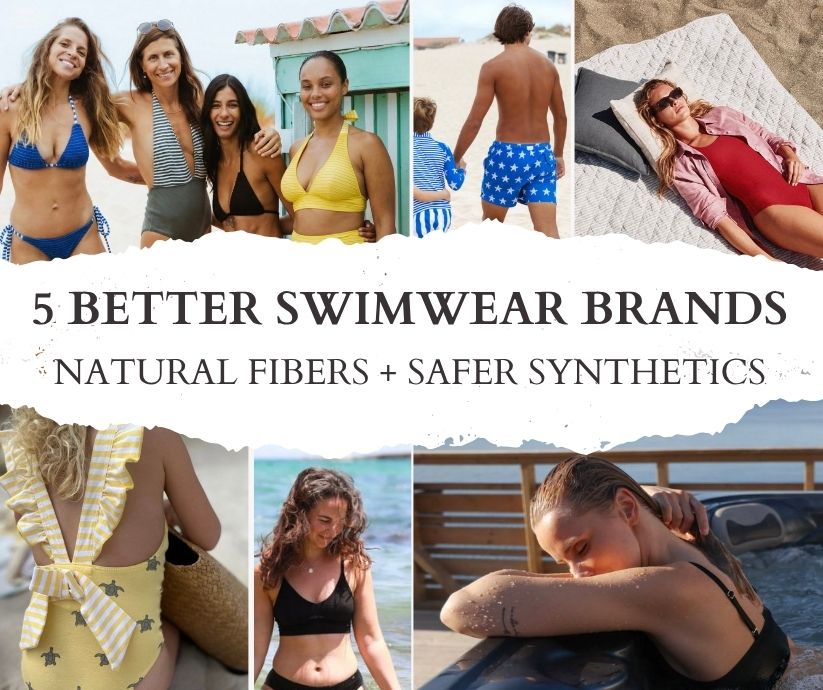
5 Better Swimwear Brands (Natural Fibers + Safer Synthetics)

5 Better Swimwear Brands (Natural Fibers + Safer Synthetics)

My husband once said that if I’m cranky the solution is to put me in water – the ocean, a pool, a bathtub . . . whatever’s closest.

Let’s just say he was not wrong, and we don’t live 10 minutes from the ocean by accident.

For years I’ve been packing up a beach bag with non-toxic sunscreen, water in stainless steel bottles, and snacks tucked into Stasher bags.

All while wearing a swimsuit made from the same petroleum-based fabrics used in most activewear – without giving much thought to what chemicals or treatments might be hiding in it. (I’m not willing to swim in my birthday suit – at least not with people around!)

All of that changed last year when I dove deep (pun intended) into toxins in clothing, natural fiber alternatives, and non-toxic clothing brands. While I was looking for daily staples, I came across swimsuits made with hemp, wool, and even cotton, often blended with PFAS-free synthetics for performance.

Obviously, I had questions, starting with . . .

Do healthy swimsuit options really exist?

If you’re like me, you’ve probably clicked on an ad for “eco-friendly clothing” and realized immediately that everything is made of recycled plastic.

Unfortunately, when plastics containing BPA get a second life as a swimsuit, the BPA doesn’t disappear. It remains part of the garment, where it can easily be absorbed through skin. (1) In fact, research has found that some recycled fabrics contain more BPA than virgin synthetic materials. (2)

Natural fibers are my top choice whenever it’s practical, but if there’s ever a time to bring safer synthetics into the conversation, it’s when we talk about swimsuits.

A Practical Approach To Healthier Swimwear

If you’ve spent any time looking for non-toxic swimwear, you’ve probably realized pretty quickly that this category gets complicated.

Swimwear has unique performance demands. Most people want a suit that stretches, stays in place when wet, dries reasonably quickly, and holds up to movement, saltwater, sunscreen, and chlorine.

That’s one reason most swimsuits – even the healthier options – still usually include at least a small amount of synthetic material.

Personally, I’m okay with that. For me, reducing the amount of petroleum-based fabric while prioritizing PFAS-free materials, safer dyes, and better certifications is still a meaningful step in the right direction.

That’s why I’m going to cover swimwear with natural fibers, safer synthetic fibers, and thoughtful blends that balance comfort, durability, and performance. Before we get to the recommendations, though, it helps to know what we’re trying to avoid.

👎 Common Chemicals Found In Swimwear

A cute swimsuit can still come with some not-so-cute extras.

Depending on the fabric, dyes, and finishes used, swimwear can contain chemical residues linked to skin irritation, hormone disruption, and other concerns. Here are some of the problematic ones found in swimwear:

PFAS
These “forever chemicals” are sometimes used to make fabrics more water- or stain-resistant. They are very common in “quick dry” swimsuits, but may be present even if a suit is not specifically labeled that way. PFAS chemicals have been linked to hormone disruption, immune effects, and increased risk of certain cancers in human and animal studies.

Formaldehyde
Formaldehyde-based resins are used to make fabrics more wrinkle resistant. Clothing treated with formaldehyde can trigger contact dermatitis, eczema, allergic reactions, and skin sensitization. (3) It’s also classified as a known human carcinogen. (4)

Phthalates
Phthalates are added to clothing to make synthetic fabrics softer, stretchier, and more durable. They’re also used to help prints stick, make materials stain or odor-resistant, and give garments a “performance” finish. They can be absorbed through skin contact . . . especially when heat, friction, and sweat are involved. (5)

Azo dyes
These are part of what gives some swimsuits those super bold, vibrant colors. Unfortunately, when azo dyed fabrics come into contact with sweat or bacteria on the skin, some of them can break down into aromatic amines that can cause contact dermatitis, eczema, and allergic sensitization.

Some azo dyes form specific aromatic amines that have been linked to bladder cancer, prompting the European Union and several other countries to restrict or ban dozens of the most hazardous varieties. US restrictions are mostly managed through state-level regulations (for example, California’s Proposition 65) or voluntary industry standards.

Heavy metals
According to a paper published by Yale University’s School of Medicine, “heavy metals such as lead, cadmium, and mercury are frequently used to stabilize pigments and improve colorfastness by preventing color degradation over time.” (6)

Microplastics

Synthetic fabrics also shed microplastics over time, especially during washing. It’s one of the reasons I started prioritizing natural fibers whenever possible. However, for this category, I don’t personally try to avoid synthetics completely. My goal is to reduce the overall percentage when possible and/or choose options that are thoughtfully made with durability, performance and the environment in mind.

✅  Materials To Look For

The good news is that brands are starting to move in a better direction. Here are some of the materials and certifications I looked for while researching healthier swimwear options.

Merino Wool

Merino wool is naturally breathable, odor-resistant, and offers some UV protection. It may not be the first material that comes to mind for swimwear these days, but wool has actually been used for swimming for a long time and is beginning to make a quiet comeback.

Organic Hemp

Hemp is naturally durable and offers some UV resistance. It’s also known for its antimicrobial properties in certain applications.

Organic Cotton

Organic cotton is grown without synthetic pesticides and fertilizers and is often processed with fewer chemical inputs. While it’s not inherently stretchy or quick-drying, it is soft and can be blended with other fibers or woven in unique ways that create more give.

Plant-Based Synthetics

Some newer performance fabrics are made partially from renewable plant sources instead of petroleum. Examples include BioSculpt and Yulex, which use materials derived from things like castor beans or natural rubber.

These fabrics still require processing, but some brands use lower-toxicity chemistry and closed-loop manufacturing systems designed to reduce environmental contamination.

I personally think these materials can be a really good middle-ground option when you need swimwear to perform well for activities like surfing, lap swimming, or active beach days.

OEKO-TEX Certified Synthetics

Some synthetic fabrics are certified to standards that test for harmful chemicals, including PFAS, certain azo dyes, lead, phthalates, and bisphenols.

One I look for often is OEKO-TEX® STANDARD 100, which tests textiles from yarn to finished product, including threads, buttons, and accessories, against a list of more than 1,000 harmful substances. OEKO-TEX also uses stricter requirements for products with more direct skin contact, which makes it especially relevant for swimwear.

For me, this certification is a meaningful step up from conventional synthetic swimwear with no third-party testing or transparency.

You’ll notice that many of the brands below still use a small amount of elastane or nylon for stretch and durability. Personally, I’m okay with that tradeoff when it helps reduce unnecessary chemical treatments and improves durability.

👙 5 Best Sustainable & Non-Toxic Swimwear Brands

Because stock changes from season to season, materials sometimes change, too. Always check the actual fabric description to make sure the piece you’re considering matches what you’re looking for.

Pure Earth Collection – Organic Swimwear for the Whole Family

Best for: Organic cotton swimwear with UPF protection
Certifications: GOTS certified
Materials: 98% organic cotton, 2% lycra
Price range: About $52–$104 on the U.S. site, based on currently listed swim diapers, bikini bottoms, and kids’ swimsuits
Size range: Baby/kids 0–1 through 11–13; women’s S/M–L; adult men’s swimwear is listed, but I’d verify sizing on the specific product page before publishing

Why It Made The Cut

Pure Earth Collection is one of the most unique swimwear brands I found because they offer matching organic cotton swimwear for women, men, kids and babies – not just a handful of options for one age group.

Their Earthcove swim line is made with 98% certified organic cotton and 2% lycra for stretch, with built-in UPF 50+ protection. The brand states that the lycra used is free from PFAS and BPA, and that the finished swimwear is GOTS certified.

I especially like that they’re not just swapping one synthetic for another. Compared with conventional polyester or nylon swimwear, Pure Earth says their organic cotton suits reduce microplastic shedding by 98%, which makes them a strong option for anyone trying to lower their family’s plastic load without giving up stretch completely.

Their kids’ line includes long-sleeve swimsuits, regular swimsuits, and swim diapers, while the women’s line includes one pieces and bikinis. The U.S. site currently ships within the U.S. only, while the U.K. site notes worldwide shipping.

Bottom line: If you’re looking for one of the lowest-plastic swimwear options available – especially for matching family swimwear – Pure Earth Collection is one of the best places to start. Just keep in mind that, like many natural-fiber options, the brand recommends rinsing after chlorine or saltwater exposure to help preserve the fabric.

BRANWYN – Merino Wool Innerwear That Doubles As Swimwear

Best for: Travel, hiking, and spontaneous swims
Certifications: ZQ-certified Merino wool, Responsible Wool Standard (RWS) certified supply chain
Materials: Merino wool blends (varies by style)
Price range: About $38–$98
Size range: XS–XXL

Why It Made The Cut

BRANWYN technically makes innerwear, not swimwear, but there’s a good reason many of their photos feature women swimming, surfing, paddleboarding, wading, and hiking near waterfalls.

Before synthetic swim fabrics took over, wool was actually one of the most common materials used for bathing suits. Merino wool specifically is soft, light, breathable, relatively quick-drying, and a surprisingly awesome choice for swimwear.

BRANWYN pieces are designed for movement, travel, sweating, temperature swings, and outdoor adventures of all kinds. The brand fully embraces that versatility and even encourages using its merino pieces for swimming.

They’re also third-party tested. In 2024 and 2025, Intertek tested their products and found no detectable BPA, PFAS, or phthalates. BRANWYN plans to continue retesting annually.

Personally, I especially like the darker colors for swimming. The black Essential Supreme bra has a very swimsuit-like cut and includes removable cup liners, which I appreciate.

This summer, I’m pairing it with these bottoms, which are super comfy and offer the kind of coverage I actually want when I’m swimming, hiking, or chasing kids around the beach. The fabric has a matte finish, so it doesn’t look exactly like a conventional shiny swimsuit, but it still feels totally wearable for water adventures.

I’m also thiiiis close to clicking “add to cart” on this bralette and bikini bottom in the gorgeous limited edition color, Transformative Teal, that’s pictured above. It’s one of my favorite colors, and even though I usually prefer a little padding in swimwear, this set is tempting enough to make me reconsider.

One important note: BRANWYN confirmed to me that their pieces can be worn in chlorinated pools and hot tubs, just make sure to wash them right away after use and hang to dry. So while I’d absolutely wear these for beach days, lake days, cold plunges, paddleboarding, travel, hiking swims, and occasional pool use, I personally wouldn’t make them a dedicated lap-swimming suit.

If you’re still skeptical, here are some actual user reviews:

COMFY AND PERFECT FOR TRAVEL ADVENTURES

I have been wearing the Essential Busty for awhile and loved that it is thick enough in every way, the wide straps don’t cut into you and offer moderate support for D’s. On a recent trip to Ireland I had the unexpected opportunity to utilize the opening day of a lakeside spa and sauna at a romantic inn. Including a swim in the cold lake and back into the sauna. My Essential Busty and Hipsters looked no different than a swimsuit, and dried quickly for travel, I was ready for the adventure!

BETTER THAN A SWIMSUIT

On a camping trip I was wearing the Branwyn Bralette and hipster underwear. I decided to take a dip in the river –and I am so glad I did! I didn’t feel yucky or soggy. I loved the experience so much that I just bought another Bralette and underwear specifically for swimming at the end of hikes. Previously I have uncomfortably worn bathing suits under my hiking clothes, but it’s very uncomfortable. Never again! Merino wool will be my new “swimsuit” for comfy, quick-drying hiking and camping swims.

Bottom line: This is probably not the brand for competitive swimmers or heavy chlorine exposure. But if your ideal summer includes road trips, paddleboards, alpine lakes, camping, hot springs, hiking, or “might accidentally end up in water” adventures, BRANWYN is one of the most interesting low-plastic options I found.

Quince – Affordable, PFA-Free Swimwear

Best for: Budget-friendly pool and beach swimsuits
Certifications: OEKO-TEX Standard 100
Materials: Body: 78% recycled polyamide, 22% spandex; liner: 90% recycled polyamide, 10% spandex
Price range: About $24.90–$49.90
Size range: XS–XL

Why It Made The Cut

Quince is an option to consider if you want something affordable, familiar-feeling, and practical for regular pool or beach use – but still want better standards than conventional synthetic swimwear with no certification or transparency.

Their suits are fully synthetic, but the fabric is OEKO-TEX certified, PFA-free, chlorine-resistant, and priced far below many premium swim brands.

Their women’s suits come in a wide range of styles, offer removable cups, and are resistant to chlorine, sunscreen, oils, fading, snagging, and pilling. They also offer a pretty decent range of board shorts for men, as well as kids swimwear.

This is a solid option for anyone that wants something more affordable and familiar-feeling than natural fiber swimwear, but also wants better standards than conventional synthetic swimsuits with no certification or transparency.

Bottom line: Quince is a good budget-friendly option for pool days, beach trips, and more – not plastic-free, but better-vetted, PFA-free, chlorine-safe, and much more affordable than many premium swim brands.

Industry of All Nations – 100% Organic Cotton Board Shorts

Best for: Plastic-free board shorts
Certifications: GOTS-certified organic cotton
Materials: 100% organic cotton, including the lining
Price range: About $95–$145
Size range: S–XL (varies by style)

Why It Made The Cut

If you’re looking for swim shorts made without polyester or nylon, Industry of All Nations is one of the most interesting brands I found.

Their board shorts are made from 100% GOTS-certified organic cotton – including the lining – which is incredibly rare for swimwear. Some styles are batik hand-printed and dyed with fermented natural indigo, while others use natural dye baths like rubia cordifolia and chebula seed.

I also like that the design is something most men would actually want to wear beyond the water – relaxed, substantial, and easy to pair with a t-shirt after a swim. For anyone trying to avoid plastic-based swimwear as much as possible, this is one of the cleanest boardshort options I found.

Bottom line: If your goal is to find genuinely plastic-free board shorts – not just “recycled” synthetics – Industry of All Nations is one of the strongest options I came across.

Hanna Andersson – Safer Swimwear for Babies & Kids

Best for: Practical kids’ swimwear
Certifications: OEKO-TEX® STANDARD 100; some pieces contain GRS-certified recycled nylon
Materials: Varies by style; examples include recycled nylon with CREORA® Highclo spandex
Price range: About $40–$69 before sales
Size range: Baby through kids’ size 12, depending on style

Hanna Andersson is not a natural-fiber swimwear option, but it’s one of the more practical safer-synthetic choices for babies and kids – especially if you want cute prints, sun coverage, pool durability, and third-party testing.

Their swimwear is OEKO-TEX® STANDARD 100 certified, and it includes a wide selection – rashguard swimsuits, trunks, one-pieces, two-piece sets, cover-ups, and some family matching options.

If you’re trying to reduce hidden chemical exposure in clothing without completely sacrificing comfort, style, or practicality, these guides may help:

  • The Hidden Chemicals in Modern Clothing + Low-Toxin Choices
    Learn what PFAS, BPA, azo dyes, phthalates, and other common textile chemicals are – plus how to shop more strategically.
  • The Best Non-Toxic Leggings (After 9+ Months of Testing)
    My deep dive into lower-toxin leggings, natural fibers, safer synthetics, and what actually held up in real life.
  • The Natural Clothing Fiber Handbook
    A practical guide to organic cotton, wool, hemp, linen, bamboo, modal, TENCEL™, and other common fabric types.
  • 15+ Non-Toxic Clothing Brands That Look, Feel & Do Good
    The brands I personally look at first when shopping for lower-toxin clothing.

Sources

  1. Center for Environmental Health. (2022). New testing shows high levels of BPA in sports bras and athletic shirts. Center for Environmental Health.
  2. Jurikova, M., et al. (2024). Bisphenols in daily clothes from conventional and recycled materials: Analysis, dermal exposure and associated risks. Environmental Pollution.
  3. Herrero, M., et al. (2022). Early-life exposure to formaldehyde through clothing. Environmental Health Insights.
  4. National Cancer Institute. Formaldehyde and Cancer Risk.
  5. Aldegunde-Louzao, N., Lolo-Aira, M., & Herrero-Latorre, C. (2024). Phthalate esters in clothing: A review. Environmental Toxicology and Pharmacology.
  6. Pinto, V. C. D., & Peleg Mizrachi, M. (2025). The Health Impact of Fast Fashion: Exploring Toxic Chemicals in Clothing and Textiles. Encyclopedia.

Share with a friend! 👇

Share with a friend! 👇

Tags: , , , , ,
Why South African brands must put real sustainability above greenwashing

Why South African brands must put real sustainability above greenwashing

Ahead of Earth Day in April, Dr Stephan Helary, the founder of organic skincare brand Terres d’Afrique, presents a practical approach to sustainability for South African beauty and wellness brands.

Image supplied.

As sustainability becomes a central focus in the global beauty and wellness industry, so too has the rise of greenwashing, where brands overstate or misrepresent their environmental credentials.

For South African companies operating in an increasingly global marketplace, the challenge is to move beyond marketing claims and approach sustainability with transparency and accountability.

Honesty is the starting point.

Greenwashing is becoming more and more controlled in Europe because of strict regulations on what you can and cannot say or have on your packaging.

South African laws need to catch up, but enforcement is also important.

For brands, this means ensuring that sustainability claims are accurate and aligned with the realities of their production processes.

Language around eco-friendly or sustainable practices must be used carefully.

You can’t call yourself an eco-friendly or sustainable brand when you use plastic packaging or non-biodegradable ingredients.

Even if your plastic packaging is recycled plastic, it remains plastic with the problems that go with it in terms of the environment and public health.

Rather than striving for perfection, brands should focus on reducing their environmental footprint and being transparent about their progress.

Why clean beauty brands must move beyond aesthetics and embrace true sustainability

  2 Mar 2026

No brand can be 100% recyclable, sustainable, or eco-friendly.

You inevitably leave a footprint, but you can do the best you can as a business, based on your capabilities and financial means, to minimise that footprint.

Education also plays an important role.

Brands have a responsibility to help consumers understand sustainability so they can make informed decisions.

As a brand, you also have the obligation to inform and educate your customers so they can make an informed choice.

The future of sustainable beauty lies not in bold claims but in measurable action.

Businesses are bound to leave a footprint.

But that footprint can be minimised and even compensated for through regenerative practices.

The key is to always be transparent about what you are doing and what you are not.

Tags: , , , , , ,
Gen Z Minimal Makeup Trends in India Market 2024 and Brands

Gen Z Minimal Makeup Trends in India Market 2024 and Brands

Lifestyle

-Oneindia Staff


Updated: Monday, December 15, 2025, 8:34 [IST]

Gen
Z
in
India
is
choosing
minimal
makeup
brands
more
often.
They
like
a
clean,
simple
look
that
feels
light
on
the
skin.
They
also
care
about
price,
skin
health,
and
honest
labels.
This
shift
is
changing
how
brands
make
and
sell
products
for
young
buyers
today.

Many
Gen
Z
users
want
makeup
that
looks
like
real
skin.
They
do
not
want
thick
layers
or
harsh
colours.
A
light
base,
soft
blush,
and
clear
lip
tint
are
popular.
Minimal
makeup
brands
offer
sheer
formulas.
These
give
a
fresh
look
that
suits
daily
college,
office,
and
travel
life.

India’s
Gen
Z
favors
minimal
makeup,
valuing
natural
looks,
skin
health,
and
honest
labels.
This
shift
involves
sheer
formulas,
budget-friendly
options,
and
supports
skin
positivity,
impacting
brand
approaches
for
this
demographic.

Social
media
trends
also
support
this
natural
style.
Short
videos
show
“no-makeup
makeup” routines.
These
routines
use
few
steps
and
light
coverage.
Young
people
feel
this
fits
their
real
life
better
than
heavy
glam
looks.
It
feels
more
honest
in
photos,
videos,
and
in
person.

Indian
Gen
Z
buyers
read
product
labels
with
care.
They
want
makeup
that
also
helps
skin
health.
Minimal
makeup
brands
often
add
care
ingredients
like
aloe,
niacinamide,
or
vitamin
C.
This
appeals
to
users
dealing
with
acne,
dark
spots,
and
oily
skin
in
a
humid
climate.

Many
also
fear
clogged
pores
from
full
coverage
products.
Light
tints,
serum
foundations,
and
breathable
powders
feel
safer.
These
products
promise
a
smooth
look
without
hiding
the
skin.
This
focus
on
gentle
formulas
fits
the
daily
needs
of
students
and
young
workers.

Simple
Routines
and
Busy
Lifestyles

Gen
Z
spends
time
balancing
studies,
side
jobs,
and
hobbies.
They
do
not
want
long,
complex
makeup
routines
each
morning.
Minimal
makeup
brands
sell
multi-use
sticks,
lip-and-cheek
tints,
and
quick
brow
products.
These
save
time
and
space
in
a
bag
or
hostel
room.

Simple
routines
also
reduce
stress
about
getting
ready.
A
few
trusted
products
are
easier
to
use
than
large
kits.
Young
users
can
do
their
makeup
on
the
metro,
in
a
cab,
or
during
short
breaks.
This
flexibility
matches
fast
city
life
across
Indian
metros
and
smaller
towns.

Budget-Friendly
Choices

Many
Gen
Z
buyers
have
limited
budgets.
They
look
for
good
value
and
clear
pricing.
Minimal
makeup
often
needs
fewer
products
to
create
a
full
look.
This
lowers
the
total
spend
compared
with
heavy
contour,
highlighter,
and
multiple
base
layers.

Indian
minimal
makeup
brands
also
offer
smaller
packs
and
combos.
Trial
sizes,
mini
tubes,
and
travel
kits
help
users
test
shades
easily.
They
can
build
a
small,
smart
kit
instead
of
a
large,
costly
stash.
This
helps
students
manage
money
while
still
following
trends.

Influence
of
Social
Media
and
Celebrities

Social
media
platforms
shape
how
Gen
Z
sees
beauty.
Many
creators
talk
about
skin
texture,
acne,
and
real
pores.
They
show
before-and-after
looks
with
thin
layers
of
product.
This
normalises
light
coverage
rather
than
a
full
face
of
heavy
makeup.

Young
film
stars
and
digital
creators
also
appear
with
softer
looks.
Dewy
skin,
fluffy
brows,
and
tinted
lips
are
common
on
shoots
and
events.
When
fans
see
trusted
faces
use
minimal
makeup
brands,
they
are
more
likely
to
try
the
same
style
and
products.

Demand
for
Honest
and
Clean
Labels

Gen
Z
buyers
in
India
want
clear
details
on
what
goes
on
their
skin.
They
check
for
claims
like
“fragrance-free,”
“non-comedogenic,” and
“dermatologist
tested.”
Minimal
makeup
brands
often
highlight
short
ingredient
lists
and
fewer
irritants.
This
supports
trust
in
a
crowded
beauty
market.

Many
young
users
also
ask
about
cruelty-free
and
vegan
options.
They
follow
brand
pages
to
see
proof
of
such
claims.
When
a
brand
is
open
about
sourcing
and
testing,
it
gains
loyal
users.
This
focus
on
honesty
matches
Gen
Z
values
on
fairness
and
care.

Gender-Neutral
Appeal

Minimal
makeup
brands
often
use
neutral
colours
and
simple
packaging.
This
makes
products
feel
open
to
all
genders.
Gen
Z
is
more
relaxed
about
makeup
as
a
form
of
self-care
rather
than
just
beauty.
Light
tints
and
clear
balms
feel
less
linked
to
old
gender
rules.

Some
young
men
and
non-binary
users
prefer
soft
coverage
to
hide
dark
circles
or
marks.
They
may
feel
shy
using
bold
products.
Minimal
makeup
gives
them
small,
easy
steps
to
feel
confident.
Brands
that
avoid
strong
gender
cues
get
more
acceptance
within
this
group.

Suitability
for
Indian
Skin
Tones
and
Climate

Indian
Gen
Z
wants
shades
that
match
deeper
and
warm
skin
tones.
Minimal
makeup
brands
focus
on
flexible
tints
that
blend
across
many
tones.
Sheer
formulas
can
adapt
better
in
a
diverse
country
with
many
complexions.
This
reduces
the
risk
of
ashiness
or
mismatch.

Climate
also
plays
a
role.
Heat
and
humidity
can
break
down
thick
layers.
Lightweight
formulas
last
longer
and
feel
more
comfortable.
Oil-control
tints,
sweat-resistant
bases,
and
transfer-minimising
lip
products
are
in
demand.
These
features
help
users
stay
fresh
through
long
commutes
and
workdays.

Support
for
Skin
Positivity

Gen
Z
often
talks
about
acne,
scars,
and
texture
openly
online.
They
support
skin
positivity
movements
that
accept
flaws.
Minimal
makeup
supports
this
idea
by
not
fully
hiding
the
skin.
It
softens
marks
but
does
not
erase
them.
This
balance
feels
honest
for
many
young
users.

Brands
that
avoid
harsh
filters
and
heavy
editing
gain
trust.
When
product
photos
show
real
pores
and
lines,
buyers
feel
seen.
This
links
minimal
makeup
with
mental
comfort,
not
just
outer
looks.
Many
choose
such
brands
to
avoid
pressure
for
a
perfect
face.

Tags: , , , , , ,
From SKINMADE To PALOMA: 10 Malaysian Skincare Brands To Add To Your Routine

From SKINMADE To PALOMA: 10 Malaysian Skincare Brands To Add To Your Routine

Over the past few years, homegrown skincare brands have been making waves with innovative formulations, scientific research, and philosophies rooted in authenticity. Whether you prioritise natural ingredients, clinical efficacy, or simple, no-frills routines, there’s a local label ready to meet your needs.

These proudly Malaysian brands not only champion homegrown talent but also celebrate Southeast Asian heritage, biodiversity, and craftsmanship. With each brand offering a unique approach, you’ll find options for every skin concern. From barrier strengthening to brightening, acne care, and gentle everyday essentials, here’s your guide to the Malaysian skincare names worth adding to your beauty shelf.

1. SKINMADE

Facebook/SKINMADE

Since its founding in 2017, SKINMADE has championed effective, science-driven skincare with a mission to reshape the way people view their routines. The brand goes beyond beauty, integrating peer-reviewed and evidence-based research into every product it launches. By placing skin health at the forefront, SKINMADE encourages consumers to make informed decisions and build routines that truly serve their skin.

Visit their website to learn more.

2. Healez

Facebook/Healez

Founded in 2018, Healez entered the beauty landscape with a commitment to elevating Malaysia’s spa and skincare industry. Operating two divisions, Healez Beauty and Healez Spa, the company focuses on premium-quality ingredients and accessible pricing. Their collaboration with a world-renowned scientist ensures cutting-edge expertise goes into every formulation, allowing the brand to consistently deliver high-quality products and services.

Visit their website to learn more. 

3. The Raw.

Facebook/The Raw.

The Raw. positions itself as a pioneer in pharmaceutical-backed skincare, offering a modern approach built on three core values: Quality, Efficacy, and Safety. Its formulations focus on embracing imperfections and promoting long-term skin health through thoughtfully crafted products. With each bottle, the brand aims to boost not just skin confidence, but also a deeper appreciation for gentle, scientifically guided care.

Visit their website to learn more. 

4. PALOMA

Instagram/visitpaloma

Established in 2023 by Li Tim Koh, Sheryl Oon, and Howie Lee, PALOMA is a brand built around Southeast Asian heritage and botanical wisdom. Each product harnesses local superfruits, superfoods, and medicinal herbs, offering a sensorial yet effective experience. With an in-house Medical Scientist (PhD) overseeing formulations, the brand ensures all products strike the perfect balance between indulgence and science-backed performance.

Visit their website to learn more.

5. Tatagaltier

Twitter/tatagaltier

Founded in 2020 by Aush Milby, Tatagaltier blends nature and science to promote healthy, radiant skin. The brand is committed to using safe, effective ingredients that nourish and protect, staying true to its philosophy of embracing natural beauty. With its dynamic and innovative approach, Tatagaltier continues to gain traction among skincare lovers seeking clean formulations with visible results.

Visit their website to learn more.

6. Kayman Beauty

Facebook/Kayman HQ

Kayman Beauty stands out as a 100% cruelty-free brand dedicated to ethical, effective skincare. Their formulations feature natural ingredients such as watermelon and honey, chosen for their soothing and exfoliating benefits. Designed to help reveal a fresh, radiant glow, Kayman’s range has earned a loyal following among those who value gentle yet potent botanical care.

Visit their website to learn more.

7. CLEF

Facebook/CLEF Beauty

CLEF focuses on clean, effective solutions designed to optimise overall skin health. With Malaysians in mind, the brand formulates its products to perform comfortably in high-humidity climates, ensuring that every application feels light, breathable, and suitable for daily use. This climate-conscious approach has helped CLEF resonate with local consumers seeking skincare that truly fits their environment.

Visit their website to learn more.

8. Chuck’s

Facebook/Chuck’s

Founded in 2019 by content creator Jane Lau, Chuck’s has quickly made a name for itself despite being a newer brand. Their products have become everyday staples for many. With its fun, accessible approach, Chuck’s continues to grow as a favourite among beauty enthusiasts looking for reliable, feel-good essentials.

Visit their website to learn more.

9. Daughters of Malaya

Facebook/Daughters of Malaya HQ

True to its no-nonsense philosophy, Daughters of Malaya creates simple, affordable skincare centred around proven-effective ingredients. The brand avoids exaggerated claims, focusing instead on delivering straightforward, dependable products. It’s a refreshing choice for those who value transparency and minimalist routines that still deliver solid performance.

Visit their website to learn more.

10. LUMI Beauty

Facebook/LUMI Beauty

LUMI Beauty brings a Korean-influenced approach to Malaysian skincare, blending South Korean formulations with cruelty-free, natural ingredients. Their philosophy, “gleam before glam” captures the brand’s focus on building a healthy glow before anything else. From serums to body care and beauty tools, LUMI offers a holistic collection for anyone seeking luminous, hydrated skin.

Visit their website to learn more.

Sources: Facebook(1)(2)(3)(4)(5)(6)(7)(8), Twitter, Instagram

Tags: , , , , , ,
Give The Gift Of Glowing Skin With Black-Owned Skincare Brands 

Give The Gift Of Glowing Skin With Black-Owned Skincare Brands 

by Ahsan Washington

These aren’t your typical Xmas gifts

The essence of holiday gifting extends beyond typical gifts to include Black-owned brands that provide nourishment, rejuvenation, and restoration. The ninth day of BLACK ENTERPRISE’s 12-Days Of Xmas Holiday Gift Guides features Black-owned skincare and body-care products that focus on serving clean beauty and wellness to boost melanin-rich skin.

Buttah Skin

Buttah Skin, created by Dorion Renaud, is a melanin-focused skincare with hydration systems, vitamin C serums, and shea-based routines designed for darker skin tones. The brand started in 2018 to cater to the needs of melanin-rich skin that were missing from mainstream beauty products. Buttah Skin creates gift sets focused on moisturizing and glowing skin. It is highly suitable for gifting.

Topicals

The company Topicals was established by Olamide Olowe and Claudia Teng, who work with dermatologists to deliver science-based treatments. The Faded serum from Topicals is their most recognized product, which addresses dark spots and discoloration. Topicals launched in 2020 and rapidly achieved the leading position for hyperpigmentation treatments both online and in major retail outlets. The product is a favorite holiday choice due to its clinical active ingredients and proven results.

KNC Beauty

Since 2016, KNC Beauty has led its consumers with self-care products, under the leadership of trendsetter Kristen Noel Crawley. KNC Beauty has gained popularity among influencers through its Instagram-famous collagen lip masks and retinol-infused eye masks. The masks are both fun and effective, which makes them ideal gifts to fill stockings.

Undefined Beauty

The brand Undefined Beauty was established by Dorian Morris to provide clean, plant-based beauty products to all people. Botanical serums together with oils and wellness essentials deliver effective results. Undefined Beauty products serve wellness enthusiasts who want chemical-free skincare with high performance and are accessible online and at Ulta stores. 

Oui The People

Oui The People is a brand that was founded by Karen Young and is disrupting traditional narratives in women’s shaving. Its products include skin-barrier-focused body glosses, serums, and sleek razors. Since the 2010s, the brand has gained traction by redefining body care beyond the blade. Oui The People’s products are available online and at premium retailers. The target audience is those who value soft, radiant skin.

Hanahana Beauty

Abena Boamah-Acheampong established Hanahana Beauty to market ethically obtained whipped shea butters and body care products from Ghana. The brand’s transparent practices focus on craftsmanship and clean ingredients have gained online popularity through clean beauty marketplaces.

Bolden

The skincare brand Bolden was founded by sisters Chinelo Chidozie and Ndidi Obidoa to create daily skincare essentials, including brightening toners and moisturizers and SPF products, designed for melanin. In 2015, Bolden extended its operations to mass retail markets to expand its customer base. The brand provides affordable skincare solutions that deliver consistent results. 

Absolute Joi

Dr. Anne Beal established Absolute Joi as a brand that delivers dermatologist-developed skin care solutions for melanin-rich sensitive skin. The brand offers gentle serums together with moisturizers and SPF products which help restore skin balance while achieving clarity. Absolute Joi launched as a clinical solution for skin types that lacked proper care and now sells products through their online store and specific retail locations. The brand serves clients with sensitive skin who need fragrance-free formulas that deliver effective results.

54 Thrones

The luxurious body butter and botanical skincare brand 54 Thrones was established by Christina Funke Tegbe. It draws its inspiration from African beauty traditions. The brand’s products deliver a sensorially rich experience that connects customers to their cultural heritage through ancestral ingredients. Through clean beauty retailers and celebrity endorsements, 54 Thrones has earned consumer affection and now sells its products through online platforms as well as Sephora and Nordstrom stores.

Sheanut Organix

Sheanut Organix is a clean organic beauty brand founded by Leara Brown, which provides chemical-free skincare and haircare solutions for people with acne, eczema, alopecia, and other sensitivities. The brand website sells the natural formulation products to consumers who want relief and they make ideal gifts for people who need gentle therapeutic alternatives.

Lautir Beauty

Shvona Chung founded Lautir Beauty. The brand encourages minimalist clean-beauty routines through their high-performance essential productsb which include serums along with cleansers and moisturizers. The brand serves customers who want clean and elevated skincare solutions for their daily routine.

KED Cosmetics

KED Cosmetics operates as a black-owned beauty brand that specializes in creating bold makeup products designed for melanin-rich skin. The brand provides high-pigment color cosmetics, lip products, and complexion shades that serve deeper skin tones. The main goal of KED Cosmetics is to address the missing color range options found in mainstream makeup products.

Hyper Skin

The brand Hyper Skin, founded by Desiree, tackles hyperpigmentation head-on. Their vitamin C and fruit acid-based brightening serums have become popular because they specifically target the primary skin issue that impacts melanin: dark spots. You can find Hyper Skin products through their website and specific retail locations, which makes them an ideal present for people who struggle with uneven skin tone or post-acne marks.

RELATED CONTENT: 5 Money-Saving Skincare Tips For Your Budget

Tags: , , , , , ,
Best oLive
Privacy Overview

This website uses cookies so that we can provide you with the best user experience possible. Cookie information is stored in your browser and performs functions such as recognising you when you return to our website and helping our team to understand which sections of the website you find most interesting and useful.