Collagen, Hydration, Hair & More

Collagen, Hydration, Hair & More

Sometimes I make bakuchiol serum, and sometimes I rub olive oil on my face while making dinner and check “evening skincare” off my to-do list. Now that I’m firmly in midlife, though, there’s one more thing I seem to be doing a lot more of:

Researching all the compounds that keep showing up in my social media feed.

Lately, it’s skin peptides.

Because while yes, I’m grateful for every trip around the sun, I also care about how I feel and function along the way. And when it comes to my skin, I’m definitely interested in supporting the processes that help skin stay strong, resilient, and well-hydrated over time.

If you’ve been seeing peptides everywhere lately, you’re definitely not the only one. They’re showing up in serums, moisturizers, eye creams, and all kinds of products promising smoother, firmer, healthier-looking skin. They’re also included in scalp formulas aimed at concerns like thinning, increased shedding, and reduced fullness.

Here’s the catch, though: “peptides” is a category, not an ingredient. Saying a skincare product contains peptides is a little like saying a supplement contains vitamins. Which ones? How much? And what, exactly, are they supposed to do?

Different peptides can work in very different ways, and some have a lot more research behind them than others. So before giving up valuable space on my bathroom counter – which has become my “lab” for testing everything from plastic-free toothbrushes to red light devices – I decided to find out which ones are most worth considering.

In this guide, we’ll walk through what skin peptides are, how they’re thought to work, what the research says so far, and what to look for in a formulation.

So, What Are Peptides?

Peptides are short chains of amino acids, which are the building blocks our bodies use to make proteins.

That includes proteins like collagen and elastin, which help give skin its structure, firmness, and ability to stretch and bounce back.

But peptides aren’t just tiny pieces of protein. Some also carry instructions. Peptide sequences can act as biological signals, influencing processes involved in things like repair, inflammation, and tissue remodeling. (1)

When used topically, peptides can mimic or influence some of those signals and processes.

What Do Peptides Actually Do For Your Skin?

One explanation you’ll sometimes hear is that topical peptides tell the skin to “act younger.”

That’s a shorthand way of saying that certain peptides are designed to nudge skin cells toward processes that tend to slow with age, including collagen production, repair, barrier maintenance, and the processes that help skin retain moisture. (1)

They don’t all work the same way, though. Different peptide sequences can carry very different messages.

One peptide may act as a signal involved in collagen production. Another may carry copper needed for tissue repair, and another may help slow the breakdown of structural proteins.

Depending on the peptide, those effects can translate to skin that looks a little more lifted and “bouncy.” Peptides that support barrier function may also help skin hold onto moisture better, which can mean better hydration and less dryness, roughness, or crepey texture.

So the benefits depend on which peptide is actually in the formula.

4 Types of Skin Peptides You’ll Hear About Most

There are a lot of ways to classify peptides, and some overlap between categories, but these are the four you’ll see mentioned most often in skincare. (2)

1. Signal Peptides

Signal peptides act a little like biological messages, influencing cells involved in making structural components of skin.

Some of the most well-known examples are used with the goal of supporting collagen, elastin, and other parts of the extracellular matrix. (3) For skin, that can mean skin that looks firmer and smoother, with better elasticity, softer-looking fine lines, and more “bounce.”

You’ll sometimes see ingredients such as palmitoyl tripeptide-1, palmitoyl tetrapeptide-7, or trademarked peptide complexes like Matrixyl in this category.

One newer example is OS-01, the peptide developed by OneSkin. The company describes it as being designed “to reverse skin’s visible biological age,” meaning it counters some of the visible effects associated with senescent, or dysfunctional aging, cells.

It has been studied for effects on collagen, hyaluronic acid, skin barrier function, and other markers associated with healthier, younger-functioning skin.

OS-01 is the peptide I decided to start with, and I’ll explain why in a minute.

2. Carrier Peptides

Instead of primarily delivering a “make more of this” type of signal, carrier peptides bind to and transport minerals involved in biological processes.

The most popular example is GHK-Cu, also known as copper tripeptide-1.

Copper is needed for several enzymes involved in tissue repair and collagen formation, and GHK-Cu has been studied for its potential role in wound healing, remodeling, inflammation, and other aspects of skin repair. (4)

3. Enzyme-Inhibiting Peptides

Instead of telling skin to make more structural proteins, some peptides may help slow processes that break those proteins down.

Certain enzymes naturally participate in the breakdown and remodeling of collagen and other components of skin. That’s a healthy and necessary process – until the balance starts shifting toward breaking down more than we rebuild.

That can happen over time as oxidative stress and other age-related changes increase the activity of matrix metalloproteinases (MMPs), a family of enzymes that break down collagen and other parts of the skin’s structural matrix. (5) At the same time, the natural inhibitors that usually help keep those enzymes in check don’t necessarily increase to match them.

Estrogen decline may play a role here too, which is especially worth knowing in midlife. (6) Lower estrogen levels after menopause have been associated with increased MMP activity along with losses in collagen, elastin, and fibroblast function.

So the goal of enzyme-inhibiting peptides isn’t to shut down normal remodeling. It’s to help restore some balance when breakdown starts outpacing repair.

That’s why some peptides are valued for helping skin build, while others may help it hold onto what it already has.

4. Neurotransmitter-Inhibiting Peptides

This category is sometimes marketed as an alternative to Botox injections. The main peptide I came across – acetyl hexapeptide-8 (Argireline) – is thought to work by mildly relaxing facial tension.

Argireline is not a neurotoxin and does not disable the nerve-muscle connection the way Botox does. It’s included in formulas to gradually and mildly dampen the signaling involved in muscle contractions that contribute to expression lines. The effect is temporary and fades when use is discontinued.

Now, my personal goal is to always support function, not work against it, so I had a lot of questions as I researched this category.

From a broader wellness perspective, not all external “calm down” signals are a problem. We take steps to inhibit inflammation when it becomes excessive. We use methods like oil cleansing to reduce excess sebum production. We massage muscles or apply magnesium oil to ease excess tension.

Facial muscles can develop increased resting tone or chronic tension as we age – some may even become physically shorter and tighter in ways that reshape our surface skin architecture. (7) These peptides might help ease some tension in those cases.

I’m still researching this category before I form a strong opinion, but I’m including it here so that you know what you’re looking at when you read ingredient labels.

✅ Where I’m Starting

Right now, there are hundreds of peptides used in skincare formulations. These are relatively large molecules, so even the most research-backed ones can’t do much if they’re not formulated in a way that helps them cross the skin barrier. (8)

They can also be sensitive to things like pH, light, heat, and interactions with other ingredients, which means keeping them stable and active in a finished product takes quite a bit of work.

You know I love a good DIY beauty recipe, but that’s a lot to sort through, so I decided to look for a formula where the stability, compatibility, and delivery challenges had already been worked out.

Why OS-01 Got My Attention

When I was eight, I simmered rose petals in water to try to make rose water. My method came surprisingly close to what actually works, but it wasn’t quite there . . . and that knowledge gap made all the difference.

When it comes to skin peptides, I think a lot of companies are still in their “simmering rose petals” era – and while I hope they continue to improve and refine their formulations, I wanted something more evidence-based.

So I looked for a company that had already figured out how to get a particular peptide where it needs to go, keep it stable, and test whether the finished product actually does what it’s supposed to do.

OneSkin – which was founded by four PhD scientists with backgrounds in things like skin regeneration and stem cell biology – screened and tested over 900 peptide sequences before identifying a lead candidate, the OS-01 peptide (Decapeptide-52).

That’s a lot of R&D.

It makes sense, though, because they weren’t just looking for a peptide that could help with one surface-level change. Instead, they were looking for one that could influence some of the cellular changes that make skin function differently as it ages.

Their focus was cellular senescence – which is when aging or damaged cells stop functioning normally but remain active. Sometimes called “zombie cells,” they can release inflammatory signals that can affect nearby cells and encourage more of them to become senescent too. Over time, that buildup can contribute to slower repair, weaker barrier function, collagen breakdown, and other changes we see in aging skin.

OS-01 was selected because it showed strong potential for interrupting part of that cycle. In subsequent lab testing, the peptide reduced senescent cells in human skin samples and dialed down some of the inflammatory signaling associated with senescence, which can help limit the effect those cells have on their neighbors. (9)

That’s what OneSkin means when it says OS-01 is designed to help reverse the visible effects of cellular senescence, helping skin look, feel, and act younger and healthier over time.

They’ve also applied the same cellular-senescence approach to the scalp, where aging follicle cells may contribute to thinning, increased shedding, and loss of density. Their hair serum is designed to support a healthier hair cycle, with the goal of reducing visible shedding and helping hair look thicker and fuller over time.

Real Skin Results

What convinced me to actually try OneSkin, though, wasn’t the laboratory claim that OS-01 could influence biological age. It was what happened when they tested whether those results translated into measurable changes in real skin.

In one double-blind study, participants used OneSkin’s moisturizer on one side of their face and the same formula without OS-01 on the other. After six weeks, the OS-01 side showed a nearly four times greater improvement in skin barrier function – meaning it did a better job holding onto moisture – and skin texture was significantly better after 12 weeks. (10)

That study design matters to me because it helps answer a question that’s surprisingly difficult with skincare: Is the hero ingredient actually doing anything, or is this just a really nice moisturizer?

The answer, at least in this small study, appears to be that OS-01 added a measurable benefit.

Curious about OS-01? → See OneSkin

What I’m Testing Now

I’m not looking for a cream to do the job of sleep, nourishing food, movement, healthy hormones, or sensible sun habits. But with those foundations in place, I’m always interested in non-toxic topical options that can help my skin function better, too.

OneSkin recently sent me several products to try, including their new OS-01 Face Rich Cream, which launched this week.

I’ve only recently started using them, so this is not my OneSkin review.

Over the next few months, I’m adding their face cream, face moisturizer, eye cream, and body moisturizer to my routine while paying close attention to:

  • hydration and how well my skin holds onto moisture
  • texture and “bounce”
  • fine lines and firmness
  • and overall skin resilience

I’m not clearing everything else off my bathroom counter, though.

OneSkin says its products can be incorporated into an existing skincare routine, so for now I’m treating them as additions that still make room for a few core products I use and love. Several of you have also asked about peptides for hair thickness, so I’ll also be testing their scalp serum.

It’s not unusual for me to test products for 9+ months, 2 years, or even longer before mentioning a brand, so you might be wondering why I am now.

There are two reasons.

First, I’ve received several messages about hair thickness and specific skin concerns that peptide products are potentially a good fit for, and I wanted to create a resource for those of you who are already trying to figure out what these ingredients actually do.

Second, after spending so much time looking at the research, OS-01 is the peptide I personally decided to start with.

Lately I’ve been leaning a little too heavily on the idea that olive oil applied while making dinner counts as an evening skincare routine, but now that I’ve told all of you I’m testing this, I’m actually going to have to use it consistently.

(It really is good olive oil, though.)

If you’ve been curious about peptides and want to try OS-01 with me, you can explore OneSkin here. I’m starting my test now, and I’ll keep adding what I learn – and what I notice – as I go.

✋ Before You Go, Grab This Free Midlife Guide

If you’ve ever found yourself thinking, “Why doesn’t my body respond the way it used to?” . . . this guide was written for you.

Midlife can change the rules for everything from sleep and energy to workouts, recovery, body composition, and more. Knowing what’s changing can help you let go of strategies that no longer fit – and start focusing on what supports your body now.

Inside, I’ll walk you through 10 things I wish I’d known sooner, so you can make more sense of what you’re experiencing and get clearer about where to go from here.

Enter your email below and I’ll send it right over. You’ll also receive my weekly newsletter with practical wellness tips, recipes, and new guides like this one.

Sources

  1. Pintea, A., Manea, A., Pintea, C., Vlad, R.-A., Bîrsan, M., Antonoaea, P., Rédai, E. M., & Ciurba, A. (2025). Peptides: Emerging candidates for the prevention and treatment of skin senescence: A review. Biomolecules, 15(1), 88.
  2. Gorouhi, F., & Maibach, H. I. (2009). Role of topical peptides in preventing or treating aged skin. International Journal of Cosmetic Science, 31(5), 327–345.
  3. Nukaly, H. Y., Halawani, I. R., Irtaza, H. M., Alturkistani, T., Serafi, M. R., Alhawsawi, W., et al. (2026). Oral and topical peptides for skin aging: Systematic review and meta-analysis of randomized controlled trials. Frontiers in Medicine, 13.
  4. Mortazavi, S. M., Mohammadi Vadoud, S. A., & Moghimi, H. R. (2025). Topically applied GHK as an anti-wrinkle peptide: Advantages, problems and prospective. BioImpacts, 15, 30071.
  5. Shin, J.-W., Kwon, S.-H., Choi, J.-Y., Na, J.-I., Huh, C.-H., Choi, H.-R., & Park, K.-C. (2019). Molecular mechanisms of dermal aging and antiaging approaches. International Journal of Molecular Sciences, 20(9), 2126.
  6. Lephart, E. D., & Naftolin, F. (2021). Menopause and the skin: Old favorites and new innovations in cosmeceuticals for estrogen-deficient skin. Dermatology and Therapy, 11(1), 53–69.
  7. Yi, K.-H., & Wan, J. (2025). The aging process of facial muscles. Journal of Cosmetic Dermatology, 24(12), e70590.
  8. Zdrada-Nowak, J., Surgiel-Gemza, A., & Szatkowska, M. (2025). Acetyl Hexapeptide-8 in cosmeceuticals—A review of skin permeability and efficacy. International Journal of Molecular Sciences, 26(12), 5722.
  9. Zonari, A., Brace, L. E., Al-Katib, K., Porto, W. F., Foyt, D., Guiang, M., Ochoa Cruz, E. A., Marshall, B., Gentz, M., Rapozo Guimarães, G., Franco, O. L., Oliveira, C. R., Boroni, M., & Carvalho, J. L. (2023). Senotherapeutic peptide treatment reduces biological age and senescence burden in human skin models. npj Aging, 9, Article 10.
  10. Zonari, A., Brace, L. E., Harder, N. H. O., Harker, C., Oliveira, C. R., Boroni, M., & Carvalho, J. L. (2024). Double-blind, vehicle-controlled clinical investigation of peptide OS-01 for skin rejuvenation. Journal of Cosmetic Dermatology, 23(6), 2135–2144.

Share with a friend! 👇

Tags: , ,
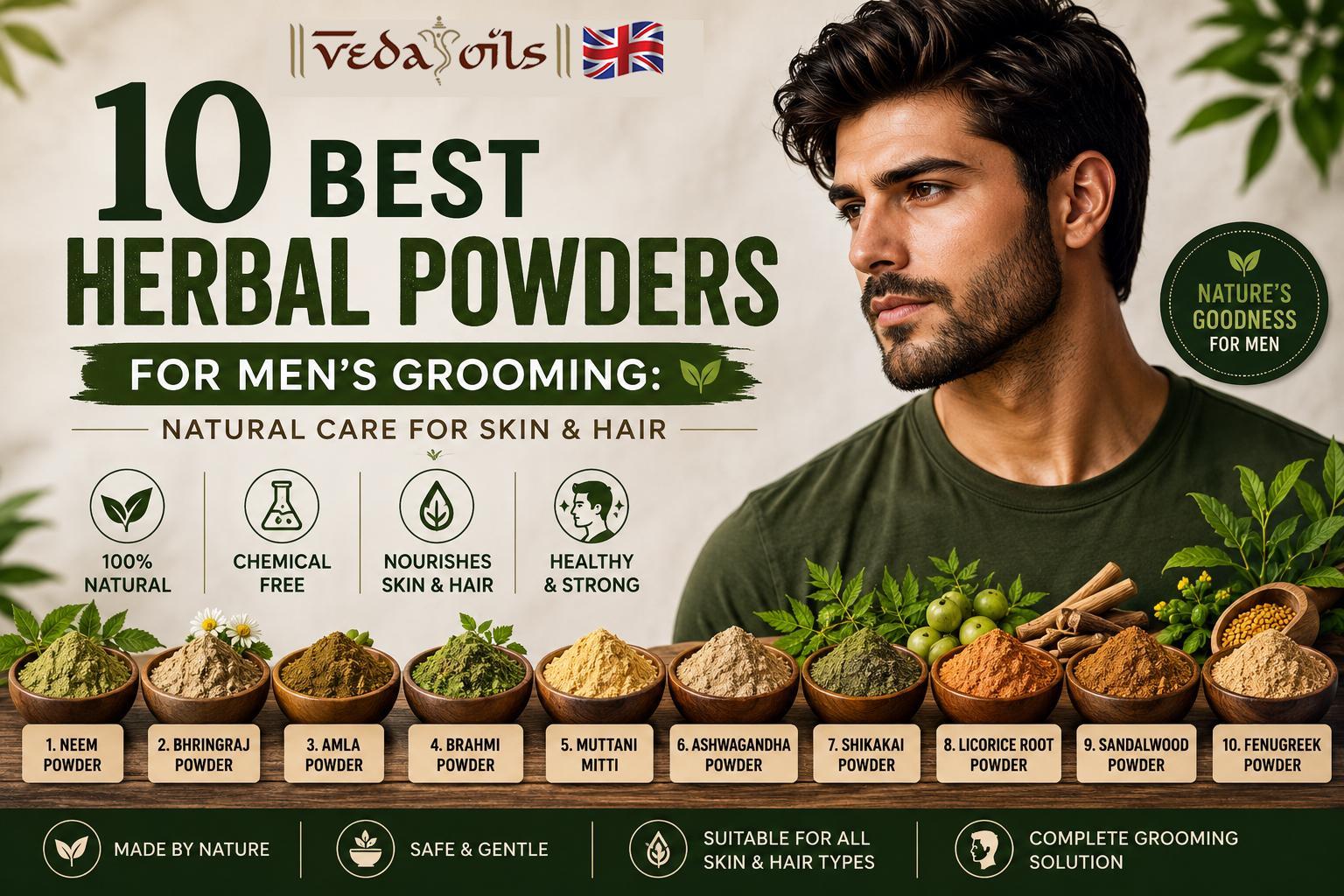
Selection of herbal powders in brown bowls with greenery, beside a man indoors

Natural Care for Skin & Hair

Men have started taking their grooming routine seriously these days. Therefore, they try to incorporate products made only from natural ingredients that do not harm their skin and hair in the long term. DIY skincare and hair care has also become quite popular among men these days. This has increased the demand for ingredients such as herbal powders that can be integrated seamlessly in your skincare and hair routines. You can make a DIY face pack, hair mask, and numerous other products from these herbal powders to make your grooming routine better. In this blog, we will look at the top 10 best herbal powders when it comes to men’s grooming requirements.

Why Should Men Consider Herbal Powders for Grooming?

Men must consider herbal powders for grooming because of these reasons:

Natural Ingredients for Everyday Grooming

Plant-based ingredients are healthy and safe for daily use. Also, they can be included for making simple DIY formulations that do not alter their skin or hair health in any way. Also, these natural herbal powders are suitable for a wide range of men’ s grooming needs.

Benefits for Skin and Hair

Herbal powders possess deep cleansing abilities due to their exfoliation properties. Due to this, they can be used for cleansing your skin and hair deeply. Their conditioning properties ensure that your hair becomes dense, soft, and manageable. These powders contain nutrients that enrich your scalp and prevent issues like dandruff. So, you can use them for supporting your hair and skin health.

10 Best Herbal Powders for Men’s Grooming

These are the 10 best herbal powders suitable for men’s grooming needs:

Neem Powder

Neem powder has natural antibacterial properties due to which it can be integrated in your skin and scalp care routines. You can integrate neem powder into these routines by using it via DIY face packs and hair masks. It is mostly recommended for people who have oily or blemish-prone skin.

Amla Powder

Amla powder is being used traditionally in hair care because of its hair rejuvenating properties. It is mostly used for hair and scalp care applications. A simple hair mask using curd, amla powder, aloe vera gel, and other soothing ingredients can be created for nourishing your scalp and hair. These properties make amla powder one of the best herbal powders for regular hair care routines.

Brahmi Powder

Brahmi powder is known for its calming properties that make it effective for reducing scalp itching or irritation. Its rejuvenating properties ensure that your hair roots become strong. You can use it in natural hair masks by blending it with ingredients such as coconut oil, aloe vera gel, etc.

Shikakai Powder

Shikakai powder is a natural hair cleanser that has been traditionally integrated in hair cleansing routines in Indian households. You can mix Shikakai powder with botanical extracts or water-based ingredients to cleanse your hair and scalp deeply.

Hibiscus Powder

Hibiscus powder is an excellent solution for hair conditioning and can be mixed with other herbal powders like amla or shikakai powder to achieve the desired benefits. It is mostly used in hair masks and is effective in maintaining the texture and strength of your hair strands.

Fenugreek Powder

Fenugreek powder is effective for scalp rejuvenation as it helps to boost the circulation of blood in the scalp. It is popularly used in scalp and hair masks because of its rejuvenating properties. You can use it regularly in your hair care and scalp care routine by mixing it with yogurt, aloe vera, and other herbal ingredients.

Turmeric Powder

Turmeric powder is known for its strong anti-inflammatory properties. It is mostly added to DIY face masks and face cleansers. Ensure that you mix it with hydrating ingredients such as aloe vera gel or coconut oil for maximising the benefits without any issues.

Licorice Root Powder

The revitalising effect of licorice root powder on your skin has made it a popular ingredient in various traditional skincare applications. It is used extensively in face masks and formulations. It blends perfectly with soothing ingredients such as honey, rose water, and glycerin.

Moringa Powder

Moringa powder is known as a powerful herbal powder because of its ability to boost the nourishment of your skin and hair. It can be mixed with raw honey and rosewater and applied on the face for rejuvenating it. You can mix it with curd and coconut oil and use it as a hair mask for nourishing dry and dull hair.

Rose Petal Powder

Rose petal powder is ideal for gentle skincare applications. It is mostly used in cleansing blends and face masks. It can also be combined with other herbal powders when using it for your regular skincare, scalp care, and hair care routines.

How to Use Herbal Powders in a Men’s Grooming Routine?

Here’s how herbal powders can be used in the grooming routines of men:

Herbal Face Masks

You can use any herbal powder that matches your skin type and concerns and mix it with plain water or rose water to create a simple yet effective face mask. Bases such as aloe vera gel or coconut oil can also be used for extra nourishment and rejuvenating the dry skin.

Natural Hair Masks

Amla powder, moringa powder, or any other herbal powder of your choice can be mixed with coconut oil, curd, or any other natural ingredient with conditioning properties. Once you apply these hair masks, you can rinse it with a mild shampoo after 10 or 12 minutes.

Herbal Scalp Treatments

Herbal powders such as shikakai powder, brahmi powder, reetha powder, etc. can be blended together to create a rich powder-based blend for your scalp. Massage this gently on your scalp after mixing it with plain water.

DIY Cleansers and Scrubs

For making DIY face cleansers and scrubs, you can select the herbal powders that suit your skin type. Rub the DIY face scrub or cleanser on your face gently and rise it afterwards with water to exfoliate dead skin cells, excess oil, dirt, and other toxins from your pores.

Best Herbal Powders for Different Grooming Needs

The below table suggests different types of herbal powders that can be chosen according to your grooming requirements:

Grooming Need

Herbal Powder Options

Oily Skin

Neem, Turmeric

Hair Care

Amla, Brahmi, Shikakai

Scalp Care

Neem, Fenugreek, Brahmi

Skin Cleansing

Neem, Turmeric

Gentle Skin Care

Rose Petal, Licorice

DIY Hair Masks

Hibiscus, Amla, Fenugreek

How to Choose the Right Herbal Powder?

Follow these insights to choose the right herbal powder for your daily grooming routines:

Consider Your Skin Type

Choose the herbal powder that suits your skin type i.e. depending upon whether it is oily, dry, sensitive, or combination skin. For instance, people with dry skin should choose rose petal or hibiscus powder that possess rejuvenating properties. Similarly, people who have oily skin can prefer neem or turmeric powder for their daily skincare routine.

Consider Your Hair Type

For haircare routines, the herbal powder should be chosen according to your hair type. If your hair is dry, use herbal powders such as moringa or brahmi that possess moisturising properties. People with oily scalp can use soapnut or shikakai powder that are known for their cleansing properties. Herbal powders with deep conditioning properties such as neem and amla are suitable for frizzy hair. Similarly, you can choose the right type of herbal powder for your normal hair.

Check Ingredient Quality

Only high-quality herbal powders will deliver the required results. So, always confirm the purity, freshness, botanical name, packaging standards, and processing methods used for producing the herbal powders before purchasing them.

Choose Powders Suitable for Your Intended Use

Different types of herbal powders can be used for different purposes. For instance, amla or hibiscus powders can be ideal for regular hair care routines. Similarly, neem and turmeric powder can be ideal for skin care routines. The reetha or soapnut powder can be ideal for making soaps. Similarly, choose the right herbal powders as per your DIY grooming and cosmetic formulation requirements.

Where to Buy Herbal Powders for Men’s Grooming?

Get herbal powders from reputed platforms that specialise in providing high-quality herbal powders at reasonable rates. The supplier must maintain the quality of the herbal powder and packaging consistently.

The ingredient information must be specified on the labels and the supplier must be able to provide the herbal powder in bulk quantities too. Also, the supplier must be able to produce product documentation and necessary product certifications if required. VedaOils UK is one such supplier of herbal powders and other organic ingredients for skincare, haircare, soap making supplies, essential oils, fragrance oils and DIY formulations..

Tips for Using Herbal Powders Safely

Follow these tips for using herbal powders safely for your skin, scalp, and hair:

  • Conduct a patch test to confirm if the herbal powder suits your skin or not.
  • Do not bring the herbal powders near your eyes as they might cause irritation.
  • Always prepare the DIY herbal powder blends in sanitised utensils.
  • Adhere to the instructions provided by the supplier on the packaging thoroughly when it comes to using and storing the herbal powders.
  • Store the herbal powders in a cool and dry place to maintain their quality for a long time.
  • Do not continue to use the herbal powders if you experience any inflammation or irritation while using them.

Conclusion

These were the top 10 herbal powders for men’s grooming needs. You can integrate these herbal powders in your grooming routines to make them more flexible. Select the ingredients according to your specific skin and hair type and concerns. Also, ensure that you get from trusted suppliers who are known for providing high-quality herbal powders in the market.

FAQs

  1. What are the best herbal powders for men’s grooming?

Amla, hibiscus, brahmi, shikakai, neem, and turmeric powder are the best herbal powders when it comes to the grooming needs of men.

  1. Which herbal powder is best for men’s hair care?

Amla, hibiscus, moringa, and shikakai powder are best for men’s hair care requirements.

  1. Can men use herbal powders on their face?

Yes, men can use herbal powders on their face via face masks and face packs.

  1. Which herbal powders are good for scalp care?

Neem, moringa, and hibiscus powder are good for scalp care purposes.

  1. How often should men use herbal powder for their face?

Men can use herbal powders daily for face and skin after ensuring that the specific herbal powder suits their skin or not.

Tags: , , ,
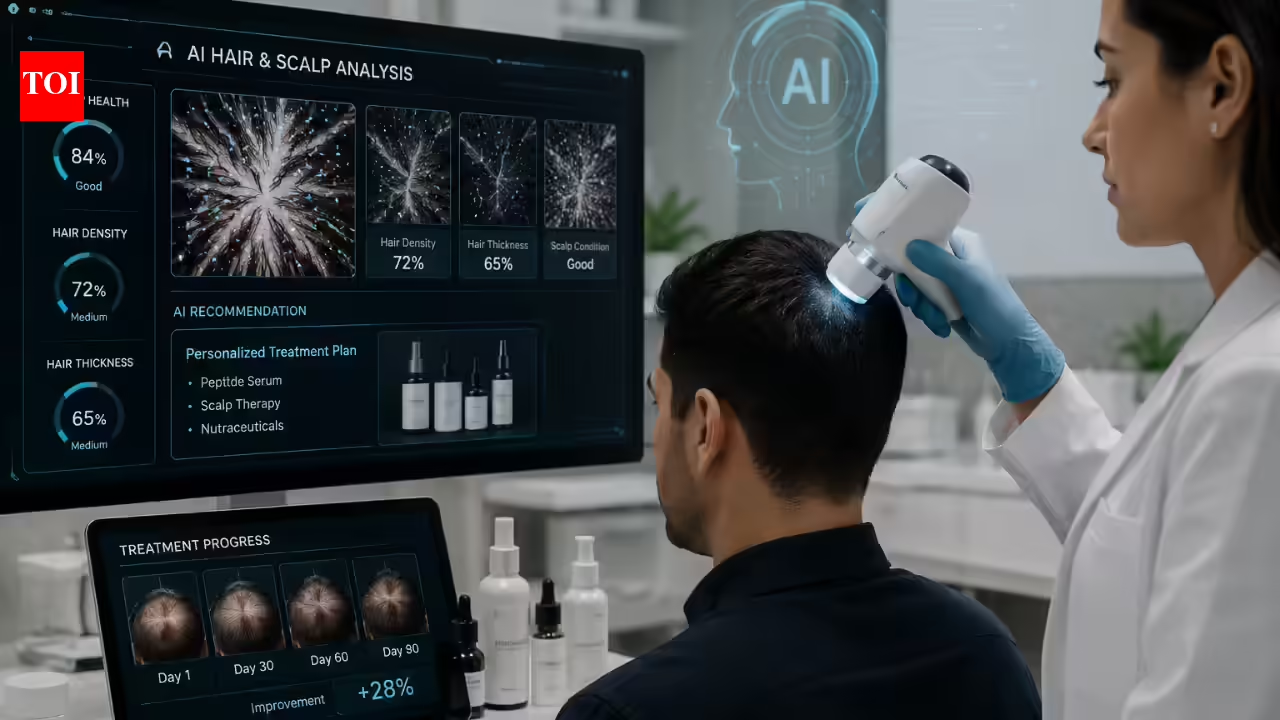
How cosmetic dermatologists are using AI to create personalised skin and hair treatments |

How cosmetic dermatologists are using AI to create personalised skin and hair treatments |

Artificial intelligence (AI) is rapidly becoming part of cosmetic dermatology, not as a replacement for dermatologists, but as a powerful clinical tool that helps them assess skin, personalise treatments and improve patient outcomes. From analysing high-resolution facial images to predicting how a person’s skin might respond to laser procedures, AI is reshaping the way cosmetic concerns such as wrinkles, pigmentation, acne scars and hair loss are evaluated and managed.A 2024 review titled ‘Artificial Intelligence in Dermatology: A Systematic Review of Its Applications in Melanoma and Keratinocyte Carcinoma Diagnosis’ published in the Journal of Cosmetic Dermatology found that AI is already being integrated into skin assessment, treatment planning, dermocosmetic product development and hair disorder management. Machine learning and deep learning models are enabling more personalised approaches, while image-analysis systems are helping clinicians identify subtle changes that may be difficult to detect with the naked eye. At the same time, researchers emphasise that AI remains a decision-support tool and not a substitute for clinical expertise.

AI is changing cosmetic dermatology beyond chatbots and skin filters

One of AI’s biggest contributions to cosmetic dermatology is its ability to process thousands of facial features simultaneously. Advanced imaging platforms and AI-powered software can evaluate wrinkles, pigmentation, pore size, redness, hydration and skin texture within seconds, giving dermatologists objective measurements before recommending treatment. According to the review, some platforms use facial imaging to provide detailed skin analyses, while consumer-focused applications generate personalised skincare recommendations by analysing an individual’s skin characteristics and environmental factors. Rather than relying solely on visual observation, dermatologists can use these digital assessments to tailor chemical peels, laser therapies, injectables and skincare regimens more precisely to each patient. This level of personalisation is particularly valuable because skin ageing, pigmentation and acne vary widely depending on genetics, lifestyle, sun exposure and skin tone. AI helps combine these variables into a more comprehensive assessment that supports clinical decision-making.

Cosmetic dermatologists are also using AI to improve hair restoration and aesthetic procedures

Artificial intelligence is extending beyond facial skincare into hair and scalp treatments. The review highlights that AI algorithms are increasingly being used to assess hair density, identify early signs of hair loss and monitor treatment responses over time. By comparing sequential photographs, clinicians can objectively evaluate whether therapies for androgenetic alopecia or other hair disorders are producing measurable improvements. AI is also improving cosmetic procedures by helping predict treatment outcomes. Machine-learning models can analyse patient characteristics alongside previous clinical data to estimate how someone may respond to laser resurfacing, pigmentation treatments or other aesthetic procedures. This allows dermatologists to customise treatment settings, minimise potential complications and provide patients with more realistic expectations before beginning therapy.Speaking to Women’s Health, Dr Michelle Henry, a board-certified dermatologist, said patients at her practice can use AI-powered tools to scan their faces and analyse their skin while waiting for their appointment. The technology provides an initial assessment that helps streamline consultations and gives both the patient and dermatologist a more detailed understanding of concerns before treatment begins.However, Dr Henry also cautioned that AI still has important limitations. She told Women’s Health that her research team often extends the duration of clinical trials to ensure participants represent a broader range of skin tones. Even so, she noted that progress takes time. Until AI training datasets better reflect the full diversity of human skin, these systems will continue to have blind spots, particularly when assessing cosmetic concerns or recommending treatments for people with darker skin tones.

AI is helping patients visualise results before treatment

According to Wiley Online Library, one of the most visible applications of AI in cosmetic dermatology is treatment simulation. Newer AI-powered software can generate realistic visualisations showing how a patient’s appearance might change after fillers, laser procedures or skin rejuvenation treatments. These simulations are not guarantees of results but serve as educational tools that help patients better understand potential outcomes and communicate their expectations more effectively. According to experts interviewed by Women’s Health Magazine, these visualisation tools are also helping improve doctor-patient communication by making consultations more interactive and allowing treatment goals to be discussed using personalised digital models instead of generic before-and-after photographs.

AI is transforming cosmetic dermatology but dermatologists remain essential

Despite its rapid progress, AI has clear limitations. The 2024 review notes that many algorithms still require broader clinical validation and more diverse datasets to ensure reliable performance across different skin tones, ages and ethnic groups. Bias in training data remains a significant challenge, particularly for populations historically underrepresented in dermatological image databases. Researchers therefore agree that AI should complement, not replace, medical expertise. Dermatologists combine imaging results with medical history, physical examination, patient preferences and clinical judgement in ways that current AI systems cannot replicate.As cosmetic dermatology continues to embrace digital technologies, AI is likely to become an increasingly valuable assistant rather than an autonomous decision-maker. Used responsibly, it has the potential to deliver more personalised skin and hair treatments, improve treatment planning and enhance patient education, while keeping the dermatologist firmly at the centre of care.

Tags: , , , , , ,
Expert Tips for Thicker Hair

Expert Tips for Thicker Hair

Retinoids have long been a key ingredient in an anti-aging skincare routine, because they are exemplary for optimizing your cellular turnover. After a short adjustment period, they reliably deliver the smoothest, clearest, firmest skin possible. But recently, there’s been more buzz about how great they are for hair growth.

We asked NYC-based board-certified dermatologist, Dr. Dendy Engelman of the renowned Shafer Clinic, to explain how you can get the best results by incorporating this ingredient into a structured hair care routine.

How Retinoids Work in the First Place—And On the Scalp

“Retinoids are Vitamin A derivatives that function as cellular regulators, signaling cells to turn over more efficiently and behave like youthful tissue,” Engelman says. “On the scalp, this translates to normalization of keratinization within the follicle, helping to prevent buildup that can disrupt the follicular opening and disturb the growth cycle.”

So these retinoids (retinol, retinal, tretinoin, adapalene…) can bind to receptors in skin cells (which includes the scalp) and tell those cells to behave differently. On the scalp specifically, that messaging yields better cellular turnover for the hair itself, reduced oil buildup, and improved skin tissue.

And a lot of the talk in favor of using retinoids on your scalp focuses on enhanced penetration: when used in tandem with medications like topical minoxidil and finasteride, you can multiply the benefits of those hair-raising ingredients. 

How Retinoids Work for Hair Growth and Optimization

So, for clarification: Retinoids have a supporting role in hair growth. I wouldn’t tell you to use them up there if you aren’t also using something clinical-grade and topical in the first place, nor would Engelman: “I think of them less as a primary growth treatment, and more as a strategic enhancer within a broader regimen,” she adds.

The two core topical hair-growth options worth considering include minoxidil, which actively pushes follicles into growth mode, allowing you to express more hairs at once; and finasteride, which can interfere with the hormonal factors that cause hair thinning, dihydrotestosterone, or DHT.

How to Apply Retinoids for Hair Growth

The scalp is not as forgiving as the skin on your face, and hair makes retinoid application a bit more complicated.

“Trying to distribute it all at once can get messy and result in inconsistent coverage,” Engelman notes. “You’ll get the most value by keeping the application close to the scalp, not the hair.” So, define the parts as best as possible, and pat in the product with your ring finger or middle finger. The amount to use will differ from one person to the next, though, as retinoids are dose-, formulation-, and user-dependent (including how irritation could impact you). That’s also why it can be good to start with a prescription and a doctor’s supervision, as well as their tailored advice.

Engelman suggests doing so at night, too—at the same time you should apply those core topical products (if they are once-a-day use). “Apply them at night, on a completely dry scalp, since that’s when skin repair processes are most active, and you can minimize potential irritation from environmental exposure,” she says.

And start conservatively: “In terms of frequency, starting at 2–3 times a week is reasonable, and you can increase frequency as tolerated,” she advises. 

The Best Retinoids for Hair Growth

Retinoids aren’t (yet) approved by the FDA for use on your head. So you won’t see brands using and marketing any Vitamin A serums just yet. Still, you’ll have plenty of options available via higher-grade prescriptions, as well as alternative over-the-counter picks that primarily focus on peptides for better hair growth. 

Engleman, as a board-certified derm, recommends going the prescription route instead of using a facial retinoid on your scalp: “Prescription retinoids are more predictable in terms of strength, stability, and clinical outcome, especially when you’re trying to meaningfully influence the follicular environment,” she says. Plus, having a doctor know what to supervise and adjust for irritation is an important part of getting adjusted to the sometimes-irritating ingredient. 

Prescription Options

Tretinoin (retinoic acid): This is the most studied and predictable retinoid, for all kinds of use in skin clarity, resilience, and brightness. Same for scalp cellular turnover: It is effective at normalizing keratinization and enhancing penetration of other actives. “Tret” is often used in compounded scalp formulas alongside minoxidil.

Adapalene: You might know adapalene as Differin gel, but it is also available in higher-grade prescription formulations. It tends to be more stable and generally better tolerated than tretinoin (which is also why it is commonly used in skincare with sensitive, acne-prone teens). Still, it is quite effective for regulating turnover and equally gentle on scalps.

Tazarotene: The most potent of the common prescription retinoids, tazarotene is typically reserved for more resilient skin types given its higher irritation potential. Still, it works fantastically when tolerated.

Over-the-Counter Alternatives 

If you are in the market for hair-boosting products that are FDA approved, then look to these treatments that take different routes for that fullness effect:

  • Nulastin Vibrant Scalp Treatment

    Image Credit: Nulastin

    Engelman likes this OTC product best for her patients: “It addresses the follicular environment in a meaningful, biologically relevant way, particularly around elastin support and anchoring at the root.” The lightweight formula is easily tolerated even for sensitive folks, and clinically shown to improve the look of fullness and reduce visible shedding over time, which she says is the goal with most people. But she adds one reminder: “This is a long-term scalp health treatment, so consistency matters more than anything here.”

  • Caldera + Lab The Hair Serum

    Image Credit: Caldera + Lab

    Exosomes, peptides, plant stem cells, amino acids… this one is a delivery vehicle for thicker hair, stronger shafts, healthier shine, and a balanced scalp. A beautiful pairing with the brand’s hair-densifying shampoo-conditioner duo, at that.

  • Happy Head Hair Serum

    Image Credit: Happy Head

    A full-service serum for fuller hair: Ingredients like Procapil, Capixyl, Redensyl, peptides, and biotin work at the follicle level to support stronger anchoring, extend the growth phase, and improve hair’s keratin structure (so, thicker strands, less shedding). Meanwhile, scalp-focused ingredients like witch hazel, collagen, argan oil, rosemary oil, and ashwagandha reduce inflammation, balance oil, boost circulation, and counter stress (sooo, optimal growth environment for fuller, healthier hair).

  • Patricks RD1 Recovery and Defence Treatment Spray

    Image Credit: Patricks

    How does Patricks’ awesome hair-growth serum work on follicles? Let us count the ways: Caffeine energizes follicles and supports circulation; saw palmetto helps counter DHT; biotin strengthens keratin; acetyl tetrapeptide-3 supports anchoring proteins; rosemary extract boosts scalp circulation for denser, healthier growth. And we’re just getting started…

  • OMI WellBeauty Hair Growth Peptides

    Image Credit: Omi

    “If a serum doesn’t feel compatible with your routine or if you think applying a topical consistently might be a challenge for any reason, then try an ingestible option that supports follicle health systemically,” Engelman says. She recommends these peptides, available as capsules or gummies.

Tags: , , ,
DIY Ayurvedic Shampoo for Strong, Healthy Hair

DIY Ayurvedic Shampoo for Strong, Healthy Hair

My journey to creating homemade shampoo involved a lot of trial and error. There were countless mixtures of liquid castile soap, coconut milk, essential oils, and the occasional splash of olive oil – all of which left my scalp and hair a confused mix of dry, oily, and limp.

Eventually I created this pure coconut oil shampoo bar, which worked beautifully for many years.

Until it didn’t.

Why My Hair Routine Needed a Reset

Over the past year or so, my scalp started changing in ways I didn’t expect. Hormonal shifts during perimenopause can make the scalp more reactive and sensitive, and almost overnight my old routine – which I had used for many years without issue – suddenly started making my scalp itch.

Nothing seemed to help – not my shampoo bar, not the non-toxic, professionally formulated shampoos I tried, and not changing how frequently I washed.

So I started experimenting again.

That eventually led me to the Ayurvedic hair mask recipes I shared recently → you can find them here.

They soothed my scalp and left my hair feeling soft and light, but they also had a couple of drawbacks: they could be a little messy to apply (and sometimes left me rinsing the shower afterward), and they took a bit of time to wash out completely. If I rushed it, I’d sometimes find a little dried mask in my hair later.

So I began experimenting with a simplified version that could be used more like shampoo.

The result is the recipe below.

It takes a little preparation, but it’s still very simple overall and rinses out easily, with no extra cleanup needed.

Is This Really Shampoo?

Sometimes when I share a recipe, like this gluten-free “cornbread,” I’ll get a few comments saying “but that doesn’t have any corn in it!” And it’s true.

I love corn, but it doesn’t love me back, so I developed the recipe to get as close to the taste and texture of cornbread as possible without actually using corn. That’s what the quotation marks are for: it’s cornbread-ish, but not technically cornbread.

So . . . is this really shampoo?

Oddly enough, yes.

In fact, some variation of this recipe is very close to the original shampoo.

The earliest forms of shampoo were likely developed in ancient India – sometime during the Indus Valley Civilization – by boiling herbs such as soapberries (reetha), shikakai – which literally translates to “fruit for hair” – and Indian gooseberry (amla), all ingredients that appear in this recipe.

The word shampoo itself comes from the Hindi word chāmpo, meaning “to massage” or “to press.” British traders encountered the practice of hair washing and scalp massage in India and eventually brought “champing” to Europe in the 1700s.

A Simple Herbal “Hair Tea”

This recipe doesn’t have the thick, goopy texture of commercial shampoo – some people even describe it as a “hair tea.”

However, the herbs in this blend are well known for helping to cleanse, moisturize, and volumize hair.

Several contain saponins, which are natural plant compounds that act as mild surfactants – gently lifting away dirt and oil. That’s why this recipe creates suds – but not the dramatic foam that commercial detergents produce.

So while it may feel unusual compared with modern shampoo and doesn’t lather the way most of us are used to, it actually resembles the original versions much more closely.

And in my experience, it cleans hair just as well – better, in fact. My hair feels light, soft, and shiny, without the buildup that many modern shampoos can leave behind.

And unlike some DIY shampoo formulas, this recipe is completely beginner-friendly.

No complicated formulation.
No soapmaking skills required.

Just herbs, hot water, and something to strain with.

A Quick Note About Hair Color

Amla and shikakai have traditionally been used as natural pigment enhancers, meaning they may gradually deepen hair color over time.

I naturally have very dark hair and haven’t noticed any change in color.

However, if you have lighter hair (and want to keep it that way), you may want to:

  • omit the amla powder
  • reduce the shikakai slightly
  • increase the reetha powder a bit

One thing to keep in mind, though, is that reetha contains more natural saponins than shikakai and provides stronger cleansing, so too much can feel slightly drying.

Experiment and Find What Works for You

Everyone’s hair is a little different, so think of this recipe as a starting point rather than a rigid formula.

It’s what works best for my hair after a lot of trial and error, but you should feel completely free to adjust it based on what your hair needs.

If your hair tends to feel dry, try adding a little more aloe or amla. If it leans oily, you can increase the reetha slightly.

A little experimenting goes a long way, so feel free to play with the ratios and see what your hair loves most.

About the Ingredients

Here’s a quick look at what each ingredient brings to the recipe.

Shikakai Powder
Shikakai (Acacia concinna) has been used in Ayurvedic hair care for centuries as a gentle cleanser and conditioner. It contains natural saponins that help remove light buildup without stripping the scalp’s natural oils, and may help create the conditions that allow your natural hair growth cycle to function more optimally.

Many people find it leaves hair soft, smooth, and easy to detangle. It’s also a traditional Ayurvedic remedy for dandruff. One important note: avoid getting shikakai in your eyes, as it can be very irritating.

Reetha (Soapnuts)
Also called soapberry or soapnut, reetha is one of nature’s richest sources of saponins. In traditional hair care it’s often paired with shikakai to balance cleansing with conditioning.

Flax Seeds or Fenugreek Seeds
These seeds release a natural gel when steeped in hot water. That gel adds slip and conditioning to the shampoo, making it easier to spread through the hair. I prefer flax seeds in this recipe, but fenugreek also has a long history in Ayurvedic hair care for supporting scalp health and helping hair feel stronger.

Aloe Vera Powder
Aloe adds hydration and conditioning while helping soothe irritated scalps. It can also add a little shine and smoothness to the hair.

Amla Powder
Amla (Indian gooseberry) is rich in antioxidants and is traditionally used in Ayurvedic hair care to support scalp health and enhance shine.

Two Ways To Make This Herbal Shampoo

You can make this shampoo two different ways depending on how strong or thick you want it to be.

Method 1 is the simplest version. It uses boiling water to extract the beneficial compounds from the herbs and works well for most people.

Method 2 simmers the herbs on the stovetop, which pulls out more of the natural saponins and the moisturizing gel-like compounds released by the seeds. The result is a slightly thicker, more “activated” shampoo that some people find provides a little more cleansing or conditioning power.

DIY Natural Shampoo Recipe

Here’s how to make your own shampoo with Ayurvedic herbs and hot water.

Prep Time 5 minutes Cook Time 20 minutes Cooling time 30 minutes Total Time 55 minutes

Author Heather Dessinger, FDN-P

Method 1: Quick Infusion (No Stovetop)

  • Line a mason jar or measuring cup with a nut milk bag. If you don’t have one, you can use a mesh strainer and cheesecloth to strain it after infusion.

  • Place the shikakai powder, reetha powder, and flax seeds inside the nut milk bag.

  • Bring 1¼ cups water to a boil, then pour it over the herbs and stir to combine.

  • Allow the mixture to cool for about 20 minutes, then stir in the aloe vera powder and amla powder if using.

  • Let the mixture infuse for another 10 minutes.

  • Strain through the nut milk bag. If you don’t have one, you can also strain by pouring the mixture over bowl that contains a mesh strainer lined with cheesecloth.

  • Once it has fully cooled, your shampoo is ready to use.

Method 2: Simmered Herbal Shampoo (Stovetop)

  • Place the shikakai powder, reetha powder, and flax seeds in medium pot. Add 1.5 cups water and stir to combine.

  • Bring mixture to a boil, then reduce heat and simmer for 20 minutes.

  • While the mixture is simmering, line a mason jar or measuring cup with a nut milk bag. If you don’t have one, you can use a mesh strainer and cheesecloth to strain it after infusion.

  • Remove the mixture from heat and pour it into the nut milk bag, using a spoon transfer any herbs that have settled at the bottom. If you don’t have a nut milk bag, you can pour the mixture into a mason jar.

  • Allow the mixture to cool for about 20 minutes, then stir in the aloe vera powder and amla powder if using.

  • Let the mixture infuse for another 10 minutes.

  • Strain through the nut milk bag. The mixture becomes thicker as it cools, so I recommend straining while it’s warm yet comfortable to touch. If you don’t have a nut milk bag, you can also strain by pouring the mixture over bowl that contains a mesh strainer lined with cheesecloth.

  • Your shampoo is ready to use.

Some people apply variations of this recipe to dry hair. Personally, I prefer to wet my hair first, then wring it out until it’s damp.

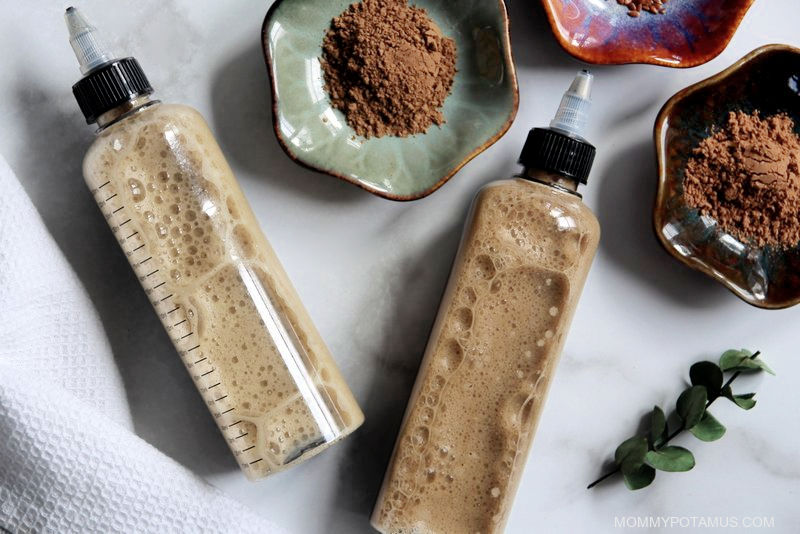
I shake the bottle a little, then apply about 3/4 of the shampoo to my scalp and roots – focusing mostly on the scalp. After application, I massage gently and let it sit for a few minutes. I have found that an application bottle (like this one made with PET plastic) helps distribute the shampoo more evenly, but you can use a measuring cup or something similar if you’d like.

Then I rinse while continuing to massage my scalp.

After that, I add some water to the remaining shampoo in the bottle and shake it to get a lot of suds going. I apply that all over my scalp and hair, let it sit for a couple minutes, and then rinse.

I typically use this recipe 1-3 times per week.

Is this good for all hair types?

Generally yes, although you may need to adjust the ratios.

For example, if your hair tends to be dry, adding aloe or amla can help increase conditioning.

If your hair tends to be oily, slightly increasing the reetha may help.

One thing to keep in mind: if you currently use products that coat the hair with silicones or dimethicone, your hair may go through a short transition period while that buildup gradually washes away.

What is the shelf life?

This recipe doesn’t contain preservatives, so I usually make it fresh.

However, once you’ve confirmed the recipe works well for your hair, you can freeze small batches and thaw them as needed.

Do I need to follow this with an apple cider vinegar rinse?

Not necessarily.

Unlike shampoo bars, which are alkaline and often require an acidic rinse to rebalance hair pH, this recipe is already within a hair-friendly pH range.

That said, some people enjoy following shikakai-based cleansers with a diluted ACV rinse. If that’s something you already like, feel free to experiment.

Do I need to use conditioner?

I don’t usually, but I do use the herbs above – plus a few more – in different ratios to whip up a moisturizing hair mask every week or two as needed.

In the summer, when I spend a lot of time in the sun/saltwater at my local beach, my ends will get a little dry. When that happens, I apply the shampoo recipe above and then dip my ends in a little coconut milk (guar gum-free) while I’m letting it sit. That adds a little moisture without weighing my hair down. This leave-in conditioner recipe also works really well for dry ends.

More Body & Hair Care Recipes To Try

Hair Gel – Tame flyaway frizz, keep curls in check, or style short hair with a non-toxic version of your favorite store-bought stuff. Many of the styling gels on store shelves contain hormone disrupting fragrances and formaldehyde releasers, but you can make natural hair gel with just 1-3 simple ingredients.

Body Wash – The rich, bubbly lather of this homemade body wash recipe cleanses while moisturizing. You probably have everything you need to make it in your pantry right now.

Bakuchiol Skincare Serum – If you’re looking for a gentle, effective way to support skin elasticity and firmness, even out skin tone and protect your skin barrier, bakuchiol is a bioactive compound worth getting excited about. Often called a natural alternative to retinol, it works with your skin’s natural regenerative processes to create change over time.

Share with a friend! 👇

Tags: , , , , ,
DIY Shikakai Hair Mask for Stronger, Shinier Hair

DIY Shikakai Hair Mask for Stronger, Shinier Hair

When I was a tween – which wasn’t actually a word back then – my best friend and I regularly ransacked her kitchen to make all the “magical hair mask” recipes that magazines promised would give us shiny, flowing locks.

Mashed bananas. Avocados. Kiwi.

They never delivered the results, but we kept trying. Now I wish we’d just eaten the bananas.

As you can imagine, when I first heard about a plant that literally translates to “fruit for hair,” I was skeptical. It sounded like mashed-banana-hair-mask 2.0.

I’m so glad I was wrong.

Shikakai powder has become a regular part of my natural hair care routine because it does something very rare in the world of DIY “fruit for hair” recipes.

It actually works – leaving my hair soft and shiny while nourishing my scalp.

Let’s talk about what it is, what it actually does (with research), and how to use it in a way that works for your hair type.

What Is Shikakai Powder?

Shikakai (Acacia concinna) is a climbing shrub native to India and parts of Southeast Asia. In Ayurveda – India’s traditional system of medicine – it’s been used for centuries as a natural hair cleanser and conditioner.

Shikakai comes from two Tamil words – sigai means “hair” or “tresses” and kaay means “fruit.” So, hair fruit.

The powder is made from dried shikakai pods, which are ground into a fine powder. When mixed with water, yogurt, or aloe vera, it forms a paste that can be massaged into the scalp and hair.

Shikakai Is unique because it cleanses AND conditions simultaneously. That dual action is the foundation of its traditional use – and one of the many reasons it’s still so popular today.

Benefits of Shikakai Powder for Hair

1. Natural Cleanser

Shikakai cleanses without aggressively stripping the scalp’s natural oils. It contains saponins – which are plant compounds that help lift away light buildup and debris – which are more gentle than the detergents found in conventional shampoo (and even the surfactants used in non-toxic options). (1)

It leaves hair soft, balanced and refreshed – clean, but not stripped.

That said, it’s designed for gentle cleansing, not heavy-duty clarifying. If you regularly use silicones, thick styling waxes, or heavy oil treatments, you may need a stronger cleanser to remove that type of buildup.

2. Hair Strength & Fullness

In Ayurvedic tradition, shikakai powder is highly valued for its ability to support strong, thick, resilient hair over time. While I haven’t found clinical research showing that it directly stimulates new hair growth or increases follicle density, it does contain antioxidant compounds that may help protect both the scalp and existing strands from oxidative stress.

What that can look like in real life is hair that appears fuller – not because new follicles suddenly pop up, but because the hair you already have is better supported and less prone to breakage or shedding.

In other words, it’s association with reduced hair fall and more overall fullness might be because of:

  • Reduced scalp irritation, which supports a healthier growth environment
  • Improved oil balance, which keeps follicles from becoming clogged
  • Gentle cleansing that minimizes dryness and breakage
  • Antioxidant activity that helps buffer environmental stressors

So, it’not a miracle “growth booster” – but it can help create the conditions that allow your natural growth cycle to function more optimally.

3. Dandruff Reduction & Scalp Support

Shikakai powder is a traditional Ayurvedic remedy for flaky, itchy scalps, and modern research gives us a hint as to why it has been used this way. Phytochemical analyses show that Acacia concinna extracts contain compounds with antimicrobial and antifungal activity, including saponins, flavonoids, tannins, and other plant bioactives that have been shown to inhibit the growth of various bacterial and fungal species in petri dish (in vitro) lab tests. (2) (3)

Since dandruff is often linked to an overgrowth of Malassezia yeast on the scalp, this antifungal potential offers a plausible explanation for why so many people find shikakai soothing. (4)

That said, most of the research has been conducted in lab environments rather than large human trials, and shikakai hasn’t been definitively shown to eliminate Malassezia on its own. So while it may help support a balanced, comfortable scalp – especially in mild cases – it’s best thought of as a supportive option rather than a stand-alone solution.

4. General Scalp Support

Hormonal shifts (like perimenopause) can make the scalp more reactive and sensitive, and over the past year my old routine – which I had used for many years without issue – suddenly started making my scalp itch. When I swapped in shikakai, the irritation resolved almost immediately.

Over time, as I’ve continued using shikakai alongside other herbs, I’ve noticed that my hair feels a little fuller AND my scalp remains healthy and irritation-free. Win/win.

5. Softness & Shine

When pure shikakai powder is mixed with water, it has a slightly gritty texture. The first time I applied it, I remember thinking, “Exactly how is this supposed to be moisturizing?”

My expectations didn’t improve after I rinsed it out, either. While wet, my hair didn’t feel deeply conditioned or dramatically different in any way.

That’s why I was so surprised once it dried.

It was noticeably smoother, shinier, and softer than I expected.

The shine probably has something to do with the way shikakai gently cleanses without over-stripping and its naturally slightly acidic pH, which can help the hair cuticle lie flatter. When the cuticle is smoother, each strand reflects light better – and that’s what gives hair a glossy look.

Whatever the exact mechanism, it’s one of my favorite benefits.

One of the best things about DIY hair care is that you can customize your blend to fit your needs. Below is a quick guide to the most common ingredients mixed with shikakai – and what each one brings to the blend.

Liquid Bases

Warm Water
Helps activate saponins and creates a smoother paste. Warm water typically creates a better consistency than cold, but temperature doesn’t significantly change cleansing ability.

Yogurt
Adds lactic acid (for clarifying), fats for moisture, and protein for temporary strengthening. Good for dry or frizz-prone hair.

Aloe Vera Gel
Adds hydration and slip. Soothes irritated scalps.

Dry Add-Ins

Aloe Vera Powder
Powdered aloe vera works like the gel form, but you only need about 1/3 of the amount.

Amla (Indian Gooseberry) Powder
Traditionally used to enhance shine and conditioning. Contains vitamin C and antioxidants.

Reetha (Soap Nuts) Powder
Boosts cleansing and foaming. Ideal if hair feels oily.

Neem Powder
Traditionally used for scalp conditions. Has antimicrobial properties.

Brahmi (Bacopa monnieri) Powder
Used in Ayurveda to support scalp health and hair thickness.

Fenugreek Seeds or Powder (Soaked & Blended)

When fenugreek seeds are soaked in water overnight and then blended, they create a gel-like substance that improves the spreadability of the hair mask, increases the conditioning properties, and adds slip for detangling. For curly or dry hair, this can make shikakai significantly more user-friendly. Fenugreek is also sold in powdered form. It can be used the same way as the seeds, but you can stir it instead of blending.

Hibiscus Powder
Traditionally used to enhance shine and softness. Also said to help hair keep its color longer reducing oxidative stress on the scalp.

Oxidative stress on the scalp is a primary factor in premature greying. It happens when free radicals (reactive oxygen species) accumulate in the hair follicle, damaging the pigment-producing cells (melanocytes).

Bhringraj (Eclipta alba) Powder
Traditionally used in Ayurveda to support hair vitality and overall scalp health. It’s often included in herbal blends aimed at strengthening hair roots and reducing shedding. While much of the evidence comes from traditional use and animal studies rather than large human trials, bhringraj is widely valued in Ayurvedic hair care for promoting thicker-looking, more resilient hair over time.

In the recipes below, you’ll notice that the amounts are usually given as a range – for example, 2–4 tablespoons. These measurements are meant to be a starting point, since the exact amount you’ll need depends on your hair’s length, thickness, and texture.

After a batch or two, you’ll quickly get a feel for what works best for you and can adjust accordingly.

Before you get started, here are some tips and guidelines:

  • Shikakai hair mask may feel drying if used alone on moisture-depleted or brittle hair → In those cases, consider adding yogurt, aloe, or fenugreek.
  • Shikakai can irritate eyes → Rinse carefully.
  • Always patch test first → I recommend this for all DIY skin and hair care recipes including backuchiol serum, magnesium oil, and butterfly pea witch hazel toner. For the recipes below, a patch test might look like this:
    • Blend a small amount of your recipe together.
    • Apply a dab to your inner wrist or just behind your ear. Wait 24 hours and check for any redness, itching, or irritation.
    • Once you’re in the clear, it’s time to treat your hair to something special.

🌸 Basic Shikakai Hair Mask

Shikakai + Water
Best for normal to oily scalps / hair.

Ingredients

  • 2-4 tablespoons shikakai powder
  • Enough warm water to create a yogurt-like texture

Instructions

Mix ingredients together until they form a yogurt-like texture. To apply, work into wet hair from your scalp to the ends of your hair.

Apply to wet hair, working from your scalp to the ends of your hair.
Leave on 10–15 minutes.
Rinse thoroughly.

Note: It will not lather like commercial shampoo. That’s normal.

🫧 Cleansing Hair Mask

Shikakai + Reetha
Best for oily scalps, moderate buildup, post-workout hair, or when your roots feel weighed down.

Ingredients

This recipe adds reetha – also known as soapberry or soap nut – for cleansing oomph. Yes, that’s the technical term. 🙂

  • 1-2 tbsp shikakai powder
  • 1-2 tbsp reetha powder
  • Warm water

Instructions

Mix the ingredients together until they form a smooth, yogurt-like paste.

Apply to wet hair, starting at the scalp and gently massaging into the hair roots to support a thorough cleanse. Then work the mixture down through the lengths of your hair to the ends.

Leave on for 10–15 minutes.

Rinse thoroughly, making sure no residue remains at the roots.

Note: This blend may create slightly more lather than shikakai alone because of the reetha, but it still won’t foam like commercial shampoo – and that’s completely normal.

🌺 Conditioning Hair Mask

Amla + Shikakai
For hair that feels dry, dull, frizz-prone, or rough.

Ingredients

  • 1-2 tbsp shikakai powder
  • 1-2 tbsp amla powder
  • Optional: 2-4 tbsp yogurt or aloe vera gel (or 2-4 tsp aloe vera powder)
  • Optional: 1-2 tsp fenugreek powder (You can make your own by grinding fenugreek seeds in a coffee grinder.)
  • Warm water

If you’re adding fenugreek and starting with the whole seeds, make sure to grind them very finely, or you may find that you have trouble rinsing seed pieces out of your hair. (I use a coffee grinder.)

In a small bowl, combine the shikakai and amla powders. Add yogurt or aloe vera gel (or aloe powder + water) and stir until you reach a smooth, slightly runny yogurt-like consistency.

If you’re adding fenugreek powder, place it in a small separate bowl and mix it with a little bit of warm water.

Let the mixtures sit for about 5 minutes to thicken slightly, then combine them.

Apply to wet hair, starting at the scalp and gently working it into the hair roots. Then smooth it down through the lengths to the ends, making sure everything is evenly coated.

Leave on for 20–30 minutes.

Rinse thoroughly, taking a little extra care to remove any herbal residue at the roots.

🌿 Hair Mask for Fewer Flakes

Shikakai + Neem + Hibiscus + Aloe
For itchy, reactive, flake-prone scalps.

Ingredients

  • 1–2 tbsp shikakai powder
  • 1 tsp–1 tbsp neem powder (start lower if sensitive)
  • Optional: 2-3 tsp hibiscus powder
  • Optional: 1-2 tbsp aloe vera gel
  • Optional: 1–2 tsp honey
  • Warm water

Instructions

In a small bowl, combine the powders.

Add aloe vera gel and honey (if using), then add a little bit of warm water. Stir and add small amounts of water as needed until a smooth, yogurt-like paste forms.

Apply to wet hair, starting at the scalp. Gently massage into the scalp and hair roots, then smooth through to the ends.

Leave on for 15–20 minutes.

Rinse thoroughly, taking extra care around the roots.

Note: Neem can have a strong scent. If you’re new to it, start with a smaller amount and increase gradually.

🌺 Shine + Conditioning Boost Hair Mask

Amla + Shikakai + Hibiscus + Yogurt or Aloe
For dull hair that needs softness and light-reflecting shine.

Ingredients

  • 1–2 tbsp shikakai powder
  • 1–2 tbsp amla powder
  • 1 tbsp hibiscus powder
  • 1-2 tbsp yogurt or aloe vera gel
  • Optional: 1–2 tsp honey
  • Warm water

Instructions

In a bowl, combine shikakai, amla, and hibiscus powders.

Add yogurt/aloe vera gel and a small amount of warm water. Stir and keep adding water in 1 teaspoon increments until the mixture is smooth and creamy.

Apply to wet hair, working first into the scalp and hair roots, then smoothing through the lengths to the ends.

Leave on for 20–30 minutes.

Rinse thoroughly.

Note: If your hair tends toward dryness, yogurt may provide more conditioning than aloe alone.

🌾 Deep Strength + Roots Hair Mask

Bhringraj + Shikakai + Fenugreek + Water/Aloe
For hair that feels fragile, sheds more than usual, or needs extra support at the roots.

Ingredients

  • 1–2 tbsp shikakai powder
  • 1–2 tbsp c powder
  • Optional: 1–2 tsp fenugreek powder
  • Water or aloe vera gel (enough to create a yogurt-like paste)
  • Optional 1-2 tbsp brahmi powder

Instructions

If you’re adding fenugreek and starting with the whole seeds, umake sure to grind them very finely, or you may find that you have trouble rinsing seed pieces out of your hair. (I use a coffee grinder.)

In a bowl, combine shikakai and Bhringraj powder (and brahmi powder, if using)

Add water or aloe vera gel until you reach a smooth, slightly runny but spreadable consistency.

If you’re adding fenugreek powder, place it in a small separate bowl and mix it with a little bit of warm water.

Let the mixtures sit for about 5–10 minutes to thicken slightly, then combine them.

Apply to wet hair, gently massaging into the scalp and hair roots first. Work through the lengths to the ends.

Leave on for 20–30 minutes.

Rinse thoroughly, ensuring all herbal residue is removed at the roots.

Note: Fenugreek adds slip and makes this blend significantly easier to apply — especially for thicker or curly hair.

Not Sure Which One to Choose?

  • If your scalp feels greasy → 🫧 Cleansing Mask
  • If your scalp feels itchy or reactive → 🌿 Scalp Soothing Mask
  • If your hair feels dry or frizzy → 🌺 Shine + Conditioning Boost
  • If your hair feels fragile or sheds easily → 🌾 Deep Strength + Roots
  • If you just want simple and gentle → 🧴 Basic Mask

More Hair Care Recipes To Try

Herbal Detangler – If there are tears over tangles in your house, here are three homemade hair detangler recipes that are inexpensive and simple to make.

Natural Hair Gel – Want to tame flyaway frizz, keep curls in check, or style short hair with a non-toxic version of your favorite store-bought stuff?

Many of the styling gels on store shelves contain hormone disrupting fragrances and formaldehyde releasers, but you can make natural hair gel with just 1-3 simple ingredients.

Sources

  1. Almeida, C., Silva, A., Ferreira, I., & Teixeira, A. (2023) Natural alternatives to synthetic surfactants for hair care: A review. National Center for Biotechnology Information, U.S. National Library of Medicine.
  2. Wuthi-udomlert, M. (2011). In vitro Effectiveness of Acacia concinna Extract against Dermatophytic Pathogens. Journal of Mycology and Pathology
  3. Sang, S.-H., Akowuah, G. A., Liew, K. B., et. al. (2023). Natural Alternatives from Your Garden for Hair Care: Revisiting the Benefits of Tropical Herbs. National Center for Biotechnology Information.
  4. Batra, R., Boekhout, T., Guého, E., Cabañes, et. al. (2005). Malassezia Baillon, emerging clinical yeasts. FEMS Yeast Research

Share with a friend! 👇

Tags: , , , , ,
hair growth serum

DIY Hair Growth Serum (and What Really Helps Hair Grow)

When our body starts to feel overwhelmed by stress, illness, or shifting hormones one of the first places we can see it is our hair. Hormones affect nearly every aspect of health, and I’ve certainly seen the connection between hormones and hair growth firsthand.

After many years of pregnancy, nursing, and thyroid challenges, my body was tired. I remember standing at the bathroom mirror after years of elevated hormones from pregnancy and nursing. The postpartum hair loss finally hit… and boy did it ever.

I addressed the stress and hormone imbalance, and the hair loss slowed. But I still wanted something to help new hair grow more quickly and protect my scalp and hair. This homemade hair growth serum is the result.

Some women go to a dermatologist or beautician for hair concerns. I tend to go to my pantry. Like my homemade sea salt spray, this DIY hair serum for growth is affordable and uses nourishing ingredients to naturally support scalp health.

What Really Causes Hair Loss 

Hair loss rarely happens in isolation. It’s often a sign that something deeper is happening in the body. Common root causes include chronic stress, hormone shifts, thyroid imbalance, postpartum changes, nutrient deficiencies, and post-viral illness. When our body doesn’t have enough resources, it prioritizes keeping us alive. And hair doesn’t make the cut. 

Supporting hair growth starts from the inside. Prioritizing protein, iron, zinc, and B vitamins helps the body rebuild hair tissue. Managing stress through sleep, gentle movement, and nervous system support can also make a noticeable difference. For hormonal hair loss, balancing blood sugar and supporting thyroid and adrenal health can be helpful. 

While addressing the root cause is key, using products topically can also help. That’s where a scalp serum for hair growth can be beneficial.

Do Hair Growth Serums Actually Work?

The answer is, it depends. A serum won’t fix hormone imbalances or chronic stress on its own, but it can support scalp health and stimulate circulation, which helps hair follicles function better.

Treatments like minoxidil are widely used, and studies show they can sometimes work, but not without risks. There are plenty of natural ingredients that can work just as well or even better than the conventional options. Rosemary oil for one. One study showed it worked as well as minoxidil for certain types of hair loss. If you want a natural approach, a homemade serum is a gentle option.

So, what stimulates hair growth best? Healthy circulation, nutrients, lowering inflammation, and a healthy scalp all play a role. A serum can provide the support your scalp needs externally while lifestyle and nutrition address the issue from the inside.

Why Use a Hair Growth Serum?

A good hair serum for growth helps:

  • Stimulate circulation to the scalp
  • Nourish follicles with vitamins and minerals
  • Soothe irritation and dryness
  • Protect hair from environmental damage

Whether you’re looking for the best hair growth serum for women or a hair growth serum for men, the goal is the same: create a healthy scalp environment that supports regrowth.

Best Hair Serum for Hair Growth: DIY Recipe

This DIY serum combines herbs and essential oils traditionally used to support hair and scalp health. It’s gentle enough for regular use and water based so it doesn’t make hair feel really oily.

Key Ingredients in This Serum For Hair Growth

  • Nettle – Rich in iron and vitamins A, C, and K, along with potassium and magnesium. These nutrients are essential for healthy hair follicles. Helps stimulate hair growth and improve scalp health.
  • Horsetail – High in silica, a mineral that supports hair strength and elasticity. Silica is linked with thicker, shinier hair.
  • Aloe Vera Gel – Aloe vera gel naturally soothes the scalp. Its the base of the serum and helps reduce irritation and dryness. Aloe also provides lightweight hydration so it’s great for most hair types.

Essential Oils for Hair Growth

Not only do they smell good, but these essential oils help stimulate circulation and promote hair growth.

  • Rosemary oil is one of the most studied essential oils for hair growth. Some research suggests it may be comparable to minoxidil for certain types of hair loss.
  • Clary sage oil is traditionally used for hormonal balance and may be helpful for hormone-related hair loss. 
  • Lavender oil supports scalp health and has antimicrobial properties, which can help maintain a healthy scalp environment.

Together, these ingredients combine to create a powerhouse hair growth serum!

Hair Growth Serum Recipe

Help stimulate hair growth with this aloe vera, herb, and, essential oil recipe.

Prep Time5 minutes

Steeping Time15 minutes

Total Time20 minutes

Yield: 8 ounces

Author: Katie Wells

  • In a small pan, bring the distilled water to a boil.

  • Remove from the heat and add the dried nettle leaf and horsetail leaf.

  • Cover the pot and let the herbs sit in the water for at least 10 minutes or until the water cools.

  • Strain the herbs out and pour the herbal tea into a spray bottle.

  • Add the aloe vera gel and essential oils and shake well.

  • Store in the refrigerator and shake well before use.

  • Spray liberally on hair roots once or more per day. I found that it was easiest and worked the best to spray on before bed each night.
  • This hair serum will last about 1 week if stored in the fridge. You can also freeze some if you want to make a bigger batch for later. 

How to Use Scalp Serum For Hair Growth

Apply a small amount of serum to the scalp and massage gently. Focus on your scalp and hair roots. Massage increases circulation, which helps deliver nutrients to follicles. I sprayed this scalp serum on every night before bed. You can use it on either wet or dry hair. 

What Is the Most Effective Hair Growth Serum?

The “most effective” serum depends on the cause of hair loss. Rosemary oil has emerging research and is a popular natural alternative. Herbal and essential oil–based serums, like this DIY recipe, work best as part of an overall approach that includes nutrition, stress management, and hormone support.

So, which hair serum can regrow hair? Regrowth actually depends on follicle health. A serum can support follicles that are dormant or weakened, but it’s much harder to revive inactive follicles. That’s why early intervention and addressing root causes are important.

Final Thoughts on Hair Growth Serum

Hair loss can feel discouraging, especially when it’s tied to postpartum changes, stress, or illness. While hair loss is common in life, we don’t have to take it lying down. It’s so important to address the root causes, but using a hair growth serum can also be really helpful in the meantime. 

I love this hair growth serum because it’s simple with nourishing ingredients and I noticed a definite difference from it. 

How do you support healthy hair? What products have you tried? Leave a comment and let us know!

Tags: , , , , ,
Espresso hair, PDRN skincare & πουά manicure: Όλες οι τάσεις του 2025 και τι θα δούμε το νέο έτος

Espresso hair, PDRN skincare & πουά manicure: Όλες οι τάσεις του 2025 και τι θα δούμε το νέο έτος

Το 2026 προμηνύει ακόμα πιο blended αποχρώσεις μαλλιών και φυσικές ρίζες που κάνουν το bronde μοντέρνο και καθόλου «παλιομοδίτικο».

Το 2025 ήταν μια χρονιά που άλλαξε τα δεδομένα στην ομορφιά. Ανακαλύψαμε νέους όρους, νέες υφές, νέους συνδυασμούς, ενώ ανοίξαμε τον δρόμο σε αισθητικές τάσεις που δεν δείχνουν διατεθειμένες να εξαφανιστούν με τη νέα χρονιά.

Espresso hair

Τα espresso hair έκανε την εμφάνισή του ως η πιο ζεστή, βαθιά και πλούσια σοκολατί απόχρωση του φθινοπώρου, δίνοντας νέα ζωή στα σκούρα μαλλιά. Η τάση όχι μόνο συνεχίζει δυναμικά, αλλά επιστρέφει πιο έντονη, με μεγαλύτερη διάσταση, gloss φινίρισμα και πιο γεμάτη υφή. Παράλληλα, το honey bronde hair κατάφερε να βρει τη χρυσή τομή ανάμεσα στο ξανθό και το καστανό, δημιουργώντας εκείνο το ηλιοκαμένο αποτέλεσμα που αγαπήθηκε το καλοκαίρι.

@haileybieber

5 makeup tips που χαρίζουν ένα φωτεινό, ξεκούραστο και ανορθωμένο βλέμμα

Το 2026 προμηνύει ακόμα πιο blended αποχρώσεις και φυσικές ρίζες που κάνουν το bronde μοντέρνο και καθόλου «παλιομοδίτικο». Και φυσικά, το cherry cola hair, η πιο σκοτεινή κόκκινη λάμψη που είδαμε σε influencers και celebrities, δεν πάει πουθενά. Αντίθετα, γίνεται το απόλυτο go-to για χειμωνιάτικα makeovers, βαθύ καφέ με κόκκινες αποχρώσεις που δείχνουν πολυτελείς, κομψές και ανεπιτήδευτα sexy.

Η τάση στο skincare που συνεχίζει

Το PDRN skincare είναι μία από τις μεγαλύτερες καινοτομίες που πέρασαν από την κοσμετολογία μέσα στο 2025 και συνεχίζει δυναμικά και στο 2026. Πρόκειται για μια δραστική τεχνολογία αναγέννησης κυττάρων, που αξιοποιεί πολυνουκλεοτίδια για να ενισχύσει την ανάπλαση του δέρματος, να βελτιώσει την ελαστικότητα και να χαρίσει βαθιά ενυδάτωση. Τα προϊόντα PDRN λειτουργούν στοχευμένα στην επανόρθωση και στη λάμψη, προσφέροντας πιο ομοιόμορφη υφή και πιο υγιή όψη, και γι’ αυτό θεωρούνται η επόμενη μεγάλη τάση στο skincare.

Το πουά manicure

Ήταν ένα από τα πιο ευχάριστα nail trends που είδαμε να σαρώνει στο τέλος του 2025. Και το 2026 συνεχίζει με περισσότερη δημιουργικότητα: micro dots σε nude βάση, πολύχρωμα μοτίβα ή ακόμη και μεταλλικές τελείες πάνω σε σκούρο φόντο.

Στην nail παλέτα όμως μπαίνουν δυναμικά δύο αποχρώσεις που ήδη κυριαρχούν στο feed μας:

Butter yellow nails: μια απαλή, κρεμώδης, ζεστή απόχρωση του κίτρινου που έρχεται να δώσει φως & μοντερνισμό στα χειμερινά looks. Άνοιξη, καλοκαίρι και φθινόπωρο 2026 θα την βλέπουμε παντού.

@iramshelton

Τα emerald, glitter & butter metallic textures επιστρέφουν επίσης, στηρίζοντας την ιδέα ότι τα νύχια πρέπει να είναι κοσμήματα — όχι απλά χρώμα.

Το συμπέρασμα; Το 2025 δεν φέρνει μια ριζική αλλαγή, αλλά μια εξελιγμένη συνέχεια.

@dualipa

Οι τάσεις που αγαπήσαμε το 2025 δεν φεύγουν από τα trends, απλώς ωριμάζουν!

Espresso hair, honey bronde highlights, cherry cola vibes, new skincare trends και statement μανικιούρ: το νέο έτος θα είναι πιο σοφιστικέ, πιο πειραματικό και πιο προσωπικό από ποτέ.

Buns και ponytails: Αυτά είναι τα χτενίσματα που επιλέγουν τώρα τα it girls

Tags: , , , , , , , , , , , , , , , ,
Why we shouldn’t forget the powerful story of hair, make-up and fashion

Why we shouldn’t forget the powerful story of hair, make-up and fashion

Nov 19, 2025 – 5.00am

Gift this article

Subscribe to gift this article

Gift 5 articles to anyone you choose each month when you subscribe.

Subscribe now

Already a subscriber? Login

Recently, my 12-year-old asked me where I shopped for beauty products when I was her age. The answer was brief and will no doubt resonate with anyone Millennial or older – I didn’t.

Beauty has changed in ways that I never could have predicted. When I was a curly-haired pre-teen, the only way to tackle my frizz was to use a supermarket brand that slicked it down to my scalp. I owned exactly one eyeshadow. It was purple, and I stole it from my mum (who, in my defence, would never have worn that colour, with good reason).

Loading…

Tags: , , , , , ,
Best oLive
Privacy Overview

This website uses cookies so that we can provide you with the best user experience possible. Cookie information is stored in your browser and performs functions such as recognising you when you return to our website and helping our team to understand which sections of the website you find most interesting and useful.