Skincare Mistakes to Avoid for Healthy, Clear Skin

Skincare Mistakes to Avoid for Healthy, Clear Skin

Lifestyle

-Oneindia Staff


Updated: Sunday, April 19, 2026, 8:54 [IST]

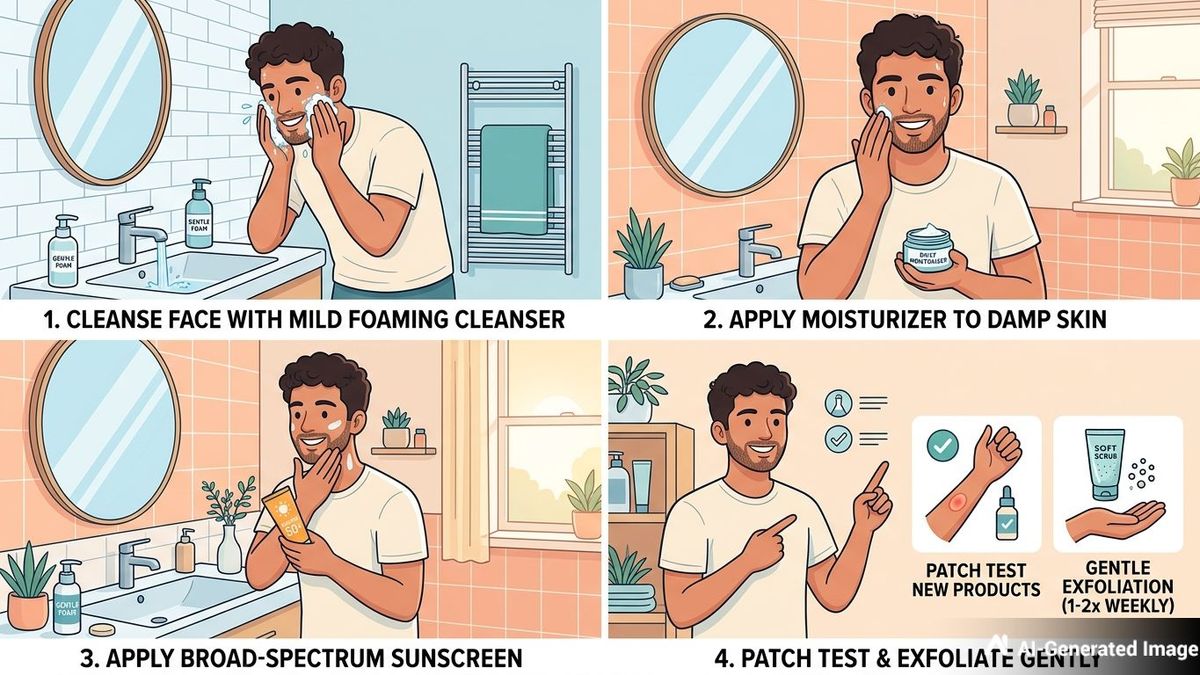
Many skincare problems come from daily habits, not bad luck. Common skincare mistakes can cause dull skin, acne, dark spots, or dryness. Small fixes can support healthy, clear skin. Focus on gentle cleansing, steady moisturising, and daily sun protection. Also watch how you use active products like retinol and acids.

Washing your face too often is a common skincare mistake. It can strip natural oils and weaken your skin barrier. This may lead to tightness, more oil, and breakouts. Cleanse twice a day, and after heavy sweat. Use lukewarm water, not hot water.

Many skincare problems like dullness and acne arise from daily habits such as overwashing, harsh products, skipping moisturizer or sunscreen, and improper makeup removal, which can be corrected with gentle cleansing, consistent moisturizing, and daily SPF.

Strong soaps and rough scrubs can irritate skin. They can also make redness and acne worse. Choose a mild cleanser that suits your skin type. For oily skin, avoid “squeaky clean” feels. For dry skin, pick a creamy, non-drying face wash.

Many people skip moisturiser to avoid oily skin. This can backfire and trigger more oil. Moisturiser helps reduce water loss and supports the barrier. For healthy, clear skin, use a light, non-comedogenic moisturiser if you get acne.

Using a heavy cream on very oily skin may clog pores. Using a very light gel on very dry skin may not be enough. Match texture to your needs. If skin feels tight after cleansing, moisturise within a few minutes to lock in moisture.

Not using sunscreen every day

Skipping sunscreen is one of the biggest skincare mistakes. UV rays can cause tanning, dark spots, and early lines. They can also worsen acne marks. Use a broad-spectrum SPF 30 or higher each day. Apply it even on cloudy days and indoors near windows.

Using too little sunscreen reduces protection. Apply enough to cover face and neck. Reapply when you are outdoors for long hours. If you sweat a lot, reapply more often. Sunscreen should be the last step of morning skincare, before makeup.

Over-exfoliating and using too many actives

Exfoliation can help with clogged pores and dullness. Too much can harm the barrier and cause burning. This may lead to more pimples and peeling. Avoid using scrubs daily. If you use acids, start slow and watch for irritation.

Mixing many strong actives is another common mistake. Using retinol, AHA, BHA, and benzoyl peroxide together can be harsh. Keep routines simple. Add one active at a time. Use it a few nights a week, then increase only if skin stays calm.

Picking, popping, and touching the face

Popping acne can push germs deeper into skin. It can cause swelling and dark marks. It may also leave scars that take long to fade. If you get painful pimples, use spot treatment. For frequent acne, consider a dermatology visit.

Touching your face often can spread oil and dirt. This can block pores and trigger breakouts. Keep hands away from the face during the day. Clean your phone screen often. Change pillowcases on a regular schedule, since they collect oil and sweat.

Using products without patch testing

Trying new skincare without a patch test can lead to rashes. Fragrance, essential oils, and strong actives may irritate. Patch test on a small area first. Wait at least 24 hours to check for redness, itching, or bumps before full use.

Do not change many products at once. If you react, it becomes hard to know the cause. Keep a simple routine for two weeks. Then add one new item. This helps you build a routine for healthy, clear skin with fewer surprises.

Not removing makeup properly

Sleeping with makeup is a major skincare mistake. It can trap oil and dirt in pores. This may lead to blackheads and dull skin. Remove makeup before bed. Use a gentle remover or cleansing balm, then follow with a mild face wash.

Rubbing hard to remove makeup can irritate skin. Be gentle around the eyes. Use soft cotton or clean hands. If you use waterproof products, choose a remover made for them. Clean makeup brushes often to reduce bacteria and acne flare-ups.

Ignoring skin type, climate, and consistency

Copying a friend’s routine may not suit your skin. Oily, dry, and sensitive skin need different care. Weather also matters in India, since heat and humidity can increase sweat and oil. Choose products based on your skin type and how it feels.

Changing products too quickly is another common issue. Skincare takes time, especially for acne marks. Use a routine for several weeks unless you have irritation. Keep steps basic: cleanse, moisturise, and sunscreen. Add treatment steps only when needed and tolerated.

Tags: , , , , ,
Ramadan 2026: Skincare mistakes to avoid while fasting, experts advise

Ramadan 2026: Skincare mistakes to avoid while fasting, experts advise

Between long fasting hours, late nights, and packed iftar plans, Ramadan often brings a shift not just in routine, but in how your skin looks and feels. Dryness, dullness, chapped lips, dark circles, puffiness, and increased sensitivity are common concerns that arise as sleep patterns change and daytime hydration levels decrease.

While these changes are normal, dermatologists and skincare experts noted that a few everyday habits can exacerbate them. The key during Ramadan is not to do more, but to simplify your routine and focus on hydration, gentle care, and protecting the skin barrier.

Dr Malaz Eldirdiry, specialist dermatologist at Burjeel Medical City, Abu Dhabi, explained that reduced fluid intake during the day can affect the skin’s appearance and comfort.

“Dehydration can lead to dryness and dullness, and may worsen conditions like eczema or sensitive skin,” she said. “But when hydration and nutrition are well managed after iftar, fasting itself can have neutral or even positive effects, including better oil balance and, in some cases, improvement in acne.”

Sleep changes also play a role. Skincare professionals note that late nights, early suhoor wake-ups, and fragmented sleep can disrupt the skin’s natural day-night rhythm. During the day, the skin focuses on protection, while at night it shifts into repair mode. When this cycle is disturbed, it can lead to slower healing, lingering inflammation, puffiness, and a tired-looking complexion.

If your skin has been looking a little off this month, here are some common Ramadan skincare mistakes to avoid.

Washing your face too often

It’s tempting to keep cleansing throughout the day to feel fresh, but overwashing can do more harm than good.

“Over cleansing or using harsh soaps can damage the skin barrier, leading to increased dryness, irritation, and even rebound oil production,” Dr. Eldirdiry said. “A gentle cleanser twice a day, morning and night, is usually enough during Ramadan.”

Trying to scrub away dullness

When skin looks tired, the instinct is often to exfoliate more, especially in the final days of Ramadan as Eid approaches.

However, using scrubs, acids, or peels too frequently can weaken the skin barrier and trigger redness, sensitivity, or pigmentation. Instead of chasing instant brightness, experts recommend reducing exfoliation and focusing on hydration to restore the skin’s natural glow.

Using strong activities as usual

Skin tends to be more reactive during Ramadan, which means powerful ingredients may need to be used less often. Retinol, strong exfoliating acids, high strength lightening creams, and alcohol heavy toners can all increase dryness and irritation when the skin is already dehydrated.

Rather than stopping them completely, spacing out their use and monitoring how your skin responds can help prevent flare-ups.

Forgetting barrier repair and hydration

“One of the biggest mistakes is trying to fix dehydration with aggressive treatments instead of supporting the skin barrier,” Dr. Eldirdiry said.

A simple Ramadan routine works best:

·       Gentle cleanser morning and night

·       Hydrating serum with hyaluronic acid or glycerin

·       Moisturiser and sunscreen during the day

·       A richer cream or sleeping mask after iftar

Booking treatments at the wrong time

If you’re planning facials or laser sessions during Ramadan, timing matters. Hydrating facials and gentle treatments are generally well tolerated, but more intensive procedures may feel uncomfortable when the body is dehydrated.

Aesthetic expert Ahmed Nhaban recommends scheduling treatments two to three hours after iftar, once the body has been rehydrated and nourished. Many clinics across the UAE report that evening appointments become the most requested during Ramadan for this reason.

Leaving your Eid prep too late

If you’re planning a pre-Eid glow-up, dermatologists suggest booking early. Clinics typically see a surge in the final weeks of Ramadan, with popular requests including skin boosters, hydrating treatments, laser hair removal, and upper face Botox.

Botox, in particular, should ideally be administered around 10 to 14 days before Eid to allow the full effect to take hold.

When your sleep schedule changes, your skin feels it too

Late nights, early suhoor wake-ups, and broken sleep during Ramadan don’t just affect energy levels; they can also disrupt the skin’s natural rhythm.

According to skincare professionals at Circadia, the globally trusted professional skincare brand rooted in chronobiology and circadian science,the skin follows its own internal clock. During the day, it focuses on protection against environmental stress, while at night it shifts into repair mode, boosting cell turnover, collagen production, and barrier recovery.

When sleep patterns change, this repair phase may be affected, leading to common Ramadan concerns such as dullness, dehydration, puffiness, dark circles, breakouts, and slower healing.

Experts say adjusting skincare to match this shift can help the skin stay balanced, with a focus on protection and hydration during the day and supporting repair in the evening.
Adjust your routine to your Ramadan rhythm

Skincare specialists recommend thinking about your routine in two phases:

After suhoor or early morning

·       Focus on lightweight hydration

·       Use antioxidants such as Vitamin C

·       Always apply sunscreen

·       Choose products that strengthen the skin barrier to reduce moisture loss

After iftar and before sleep

·       This is the best time for richer products and repair focused care

·       Use soothing or barrier-restoring formulas

·       Add targeted eye care to help with puffiness and dark circles

·       Avoid aggressive treatments if the skin feels stressed or sensitised

They also recommend prioritising hydration focused ingredients such as hyaluronic acid and peptides, avoiding over-exfoliation, and choosing gentle, oxygen boosting facials if opting for professional treatments.

Tags: , , , , , ,
The everyday mistakes you need to avoid in 2026- The Week

The everyday mistakes you need to avoid in 2026- The Week

Each year, when winter hits, everyone starts posting their goals online. Focus on real food. Hit the gym regularly. Get extra rest. Among all the smartwatches and kale shakes, taking care of your skin usually ends up as just a throwaway tip: stay hydrated. 

Speaking as someone who treats skin and scalp issues, here’s what I know for sure – clear, strong skin isn’t about extreme fixes or trendy tricks. It grows from tiny habits done regularly, ones that work with your body, not against it, particularly now when screens dominate every hour.

Here’s the truth. By 2025, skin issues go way beyond pimples or dark spots. Instead, more people face flare-ups from stress, early ageing thanks to screens, irritated scalps, even thinner hair, and it’s hitting younger folks now. 

All those late scrolls, messed-up sleep, dirty air, plus trying out viral skincare, yeah, that’s reshaped how we treat skin. But here’s a win: fixing things this year won’t take ten steps.

Simplicity wins every time

A straightforward switch that actually helps? Sticking to a no-fuss daily rhythm – wash, hydrate, shield. Cleaning your face morning and night with a mild, balanced cleanser supports healthy skin function. Washing too much, particularly using strong or ‘intense’ formulas, is something people often get wrong. Skin isn’t meant to be stripped. What it really wants is harmony. 

Folks often skip moisture, but it’s a must, even if your face gets shiny or breaks out. Picking a light lotion that won’t clog pores can protect your skin while calming redness. What about SPF? Yeah, nothing else fights aging quite like it. Thanks to screen glare piling up and dirty air getting worse, full-coverage sunblock isn’t just for sunny days; use it at home too.

Skin wellness starts right at your scalp

When I talk to people about their scalp health, I compare it to taking care of your face. Issues like flaking or thinning strands pop up more now because life’s hectic – plus heat tools don’t help. Washing weekly with the right product keeps things balanced. Massaging oils? Sure, but only for a short time. Too much can backfire quickly. Trending hair pills might seem great, yet taking them yourself could backfire. Losing hair isn’t simple. Things like poor diet, shifting hormones, or family traits mix into it. Seeking an expert opinion before trying fixes? That’s a solid move.

Sleep, tension and skin: A team few notice

Late nights plus endless scrolling mess with your face; dull tone, shadows under eyes, breakouts creep in. When you crash, your skin gets busy fixing stuff. Skip the fancy bottle; nothing swaps like real rest. 

Dealing with stress matters just as much. When cortisol jumps up, skin issues like acne, eczema, psoriasis, or hair loss worsen. Small routines like walking every day or stepping away from screens help clear things up. 

Watch out for trends

Slugging, skin cycling, at-home gadgets might seem cool, yet they don’t fit everyone. Just because a celebrity swears by it doesn’t mean it will suit your skin or where you live. Factor in India’s shifting seasons, dirty air, plus unique genetics, and it gets complicated. By 2025, the smart move isn’t following hype; it’s tailored skincare from experts.

This New Year, focus less on flawless looks and aim for strong, happy skin instead. Pick what works, using facts as your guide. Stick with it, even if progress feels slow. If unsure? Talk to an expert, not a random post online. Tiny steps every day add up without making noise. Good skin isn’t a short-term bet; it’s a lifelong routine that sticks.

The author is a hair transplant surgeon, dermatologist and co-founder of MedLinks.

The opinions expressed in this article are those of the author and do not purport to reflect the opinions or views of THE WEEK.

Tags: , , ,
The viral skincare trend dermatologists are warning against: 6 reasons to avoid it

The viral skincare trend dermatologists are warning against: 6 reasons to avoid it

We seem to be going back to basics with everything these days, from improving sleep by mimicking our ancestors’ circadian rhythms to eating whole foods to reduce the risk of dementia. 

This shift has paved the way for the viral “Caveman” skincare routine, a trend built on the premise that “less is always more” when it comes to keeping skin looking young and healthy. 

The Caveman technique involves ditching skincare products entirely, including cleansers, in favour of washing your face with water alone. The most extreme version proposes avoiding water altogether! “The theory is that this allows the skin to ‘self-regulate’ naturally,” explains dermatologist Dr Cristina Eguren.

However, the doctor and other experts warn of a major flaw in this logic. “Water alone cannot effectively dissolve sebum or remove traces of sunscreen, makeup or pollution,” notes fellow dermatologist Dr Inés Escandell. “Adequate cleansing requires surfactants (active cleaning ingredients) capable of removing these substances without disrupting the skin’s barrier.”

Why you should avoid the viral ‘Caveman Skincare’ routine

© GettyThe Caveman technique involves ditching cosmetic products entirely in favour of cleansing with water alone

Taken at face value (pun intended), the idea of a ‘natural detox’ sounds appealing. However, skipping your daily cleanse can trigger a cascade of skin problems. The Caveman routine can:

  • Disrupt the skin’s microbiome: Our skin hosts an ecosystem of microorganisms that coexist in a delicate balance. “Without a proper cleansing routine, it’s easier for certain bacteria and mites to proliferate, disrupting that balance,” says Dr Eguren. Dr Escandell adds that failing to remove sweat, sebum, pollutants or dead cells creates a situation that “favours the appearance of opportunistic or pathogenic microorganisms.”
  • Encourage bacterial proliferation: As noted above, leaving sebum and dirt on the skin creates a breeding ground for bacteria. “This increases the risk of inflammatory disorders and infections,” states Dr Eguren. Dr Escandell points to clinical evidence: “Studies on acne patients show that cleansing once or twice a day reduces the load of bacteria like Cutibacterium acnes. Other studies demonstrate that a lack of cleansing encourages Staphylococcus aureus to flourish.”
  • Cause irritation: “The accumulation of impurities and excess sebum can [weaken] the barrier function,” explains Dr Eguren. “The skin becomes sensitised and more prone to dehydration, leading to irritation, redness and discomfort.”
  • Trigger infection and acne breakouts: An inflammatory environment is ideal for the blackheads and pustules to thrive. Dr Eguren adds: “By not properly removing impurities and cellular debris, especially excess sebum, pores become clogged. This can trigger or worsen breakouts of acne, rosacea and seborrheic dermatitis.”
  • Accelerate ageing: “Avoiding cleansing hinders proper cell renewal and exposes the skin to more free radicals, which accelerates ageing,” asserts Dr Eguren. Our skin also needs antioxidants and sun protection to remain healthy. “Skipping SPF increases oxidative damage; UV radiation and pollution contribute to photoageing, collagen loss and wrinkles. Also, dehydrated skin simply looks older,” says Dr Escandell.
  • Cause Dermatosis Neglecta: This is a specific condition caused by the build-up of dead cells and dirt, resulting in dark, rough patches. “In the absence of proper cleansing, these brownish or greyish plaques appear, formed by a solidified accumulation of sweat and sebum,” Dr Escandell concludes.

© ShutterstockLack of cleansing can trigger or worsen breakouts of acne, rosacea and seborrheic dermatitis

The alternative: A dermatologist-approved routine for healthy skin

According to the experts, a proper facial cleansing routine should be simple, consistent and tailored to your specific skin type. It also should be done both morning and night, even if you haven’t worn makeup.

© Getty ImagesDermatologists recommend a gentle cleanse, morning and night

Here is the recommended protocol:

  1. In the morning: Start with a gentle cleanse using a product suited to your skin type. Next, apply an antioxidant serum (such as Vitamin C). Finally, finish with broad-spectrum sun protection (minimum SPF 30), which is essential year-round but critical during the summer months.
  2. At night: “I recommend a double cleanse, particularly if you have been wearing makeup,” advises Dr Eguren. “Start with an oil-based cleanser or micellar water to break down surface grime, then follow with a water-based gel or foam cleanser to rinse the skin clean.” Once the skin is prepped, apply a product containing active ingredients, such as retinoids or alpha hydroxy acids (AHAs).
  3. Exfoliation: “It is very beneficial to include proper exfoliation to effectively remove traces of oil, cellular debris and Demodex mites; this will improve the skin’s condition and function,” explains Dr Eguren. Frequency will depend on your skin type. “For oily skin, this can be done frequently, even daily,” Dr Eguren concludes. “For dry skin, once or twice a week is sufficient.”

© Getty ImagesMicellar water can also be beneficial for skin health

The dangers of viral misinformation in skincare

The fact that the Caveman routine has gone viral on TikTok means it has resonated with, and unfortunately misinformed, a massive, predominantly young audience. 

“Social media can turn any practice into a trend, even without a scientific basis,” warns Dr Eguren. “Many young people adopt this routine without understanding the implications. It normalises habits that aren’t beneficial for skin health and can actually worsen conditions like acne or rosacea.”

Dr Escandell shares this concern, noting that the craze trivialises the importance of dermatological hygiene. It also “may encourage people with acne, dermatitis or rosacea to abandon effective treatments and disregard specialist advice. 

“As with other fads, it creates unrealistic expectations; the ‘benefits’ shown online are usually anecdotal and cannot be applied to the general population.”

About the experts: 

  • Dr Cristina Eguren is a dermatologist and founder of the Eguren Clinic in Madrid.
  • Dermatologist Dr Inés Escandell is a member of Spain’s Aesthetic and Therapeutic Dermatology Group as well as the Dermothéque blog and skincare podcast.

Tags: , , , , , ,
7 skincare habits that disrupt your hormones and how to avoid them

7 skincare habits that disrupt your hormones and how to avoid them

How your daily skincare habits can affect your hormones. Seven simple ways to improve your skincare routine for better health and well-being.

Sometimes, while trying to take care of our skin a little too much, we tend to forget that some skincare habits may be actually affecting our health in some way, unknowingly. From mindless use of essential oils to chemical-laden fragrance in products – some skincare ingredients can actually disrupt your hormones. A dermatologist says being aware of such harmful ingredients can be a step towards better skin and overall health.

Skincare habits that can disrupt hormones

According to Dermatologist and Skin Specialist Dr Rinky Kapoor, there are certain small skincare habits that people may use every day without knowing how it may be affecting their hormones. In an interview to Health Shots, the expert outlines seven such habits and warns against indiscriminate use.

1. Endocrine-disrupting chemicals
It is tempting to trust skincare products just because you find them at your local drugstore or because they have catchy ads. However, many of these products may contain phthalates and synthetic fragrances, which can disrupt hormones and mimic estrogen. Research published by the Endocrine Society shows that these chemicals can interfere with hormone production, leading to skin that doesn’t look its best.

A study in Environmental Health Perspectives found that repeated exposure to certain substances can accumulate, leading to hormonal imbalances. To avoid these issues, choose brands that are clear about their ingredients. “Look for natural or organic options that do not contain questionable chemicals,” Dr Kapoor tells Health Shots.

2. Over-exfoliation

The desire for quick results can lead to over-exfoliating our skin. But doing this too much and too often can damage our skin’s natural barrier. “This can cause inflammation and increase cortisol levels, our body’s primary stress hormone“, says Dr Kapoor. High cortisol not only damages our skin, making it look dull and tired, but also affects other hormones that control sleep, mood, and metabolism. The dermatologist suggests “limiting exfoliation to 2-3 times a week which allows your skin to naturally heal and renew itself. your skin is like a sensitive ecosystem; taking your time helps keep it healthy and balanced.”

3. Synthetic retinoids

Retinoids have become popular in skincare because they can help reduce signs of ageing. However, they can also pose risks, mainly if used without proper guidance. “Some forms, like topical and oral synthetic retinoids, can affect hormone-sensitive processes in the body”, says Dr Kapoor. For example, isotretinoin can change hormone levels. This medication is not safe to use during pregnancy due to associated risks. Before starting a retinoid routine, it’s good to talk to a dermatologist. “They can help you create a skincare plan that meets your hormonal health needs”, says the dermat. This way, you can achieve smoother skin without risking your health.

Essential oils are more than just a fad. Image courtesy: Adobe Stock

4. Essential oils

Essential oils have become very popular because many people believe they offer natural benefits. However, not all essential oils are the same. Lavandin and tea tree oil, which are often used, can affect hormones. A study published in Frontiers in Environmental Science has found that they can have estrogen-like effects and block male hormones. In rare cases, using these oils has been linked to breast growth in young boys. Be careful with essential oils. Always dilute them properly, and watch how often you use them. Each drop is powerful, so being mindful can help protect your skin and hormones.

5. Saying no to sun protection

Who doesn’t want glowing complexion? But spending time in the sun without proper protection can harm your skin and upset your hormonal balance. “When you don’t protect your skin well, it can lead to oxidative stress, which can cause inflammation”, says the skin specialist. This inflammation can affect important hormones, such as cortisol and thyroid hormones. UV radiation can interfere with the production of vitamin D, which is important for making hormones. “It is important to use a broad-spectrum sunscreen with a high SPF every day,” says the skin expert. This protects your skin from harmful rays and supports your endocrine system.

6. The fragrance factor

Have you ever looked at your product labels and seen the words ‘fragrance’ or ‘parfum’? These terms often mask a mix of chemicals, many of which can disrupt your hormones. “Using heavily fragranced products every day, such as cleansers and moisturisers, can lead to a harmful buildup in your system, putting extra strain on your hormonal balance,” says the specialist. Choose unscented or naturally scented products to reduce exposure to potentially harmful chemicals. “Your skin may react better, and avoiding these chemicals could help your skin look clearer and healthier,” shares the doctor.

You may also like

7. Gut-skin-hormone connection

Skincare is not just about what you put on your skin. It’s important to think about your overall health. Your gut health affects how your skin looks and how your hormones work. “The gut microbiome is closely connected to hormone balance, inflammation, and skin health,” says the expert. When your gut lacks balance, it can show on your skin, worsening conditions like acne, eczema, and psoriasis. Include probiotic-rich foods in your diet, like yoghurt, kimchi, or leafy greens. “A healthy gut can improve your skin and hormones,” explains the expert. This balanced approach to skincare looks at both internal and external factors.

Tags: , , , ,
The best aeroplane skincare routine for glowing post-flight skin - and mistakes to avoid

The best aeroplane skincare routine for glowing post-flight skin – and mistakes to avoid

Hitting the tarmac with breakouts and tired, dull, dry skin is less than ideal ahead of a jet-setting holiday or an important work trip. 

Taking care of your skin while flying is no easy feat, with harsh air conditioning pulling the moisture out of your cheeks and the circulation of bacteria threatening to tarnish your skin barrier.

However, while difficult, it is not impossible. While up in the air, you have plenty of time to implement a small skincare routine that can help protect your face from the toll flying takes on your body. 

I personally struggle with post-flight blemishes and so, went on a mission for myself and HELLO! readers to seek expert advice on how we can all take better care of our skin while travelling above the clouds. 

Why your skin acts up while flying 

Taking to the skies has a grave impact on your skin, but for most of us, the reason why flying creates havoc is pretty unknown.

Road trips or train journeys don’t seem to be as detrimental, so what is it about getting on an aeroplane that makes our skin struggle as much as it does? 

There are a few reasons why flying can wreck your skin, but it is mostly due to the extremely low humidity inside the cabin that causes moisture to evaporate and your face to become uncomfortably dry. 

Typically, most aircraft cabins have humidity levels that sit below 20 per cent. This creates an environment that is drier than some deserts and leaves skin feeling tight and flaky. 

If you are someone who suffers from oily skin, the dryness in the air can trigger your skin to start overproducing oil to compensate for the lack of moisture, resulting in breakouts and clogged pores. 

Elsewhere, the reduced oxygen levels and pressure changes on a flight mean that less oxygen is circulated to your skin, causing it to appear dull and tired. 

Stress and an early morning departure time can also contribute to washed-out skin as your body battles being awake at a frighteningly early hour of the morning or an equally late time at night. 

© Getty ImagesMake sure your products adhere to the airline’s guidelines

Pre-flight – cleanse, hydrate, and ditch the makeup

Before you even get on the plane, there are some things you can do to prep your skin for the journey ahead. 

This includes cleansing and applying a heavy moisturiser before leaving the house and heading to the airport, and leaving your face makeup-free. 

Dermatologist Dr Anna Andrienko told HELLO!: “I always tell patients to treat a flight the way they’d treat a nighttime routine. 

“Start with a gentle, non-stripping cleanser, then apply a humectant serum containing hyaluronic acid or glycerin, followed by a ceramide-rich moisturiser to lock that water in. Avoid wearing makeup, which can mix with bacteria and sweat during a flight and increase congestion.

“At Dr Ducu Clinics, we remind frequent travellers that good pre-flight skin prep is more effective than anything you do in the air because it stabilises the barrier before it’s exposed to extreme dryness.” 

Travel grooming expert Abel Disla added: “The night before you fly matters more than the hour before boarding. Do a gentle cleanse, light exfoliation, then a hydrating, non-greasy moisturiser on face and scalp. Think ‘well-sealed skin’, not ‘glazed doughnut’.”

During the flight – mist, moisturise, and protect 

Once in the air, you’ll be left to your own devices, so the products you pack are vital if you are interested in maintaining your skin as you soar above the clouds. 

Melanie Brownlow, founder of St. Moriz tan, highlighted the importance of SPF when sitting in a window seat. She said: “It has been said that sitting in a window seat with the blind up during a flight for an hour has the equivalent UVA radiation as twenty minutes on a tanning bed, so missing this step is a no-go.

“If you can, try to stick to an oil-free sunscreen as oil-based products can interfere with the self-tanning process. Avoiding this will help you achieve an airbrushed, streak-free finish.” 

She also suggested: “Once your SPF has had time to settle on the skin, it’s important to keep the hydration up – especially if you’re on a long-haul flight. 

“The best way to do this is by using a light face spritz. Spritz your face with a water-based facial mist every 30-40 minutes to prevent any dryness from occurring. Just make sure it’s under 100ml so you can bring it into your cabin bag!” 

Dr Anna warned against the dangers of over-hydrating your face, to ensure excess product doesn’t clog your pores. 

She said: “On board, focus on maintaining hydration, not over-treating. A hydrating mist with thermal water or hyaluronic acid adds surface moisture, and topping up your moisturiser every few hours helps prevent barrier disruption.

“Avoid applying active ingredients such as retinol, AHAs or BHAs mid-flight. In such low humidity, these can easily lead to irritation.

“Don’t forget lips and hands. They lose moisture fastest due to the thinness of their skin and constant washing on planes.” 

© Getty ImagesThe low humidity in the cabin is what causes extreme dryness

Post-flight – cleanse again, apply serum, calm your skin

The work doesn’t stop once you have descended the plane’s steps. What you do for your skin once you have reached your destination is just as important as all the other steps. 

Abel recommended: “As soon as you get to your hotel, treat it like a mini reset: cleanse off cabin grime, use a calming serum with niacinamide or centella, then a simple moisturiser. No new activities on landing day, your skin is already stressed.” 

What to pack in your carry-on

Something to note before you zip up your cabin bag is the liquid restrictions enforced by the airline and the airport. 

There’s no point in bringing all your best products along with you if they are only going to get taken off you while passing through security before you reach departures. 

Dr Anna put together a list of things suitable for your carry-on that could save your skin from take-off to landing. 

She reminded flyers that “all products must be under 100ml” (though some modern scanners now allow more, it’s best not to risk it!), and suggested this order of application:

  • A gentle micellar cleanser
  • Hydrating serum (hyaluronic acid, glycerin or panthenol)
  • Ceramide or peptide moisturiser
  • SPF 30+
  • Lip balm
  • Hand cream
  • A simple hydrating mist

“If you fly regularly, keep a pre-packed travel skin kit. Many of our patients do this, so they aren’t tempted to use overly strong products on board,” the expert added. 

Mistakes to avoid 

When it comes to caring for your skin, there are tons of recommendations and overly hyped products out there that could be making things worse, not better. 

Before you take to the skies, make sure you avoid these mistakes so that you land glowing and not glowering at a usually overpriced skincare hack that has caused a breakout on your face. 

Dr Anna urged people to avoid sheet masks. “They seem luxurious, but in the dry cabin air, they actually pull moisture out of your skin as the sheet starts to dry,” she said. “Sheet masks only work in humid environments where evaporation is minimal.” 

She also advised that any alcohol-based products be left at home as “these increase dryness and undermine the skin barrier – exactly what you’re trying to protect”.

Her final tip was to skip using creams that have too many active ingredients: “The plane is not the place for retinoids, acids or strong vitamin C serums. Save those for home, where humidity is normal”. 

Tags: , , , , , , ,
Avoid these skincare mistakes: Tips for a balanced routine

Avoid these skincare mistakes: Tips for a balanced routine

Learn about common skincare mistakes that can harm your skin. How to create a balanced routine that keeps skin healthy without overexertion.

In a world where beauty influencers lead the way and social media influences how we perceive skincare, it’s easy to feel overwhelmed by the numerous products and trends we encounter online. We often end up buying the newest serums, toners, and oils, believing that using these products will give us the radiant, flawless skin we want. However, there’s a problem: as we seek the perfect glow, we may actually harm our skin by making common skincare mistakes and using too many products.

What are some common skincare mistakes?

Let’s look at three common skincare mistakes and learn how to create a skincare routine that works well for you.

Is more skincare better?

Many people believe that using more skincare products is always better, which is a common skincare mistake. This can be misleading. Applying several strong ingredients, such as retinol, Vitamin C, AHAs, and BHAs, is a good idea for faster results. However, Dr Rupika Singh, Dermatologist, warns that using too many strong ingredients together can harm your skin. “Mixing strong actives can compromise the skin’s natural barrier,” the skincare expert tells Health Shots. This can lead to issues such as redness, increased sensitivity, and breakouts.

Our skin needs balance, not a mix of conflicting ingredients. It can be tempting to try every trending product, but it’s better to find what works for your skin type. Many people make common skincare mistakes by layering too many products. “Instead of using multiple ingredients, simplify your routine with high-quality products that cater to your skin’s specific needs,” explains the doctor. The goal is to nourish and protect your skin, not overwhelm it with too many products.

What happens if you exfoliate too much?

Speaking of products, a particularly popular trend that many enthusiastically embrace is exfoliation. While it’s a vital step in any skincare routine for removing dead skin cells and promoting a healthy glow, over-exfoliation can be detrimental. Dr Rupika Singh emphasises that “striking the right balance is crucial. While exfoliation is beneficial, doing it too frequently, or combining different types, such as physical scrubs with chemical exfoliants, can strip the skin of its essential moisture.” This is one of the common skincare mistakes that can lead to irritation and other skin issues.

The solution to your dry-skin issues is here: some expert advice on how to make the best of them. Image courtesy: Adobe Stock

When your skin becomes irritated and dry due to excessive exfoliation, it can lead to early signs of ageing and disrupt your skin’s moisture balance, which are common skincare mistakes. Instead of trying the latest exfoliation trend, take a step back. Follow a routine that includes gentle exfoliation a few times a week, and pay attention to what your skin is telling you. If you notice sensitivity or irritation, it’s time to change your routine.

What happens if you cleanse too much?

One common skincare mistake in modern routines is “over-care.” In our quest for perfect skin, we may wash our faces too frequently or try multiple toners and serums, hoping for quick results. Dr Singh points out that this quick-switching mindset can lead to problems. “Your skin needs time to adjust to new products. Constantly changing your routine disrupts its balance and can lead to inflammation or breakouts,” she explains.

Many people think their skin issues are due to “purging” when they see it as a necessary detox. In reality, using too many products can make your skin sensitive and reactive, a common mistake in skincare. It’s great to stay up-to-date with the latest skincare information, but remember that using more products doesn’t necessarily mean better care. Skincare should focus on healing and strengthening your skin’s barrier, rather than putting it under stress with excessive product use.

You may also like

How does social media affect beauty trends?

With so many beauty trends promoted by social media influencers, it can be challenging to determine what works best for your skin. Dr Singh points out that “the sharing of skincare tips on Instagram and TikTok can confuse professional advice with DIY methods,” leading to various skincare mistakes. While trends can help raise awareness, they might not be suitable for everyone. What works for one person may not work for another.

Personalisation is key in skincare. Instead of following the latest trends or making common skincare mistakes, focus on what your skin needs explicitly. A consistent routine based on science will lead to healthier skin over time, rather than trying out every new fad. To find the best skincare plan for your skin, consider talking to a skincare professional.

Tags: , , , , ,
Best oLive
Privacy Overview

This website uses cookies so that we can provide you with the best user experience possible. Cookie information is stored in your browser and performs functions such as recognising you when you return to our website and helping our team to understand which sections of the website you find most interesting and useful.