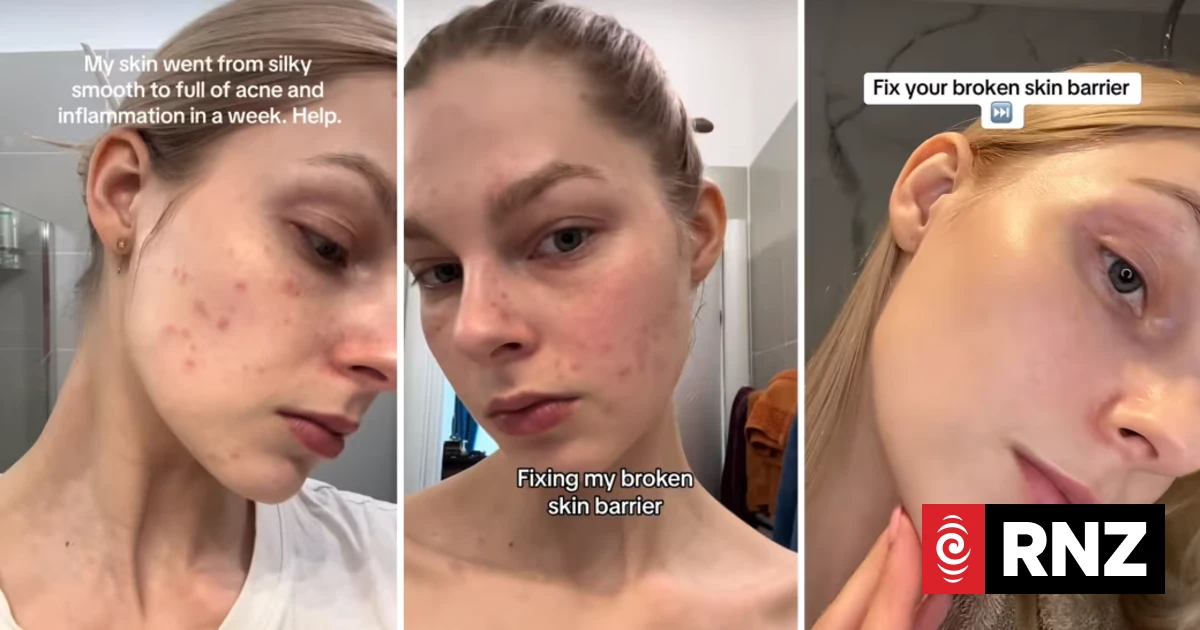
Instagram/Tilly Whitfield

Do I have acne or a damaged skin barrier? Difference explained by experts

Identifying why your skin is breaking out can feel like trying to find a needle in a haystack – especially if you have a complicated, multi-product routine.

And some conditions share similar symptoms, which can make it even more difficult to know what you’re struggling with.

Red bumps, inflammation, and irritated skin are all signs of both a damaged skin barrier and acne – but how do you know the difference between the two?

Tyla spoke with dermatologists, who have broken down the key distinctions you need to be aware of.

READ MORE: Skin barrier repair: the complete guide

To explain, your skin barrier is the outermost layer of your skin, which is known scientifically as the stratum corneum, and acts as a protective shield for your body.

It’s responsible for keeping moisture locked in and providing protection against external irritants and infections.

Using harsh products or very hot water, cleansing too frequently, and dry weather can all contribute to skin barrier disruption, as can introducing too many ingredients into a skincare routine at once.

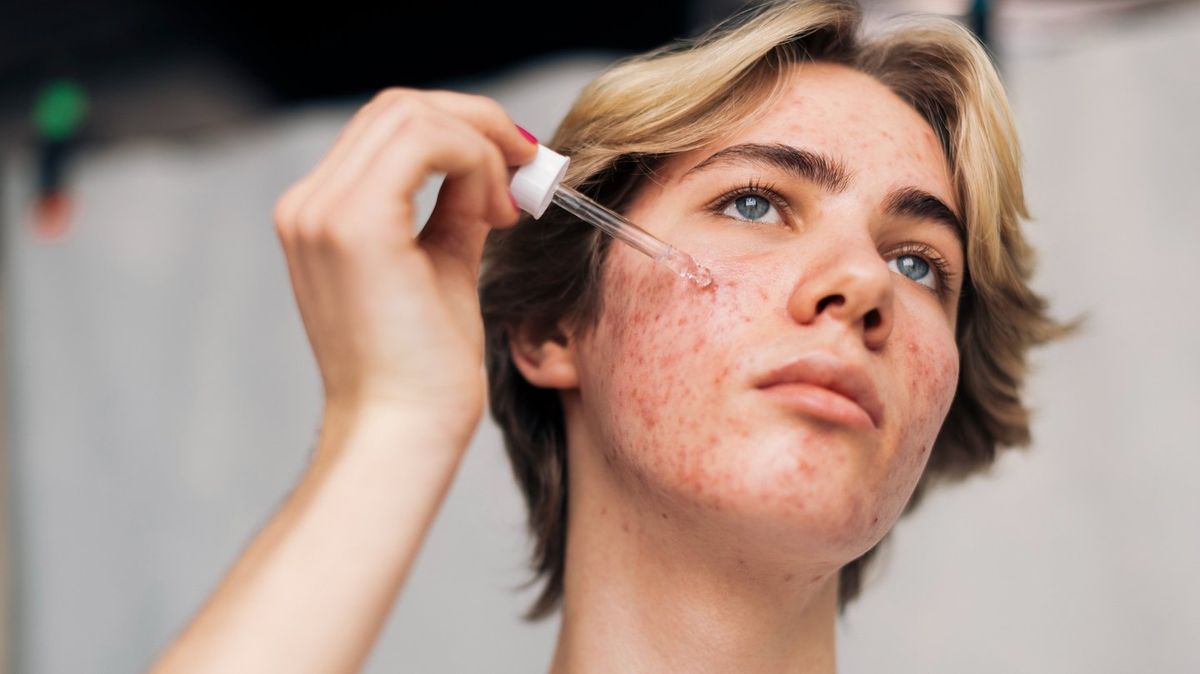
There are a number of ways your skin barrier can get damaged (Getty Stock Image)

Acne, on the other hand, is a skin condition that occurs when your hair follicles become plugged with oil and dead skin cells.

Highlighting the links between the two, Dr. Anna Andrienko, Dermatologist & Aesthetic Doctor at Dr Ducu Clinics, explains to Tyla: “Acne and a damaged skin barrier can sometimes look very similar, particularly when the skin is red, bumpy or inflamed.

“However, there are a few key differences that can help you understand what may be happening.”

Acne produces more ‘defined lesions’

She advises: “Acne tends to produce more defined lesions, such as blackheads, whiteheads, inflamed spots or deeper, sometimes painful lumps beneath the skin.

“Breakouts may also occur repeatedly in familiar areas, such as the chin, jawline, cheeks or forehead.”

A damaged skin barrier, however, often ‘presents differently,’ and rather than distinct spots, the skin may instead develop ‘lots of small bumps alongside redness, dryness or a rough texture’.

Dr Andrienko continues: “One of the biggest clues is how the skin feels. If your skin is stinging, burning or feeling unusually tight, particularly after cleansing or applying products you would normally tolerate, this may suggest that the skin barrier has become compromised.”

Acne often ‘presents differently’ to a damaged skin barrier (NHS website)

The conditions can co-exist

Dr Susie Gawler, Acne and Skin Lead at Boots Online Doctor, agreed that the two conditions are ‘more closely connected than they might first appear’ and can actually influence each other.

The expert explained: “A disrupted skin barrier can contribute to skin inflammation (and skin conditions such as eczema, rosacea and acne), while acne itself – and some of the treatments used to manage it – in turn can cause irritation and disruption to the skin barrier.

Read more: Adult acne: why it happens and what actually helps

“Acne is characterised by blocked pores and inflammation, including blackheads and whiteheads, red or inflamed spots and, in some cases, deeper, painful lumps beneath the skin. Increasingly, it’s thought that skin barrier dysfunction can be a contributing factor to this process.”

Dr Andrienko agrees: “It is also important to consider what has changed in your skincare routine. Over-cleansing, excessive exfoliation, and using too many active ingredients, such as acids or retinoids, can irritate the skin and disrupt the barrier. Someone trying to aggressively treat acne may therefore unintentionally cause barrier damage, which can make the skin appear even more inflamed and reactive.”

The first port of call if you’re struggling with your skin is to strip back your routine (Getty Stock Image)

What to do if you’re still unsure

If you’re still struggling to work out whether you’re dealing with acne, a damaged skin barrier, or both, there are a number of steps you can take.

Dr Andrienko suggests ‘simplifying your skincare routine and avoiding unnecessary exfoliation or multiple active ingredients until the skin has settled’.

She adds: “Focus on gentle cleansing, moisturising and supporting the skin’s natural barrier.

“However, persistent, painful or widespread breakouts should always be assessed by a qualified dermatologist. Not every bump or breakout is acne, and an accurate diagnosis is important before introducing stronger treatments.”

READ MORE: I wrecked my skin barrier with acne treatment – this £16 La Roche-Posay Balm fixed it

Dr Gawler explains that it’s important to ‘pay attention to how your skin feels while treating acne’ as treatments can be irritating or drying, especially when you’ve just started using them.

She explains: “Side effects often settle as your skin gets used to the treatment, and a gentle skincare regime can help protect and repair your skin barrier during this process.

“However, persistent dryness, tightness, soreness, flaking or unusual sensitivity, as well as stinging or burning when applying products you would normally tolerate, can indicate that your skin barrier has become disrupted.

“This can happen when multiple active ingredients are used together, the skin is over-exfoliated, or treatments are introduced too quickly.”

It’s not always one or the other – a damaged skin barrier can sometimes co exist (Getty Stock Image)

If your skin is becoming increasingly irritated while you are trying to treat acne, it’s worth ‘reassessing which products, and how many, you are using’.

Simplifying your routine is always a good first step, as is focusing on gentle cleansing, moisturising and sun protection to help your skin barrier.

Dr Gawler adds: “You can help protect your skin barrier by sticking to gentle cleansers, avoiding over-exfoliation and applying a non-comedogenic moisturiser (one that won’t clog pores) regularly.

“Barrier-supporting ingredients such as ceramides, glycerin and hyaluronic acid can help improve hydration and support the skin’s natural barrier, which may be particularly beneficial in acne-prone skin and during acne treatment.”

She concludes: “It is key to pay attention to the overall condition of your skin and whether your skincare routine is helping to protect your skin barrier and manage any skin conditions. Looking after your skin barrier can help support skin health and help you achieve better acne control.”

Tags: , , , , , ,
Horoscope icon

How often to clean makeup brushes and what to use: Experts verdict on TikTok washing machine hack

They get swiped all over our faces and dipped time and again into product and back onto our skin, and yet, makeup brushes rarely get cleaned as often as they should. But it’s worth finding the time to clean them because they are collecting a lot more than just your blush and eyeshadow. 

Cindy Gunawan, Associate Professor at the Australian Institute for Microbiology and Infection, University of Technology Sydney, told nine.com.au that, at the very least, not cleaning makeup brushes leads to “patchy uneven makeup application”.

Your makeup brushes are collecting a lot more than just your blush and eyeshadow. iStockphoto

“Makeup brushes can collect bacteria and fungi, as well as dead skin cells, skin oil (sebum) and dirt,” she said. 

“Using dirty brushes transfers this build-up to our face. This can lead to skin irritation, bacterial infections (staph), acne, as well as eye infections (for eye brushes), in particular in individuals with sensitive skin.”

So how often do we need to clean them? Gunawan’s recommendation differs depending on the brush and where it’s used.

“Lip brushes [should be cleaned] after every use; these readily collect dead cells, saliva, and are therefore a potential breeding ground for bacteria in moist environments. Cream/liquid products (foundation, cream blush) [need cleaning] once a week or more often for sensitive skin,” she said.

“Powder products (setting powder, blush) [should be cleaned] once a fortnight/month. Makeup sponges [need cleaning] once a week at minimum and need to be replaced after one to three months. Eye brushes [should be cleaned] ideally every one to two weeks; eyes are prone to infections (pink eye).”

Former makeup artist and beauty content creator Amelia Singson gave a blanket recommendation depending on whether they’re used for business or pleasure.

“Professionals who use them on clients should clean them between clients. For personal use, in a perfect world you’d clean them with a brush cleaner after every use but realistically, they should be cleaned at least once a week,” she said.

Since makeup brushes need regular cleaning many are resorting to a TikTok-famous hack that cleans all your brushes in one go and can be done while you wash your clothes. But this trick may be too good to be true with experts warning it could ruin the brushes, and it can’t be good for the washing machine either.

“I’ve seen this, and I wouldn’t recommend it,” Amelia Singson, former makeup artist and beauty expert, told nine.com.au. 

“It seems like the easier option, but it’s a fast way to shorten the life of your brushes. Long-wear makeup can get really embedded into the bristles, and a washing machine may not actually remove all of it.

“You don’t want to be soaking brushes all the way up to the ferrule (handle), as this can loosen the glue and eventually cause shedding.”

As for the washing machine, the makeup that does come off could leave your clothes stained and your appliance filthy.

“The impact on washing machines is more the makeup residue, oil, dyes that may not fully leave the drum, causing colour and oil transfer on the next load, getting caught up in the day to day build up of pipes, waste drains and drum,” Nicole Gibson, laundry expert from Soka Australia, told nine.com.au.

“The issue is you [shouldn’t] use an enzymatic laundry detergent to clean these, so it’s not going to clean and wash away during the cycle very effectively, leaving build up and residue which can then be transferred onto clothing. Team that up with a hot water load, and you are facilitating a stain that is going to be difficult to remove.”

Be careful not to soak the handle, as water can loosen the glue. iStockphoto

So the best way is still cleaning makeup brushes one by one with water and shampoo, dishwashing liquid or a specially designed brush cleaning product. For a budget-friendly option, Singson is a fan of Sunlight soap, which is $4.80 for a 500g pack at Woolworths.

Alcohol-based sprays are easy to use on the go and to clean brushes quickly, but Singson doesn’t recommend it as your sole brush cleaner because “over time they can be drying on delicate bristles”.

To clean brushes, Gunawan recommended these steps:

  1. “Under warm running water, rinse the bristle tips – be careful not to soak the handle, as water can loosen the glue.
  2. Put a small amount of mild soap on our palm, then gently swirl the bristle on our palm to make lather, this should loosen the debris in the bristle. 
  3. Rinse under running water, until the water is clear.
  4. Squeeze out excess water with a clean paper towel.
  5. Lay flat to air dry completely; be careful not to put them upright, as water can go into the handle.”

As for makeup sponges, Singson said they are “designed to absorb liquid so they get really filthy, but they’re so easy to clean”.

Here are the steps she recommended:

  1. “Soak your sponge in warm water, add a little cleanser and gently squeeze and massage the sponge until the makeup comes out. 
  2. Rinse and squeeze underwater until it runs clear.
  3. Leave it somewhere clean and well-ventilated to dry.”
Tags: , , , , , , , ,
Move Over French Girl Skincare

Move Over French Girl Skincare: Experts Say Australia’s “No Worries” Beauty Philosophy Is Taking Over the World

Move Over French Girl Skincare: Experts Say Australia’s “No
Worries” Beauty Philosophy Is Taking Over the World

You have probably, at some point, found yourself
layering snail mucin under camel milk, following a ten-step Korean
skincare routine that promised poreless perfection. Or maybe you
invested in French micellar water and the perfect rouge, chasing
that effortlessly chic Parisian glow that somehow always felt out
of reach. We have collectively spent years hopping from one
international beauty philosophy to another, always convinced the
next one would finally crack the code. But what if the real secret
was not about adding more steps – it was about stripping them away
entirely?

How we ended up with overflowing bathroom shelves

Think about the beauty rituals we
have adopted from around the world. K-beauty arrived from Korea
with elaborate multi-step regimens and exotic ingredients like
snail mucus and camel milk, all in pursuit of flawless skin.
Japanese beauty introduced streamlined yet luxurious products
rooted in refined skin rituals. And French girl beauty captivated
us for years, from pharmacy staples to that coveted undone look
that remained, for most of us, impossible to truly replicate – even
for the most devoted Francophiles.

Each of these traditions brought
something culturally rich and genuinely valuable to our

routines
. They still deserve a place in our hearts and
our cabinets. But here is the thing: have you noticed how
exhausting it has become to keep up? The sheer number of products,
the layering sequences, the rules – it all started to feel like a
second job rather than self-care.

That collective fatigue opened
the door to something refreshingly different. A movement rooted not
in complexity but in simplicity, nature, and a laid-back mindset.
It is called A-Beauty, short for Australian Beauty, and it is
quickly reshaping what we expect from our skincare.

Why the land down under is rewriting the beauty
playbook

At the heart of A-Beauty is a
philosophy that mirrors the Australian way of life itself. The
beach, the sun, the great outdoors – these are not just lifestyle
perks but beauty’s unsung heroes. Irene Falcone, a clean lifestyle
expert and the founder of Nourished Life, has described A-Beauty as
centered on simple, pared-back regimens built around naturally
derived products packed with powerful ingredients that actually
deliver on their promises.

Australians are known worldwide
for their relaxed, stress-free outlook, and Falcone notes that this
very approach to life is thought to have a positive impact on how
skin looks and feels. Unlike the pharmaceutical-heavy formulas
associated with French skincare or the intricate layering protocols
of Korean routines, A-Beauty is deliberately unfussy, hardworking,
and natural.

What makes it even more
distinctive is where the ingredients come from. Australia’s
geography is rare and precious – spanning sand, sea, forest, and
desert in ways found nowhere else on the planet. That diverse,
flourishing landscape yields highly innovative botanical
ingredients that skin genuinely responds to. Australian beauty
brands tend to be made not just in Australia but quite literally
from Australia, harnessing native flora and terrain-specific
elements that set them apart from anything else on the global
market.

A post-pandemic shift toward less-is-more skincare

The timing of A-Beauty’s rise is
no coincidence. The last few years pushed us to increase our
self-care efforts dramatically, yet they simultaneously forced us
to simplify. Hair regained its natural texture and color –
sometimes by choice, sometimes not. Nails went bare. Skin got a
well-earned break from layers of product. We collectively turned
our backs on overcomplicated, fussy routines and began craving
something more streamlined.

That craving dovetailed perfectly
with a broader cultural shift toward sustainability and
transparency. Falcone has called the move toward A-Beauty an
evolution that ties into current trends of minimalism, ingredient
transparency, and the expectation that products should do exactly
what they claim. With nature and the environment at its core, this
philosophy reflects our growing investment in understanding what we
put on our skin – and consuming beauty in a way that is sensitive
to issues like
climate change
and sustainability.

Global research by McKinsey
reinforces the momentum. According to the firm’s findings, the
pandemic increased demand for natural, sustainable beauty, with 57%
of consumers stating they had made significant changes to their
lifestyles to lessen their environmental impact. A-Beauty, with its
emphasis on efficacy, natural ingredients, and eco-conscious
processes, sits squarely at the intersection of everything modern
consumers say they want.

What this means for your routine going forward

The takeaway here is genuinely
liberating. You do not need a ten-step regimen or a cabinet full of
imported serums to take excellent care of your skin. A-Beauty
suggests the opposite: fewer products, potent natural ingredients
sourced from one of the most biodiverse landscapes on earth, and a
mindset that treats stress reduction as a legitimate skincare
strategy. It is an approach that is kind to you and kind to the
planet. And honestly, in a world that keeps getting more
complicated, a beauty philosophy built on simplicity might be
exactly what we all need next.

Tags: , , , , , , , , ,
Apple App Store

The ingredients to look for in your anti-ageing skincare, according to experts

The Independent and Yahoo will earn a commission from purchases made via links in this article. Pricing and availability are subject to change.

With so many anti-ageing creams promising smoother, firmer, more youthful-looking skin, it can be difficult to know which ingredients are actually worth looking for and which are nothing more than clever marketing.

There’s everything from retinol and peptides to antioxidants and hydrating serums, all promising to keep skin looking youthful. So, to help separate the science from the hype, I spoke to skincare experts Dr Brandon Richland, a board-certified plastic surgeon and Allyse Cirillo, Founder and CEO of SAINT JŌ.

I wanted to find out the key ingredients that can genuinely support healthier-looking skin. Whether you’re looking to soften the appearance of fine lines, improve elasticity or simply give your complexion a boost, these are the ingredients worth knowing about before you add another cream to your routine.

Read more: Best anti-ageing creams, reviewed

What are the most effective ingredients to look for in an anti-aging cream?

“A short list does most of the heavy lifting,” Dr Richland says. “Retinoids (retinol over the counter, or prescription tretinoin) are the workhorse. They speed up cell turnover and nudge your skin into building its own collagen, which is what softens fine lines and evens out tone over time,” he adds.

When choosing an anti-ageing cream, it’s not necessarily about finding one “miracle” ingredient, but rather a formula where ingredients work together to support the skin, Cirillo agrees.

Dr Richland says: “Vitamin C is your morning antioxidant. It mops up the free radicals from sun and pollution before they can do their damage, and it lends a hand with collagen while it’s at it. Niacinamide is the quiet achiever, strengthening the skin barrier and calming the redness and blotchiness a lot of people write off as just their complexion”

He also recommends peptides, which can signal the skin to produce more collagen and are often gentler than retinoids. He adds that hydrating ingredients like hyaluronic acid and ceramides help support the skin barrier, while daily SPF remains one of the most effective ways to protect skin over time.

Read more: Best hyaluronic acid serums, reviewed

Which anti-ageing ingredients have the strongest scientific evidence for reducing visible signs of ageing?

When it comes to the ingredients with the strongest scientific backing for reducing visible signs of ageing, both Dr Richland and Cirillo say that retinoids remain the benchmark, thanks to the long history of research in dermatology.

“They have decades of peer-reviewed research behind them, and the collagen increase is measurable on an actual skin biopsy, not just in a flattering before-and-after under good lighting,” notes Dr Richland.

“Vitamin C, niacinamide, and the alpha hydroxy acids make up a solid second tier of well-supported actives,” he adds.

Both experts also stress that no anti-ageing ingredient beats daily SPF to prevent visible ageing caused by sun exposure.

Read more: Best sunscreens for face

Are any anti-ageing ingredients overhyped?

Cirillo warns that some products promising dramatic before-and-after results can sometimes rely on approaches that “strip or inflame the skin”, which may do more harm than good over time.

She also advises being cautious of “hero ingredient” claims, as well as high-strength acids or retinoids used without enough barrier support. “Effective in the right context, overused in the wrong one,” she says. Cirillo adds that terms like “clean” should also be treated carefully, as they have no legal definition and shouldn’t be relied on alone when choosing skincare.

Topical collagen is one Dr. Richland is wary of, explaining that collagen molecules are too large to penetrate the skin. Instead, they simply moisturise the surface rather than boosting your skin’s collagen production, reiterating the benefits of ingredients such as retinoids and peptides instead.

What age should you start using anti-aging creams?

While Dr Richland reassures that there’s no panic birthday that changes everything overnight in terms of skincare, you should start using anti-ageing creams sooner than you might think, adding that prevention is always cheaper and easier than correction.

“Sunscreen should really start in childhood. A simple antioxidant and SPF routine makes good sense once you’re in your twenties. And most people do beautifully introducing a retinoid somewhere in their late twenties or thirties,” he explains. “The mindset that serves you best is protecting and maintaining the skin you have, rather than ignoring it for decades and then trying to play catch-up once the wrinkles have arrived.”

Best anti-ageing products

Facetheory glow-C daily moisturiser, SPF30

Rating: 4/5

Why we love it

  • A multi-tasking antioxidant serum, moisturiser and SPF in one

  • Powerhouse actives at a fraction of the price

  • Brightens and evens skin tone

Take note

  • Citrus scented, but also comes unscented

  • Slight tackiness on application

If you’re looking for a budget anti-ageing cream, this Facethetheory moisturiser is a great choice. Beauty journalist Sabine Wiesel wrote: “This is a relatively purse-friendly product that’s also a real multitasker, protecting and correcting signs of ageing like an antioxidant serum, moisturiser, and sunscreen all in one. Its mousse-like whipped texture immediately sinks into the skin, leaving it feeling comfortably hydrated.”

Read the full Facetheory glow-C daily moisturiser review

Buy now £21, Facetheory.com

Clarins double serum

Rating: 5/5

Why we love it

  • Boots radiance and hydration

  • Softens the look of lines and pores

Take note

  • There’s a light texture version also available, which may be more suitable for oily and combination skin types

  • It’s not cheap but the results are worth it

The Clarins double serum took the top spot in our guide to the best anti-ageing serums. After testing, beauty journalist Sabine Wiesel, wrote that it left her skin “incredibly soft” and looking “smoother and glowier”, and her “pores appear less noticeable”.

Buy now £65, Sephora.co.uk

Estee Lauder advanced night repair synchronized multi-recovery complex

Rating: 4.5/5

Why we love it

  • Multipurpose serum targets lines, skin tone, firmness

  • Cult classic beauty product

  • Suitable for all skin types – even sensitive

Take note

  • Looking to pay less try No 7’s night serum below for similar results

Another recommendation from Sabine Wiesel in her anti-ageing serums guide, she wrote: “I’ve gone through countless bottles because I know the very next day my skin already feels better hydrated. Estee Lauder was one of the first brands to use hyaluronic acid in their formulations, and they’ve combined it with squalane for a major moisture boost. But it’s peptides that soften the appearance of lines and improve skin firmness that really make skin look more youthful with continued use. It’s a classic for a reason.”

Buy now £65, Boots.com

Meet the expert

  • Dr. Brandon Richland: Board-certified plastic surgeon

  • Allyse Cirillo: Founder and CEO of SAINT JŌ

These are the best moisturisers for mature skin

Tags: , , ,
Vertical image of smiling woman with eyes shut, set against a beige background, with a leaf motif in the bottom right corner and polka dots behind the top left corner

Experts say this is the best skincare routine for your 50s

Your 50s can bring about some of the most dramatic changes to your skin, largely thanks to the hormonal shifts that happen during and after menopause.

According to multi-award-winning aesthetic doctor Dr Ana Mansouri, founder of Dr Ana The Skin Clinic, many women notice that skin suddenly feels drier, thinner and less robust than before, while pigmentation, fine lines and loss of firmness also become more visible.

This happens as collagen and elastin production – the skin’s natural source of bounce and resilience – starts to decline more rapidly. “Broken sleep and insomnia are often symptoms of menopause, and this can have a significant impact because sleep is essential for skin repair,” she explains, adding that delicate areas such as the eyes, neck and décolletage often need more attention this decade, too.

Latest Videos From

With the onslaught of hormonal fluctuations during menopause, you might feel there’s little you can do to improve matters. But despite these changes, it doesn’t mean it’s time to wave the white flag. Instead, it’s about understanding what your skin needs now and giving it the comfort, hydration and care it deserves.

The best skincare routine to follow in your 50s, according to experts

Rather than overloading skin with strong acids or too many active ingredients, Dr Mansouri recommends focusing on hydration, barrier support and consistent SPF application. She warns that “over-exfoliating can weaken the skin barrier, leaving it irritated, dehydrated and more sensitive,” adding that, just as in any other decade of our lives, sun damage remains one of the biggest contributors to collagen breakdown and pigmentation.


You may like

You don’t need to spend a fortune or jump into a complicated routine, Dr Mansouri also insists. Instead, she advises tailoring your products to work with skin during and after menopause with ingredients such as ceramides, peptides, hyaluronic acid, richer moisturisers and gentle retinal products.

Hydrating serums, targeted best eye creams and replenishing overnight treatments can also help support repair while we sleep, with Dr Mansouri adding that the biggest improvements often come from consistency and focusing on overall skin health rather than trying to “aggressively anti-age.”

Step 1: Cleanse and comfort

With skin often becoming more reactive and dehydrated during perimenopause and menopause, the focus should shift towards thorough yet gentle cleansing, rather than harsh products or over-exfoliating the skin barrier.

CeraVe

Hydrating Cleanser

RRP: £13

This creamy cleanser is a fab skincare staple thanks to its ability to deeply cleanse without leaving skin feeling tight or dry. Formulated with hyaluronic acid and three essential ceramides, it helps support the skin barrier and lock in moisture – ideal for menopausal skin that’s feeling more sensitive or depleted.

Gatineau

Collagene Expert Melting Cleansing Balm

RRP: £48

Who doesn’t love a balm? And this cleansing balm melts effortlessly into the skin to dissolve makeup, SPF and daily grime while leaving the complexion feeling soft, comforted and hydrated. Formulated with nourishing oils and collagen-supporting ingredients, including marine collagen and peptides.

Step 2: Deep hydration and barrier support

As natural oil production declines, skin often craves richer textures and moisture-replenishing ingredients to help restore comfort, bounce and resilience.

Vichy

Minéral 89 Hyaluronic Acid Serum

RRP: £28

This lightweight but hardworking serum combines hyaluronic acid with Vichy volcanic mineral water to drench skin with hydration and strengthen the skin barrier. Perfect for restoring freshness and suppleness when skin starts to feel less than its best.

L’Oreal Paris

Revitalift Filler [+Hyaluronic Acid] Serum

RRP: £32

A much-loved, affordable buy, this plumping serum uses concentrated hyaluronic acid to help smooth dehydration lines and leave skin looking fresher and juicier. It layers beautifully under moisturiser and works especially well on menopausal skin that’s lost some of its natural elasticity.

Dr.Jart+

Ceramidin Skin Barrier Moisturising Cream

RRP: £38

Hailed by some as a dry skin hero, this rich cream is packed with barrier-supporting ceramides and skin-softening panthenol. Its velvety texture feels wonderful and leaves skin replenished, soothed and noticeably more supple overnight.

Step 3: Tighten up and strengthen

As collagen decline accelerates, peptides and gentle vitamin A products are particularly helpful for maintaining firmness, texture and skin quality in your 50s.


What to read next

PAI

ROSEHIP BIOREGENERATE FACE OIL

RRP: £34

If you prefer a natural approach to skin renewal, this cult facial oil combines rosehip fruit and seed oils rich in antioxidant carotenoids and essential fatty acids to help improve radiance and softness, leaving skin feeling super nourished. We are also fans of Pai’s Retinoid 0.3% Skin Renewal Booster, which is a great next step for slowly introducing vitamin A into your routine.

Avène

Retrinal 0.1% Intensive Cream

RRP: £49

This gentle retinal treatment has all the complexion-boosting benefits of vitamin A without excessive irritation. Formulated with retinaldehyde and soothing Avène Thermal Spring Water, it helps improve pigmentation and fine lines while remaining kind to sensitive skin.

Step 4: Restore radiance and defend skin

Pigmentation and dullness often become more noticeable during menopause, so antioxidant protection and daily application of the best facial sunscreen are essential for helping skin look brighter, fresher and more even-toned.

Vichy

Liftactiv 16% Pure Vitamin C Brightening Serum

RRP: £39

Formulated with 15% pure vitamin C alongside antioxidant pycnogenol, this brightening serum helps soften uneven tone and leave skin looking more luminous and refreshed over time. Particularly good for dull or lacklustre complexions.

La Roche-Posay

La Roche-Posay Anthelios UVMune 400 Invisible Fluid SPF50+

RRP: £21

It goes without saying that wearing SPF every day, regardless of the weather, is non-negotiable. Just this step alone will help protect against pigmentation, collagen breakdown and premature ageing, and this lightweight formula offers high UVA and UVB protection without leaving skin feeling greasy or heavy, so it’s easy to wear every day under makeup.

Step 6: Extra helpers for delicate skin

The thinner skin around the eyes, neck and chest is often one of the first areas to show signs of menopause-related collagen decline, dryness and loss of elasticity, so in your 50s it’s worth investing in products designed specifically for these areas.

e.l.f.

SKIN Illuminating Eye Cream

RRP: £11

A brilliant budget-friendly eye cream, this lightweight formula helps hydrate and brighten the delicate under-eyes while softening the appearance of tiredness and dehydration lines. Infused with hyaluronic acid and peptides, it leaves the eye area looking fresher, smoother and more awake.

Boost Lab

Edelweiss Neck Firming Serum

RRP: £24.95

Reviewers say this neck serum feels far more luxurious than its price tag suggests, thanks to its silky, lightweight texture and instantly smoothing feel on the skin. Designed specifically for the neck and décolletage area, it combines antioxidant-rich Edelweiss extract with hydrating ingredients to help improve firmness and leave skin looking smoother and more refined with regular use.

No7

Future Renew Damage Reversal Serum

RRP: £35

One of the most talked-about skincare launches in recent years and for good reason. This peptide-led serum was developed to help support the skin’s natural repair process while tackling midlife concerns like lack of firmness, uneven texture and sun damage. As well as the face serum, the range also includes targeted products for the body and neck and décolletage. We think it’s a great mid-price option for science-backed skincare that won’t break the bank.

The expert’s no.1 in-clinic treatment for skin in its 50s

If she had to choose one approach for women in their 50s, Dr Ana Mansouri says she would opt for a combination of skin boosters and LPG Cellu M6 Infinity®. “Lymphatic drainage is so often overlooked, but it’s essential as a first step in improving overall skin quality,” she explains. Originally developed for physiotherapy, the LPG treatment uses precise cellular stimulation to support lymphatic drainage while also helping calm the nervous system, which can have knock-on benefits for the skin, too.

Dr Mansouri then combines this with regenerative injectable treatments such as Sculptra or polynucleotides, which help improve hydration, tissue repair and collagen stimulation for firmer, healthier and more radiant-looking skin. “The results are incredibly natural, which is something many women in this age group are looking for,” she says.

“Skin tends to look fresher, smoother and more rested without looking overdone.” She adds that they can work particularly well around delicate areas such as the eyes, where skin often becomes thinner and more crepey during menopause and beyond.

Tags: , , ,
Apple App Store

Skincare Experts Say These Beauty Secrets Are Essential for Woman Over 50

Fri, June 26, 2026 at 8:53 PM UTC

Beauty Products Women Over 50 Actually Use

As we age, our skincare and cosmetic preferences tend to adapt to our changing needs. With concerns like collagen loss or skin dryness, it’s important to focus on products that are hydrating and gentle while leaving skin looking (and feeling) refreshed, says GH Beauty, Health & Sustainability Lab Director Sabina Wizemann.

She recently shared her top tips for curating a skincare routine over 50, and several of her favorite products—as well as our editors makeup essentials—happen to be on sale for Amazon Prime Day. Should you want to try something new or stock up on your favorites, the time is now.

You Might Also Like

Tags: , , , , ,
Why skincare experts are talking about calabash

Why skincare experts are talking about calabash

Follow this guide

What’s the story

African calabash is a natural beauty secret that has been used for centuries across Africa.
The versatile fruit, known for its hard shell, is packed with nutrients that can do wonders for your skin and hair.
From moisturizing to promoting healthy growth, African calabash has it all.
Here is how this age-old remedy can be incorporated into your beauty routine.

Moisturizing benefits of calabash oil

Calabash oil is extracted from the seeds of the African calabash and is widely known for its moisturizing properties.
It penetrates deep into the skin, making it soft and supple, without making it greasy.
The oil is rich in essential fatty acids, which help retain moisture and improve skin elasticity.
It can be used as a daily moisturizer or added to your favorite skincare products for an extra hydration boost.

Anti-aging properties of calabash extract

African calabash extract is packed with antioxidants that fight free radicals responsible for aging.
These antioxidants help reduce fine lines and wrinkles, while improving skin tone and texture.
Adding products with calabash extract to your skincare routine can help you achieve a youthful glow.

Versatile uses in skincare routines

Apart from moisturizing and anti-aging benefits, African calabash can be used in various skincare routines.
It acts as a natural exfoliant when mixed with other ingredients, like sugar or salt, making it ideal for DIY scrubs at home.
Its versatility makes it an ideal ingredient to experiment with different formulations according to individual needs.

Promoting healthy hair growth

The nutrients in calabash oil also promote healthy hair growth. It strengthens hair follicles, reduces breakage, and improves overall scalp health.
Regular application of this oil can lead to thicker, stronger hair over time.
For best results, massage a few drops of calabash oil onto your scalp before washing your hair.

Tags: , , ,
Teen Vogue

4 Easy Makeup Routines in Under 30 Mins for Busy Mornings, Approved by Experts

Early morning makeup routines may feel frivolous. Whether it’s a chaotic dash out the door, coffee in one hand and backpack in the other, or you’ve somehow mastered the elusive art of actually having time for a full routine – school mornings still have a way of feeling like a total blur. Some days you’re working with a precious five minutes, and other days you might get a luxurious thirty.

The truth is, your morning makeup doesn’t have to feel like an uphill battle, and it can actually be one of the easiest parts of your day – that’s if you have your routines down pat.

Five minutes and go? We can make it work. And if you have ten minutes, or even thirty? Easy! There are truly simple and quick makeup routines for everyone and every timeframe! Here are your time-saving beauty routines by the experts broken down by how much time you have, so take notes.

What’s in this article:

AccordionItemContainerButton

The Two-Minute Morning Skin Care Routine

Whether you wear makeup or not, skin care is one thing you might not want to skip. It can actually be the focal point of your getting-ready routine.

“We’re all about skin-first confidence, and your routine should work with you and your skin, not against it,” says Gaia Carminati, Head of Product Development at Indu Beauty. “Start with clean, calm skin and a few easy steps that let your natural skin be its best. Think cleanser, SPF, a multi-use tinted glow, brushed-up brows, and you are good to go.”

Neutrogena

Ultra Sheer Invisible Gel Face Sunscreen SPF 40

Cetaphil DermaControl Oil Absorbing Moisturizer SPF 30

The Five-Minute Morning Routine

Rise and shine! When you’re running on “zero sleep” and only have five minutes, the goal is to look awake and put together without trying too hard. Most MUAs agree on one key strategy: focusing on high-impact, multi-use products. Celebrity makeup artist, Janice Daoud, who works with the likes of Miley Cyrus and Isabela Merced, calls it the “skin, lash, [and] lip trifecta.”

Tags: , , , , , , ,
Bored Panda

Celebrity Skincare Expert’s ‘Genius’ Lip Balm Hack Could Save You Hundreds Per Year

James Vivian, a Melbourne-based dermal therapist known for sharing skincare tips on Instagram, in a March 15 video claimed that lip balms have the potential to serve more than their marketed purpose.

The expert said that lip balms can replace anti-aging products that target a specific, delicate area of the face by providing the same hydrating benefits at a more economical price.

Many on the internet corroborated the claim, with one saying they had been using lip balms in the way the skin expert shared for decades and that it made them look like they were in their “40s instead of 70s.”

Another user who tried the trick after Vivian’s video also said it “worked wonderfully.”

James Vivian advocated the use of lip balms as under-eye creams

Image credits: jamesvivian/Instagram

“As a 42-year-old man who hasn’t spent much time in the sun, really, the area of aging that I’m seeing most on my face is around my eyes,” Vivian said in his video.

The skin around the eyes is one of the thinnest on the body, making it particularly prone to dryness, creasing, and premature aging.

Image credits: jamesvivian/Instagram

Keeping this area hydrated could help minimize the damage, Vivian said, before sharing that he uses no fancy product to achieve the results.

He instead said he swears by using his lip balm to soothe and rejuvenate his under-eyes.

Lip balms are packed with occlusives and emollients — ingredients designed to lock in moisture — which is why Vivian believes they can double as a quick, budget-friendly eye treatment.

Vivian, however, warned against using balms “that fire up the lips” around the eyes.

“The really spicy ones with stimulating ingredients for circulation and plumping, the kind of bee-sting products, I’d keep that away from eye areas,” he said.

He also noted that it’s not a good idea to apply lip balms under makeup, as the thick texture of the product can disrupt concealer and cause creasing.

Jennifer Lopez’s makeup artist, Scott Barnes, encouraged using lip balms under makeup

Image credits: jlo/Instagram

In a May 2024 video, Barnes claimed one of his most reliable makeup hacks is to use Aquaphor (a balm stick by a company called Eucerin) on his clients’ eyes before proceeding with concealer.

The technique prevents concealers from creasing, caking, or breaking down, especially when someone is filming a music video or a movie that goes on for long hours.

Barnes asked his followers to try the hack and let him know if it worked for them.

The hack was soon tested by Glam Girl Gabi, a renowned beauty influencer and a licensed hairstylist and makeup artist.

“I’m going to try the trick all the freaking way. I’m doing the classic bronzy J.LO smoky eye,” Gabi claimed.

Pointing to the fine lines under her eyes, Gabi said, “I really do have an issue with my concealer creasing.”

After applying the lip balm under her eyes, she proceeded to do a full face of makeup, including concealer, foundation, setting powder, and more.

Gabi looked impressed with how her concealer set under her eyes, thanks to the lip balm towards the end.

“I have tried every d**n hack. I’ve tried every single thing. My under-eyes have never looked better,” she said. 

Hours after first doing her makeup, Gabi gave her viewers a video check of whether her eye makeup remained in place.

“They look so much better than they normally look after a few hours. Life-changing, I tell ya,” she shared.

In a separate video, James Vivian warned against spraying perfume directly on the skin

Image credits: jamesvivian/Instagram

Highlighting people’s habit of spraying fragrances right on their neck, Vivian said it could have long-term consequences.

He explained that applying perfume to the skin can trigger a condition known as Poikiloderma of Civatte.

It is a sun-induced skin condition in which the affected area develops reddish-brown pigmentation, mottled discoloration, and thinning of the skin.

While it is not harmful, it is notoriously difficult to treat once it develops.

Laser treatments, along with diligent sun protection, can help improve appearance, but Vivian stressed prevention is far better than cure.

Image credits: Cultura Creative/Adobe Stock (Not the actual photo)

Many perfumes contain photosensitizing ingredients (citrus oils, oakmoss, and certain synthetics like musk ambrette), which can make the skin more sensitive to UV rays.

When applied to sun-exposed areas like the neck, these ingredients can magnify the effects of sun exposure, accelerating pigmentation changes and even breaking capillaries over time.

Vivian advised using scents on clothes, hair, or covered skin, like under the collarbone, to protect oneself against stubborn pigmentation issues later in life.

“I swear to God, I came up with this on my own one day,” a netizen said 

Tags: , , , , , , , , ,
How and When to Use Retinol and Vitamin C, According to Experts

How and When to Use Retinol and Vitamin C, According to Experts

Even as a longtime beauty editor, I find it hard to keep up with all the different skincare ingredients out there. Peptides, PDRN, growth factors, ectoin, hypochlorous acid, the list of trending ingredients goes on and on. Despite all the newness, every time I ask a dermatologist what I should be using in my skincare routine, the same two ingredients come up: retinol and vitamin C. When it comes to efficacy, these two ingredients truly work.

“These ingredients are a dream team for tackling dullness, fine lines, hyperpigmentation, acne and acne scarring, and overall skin aging,” says dermatologist Deanne Mraz, MD, noting that retinol and vitamin C are the two ingredients she recommends most to her patients. “From a health perspective, vitamin C neutralizes free radicals and stressors on the skin, while retinol helps the skin to shed unhealthy and potentially pre-cancerous skin cells, so they’re very complementary.”

This is exactly why I compiled this handy guide for combining retinol and vitamin C. Ahead, everything you need to know about using this derm-favorite duo, plus the best retinol and vitamin C products to try right now.

Retinol 101

What is retinol and how does it work?

Retinol is a derivative of vitamin A that’s often used in skincare products to stimulate collagen production (the protein responsible for skin smoothness and firmness) and trigger cell turnover (your skin’s natural renewal process). “By signaling cells to behave like younger cells, retinol can smooth fine lines and wrinkles, fade dark spots and hyperpigmentation, and improve skin’s tone and texture,” explains dermatologist Dendy Engelman, MD.

Retinol is also a fantastic ingredient for treating acne, since it “works on a cellular level to help kickstart your cell turnover rate, reduce inflammation, and decrease oil production—all key functions for keeping pores clear and skin free of breakouts,” says dermatologist Shari Marchbein, MD.

What to look for in a retinol:

Retinol is available in various potencies either over-the-counter or via a prescription and is typically offered in the form of a face serum, gel, or night cream. I personally use an Rx retinol from my dermatologist to help with my acne, but if you go the over-the-counter retinol route, choose a formula that’s labeled “encapsulated.” That means the retinol will be slowly released into the skin to mitigate any irritation and keep the ingredient more stable.

You’ll also want to pay attention to the percentage of retinol in your serum or cream as well. As a general rule, it’s best to start out with a low percentage, like 0.25, and then gradually work your way up to a higher concentration, like 0.5 or 1.0, as your skin tolerates it.

What can retinol not be used with?

While we’re on the topic of retinol, it’s important to know that the ingredient is strong and can cause skin to peel, flake, or become sensitive—especially during the first few weeks of use or when combined with other harsh actives, like AHAs and BHAs. That means that retinol cannot be used at the same time as your leave-on products with glycolic acid, mandelic acid, lactic acid, or salicylic acid.

Vitamin C 101

What is vitamin C and how does it work?

Vitamin C is a powerful antioxidant that can help prevent signs of aging and repair skin damage when used topically. In terms of prevention, vitamin C is excellent at protecting the skin from free radical damage caused by environmental aggressors, such as pollution, infrared light, and blue light, says Dr. Mraz.

“On the reparative side, vitamin C also supports collagen synthesis and helps regulate melanin production to fade hyperpigmentation and give skin nice overall vibrancy and glow,” says Dr. Mraz, adding that research has also shown that vitamin C, which is often found in the form of a serum, can boost the protective benefits of SPF when used together.

What to look for in a vitamin C serum:

Not all vitamin C serums are created equal. According to Dr. Marchbein, the most effective formulas contain one of the seven commonly used forms of vitamin C below:

  • L-Ascorbic Acid: The most powerful and well-studied form of vitamin C. While very effective, it may be too strong for those with sensitive skin. Plus, it’s unstable, so if it’s not properly packaged, it can become inactive.
  • Tetrahexyldecyl Ascorbate (THD): A form of vitamin C that’s as potent as L-ascorbic acid, but much more stable and less irritating to the skin.
  • Sodium Ascorbyl Phosphate/Magnesium Ascorbyl Phosphate: Two stable, hydrating forms of vitamin C that pair well with niacinamide.
  • Sodium Ascorbate/Calcium Ascorbate: Often referred to as vitamin C esters, these are two more stable and non-irritating forms of vitamin C:
  • Ascorbyl Palmitate: One of the least powerful forms of vitamin C, but it’s the most stable (aka least likely to break down when exposed to light or air) and a great choice for sensitive skin.

Also important to note? The percentage of vitamin C used in the formula. In general, vitamin C serums with 10 to 30 percent of the ingredient are more likely to be effective on dark spots and hyperpigmentation, while anything under 10 percent functions as a powerful antioxidant and will protect skin from free radical damage.

And lastly, you’ll want to consider the packaging. Depending on the formulation, vitamin C can oxidize (or become less effective) when exposed to light and air. To ensure your vitamin C serum stays fresh and effective, choose a formula that’s housed in opaque, airtight packaging when possible.

Tips on using retinol and vitamin C together:

What are the risks of using retinol and vitamin C together?

Vitamin C and retinol are both very powerful ingredients, which is in many ways what makes them so worthwhile, but it also means that you need to use them with caution. “Using these ingredients together is great for getting the protective and anti-aging results that you want, says Dr. Engelman, “but the downside is that they can irritate the skin.”

And that’s especially true if you have sensitive skin: “Using both retinol and vitamin C can cause redness, itchiness, sensitivity, and other unwanted side effects,” says Dr. Engelman. That said, you can avoid or lessen irritation by spacing out the time between applying these two ingredients, or by using your vitamin C in the morning and your retinol at night.

Can I use retinol at night and vitamin C in the morning?

In general, yes, retinol is best used at night, and vitamin C is best used in the morning. In the morning, apply your vitamin C serum to clean, dry skin and follow with a face moisturizer for your skin type and sunscreen with SPF 30 or more. If you’re using a face moisturizer with vitamin C, then just SPF on top is fine.

“In the evening, you should apply your retinol to clean, dry skin, and if your skin tends to be on the drier side, you can layer it with a hyaluronic acid serum or hydrating moisturizer,” says Dr. Mraz. And since retinol can cause excessive dryness around the eyes and mouth, Dr. Mraz recommends applying an occlusive ointment, such as Aquaphor or Vaseline, to those areas before using your retinol to create a protective barrier.

And FYI, if you’re someone who can’t be bothered with an a.m. and p.m. routine and just wants to focus on skincare at night, you can use vitamin C and retinol together as long as it’s in the same product (try Neutrogena’s Rapid Tone Repair Correcting Cream or U Beauty’s Resurfacing Compound).

The bottom line:

Our experts all agree that when it comes to preventing and treating acne and acne scars and reversing signs of aging, like fine lines, uneven skin texture, and discoloration, there are no two better ingredients than retinol and vitamin C. “It’s definitely a good idea to use both of these ingredients in your regular skincare routine,” says Dr. Engelman.

Just remember to choose formulas that are right for your skin type and skin concerns and to use your vitamin C in the morning (with SPF, of course) and your retinol in the evening before bed.

Meet the experts:

  • Deanne Mraz, MD, is a board-certified dermatologist and cofounder of Modern Dermatology in Westport, CT, where she and her team offer all types of medical and cosmetic dermatology treatments.
  • Dendy Engelman​, MD, is a board-certified cosmetic dermatologist and Mohs surgeon at Shafer Clinic in New York, NY. Dr. Engelman is an expert in injectables, lasers, and chemical peels.
  • Shari Marchbein, MD, is a board-certified dermatologist and founder of Niche Dermatology in New York, NY, who specializes in cosmetic and medical dermatology.

Why trust Cosmopolitan?

Lauren Balsamo is the beauty director at Cosmopolitan, with more than 13 years of experience researching, writing, and editing beauty stories ranging from the best skincare routine for your 30s to a comprehensive roundup of the best drugstore skincare brands. She regularly tests and analyzes new skincare products and treatments while working with the industry’s top experts to assess new brands, trends, and technologies.

Lauren Balsamo is the beauty director at Cosmopolitan where she writes, edits, and produces all types of beauty content—from product reviews to personal essays and trend reports. She has covered beauty for more than a decade at Cosmopolitan. Follow her on Instagram. 

Tags: , ,
Best oLive
Privacy Overview

This website uses cookies so that we can provide you with the best user experience possible. Cookie information is stored in your browser and performs functions such as recognising you when you return to our website and helping our team to understand which sections of the website you find most interesting and useful.