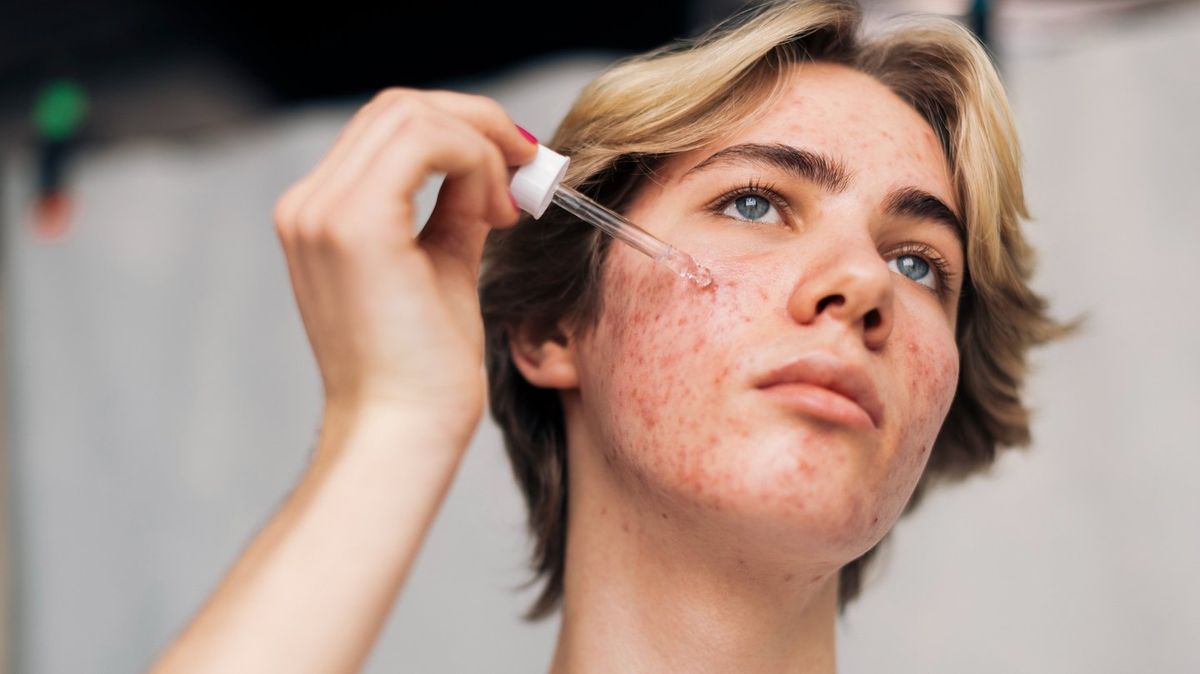
Instagram/Tilly Whitfield

Do I have acne or a damaged skin barrier? Difference explained by experts

Identifying why your skin is breaking out can feel like trying to find a needle in a haystack – especially if you have a complicated, multi-product routine.

And some conditions share similar symptoms, which can make it even more difficult to know what you’re struggling with.

Red bumps, inflammation, and irritated skin are all signs of both a damaged skin barrier and acne – but how do you know the difference between the two?

Tyla spoke with dermatologists, who have broken down the key distinctions you need to be aware of.

READ MORE: Skin barrier repair: the complete guide

To explain, your skin barrier is the outermost layer of your skin, which is known scientifically as the stratum corneum, and acts as a protective shield for your body.

It’s responsible for keeping moisture locked in and providing protection against external irritants and infections.

Using harsh products or very hot water, cleansing too frequently, and dry weather can all contribute to skin barrier disruption, as can introducing too many ingredients into a skincare routine at once.

There are a number of ways your skin barrier can get damaged (Getty Stock Image)

Acne, on the other hand, is a skin condition that occurs when your hair follicles become plugged with oil and dead skin cells.

Highlighting the links between the two, Dr. Anna Andrienko, Dermatologist & Aesthetic Doctor at Dr Ducu Clinics, explains to Tyla: “Acne and a damaged skin barrier can sometimes look very similar, particularly when the skin is red, bumpy or inflamed.

“However, there are a few key differences that can help you understand what may be happening.”

Acne produces more ‘defined lesions’

She advises: “Acne tends to produce more defined lesions, such as blackheads, whiteheads, inflamed spots or deeper, sometimes painful lumps beneath the skin.

“Breakouts may also occur repeatedly in familiar areas, such as the chin, jawline, cheeks or forehead.”

A damaged skin barrier, however, often ‘presents differently,’ and rather than distinct spots, the skin may instead develop ‘lots of small bumps alongside redness, dryness or a rough texture’.

Dr Andrienko continues: “One of the biggest clues is how the skin feels. If your skin is stinging, burning or feeling unusually tight, particularly after cleansing or applying products you would normally tolerate, this may suggest that the skin barrier has become compromised.”

Acne often ‘presents differently’ to a damaged skin barrier (NHS website)

The conditions can co-exist

Dr Susie Gawler, Acne and Skin Lead at Boots Online Doctor, agreed that the two conditions are ‘more closely connected than they might first appear’ and can actually influence each other.

The expert explained: “A disrupted skin barrier can contribute to skin inflammation (and skin conditions such as eczema, rosacea and acne), while acne itself – and some of the treatments used to manage it – in turn can cause irritation and disruption to the skin barrier.

Read more: Adult acne: why it happens and what actually helps

“Acne is characterised by blocked pores and inflammation, including blackheads and whiteheads, red or inflamed spots and, in some cases, deeper, painful lumps beneath the skin. Increasingly, it’s thought that skin barrier dysfunction can be a contributing factor to this process.”

Dr Andrienko agrees: “It is also important to consider what has changed in your skincare routine. Over-cleansing, excessive exfoliation, and using too many active ingredients, such as acids or retinoids, can irritate the skin and disrupt the barrier. Someone trying to aggressively treat acne may therefore unintentionally cause barrier damage, which can make the skin appear even more inflamed and reactive.”

The first port of call if you’re struggling with your skin is to strip back your routine (Getty Stock Image)

What to do if you’re still unsure

If you’re still struggling to work out whether you’re dealing with acne, a damaged skin barrier, or both, there are a number of steps you can take.

Dr Andrienko suggests ‘simplifying your skincare routine and avoiding unnecessary exfoliation or multiple active ingredients until the skin has settled’.

She adds: “Focus on gentle cleansing, moisturising and supporting the skin’s natural barrier.

“However, persistent, painful or widespread breakouts should always be assessed by a qualified dermatologist. Not every bump or breakout is acne, and an accurate diagnosis is important before introducing stronger treatments.”

READ MORE: I wrecked my skin barrier with acne treatment – this £16 La Roche-Posay Balm fixed it

Dr Gawler explains that it’s important to ‘pay attention to how your skin feels while treating acne’ as treatments can be irritating or drying, especially when you’ve just started using them.

She explains: “Side effects often settle as your skin gets used to the treatment, and a gentle skincare regime can help protect and repair your skin barrier during this process.

“However, persistent dryness, tightness, soreness, flaking or unusual sensitivity, as well as stinging or burning when applying products you would normally tolerate, can indicate that your skin barrier has become disrupted.

“This can happen when multiple active ingredients are used together, the skin is over-exfoliated, or treatments are introduced too quickly.”

It’s not always one or the other – a damaged skin barrier can sometimes co exist (Getty Stock Image)

If your skin is becoming increasingly irritated while you are trying to treat acne, it’s worth ‘reassessing which products, and how many, you are using’.

Simplifying your routine is always a good first step, as is focusing on gentle cleansing, moisturising and sun protection to help your skin barrier.

Dr Gawler adds: “You can help protect your skin barrier by sticking to gentle cleansers, avoiding over-exfoliation and applying a non-comedogenic moisturiser (one that won’t clog pores) regularly.

“Barrier-supporting ingredients such as ceramides, glycerin and hyaluronic acid can help improve hydration and support the skin’s natural barrier, which may be particularly beneficial in acne-prone skin and during acne treatment.”

She concludes: “It is key to pay attention to the overall condition of your skin and whether your skincare routine is helping to protect your skin barrier and manage any skin conditions. Looking after your skin barrier can help support skin health and help you achieve better acne control.”
Tags: , , , , , ,
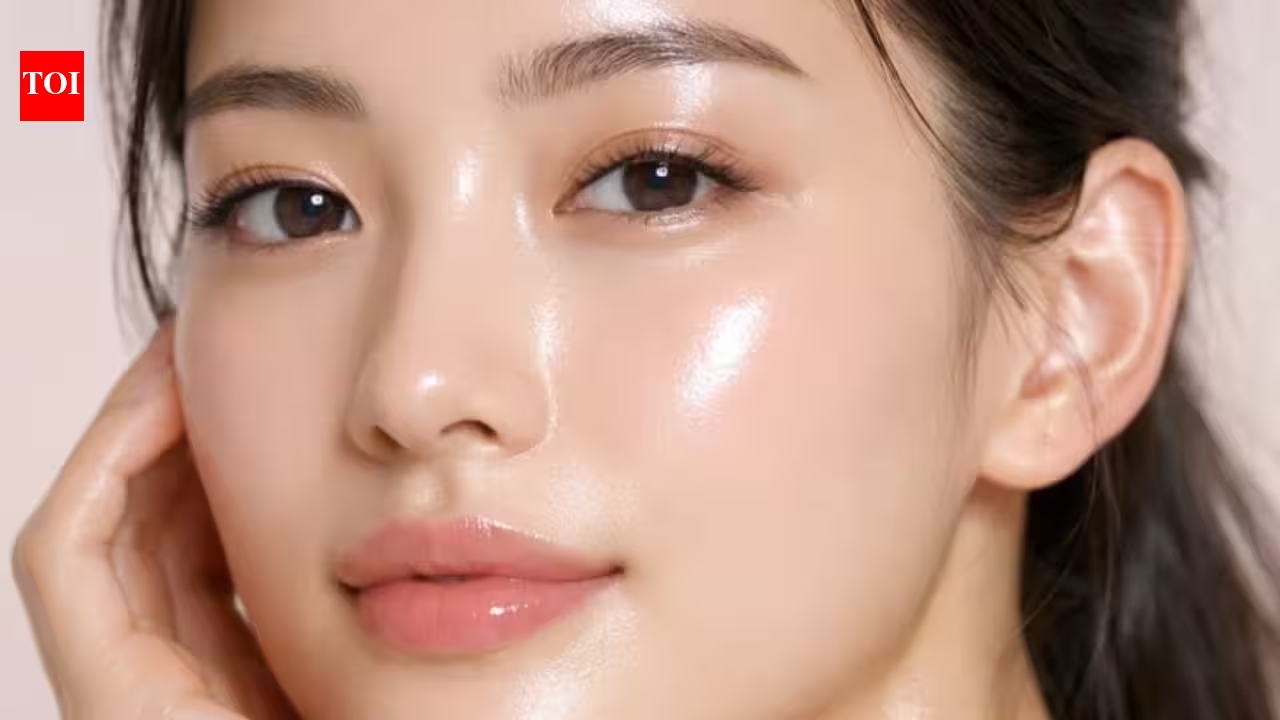
Want Korean glass skin? These 5 daily habits make all the difference

Want Korean glass skin? These 5 daily habits make all the difference

We’ve all spent way too much time staring at K-drama stars, wondering how their skin looks so impossibly flawless. That luminous, poreless, almost translucent complexion—famously dubbed ‘glass skin’—has taken the global beauty world by storm. But if you think achieving it is just about good genetics or buying one expensive cream, think again. The Korean approach to beauty is basically a lifestyle.

It completely ditches the idea of harsh, overnight fixes. Instead, the focus shifts entirely to consistency, barrier protection, and deep hydration. You don’t have to overhaul your entire bathroom cabinet to get in on the action, though. You just need to change how you treat your skin on a daily basis. Here are six core habits Koreans do differently to get that perfect glow.

Tags: , , , , ,
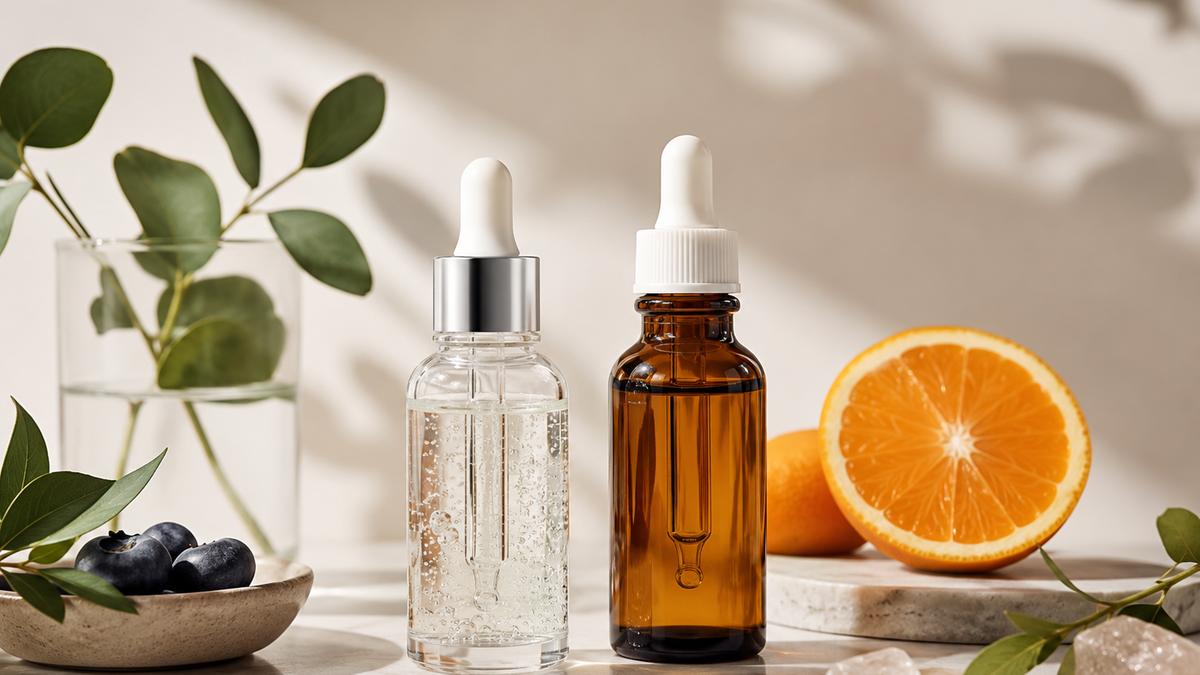
Niacinamide vs Vitamin C: What's the Difference and Which Is Better for Your Skin?

Niacinamide vs Vitamin C: What’s the Difference and Which Is Better for Your Skin?

Living in India means your skin has a lot to deal with. One day it’s the sun, the next it’s humidity, dust, pollution or hard water. And if you’ve decided to add your first serum to your skin care routine, you’ve probably come across two names more than any others: niacinamide and vitamin C. They sound similar, but they do very different jobs.

One promises brighter skin. The other claims to reduce oil, calm acne and strengthen your skin barrier. Both have loyal fan clubs, and both are backed by research. So, if you’re only planning to add one serum to your routine, which one deserves a spot on your shelf?

The answer is less about which ingredient is “better” and more about what your skin is trying to tell you.

Also Read: The ultimate beginner’s guide to skincare for men in India

Let’s clear up one of the biggest misconceptions. Niacinamide and vitamin C aren’t rivals. Think of them as two colleagues working on different tasks.

One helps your skin defend itself and stay balanced. The other helps protect it from environmental damage while improving brightness. They can even complement each other when used correctly.

The old belief that the two ingredients cancel each other out came from older laboratory studies conducted under conditions that don’t reflect how modern skincare products are formulated or used. Most dermatologists today agree that they can be used together.

So if you’ve been avoiding one because someone on social media said they “don’t mix”, you can stop worrying.

What exactly is niacinamide?

Niacinamide is a form of vitamin B3, and it’s one of the gentlest skincare ingredients around.

If your skin often feels oily by lunchtime, breaks out during humid weather or gets irritated easily, niacinamide is worth considering.

Research has shown that niacinamide can help strengthen the skin barrier, reduce water loss, regulate oil production and improve the appearance of enlarged pores over time. It also has anti-inflammatory properties, which is why it’s commonly recommended for people with acne-prone or sensitive skin.

Also Read: Sharing skincare with friends? Doctors say think again 

Imagine commuting through traffic in Bengaluru, Delhi or Mumbai every day. Between the heat, dust, pollution and air conditioning, your skin goes through a lot. Niacinamide works like a support system, helping your skin recover from those daily stressors.

Niacinamide may be a good choice if:

  • Your skin gets oily easily.
  • You have mild acne or frequent breakouts.
  • Your skin barrier feels damaged after trying too many products.
  • You want a gentle ingredient that’s suitable for beginners.
  • You have redness or sensitive skin.

What about vitamin C?

Vitamin C has earned its place as one of skincare’s most popular ingredients for good reason.

It’s a powerful antioxidant, which means it helps protect the skin from damage caused by UV rays and pollution. It also supports collagen production and helps improve uneven skin tone and pigmentation.

If you’ve noticed your skin looking dull after weeks of commuting in the sun or you’ve been left with stubborn marks after old pimples, vitamin C may be the ingredient you’re looking for.

It’s especially popular among people who want brighter, more even-looking skin.

Vitamin C may be a better choice if:

  • Your skin looks dull or tired.
  • You have pigmentation or post-acne marks.
  • You’re concerned about early signs of ageing.
  • You spend a lot of time outdoors.
  • You already wear sunscreen every day.

If you live in India, your skin has its own challenges

One thing that skincare conversations often forget is geography.

Indian skin deals with a combination of strong UV exposure, humidity, pollution and, in many cities, hard water. These factors can contribute to tanning, pigmentation, oiliness and a weakened skin barrier.

That’s why there’s no universal “best” ingredient.

Someone in Chennai struggling with oily skin during the summer may benefit more from niacinamide. Someone in Jaipur trying to fade sun-induced pigmentation may notice better results with vitamin C.

Your environment matters just as much as your skin type.

Can you use both?

In fact, many dermatologists recommend using vitamin C in the morning because of its antioxidant benefits, followed by sunscreen. Niacinamide can be used either in the morning or evening and pairs well with many skincare ingredients.

Also Read: Dry or dehydrated skin? How to tell what you really need 

If your skin is sensitive, introduce one ingredient first and use it consistently for a few weeks before adding another. That way, if irritation occurs, you’ll know which product is responsible.

Don’t expect overnight miracles

One reason people give up on skincare is unrealistic expectations.

You start using a serum on Monday and by Friday you’re checking the mirror wondering why your dark spots haven’t disappeared.

That’s not how skin works.

Research on topical skincare ingredients generally measures improvement over weeks rather than days. Consistency matters much more than constantly switching products.

Which one should you buy first?

If you’re still wondering which bottle to pick, here’s a simple way to decide.

Choose niacinamide if your biggest concern is:

  • Oily skin
  • Acne
  • Enlarged-looking pores
  • Redness
  • A weakened skin barrier

Choose vitamin C if your biggest concern is:

  • Dullness
  • Uneven skin tone
  • Pigmentation
  • Post-acne marks
  • Protecting skin from everyday environmental damage

If your skin concerns overlap, you don’t necessarily have to choose one forever. Many people eventually use both.

One ingredient won’t fix everything

It’s tempting to believe one serum will solve every skin concern.

The reality is much less exciting but far more reassuring. Healthy skin usually comes down to a few basics: a gentle cleanser, a moisturiser that suits your skin, daily sunscreen and one active ingredient that addresses your biggest concern.

Also Read: Why drinking pomegranate juice every morning is a game changer 

Whether you choose niacinamide or vitamin C, remember that skincare isn’t about chasing flawless skin or copying someone else’s routine. It’s about understanding your own skin and giving it what it actually needs.

(Disclaimer: This article is intended for informational purposes only and should not be considered medical advice. Always perform a patch test before using a new product and seek advice from a qualified dermatologist if you have sensitive skin or an underlying skin condition)

Tags: , , , ,
Manchester Evening News

The ‘magic wand’ anti-ageing gadget that ‘made a difference to my 68-year-old skin’

“Wow, I’m so addicted to this machine, it’s like a magic wand. It works with wrinkles and makes the skin absorb the product.”

I found a ‘magic wand’ anti-ageing gadget that ‘really made a difference to my 68-year-old skin’ reduced on Amazon(Image: Amazon)

Anti-ageing routines do not have to mean regular trips to expensive clinics or take up too much time in the day. Using the right anti-ageing products that are suitable for your skin can help improve the visible signs of dullness, sagging, fine lines and wrinkles.

Combining the correct serums and moisturisers with a gadget like Medicube’s Age-R Booster 6-in-1 Real Glass Annealing Device is a great way to maximise the efficacy of these products without having to invest in more steps.

Medicube’s Age-R Booster 6-in-1 Real Glass Annealing Device typically costs £220 but has been reduced by 48% to £115 as part of Amazon’s Prime Day sale (June 23 to June 26). This brings the price down to £115, the cheapest deal we’ve seen in a while.

READ MORE: Sagging neck cream reduced from £86 to £32 said to be ‘so effective’ women in their 70s love it

READ MORE: Shark sale sees ‘brilliant’ portable air conditioner plummet to lowest ever price

While it’s still a considered purchase, the Age-R Booster 6-in-1 Real Glass Annealing Device will save on getting glass skin facials in the long run. The rechargeable device combines electroporation, microcurrent, EMS, LED, and sonic vibration to provide professional-level, at-home skincare.

The Age-R Booster 6-in-1 Real Glass Annealing Device may not be a miracle cure for rewinding the clock, but it is designed to boost skincare absorption to create ‘glass skin’ while targeting fine lines, skin elasticity, facial contouring, and pore tightening with continued use over time. The brand recommends using the device in five to ten minute sessions throughout the day.

The device is suitable for all skin types, including those with sensitive skin. The gadget combines six technologies into four specific modes, eliminating the need for multiple devices.

The Age-R Booster 6-in-1 Real Glass Annealing Device has racked up 1,216 five-star reviews (Image: Amazon)

On booster mode, the Age-R Booster 6-in-1 Real Glass Annealing Device uses gentle electrical currents to create temporary micro-channels in your skin, pushing serums and essences much deeper into skin than doing it manually.

Used on dry skin, air shot mode sweeps electrical currents across your face to gently exfoliate, smooth texture, and tighten the appearance of enlarged pores without breaking the skin. MC mode sends low-level currents to stimulate and plump the skin, targeting fine lines around the eyes and mouth.

The device also features five different LED light colours including blue for pores, red for elasticity, orange for brightening, green for volume, and purple for enhanced absorption) and customizable sonic vibrations. It also connects to the AGE-R app via Bluetooth, which acts like a pocket aesthetician to help you track your progress, control the settings, and build a custom routine.

The popular device helps to promote elasticity in the skin (Image: Amazon)

Elsewhere, Boots is offering 10% off the Sensse MicroGlo Microneedling & LED Device, now costing £89.99 instead of £99.99. The breakthrough in intelligent skincare combines four professional-grade technologies in one sleek device, delivering spa-quality treatments from the comfort of your home.

If there’s more room in your budget, Cult Beauty’s Déesse Pro Sculpta by Déesse Pro is available for £499. The multi-functional device is designed to treat fine lines and wrinkles, and restore contours and elasticity, not just on your face but your body, too.

Back at Amazon, the Age-R Booster 6-in-1 Real Glass Annealing Device boasts an overall star-rating of 4.2 out of five based on more 5.939 reviews. One satisfied shopper said: “I have been using for one week so far and have seen great results. This is an expensive product but if you invest in your skin care you will see results.”

One shopper noticed a difference to their 68-year-old skin after using the device (Image: Amazon)

A second wrote: “I have been using it for a month and I love it so much. Wrinkles are gone and my double chin appears smaller, will keep using it.”

“After using the Booster Pro Skin Therapy Device for just a week, I’m already seeing fantastic results,” a third penned. “My pores look smaller, and my skin tone is more even and glowing. It’s really easy to use and has made a noticeable difference in how my skin feels and looks. I’d definitely recommend giving it a try if you want healthier, more vibrant skin.”

One shopper, however, found the Age-R Booster 6-in-1 Real Glass Annealing Device to be be too ‘time consuming’ and gave it a three-star review. It reads: “Easy to use but recommend to use three to five times a day. Who has that kind of time? It is very well made.”

Before and after using the Medicube device (Image: Amazon)

A second three-star review mentions: “Decent device with some benefits like improved absorption and radiance, but results are subtle. LED anti-wrinkle effect is minimal. Pore care works okay. Build quality is good, but expected better for the price. Average performance overall.”

But somebody else loved their latest Amazon skincare purchase, adding: “Wow, I’m so addicted to this machine, it’s like a magic wand. It works with wrinkles and makes the skin absorb the product.”

Another five-star review reads: “Love this device, it really has made a difference to my 68-year-old skin. Great price on Amazon too. Best to look at some YouTube videos for how to use though.”

Tags: , , , , , ,
makeup, senior woman

A quick beauty tip from artists for women over 60 that makes a visible difference

Beauty trends are evolving fast, and for women over 60, that means it’s time to rethink old routines. The once-popular matte looks and heavy foundations are being replaced by lighter, glow-enhancing techniques that highlight natural radiance. Yet among all these changes, one particular beauty trick stands out for making a visible difference, according to professional makeup artists.

After years of focusing on coverage and control, experts now say that a single change in texture and finish can completely refresh mature skin. Forget about rigid beauty routines — this easy update not only softens features but also helps restore natural radiance in seconds.

What’s the best beauty tip for women over 60, according to makeup artists?

The pros agree: the secret is to go hydrating, not matte, especially when it comes to lipstick. Makeup artist Jenna Anton explained to AARP that glossy, nourishing lip products instantly add life to the face — something matte formulas often take away. A bright, moisturizing lip color enhances the complexion, smooths fine lines, and delivers a youthful, effortless finish.

Anton suggests choosing tinted lip oils or soft stains instead of heavy matte lipsticks and liners. “There are two low-maintenance ways to go bright — a tinted lip oil or a soft stain,” she says. These formulas add color without harsh lines or dryness, blending softly into the lips for a modern, natural look.

To recreate this youthful, bright-lip look, apply a touch of vibrant color — like a coral, berry, or classic red — to the center of your lips and gently fade it outward with your fingertip or a brush. No liner is needed; the soft edges give a fuller, smoother appearance. It’s a small step that adds energy to your overall look, especially in video calls or daily outings.

Other pro-approved beauty tweaks for women over 60

If you’re ready to refresh your routine, makeup artists recommend a few more subtle but effective upgrades:

  • Add a vitamin C serum: Revitalize dull or uneven skin by using a brightening serum before applying makeup. It boosts glow and reduces discoloration, meaning you’ll need less foundation overall.
  • Always use primer: A hydrating or illuminating primer creates a smooth base, helps products blend better, and keeps makeup from settling into lines.
  • Switch to luminous foundations: Choose sheer, glowing bases that enhance skin instead of hiding it. Pair with a high-coverage concealer only where needed.
  • Opt for brown eyeliner: Brown gives definition without harshness and flatters every eye color. It’s softer and more natural than black.
  • Use shimmer shadow wisely: A touch of shimmer — not glitter — brightens hooded or crepey lids and adds dimension.
  • Experiment with soft color: Try navy, violet, or emerald eyeliner for a subtle lift. A slight wing can visually raise the eyes.
  • Groom brows with tinted gel: A brow gel fills in sparse areas and tames hairs for a polished but natural effect.
  • Warm up with bronzer: Lightly apply a cream or powder bronzer to add warmth and dimension to mature skin.

Each of these tips follows the same philosophy: enhance, don’t mask. By choosing hydrating textures, soft finishes, and radiant tones, you’ll achieve a fresher, more natural look that celebrates — rather than hides — your skin’s character. Ultimately, embracing luminosity over matte isn’t just about makeup — it’s a mindset shift that highlights confidence and vitality at every age.

Tags: , , , , , ,
Best oLive
Privacy Overview

This website uses cookies so that we can provide you with the best user experience possible. Cookie information is stored in your browser and performs functions such as recognising you when you return to our website and helping our team to understand which sections of the website you find most interesting and useful.