Global Cosmetics News

Street Talk 2026: Skin Care – Episode Ten: Skin Type – Dry Combination

Featuring: Karena

Summary

Karena shares how she manages dry combination skin with a gentle, hydration-focused routine inspired by Korean skincare. Having spent more than 16 years working in the beauty industry, she has simplified her regimen to focus on barrier health, while regular microneedling helps maintain radiance in the face of everyday environmental stressors.

Meet Karena: Balancing Dryness and Oiliness

Karena describes her skin as dry combination, with an oily T-zone and drier cheeks that need consistent hydration.

Rather than trying to treat individual concerns separately, she focuses on keeping her skin balanced with gentle cleansing and regular moisturising.

Pull quote: “I’ve got an oily T-zone, and then I get drier around my cheek area, so I have to make sure I moisturise.”

Back to Basics After Years in Beauty

Having worked in the beauty industry for around 16 years, Karena has tested products from countless brands. That experience has ultimately led her to simplify her skincare routine.

Each evening she follows a structured regimen consisting of:

  • Micellar water or cleansing oil, depending on how her skin feels
  • A second cleanse
  • Toner with a chemical exfoliator
  • Serum
  • Moisturiser
  • Hydrating facial mist
  • Eye cream

She says she increasingly favours Korean skincare, finding the formulations gentler than many conventional products.

Pull quote: “I always take it back to basics. You can’t overwhelm your skin too much.”

Gentle Formulations Take Priority

For Karena, effective skincare isn’t about using more products—it’s about using the right ones.

After years of trying different brands, she believes gentle formulations help maintain the skin barrier while delivering hydration without irritation.

Her routine reflects a wider movement towards minimalist skincare that prioritises long-term skin health over complicated, multi-step routines.

Why In-Store Shopping Still Matters

Although online shopping is convenient, Karena still prefers to buy skincare products in-store.

Being able to feel textures, test formulations and experience products before purchasing gives her greater confidence in her choices.

Pull quote: “I like to touch and feel the product so I know what I’m buying.”

Microneedling for Healthy-Looking Skin

Karena has undergone microneedling around four times and describes it as the only professional treatment she would recommend for herself.

She believes the procedure helps skincare products penetrate more effectively and leaves her skin looking noticeably brighter and healthier.

The glow, she says, typically lasts for several days.

Living in London has also reinforced the importance of maintaining her skin, with pollution becoming another factor influencing her routine.

Pull quote: “The serums penetrate straight into the skin and you get the glow afterwards.”

Although she’s happy with the results, Karena says microneedling is as far as she would go, admitting she’s not comfortable with more invasive cosmetic procedures.

Designing a Skincare Product for Everyone

If Karena could develop her own skincare product, inclusivity would be its defining feature.

Her ideal formula would be:

  • Fragrance-free
  • Soft and nourishing
  • Suitable for all skin types
  • Gentle enough for everyday use

More importantly, she believes skincare should be designed without unnecessary labels or limitations.

Pull quote: “Genderless, ageless, raceless.”

For Karena, the future of skincare lies in products that are accessible, effective and suitable for everyone, regardless of age, gender or ethnicity.

Key Takeaways for Brands

  • Consumers are increasingly returning to simple, barrier-friendly skincare routines.
  • Korean skincare continues to influence preferences for gentle formulations.
  • Double cleansing remains popular among consumers exposed to urban pollution and daily makeup.
  • Microneedling is gaining traction as a treatment focused on skin quality rather than dramatic cosmetic change.
  • Inclusive skincare that is fragrance-free and suitable for all skin types continues to resonate across consumer groups.

Tags: , , , , , , , ,
Global Cosmetics News

Street Talk 2026: Skin Care – Episode Five: Skin Type – Used to Have Acne

Featuring: Lisa

Summary

Lisa shares how her experience with acne has shaped a cautious, minimal skincare routine focused on gentle cleansing, reliable moisturising and fragrance-free formulas. With combination skin that becomes especially dry in winter, she is still searching for a lightweight, perfume-free product that works for sensitive, post-acne skin.

Meet Lisa: Combination Skin with Dryness and Acne Scarring

Lisa describes her skin as combination, but also quite dry, especially during winter.

She says she used to have acne and still has visible scarring, which has made her more careful about the products she uses.

Pull quote: “I used to have acne… you can also see my scars.”

A Simple Routine Built Around What Works

Lisa keeps her skincare routine minimal because her skin can be sensitive.

In the morning, she uses:

  • A foam cleanser from German brand Balea
  • Kiehl’s Ultra Facial Cream

She says Kiehl’s Ultra Facial Cream is her favourite moisturiser and the only cream she has found that really works for her skin.

In the evening, she uses:

  • The same foam cleanser
  • Kiehl’s Ultra Facial Cream
  • La Roche-Posay Effaclar serum

Pull quote: “That’s the only cream that works for me.”

Shopping Habits: Online for Access and Convenience

Lisa usually buys skincare online.

As she is from Austria and does not have easy access to a Kiehl’s store, online shopping is the most convenient option.

Treatments: Not Interested

Lisa says she is not interested in professional skincare treatments and does not think she will try them.

Her focus is on maintaining a simple, trusted routine rather than adding new interventions.

What She Wants From Skincare

Lisa avoids fragranced products because she feels they do not work well for her skin and can make it drier.

Her ideal product would be:

  • Lightweight
  • Fragrance-free
  • Gentle on sensitive skin
  • Suitable for dryness and post-acne concerns

She is still looking for the right serum or treatment product to complement her routine.

Pull quote: “A cream that is really light and without perfume would be really nice.”

Key Takeaways for Brands

  • Post-acne consumers may prefer minimal routines built around trusted products.
  • Fragrance-free claims are highly important for sensitive and dry skin.
  • Winter dryness can intensify skincare needs for combination skin.
  • Reliable moisturisers can become long-term hero products.
  • Online availability matters when consumers cannot access preferred brands

Tags: , , , , , ,
Global Cosmetics News

Street Talk 2026: Skin Care – Episode Two: Skin Type – Normal

Featuring: Mia

Summary

Mia describes her skin as normal, but her routine is shaped by past dermatitis and a cautious approach to skincare. After experiencing irritation, she now keeps things simple: water cleansing and a fragrance-free moisturiser recommended by a doctor. Her ideal product is light, natural-feeling and completely fragrance-free.

Meet Mia: Normal Skin, Sensitive History

Mia says her skin is “probably normal”, but she doesn’t follow a traditional skincare routine.

Because she has experienced dermatitis, she avoids unnecessary products and usually washes her face with water only.

Pull quote: “I don’t really have a skincare routine.”

A Doctor-Recommended Minimal Routine

Mia’s current routine is intentionally simple.

She uses:

  • Water to cleanse
  • A natural, fragrance-free moisturiser from the chemist
  • A product she thinks is called Doublebase

This reflects a shift away from complex skincare and towards barrier-friendly basics.

Shopping Habits: In-Store and Practical

Mia usually buys skincare in-store, mentioning retailers such as Space NK and pharmacies.

Her shopping behaviour is practical, cautious and guided by skin tolerance rather than trends.

Treatments: Interested, But Reluctant

Mia says she would consider facials, but remains hesitant because of her dermatitis history.

For her, professional treatments may be appealing, but the risk of irritation creates a clear barrier.

Pull quote: “I’d consider getting facials… but I’m definitely reluctant.”

What She Wants From Skincare

Mia’s ideal product would be:

  • A light moisturiser
  • Completely fragrance-free
  • Natural-feeling
  • Gentle and non-intimidating

She says she is now “quite scared” to put products on her skin after previously being influenced by skincare trends and using a long, heavy routine that she feels damaged her skin.

Pull quote: “I’m quite scared and reluctant to put things on my skin.”

Key Takeaways for Brands

  • “Normal” skin consumers may still have strong sensitivity concerns.
  • Past irritation can push consumers towards minimalist routines.
  • Fragrance-free claims remain highly important for cautious users.
  • Overcomplicated routines can create distrust and category fatigue.
  • Barrier-friendly, light moisturisers offer a clear opportunity.

Tags: , , , , , ,
The best vitamin C serums in the UK for every skin type and budget, tested | Skincare

The best vitamin C serums in the UK for every skin type and budget, tested | Skincare

Vitamin C is having a moment in skincare because of its ability to gently brighten, reduce pigmentation and support collagen production. It also helps to neutralise free radicals – those unstable molecules generated by UV light and pollution that can lead to premature ageing – making it an essential part of your morning skincare routine (alongside an SPF).

The Guardian’s journalism is independent. We will earn a commission if you buy something through an affiliate link. Learn more.

But is a vitamin C serum suitable for everyone? And if so, how do you know which one is right for you? “Individuals with sensitive, reactive or rosacea-prone skin should approach L-ascorbic acid – the most commonly used active form of vitamin C in skincare – carefully, as it can trigger inflammation in compromised skin barriers,” says pharmacist and skincare expert Dr Sonal Chavda-Sitaram.

“For these individuals, lipid-soluble derivatives, such as tetrahexyldecyl ascorbate (THD ascorbate), can be transformative. They’re formulated at neutral pH while penetrating deeply and converting to active vitamin C at a cellular level without irritation.”

In short, the acidic nature of L-ascorbic acid may actually render some formulas too potent for certain people. With that in mind, I have scoured and tested a range of products for all skin types to help you pick the best vitamin C serum for your needs.

At a glance

£22.49 at Superdrug£16 at Amazon£169 at Lookfantastic£36 at Indē wild£12.95 at Face the Future

Why you should trust me

I’ve been testing and writing about beauty products for years. As someone who still experiences acne breakouts at the age of 39, the quest for a clear, healthy and radiant complexion has become something of an obsession. That said, my skincare routine is strictly made up of tried-and-trusted products, so it takes something special to dislodge current repeat buys.

For years, I was told vitamin C wasn’t right for my skin type – until a dermatologist explained it was all about the way the formulation is delivered. And while skincare is never one-size-fits-all, the fact I saw improvements with my somewhat reactive skin suggests there’s a good chance it’ll work for you, too.

How I tested

Now C here: writer Danielle tested the serums over four months. Photograph: Danielle Wilkins/The Guardian

Living and working in London means my skin is busy deflecting pollution, as well as UV rays, on a daily basis. To boost the efficacy of my SPF, which I use religiously, I introduced 15 different vitamin C serums into my morning routine over the course of four months, applying after cleansing and before my usual moisturiser and SPF, to see how each one held up.

As well as noting the texture and scent of each serum, I logged how it felt on the skin, how well it sat beneath makeup, how noticeable the results were over time, and whether the formula offered value for money. Bonus points were awarded for additional ingredients such as vitamin E and ferulic acid, which doubles UV protection when used in combination with vitamin C.

I also considered the levels of vitamin C in the formula and the packaging. L-ascorbic acid in particular is notoriously unstable and oxidises rapidly when exposed to light, air and water – you’ll see the product change in colour from clear to yellow or brown as this happens. The result is that, rather than neutralising free radicals, your product will be generating them. As advised by Chavda-Sitaram, I picked products that demonstrated evidence of thoughtful stabilisation with appropriate packaging and pH-optimised formulations (“Think airless pump bottles and complementary antioxidants, such as vitamin E and ferulic acid, that chemically stabilise the molecule.”).

The best vitamin C serums in 2026

Photograph: Danielle Wilkins/The Guardian

Best vitamin C serum overall:
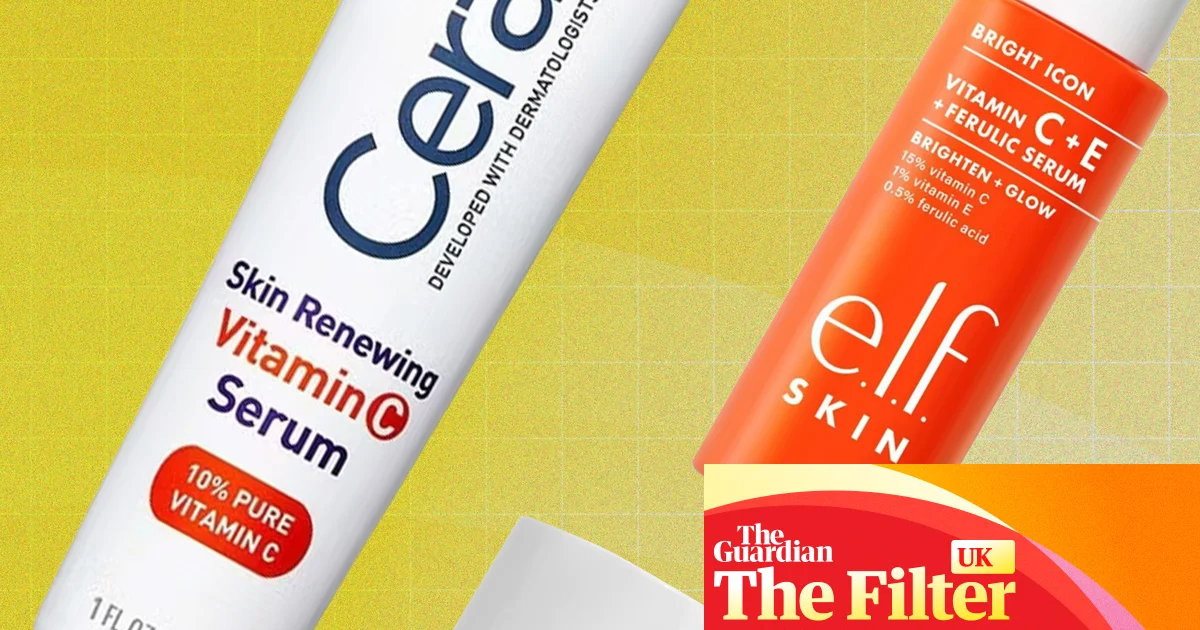
CeraVe skin renewing vitamin C serum

CeraVe

Skin renewing vitamin C serum

from £22.49

What we love
Lightweight and hydrating with great brightening benefits

What we don’t love
Not vegan or certified cruelty-free

Photograph: Danielle Wilkins/The Guardian£22.49 at Superdrug£22.49 at Amazon

With hyaluronic acid, vitamin B5 and ceramides sitting alongside 10% L-ascorbic acid, this serum goes above and beyond your typical vit-C product. The serum promises – and delivers – up to 24 hours of hydration, while vitamin B5 helps soften and smooth the skin’s texture. It also comes in protective package to maintain efficacy.

Why we love it
This clear and lightweight gel formula felt extremely hydrating and not at all sticky upon application – a rarity when it comes to gel-textured serums – and sat well beneath layers of SPF and makeup. Most noticeable was just how much brighter and smoother my skin looked without makeup after just a couple of weeks of use. Add to this the reasonable price of about £30, and in CeraVe we have a winner.

It’s a shame that … CeraVe’s products aren’t strictly vegan or certified cruelty-free, which may rule out this serum for some.

Size: 30ml
Price per ml: from about 75p
Key ingredients: 10% vitamin C, hyaluronic acid, vitamin B5 and ceramides
Vegan: no
Certified cruelty-free: no

CeraVe

Skin renewing vitamin C serum

from £22.49

What we love
Lightweight and hydrating with great brightening benefits

What we don’t love
Not vegan or certified cruelty-free

Best budget vitamin C serum:
Elf Skin Brighten + Glow vitamin C + E + ferulic serum

Elf

Skin Brighten + Glow vitamin C + E + ferulic serum

from £16

What we love
Affordable, lightweight and gives great glow

What we don’t love
Slightly off-putting scent

Photograph: Danielle Wilkins/The Guardian£17 at Elf£16 at Amazon

Elf has long been known for its affordable dupes of cult favourites, and this serum – designed to work with all skin types – is no exception. In fact, it contains the same exact percentages of vitamin C, E and ferulic acid as SkinCeutical’s gold standard vitamin C product (below), which comes in at an eye-watering £169 a bottle.

Why we love it
The texture feels close to a lightweight oil, but it absorbed quickly without leaving an oil slick on my face. It’s also extremely hydrating (likely because of the 1% vitamin E) and left my skin feeling softer with continued use. It layers well under makeup despite some initial tackiness, and I’d score the brightening benefits a 10/10. It does what it says on the tin, for sure.

It’s a shame that … the scent may take some getting used to.

Size: 30ml
Price per ml: from about 53p
Key ingredients: 15% vitamin C, vitamin E and ferulic acid
Vegan: yes
Certified cruelty-free: yes

Elf

Skin Brighten + Glow vitamin C + E + ferulic serum

from £16

What we love
Affordable, lightweight and gives great glow

What we don’t love
Slightly off-putting scent

Best vitamin C for protection:
SkinCeuticals C E ferulic antioxidant treatment

SkinCeuticals

C E ferulic antioxidant treatment

from £169

What we love
Potent; effective; gentle; lightweight formula

What we don’t love
Expensive

Photograph: Danielle Wilkins/The Guardian£169 at Lookfantastic£169 at Noli

A skincare superhero that’s long been hailed for its potent antioxidant benefits, the SkinCeuticals C E ferulic is substantial but not heavy or sticky, and offers instant and long-term benefits. The high-strength vitamin C uses 15% pure L-ascorbic acid at a proven pH (making it more potent than the Elf dupe, which uses a more stable derivative). That sits alongside other skin-health boosting heroes (vitamin E, ferulic acid and additional antioxidants) for a brighter complexion and protection against environmental damage.

Why we love it
SkinCeuticals’ water-soluble formula is runny but sinks into the skin beautifully – and sits well under SPF and makeup, too. It’s difficult to judge the protection it offers against free radicals, but it felt like a treat for my city-dweller skin. My complexion looked noticeably brighter and more even-toned after just a few uses – and I’m confident that with further use you’d see anti-ageing benefits, too. The formulation is also backed by decades of research.

It’s a shame that … it’s pricey – the most expensive in our roundup – but a little goes a long way.

Size: 30ml
Price per ml: £5.63
Key ingredients: 15% vitamin C, vitamin E and ferulic acid
Vegan: no
Certified cruelty free: no

SkinCeuticals

C E ferulic antioxidant treatment

from £169

What we love
Potent; effective; gentle; lightweight formula

What we don’t love
Expensive

Best vitamin C for hyperpigmentation:
Indē Wild vitamin C Sunrise Glow serum

Indē wild

Vitamin C Sunrise Glow serum

£36

What we love
Boosts radiance; reduces dark spots; absorbs quickly

What we don’t love
Fragranced; weighty packaging

Photograph: Danielle Wilkins/The Guardian£36 at Indē wild

Blending 15% stabilised vitamin C, glutathione, hyaluronic acid and niacinamide, this serum bolsters skin barrier function and enhances collagen production while tackling stubborn acne marks, hyperpigmentation and uneven tone. It’s infused with turmeric root and ashwagandha, too, which are shown to reduce inflammation. I was intrigued to try this one.

Why we love it
As someone who experiences acne – and acne scarring, as a result – I noticed a change in my skin tone and texture on using this serum daily. The formula is lightweight, grease-free and absorbed quickly into skin, with the initial tackiness disappearing once I’d applied my moisturiser and SPF. It sat well under my makeup, too, and left my complexion looking radiant.

It’s a shame that … there’s a strong – although not unnatural – scent that won’t be for everyone. While recyclable, the glass packaging is weighty, so it’s better suited to home use than for travel.

Size: 30ml
Price per ml: £1.20
Key ingredients: 15% vitamin C, ferulic acid, niacinamide, vitamin E and hyaluronic acid
Vegan: yes
Certified cruelty-free: yes

Indē wild

Vitamin C Sunrise Glow serum

£36

What we love
Boosts radiance; reduces dark spots; absorbs quickly

What we don’t love
Fragranced; weighty packaging

Best Korean vitamin C serum:
Haruharu Wonder Centella 4% TXA gel serum

Haruharu Wonder

Centella 4% TXA gel serum

from £12.95

What we love
Smooths and refines the skin; lightweight

What we don’t love
Tingling on application; may not suit sensitive skin types

Photograph: Danielle Wilkins/The Guardian£12.95 at Face the Future£15.10 at Amazon

K-beauty is more than a viral phenomenon; with innovative ingredients and science-backed formulas, it’s never been easier to address our skincare needs thanks to brands such as Haruharu Wonder. Vitamin C, niacinamide, antioxidant-rich n.Pearin (derived from baby pears), calming centella complex and 4% tranexamic acid combine to provide a powerful dark-spot-fighting blend. Apply daily under your moisturiser and SPF for even skin tone and that lit-from-within glow.

Why we love it
You’ll find that a little of this lightweight gel-serum goes a long way, with just a pea-sized amount needed. It has a light scent, but I didn’t find it overbearing, with the formula sinking well into my skin and sitting nicely beneath my other skincare products, too. There’s no denying this formula is a slam-dunk when it comes to providing a great glow.

It’s a shame that … there was a slight tingling sensation upon first application, but this dissipated within a week.

Size: 30ml
Price per ml: from 43p
Key ingredients: 4% tranexamic acid, vitamin C, niacinamide
Vegan: yes
Certified cruelty-free: yes

Haruharu Wonder

Centella 4% TXA gel serum

from £12.95

What we love
Smooths and refines the skin; lightweight

What we don’t love
Tingling on application; may not suit sensitive skin types

The best of the rest

Photograph: Danielle Wilkins/The Guardian

The Ordinary multi-antioxidant radiance serum

The Ordinary

Multi-antioxidant radiance serum

from £14.20

What we love
Affordable; hydrating; great for boosting SPF efficacy

What we don’t love
Low concentration of vitamin C

Photograph: Danielle Wilkins/The Guardian£14.20 at Lookfantastic£14.20 at Space NK

Best for: beginners

Infused with vitamin C, ginseng and turmeric peptides, this reasonably priced serum is designed to protect skin from daily environmental stressors, while smoothing texture, reducing dark spots and boosting skin hydration.

What I loved most about it was how it felt on my skin. The serum feels similar to a lightweight oil, but absorbs quickly and leaves skin feeling hydrated without any tackiness or greasiness. It’s a great option for those who want a hydrating and protective serum without the hefty price.

It didn’t make the final cut because … I didn’t notice a huge difference in my dark spots or skin tone, but with just 1% ascorbyl glucoside (another stable vitamin C derivative), it may take longer to see results.

Size: 30ml; price per ml: from 47p; key ingredients: vitamin C, ginseng, and turmeric peptides; vegan: yes; certified cruelty-free: yes

The Ordinary

Multi-antioxidant radiance serum

from £14.20

What we love
Affordable; hydrating; great for boosting SPF efficacy

What we don’t love
Low concentration of vitamin C

La Roche-Posay Pure Vitamin C12 serum

La Roche-Posay

Pure Vitamin C12 serum

from £36

What we love
Applies like a dream; hydrating; real results

What we don’t love
Pricey and some may not like the fragrance

Photograph: Danielle Wilkins/The Guardian£36 at La Roche-Posay£45 at Cult Beauty

Best for: mature skin

The gel texture of this serum from La Roche-Posay is formulated with 12% vitamin C, exfoliating salicylic acid and soothing neurosensine – a key ingredient in the brand’s Toleriane range for sensitive skin. The result? A complexion that looks brighter and more even-toned. A nice one to apply in the summer when you want a product that feels hydrating but light.

It didn’t make the final cut because … although the brand is a favourite with dermatologists, and I did see a brilliantly glowy boost, it’s pricier than others here that work just as well. It also has a light powdery scent that may not appeal to some.

Size: 30ml; price per ml: from about £1.20; key ingredients: 12% vitamin C and salicylic acid; vegan: no; certified cruelty-free: no

La Roche-Posay

Pure Vitamin C12 serum

from £36

What we love
Applies like a dream; hydrating; real results

What we don’t love
Pricey and some may not like the fragrance

Dr Somji vitamin C daily defence moisturiser SPF30

Dr Somji

Vitamin C daily defence moisturiser SPF30

£75

What we love
Great for when you don’t have time for full skincare routine

What we don’t love
Expensive and not widely stocked

Photograph: Danielle Wilkins/The Guardian£75 at Dr Somji Skincare

Best for: a vitamin C moisturiser/multitasker

Although this article specifically focuses on serums, I couldn’t pass up the opportunity to mention this lightweight moisturiser from skincare expert Dr Somji. Formulated with THD ascorbate (making it a great choice for sensitive skin), ceramides, hyaluronic acid, peptides and SPF, it provides the ultimate antioxidant cocktail. I loved how this formula felt on my skin – with or without the addition of serum. It didn’t take long before it became a staple in my routine, especially on those mornings when I barely get time to brush my hair, let alone apply five products to my face (let’s work smarter, friends).

It didn’t make the final cut because … it feels expensive for a moisturiser, despite offering a multitude of benefits.

Size: 50ml; price per ml: £1.50; key ingredients: vitamin C, ceramides, hyaluronic acid, exosomes and matrixyl synthe peptides; vegan: no; certified cruelty-free: yes

Dr Somji

Vitamin C daily defence moisturiser SPF30

£75

What we love
Great for when you don’t have time for full skincare routine

What we don’t love
Expensive and not widely stocked

Simple 10% vitamins C + E + F Glow+ serum

Simple

10% vitamins C + E + F Glow+ serum

from £5.84

What we love
Lightweight and nourishing; great price

What we don’t love
Low vit C potency, so it may take a while to see results

Photograph: Danielle Wilkins/The Guardian£6.65 at Superdrug£5.84 at Amazon

Best for: sensitive skin

With a lightweight, milky consistency and combination of barrier-loving ingredients, this affordable serum from Simple feels nourishing on the skin and sinks in beautifully. The low-dose vitamin C combined with vitamins E and F make this a great option for beginners or those with sensitive skin.

It didn’t make the final cut because … the 10% on the bottle actually refers to the sum of all the active ingredients (2% vitamin C, 1% vitamin E and 7% vitamin F). With just 2% vitamin C, I didn’t notice significant brightening or anti-ageing benefits, but the formula did keep my skin hydrated.

Size: 30ml; price per ml: from 19p; key ingredients: 2% vitamin C, vitamin E and vitamin F; vegan: yes; certified cruelty-free: yes

Simple

10% vitamins C + E + F Glow+ serum

from £5.84

What we love
Lightweight and nourishing; great price

What we don’t love
Low vit C potency, so it may take a while to see results

L’Oréal Paris Revitalift 12% pure vitamin C brightening serum

L’Oréal Paris

Revitalift 12% pure vitamin C brightening serum

from £15.95

What we love
Affordable; hydrating; good amount of vitamin C

What we don’t love
Not strictly vegan or certified cruelty-free; strong scent

Photograph: Danielle Wilkins/The Guardian£15.99 at Noli£15.95 at Amazon

Best for: oily skin and texture

This formula from L’Oréal contains 12% pure vitamin C alongside vitamin E and salicylic acid. These will help break down the appearance of dark patches and pores, as well as smooth texture – making it a great choice for those with oily or acne-prone skin. The silky gel-serum feels luxurious to apply, absorbs quickly, and I didn’t mind the subtle, almost citrusy scent.

It didn’t make the final cut because … there were times I had to give the bottle a good shake since it looked like the formula may have separated.

Size: 30ml; price per ml: from 53p; key ingredients: 12% vitamin C, vitamin E and salicylic acid; vegan: no; certified cruelty-free: no

L’Oréal Paris

Revitalift 12% pure vitamin C brightening serum

from £15.95

What we love
Affordable; hydrating; good amount of vitamin C

What we don’t love
Not strictly vegan or certified cruelty-free; strong scent

What you need to know

Photograph: Danielle Wilkins/The Guardian

What are the benefits of a vitamin C serum?

“For skin specifically, vitamin C works through three interconnected mechanisms,” says skincare expert Chavda-Sitaram. “Antioxidant protection against UV and environmental damage; collagen synthesis at the cellular level (essential for maintaining firmness and elasticity); and brightening through tyrosinase inhibition, which fades hyperpigmentation and prevents new pigmentation.

“It benefits everyone because oxidative stress affects all skin types – although the form, concentration and supporting ingredients must match individual tolerance. The most dramatic results will be seen by those who have photo-aged skin with fine lines and firmness loss, hyperpigmentation or uneven tone, and dull complexions.”

How to apply a vitamin C serum

Apply your vitamin C serum in the morning, after cleansing and toning, but before your moisturiser and SPF. SPF really is a non-negotiable here, particularly if your serum contains other active ingredients, such as salicylic acid.

What to know about vitamin C concentration

Since different forms of vitamin C work at different concentrations, it can be difficult to compare them directly. However, research indicates that for L-ascorbic acid (the most commonly used form of vitamin C in skincare), 10-20% is optimal.

“Anything below 8% and you’re not delivering enough to drive meaningful change, but above 20% you hit an efficacy plateau with substantially increased irritation,” says Chavda-Sitaram. “However, the derivatives work differently. Tetrahexyldecyl ascorbate (THD) is exceptionally potent because it’s lipid-soluble, penetrating more efficiently than water-soluble L-ascorbic acid. So, the question shouldn’t necessarily be, ‘what percentage?’ but, ‘in what form, in what delivery system, with what supporting ingredients, and is it stable?’”

How to store vitamin C serums

All good vitamin C serums will come in protective, airtight packaging to avoid oxidation – but where you choose to store it can help maintain the formula, too. A cool, dark place is best – avoid spots that are in direct sunlight or heat (the humidity and temperature of bathrooms should be avoided where possible), while others even recommend storing vitamin C serums in the fridge.

For more:
The best eye creams for banishing bags, puffiness and fine lines
The best LED face masks, tested
The best anti-ageing creams, serums and treatments

Danielle Wilkins is a lifestyle journalist and former magazine editor with almost two decades of experience writing about beauty, parenting and all things weddings for some of the biggest names in publishing. When she’s not reviewing the latest products in skincare, running in the gym or sitting front row at Bridal Week, she’s acting as a human climbing frame for her two young boys and dreaming about hot coffee

Tags: , , , , , ,
Facial Skincare Market by Type, Gender, Distribution Channel, Countries and Companies Analysis 2025-2033 Featuring L'Oreal, P&G, Oriflamme, Unilever, Estee Lauder Company, Johnson & Johnson

Facial Skincare Market by Type, Gender, Distribution Channel, Countries and Companies Analysis 2025-2033 Featuring L’Oreal, P&G, Oriflamme, Unilever, Estee Lauder Company, Johnson & Johnson

Company Logo

Facial Skincare Market

Facial Skincare Market

Dublin, Jan. 07, 2026 (GLOBE NEWSWIRE) — The “Facial Skincare Market by Type, Gender, Distribution Channel, Countries and Companies Analysis 2025-2033” has been added to ResearchAndMarkets.com’s offering.

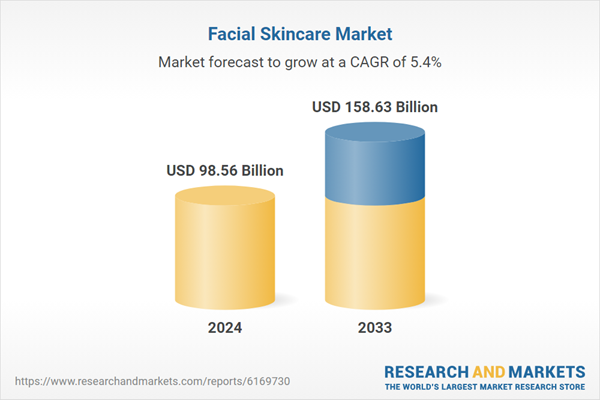
The worldwide facial skincare market is anticipated to hit US$ 158.63 billion in 2033, increasing from US$ 98.56 billion in 2024, growing at a CAGR of 5.43% during 2025-2033. Increased consumer knowledge, the need for anti-aging, and new development in natural and organic ingredients fuel growth. Widening online retailers and customized skincare trends also significantly drive the market’s continued growth.

Growth Drivers in the Facial Skincare Market

Increasing Awareness of Skin Health

Increased awareness of the importance of skincare, most notably amongst younger age groups, is driving an increasing demand for facial skincare products. Consumers are becoming more aware of the diverse ingredients, useful routines, and long-term benefits of taking care of healthy skin. This new information is stimulating global use of everyday skincare routines, as people want to improve their complexion and overall skin health. In July 2024, The International League of Dermatological Societies (ILDS) and the International Society of Dermatology (ISD) have joined forces to inaugurate the first-ever World Skin Health Day (#WSHD2024).

E-commerce and Digital Influence

The explosion of online shopping channels, in addition to the ubiquitous power of social media and beauty influencers, has radically altered the trend of skincare marketing and access. Consumers can now easily browse a vast range of facial skincare products with ease from the comfort of their homes. This technology revolution enables them to compare readily, read informative peer reports, and get involved with engaging video presentations that exhibit real-world applications and outcomes. Consequently, the process of discovering and buying skincare has not only become convenient but also largely interactive and well-informed, enabling consumers to make well-rounded decisions specific to their individual requirements. October 2024, Mumbai-headquartered health-tech firm Skin Beyond Borders (SkinBB) has introduced the Skincare Metaverse. This digital platform integrates AI technology and clinical experience to make connections between consumers, clinicians, and industry players. A flagship feature, LabelLooker 1.0, is an AI-driven ingredient scanner backed by Ingredipedia, a database of personal care ingredients designed in association with VES College of Pharmacy, with more than 1,000 ingredients and growing.

Story Continues

Product Innovation and Customization

Within an ever-changing dynamic of skincare development, companies are tapping the powerful potential of active ingredients like hyaluronic acid, peptides, and retinoids. The synergistic effects of these high-performance ingredients help to improve skin hydration, elasticity, and cellular regeneration. Further, the development of tailored skincare solutions – carefully adapted to meet the individual’s skin type and targeted issues – has ensnared an increasingly health-conscious, technologically adept demographic. This personalized strategy not only targets specific skincare requirements but also deepens the relationship between consumers and their regimes, propelling record-breaking growth in the market. Consumers are thus empowered to go on a mission to attain their dream skin, guided by innovation ingredients and science-driven knowledge. March 2025, L’Oreal Groupe has unveiled L’Oreal Act for Dermatology, a five-year, €20 million initiative by its Dermatological Beauty Division to enhance access to skin health for the 2.1 billion individuals living with skin diseases. The initiative involves a collaboration with the WHO Foundation to aid the World Health Organization in fighting prevalent and underinvested tropical skin diseases and in bringing awareness of their global footprint to light.

Challenges Faced by the Facial Skincare Market

Excessive Competition and Market Over-Saturation

The facial skincare market is saturated with various local and international brands that have very similar products. Such saturation lends itself to very high competition, where new entrants cannot gain grounds and existing brands cannot hold their share unless they continuously innovate.

Issues Regarding Product Safety and Effectiveness

Consumers are increasingly cautious about product formulations, especially concerning chemical additives, allergens, and ethical sourcing. Negative publicity or ingredient controversies can damage brand credibility, making transparency and regulatory compliance critical challenges for manufacturers.

Key Attributes

Report Attribute

Details

No. of Pages

200

Forecast Period

2024-2033

Estimated Market Value (USD) in 2024

$98.56 Billion

Forecasted Market Value (USD) by 2033

$158.63 Billion

Compound Annual Growth Rate

5.4%

Regions Covered

Global

Companies Featured in the Report

  • L’Oreal

  • Procter and Gamble

  • Oriflamme

  • Unilever

  • Estee Lauder Company

  • Johnson & Johnson

For more information about this report visit https://www.researchandmarkets.com/r/hxsl5w

About ResearchAndMarkets.com
ResearchAndMarkets.com is the world’s leading source for international market research reports and market data. We provide you with the latest data on international and regional markets, key industries, the top companies, new products and the latest trends.

Attachment

CONTACT: CONTACT: ResearchAndMarkets.com Laura Wood,Senior Press Manager press@researchandmarkets.com For E.S.T Office Hours Call 1-917-300-0470 For U.S./ CAN Toll Free Call 1-800-526-8630 For GMT Office Hours Call +353-1-416-8900

Tags: , , , , , , , , , , , , , , , , ,
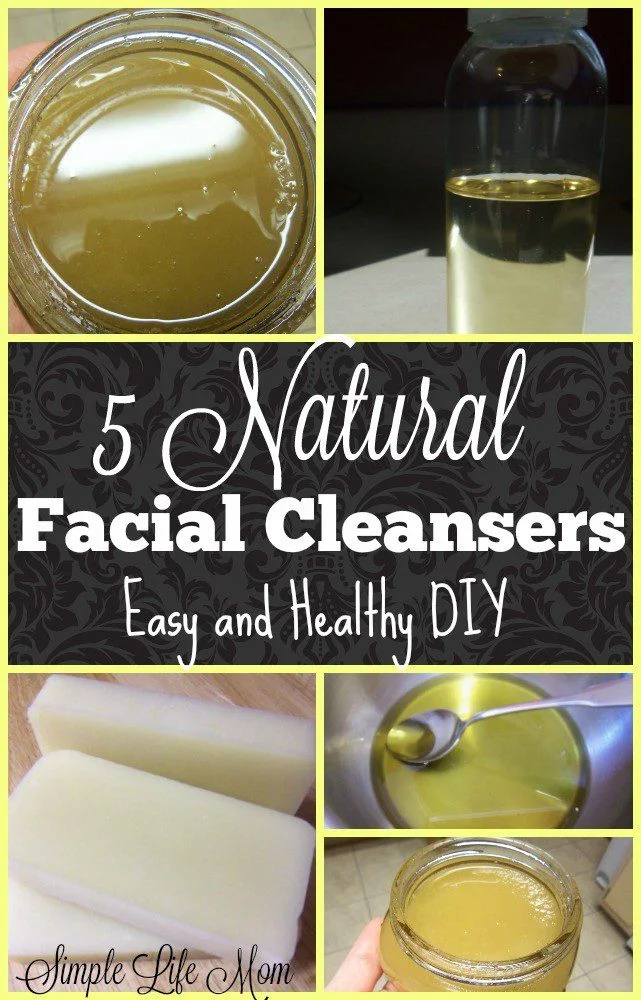
How to Make 5 All-Natural Facial Cleansers for Every Skin Type

How to Make 5 All-Natural Facial Cleansers for Every Skin Type

Making your own natural facial cleansers is a simple, affordable way to care for your skin without unhealthy ingredients. These homemade facial cleanser recipes use gentle, natural ingredients to cleanse effectively while supporting healthy, balanced skin. Whether you have sensitive, dry, or oily skin, these DIY natural face wash recipes are easy to make and perfect for a simple, non-toxic skincare routine.

I’ve used natural facial cleansers in my own skincare routine for years, especially simple ingredients like honey, oils, and oats. These recipes are ones I’ve personally tested and rotated depending on the season and my skin’s needs.

What Are Natural Facial Cleansers?

A natural facial cleanser is a face wash made with natural, organic, and healthy ingredients that clean the skin without synthetic fragrances, sulfates, or harsh chemicals. Homemade facial cleansers are also customizable. Whether you have oily, combination, or dry skin, you can customize your cleanser recipe for your specific needs and know that you are using healthy ingredients.

Why Choose Natural Homemade Facial Cleansers?

There are a lot of facial cleansers out there with lots of dangerous ingredients like petroleum, artificial dyes and fragrances, and propylparaben (which mimics estrogen and messes up your hormone balance whether you are male or female).  Making sure you use natural cleansers, makes sure you know exactly what your skin is absorbing.

Benefits of Using Homemade Natural Facial Cleansers

  1. Avoids harsh chemicals and synthetic fragrances
  2. Gentle on sensitive and acne-prone skin
  3. Affordable and easy to make at home
  4. Customizable for dry, oily, or combination skin
  5. Supports a simple, natural skincare routine

5 DIY Natural Facial Cleansers

I sell 2 liquid facial cleansers in my shop: Anti-Aging & Acne Facial Cleansers. They are similar in ingredients, except vary by what essential oils I use in them. But if you would like to make your own, then you want to look for ingredients that will cleanse your skin without stripping it completely of its natural oils.  Here are a few recipes and methods to get you going.

Oil Cleansing Method for Dry Skin

Try oil based facial scrubs to exfoliate and cleanse your skin while deeply nourishing at the same time.  Oils are also great for removing makeup.

Using oil as a cleanser is an age old method that does not clog pores. Instead, it beautifully enters pores and pulls out all impurities. You can also try these 21 amazing beauty recipes with coconut oil.

Lemon and Rosemary Facial Sugar Scrub

Ingredients:

Directions:

  1. Mix the ingredients together and store in a glass jar.
  2. To use, place 1 Tbsp in your hand and massage onto your face.
  3. Rinse and pat dry.

Gentle Castile Soap Face Wash

I did not put the recipes for cold processing here, since it is a large process for those who have never made soap before. However, Castile soaps are often made from 90-100% Olive oils instead of a mixture of fats like other soaps.  This makes the soap softer, but very gentle on the skin.  A great soap to try as a beginner and wonderful for the skin.

Another Homemade Soap that is gentle on the skin is a shampoo bar, due to the great nourishing oils within the recipe and because it usually has more readily available oils that were not converted to soap by the lye.  I know many people who use shampoo bars as a shaving bar.

Also find these shampoo bars in my SHOP

Honey Cleanser for Sensitive Skin

Raw Honey is very hydrating, kills bacteria, and nourishes skin, replenishing moisture and vitamins. That’s why you will often see it being used in natural beauty recipes. Here is a simple recipe using honey to help cleanse pores.

Ingredients:

Directions:

  1. Combine ingredients and keep in a sterile container and use a clean utensil each time.
  2. Wet face with warm water.
  3. Rub 1 tsp. between fingers and massage into face to loosen dirt and makeup.
  4. Rinse.

Oatmeal Facial Cleanser for Irritated Skin

Ingredients:

  • 1/4 cup yogurt
  • 1/4 cup pulverized oats

Directions:

  1. Pulverized oats in blender (optional).
  2. Mix yogurt and oats together.
  3. Keeps in fridge for one week, depending on how sterile you keep it.
  4. To use: wet face with warm water.  Rub 1 Tbsp between fingers and massage into face to loosen dirt and makeup.  Rinse.

Clay Cleanser for Oily or Acne-Prone Skin

I really like this cleanser, but some people are sensitive to using baking soda directly on their skin.  I know of a few people who cannot use homemade deodorant because of this.  So, like with every recipe on my site, test on a small area and make sure you have no reaction. Use it with just bentonite clay if needed.

Ingredients:

Directions:

  1. Mix all three ingredients together and massage into face to remove dirt and makeup, staying away from eyes.
  2. Rinse.

Always patch test new skincare products. If you have skin conditions or allergies, consult a qualified professional before trying new skincare products. Remember, you can become allergic to literally anything as your body changes over time.

Frequently Asked Questions About Homemade Facial Cleansers

  • Are homemade facial cleansers effective?
    • Yes! They work just as well as store bought cleansers but can be even more tailored to your specific needs.
  • Can natural facial cleansers work for acne?
    • Yes, frankincense is very anti-inflammatory, while other essential oils like rosemary, carrot, and tea tree can benefit the skin in powerful ways. Knowing your ingredients puts the power of homemade skincare in your own hands.
  • How long do DIY facial cleansers last?
    • It’s important to use water-based cleansers within a few days. Bacteria will grow quickly. Oil based cleansers can last 2-3 months, depending on how sterile they are kept.
  • Are homemade face washes safe for sensitive skin?
    • Yes, you can use gentle ingredients like honey, clays, aloe, and oils to cleanse pores. These are gentle, cleansing, and hydrating ingredients that are great for sensitive skin.

Follow up with one of 4 Herbal Skin Toners and Homemade Lotion and Anti-Wrinkle Serum. Click the links to get the recipes or go to my shop to try them before you make them.

For a full simplified skincare routine, see these Best Homemade Skincare Recipes for Healthy Skin.

Tags: , , , ,
Why Makeup Should Be Chosen Based On Skin Type, Not Trends

Why Makeup Should Be Chosen Based On Skin Type, Not Trends

In a time when beauty fads appear to change every week, it’s simple to be swept up by the latest craze. One instant, a dewy complexion dominates, and the next, a matte look regains attention. Yet through experience, with individuals of all ages and skin types and noticing how makeup performs across diverse climates and lighting, I have gained a clear insight: skin does not conform to trends. 

This is the reason why selecting makeup according to your skin type is much more crucial than adhering to what’s trending.

The ‘Skin First’ Rule

The concept is quite straightforward. Makeup ought to enhance your skin rather than conflict with it. Using a product or method that doesn’t match our skin type will always yield an off appearance, regardless of how costly or fashionable the item is.

For instance, a foundation that appears perfect on a person with skin might look patchy or flaky on someone with dry skin. This doesn’t imply the product is poor; it simply indicates the skin type wasn’t taken into account.

A frequent error that I encounter is the assumption that ‘what suits one individual will necessarily suit all’. While the truth is that the identical product can perform differently based on skin type. 

Issues such as enlarged pores, flakiness or fine lines also respond distinctively to makeup, influencing both its application smoothness and appearance, over time. This underscores the importance of adopting a “Skin strategy.

Another important aspect is realising that effective makeup should improve your skin’s appearance, not conceal it. If we view makeup as something meant to mask everything, we tend to select products that’re thick, dehydrating or just unsuitable for us.

However, when we opt for makeup that truly matches our skin type, the result appears natural, softer and endures significantly longer.

In makeup, application tools significantly influence the results. Certain brushes or sponges soak up product, whereas others cause streaking or fail to blend smoothly, particularly on skin that is textured or dry.

The choice of tools determines if makeup seamlessly merges with the skin or rests on the surface as a coating. Knowing how various tools interact with skin types is crucial for maintaining a skin-first approach.

Lately, trendy makeup items have become extremely popular. However, many fail to understand that the majority of these products are formulated for a skin type despite being advertised as suitable for all.

This often confuses novices. Consumers purchase items that appear ideal on the internet, but become frustrated when they don’t suit their skin.

Selecting makeup according to trends rather than skin requirements results in lost money, effort and self-esteem. Another neglected aspect is skincare preparation, which varies depending on skin type.

Oily skin might require moisturisers to manage shine, whereas dry skin benefits from thicker creams to stop makeup from flaking. Preparation significantly influences the longevity of makeup throughout the day.

After years of observing skin closely, I truly believe that a “Skin First” mindset is the most reliable way to choose makeup.

Trends will keep changing, but your skin’s needs stay consistent. When we listen to our skin instead of trends, makeup becomes easier, more enjoyable, and far less confusing.

Authored by Chanchal Kataria, Founder of Muse Beauty India. Views expressed by the author are their own.

Tags: , , , , ,
Street Talk: Make-Up – Episode Six Skin Type: Dry & Flaky 

Street Talk: Make-Up – Episode Six Skin Type: Dry & Flaky 

In Episode Six of Street Talk: Make-Up, we meet Maria Sunday, a consumer whose beauty habits reflect the evolving expectations of those living with dry and flaky skin. Her day-to-day routine, product preferences, and purchase behaviors provide a snapshot of what the modern skincare-savvy, sustainability-conscious beauty user values.

For formulators, marketers, and retailers alike, Maria offers a window into a segment that is often underserved: users navigating both skin health and eco-consciousness, while staying loyal to natural, minimalist products.

Routine Focus: Hydration, Simplicity and Longevity

Maria’s routine starts and ends with one key priority: moisture. Living in Bend, Oregon — a notoriously dry climate — she relies on deep conditioning products and makes careful choices that protect her skin barrier.

  • Moisturizers:
    • Lush moisturizers for their natural ingredients and sustainable packaging practices
    • Neutrogena as a light daily under-eye solution
    • Carmex and Burt’s Bees lip tints for dual hydration and pigment
  • Make-up Routine:
    • Tarte eyeshadow, used subtly with a two-tone finish
    • Revlon stay-put lipstick, prioritizing lasting wear without heaviness
    • No mascara needed post-lash lift — a treatment she recently adopted to simplify her beauty process.

Sustainability & Simplicity: More Than a Trend

Maria is particularly drawn to brands that offer environmental accountability. Lush stands out for her because of its recyclable packaging and return-reuse programs — a feature she sees as aligning with her personal values.

“They recycle their products, and they’ll reuse and repurpose it — which is really nice.”

Content Discovery & Shopping Behaviour

While Maria does occasionally watch online tutorials, she is not reliant on apps or tech for beauty decisions. Her routine is built on consistency and personal adaptation.

  • Online Discovery:
    • Limited use of influencers or beauty tech
    • Rarely strays from her established make-up pattern
  • Shopping Preferences:
    • Foundation is always purchased in store — highlighting the importance of shade-matching and in-person support
    • Eyeshadows are bought online, indicating she is open to digital shopping for less complexion-sensitive categories.

Innovation Wishlist: Natural, Vegan, and Clean Formulations

Maria’s vision for the ideal make-up line underscores key innovation trends in beauty R&D:

  • Natural: Free from harsh chemicals and packed with recognizable, simple ingredients
  • Vegan & Sustainable: Ethical formulations and eco-packaging as baseline, not bonus
  • Skin-Loving: Particularly formulated for dry, sensitive, flaky skin, without heaviness or residue

“I’d create something very natural, sustainable, and vegan… There are just too many products out there high in chemicals.”

Industry Takeaways

Maria Sunday’s beauty behaviour highlights several critical consumer expectations in the dry-skin segment:

  • Moisture-first routines are non-negotiable — especially in dry climates
  • Simplicity beats over-engineering: Multi-functional, nourishing products win over 10-step routines
  • Eco-conscious beauty is table stakes, not a niche
  • Consumers are blending online and offline shopping, based on category and confidence

As brands work to build loyalty in a fragmented marketplace, Maria’s profile reinforces the need for clean label transparency, emotional resonance, and texture innovation in the face and lip care categories.

Tags: , , , , , , ,
Best oLive
Privacy Overview

This website uses cookies so that we can provide you with the best user experience possible. Cookie information is stored in your browser and performs functions such as recognising you when you return to our website and helping our team to understand which sections of the website you find most interesting and useful.