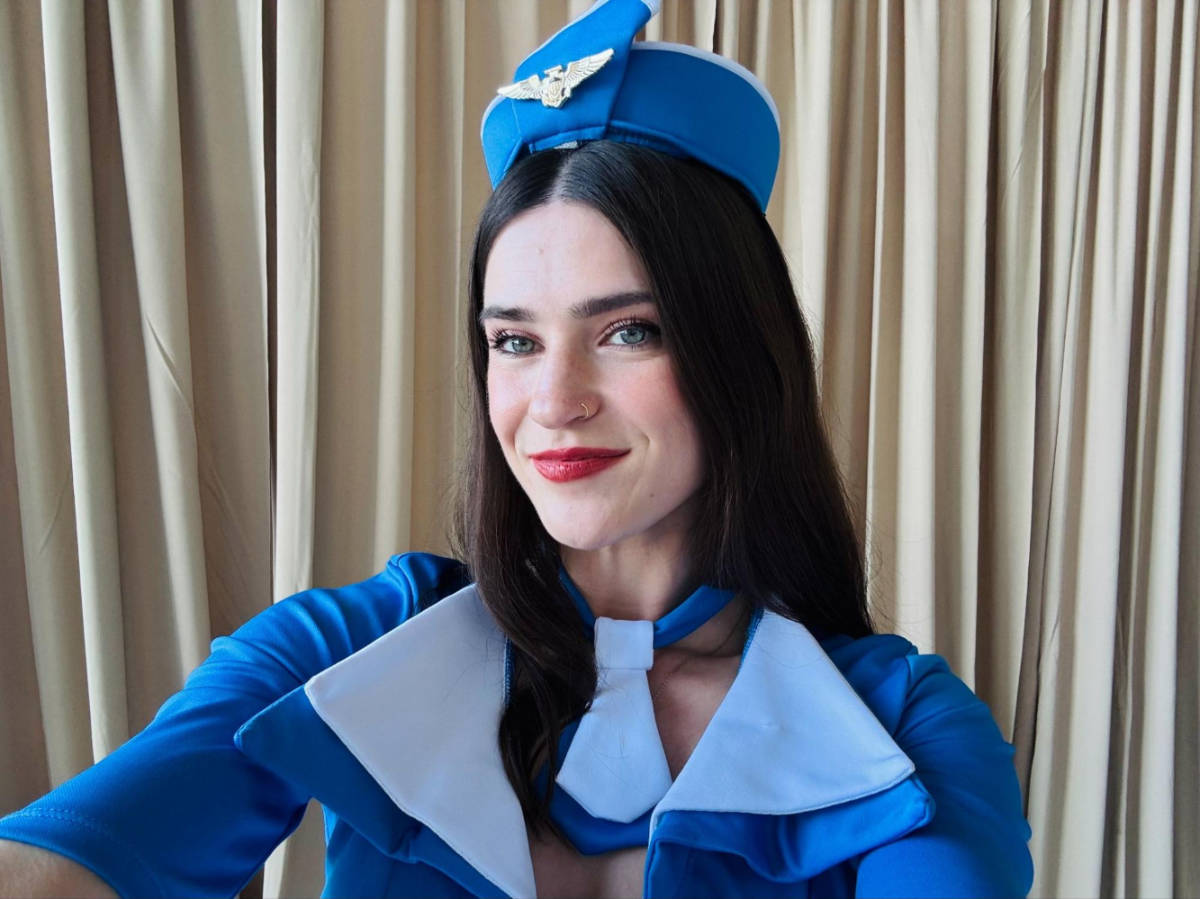
The author, Betty Hurd wearing her flight attendant costume

16 Hair & Skincare Products I Love As A Flight Attendant

It’s taken me almost five years to feel like I finally nailed my hair and skincare routines to complement my career as a U.S. flight attendant. Travel takes its toll on the body. I struggled for a long time to find what worked for me before getting my hair and skin under control again. Now I’m 28 and feeling younger than ever.

Your beauty regimen should look a little different when you travel due to harsh environmental exposures and unfamiliar climates. These are the products I swear by to keep my skin glowing and my hair healthy around the globe.

16 Hair and Skincare Products I Never Travel Without

Sunscreen

Sunscreen is by far the most important product on this list. DO NOT SKIP THIS STEP!

While you won’t get sunburned by UVB rays on a plane, UVA radiation is amplified at high altitudes. This is what causes wrinkles, aging, and even skin cancer. You’ll be exposed to it whether you sit next to a window or not, so apply sunscreen every six hours or so to ensure maximum protection.

My top choice is the Innisfree Korean Sunscreen SPF 50+ for its lightweight, hydrating formula. Don’t forget to apply it to your hands, too. Korean skincare comes out on top again!

Facial Cleanser

You need to wash your face every single night, especially after spending time in the polluted atmosphere of airports and airplanes. This prevents breakouts and allows your skin to effectively regenerate while you sleep. 

Dirt, oil, and makeup weigh heavily on your face after long travel days. The La Roche-Posay Foaming Facial Cleanser is gentle on skin, but tough on impurities. I’ve had excellent results with this product, and I recommend it to my friends and family struggling with acne. 

Moisturizer

Another La Roche-Posay product for the win! This brand is praised worldwide for its clinically proven results. I can only attest to how well their cleanser and moisturizer work, but I won’t switch to anything else from here on out. The proof is in the skincare pudding.

Though the La Roche-Posay Triple Repair Moisturizing Cream is a bit on the heavy side, it’s worth going for a denser moisturizer while traveling to give your skin more assistance to repair overnight. I apply a thick layer of this before bed and wake up with bright, hydrated skin.

Vitamin C Serum

Vitamin C serum works in tandem with your sunscreen to neutralize UV damage and protect your fragile skin barrier from the sun. It also defends against the environmental pollutants that are amplified in the manufactured atmosphere of an airplane. AND it brightens your skin for a more even tone and texture.

The Timeless 20% Vitamin C Serum is enriched with ferulic acid and Vitamin E, two antioxidants proven to protect against sun and environmental damage to the skin barrier. Don’t fall for the $100+ Vitamin C serums. They’re made with the same ingredients and will provide the same results as this one for a fraction of the cost. 

Hand Cream

My hands get dry enough as it is. Put me on an airplane for 10+ hours with frequent washes using long-stored tank water and BOOM! Dry, cracked, unsightly hands follow. 

This ultra-moisturizing cream from Trader Joe’s is my favorite lotion to keep on hand (pun intended) because it’s made with skin-loving antioxidants like coconut oil and shea butter. Oh, and it smells amazing! I apply it after I wash my hands on the plane to prevent severe dryness and irritation.

Glycolic Acid

Glycolic Acid is one of the most effective chemical exfoliants thanks to its penetrative molecular size. It helps remove dead skin cells without having to harshly scrub your skin as you would with a physical exfoliant, risking further skin damage. Getting rid of dead skin cells allows other products like serums and moisturizers to work to their full potential. This is a team effort here.

The Ordinary Glycolic Acid was recommended to me many times before I actually made this life-changing purchase. Don’t wait like I did! I’ve noticed a massive difference in the smoothness of my skin texture, especially when I’m traveling through different climates. It even helps with ingrown hairs and the appearance of fine lines. This is a super-product!

Liquid Exfoliant

Blackheads don’t stand a chance against Paula’s Choice 2% BHA Liquid Exfoliant. BHAs (salicylic acid) in this product work very differently from AHAs (glycolic acid) to bypass natural oils and get deep into your pores to battle acne. I rarely get pimples thanks to this product, and the blackheads on my nose are virtually gone. I’ve also noticed softer fine lines and wrinkles.

Don’t over-exfoliate! You only need to use a chemical exfoliant 2-3 times per week to get results without stripping your skin barrier of vital natural protectors. Try a skin-cycling method, which I discuss in my tips below, for best use.

Hydrating Mist

Hydrating mist is a game changer on an airplane. Your parched skin requires extra love on long flights in a dry cabin. A weightless face spray delivers a powerful dose of rejuvenating moisture.

The Eminence Organic Skincare Stone Crop Hydrating Mist completely elevates my skincare while traveling. I keep it on me throughout the day to refresh my skin when it starts to feel dry mid-flight. Organic ingredients like lavender and jasmine calm and nourish my skin to maintain a hydrated barrier all day long. And it smells so good.

Tretinoin

Tretinoin is the most highly studied anti-aging skincare ingredient in dermatology. It’s a potent retinoid that promotes cell turnover, increasing collagen production and reversing noticeable signs of aging. I only apply Tretinoin twice a week, and I have seen a massive difference in the evenness of my skin tone and the plumpness of my face.

Ask your doctor about starting a Tretinoin prescription. It can be harsh on skin at first, so make sure to start slow, about twice a week. Moisturize heavily before and after application, especially while traveling. Never skip sunscreen after applying Tretinoin, as it makes your skin more susceptible to sun damage.

Styling Cream

I’m all for the slick-back look, especially when I’m going for a sleek, professional hairstyle at work. The DAE Cactus Fruit Cream & Taming Wand is my favorite product to smooth flyaways and frizz all day long. It takes my whole look up a few notches with minimal effort.

DAE uses clean and hydrating ingredients that leave my hair feeling healthy and nourished after a long day on the airplane. And the cactus fruit scent smells divine! It’s the perfect travel size to keep in your purse so you can touch up your do throughout the day.

Shampoo & Conditioner

I never use the shampoo and conditioner supplied at my layover hotels unless I’m certain that they’re luxury quality and made with harmless ingredients. I’ve only found that at the Fairmont Hotel Vancouver so far!

Biolage is the best haircare brand for fine hair like mine. The Ultra Hydra Source product is designed to deeply condition very dry hair. Even if you don’t typically have dry hair, remember that arid airplane cabins take their toll. I take travel-sized containers of this shampoo and conditioner with me on every trip so I can stay consistent and prevent scalp irritation.

Dry Shampoo

Dry shampoo is a must on long-haul flights. A few spritzes at the roots can take you from feeling greasy and dirty to polished and fresh. 

My hair gets greasy if I go one day without a wash, so I’m a big fan of the affordable and effective dry shampoo from MONDAY. It instantly absorbs hair oils and revives my look back to professional standards without leaving that unsightly white residue behind.

Silk Pillowcase

Most hotel pillowcases are made of cotton blends and washed with harsh chemicals. I bring my own pillowcase to prevent irritation and damage on my layovers. You never know how clean your hotel bedding really is, anyway!

The Adubor 100% Mulberry Silk Pillowcase works wonders while you sleep. Silk fibers are much gentler on hair and skin than comparable materials, leading to fewer fine lines, wrinkles, and hair breakage. This pillowcase also stays cool all night, helping you sleep more comfortably. I highly recommend switching to silk pillowcases to prevent bedhead and aging.

Face Mask

Self-care at an affordable price point? Say less. These KONEUK Sheet Face Masks stay in my suitcase by the dozen. A pack of 14 masks costs less than $8!

I use these masks once or twice a week after finishing my normal nightly skincare routine to relax before bed. They’re incredibly hydrating, leaving my skin feeling plump and refreshed after a dry day on the plane. These are the most affordable sheet masks I’ve found with the cleanest, least irritating ingredients.

Glazing Milk

BYOMA Milky Toner

This toner takes my skincare up a notch when flying to foreign environments.

Glazing milk, though not necessarily essential for your daily skincare routine, adds another layer of hydration to your travel regimen. I love how moisturized my skin feels after pressing 6 to 8 drops on my face and neck. 

While I’ve been using Hailey Bieber’s Rhode glazing milk (I got it as a gift!), the BYOMA Milky Toner is half the price and just as reliable as the aformentioned overhyped label. This product takes my skin one step closer to that soothed and refreshed state I seek after long-haul flights in harsh environments. 

Healing Ointment

I’m convinced there’s nothing Aquaphor can’t do. This tried-and-true skincare gem is perfect for chapped lips, cracked hands, and any other dry skin. Keep this in your travel bag in case your skin gets unusually red or irritated on the go. Aquaphor is praised for its effective versatility and is clinically proven to alleviate dehydrated skin.

6 Tips for Maintaining Your Skin and Haircare Routines on the Go

Get TSA-Friendly Containers Instead of Buying Everything Travel-Sized

My travel toiletry bag

Most of the products on this list come in full-sized containers. Make sure to buy a travel toiletry kit of TSA-approved containers under 3.4 ounces. That way you’ll never risk having non-compliant items taken away at airport security.

Hydrate From the Inside – Drink Water!

Water is life! It’s essential for skin and hair health because it improves blood circulation, which delivers imperative nutrients to those cells. The more water you drink, the more your body can repair the damage done by outside factors. It also boosts skin elasticity, which lessens the appearance of fine lines and wrinkles.

Sunscreen is Your Best Friend at 40,000 ft

Applying my sunscreen as part of my routine

Sunscreen is imperative on any daytime flight, as mentioned in my product breakdown above. UV intensity nearly doubles at cruising altitude. So I’ll say it again: the best way to prevent harmful skin damage is to never ever skip your sunscreen on a flight. And don’t forget to reapply every few hours!

NEVER Use the Water from the Sink on the Airplane

Please, for the love of God, never use airplane sink water to wash your face or brush your teeth. When 250-gallon tanks are refilled, the water already in the tank frequently becomes exposed to unsanitary conditions. Though disinfected to meet aviation standards, these water systems regularly test positive for bacteria, no matter what airline you fly.

Plus, that potable water might sit in the airplane for six months before the whole tank gets properly flushed and cleaned. Use bottled water in the lavatory if you need to refresh yourself mid-flight.

Keep Everything in One Skincare and Haircare Bag to Stay Organized

My hanging toiletry bag

Hanging toiletry bags keep everything organized on the go. Small containers and products get lost in the abyss of your suitcase when loosely packed with all of your other belongings. Keep everything in one easy-to-find place to make your skin and haircare a breeze wherever you roam.

Try a “Skin Cycling” Routine

Rotate your more powerful skincare products throughout the week to prevent stripping your skin and creating conflict with product results. 

Here’s how I do it: 

This has worked wonders for my sensitive skin, but experiment with different timing to see what works best for you.

***

Dry airplane cabins and long travel days have nothing on you now. Your skin and hair will thrive throughout your adventures with these 16 products in your bag.

Looking for more tips to keep your travels comfortable? Up next, read Sky’s article on her favorite red-eye flight essentials.

Tags: , , , , ,
How to get out of Fight or Flight

How to Get Out of Fight or Flight

For years I exercised daily, did plenty of cardio, and restricted my calories to the point I was way undereating. Yet the stubborn weight still held on, my thyroid wasn’t functioning well, and my lab numbers weren’t where I wanted them. If you’d told me then that the answer wasn’t a stricter diet or more supplements, I wouldn’t have believed you. 

Looking back, I realized that my body was in fight or flight mode for over a decade. I had to step back and ask the hard questions. Not “how do I force my body to listen,” but “how can I learn how to listen to my body”? Here’s how to get out of fight or flight and a deep dive from my personal experience. 

I learned through trial and error how the nervous system drives healing, and the simple, foundational ways we can begin sending safety signals to the body again.

Why Fight or Flight Keeps Us Stuck

One of the most helpful reframes for me was understanding that my body isn’t broken, it’s protective. What we often call fight or flight is simply the activation of the sympathetic nervous system, a built-in response designed to keep us alive. Our body sends us messages, sometimes not so subtly. I’ve found from personal experience that when we don’t listen to the whispers our body is giving, they can turn into shouts. 

When the sympathetic system is activated, the body shifts priorities. Digestion slows down, detox becomes less efficient, hormone production changes, and inflammation increases. Sleep is often disrupted, and processes like reproduction and long-term repair are deprioritized. From a survival standpoint, this is incredibly intelligent. If the body believes it’s in danger, it will focus on immediate survival rather than long-term healing.

The challenge is that many of us live in a chronic, low-grade version of this state. Not because of immediate physical danger, but because of constant inputs like blood sugar fluctuations, artificial light at night, environmental toxins, emotional stress, overstimulation, and even undernourishment. Even if we don’t consciously feel stressed, the body can still perceive danger.

This realization changed everything for me. You cannot force the body to heal from a place of stress. You don’t heal your way into safety. Once you create the safety signals, healing follows.

The Nervous System as the Gatekeeper of Healing

At the center of this is the nervous system, which sets the conditions for what the body is willing to do at any given time. A key player is the limbic system, which constantly scans for safety or danger, often faster than conscious thought. This means the body can react before we’re even aware of it.

For me, this explained why I could do so many things “right” physically and still not feel better. I had cleaned up my diet, taken targeted supplements, and run labs, yet my body was still stuck. It wasn’t until I addressed the nervous system layer that those efforts began to work.

Symptoms are not random or meaningless, but communication. When the body is stuck in fight or flight, it’s essentially saying that it doesn’t feel safe enough to prioritize healing. That message can show up in many forms, including anxiety, sleep issues, hormonal imbalances, chronic pain, burnout, or weight that won’t shift despite dietary changes.

Understanding this shifted my focus away from overriding symptoms and toward listening to them.

Emotional and Mental Safety Signals

When people think about stress, they often think of mental or emotional stress. While that’s only part of the picture, it’s still a powerful influence on the nervous system.

Unresolved emotional patterns can keep the body in a constant state of alertness. In my own experience, chronic stress, overwhelm, and patterns that had been in place for years all played a role. I tried many different approaches, including therapy modalities like Internal Family Systems, EMDR, hypnosis, and traditional talk therapy. Some were helpful, some were not (like talk therapy), but none were a complete solution on their own.

What made the biggest difference was the consistent, daily work of gently retraining my nervous system responses. Over time, the small changes compounded into big results. 

Putting It Into Practice

There are also certain experiences that signal safety to the brain. Feeling seen and understood, having supportive relationships, and maintaining healthy boundaries all play a role. Slower mornings and evenings, predictable routines, and reducing multitasking can also help the body feel more regulated. Even things like play, joy, and pleasure are not optional extras. They’re biological signals that the body is safe.

There are simple ways to begin shifting the nervous system in this direction. Breathwork is one of the easiest places to start. Something as simple as extending the exhale longer than the inhale can begin to calm the body. The physiological sigh, which involves a deep inhale, a second short inhale, and then a long exhale, is another tool that mimics a natural calming response we see in babies and young children.

Practices that stimulate the vagus nerve, such as humming, singing, or even gargling, can also support a more relaxed state. Journaling and gratitude practices can shift mental and emotional patterns over time. Gentle movement and time in nature help regulate the body in a more physical way.

For me, the key wasn’t doing any of these perfectly. It was showing up consistently and allowing the nervous system to gradually learn a new baseline.

Safety Signals and What the Body Needs

One of the most important shifts I had to make was realizing that safety isn’t just emotional. It’s also physical and biochemical. The body is constantly interpreting signals from its environment, and certain inputs can either reinforce a sense of safety or reinforce stress.

Light is one of the most powerful signals. Morning sunlight especially plays a critical role in regulating circadian rhythms. These rhythms in turn influence cortisol timing, energy levels, and sleep quality. During my healing phase, I made it a point to get outside at sunrise each day and to take short breaks throughout the day to get natural light. Now, it’s become a daily habit I can’t live without. 

Just as important is reducing artificial light at night. Exposure to blue light after sunset can suppress melatonin production, which is not only important for sleep but also for repair and recovery. When melatonin is disrupted, it affects far more than just how quickly we fall asleep.

Minerals and nutrients are another foundational piece. The body interprets adequate nourishment as a sign of safety. Minerals like magnesium support relaxation, sleep, and hundreds of biochemical processes. Sodium and potassium help regulate fluid balance and cellular communication. When the body is low in these essential nutrients, it can interpret that deficiency as a stress signal.

This was a major shift for me. Instead of focusing on restriction or perfect macros, I began asking how I could maximize nourishment in each meal. Prioritizing protein, healthy fats, and nutrient-dense foods helped signal to my body that it had the resources it needed to repair and rebuild.

Sleep is another critical safety signal. During deep sleep, the body reduces inflammation, repairs tissues, regulates hormones, and clears waste from the brain. When sleep is consistently disrupted, the body remains in a state of alertness. Prioritizing sleep became one of the most impactful changes I made, even when it wasn’t perfect.

Reducing Environmental Stressors

Another layer that often goes overlooked is the role of the environment. The body is constantly processing inputs from the air we breathe, the water we drink, and the products we use.

Things like synthetic fragrances, mold, poor air quality, and chemical exposures can all act as subtle stressors. Even if we don’t consciously notice them, the body does.

The goal isn’t to create a perfect environment (which we can’t do anyway!). Instead, it’s about reducing the overall load. Simple changes like opening windows for fresh air, using an air filter, using a good water filter, and minimizing synthetic products can make a meaningful difference over time.

One important concept that changed my approach was understanding that detox isn’t something we force. It’s something the body does when it feels safe and supported. Trying to push detox pathways while the body is already stressed can create more problems rather than solving them.

Daily Rhythms That Support a Calm Nervous System

The small rhythms of daily life have a surprisingly large impact on the nervous system. The body thrives on predictability, and chaos is often interpreted as stress. Easier said than done as a mom, but it’s about making progress, not doing things perfectly. 

Creating a slower start to the day, with natural light before screens, helps set the tone for a more regulated nervous system. Eating a nourishing meal before caffeine helps stabilize blood sugar and energy levels. Taking short movement breaks throughout the day, even just a brief walk, supports circulation, lymphatic flow, and mental clarity.

Walking, in particular, became one of the simplest and most effective tools I used. It doesn’t require special equipment or intense effort, yet it supports multiple systems in the body at once.

Consistent routines, especially in the evening, can also signal to the body that it’s safe to wind down. Over time, these patterns help retrain the nervous system to expect periods of rest and recovery.

Another piece that’s often overlooked is the role of enjoyment. Moments of pleasure, creativity, or connection aren’t just nice to have. They actively shift the body out of a stress response and into a healing state.

The Connection Between Stress and Hormones

One of the most fascinating aspects of this journey was realizing how closely hormones follow the nervous system. When the body feels safe, hormone production starts to move toward balance. When it feels stressed, hormones shift accordingly.

This can show up in many ways, including irregular cycles, increased PMS symptoms, thyroid imbalances, and changes in mood, energy, and sleep. In my own experience, addressing nervous system safety was a missing piece that allowed other hormone-supporting strategies to finally work.

Even during natural transitions like perimenopause, increasing safety signals can make a noticeable difference. Many women experience improvements in sleep, mood, energy, and overall stability when the nervous system is supported.

It Starts With a Single Step

One of the most important things I’ve learned is that getting out of fight or flight isn’t about doing everything at once. In fact, trying to overhaul everything can create more stress.

Instead, it’s about consistently sending small, meaningful safety signals. This might look like getting outside for a few minutes in the morning, eating a more nourishing breakfast, or taking short breaks to move and breathe throughout the day.

Over time, these small actions add up. They help the nervous system shift from a constant state of alertness to one where healing becomes possible again. Some of the biggest needle movers for me have been getting morning sunlight, enough protein and minerals, and winding down at night. 

Final Thoughts on How to Get Out of Fight or Flight

Looking back, I can see that for years I was trying to build health on top of a stressed foundation. It wasn’t that the tools I was using were wrong. My body just wasn’t in a place where it could fully benefit from them.

When I shifted my focus to creating safety, physically, emotionally, and environmentally, everything else began to fall into place. Healing no longer felt forced, but felt supported.

If you feel stuck or like nothing is working, it may be worth asking where your body might not feel safe yet. It might need more rest, more nourishment, more light, or simply a slower pace. The body knows how to heal; we just have to get out of the way sometimes and let it. 

What are some ways you’ve found to help send safety signals to your body? Anything I missed? Leave a comment and let us know!

Tags: ,
Best oLive
Privacy Overview

This website uses cookies so that we can provide you with the best user experience possible. Cookie information is stored in your browser and performs functions such as recognising you when you return to our website and helping our team to understand which sections of the website you find most interesting and useful.
