Spicy Asian Cucumber Salad Recipe

Spicy Asian Cucumber Salad Recipe

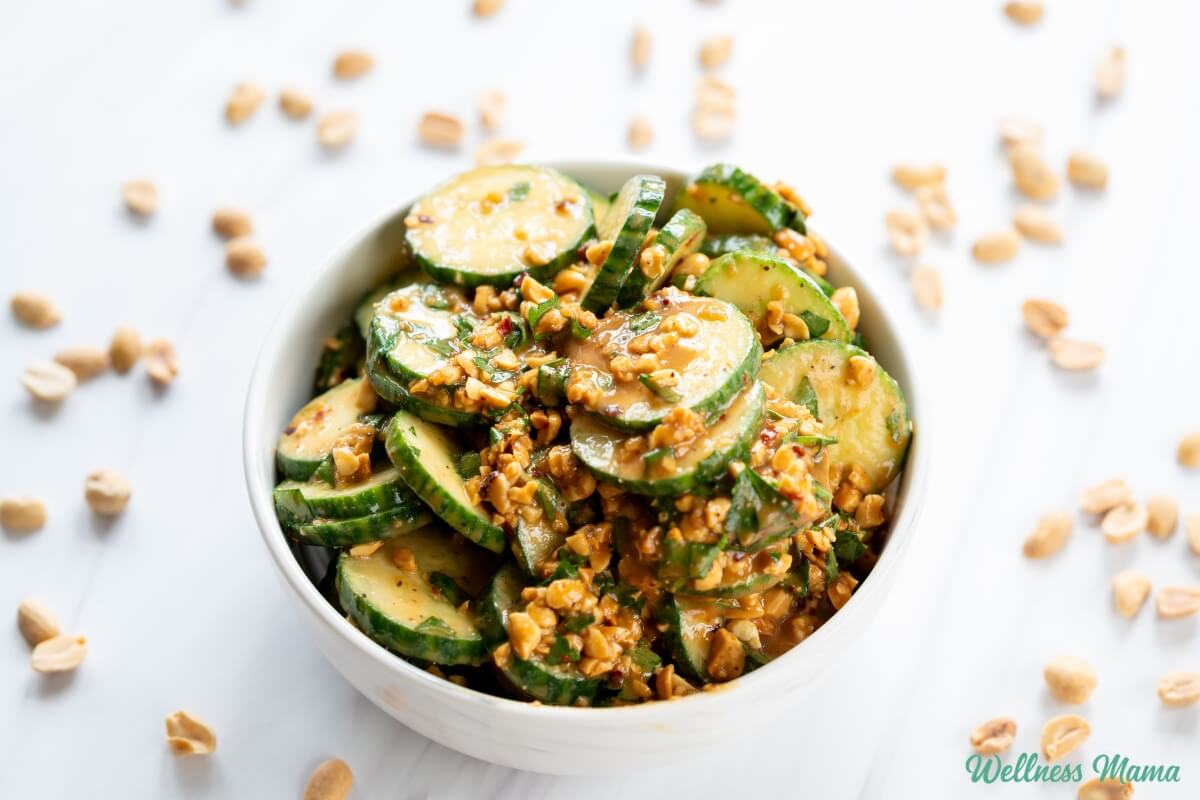
I’ve had a garden for many years now and every Spring I look forward to getting my hands back in the dirt! One of the easy vegetables you’ll often find growing in my backyard are cucumbers. They’re the perfect, refreshing side dish on warmer days, especially when they’re in this Asian cucumber salad. 

Veggies don’t have to be boring when they’re covered in a flavorful (and healthy!) sauce. Some of my kids favorite sauces to dip vegetables in include homemade ranch dressing or French onion dip. This recipe offers another option to get kids (and adults) more excited to eat their veggies. 

Spicy Cucumber Salad Recipe

The ingredients are pretty simple and the recipe only requires about 10 minutes of hands on time total. You might have seen the viral 3 ingredient spicy cucumber salad, but this version has more complex flavors. Even so, it takes just a couple minutes to mix up the sauce. 

Coconut aminos or soy sauce adds a nice umami flavor, raw honey adds sweetness and minerals, and the chopped peanuts add an addictive crunch. The rice vinegar helps cut through the earthy flavors and sweetness of the honey to really balance out the blend. Plus there’s the added flavors of the parsley, garlic, and black pepper. 

The spice in this spicy cucumber salad comes from red chili flakes which add a nice heat. If your family doesn’t like it as spicy (or at all), then reduce or omit them. Like it really spicy? Feel free to add more! Just be sure to taste it first before adding more and adjust to taste. 

Prepping the Cucumbers

I usually just chop my veggies in the food processor and call it a day, but this Asian cucumber salad has an additional step. By sprinkling the slices with some salt first and then patting them dry it reduces some of the extra moisture. Cucumbers are mostly water and when they’re added to a salad like this it can get really watery. It’s a simple step that allows the cucumbers to really soak up all of that delicious sauce. 

Here’s how to make it!

Spicy Asian Cucumber Salad Recipe

This delicious Asian cucumber salad recipe is a spicy, salty, and refreshing side dish. Full of flavor and nutrition it’s a summer staple!

  • Lay the sliced cucumbers in a single layer on a clean kitchen towel or paper towels. Sprinkle evenly with ½ teaspoon salt and let sit for 10 minutes to draw out excess moisture.

  • Rinse the salted cucumber slices under cool water, then pat thoroughly dry with paper towels. This step keeps the sauce from getting watery and ensures the best flavor absorption.

  • In a medium bowl, whisk together coconut aminos, rice vinegar, natural peanut butter, raw honey, garlic, dried red chili flakes, ground black pepper, and fresh parsley until smooth and fully combined.

  • Add the dried cucumber slices to the peanut sauce and toss until every slice is well coated. Transfer to a serving plate and garnish with chopped peanuts.

  • Serve immediately or chill for up to 1 hour.

Nutrition Facts

Spicy Asian Cucumber Salad Recipe

Amount Per Serving (1 serving)

Calories 204
Calories from Fat 117

% Daily Value*

Fat 13g20%

Saturated Fat 2g13%

Polyunsaturated Fat 4g

Monounsaturated Fat 6g

Sodium 479mg21%

Potassium 434mg12%

Carbohydrates 17g6%

Fiber 3g13%

Sugar 8g9%

Protein 8g16%

Vitamin A 476IU10%

Vitamin C 7mg8%

Calcium 56mg6%

Iron 2mg11%

* Percent Daily Values are based on a 2000 calorie diet.

Adjust the spice level to your preference by adding more or less chili flakes

Shelf Life and Storage

This is one of those recipes that tastes even better if you wait a bit. You can eat this recipe right away or you can let the sauce soak into the cucumbers for an hour first to marry the flavors. Keep any leftovers in a covered container in the refrigerator for up to 1 week. 

Unless you like soft peanuts, save these as a garnish for right before serving. 

More Addictive Salad Recipes

Here are some more of my veggie packed salad recipes I love eating when the weather starts to warm up. 

What are some of your favorite easy and healthy side dishes? Leave a comment and let us know!

Tags: , , , ,
Beauty Rituals From a South Asian Household

Beauty Rituals From a South Asian Household

This article is written by a student writer from the Her Campus at UCF chapter and does not reflect the views of Her Campus.

Growing up in a South Asian household taught me that our kitchens aren’t just for cooking; they can easily be transformed into an apothecary when needed. As college students, it’s common to feel like we are falling behind in luxury skincare trends showcased in the latest viral skincare videos online. This is where I find comfort, knowing that I can always turn to South Asian DIY beauty remedies that cost a minimum and can be put together in minutes.

The South Asian approach to beauty and wellness is deeply rooted in Ayurveda, an ancient system that emphasizes growth and wellness both inside and out using natural ingredients. For me, wellness smells like warmed coconut oil my mom would massage into my hair after a long week of damage, or it was the yellow stain on that designated mixing bowl I relied on to make my DIY clay masks to refresh my skin.

The 15-Minute Homemade Mask that restored my confidence: Ubtan

Long before the “clean beauty” trend took over social media, South Asian households had all the secrets in their spice tins to maintain their skin. One significant and traditional remedy is “Ubtan.” Even global stars like Priyanka Chopra swear by it. In a popular “Beauty Secrets” video for Vogue, Chopra shared her family’s DIY Ubtan recipe, which she relied on growing up. “The ubtan was my mum’s way of moisturizing and exfoliating my skin when I was 16,” she said, tapping a jar of turmeric powder into the off-white paste to get a marigold hue. “It really soothes—I’ve taught it to a lot of my friends.”

Her version, which is quite similar to what my mom taught me, includes gram flour, turmeric, lime juice, and full-fat yogurt, along with a few drops of rose water.

How to make it:

1. Take a clean bowl and add gram flour to it.

2. Next, add a dash of turmeric and a few drops of lime juice.

3. Add yogurt to the mixture and stir.

4. To achieve the right consistency, add a few drops of rose water and mix once again.

According to The Times Now, this specific DIY solution is a powerhouse for skin rejuvenation. Gram flour acts as a natural exfoliator to remove dead cells, while turmeric soothes inflammation. The lime juice helps target blemishes due to its richness in vitamin C, and the yogurt aids in tightening pores.

The Ultimate Hair Repair Ritual: the “champi.”

If you’ve heard of “hair slugging” on TikTok, you should know that South Asian mothers and grandmothers have been doing this for centuries under a different name: Champi. Champi is a traditional Indian head massage that involves warming up pure coconut oil, almond, or argan oil, along with rosemary oil that is sometimes boiled with jasmine flowers and used to massage deeply into the scalp.

While this ritual may seem chaotic, there are several benefits to oiling your hair weekly before washing it. Coconut oil or argan oil acts as a protective barrier and helps replenish moisture in your hair. Busy college days can often lead to bad hair days, especially in the Florida sun and humidity, where our hair can easily lose moisture. Massaging these oils deep into your scalp can be a big savior when included in your weekly everything shower routine.

In addition to being a miracle for your hair, this practice is also common in South Asian households as a de-stressing ritual after a long week. The act of massaging and applying pressure to your scalp can help relax your nerves and restore balance to a stressed mind. If you are new to hair oiling, this is a perfect tutorial by Natasha Thasan, who is a growing South Asian social media influencer.

@natasha.thasan via Instagram

Beyond the outer surface: DIY Elixers and Beauty supplements

Growing up, my mom taught me that beauty goes beyond applying potions on the skin; it’s about drinking homemade herbal elixirs made with natural beauty ingredients. We’ve all seen the trend of “eat your skincare.” I was always taught that wellness is holistic, and if my skin glowed, it was because I was consuming things that balanced my body. Instead of relying on expensive beauty gummies, I learned to incorporate homemade rituals that are quick and help me start the day right.

One popular staple is the ABC juice, which consists of apple, beetroot, and carrot, with a squeeze of lime and a dash of turmeric. This vibrantly colored smoothie may not be the most soothing to your taste buds, but it is packed with antioxidants and vitamins that promote a natural plumpness and flush to your skin. After a decade, this smoothie is still a part of my breakfast.

Another drink I was introduced to years ago is overnight-soaked cumin and cinnamon water. If you are looking for better digestion and less bloating, this drink will be your best friend. It’s the first thing I have in the morning before breakfast to start my day off right. All you need are cumin seeds and cinnamon. Soak them overnight in water, strain, and warm them up before drinking.

Lastly, Haldi Doodh, or warm turmeric milk, is a well-known wellness remedy in South Asia that people often enjoy before bed. This drink is also referred to as the “Golden Latte” in the West. According to WebMD, this beverage provides protein and calcium while acting as an anti-inflammatory to boost immunity and promote better sleep.

The simple recipe calls for a dash of turmeric and cardamom or ginger mixed with any milk of your choice, though it is traditionally consumed with whole-fat cow’s milk. As mentioned in the WebMD article “Golden Milk: Are There Health Benefits?”, the mixture is heated to create a warm, soothing drink that is said to help prevent common ailments, including colds, inflammation, and upset stomachs.

Forget the price tag and the long list of chemicals. The most effective and affordable beauty tools are often found in your kitchen. South Asian moms have long replaced chemical peels with turmeric and clay masks, and the countless supplement bottles with simple, natural recipes. So, the next time midterm stress causes a skin breakout, you can always refer to this guide on some traditional wellness remedies.

Tags: , , , ,
Featured Image

Vira Launches as a First-of-Its-Kind South Asian, Ayurveda-Inspired Sensual Wellness Brand | Currency News | Financial and Business News

New York, United States, February 10th, 2026, FinanceWire

The clean product line bridges skincare and sex-care, reframing intimacy as an essential part of holistic self-care.

Today marks the official launch of Vira, a first-of-its-kind South Asian, Ayurveda-inspired sensual wellness brand dedicated to empowering individuals to embrace their sensuality, prioritize self-care and elevate overall well-being through thoughtfully crafted plant-based products. Launching with a line of five luxury products that bridge skincare and sex-care curated with EU-certified clean ingredients, each formula is designed to integrate physical, emotional and spiritual wellness.

Founded by Shruti Viradia, a certified Ayurvedic Health Coach and Indian American entrepreneur, Vira was conceptualized nearly five years ago, beginning with a single natural lubricant made in her own kitchen. Growing up, Shruti observed a lack of transparency and open conversation around sexual wellness within her community, a gap that inspired her to reimagine intimacy through a more inclusive, culturally rooted lens. What started as a product shared only with close friends quickly revealed a broader need for clean, holistic sensual care, ultimately becoming the foundation of Vira.

“Vira began as a deeply personal exploration of pleasure, care, and cultural identity,” says Shruti Viradia, founder of Vira. “I wanted to create products that felt safe, intentional, and rooted in tradition, while also meeting the modern need for clean, transparent sensual care. Vira is about reclaiming intimacy as an everyday act of self-care, not something that should feel shameful or hidden.”

As wellness continues to evolve beyond traditional skincare and fitness, conversations around sexual wellness still remain taboo. Vira was created to shift the narrative and offer a holistic approach that reframes intimacy as an everyday ritual of touch, embodiment and self-care – not just partner-focused moments. From hydrating oils to pH-balanced lubricants, the brand offers thoughtfully crafted products designed to nourish the skin and elevate pleasure with intention and care.

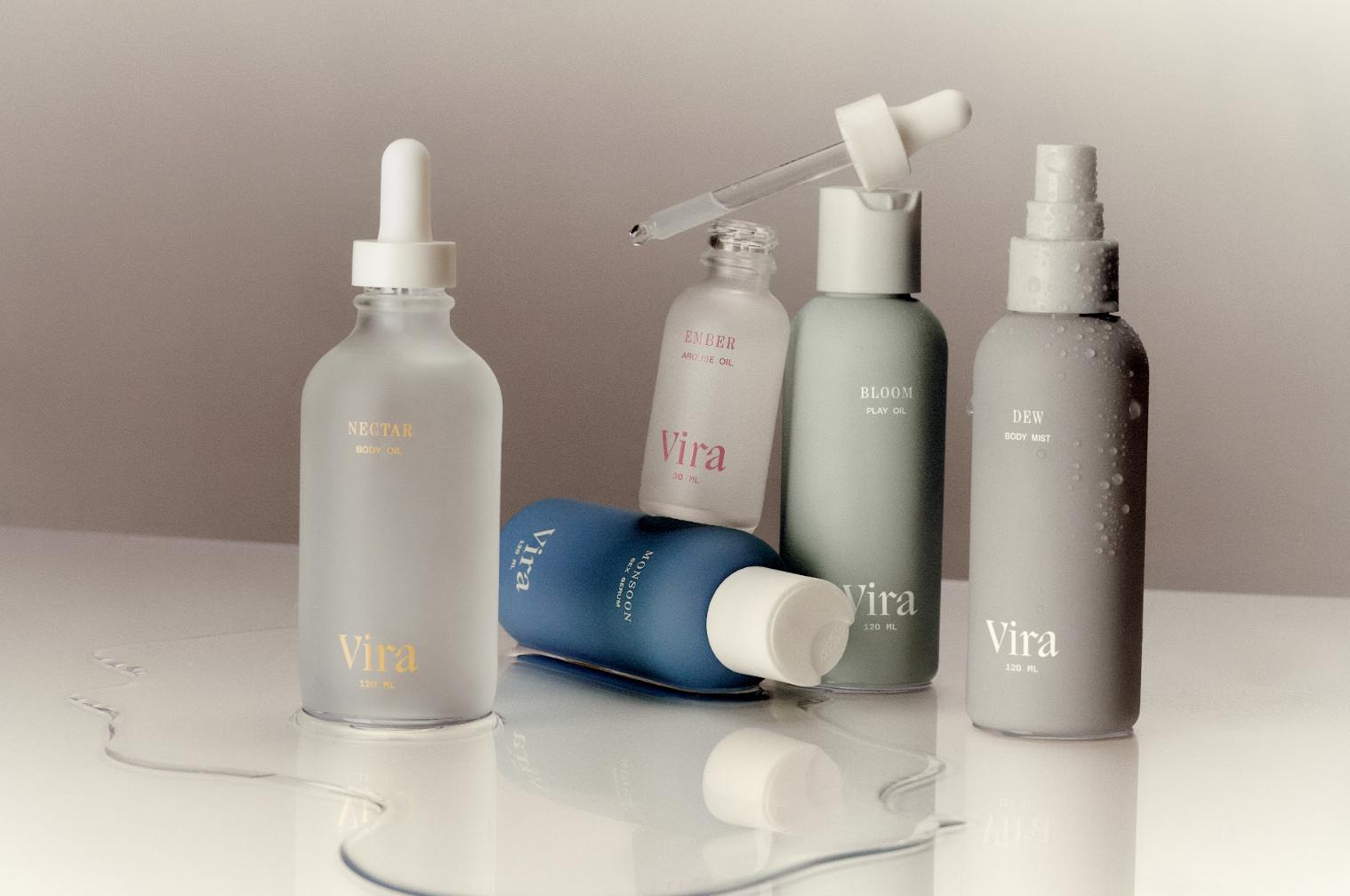
Vira’s product line includes:

  • Nectar ($44): a lightweight, multi-use body oil that hydrates, calms and repairs skin including key ingredients such as turmeric, grapeseed oil, coffee extract and more (best used as an everyday moisturizer or for sensual massage) 
  • Dew ($33): a soothing multi-use body mist to refresh, balance pH and alleviate irritation including ingredients such as witch hazel and rose water (best used before and after sex or even to refresh underarms after a workout and throughout the day) 
  • Ember ($36): an arousal oil designed to enhance pleasure with a gentle warming and tingling effect – similar to the feel of a lip plumper (best used before sex or during foreplay) 
  • Bloom ($32): a silky play oil with a coconut oil base that doubles as a natural lubricant, massage oil and nourishing moisturizer (best used during sex or for sensual massage) 
  • Monsoon ($26): an aloe-based, pH-balanced sex serum (or lubricant) for hydration and frictionless intimacy – without the sticky or greasy residue (best used during sex)

Vira’s products are available for purchase on www.virasensual.com with select items shipping out in March 2026. For more information, visit Vira’s website or @virasensual on Instagram and TikTok. 

About Vira

Vira is a South Asian, Ayurveda-inspired sensual wellness brand redefining intimacy as an essential part of holistic self-care. Founded by certified Ayurvedic Health Coach and Indian American entrepreneur Shruti Viradia, the brand offers thoughtfully crafted, plant-based products that bridge skincare and sex-care – supporting physical, emotional, and spiritual well-being through intentional rituals of touch and embodiment. Each formula is made with EU-certified clean ingredients and designed to elevate everyday intimacy. Launched in 2026, Vira is already being considered for leading beauty and sexual wellness awards, signaling its growing impact within the modern wellness landscape.

Contact

Head of Brand Strategy & PR
Courtney Ormond
Vira
courtney@st-ormpr.com

Tags: , , , , , , , , , , , ,
From Geishas To Glass Skin: Why An Ancient Asian Ingredient Is Skincare’s Hottest Trend | Lifestyle News

From Geishas To Glass Skin: Why An Ancient Asian Ingredient Is Skincare’s Hottest Trend | Lifestyle News

Last Updated:January 31, 2026, 13:31 IST

Rice-based products tend to suit a wide range of skin types, especially those dealing with dryness, sensitivity, or dullness.

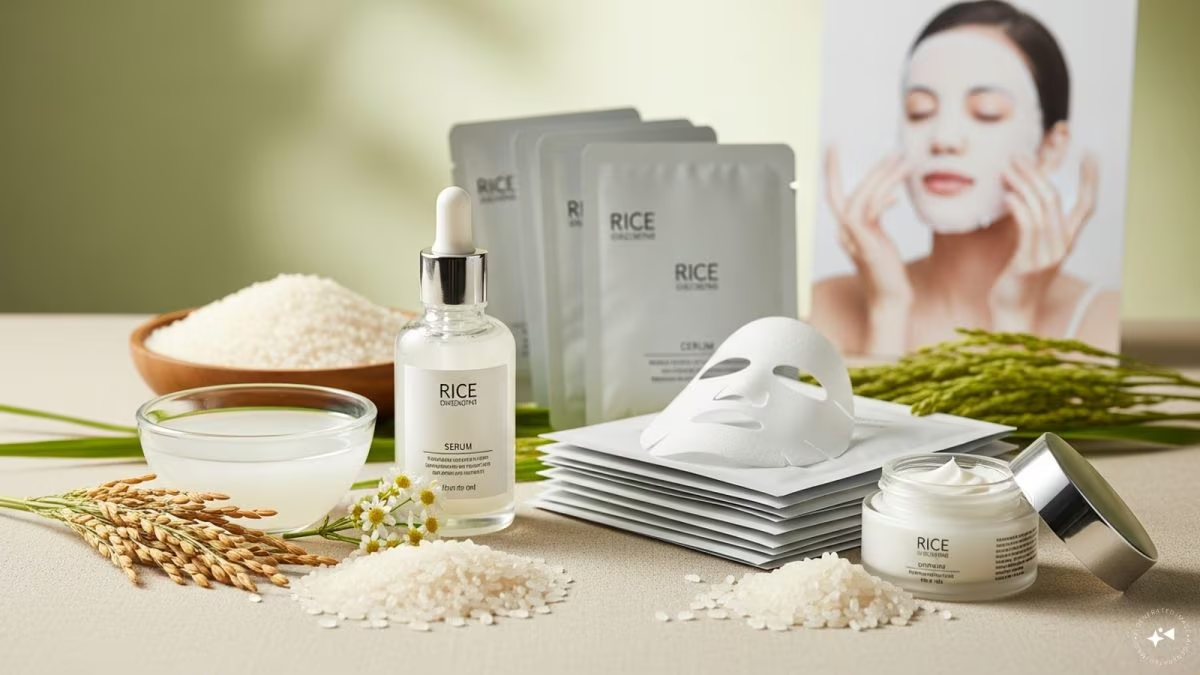
You don’t need a complete overhaul to add rice to your skincare routine; a simple rice water–based toner is a good starting point. (Representative image: AI-generated)

Rice has always been more than just a staple food across Asia. For centuries, it has been used for beauty and skin care purposes, long before the social media trend popularised its serum, sheet masks and other products.

Today, as the beauty world chases “glass skin” and gentle, effective ingredients, rice has re-emerged as an unlikely hero. What was once passed down through tradition is now being validated by modern science, turning an ancient beauty secret into one of skincare’s hottest trends.

The Story Of Rice In Beauty

Centuries ago in Japan, geishas relied on rice water to soothe their skin after long hours of wearing heavy makeup.

The practice was simple: rice was washed or soaked, and the milky water was saved and used on the skin and hair.

Over time, women noticed that their hands felt softer, their skin calmer, and their complexion clearer.

In Korea, rice bran and rice oil were similarly prized for their nourishing and brightening qualities, especially in royal households.

These rituals were not labelled as “skincare routines” back then; they were everyday practices rooted in observation and experience.

What Makes Rice Suitable For Skin Care

The renewed interest in rice is not driven by nostalgia alone. Scientists and dermatologists now understand that rice contains compounds that genuinely benefit the skin.

It is rich in antioxidants that help protect against environmental stress, while natural vitamins and amino acids support hydration and skin repair. Rice bran oil, in particular, is known for its ability to nourish dry skin and improve softness without clogging pores.

This combination makes rice especially appealing for people who want visible results without harsh activities. Instead of aggressively exfoliating or stripping the skin, rice-based ingredients work gently, supporting the skin’s natural functions over time.

From Homemade Rituals To Modern Formulations

The beauty industry’s rediscovery of rice did not begin in laboratories, but it began online.  DIY rice water routines flooded social media, with users claiming brighter, calmer skin after just a few weeks.

While these homemade methods reflect traditional practices, they also come with risks. Improperly stored rice water can spoil quickly, and uncontrolled fermentation may irritate sensitive skin.

Skincare brands took inspiration from these rituals and refined them, producinga range of products from toners and serums, to sheet masks and moisturisers under controlled conditions of laboratories.

What Makes Rice Effective In Skincare

Dermatologists largely agree that rice-derived ingredients can be beneficial, particularly for hydration, mild brightening, and soothing sensitive skin.

Studies suggest that compounds found in rice help strengthen the skin barrier and reduce moisture loss, which is key to achieving that sought-after “glass skin” look.

However, experts are careful to manage expectations. Rice isn’t a miracle ingredient that can erase deep pigmentation, acne scars, or signs of ageing overnight. Instead, it works best as a supportive ingredient—one that enhances skin health gradually and complements stronger actives when needed.

What Makes Rice Popular In Skin Care

Rice in skincare isn’t just another fleeting beauty fad. It is likely to stay in the skincare industry because it is not a new invention, but a traditional practice that has been recalibrated in modern laboratories.

Its traditional roots, simple ingredient profile, and natural appeal make people more comfortable choosing it as part of their skincare routine.

In an era of complex chemical formulations, rice offers simplicity and comfort. It aligns perfectly with the minimalist skincare movement, where fewer products with gentle ingredients are preferred over aggressive routines.

Cultural curiosity plays a role, too. As Korean and Japanese beauty philosophies gain global attention, traditional ingredients like rice are being reintroduced to a wider audience. Add the influence of social media, where glowing skin routines go viral overnight, and rice’s comeback feels almost inevitable.

How You Can Add Rice To Your Routine

Rice-based products tend to suit a wide range of skin types, especially those dealing with dryness, sensitivity, or dullness. Because the ingredient is naturally gentle, it’s often recommended for people whose skin reacts poorly to strong actives.

That said, those with severe acne or stubborn pigmentation may need additional treatments alongside rice-infused products for visible results.

Incorporating rice into a skincare routine doesn’t require a complete overhaul. A rice-based toner can be a good starting point, followed by a moisturiser or serum that contains rice extract or rice bran oil.

Used consistently, these products help improve hydration and overall skin texture. As with any skincare routine, sunscreen remains essential, especially when using products aimed at brightening the skin.

Handpicked stories, in your inbox

A newsletter with the best of our journalism

submit

First Published:

January 31, 2026, 13:14 IST

News lifestyle From Geishas To Glass Skin: Why An Ancient Asian Ingredient Is Skincare’s Hottest TrendDisclaimer: Comments reflect users’ views, not News18’s. Please keep discussions respectful and constructive. Abusive, defamatory, or illegal comments will be removed. News18 may disable any comment at its discretion. By posting, you agree to our Terms of Use and Privacy Policy.

The Story Of Rice In Beauty

Centuries ago in Japan, geishas relied on rice water to soothe their skin after long hours of wearing heavy makeup.

The practice was simple: rice was washed or soaked, and the milky water was saved and used on the skin and hair.

Over time, women noticed that their hands felt softer, their skin calmer, and their complexion clearer.

In Korea, rice bran and rice oil were similarly prized for their nourishing and brightening qualities, especially in royal households.

These rituals were not labelled as “skincare routines” back then; they were everyday practices rooted in observation and experience.

What Makes Rice Suitable For Skin Care

The renewed interest in rice is not driven by nostalgia alone. Scientists and dermatologists now understand that rice contains compounds that genuinely benefit the skin.

It is rich in antioxidants that help protect against environmental stress, while natural vitamins and amino acids support hydration and skin repair. Rice bran oil, in particular, is known for its ability to nourish dry skin and improve softness without clogging pores.

This combination makes rice especially appealing for people who want visible results without harsh activities. Instead of aggressively exfoliating or stripping the skin, rice-based ingredients work gently, supporting the skin’s natural functions over time.

From Homemade Rituals To Modern Formulations

The beauty industry’s rediscovery of rice did not begin in laboratories, but it began online.  DIY rice water routines flooded social media, with users claiming brighter, calmer skin after just a few weeks.

While these homemade methods reflect traditional practices, they also come with risks. Improperly stored rice water can spoil quickly, and uncontrolled fermentation may irritate sensitive skin.

Skincare brands took inspiration from these rituals and refined them, producinga range of products from toners and serums, to sheet masks and moisturisers under controlled conditions of laboratories.

What Makes Rice Effective In Skincare

Dermatologists largely agree that rice-derived ingredients can be beneficial, particularly for hydration, mild brightening, and soothing sensitive skin.

Studies suggest that compounds found in rice help strengthen the skin barrier and reduce moisture loss, which is key to achieving that sought-after “glass skin” look.

However, experts are careful to manage expectations. Rice isn’t a miracle ingredient that can erase deep pigmentation, acne scars, or signs of ageing overnight. Instead, it works best as a supportive ingredient—one that enhances skin health gradually and complements stronger actives when needed.

What Makes Rice Popular In Skin Care

Rice in skincare isn’t just another fleeting beauty fad. It is likely to stay in the skincare industry because it is not a new invention, but a traditional practice that has been recalibrated in modern laboratories.

Its traditional roots, simple ingredient profile, and natural appeal make people more comfortable choosing it as part of their skincare routine.

In an era of complex chemical formulations, rice offers simplicity and comfort. It aligns perfectly with the minimalist skincare movement, where fewer products with gentle ingredients are preferred over aggressive routines.

Cultural curiosity plays a role, too. As Korean and Japanese beauty philosophies gain global attention, traditional ingredients like rice are being reintroduced to a wider audience. Add the influence of social media, where glowing skin routines go viral overnight, and rice’s comeback feels almost inevitable.

How You Can Add Rice To Your Routine

Rice-based products tend to suit a wide range of skin types, especially those dealing with dryness, sensitivity, or dullness. Because the ingredient is naturally gentle, it’s often recommended for people whose skin reacts poorly to strong actives.

That said, those with severe acne or stubborn pigmentation may need additional treatments alongside rice-infused products for visible results.

Incorporating rice into a skincare routine doesn’t require a complete overhaul. A rice-based toner can be a good starting point, followed by a moisturiser or serum that contains rice extract or rice bran oil.

Used consistently, these products help improve hydration and overall skin texture. As with any skincare routine, sunscreen remains essential, especially when using products aimed at brightening the skin.

Stay Ahead, Read Faster

Scan the QR code to download the News18 app and enjoy a seamless news experience anytime, anywhere.

login

Tags: , , , , , , , , , ,
Best oLive
Privacy Overview

This website uses cookies so that we can provide you with the best user experience possible. Cookie information is stored in your browser and performs functions such as recognising you when you return to our website and helping our team to understand which sections of the website you find most interesting and useful.