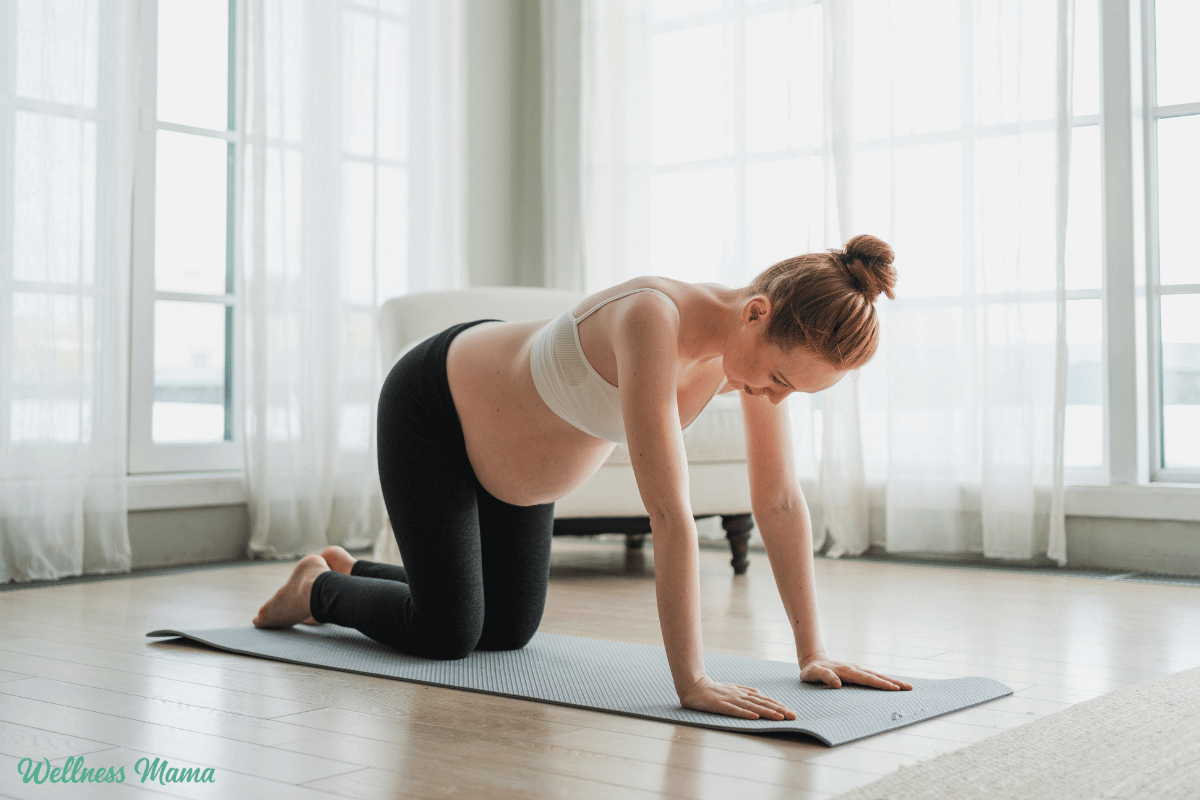
Pregnancy Exercises For a Fit Pregnancy
As a mom of seven and wellness advocate, I’ve had plenty of experience with pregnancy exercise. And while every pregnancy is a little different, staying fit during pregnancy is a good way to have an easier pregnancy, birth, and beyond. Here’s what I’ve done for my births and what the experts have to say.
Pregnancy exercise is important to help keep the body moving and flexible and prepare for labor, an intense workout. Research is clear that moms who stay active can have easier deliveries, healthier babies, and recover more quickly.
While exercise is key, don’t forget to support your body in other ways too! A nutrient dense, whole foods diet helps give our body (and baby) what they need. Choosing a healthy prenatal supplement is also key. Pregnancy demands a lot from our bodies (we’re building a human after all!).
Benefits of a Fit Pregnancy
Exercise during pregnancy provides tons of great benefits for both mom and baby. Not to mention that for a lot of moms, exercising makes them happier, less anxious, and feel more in touch with their growing body. A 2022 meta-analysis found that exercising during pregnancy reduces prenatal depression by 32% and anxiety by 33%.
So it makes sense for expecting moms to stay as active as possible. And exercise doesn’t just give you a mood boost. Here are some other science-backed benefits of pregnancy exercise:
- Increased energy levels
- Less back pain
- More regular bowel movements
- May reduce the risk of gestational diabetes, preeclampsia, and C-sections
- Healthier weight during pregnancy and postpartum
- Improves overall fitness (for an easier pregnancy and labor)
- Strengthens heart and blood vessels
The benefits continue beyond labor and delivery. Researchers note that a healthy diet and physical activity can also help protect against chronic disease later in life for our children.
Which Pregnancy Exercises are Best?
So maybe I’ve convinced you how important it is to stay fit during pregnancy. However, the big question is, what’s the best way to exercise?
Focus on exercises you enjoy. Walking, swimming, stretching, pilates, or other gentle movements are favorites. For an added boost, try exercising outside when possible. Getting natural light, earthing, and vitamin D at the same time is even better. There are many benefits to spending time outside during pregnancy!
According to a 2024 review, different exercises have more benefits during different trimesters.
“Aquatic activities and yoga helped pregnant women toward the end of their pregnancies, whereas resistance training, dance, and aerobic exercises provided the most benefits during the first trimester. Other studies found that any form of exercise for 30 min a day or every other day for 60 min provided extensive beneficial results. “
That said, some research has shown an increased risk in perineal tears during birth with lots of exercise. This doesn’t mean pregnancy exercise is dangerous and should be avoided, but that the way we go about it is important. More on that later!
Pregnancy Exercises to Avoid
Now is not the best time to take up ice hockey or skydiving! In general though, it’s safe and beneficial for most pregnant mamas to exercise. Unless you have a specific pregnancy complication and your doctor has advised against exercising.
Dr. Davenport, Executive Director of The Program For Pregnancy & Postpartum Health, says this:
“Our research found such extensive health benefits & safety of exercise in pregnancy, we removed the requirement to be cleared by your health care provider (in Canada) before you begin or continue exercise.” Dr. Davenport
The only exercises that are recommended to avoid during pregnancy are contact sports or any activity that involves the possibility of falling. According to the American College of Obstetrics and Gynecologists (ACOG), pregnant women should avoid:
- Contact sports and anything where you could get hit in the abdomen (boxing, soccer, basketball, etc.)
- Skydiving
- Exercise where you could fall (skiing, surfing, gymnastics, etc.)
- Hot yoga or hot pilates, which could make you overheat
- Scuba diving
That said, I know fit moms who continued to surf and water ski throughout their pregnancy. It’s not a black and white issue, but caution is warranted.
Pregnancy Exercises For a Healthier Mama
So what, exactly, can pregnant women do to exercise? Olympic marathoners Kara Goucher and Paula Radcliffe clocked in 60-80 miles per week running during their pregnancies. Olympic curler Kristie Moore competed in the Olympics while 5 months pregnant. And Connie Neal made headlines by playing Division 1 basketball up through her 8th month.
I don’t mention these examples to make you feel bad that you’re not perfecting your double-axle while growing adorable little earlobes. However, this shows that we’re a lot more resilient than we give ourselves credit for. Many women find they can maintain most of their previous activities during pregnancy and even increase activity.
Here are some great exercises for pregnancy.
Core and Pelvic Floor Exercises
First up are core and pelvic floor exercises. Some pregnancy experts used to recommend Kegels, but there’s much more to the story. Pelvic floor exercises do not stretch the muscles, and Kegels during pregnancy can do more harm than good. About 80% of women already have pelvic floor muscles that are too tight.
If you already have pelvic floor and core issues (incontinence, pain during sex, pelvic pain, diastasis recti, etc.), then it’s best to seek advice from a pelvic floor professional. Women’s health physical therapists and fitness experts can really help with all of those minor (and major!) inconveniences and pain. And if you don’t have any issues in that area, you’ll still want to avoid exercises that could create a problem.
The exercise programs over at Fit2b are a Wellness Mama team favorite for this. Women’s fitness expert Beth Learn shares holistic programs for mamas that protect and strengthen the core and pelvic floor (before, during, and after pregnancy). These are really helpful when you want to do activities like yoga, pilates, and strength training during pregnancy, but don’t want to irritate or weaken your muscles.
Walking
It sounds so simple, but walking really has some impressive benefits. Walking helps increase circulation and aligns the pelvis. My midwife recommended I walk for at least half an hour a day. I found I actually felt best when I was able to walk for about an hour.
Researchers have connected better healing and recovery with about 3,000 steps a day. Walking during pregnancy has health benefits, but so does walking postpartum.
Swimming
Swimming is another excellent pregnancy exercise, as it can help ease the aches and discomfort that come with carrying a baby. It also strengthens stomach muscles, may help align the pelvis, and can even ensure baby is in the correct position for delivery.
Make sure that if you’re not a regular swimmer to start slow and do a gentle warm-up first. Swimming is also good because it makes you feel weightless, temporarily relieving the strain of the baby’s weight. During one pregnancy I even did handstands in the water to try and get baby to flip!
Squats and Weights
Many women are able to do squats, lunges, and lift weights during pregnancy. There’s some evidence that these types of exercises may keep the core strong during pregnancy and improve muscle tone during delivery. Weight bearing exercises during pregnancy help load the tissues and strengthen joints, bones, and muscles. They can help with recovery and improve bone density.
According to a 2022 study, women who continued lifting weights during pregnancy had fewer pregnancy complications than those who quit their lifting routines during pregnancy. And weight lifting didn’t increase perinatal or pelvic floor damage. The mamas in this study were doing Olympic level lifting, yet experienced 51% fewer adverse outcomes.
We may not all be lifting at an Olympic level, but normal strength training isn’t something to worry about during pregnancy. As long as there’s no pain, pregnant moms should do what they can and enjoy, including lifting weights. If you have certain health issues though, like placenta or cervix issues, then check with your doctor or midwife first.
Exercise By Trimester
Although most exercises are considered helpful for pregnancy, many women find that they’re limited by how they feel. It’s ok to adapt your normal workout routines to accommodate changing hormones and growing bellies.
First Trimester
Known as the undercover trimester, you can hold to your usual workout routine as long as you feel up to it. Your baby is only the size of a lipstick tube by the end of this trimester, so lying on your back, lifting weights, and cardio are all kosher.
There’s no physical reason yet to skip that 10k or those stretching inversions. However, just because you can still do it doesn’t mean you’ll want to. I remember with my first pregnancy running laps and stopping to throw up in the gym bathroom. Not fun.
You may also have sore breasts, a super sensitive nose, and become insanely tired. Those are your body’s signals to take it easy.
Sometimes exercise can help. A brisk walk in the cool air can help with the nausea and give you more energy. If you’re not feeling good, then skip it and don’t beat yourself up over getting some needed rest.
Second Trimester
You’re finally starting to show! And while that makes you adorable in your maternity clothes, it also means your uterus is large enough to start putting pressure on your vena cava when you lie on your back. This doesn’t happen for everyone, but if it does happen for you, you’ll know it. As soon as you start feeling dizzy, light-headed and/or nauseated, sit up! And you should skip back work for the remainder of your pregnancy.
Another fun thing to look out for is “round ligament pain. ” This can happen when you twist to the side, but it can strike even when you’re standing still. It feels like you’re being zapped with an electric cattle prod. Gentle pelvic floor exercises or visiting a Webster-certified chiropractor are both very helpful here!
The upside to the second trimester is that the morning sickness is usually gone and you should have more energy. You can keep lifting weights and doing cardio as long as it still feels good. Just take extra care to maintain good form. During pregnancy we have the hormone relaxin, which loosens joints and ligaments and makes it easier to get injured.
Third Trimester
Things are starting to get serious. You have little feet jammed into your lungs, massive heartburn, swollen feet, and the tiredness is back. And while you may feel like clocking out until the baby is born, staying active will help you both mentally and physically, especially as delivery time approaches.
This is the time to really watch your step, however. Your balance may be off, you probably can’t see your feet anymore, and it’s easy to misjudge how far your belly sticks out. Take it easy doing things where you have a risk of falling.
Also, while those Olympic ladies I mentioned earlier managed to run through their whole pregnancies, I’ve never been able to do that through any of mine. Sometime during the third trimester my hip flexors (the part where your leg attaches to your hip) give out and jogging becomes excruciatingly painful. Plus, they say walking helps get labor going!
Fourth Trimester
Wait, fourth trimester? Yes, the baby has to come out eventually, but those first three months after the baby is born are considered their own trimester. Your body is still going through massive hormonal, physical and mental changes.
Between sleepless nights, sore nipples, and the post-partum blues, intense workouts are really hard to fit in. And you know what? Rest, recovery, and bonding with baby are important too.
However, this doesn’t mean you need to lie in bed all day doing nothing (although some days that does sound nice!). Enjoy the baby snuggles, but start moving your body as feels comfortable. Walking and gentle pelvic floor training can help with postpartum recovery and healing, and boost the mood. According to women’s health fitness expert and founder of Fit2B, Beth Learn:
“It’s important to begin walking along with gentle core and pelvic floor training right away. Then once any wounds have healed and vaginal bleeding doesn’t increase with moderate-to-vigorous physical activity, you can do more! You don’t need to wait 6 weeks to exercise.” Beth Learn
Another great post-partum tip is to use a belly wrap (I used this one). It helps your ab muscles knit back together, supports the core, and holds the muscles and organs in during recovery.
Last Thoughts on Fitness During Pregnancy
The trick with pregnancy is moderation. So exercise! But not too much. Or too little. Most of all, just enjoy this time (as much as you can!) because it really is only nine months out of your whole life.
If you’re already active, continue doing what you’re doing as long as it feels good. And if you’re wanting some more targeted support or need more structure, then a holistic at-home fitness program is a great way to do that.
What’s been your experience with exercise for a healthy pregnancy? Any exercise tips for staying fit? Share below!