Healthy Sesame Ginger Cabbage Rolls
Once upon a time I was addicted to Chinese food. And I don’t mean real Chinese food; I mean the processed, Americanized version at places like Panda Express. Since switching to real food years ago, I’ve experimented with plenty of delicious and healthy Asian inspired recipes. These sesame ginger cabbage rolls are my latest obsession
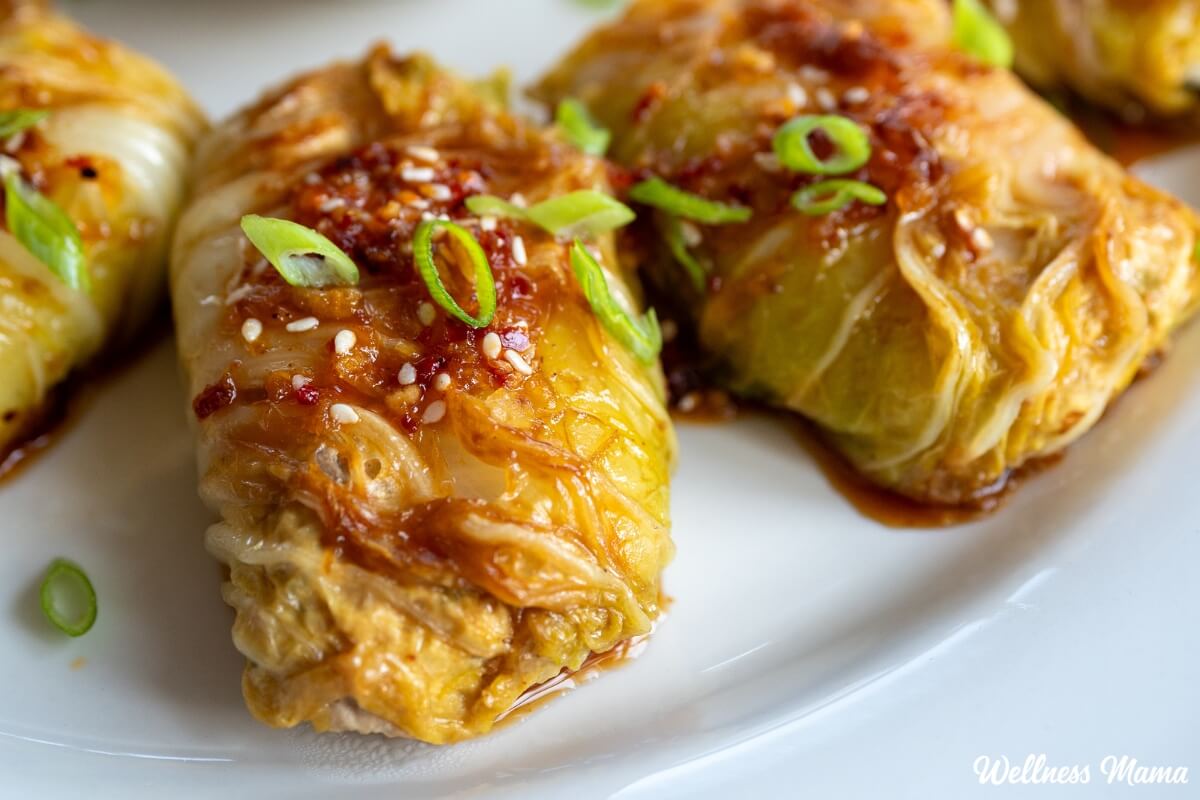
They’re packed with veggies and protein and bursting with Asian flavors like toasted sesame oil, ginger, and coconut aminos (like soy sauce). I’ll serve them as appetizers, or more often as part of the main meal. They take just minutes of hands on time and you can make a big batch and store the leftovers for later.
Sesame Ginger Cabbage Rolls
If you love the flavors of dumplings or pot stickers but don’t love the extra work of making wrappers, these cabbage rolls are a great alternative. And while the premade wonton wrappers are fast, they’re not always the cleanest. Napa cabbage is surprisingly tender after a quick blanch and makes a wrapper that’s light and easy to work with. It also adds another serving of vegetables without changing the classic savory filling.
You can use other meats, but I like ground chicken since it doesn’t overpower the other flavors, like ginger and garlic. Plus, it adds a healthy dose of protein. Finely diced shiitake mushrooms blend right into the filling to add an earthy flavor and extra moisture so the chicken stays moist as it cooks.
My favorite part is the dipping sauce though. It brings everything together for a salty, savory dip. Coconut aminos taste like soy sauce, but slightly sweeter (and without the soy). Then there’s the earthy ginger, sesame and chili crisp for a bit of spiciness. Every bite has so much flavor without the ultraprocessed sauces or MSG.
Tips for the Best Cabbage Rolls
One of the biggest tricks to making these is choosing the right cabbage. Napa cabbage has softer, flexible leaves that roll easily after a quick blanch. If the thick white stem feels stiff, simply remove it before filling and rolling. This makes the leaves easier to work with and helps prevent tearing.
You also don’t want to overfill the rolls. About one-third cup of filling is plenty for each leaf and makes rolling much easier. If a leaf does split, it’s an easy fix. Simply overlap another cabbage leaf around it before cooking. Once they’re steamed, no one will notice.
After browning the bottoms for a couple of minutes, I add a little water and cover the pan to let the cabbage steam while the filling cooks through. Remove the lid for the last minute or two to let any remaining liquid evaporate and give the bottoms a little extra texture.
Easy to Customize
These cabbage rolls are easy to adapt with whatever you have on hand. Ground turkey or pork both work well in place of chicken, and shredded carrots add a little natural sweetness and color. If you like more crunch, stir in some finely chopped water chestnuts before rolling everything up.
Leftovers also reheat well, making these a great meal prep option. I store them in the refrigerator for a few days and warm them gently in a covered skillet with a splash of water. They’re just as delicious the next day for lunch or a quick dinner.
We love making homemade pot stickers, but these sesame ginger cabbage rolls have become one of our favorite shortcuts. They have all the savory flavors we love, and the tender cabbage creates a surprisingly satisfying substitute for traditional wonton wrappers.
Healthy Sesame Ginger Cabbage Rolls
These flavorful cabbage rolls feature protein, veggies, and real food ingredients like garlic, ginger, and toasted sesame.
For the Sesame Napa Cabbage Rolls
For the Sesame Coconut Aminos Dipping Sauce
-
Bring a large pot of water to a boil. Carefully separate 8-10 large Napa cabbage leaves and blanch them for about 1 minute, just until softened and flexible enough to roll without tearing. Transfer the leaves to an ice bath or a plate to cool and pat dry with paper towels. If needed, trim the thickest portion of the stem with a knife so the leaves roll more easily.
-
In a large mixing bowl, combine the ground chicken, shiitake mushrooms, garlic, green onions, coconut aminos, toasted sesame oil, ginger, rice vinegar, and white pepper. Mix until everything is evenly incorporated, being careful not to overwork the meat.
-
Lay a cabbage leaf flat on your work surface. Place approximately 1/3 cup of filling near the stem end of the leaf. Fold the sides inward and roll tightly, similar to a burrito or spring roll. Repeat with the remaining cabbage leaves and filling.
-
Heat the avocado oil in a large skillet over medium heat. Arrange the cabbage rolls seam-side down in the pan and cook for about 2 minutes until lightly golden on the bottom. Add ¼ cup water to the skillet and immediately cover with a lid. Steam for 10 to 12 minutes, or until the chicken is fully cooked and reaches an internal temperature of 165°F. Remove the lid and continue cooking for another 1 to 2 minutes to allow any remaining liquid to evaporate and the bottoms to crisp slightly.
-
While the rolls cook, whisk together the coconut aminos, rice vinegar, toasted sesame oil, chili crisp, honey, ginger, garlic, and sesame seeds.
-
Serve immediately with the dipping sauce on the side.
Nutrition Facts
Healthy Sesame Ginger Cabbage Rolls
Amount Per Serving (1 cabbage roll)
Calories 139
Calories from Fat 81
% Daily Value*
Fat 9g14%
Saturated Fat 2g13%
Trans Fat 0.03g
Polyunsaturated Fat 2g
Monounsaturated Fat 5g
Cholesterol 39mg13%
Sodium 200mg9%
Potassium 332mg9%
Carbohydrates 5g2%
Fiber 1g4%
Sugar 2g2%
Protein 9g18%
Vitamin A 95IU2%
Vitamin C 7mg8%
Calcium 26mg3%
Iron 1mg6%
* Percent Daily Values are based on a 2000 calorie diet.
For extra heat, add a teaspoon of chili crisp directly to the filling mixture
Storage and Shelf Life
Keep any leftovers in the fridge in an airtight container for up to 3 days. Reheat on the stove with a little water to steam.
More Asian Inspired Recipes
These delicious recipes are a healthier spin on typical fast food and Asian inspired dishes.
Have you made wraps or cabbage rolls before? What are your favorite flavors to use? Leave a comment and let us know!