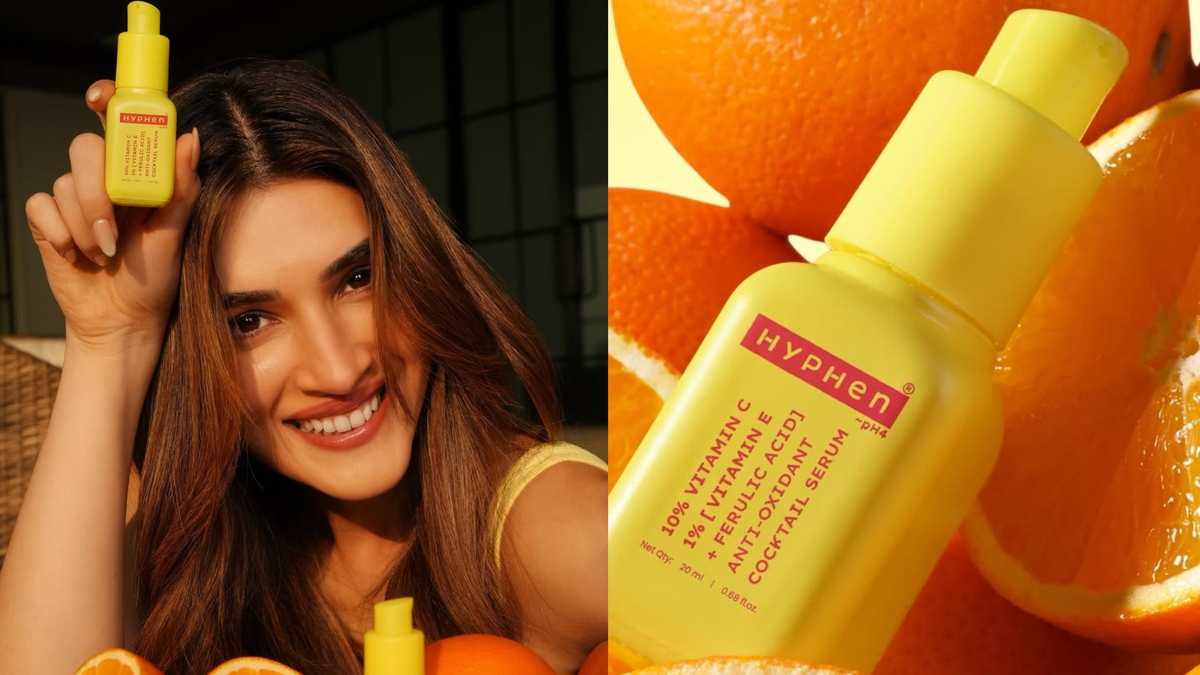
Why Vitamin C Keeps Failing Us And What Hyphen Did Differently
Vitamin C is one of skincare’s most promised-about ingredients and also one of its most quietly abandoned. On paper, it does everything. In practice, it often stings, oxidises, or delivers results that feel inconsistent at best. For many people, the relationship with Vitamin C starts with excitement and ends with a half-used bottle pushed to the back of a shelf.
Advertisment
So when Hyphen decided to enter this category, the more interesting question was not why they were launching a Vitamin C serum, but whether they were willing to address why so many people have stopped trusting it.
I had early access to Hyphen’s new 10% Vitamin C + 1% Vitamin E and Ferulic Acid Serum well before launch. Kriti Sanon’s ask was simple. Use it properly. Live with it. Question it. What followed felt less like a product trial and more like a slow audit of everything that usually goes wrong with Vitamin C.
Why Vitamin C Keeps Letting People Down
The issue with Vitamin C has never been its potential. It is one of the most researched and effective skincare ingredients available. The problem lies in how temperamental it becomes once it leaves controlled lab conditions and enters real routines, especially in Indian climates where heat, humidity, and long days test formulation limits.
Advertisment
Sanon acknowledges this gap early on. “Vitamin C itself isn’t the problem,” she says. “It’s how it’s formulated.” That statement sets the tone for the entire product. Instead of centring the ingredient as a hero, the focus stayed on the chemistry supporting it.
This thinking also explains the timeline. The serum took nearly 21 months to develop, with the launch paused more than once. “We even paused the launch at least twice,” she shares. “We only launched when it felt right.”
The Chemistry Was Built to Behave
At the core of the formula is 3-O Ethyl Ascorbic Acid, chosen for its stability and bioavailability. But the formula does not rely on Vitamin C working alone. Vitamin E and ferulic acid are paired with it to keep the ingredient potent over time, while liposomal CoQ10 and EGCG extend antioxidant support beyond surface-level claims.
The serum operates at a pH of around 4.0, where Vitamin C performs best, but this potency is balanced with calming ingredients like heartleaf extract and Allantoin to support the skin barrier. The intention was not to soften Vitamin C’s effectiveness but to make it more predictable and easier to live with.
This is not a formula built to impress on first use. It is designed to remain stable, consistent, and wearable over time.
What the 12-Hour Release Actually Changes
One of the more meaningful decisions in the formula is the 12-hour release system. Instead of delivering Vitamin C all at once and tapering off quickly, the ingredient is released gradually through the day. This allows for sustained antioxidant protection rather than a short spike followed by inactivity.
Penetration enhancers help the ingredient move beyond the surface of the skin, addressing a common frustration with serums that feel active but fail to translate into results. In everyday use, this simply means the serum works in the background without demanding attention.
Living With It Before Launch
The most noticeable thing about using this serum consistently is what does not happen. There is no stinging, no redness, and no need to adjust the rest of the routine around it. Over time, that absence of reaction becomes reassuring.
“I was hoping you’d notice how uncomplicated it feels,” Sanon says. “That moment when you realise it’s doing its job without demanding attention.”
After weeks of use, the skin appears more even and settled, without the artificial brightness that often fades quickly. This is not a product designed for instant gratification. It rewards consistency, which feels intentional rather than accidental.
Who This Serum Is Really For
This serum is best suited for people who want the benefits of Vitamin C without the anxiety that often comes with it. Those who have experienced irritation or instability in the past are very much the intended audience. “I’ve myself faced redness and stability issues with Vitamin C,” Sanon says. “We wanted to address the very reasons people give up on it.”
That said, this is not a shortcut product. If you are looking for overnight transformation, it will feel understated. Its strength lies in predictability, not spectacle.
Quiet Skincare as a New Marker of Luxury
There is a clear shift underway in how people approach skincare. Instant glow is slowly giving way to formulas that work steadily and respectfully with the skin. Products that integrate seamlessly into routines are beginning to feel more valuable than those that demand constant reassurance.
“To me, good skin today means healthy skin,” Sanon reflects. “It’s about consistent results, not instant ones.”
After living with this serum before launch, that perspective holds. Hyphen’s Vitamin C does not try to win you over immediately. It earns its place over time, which, for an ingredient as unforgiving as Vitamin C, feels like the most credible approach of all.
Also Read:
Day Vs Night Skin Care Routine: Do You Need Both?
The Power Of A Hair Wash Day In Changing Our Entire Mood