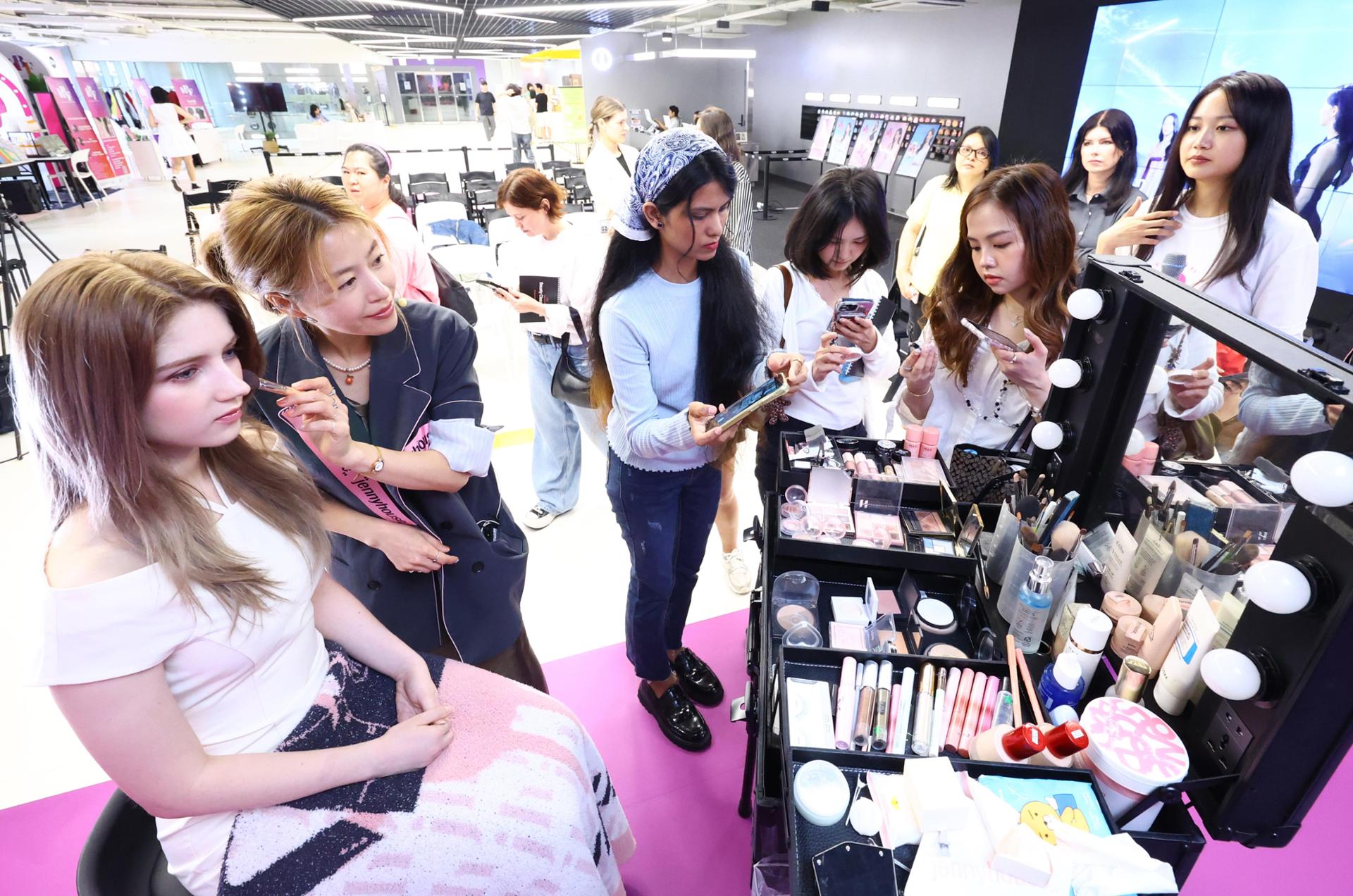
Visitors watch a makeup artist demonstrate makeup techniques during the 2026 Korea Beauty Festival at HiKR Ground in Seoul, June 25. Yonhap

Travelers take a shine to Korean beauty, wellness tourism

Visitors watch a makeup artist demonstrate makeup techniques during the 2026 Korea Beauty Festival at HiKR Ground in Seoul, June 25. Yonhap

A viral video of a Japanese calligraphy teacher’s reunion with her famous student offered an interesting glimpse at one of Korea’s fastest-growing tourism trends.

In a YouTube video uploaded on June 28 by rising K-pop girl group RESCENE, Japanese member Minami visited her hometown in Chiba and reunited with her former calligraphy teacher. During their conversation, the teacher revealed that she had flown back to Japan that day, after undergoing a cosmetic procedure near Sinnonhyeon Station in southern Seoul, drawing laughter from the group.

Although the conversation was lighthearted, it showed one of the reasons why many foreign tourists choose to visit Korea.

Minami of K-pop girl group RESCENE meets with her former calligraphy teacher, who talks about her recent wellness experiences in Korea in a video uploaded to fellow member Woni’s official YouTube channel on June 28. Captured from Woni’s official YouTube channel

For years, K-beauty was largely synonymous with cosmetics. Tourists would fill their suitcases with sheet masks, skin care products and makeup before heading home.

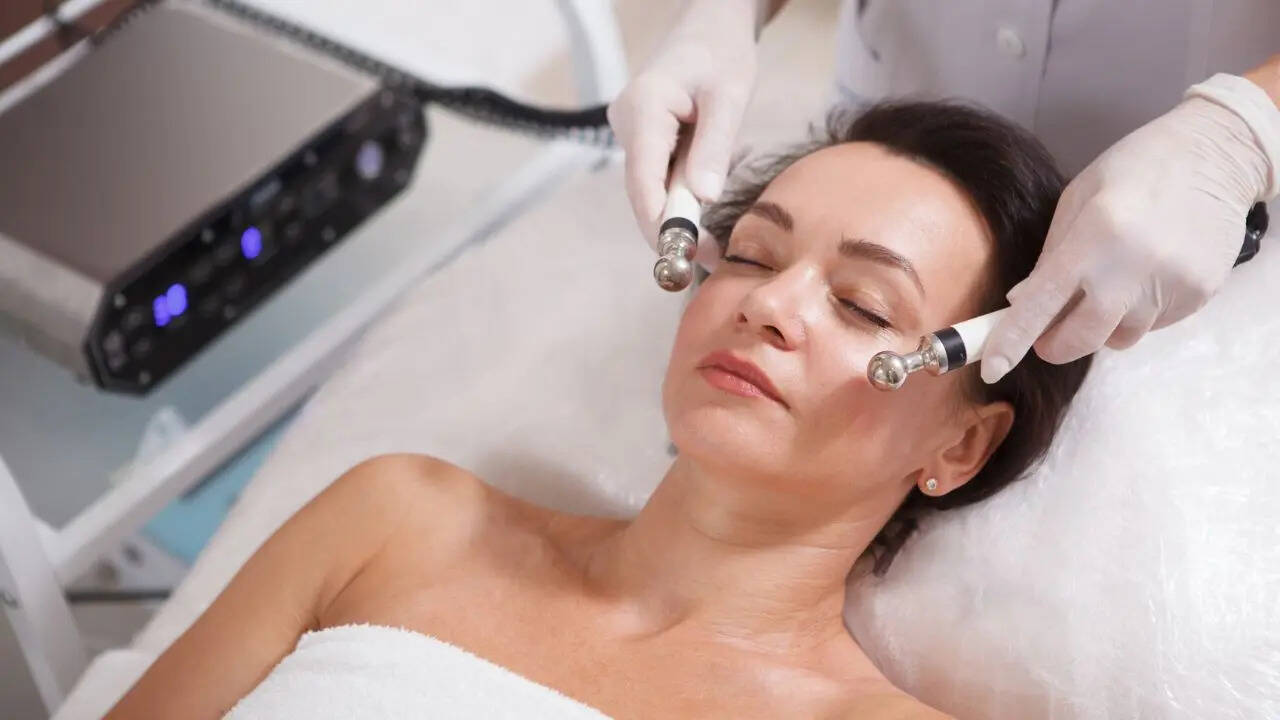
Today, however, an increasing number of visitors are booking appointments at dermatology clinics, receiving scalp treatments, consulting personal color experts, visiting pharmacies and participating in wellness programs that promise healthier lifestyles as well as improvements in appearance.

This growing demand shows the rise of wellness tourism, a type of travel that focuses on improving both physical and mental health. In Korea, this trend is unique because it mixes medical technology, beauty services, and lifestyle experiences into special travel packages that are hard to find in other countries.

Social media lead trend

Industry officials say social media has helped speed growth in wellness tourism. Thanks to beauty content on YouTube, Instagram and TikTok, young people around the world have become familiar with Korean skin care, clinics and pharmacy products. Many tourists now plan their trips carefully to visit these clinics as well as traditional sightseeing.

“We have seen a noticeable increase in foreign patients over the past few years, in addition to our domestic customers,” a dermatologist operating a clinic in southern Seoul told The Korea Times.

“Many Japanese visitors come for laser lifting procedures, wrinkle treatments and pigmentation removal. Demand has increased enough that we are strengthening our social media marketing specifically targeting Japanese tourists.”

The shift is becoming increasingly visible in government data.

According to the Korea Tourism Organization (KTO), foreign visitors spent more than 2 trillion won ($1.3 billion) here using credit cards in May, marking the first time monthly spending exceeded the 2 trillion won mark. The figure was a 67.1 percent increase from the same month last year and underscored the rapid recovery of Korea’s inbound tourism market.

Beauty and wellness-related businesses recorded some of the strongest growth.

Spending at skin care and massage businesses surged 153.9 percent from a year earlier, while dermatology clinics posted an 85.5 percent increase. Pharmacy spending rose by an even larger 206.1 percent, suggesting that visitors are increasingly combining medical procedures with purchases of skin care products, nutritional supplements and over-the-counter medicines.

The figures indicate that Korea’s tourism industry is generating higher spending per visitor, in addition to attracting larger numbers of visitors. Instead of spending most of their travel budget at department stores and duty-free shops, overseas tourists are increasingly seeking services and products similar to those found in the everyday lives of Koreans.

Customers look through health supplements and skin care products at Ready Young Pharmacy in Seongsu-dong, Seoul, June 30. Korea Times photo by Baek Byung-yeul

Beyond cosmetics

The changing travel pattern has also transformed pharmacies into one of Korea’s newest shopping destinations for foreign visitors.

Stores like Ready Young Pharmacy have rapidly expanded in tourist districts such as Myeong-dong, Hongdae, Gangnam and Seongsu-dong. They carry over-the-counter medicines, functional skin care products and health supplements. Unlike conventional pharmacies, these stores resemble health and beauty retailers where customers freely browse shelves but can also consult pharmacists about products that suit their needs.

“I had a skin treatment in southern Seoul in the morning before coming to Seongsu for lunch and shopping. I also stopped by a pharmacy to buy health supplements and skin care products,” a Chinese tourist visiting a premium pharmacy in Seongsu-dong said.

“Luxury goods are always attractive, but Korean medicine and health products are also known for their quality. Visiting these pharmacies has become one of the reasons I travel to Korea.”

Many of the products gaining popularity are not luxury goods but everyday items that Koreans have long purchased without much attention. Acne medication, scar ointments, functional cosmetics and nutritional supplements are now widely recommended through social media as essential purchases during trips to Korea.

The trend reflects how K-beauty itself has evolved. Instead of focusing solely on premium cosmetics brands, visitors are becoming interested in Korean lifestyles and daily wellness routines, creating new opportunities for retailers.

Customers browse health supplements and skin care products at Ready Young Pharmacy in Seongsu-dong, Seoul, June 30. Korea Times photo by Baek Byung-yeul

Beyond Seoul

The growing popularity of beauty and wellness tourism is no longer confined to Seoul.

The KTO data showed that spending on K-beauty and wellness by foreign visitors increased 38.4 percent in the first quarter from a year earlier, while spending on medical tourism rose 33.2 percent.

Dermatology accounted for 55.7 percent of medical tourism spending, followed by plastic surgery at 21.1 percent, demonstrating how beauty-related treatments have become one of the biggest drivers of Korea’s medical tourism industry.

The rapid increase also suggests that overseas visitors are spending more on experiences rather than simply purchasing products.

“The global tourism market recovered to around 103 percent of its pre-pandemic level in 2025, while Korea’s inbound tourism reached 108 percent,” said Kim Young-mi, head of the KTO’s Tourism AI Innovation Division, during a tourism data seminar held in May.

“Korea’s tourism industry is growing not only in terms of visitor numbers but also in quality. High-value theme tourism is expanding while tourism spending is becoming more balanced across different regions.”

Kim said beauty and wellness tourism have emerged as one of the fastest growing sectors of Korea’s inbound tourism industry. She added that the trend is no longer concentrated in Seoul, with destinations like Jeju and Busan attracting growing numbers of visitors seeking medical services and wellness experiences.

The findings suggest that beauty tourism is becoming an effective way to encourage travelers to explore more destinations outside the capital.

A building directory in front of a commercial building near Nonhyeon Station in Seoul lists a range of medical and wellness clinics, June 30. Korea Times photo by Baek Byung-yeul

The government is now working to keep up that momentum.

The Ministry of Culture, Sports and Tourism and the KTO launched the 2026 Korea Beauty Festival on June 24 to transform Korea’s globally recognized beauty industry into a tourism platform.

Held at HiKR Ground in central Seoul, the festival allows foreign visitors to experience various aspects of Korean beauty culture, including makeup, hairstyling, scalp diagnosis, personal color analysis and fashion consulting.

The event also connects visitors with nearly 800 beauty tourism products through partnerships with nine global online travel agencies, allowing travelers to book beauty experiences alongside accommodations and transportation through Sept. 30.

Officials hope the program will encourage visitors to spend more time in Korea while expanding beauty-related tourism.

“K-beauty is creating new possibilities,” Kang Jung-won, head of the ministry’s Tourism Policy Bureau, said during the festival’s opening ceremony. “It has evolved beyond the beauty industry to become one of Korea’s representative cultural contents.”
Tags: , , , , ,
Wellness Tourism and Skincare Rituals Are Redefining Modern Travel Experiences

Wellness Tourism and Skincare Rituals Are Redefining Modern Travel Experiences

Travel is no longer defined solely by destinations and sightseeing. Increasingly, it is shaped by how people feel during and after the journey. Wellness tourism has emerged as a major influence in this shift, blending relaxation, self-care, and intentional routines into travel experiences.

Visitors are seeking more than temporary escape; they are looking for ways to return home feeling restored, balanced, and physically renewed.

This evolution is especially visible in how skincare and personal care routines are being integrated into travel. From spa treatments to daily rituals, maintaining and improving skin health has become part of the overall experience. Travelers are not only exploring new places, but also investing in habits that support long-term well-being.

Coastal and Destination Environments Naturally Support Skin Recovery and Renewal Processes

Different environments can have a noticeable impact on skin health. Coastal destinations, in particular, offer conditions that support natural recovery, including cleaner air, humidity balance, and reduced exposure to urban pollutants. These factors can help maintain hydration and reduce stress on the skin, allowing natural renewal processes to function more effectively.

At the same time, stepping away from daily routines often leads to reduced stress levels, which also contributes to healthier skin. When combined with consistent care, these environmental benefits can enhance overall results, making travel an opportunity to reset both physically and mentally.

Scientific and Botanical Solutions Are Influencing Modern Skincare Choices in Travel

Advancements in skincare research have led to a greater understanding of how to support the skin at a cellular level. Botanical ingredients and scientifically developed formulations are being combined to create products that align with both natural and clinical approaches.

Companies such as Plu Laboratories reflect this integration, where innovation and formulation are used to support skin health in a more targeted way. These types of solutions are increasingly being incorporated into travel routines, allowing individuals to maintain consistency regardless of location.

Copper Peptide Skin & Hair Care | GHK-Cu | PLU Laboratories

Copper peptide products for firmer-looking skin and fuller-appearing hair. GHK-Cu and Matrixyl 3000 at clinical concentrations. Results in 6-8 weeks

Skincare-Focused Travel Is Becoming a Key Part of Wellness Tourism Experiences

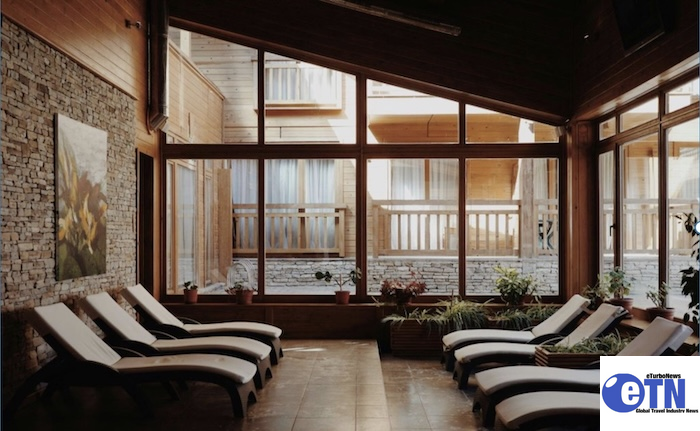
Wellness tourism is increasingly incorporating skincare as a central component of the travel experience. Spas, retreats, and specialized programs are offering treatments designed to improve skin health while promoting relaxation and recovery. These experiences are tailored to support both immediate results and long-term habits.

Understanding routines such as how to increase skin cell turnover naturally helps travelers maintain progress beyond the duration of their trip. By learning how to support the skin’s natural renewal cycle, individuals can extend the benefits of wellness-focused travel into their daily lives.

Natural Skincare Approaches Are Gaining Preference Over Intensive Treatments

There is a growing preference for natural and less invasive skincare methods. Travelers are becoming more selective about the products and treatments they use, favoring approaches that align with overall wellness rather than quick fixes.

This shift reflects a broader awareness of how ingredients and routines affect long-term skin health. Natural methods often emphasize consistency and balance, which aligns well with the goals of wellness tourism. Instead of focusing on immediate transformation, the emphasis is on gradual and sustainable improvement.

Daily Rituals Are Becoming as Important as Professional Treatments During Travel

Wellness Tourism and Skincare Rituals Are Redefining Modern Travel Experiences

Photo by Vivu Vietnam on Unsplash

While professional treatments provide immediate benefits, daily skincare routines are what sustain results over time. Travelers are recognizing the importance of maintaining consistent habits, even while away from home. Simple routines, when performed regularly, can have a cumulative effect on skin health.

This shift toward consistency highlights the importance of accessibility. Products and practices need to be easy to maintain within different environments, ensuring that routines are not disrupted by travel schedules.

Stress Reduction Plays a Direct Role in Skin Health and Overall Appearance

One of the most overlooked factors in skincare is stress. High stress levels can disrupt the skin’s natural processes, leading to issues such as inflammation, dryness, and uneven texture. Travel, particularly when focused on wellness, offers an opportunity to reduce these stressors.

According to insights often discussed by the World Health Organization (WHO), reducing stress and maintaining overall well-being has a direct impact on physical health, including skin condition. This connection reinforces the importance of integrating relaxation into skincare routines.

Hydration and Climate Conditions Influence Skin Renewal Processes Significantly

Hydration is a critical factor in maintaining healthy skin, and climate plays a significant role in how effectively the skin retains moisture. Coastal and humid environments can support hydration, while dry climates may require additional care to prevent moisture loss.

Travelers who understand these differences can adjust their routines accordingly, ensuring that their skin remains balanced regardless of location. This adaptability is essential for maintaining consistent results.

Long-Term Skincare Benefits Extend Beyond the Duration of Travel Experiences

One of the key advantages of integrating skincare into travel is the long-term impact it can have. The habits developed during wellness-focused trips often continue after returning home, creating lasting improvements in skin health.

These benefits are not limited to physical appearance. Consistent skincare routines can also contribute to a sense of well-being and confidence, reinforcing the connection between self-care and overall lifestyle.

A More Holistic Approach to Travel and Personal Care Is Emerging Globally

The combination of travel, wellness, and skincare reflects a broader shift toward holistic living. People are no longer separating these aspects of their lives; instead, they are integrating them into a unified approach that supports both physical and mental health.

As wellness tourism continues to grow, skincare will remain a central component of the experience. By focusing on natural processes, consistent routines, and supportive environments, travelers can create experiences that extend beyond the trip itself, shaping long-term habits and outcomes.

Tags: , , , , , , ,
As Skincare Tourism Grows, SkinCeuticals Moves To The Fore

As Skincare Tourism Grows, SkinCeuticals Moves To The Fore

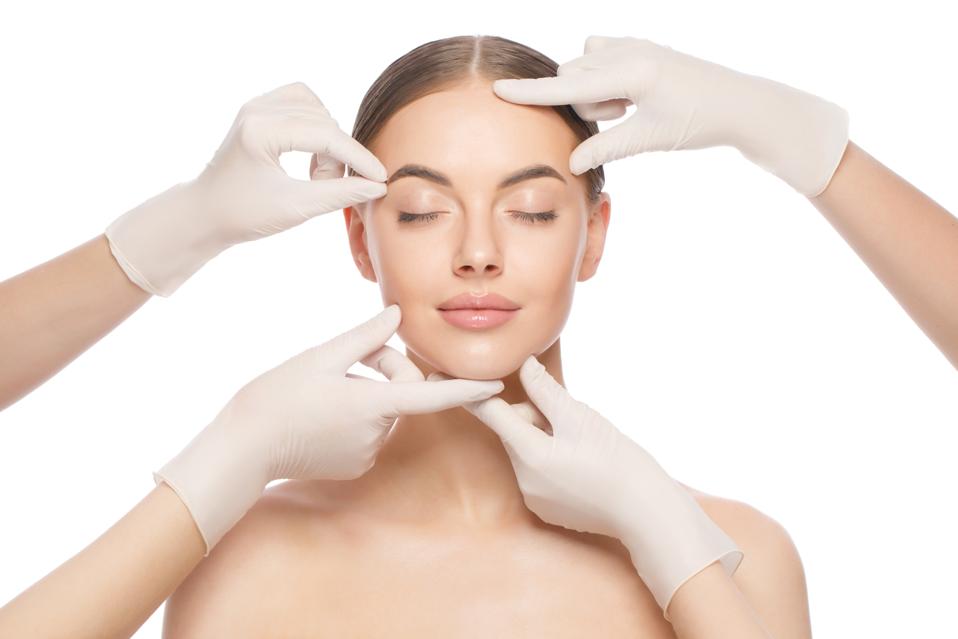
More than 38 million aesthetic procedures were performed globally in 2024, including over 20 million non-surgical treatments such as lasers, peels and microneedling, with that figure widely expected to have increased further through 2025 and into 2026.

This is a more informed and more active consumer. Skin is being treated, monitored and managed with a level of precision that was previously confined to clinical settings. The products used in between those interventions are being selected with the same level of intent, supported by growing familiarity with both advanced treatments and high-performance formulations.

It is within this landscape that SkinCeuticals has built its position, operating at the intersection of clinical skincare and everyday use, where formulation strength and consistency of outcome carry greater weight than novelty. The celebrity-favourite brand operates within the dermatological beauty division of L’Oréal, with origins in antioxidant research led by Dr. Sheldon Pinnell at Duke University.

Skin assessment guided by clinical expertise, where diagnosis, treatment and product sit within the same moment, a model now reflected in SkinCeuticals’ Hainan experience.

getty

Travel retail, particularly in Asia, has evolved into a high-engagement environment for beauty, where time, spend and intent converge. Hainan has emerged as one of the most commercially significant examples of this shift.

Hainan operates as China’s duty-free hub, with individual annual allowances of up to RMB 100,000 (approximately £11,000) per shopper. That policy has concentrated premium beauty spend into a single geography, supported by China Duty Free Group, now the largest travel retailer globally.

Sanya and Haikou have become high-volume, high-value environments for skincare. Consumers arrive with intent, higher spending thresholds and time to engage, creating conditions where premium products convert more effectively than in traditional retail.

For brands, this is proximity to a consumer already in a purchasing mindset, already investing in wellness, and already open to higher-value categories.

Where Treatment, Diagnosis And Product Converge

SkinCeuticals’ collaboration with China Duty Free Group and Hydrafacial at The EDITION Sanya sits directly at the intersection of these dynamics. Clinical-grade skincare is placed inside a hotel environment, combining diagnostic tools, device-led treatments and product application within one setting.

AI-supported skin analysis and in-room or spa-based protocols bring consultation, treatment and recommendation into a continuous experience, rather than a series of separate steps. The point of decision sits closer to the moment skin is being actively assessed and treated.

Advanced RGN-6: Designed For Skin That Has Already Changed

Core SkinCeuticals formulations, led by SkinCeuticals C E Ferulic, continue to anchor routines through repeat use and clinical recommendation.

SkinCeuticals

That is where SkinCeuticals Advanced RGN-6 has made an immediate impact in its first year, sitting alongside the brand’s established formulations with a broad and loyal following.

Launched in 2025, the formulation was developed over five years to address visible changes that tend to appear in combination – redness, pigmentation, loss of firmness and textural irregularity. SkinCeuticals reports measurable improvement across these indicators, alongside accelerated barrier recovery and compatibility with laser-based treatments.

The formulation brings together niacinamide, peptides and ectoin within a system designed for skin that is reactive or recovering rather than stable. With the continued growth in aesthetic treatments, this reflects how skin is increasingly being managed between interventions.

New Pressures On Skin: Treatment Cycles And GLP-1 Impact

Aesthetic procedures alter skin in the short term, often leaving visible redness, sensitivity and disruption to the barrier. At the same time, the rise of GLP-1 weight loss treatments has introduced additional shifts in skin structure, particularly around elasticity and firmness, now widely discussed within clinical settings. (Photo by Steve Christo – Corbis/Corbis via Getty Images)

Corbis via Getty Images

Aesthetic procedures alter skin in the short term, often leaving visible redness, sensitivity and disruption to the barrier. At the same time, the rise of GLP-1 weight loss treatments has introduced additional shifts in skin structure, particularly around elasticity and firmness, now widely discussed within clinical settings.

Prescriptions for GLP-1 medications increased by more than 700% between 2019 and 2023, with UK usage continuing to rise sharply in the past year. These shifts are visible, immediate and increasingly common, shaping what consumers expect from the products they use next.

Brand Built On Formulations That Stay

Celebrity fans of SkinCeuticals: The product appears regularly within routines shared by figures including Hailey Bieber, Kendall Jenner and Sienna Miller, alongside continued use in clinical settings.

Getty Images

SkinCeuticals has built its position in areas where formulation strength is visible over time.

Products such as C E Ferulic continue to be used years after launch, supported by clinical recommendation and repeat consumer purchase. The formulation of 15% L-ascorbic acid, 1% vitamin E and 0.5% ferulic acid, remains one of the most referenced antioxidant combinations in dermatology-led skincare.

That consistency shows up across audiences time after time. The product appears regularly within routines shared by figures including Hailey Bieber, Kendall Jenner and Sienna Miller, alongside continued use in clinical settings.

Advanced RGN-6 extends that approach into the recovery phase of the skincare cycle.

The Convergence Of Retail, Treatment And Experience

The merging of retail and spa, supported by on-site expertise, real-time diagnosis and immediate prescription, brings treatment and product into the same moment.

SkinCeuticals

What is changing now is the environment in which these products are encountered. The merging of retail and spa, supported by on-site expertise, real-time diagnosis and immediate prescription, brings treatment and product into the same moment.

What sits underneath all of this is a shift in accountability. When skin has already been treated, already changed, already invested in, the product that follows is not being given the benefit of time. Time-pressured consumers expect performance in a way that is visible and repeatable, often within days. That is where loyalty is formed now, not at the point of discovery, but in the moments where something works well enough to be reached for again and again.

Tags: , , , , ,
Beauty Tourism in Seoul: Inside the World’s Skincare Capital

Beauty Tourism in Seoul: Inside the World’s Skincare Capital

Beyond dermatology clinics, Seoul’s beauty culture extends to elaborate wellness rituals. One of the most memorable experiences of my trip was the famed 18-step hair spa, a deeply indulgent treatment lasting nearly 90 minutes. The process begins with a detailed scalp analysis, followed by deep cleansing, exfoliation, massage, steaming, nourishing oils and hydrating masks. The experience felt less like a routine salon visit and more like a therapeutic ritual designed to restore scalp health. This emphasis on scalp care reflects a broader Korean philosophy: healthy hair begins with healthy skin.

Tags: , , , , ,
Best oLive
Privacy Overview

This website uses cookies so that we can provide you with the best user experience possible. Cookie information is stored in your browser and performs functions such as recognising you when you return to our website and helping our team to understand which sections of the website you find most interesting and useful.