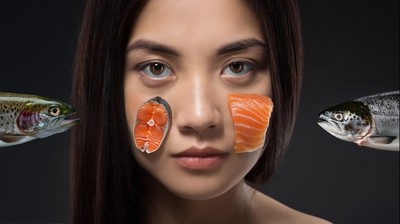
Fish DNA facial injections gain popularity in the skincare trend

Fish DNA facial injections gain popularity in the skincare trend

Facial injections using fish DNA, known as polynucleotides, are becoming a popular skincare trend.

LONDON, Nov 27: Facial injections derived from fish DNA, often referred to as polynucleotides, are rapidly gaining popularity as a new skincare trend, promising skin rejuvenation, collagen production, and reduction of fine lines and acne scars.

The treatment, which uses tiny DNA fragments extracted from trout or salmon sperm, is designed to stimulate the body’s skin cells to produce collagen and elastin, essential proteins for maintaining skin structure. Patients undergoing the procedure hope for healthier, fresher, and more youthful-looking skin.

A young client at a south Manchester aesthetics clinic received injections in her lower face as part of a treatment aimed at reducing acne scarring and improving skin texture. “I just want to target those problem areas,” she said, noting that the procedure was “pretty painful” but effective in improving hydration and tightness.

Polynucleotide treatments have attracted attention after endorsements from celebrities including Charli XCX, Kim and Khloe Kardashian, and Jennifer Aniston. Charli XCX described them as “kinda like deep vitamins” for the skin, while the Kardashians reportedly incorporated the injections into their skincare routines.

Industry experts note the treatments may enhance regenerative skincare. Suzanne Mansfield of aesthetics company Dermafocus said, “All we are doing is enhancing something the body already does. That’s why these are so special.” Clinical trials suggest polynucleotides can potentially reduce fine lines, wrinkles, and scars, although effects vary from person to person.

However, the treatment comes at a high cost, with sessions ranging from £200 to £500 each and multiple treatments recommended over several weeks, followed by periodic top-ups every six to nine months.

While generally considered safe when administered by trained professionals, experts caution that the science is still developing. Consultant dermatologist Dr. John Pagliaro of Brisbane said, “We do not have good, strong data. More large-scale studies are needed to confirm safety and efficacy.”

Some patients have experienced adverse effects. Charlotte Bickley, 31, reported inflammation, skin infection, and darker under-eye circles after receiving the treatment prior to her wedding. “I would never have salmon DNA injected into my face again,” she said, highlighting risks when procedures are not performed correctly.

Regulatory oversight varies. In the UK, polynucleotides are registered as medical devices by the Medicines and Healthcare products Regulatory Agency (MHRA) but are not regulated like medicines. They are not approved by the U.S. Food and Drug Administration. Industry representatives warn that untested products entering the market could pose safety risks.

Dr. Sophie Shotter, president of the British College of Aesthetic Medicine, emphasized that while polynucleotides are available to provide natural-looking results, “they are not a panacea” and other established treatments may have stronger scientific backing. She added that patient responses to cosmetic treatments remain highly individual.

The trend reflects a growing interest in regenerative and minimally invasive cosmetic procedures, but experts stress that consumers should carefully consider risks, efficacy, and the credentials of practitioners before undergoing treatment.

Tags: , , , , , , ,
Fish Sperm Skincare Trend Grows As Experts Call For Caution – The News Chronicle

Fish Sperm Skincare Trend Grows As Experts Call For Caution – The News Chronicle

A growing number of aesthetic clinics in Europe, the United Kingdom, and parts of Asia have begun offering skin-rejuvenation injections made from polynucleotides, DNA fragments purified from salmon or trout sperm. 


The treatment gained public attention after several celebrities including Charli XCX and Jennifer Aniston mentioned using it, leading to increased demand in late 2024 and 2025.


Polynucleotides are extracted from fish sperm through a controlled laboratory process. The DNA is then broken into small chains, sterilised, and prepared for medical use.


According to clinicians, these fragments may signal skin cells to repair damaged tissue, increase collagen and elastin production, and reduce inflammation. Clinics typically charge between £200 and £500 per session, and most patients complete a series of three treatments several weeks apart.


At a clinic in Manchester in November 2025, 29-year-old patient Abby received polynucleotide injections aimed at reducing acne-related scarring and redness. She told BBC that the earlier part of her treatment, which targeted the area under her eyes, reduced her dark circles.


The practitioner who treated her, nurse Helena Dunk, reported that many clients notice better hydration and improved skin texture, though results vary.


However, research into the treatment is still developing. Small studies from Europe and South Korea suggest improvements in skin elasticity, hydration, and scar appearance. However, dermatologists, including Dr John Pagliaro in Brisbane, Australia, state that larger, long-term studies are needed before confirming the full benefits and safety of the injections.


Safety concerns remain. The UK’s Medicine and Healthcare products Regulatory Agency (MHRA) registers polynucleotides as medical devices, but they are not regulated in the same way as medicines.


The U.S. Food and Drug Administration (FDA) has not approved polynucleotides for injection. Complications reported in the UK and the United States include infections, pigmentation changes, swelling, and allergic reactions, especially when products are poorly tested or administered incorrectly.


A case in New York involved 31-year-old Charlotte Bickley, who developed an infection and long-lasting dark rings under her eyes after treatment in 2024. She believes the injections were placed too deeply and is still receiving care to address the side effects.


Industry organisations, including Save Face in the UK, warn that unregulated products and untrained practitioners are entering the market as demand increases. They advise patients to ensure that treatments are carried out by qualified medical professionals using tested brands.


Despite the concerns, many clinicians continue to use polynucleotides, describing them as a useful option for people seeking gradual, natural-looking skin improvement. Experts have stated that results differ widely and that no single treatment is effective for everyone.

Tags: , , , , , , , , ,
Best oLive
Privacy Overview

This website uses cookies so that we can provide you with the best user experience possible. Cookie information is stored in your browser and performs functions such as recognising you when you return to our website and helping our team to understand which sections of the website you find most interesting and useful.
