Dermatologists warn teens and parents about social media skincare risks

Dermatologists warn teens and parents about social media skincare risks

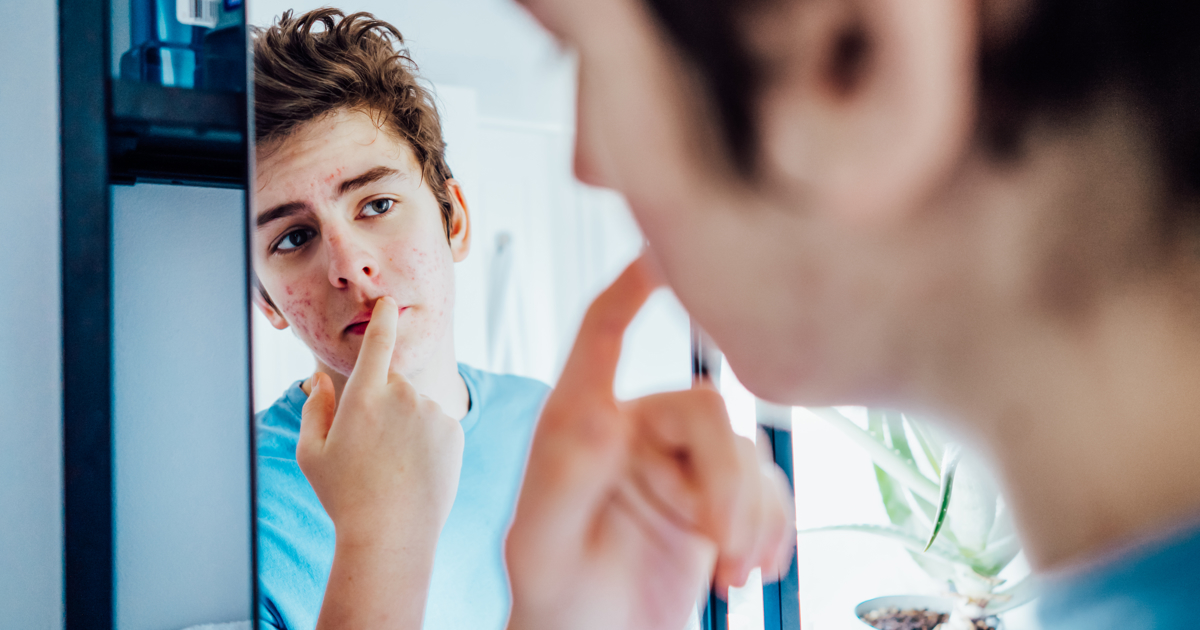
Specialist dermatologists Dr Lauren Knight and Dr Tarryn Jacobs say hormonal changes during puberty often trigger oily skin and acne, but poor skincare advice online is increasingly making the problem worse.

They say teenagers, and their parents, should focus on simple routines rather than copying influencer-led skincare trends.

Why teenage skin changes during puberty

According to Knight, hormonal shifts during puberty are the main driver of teenage skin problems.

She explained that rising androgen levels increase oil production in both boys and girls, which can lead to acne.

“The skin becomes a bit oilier… and then it can progress to acne, whether mild early acne or more severe nodular cystic acne,” she said.

While acne is a normal part of adolescence, Knight warned that it should still be treated properly to avoid long-term consequences.

Untreated acne can lead to scarring and hyperpigmentation, which can affect teenagers well into adulthood.

The psychological impact can also be significant.

Social media skincare trends raising concern

Dermatologists say a growing concern is the influence of skincare content on platforms like TikTok and Instagram.

Jacobs said many teenagers, some as young as nine or 10, are copying complex skincare routines promoted by influencers.

“We are seeing young girls… using products that are inappropriate or using these multi-step routines,” she said.

In clinics, this often leads to irritated skin and allergic reactions.

Doctors are increasingly treating teenagers for problems such as contact dermatitis and perioral dermatitis, a rash that appears around the mouth and sometimes spreads toward the eyes.

The simple skincare routine teens should follow

Dermatologists recommend a basic skincare routine for teenagers, especially those without serious skin problems.

The key steps are simple:

– Cleanse

– Moisturise

– Use sunscreen

Jacobs said building healthy skincare habits early is important, but it should focus on skin health rather than appearance.

“It should be framed in a way that is health-focused… much like brushing your teeth or eating a healthy diet.”

Additional steps, such as exfoliating or using toners, are usually unnecessary unless there is a specific skin concern.

Why ‘natural’ skincare is not always safer

Parents often look for natural products for their children’s skin, but dermatologists warn that natural ingredients are not always safer.

Knight said many people wrongly assume natural products cause fewer reactions.

“Natural ingredients aren’t often as stringently tested as our chemical options,” she said.

“They are often common allergens or irritants.”

Instead, dermatologists recommend choosing gentle products and avoiding unnecessary ingredients.

When teenagers should see a dermatologist

Parents should consider professional help if acne becomes severe, painful or begins to scar.

Early treatment can reduce long-term damage.

Doctors say acne scarring is one of the most difficult aspects of treatment later in life.

“Scar management is probably the hardest aspect of acne management,” Knight said.

She added that sun protection and targeted treatments can help improve scars, but preventing them by treating acne early is far easier.

Picking pimples can worsen acne

Dermatologists also warned against the common habit of picking pimples.

Jacobs said this behaviour is particularly common among teenage girls and can worsen acne and increase the risk of scarring.

Doctors say the best solution is to treat the acne effectively so the urge to pick decreases.

Advice for parents of teenagers

Dermatologists say parents should guide teenagers toward simple routines and evidence-based skincare rather than influencer trends.

They also recommend regular habits such as washing pillowcases weekly and avoiding overly complicated routines.

The key message for both teens and parents is clear: healthy skin does not require complicated or expensive skincare, just the right approach for teenage skin.

For more information, listen to Knight and Jacobs using the audio player below:
Tags: , , , , , , ,
New guidance for parents over child skincare trend

New guidance for parents over child skincare trend

The UK Cosmetics Industry body (CTPA) has launched new guidance for parents over a growing skincare trend for children.

The “SkinCare Simplified – A Parent’s Guide” was published on Tuesday, and it recommends keeping skincare simple for young people.

Parents have been advised to focus on gentle cleansing, light-weight moisturising, and sun protection for children and tweens.

The voice of the UK cosmetics and personal care industry said it does not support young people using anti-ageing products or complex and unnecessary routines.

“The CTPA, as the voice of the UK cosmetics and personal care industry, clearly reiterates its position that anti-ageing products or complex routines should not be used on young people’s skin as they are not designed for this purpose,” the new advice stated.

The advice comes as skincare trends become increasingly popular among children and young people.

Last month Canadian actress, Shay Mitchell, launched a range of skincare products aimed at children aged just three and over.

Dermatologists have warned that the trend may cause psychological harm by introducing beauty standards too early, and as the trend grows, there are concerns that brands are taking advantage of this growing market.

“We need to let kids be kids, we need to let them do children’s activities and not call skincare a hobby,” dermatologist Amy Perkins said.

“Skincare is something that adults develop as they get older, but now the skincare industry are targeting parents and labelling it as ‘self-care’, and that’s unfortunately really damaging and ultimately damaging kids self-esteem in the longer term.”

The CTPA’s online survey of 2,000 UK parents of children aged 8-14 found that many parents are having discussions with their children about skincare.

It found that conversations with children about skincare are now a regular occurrence for 85% of parents, and nearly a third (32%) discuss it several times a week.

Over two in five parents (42%) also believed that their children know more about skincare than they do.

The Cosmetics Body said the new advice is intended to help young people develop healthy and age-appropriate skin hygiene habits and support parents in discussions with their children.

STV News is now on WhatsApp

Get all the latest news from around the country

Follow STV News

Follow STV News on WhatsApp

Scan the QR code on your mobile device for all the latest news from around the country

Tags: , , , ,
Skincare for kids? The beauty trend stirring debate among parents and experts

Skincare for kids? The beauty trend stirring debate among parents and experts

Brittany Ouyang does not do much to perfect her three-year-old daughter’s skin, because it happens to be flawless already.

Her routine, if you can call it that, includes water, sunscreen and the occasional moisturiser.

So Ouyang was baffled when her sister sent her an Instagram post recently about a new skincare line that was advertised for children ages three years old and up.

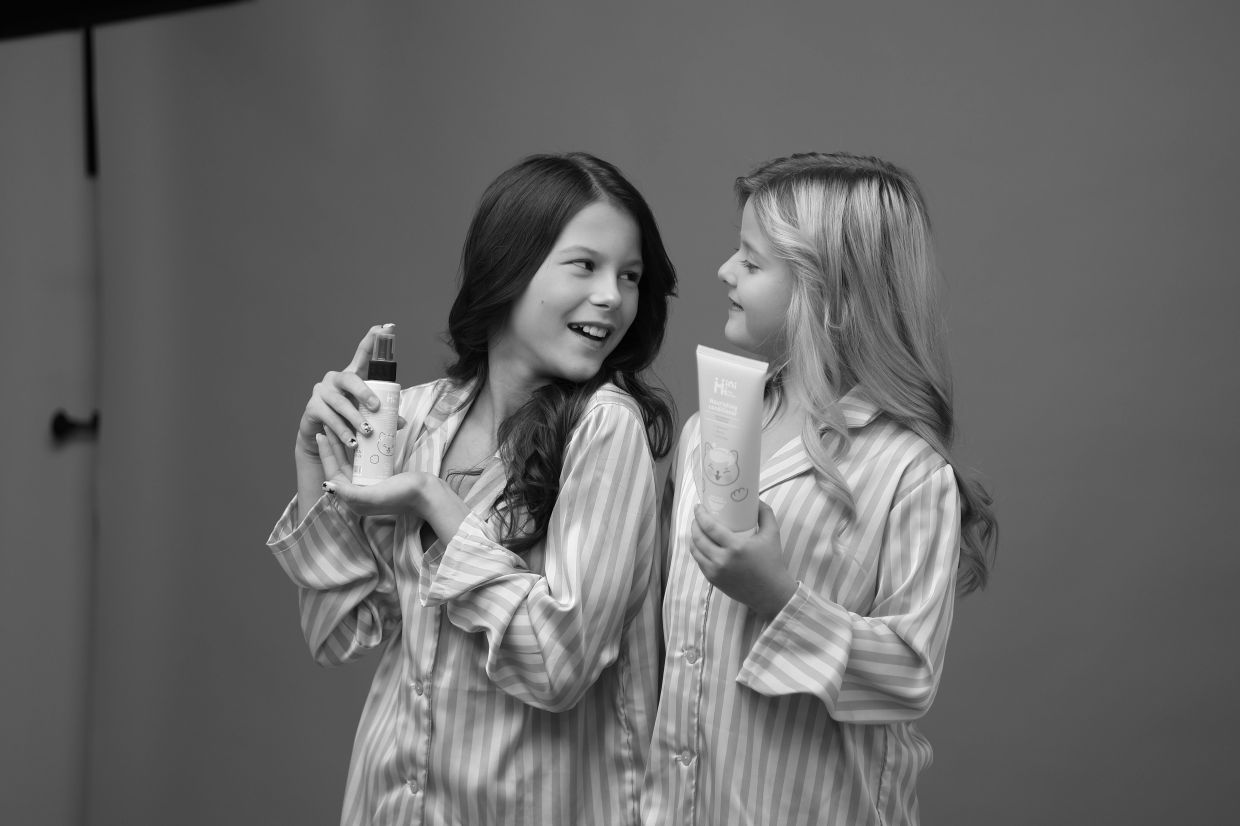
She visited the website for the brand, which is called Rini and was cofounded by actress Shay Mitchell, and saw pictures of poreless children who looked to be 10 years old and younger beaming from behind jellylike face masks enriched with vitamin B12.

“That is ludicrous,” Ouyang, 36, who works in tech and lives near San Francisco, texted her sister.

She joined a chorus of people criticising the company with a post on TikTok: “What kind of capitalist hellscape are we living in?”

Nearly two years after a flurry of press about tweens swarming the aisles of beauty stores like Sephora, skincare lines for preteens and even younger children have become a robust product category – and a battlefield for parents and critics.

Households with children ages seven to 12 spent close to US$2.5bil (approximately RM10.4bil) on skincare last year, up from US$1.8bil (RM7.5bil) in 2022, according to data from NielsenIQ, a consumer research firm.

A growing list of companies offer skin products for preteens that are packaged in containers that look like candy dispensers and advertised with soothing assurances about gentle, dermatologist-approved ingredients.

Read more: In Malaysia and around the world, tweens are fast shaping the beauty industry

Most of these brands are targeting a demographic slightly older than the children who appear in Rini’s marketing materials.

Some, like Bubble Skin Care, which has been selling modestly priced moisturiser to tweens since 2020, and Evereden, a purveyor of melon-scented face wash and sunscreen sets, predated the “Sephora kids” craze.

Newer arrivals are thriving in a social media universe in which preteens demonstrate multistep skin routines for the camera.

In September, the debut of a 15-year-old influencer’s skincare line drew thousands of fans to a mall in New Jersey.

A new brand called Pipa, aimed at customers ages 7 to 12 years old, mails influencers its products in periwinkle boxes that say “Start young” on their lids.

These companies argue that young people who are already curious about skincare need safer alternatives to adult products that can damage sensitive, prepubescent skin.

Other observers see something more pernicious: a way to hook children on unnecessary products, laying the groundwork for ever-earlier anxieties about their appearances.

“Maybe in 20 years, every one-year-old will have a beauty routine,” said Ally Nelson, the host of a psychology and wellness podcast.

She was joking, mostly. The next day, she came across a Fisher-Price teething set that included a toy version of a sheet mask and a rattle shaped like a jade roller.

‘Very dystopian’

Nelson, 33, who lives in Toronto and has a toddler, said she could understand where these companies were coming from.

Young girls have long imitated their mothers by painting their nails or trying on lipstick – activities that tend to be treated as playful flirtations with adulthood.

There’s nothing wrong with a little experimentation, she said, but she worries that preteen skincare routines are allowing the beauty industry to gain a foothold in children’s lives.

A report released by Ulta Beauty last year found that members of Gen Alpha (those born after 2010) started experimenting with beauty products at an average age of eight years old – five years earlier than the generation above them.

“It does feel a little bit predatory,” Nelson said, describing Rini’s marketing imagery as “very dystopian”.

The company does not see it that way.

Mitchell, an actress who appeared in the teen drama Pretty Little Liars and founded the luggage company Beis, devised Rini with Esther Song, a fashion industry alumna and former chief marketing officer for the Parent Co.

In an interview with Elle, the two friends said they had decided to create the company after struggling to wipe face paint from their daughters’ faces after dance camp.

The brand’s introductory offering, sheet masks that retail for US$6 or US$7 (RM25 or RM29) each, come in puppy, panda and unicorn styles.

Through a representative, Mitchell declined an interview that would include questions about criticism of the brand.

In interviews, the founders of other skincare lines that cater to children and preteens said that they took seriously questions about age and appropriateness when developing their products.

Kimberley Ho, the CEO of Evereden, worked with three dermatologists to create the company in 2018, with the goal of providing gentle products for infants.

In 2021, after requests from parents, it introduced a limited number of items formulated for tweens, she said: sunscreen, a cleanser to wash it off and a simple moisturiser.

“With some newer brands, I think that what we’re seeing is, they’re developing products that kids may not necessarily need,” Ho said when asked about Rini.

Evereden, which reported US$100mil (RM414mil) in sales last year, now offers skincare packages for ages three years old and up, including a pale pink “Barbie” moisturiser and cleanser set that retails for US$63 (RM261).

“My eight-year-old calls this her ‘Barbie spa time’ and won’t go to bed without it now,” reads a testimonial the company highlights on its website.

Brooke Jeffy, a dermatologist in Scottsdale, Arizona, who introduced the skincare brand BTWN in 2023, worries that other companies have made compromises as the category has gotten more competitive in recent years, like adding fragrances that can irritate children’s sensitive skin.

She has resisted her marketing team’s suggestions to sell her products in more colorful packaging.

Read more: What do Gen Zs want in beauty? Cool brands, personal expression and inclusivity

Some dermatologists are not buying it.

Dedicated skin products for tweens may be safer than adult serums, but that does not mean children need them, said Molly Hales, a dermatologist and researcher at the University of Chicago.

“A young person who doesn’t have any known, diagnosable skin conditions doesn’t really need to be using products” beyond sunscreen, Hales said.

In an analysis published in June, she and other researchers found that girls on TikTok from the ages of seven to 18 years old were demonstrating skincare routines with an average of six different products, many of them risky for young skin.

Brands are most likely trying to capitalise on the popularity of such videos, she said, and insulating themselves from criticism using the fuzzy, unimpeachable-sounding language of “self-care”.

A beauty industry that specialises in monetising customers’ insecurities might just view children as the next untapped market, said Charlotte Markey, a professor of psychology at Rutgers University and the author of books about adolescent body image. 

No matter how carefully they are formulated, skincare sets for kids send a message that “it’s really important to be on top of all these appearance trends, before you have even hit puberty”.

In her dream world, she added, children would hardly think about their skin at all.

“I’d so much rather they be colouring or something,” she said. – ©2025 The New York Times Company

This article originally appeared in The New York Times.

Tags: , , , , , , , ,
Best oLive
Privacy Overview

This website uses cookies so that we can provide you with the best user experience possible. Cookie information is stored in your browser and performs functions such as recognising you when you return to our website and helping our team to understand which sections of the website you find most interesting and useful.