The Ugly Truth About Lash/Brow Serums You Need To Know...

The Ugly Truth About Lash/Brow Serums You Need To Know…

If you are using a serum to help grow thicker, longer lashes and/or brows, this post is for you. I’ve always been an advocate of natural ingredients and always vetted my beauty products leaning mainly on DIY recipes but I will admit I’ve cracked in the last year and tried out a few viral products making huge claims and speaking straight to my insecurities on aging.

One of those products I fell for was a lash serum. An influencer was showing before and afters of her lashes. The growth was incredible and I clicked the link in 2 seconds flat. I used the serum and I will say, it worked. However, my eyes burned while applying it and something in my gut made me uneasy about continuing using it.

Turns out, my gut was right and upon further research I found that most lash serums contain a class of ingredient called prostaglandin analogs or PGAs. There are several different ingredients that fall under this class of drug. This type of ingredient causes the fat cells around your eyes to shrink which gives a sunken in, hollow appearance causing a deep shadow all around the eye. PGAs can also cause permanent color changes to the iris, darkening of the eyelid and chronic eye irritation.

PGAs Commonly Found in Lash/Brow Growth Serums:

  • Isopropyl Cloprostenate (IPCP): The most common prostaglandin analog used in over-the-counter (OTC) brow and lash serums including the one I fell for.
  • Ethyl Tafluprostamide (DDDE)
  • Methylamido-dihydro-noralfaprostal (MDN)
  • Bimatoprost: The active ingredient in prescription Latisse, and a prostaglandin derivative.
  • Latanoprost & Travoprost: Primarily used in prescription glaucoma eye drops, but sometimes utilized in off-label serums.

Popular Lash/Brow Growth Serums That Contain PGAs

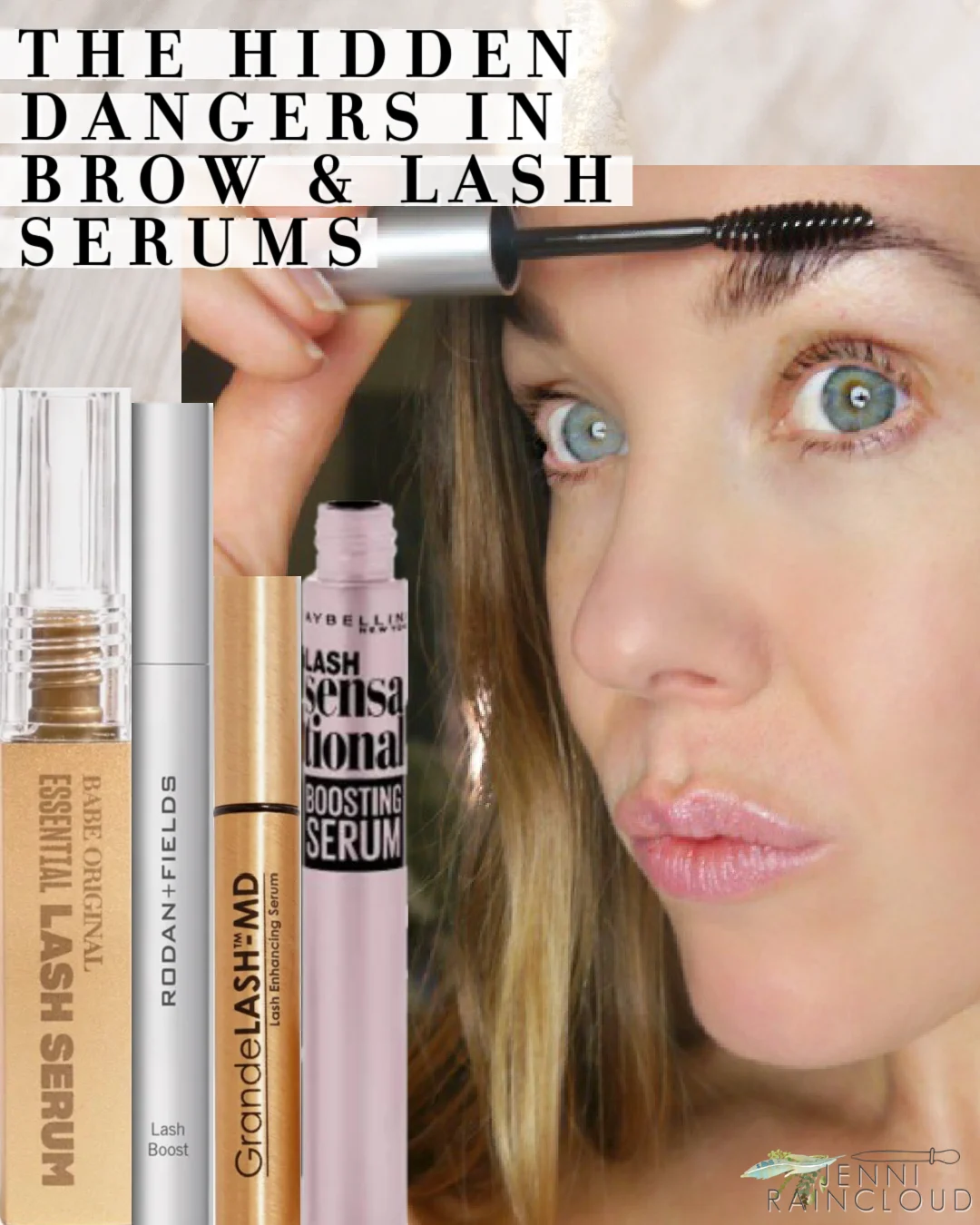
  • GrandeLASH-MD: Contains Isopropyl Cloprostenate. This is one of the most widely used over-the-counter growth serums on the market.
  • RevitaLash Advanced: Contains Dechloro Dihydroxy Difluoro Ethylcloprostenolamide, a synthetic prostaglandin derivative.
  • Babe Original (Essential Lash Serum): Contains Isopropyl Cloprostenate. Note that they also make a separate “Renewing” SKU which is prostaglandin-free.
  • RapidLash Eyelash Enhancing Serum: Contains Isopropyl Cloprostenate.
  • NeuLash Lash Enhancing Serum: Contains Isopropyl Cloprostenate.
  • Latisse: Contains Bimatoprost (0.03%). This is a FDA-approved, prescription-only lash treatment. 

There Is Good News….

Luckily the side effects of PGAs are fully reversible after a few months of not using the serum. Unfortunately, some side effects of beauty products aren’t reversible.

More good news is that there are other lash and brow serums that do not contain these ingredients. Including my Big Brow Serum I sell on my Etsy shop! My serum contains only plant based ingredients and it works! I use it regularly to keep my brows in tip top shape. Having hypothyroidism causes my brows to thin so using my serum has really kept that at bay. Plus, every time I wax my brows, too much hair gets removed every single time! 

My brow serum won’t work for lashes because it contains essential oils. Some eyes can take a small amount of essential oils, mine cannot so I don’t recommend it for lash use. However, if you are a DIYer, you can find my brow serum recipe HERE and omit the essential oils or use THIS DIY recipe. 

Alternative Lash Serums That Do Not Contain PGAs:

If you’re a brow gal like me, you might want to check out my Brow Post Round Up. This post contains every brow post I’ve ever written including how to shape and dye brows. Dying brows can make a HUGE difference. I don’t go a month without doing it. 

My brow serum is 30% off for a very limited time so grab one while they’re on sale and in stock!! 

xx, Jenni

Jennifer Phillips

Jennifer Phillips worked as a licensed aesthetician for over 8 years before creating the DIY skincare blog, Jenni Raincloud and her natural skin care line, J. Raincloud Organics. Jennifer has been blogging full time for 16 years and loves to gain and share knowledge on how to achieve beautiful skin the natural way.

Find me on: Instagram | Facebook
Tags: , , , ,
Truth about common skincare myths

Truth about common skincare myths

Follow this guide

What’s the story

With so many skincare myths floating around, it is hard to know what is true and what is not.
Most of us believe these myths, which can lead to improper skincare routines.
Knowing the difference between myth and fact is important to keep your skin healthy and glowing.
Here is busting some common skincare myths with factual insights to help you make informed decisions about your daily routine.

Tags: , , ,
Does Natural Skincare Actually Work? Tata Harper Reveals the Truth

Does Natural Skincare Actually Work? Tata Harper Reveals the Truth

LA Times Studios may earn commission from purchases made through our links.

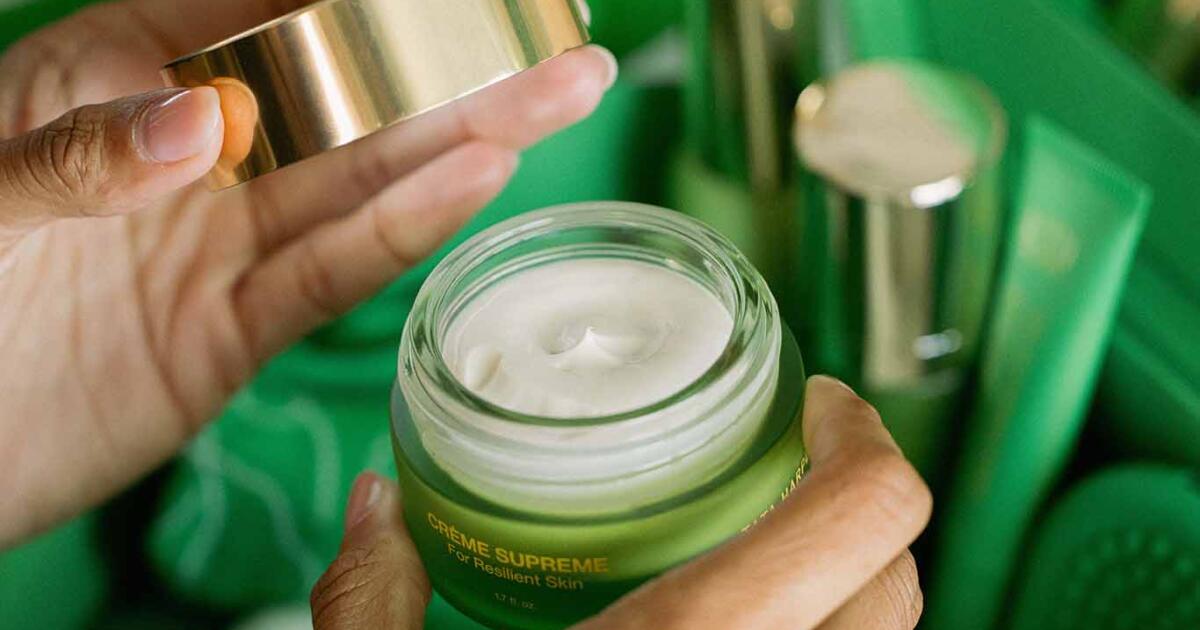
At an Earth Day master class in Los Angeles, clean beauty pioneer Tata Harper opened with a myth she hears often. Natural skincare is seen as less effective than lab-made formulas. Speaking alongside Jill Wintersteen, who led a guided meditation ahead of the event, Harper used the launch of her Crème Supreme Moisturizer to explain why that assumption is outdated and what actually matters for skin health.

Tata Harper Master Class | Earth Day Celebration

(Photo Credit: Masha Maltsava)

Natural ingredients are as powerful as the science behind them

“I love how there is this misconception that doing natural products and dealing with natural ingredients means you’re just juicing carrots and squeezing oranges,” Harper says laughingly. She emphasized that effectiveness comes down to the compound, not the origin. “The sophistication of an ingredient, whether man-made or natural, has to do with the compound itself.”

Biotechnology has made that distinction even less relevant. Ingredients can be developed now through natural processes like fermentation and biosynthesis while maintaining high performance. “For example, our hyaluronic acid is produced via fermentation by feeding bacteria root vegetables, and that bacteria then produces hyaluronic acid,” she said.

RELATED: How Growth Factors Are Transforming Anti-Aging Skincare

Harper pointed out that many ingredients used in traditional skincare were originally discovered in nature. “For decades, pharmaceutical companies and scientists have gone into nature to find new compounds,” she said. “Those are not the versions we get… we get them directly from nature so you get them in their purest form.”

Lifestyle drives skin aging more than products

Harper was direct about the limits of skincare. “I feel that lifestyle factors are the most fundamental factors in the way you age,” she said. “Skincare plays a supporting role the same way supplements do.”

Sleep is one of the most important factors. “Getting a good eight hours is amazing because that is when our skin repairs itself.” Stress is another major driver. “Controlling stress and cortisol spiking is another key strategy because cortisol breaks down collagen.”

Tata Harper Master Class

(Photo Credit: Masha Maltsava)

She also highlighted hydration, nutrition, and sugar intake as critical. “Avoid things like sugar, because sugar produces glycation that stiffens skin and damages collagen.” While that can be harder than we think, Tata’s message is simple. Products can enhance results, but they cannot replace foundational habits.

Hydration and barrier care are the foundation of healthy skin

If there is one immediate fix Harper recommends, it’s proper hydration. “There is an overabundance of dehydrated skin in the world because people are not properly moisturizing,” she said. Hydrated skin functions better and appears more resilient. Harper said her latest formula replenishes moisture and can improve elasticity over time. But, the broader takeaway applies across routines.

RELATED: Inside Tata Harper’s Farm-to-Face Skincare Revolution

And she warned against one of the most common mistakes she sees. Over-exfoliation. “I am a big believer in exfoliation,” she said, noting she prefers gentle daily formulas with enzymes and mild acids. But harsh peels and aggressive routines can do more harm than good. “You are damaging your barrier and degrading the outer layer, which can lead to inflammation, over-sensitization, and breakouts.”

For Harper, the future of skincare is about consistency. Healthy skin comes from supporting its natural processes. “Aging is nothing to be feared if you take care of yourself and prioritize wellness and healthiness,” she said.

The takeaway is less about a single product and more about shifting our perspective. Thinking about how ingredients are sourced to how the skin is supported every day.

Tags: , , , , , ,
Best oLive
Privacy Overview

This website uses cookies so that we can provide you with the best user experience possible. Cookie information is stored in your browser and performs functions such as recognising you when you return to our website and helping our team to understand which sections of the website you find most interesting and useful.