India’s Beauty Industry Faces A Regulatory Reset As Injectable Cosmetic Procedures Come Under Scrutiny

India’s Beauty Industry Faces A Regulatory Reset As Injectable Cosmetic Procedures Come Under Scrutiny

India’s beauty industry has spent the last few years moving far beyond creams, lipsticks, and skincare serums. Across metros and Tier-1 cities, aesthetic clinics offering Botox, dermal fillers, glutathione drips, anti-ageing injections, PRP therapy, and skin tightening procedures have rapidly entered the mainstream.

Social media influencers normalized these treatments, clinics aggressively marketed them, and younger consumers increasingly viewed cosmetic procedures as part of routine self-care.

Now, India’s drug regulator is stepping in.

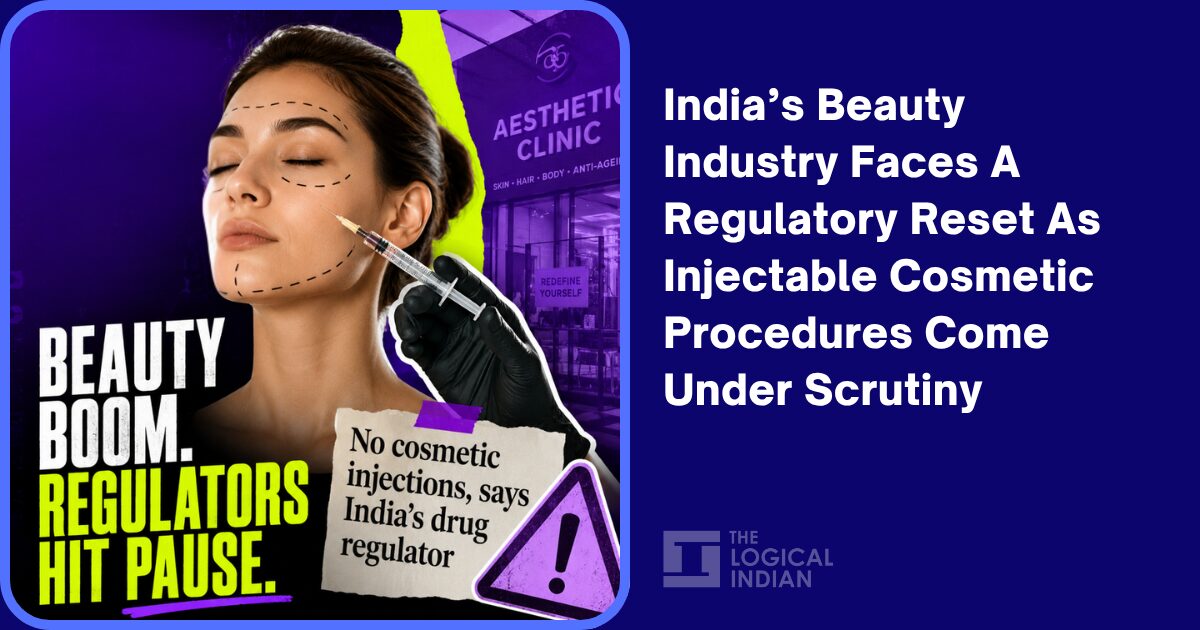
In a public notice issued on May 18, 2026, the Central Drugs Standard Control Organisation (CDSCO) clarified that products supplied in injectable form do not qualify as cosmetics under Indian law. The regulator stated that cosmetics are intended to be “rubbed, poured, sprinkled or sprayed” on the human body and that no cosmetic product is permitted to be used as an injection by consumers, professionals, or aesthetic clinics.

The clarification may sound technical, but it signals a major shift for India’s fast-growing medical aesthetics ecosystem, where beauty procedures increasingly overlap with healthcare, pharmaceuticals, and wellness businesses.

Aesthetic Clinics Expanded Rapidly

The government’s intervention comes at a time when India’s aesthetics market is growing aggressively.

According to Grand View Research, India’s aesthetic medicine market generated revenue of approximately US$2.01 billion in 2024 and is projected to reach US$7.41 billion by 2033, growing at a compound annual growth rate of 15.6%.

Separately, IMARC Group estimated India’s medical aesthetics market at US$650.7 million in 2025, projecting it to reach US$1.33 billion by 2034.

While estimates vary because firms define the category differently, most industry reports point to the same trend: minimally invasive cosmetic procedures are becoming a major business segment in India.

This growth has been driven by rising disposable incomes, growing awareness of cosmetic procedures, medical tourism, and increasing demand for non-surgical treatments.

The shift is also cultural. Procedures once associated with celebrities or luxury dermatology clinics are now marketed to younger urban consumers through Instagram reels, influencer partnerships, and subscription-based aesthetic packages.

Regulators Draw A Line

The CDSCO clarification effectively draws a regulatory distinction between cosmetics and medical interventions.

Under India’s Drugs and Cosmetics Act, cosmetics are products applied externally to cleanse, beautify, or alter appearance. Injectable substances do not fall within that definition.

The regulator’s notice comes amid growing concerns over aesthetic procedures being promoted outside tightly supervised medical environments.

The Times of India reported that the government acted amid a rise in aesthetic and anti-ageing procedures being marketed through clinics and beauty establishments.

The Economic Times also linked the warning to growing global normalization of injectable products being used for aesthetic enhancement, including weight-loss drugs and anti-ageing therapies.

India Today reported that the clarification brings glutathione drips and anti-ageing injections under sharper scrutiny.

Importantly, the CDSCO notice does not create a new law banning medical aesthetic procedures altogether. Instead, it clarifies that injectable products cannot be categorized or marketed as cosmetics under existing legal definitions. Medical procedures involving approved drugs may still be performed under applicable medical regulations.

That distinction matters because aesthetic clinics often operate in a grey zone between beauty services and clinical healthcare.

Safety Concerns Intensify

Medical experts and dermatology associations have increasingly warned about unqualified operators performing cosmetic procedures.

Earlier this year, the Gujarat chapter of the Indian Association of Dermatologists, Venereologists and Leprologists launched an anti-quackery campaign targeting unsafe cosmetic procedures being conducted by untrained practitioners. The association flagged Botox injections, fillers, PRP therapy, laser treatments, and hair transplants being performed outside properly equipped medical facilities.

The organization stated that such procedures require specialized medical training and should only be conducted by qualified dermatologists or plastic surgeons.

Globally, regulators have also tightened scrutiny around cosmetic injectables. Reuters reported that British regulators had earlier warned injectable anti-wrinkle fillers could become “a crisis waiting to happen” without stronger oversight.

India now appears to be moving toward a stricter compliance framework as aesthetic medicine expands.

Business Models Could Change

The CDSCO clarification could significantly affect aesthetic clinics, wellness chains, cosmetic distributors, and influencer-led beauty businesses.

Injectable cosmetic procedures became commercially attractive because they offered high-margin recurring treatments compared with traditional dermatology consultations. Clinics increasingly bundled anti-ageing injections, skin brightening therapies, and contouring treatments into lifestyle packages.

Now businesses may face tighter oversight around advertising claims, practitioner qualifications, product sourcing, and treatment classification.

The shift also reflects a broader transformation within the beauty industry itself. International beauty companies are increasingly investing in medical aesthetics businesses globally. Reuters reported in 2025 that L’Oréal had taken stakes in clinics in China and North America to better understand the medical aesthetics market.

That trend highlights how cosmetic enhancement is evolving into a hybrid industry combining beauty, healthcare, pharmaceuticals, and wellness.

India’s regulator appears determined to ensure that this transition does not occur without clearer legal boundaries.

Also Read: US-Iran Strait Of Hormuz Talks Reveal 30-Day Reopening Plan, Tehran Toll Reversal And Rubio’s Warning
Tags: , , , , , , , , ,
Skin Boosters Market to Surpass USD 3,263.80 Million by 2032, Shows New Analysis on Injectable Skin Rejuvenation and Anti-Aging Trends: MMR Statistics

Skin Boosters Market to Surpass USD 3,263.80 Million by 2032, Shows New Analysis on Injectable Skin Rejuvenation and Anti-Aging Trends: MMR Statistics

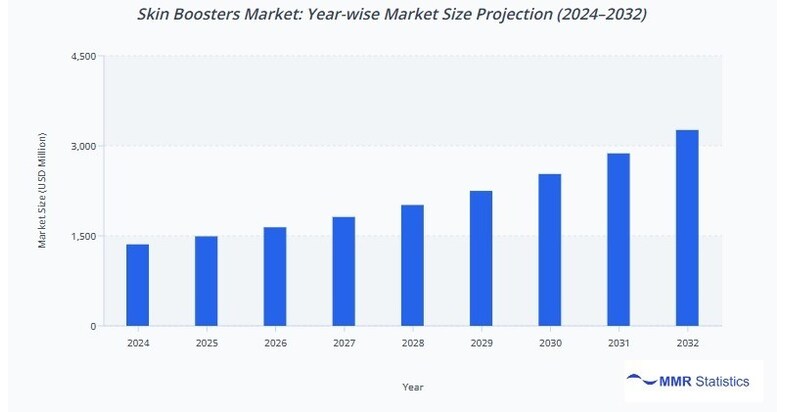
PUNE, India, Jan. 28, 2026 /PRNewswire/ — Global Skin Boosters Market size, valued at USD 1492.17 Million in 2025, is projected to reach USD 3,263.80 Million by 2032, growing at a CAGR of 11.58%.

Key Market Trends & Insights from the Skin Boosters Market Report

Skin Boosters Market 2025–2032

Injectable Skin Rejuvenation Treatments Drive Market Growth: The global Skin Boosters Market was valued at USD 1,358.25 Million in 2024 and is projected to reach USD 3,263.80 Million by 2032, growing at a CAGR of 11.58%. Rising adoption of anti-aging skin boosters and non-invasive cosmetic dermatology solutions is fueling market expansion.

Hyaluronic Acid-Based Boosters Lead the Market: HA-based skin boosters dominate due to their proven safety, hydrating properties, and ability to improve skin elasticity and reduce fine lines, driving demand across professional dermatology clinics.

Non-Invasive Aesthetic Procedures Gain Popularity: Consumers increasingly prefer injectable skin rejuvenation treatments over surgical procedures, boosting adoption in urban markets and professional aesthetic clinics.

Get Full PDF Free Sample Copy of Report: (Including Full TOC, List of Tables & Figures, Chart) @ https://www.mmrstatistics.com/reports/045816/skin-booster-market/contact?type=sample

Customized & Advanced Formulations Are Trending: Development of personalized skin booster treatments targeting hydration, elasticity, and overall skin health is becoming a key differentiator for brands and clinics.

Integration with Wellness and Skincare Routines: Combining skin booster injections with holistic skincare regimens and non-invasive cosmetic treatments enhances consumer appeal and brand loyalty.

Digital Marketing and Social Media Influence Adoption: Beauty influencers, online campaigns, and e-commerce availability of professional skin booster treatments are accelerating awareness and adoption globally.

Professional Skin Clinics Expand Market Reach: Growing number of dermatology and aesthetic clinics offering injectable anti-aging skin boosters is increasing access and consumer confidence in non-invasive cosmetic procedures.

Skin Boosters Market Segmentation: How HA-Based Mesotherapy and Injectable Rejuvenation Treatments Are Redefining Facial Anti-Aging

Global Skin Boosters Market thrives on precision and innovation, with HA-based mesotherapy for facial rejuvenation emerging as the most dominant segment. Leading dermatology clinics worldwide are elevating anti-aging treatments for women, delivering visibly hydrated, youthful skin. From under-eye revitalization to full-face rejuvenation, advanced injectable skin rejuvenation treatments are redefining beauty standards, blending science, luxury, and clinical expertise for a new era of non-invasive cosmetic excellence.

Get Insightful Data on Regions, Market Segments, Customer Landscape, and Top Companies (Charts, Tables, Figures and More) – https://www.mmrstatistics.com/reports/045816/skin-booster-market/contact?type=sample

By Type

Mesotherapy

Micro-needle)

By Ingredient Type

HA Boosters

PDRN/PN

Polynucleotides

PLLA

PCL

Exosome-based Boosters

By Application

Face

Neck

Hands

Under-eye

Full-face Rejuvenation

By End User

Dermatology Clinics

Medical Spas

Hospitals

Aesthetic Centres

By Gender & Age Cohort

Women

Men

Skin Boosters Market Innovations: From HA-Based Injectables to Stem Cell & Peptide Rejuvenation Transforming Anti-Aging Treatments

Hyaluronic Acid (HA)-Based Skin Boosters:

  • Injectable HA gels
  • Cross-linked HA formulations
  • Non-cross-linked HA formulations

Peptide-Based Skin Boosters:

  • Anti-aging peptides
  • Collagen-stimulating peptides
  • Growth factor peptides

Vitamin & Antioxidant-Based Skin Boosters:

  • Vitamin C formulations
  • Vitamin E formulations
  • Combination antioxidant boosters

Stem Cell & Biotech-Based Skin Boosters:

  • Plant stem cell-based boosters
  • Human-derived stem cell boosters
  • Exosome-based formulations

Delivery Methods:

  • Intradermal injections
  • Microneedling-assisted boosters
  • Topical boosters

Adjunctive Therapies:

  • PRP (Platelet-Rich Plasma) boosters
  • Combination therapies with dermal fillers
  • Combination therapies with laser or RF treatments

Skin Boosters Market 2025: AbbVie, Galderma, Merz & Teoxane Lead Innovation in HA Injectables and Anti-Aging Rejuvenation

In 2025, AbbVie’s SKINVIVE by JUVÉDERM expanded to 57 global markets, while Galderma showcased new clinical data for Restylane HA injectables and Skinboosters at ASDS 2025. Merz Aesthetics launched an ergonomically redesigned BELOTERO syringe and submitted FDA approvals for HA boosters, and Teoxane advanced its RHA and Redensity 1 formulations with innovative injection techniques, reinforcing leadership in injectable skin rejuvenation and anti-aging treatments worldwide.

Skin Boosters Market 2025: North America Leads, Europe Strengthens, Asia-Pacific Surges in HA Injectable Rejuvenation

North America: Dominating 32.59% of global revenues, North America leads with advanced HA injectable skin rejuvenation hubs, early adoption of anti-ageing treatments, and widespread access to luxury non-invasive aesthetic solutions.

Europe: Supported by robust dermatology infrastructure and CE-certified injectable skin boosters, Europe’s market grows with rising demand for non-invasive facial rejuvenation and precision anti-aging therapies across premium aesthetic clinics.

Asia-Pacific: Rapidly expanding with 24.52% market share, APAC benefits from increasing consumer awareness, dermatology-led injectable skin rejuvenation, and booming med-spa growth, making anti-aging treatments more aspirational and accessible.

Immediate Delivery Available | Buy this Research Report (Insights, Charts, Tables, Figures and More) – https://www.mmrstatistics.com/checkout/reports/045816/contact

Skin Boosters Market, Key Players:

  1. AbbVie, Inc. (Allergan – Juvederm Volite)
  2. Galderma (Restylane Skin boosters)
  3. Merz Pharma (Belotero Revive)
  4. Teoxane (Redensity 1)
  5. Croma Pharma GmbH
  6. Fidia Farmaceutici
  7. IBSA Farmaceutici Italia Srl (Profhilo)
  8. Laboratories Filorga
  9. Revitacare
  10. Skin Tech Pharma Group
  11. Prollenium Medical Technologies
  12. BioScience GmbH
  13. Professional Dietetics (Sunekos)
  14. Aqtis Medical
  15. Anika Therapeutics
  16. Medytox Inc.
  17. Huons Global
  18. Jetema Co., Ltd.
  19. Daewoong Pharmaceutical
  20. LG Chem (Yvoire)
  21. Caregen Co., Ltd.
  22. BioPlus Co., Ltd.
  23. Classys Inc.
  24. Across Co., Ltd. (Dermalax)
  25. DongKook Pharmaceutical

Analyst Perspective:

Analysts observe that the Skin Boosters Market is poised for robust growth as HA-based injectables, peptide, and stem cell innovations reshape non-invasive aesthetic treatments. Rising consumer demand, med-spa expansion, and dermatology-led adoption highlight the sector’s potential. Key players like AbbVie, Galderma, Merz, and Teoxane are driving innovation through product launches, clinical data releases, and strategic expansions, attracting significant investor interest and reinforcing the market’s competitive and lucrative landscape.

Related Reports:

Skin Care Market: https://www.mmrstatistics.com/reports/328845/global-skin-care-market

North America Skin Boosters Market: https://www.mmrstatistics.com/statistics/027881/north-america-skin-boosters-market-yoy-growth

Mesotherapy vs. Micro-Needle: https://www.mmrstatistics.com/statistics/967865/mesotherapy-vs-microneedle-france-skinbooster

Lip Balm Market – https://www.mmrstatistics.com/reports/199401/lip-balm-market

Dry Shampoo Market – https://www.mmrstatistics.com/reports/008184/dry-shampoo-market

FAQs:

1. What is the forecast size of the Global Skin Boosters Market (2025–2032)?

Ans: Global Skin Boosters Market is projected to grow from USD 1,492.17 Million in 2025 to USD 3,263.80 Million by 2032, registering a CAGR of 11.58% during the forecast period.

2. What are the key drivers fueling growth in the Skin Boosters Market?

Ans: Growth is driven by rising adoption of HA-based injectable skin rejuvenation treatments, demand for non-invasive anti-aging procedures, advanced formulations like peptides, stem cell and antioxidant boosters, and increased awareness through digital marketing and aesthetic clinics.

3. Which regions dominate the Global Skin Boosters Market?

Ans: North America leads with 32.59% of global revenues, driven by advanced HA injectable hubs and luxury non-invasive treatments. Europe grows with robust dermatology infrastructure and CE-certified products, while Asia-Pacific expands rapidly (24.52% share) due to consumer awareness, med-spa growth, and dermatologist-led adoption.

About Us :

MMR Statistics (https://www.mmrstatistics.com) has been empowering organizations with data-driven insights since 2015. We deliver industry intelligence, bespoke research, and strategic advisory support tailored to help our clients achieve sustainable growth.

Contact:
Lumawant Godage
Visit Our Web Site : https://www.mmrstatistics.com/
Email: sales@mmrstatistics.com
Phone :+91 9607365656
Global Office :
Navale IT park Phase 3
Pune-Bangalore Highway,
Narhe, Pune, Maharashtra 411041, India

Photo: https://mma.prnewswire.com/media/2871601/Skin_Boosters_Market_2025_2032.jpg

Tags: , , , , , , , , , , , , ,
Best oLive
Privacy Overview

This website uses cookies so that we can provide you with the best user experience possible. Cookie information is stored in your browser and performs functions such as recognising you when you return to our website and helping our team to understand which sections of the website you find most interesting and useful.
