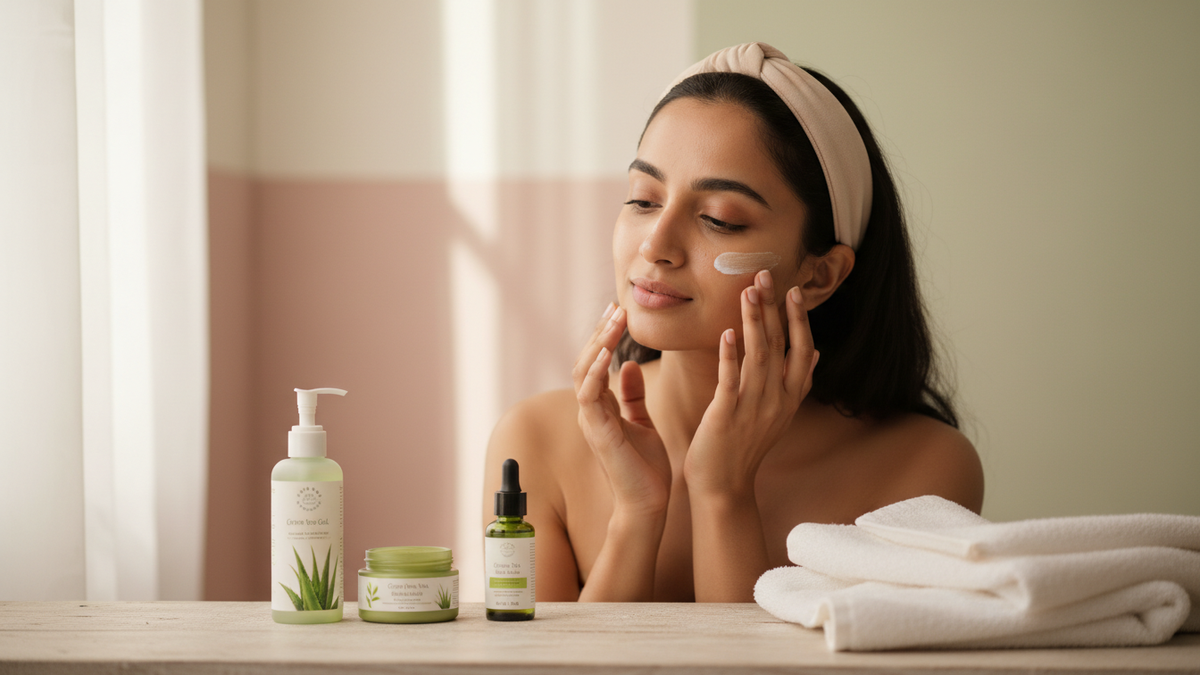
person applies eye cream in front of a mirror with autumn leaves visible in the background.png

How to Get Even Skin Tone: Remedies, Products and Routines

Dark spots, red patches, and dull skin are frustrating. If you have been wondering how to get an even skin tone, you are not alone.

Uneven skin tone is one of the most common skincare concerns in the US, and real solutions exist.

This article covers everything you need: the best home remedies for even skin tone, top cosmetic products backed by research, and a clear daily skincare routine for even skin tone that you can start right now.

No confusing science, no overpriced steps. Just a simple, honest plan that works.

What Causes Uneven Skin Tone?

Before you fix a problem, it helps to understand what caused it. Uneven skin tone occurs when your skin produces more melanin in some areas than in others.

That extra melanin shows up as dark patches, discoloration, or dull-looking areas that stand out from the rest of your face or body.

Your skin makes melanin as a defense response. Sun exposure, inflammation, and irritation all trigger that response.

The result is color that looks patchy, blotchy, or uneven across your face or body. Some spots may look brown or gray. Others may look red or purple.

The good news is that understanding the cause helps you pick the right fix and stop the problem from getting worse over time.

The Most Common Triggers

Several things can push your skin to overproduce melanin. Sun exposure is the biggest one.

According to Harvard Health’s guide on hyperpigmentation and sun damage, UV rays from the sun are the most common cause of hyperpigmentation, the medical term for dark spots and uneven skin tone.

Other common triggers include:

  • Acne and breakouts that leave post-acne marks behind
  • Hormonal changes, especially during pregnancy or while on birth control
  • Skin irritation from harsh products or rubbing too hard
  • Repeated friction from tight clothing or rough fabrics

Why this Matters for Your Routine

Once you know your triggers, you can stop making the problem worse. For most US readers, sun exposure and old breakouts are the two biggest causes.

That means daily sunscreen is not optional. It is the single most important step in preventing new dark spots from forming.

What does Even Skin Tone Actually Look Like?

Even skin tone does not mean perfect, filter-smooth skin. It means your skin looks balanced and consistent.

Light and dark patches are less visible. Redness has calmed down. Dull spots have brightened up. Your skin looks like yours, just clearer and healthier.

Realistic Expectations

Many people expect overnight results, but that is not how skin works.

Most pigmentation takes weeks or months to fade because your skin needs time to replace old, discolored cells with fresh ones.

The readers who see the best results are the ones who stay consistent with a simple routine rather than switching products every two weeks.

If your spots are deep or have been there for years, you may also need stronger over-the-counter products or a visit to a dermatologist.

Home care works well for mild to moderate uneven skin tone, but stubborn melasma or long-standing sun damage may require professional treatment.

Home Remedies for Even Skin Tone

Home remedies work best when they support your main skincare routine rather than replace it.

The strongest natural options are the ones that soothe inflammation, gently exfoliate dead skin, or provide antioxidant support.

Here are the best ones to try.

1. Aloe Vera

Aloe vera calms inflammation that leads to dark marks and post-acne discoloration.

It works for nearly every skin type without irritating.

Because inflamed skin is far more likely to leave marks, keeping skin calm with aloe vera helps improve long-term tone.

It is gentle enough for daily use and easy to find at any US drugstore.

How to Use It:

  1. Apply pure aloe vera gel onto clean, dry skin.
  2. Leave on for fifteen to twenty minutes, then rinse with cool water.
  3. Use up to five times a week.

Best For: Sensitive skin, post-acne marks, redness, and inflammation-triggered dark spots.

Rating: 9/10 It cools down angry skin, stops new dark spots from forming, and is safe enough to use almost every day without irritating your skin at all.

2. Turmeric and Honey Mask

Turmeric contains curcumin, a compound with antioxidant and anti-inflammatory properties that may interfere with excess melanin production.

Honey draws moisture into the skin and helps keep the skin barrier comfortable. Together, they make one of the most well-researched natural masks for uneven skin tone.

Consistent use makes a real visible difference in brightness and tone balance over four to six weeks.

How to Use It:

  1. Mix one teaspoon of turmeric with two teaspoons of raw honey.
  2. Apply to your face, leave on for ten minutes, then rinse.
  3. Use once or twice a week.

Best For: Dull skin, dry and irritated skin, and overall brightness.

Rating: 8/10 Turmeric fights dark spots while honey keeps skin moist and calm. It just ranked below aloe because it can stain your skin and clothes yellow.

3. Yogurt

Plain yogurt contains lactic acid, a mild alpha-hydroxy acid that gently exfoliates dead skin cells. This makes skin look fresher, smoother, and more even after use.

Yogurt works best when your uneven tone comes from surface dullness and dead skin buildup rather than deep pigmentation. It is safe for most skin types and available at any grocery store.

How to Use It:

  1. Apply a thin layer of plain unsweetened yogurt to clean skin.
  2. Leave on for fifteen minutes, then rinse with cool water.
  3. Use two to three times a week.

Best For: Surface dullness, rough texture, and mild discoloration.

Rating: 7.5/10 It removes dead skin cells and makes your face look brighter right away. But it cannot fix deep dark spots or stop your skin from making too much color.

4. Green Tea

Green tea is rich in antioxidants that calm oxidative stress and reduce visible redness. It does not directly erase dark spots but reduces chronic inflammation over time, helping your overall tone look more balanced.

It is a low-risk option that works especially well as a soothing toner for reactive or redness-prone skin.

How to Use It:

  1. Brew a strong cup of green tea and let it cool in the fridge.
  2. Apply to your face with a cotton pad after cleansing.
  3. Leave on and do not rinse. Use daily as a toner.

Best For: Redness, reactive skin, and tired-looking, uneven skin.

Rating: 7/10 It calms redness and protects skin from daily damage, but it never goes after dark spots directly. Results are slow and more about balance than actual brightening.

5. Papaya

Papaya contains papain, a natural enzyme that breaks down dead skin proteins and supports gentle surface resurfacing. It gives a mild brightening effect without harsh acids.

It ranks lower because its results are the most surface-level, and natural enzymes can occasionally irritate sensitive skin. It works best for people who want a gentle, minimally active brightening option.

How to Use It:

  1. Mash ripe papaya and apply as a face mask.
  2. Leave on for ten to fifteen minutes, then rinse and follow with moisturizer.
  3. Patch test first. Use once or twice a week.

Best For: Mild dullness, rough texture, and gentle brightening for normal to combination skin.

Rating: 6.5/10 It gives a soft glow and smooths rough skin, but that is about it. It has the least scientific backing and can bother sensitive skin more than the others.

Best Products for Uneven Skin Tone

Home remedies are a great support, but the right cosmetic products will do the heavy lifting when it comes to fading dark spots and reducing discoloration. Here are the key ingredients to look for, along with why they work.

1. Vitamin C Serum

Vitamin C is one of the most researched brightening ingredients in skincare.

It works by blocking the enzyme that triggers melanin production, which means it can prevent new dark spots from forming while gradually lightening existing ones.

It also provides antioxidant protection from UV damage.

What to look for: A serum with ten to twenty percent L-ascorbic acid for the strongest effect. Store it away from light and heat because vitamin C oxidizes quickly.

Recommended pick:TruSkin Vitamin C Serum

Study backing:Journal of Clinical and Aesthetic Dermatology

2. Niacinamide Serum

Niacinamide, also called vitamin B3, is one of the best multitasking ingredients for uneven skin. It reduces the transfer of melanin to the skin surface, which helps lighten dark spots.

It also supports the skin barrier, reduces redness, and controls oil production.

Recommended pick:The Ordinary Niacinamide 10% plus Zinc

Study backing: A study in the British Journal of Dermatology

3. Exfoliating Acids (AHA/BHA)

Alpha hydroxy acids like glycolic acid and lactic acid speed up cell turnover by loosening the bonds between dead skin cells.

This reveals fresher, more even-looking skin underneath.

Beta-hydroxy acids like salicylic acid penetrate deeper into pores and are especially effective if your uneven skin tone is linked to breakouts.

Recommended pick:Paula’s Choice Skin Perfecting 2% BHA Liquid Exfoliant

Study Backing:Journal of the American Academy of Dermatology

4. Broad-Spectrum Sunscreen

No product list for even skin tone is complete without sunscreen. SPF thirty or higher, worn every single day, prevents UV rays from triggering new melanin production.

Without daily sun protection, any brightening product you use will be fighting an uphill battle.

Recommended pick:EltaMD UV Clear Broad-Spectrum SPF 46

Study Backing:Journal of Investigative Dermatology

The Best Skincare Routine for Even Skin Tone

A good skincare routine for an even skin tone has four main jobs: cleanse without irritating, treat discoloration, support the skin barrier, and block UV damage every day.

Morning Routine

Here is the morning routine of your skin care.

Step
What to Do
Purpose

Step 1
Start with a mild, fragrance-free cleanser. Harsh cleansers can strip the skin barrier and worsen uneven skin tone through irritation.
Cleanses the skin while protecting the skin barrier.

Step 2
Apply a few drops of vitamin C serum after cleansing.
Provides antioxidant protection and helps brighten the skin over time.

Step 3
Layer a niacinamide or alpha arbutin serum over the vitamin C serum.
Helps reduce dark spots and improve overall skin tone.

Step 4
Apply a lightweight moisturizer to lock in treatment products.
Supports a healthy skin barrier and prevents dryness.

Step 5
Apply a broad-spectrum sunscreen with SPF 30 or higher every morning. Reapply every two hours when outdoors.
Protects against UV damage and prevents further discoloration.

Evening Routine

Here is the evening routine of your skin care.

Step
What to Do
Purpose

Step 1
If you wear sunscreen or makeup, use a cleansing oil or balm first, then follow with your regular gentle cleanser.
Removes SPF, makeup, dirt, and excess oil from the skin.

Step 2
Use a mild AHA, such as lactic acid or glycolic acid, on alternating nights, two to three nights per week.
Removes dead skin cells and supports better cell turnover.

Step 3
Apply your treatment serum after cleansing or exfoliating.
Supports nighttime skin repair and helps improve uneven tone.

Step 4
Finish with a slightly richer moisturizer at night.
Helps your skin barrier recover while you sleep.

Ingredients to Avoid

These are the ingredients you should avoid for even skin.

  • Avoid using lemon juice on your skin: Although lemon juice contains vitamin C, applying it directly can cause irritation and inflammation
  • Skip harsh physical scrubs: Scrubbing too aggressively can damage the skin barrier, causing redness, irritation, and uneven skin tone.
  • Do not over-exfoliate: Excessive exfoliation can weaken the skin’s protective barrier and make discoloration more noticeable.
  • Choose gentle chemical exfoliants instead: Mild acids, such as lactic acid or glycolic acid, help remove dead skin cells more evenly and effectively than gritty scrubs.
  • Protect your skin barrier: A healthy skin barrier is essential for maintaining an even complexion and preventing new dark marks from forming.

Final Thoughts

Getting an even skin tone is not about finding a single miracle product or a perfect home remedy.

It is about building a consistent routine that prevents new discoloration, fades what is already there, and keeps your skin barrier healthy enough to do its job.

Start with daily sunscreen as your foundation. Add a vitamin C or niacinamide serum to your morning routine.

Exfoliate gently two to three times a week. Support your skin on the other nights with a simple home remedy like aloe vera or a honey-turmeric mask.

And give your skin time. Now you have everything you need to know about achieving an even skin tone.

Pick one or two steps and start today. Your skin will thank you in a few weeks.

Frequently Asked Questions

How Long does it Take to Get Even Skin Tone?

Results depend on how deep your pigmentation is and how consistent you are with your routine.

What is the Best Home Remedy for an Even Skin Tone?

Aloe vera and yogurt are two of the best-supported home remedies for an even skin tone.

Can I Use Vitamin C and Niacinamide Together?

Yes, you can use vitamin C and niacinamide together.

Does Diet Affect Skin Tone?

Diet plays a supporting role in skin health, but is not a direct fix for uneven tone.
Tags: , , , ,
10% Vitamin C Serum for Oily Skin: A Gentle Way to Glow & Even Tone

10% Vitamin C Serum for Oily Skin: A Gentle Way to Glow & Even Tone

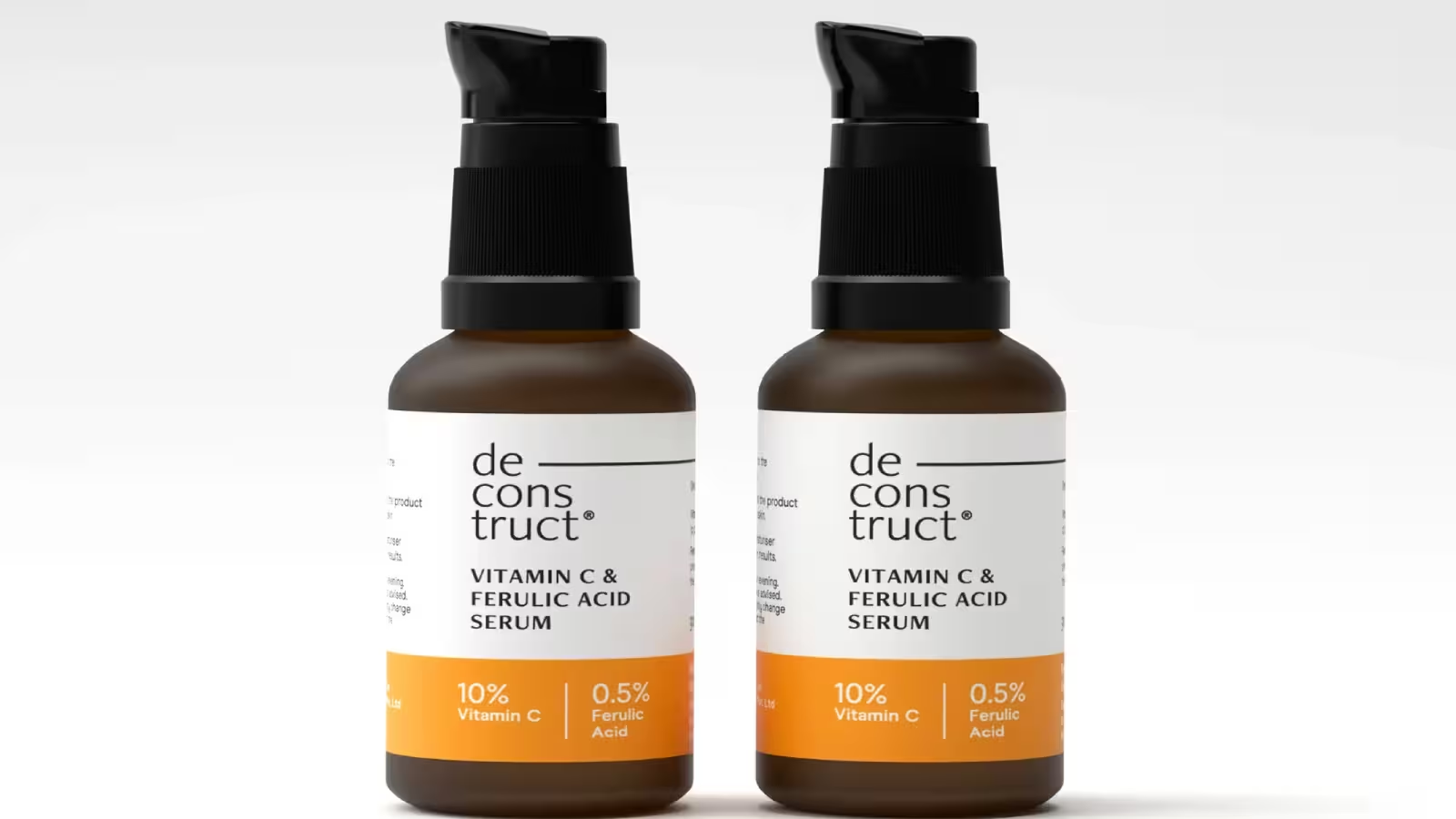
A 10% Vitamin C serum with 3-O-Ethyl Ascorbic Acid gently boosts glow, fades acne marks, and evens tone for oily skin. Lightweight options like Deconstruct 10% Vitamin C Serum deliver antioxidant benefits without stressing the skin barrier.

10% Vitamin C Serum for Oily Skin: A Gentle Way to Glow & Even Tone
Oily skin often feels like a paradox. While excess sebum can make the face look shiny, it does not always translate into a healthy-looking glow. In fact, many people with oily skin struggle with dullness, uneven tone, and post-acne marks. Add sun exposure, pollution, and daily stress to the mix, and the skin can start looking tired and patchy.

This is where a well-formulated Vitamin C serum can make a visible difference. A 10% concentration especially when formulated with 3-O-Ethyl Ascorbic Acid, a stable Vitamin C derivative offers a balanced way to improve glow and even out skin tone without overwhelming oily or acne-prone skin. Clinically tested formulations such as Deconstruct 10% Vitamin C Serum are designed to deliver antioxidant protection and visible radiance while remaining gentle on the skin barrier.

Why 10% Vitamin C Works Well for Oily Skin

When it comes to active ingredients, more is not always better. Higher concentrations of Vitamin C may increase the risk of irritation, especially for beginners or those with sensitive, acne-prone skin. Redness, tingling, or breakouts can occur if the skin barrier is compromised.

A 10% Vitamin C concentration strikes the right balance. It is effective enough to support glow and reduce uneven tone, yet mild enough for regular use. For oily skin types that are already prone to congestion and sensitivity from overuse of actives, this moderate strength can deliver results without triggering excess oil production or inflammation.

Vitamin C also works as a powerful antioxidant. It neutralises free radicals generated by UV exposure and pollution two major contributors to dullness and pigmentation. By protecting the skin from oxidative stress, it helps maintain clarity and a more even appearance over time.

The Role of 3-O-Ethyl Ascorbic Acid in Enhancing Glow

Not all Vitamin C forms are created equal. Traditional L-ascorbic acid can be unstable and may oxidise quickly when exposed to air and light. In contrast, 3-O-Ethyl Ascorbic Acid is a more stable derivative that penetrates effectively and maintains its potency longer.

Here’s how it supports oily skin:

1. Improves Skin Glow

3-O-Ethyl Ascorbic Acid helps reduce oxidative damage, which is one of the key reasons behind dull looking skin. With consistent use, it enhances overall radiance and supports a healthier complexion.

2. Fades Pigmentation and Acne Marks

Oily and acne-prone skin often deals with post-inflammatory hyperpigmentation those stubborn dark spots left behind after breakouts. Vitamin C interferes with excess melanin production, gradually helping fade these marks and promoting a more even tone.

3. Refines Texture

Uneven texture can make skin appear rough or tired. By supporting collagen production and improving surface smoothness, Vitamin C contributes to a refined, clearer-looking complexion.

Key Ingredients to Look for in a Vitamin C Serum for Oily Skin

When choosing a serum, ingredient synergy matters just as much as the hero ingredient.

  • 10% Vitamin C Serum (3-O-Ethyl Ascorbic Acid): Delivers stable antioxidant protection and visible glow support.
  • Niacinamide: Helps regulate excess oil, strengthens the skin barrier, and supports even tone.
  • Ferulic Acid: Enhances the stability and performance of Vitamin C.
  • Lightweight Hydrators (Glycerin, Hyaluronic Acid): Maintain hydration without clogging pores or feeling greasy.

For oily skin, the texture of the serum is equally important. A lightweight, fast-absorbing, non-comedogenic formula works best to prevent pore congestion.

How to Use 10% Vitamin C Serum in Your Routine

Consistency plays a crucial role in achieving visible results. Here is a simple routine you can follow:

Morning Routine

1. Cleanse: Use a gentle gel-based cleanser to remove oil buildup and impurities.
2. Apply Serum: Take 2–3 drops of the Vitamin C serum and apply it to dry skin. Gently pat it in.
3. Moisturise: Follow with a lightweight, oil-free moisturiser to maintain hydration.
4. Sunscreen: Finish with a broad-spectrum SPF 50 sunscreen. This step is essential, as vitamin C works best when paired with proper sun protection.

Beginners can start with once daily application in the morning. If the skin tolerates it well, it can also be used in the evening, depending on the overall routine.

Common Mistakes to Avoid

Even a gentle Vitamin C serum can deliver better results when used correctly.

  • Starting with very high concentrations: Jumping to stronger formulas may lead to irritation and barrier damage.
  • Skipping sunscreen: Sun exposure can counteract the benefits of Vitamin C and worsen pigmentation.
  • Over-layering actives: Combining strong exfoliating acids with Vitamin C without guidance may increase sensitivity.
  • Expecting instant glow: Skin renewal takes time. Visible improvements usually appear after consistent use over several weeks.

Patience and consistency are key when incorporating active ingredients into your skincare routine.

Who Should Use a 10% Vitamin C Serum?

A 10% Vitamin C serum formulated with 3-O-Ethyl Ascorbic Acid can be suitable for:

  • Oily skin
  • Acne-prone skin
  • Combination skin
  • Individuals new to antioxidant skincare

If you are looking to improve glow, reduce post-acne marks, and achieve a more even tone without heavy or greasy formulations, a clinically tested option like Deconstruct 10% Vitamin C Serum can fit seamlessly into your routine.

Final Thoughts

Oily skin does not need harsh treatments to look radiant. In fact, over-stripping or aggressive actives can weaken the skin barrier and worsen uneven tone. A balanced approach works far better.

A 10% Vitamin C serum powered by 3-O-Ethyl Ascorbic Acid offers a steady and gentle way to enhance glow, refine texture, and improve overall tone. When combined with daily sun protection and a simple, consistent routine, it supports healthier-looking skin over time.

Glowing skin is not about shine it is about clarity, balance, and resilience. With the right formulation and patience, achieving that natural glow becomes both realistic and sustainable.

Note to the Reader: This article has been created by HT Brand Studio. The information provided is intended solely for informational purposes and does not constitute medical advice or endorsement. Please consult a registered medical practitioner for personalized medical advice or before making any decisions regarding your health conditions or treatment options.

Get latest updates on health and wellness along with Brand Stories

Tags: , , , , , ,
Natural Hyperpigmentation Reduction: Skincare Tips for Even Skin Tone

Natural Hyperpigmentation Reduction: Skincare Tips for Even Skin Tone

Lifestyle

-Oneindia Staff


Updated: Friday, December 5, 2025, 7:49 [IST]

Hyperpigmentation
is
when
some
parts
of
the
skin
look
darker.
It
can
show
as
spots,
patches,
or
an
uneven
skin
tone.
Many
people
want
to
fade
these
marks
without
harsh
chemicals.
Simple
changes
at
home
can
help
reduce
hyperpigmentation
naturally
and
support
healthier
looking
skin
over
time.

Hyperpigmentation
happens
when
the
skin
makes
extra
melanin.
This
extra
colour
can
appear
after
sun
exposure,
acne,
cuts,
rashes,
or
skin
irritation.
Hormone
changes,
some
medicines,
and
picking
at
pimples
can
also
make
marks
worse.
Knowing
the
cause
helps
you
choose
the
right
natural
care
steps.

Hyperpigmentation,
characterized
by
darker
skin
patches,
can
be
addressed
naturally
through
sun
protection
using
SPF
30
sunscreen,
gentle
skincare,
natural
exfoliation,
and
the
use
of
soothing
ingredients
like
aloe
vera,
along
with
lifestyle
changes
such
as
a
balanced
diet
and
regular
sleep.

Sun
exposure
often
makes
dark
spots
look
deeper
and
more
clear.
Daily
sun
care
is
key
if
you
want
to
reduce
hyperpigmentation
naturally.
Use
a
broad-spectrum
sunscreen
with
at
least
SPF
30,
even
indoors.
Reapply
every
two
to
three
hours
when
outside,
and
use
hats,
scarves,
or
umbrellas
at
midday.

Choose
sunscreens
suited
to
Indian
skin
and
climate.
Look
for
non-greasy,
sweat-resistant
formulas.
Mineral
sunscreens
with
zinc
oxide
or
titanium
dioxide
are
gentle
for
many
people.
Apply
enough
product
to
cover
the
face
and
neck
well.
Good
sun
habits
stop
old
marks
from
darkening
and
help
prevent
new
spots.

Gentle
daily
skin
care
routine

A
simple,
steady
routine
can
support
fading
of
dark
spots.
Use
a
mild,
fragrance-free
face
wash
two
times
a
day.
Do
not
scrub
hard,
as
this
can
irritate
the
skin
and
deepen
marks.
Pat
the
skin
dry
with
a
soft
towel
instead
of
rubbing
it
roughly.

After
cleansing,
use
a
light,
non-comedogenic
moisturiser.
Hydrated
skin
often
heals
better
and
can
look
more
even.
At
night,
keep
the
routine
soft
and
calm.
Avoid
strong
products
that
sting,
as
they
may
cause
more
redness
and
patchy
colour.

Natural
exfoliation
for
smoother
skin

Gentle
exfoliation
can
help
remove
dead
skin
and
reveal
a
brighter
tone.
At
home,
you
may
use
a
soft
washcloth
or
a
mild
scrub
once
or
twice
a
week.
Do
not
exfoliate
daily,
as
this
may
harm
the
protective
layer
of
the
skin.

For
a
simple
natural
scrub,
some
people
mix
fine
oat
flour
with
yoghurt
and
water.
Apply
with
light,
circular
strokes
and
rinse
with
cool
water.
Avoid
coarse
sugar
or
salt
scrubs
on
the
face,
as
they
can
create
tiny
tears
and
trigger
more
hyperpigmentation.

Soothing
natural
ingredients

Some
plant-based
ingredients
may
calm
the
skin
and
reduce
the
look
of
dark
spots.
Aloe
vera
gel
is
a
common
choice
in
many
Indian
homes.
It
can
feel
cool
and
soothing.
Apply
a
thin
layer
of
pure
aloe
vera
gel
to
clean
skin
and
leave
it
on
for
15
to
20
minutes.

Green
tea
extract
or
cooled
green
tea
bags
may
also
help.
They
provide
gentle
antioxidant
care,
which
can
support
the
skin’s
repair
process.
Place
cooled
tea
bags
on
dark
areas
for
a
short
time.
Always
patch
test
first
to
check
for
any
redness
or
discomfort.

Using
turmeric
with
care

Turmeric
is
often
used
in
Indian
home
remedies
for
brightening.
It
has
strong
pigment
and
may
stain
the
skin
or
clothes.
To
reduce
this,
mix
a
small
pinch
of
turmeric
with
thick
yoghurt,
milk,
or
aloe
vera
gel.
Apply
as
a
thin
layer
mask
for
10
minutes,
then
rinse
well.

Do
not
use
too
much
turmeric
or
leave
it
on
for
very
long.
The
skin
may
turn
yellow
for
some
time.
Sensitive
skin
can
react
to
turmeric,
so
always
try
a
patch
on
the
inner
arm
first.
Stop
use
if
you
notice
itching,
burning,
or
rash.

Diet,
hydration,
and
lifestyle
support

Food
and
lifestyle
choices
can
support
skin
health
from
within.
Include
fruits
and
vegetables
rich
in
vitamin
C,
such
as
amla,
oranges,
guava,
and
lemon.
Vitamin
C
helps
the
body
form
collagen
and
may
support
a
more
even
skin
tone
over
time.

Drink
enough
water
through
the
day
to
keep
the
body
hydrated.
Limit
very
sugary
drinks,
heavy
fried
food,
and
frequent
smoking
or
alcohol,
as
they
can
stress
the
skin.
Aim
for
regular
sleep
and
some
daily
movement,
which
may
help
overall
skin
repair.

Habits
that
may
worsen
hyperpigmentation

Certain
everyday
habits
can
make
dark
spots
last
longer.
Picking
or
squeezing
pimples
often
causes
deeper
marks.
Instead,
treat
acne
gently
and
leave
spots
to
heal.
Hot
water
on
the
face
can
also
dry
the
skin
and
may
lead
to
more
irritation.

Avoid
strong
perfumes,
hair
colour,
or
harsh
face
products
touching
affected
areas.
These
can
trigger
contact
reactions
and
new
pigment.
If
a
cream
or
home
remedy
burns
or
stings,
wash
it
off
at
once.
Gentle
care
is
usually
safer
for
skin
prone
to
hyperpigmentation.

Safe
use
of
home
remedies

Many
online
tips
suggest
lemon
juice,
baking
soda,
or
neat
apple
cider
vinegar.
These
can
be
harsh
and
may
damage
the
skin
barrier.
Strong
acids
at
home
may
cause
burns,
more
redness,
and
darker
marks
later,
especially
on
medium
to
deep
Indian
skin
tones.

If
you
still
wish
to
try
a
natural
acid
source,
always
dilute
it
well
and
patch
test.
Never
apply
on
broken
skin
or
active
acne.
Do
not
mix
many
new
remedies
together.
Introduce
one
change
at
a
time
so
you
can
see
how
your
skin
responds.

When
to
seek
medical
advice

Home
care
can
help
mild
dark
spots
fade
slowly.
But
some
types
of
hyperpigmentation,
such
as
melasma
or
very
deep
marks,
may
need
expert
help.
If
spots
spread
fast,
itch,
or
change
in
shape
or
colour,
consult
a
dermatologist
for
a
proper
check.

Doctors
can
guide
safe
treatments
that
match
your
skin
type
and
tone.
You
can
then
combine
their
advice
with
soft
natural
habits,
like
sun
care,
mild
cleansing,
and
balanced
food.
This
joint
approach
may
support
better
skin
health
and
more
even
colour
with
time.

  • Deep Moral Decline: Rashmika Mandanna Denounces Viral ‘Leaked’ Bikini Cocktail 2 Photo

  • Samantha Ruth Prabhu Pregnancy Rumours: How the ‘Hush-Hush’ Wedding with Raj Nidimoru Fueled Buzz

  • Asim Munir vs Shehbaz Sharif: PM Missing, Army Chief Waiting – Is Pakistan Heading For New Power Clash?

  • Why Dharmendra Skipped Sunny, Bobby, Esha, and Ahana in His Ancestral Property Will – And Named This Person

  • What Is an Autopen? Why Trump Calls Biden’s Autopen-Signed Documents ‘Unauthorized’ — Explained

  • Gemini Horoscope For Today, December 03, Wednesday – Your Curiosity Is Through The Roof!

  • Tamil Nadu Power Cut On Dec 4: Coimbatore, Theni, Uduamlpet To Be Hit By Supply

  • Leo Horoscope For Today, December 03, Wednesday – Your Charisma Is Sky-High!

  • Meet Sheetal Nidimoru, Samantha Ruth Prabhu’s New Sister-in-Law Who Won Hearts With a Touching Message

  • Did Aishwarya Rai’s Daughter Aaradhya Meet UP CM Yogi Adityanath? Here’s The Truth

  • IndiGo Cancels Dozens of Flights at Bengaluru Airport for Second Day

  • Virat Kohli Hits Back-to-Back Hundreds, Slams 102 in Raipur ODI vs South Africa

Tags: , , , , , ,
Best oLive
Privacy Overview

This website uses cookies so that we can provide you with the best user experience possible. Cookie information is stored in your browser and performs functions such as recognising you when you return to our website and helping our team to understand which sections of the website you find most interesting and useful.