Apple App Store

9 Needle-Free Ways to Temporarily Smooth Wrinkles

“Hearst Magazines and AOL may earn commission or revenue on some items through these links.”

Every fine line and wrinkle has a story to tell. But when you’re not feeling as nostalgic, there are ways to smooth fine lines—without the need for injections. Enter wrinkle fillers and blurring products.

Wrinkle fillers are “products designed to fill in wrinkles, plumping the skin to reduce the appearance of fine lines and wrinkles,” says Marisa Garshick, M.D., a board-certified dermatologist in New York City. She explains that they typically contain hyaluronic acid to help hydrate or peptides to help boost collagen production and smooth the appearance of wrinkles.

Blurring products, on the other hand, “are intended to provide more of a temporary effect by visibly improving the appearance of lines without addressing or treating the underlying cause,” Dr. Garshick explains. She says they work by filling in lines with silicone-based ingredients or polymers to smooth, or they use light-reflecting particles that diffuse light so it makes the lines appear less noticeable.

Our top picks:

Which is right for you? “Blurring products may be better for superficial fine lines while wrinkle filling skincare products may also be considered for deeper lines and folds,” Dr. Garshick says. Whichever approach you use, GH Beauty Lab Reviews Analyst Chiara Butler reminds us to have realistic expectations. “Some products do contain ingredients like retinoids and anti-aging peptides that can improve the appearance of fine lines with consistent use,” she says. However, “from what I saw in my small test, the improvement in the appearance of fines lines and wrinkles is not dramatic. I felt that the blurring products gave results that were more visible in photos.”

Hearst Owned

Hearst Owned

Hearst Owned

Hearst Owned

Hearst Owned

How we test wrinkle fillers

To decide what to test, we tapped our beauty editor and searched online retailers to put together a list of 17 of the most popular wrinkle-filling products. We narrowed that list down to six products with a range of prices that we hadn’t evaluated in the Beauty Lab before.

Of the six wrinkle filler products chosen for in-person testing, three of the products were skincare-focused products that have both instant wrinkle plumping and long-term anti-aging claims, while the other three were blurring products with only instant wrinkle filling claims. The other three products included in the story were previously tested.

Good Housekeeping Institute Beauty Lab – Hearst Owned

In the Beauty Lab, we blinded the products and assigned them codes to prevent brand bias. We invited 18 testers who are 35 and older to participate and indicate the areas of their face where they felt they had wrinkles: under the eyes, crow’s feet, around the mouth, or the forehead.

We asked them to remove makeup from the areas where they would be applying the wrinkle filler product. We then took digital “before” photos of the testers’ faces zoomed in to 3X followed by pictures in the Visia Skin analysis system. Afterwards, we gave testers a mirror and allowed them to apply as much product as they wanted to the areas they indicated. We set a timer for 10 minutes to allow the product to set in.

After 10 minutes, we took “after” digital photos and used the Visia system. The testers then responded to a survey about how they felt the product performed. A total of 54 Visia pictures were taken.

Hearst Owned

What to look for when shopping for a wrinkle filler

Keep these factors in mind:

✔️ Product claims: “Look at the products claims to see whether it claims just instant smoothing and hydrating, instant blurring, or instant and long-term anti-aging benefits,” Butler says. “Consider whether you want a moisturizing/anti-aging product that will moisturize in the short-term and provide anti-aging benefits over time, or a blurring product with an immediate skin-perfecting effect that may not have skincare benefits.”

✔️ Usage: Think about where you will be using the product on your face, which can help determine whether a blurring or filling product is better. “Since blurring products tend to be thicker on the skin, they can be trickier in high-movement areas like the crow’s feet where product can settle in the lines, so I think plumping products are better for the crow’s feet while blurring products are great for flatter areas like the forehead,” Butler advises.

✔️ Ingredients: “When looking for a wrinkle filling product, it is important to look for ingredients like hyaluronic acid, which helps to draw moisture in and work to plump the skin,” Dr. Garshick says. “Some products may contain different molecular weights of hyaluronic acid, which may allow for different levels of penetration for best results.

Additionally, other ingredients to consider include peptides, which help to boost collagen production and retinol which helps to regulate skin cell turnover and works to boost collagen production, improving the appearance of fine lines and wrinkles. In the case of neuropeptides, the peptides block the release of chemicals that are responsible for muscle movement that leads to fine lines and wrinkles.”

Good Housekeeping Institute Beauty Lab – Hearst Owned

What is the best way to apply wrinkle fillers and blurring products to maximize their effects?

Dr. Garshick says that wrinkle filling products should be used daily and consistently for maximum benefits. “The specific ingredients will determine if it’s better for morning or evening use,” she says.

As for application, Butler says: “For plumping or tightening products, apply them to clean dry skin, then wait for them to set and dry. Follow the directions on your product for the best results. For blurring products, tap, don’t rub, into fine lines, and gently smooth out the product as needed. Some of these products can be used as makeup primers or even on top of makeup.”

Good Housekeeping Institute Beauty Lab – Hearst Owned

How long do the effects of wrinkle fillers last?

“The effects of these products typically last only a few hours, or until you wash them off,” Butler says. However, for skincare products that can bring benefits with continued use over time, the perks last longer.

“With consistent use and depending on the specific ingredients, the effects may continue to improve over the course of three to six months,” Dr. Garshick says.

Good Housekeeping Institute Beauty Lab – Hearst Owned

How do wrinkle filling skincare and blurring products compare to in-office treatments?

“In general, wrinkle filling skincare and blurring products are not going to yield the same results as in-office treatments and the results may be more temporary,” Dr. Garshick says. “That said, some of the at-home products can complement in-office treatments with some products being used to help prolong the benefits of in-office treatments like filler, neuromodulators, and lasers.

More specifically, in-office dermal fillers can be a good way to truly fill in wrinkles and are an injectable form of hyaluronic acid, the same ingredient that may be found in topical at-home wrinkle fillers as well.”

Good Housekeeping Institute Beauty Lab – Hearst Owned

Why trust Good Housekeeping?

Celia Shatzman wrote this story. She has two decades of experience researching, writing, and editing skincare journalism. She also consulted Marisa Garshick, M.D., a board-certified dermatologist in New York City.

GH Beauty Lab Reviews Analyst Chiara Butler has years of experience as a cosmetic chemist, formulating skincare products for a variety of brands. She conducts skincare category tests and provided an expert review of this article.

Hearst Owned

You Might Also Like

Tags: , , , ,
Shea nut shells: A natural exfoliant for glowing skin

A natural exfoliant for glowing skin

Follow this guide

What’s the story

African shea nut shells have been used for centuries in skincare, thanks to their rich nutrient profile.
The shells, which are a byproduct of shea butter production, are loaded with vitamins and minerals that can promote healthy skin.
They offer a natural, eco-friendly alternative to synthetic skincare products.
Here’s how you can use them to improve your skincare routine.

Tags: , , ,
Can Sun Damaged Skin Be Repaired? Everything You Need to Know

Can Sun Damaged Skin Be Repaired? Everything You Need to Know

Spending too much time under the sun without proper protection can gradually damage your skin. While a tan may fade, the effects of ultraviolet (UV) rays can remain for years, contributing to premature ageing, pigmentation and even increasing the risk of skin cancer.

The good news is that although not all sun damage can be reversed, many of its visible effects can be improved with the right skincare habits, healthy lifestyle choices and timely medical treatment when required.

How does the sun damage your skin?

Sunlight contains ultraviolet (UV) rays that penetrate the skin and damage its cells. Over time, repeated exposure breaks down collagen and elastin the proteins responsible for keeping the skin firm, smooth and youthful.

This can lead to:

  • Fine lines and wrinkles
  • Dark spots and uneven skin tone
  • Dry, rough skin
  • Loss of elasticity
  • Premature ageing
  • Increased risk of skin cancer

Experts estimate that prolonged UV exposure is responsible for a large proportion of visible skin ageing, making daily sun protection one of the most effective anti ageing measures.

Treat sunburn the right way

Sunburn is often the first sign that your skin has been exposed to too much UV radiation. By the time your skin becomes red and painful, some damage has already occurred.

Most importantly, prevent further damage by applying a broad spectrum sunscreen with SPF 30 or higher and reapplying it every two hours, especially if you are outdoors.

Say goodbye to dry, rough skin

Excessive sun exposure strips the skin of its natural moisture, leaving it dry, flaky and dull.

To restore softness:

  • Use a gentle exfoliator once or twice a week to remove dead skin cells.
  • Apply a nourishing moisturiser immediately after bathing.
  • Drink enough water throughout the day.
  • Include healthy fats, fruits and vegetables in your diet to support skin hydration from within.

Can wrinkles caused by the sun be reduced?

While wrinkles cannot disappear completely, several treatments can improve their appearance.

Dermatologists often recommend retinoid creams, which stimulate collagen production and improve skin texture over time. Antioxidants such as vitamin C also help protect the skin from further damage while reducing signs of ageing.

What about dark spots and pigmentation?

Sun exposure can trigger excess melanin production, leading to stubborn brown patches commonly known as sun spots or age spots.

Depending on the severity, treatment options include:

  • Skin brightening creams prescribed by a dermatologist
  • Retinoid based products
  • Chemical peels
  • Laser treatment
  • Cryotherapy for selected lesions

Daily sunscreen use is essential because without protection, these spots can return even after treatment.

Melasma needs extra care

Melasma appears as brown or grey patches, usually on the cheeks, forehead or upper lip. Although hormones can contribute to the condition, sunlight is one of its biggest triggers.

Managing melasma requires patience. Dermatologists may recommend prescription creams, professional treatments and strict sun protection. Wearing a wide hat and avoiding harsh midday sunlight can also help prevent flare ups.

Don’t ignore rough, scaly patches

Persistent rough patches that do not heal should never be ignored. These may indicate actinic keratosis, a condition caused by long term sun exposure that can sometimes develop into skin cancer.

If you notice any unusual skin changes, consult a dermatologist promptly. Early diagnosis allows treatment before complications develop.

Lifestyle habits that help repair your skin

Healthy skin is not just about skincare products. Your everyday habits play a major role in how well your skin repairs itself.

Get enough sleep

Your skin repairs itself while you sleep. Aim for seven to eight hours of quality sleep every night to support cell renewal and maintain healthy looking skin.

Eat skin friendly foods

A balanced diet rich in colourful fruits, vegetables, whole grains, nuts, seeds, legumes and oily fish provides antioxidants, vitamins and healthy fats that help protect the skin from damage.

Foods rich in vitamin C, beta carotene and lycopene, such as oranges, carrots, spinach and tomatoes, are particularly beneficial for skin health.

Stay physically active

Regular exercise improves blood circulation, delivering oxygen and nutrients to skin cells. Better circulation supports natural repair processes and contributes to a healthier complexion.

Manage stress

Long term stress can speed up skin ageing by increasing inflammation and reducing the skin’s ability to repair itself. Activities such as yoga, meditation, deep breathing or even a daily walk can help reduce stress levels.

Limit alcohol

Excessive alcohol can dehydrate the skin and contribute to premature ageing. If you drink, do so in moderation and make sure you stay well hydrated.

Protect your skin every day

Preventing further damage is just as important as treating existing problems.

Simple daily habits can make a big difference:

  • Apply broad spectrum SPF 30 or higher sunscreen every morning.
  • Reapply sunscreen every two hours when outdoors.
  • Wear sunglasses, a wide brimmed hat and protective clothing.
  • Avoid prolonged sun exposure between 10 am and 4 pm.
  • Seek shade whenever possible.

When should you see a dermatologist?

While dryness and mild pigmentation can often improve with good skincare, you should seek medical advice if you notice:

  • A mole that changes in size, shape or colour
  • A sore that doesn’t heal
  • Persistent scaly patches
  • Bleeding or painful skin lesions
  • Rapidly changing pigmentation

Early evaluation can help detect skin conditions, including skin cancer, at a stage when treatment is most effective.

Sun damage develops gradually, but so does recovery. Although years of UV exposure cannot be erased completely, adopting healthy habits, protecting your skin every day and seeking professional treatment when necessary can significantly improve your skin’s appearance and reduce future damage.

Tags: , , ,
Charlotte Tilbury's anti-ageing Magic Cream reduced to £11

Charlotte Tilbury’s anti-ageing Magic Cream reduced to £11

Charlotte Tilbury fans will likely already be familiar with the brand’s famous Magic Cream – the cult-favourite moisturiser that’s become a staple in countless skincare routines thanks to its rich, hydrating formula and glowing finish. And right now, beauty lovers can pick it up for the equivalent of £11 in a special limited-time deal.

Charlotte Tilbury’s Iconic Magic Mini Skin Set has been reduced from £48 to £33.60, saving shoppers £14.40. The travel-friendly kit includes three bestselling beauty essentials – Magic Cream, Magic Serum Crystal Elixir and a sculpting gua sha – meaning each item works out at approximately £11.20.

For anyone yet to discover the hype, Magic Cream is formulated with hydrating hyaluronic acid and peptides, which help leave skin feeling plumper and more moisturised. It also contains vitamins C and E, ingredients known to help brighten the complexion while providing antioxidant nourishment.

The Magic Serum Crystal Elixir is another bestseller from the range. Infused with peptides, vitamin C and niacinamide, the lightweight serum is designed to help skin appear smoother and more radiant while reducing the appearance of pores over time.

Completing the trio is a gua sha facial massage tool, which can be used alongside skincare to help encourage circulation, ease facial tension and temporarily create a more sculpted-looking complexion.

Beyond CT, another tempting travel-sized kit is Boots Spring Skincare Refresh Edit (£30, worth £75.20). This bundle features a blend of full-size favourites and must-have minis, including names like The Breakout Hack, BYOMA and RoC.

Otherwise, The Body Shop has some great discounts on its body care bundles. That includes the White Tea & Elderflower Essentials (£14.50, was £29), which includes a shower gel, hand cream and body butter.

Back to Charlotte Tilbury’s Iconic Magic Mini Skin Set; it’s had some great reviews from fans. This person shared: “First time using these products, but it won’t be the last! I brought the set for a long-haul flight, but thought I’d try it out beforehand, and I can’t stop using it. The tool is great, and I’m sure I’ve noticed a difference on my face.”

Meanwhile, a second shopper piped up: “Great little set to try and to take on a break. Product feels smooth, light and easy to use. I am 60, and my skin loves CT products, and the packaging looks so luxurious.”

However, as with all skincare products, it isn’t for everyone. This reviewer said: “I was really looking forward to trying this product, and it’s a great-sized gift set! Unfortunately, the Magic Cream made me break out, so I never tried the serum as I was worried this would break me out too.”

Tags: , , , , ,
Vertical image of smiling woman with eyes shut, set against a beige background, with a leaf motif in the bottom right corner and polka dots behind the top left corner

Experts say this is the best skincare routine for your 50s

Your 50s can bring about some of the most dramatic changes to your skin, largely thanks to the hormonal shifts that happen during and after menopause.

According to multi-award-winning aesthetic doctor Dr Ana Mansouri, founder of Dr Ana The Skin Clinic, many women notice that skin suddenly feels drier, thinner and less robust than before, while pigmentation, fine lines and loss of firmness also become more visible.

This happens as collagen and elastin production – the skin’s natural source of bounce and resilience – starts to decline more rapidly. “Broken sleep and insomnia are often symptoms of menopause, and this can have a significant impact because sleep is essential for skin repair,” she explains, adding that delicate areas such as the eyes, neck and décolletage often need more attention this decade, too.

Latest Videos From

With the onslaught of hormonal fluctuations during menopause, you might feel there’s little you can do to improve matters. But despite these changes, it doesn’t mean it’s time to wave the white flag. Instead, it’s about understanding what your skin needs now and giving it the comfort, hydration and care it deserves.

The best skincare routine to follow in your 50s, according to experts

Rather than overloading skin with strong acids or too many active ingredients, Dr Mansouri recommends focusing on hydration, barrier support and consistent SPF application. She warns that “over-exfoliating can weaken the skin barrier, leaving it irritated, dehydrated and more sensitive,” adding that, just as in any other decade of our lives, sun damage remains one of the biggest contributors to collagen breakdown and pigmentation.


You may like

You don’t need to spend a fortune or jump into a complicated routine, Dr Mansouri also insists. Instead, she advises tailoring your products to work with skin during and after menopause with ingredients such as ceramides, peptides, hyaluronic acid, richer moisturisers and gentle retinal products.

Hydrating serums, targeted best eye creams and replenishing overnight treatments can also help support repair while we sleep, with Dr Mansouri adding that the biggest improvements often come from consistency and focusing on overall skin health rather than trying to “aggressively anti-age.”

Step 1: Cleanse and comfort

With skin often becoming more reactive and dehydrated during perimenopause and menopause, the focus should shift towards thorough yet gentle cleansing, rather than harsh products or over-exfoliating the skin barrier.

CeraVe

Hydrating Cleanser

RRP: £13

This creamy cleanser is a fab skincare staple thanks to its ability to deeply cleanse without leaving skin feeling tight or dry. Formulated with hyaluronic acid and three essential ceramides, it helps support the skin barrier and lock in moisture – ideal for menopausal skin that’s feeling more sensitive or depleted.

Gatineau

Collagene Expert Melting Cleansing Balm

RRP: £48

Who doesn’t love a balm? And this cleansing balm melts effortlessly into the skin to dissolve makeup, SPF and daily grime while leaving the complexion feeling soft, comforted and hydrated. Formulated with nourishing oils and collagen-supporting ingredients, including marine collagen and peptides.

Step 2: Deep hydration and barrier support

As natural oil production declines, skin often craves richer textures and moisture-replenishing ingredients to help restore comfort, bounce and resilience.

Vichy

Minéral 89 Hyaluronic Acid Serum

RRP: £28

This lightweight but hardworking serum combines hyaluronic acid with Vichy volcanic mineral water to drench skin with hydration and strengthen the skin barrier. Perfect for restoring freshness and suppleness when skin starts to feel less than its best.

L’Oreal Paris

Revitalift Filler [+Hyaluronic Acid] Serum

RRP: £32

A much-loved, affordable buy, this plumping serum uses concentrated hyaluronic acid to help smooth dehydration lines and leave skin looking fresher and juicier. It layers beautifully under moisturiser and works especially well on menopausal skin that’s lost some of its natural elasticity.

Dr.Jart+

Ceramidin Skin Barrier Moisturising Cream

RRP: £38

Hailed by some as a dry skin hero, this rich cream is packed with barrier-supporting ceramides and skin-softening panthenol. Its velvety texture feels wonderful and leaves skin replenished, soothed and noticeably more supple overnight.

Step 3: Tighten up and strengthen

As collagen decline accelerates, peptides and gentle vitamin A products are particularly helpful for maintaining firmness, texture and skin quality in your 50s.


What to read next

PAI

ROSEHIP BIOREGENERATE FACE OIL

RRP: £34

If you prefer a natural approach to skin renewal, this cult facial oil combines rosehip fruit and seed oils rich in antioxidant carotenoids and essential fatty acids to help improve radiance and softness, leaving skin feeling super nourished. We are also fans of Pai’s Retinoid 0.3% Skin Renewal Booster, which is a great next step for slowly introducing vitamin A into your routine.

Avène

Retrinal 0.1% Intensive Cream

RRP: £49

This gentle retinal treatment has all the complexion-boosting benefits of vitamin A without excessive irritation. Formulated with retinaldehyde and soothing Avène Thermal Spring Water, it helps improve pigmentation and fine lines while remaining kind to sensitive skin.

Step 4: Restore radiance and defend skin

Pigmentation and dullness often become more noticeable during menopause, so antioxidant protection and daily application of the best facial sunscreen are essential for helping skin look brighter, fresher and more even-toned.

Vichy

Liftactiv 16% Pure Vitamin C Brightening Serum

RRP: £39

Formulated with 15% pure vitamin C alongside antioxidant pycnogenol, this brightening serum helps soften uneven tone and leave skin looking more luminous and refreshed over time. Particularly good for dull or lacklustre complexions.

La Roche-Posay

La Roche-Posay Anthelios UVMune 400 Invisible Fluid SPF50+

RRP: £21

It goes without saying that wearing SPF every day, regardless of the weather, is non-negotiable. Just this step alone will help protect against pigmentation, collagen breakdown and premature ageing, and this lightweight formula offers high UVA and UVB protection without leaving skin feeling greasy or heavy, so it’s easy to wear every day under makeup.

Step 6: Extra helpers for delicate skin

The thinner skin around the eyes, neck and chest is often one of the first areas to show signs of menopause-related collagen decline, dryness and loss of elasticity, so in your 50s it’s worth investing in products designed specifically for these areas.

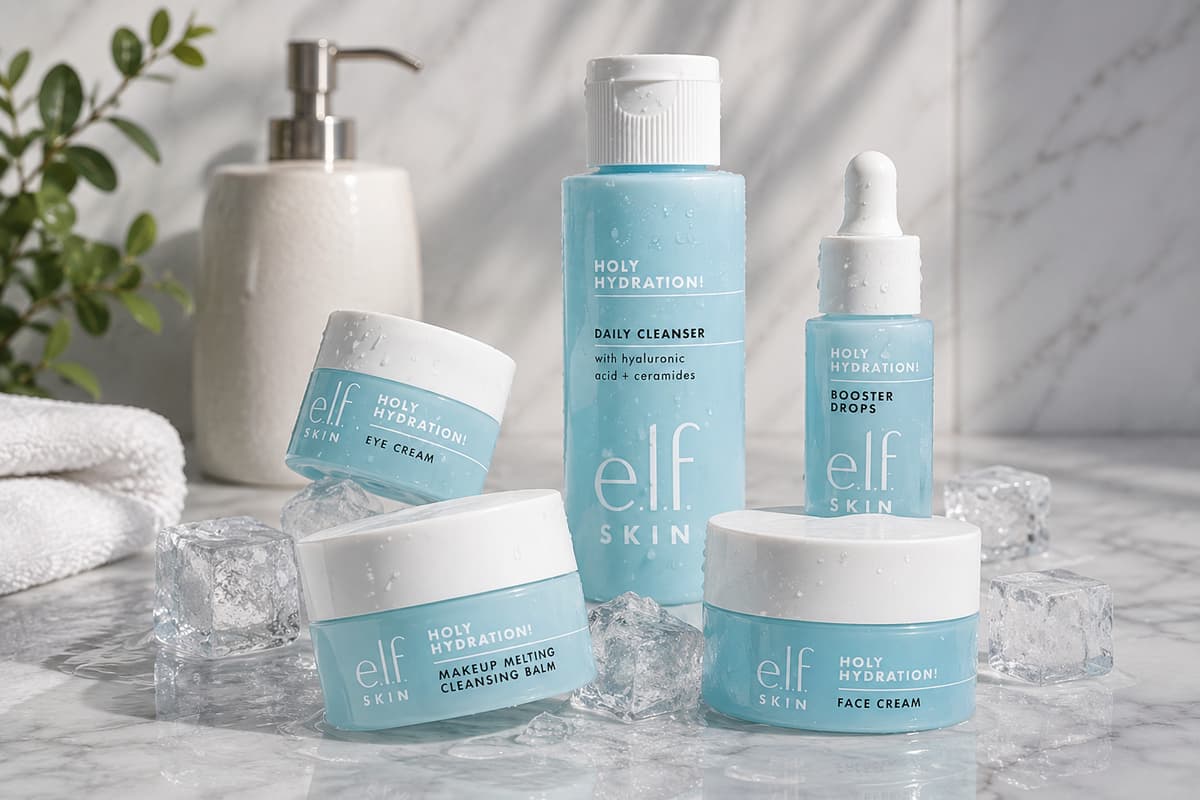
e.l.f.

SKIN Illuminating Eye Cream

RRP: £11

A brilliant budget-friendly eye cream, this lightweight formula helps hydrate and brighten the delicate under-eyes while softening the appearance of tiredness and dehydration lines. Infused with hyaluronic acid and peptides, it leaves the eye area looking fresher, smoother and more awake.

Boost Lab

Edelweiss Neck Firming Serum

RRP: £24.95

Reviewers say this neck serum feels far more luxurious than its price tag suggests, thanks to its silky, lightweight texture and instantly smoothing feel on the skin. Designed specifically for the neck and décolletage area, it combines antioxidant-rich Edelweiss extract with hydrating ingredients to help improve firmness and leave skin looking smoother and more refined with regular use.

No7

Future Renew Damage Reversal Serum

RRP: £35

One of the most talked-about skincare launches in recent years and for good reason. This peptide-led serum was developed to help support the skin’s natural repair process while tackling midlife concerns like lack of firmness, uneven texture and sun damage. As well as the face serum, the range also includes targeted products for the body and neck and décolletage. We think it’s a great mid-price option for science-backed skincare that won’t break the bank.

The expert’s no.1 in-clinic treatment for skin in its 50s

If she had to choose one approach for women in their 50s, Dr Ana Mansouri says she would opt for a combination of skin boosters and LPG Cellu M6 Infinity®. “Lymphatic drainage is so often overlooked, but it’s essential as a first step in improving overall skin quality,” she explains. Originally developed for physiotherapy, the LPG treatment uses precise cellular stimulation to support lymphatic drainage while also helping calm the nervous system, which can have knock-on benefits for the skin, too.

Dr Mansouri then combines this with regenerative injectable treatments such as Sculptra or polynucleotides, which help improve hydration, tissue repair and collagen stimulation for firmer, healthier and more radiant-looking skin. “The results are incredibly natural, which is something many women in this age group are looking for,” she says.

“Skin tends to look fresher, smoother and more rested without looking overdone.” She adds that they can work particularly well around delicate areas such as the eyes, where skin often becomes thinner and more crepey during menopause and beyond.

Tags: , , ,
Revitalising serums, soothing sleep masks and more

Revitalising serums, soothing sleep masks and more

Be honest – will your skincare routine actually protect you from this week’s heatwave? If the answer is not a definitive yes, you’ve come to the right place.

Here’s what you probably don’t know about your skin during a heatwave. It needs a lot of moisture (and I mean a lot). The relentless heat that lingers well past sundown – exacerbated by the total lack of air conditioning in the UK – combined with UV exposure and humidity creates the perfect breeding grounds for dehydration. As dermatologist Dr. Sandra Lee explains “Dehydration makes your skin more vulnerable to damage – and it can make fine lines and dullness more noticeable, too.” The heat accelerates water loss, ramps up oil production and suddenly your skin barrier is struggling to replenish itself fast enough. 

Your moisturiser that was perfect last week? Suddenly too heavy. Your serum? No longer enough. And if you’re not reapplying sunscreen every two hours, well, keep reading. 

© Getty ImagesExecuting a flawless beauty look is rather testing during a heatwave

So then how do you protect your skin during a heatwave? It’s simple. The solution is knowing which products are actually built for this kind of weather and finding one that fits you. A serum that continues to drench your skin with moisture giving you that plump, dewy finish even as the heat becomes harder to bear. A refreshing mist to soothe and cool your skin when it’s feeling dry and tight. An overnight treatment that works hard while you rest after a long (hot) exhausting day. 

Below is a list of eight of our favourite skincare picks for surviving a heatwave. Lightweight and painstakingly hardworking, you are sure to find your new holy-grail product.

Skincare essentials for the heatwave:

  • Hyaluronic Acid Serum 30ml

    Inkey

    Perfect for all skin types, this lightweight multi-molecular hyaluronic acid serum is your go-to during a heatwave to replenish the water your skin loses.

  • B-Hydra Intensive Hydration Serum 50ml

    Drunk Elephant

    The blend of pro-vitamin B5, pineapple ceramide and watermelon rind creates the ultimate moisture replenishing serum. Its gel texture prepares for the most perfect base.

  • Resveratrol-Lift, Firming Eye Gel Cream

    Caudalíe

    Keep your under-eye area looking bright and fresh with this cooling gel-cream that targets puffiness, dark circles, and fine lines. Its lightweight texture makes it perfect for preventing migration into the eyes on very hot sweaty days. Keep it in the fridge for an extra cooling boost.

  • Thermal Spring Water Spray 50ml

    Avène

    The perfect little addition to your purse this week (and every week after) for an instant refresh. Avène’s mineral-rich thermal water helps to soothe flushed and irritated skin. Stay fresh on the go, all day long.

  • Birch Juice Moisturising Toner

    Round Lab

    If your moisturiser feels too heavy the moment the temperature rises, Round Lab’s birch juice toner is your new best friend. Lightweight but deeply hydrating, leaving you with that perfect dewy finish.

  • Advanced Snail 96 Mucin Power Essence – 100ml

    COSRX

    The best-kept secret in K-beauty. Snail mucin is highly effective in hydrating, soothing and repairing the skin, alongside its anti-ageing properties. The COSRX power essence pulls moisture back into your skin after a long day’s battle against the sun. 

  • Cicapair Tiger Grass Cream 50ml

    Dr. Jart+

    Post-sun treatment is just as important as pre-sun prep and this Dr. Jart+ intensive repair cream is the only right answer. Packed with centella asiatica, the secret ingredient to calming, repairing, and regenerating your heat-stressed skin overnight.

  • Watermelon Glow Sleeping Mask 60ml

    Glow Recipe

    The final overnight step to your evening routine. The combination of watermelon extract, hyaluronic acid, and AHAs, work together to deeply hydrate and exfoliate your skin without causing irritations, even on sensitive skin.

HELLO!’s selection is editorial and independently chosen – we only feature items our editors love and approve of. HELLO! may collect a share of sales or other compensation from the links on this page. To find out more visit our FAQ page.

Tags: , , , ,
How July 4th Sun Damage Can Ruin Your Skin’s Retinol Progress

How July 4th Sun Damage Can Ruin Your Skin’s Retinol Progress

This year, more of the country will be outside for longer stretches than at almost any other point in summer, and for anyone using retinol, that shift changes the math on their skincare routine. Retinol is a vitamin A derivative that speeds up cell turnover, softens fine lines, and triggers new collagen production, changes that take weeks or months to show up, according to a 2025 review in the International Journal of Cosmetic Science. The same review explains that ultraviolet exposure breaks down existing collagen and creates new pigmentation and texture damage, which means the two forces, one building and one dismantling, are often happening on the same face at the same time.

Sunscreen is the variable that decides which one wins. Real-world use tends to fall short of what a bottle’s SPF number promises. A clinical study published in the Journal of Investigative Dermatology found that people who applied sunscreen at their usual amount, rather than the thicker layer used in lab testing, got less protection than the labeled SPF, and that closing that gap required both a thicker application and reapplying more often than most people do on their own.

Why Retinol Makes Your Skin More Vulnerable to Sun Damage

That gap matters more for retinol users specifically. Retinol thins the outermost layer of dead skin cells to reveal newer skin underneath, and that newer skin has less natural buffer against UV light. Skipping sunscreen on a day at the beach, or underapplying it on an ordinary Tuesday, does not just add a normal amount of sun exposure. It adds exposure to skin that is already more vulnerable than it was before starting retinol.

Paula Brezavscek sees this constantly at her Coral Gables, Florida practice, where she works as a board-certified physician associate specializing in cosmetic dermatology. “If you’re using retinol without wearing sunscreen every day, you’re working against the benefits you’re trying to achieve,” she explains. “I always tell my patients that sunscreen is what protects the results that retinol helps create.”

RELATED: Can Natural Skincare Really Work? Tata Harper Weighs In

There’s a rumor that layering sunscreen over retinol or vitamin C cancels the ingredients out, like they’re elbowing each other for space. Brezavscek says that’s just not true. “Sunscreen doesn’t make retinol or vitamin C less effective,” she notes. “In fact, they work really well together. Vitamin C helps defend against free radical damage, retinol improves skin quality, and sunscreen protects your skin from future UV damage. Each product has its own role, and together they create a much stronger skincare routine.”

What’s trending in skincare

Common Sunscreen Mistakes That Sabotage Your Skincare Routine

The mistakes Brezavscek actually sees in her patients aren’t about ingredients. They’re about habits. “The biggest mistake is only wearing sunscreen when they’re going to the beach or spending the day outside,” she points out. “Another common mistake is not applying enough. Most people use much less than what’s needed to get the SPF protection listed on the bottle.”

Most people don’t apply enough moisturizer or foundation to get real SPF benefits according to Brezavscek. “If you’re using retinol or having treatments like chemical peels or lasers, I recommend using a separate broad-spectrum SPF 30 or higher every morning,” she describes. “Makeup with SPF is a nice bonus but it shouldn’t be your primary sun protection.”

How to Protect Your Anti-Aging Skincare Investment This Summer

Part of why sunscreen gets skipped is that the consequences of skipping it are not immediate. Retinol users can see results in the mirror within weeks. Sun damage takes far longer to announce itself, and that lag makes it easy to underestimate. “Many people think they’ll notice the effects right away if they skip sunscreen, but that’s usually not what happens,” Brezavscek says. “Sun damage builds over time. Every day of unprotected exposure contributes to collagen loss, pigmentation, and premature aging.” That gradual timeline is also why skin can keep changing years after a routine has stayed the same, since the damage being addressed today was often set in motion long before it became visible.

RELATED: Plastic Surgeon Highlights the New “Bioidentical” Trend Changing How We Approach Facial Aging

For anyone who has spent real money on retinol, peels, or brightening treatments, your sunscreen habit is not a side note to that investment. “Many of the treatments and skincare products we use are designed to repair existing sun damage and improve skin quality,” Brezavscek explains. “If you’re not consistently protecting your skin from UV exposure, you’re creating new damage while trying to fix the old damage.”

Your fix this weekend is not complicated. A broad-spectrum SPF 30 or higher, and apply a nickel-sized amount to your face every two-ish hours outside.

Paula Brezavscek is a board-certified physician associate specializing in cosmetic dermatology.

Tags: , , , , , , ,
This Minimal Acne Routine Transformed My Skin

This Minimal Acne Routine Transformed My Skin

When you get a coveted appointment with New York City’s “acne whisperer,” aesthetician Sofie Pavitt, you take diligent notes. That’s what I did when I saw Pavitt a few months ago, covered in a face full of hormonal breakouts I was convinced could only be cured by a bout of Accutane or a laundry list of products.

I shared my current skincare routine with her, which at the time consisted of a benzoyl peroxide cleanser a few nights per week and a mix of serums and exfoliants. But Pavitt’s advice was far more minimal. “For you, I recommend mandelic acid and benzoyl peroxide,” she told me. “The benzoyl peroxide is great for getting rid of bacteria on your skin—whether you use a cleanser or a spot treatment—and the mandelic acid gently exfoliates and keeps your skin clear,” she explained. I was stunned. I expected to walk out of this appointment with a whole new routine, not just one addition.

But I trusted her. I came home, built a new, simplified skincare routine, and have followed it to a T for the last three months. My skin now? It’s never been better.

The routine

The core tenets of my routine are two products: mandelic acid serum and a benzoyl peroxide cleanser. But I never use them together. Lemme explain.

About four nights per week, I’ll wash my skin with Panoxyl, my go-to cleanser for acne with 4 percent benzoyl peroxide. Keep in mind this won’t really remove makeup and is too strong to go near my eyes, so I always double cleanse (either with Reale Actives Get Bare Cleansing Balm or Bioderma Micellar Water). If I’m about to start my period or I feel a breakout coming on, I’ll wash with this a few more times per week. I’m not married to following anything too intensely, but I am quite prescriptive and always look at what my skin needs.

Then, on the off nights when I prefer to wash with a gentle cleanser, I go in with a mandelic acid serum. My favorite just happens to be the one from Pavitt’s line, the Mandelic Acid Clearing Serum. It’s won multiple Cosmo beauty awards and is a favorite among most of our team. The formula is gentle and lightweight, pairing well with any other serums or moisturizers I layer on top.

Sofie Pavitt Face Mandelic Acid Exfoliating & Clearing Serum
PanOxyl Acne Creamy Wash, 4% Benzoyl Peroxide

I occasionally will use the mandelic serum in the mornings, but rarely on nights that I know I’ll also be using a benzoyl peroxide cleanser. This is largely to avoid irritation and stripping my skin.

Otherwise, I keep things mega simple. I always use mineral sunscreen during the day, and since my face has been a bit dry this spring and summer, I layer on a hydrating serum too, morning and night. Otherwise, I sometimes throw in a clay mask if I feel oily, or a sheet mask for extra plumpness. For the most part, though, my skincare routine takes only five or so minutes.

Why it works

“Benzoyl peroxide works by reducing acne-causing bacteria and helps to decrease inflammation,” says dermatologist Marisa Garshick, MD. “Mandelic acid, an alpha hydroxy acid, gently exfoliates to help prevent clogged pores, calms redness, and can improve post-acne marks,” she adds. Mandelic is widely considered a great AHA for acne-prone skin because it has a larger molecule size, explains Dr. Garshick, which means it penetrates your skin more slowly than others to reduce the likelihood of irritating sensitive skin.

Is using them together recommended by a derm, though? For the most part. “Using both benzoyl peroxide and mandelic acid in the same anti-acne routine can be helpful,” says Dr. Garshick. But she advises using them at different times, i.e., alternating days or one in the morning and one at night to minimize irritation.

“If it is working well for someone’s skin, it is okay to continue,” she says. But if acne remains, she typically recommends incorporating a topical retinoid, like adapalene (i.e., Differin) or prescription-strength tretinoin, “as this helps to regulate skin cell turnover, prevent clogged pores, and address both active breakouts and post-acne marks.”

Beth Gillette for Cosmopolitan

My skin right after my appointment with Pavitt in March.

My results

I cannot believe such a simple routine could give me such strong results, but here we are. I’ve been getting so many compliments on my skin lately, from my mom (a harsh critic who notices every bump on my face well before even I do), my friends, strangers, and most of all, other beauty editors who are used to me complaining about my skin all the time. “I noticed your face looks so clear lately,” an editor told me on a press trip a few weeks ago. “I was wondering if you did a treatment or what products you’ve been using.” I was delighted to share that it was really just two products used in tandem that rendered such a perceptible difference.

Beth Gillette for Cosmopolitan

My skin last weekend, with just a tinted sunscreen on. Unreal, right?

Best of all, Pavitt didn’t recommend some unreasonable routine that I’d never be able to do every day. The key to results is consistency, no matter what you’re doing, and two products are incredibly easy to manage. I could keep up with a routine like this forever.

Final thoughts

Do I still get acne? Totally, especially around my period. But my skin is 10 times better now than it was six months ago, and the only major change in my life is a more simplified regimen.

Dr. Garshick, Pavitt, and I all understand one key thing about acne that’s important to keep in mind: The best skincare routine is totally dependent on the individual. There really is no “one size fits all” for breakouts, which is why seeing a dermatologist and/or aesthetician to get your own acne checked out will always be the best bet for you.

Meet the experts:

  • Sofie Pavitt is a licensed aesthetician and NYC-based skincare expert who specializes in clients with acne-prone and problematic skin. She is also the founder of skincare line Sofie Pavitt Face.
  • Marisa Garshick, MD, FAAD, is a board-certified dermatologist at MDCS Dermatology in New Jersey.

Why trust Cosmopolitan?

Beth Gillette is the beauty editor at Cosmopolitan with eight years of experience researching, writing, and editing hair, makeup, nail, and fragrance stories.

Beth Gillette is the beauty editor at Cosmopolitan, where she covers skincare, makeup, hair, nails, and more across digital and print. She can generally be found in bright eyeshadow furiously typing her latest feature or hemming and hawing about a new product you “have to try.” Prior to Cosmopolitan, she wrote and edited beauty content as an Editor at The Everygirl for four years. Follow her on Instagram for makeup selfies and a new hair ‘do every few months. 

Tags: , , , ,
Herzindagi

How To Incorporate Coffee Into Skin Care Routine For Glowing Skin

If you love your daily cup of coffee, then you must know that your skin might love it too. Coffee is packed with antioxidants and caffeine that can help brighten, smooth, and refresh your skin when used the right way. For Indian skin, which often deals with tanning, pollution, and uneven tone, coffee can be a simple and affordable addition to your skincare routine. Let’s see how you can use it easily at home with simple ingredients:

Coffee For Skin: Why Coffee Works For Glowing Skin

Coffee isn’t just a trend, it actually has real benefits for your skin:

  • Rich in antioxidants: Helps fight dullness and damage caused by pollution and sun exposure.

  • Natural exfoliator: Removes dead skin cells and unclogs pores. 

  • Boosts circulation: Improves blood flow, giving a natural glow.

  • Reduces puffiness: Especially helpful for under-eye bags.

  • Fights acne gently: Has antibacterial and anti-inflammatory properties. 

4 Ways To Add Coffee To Your Skincare Routine

1. Coffee Face Scrub

How to use:

Why it works: It removes tan, dead skin, and instantly makes your skin feel smoother and brighter.

2. Coffee Face Pack

How to use:

Why it works: Helps improve skin texture, adds glow, and calms inflammation.

3. Coffee For Dark Circles

How to use:

Why it works: Coffee helps reduce puffiness and improves blood flow.

ALSO READ- 5 Best Fragrance-free Moisturisers For Sensitive Skin

4. Coffee Body Scrub

How to use:

  • Mix coffee grounds + coconut oil + sugar

  • Use during shower and rinse

Why it works: Gives you a softer, smoother, and more even-toned skin.

ALSO READ- Gel Sunscreen vs Cream Sunscreen: Which Is Better For Your Skin Type?

Coffee For Skin: Simple Tips For Best Results

  • Don’t over-exfoliate (2–3 times a week is enough)

  • Always moisturise after using coffee scrubs

  • Use sunscreen daily – glowing skin needs protection too

Adding coffee to your skincare routine is simple, budget-friendly, and surprisingly effective. Always do a patch test if you have sensitive skin.

For more such stories, stay tuned to HerZindagi. 

Tags: , , , , ,
Ingredients to look for in your skincare products

Ingredients to look for in your skincare products

PICTURE: PEXELS/ SKIN CARE

Walking down the skincare aisle or scrolling through beauty websites can feel overwhelming. With countless products promising glowing, youthful and healthy skin, knowing which ingredients actually benefit your skin can help you make more informed choices.

Also see: Out with the old: Skincare products you should toss

While everyone’s skin is different, the American Academy of Dermatology Association (AADA) says certain ingredients have been extensively researched and can support a range of skincare concerns, from dryness and acne to ageing and hyperpigmentation.

Hyaluronic acid for hydration

According to the AADA, hyaluronic acid is one of the most popular skincare ingredients because it helps the skin retain moisture, making it an excellent option for people with dry, dehydrated or ageing skin.

Benefits of hyaluronic acid include:

  • Improved skin hydration
  • Reduced appearance of fine lines
  • Enhanced skin elasticity
  • A smoother, plumper complexion

Because it attracts and retains water, hyaluronic acid can benefit most skin types, including sensitive skin.

Retinoids for anti-ageing and acne

The above-mentioned source notes that retinoids, which are derived from vitamin A, are among the most studied ingredients in skincare and are known for promoting cell turnover and stimulating collagen production.

Retinoids may help:

  • Reduce fine lines and wrinkles
  • Improve skin texture
  • Treat acne
  • Fade hyperpigmentation
  • Support collagen production

Because retinoids can cause irritation, experts recommend introducing them gradually and using sunscreen daily.

Vitamin C for brightening and protection

According to Cleveland Clinic, vitamin C is a powerful antioxidant that helps protect the skin from environmental damage while promoting a brighter complexion.

Potential benefits include:

  • Reducing the appearance of dark spots
  • Supporting collagen production
  • Brightening uneven skin tone
  • Protecting against environmental stressors

Many dermatologists recommend applying vitamin C serum in the morning before sunscreen.

Niacinamide for multiple skin concerns

The above source says niacinamide, a form of vitamin B3, has become increasingly popular because of its versatility and suitability for many skin types.

Benefits of niacinamide may include:

  • Reducing redness and inflammation
  • Improving skin barrier function
  • Minimising the appearance of pores
  • Regulating oil production
  • Helping fade hyperpigmentation

Its gentle nature makes it a good option for people with sensitive or acne-prone skin.

Also see: Top 5 highly recommended skincare products from licensed dermatologists

Ceramides for skin barrier health

According to the National Eczema Association, ceramides are lipids naturally found in the skin that help maintain the skin barrier and retain moisture.

Products containing ceramides can help:

  • Restore the skin barrier
  • Reduce dryness
  • Improve moisture retention
  • Protect against environmental irritants

Dermatologists often recommend ceramide-based products for people with dry, sensitive or eczema-prone skin.

Salicylic acid for acne-prone skin

The AADA explains that salicylic acid is a beta-hydroxy acid (BHA) commonly used to treat acne and clogged pores because it helps exfoliate the skin and remove excess oil.

Benefits include:

  • Exfoliating dead skin cells
  • Unclogging pores
  • Reducing blackheads and whiteheads
  • Helping control excess oil

Because it penetrates oil, salicylic acid is particularly beneficial for oily and acne-prone skin types.

Glycerin for moisture retention

According to the above source, glycerin is a humectant that draws water into the outer layer of the skin, helping maintain hydration and supporting the skin barrier.

Benefits include:

  • Improved skin hydration
  • Strengthened skin barrier function
  • Relief from dryness
  • Support for healthy-looking skin

It is commonly found in moisturisers, cleansers and serums.

Sunscreen ingredients for protection

The Skin Cancer Foundation recommends wearing a broad-spectrum sunscreen with an SPF of at least 30 to help protect against harmful UV rays that contribute to skin cancer, premature ageing and hyperpigmentation.

Common active ingredients include zinc oxide and titanium dioxide, which are often recommended for sensitive skin.

Choosing what’s right for your skin

Not every ingredient works for every person, and introducing too many active ingredients at once can sometimes irritate the skin. Understanding your skin type and concerns can help you choose products that are more likely to meet your needs.

As the AADA advises, consulting a dermatologist can help you develop a skincare routine that is safe, effective and tailored to your individual skin goals.

Also see: Skincare products that every over 30-year-old needs

Be the first to know – Join our WhatsApp channel for content worth tapping into. Click here to join!

Tags: , ,
Best oLive
Privacy Overview

This website uses cookies so that we can provide you with the best user experience possible. Cookie information is stored in your browser and performs functions such as recognising you when you return to our website and helping our team to understand which sections of the website you find most interesting and useful.