Homestead Blog Hop - Homestead tips, ideas, animal care, and recipes every Wednesday

Homestead Blog Hop 622 Mexican Street Corn and Cheesecake

Welcome to the Homestead Blog Hop. A weekly gathering for homesteaders and simple living enthusiasts. We all share DIY projects, from-scratch recipes, and creative inspiration from our homes to yours.

This week’s hop features yummy foods. It also offers practical ideas that celebrate handmade living and self-sufficiency. Explore ideas that fit a thoughtful, sustainable lifestyle.

Whether you’re looking for seasonal crafts, homemade treats, or encouragement on your homesteading journey, you’ll find plenty of inspiration to carry into the upcoming seasons.

Grab a cup of tea, explore the featured posts, and join us in sharing your own homestead creations.

Meet Your Homesteading Hosts

We’re Kelly from Simple Life Mom, Liz from The Cape Coop, Natasha from Houseful of Nicholes, and Laurie from Ridgehaven Homestead. We’re about from-scratch living, simple ingredients, frugal habits, and intentional, sustainable living. We share recipes, tips, and ideas to support home cooks and makers.

We’re delighted to host the Homestead Blog Hop. You can find fresh inspiration each week for DIY projects, homemade recipes, and practical living ideas. Join us for new ideas and a growing community. Together, we celebrate everyday craftsmanship and thoughtful living.

Follow Us for More Homestead Inspiration

Natasha – Houseful of Nicholes
Facebook | Pinterest | X | Instagram

Laurie – Ridge Haven Homestead
Facebook | Pinterest | Instagram

Liz – The Cape Coop
Facebook | Pinterest | X | Instagram

Kelly – Simple Life Mom
Facebook | Pinterest | X | Instagram

FEATURED POSTS from the Last Homestead Blog Hop

Each week, we take turns selecting three featured posts from the Homestead Blog Hop. These features are shared across all of our social media platforms. They spotlight the creativity and hard work of our fellow homesteaders.

Here are the featured posts from last week’s hop:

1. Fall Tray Decor Ideas from Sonata Home Design

2. Mexican Street Corn Salad from Homemade on a Weeknight

3. Blueberry Cheesecake Bars with Chocolate Graham Cracker Crust – from Recipe Idea Shop

Congrats! Feel free to grab the featured on button for your post.

Just right click and ‘save image as…‘

Guidelines for the Homestead Blog Hop

  1. Click the “Add Your Link” button below and upload a clear, eye-catching image from your project or recipe. Please link directly to the family-friendly post itself, not your blog’s homepage.
  2. You may link up up to three posts each week.
  3. Take time to visit a few other blogs in the hop and leave a thoughtful comment to let them know you stopped by. Community support makes this hop special!
  4. Please include a link back to the Homestead Blog Hop in your post. Posts without a back link are not eligible to be featured. All featured posts are shared across all hosts’ social media channels.
  5. Share posts that haven’t been linked to the hop before. Older posts are welcome as long as they are new to the hop.
  6. By joining the Homestead Blog Hop, you grant the hosts permission to use one image from your post, with a link back to your site, if your post is selected as a feature next week.
  7. This is a family-friendly link-up designed to encourage, inspire, and support the homesteader in all of us.

Let the Party Begin!

Which project are you excited to try this week? Leave a comment below.

Join Our Homestead Blog Hop Pinterest Board

Follow all of your hosts on Pinterest and send a message if you’d like to be added to our Homestead Blog Hop group board. This board is a great place to share your DIY projects, crafts, and from-scratch recipes with the homesteading community.

Guideline: Only pin posts that you’ve linked up to the Homestead Blog Hop.

Tags: , , , , , ,
UV Care Habits to Protect Your Future Skin During Daily Commutes and Outings|Kingly【メンズ美容】

UV Care Habits to Protect Your Future Skin During Daily Commutes and Outings|Kingly【メンズ美容】

UV Care Habits to Protect Your Future Skin During Daily Commutes and Outings

In the midst of a busy daily life filled with work and personal commitments, many people feel anxious about their skin condition and whether their care routine is truly correct. While consistency is the most important aspect of skincare and daily maintenance, the reality is that complex steps or time-consuming methods are difficult to sustain.

Having the right knowledge and choosing effortless items that fit your personal lifestyle is crucial for maintaining a clean and healthy skin appearance. In this article, we will organize the skin challenges and questions often faced in daily life, and explain practical knowledge and selection points that are useful even on their own, in approximately 3,000 characters.

1. Various Challenges and Influences on Skin in Modern Life

In modern living environments, there are many factors that place more burden on the skin than we realize. Changes in indoor and outdoor environments and irregular lifestyle habits can disrupt the balance of moisture and oil on the skin’s surface.

For example, during long hours of desk work or in air-conditioned indoor spaces, the skin’s moisture is gradually stripped away by dry air. Additionally, physical irritation from UV rays, airborne dust, and daily shaving can accumulate, making it easier for the skin’s natural health to be compromised.

To address these challenges, it is necessary to go beyond just covering the skin’s surface; daily care that delivers and retains essential moisture in the stratum corneum while reducing damage from dryness and friction is required.

2. Basic Points for Choosing and Using Items Without Failure

When choosing skincare or daily care products, it is important to judge them comprehensively from the perspectives of “ease of use” and “ingredients/formulation,” rather than just relying on buzz or popularity.

See details of Kingly official products

  • Does it fit your lifestyle? Whether the process is simple enough to continue without strain, even on busy mornings or tired nights, is the biggest point for habituation.
  • Comfort of texture and usage: If it feels too sticky or is difficult to spread on the skin, it becomes a source of stress. Choosing a texture that blends easily and leaves a smooth finish is comfortable.
  • Ingredient composition that supports moisture in the stratum corneum: Check if it contains moisturizing ingredients (such as hyaluronic acid, ceramide, or plant extracts) and has a clear formulation design for its intended purpose.
  • Thoroughness in usage that minimizes burden on the skin: No matter how excellent a product is, applying it with force or rubbing it in can cause skin irritation. The golden rule is to spread it gently with your palms and apply it as if wrapping the skin.

3. Kingly’s Approach as an Option for Solving Challenges

We introduce Kingly official products as one of the options that meet the conditions we have explained so far—”simple and easy-to-continue care,” “reliable moisture retention,” and “skin-friendly comfort”—at a high level.

At Kingly, we develop products with a focus on carefully selected ingredients and a comfortable feel so that those living busy lives can continue their daily care comfortably and without strain.

There is no need to force yourself to collect many cosmetics. Why not consider these as reliable items that can simply update your daily moisturizing and daytime care to match your lifestyle?

4. Summary: Daily Consistency Builds Future Healthy Skin

Skin health and a clean appearance are not achieved overnight. By consistently using high-quality items that suit you, along with care based on correct daily knowledge, you can cultivate a healthy skin condition that you will feel confident in years from now. Please use this as a reference for reviewing your skincare routine starting today.

References

View the Kingly official Amazon product page

#CommuteUV #DailyCare #HabitFormation #FutureSkinImpression #Kingly

Tags: , , , , , , ,
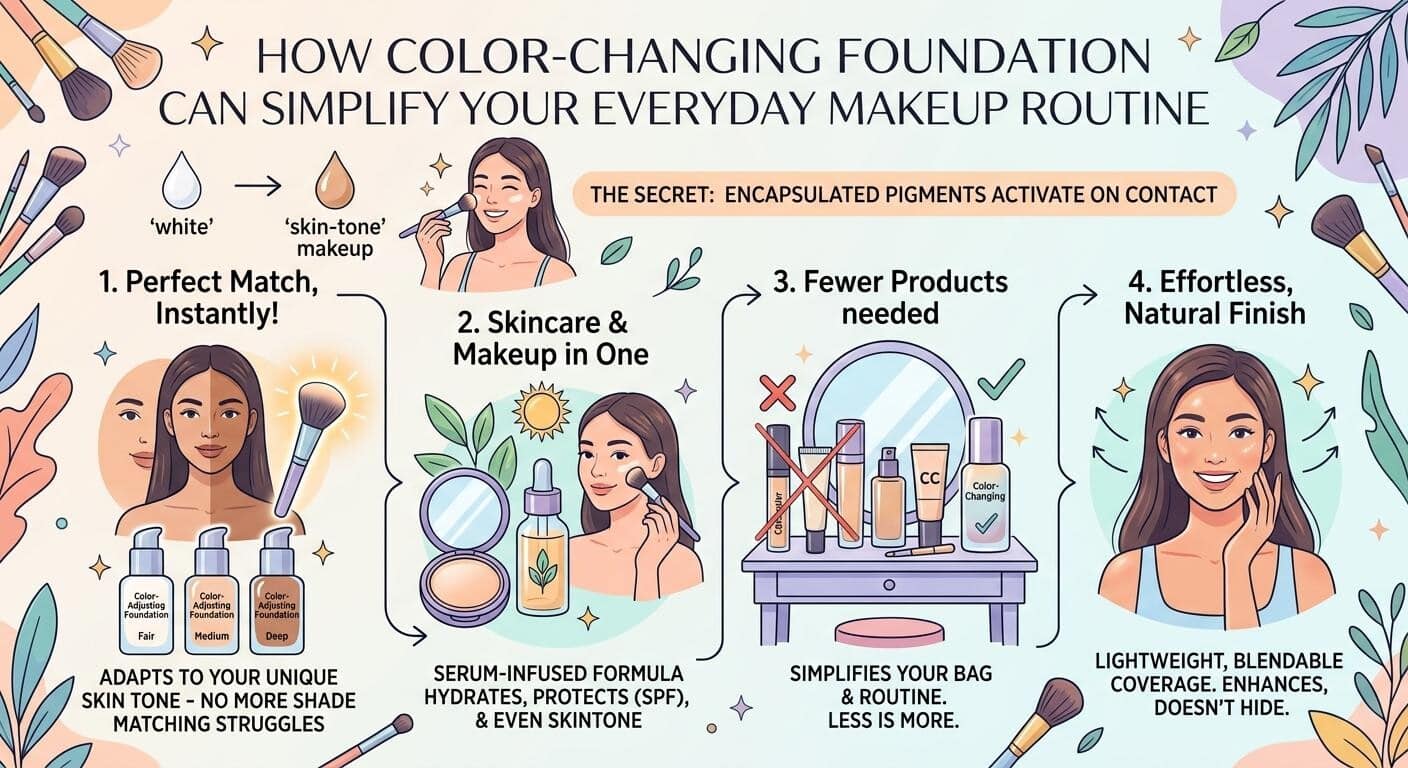
Image 1 of How Color-Changing Foundation Can Simplify Your Everyday Makeup Routine

How Color-Changing Foundation Can Simplify Your Everyday Makeup Routine

Simplifying your morning beauty routine doesn’t mean compromising flawless skin or natural-looking coverage. Modern cosmetics have evolved far beyond heavy, traditional formulas, bringing smart hybrid products into everyday beauty routines. Color-adjusting makeup technology uses encapsulated shade pigments suspended in a lightweight hydrating base. As you blend the product onto your face, the heat and pressure of your fingers release these micro-pigments, allowing the formula to adjust automatically to your unique skin tone.

This self-adjusting approach eliminates the guesswork of matching complex skin undertones under harsh store lighting. Beyond convenience, modern color-adapting bases are frequently enriched with skincare actives, offering seamless color correction alongside moisture-boosting benefits. Combining lightweight coverage with essential skin preparation creates an effortless, fresh-faced finish that stays luminous all day without caking, oxidizing, or feeling heavy. When your base makeup adapts directly to your natural complexion, application becomes quick, intuitive, and stress-free.

Beyond saving time, using an adaptive foundation helps reduce the physical weight of makeup on your face. Heavy, layered products can stifle your pores and accentuate fine lines by early afternoon. Adaptive formulas, by contrast, create a breathable layer that moves naturally with your facial expressions while maintaining an even finish.

Korean Body Sunscreen for Complete Daily Beauty and Skin Protection

True skin protection goes beyond facial care to embrace full-body sun defense. Adding a dedicated Korean body sunscreen to your daily routine ensures exposed areas like your neck, chest, arms, and hands stay fully shielded from cumulative sun damage. K-beauty formulations are world-renowned for their lightweight, non-sticky textures that absorb rapidly into the skin without leaving a greasy residue or chalky white cast.

Daily application of a high-quality Korean body sunscreen helps prevent photoaging, dark spots, and loss of skin elasticity across your body. Modern body SPF formulas often include soothing botanical extracts, offering deep hydration alongside broad-spectrum defense.

When selecting an everyday body sun protection product, consider these essential qualities:

  • Fast-Absorbing Texture: Look for milky lotions or watery gel formulas that melt into the skin, so you can get dressed right after application without staining clothing.
  • Nourishing Botanical Ingredients: Choose sunscreens formulated with soothing ingredients like centella asiatica, green tea, or aloe vera to calm skin exposed to daily heat and sunlight.
  • Broad-Spectrum Protection: Make sure the label shows strong UVA and UVB defense (PA++++ ratings) to protect against both sunspots and deeper structural photoaging.
  • Non-Comedogenic Hydration: Formulations that hydrate without clogging body pores help prevent chest and back breakouts during warm weather.

Consistent full-body sun protection ensures that your neck and chest match the smooth, youthful appearance of your face over time.

Skin Care Coreano: Building a Simple Korean-Inspired Skincare Routine

The global popularity of skin care coreano stems from its gentle, preventive philosophy focused on nurturing a strong, healthy moisture barrier. Rather than relying on harsh chemical exfoliants or aggressive treatments, Korean skin care emphasizes layered hydration, soothing botanicals, and daily solar protection to cultivate a natural, dewy glow.

Building an effective Korean skincare routine does not require a complicated ten-step process. A streamlined approach focusing on double cleansing, hydrating toners, targeted serums, and daily sun defense delivers excellent results while remaining easy to maintain.

Prepping your skin with a lightweight, color changing foundation works seamlessly on top of a well-hydrated Korean skincare base, creating a fresh, radiant finish that lasts all day. By prioritizing long-term skin health over quick cosmetic fixes, this philosophy helps keep your face plump, calm, and naturally luminous.

Maintaining a balanced skin barrier also makes your makeup wear longer. When skin is properly hydrated, it produces less excess oil throughout the day, preventing foundation from sliding or fading unevenly.

Ginseng Skincare Benefits for a Healthy and Radiant-Looking Complexion

Ginseng has been a cornerstone of traditional herbal medicine for centuries, and its inclusion in modern ginseng skincare has transformed anti-aging formulations. Packed with phytonutrients and ginsenosides, this powerful root ingredient revitalizes tired skin, improves microcirculation, and helps restore a firm, supple texture.

Integrating ginseng skincare products into your morning or evening routine provides rich antioxidant protection against environmental stressors like pollution and UV rays. Increased blood flow from active ginseng extracts helps deliver fresh oxygen and nutrients to dermal layers, giving your face a healthy, naturally energized flush.

Over time, consistent use of ginseng-infused products helps improve skin elasticity, softening the appearance of fine lines and restoring bounce to sagging tissue. It works particularly well for dull, fatigued skin that needs a visible boost in vibrancy.

How Rice Milk Toner Can Prepare Skin for a Smooth Foundation Application

A velvety, long-lasting makeup look depends on how well you prep your skin beforehand. Incorporating a creamy rice milk toner into your morning skincare routine delivers deep moisture while gently refining uneven skin texture. Rice extract has long been celebrated for its brightening, softening, and barrier-soothing properties.

Applying a generous layer of rice milk toner right after cleansing hydrates dry surface patches, ensuring liquid cosmetics glide on smoothly without clinging to flakiness or settling into fine lines.

Here is how a softening toner elevates your makeup base prep:

  • Gently Evens Skin Texture: Softens rough surface cells and refines coarse areas around the nose and chin, creating a smooth canvas for liquid base products.
  • Delivers Deep Surface Moisture: Infuses thirsty skin layers with essential hydration, preventing foundation from looking cakey or dry throughout the day.
  • Enhances Natural Radiance: Soothes redness and brightens dull areas, allowing your natural skin luminosity to shine through sheer makeup formulas.
  • Balances pH Levels: Restores the skin’s optimal acid mantle after cleansing, making subsequent serums and moisturizers absorb more effectively.

Using a nourishing toner eliminates the need for heavy silicone primers, keeping your skin feeling light and comfortable all day.

Ginseng for Skin and Propolis Serum: Natural Ingredients for Everyday Skincare

Combining time-tested natural ingredients lets you target multiple skin concerns at once. Utilizing ginseng for skin rejuvenation alongside a rich propolis serum provides a double dose of vitality, barrier repair, and deep nourishment for compromised or dull complexions.

While ginseng for skin firmness supports collagen preservation and improves circulation, adding a propolis serum brings potent antibacterial and healing benefits. Propolis, a natural resin produced by honeybees, is rich in flavonoids that calm active inflammation, soothe sensitive areas, and seal in lasting moisture.

Benefits of pairing these two natural powerhouses include:

  • Comprehensive Barrier Repair: Propolis seals microscopic surface tears and calms redness, while ginseng energizes skin cells from within.
  • Protection Against Daily Free Radicals: Both ingredients are loaded with natural antioxidants that neutralize pollution and environmental damage before it affects your skin structure.
  • Balanced Moisture and Oil Levels: Lightweight propolis serums deliver deep hydration without clogging pores, making them ideal under daily base makeup.
  • Enhanced Natural Glow: The combination of anti-inflammatory resin and circulation-boosting root extract leaves the complexion visibly plumper and more radiant.

This synergistic pairing is especially beneficial during seasonal changes when skin is prone to sudden dryness, redness, or environmental stress.

Streamlining your daily beauty ritual comes down to choosing multi-tasking products that protect, hydrate, and perfect your skin at once. Switching to a self-adjusting base product eliminates color matching struggles while providing comfortable, breathable coverage. Pairing your makeup with gentle K-beauty habits, such as lightweight body sun defense, brightening rice toners, and restorative herbal serums, ensures your complexion remains healthy and vibrant underneath.

Consistency and gentleness are the secrets to long-term radiance. By shielding your skin from daily UV exposure, nourishing your barrier with time-tested ingredients like ginseng and propolis, and prepping a smooth, hydrated base, you can enjoy an effortless, radiant finish every day.

Tags: , , , , ,
IPSY Enters Wellness, Launching Quarterly “IPSY Wellness” Supplement Membership

IPSY Enters Wellness, Launching Quarterly “IPSY Wellness” Supplement Membership

IPSY, one of the largest beauty subscription companies in the US, announced IPSY Wellness, a new membership program dedicated to wellness, on October 15. Having built its member base on monthly deliveries of makeup and skincare samples and full-size products, the company is making its first major move into a new category. The program covers supplements, treatments and care tools, and ships once a quarter.

The launch rests on the view that the line between beauty and wellness is fading. IPSY says it analyzed first-party preference, review and product trial data from its members and designed the program around the needs that emerged. Beyond winning new customers, the move is meant to make existing member relationships deeper and longer-lasting.

Summary

  • IPSY announced IPSY Wellness, a new quarterly membership, on October 15
  • Members choose from three collections — Skin, Hair and Total Wellness — each delivering four supplements, treatments and tools per shipment
  • The official site lists a price of $65 per quarter (plus tax and shipping), more than 50% off retail value
  • Goli, Sakara and Apothékary are on board at launch, with Lemme, Beam and Good Bacteria set to join in 2027

A Quarterly Box Built Around Three Focus Areas

Members start by picking one of three collections — Skin, Hair or Total Wellness — according to their interests. Each collection is curated with four products spanning supplements, treatments and tools, offered at more than 50% off their combined retail value. The official site lists the price at $65 per quarter, plus tax and shipping.

Members choose a focus area to tailor their box

Unlike IPSY’s existing monthly plans, the new program ships every three months. Because wellness products often take longer to show results, the company says the format gives members enough time to try products and build them into a routine. The subscription cadence itself has been adjusted to suit ingestible wellness products.

Member Research Points to a “Try Before You Commit” Appetite

To support the move, IPSY points to its own 2026 Beauty Discovery Report. Sixty-six percent of members surveyed said they are interested in wellness but feel overwhelmed by the options, while 69% said they won’t commit to a routine without sampling first. Another 65% said they are likely to try or explore a new wellness brand or product if it is introduced through IPSY.

The company also cites outside data. According to a 2025 McKinsey & Company survey, roughly two-thirds of Gen Z and millennial consumers in the US, UK and Germany bought functional nutrition products in the past year. In an IPSY Instagram poll, more than 60% of respondents said supplements and nutrition, skin and facial tools, and hair and scalp care all play a role in how they approach beauty. It is a market crowded with choice and driven by trial — precisely where IPSY’s track record in sampling and curation comes into play.

CEO Galen Smith framed the launch as a natural extension of the business.

“Millions of members have trusted IPSY with their beauty routines, and with wellness and beauty now more connected than ever, we want to take a more holistic approach to meeting our members’ needs. The growing interest in wellness demonstrates that members are looking for IPSY to provide the same level of support in wellness that we have provided in beauty for years,” he said.

He added: “IPSY Wellness builds on the discovery model we’ve established in beauty, applying our strengths in trial and curation in a way that deepens member relationships and creates new opportunities for brands.”

Participating Brands and What Comes Next

The lineup mixes emerging names with established ones. Goli, Sakara and Apothékary are participating at launch, and Lemme, Beam and Good Bacteria are scheduled to join in 2027.

Goli supplements, one of the launch brands

IPSY positions the program as opening two avenues for growth: deepening relationships with existing members and reaching new audiences beyond its core beauty community. For brands, it extends the sampling and awareness opportunities of IPSY’s member base into wellness. The question now is whether the discovery engine honed in beauty subscriptions can lift retention and spend per customer in inner beauty as well.

An IPSY Wellness box with Goli supplements

Copyright © 2026 Oui Speak Fashion. All rights reserved.

Oui Speak Fashion (OSF)® is a New York-based Global Fashion, Beauty & Luxury Business Media Platform.

Tags: , , , , , ,
Minimal Skincare Routine for Tired Nights|Hiro.mens.Beauty

Minimal Skincare Routine for Tired Nights|Hiro.mens.Beauty

On tired nights, doing your entire skincare routine can feel exhausting.

I work as a rehabilitation professional at a facility. I work five days a week and get home around 7:00 PM.

Once I finish the housework, all I want to do is sit down. To be honest, there are nights almost every day where I feel like skipping my skincare. There have even been days when I actually did skip it.

Even so, I am now able to keep up with my skincare routine even on tired nights. It is not because I am powering through it with sheer willpower. It is because I have already decided on a routine for tired days.

Conclusion: Decide on a routine for tired days when you are feeling energetic.

I divide my nighttime skincare into two types: “days with energy” and “tired days.”

The difference is that I combine the cleansing process into one step. I am not cutting corners; I am reducing steps for a reason.

On tired days, if I can complete these three steps, I consider it a success. By deciding this in advance, I do not have to think about “how much I should do” on a tired night.

What you can do tonight: Circle one step in your usual routine.

Tonight, write down your entire usual skincare routine on a piece of paper or in a note on your phone.

From that list, circle one thing that you want to keep doing even when you are tired.

If you have one circled item, you will have a set “do just this” plan for tired nights. That is the starting point for your minimal routine.

Who this article is for and who it is not for

For those who:

Not for those who:

What is written in the paid section

  • 5 steps to determine your own minimal routine

  • How to categorize by “keep, combine, or omit,” and my own examples

  • Tips for organizing your products so you don’t have to think on tired nights

  • What to do on days when you can’t even manage the minimal routine, or when you skip steps and worry about your skin

  • Two fillable sheets and a routine card you can stick in your bathroom

In the free section, I introduced the concept of “deciding on a routine for tired days in advance” and how to start writing it down tonight. From here on, I will explain how to categorize your steps in 5 steps, and provide you with fillable sheets and a routine card you can post in your bathroom.

From here, I will explain in 5 steps how to determine your own “minimal routine for tired days.” My routine is just one example. The goal is for you to be able to decide on a routine that suits your skin and your lifestyle.

Tags: , , , ,
Apple App Store

This under-£20 skin barrier-repairing balm is the number one skincare product of 2026

There’s no denying that everywhere you turn, there’s a skincare product declaring it’s the best new thing, has a miracle new product, or is something your beauty bag simply isn’t complete without. But with thousands of different products around, knowing which ones to invest your money in – and which ones to avoid – isn’t always so easy.

To make things easier, LookFantastic has revealed its top 10 best-selling skincare products of 2026, with the overall theme of these beauty buys proving that repairing and protecting your skin is at the top of everyone’s list of importance. And, to prove that versatility, practicality and affordability all add up to one seriously popular product, the number one skincare product sold at LookFantastic this year was the La Roche-Posay Cicaplast Balm B5 Multi-Purpose Repairing Balm.

READ MORE: LookFantastic’s Beauty Vault has dropped with £560 of free products like Medik8, NARS and Jo Malone

READ MORE: I’m a beauty expert and these are the 10 best 2026 beauty advent calendars under £150

Priced at just £19.99 (and currently on sale for £16.91), the Cicaplast Balm has topped the chart for its all-rounder approach to skincare. Containing a wide range of skin-loving ingredients, the balm can be used all over your body, including your face, to tackle a whole range of concerns from sunburn to damaged skin barriers.

It contains vitamin B5 which helps improve hydration, as well as glycerin which acts as a humectant to maintain your skin’s moisture levels. Cicaplast, which is a leafy herb rich in vitamins and amino acids helps repair and plump skin, whilst thermal spring water adds to the hydrating and soothing properties of the balm. The Cicaplast Balm also contains panthenol which protects the skin barrier and gives it a cooling, nourished feeling.

La Roche-Posay’s Cicaplast Balm is number one on the list -Credit:LookFantastic

It’s specially designed for sensitive skin, and is gentle enough to be used twice a day in the morning and evening, and can be applied in a thick layer if your skin needs some extra attention. It can be used on the whole family, and is even suitable for patients undergoing cancer treatment.

The full list of LookFantastic’s top 10 skincare products includes:

1. La Roche-Posay Cicaplast Balm B5 Multi-Purpose Repairing Balm

2. Elemis Pro-Collagen Cleansing Balm

3. Medicube Zero Pore Pad 2.0

4. Silk’n Facial LED Mask 100 LEDs

5. Beauty of Joseon Relief Sun Rice + Probiotics SPF50+

6. Elemis Pro-Collagen Marine Cream SPF 30

7. La Roche-Posay Anthelios UVMune 400 Invisible Fluid SPF50+

8. Medik8 Crystal Retinal 3 Serum

9. Biodance Bio Collagen Real Deep Mask

10. Kiehl’s Creamy Eye Treatment with Avocado

Tags: , , , , , ,
Chasing the Glow: Are HydraFacials Worth the Hype?

Are HydraFacials Worth the Hype?

From glass-skin routines to professional facials, the beauty conversation is shifting towards hydration, an even complexion and healthier skin. But do trending treatments deliver lasting results, and where should people draw the line between skincare and unrealistic beauty standards?

TIT Correspondent
info@impressivetimes.com

In an era of social media beauty trends, glowing skin has become one of the most sought-after features of a modern beauty routine. From the popular glass-skin look to professional HydraFacial sessions and skin-brightening treatments, people are increasingly exploring ways to achieve a fresh, hydrated and even-looking complexion. Dermatology clinics and beauty centres have responded with a growing range of procedures promising smoother texture, improved hydration and a radiant appearance.

However, the real conversation around skincare is no longer just about looking brighter. It is about understanding what the skin needs, choosing suitable treatments and avoiding procedures that promise instant perfection without explaining their limitations.

HydraFacial: The appeal of an instant glow

HydraFacial has become a popular option for people seeking professional skincare without the extended recovery associated with some intensive cosmetic procedures. The treatment typically combines cleansing, exfoliation, extraction of surface impurities and the application of hydrating solutions through a specialised device.

Its appeal lies in the prospect of skin that looks fresher, feels smoother and appears better hydrated after a session. People with dull-looking or mildly congested skin may consider it as part of a broader skincare routine.

Yet, expectations matter. HydraFacial is not a permanent solution for acne, deep acne scars, significant pigmentation or skin ageing. Results vary according to individual skin conditions and the treatment protocol used. Some people may also experience temporary redness, irritation or sensitivity.

A professional assessment is particularly important for people with sensitive skin, active inflammation or a history of reactions to exfoliating products. Rather than following a fixed schedule promoted by a beauty package, individuals should consider whether the treatment is appropriate for their skin and how often, if at all, it is needed.

Skin brightening versus skin lightening

Another growing area of interest is skin brightening. The term, however, can mean different things in the beauty industry.

For many people, the goal is to reduce dark spots, post-acne marks, uneven pigmentation and the dull appearance that may develop after prolonged sun exposure. This is different from attempting to change one’s natural skin colour.

Dermatologists may recommend ingredients such as vitamin C, azelaic acid, glycolic acid or other suitable treatments to address particular pigmentation concerns. The right choice depends on the underlying cause, skin sensitivity and the individual’s medical history.

Sun protection is equally important. Regular use of a broad-spectrum sunscreen with SPF 30 or higher can help prevent further sun-related pigmentation and support efforts to improve uneven skin tone. For persistent or recurring dark patches, professional assessment can help identify conditions such as melasma and determine an appropriate treatment.

The promise of becoming several shades fairer in a few days should be treated with caution. Skin brightening is best approached as an effort to improve clarity and evenness, not as a race towards a different natural complexion.

The risks behind quick-fix beauty treatments

The popularity of aesthetic procedures has also created a market for products and treatments advertised through dramatic before-and-after photographs, celebrity-inspired routines and influencer recommendations. Such content may not fully explain the ingredients used, the number of sessions required or the possible side effects.

Unsupervised use of potent skin-lightening creams can be particularly concerning. Certain products may contain undeclared mercury or potent corticosteroids, while inappropriate use of prescription-strength ingredients can lead to irritation, skin thinning or other complications.

Intravenous glutathione drips and similar treatments promoted for cosmetic skin lightening also deserve caution. Evidence supporting their effectiveness for this purpose remains limited, and they may carry significant medical risks. They should not be treated as routine beauty procedures.

Chemical peels, lasers and other professional treatments can be useful for selected concerns, but they are not risk-free. In people prone to pigmentation, inflammation or burns following a procedure can sometimes make dark marks worse. The qualifications of the practitioner, the device or product used and the suitability of the treatment for the individual’s skin tone all matter.

The glass-skin trend and the importance of the skin barrier

The glass-skin trend celebrates a smooth, luminous and intensely hydrated appearance. While there is nothing wrong with wanting healthy-looking skin, recreating an edited social media image can encourage people to layer multiple serums, exfoliating acids and active ingredients without allowing their skin to recover.

Over-exfoliation and the inappropriate combination of skincare ingredients can damage the skin barrier, leading to dryness, redness, stinging and increased sensitivity.

A simpler routine is often a sensible starting point. Gentle cleansing, a moisturiser suited to one’s skin type and daily sunscreen provide a foundation that can be adapted to individual needs. Targeted products can then be introduced gradually, rather than using several new ingredients at once.

It is also worth remembering that visible pores, fine lines, occasional pimples and variations in skin texture are normal. Healthy skin does not have to look poreless or resemble a digitally enhanced photograph.

A smarter approach to skincare

Before booking a HydraFacial, peel, laser session or skin-brightening procedure, consumers should ask what concern the treatment is intended to address, what results are realistic, how many sessions may be needed and what risks are involved. They should also ask who will perform the procedure and what aftercare will be required.

People dealing with persistent acne, unexplained pigmentation, recurring rashes or unusual skin sensitivity should seek advice from a qualified dermatologist rather than repeatedly experimenting with cosmetic treatments.

The same principle applies to skincare products: a higher price does not automatically mean better results, and a popular ingredient is not necessarily suitable for every individual.

Ultimately, the most meaningful beauty trend is one that places skin health ahead of short-lived transformations. HydraFacial and other aesthetic treatments may have a place in a carefully considered skincare plan, but they cannot replace consistent daily care, sensible sun protection and informed professional advice.

Radiant skin is not defined by fairness or perfection. It is better understood as skin that is cared for, protected and treated according to its individual needs.

Tags: , ,
A story about how I got 'my skin feeling great' by slightly reviewing my daily skincare routine|みー

A story about how I got ‘my skin feeling great’ by slightly reviewing my daily skincare routine|みー

There was a time when I felt like my skin condition just wasn’t quite right lately.

‘I feel like I’m washing my face thoroughly, but it still feels rough.’ ‘I’m using my usual toner, but it feels like it lacks that plump, moisturized feeling.’

These little skin discomforts can become small daily stresses, can’t they?

I was in that exact state myself, and I had a period where I was lost, thinking and trying various things like, ‘Should I switch to a more expensive serum?’ or ‘Should I incorporate a special face mask?’

But one day, it suddenly occurred to me, ‘Before adding new things, let’s review the basic daily steps I’m already doing.’

From there, I carefully changed my daily ‘routine’ one by one, such as how I apply cleansing oil, how I lather my face wash, and the timing of my moisturizing. As a result, I gradually began to feel changes in my own skin.

This time, I will share plenty of skincare tips and tricks that I actually tried and felt were ‘really worth doing’ to prepare the base of your skin.

1. The pitfalls of ‘cleansing and face washing’ that we often fall into

Speaking of the first step of skincare, it’s ‘cleansing,’ but this is also the point that is most likely to put a burden on the skin. In the past, I also used to put strength into my hands unconsciously, with the sole desire to remove my makeup quickly.

How to use your hands to minimize friction

When you take cleansing agent in your hand, it is recommended to warm it slightly in your palms before applying it to your face, rather than applying it immediately. This alone will significantly improve how well it blends with your skin.

When applying it to your face, use the pads of your fingers to gently massage it in a circular motion, with the image of ‘sandwiching a cushion of cleansing agent between your hands and your face.’ Especially around the sides of the nose and the jawline, it’s easy to apply too much pressure, so using your ring fingers is a great way to avoid applying unnecessary pressure.

Also, the temperature of the water when rinsing is very important. If you rinse with hot water, the moisture necessary for your skin will wash away, and if it’s too cold, makeup residue won’t come off easily. It is ideal to rinse carefully about 20 times with lukewarm water at around 32°C to 35°C, which feels ‘a bit lukewarm.’

Try being particular about the ‘quality of the foam’ for your face wash

When you lather your face wash, are you able to create foam with proper elasticity?

The point is to use a foaming net to create fine, chewy foam that won’t fall off even if you turn your palm upside down. Once you have the foam on your entire face, wash it by ‘rolling the foam’ rather than letting your hands touch your skin directly.

Just by applying it from the T-zone (forehead and nose) and only quickly spreading the foam over the cheeks and around the eyes, which are prone to dryness, the moist feeling after washing will be quite different.

2. Moisturizing makes a difference depending on ‘timing’ and ‘how you layer it’

Once you’ve finished washing your face, move on to the moisturizing step immediately. What’s important here is ‘when and how you apply it,’ just as much as what you use.

The ‘sense of speed’ after a bath or washing your face

After washing your face, your skin is in a state where moisture evaporates rapidly. Once you have gently wiped off the water with a towel, it is a good idea to get into the habit of applying your first stage of hydration (booster serum or toner) within 3 minutes if possible.

What worked well for me was keeping the toner I use immediately after washing my face in a place that is easy to reach in the dressing room or washroom. This alone can prevent that ‘time when it accidentally dries out’.

For toner, ‘apply in layers’ rather than ‘splashing it on all at once’

When applying toner to your face, are you spreading it all over your hands and slapping it on at once?

Even if you apply a large amount at once, it may not fully absorb into the skin and will just bounce off. The recommended method is to ‘apply a 500-yen coin-sized amount in 2 to 3 separate layers’.

  1. First, spread the first layer over your entire palms and gently press it into your skin (hand press) to help it absorb.

  2. Once the surface of your skin feels slightly tacky to your hands, apply the second layer.

  3. For areas that dry out easily, like around the eyes and mouth, use your fingertips to gently pat on extra layers.

With just this, even if you use the same amount of toner, the final feeling of absorption will change completely. If you use cotton pads, don’t be stingy—soak them until they are saturated, and the trick is to gently pat them on without sliding them across your skin.

3. The importance of ‘sealing it in properly’ with milky lotion or cream

Once you have provided plenty of moisture with toner, you need to lock it in firmly with oil at the end.

In the past, I made the mistake of skipping milky lotion in the summer because I didn’t like the sticky feeling. But that causes the moisture I worked so hard to put in to escape, which actually disrupts the balance of moisture and oil in my skin.

Adjust the amount you apply based on the area

Instead of applying milky lotion or cream uniformly to your entire face, a smarter way is to adjust the amount depending on the area.

  • Areas that dry out easily like cheeks, mouth, and eyes: Apply generously

  • T-zone and chin that get oily easily: Apply only a thin layer using what is left on your hands

By adding these variations, it becomes easier to properly balance the moisture and oil across your entire face. Wrapping your whole face with your palms and finishing by warming it up makes your skincare time a little moment of relaxation, so it’s killing two birds with one stone.

4. ‘Daily lifestyle habits’ to be conscious of along with skincare

Care from the outside is certainly important, but I have realized that ‘care from the inside’ has just as much of an impact.

You don’t need to start anything special; just a little bit of awareness is enough.

Hydrate frequently

Instead of drinking a large amount of water all at once only after I feel thirsty, I make sure to take small sips of room-temperature water or low-caffeine tea throughout the day. I feel that when my internal circulation improves, it has a positive effect on my skin tone and glow.

Prioritize quality sleep

The morning after staying up late for work or chores, my skin’s firmness would inevitably feel lackluster. Rather than being rigid about exactly how many hours I sleep, I recommend trying simple adjustments like stopping smartphone use right before bed and relaxing with indirect lighting; it really makes a difference in how smooth my skin feels the next morning.

Find the level of ‘gentle care’ that feels right for you

Through trial and error, I realized that skincare isn’t just about completing many steps or buying expensive products.

What’s important is to carefully observe your skin’s current condition and treat it with care.

  • Reduce friction during cleansing and face washing

  • Gently apply toner in several layers

  • Seal in moisture thoroughly with milky lotion

Just by being a little more mindful of these basic steps, daily care becomes much more enjoyable, and you’ll find yourself thinking, ‘Oh, my skin looks pretty good today!’ more often when you glance in the mirror.

If you feel like your skincare routine has become a bit monotonous lately or you want to boost your skin’s overall condition, please try being just a little gentler with your touch starting with your skincare routine tonight.

Tags: , , , , , , , ,
A Mineral-Rich “Soup for the Soul”

A Mineral-Rich “Soup for the Soul”

Long before electrolyte powders came in little tear-open packets, Hollywood was sipping their own version – vegetable broth.

In the 1920s, actresses including Greta Garbo and Gloria Swanson sought the care of physician Henry Bieler, author of “Food Is Your Best Medicine” and a recipe for mineral-rich broth that circulated for decades.

Bieler’s Broth, as it came to be known, was made from an unseasoned blend of green beans, celery, zucchini, Swiss chard and spring water.

It’s not a yummy culinary soup – it’s more of a “medicinal” recipe that’s often used in the spring as a gentle seasonal cleanse. It’s pleasant, but a bit bland, and lately I’ve been craving a mineral-rich blend that I’d actually look forward to drinking.

Although broths made with other vegetables, potato peelings and even kitchen scraps never became quite as famous as Bieler’s Broth, they work on the same basic principle: as vegetables simmer, many of their minerals – plus other water-soluble nutrients – are released into the broth.

This recipe takes a more flavorful approach than some earlier recipes – it incorporates veggies, herbs, aromatics and a little seaweed for a savory, deeply comforting flavor.

Basically, it’s soup for the soul – with a mineral-rich twist.

🥣 What Is Potassium Broth?

I’m a huge fan of nutrient-dense bone broth – which is rich in collagen, amino acids and other goodness – but veggie broths can serve an important purpose, too.

Many traditional vegetable broths are made with foods that naturally contain a significant amount of potassium – typically potatoes or potato peels, leafy greens, carrots, celery and other vegetables – which is how potassium-rich vegetable broth became its own little category.

Potassium is an often underrated mineral in wellness circles – and many of us don’t get enough of it – so prioritizing it in broth makes sense for a lot of us.

That said, there isn’t one official recipe. Some versions rely heavily on potatoes and leafy greens, while others incorporate a wider mix of vegetables, herbs, spices and seaweed.

So, does simmering veggies really draw out minerals? Yep.

Researchers looking for ways to lower the potassium content of potatoes have found that boiling can reduce the amount that remains in the potato by about 50-75%, as some of the potassium moves into the cooking water. (1)

Normally, if that water gets poured down the drain, the potassium goes with it.

With broth, you do the opposite: you keep the cooking liquid. And that doesn’t necessarily mean tossing the vegetables afterward – I’ll share a few ways to use them later, along with a version made mostly from kitchen scraps.

That’s part of what makes vegetable broth such a practical way to make use of minerals released during cooking – especially when it’s made with potassium-rich ingredients like potatoes, leafy greens and other vegetables.

One important caveat: I don’t think it’s possible to accurately tell you that one cup of homemade potassium broth contains X milligrams of potassium without having that particular broth analyzed. The amount will vary depending on the vegetables used, how much of each is added, how finely they’re chopped, the amount of water, cooking time and other factors.

So I think of this as a potassium-focused food, not a precisely dosed potassium supplement.

Why Potassium Matters (A Lot)

Magnesium has almost gained celebrity status in the wellness world, and for good reason. It’s vital to so many processes, and stress increases how quickly we burn through our stores.

Potassium tends to get less attention, but it’s doing plenty of important work behind the scenes.

Most of our potassium is kept inside our cells, with much lower concentrations outside them. In fact, the concentration of potassium inside our cells is about 30 times higher than it is outside them. (2) Maintaining that difference is essential for:

  • Normal nerve transmission
  • Muscle contraction
  • Healthy heart function
  • Fluid balance
  • Normal kidney function

Potassium also has an important relationship with sodium. Higher potassium intake can increase sodium excretion and may support blood vessel relaxation, which is one reason potassium-rich dietary patterns have been studied so extensively for cardiovascular health and healthy blood pressure.

And most of us could stand to pay a little more attention to it.

The FDA’s Daily Value for potassium – the number you’ll see used on Nutrition Facts labels – is 4,700 mg per day. (2) However, current National Academies recommendations are a little different: the Adequate Intake is 3,400 mg daily for adult men and 2,600 mg for adult women, with slightly different amounts during pregnancy and breastfeeding. (2)

Those lower numbers aren’t an RDA or a newly established “optimal” intake. Researchers concluded there wasn’t enough evidence to determine a precise physiological requirement for potassium, so the newer Adequate Intakes were based largely on amounts consumed by apparently healthy populations.

There’s still some uncertainty around exactly where the sweet spot lies, but what we do know is that average U.S. potassium intake falls below current recommended amounts.

Potassium And Sleep

I’ve noticed that when I eat a lot of potassium-rich foods, I tend to sleep better.

And because I am deeply committed to anything that might help me sleep better, I decided to find out whether that connection had actually been studied.

Turns out, it has – although the research is still pretty limited.

In a small randomized, double-blind crossover study, young men eating a low-potassium diet had better sleep efficiency and spent less time awake during the night after initially falling asleep when they were given potassium supplements. The researchers described the results as suggesting improved “sleep consolidation,” while also noting that larger studies were needed. (3)

A much larger observational study looked at 727 adults and found that people with lower 24-hour urinary potassium – which researchers used as a marker of lower potassium intake – had about 50% higher odds of poor sleep quality after researchers adjusted for other factors. (4)

And this is weirdly relevant: when researchers looked at men and women separately, the association held up in women but not men. They don’t yet know why – differences in sleep risk factors between men and women may play a role, and the study also included fewer men, which made it harder to detect an effect in that group.

More recently, researchers have started looking at potassium in relation to some of the hormones involved in sleep. A 2024 trial in people with diabetes and insomnia found that potassium supplementation was associated with improvements in insomnia along with changes in cortisol and melatonin. (5)

I wouldn’t make too much of that finding yet – it was one study in a very specific population, so it’s too early to say that potassium improves sleep by changing those hormones for everyone.

Still, taken together with the earlier research, it makes my own little n=1 observation seem a lot less random.

Fresh Vegetable Potassium Broth

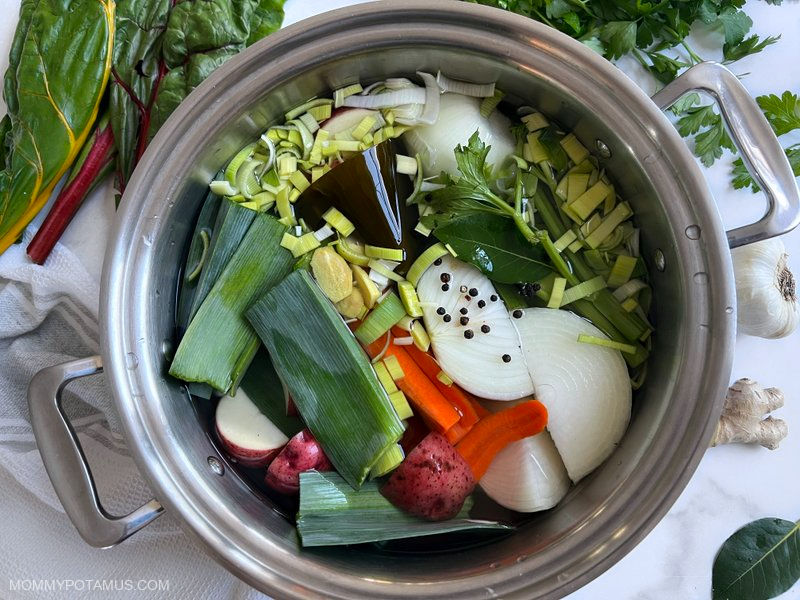
This is the version I make when I’m starting with whole veggies instead of scraps.The seaweed provides natural umami, while onion, garlic and ginger round out the flavor. Carrots and celery give it that classic mineral-broth character.

Prep Time 20 minutes

Author Heather Dessinger, FDN-P

  • 12 cups filtered water
  • 1 strip of kombu (about 1×3 inches)
  • 12 ounces red potatoes, scrubbed and cut into large chunks (about 3 small to medium potatoes)
  • 1 medium yellow onion (peeled and quartered)
  • 1 large leek, white and light green parts, thoroughly rinsed and sliced into large pieces (or ½-1 additional medium yellow onion))
  • 2 large carrots (cut into large pieces)
  • 3 medium celery stalks (including the leaves if you have them)
  • 4 cloves garlic
  • 1 inch fresh ginger (peeled and sliced)
  • 1 bay leaf
  • ½ tsp whole black peppercorns
  • 1-2 large Swiss chard leaves with stems (roughly chopped)
  • ¼ bunch flat-leaf parsley
  • Unrefined sea salt, to taste

Stovetop Instructions

  • Add the water and kombu to a large pot and let it sit for about 20-30 minutes while you prep the vegetables.

  • Add the potatoes, leek, onion, carrots, celery, garlic, ginger, bay leaf and peppercorns.

  • Bring to a gentle simmer, cover and cook for about 45 minutes.

  • Add the Swiss chard and parsley and simmer for another 10-15 minutes.

  • For a clear broth, strain everything through a fine-mesh strainer.

  • For a thicker, soup-like version, remove the kombu and bay leaf, then blend the remaining vegetables, broth and seasonings until smooth.

  • Season with salt to taste.

Instant Pot Instructions

  • Note: This is a fairly large batch. Make sure the ingredients and liquid stay below your Instant Pot’s pressure-cooking maximum fill line. An 8-quart model should give you room for the full recipe.Add the water and kombu to the Instant Pot and let them sit for about 20-30 minutes while you prep the vegetables.
  • Add the potatoes, leek, onion, carrots, celery, garlic, ginger, bay leaf and peppercorns.

  • Secure the lid and cook on High Pressure for 8 minutes, followed by a 15-minute natural release. Release any remaining pressure.

  • Add the Swiss chard and parsley, replace the lid without sealing it, and let them steep in the hot broth for about 15 minutes.

  • For a clear broth, strain everything through a fine-mesh strainer.

  • For a thicker, soup-like version, remove the kombu and bay leaf, then blend the remaining vegetables, broth and seasonings until smooth.

  • Season with salt to taste.

Slow Cooker Instructions

  • Add the water, kombu, potatoes, leek, onion, carrots, celery, garlic, ginger, bay leaf and peppercorns to the slow cooker.

  • Cover and cook on LOW for about 4 hours.

  • Turn off the slow cooker. Add the Swiss chard and parsley, cover, and let them steep in the hot broth for about 15 minutes.

  • For a clear broth, strain everything through a fine-mesh strainer.

  • For a thicker, soup-like version, remove the kombu and bay leaf, then blend the remaining vegetables, broth and seasonings until smooth.

  • Season with salt to taste.

Nutrition values provided are estimates only and reflect the composition broth before straining. Salt is not factored in. 

Serving: 1batch | Calories: 441kcal | Carbohydrates: 101g | Protein: 13g | Fat: 2g | Saturated Fat: 0.4g | Polyunsaturated Fat: 1g | Monounsaturated Fat: 0.1g | Sodium: 450mg | Potassium: 2729mg | Fiber: 16g | Sugar: 20g | Vitamin A: 29777IU | Vitamin C: 94mg | Calcium: 329mg | Iron: 7mg

🌊 A Note About Kombu

Kombu is a mineral-rich seaweed traditionally used in Japanese cooking to add savory, umami flavor to broths and stocks. It’s naturally rich in iodine, so if you’ve been advised to limit iodine-rich foods, feel free to leave it out.

Iodine levels in kombu can vary considerably, which is why I don’t estimate the iodine content of this homemade broth.

♻️ Don’t Want To Throw Away The Vegetables?

No problem, you definitely don’t have to. When eating a normal meal, I’m a big fan of eating the vegetable itself. Fiber matters, and whole foods offer a lot more than one particular mineral.

After making the broth, you can remove the bay leaf and kombu, then blend the remaining vegetables with enough broth to make a simple vegetable soup.

However, there are times when broth fills a different need.

It’s warm, hydrating and easy to sip. It can be especially nice when you’re recovering from a stomach bug or something similar and your appetite hasn’t quite returned yet – or when you simply want something warm and savory between meals.

So if you prefer a clear, thin broth but don’t want to toss whole veggies, there’s another option that may make even more sense:

Make the broth from vegetable scraps in the first place.

🥕🧅🧄 Zero-Waste Potassium Broth From Vegetable Scraps

Keep a reusable gallon storage bag in the freezer for clean vegetable trimmings that might otherwise go into the compost or trash. When it’s full, make broth.

Good scraps for this recipe include:

  • Potato peels
  • Carrot peels and ends
  • Celery ends and leaves
  • Mushroom stems
  • Parsley stems
  • Zucchini ends
  • Swiss chard or kale stems
  • Onion ends
  • Tomato cores and ends

For the best flavor, I wouldn’t use large quantities of cabbage, broccoli, Brussels sprouts or cauliflower scraps because they can become overpowering or sulfurous when simmered for a long time.

Scrap Broth Formula 🫚🥣

Use approximately:

  • 6 cups loosely packed vegetable scraps
  • 8-10 cups filtered water
  • 1 strip of kombu (about 1×3 inches)
  • 2-3 smashed garlic cloves
  • 1-inch piece ginger
  • 1 bay leaf
  • ½ teaspoon peppercorns

Cook using any of the methods above.

Taste after straining and add salt until the broth is flavorful and savory.

Potato note: Don’t use green, heavily sprouted or bitter-tasting potato peels. Glycoalkaloids such as solanine are concentrated in the peel and particularly in green and sprouted portions of potatoes.

How To Store Potassium Broth

After straining or blending, divide the broth into smaller containers so it cools quickly. You can place them directly in the refrigerator – I set mine on a thin towel first to create a little buffer between the hot container and the cold shelf.

Store the broth in the refrigerator for 3-4 days, or freeze it for longer storage. USDA food-safety guidance recommends using refrigerated leftovers within about 3-4 days.

I like freezing individual portions in freezer-safe mason jars so there’s always a mug-sized serving ready to go.

Just make sure the jars are rated for freezing and leave plenty of headspace for the broth to expand as it freezes.

A Quick Note About Potassium

Potassium-rich foods are a great fit for most people, but some people need to be more careful about how much potassium they get.

If you have impaired kidney function or take a medication that affects how your body handles potassium, you may have been given specific guidance about how much to include in your diet.

If that’s you, a broth intentionally built around potassium-rich ingredients may not be the best fit without checking with your healthcare provider first.

For everyone else, this is one of those simple recipes I love because it manages to be comforting, practical and nutrient-rich all at once.

Warm mug, cozy blanket optional.

Sources

  1. Bethke, P. C., & Jansky, S. H. (2008). The Effects of Boiling and Leaching on the Content of Potassium and Other Minerals in Potatoes. Journal of Food Science.
  2. National Institutes of Health, Office of Dietary Supplements. Potassium: Fact Sheet for Health Professionals.
  3. Drennan, M. D., Kripke, D. F., Klemfuss, H. A., & Moore, J. D. (1991). Potassium affects actigraph-identified sleep. Sleep, 14(4), 357–360.
  4. Li, M., Heizhati, M., Wang, L., et al. (2022). 24-hour urinary potassium excretion is negatively associated with self-reported sleep quality in the general population, independently of sleep-disordered breathing. Journal of Clinical Sleep Medicine, 18(11), 2589–2596.
  5. Khalid, S., Bashir, S., Mehboob, R., Anwar, T., Ali, M., Hashim, M., Waseem, H., & Basharat, S. (2024). Effects of magnesium and potassium supplementation on insomnia and sleep hormones in patients with diabetes mellitus. Frontiers in Endocrinology, 15.

Share with a friend! 👇

Tags: , ,
Winter Wellness 2026: Skincare, Nutrition and Simple Habits to Prepare for the Cold Season

Winter Wellness 2026: Skincare, Nutrition and Simple Habits to Prepare for the Cold Season

As winter approaches, preparing for the colder months involves more than taking woollens out of storage or switching to a heavier moisturiser. Changes in temperature, daylight and daily routines can also affect skincare, eating habits, physical activity and emotional well-being.

A practical winter routine does not need expensive products or a complete lifestyle overhaul. Small, consistent habits—including protecting the skin, eating balanced meals, getting sufficient sleep and staying connected with others—can help make the season more comfortable.

For Indian households, winter preparation can also mean adapting routines to local weather conditions, indoor heating arrangements and individual health needs.

Winter Skincare Begins With Protecting the Skin Barrier

Cold weather and dry air can leave the skin feeling tight, rough or irritated. Indoor heating, where used, may contribute to dryness. A complicated skincare routine is not always necessary to manage these seasonal changes.

Gentle cleansing, regular moisturising and daytime sunscreen can form the foundation of everyday skincare. People with dry skin may prefer a richer moisturiser, while those with oily or acne-prone skin may find a lighter, non-comedogenic product more comfortable.

Applying moisturiser soon after bathing can help retain moisture. Shorter showers with lukewarm water may also be preferable to long, hot showers, which can remove natural oils from the skin.

People should avoid introducing too many new products at once, particularly if their skin is already irritated. Persistent itching, cracking, inflammation or worsening skin conditions may require advice from a qualified healthcare professional.

Balanced Nutrition Matters More Than So-Called Immunity Boosters

Winter wellness products are often promoted through claims about immunity, detoxification and protection from seasonal illness. However, no single food, drink or supplement can guarantee that a person will avoid infections.

A balanced diet remains a sensible starting point. Meals can include seasonal vegetables, fruit, pulses, whole grains, nuts and adequate sources of protein according to individual needs and food preferences.

Traditional Indian winter foods can also form part of a varied diet. The important consideration is the overall pattern of eating rather than relying on one particular ingredient as a health solution.

Hydration remains important even when colder weather reduces the sensation of thirst. Water, soups and other suitable beverages can contribute to daily fluid intake.

Regular physical activity, adequate sleep and recommended vaccinations where applicable are also important elements of preventive healthcare. Anyone considering supplements, particularly people taking medicines or managing existing health conditions, should seek appropriate professional advice.

Protecting Mood as Daylight Hours Change

Shorter days, changes in routine and reduced outdoor activity can affect how some people feel during winter. A regular daily schedule may help provide structure during the colder months.

Getting natural daylight in the morning, taking a walk when weather permits and maintaining consistent sleep timings are practical habits to consider. Staying in touch with friends and family can also help people maintain social connections when they spend more time indoors.

Rest and relaxation should be part of the routine, but persistent low mood should not automatically be dismissed as a seasonal issue.

Ongoing sadness, loss of interest in usual activities, significant sleep changes or difficulty managing everyday responsibilities may warrant professional support. People experiencing these symptoms should consider speaking with a qualified healthcare provider.

Make the Home Comfortable, Warm and Safe

Winter preparation can begin with simple changes around the house. Clean blankets, comfortable bedding, adequate lighting and a designated space for reading or relaxation can make indoor time more pleasant.

Ventilation and safe appliance use are also important. People using room heaters or other heating devices should follow the manufacturer’s instructions and keep appliances away from curtains, bedding and other flammable materials.

Fuel-burning equipment intended for outdoor use should never be operated inside enclosed spaces because of the risk of carbon monoxide poisoning and other hazards. Electrical heating devices should be inspected for damaged cords and used according to their safety instructions.

For households with children, older adults or people with mobility difficulties, it may also be helpful to keep frequently used items within easy reach and ensure that walking areas remain clear.

Stay Active Without Overcomplicating the Routine

Cold weather can make it harder to maintain regular physical activity, particularly when mornings are chilly or daylight hours are shorter. However, movement does not always require a gym membership or a demanding exercise schedule.

Indoor stretching, walking, gentle strength exercises or an activity suited to personal fitness levels can help people remain active. Those who exercise outdoors should choose clothing appropriate to the conditions and adjust their routine when weather makes outdoor activity uncomfortable.

People returning to exercise after a period of inactivity should begin gradually and consider medical advice if they have health concerns that affect physical activity.

A Practical Approach to Winter Preparation

Preparing for winter does not require purchasing every product advertised for seasonal wellness. A few realistic habits can provide a useful foundation: moisturise regularly, eat varied meals, drink enough fluids, maintain a sleep routine and make time for movement and social connection.

The most effective routine is one that fits a person’s budget, health needs and everyday responsibilities. By focusing on comfort, safety and consistency, households can prepare for winter without turning seasonal wellness into another source of pressure.

Tags: , , , , , , , ,
Best oLive
Privacy Overview

This website uses cookies so that we can provide you with the best user experience possible. Cookie information is stored in your browser and performs functions such as recognising you when you return to our website and helping our team to understand which sections of the website you find most interesting and useful.