honey tallow balm

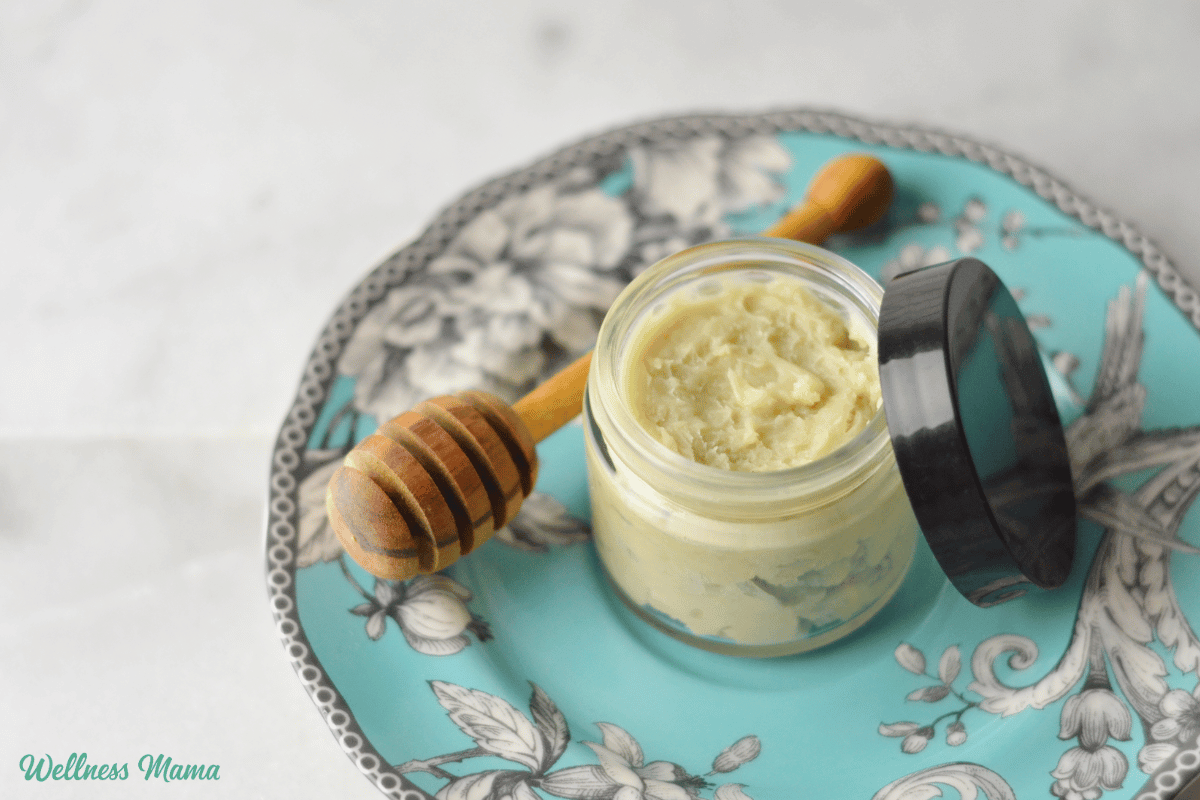
Clarifying Honey Tallow Balm

I’ve been researching and using tallow more in recent years, and it turns out so have many of you. My whipped tallow balm is a fan favorite because it feels so silky on skin. One of the questions I get asked most often though is how to add honey to the recipe. This honey tallow balm does just that. 

I’ve also added other ingredients that are great for clearing up skin and diminishing blemishes. 

When it comes to skincare, I’ve found that sometimes the simplest ingredients are the most effective. While there are countless products designed to target blemishes and support clearer skin, many of them can be harsh, drying, or filled with ingredients I’d rather not use. Traditional ingredients that have been used for generations though are worth reaching for. 

Honey Tallow Balm Ingredients

This honey tallow balm combines several skin-loving ingredients into one simple formula. It nourishes the skin barrier while also supporting a clearer complexion. Instead of stripping skin or trying to force it into compliance, this balm focuses on giving skin what it needs. Tallow honey balm not only moisturizes, but gives skin beneficial compounds so it can function as designed. 

Tallow

One of the star ingredients in this balm is grass-fed beef tallow. Tallow has a unique fatty acid profile that closely resembles the natural oils in our skin. This means it sinks right into skin and helps restore our natural moisture barrier. 

Raw Honey

Another favorite ingredient that has a long history in natural skincare. Honey is rich in beneficial compounds that keep skin looking healthy and smooth. It also acts as a humectant, attracting and retaining moisture. This is especially helpful for skin that feels irritated, dry, or out of balance. I also love raw honey for acne and blemishes since it’s naturally antimicrobial. 

Beeswax

Beeswax helps to thicken the balm and creates a breathable protective layer on the skin. Some creams use petroleum jelly as an occlusive to trap moisture. These don’t feed skin though and can feel heavy or greasy. Rather than sealing the skin completely, beeswax helps lock in moisture while still allowing the skin to breathe.

Tamanu Oil

In my classic tallow balm recipe I use olive oil as the carrier oil. It’s full of healthy fats and anti-inflammatory Omega-3s. In this version though I opted for tamanu oil.

Skincare experts note how tamanu helps support skin healing and recovery. It’s often used in products for improving the appearance of blemished and damaged skin. Research shows it can help reduce redness and inflammation while improving marks left from acne damage. It’s one of my favorite oils to use in skincare for damaged or blemish-prone skin.

Essential Oils

These are optional, but really helpful to add more skin benefits. Plus they can add a nice scent. I like using tea tree essential oil for blemish or acne prone skin. It’s an effective but gentle anti-fungal and is well known for it’s skin cleansing properties. 

Sweet or wild orange is another favorite. It has a bright, uplifting scent and can also help improve skin’s appearance. Lavender, geranium, frankincense, and cedarwood are also great skin-friendly options. 

Benefits of Honey Tallow Balm

Anything that can address several skincare concerns at once is a win in my book. Instead of focusing solely on blemishes, honey tallow balm supports overall skin health.

Many people unknowingly damage their skin barrier through over-cleansing, harsh treatments, or excessive exfoliation. When the skin barrier becomes compromised, it can sometimes lead to more irritation, dryness, and breakouts. Ingredients like tallow, honey, and tamanu oil help nourish and support the skin while maintaining moisture balance.

This balm can help soothe redness, boost healing from blemishes, and keep skin feeling soft and moisturized. Because it contains nutrient-rich fats, it’s also useful for skin that feels rough, dry, or irritated. Overall, honey tallow balm helps the skin to balance out.

How to Use Honey Tallow Balm

A little goes a long way with this balm. I like to apply a small amount to clean skin and rub a thin layer over my face. If you’re using it as part of your skincare routine, then do it after cleansing and toning. Your body heat softens the balm so it easily glides over skin. 

I use this on my face to moisturize or other areas that need a little extra love. You can also use it as a spot treatment for blemishes and red skin. If your skin feels greasy or looks oily afterwards, then you used too much! 

How To Render Tallow and FAQ

I explain how to render tallow so you don’t smell like a walking hamburger here. I also cover a lot of tallow balm making questions and tips in that post. Be sure to check it out for more info.

Honey Tallow Balm

This simple honey tallow balm uses clean ingredients for a nourishing and hydrating lotion. Helps skin feel smoother and reduces blemishes.

Prep Time3 minutes

Active Time13 minutes

Cooling Time15 minutes

Total Time31 minutes

Yield: 5 ounces

Author: Katie Wells

  • Add tallow and beeswax to the top of a double boiler and melt over low heat.

  • Once it’s completely liquid add the tamanu or other carrier oil, essential oils, and honey and stir.

  • Pour the tallow balm into a mixing bowl and let it cool in the fridge until it’s hardened some, but not rock hard.

  • Use a mixer to cream the tallow balm until it’s smoothed and whipped looking.

  • Transfer the tallow balm into glass jars to store.

  • Store the honey tallow balm in a cool, dry place.
  • The honey may want to separate as the product cools. Stirring as it cools and mixing well helps prevent this. 

A Simple Approach to Skincare

Healthy skincare often comes down to the simple things and clean ingredients. Supporting the skin barrier and using quality ingredients goes a long way toward helping skin look and feel its best.

This honey tallow balm is one of those simple recipes that combines traditional ingredients with modern skincare insights. It’s easy to make, uses just a handful of ingredients, and can be a great addition to a natural skincare routine for anyone looking to support clearer, healthier-looking skin.

It’s clean, easy, and has earned a permanent spot on my countertop. 

Have you used tallow before? Leave a comment and share below!

Tags: , , ,
tallow balm 2

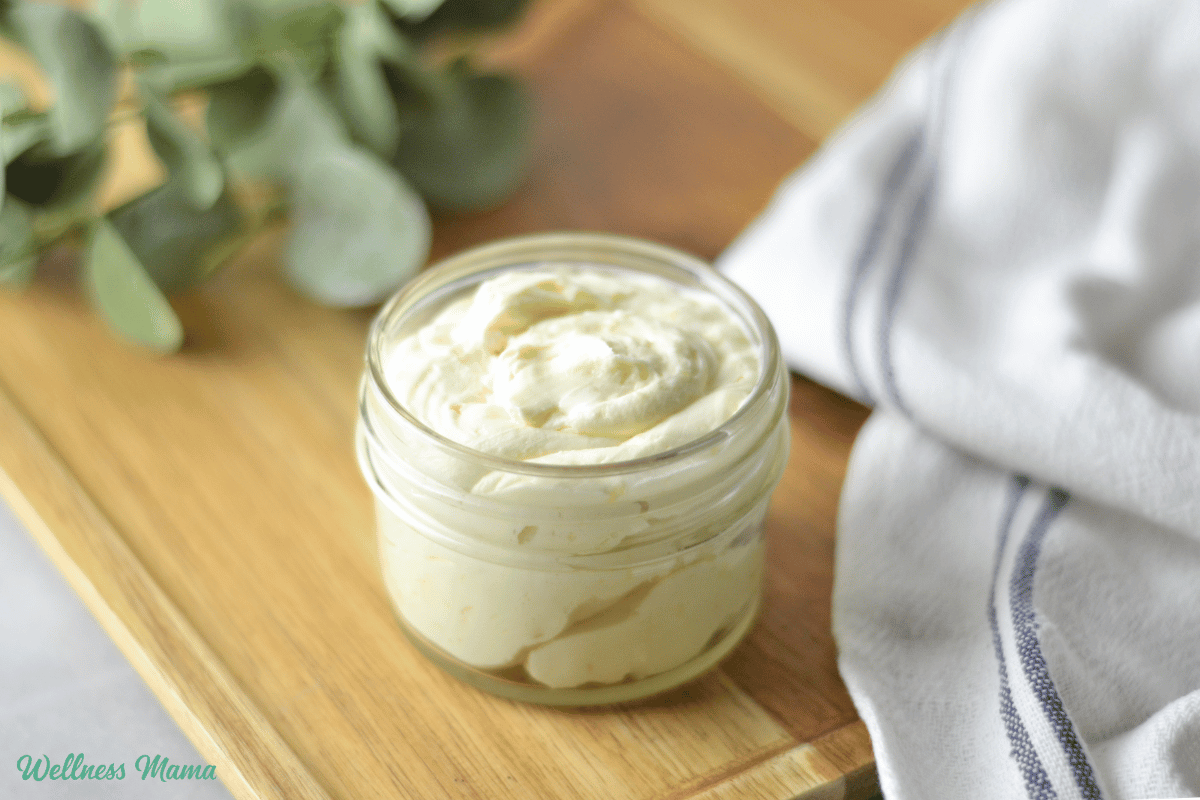
How to Make Tallow Balm

Years ago I discovered the skin health benefits of tallow. While these DIY tallow lotion bars were a favorite, I wanted something with a softer consistency. The result is this nourishing whipped tallow balm, perfect for even sensitive skin. 

I love how it makes my skin feel so silky and soft. Plus it has natural ingredients I feel good about using with my kids too. I really saw a big difference in my son’s eczema scars after using tallow. Here’s why tallow balm is so great, how to use it, and how to make your own!

The Benefits of Tallow Balm

Unlike other moisturizers and lotions with plant oils, tallow balm is a unique creature. It all starts with animal fat (usually beef fat, but mutton works nicely too) that’s then rendered and purified. It’s similar to lard, which comes from pigs. 

The best fat to use for beef tallow comes from grass-fed suet or leaf fat. This leaf fat is what’s found around the kidneys. Tallow balm benefits the skin in so many ways. 

Since tallow comes from an animal source it nourishes and soaks into our skin beautifully. You can use it for lip balm, soap, moisturizers, and salves. As a balm, it helps with dry skin, eczema, and anti-aging. 

Many people use tallow balm for skin because it’s rich in naturally occurring fatty acids that closely resemble our skin’s own oils. It’s perfect for every age from babies on up. I used tallow balm for eczema on my son and it’s great for diaper rash too. 

Tallow Balm Ingredients

You could use just plain tallow on your skin, but it’s very firm and hard to spread. An easier way is to make tallow moisturizer made with a mix of tallow and liquid oils. This makes it much easier to apply and you get the best of both worlds. The result is a deeply nourishing beef tallow moisturizer that works well for both face and body care.

Some recipes add shea butter, coconut oil, or jojoba oil. I like to keep things simple and mainly use extra virgin olive oil here. I’ve also added a little bit of rosehip seed oil. Since rosehip is astringent it helps the tallow soak in a little better, plus it has amazing skin restoring properties. This anti-aging rosehip facial moisturizer is a reader favorite!

You don’t even need beeswax to thicken this. You can also add some of your favorite essential oils, though it’s totally optional. Frankincense, chamomile, and lavender essential oils are some good ones to consider.

How to Make Tallow Balm

This recipe feels like a whipped body butter, or you can skip the whipping step and it feels more like a salve. Either way works, but I prefer the feel of the whipped version. If you’ve been searching for a simple tallow balm recipe, this one works beautifully because it’s customizable and gentle enough for sensitive skin.

Another question I often hear is how to make tallow balm less greasy. Adding lightweight oils like rosehip seed oil and whipping the finished balm both help create a lighter texture that absorbs more easily into the skin. Olive oil is a heavier oil, so you can replace it with a lighter one (like grapeseed) if you need something less moisturizing. 

Where to Get Tallow

Ok, so maybe I’ve sold you on how awesome tallow is for skin… but where do you get it? You might find high-quality grass-fed beef tallow from a local farmer in your area. If not, I also like to get my tallow online here.

Rendered tallow has an off-white color and may or may not have a beefy smell. Further purifying it helps to get rid of the tallow smell and yields a snow-white color.

How to Purify Tallow

If you’re using tallow for cooking (or even soap making) the smell isn’t strong enough to make a difference. For skincare products though you’ll want purified tallow. You can find a tutorial for how to render tallow here, but here’s how to purify it further.

  • Add 2 cups of rendered tallow, 5 cups of water, and 3 Tablespoons of salt to a crockpot. You can also double the amounts used if you have more tallow. 
  • Set it to low and let it simmer for about an hour.
  • Strain the hot liquid into a large bowl through a fine mesh sieve lined with paper towels or a very clean tea towel or t-shirt fabric.
  • Let the bowl cool in the fridge until firm.
  • Remove the block of hardened tallow from the top of the salt water and flip it over. On the underside, you may see some brown bits, scrape all of these off.
  • You can repeat this process once more if desired.
  • Allow the tallow to air dry at room temp so all of the water evaporates (otherwise it can mold).

Once your tallow is purified, you’re ready to make your own whipped tallow balm at home!

Whipped Tallow Balm Recipe

This silky tallow balm is great for dry skin and all sorts of skin irritations. Great for all ages!

Prep Time2 minutes

Active Time10 minutes

Cooling Time30 minutes

Total Time42 minutes

Yield: 6 ounces

Author: Katie Wells

  • Add tallow to the top of a double boiler and melt tallow over low heat.

  • Once it’s completely liquid add the olive oil and stir.

  • Remove from the heat and add essential oils and rosehip seed oil if using.

  • Pour the tallow balm into a glass jar and put it in the refrigerator to harden.

Whipped Tallow Balm

  • For a whipped tallow balm version, pour the balm into a mixing bowl instead before putting it in the fridge. You want it to solidify to the point it’s firm, but not really hard.

  • Whip the tallow balm with the whisk attachment on a stand mixer or a hand mixer. If it’s too hard to whip, then let it set at room temperature just until soft enough to whip.

  • Transfer to a glass jar for storage.

  • Shelf Life and Storage: Store your tallow balm at room temperature away from direct light and heat. It should last for several months if stored properly.
  • This recipe uses a 1% essential oil dilution ratio. If using for children ages 6 months to 3 years old, then reduce the essential oils down to 7 drops total (.25%) or omit.

Optional Herbal Infusion

You can include even more herbal skincare benefits in your tallow balm. Instead of using regular olive oil (or any liquid carrier oil) use herb infused oil instead. Calendula, lavender, chamomile, or plantain herb are some good options for skin. Here’s how to make an herb infused oil. I used some leftover dandelion infused oil for one batch.

Don’t feel like making it? Toups & Co Organics makes some great tallow balms my family loves.

Tallow Balm Recipe FAQ

1. My tallow balm is too hard/soft. 

Some tallow is harder than others, and some people like their tallow balm harder or softer. If you want a softer version, add a little more oil. If you want a harder version, then decrease the oil or add a little beeswax.

2. Can I use tallow balm for my face?

Yes! I do all the time. Whipped tallow balm on my face makes it feel silky smooth. 

3. My tallow smells like beef, can I use it? 

Yes, but purify it first. See the directions above. Mine still had a very slight beef smell after purifying, but it wasn’t strong.

4. I bought tallow from the store/farmer, do I still have to purify it? 

Yes, most likely, unless it’s already been purified several times and doesn’t have a strong beefy smell.

5. Can I use lamb or pig fat? 

Pig fat is lard and is too soft for this recipe (but makes great French fries!). Mutton tallow from lamb should work, but I haven’t tried it. 

Have you ever used tallow on your skin before? What’s your favorite way to use it? Leave a comment and let us know!

Tags: ,
Bored Panda

Celebrity Skincare Expert’s ‘Genius’ Lip Balm Hack Could Save You Hundreds Per Year

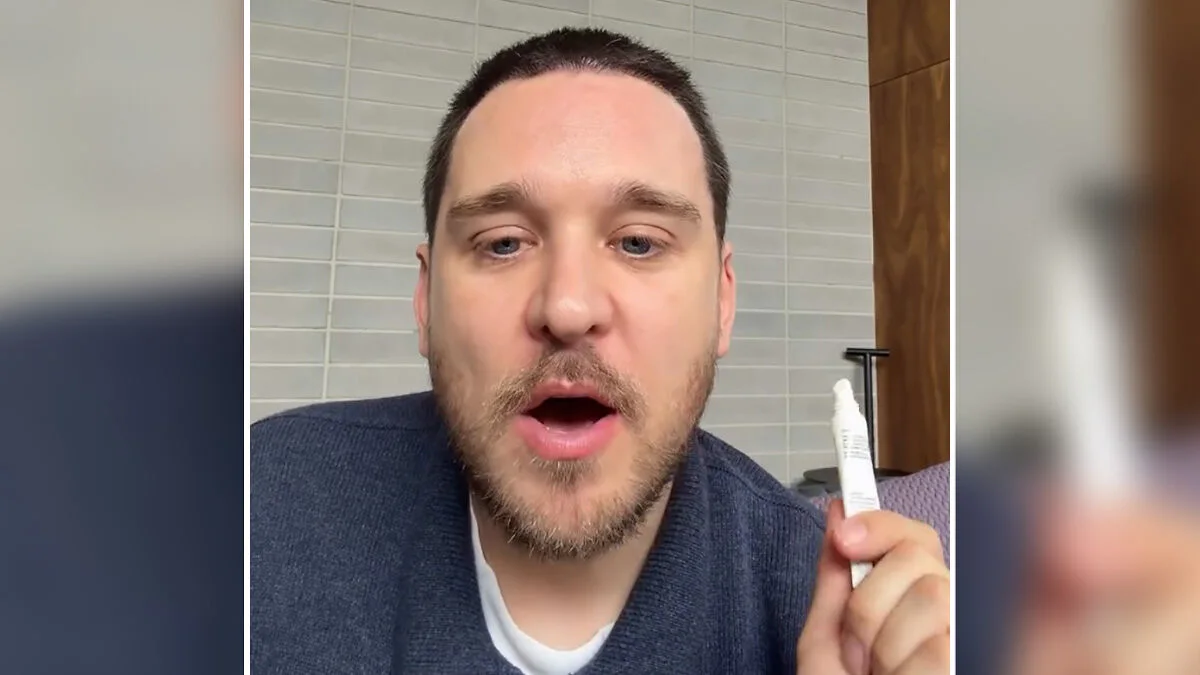
James Vivian, a Melbourne-based dermal therapist known for sharing skincare tips on Instagram, in a March 15 video claimed that lip balms have the potential to serve more than their marketed purpose.

The expert said that lip balms can replace anti-aging products that target a specific, delicate area of the face by providing the same hydrating benefits at a more economical price.

Many on the internet corroborated the claim, with one saying they had been using lip balms in the way the skin expert shared for decades and that it made them look like they were in their “40s instead of 70s.”

Another user who tried the trick after Vivian’s video also said it “worked wonderfully.”

James Vivian advocated the use of lip balms as under-eye creams

Image credits: jamesvivian/Instagram

“As a 42-year-old man who hasn’t spent much time in the sun, really, the area of aging that I’m seeing most on my face is around my eyes,” Vivian said in his video.

The skin around the eyes is one of the thinnest on the body, making it particularly prone to dryness, creasing, and premature aging.

Image credits: jamesvivian/Instagram

Keeping this area hydrated could help minimize the damage, Vivian said, before sharing that he uses no fancy product to achieve the results.

He instead said he swears by using his lip balm to soothe and rejuvenate his under-eyes.

Lip balms are packed with occlusives and emollients — ingredients designed to lock in moisture — which is why Vivian believes they can double as a quick, budget-friendly eye treatment.

Vivian, however, warned against using balms “that fire up the lips” around the eyes.

“The really spicy ones with stimulating ingredients for circulation and plumping, the kind of bee-sting products, I’d keep that away from eye areas,” he said.

He also noted that it’s not a good idea to apply lip balms under makeup, as the thick texture of the product can disrupt concealer and cause creasing.

Jennifer Lopez’s makeup artist, Scott Barnes, encouraged using lip balms under makeup

Image credits: jlo/Instagram

In a May 2024 video, Barnes claimed one of his most reliable makeup hacks is to use Aquaphor (a balm stick by a company called Eucerin) on his clients’ eyes before proceeding with concealer.

The technique prevents concealers from creasing, caking, or breaking down, especially when someone is filming a music video or a movie that goes on for long hours.

Barnes asked his followers to try the hack and let him know if it worked for them.

The hack was soon tested by Glam Girl Gabi, a renowned beauty influencer and a licensed hairstylist and makeup artist.

“I’m going to try the trick all the freaking way. I’m doing the classic bronzy J.LO smoky eye,” Gabi claimed.

Pointing to the fine lines under her eyes, Gabi said, “I really do have an issue with my concealer creasing.”

After applying the lip balm under her eyes, she proceeded to do a full face of makeup, including concealer, foundation, setting powder, and more.

Gabi looked impressed with how her concealer set under her eyes, thanks to the lip balm towards the end.

“I have tried every d**n hack. I’ve tried every single thing. My under-eyes have never looked better,” she said. 

Hours after first doing her makeup, Gabi gave her viewers a video check of whether her eye makeup remained in place.

“They look so much better than they normally look after a few hours. Life-changing, I tell ya,” she shared.

In a separate video, James Vivian warned against spraying perfume directly on the skin

Image credits: jamesvivian/Instagram

Highlighting people’s habit of spraying fragrances right on their neck, Vivian said it could have long-term consequences.

He explained that applying perfume to the skin can trigger a condition known as Poikiloderma of Civatte.

It is a sun-induced skin condition in which the affected area develops reddish-brown pigmentation, mottled discoloration, and thinning of the skin.

While it is not harmful, it is notoriously difficult to treat once it develops.

Laser treatments, along with diligent sun protection, can help improve appearance, but Vivian stressed prevention is far better than cure.

Image credits: Cultura Creative/Adobe Stock (Not the actual photo)

Many perfumes contain photosensitizing ingredients (citrus oils, oakmoss, and certain synthetics like musk ambrette), which can make the skin more sensitive to UV rays.

When applied to sun-exposed areas like the neck, these ingredients can magnify the effects of sun exposure, accelerating pigmentation changes and even breaking capillaries over time.

Vivian advised using scents on clothes, hair, or covered skin, like under the collarbone, to protect oneself against stubborn pigmentation issues later in life.

“I swear to God, I came up with this on my own one day,” a netizen said 

Tags: , , , , , , , , ,
baby balm

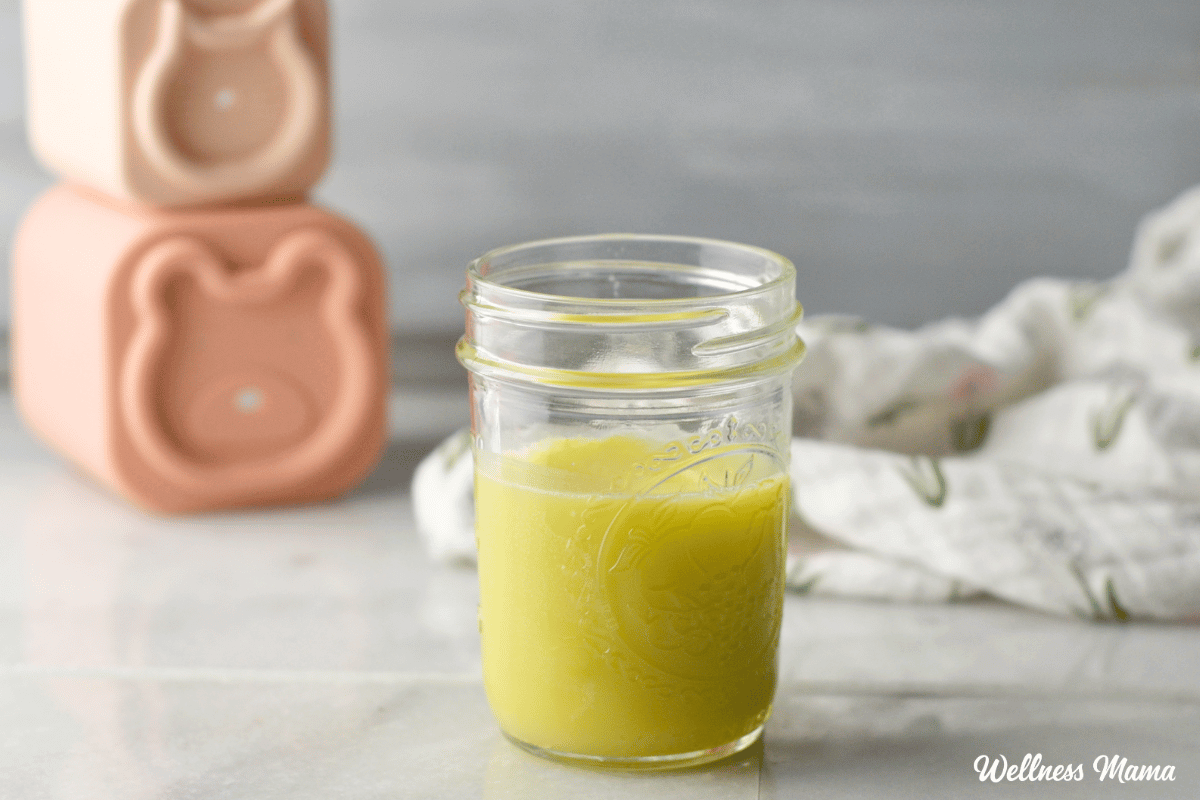
Homemade Baby Balm Skin Cream Recipe

When I was pregnant with my first child, my friends and relatives literally gave me 11 bottles of baby lotion. The smell reminded me of my own childhood. I loved that it was specially formulated for babies, so of course, the ingredients had to be natural and safe. Right?

… and then I actually read the ingredients.

What’s in Baby Lotion?

Ingredients like petroleum, artificial fragrances, and propylene glycol weren’t something I wanted on my baby’s skin. I searched for natural baby balm options and found a few great ones. There are even more options available now if you’re not in the DIY mood. 

This Everyday Baby Balm from Motherlove or this one from Badger have clean ingredients and work well. I still preferred making my own baby balm though because I could easily customize the ingredients and it was a lot cheaper. 

Choosing Natural Ingredients For Baby Balm

I decided to make my own from food-safe ingredients. And I even had many of the ingredients on hand already for my homemade lotion bars and other beauty products.

This baby balm recipe uses:

  • Cocoa Butter – High in antioxidants and skin moisturizing fatty acids. It leaves a barrier on the skin to help prevent moisture loss and keep things like urine from irritating sensitive skin. 
  • Shea Butter – A natural source of vitamin A and other nutrients, shea butter is highly nourishing and protective to the skin.
  • Olive Oil– Attracts moisture to the skin and repairs damaged skin. It’s also a major source of plant-based squalene, a lipid our skin cells make to lubricate and protect the skin. 
  • Castor Oil– High in ricinoleic acid and skin protective. 
  • Essential Oils – You can use any diluted baby-safe essential oils you prefer, but I use frankincense, chamomile, and rose. 

Important Note on Essential Oil Safety and Babies

I love essential oils and use them daily for cleaning, aromatherapy, skincare, and more. They are highly concentrated though and not every essential oil is safe or appropriate for every purpose. 

Frankincense, lavender, chamomile, and rose are all gentle options and generally considered safe for babies 3 months and older. Essential oils should always be diluted for little ones and generally should not be more than .25% of the recipe. For this recipe that translates to about 7 drops of essential oils total. 

Herbal Infused Oil

If you have a baby under 3 months or just prefer to skip the essential oils, then an herb-infused baby balm is a great alternative. Here are detailed instructions for how to make an herbal infused oil. 

Lots of herbs will work in a baby balm, but here are some of my favorites. They have natural skin soothing and healing properties and are safe for babies (barring any allergies).

Here’s how to make my favorite homemade baby balm!

Homemade Baby Balm Recipe

This moisturizing baby balm helps protect baby’s delicate skin with natural ingredients.

Prep Time5 minutes

Active Time10 minutes

Cooling Time2 hours

Total Time1 hour 15 minutes

Yield: 5 ounces

Author: Katie Wells

  • Heat all of the ingredients (except essential oils) in a double boiler or in a glass jar or bowl over a small pan of boiling water.

  • Stir carefully until melted.

  • Remove from heat and add essential oils if using.

  • Pour into a glass jar and let it cool in the fridge for several hours or until firm.

  • Store at room temperature and use a small amount as needed for baby’s skin (or adult skin)

Use herb infused olive oil to make the recipe if desired. Check the article for ideas of what to use.

Shelf Life and Storage

Since this baby balm is oil based it has a much longer shelf life than baby lotion with water-based ingredients. It should last 1-2 years when stored away from direct light and heat. 

The baby balm takes a few minutes to absorb into the skin and you only need to use a tiny bit. I’ve had friends say it was incredibly helpful for eczema and skin problems as well.

What did you use on your little ones? Ever made your own? Share below!

Tags: , , , , ,
Best oLive
Privacy Overview

This website uses cookies so that we can provide you with the best user experience possible. Cookie information is stored in your browser and performs functions such as recognising you when you return to our website and helping our team to understand which sections of the website you find most interesting and useful.