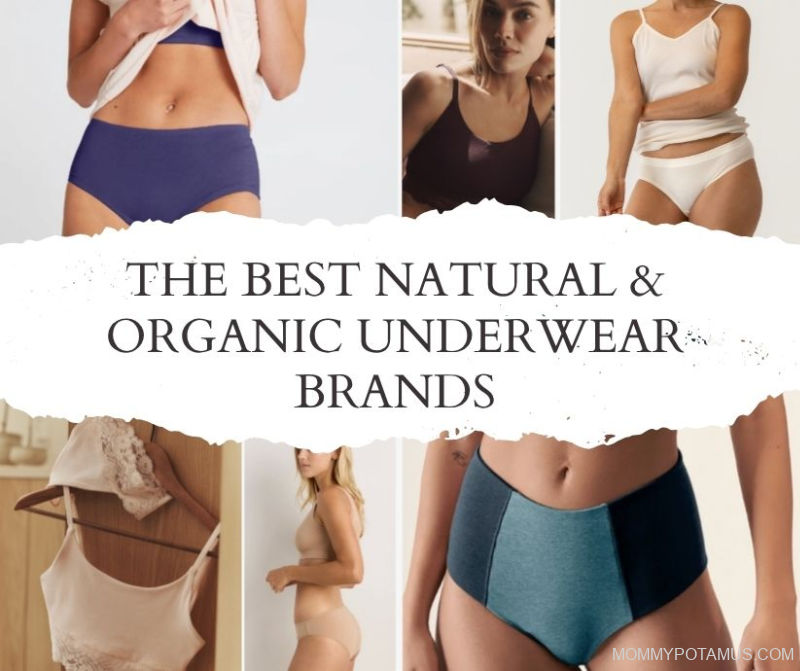
The Best Natural & Organic Underwear Brands

The Best Natural & Organic Underwear Brands

Have you ever wondered why so many pairs of women’s underwear have a tiny bow sewn onto the front? 🎀

It’s a throwback to the days before elastic waistbands, when women’s undergarments were held up with ribbons or drawstrings tied at the waist.

Thankfully, we’ve come a long way in the stretch department since then . . . but not every change has been an upgrade.

Instead of simple natural fibers, many modern pairs are made with polyester and other synthetics – which are essentially forms of plastic. As they’re worn and washed, these fabrics can shed tiny plastic fibers known as microfibers or microplastics.

Also, depending on how a garment is dyed, finished, or treated, it may contain substances like PFAS, phthalates, formaldehyde, and certain heavy metals.

That’s especially important when it comes to foundational pieces like underwear because, well, they’re FOUNDATIONAL.

They’re worn directly against sensitive skin for hours every day, in an area that’s naturally warm, moist, and more absorbent than many other parts of the body – so this is one item where I think the materials deserve extra consideration.

Of course, none of that matters much if the underwear is destined to sit untouched in the back of a drawer because it digs in, rides up, falls down, or somehow manages to do all three.

So for this guide, I’ve put together a list of brands that check both boxes: thoughtfully made and actually comfortable to wear.

We’ll look at affordable organic cotton basics, other natural-fiber options, undyed choices for sensitive skin, and even underwear made without conventional elastic or spandex.

Along the way, we’ll also cover what certifications like GOTS and OEKO-TEX actually tell us, and when a little elastane might be a reasonable tradeoff.

Because if we’re going to rethink what’s in our underwear drawer, I’d really like the replacement pairs to be soft, flattering, comfortable . . . and capable of staying up without a drawstring.

✋ Quick Picks

If you’re short on time and want to skip to my top recommendations, here are the options I’d look at first.

Best place to start

Pact

Soft, comfortable organic cotton basics with GOTS-certified fabric, lots of everyday styles, and prices that make replacing a few pairs at a time pretty reasonable.

Best budget pick

Quince

Their organic cotton six-packs are by far one of the most affordable options I found, and the hipsters I tried are soft, lightweight, and stay put.

Best plastic-free pick

The Very Good Bra

Despite the name, they also make underwear and are a standout if you want to avoid conventional synthetic fibers altogether. 100% organic cotton or Lenzing TENCEL™.

Why Underwear Materials Matter More

Our skin is designed to protect us, but it’s also semipermeable. Certain substances can cross that barrier – which is why topical hormone creams and patches are able to deliver active ingredients through the skin and into the body.

The barrier isn’t the same everywhere, though. Some areas are more permeable than others, including the sensitive skin and tissue covered by underwear.

Part of the reason is structural. The tissue in this area tends to be more hydrated and, in some places, has a thinner or less keratinized protective layer than ordinary exposed skin. Researchers have also pointed to factors like prolonged coverage, moisture, friction, and increased blood flow as reasons the area may be more susceptible to substances that come in contact with it. (1) (2) (3)

In other words, underwear sits close to the body for hours at a time in an area that tends to be warm and moist, with plenty of movement and friction throughout the day. Whatever’s present in or on the fabric – from dyes and textile finishes to residues left behind by laundry products – can remain in close contact with sensitive tissue for a long stretch of time.

That doesn’t mean everything in our underwear is absorbed into the bloodstream. Whether a substance transfers from fabric and passes through the skin depends on what it is, how much is present, and other factors.

But taken together, there are enough reasons for me to give underwear more consideration than, say, an outer-layer coat.

That’s why I prioritize breathable natural fibers when possible, pay attention to how fabrics are dyed and finished, and look for third-party standards that tell me more about what went into making them.

What I Look For In Natural & Organic Underwear

When I’m comparing underwear, here are the details I pay the most attention to:

1. Natural fibers as the foundation

At this point, I pretty much stick with underwear that’s at least 90% natural fiber – and fortunately, there are plenty of options across a wide range of styles and price points.

Cotton is the most common option, and it makes a lot of sense for underwear because it’s soft, breathable, and comfy. Organic cotton is my first choice, but as I explain here, I think conventionally grown cotton is still a better choice than synthetics like polyester.

Hemp is another interesting choice because it’s breathable, moisture-wicking, durable and tends to resist odors well.

Bamboo viscose is a slightly different category. It’s considered a semi-synthetic because it doesn’t fit neatly under the “natural” or “synthetic” label – it’s made from natural materials but highly processed . . . and the type of processing is what I look for when I’m deciding whether to place an order.

Lenzing’s TENCEL™ lyocell is the most widely recognized and respected way of making bamboo into a fabric that is known for its silky texture, breathability, moisture-wicking properties and strength. It’s biodegradable, gentle on sensitive skin, and often blended with organic cotton or wool for softness and durability. I explain the differences between bamboo processing methods here.

For underwear especially, a little stretch can be useful, so you’ll see some options that are around 95% natural fiber with 5% elastane or spandex. That’s a tradeoff I’m comfortable making when the synthetic fiber is there to support the natural material rather than dominate the blend.

And for anyone looking to eliminate synthetics altogether, I’ve included some 100% natural-fiber options too.

2. Certifications ✅

GOTS (Global Organic Textile Standard) is one of the certifications I look for most often. It covers certified organic fibers along with processing requirements for dyes, finishes, and other chemical inputs, plus environmental and social criteria throughout the certified supply chain.

It’s the kind of third-party verification that follows a fiber from its certified organic origin through the sewing machine, instead of just telling us what percentage of the finished fabric is cotton.

OEKO-TEX® STANDARD 100 focuses on testing textile products and their components for harmful substances. Underwear falls into its direct-skin-contact category, which has stricter requirements than products with less skin contact.

OCS (Organic Content Standard) verifies the presence and amount of organically grown material in a finished product and tracks it through the supply chain. It doesn’t regulate textile processing in the same way GOTS does, but it does provide third-party verification that the organic fiber is actually there.

You’ll see different combinations of these certifications throughout the guide, so I’ll point them out with each brand.

3. Elastics, Dyes & Other Components

Elastic waistbands, sewing thread, dyes, and textile finishes can all introduce materials that aren’t obvious from a label that simply says “100% cotton.”

Some of those details matter more to me than others. I’m not going to lose sleep over 5% elastane, but I do love that some brands are switching to natural rubber – and I’d be happy to see more of that.

What I pay much closer attention to is transparency around dyes, finishes, and other treatments that stay in or on the fabric.

A few brands go unusually far in explaining exactly what’s in the finished garment, right down to things like thread, elastic, and dye choices, so I’ll highlight those details below.

The Best Non-Toxic Underwear Brands

The most sophisticated certification system in the world can’t rescue a pair of underwear that’s constantly wedged somewhere it doesn’t belong.

I want natural and organic underwear to be something I reach for because it feels good – not something I tolerate because the material list looks impressive. That’s why I’ve only included brands I’ve personally tested or that are highly rated for comfort.

Whenever I’ve personally tried a brand, I’ll share what I think about softness, fit, coverage, support, and how it actually feels to wear.

For brands I haven’t personally tried yet, I’ll stick to what I can verify about the materials, construction, certifications, and company practices.

I’ve included additional recommendations for extra sensitive skin + different colors and styles later in the article.

Pact – Affordable Organic Cotton Basics

What it’s made of: Most Everyday underwear styles are 95% organic cotton and 5% elastane, with a 100% organic cotton gusset.
Certifications: GOTS-certified fabric; Fair Trade Certified production for the vast majority of core apparel.
Sizes: Many women’s underwear styles extend through 3X.
Price: Individual Everyday briefs have recently been listed around $16, while five-packs averaged to about $13/pair when I checked. Prices and promotions change frequently.
Best for: Affordable everyday organic cotton underwear with meaningful third-party certification.

Why Pact Made The List

Pact is probably the easiest starting point for someone who wants to switch to carefully sourced organic cotton without spending $25-$30 per pair.

Their Everyday collection comes in mid-rise hipster, classic bikini, high rise brief and thong styles, all made with a straightforward blend of 95% organic cotton with 5% elastane.

That’s a ratio you’ll see several times in this guide. It keeps the overwhelming majority of the fabric cotton, with just enough stretch to help everything fit well and stay where it’s supposed to. The gusset is 100% organic cotton.

Their Lace collection adds a pretty lace waistband, which gives it a slightly more special feel without sacrificing comfort. I have this style, and they’re so well made and comfortable. They also stay exactly where they’re supposed to, which is my most important requirement for underwear. 😄

I also have this Classic T-Shirt Bra, which is soft and supportive with just the right amount of stretch. It has adjustable straps, which I love, and it’s wire-free, which I also love.

The fabric is double-layered, so it offers a pretty good amount of coverage, but it doesn’t come with pads. That may or may not matter depending on what you prefer, but it’s worth knowing before you order.

What sets Pact apart from some of the other budget-friendly brands is the combination of GOTS-certified organic cotton and strong labor standards. Pact says all of the cut-and-sew factories it works with are Fair Trade Certified, while a small number of specialty items are sourced separately and don’t carry that certification. You can read more about Pact’s standards here.

Quince – Best Budget Multipacks

What it’s made of: Typically 95% organic cotton and 5% spandex, plus elastic at the waist/legs depending on the style.
Certifications: Organic Content Standard (OCS) certified cotton fiber and OEKO-TEX STANDARD 100 material..
Manufacturing: The hipsters I checked are made in a WRAP-certified facility in Sri Lanka.
Sizes: XS-XL for the organic cotton hipster.
Price: $29.90 for a six-pack when I checked – just under $5 per pair.
Best for: Building an organic cotton underwear drawer on a budget.

Why Quince Made The List

Quince is the budget outlier in this guide.

A six-pack of their organic cotton hipsters was $29.90 when I checked, which works out to less than the price of a single pair from some of the other brands I’ve included.

I first tried Quince when I recommended their swimsuits. Since then, the company has gifted me store credit to try several additional pieces, so I clicked “add to cart” on these hipsters and I have thoughts.

They’re soft and comfy with a “barely there” fit, but still substantial enough to feel well-made. They stay put and come in lots of soft neutrals, plus some standouts like ocean.

If hipsters aren’t your favorite, they also make high-waisted briefs, bikini, boyshort, and thong styles.

I’ve also tried their Organic Cotton Tank Bralette, which is also made with 95% organic cotton and 5% spandex. It’s so comfortable that I forget I’m wearing it, although I would love to see a version with adjustable straps someday.

It’s unlined and doesn’t have removable cups, so if you prefer a little more shaping or coverage, I’ll point out some better options in the sections below.

They do offer a similar version with adjustable straps, which is on my list to test. I’m not in a huge rush, though, because the one I already have works really well for everyday wear.

Although Quince does offer some GOTS-certified products, these particular pieces are not, which is an important distinction from Pact and several others on this list.

Instead, they’re made with OCS-certified organic cotton fiber, and the material is certified to OEKO-TEX STANDARD 100. All the organic cotton underwear and bras I looked at were also produced in a WRAP (Worldwide Responsible Accredited Production) certified factory. WRAP Is an organization that trains and audits production facilities to ensure they are operating in a safe, responsible, and ethical way.

So although I consider GOTS certification to be the gold standard, there’s considerably more third-party verification here than you’ll usually see, and the overall value is hard to beat.

Also, just an overall note: Quince also sells products that are made with materials including 100% recycled polyester. Although that sounds like a good idea in theory, it can still shed microplastics, so I recommend checking the fabric description and certifications on individual products before purchasing.

Stonekin – Best For Colorful, Coastal Organic Cotton Basics

Best for: Colorful organic cotton underwear with a relaxed, coastal feel
Materials: Most women’s rib styles are 95% organic cotton and 5% elastane
Certifications: GOTS-certified organic cotton and OEKO-TEX® certification on the styles I checked
Synthetic content: Typically 5% elastane
Sizes: S-XL on the women’s styles I checked
Price: Bras are generally around $26-47 and briefs around $20-47 when I checked
Best for: Anyone who wants natural-fiber basics that don’t look quite so . . . basic 🙂

Why Stonekin Made The List

Stonekin makes plenty of earthy neutrals, but they also offer colors like Lake, Papaya, Rust, Mustard, Teal, and Pandanus – and some of my favorite pieces are the two-toned styles that mix them together. They feel a little more fun than the typical organic-cotton basic.

They’re Australian, they use Australian cotton, and the whole collection has a relaxed, coastal feel that makes sense for the brand.

Their briefs and bralettes are made with 95% GOTS-certified organic cotton and 5% elastane. That’s right in the range I’m comfortable with: mostly natural fiber, with just enough stretch to help with fit and shape retention.

They carry several different cuts, including low-rise briefs, high briefs, cheekies, thongs, triangle bralettes, scoop-back bralettes, and bodysuits that have a bit of a unique style compared with, for example, simple mid-rise briefs.

The brand emphasizes Australian-grown cotton and supports family-run farms, and they’ve put thought into the dyeing process, too. Their underwear is made with natural dyes, with third-party certification providing additional screening for substances like banned azo colorants, PFAS, lead, and cadmium.

One practical thing to know before ordering: Stonekin offers free shipping over its stated threshold, but international customers may still be responsible for import duties or customs charges depending on the destination country. Those fees aren’t included in the shipping price and can vary by location.

For me, Stonekin made the list because they’ve managed to combine the certifications and material standards I’m looking for with pieces that have a distinctive, fun style.

I especially like the two-toned bras and briefs – they’re beautiful, refreshingly colorful, and have an easy surfer/coastal feel that makes them stand out from the more minimalist undie options in this guide.

The Very Good Bra – Best Plastic-Free, Vintage-Inspired Basics

Best for: Plastic-free bras and underwear with a feminine, vintage-inspired feel
Materials: 100% organic cotton or Lenzing TENCEL™, depending on the style; natural rubber/organic cotton elastic; cellulose sewing thread
Certifications: Certified B Corp; OEKO-TEX-certified inks/components where noted
Synthetic content: None in the bras and underwear themselves; removable pads offered with some V for Victory bras are polyester
Sizes: Bras are available in 34 sizes, depending on style; underwear sizing varies by cut
Price: Bras are generally around $60-99 and briefs around $30-40 when I checked

Why The Very Good Bra Made The List

The Very Good Bra – which, as you’ve already figured out, also makes underwear – is one of the more unusual companies on this list.

Founder Stephanie Devine started looking for better options after going through breast cancer treatment and finding that she couldn’t source a wire-free bra made with natural fibers in a proper cup size. That experience eventually led her to create The Very Good Bra, with the goal of making lingerie without the polyester, nylon, spandex, and other synthetic materials.

And her investment in getting the details right really comes through.

The bras have a beautiful vintage-inspired shape, but they don’t feel stuck in the past. Colors like Poppy, Sage, Wisteria, and Rum & Raisin give them a fresh, happy feel, and certain versions of the V for Victory Bra (latte and rum raisin) include removable pads – which is surprisingly hard to find in natural-fiber bras. The pads themselves are polyester, but they’re removable, so the rest of the bra remains plastic-free and can be separated from the pads at the end of its life.

The underwear lineup includes Very Big Knickers, Big Knickers, High-Leg Briefs, Regular Briefs, and The Very Good Undies, with options made from either organic cotton or 100% Lenzing TENCEL™, which is made from eucalyptus using a similar process to the bamboo I recommend.

What really sets this brand apart, though, is everything you don’t see on the main fabric label.

A garment that contains 5% elastane may still be mostly natural fiber, and that’s a tradeoff I’m generally comfortable with. But talking with Stephanie made me realize how much work goes into eliminating that last little bit of synthetic material.

Instead of conventional elastic, The Very Good Bra uses natural rubber knitted into organic cotton. They also use cellulose sewing thread and avoid synthetic components wherever possible, so the entire garment – not just the main fabric – is designed with what happens at the end of its life in mind.

When our kids were little, my husband and I ran a 40-acre farm with chickens, goats, a garden, mushroom logs, and some truly enormous compost bins.

I can confidently say I never put underwear in them, but if I’d owned pieces made this way and they’d reached the end of their useful life, I probably would have. 😄

Stephanie has actually tested the garments in a worm farm, where the worms were able to break them down completely. As she put it to me, worms are a pretty good test because they won’t eat synthetic fibers.

That doesn’t mean the company labels its products as “compostable,” though – and this is where the company’s commitment to integrity over marketing spink comes through.

Stephanie told me they spent a lot of time trying to develop a meaningful standard for post-consumer textile compostability. The problem is that once a garment has been washed and worn, detergents, fabric softeners, and other laundry products introduce variables that the manufacturer can no longer control.

So even if every component of a garment is capable of breaking down, there currently isn’t an agreed-upon testing standard that accounts for everything that may be added to it after purchase.

So, instead of relying on a broad “compostable” claim, The Very Good Bra focuses on removing synthetic materials in the first place and designing pieces that can break down at the end of their useful life under appropriate conditions.

Of course, the best part is they’ve managed to do all of that while making pieces with a beautiful vintage feel in gorgeous colors. 

While Stephanie and I were emailing, she offered to send me the V for Victory Bra WIth Removable Pads in Latte along with a matching pair of Very Big Knickers.

The bra fit so much better than anything I’ve ever tried on in a store, even after going through the process of having someone help me find the “right “size. I was between sizes in the Very Big Knickers and decided to size up because I don’t like snug elastic around my thighs. That was the right call, and I really like the fit.

These pieces are unlike anything else I own, and I wasn’t sure if I’d like them as much in-person as I did in theory.

Turn out, I like them even more.

Subset – Best For Fit Variety & Recycling

Best for: Trying different cuts to find your favorite fit, plus an easy textile recycling option
Materials: Underwear fabric is 95% certified organic cotton and 5% elastane; elastic components vary by style
Certifications: GOTS-certified supply chain; Fair Trade Certified manufacturing
Synthetic content: 5% elastane in the main fabric, plus nylon/elastane in waistbands and some leg elastics
Sizes: Most underwear styles are available in XS-3XL; bras offer additional sizes for more cup room
Price: Individual underwear is around $20; the five-style Starter Set is $85; Keyhole Soft Bras are around $62 when I checked

Why Subset Made The List

Subset is one of my favorite options for anyone who isn’t quite sure which underwear cut they actually like.

They make thongs, bikinis, hipsters, briefs, and shorties, and their Starter Set includes one of each plus a lingerie bag. So instead of ordering six pairs of a style and discovering that you’re apparently not a bikini person after all, you can try the whole lineup first.

I started with their Low-Rise Bikini because it came in a color I wanted to try The leg elastic felt a little snug when I first put it on, but it has relaxed over time and I like the fit much better now.

On my next order, I’m planning to try the hipster. Unlike the bikini I bought, it uses a self-edge leg hem instead of elastic, so I’m curious to see how that changes the feel and fit. Subset also uses that elastic-free leg construction on its thong and shortie styles.

The main fabric for all these styles is 95% certified organic cotton and 5% elastane. The waistband is nylon/elastane, and styles with leg elastic contain additional nylon and elastane there too.

They also make several soft bras, including the Keyhole Soft Bra, which has adjustable straps, a hook-and-eye back, double-lined cups, and an expanded cup size range . The bra fabric is also 95% organic cotton and 5% elastane, and the straps, band, closure, and hardware are made with recycled synthetic materials.

Another thing that sets Subset apart is its recycling program.

The company started recycling intimate apparel back in 2018 and has since expanded the program through Trashie. Their Take Back Bag costs $20 and can hold up to 15 pounds of clean clothing and textiles in any condition – including underwear, bras, socks, sheets, towels, and items from other brands.

Once you register and send the bag in, you earn 20% off your next Subset order. So if you were already planning to spend around $100 on underwear, the discount essentially covers the cost of the bag – while giving you a way to divert quite a lot of worn-out clothing and textiles from the landfill.

The items are sorted to find the best available next use. Depending on their condition and material, that may mean reuse or donation, downcycling into things like insulation or furniture batting, or – in some cases – recycling into new textiles.

Subset says its recycling program has now diverted more than 2 million items, which is pretty impressive (at least to me).

On the production side, Subset uses a GOTS-certified supply chain, and its manufacturing facility in India is Fair Trade Certified. The company also requires its Tier 1 and Tier 2 manufacturers to sign a Supplier Code of Conduct covering things like wages, working conditions, and the right to organize.

They also release limited-edition colors throughout the year, which is how they got me in the first place. 😄

Overall, I think Subset can be a good place to start if fit has been the frustrating part of switching to natural-fiber underwear. There are enough cuts to experiment with, the Starter Set makes that experimentation easier, and the recycling program gives you somewhere to send the pairs you’re finally ready to retire.

Organic Basics – Best For Mixing & Matching Styles

Best for: A wide range of natural-fiber underwear and bra styles
Materials: Many Core styles are 95% organic cotton and 5% elastane; Soft Touch styles use TENCEL™ Lyocell blends. Other collections use recycled synthetics, so check individual product details.
Certifications: Many products are GOTS certified; Organic Basics also uses OCS, GRS, and other product-specific certifications
Synthetic content: Varies significantly by collection
Sizes: Many underwear styles extend from XXS-XXXL or XXXXL; bra sizing varies by style
Price: Around $15-$28 for underwear and $24-$60 for bras when I checked

Why Organic Basics Made The List

Remember going to an actual store and digging through bins and racks of underwear until something caught your eye?

Shopping at Organic Basics feels a little like that to me.

They have a lot of options – briefs, high-leg briefs, Brazilian cuts, thongs, ribbed styles, bralettes, wireless bras, padded bras, and more, often in several colors and multi-packs.

The one thing to know upfront is that, despite the name, not everything Organic Basics sells is made with organic cotton – or even necessarily natural fibers.

Some collections are made with recycled nylon and other synthetics, but they do also have a huge selection of styles that are made with 95% organic cotton and 5% elastane. They also offer a Soft Touch collection that uses TENCEL™ Lyocell, which gives you another low-plastic option with a smooth, silky feel.

In other words, this is definitely a brand where I recommend checking the materials on the individual product page rather than assuming everything fits the same criteria.

The good news is that they make that pretty easy.

Their Core underwear collection includes a wide range of organic cotton styles, and many are GOTS certified. The certified products are clearly labeled on the product page, which makes it easy to quickly check anything you’re interested in.

Their GOTS Certified Core Briefs, for example, are made with 95% organic cotton with 5% elastane, and they come in a wide range of sizes and colors. The same collection includes high-leg briefs, Brazilian styles, ribbed options, thongs and several different bra shapes.

If you find a style you like, they also offer discounted multi-packs for many of the basics, which makes it easier to stock up without paying full price for every pair.

For me, the best part about shopping at Organic Basics is that it feels like shopping in a bustling department store during the holidays. There are so many colors and styles, and a lot of clothing options worth browsing, too.

Just remember to read the product details before you hit “add to cart.”

Cottonique – Best For Ultra-Sensitive Skin

Best for: Anyone trying to avoid latex, spandex, dyes, conventional elastic, or other common clothing irritants
Materials: 100% GOTS-certified organic cotton on many styles; some products use latex-free/spandex-free elastic fully wrapped in organic cotton
Certifications: GOTS-certified organic cotton; OEKO-TEX® STANDARD 100 thread on many styles; selected products also carry MyMicrobiome textile certification
Synthetic content: Some styles contain none; others use synthetic elastic, polyester-core thread, or plastic bra components depending on the design
Sizes: Varies by style; women’s briefs extend through size 12 on some cuts, while bras are offered in band/cup sizing
Price: Around $36-$45 for most underwear 2-packs and $30-$50 for bras when I checked

Why Cottonique Made The List

Remember that little drawstring bow 🎀 I mentioned at the beginning of this article?

With Cottonique, the drawstring isn’t just a throwback.

The brand makes several underwear and bra styles designed specifically for people who react to latex, spandex, elastic, dyes, or conventional textile finishes. Some of their natural-colored boyshorts and briefs are made entirely from organic cotton – including the fabric, sewing thread, labels, and drawstrings – with no elastic at all.

Other styles use a specially sourced latex-free and spandex-free elastic that’s completely wrapped in organic cotton, so the elastic itself doesn’t touch the skin.

The natural-colored collection is completely dye-free. Colored styles use GOTS-compliant low-impact dyes, and newer colorways are sewn with 100% cotton thread (some older colors use cotton-wrapped polyester-core thread).

Cottonique is very transparent about garment construction. They make it easy to find details like what kind of sewing thread is used, what the elastic is made from, which fasteners appear in the bras, and even what’s inside the removable pads.

Those pads are made with polyurethane foam, by the way. I haven’t found a brand using a truly natural alternative yet, so that seems to be one of the harder pieces to replace.

For me, Cottonique makes the most sense for someone whose priorities go beyond just choosing organic cotton – especially if latex, spandex, elastic, dyes, or textile finishes have been difficult to tolerate.

And if you want to go all-in on cotton, their drawstring styles are the best option I’ve found.

Maggie’s Organics – Best Employee-Owned Brand

Best for: Shoppers who like supporting a long-established, employee-owned organic clothing company
Materials: 90% organic cotton and 10% spandex
Certifications: GOTS certified
Synthetic content: 10% spandex
Sizes: S-XXL on the women’s bikini styles I checked
Price: Around $17 per pair or $33 for a two-pack when I checked

Why Maggie’s Organics Made The List

Maggie’s has been making organic clothing since 1992, which gives it a much longer track record than most of the brands in this guide.

One thing I really like about Maggie’s is that the company is employee-owned.

When the founder retired, ownership began transitioning to the employees. That means the people who work there have a real stake in the long-term health of the business – something I like because it naturally encourages a different kind of thinking than chasing short-term growth at all costs.

Their women’s underwear is made with 90% organic cotton and 10% spandex, which puts it within the natural-fiber percentage I look for. The styles are GOTS certified, and Maggie’s also offers a completely undyed “Natural” option. For colored styles, the company uses low-impact, colorfast dyes that meet GOTS requirements.

They make an elastic-free low-rise bikini, which could be worth a look if you dislike conventional waist or leg elastic. The fabric itself still contains 10% spandex, but the design skips separate elastic at the waist and leg openings, so there are fewer places for the garment to feel tight or dig in. The other two styles available are regular bikini and boyshort.

They also offer mens boxers and boxer briefs made with 95% organic cotton and 5% spandex.

For me, Maggie’s stands because it has been making organic basics for decades while building a company that its employees actually own.

That combination of longevity, thoughtful materials, and employee ownership is what earned it a spot here.

KENT – Plastic-Free Essentials

Best for: Anyone who wants underwear made without conventional spandex, elastane, nylon, or polyester
Materials: 100% GOTS-certified organic Supima cotton with plant-based thread and bio-based elastic
Certifications: GOTS-certified organic cotton; made in a Fairtrade and GOTS-certified facility
Synthetic content: No petroleum-based synthetics; uses biodegradable bio-based elastic
Sizes: XS-3XL on the women’s styles I checked
Price: Around $28 per pair; multipacks offer a lower per-pair price

Why KENT Made The List

Most of the organic cotton underwear in this guide contains a small amount of elastane or spandex blended directly into the fabric. That can make the whole garment feel smoother, stretchier, and more body-hugging.

KENT takes a different approach. The main fabric is 100% GOTS-certified organic Supima cotton, while separate bio-based elastic at the waist and leg openings helps the underwear stay in place.

That means the fit and feel are a little different from a 95% cotton, 5% elastane blend. Reviewers often describe KENT as more substantial, and the stitching as thicker or heavier than what they’re used to. Some love that sturdier feel, while others prefer something lighter and more seamless-feeling.

They offer bikinis, hipsters, boyshorts, high-cut briefs, tangas, high-waist briefs and thongs, along with undyed options. For dyed pieces, KENT uses GOTS-approved dyes, with some plant-dyed colors noted separately.

They also make soft, unlined triangle and scoop neck bras, as well as underwear and t-shirts for men.

KENT is very focused on what happens at the end of the garment’s life. KENT describes its underwear as compostable and says a pair tested with LA Compost broke down in about 90 days.

I would add one caveat, though.

As I mentioned earlier, I recently spoke with another natural-underwear founder who spent a lot of time trying to establish a meaningful post-consumer textile compostability standard. One problem is that detergents, fabric softeners, and other laundry products can introduce substances after purchase, and there still isn’t a broadly accepted testing standard that accounts for all of that variability.

So I personally think of KENT less as “guaranteed compostable in X number of days” and more as underwear designed entirely from materials that are capable of breaking down under the right conditions.

And just as importantly, that doesn’t mean the fall apart quickly. KENT underwear is designed to be stronger and last longer than conventional basics.

A Few Final Thoughts

After spending what is probably an unreasonable amount of time thinking about underwear, my biggest takeaway is that there isn’t one perfect option. 😄

For some people, 95% organic cotton with a little elastane is going to be the sweet spot because it’s gives fabric a soft, stretchy, barely-there fit. Someone else may really want to eliminate petroleum-based synthetics altogether, while someone with very sensitive skin may care most about dyes, elastic, or even sewing thread.

All totally reasonable priorities.

Thankfully, we now have quite a few options for all of those priorities without requiring a drawstring tied around the waist . . . though that’s an option too if you want it! 🎀

Keep Reading

If you’re curious about better options for the rest of your closet, I’ve got you covered there too.

My guide to non-toxic clothing brands covers everything from everyday basics to sweaters, dresses, and activewear, while my non-toxic leggings guide takes a closer look at the pairs I’ve actually worn and tested.

✋ Before You Go, Grab This Free Midlife Guide

If you’ve ever found yourself thinking, “Why doesn’t my body respond the way it used to?” . . . this guide was written for you.

Midlife can change the rules for everything from sleep and energy to workouts, recovery, body composition, and more. Knowing what’s changing can help you let go of strategies that no longer fit – and start focusing on what supports your body now.

Inside, I’ll walk you through 10 things I wish I’d known sooner, so you can make more sense of what you’re experiencing and get clearer about where to go from here.

Enter your email below and I’ll send it right over. You’ll also receive my weekly newsletter with practical wellness tips, recipes, and new guides like this one.

Sources

  1. Chen, Y., Bruning, E., Rubino, J., & Eder, S. E. (2017). Role of female intimate hygiene in vulvovaginal health: Global hygiene practices and product usage. Women’s Health.
  2. Farage, M. A. (2019). Sensitive skin in the genital area. Frontiers in Medicine
  3. Machado, R. M., Palmeira-de-Oliveira, A., Gaspar, C., Martinez-de-Oliveira, J., & Palmeira-de-Oliveira, R. (2015). Studies and methodologies on vaginal drug permeation. Advanced Drug Delivery Reviews

Share with a friend! 👇

Tags: , , ,
My First Note | Beauty Habits for Your 30s Without Spending Too Much Time or Money|Milky Cafe

My First Note | Beauty Habits for Your 30s Without Spending Too Much Time or Money|Milky Cafe

Nice to meet you, I’m Milky Cafe☺️

I’m busy and don’t want to spend too much money.
But I don’t want to neglect my beauty, and I want to keep looking beautiful.

I started this note to write about the daily habits I keep as a woman in her mid-30s, as well as how I choose my skincare and haircare products😌🍀

Why I decided to start a note

Recently, when I tell people my age, they often say, “I thought you were around 29 or 30!”

I’m honestly happy when people say that😆

Up until now, I haven’t gone to beauty salons or had cosmetic medical procedures; I’ve just continued with small habits that I felt worked for me.

I don’t know how much each thing contributes, but
looking back, I have small habits that I’ve kept for a long time.

I’ve started to think, “maybe the things I’ve continued little by little are what have led to the person I am today.”😌

I’d like to try putting my experiences into words, little by little☺️

3 habits I continue


① Daily stretching I’ve been doing since I was 20
Stretching when I wake up in the morning.
This is a habit I’ve kept since I was 20.

Since I spend a lot of time sitting, I also do just one minute of stretching before I go to bed.

② My usual breakfast, eaten after a 12-hour fast
It’s my habit to eat breakfast 12 hours after my last meal of the previous day.
What I eat for breakfast is also always the same😆

I’d like to introduce what I eat and why I choose it,
along with my meal timing, in future posts😌🍀

③ Self-massage for the neck, shoulders, and head
During the day, I spend a lot of time using my PC and often stay in the same posture.
Because of that, my shoulders, neck, and head get stiff very quickly😣

Furthermore, I’ve started to worry about laugh lines and sagging,
so I’ve started incorporating self-massage as care I can do myself.

I do it from my back above the shoulder blades up to my neck and head☺️

They are all very simple!
I will introduce the details of my stretches, my breakfast menu, and my massage techniques
little by little in each article☺️

What I want to write about in this note

Daily beauty habits and how I choose my skincare and haircare products.
I would like to share my experiences, including what I feel works for me and my thoughts on the things I have actually tried.

Actually, I am interested in plastic surgery, but I am still too scared to try it.😣
With that feeling in mind, I am continuing to do what I can for myself little by little.

I want to cherish who I am now while continuing to take care of myself without spending too much money or time, and without overdoing it.

I would be happy to connect here with anyone who thinks, “I know exactly how you feel!”😌🎀

I look forward to getting to know you all.🤗

Tags: , , , , , , ,
What is the skin barrier and how do you know if it's damaged?

What is the skin barrier and how do you know if it’s damaged?

If you’ve spent any time on TikTok lately, chances are you’ve heard wellness influencers going on about their ‘skin barrier’.

From Korean beauty to ‘glass skin’, ‘skin cycling’ to the 10-step routine, and the seemingly endless stream of new serums being churned out, wellness has become increasingly obsessed with understanding exactly what we’re putting on our skin, and whether we’re helping or hindering it.

The phrase ‘skin barrier’ might sound like yet another skincare buzzword, but it is a very real part of your skin’s health.

And, according to Dr Bernard Ho, Consultant Dermatologist and spokesperson for the Skin Health Alliance, sometimes the best thing you can do for your skin barrier is take a step back from your jam-packed routine.

If you’re reading this, however, wondering why you’ve never spotted a physical boundary surrounding your skin cells, or circling your face, it’s because the term is simply used to describe the outermost layer of skin.

‘Skin barrier’ is a buzzword that’s been doing the rounds on social media recently (Getty Stock Images)

What is the skin barrier?

Technically speaking, this is known as the stratum corneum, which acts as a protective armour against environmental irritants, microbes and water loss. Dr Ho told Tyla to think of the skin barrier ‘as a brick wall’.

“The corneocytes (skin cells) are the bricks, and a lipid matrix of ceramides, cholesterol and fatty acids is the mortar holding them together,” he continued, explaining that a healthy barrier is successful in keeping moisture in and irritants out.

Read more: I wrecked my skin barrier with acne treatment – this £16 La Roche-Posay Balm fixed it

But when that lipid matrix becomes disrupted, the barrier can become ‘leaky’.

This results in water escaping from the skin – a process referred to as increased transepidermal water loss – allowing irritants to enter more easily.

And that’s when you can start noticing dryness, tightness, redness and increased sensitivity.

Dry skin could also demonstrate a damaged skin barrier (Getty Stock Images)

How does a skin barrier become damaged?

Ironically, sometimes trying to improve your skin can be what causes the problem.

“Overzealous skincare is a frequent culprit,” Dr Ho continued, pointing out that layering too many active ingredients, harsh or stripping cleansers, and over-exfoliation could erode the skin’s protective lipid ‘mortar’.

Read more: Glazed donut skin and skin flooding: Do they work?

So, if your routine currently involves multiple acids, retinoids, exfoliating products and serums all fighting for attention, your skin might not necessarily thank you for it.

There’s also the risk of sun exposure contributing to barrier damage over time, with UV radiation degrading barrier lipids and collagen.

Other factors, meanwhile, include low humidity, ageing – as ceramide production declines over time – and underlying skin conditions such as eczema.

Adding too many layers to our skincare routine could damage our skin’s barrier (Getty Stock Images)

Can you tell if your skin barrier is damaged?

Depending on whether you see it as a pro or con, the signs of a damaged skin barrier can be fairly easy to spot.

“A damaged barrier typically shows as dryness, flaking, tightness, redness, or increased sensitivity and breakouts,” says Dr Ho, adding that once you’ve removed the irritant and switched to a gentle, hydrating routine, these symptoms should gradually settle.

He pointed out, however, that you might still experience some mild dryness or tightness while the lipid matrix rebuilds, but there is one important thing to watch out for.

“The skin should not get progressively worse,” Dr Ho said. “If redness, stinging or irritation is worsening rather than improving, stop the current routine and seek medical review, as this suggests ongoing irritation rather than normal healing.”

Redness on the face can also indicate a damaged skin barrier (Getty Stock Images)

Are there ways to repair a damaged skin barrier?

The good news is that you don’t necessarily need to buy another 15 products to fix it.

Dr Ho says barrier repair rests on three principles – ‘rehydrate, replace lipids, and remove the irritant causing the damage’.

He advises starting with the application of a gentle, non-stripping cleanser, before adding a light moisturiser to slightly damp skin twice a day.

When it comes to moisturiser, Dr Ho recommends looking for one containing ceramides, ideally alongside cholesterol and fatty acids.

Together, these help replenish that lipid ‘mortar’ we talked about earlier, which resides between your skin cells.

You can also apply a humectant such as hyaluronic acid or glycerin first to draw water into the skin, before sealing it in with a ceramide moisturiser.

Dr Ho cautions against leaving humectants as the final step in dry conditions, however, as they can draw moisture out of the skin if they’re not sealed in.

Oh, and don’t forget the SPF, which our medic says is ‘essential, both to prevent further damage and to support repair’.

A simplified skincare routine can help repair the skin barrier (Getty Stock Images)

How long does it take to repair your skin barrier?

Unfortunately, there isn’t a magic overnight fix.

According to Dr Ho, it depends on the severity of the damage and what caused it in the first place.

“Mild disruption from over-exfoliation or a new reactive product often settles within days to two weeks once the irritant is withdrawn and hydration is restored,” he explained. “Moderate barrier damage typically takes two to four weeks, in line with the skin’s natural turnover cycle.”

More serious or chronic disruption – such as long-term overuse of active ingredients, cumulative sun damage or an underlying skin condition – can take six to 12 weeks or longer.

And your age can make a difference, too.

Dr Ho noted: “Repair also slows with age, as epidermal turnover lengthens from roughly 28 days in young skin to 40 to 60 days or more in older skin.”

Simple is key, Dr Ho told us (Getty Stock Images)

Skin products to avoid during barrier repair

This is where it can be tempting to panic-buy another ‘barrier repair’ product, but Dr Ho says it’s essential to slim down your routine.

Pause anything that could potentially irritate your skin, including retinoids, exfoliating acids such as AHAs and BHAs, vitamin C serums, physical scrubs and heavily fragranced products.

Hot water and over-cleansing should also be avoided, as these can strip away even more of the skin’s protective lipids.

Instead, he says to focus on the basics – a gentle cleanser, a ceramide-based moisturiser and daily SPF.

Once your skin has settled, reintroduce active ingredients one at a time and gradually, rather than throwing everything back into your routine at once.

Tags: , ,
How to Tell If Your Skincare Routine Is Wrecking Your Skin Barrier

How to Tell If Your Skincare Routine Is Wrecking Your Skin Barrier

If your ceramide serum shelf is deep but your skin still feels tight, red or randomly reactive, the problem probably isn’t the next product. Dermatologists say barrier damage is behind more of the redness, breakouts and stinging skincare-obsessed shoppers experience than most realize, and the fix has less to do with buying more and more to do with backing off.

What the Skin Barrier Actually Is

“Your skin barrier is basically your outer layer of the skin. It’s dead, not alive, and it’s made up of dead cells, lipids, proteins and fats that help protect your skin from the environment,” Dr. Melissa Piliang told Cleveland Clinic.

She likened it to armour around a living organism. “It works to keep water in and to keep chemicals and infectious bacteria out. So it’s very important for our skin health,” Piliang said.

It sits within the stratum corneum, the top layer of skin, and functions like a brick wall. Tough skin cells called corneocytes form the bricks. Ceramides, cholesterol and fatty acids act as the mortar filling the gaps, which is exactly why those lipids headline every barrier-repair formula in your rotation.

Signs Your Skin Barrier Is Damaged

A healthy barrier keeps skin hydrated and plump, calms sensitivity, evens tone and helps everything else in your routine actually absorb. When it breaks down, the shift is fast.

Watch for persistent dryness even after moisturizing, tight or itchy skin, redness from products you used to tolerate and sudden breakouts. Sheila Farhang, a dermatologist and founder of Avant Dermatology + Aesthetics in Tucson, Arizona, told Good Housekeeping the classic red flags are “Skin redness, itching or burning.”

Whitney Bowe, a New York dermatologist, told the same outlet that “Those with rosacea and eczema have intrinsically compromised skin barriers,” and that “When the skin barrier is disrupted, skin becomes dry and can develop rough patches.”

Overuse is a common trigger. “I’ve seen a lot of acne patients who overuse products and disrupt their barrier, and the acne gets worse,” Farhang said.

Unexpected Ways You’re Damaging Your Skin Barrier

Harsh cleansers are the obvious offender, but the list runs longer than most #skintok viewers realize. Kally Papantoniou, a board-certified dermatologist in Melville, NY, told New Beauty the usual suspects include “Over-exfoliating, over-cleansing, very hot showers, environmental stressors, skipping moisturizer and overloading the skin with products.”

Hot water in a long shower strips natural oils, so switch to lukewarm water and a gentle pH-balanced cleanser.

Layering actives without a buffer is the quiet saboteur most multi-step routines are guilty of. Joel Schlessinger, a board-certified dermatologist in Omaha, NE, pointed to “Layering too many actives without buffering.” His fix starts slow. Introduce ingredients gradually, use retinol every other night rather than daily, and alternate a retinol evening with a vitamin C morning. If a product still stings, apply a hydrating serum first as a buffer.

Indoor air matters too. Dry air “depletes moisture faster than most people realize,” Schlessinger said. A humidifier at home and a hydrating mist for your bag both help.

Internal factors count as much as topical ones. “Chronic stress elevates cortisol in ways that impair barrier repair,” Schlessinger added. A sunburn is itself a form of barrier damage, which is why dermatologists push broad-spectrum SPF 30 or higher every single day.

Related: You Are Probably Using Salicylic Acid Wrong and Here Is How to Tell

If you’ve spent five minutes on skincare TikTok, you already know salicylic acid is basically the main character of the acne aisle. It’s in cleansers, toners, serums and spot treatments at pretty much every drugstore, which is exactly why so many people mess it up. Used the right way, it clears clogged pores and smooths […]

How to Repair a Damaged Skin Barrier

The barrier can rebuild itself. Mild irritation can settle in a few hours, though deeper damage takes longer.

Thank You!

You have successfully subscribed.

Bowe recommends a gentle cleanser that doesn’t leave skin squeaky-clean, and Farhang says to stick with cool or lukewarm water. Skip gritty physical scrubs, Bowe advises, and reach for sloughing acids in hydrating serum forms instead.

For rebuilding, look for moisturizers with ceramides and squalane, which replenish the barrier’s natural lipids. Prebiotic and postbiotic formulas support healthy skin bacteria. Avoid fragrances and essential oils. And as Bowe put it, “Stop use of anything that burns upon application, which is an indication that your barrier is being damaged.”

Papantoniou’s advice is to strip things back. “To repair the skin barrier, try simplifying your skin-care routine, pausing strong actives and focusing on hydration,” she said.

Tags: , , , ,
Instagram/Tilly Whitfield

Do I have acne or a damaged skin barrier? Difference explained by experts

Identifying why your skin is breaking out can feel like trying to find a needle in a haystack – especially if you have a complicated, multi-product routine.

And some conditions share similar symptoms, which can make it even more difficult to know what you’re struggling with.

Red bumps, inflammation, and irritated skin are all signs of both a damaged skin barrier and acne – but how do you know the difference between the two?

Tyla spoke with dermatologists, who have broken down the key distinctions you need to be aware of.

READ MORE: Skin barrier repair: the complete guide

To explain, your skin barrier is the outermost layer of your skin, which is known scientifically as the stratum corneum, and acts as a protective shield for your body.

It’s responsible for keeping moisture locked in and providing protection against external irritants and infections.

Using harsh products or very hot water, cleansing too frequently, and dry weather can all contribute to skin barrier disruption, as can introducing too many ingredients into a skincare routine at once.

There are a number of ways your skin barrier can get damaged (Getty Stock Image)

Acne, on the other hand, is a skin condition that occurs when your hair follicles become plugged with oil and dead skin cells.

Highlighting the links between the two, Dr. Anna Andrienko, Dermatologist & Aesthetic Doctor at Dr Ducu Clinics, explains to Tyla: “Acne and a damaged skin barrier can sometimes look very similar, particularly when the skin is red, bumpy or inflamed.

Tjek queen vegas bonus før du laver din første indbetaling.

“However, there are a few key differences that can help you understand what may be happening.”

Acne produces more ‘defined lesions’

She advises: “Acne tends to produce more defined lesions, such as blackheads, whiteheads, inflamed spots or deeper, sometimes painful lumps beneath the skin.

“Breakouts may also occur repeatedly in familiar areas, such as the chin, jawline, cheeks or forehead.”

A damaged skin barrier, however, often ‘presents differently,’ and rather than distinct spots, the skin may instead develop ‘lots of small bumps alongside redness, dryness or a rough texture’.

Dr Andrienko continues: “One of the biggest clues is how the skin feels. If your skin is stinging, burning or feeling unusually tight, particularly after cleansing or applying products you would normally tolerate, this may suggest that the skin barrier has become compromised.”

Acne often ‘presents differently’ to a damaged skin barrier (NHS website)

The conditions can co-exist

Dr Susie Gawler, Acne and Skin Lead at Boots Online Doctor, agreed that the two conditions are ‘more closely connected than they might first appear’ and can actually influence each other.

The expert explained: “A disrupted skin barrier can contribute to skin inflammation (and skin conditions such as eczema, rosacea and acne), while acne itself – and some of the treatments used to manage it – in turn can cause irritation and disruption to the skin barrier.

Read more: Adult acne: why it happens and what actually helps

“Acne is characterised by blocked pores and inflammation, including blackheads and whiteheads, red or inflamed spots and, in some cases, deeper, painful lumps beneath the skin. Increasingly, it’s thought that skin barrier dysfunction can be a contributing factor to this process.”

Dr Andrienko agrees: “It is also important to consider what has changed in your skincare routine. Over-cleansing, excessive exfoliation, and using too many active ingredients, such as acids or retinoids, can irritate the skin and disrupt the barrier. Someone trying to aggressively treat acne may therefore unintentionally cause barrier damage, which can make the skin appear even more inflamed and reactive.”

The first port of call if you’re struggling with your skin is to strip back your routine (Getty Stock Image)

What to do if you’re still unsure

If you’re still struggling to work out whether you’re dealing with acne, a damaged skin barrier, or both, there are a number of steps you can take.

Dr Andrienko suggests ‘simplifying your skincare routine and avoiding unnecessary exfoliation or multiple active ingredients until the skin has settled’.

She adds: “Focus on gentle cleansing, moisturising and supporting the skin’s natural barrier.

“However, persistent, painful or widespread breakouts should always be assessed by a qualified dermatologist. Not every bump or breakout is acne, and an accurate diagnosis is important before introducing stronger treatments.”

READ MORE: I wrecked my skin barrier with acne treatment – this £16 La Roche-Posay Balm fixed it

Dr Gawler explains that it’s important to ‘pay attention to how your skin feels while treating acne’ as treatments can be irritating or drying, especially when you’ve just started using them.

She explains: “Side effects often settle as your skin gets used to the treatment, and a gentle skincare regime can help protect and repair your skin barrier during this process.

“However, persistent dryness, tightness, soreness, flaking or unusual sensitivity, as well as stinging or burning when applying products you would normally tolerate, can indicate that your skin barrier has become disrupted.

“This can happen when multiple active ingredients are used together, the skin is over-exfoliated, or treatments are introduced too quickly.”

It’s not always one or the other – a damaged skin barrier can sometimes co exist (Getty Stock Image)

If your skin is becoming increasingly irritated while you are trying to treat acne, it’s worth ‘reassessing which products, and how many, you are using’.

Simplifying your routine is always a good first step, as is focusing on gentle cleansing, moisturising and sun protection to help your skin barrier.

Dr Gawler adds: “You can help protect your skin barrier by sticking to gentle cleansers, avoiding over-exfoliation and applying a non-comedogenic moisturiser (one that won’t clog pores) regularly.

“Barrier-supporting ingredients such as ceramides, glycerin and hyaluronic acid can help improve hydration and support the skin’s natural barrier, which may be particularly beneficial in acne-prone skin and during acne treatment.”

She concludes: “It is key to pay attention to the overall condition of your skin and whether your skincare routine is helping to protect your skin barrier and manage any skin conditions. Looking after your skin barrier can help support skin health and help you achieve better acne control.”

Tags: , , , , , ,
Skincare range for aesthetic procedure prep now in S'pore, also tackles dryness & dullness

Alastin launches in Singapore with skincare for aesthetic procedures and everyday use

You may have heard of the all-important prepping and priming steps when it comes to makeup, but as it turns out, those aren’t just things for foundation and eyeshadow anymore.

In the aesthetics world, getting your skin ready before a treatment can matter just as much as what you do afterwards, and that’s something skincare brand Alastin is putting more focus on.

The professional-grade skincare brand by Galderma has officially launched in Singapore, with products designed to support skin before and after aesthetic procedures, while also tackling everyday concerns such as dryness, dullness, fine lines, and loss of elasticity.

Image courtesy of Alastin

At a recent media preview, aesthetics doctor Dr Ashley Yuen shared that patients traditionally weren’t encouraged to prep and prime their skin before aesthetic procedures. Instead, most of the attention tended to come after the treatment, once the skin was already recovering.

That’s where Alastin takes a slightly different approach, putting more emphasis on getting the skin into better shape before the treatment even begins.

And even if needles or lasers aren’t on your agenda anytime soon, don’t tune out just yet. The range has also been designed to work as standalone skincare, with products catering to different skin types, ages, and everyday concerns.

Image courtesy of Alastin

Built around skin recovery, not just the treatment itself

We also heard from Professor Alan Widgerow, Galderma’s Chief Scientific Officer and Head of Alastin Innovation, who brings with him decades of experience across plastic surgery, wound care, tissue engineering, and skincare research.

That background makes sense, given how Alastin came about. The brand was created by a plastic surgeon and a formulation scientist, with the idea of looking after your skin across the whole treatment journey, not just once the procedure is over.

As Dr Yuen explained, traditional aesthetic care tended to be much more reactive. You’d go for the treatment, then deal with the redness, irritation, or downtime afterwards with soothing creams, sunscreen, or whatever else your doctor recommended.

Alastin’s approach is to start a little earlier.

Image courtesy of Alastin

It calls this pre-conditioning the skin, essentially giving it some extra support before heat, energy, or needles enter the picture, rather than only thinking about recovery afterwards.

And that covers a pretty broad spectrum of treatments, from non-invasive options such as HIFU and other energy-based skin-tightening procedures, to Pico and fractional lasers, and needle-based treatments such as radiofrequency microneedling, dermal fillers, skinboosters, botulinum toxins, and biostimulatory injectables.

Source: cottonbro studio on Pexels, for illustration purposes only

The star of the show is Alastin’s proprietary TriHex Technology, a peptide-based system designed to help clear aged, damaged collagen and elastin, while supporting the production of new, healthy collagen and elastin.

Its newer TriHex+ Technology, found in the Restorative Skin Complex, also supports the skin’s natural production of high-molecular-weight hyaluronic acid.

Alastin sums the whole process up as “remove, rebuild, and replenish”, essentially spring cleaning for your skin: clearing out the damaged stuff, making room for new collagen and elastin, and helping maintain smoother, healthier-looking skin over time.

But while all of that sounds pretty impressive, there is one important distinction to make. In response to queries from MS News, Alastin clarified that this doesn’t make the range a scar treatment.

Se, hvad dansk777 har at byde på.

Its products are designed to support post-procedure recovery and overall skin quality, but aren’t intended to treat surgical scars, replace post-operative care, or reduce the appearance of scars from surgery or injury.

For the pre- and post-procedure crowd

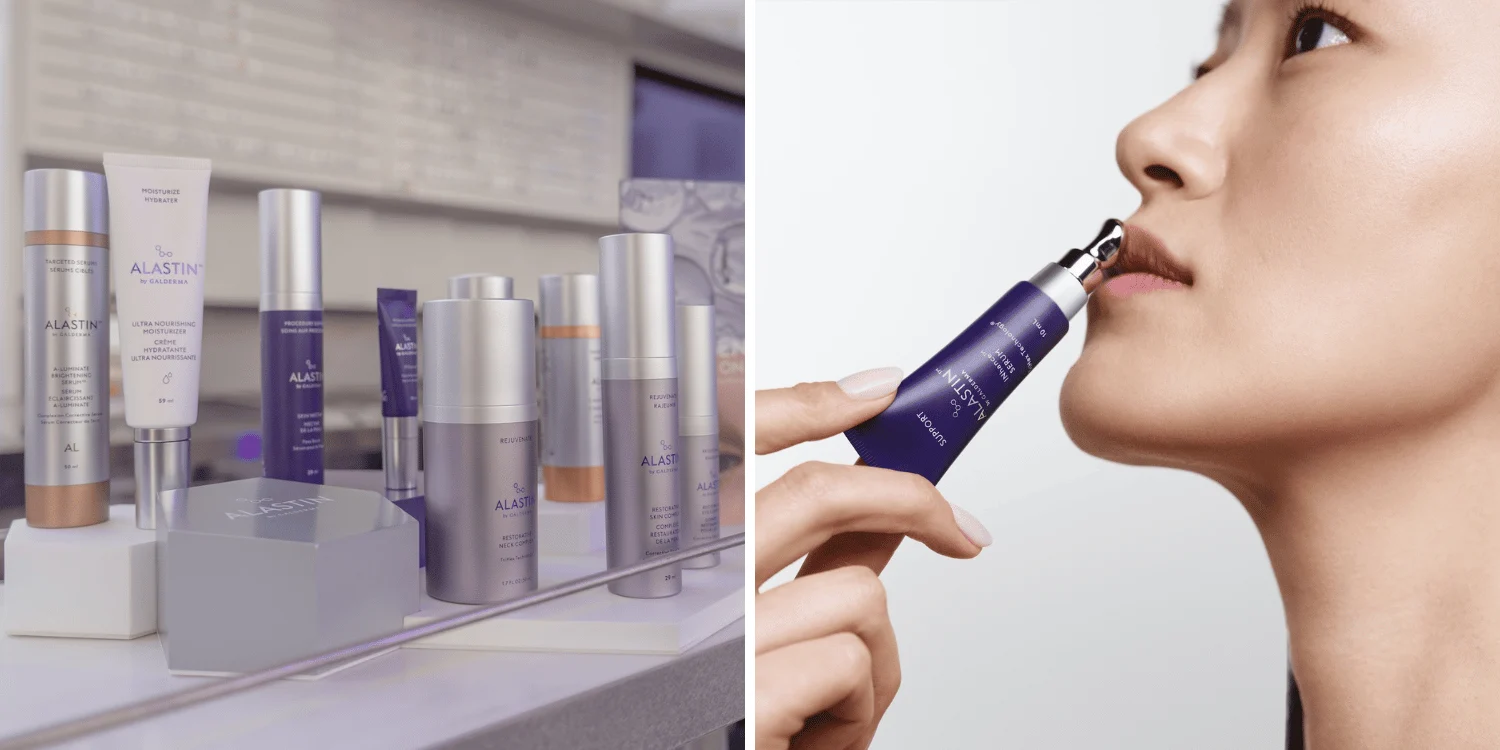
If you’ve got a little glow-up procedure pencilled into your calendar, Alastin’s Skin Nectar with TriHex Technology is designed to support your skin both before and after the appointment.

Image courtesy of Alastin

Designed for use before treatment, it helps support the skin barrier, then soothes skin as it recovers afterwards. The anhydrous, preservative-free formula also means there’s no water in the mix, keeping things simple for pre- and post-treatment skin.

Alastin says prepping the skin beforehand may also help it better handle treatment and support recovery afterwards, a bit like warming up before a workout instead of going in cold.

There’s also INhance Serum with TriHex Technology, which is designed to complement cosmetic treatments while keeping skin hydrated and looking plumper.

Its cooling applicator tip is a nice touch, too, especially when your skin is feeling a little tender after treatment.

Image courtesy of Alastin

They work well as regular skincare, too

If you’ve been reading this thinking it all sounds a bit too clinic-focused, good news: you don’t need an upcoming injectable or laser appointment to get something out of the range.

Although much of Alastin’s science is tied to aesthetic treatments, the products were also designed to work as standalone skincare.

For everyday ageing concerns, the Restorative Skin Complex with TriHex+ Technology targets fine lines, wrinkles, dullness, and uneven skin tone, while helping skin look plumper and more elastic.

Image courtesy of Alastin

There are also dedicated formulas for the areas we tend to ignore until they suddenly start demanding attention.

The Restorative Neck Complex, for instance, focuses on the neck and décolleté, while the Restorative Eye Complex targets dark circles, puffiness, fine lines, and wrinkles.

If serums are more your thing, HA Immerse Serum is all about hydration, A-Luminate Brightening Serum targets visible discolouration and pigmentation, and C-RADICAL DEFENSE Antioxidant Serum combines Vitamin C with 14 antioxidants to help protect against environmental stressors.

Image courtesy of Alastin

And for days when you don’t have the time or energy for a full-on routine, there’s the Ultra Nourishing Moisturizer with TriHex Technology, which provides up to 24 hours of hydration while helping support the skin barrier.

For more information on Alastin and where to find it in Singapore, visit the brand’s official website.

Also read: Vietnamese fragrance brand has S$9.90 pocket perfumes inspired by tea & sweet treats, now in S’pore

Vietnamese fragrance brand has S$9.90 pocket perfumes inspired by tea & sweet treats, now in S’pore

Have news you must share? Get in touch with us via email at news@mustsharenews.com.

Featured image courtesy of Alastin.

Tags: , , , , , , , ,
Homestead Blog Hop - Homestead tips, ideas, animal care, and recipes every Wednesday

Homestead Blog Hop 617 End of Garden and Recipes

Welcome to the Homestead Blog Hop. A weekly gathering for homesteaders and simple living enthusiasts. We all share DIY projects, from-scratch recipes, and creative inspiration from our homes to yours.

This week’s hop features yummy foods. It also offers practical ideas that celebrate handmade living and self-sufficiency. Explore ideas that fit a thoughtful, sustainable lifestyle.

Whether you’re looking for seasonal crafts, homemade treats, or encouragement on your homesteading journey, you’ll find plenty of inspiration to carry into the upcoming seasons.

Grab a cup of tea, explore the featured posts, and join us in sharing your own homestead creations.

Meet Your Homesteading Hosts

We’re Kelly from Simple Life Mom, Liz from The Cape Coop, Natasha from Houseful of Nicholes, and Laurie from Ridgehaven Homestead. We’re about from-scratch living, simple ingredients, frugal habits, and intentional, sustainable living. We share recipes, tips, and ideas to support home cooks and makers.

Med miami jackpots casino venter der et varieret spiludvalg med dansk licens.

We’re delighted to host the Homestead Blog Hop. You can find fresh inspiration each week for DIY projects, homemade recipes, and practical living ideas. Join us for new ideas and a growing community. Together, we celebrate everyday craftsmanship and thoughtful living.

Follow Us for More Homestead Inspiration

Natasha – Houseful of Nicholes
Facebook | Pinterest | X | Instagram

Laurie – Ridge Haven Homestead
Facebook | Pinterest | Instagram

Liz – The Cape Coop
Facebook | Pinterest | X | Instagram

Kelly – Simple Life Mom
Facebook | Pinterest | X | Instagram

FEATURED POSTS from the Last Homestead Blog Hop

Each week, we take turns selecting three featured posts from the Homestead Blog Hop. These features are shared across all of our social media platforms. They spotlight the creativity and hard work of our fellow homesteaders.

Here are the featured posts from last week’s hop:

1. My End of Summer Vegetable Garden from Amy’s Creative Pursuits

2. Budget-Friendly Home Essentials for a Cozy, Practical Home – from Unscripted Mom Life

3. Slow Cooker Meatball Soup Recipe from Two Chicks and a Mom

Congrats! Feel free to grab the featured on button for your post.

Just right click and ‘save image as…‘

Guidelines for the Homestead Blog Hop

  1. Click the “Add Your Link” button below and upload a clear, eye-catching image from your project or recipe. Please link directly to the family-friendly post itself, not your blog’s homepage.
  2. You may link up up to three posts each week.
  3. Take time to visit a few other blogs in the hop and leave a thoughtful comment to let them know you stopped by. Community support makes this hop special!
  4. Please include a link back to the Homestead Blog Hop in your post. Posts without a back link are not eligible to be featured. All featured posts are shared across all hosts’ social media channels.
  5. Share posts that haven’t been linked to the hop before. Older posts are welcome as long as they are new to the hop.
  6. By joining the Homestead Blog Hop, you grant the hosts permission to use one image from your post, with a link back to your site, if your post is selected as a feature next week.
  7. This is a family-friendly link-up designed to encourage, inspire, and support the homesteader in all of us.

Let the Party Begin!

Which project are you excited to try this week? Leave a comment below.

Join Our Homestead Blog Hop Pinterest Board

Follow all of your hosts on Pinterest and send a message if you’d like to be added to our Homestead Blog Hop group board. This board is a great place to share your DIY projects, crafts, and from-scratch recipes with the homesteading community.

Guideline: Only pin posts that you’ve linked up to the Homestead Blog Hop.

Tags: , , , ,

This Anti-Aging Skincare Brand for 6-Year-Olds Looked Real—That’s the Problem

Key Takeaways

  • Frida launched a fake brand for young kids to highlight the impact of social media skincare trends.

  • Most kids only need simple skincare, and a dermatologist can help families choose safe products.

  • Parents can help kids question beauty trends and feel good about themselves beyond what they see online.

From glazed donut skin and morning shed to Sephora tweens, there’s a slew of skincare trends and content grabbing the attention of adolescents using social media. Another one called Lil’ Retinol recently made the rounds. Geared toward kids ages 6 and over, the brand used the tagline “laugh lines start at 6.”

Here’s the clincher: the brand was totally made up. Despite appearing real with a website and social media channels, Lil’ Retinol was created by mom and baby brand Frida to highlight the reality of all the questionable skincare products and trends that are so easily accessible. It was launched in promotion of Frida’s recently released personal care line for kids that features 32 age-appropriate body, hair, and oral care products.

Frida, which released a New York Times ad explaining the motive behind the fake product, shares that people were unsure whether the brand was real or not. While some commenters were skeptical on the @mylilretinol TikTok page, which has videos with hundreds of thousands of views, others appeared outraged by the fake brand. “Anti-laugh lines?! For a 6 year old?! Let them laugh and age normally in peace,” writes one. Another shares, “6 year olds with retinol?! Diabolical.”

So what do kids actually need when it comes to skincare, and how much of a problem are these social media trends? 

Yes, Youth Skincare Trends Are a Growing Problem

Parents has been covering the rise of skincare trends for youth in the last few years. It’s clear these trends are not going anywhere: A recent NIQ report finds that today’s tweens and teens are getting into beauty at younger ages, with these groups now driving beauty growth by 12.4%.

The interest is heavily influenced by social media. A March 2025 report from Razorfish found 75% of Gen Alpha is interested in beauty content on social media, while 38% create their own beauty content, including “Get Ready With Me” videos. It’s important to note that these trends are touching both girls and boys. The Razorfish report found that 69% of Gen Alpha boys want to prevent wrinkles and 25% have a skincare routine including up to five products. 

Experts are concerned. They’ve told Parents that these trends can harm youth’s skin since it typically doesn’t require many of the ingredients promoted in these beauty trends. “A gentle cleanser, moisturizer, and daily SPF are often more than enough to support healthy skin,” Kristin Baird, MD, a board-certified dermatologist at Dermatology of the Rockies, previously shared. “When in doubt, consult a dermatologist before jumping into any trend you see online.”

A 2025 report published in Pediatrics doubles down on the harms associated with TikTok skincare regimens, explaining that they offer little benefit and may expose youth to harm, including irritation, allergy, and sun damage.

On top of that, these beauty trends can also affect young people’s mental health. “The psychological impacts of videos like these—especially when watched in bulk and without other videos that show more authentic and diverse videos and bodies—are increased mental preoccupation, and internalization of unrealistic beauty standards,” Grace Lautman, CN, LMHC, nutritionist and teen eating disorder therapist, said. These trends can lead to issues with body image and self-worth, and fuel anxiety and depression.

Parents Can Make a Big Difference

It’s a scary world on the internet. So campaigns like Frida’s can help to raise awareness of the dangers. 

But the good news is parents and caregivers play a big role in shaping their child’s views on beauty. NIQ calls parents “the single most influential voice in the beauty journey.” It’s critical for parents to be aware of the harmful trends that are promoted online and to have ongoing conversations with their kids about what they are seeing when they scroll and how content makes them feel. Also, if your kid is online, built-in parental controls on various platforms are a great way to add some protections to filter out specific content and keep their experience as age-appropriate as possible.

If your child is truly into skincare, don’t panic. Help them understand what’s healthy for them, and what’s not. A pediatric dermatologist can be a great source for what products they should use and which ones to avoid.

Importantly, if you notice that their skincare interest (or social media use in general) is impacting their everyday life, such as their grades, sleep, or friendships, it’s important to step in to help prevent a mental health issue.

Vil du prøve finlandia casino? Vi giver dig et ærligt indtryk.

Read the original article on Parents

Best oLive
Privacy Overview

This website uses cookies so that we can provide you with the best user experience possible. Cookie information is stored in your browser and performs functions such as recognising you when you return to our website and helping our team to understand which sections of the website you find most interesting and useful.