
Expert Tips for Thicker Hair

Expert Tips for Thicker Hair

Retinoids have long been a key ingredient in an anti-aging skincare routine, because they are exemplary for optimizing your cellular turnover. After a short adjustment period, they reliably deliver the smoothest, clearest, firmest skin possible. But recently, there’s been more buzz about how great they are for hair growth.

We asked NYC-based board-certified dermatologist, Dr. Dendy Engelman of the renowned Shafer Clinic, to explain how you can get the best results by incorporating this ingredient into a structured hair care routine.

How Retinoids Work in the First Place—And On the Scalp

“Retinoids are Vitamin A derivatives that function as cellular regulators, signaling cells to turn over more efficiently and behave like youthful tissue,” Engelman says. “On the scalp, this translates to normalization of keratinization within the follicle, helping to prevent buildup that can disrupt the follicular opening and disturb the growth cycle.”

So these retinoids (retinol, retinal, tretinoin, adapalene…) can bind to receptors in skin cells (which includes the scalp) and tell those cells to behave differently. On the scalp specifically, that messaging yields better cellular turnover for the hair itself, reduced oil buildup, and improved skin tissue.

And a lot of the talk in favor of using retinoids on your scalp focuses on enhanced penetration: when used in tandem with medications like topical minoxidil and finasteride, you can multiply the benefits of those hair-raising ingredients. 

How Retinoids Work for Hair Growth and Optimization

So, for clarification: Retinoids have a supporting role in hair growth. I wouldn’t tell you to use them up there if you aren’t also using something clinical-grade and topical in the first place, nor would Engelman: “I think of them less as a primary growth treatment, and more as a strategic enhancer within a broader regimen,” she adds.

The two core topical hair-growth options worth considering include minoxidil, which actively pushes follicles into growth mode, allowing you to express more hairs at once; and finasteride, which can interfere with the hormonal factors that cause hair thinning, dihydrotestosterone, or DHT.

How to Apply Retinoids for Hair Growth

The scalp is not as forgiving as the skin on your face, and hair makes retinoid application a bit more complicated.

“Trying to distribute it all at once can get messy and result in inconsistent coverage,” Engelman notes. “You’ll get the most value by keeping the application close to the scalp, not the hair.” So, define the parts as best as possible, and pat in the product with your ring finger or middle finger. The amount to use will differ from one person to the next, though, as retinoids are dose-, formulation-, and user-dependent (including how irritation could impact you). That’s also why it can be good to start with a prescription and a doctor’s supervision, as well as their tailored advice.

Engelman suggests doing so at night, too—at the same time you should apply those core topical products (if they are once-a-day use). “Apply them at night, on a completely dry scalp, since that’s when skin repair processes are most active, and you can minimize potential irritation from environmental exposure,” she says.

And start conservatively: “In terms of frequency, starting at 2–3 times a week is reasonable, and you can increase frequency as tolerated,” she advises. 

The Best Retinoids for Hair Growth

Retinoids aren’t (yet) approved by the FDA for use on your head. So you won’t see brands using and marketing any Vitamin A serums just yet. Still, you’ll have plenty of options available via higher-grade prescriptions, as well as alternative over-the-counter picks that primarily focus on peptides for better hair growth. 

Engleman, as a board-certified derm, recommends going the prescription route instead of using a facial retinoid on your scalp: “Prescription retinoids are more predictable in terms of strength, stability, and clinical outcome, especially when you’re trying to meaningfully influence the follicular environment,” she says. Plus, having a doctor know what to supervise and adjust for irritation is an important part of getting adjusted to the sometimes-irritating ingredient. 

Prescription Options

Tretinoin (retinoic acid): This is the most studied and predictable retinoid, for all kinds of use in skin clarity, resilience, and brightness. Same for scalp cellular turnover: It is effective at normalizing keratinization and enhancing penetration of other actives. “Tret” is often used in compounded scalp formulas alongside minoxidil.

Adapalene: You might know adapalene as Differin gel, but it is also available in higher-grade prescription formulations. It tends to be more stable and generally better tolerated than tretinoin (which is also why it is commonly used in skincare with sensitive, acne-prone teens). Still, it is quite effective for regulating turnover and equally gentle on scalps.

Tazarotene: The most potent of the common prescription retinoids, tazarotene is typically reserved for more resilient skin types given its higher irritation potential. Still, it works fantastically when tolerated.

Over-the-Counter Alternatives 

If you are in the market for hair-boosting products that are FDA approved, then look to these treatments that take different routes for that fullness effect:

  • Nulastin Vibrant Scalp Treatment

    Image Credit: Nulastin

    Engelman likes this OTC product best for her patients: “It addresses the follicular environment in a meaningful, biologically relevant way, particularly around elastin support and anchoring at the root.” The lightweight formula is easily tolerated even for sensitive folks, and clinically shown to improve the look of fullness and reduce visible shedding over time, which she says is the goal with most people. But she adds one reminder: “This is a long-term scalp health treatment, so consistency matters more than anything here.”

  • Caldera + Lab The Hair Serum

    Image Credit: Caldera + Lab

    Exosomes, peptides, plant stem cells, amino acids… this one is a delivery vehicle for thicker hair, stronger shafts, healthier shine, and a balanced scalp. A beautiful pairing with the brand’s hair-densifying shampoo-conditioner duo, at that.

  • Happy Head Hair Serum

    Image Credit: Happy Head

    A full-service serum for fuller hair: Ingredients like Procapil, Capixyl, Redensyl, peptides, and biotin work at the follicle level to support stronger anchoring, extend the growth phase, and improve hair’s keratin structure (so, thicker strands, less shedding). Meanwhile, scalp-focused ingredients like witch hazel, collagen, argan oil, rosemary oil, and ashwagandha reduce inflammation, balance oil, boost circulation, and counter stress (sooo, optimal growth environment for fuller, healthier hair).

  • Patricks RD1 Recovery and Defence Treatment Spray

    Image Credit: Patricks

    How does Patricks’ awesome hair-growth serum work on follicles? Let us count the ways: Caffeine energizes follicles and supports circulation; saw palmetto helps counter DHT; biotin strengthens keratin; acetyl tetrapeptide-3 supports anchoring proteins; rosemary extract boosts scalp circulation for denser, healthier growth. And we’re just getting started…

  • OMI WellBeauty Hair Growth Peptides

    Image Credit: Omi

    “If a serum doesn’t feel compatible with your routine or if you think applying a topical consistently might be a challenge for any reason, then try an ingestible option that supports follicle health systemically,” Engelman says. She recommends these peptides, available as capsules or gummies.

Tags: , , ,
potassium benefits

It’s More Than Just Bananas

A decade ago, if you’d asked me about potassium, I probably would have said something vague about bananas and muscle cramps. That was about the extent of what I understood. But the more I’ve learned about minerals and the body’s electrical system, the more convinced I am that potassium is one of the most overlooked pieces of the wellness puzzle.

This matters more now than ever because many of us are living in a strange combination of overfed and undernourished. We often consume plenty of calories while still missing the minerals that help the body produce energy, regulate stress, and communicate at the cellular level. I’ve talked before about “nature deficit disorder” and how disconnected we’ve become from the rhythms and foods humans traditionally relied on. Potassium is one of the missing puzzle pieces from those natural rhythms. 

Our ancestors ate potassium-rich foods like roots, fruits, broths, and mineral-rich plants. However, modern diets often contain far less of these foods and minerals in general. When I intentionally replenished potassium alongside sodium and magnesium, I noticed a dramatic difference in my energy, mood, and overall resilience.

Why Potassium Is So Important

Potassium is considered the body’s primary intracellular electrolyte. Simply put, most potassium exists inside our cells. Sodium, by contrast, mostly exists outside the cells. Together, these minerals help create the electrical charge that allows the body to function properly. Understanding this process really changed how I thought about health. 

We tend to think of the body mainly as a chemical system, but it’s also electrical. Every heartbeat, muscle contraction, nerve impulse, and brain signal relies on electrical communication. Potassium helps regulate that communication.

It influences how cells fire, how muscles contract, how the heart maintains rhythm, and even how calm or stressed we feel. When potassium is low, those systems can become less stable. This is one reason why deficiency symptoms can show up in so many different ways.

I like to think of the three major electrolytes in simple terms. Sodium is the charger, magnesium is the relaxer, and potassium is the balancer. Potassium helps stabilize the system. It works behind the scenes to help the body maintain steady energy and proper communication between cells. Without enough potassium, the body can start to feel like it’s running on unstable wiring.

Understanding the Sodium-Potassium Pump

One of the most fascinating parts of potassium’s role in the body is how it works in the sodium-potassium pump. This process constantly moves sodium and potassium in and out of cells to maintain electrical balance. It happens continuously, all day long, and it requires an enormous amount of energy from the body to keep running.

This electrical exchange powers many of the systems we depend on every second of the day. It supports nerve signaling, brain function, muscle movement, heartbeat rhythm, and cellular energy production. Our body uses a huge percentage of energy to maintain this electrical balance. That’s part of why minerals matter so much for overall health and energy levels.

When potassium levels are too low, this system becomes less efficient. The result can look like fatigue, brain fog, sluggish metabolism, blood sugar issues, feeling anxious and overstimulated. It’s one reason why I think minerals are often missing from the conversation around chronic stress and low energy. We can focus so heavily on hormones and calories while overlooking the minerals that help power the body in the first place.

Calming Potassium For the Nervous System

Potassium also plays a major role in regulating the nervous system. Sodium activates nerve signals, while potassium resets the nerves afterward so they can fire normally again. Without enough potassium, nerves overreact or stay in a heightened state longer than they should.

This may help explain why low potassium is sometimes connected to symptoms like heart palpitations, twitching, internal shakiness, or anxious feelings. I find this especially interesting because so many people today seem stuck in a constant fight-or-flight state. Stress management matters, but minerals help the nervous system feel safe enough to calm down.

Once I focused on getting enough minerals everyday, I felt calmer without trying so hard to relax. It wasn’t that stress disappeared from life, but my nervous system felt more resilient and less reactive. Potassium seems to act almost like a stabilizing signal to the body, helping everything function more smoothly and steadily.

The Potassium and Blood Sugar Connection

Another area where potassium plays a surprisingly important role is blood sugar regulation. Cells require potassium to take in glucose. When potassium is too low, insulin can become less effective. This then means the body has to work harder to maintain stable blood sugar.

So low potassium can sometimes mimic insulin resistance, even in people who are otherwise eating a nutrient-dense diet. This connection is especially important during hormonally demanding seasons of life like pregnancy, postpartum, perimenopause, and menopause. Our body needs even more minerals (by a lot!) during these times.

I’ve become increasingly convinced that many blood sugar and energy issues aren’t just about carbs or calories alone. The body also needs the right mineral balance to use energy. Potassium is one of the minerals that makes that process possible.

Why Potassium is a Missing Piece For Many

Most people simply aren’t getting enough potassium anymore. Estimates vary, but many experts suggest adults need about 3,400 to 4,700 milligrams per day. Most people barely get half of that. 

Part of the problem is that modern diets look very different from ancestral diets. In the past we ate potassium-rich foods everyday through roots, fruits, leafy plants, and mineral-rich broths. Today, many diets are heavily based around processed foods that are high in sodium but very low in potassium. This creates an imbalance that can affect hydration, blood pressure, and cellular function.

Another factor is that some people avoid foods naturally rich in potassium. Low-carb and ketogenic diets, while helpful for some people in certain situations, often eliminate potassium rich foods. These include fruit, potatoes, and beans, some of the best dietary sources of potassium. I think there’s a balance here. While those approaches can have benefits, it’s important to intentionally replace the minerals those foods would normally provide.

Stress also increases potassium loss. When cortisol is chronically high, it changes the way the kidneys handle minerals. And then we’re getting rid of more potassium through urine. So ongoing stress doesn’t just affect us emotionally. It changes the body’s mineral balance in very real physical ways.

Potassium and Digestive Health

Surprisingly, potassium also plays a vital role in our digestion. Digestive tract muscles rely on potassium to contract and move food through the gut. When potassium is low, digestion can be sluggish.

You might notice constipation, bloating, and food moving through too slowly. Many people only think about fiber when it comes to digestive health, but minerals are just as important. Minerals help the digestive system muscles function normally. Proper hydration also hinges on adequate electrolytes. Another reason why potassium matters for gut health.

Signs You Have Low Potassium

Testing for potassium has its limits and I don’t think blood tests are the most accurate option here. Low potassium is hard to identify because the blood tests don’t give a clear picture of what’s happening inside cells. Our body tightly regulates potassium blood levels, even if our stores are low. 

That said, there are several symptoms that can clue us in to low potassium levels. These include:

  • Fatigue
  • Muscle cramps
  • Constipation, bloating, and digestive issues
  • Blood sugar swings
  • Heart palpitations and high blood pressure
  • Anxiety or feeling shaky internally
  • Fluid retention and salt cravings (the body’s way of trying to rebalance electrolytes)

Of course, these symptoms can have many possible causes, and potassium isn’t always the answer. But I think it’s important we at least consider minerals as part of the conversation, especially because deficiency is so common and often overlooked.

Potassium, Sodium, and Magnesium Play Well Together

I hardly think about potassium as a stand alone mineral anymore because it works so closely with sodium and magnesium. These three minerals form what I think of as the electrolyte trifecta.

Sodium helps regulate fluid balance outside the cells. Potassium helps regulate balance inside the cells. Lastly, magnesium supports the processes that allow everything to function properly together. When one mineral is low, our body has a harder time using the other minerals effectively.

For example, If we’re low on potassium the body can hold onto too much sodium. This leads to puffiness and elevated blood pressure. It can also make magnesium supplements feel less effective because the electrical balance inside the cells still isn’t functioning optimally. This interconnectedness is one reason why focusing on just one mineral in isolation often doesn’t fully solve the problem.

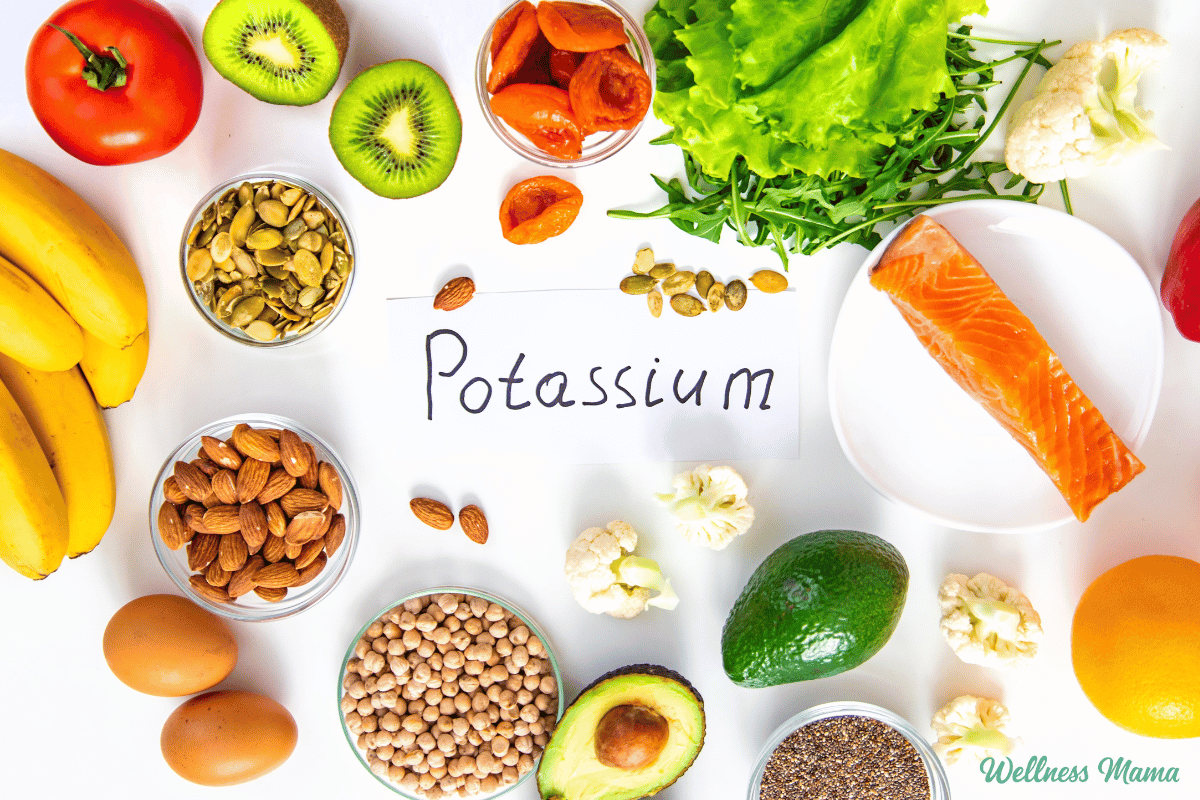
Best Food Sources of Potassium

Many whole foods have potassium, we just have to prioritize eating them. Some of the richest sources include: 

  • Potatoes and sweet potatoes
  • Avocados
  • White beans
  • Coconut water
  • Leafy greens and spinach
  • Citrus fruits and melons
  • Squash
  • Tomatoes
  • Salmon
  • Beets
  • Kiwi
  • Pomegranate

Most of us think of bananas, but they have less potassium compared to many of the above foods… even though they tend to get all of the credit.  

I prioritize potassium-rich foods seasonally whenever possible. During warmer months, I naturally crave more hydrating foods like fruit and coconut water, especially after workouts or sauna sessions. In colder months, I tend to rely more on root vegetables and warming meals. I’ve found that simply increasing these foods consistently can make a noticeable difference in energy and hydration.

A Note About Potassium Supplements

While I prioritize potassium rich foods, I also add some supplemental potassium. Let me give an important caveat here though. 

When it comes to adding extra magnesium and sodium into our diet, most of us can tolerate fairly large amounts. On the other hand, potassium levels more rapidly shift and too much can be dangerous. These symptoms can range from muscle weakness and heart palpitations to serious heart problems.

Over-the-counter potassium supplements contain relatively small doses and are tightly controlled. Since potassium affects heart rhythm and electrical signaling, balance matters much more than taking large amounts.

I prefer to start with food first and use LMNT electrolytes as needed for balanced mineral intake. Then if I feel like I need some more, I’ll take a potassium supplement. As always, this is highly individualized, and it’s important to pay attention to how your own body responds.

Potassium and the “Electrical Body”

One concept I keep coming back to is the idea that the body is fundamentally electrical. Minerals aren’t just nutrients in the traditional sense. They help create the electrical environment that lets our cells communicate.

Potassium plays a major role in maintaining that stable electrical environment. When levels are good we have more steady energy, calmer nerve signaling, more stable blood sugar, smoother muscle function, and balanced hydration. When levels are too low, we instead start to feel overstimulated yet exhausted at the same time.

It’s one reason why people often notice huge improvements when they finally address mineral deficiencies. Sometimes what feels like chronic stress or low energy may partly be the body struggling to maintain electrical balance at the cellular level.

Final Thoughts on Potassium

The deeper I dive into mineral health, the more convinced I am that potassium is one of the most underrated nutrients in modern wellness. It affects nearly every system in the body, from the nervous system and hormones to digestion, blood sugar, and energy production. Yet most people get far less than the body needs. Especially in today’s high-stress, highly processed modern environment.

For me, focusing on potassium alongside sodium and magnesium was one of the most noticeable foundational shifts I’ve made for my health. I noticed feeling calmer, more energized, and more resilient overall. While potassium isn’t a magic fix, the body functions remarkably better when we give it the minerals it needs.

Do you try to get potassium in your diet? What are some ways you try to get enough? Leave a comment and let us know!

Tags:
What is a toner and should I be using one? – The Irish News

What is a toner and should I be using one? – The Irish News

‘Toner’ is one of those buzzwords you hear when experts discuss basic beauty routines, but what it actually does is often skimmed over.

An exfoliant? A hydrating treatment? A pore-minimiser? It could be all and none of these. Once considered a harsh, alcohol-soaked skincare step that left skin feeling tight and squeaky clean, toner has undergone something of a beauty rebrand over the past couple of years.

Today’s formulas promise everything from hydration and barrier support to glow-boosting exfoliation and oil control – but with skincare routines already packed full of serums, acids and actives, are they essential in a simple skincare routine?

Toners have evolved from alcohol-heavy formulas and are becoming more integral, experts say (Alamy Stock Photo)

What exactly is a toner?

“Toners have evolved massively,” says clinical facialist Kate Kerr.

“Years ago, they were often alcohol-heavy formulas designed to strip away oil after cleansing, which is where a lot of the confusion and fear around toners still comes from.”

Traditional toners were largely used as a final cleansing step – particularly back when cleansers were heavier and less sophisticated. But modern formulations have become far more treatment-focused.

Aesthetician Nina Prisk, founder of Update Aesthetics, explains that many toners are now designed to “hydrate, soothe, gently exfoliate or support the skin barrier, depending on the ingredients used”.

Rather than simply removing oil, toners are increasingly being used to prepare the skin for the rest of a routine.

Kerr says she primarily uses toners as “a preparation step” to remove excess oil and dead skin cells, helping other products penetrate more effectively.

Brightening toner:

Naturium Multi-Bright Milky Toner, £19, Space NK

Does everyone need a toner?

This is where expert opinions begin to differ slightly.

Kerr believes toners can benefit almost everyone, noting, “for those with dry skin, toners can help rebuild the barrier and hold moisture.

“For oilier skin types, you have that extra degreasing and exfoliation step that helps with oil control.”

She also says that mature skin can particularly benefit from hydrating or exfoliating toners because natural cell turnover slows with age.

Prisk, however, sees toner as more of an optional extra rather than an essential step.

“A good cleanser, moisturiser and SPF are still the foundations of a skincare routine,” she says.

That said, she agrees the right formula can be useful for specific concerns, particularly dehydration, congestion or excess oil.

Ultimately, experts say toner should never be viewed as a one-size-fits-all product. The formula – and the ingredients inside it – matter far more than the category itself.

Barrier repair/hydrating toner:

Dr.Jart+ Ceramidin Skin Barrier Serum Toner, £35, Cult Beauty

What can toner actually help with?

According to both experts, modern toners can genuinely support hydration, mild exfoliation, oil balancing, deal with dullness, congestion and even help the products applied afterwards absorb more effectively into the skin.

Ingredients such as hyaluronic acid, niacinamide and gentle exfoliating acids can all be beneficial depending on the concern you’re targeting.

But there are still plenty of exaggerated claims surrounding toners.

“Pores don’t physically open and close,” Kerr explains, “and a toner alone isn’t going to cure acne or rosacea”.

Prisk agrees that promises to “shrink pores” or dramatically transform skin are often overstated.

“Toners are supportive products rather than miracle solutions,” she says.

Gentle exfoliating toner:

The Ordinary Glycolic Acid 7% Exfoliating Toner, £11.90

Should toner be applied with hands or cotton pads?

Again, this largely comes down to the formula.

“In my clinic we apply toner with cotton pads using small circular motions,” says Kerr, explaining this can aid the exfoliation process.

Hydrating toners, meanwhile, are often better patted into the skin with clean hands or even misted directly onto the face.

Prisk tends to favour hands over cotton pads where possible.

“This avoids unnecessary product wastage and can be gentler on the skin barrier,” she explains, particularly for sensitive skin types.

However, exfoliating formulas may still benefit from the precision and even distribution a cotton pad provides.

Exfoliating toner pads:

Medicube Zero Pore Pad 2.0, £24, Look Fantastic

Can exfoliating toners be overused?

This is one area where experts urge caution when using toners in your skincare routine.

Kerr believes exfoliating toners can safely be used daily, arguing that skin naturally sheds every day and that exfoliation helps support healthy cell turnover.

But Prisk warns over-exfoliation is increasingly common – especially when people combine toners with retinol, acids and other active ingredients.

“Signs you may be overdoing it include redness, tightness, irritation and increased sensitivity,” she says.

For many people, using exfoliating toners just a few times a week may be enough.

So, should you keep toner in your routine?

If you’re trying to streamline your skincare routine, toner is often one of the first products people question.

Prisk says she would usually prioritise cleanser, moisturiser and SPF first.

“Toners can absolutely have benefits, but they are generally more of an additional or supportive step,” she says.

Kerr, however, offers a differing opinion.

“Toner is a really important product to keep in your routine,” she states, arguing that it helps control oil, supports hydration and improves the penetration of other skincare products.

In reality, the answer probably sits somewhere in the middle.

A toner isn’t necessarily essential – but the right one can elevate a routine significantly, particularly if you’re targeting specific skin concerns.

The key is choosing a formula that supports your skin rather than stripping it – something modern toners, thankfully, have become far better at doing.

Skin-balancing toner for everyday:

Paula’s Choice Skin Balancing Pore-Reducing Toner, £29

Tags: , ,
Dermata Opens a New Chapter with the Release of Tome Skincare

AV Laboratories, Founded by Pioneers of IVF Solutions, to Launch Fertility Clinic Program Featuring Its Award-Winning Skincare at ESHRE 2026 in London

The science-led skincare company will host in-booth experiences showcasing its patented AVL SOM3® technology, offering product sampling and education, and introducing its new Fertility Clinic Skincare Program, a partnership designed to help fertility practices support women’s holistic skin wellness before, during, and after treatment.

LONDON–(BUSINESS WIRE)–$IBB #AVLSOM3–AV Laboratories, a science-led skincare company founded by pioneers in IVF solutions, regenerative medicine, and stem cell therapy, today announced it will exhibit at the 42nd Annual Meeting of the European Society of Human Reproduction and Embryology, ESHRE 2026, taking place in London from 5 – 8 July 2026. The company will welcome clinicians, embryologists, fertility specialists, researchers, partners, and industry participants at Booth A22.

“ESHRE is deeply personal for us because this is the community that shaped our scientific foundation,” said Ami Mezezi, CEO and Co-Founder of AV Laboratories. “Our work in IVF taught us how profoundly cellular health, precision, and care matter. With AV Laboratories, we are bringing that same philosophy into skincare, helping women feel supported through some of the most important and sensitive stages of their lives.”

At ESHRE 2026, AV Laboratories will present its award-winning skincare portfolio and a new vision for women’s skincare, one that connects reproductive science, cellular health, and skin longevity through a more holistic understanding of how skin’s needs change over a lifetime. By returning to the IVF community, AV Laboratories aims to open a new conversation around how fertility and women’s health providers can support not only clinical outcomes, but also the everyday confidence and wellbeing of the women they serve.

“We can’t keep separating these experiences into different categories anymore. Women’s health and skincare should be viewed as part of one connected journey,” Jessica Martin, Director of Corporate Communication at AV Laboratories. “As a mom of two, I remember how important it was to feel confident in the products I used, especially while breastfeeding. During that stage of life, you think carefully about everything, what you eat, what you use, what touches your skin. We want to make at least one part of that journey feel simpler by creating skincare women can genuinely trust.”

AV Laboratories’ portfolio is powered by AVL SOM3®, the brand’s patented molecular skincare technology designed to deliver precision nourishment to skin and support the key building blocks associated with younger-looking skin: collagen, elastin, and NAD+. “At AV Laboratories, we don’t formulate in isolation,” said Sylwia Pawlaczyk, COO and Master Formulator at AV Laboratories. “I spend a lot of time thinking about how we build the company around real clinical needs, not assumptions.” Dual-purpose formulations are designed for simple, effective routines, combining AVL SOM3® with clinical-grade actives that work with the skin to support hydration, barrier resilience, visible firmness, elasticity, radiance, and the appearance of smoother, healthier-looking skin.

“As both a dermatologist and a mother who had my two children through IVF, I understand firsthand how intentional women become about every choice during this journey,” said Dr. Dendy Engelman, board-certified dermatologist and Scientific Advisory Board Member at AV Laboratories. “Patients are making deeply personal decisions about what they put in and on their bodies, and they deserve skincare that feels clear, considered, and grounded in real science. What excites me about AV Laboratories is that it brings together breakthrough science, elegant formulation, and a true understanding of women’s needs, from IVF and motherhood to long-term skin longevity.”

At Booth A22, AV Laboratories will offer an educational experience designed around the brand’s journey from IVF science to molecular skincare, including:

  • Product sampling from the AV Laboratories skincare portfolio
  • Education on AVL SOM3® and its scientific foundation in IVF solutions
  • Information on the brand’s clinical testing, safety, transparency, and manufacturing excellence
  • A guided introduction to the brand’s clinical skincare program for fertility and women’s health practices
  • Conversations around how skincare can become part of a more holistic patient-support model
  • Meetings with the AV Laboratories leadership, including Sylwia Pawlaczyk, COO and Master Formulator, to discuss partnership opportunities, formulation questions, product launch strategy, and practical ways for clinics to introduce the skincare portfolio to their patients

AV Laboratories Fertility Clinic Skincare Program

For fertility practices, AV Laboratories’ clinical program is designed to be simple to introduce and easy to communicate to patients. The program gives clinics a way to offer science-backed skincare education, trusted product recommendations, and supportive wellness resources for women who may be more conscious of what they use during fertility treatment, pregnancy, breastfeeding, and beyond.

“Through my work with fertility clinics, I see how much trust patients place in their care teams,” said Nathalie Boonen, IVF and Medical Clinic Partnerships Expert.

“Women going through fertility treatment want guidance they can deeply rely on, in every aspect of their care, including what they can use on their skin. A thoughtful, science-backed skincare program gives clinics a simple way to meet that need and elevate the patients’ experience”

AV Laboratories invites ESHRE 2026 participants to visit Booth A22 to experience the brand’s skincare portfolio, learn more about AVL SOM3®, and explore partnership opportunities for fertility, women’s health, and clinical wellness.

To schedule a meeting with AV Laboratories during ESHRE 2026, participants are encouraged to contact the team in advance or visit Booth A22 during exhibition hours.

From pioneering IVF solutions to reimagining the appearance of skin aging

Before founding AV Laboratories, Ami and Monica Mezezi helped shape the IVF industry through their work at LifeGlobal. Founded by Monica, LifeGlobal pioneered single-step culture media for IVF, a breakthrough that contributed to changing the standard of care for fertility clinics around the world. LifeGlobal was acquired by CooperSurgical in 2018. Ami also co-founded EvolveGene, a genetic testing company focused on using molecular insights to support more informed, personalized health decisions, also acquired by CooperSurgical. In 2021, they founded CaseBioscience, a company developing technologies for regenerative medicine and stem cell therapy. At AV Laboratories, Ami and Monica draw on their deep experience in reproductive health, regenerative medicine, quality-controlled manufacturing, and cellular science to reimagine how we think about the appearance of skin aging.

About AV Laboratories

AV Laboratories is a science-led skincare company founded by pioneers in IVF solutions, biotechnology, molecular biology, stem cell research, and cellular science. The company develops advanced skincare solutions rooted in its patented AVL SOM3® technology, a molecular skincare complex inspired by decades of work in cellular nourishment, precision formulation, and women’s health. AV Laboratories is dedicated to helping skin look and feel healthier for longer through science-backed, clinically validated, and responsibly formulated skincare.

Contacts

Media Contact
Marlee Martinez

PR Contact

marlee@valleymade.co

Tags: , , , , , , , , , , , , ,
Best oLive
Privacy Overview

This website uses cookies so that we can provide you with the best user experience possible. Cookie information is stored in your browser and performs functions such as recognising you when you return to our website and helping our team to understand which sections of the website you find most interesting and useful.