Simple skincare and wellness habits to prioritise your health

Simple skincare and wellness habits to prioritise your health

Women’s self-care is about far more than beauty treatments, expensive skincare products or finding time for a spa day. It is about making your health and wellbeing a priority, even when life feels busy.

For many women, caring for everyone else can come before caring for themselves.

But simple daily rituals, from looking after your skin to getting enough rest, moving your body and taking time to switch off, can make a meaningful difference to how you feel.

Skincare is one small part of that bigger picture. Your skin is your body’s largest organ and caring for it can become a simple, intentional act of self-care.

This Women’s Month, it is worth remembering that self-care is not selfish or indulgent. It is about giving yourself the same care and attention you so readily give to others.

Daily rituals for skin and soul

Start and end your day with intention

Take a few mindful moments in the morning and evening when applying your skincare products. Notice how your skin feels as you gently massage in your moisturiser.

Keep your skin hydrated

Dry, tight skin can be a sign that your skin barrier needs support. Applying a nourishing lotion after your shower helps lock in moisture and protect your skin.

Move your body with joy

Exercise isn’t punishment; it can be a celebration of what your body can do. Whether it’s a walk outside, dancing in the kitchen, or a stretch session before bed, find movement that makes you feel good.

Unplug regularly

Stepping away from screens, social media, and constant notifications allows your mind to recharge and helps you reconnect with yourself.

Prioritise consistency over perfection

You don’t need an expensive or elaborate routine. Small, regular acts of care have more impact than occasional, grand gestures.

When we look at self-care as health care, the conversation changes. 

It’s no longer about pampering for the sake of vanity. It’s about creating a foundation for resilience, balance, and well-being. 

By making time for daily habits that nourish, restore, and uplift us, we’re not only caring for our skin; we’re caring for every part of ourselves.

Tags: , , , , ,
What Habits Are Worth Adopting After the Age of 30? Everyday Choices That Support Health and Wellbeing

What Habits Are Worth Adopting After the Age of 30? Everyday Choices That Support Health and Wellbeing

TURNING 30 is often a moment when many people start reflecting on their lifestyle and overall wellbeing. It does not mark a sudden turning point, but it is a time when we may begin to notice that recovery after a sleepless night takes longer, stress affects us more strongly, and our skin and body require more conscious care. Introducing a few simple habits can help support health, energy levels and appearance for years to come.

Why Is It Worth Taking Better Care of Your Body After 30?

The body is constantly changing, regardless of age. After the age of 30, natural processes may gradually occur, including changes related to metabolism, the production of certain structural proteins and the speed of tissue regeneration.

One of the important substances whose natural production decreases over time is collagen. This protein is found in the skin, cartilage, bones, tendons and ligaments. Its levels are associated with skin elasticity and the proper functioning of many structures throughout the body.

However, reaching your thirties does not mean you should focus only on ageing processes. It is a great time to build lasting foundations for a healthy lifestyle.

Regular Exercise as the Foundation of Good Fitness

Physical activity is one of the most important habits worth maintaining throughout life. It does not have to mean intense workouts every day – consistency is what matters most.

Combining different forms of movement allows you to support your body in a comprehensive way:

· strength training helps maintain muscle mass,

· walking supports everyday activity and fitness,

· mobility exercises improve range of motion,

· yoga or pilates help strengthen the body and improve flexibility.

Strong muscles provide natural support for joints, while regular movement helps maintain mobility for longer.

Sleep and Recovery – An Investment in Energy

After the age of 30, many people notice that their bodies cope less effectively with insufficient sleep. Several nights of poor rest can affect concentration, energy levels and the appearance of the skin.

It is worth supporting healthy sleep habits by:

· keeping regular sleeping and waking times,

· limiting screen use before bedtime,

· creating a relaxing environment for rest,

· avoiding excessive caffeine intake in the evening.

Recovery is just as important as physical activity – it is during rest that the body repairs itself and prepares for future challenges.

A Diet Rich in Essential Nutrients

As we get older, the quality of the food we eat becomes increasingly important. A balanced diet should provide the body with vitamins, minerals, protein and antioxidants.

A daily diet should include:

· vegetables and fruit, which provide vitamins and polyphenols,

· protein-rich foods that support muscle maintenance,

· healthy fats such as olive oil, nuts and fish,

· foods containing nutrients that contribute to normal body functions.

Certain nutrients are particularly important, including vitamin C, which contributes to normal collagen formation, as well as minerals such as magnesium and zinc.

Skincare – Fewer Products, More Consistency

After 30, the skin often requires a more mindful approach. This does not mean using a large number of cosmetic products. The most important factors are consistency and choosing products suited to your skin’s current needs.

A basic daily skincare routine should include:

· gentle cleansing,

· moisturising,

· daily use of SPF protection,

· products that support the skin’s natural processes.

UV radiation is one of the main factors contributing to visible signs of skin ageing, which is why sun protection should be part of your daily routine throughout the year.

Collagen Shots – Convenient Support for Your Daily Routine

One of the growing trends in the beauty and wellness sector is collagen shots. Their popularity comes mainly from their convenient form and the ease with which they can be incorporated into everyday habits.

Collagen shots usually contain hydrolysed collagen, a form that has been broken down into smaller peptides, which may be more easily absorbed by the body. Regular collagen supplementation is often chosen by people who want to support their skin’s condition and provide additional nutritional support as they age.

Collagen is a natural component of the skin, so supplementing it can be part of a comprehensive approach that combines diet, skincare and a healthy lifestyle.

Reducing Stress and Making Time for Yourself

Work, responsibilities and a fast-paced lifestyle mean that many people experience high levels of stress after turning 30. Long-term stress may affect sleep quality, energy levels and overall wellbeing.

Simple daily practices can help, such as:

· regular walks,

· spending time in nature,

· breathing exercises,

· meditation,

· making time for hobbies and relaxation.

Looking after your mental balance is just as important as caring for your physical health.

Regular Check-Ups and Preventive Healthcare

After the age of 30, it is also worth paying more attention to preventive healthcare. Regular check-ups help you better understand your body’s needs and respond more quickly to any changes.

This includes monitoring key health indicators and consulting a healthcare professional if any concerning symptoms appear.

Small Changes Can Bring Long-Term Benefits

You do not need to completely transform your lifestyle after turning 30. The greatest impact often comes from small, consistent actions that gradually become natural parts of everyday life. Regular exercise, a nutritious diet, sufficient sleep, skincare and conscious support for the body, including collagen shots, can help maintain good condition and energy levels for years to come.

Taking care of yourself after 30 should not be seen as a reaction to getting older, but as an investment in comfort, mobility and wellbeing every day.

Article by Emily Spencer

Tags: , , , , , , , ,
light benefits

Sunlight, Red Light, and How to Harness Light’s Benefits for Health

I’m not exaggerating when I say that light changed my life. This often overlooked wellness tool seems so simple, but it can have really impressive benefits. I’ve talked a lot about sunlight, blue light, red light therapy, and more over the years. Today, I’m putting everything into one easy place for you to learn all about the benefits of light and how it can positively impact your life too. 

There’s some overlap in the following sections, but I’ve tried to separate the info into a few different categories. Many of these articles and podcast episodes are purely about light for health, but some of them include other strategies alongside light exposure. 

Healthy lighting is just one tool in the toolbox. And while it can have some pretty drastic effects, other healthy habits like stress reduction, sleep, hydration, etc. are still important. Though I would argue that healthy light exposure boosts the effects of all of these. 

The Benefits of Sunlight

Overall sunlight is a powerful healing tool. When it hits our skin (and our eyes!) it triggers our body to produce the hormone vitamin D. It helps strengthen the immune system, bone health, boost mood, balance hormones, and so much more. 

Yet many of us are cooped up indoors the majority of the time, under flickering artificial lighting. Experts estimate children spend an average of 4-7 minutes outside. A recent poll showed preschoolers only go out to play once a week, or less on average. 

Adults aren’t faring much better. Most adults report they spend less than an hour outside per day. And for over 18% of us it’s less than 15 minutes a day! Prioritizing getting outside into the light at various times of the day can make a huge difference in health. Here are some more compelling reasons to step outside and into the light!

Morning Light Benefits

Morning light has its own health benefits and deserves its own section in this article. When I was recovering from Hashimoto’s I’d set my alarm, head outside at sunrise, and fall back asleep in the natural light. Hopefully you have more energy than I did back then, but even if you don’t, morning sunlight can help! Morning light is unique because it’s a great source of red light and naturally helps balance circadian rhythms, cortisol levels, and more. It’s become a non-negotiable part of my morning routine!

Cortisol and Circadian Alignment

Sunlight exposure, especially watching the sunrise and sunset, is key for circadian alignment. According to the Cleveland Clinic, the circadian rhythm is our body’s natural 24-hour clock. It’s a system that regulates our sleep-wake cycle, hormones, digestion, stress levels, and more. 

Light also plays a role in cortisol levels, aka our stress hormone. We actually want cortisol, we just want the right amounts at the right time. When we’re exposed to blue light at the wrong time of day and other stressors though, it can throw off our cortisol rhythms. Here’s how to use light to improve both cortisol and circadian rhythms. 

Sunscreen and Sunlight’s Role

I’m not the biggest fan of sunscreen most of the time. Contrary to most conventional dermatologists and doctors, I think we need more sun, not less! That said, burning and skin damage is never a good thing. 

Here’s a balanced approach that covers when sunscreen can be helpful and healthy kinds to use. Plus other ways to protect skin when outside and benefits of sunbathing. 

Red Light Therapy 

Morning and evening sunlight (at sunrise and sunset) offer free red light. Then there are red light therapy devices for a more targeted approach. You’ll find red light face masks, red light blankets and panels, and even red light toothbrushes for gum health! 

Here are my thoughts on red light therapy, its benefits, and how to get it from the best sources. 

Healthy Home Lighting

Many of us don’t think about indoor lighting when it comes to light’s benefits. However, the wrong indoor lighting at the wrong time of day can really sabotage our health efforts. LED lights flicker and cause stress to our nervous system, often too fast for our eyes to notice, yet our brain does. 

Blue light at night from screens and overhead lighting tells our brain that it’s daytime and inhibits us from winding down for sleep. Here are some healthier swaps and solutions and what I do when it comes to indoor lighting. 

More Podcast Episodes On Light’s Benefits

I’ve had the opportunity to chat with some amazing experts over the years on the Wellness Mama podcast. Some of my favorite episodes have been on the benefits of sunlight and how to use different kinds of light for health. I love talking about it so much that I’ve also done several solo podcast episodes on the topic.

You’ll find episodes on how to optimize sunlight exposure, its impact on mitochondria and energy, balancing hormones, and more. 

  • 429: Andy Mant on How Light Can Heal (or Damage) Your Health & Hormones 
  • 609: Dr. Jack Kruse on Junk Light, 5G, Optimizing Sunlight and Longevity
  • 949: Light Masterclass: How to Transform Light From Health Sabotaging to Your Greatest Superpower With Roudy Nassif
  • 822: Light, Mitochondria, DNA: Sunshine Is the Only Way With Dr. Courtney Hunt
  • Episode 1000: What I’ve Learned, Changed, and Still Believe
  • 627: Jim Stephenson on Vitamin D Deficiency: Deconstructing the Deception & Stop Fearing the Sun
  • 1009: Masterclass: Mitochondria, Light, Phospholipids and Cellular Health With Justine Stenger
  • 999: Light and Leptin: Understanding These For Hormones, Fertility, and Health With Sarah Kleiner
  • 691: The 80/20 of Health: Light, Protein, Nutrition and Hormones With Dr. Leland Stillman
  • 301: How to Use Light to Drastically Improve Health With Matt Maruca
  • 245: Ari Whitten on Fighting Fatigue with Sauna, Sun, & Sweating 

Do you prioritize getting sunlight or avoiding certain kinds of light? Have you noticed any positive difference? Leave a comment and share below!

Tags: , , , , , ,
resilience and health

How I Discovered Real Health is About Resilience

For years, I thought health was something I could perfect. During my struggle with Hashimoto’s, I was really strict about food, supplements, and my environment. At one point, I was down to about 10 safe foods, and I spent a lot of time trying to avoid anything that might trigger symptoms. The more I restricted, the healthier I was… right?

And while the strict diet plans and handfuls of supplements had their place at the time, I realized something important. I started questioning the way I think about health. Is the goal really only to feel good if I was able to control every factor and input?

I realized that I didn’t need perfection, but resilience. Having a body that could adapt to real life and still thrive. I wanted to enjoy dinner with friends, travel without anxiety, recover from an occasional late night, and trust that my body could handle it. That shift from pursuing perfect health to building resilience became one of the most important lessons of my healing journey. 

This perspective continues to shape how I approach what health really means. 

When Health Becomes a Very Small Box

For years, I measured progress by how well I could follow the rules I’d made for myself. Thankfully I was able to work with some really phenomenal doctors and healthcare experts while working through autoimmune disease. And while their guidance, the elimination diets, and supplements helped, I knew I didn’t want to stay there.

I kept detailed records of supplements, symptoms, and foods. I was doing everything I knew to do, and in some ways it worked since I often felt better than I had before.

The problem was that I only felt good within a very narrow range of inputs. If I stepped outside that range, whether through travel, stress, lack of sleep, or eating something unexpected, I worried about the consequences. Eventually, I realized that while I was disciplined, I wasn’t necessarily becoming more resilient.

I had a reframe and discovered that true health isn’t fragility wrapped in discipline. Health isn’t about feeling good only when every variable is perfectly controlled. True health includes adaptability, flexibility, and the ability to recover when life doesn’t go according to plan.

I began to see that I didn’t want to spend the rest of my life shrinking my world to accommodate symptoms. I wanted to expand my capacity so I could participate fully in life without constantly worrying about what might happen next. That didn’t mean abandoning healthy habits. It simply meant recognizing that the goal wasn’t perfection. The goal was building a system that could thrive under a wider variety of circumstances.

Today, I still prioritize the habits that support my health. I still focus on nutrient-dense foods, quality sleep, sunlight, minerals, and movement. I choose healthy inputs whenever possible, but I don’t freak out if sometimes I can’t do the “perfect” thing.

The Hidden Trap of Perfect

I think this is one of the less talked about challenges within the health and wellness world. Sometimes we can become so focused on optimizing that we unintentionally create a version of health that’s restrictive, not freeing.

It’s easy to start believing that thriving means having the perfect diet, the perfect routine, and the perfect environment. We can begin to think that every deviation is a problem to solve or a setback to avoid. While awareness can be helpful, there’s a point where hypervigilance starts to look a lot like stress.

For me, that realization was uncomfortable because I genuinely believed I was doing everything in the name of health. However, I eventually recognized that fear was driving some of my behaviors, rather than confidence. I wasn’t always making choices because they felt supportive. Sometimes I was making them because I was afraid of what would happen if I didn’t.

This is where many healing tools can be misunderstood. Restrictive diets, elimination protocols, and targeted interventions can be incredibly valuable. They certainly were for me and  removed major stressors and gave my body a chance to reset. But they’re meant to be tools, not destinations.

Even many of the practitioners I respect most emphasize that healing protocols are meant to be temporary. The goal is not to stay on a restrictive plan forever. The goal is to create enough capacity that the body can handle more over time. That distinction changed everything because it shifted the focus away from managing symptoms and toward building resilience.

When Healthy Didn’t Feel Like Freedom

One of the biggest turning points in my journey came when I realized healthy didn’t feel like freedom. It felt like management.

I was very skilled at planning meals, researching ingredients, and controlling variables. Yet despite all that effort, there was still a sense that I was constantly managing my health rather than fully living my life. That awareness led me to ask a deeper question: Was I actually moving toward greater health, or was I simply becoming more efficient at navigating limitations?

I had spent years supporting certain aspects of my body while largely overlooking others. I’d focused heavily on nutrition, supplements, and detoxification. Those things mattered, but I hadn’t given nearly as much attention to my nervous system, my mindset, or the stories I was telling myself about my health.

I’d internalized beliefs like “my body is broken,” “my body is attacking itself,” or “I can’t tolerate certain things.” Even when I wasn’t consciously thinking those thoughts, they shaped how I viewed myself and my future.

You’ve probably heard the saying, “You are what you eat,” but I think a more powerful realization is that we become what we think.

Gradually, I began experimenting with a different narrative. Instead of saying, “I’m sick,” I started saying, “I’m healing.” Instead of focusing on what I couldn’t have, I focused on what I could do to nourish my body. Rather than seeing symptoms as evidence that my body was failing, I began viewing them as messages from my body.

It may sound simple, but those shifts had a profound impact on the way I experienced healing.

The Missing Piece: Safety Signals

If there was one lesson that transformed my recovery more than almost anything else, it was understanding the role of the nervous system. For a long time, I approached healing from a biochemical perspective. I focused on nutrients, hormones, supplements, and food. While those things are important, I eventually realized that healing is also neurological, emotional, and mental.

The body can only expand its capacity when it feels safe.

Looking back, I don’t think I fully understood how many stress signals my system was receiving. Even while doing all the “right” things, my body often felt like it was operating in a constant state of vigilance. Once I started prioritizing safety signals, I noticed changes that surprised me.

Morning sunlight became a non-negotiable. Even when I was exhausted, I would get outside shortly at sunrise, often falling asleep in the natural light. I focused on creating strong circadian rhythm cues and protecting sleep as much as possible. Instead of intense exercise, I did gentle movement for a time. I spent more time outdoors, prioritized rest, practiced breathwork, and reduced unnecessary stress whenever I could.

None of those interventions are particularly complicated. Most are free, yet they have an enormous impact.

Over time, I noticed more energy, better digestion, more calm, and a stronger sense of trust in my body. Instead of feeling like I was constantly fighting against myself, I began to feel like I was working with my body rather than against it. That partnership became one of the most important foundations of healing.

Expanding Capacity One Step at a Time

As my nervous system became more regulated, something interesting happened. My body began tolerating more. I slowly started experimenting with foods I hadn’t eaten in years, even grains and dairy! Travel without feeling completely exhausted became possible. I ate at restaurants and didn’t worry if I accidentally ate something I normally wouldn’t. I loosened some of the rigid rules that had become part of my daily life.

None of this happened overnight, and it certainly wasn’t without fear. When you’ve experienced symptoms, flare-ups, and years of uncertainty, the idea of expanding beyond familiar boundaries can feel intimidating.

I remember having genuine concerns about relapse. There was a part of me that worried one wrong choice would undo all the progress I had made. However, over time, I learned that fear itself can become a limiting factor. Instead of approaching new experiences with anxiety, I tried approaching them with curiosity.

I reminded myself that my body was different than it had been before. I practiced trusting the feedback I was receiving rather than assuming the worst. When I noticed a response to something, I treated it as information instead of evidence that I’d failed.

In many ways, I started viewing resilience like physical training. We don’t build strength by avoiding all challenges. We build strength through appropriate stress followed by recovery. The body adapts because that’s what it was designed to do.

I found the same principle applied to adaptability. Gradually introducing new inputs gave my body opportunities to learn, adjust, and expand its capacity.

What Resilience Looks Like Now

When I think about health today, resilience is one of the first qualities that comes to mind. Resilience means being able to recover from stress more quickly. It means occasionally eating foods that aren’t perfect and trusting that my body can handle them. It means bouncing back from disrupted sleep (hello newborn phase!), intense workouts, or unexpected life events without feeling completely derailed.

I no longer spend significant mental energy wondering how my body will respond to every situation. I don’t feel the need to micromanage every meal or maintain perfect conditions in order to feel well. That emotional freedom has been every bit as valuable as the physical improvements.

This perspective is also one of the reasons I continue talking about foundational practices like sunlight, sleep, minerals, hydration, movement, and nervous system support. They aren’t flashy or trendy, but they’re tried and true. They helped me build the capacity and foundation that allowed everything else to be easier.

Over time, I also noticed that changing my identity played an important role in the process. I stopped identifying as someone who was sick and started identifying as someone who was healing. And my behaviors naturally began to align with that reality. In my experience, identity often drives behavior more effectively than willpower ever could.

A Return to Wholeness

One of the biggest lessons from my journey is that restriction can be a valuable therapeutic tool, but it isn’t the destination. Sometimes the body genuinely needs a season of extra support, fewer stressors, and more structure. The key is remembering that those tools are meant to create healing, not become a permanent way of life.

Healing isn’t just not having symptoms, but it’s about freedom, flexibility, and trusting your body. It’s being able to participate fully in life without constantly worrying about what might happen next. It’s knowing that your body is adaptive, intelligent, and capable of far more than you may realize in difficult seasons.

Even if you’re dealing with a narrow tolerance range right now, there’s hope that it won’t always be this way. I’ve seen firsthand how remarkable the human body can be when given the right conditions. And one of the deepest beliefs I hold today is that our bodies are always working for us, not against us. Healing may not always happen on the timeline we want, but resilience is possible. 

What has your healing journey looked like? How have you been able to find more freedom and resilience? Leave a comment and share below!

Tags: , , ,
magnesium cell health

The Secret of Magnesium For Cell Health

I’ve been sharing about magnesium’s benefits for over 15 years now on the blog and podcast. It’s one of the few supplements that I take every day because I’ve noticed such a huge difference with it. More recently, I’ve come to realize how much it helps with nervous system regulation and mineral balance. 

Once I started using magnesium regularly I noticed not only did I sleep better, but I handled stress better and didn’t feel so depleted. For me (and so many others) it’s one of those supplements that are core to my wellness routine. 

More people are now aware of magnesium’s benefits, but it does so much more than help with sleep or relaxing. It’s deeply connected to how our cells make energy, how our nervous system communicates, and how we respond to stress. Unfortunately, unless you’re thoughtfully supplementing, you’re very likely not getting enough. 

Magnesium: The Mineral Behind Energy and Calm

Experts estimate magnesium is involved in around 800 (or more!) enzymatic reactions in the body. If you’re making hormones, repairing tissue, digesting food, producing energy, or regulating the nervous system, you can thank magnesium. It’s one reason why magnesium deficiency can show up in so many different ways.

One of magnesium’s most important jobs is helping the body create usable cellular energy. The body’s energy currency is ATP (adenosine triphosphate), but ATP isn’t biologically active on its own. It has to bind to magnesium to actually function. In practical terms, this means magnesium is directly connected to whether our cells can efficiently produce and use energy.

Side Effects of Low Magnesium

When magnesium levels are low the entire body can see the effects. Fatigue, poor recovery, muscle tension, headaches, and brain fog can all be signs that the body doesn’t have the mineral support it needs.

I noticed this during the years when my body was stuck in a highly inflamed state. Even though I’d been taking magnesium for years, I realized I wasn’t always absorbing or tolerating it well because my nervous system and digestion were so dysregulated. At one point, magnesium supplements actually made me itchy, which surprised me because magnesium is supposed to be so good for you.

Eventually, I learned that I had to work up slowly while also addressing larger issues like inflammation, nervous system stress, mast cell activation, and what’s often called the “cell danger response.” Once my body felt safer and calmer overall (and I found magnesium that worked for me) I finally started seeing the positive benefits.

Why Magnesium Needs are So High

Between chronic stress, mineral-depleted soil, filtered water, medications, and even intense exercise, many of us are likely running low without realizing it. As moms with lots of responsibilities and stressful situations, it’s easy to become magnesium deficient. 

Stress, physical or emotional, dramatically changes our magnesium demand. When cortisol and adrenaline levels are chronically too high, it increases how much magnesium our cells use and excrete. It’s our body’s built-in survival response.

This makes sense biologically. In an emergency, the body prioritizes immediate survival over long-term repair. The problem is that many of us now live in a constant low-level stress state. We’re overstimulated, under-rested, chronically busy, and often disconnected from the rhythms that once allowed our nervous system to fully recover.

Stressed? You Need Even More Magnesium!

So now? Our body constantly uses magnesium faster than we can replace it. Over time, this can create a cycle where stress depletes magnesium, and low magnesium makes us feel even more stressed, anxious, tight, or exhausted.

For me, this showed up as the classic “wired but tired” feeling for years. I could push through the day on stress hormones and sheer willpower, but my nervous system never truly relaxed. Once I started viewing magnesium not just as a supplement, but as a foundational safety signal for the body, things began to shift.

Magnesium helps calm the nervous system and relax smooth muscle tissue. Adequate magnesium essentially tells the body that it’s safe enough to move into repair mode. This is one reason people often notice better sleep, less muscle tension, headaches, and constipation, or better stress resilience with more magnesium.

Magnesium Benefits For Women (and Why It’s Different)

Women have different factors that can increase our need for magnesium. Fluctuating hormones through the menstrual cycle (especially right before a period) increase our magnesium needs. Pregnancy and breastfeeding both dramatically increase mineral needs too. 

Perimenopause and menopause add another layer because fluctuating hormones and higher stress loads often increase nervous system sensitivity. Many women notice symptoms like irritability, poor sleep, muscle tension, headaches, or worsening PMS when the body craves more magnesium. 

Looking back, I can see how much this applied in my own life. During pregnancy and postpartum especially, I often felt depleted in ways that I couldn’t fully explain at the time. Now I realize that mineral depletion was likely a much bigger part of the picture than I understood then.

This is also why I think magnesium conversations need more nuance than simply “take magnesium for sleep.” Magnesium is connected to hormone balance, energy production, stress response, muscle function, nervous system regulation, and cellular repair. Sleep benefits are wonderful, but they’re really just one visible piece of a much larger picture.

How Modern Life Sabotages Magnesium Levels

One reason why magnesium deficiency is so common is because modern life seems perfectly designed to burn through it. Our food is no longer mineral rich because the soil is so depleted, even compared to a few generations ago. 

Filtered water can also contribute to the problem. While water filtration is absolutely beneficial, many systems remove naturally occurring minerals as well. Unless we intentionally remineralize our water or prioritize mineral intake elsewhere, this can deplete magnesium even more. 

Here are some more things that deplete magnesium:

  • Intense exercise 
  • Sweating (from sauna or exercise)
  • Poor sleep
  • Ultra-processed or sugary foods 
  • Meds like birth control pills, certain blood pressure pills, and proton pump inhibitors
  • Lots of caffeine or alcohol 
  • Chronic stress (hello mom life!)

I gave up alcohol several years ago, but I do enjoy my coffee. Due to that and my active lifestyle I really pay attention to replenishing minerals. 

The symptoms of low magnesium can be surprisingly broad. In many ways, magnesium deficiency can start to look a lot like modern life itself. Anxiety, insomnia, constipation, migraines, PMS symptoms, muscle cramps, tight shoulders, restless legs, irritability, and heart palpitations can all point toward magnesium depletion.

How Magnesium’s Plays With Other Electrolytes

As important as it is, magnesium doesn’t work alone. Sodium, potassium, and calcium (among others) work together in a tightly coordinated system. Calcium and magnesium work almost like opposites in the body. Calcium helps muscles contract and excites nerves. Magnesium helps muscles relax and calms nerves. We need both, but we need them in balance.

The challenge is that many processed foods and supplements add calcium while fewer people prioritize magnesium. Too much calcium without enough magnesium can contribute to muscle tension, cramps, irritability, and an overstimulated nervous system.

Magnesium also plays a critical role in potassium balance. Potassium is essential for electrical activity in our cells, but we need magnesium to help move potassium into cells. This means low magnesium can create problems even if it seems like we’re getting enough potassium.

This relationship becomes even more important when thinking about energy, muscle function, and heart rhythm. Sodium, potassium, and magnesium all work together to regulate cellular electrical activity. When one is chronically low, the whole system can feel dysregulated.

I’ve noticed that improving magnesium intake worked much better when I also became more intentional about electrolytes overall. Focusing on only one mineral in isolation rarely created the same results as supporting the broader mineral balance together.

The Different Forms of Magnesium Matter

One reason magnesium can feel confusing is that different forms do different things. Many people try one isolated form, don’t feel better, or experience digestive issues, and assume magnesium simply isn’t helpful for them.

  • Magnesium citrate – one of the most common and used for digestion and constipation. For some it can cause loose stools, especially if too much is used. 
  • Magnesium glycinate, or bisglycinate, is bound to glycine and tends to be gentler and more calming. This is one of my favorite forms because glycine also supports relaxation and sleep.
  • Magnesium malate – often used for energy and helps mitochondrial energy production.
  • Magnesium L-threonate –  it can cross the blood-brain barrier and may support cognition, focus, and mood.
  • Magnesium taurate – supports heart health, improves sleep, and supports healthy blood sugar levels.
  • Magnesium orotate – helps with heart health, improves energy and resilience.
  • Magnesium sulfate – also known as Epsom salts, helps relieve constipation and soothe achy muscles.

You could mix and match and guess which ones you need. However, I’ve found the best results with taking a broad-spectrum magnesium supplement with all seven forms. It’s better than guessing which one my body needs most at any given time. Once I switched to BIOptimizers I finally noticed a difference from magnesium supplementation. Even my Oura ring showed the visible results through health metrics. 

Why I Also Love Topical Magnesium

Topical magnesium deserves its own category because it can be incredibly helpful, especially for people with more sensitive digestion. Since it absorbs through the skin, it bypasses the digestive system that can make oral magnesium harder to tolerate.

I especially love topical magnesium after workouts or on sore muscles. Many people also notice benefits when using topical magnesium on their calves or feet before bed, especially for muscle tension or restless legs. I often use it after sauna sessions or intense workouts when I know my mineral demand is higher.

Here are some ways I get topical magnesium:

Why Food Still Matters

Even though I think supplementation is necessary, food sources matter tremendously. Magnesium-rich foods provide not only magnesium, but other supportive nutrients and cofactors.

Some of the best dietary sources include pumpkin seeds, almonds, cashews, leafy greens, avocado, salmon, black beans, and dark chocolate. Interestingly, this may partly explain why many women crave chocolate around their menstrual cycle. The body may actually be seeking magnesium.

That said, I’ve also come to agree with many experts who now acknowledge that getting enough magnesium from food alone has become almost impossible. Soil depletion has changed the nutritional landscape dramatically compared to what previous generations experienced.

In my own life, I view magnesium as a both-and approach. I prioritize nutrient-dense foods while also supplementing intentionally, especially during higher stress periods or times of increased demand.

Magnesium as a Safety Signal for the Nervous System

The more I learn about health, the more I realize the body constantly responds to signals of either safety or danger. Magnesium appears to play a surprisingly important role in that conversation. 

Magnesium supports the parasympathetic nervous system, often called the “rest and repair” side of the nervous system. It helps relax smooth muscles, calm the limbic system, support digestion, and lower the body’s stress threshold.

For many of us living in chronic sympathetic dominance, constantly rushing, multitasking, and overstimulated, this matters a lot. The body can’t fully repair when it constantly thinks it’s in danger. It’s like magnesium is helping the body to take a deep breath out. Sleep becomes deeper, muscles unclench, and stress and recovery are easier.

That doesn’t mean magnesium is a magic cure or the only missing piece. However, it can be a foundational support that helps create an environment where healing and repair become more possible.

What I Use and Where to Get it

I already mentioned which topical products I use above, but you can find my favorite magnesium supplement here. I use Magnesium Breakthrough from BIOptimizers and have for years. It uses 7 different types of magnesium so I don’t have to worry I’m not getting the kind my body needs in the moment. 

Final Thoughts on Magnesium and Cellular Health

Magnesium has remained one of the most consistent parts of my own health journey because I’ve repeatedly noticed how foundational it is. It isn’t just about preventing deficiency symptoms. It’s about supporting the electrical, energetic, and nervous system processes that help the body function well in the first place.

You might not feel instant results, but the body gradually becomes more resilient and more rested. In a world that constantly pulls us into stress and depletion, this kind of support makes a meaningful difference over time.

Do you supplement with magnesium? Have you noticed a difference? Leave a comment and share below!

Tags: , , ,
Screenshot-2026-05-07-at-4.49.58-PM

Estetica Wellness Celebrates Mother’s Day and May Wellness Initiatives With Exclusive Specials Focused on Beauty, Skin Health and Concierge Care

Throughout the month of May, Estetica Wellness is celebrating Mother’s Day, Women’s Health Week, Mental Health Awareness Month, National Physical Fitness and Sports Month and Skin Cancer Awareness Month with a curated collection of aesthetic, wellness and preventative care specials designed to help clients look and feel their best from the inside out.

Known for its luxury, integrated approach to care, Estetica Wellness provides comprehensive aesthetic and wellness services all under one roof, including injectables, laser treatments, facials, body contouring, weight management, hormone optimization and IV therapy.

What truly sets Estetica Wellness apart is its concierge medical model, featuring 24/7 concierge care, direct physician access and pediatric concierge services — a rare offering in the Las Vegas market that delivers highly personalized healthcare tailored to each patient’s lifestyle and needs.

Complementing its medical and aesthetic services, Estetica Wellness also offers expert physical therapy focused on recovery, mobility, injury prevention and long-term strength. In recognition of National Physical Fitness and Sports Month, the practice is encouraging patients to prioritize movement, rehabilitation, physical wellness and preventative care as part of a complete health and wellness journey.

Throughout May, Estetica Wellness is also spotlighting services tied to Women’s Health Week, May 12–18, Mental Health Awareness Month and Skin Cancer Awareness Month, reinforcing the importance of self-care, preventative medicine, healthy skin and whole-body wellness.

As Skin Cancer Awareness Month highlights the importance of healthy skin and preventative skincare, Estetica Wellness is encouraging clients to prioritize skin health through advanced laser treatments, medical-grade skincare products and restorative facial services that support long-term skin wellness, protection and rejuvenation.

Mother’s Day Specials at Estetica Wellness

This May, Estetica Wellness is offering exclusive Mother’s Day packages and seasonal savings designed to pamper, restore and rejuvenate.

“Love You, Mom!” Package – $1,450 (Save $205)

Includes:

  • Full Face CoolPeel Laser
  • Ampra Voluminizer HA Serum
  • Signature Hydrafacial
  • Hydrinity Face Mask

“Thank You, Mom!” Package – $900 (Save $154)

Includes:

  • One Daxxify Treatment
  • Signature Hydrafacial
  • Ampra Voluminizer HA Serum
  • Hydrinity Face Mask

Additional May Specials Include:

  • Lipodissolve – 20% off medium and large treatment areas
  • Clear V – $50 courtesy credit toward a 60-minute treatment
  • Dermal Filler Promotion – Buy three syringes and receive one additional syringe at no cost (must be used during the same appointment)
  • PDGF Add-On – $100 off PDGF when paired with any service
  • Skincare Edit – Purchase any four products and receive 20% savings

For appointments or more information, visit Estetica Wellness at https://esteticawellness.com/ or follow along on social media for additional May offerings and wellness education.

Tags: , , , , , , , , , , , , ,
sodium for cellular health

Why Getting Enough Salt is Critical For Health

Sodium used to be something I barely thought about. Like many women trying to “do all the right things,” I ate whole foods, drank plenty of water, and avoided “bad” foods. On paper, it looked like a perfect routine. However, I was still having symptoms like low energy and sluggish digestion. 

It wasn’t until I started digging into the science of minerals, especially sodium, that things began to click. For years we’ve been told that sodium is bad and something to be restricted. However, what I’ve learned (and experienced) over the years flips that advice on its head. 

Sodium is one of the most foundational elements in how our bodies generate energy, communicate internally, and even feel safe at a nervous system level. For many of us, the real problem is that we’re not getting enough sodium.

Sodium: and Why Our Cells Crave it

When we hear the word “electrolytes,” it’s easy to think of sports drinks or hydration powders. But at a cellular level, electrolytes are something much more profound. They are what allows electricity to flow throughout the body. 

Sodium, in particular, is one of the primary electrolytes. In simple terms, it carries a positive charge when dissolved in water. This charge is what allows it to conduct electricity. That’s incredibly important because the human body is, at its core, an electrical system.

Every thought, heartbeat, and movement depends on electrical signaling. Without adequate sodium, that signaling becomes less efficient. Research even shows that sodium and potassium ions are constantly moving across cellular and organelle membranes. This highlights just how deeply embedded these minerals are in cellular function.

From my own experience, this was one of the biggest mindset shifts. I stopped thinking about sodium as just something to sprinkle on food and started thinking of it as a conductor. It’s something that allows the body to function smoothly at every level.

Sodium For Cell Power

To understand why sodium matters so much, it helps to zoom in to the level of individual cells.

Every cell in the body maintains a delicate balance of sodium and potassium across its membrane. This balance, aka the sodium-potassium gradient, is what allows cells to generate electrical impulses. These impulses are essential for nearly every function in the body.

One of the most fascinating aspects of this is the sodium-potassium pump. This tiny but powerful mechanism uses energy (in the form of ATP) to push sodium out of the cell and pull potassium in. It’s estimated that this process alone uses a significant amount of the body’s energy, and up to half of our brain’s energy. 

Not Getting Enough

That’s not a small detail. It means that maintaining proper sodium levels isn’t just helpful, it’s energetically prioritized by the body. And when our body is stressed and not getting the energy it needs, it deprioritizes other functions, like digestion and clear thinking. 

When we don’t get enough sodium, several things start to break down, including: 

  • Electrical signaling becomes less efficient
  • Cells struggle to regulate fluid balance
  • Energy production may feel sluggish
  • Brain function can feel “off” or foggy
  • Digestion can feel slow
  • Drier skin and hair from lack of true hydration

I noticed this personally. On days when I wasn’t getting enough sodium, especially if I’d been sweating or drinking more water than usual, I felt noticeably more fatigued and mentally slower. I noticed quite a difference when I started prioritizing getting more sodium. 

Why “More Water” Isn’t Always Better

We’ve all heard the advice to “drink more water.” And while hydration is important, there’s a piece of the puzzle that often gets missed. Hydration isn’t just about water, it’s about balancing fluid and mineral levels. 

Sodium plays a key role in regulating the body’s fluid levels, especially in the space outside our cells. When sodium levels drop too low relative to water intake, cells can begin to swell. This is especially significant in the brain, where even small changes in fluid balance can affect how we feel.

This can show up as:

  • Headaches
  • Brain fog
  • Nausea or fatigue
  • A general sense of feeling “off”

In some cases, what feels like dehydration may actually be the opposite, too much water without enough minerals. This was another area where my own habits needed adjusting. I’d been drinking a lot of plain water, thinking I was helping myself out. However, once I started adding minerals, especially sodium, I found I actually needed less water to feel hydrated. 

Sodium and the Nervous System: A Hidden Safety Signal

One of the most interesting ideas I came across is that sodium can act as a “safety signal” for the body.

Good sodium levels support healthy blood volume and circulation. This helps the brain know that the body is in a stable, well-resourced state. When sodium is too low, the body may interpret this as a form of stress, even if we don’t feel stressed ourselves. 

This can trigger symptoms that feel a lot like anxiety:

  • Racing heart or palpitations
  • Dizziness when standing
  • Restlessness or unease
  • Feeling tired but wired (fatigue paired with difficulty relaxing)

I noticed these symptoms, especially when I was doing all the “healthy” things (eating clean and exercising), but still felt off. In some cases, simply increasing sodium intake made a noticeable difference in how calm and stable I felt.

It’s a powerful reminder that the nervous system doesn’t just respond to thoughts or emotions. It also responds to physical inputs, like minerals.

Rethinking Sodium and Blood Pressure

For decades, sodium has been closely tied with high blood pressure. But when you look more closely at the research, the story becomes much more nuanced. It’s true that high sodium from processed foods, especially in the context of low potassium and low activity levels, can contribute to hypertension in some people. However, that’s not the full picture.

Some research suggests a J-shaped curve, where both very high and very low sodium intakes may be linked with increased health risks. In other words, too little sodium may be just as problematic as too much for certain people. Even more interesting, some experts estimate that about 75% of us may actually see stable or better blood pressure with higher sodium intake. Especially when this sodium comes from whole-food and is balanced with other minerals.

In my own family and clients I’ve worked with, I’ve seen this play out in real life. Focusing on a nutrient-dense diet, adequate mineral intake, consistent movement, and specifically increasing sodium didn’t raise blood pressure. Instead, there was real life data showing it had the opposite effect and improved blood pressure. 

Of course, if you have any health condition it’s worth consulting with a natural healthcare professional you trust for targeted advice. 

Why Modern Lifestyles May Deplete Sodium

One of the biggest disconnects in the sodium conversation is that our lifestyles have changed. An active person who lives in a hot climate or exercises or saunas can lose more minerals in five years than a person who doesn’t do these things will in their whole lifetime. And for anyone who prioritizes whole foods, we’ve eliminated the main source of sodium in modern diets: ultraprocessed foods (which is still a good thing!).

Many healthy habits can actually increase sodium loss:

  • Regular exercise
  • Sauna use
  • Living in hot climates
  • Pregnancy and breastfeeding
  • Low-carb or ketogenic diets
  • Chronic or underlying stress

Sweating alone leads to significant mineral loss. Add in stress, which can increase sodium excretion through the kidneys, and it’s easy to see how someone could become depleted.

This was definitely something I noticed. Between exercise, sauna use, and multiple pregnancies, I likely needed more minerals and sodium than most. And yet, like many women, I’d been conditioned to limit salt rather than consider whether I might need more. Interesting side note: my last pregnancy was by far my easiest, and this was after I started prioritizing sodium intake.

Choosing the Right Sources of Sodium

Not all sodium sources are created equal, and this is an important distinction.

Most of the sodium in the standard American diet comes from highly processed foods. These foods often combine sodium with refined ingredients, unhealthy fats, and additives. This also makes it difficult to isolate sodium as the sole issue. In contrast, using high-quality salt with whole foods creates a very different context.

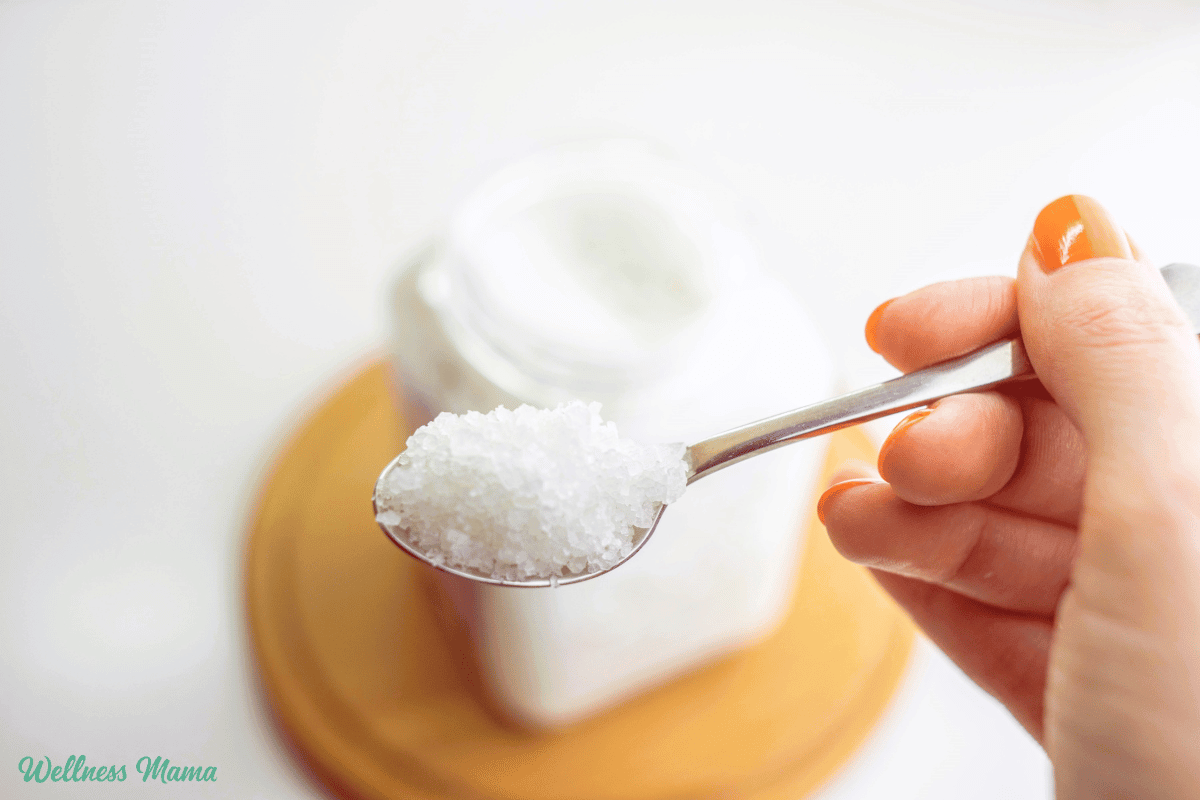
Natural salts, like Himalayan or mined mineral salts, often contain trace minerals and are less processed than conventional table salt. However, even here, quality matters. Some sea salts have microplastics, while certain mined salts can have some levels of heavy metals, including lead. It’s worth doing your research and using what you’re comfortable with. 

This is what I’ve been using lately:

How Much Sodium and Where to Get it

The US sodium guidelines suggest an upper limit of 2.3 grams per day, or about one teaspoon. However, the average person gets about 3.4 grams per day, mostly from ultraprocessed foods. But what is that sweet spot for optimal health? 

It varies by person, but I try to get at least 5 grams a day, sometimes more. Podcast guest and research biochemist Robb Wolf gives a good explanation for why here. 

Personally, I use well-sourced mineral salts and pair them with nutrient-dense foods. I also include naturally salty foods like fermented vegetables and broths, which provide sodium alongside other beneficial compounds. Here’s what else I do:

  • Use healthy salt on seasonal, local foods to taste
  • Mineralized water – I felt a big hydration difference when I started using the Mayu Swirl with minerals (code wellnessmama gives a discount)
  • Using electrolytes and minerals like LMNT or trace minerals
  • Drinking salted broth
  • Eat naturally salty foods like olives, fermented veggies, and pickles, etc.
  • Sip fermented pickled juice
  • Salt tablets (I take these every day in addition to adding salt to food and drinks)
  • Drink sole water first thing in the morning most days

Practical Ways to Support Healthy Sodium Levels

Rather than focusing on strict numbers, I’ve found it helpful to think in terms of context and feedback. Some simple approaches that have worked for me include:

  • Paying attention to how I feel: Energy, clarity, and hydration cues
  • Adjusting intake based on activity level, climate, and stress

One of the most helpful tools has simply been awareness. Noticing patterns, like feeling better with added electrolytes or worse after excessive plain water, can offer valuable clues.

Final Thoughts and A More Nuanced View of Sodium

Sodium is far more than a number on a nutrition label. It’s a foundational component of how the body functions, electrically, neurologically, and even emotionally. It’s responsible for powering cell communication, supporting fluid balance, nervous system stability, and so much more. 

For many of us, especially those focused on whole foods and active lifestyles, the conversation needs to shift from restriction to optimization. The question shouldn’t be, how little sodium we can get away with? A better question is, how can we support our bodies with the right balance of minerals in the context of how we actually live?

Like so many aspects of health, the answer isn’t one-size-fits-all. But in my experience, and even more in the research, sodium deserves a second look. 

Do you try to get more salt or avoid it? Leave a comment and let us know!

Tags: , ,
Acne

CBD vs THC for Skin Health: Can Cannabis Help with Acne, Eczema, or Aging?

Your skin is the largest organ in your body and one of the most honest indicators of what is happening beneath the surface. Chronic inflammation, hormonal fluctuations, oxidative stress, and a compromised skin barrier do not stay hidden for long. They show up as persistent breakouts, flaking patches, accelerated fine lines, and a general dullness that no amount of expensive moisturizer seems to fully address. For a growing number of people, cannabis-derived compounds have entered the skincare conversation not as a trend but as a legitimate therapeutic consideration, and the distinction between what CBD and THC each bring to the table is worth understanding clearly.

The skincare industry has embraced CBD with enormous enthusiasm over the last several years, to the point where the ingredient appears in everything from luxury serums to drugstore lip balms. That visibility has created both genuine interest and significant confusion. Not all CBD skincare products are created equal, THC has its own distinct and underappreciated role in skin health, and understanding what the science actually supports helps you cut through the marketing noise and make choices that are genuinely useful for your skin.

How Cannabis Interacts with Skin Biology

The reason cannabis compounds have any relevance to skin health at all comes down to a system most people have never heard of: the cutaneous endocannabinoid system. The skin has its own network of cannabinoid receptors, primarily CB1 and CB2, distributed across keratinocytes, sebaceous glands, hair follicles, immune cells, and sensory nerve fibers. This system plays a direct regulatory role in skin cell proliferation, differentiation, immune response, oil production, and barrier function.

When that system is dysregulated, skin problems follow. Overactive sebaceous glands contribute to acne. Dysregulated immune response drives the chronic inflammation underlying eczema and psoriasis. Oxidative stress and declining collagen synthesis accelerate visible aging. The premise behind cannabinoid-based skincare is that topically applied CBD or THC can interact with these receptors locally to help restore balance in the specific tissue where they are applied, without producing any systemic or psychoactive effect.

This local application distinction is important. Topical cannabis products do not penetrate deeply enough to reach the bloodstream in meaningful amounts, which means you get the receptor interaction in the skin without any of the systemic effects associated with consuming cannabis. It is a fundamentally different category of use, and it is one where the barrier between CBD and THC becomes less fraught because neither is producing an intoxicating effect when applied to skin.

CBD for Acne: What the Evidence Supports

Acne is primarily a condition of excess sebum production, bacterial colonization of the follicle, and inflammatory response. CBD addresses at least two of those three drivers meaningfully. Research published in the Journal of Clinical Investigation demonstrated that CBD has a sebostatic effect, meaning it inhibits the excessive production of sebum by sebaceous gland cells. It also demonstrated anti-inflammatory properties specifically in sebaceous tissue, reducing the lipid synthesis that feeds the conditions under which acne-causing bacteria thrive.

Beyond sebum regulation, CBD’s broader anti-inflammatory properties help calm the redness, swelling, and irritation that make acne both visually prominent and physically uncomfortable. For people dealing with hormonal acne that is resistant to conventional topical treatments, a CBD-rich serum or spot treatment used consistently as part of a routine has enough research backing to be worth trialing seriously rather than dismissing.

What CBD does not do well is address the bacterial component of acne on its own. It works best as part of a complete approach that includes a non-stripping cleanser, adequate hydration, and addressing internal drivers like blood sugar regulation and stress management. Treating CBD as a single solution for acne will produce disappointing results. Treating it as a meaningful piece of a broader protocol is a more realistic and effective framing.

CBD and THC for Eczema and Inflammatory Skin Conditions

Eczema, psoriasis, and similar inflammatory skin conditions involve a compromised skin barrier, chronic immune dysregulation, and a cycle of inflammation that is notoriously difficult to break with conventional treatments alone. The CB2 receptors present in skin immune cells are directly relevant here because their activation appears to help modulate the immune response that drives that inflammatory cycle.

CBD applied topically has shown meaningful results in reducing the itching, dryness, and inflammatory flare associated with eczema in several small studies and a larger body of clinical observation. Its barrier-supporting properties, partly through its fatty acid content and partly through its interaction with keratinocyte function, make it useful for addressing the root cause of eczema rather than just temporarily suppressing symptoms.

THC enters this picture in a more nuanced way. At the receptor level, THC binds to both CB1 and CB2 more directly than CBD does, and for conditions involving significant nerve-related itch or pain, that CB1 binding in peripheral sensory nerves can provide relief that CBD alone does not consistently produce. Some dermatological researchers have pointed to the combination of both cannabinoids as more effective for inflammatory skin conditions than either in isolation, which echoes the entourage effect logic familiar from ingestible cannabis use.

The practical limitation is that THC-containing topicals exist in a more restricted regulatory space than CBD products, which means access depends significantly on your location and the legal status of cannabis where you are.

Cannabis and Skin Aging

The anti-aging application of cannabinoids is where the science is earliest and the marketing is most overextended, so some calibration is useful. That said, the theoretical and preliminary evidence is genuinely interesting.

Oxidative stress is one of the primary drivers of accelerated skin aging. Free radicals generated by UV exposure, pollution, stress, and metabolic processes degrade collagen, damage cellular DNA, and disrupt the lipid barrier that keeps skin looking plump and resilient. CBD is a potent antioxidant. Research has indicated it is more effective as an antioxidant than either vitamin C or vitamin E in certain contexts, which means regular topical application has legitimate potential to help neutralize free radical damage before it accumulates into visible aging.

CBD also appears to support collagen synthesis indirectly through its influence on the skin’s inflammatory environment. Chronic low-grade inflammation, a condition sometimes called inflammaging, accelerates the breakdown of collagen and elastin. By reducing that inflammatory baseline in the skin, CBD may help slow the rate at which visible aging progresses. This is a longer game than most skincare marketing acknowledges, but it is a sound biological mechanism worth taking seriously.

THC’s role in aging specifically is less well studied topically, though its antioxidant and anti-inflammatory properties are comparable to CBD at the receptor level. The more relevant consideration for aging-focused users is the combination of cannabinoids with supportive terpenes like pinene and limonene, which themselves have antioxidant properties and appear in well-formulated full-spectrum topical products.

For anyone looking to pair a topical cannabinoid skincare routine with a broader internal wellness approach that includes ingestible CBD or cannabis products, Online Dispensary offers a range of hemp-derived and cannabis options worth exploring across both categories.

How to Choose and Use Cannabis Skincare Products Effectively

The quality gap in CBD skincare is enormous. A product that lists CBD on the label may contain anywhere from a therapeutically irrelevant trace amount to a genuinely effective concentration. Look for products that list the total milligrams of CBD on the packaging and that provide a certificate of analysis from a third-party lab confirming actual cannabinoid content. For topical use, a meaningful concentration starts around 250mg to 500mg of CBD per 30ml of product. Anything substantially below that is unlikely to produce the receptor interaction necessary for a therapeutic effect.

Full-spectrum formulations that retain minor cannabinoids, terpenes, and fatty acids from the hemp plant generally outperform broad-spectrum or isolate products for skin applications, mirroring the entourage effect logic that applies to ingestible cannabis. The supporting compounds enhance both the anti-inflammatory and barrier-supporting properties of CBD in ways that isolated CBD alone does not replicate.

Consistency matters more than any single application. Skin cell turnover cycles take roughly four to six weeks, and the benefits of cannabinoid skincare accumulate over that cycle rather than appearing overnight. Give any new topical a genuine eight-week trial before making a judgment about whether it is working.

Frequently Asked Questions

  1. Can CBD skincare products make you fail a drug test? Topical CBD products applied to the skin do not enter the bloodstream in amounts that would produce a positive drug test result. The skin acts as a barrier that prevents significant systemic absorption from topicals. Transdermal patches that are specifically designed to drive compounds into the bloodstream are a different matter, but standard creams, serums, and balms do not pose a drug testing risk.
  2. Is there a difference between hemp seed oil and CBD oil in skincare? Yes, and it is a significant one that many products obscure. Hemp seed oil is pressed from cannabis seeds and contains no CBD or other cannabinoids. It is a nourishing carrier oil with good fatty acid content, but it does not interact with cannabinoid receptors. CBD oil is derived from the flowers and leaves of the hemp plant and contains actual cannabinoids. Many products use hemp seed oil and imply CBD benefits through their branding without containing any actual CBD.
  3. Can cannabis topicals be used on sensitive skin? CBD is generally well tolerated by sensitive skin and has a low irritation profile compared to many active skincare ingredients. However, formulation matters considerably. A CBD product that also contains fragrance, alcohol, or other common irritants can still provoke a reaction in sensitive skin regardless of the CBD content. Check the full ingredient list rather than focusing solely on the cannabinoid component.
  4. How long does it take to see results from CBD skincare for acne or eczema? For acne, some users notice reduced redness and inflammation within the first week of consistent use, though more significant changes in sebum regulation typically take three to four weeks. For eczema, the timeline is usually longer, with meaningful improvement in barrier function and itch reduction typically appearing after four to eight weeks of daily application. Consistency is the single most important variable in both cases.
  5. Do you need a prescription or medical card to access cannabis skincare products? CBD skincare products derived from hemp containing less than 0.3 percent THC are widely available without a prescription across most of the United States and many other countries. THC-containing topicals fall under cannabis regulations and require access through a licensed dispensary, which in many states requires a medical card or simply proof of legal age depending on whether recreational cannabis is permitted in your jurisdiction.
Tags: , , , , , , ,
Kiwano cucumber: A hydrating fruit for skin health

A hydrating fruit for skin health

Follow this guide

What’s the story

African cucumber, popularly known as kiwano, is taking the skincare world by storm. Its hydrating properties are a boon for those looking to revitalize their skin naturally.
Packed with vitamins and antioxidants, African cucumber provides a refreshing alternative to conventional skincare products.
Here’s how this exotic fruit can be incorporated into your daily routine for healthier, more radiant skin.

Nutrient-rich composition

African cucumber is loaded with essential nutrients, such as vitamin C, vitamin A, and potassium.
These nutrients help in promoting collagen production and protecting the skin from free radicals.
The high water content of the fruit also keeps the skin hydrated, making it an ideal choice for dry or dehydrated skin types.

Antioxidant benefits

The antioxidants in African cucumber are essential for fighting oxidative stress on the skin.
These antioxidants minimize the appearance of fine lines and wrinkles by neutralizing free radicals that damage cells.
Regular use of products containing this fruit can improve skin elasticity and give you a youthful appearance.

Versatile skincare uses

African cucumber can be used in various forms in your skincare routine. From face masks to serums, its gel-like texture makes it an ideal ingredient for DIY recipes.
You can blend it with other natural ingredients, like honey or aloe vera, for added benefits.
Its versatility makes it easy to incorporate into different skincare regimens without any hassle.

Easy incorporation tips

To reap the benefits of African cucumber, try adding it to your morning smoothie or juice for an internal hydration boost.
For external application, use it as a facial mask by blending the flesh with honey and applying it on your face for about 15 minutes before rinsing off with warm water.
This simple routine can help refresh tired-looking skin effectively.

Tags: , , ,
logo

Customer-Led Japanese Beauty, Voice Analysis, and Planetary Health

What kind of company is EBM, and what philosophy do you value most?

EBM operates as a foundational skincare company that stays close to people. At the heart of everything we do is the commitment to stand beside our customers and support them in a deeply personal way.

Our company name, EBM, stands for Energy, Beauty, and Mind. It represents our mission to guide people toward a state in which these three elements are fulfilled through our products, technologies, and services, all of which support both physical and mental circulation and vitality.

As a skincare company, we place great importance on the skin—but not merely as a surface. When the mind and body are healthy, that state is reflected in the skin. As people become more comfortable in their own skin, they gain the energy to live more authentically. We value this positive cycle and strive to nurture it in everything we do.

Could you describe EBM’s business model?

Our core businesses center on the development of cosmetics and health-related products, as well as the operation of our beauty and wellness specialty salons, known as Skincare Studios. In addition, we operate through multiple channels, including direct marketing, online communication, wholesale distribution, and agency partnerships.


How does EBM approach product development?

We currently operate approximately 40 Skincare Studios in Japan and overseas, where we provide skincare treatments using our own products. By listening directly to customers, observing changes in their skin, and receiving real-time feedback in these studios, we are able to quickly reflect those insights in both our treatments and product development.

Today, we offer more than 200 proprietary skincare and beauty-related food products. This breadth is the result of continuously striving to respond to each individual customer’s unique concerns. In turn, this creates a virtuous cycle that allows us to make increasingly tailored and meaningful proposals.

Please tell us more about your Skincare Studios.

We currently operate four brands across approximately 40 locations in Japan and overseas.

At our Skincare Studios, we place great importance on hands-on skincare and body treatments, which we refer to as “teate,” or healing through touch. The warmth of human hands felt through the skin is transmitted to the brain and provides deep emotional healing. Gentle, mindful touch is also said to promote the release of oxytocin—the so-called “happiness hormone”—helping bring the mind and body into balance.

Beyond the scientific reasoning, we believe that placing sincere intention and prayer into one’s hands is what truly heals people. This spirit and sincerity are integral to our approach.

We have also consistently focused on two core beauty philosophies: “washing the pores” through our pore-cleansing techniques, and warming the body to promote healthy circulation. These ideas—removing impurities to awaken the skin’s natural strength, and encouraging full-body circulation—form the foundation of our proprietary beauty methods. They are deeply connected to Japan’s traditional hot spring and therapeutic bathing culture.

By combining these approaches according to each customer’s physical and emotional condition, our Skincare Studios serve as places where Energy, Beauty, and Mind are brought into balance through personalized care and heartfelt hospitality.

Could you introduce each of your Skincare Studio brands?

We currently operate four Skincare Studio brands: VS28 Skincare Studio BALI, e.b.c.c., e.b.c.c. Men’s Skincare Studio, and BLOOM AURA the Journey.

VS28 Skincare Studio BALI was born from the fusion of inspiration drawn from Bali as a retreat destination with Japanese hospitality, sincerity, and respect for nature. At its core is our founding treatment—pore cleansing—combined with healing derived from natural energy.

e.b.c.c. was created to address the deeper challenges of modern life. Based on the concept of “five-senses beauty”—experiencing abundant comfort through all five senses—it aims to guide individuals toward their optimal state through care that restores balance to both mind and body.


Since 2022, we have also operated e.b.c.c. Men’s Skincare Studio, a brand dedicated to men. By offering services optimized for male skin and providing a space where men feel comfortable, we bring nearly four decades of expertise into the growing men’s beauty market.


BLOOM AURA the Journey is EBM’s flagship brand, born from decades of experience working closely with customers’ physical and emotional wellbeing. Designed as a space for deep personal maintenance, it is chosen by business leaders and individuals seeking peak performance. The Japanese-inspired interior, private rooms, and soundscapes—such as temple bells and flowing water—allow guests to reconnect with themselves through breath and stillness.

Many of our customers move naturally between multiple brands as their life stages, physical conditions, and emotional needs evolve. This multi-brand approach allows us to build long-term relationships rather than one-time transactions, supporting customers throughout different phases of their lives.

Overseas, we currently operate a directly managed studio in Bali and work with partners in Taiwan.


You place strong emphasis on staff training and spirituality. Why is this important?

Through our proprietary education system, the EBM Academy, we provide not only technical training in skin theory, cosmetic science, and counseling, but also focus on nurturing skincare advisors who can heal the heart.

To support this, we even conduct training at the temple where I was raised, helping staff cultivate inner balance. Our symbol is a wildflower—embodying our wish for staff who gently heal customers’ hearts and live with wildflower-like resilience and grace.

What is your philosophy regarding touch and energy?

Touching another person is a profound act. If the practitioner’s mind and body are not in balance, that state is transmitted to the customer. Touch infused with love, gratitude, and a sense of mission yields completely different outcomes than touch without intention.

We do not believe that using the same products will always produce the same results. Invisible intention is conveyed through the hands and changes the effect. This is why we teach our staff to maintain harmony within themselves. This is the foundation of our training, and I believe it connects with the spirituality that Japan has traditionally embodied.

How do you work to better understand your customers?

Understanding our customers is our highest priority. Beyond experience and communication, we utilize skin and body assessments using specialized diagnostic equipment, birthdate-based counseling, and even wellness diagnostics through voice analysis.

Our voice-based wellness analysis system, Coenal, analyzes individuality, fatigue types, and optimal beauty and health methods using vocal data. It is built on insights from over 20,000 analyses and 39 years of studio experience.

We also partner with specialized institutions to provide gut microbiome and skin analysis,  and train advisors to clearly explain results. Customer understanding is the foundation of our product development and business expansion.


What exactly is the voice analysis tool?

By simply repeating one’s name for six seconds, the system instantly analyzes personal traits, physical condition, and aptitudes across 13 patterns. Just as fingerprints exist on our hands, voiceprints exist in our voices.

Voice carries vibrations from the entire body and reflects both physical condition and thought patterns. Coenal transforms 39 years of attentive listening and counseling expertise into technology. It can help foster the communication skills of reading emotions and truly listening, and from there, help create the hospitality that Japan is known for. It enables personalized beauty and health advice and can be utilized in HR, mental health, and more across industries.

Why are Taiwan and Indonesia central to your overseas expansion?

In Bali, Indonesia, we have operated our directly managed studio, BALI IN BALI,  since 1994.

During my visit to Bali, I was deeply moved by the natural energy and culture of prayer. Inspired by the concept of “bathing in Bali” and elevating one’s vital energy, we established this skincare studio. With BALI IN BALI as our origin point, we then launched VS28 Skincare Studio BALI in Japan—salons where guests can experience Bali’s reverence for nature, the hospitality and spirituality created by its people, and profound healing.

In recent years, the experiential value of retreats has gained attention, and Bali has become popular as a destination for restoring mental and physical vitality. With the healing we learned from Bali as our foundation, we continue to refine and elevate our offerings. Beginning with BLOOM AURA the Journey Ginza, which opened in 2019, we are also planning new salon ventures that place even greater emphasis on the retreat experience.

For us, overseas expansion is not simply about opening locations abroad, but about translating our philosophy of healing, circulation, and human connection into cultures that resonate with those values.

In Taiwan, we began franchising in 1992. Since 2024, we have transitioned to an agency partnership model, continuing to support salon operations and e-commerce sales.Our pore-cleansing philosophy has been warmly embraced, and many customers continue to use our products long-term.

What are your future plans for global expansion?

We are actively exploring expansion into markets such as Thailand, Mexico, and Paris, encompassing cosmetics, salons, and Coenal deployment, supported by collaborative partner companies.

 Coenal can be localized into multiple languages. Through its global expansion, we hope to bring the attentive and emotionally nuanced communication that characterizes Japanese culture to people worldwide, enabling them to enhance their own business development.

We also plan to expand warming space bathing facilities incorporating our Planetary Energy Beauty Mist, an innovative beauty and wellness technology.


Please explain the Planetary Energy Beauty Mist.

This beauty mist focuses on the balance of oxidation and reduction in the body. It can be applied to the skin and body, as well as used throughout an entire space. While incorporating advanced technology, it is rooted in our long-held belief in restoring the body’s natural circulation and metabolism.


What do you mean by “space bathing”?

Space bathing refers to cultivating beauty simply by being within a space infused with Planetary Energy Beauty Mist. This gentle, warming mist enhances circulation, and cleanses the body without strain, naturally balancing the body and drawing out beauty —making it suitable even for seniors or those with fragile health. We see it as a next-generation beauty experience.


What guides your R&D strategy?

At our Skincare Studios, skincare advisors listen deeply to customers who come to us with concerns, carefully examine their skin, and work to uncover the true causes of their concerns. The customers’ concerns, their voices, and the experience of supporting them closely are all reflected in our product development.

Daily reports are quickly shared and analyzed, allowing rapid evolution. This speed is one of our strengths. While valuing encounters with specialists and developers, we continue to evolve constantly.

What are the strengths of Japanese beauty?

Japan’s strengths in cosmetics lie in technology, quality control, and ingredient trust. Additionally, Japan’s long-established cultures of fermentation, traditional herbal medicine (Wakan), and bathing are distinctive strengths of Japanese beauty.

It is said that as early as the 700s CE, during Japan’s Nara period, temples had steam baths called “karafuro.” At Hokkeji Temple in Nara Prefecture, a karafuro created by Empress Kōmyō still remains. The culture of cleansing the body for health has deep historical roots.

EBM’s philosophy aligns with this heritage. Since our founding, we have believed that mastering pore cleansing and drawing out the skin’s innate strength through gentle water-based technology and high-quality cosmetics is the most direct path to beauty. This resonates strongly with international audiences seeking simplicity and authenticity.

Furthermore, Japanese beauty is not standardized—it encompasses the invisible, such as the culture of omotenashi that reads people’s subtle nuances and their “ki” (vital energy).

We also place great importance on each customer’s “ki” each day. Customers never arrive in the same physical or emotional state, and we believe true beauty care requires the ability to read subtle changes in a person’s condition and energy each day. This sensitivity has become one of our core strengths and reflects an essential element of Japanese beauty culture.


How do you address an aging society?

For seniors, having a place where someone truly listens is vital. Our Skincare Studios are not merely spaces for treatments, but also places where we listen to customers and embrace their hearts. We believe this is particularly essential for senior care, and we are also committed to developing gentle, body-friendly products for elderly customers.  

We aim to create a future where beauty and caregiving unite. The principles we value—warming the body and promoting circulation—are fundamental to beauty and health across all generations.


What is the MIRAIWA+ brand and planetary health philosophy?

Human beauty and happiness cannot exist without nature, the Earth, and the universe. We develop products and pursue various activities based on the principles of “Planetary Health”—the understanding that both people and the planet must be healthy.

MIRAIWA+ is a product brand featuring gut microbiome analysis kits and a femcare line.  We focus on microorganisms that support the body’s circulatory systems—gut, skin, oral, and vaginal environments—and develop products in collaboration with specialized institutions.

Rooted in the philosophy of Planetary Health, we believe that human beauty, environmental health, and the circulation of life are inseparable. MIRAIWA+ represents our commitment to designing beauty solutions that respect both the human body and the ecosystems that sustain it.

What environmental initiatives do you pursue?

Through our Planetary Health Project, we collaborate with companies and schools to distribute fulvic acid to soil, cultivating beneficial microbes.

Fulvic acid is a concentrated essence of mountain ecosystems and has positive effects on both people and soil. We believe it is essential that both people and the planet remain healthy, and beyond product development, we engage in environmentally conscious initiatives.


Finally, how would you describe EBM in one sentence?

EBM is a company that delivers energy to people and the planet, creating happiness through beauty. By helping people become beautiful, we help them find happiness and live fulfilling lives.

As a company that delivers happiness to people, we are committed to ensuring our employees’ happiness, so they can extend that happiness to our customers and society as a whole. We will continue to strive toward this vision.

For more information, visit their website at: www.ebm-co.jp

Tags: , , , , , ,
Best oLive
Privacy Overview

This website uses cookies so that we can provide you with the best user experience possible. Cookie information is stored in your browser and performs functions such as recognising you when you return to our website and helping our team to understand which sections of the website you find most interesting and useful.