Homestead Blog Hop - Homestead tips, ideas, animal care, and recipes every Wednesday

Homestead Blog Hop 609 – Homemade Mozzarella, Pickles, and Salmon

Welcome to Homestead Blog Hop, a weekly gathering for homesteaders and simple living enthusiasts to share DIY projects, from-scratch recipes, and creative inspiration. This week’s hop features cozy homesteading tips, along with practical ideas that celebrate handmade living and self-sufficiency.

Whether you’re looking for seasonal crafts, homemade treats, or encouragement on your homesteading journey, you’ll find plenty of inspiration to carry into the new year. Grab a cup of tea, explore the featured posts, and join us in sharing your own homestead creations.

Meet Your Homesteading Hosts

We’re Kelly from Simple Life Mom, Liz from The Cape Coop, Natasha from Houseful of Nicholes, and Laurie from Ridgehaven Homestead. Together, we’re passionate about from-scratch living, simple ingredients, frugal habits, and intentional homesteading. We’re delighted to host the Homestead Blog Hop, where you can find fresh inspiration each week for DIY projects, homemade recipes, and practical simple living ideas.

Follow Us for More Homestead Inspiration

Natasha – Houseful of Nicholes
Facebook | Pinterest | X | Instagram

Laurie – Ridge Haven Homestead
Facebook | Pinterest | Instagram

Liz – The Cape Coop
Facebook | Pinterest | X | Instagram

Kelly – Simple Life Mom
Facebook | Pinterest | X | Instagram

FEATURED POSTS from the Last Homestead Blog Hop

Each week, we take turns selecting three featured posts from the Homestead Blog Hop. These features are shared across all of our social media platforms, helping spotlight the creativity and hard work of our fellow homesteaders. Here are the featured posts from last week’s hop:

1. Grandma’s No Cook Refrigerator Pickles from Recipe Idea Shop

2. Quick Homemade Mozzarella Cheese from The Once and Future Homestead

3. Garlic Butter Salmon from Yummi Haus

Congrats! Feel free to grab the featured on button for your post.

Just right click and ‘save image as…‘

Guidelines for the Homestead Blog Hop

  1. Click the “Add Your Link” button below and upload a clear, eye-catching image from your project or recipe. Please link directly to the family-friendly post itself, not your blog’s homepage.
  2. You may link up up to three posts each week.
  3. Take time to visit a few other blogs in the hop and leave a thoughtful comment to let them know you stopped by. Community support makes this hop special!
  4. Please include a link back to the Homestead Blog Hop in your post. Posts without a backlink are not eligible to be featured. All featured posts are shared across all hosts’ social media channels.
  5. Share posts that haven’t been linked to the hop before. Older posts are welcome as long as they are new to the hop.
  6. By joining the Homestead Blog Hop, you grant the hosts permission to use one image from your post, with a link back to your site, if your post is selected as a feature next week.
  7. This is a family-friendly link-up designed to encourage, inspire, and support the homesteader in all of us.

Let the Party Begin!

Which project are you excited to try this week? Leave a comment below.

Join Our Homestead Blog Hop Pinterest Board

Follow all of your hosts on Pinterest and send a message if you’d like to be added to our Homestead Blog Hop group board. This board is a great place to share your DIY projects, crafts, and from-scratch recipes with the homesteading community.

Guideline: Only pin posts that you’ve linked up to the Homestead Blog Hop.

Tags: , , , , , ,
The wellness wild west’s latest skincare fad is salmon sperm 

The latest skincare fad is rubbing salmon sperm on your face

This is Optimizer, a weekly newsletter sent every Friday from Verge senior reviewer Victoria Song that dissects and discusses the latest gizmos and potions that swear they’re going to change your life. Opt in for Optimizer here.

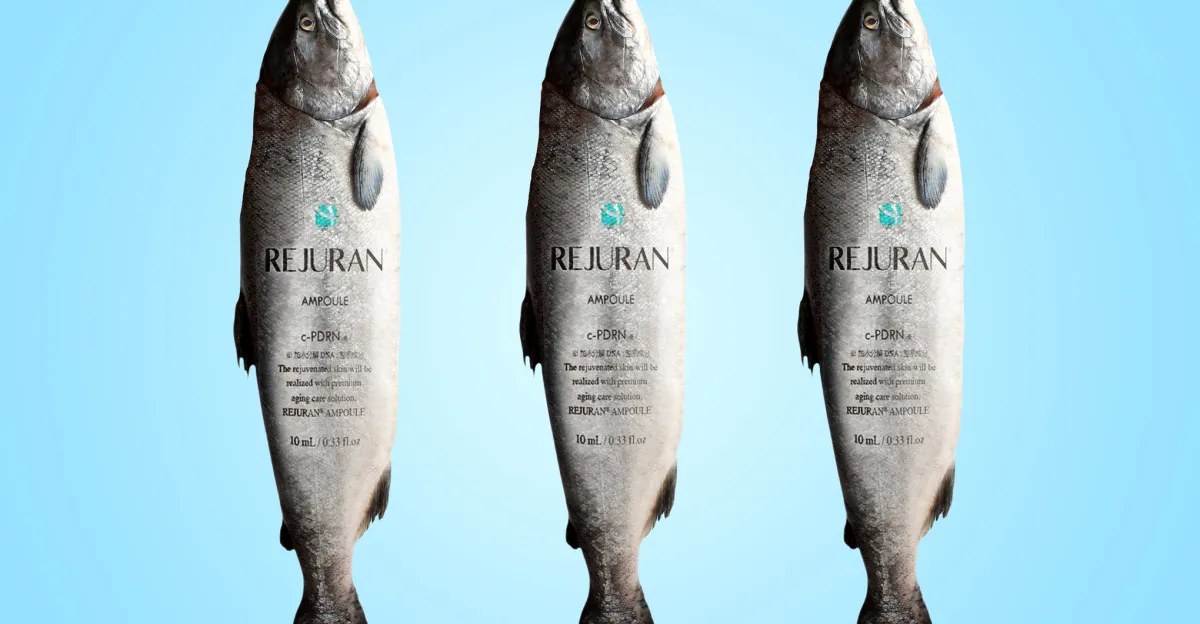
While scrolling through my TikTok feed, I often find myself thinking of Elizabeth Báthory. Legend has it that Báthory, a powerful 16th-century Hungarian countess, would kill virgins and bathe in their blood to retain her youth. Historians have debated whether Báthory really was a serial killer, though most agree she probably didn’t actually bathe in blood. Still, she’s what I think of anytime I see how far vanity will take us: vampire facials, snail mucin, bird poop treatments, and now Rejuran — a Korean skincare serum with the hottest new ingredient, PDRN. In case you were unaware, PDRN comes from salmon sperm.

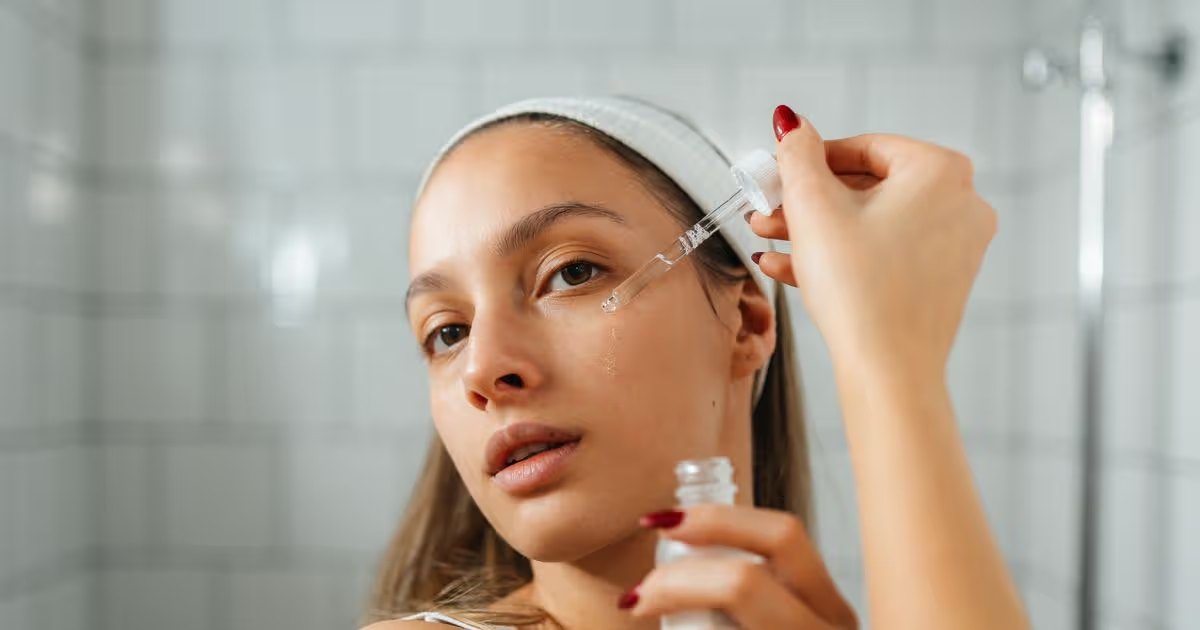
Usually, these ads show skinfluencers with bouncy, hydrated skin extracting a clear liquid from a silver bottle. This serum, they say, is a game changer. Rubbing it into your face will promote skin rejuvenation, elasticity, and collagen production. The result is enhanced healing, improved skin texture, and reduced wrinkles, and it’s all thanks to patented science. Rejuran’s PDRN molecule is 670 times smaller than your pores, meaning enhanced absorption.

You can be the most skeptical person on the planet, but it’s hard to argue with the human desire to be young and beautiful.

“PDRN stands for polydeoxyribonucleotide, which essentially is just a DNA fragment,” says Victoria Fu, a cosmetic chemist and one of the founders behind the Chemist Confessions skincare brand. “Super old-school PDRN treatments actually come from human placenta, but now salmon sperm PDRN has become the industry standard.”

According to Fu, beauty trends like injectables often stem from the medical field. Before it became a hot skincare ingredient, PDRN was studied as an injected therapeutic treatment for conditions like diabetic foot ulcers, and there are some promising studies for injectable PDRN that suggest it could be helpful for wound healing — though PDRN injectables haven’t been FDA-approved in the US. Generally speaking, injectables are considered more effective for rapid, dramatic, and structural changes, as they’re able to deliver ingredients deeper into the skin. Injectable hyaluronic acid, for instance, is more effective at restoring volume than topical hyaluronic acid.

Online, PDRN started gaining notoriety a few years ago as skinfluencers shuttled themselves to South Korea for salmon DNA facials. In the typical video, these beauty influencers would giggle. Come with me to get a salmon sperm facial! Usually, a doctor is shown injecting PDRN into the skin every few millimeters until the influencer’s face is riddled with tiny, swollen mounds. It hurts so much! Recovery takes so long! But just LOOK at this glow!!!

The painful treatment blew up once celebrities like Kim Kardashian and Jennifer Aniston admitted to incorporating salmon sperm facials into their routines. And then, about a year ago, Rejuran — the company behind the injections — announced a topical version. No scary needles, no need to fly to Korea, and a bottle costs about $52, whereas the facial could run anywhere from $500 to $700. Now, you can find PDRN in all kinds of skincare products ranging from eye creams to sunscreen.

Despite authoring this newsletter, I’m not immune to wellness fads. I covet glass skin like any other vain 30-something afraid of the harsh ravages of time. I’ve bought the stupid TikTok skincare wand that influencers said was “clinically proven” and that Hailey Bieber uses. I reviewed its clinical studies on electroporation — microcurrents that supposedly tear tiny holes in your skin to help products absorb better — and knew it was dubious (if relatively harmless).

Which is to say, I knew it was a red flag when I heard an influencer in a Rejuran ad say the product was “clinically proven,” but I bought a bottle anyway. I’ve used two bottles of Rejuran’s topical ampoule and other skincare products marketing hot new ingredients like volufiline, because that’s the power of science-adjacent wellness marketing. (Volufiline is a new plant-based compound that’s marketed as “topical filler” because it stimulates fat cell production.)

Still, if you truly could replicate injectable results in an easily accessible serum — that’s a compelling claim. So I asked Fu if any of the claims about topical PDRN being as effective as injected skincare treatments held water.

“There’s some early research supporting PDRN in medical and aesthetic procedures, but evidence for topical PDRN is still very limited,” says Fu. “A serum cannot be a non-invasive substitute for an injectable procedure.”

The reason is straightforward. Even if there’s evidence that PDRN itself could be an effective ingredient, the mode of delivery matters.

“Injectable treatments deliver material directly into skin tissue at concentrations and depths topical products simply won’t be able to achieve,” says Fu.

But silly things like facts aren’t enough to stop skincare brands from jumping on experimental fads so long as they’re not technically harmful.

Just the other day, I was served a video from megaviral beauty influencer Mikayla Nogueira announcing to her 17 million followers that she’s launching a salmon-derived PDRN face ampoule and eye serum for her own cosmetics line.

“A science-backed duo powered by PDRN that is going to lift, firm, plump your skin plus so much more. Not to mention these products are made in Korea, dermatologist tested, clinically tested, and proven to do exactly what they say they’re going to do,” Nogueira says in the ad. She goes on to say that she worked with Korean cosmetics chemists, and uses phrases like “low molecular weight” and “efficacious” levels.

I have no doubt Nogueira believes in PDRN products. But as I wrote in a recent Optimizer, “clinically tested” and “science-backed” are marketing phrases that don’t always mean what you think.

Meanwhile, other brands are advertising less icky versions of PDRN derived from plants. There are ginseng-derived PDRN products on the market, like the VT Cosmetics PDRN Essence 100, and the Medicube PDRN Pink Peptide Serum derived from roses. Supposedly, these brands would have you believe plant-based PDRN is just as effective and a vegan alternative.

“PDRN source, purity, molecular size, and stabilization all matter,” says Fu. “‘Plant-based PDRN’ is a bit of a marketing gray area. It may be DNA fragments, but it’s not automatically equivalent to the clinical material studied in medical literature. Two products can list PDRN and behave very differently. The good news is we are seeing more studies come out on these plant PDRNs, so hopefully we can better gauge these different sources soon.”

Fu says all things considered, PDRN is a “relatively vanilla” skincare active that’s unlikely to irritate your skin and is fine for curious skincare hobbyists to experiment with. But that also means it’s not a foundational part of any skincare routine. Things like sunscreen, moisturizers, and well-studied actives like retinoids are more likely to do the heavy lifting in any regimen. Like most things in the wellness space, the main harm that PDRN poses is to your wallet. Fu says that consistency and patience are the key to getting real, long-term results. (Unfortunately, these are also the two things most consumers would like to bypass.)

“Social media has made it possible for consumers to hear from industry insiders like ourselves,” Fu says, referring to herself and her partner, Gloria Lu. In addition to running their own cosmetics brand, the two chemists also write a skincare science education blog and host a podcast. “But the flip side is that consumers will also hear a LOT of noise and contradicting information from all sorts of directions.”

Fu says the smart thing to do is look at any testing a brand is willing to share and look for quantifiable grading metrics over consumer perception. As in, “34 percent improvement in elasticity” is a more meaningful claim than “90 percent of users agree they saw an improvement in skin hydration in two weeks.” Before and after pictures, she says, can also be misleading due to inconsistent lighting or face angles. If a claim sounds too good to be true, it likely is.

“We try to remind everyone to refrain from a ‘knee-jerk’ reaction and not to let the trends distract you from sticking to the fundamentals of your routine,” says Fu.

Having spent the past three months slathering a salmon sperm serum on my face, I honestly couldn’t tell you if it’s improved my skin. Maybe it’s a smidge glowier. I think it helped with one stubborn acne scar. I knew that I wouldn’t see dramatic results going in, just as I knew that the trendy volufiline serums that skinfluencers claim are “filler in a bottle” wouldn’t fix my undereyes. Is it egregious that I know better and still partook? Maybe. But to Fu’s point, I’m religious about the fundamentals — sunscreen, moisturizer, and as of recently, tretinoin, which I incorporated after consulting my dermatologist. The point is that I’ve done my homework and made an informed choice.

It just so happened that this time, I thought experimenting with salmon jizz serums was harmless fun.

Follow topics and authors from this story to see more like this in your personalized homepage feed and to receive email updates.

  • Close

    Victoria Song

    Senior Reviewer, Wearable Tech

    Posts from this author will be added to your daily email digest and your homepage feed.

    FollowFollow

    See All by Victoria Song

  • ColumnClose

    Column

    Posts from this topic will be added to your daily email digest and your homepage feed.

    FollowFollow

    See All Column

  • HealthClose

    Health

    Posts from this topic will be added to your daily email digest and your homepage feed.

    FollowFollow

    See All Health

  • OptimizerClose

    Optimizer

    Posts from this topic will be added to your daily email digest and your homepage feed.

    FollowFollow

    See All Optimizer

  • ScienceClose

    Science

    Posts from this topic will be added to your daily email digest and your homepage feed.

    FollowFollow

    See All Science

Tags: , , , , , ,
The wellness wild west’s latest skincare fad is salmon sperm 

The wellness wild west’s latest skincare fad is salmon sperm 

This is Optimizer, a weekly newsletter sent every Friday from Verge senior reviewer Victoria Song that dissects and discusses the latest gizmos and potions that swear they’re going to change your life. Opt in for Optimizer here.

While scrolling through my TikTok feed, I often find myself thinking of Elizabeth Báthory. Legend has it that Báthory, a powerful 16th-century Hungarian countess, would kill virgins and bathe in their blood to retain her youth. Historians have debated whether Báthory really was a serial killer, though most agree she probably didn’t actually bathe in blood. Still, she’s what I think of anytime I see how far vanity will take us: vampire facials, snail mucin, bird poop treatments, and now Rejuran — a Korean skincare serum with the hottest new ingredient, PDRN. In case you were unaware, PDRN comes from salmon sperm.

Usually, these ads show skinfluencers with bouncy, hydrated skin extracting a clear liquid from a silver bottle. This serum, they say, is a game changer. Rubbing it into your face will promote skin rejuvenation, elasticity, and collagen production. The result is enhanced healing, improved skin texture, and reduced wrinkles, and it’s all thanks to patented science. Rejuran’s PDRN molecule is 670 times smaller than your pores, meaning enhanced absorption.

You can be the most skeptical person on the planet, but it’s hard to argue with the human desire to be young and beautiful.

“PDRN stands for polydeoxyribonucleotide, which essentially is just a DNA fragment,” says Victoria Fu, a cosmetic chemist and one of the founders behind the Chemist Confessions skincare brand. “Super old-school PDRN treatments actually come from human placenta, but now salmon sperm PDRN has become the industry standard.”

According to Fu, beauty trends like injectables often stem from the medical field. Before it became a hot skincare ingredient, PDRN was studied as an injected therapeutic treatment for conditions like diabetic foot ulcers, and there are some promising studies for injectable PDRN that suggest it could be helpful for wound healing — though PDRN injectables haven’t been FDA-approved in the US. Generally speaking, injectables are considered more effective for rapid, dramatic, and structural changes, as they’re able to deliver ingredients deeper into the skin. Injectable hyaluronic acid, for instance, is more effective at restoring volume than topical hyaluronic acid.

Online, PDRN started gaining notoriety a few years ago as skinfluencers shuttled themselves to South Korea for salmon DNA facials. In the typical video, these beauty influencers would giggle. Come with me to get a salmon sperm facial! Usually, a doctor is shown injecting PDRN into the skin every few millimeters until the influencer’s face is riddled with tiny, swollen mounds. It hurts so much! Recovery takes so long! But just LOOK at this glow!!!

The painful treatment blew up once celebrities like Kim Kardashian and Jennifer Aniston admitted to incorporating salmon sperm facials into their routines. And then, about a year ago, Rejuran — the company behind the injections — announced a topical version. No scary needles, no need to fly to Korea, and a bottle costs about $52, whereas the facial could run anywhere from $500 to $700. Now, you can find PDRN in all kinds of skincare products ranging from eye creams to sunscreen.

Despite authoring this newsletter, I’m not immune to wellness fads. I covet glass skin like any other vain 30-something afraid of the harsh ravages of time. I’ve bought the stupid TikTok skincare wand that influencers said was “clinically proven” and that Hailey Bieber uses. I reviewed its clinical studies on electroporation — microcurrents that supposedly tear tiny holes in your skin to help products absorb better — and knew it was dubious (if relatively harmless).

Which is to say, I knew it was a red flag when I heard an influencer in a Rejuran ad say the product was “clinically proven,” but I bought a bottle anyway. I’ve used two bottles of Rejuran’s topical ampoule and other skincare products marketing hot new ingredients like volufiline, because that’s the power of science-adjacent wellness marketing. (Volufiline is a new plant-based compound that’s marketed as “topical filler” because it stimulates fat cell production.)

Still, if you truly could replicate injectable results in an easily accessible serum — that’s a compelling claim. So I asked Fu if any of the claims about topical PDRN being as effective as injected skincare treatments held water.

“There’s some early research supporting PDRN in medical and aesthetic procedures, but evidence for topical PDRN is still very limited,” says Fu. “A serum cannot be a non-invasive substitute for an injectable procedure.”

The reason is straightforward. Even if there’s evidence that PDRN itself could be an effective ingredient, the mode of delivery matters.

“Injectable treatments deliver material directly into skin tissue at concentrations and depths topical products simply won’t be able to achieve,” says Fu.

But silly things like facts aren’t enough to stop skincare brands from jumping on experimental fads so long as they’re not technically harmful.

Just the other day, I was served a video from megaviral beauty influencer Mikayla Nogueira announcing to her 17 million followers that she’s launching a salmon-derived PDRN face ampoule and eye serum for her own cosmetics line.

“A science-backed duo powered by PDRN that is going to lift, firm, plump your skin plus so much more. Not to mention these products are made in Korea, dermatologist tested, clinically tested, and proven to do exactly what they say they’re going to do,” Nogueira says in the ad. She goes on to say that she worked with Korean cosmetics chemists, and uses phrases like “low molecular weight” and “efficacious” levels.

I have no doubt Nogueira believes in PDRN products. But as I wrote in a recent Optimizer, “clinically tested” and “science-backed” are marketing phrases that don’t always mean what you think.

Meanwhile, other brands are advertising less icky versions of PDRN derived from plants. There are ginseng-derived PDRN products on the market, like the VT Cosmetics PDRN Essence 100, and the Medicube PDRN Pink Peptide Serum derived from roses. Supposedly, these brands would have you believe plant-based PDRN is just as effective and a vegan alternative.

“PDRN source, purity, molecular size, and stabilization all matter,” says Fu. “‘Plant-based PDRN’ is a bit of a marketing gray area. It may be DNA fragments, but it’s not automatically equivalent to the clinical material studied in medical literature. Two products can list PDRN and behave very differently. The good news is we are seeing more studies come out on these plant PDRNs, so hopefully we can better gauge these different sources soon.”

Fu says all things considered, PDRN is a “relatively vanilla” skincare active that’s unlikely to irritate your skin and is fine for curious skincare hobbyists to experiment with. But that also means it’s not a foundational part of any skincare routine. Things like sunscreen, moisturizers, and well-studied actives like retinoids are more likely to do the heavy lifting in any regimen. Like most things in the wellness space, the main harm that PDRN poses is to your wallet. Fu says that consistency and patience are the key to getting real, long-term results. (Unfortunately, these are also the two things most consumers would like to bypass.)

“Social media has made it possible for consumers to hear from industry insiders like ourselves,” Fu says, referring to herself and her partner, Gloria Lu. In addition to running their own cosmetics brand, the two chemists also write a skincare science education blog and host a podcast. “But the flip side is that consumers will also hear a LOT of noise and contradicting information from all sorts of directions.”

Fu says the smart thing to do is look at any testing a brand is willing to share and look for quantifiable grading metrics over consumer perception. As in, “34 percent improvement in elasticity” is a more meaningful claim than “90 percent of users agree they saw an improvement in skin hydration in two weeks.” Before and after pictures, she says, can also be misleading due to inconsistent lighting or face angles. If a claim sounds too good to be true, it likely is.

“We try to remind everyone to refrain from a ‘knee-jerk’ reaction and not to let the trends distract you from sticking to the fundamentals of your routine,” says Fu.

Having spent the past three months slathering a salmon sperm serum on my face, I honestly couldn’t tell you if it’s improved my skin. Maybe it’s a smidge glowier. I think it helped with one stubborn acne scar. I knew that I wouldn’t see dramatic results going in, just as I knew that the trendy volufiline serums that skinfluencers claim are “filler in a bottle” wouldn’t fix my undereyes. Is it egregious that I know better and still partook? Maybe. But to Fu’s point, I’m religious about the fundamentals — sunscreen, moisturizer, and as of recently, tretinoin, which I incorporated after consulting my dermatologist. The point is that I’ve done my homework and made an informed choice.

It just so happened that this time, I thought experimenting with salmon jizz serums was harmless fun.

Follow topics and authors from this story to see more like this in your personalized homepage feed and to receive email updates.

  • Close

    Victoria Song

    Senior Reviewer, Wearable Tech

    Posts from this author will be added to your daily email digest and your homepage feed.

    FollowFollow

    See All by Victoria Song

  • ColumnClose

    Column

    Posts from this topic will be added to your daily email digest and your homepage feed.

    FollowFollow

    See All Column

  • HealthClose

    Health

    Posts from this topic will be added to your daily email digest and your homepage feed.

    FollowFollow

    See All Health

  • OptimizerClose

    Optimizer

    Posts from this topic will be added to your daily email digest and your homepage feed.

    FollowFollow

    See All Optimizer

  • ScienceClose

    Science

    Posts from this topic will be added to your daily email digest and your homepage feed.

    FollowFollow

    See All Science

Tags: , , , , , , ,
Daily Mirror

Best PDRN products as dermatologists explain science behind ‘salmon DNA’ skincare

PDRN is the trending K-beauty skincare ingredient that dermatologists say supports skin repair and hydration – here are the best products to try in 2026

PDRN is a skincare ingredient skyrocketing in popularity this year(Image: Getty)

Every few years there seems to be a new hero skincare ingredient to incorporate into our routines. Hyaluronic acid has been universally revered for its hydration properties, vitamin C has earned essential status for its glow-giving abilities, while retinol is a must for anti-ageing focused evening routines. Now, as we head into 2026, PDRN is taking centre stage – but what exactly is it and how should we be using it?

Already a staple in medical aesthetics and K-beauty, which has dominated social media and beauty aisles over the last 12 months, PDRN is being hailed as the next generation of barrier-first, recovery-led skincare. As such, skincare fans are likely to start seeing it crop up a lot more in high-street launches in the coming months, with many formulas relying on the ingredient to deliver bouncy, hydrated and protected skin.

I asked dermatologists for the low down on the latest skincare essential, and have hunted down some of the top products starring the ingredient available now, perfect for anyone wanting a skincare refresh. I’ve even been using one of them myself for the last couple of weeks, and I’ve already noticed a difference in my complexion.

READ MORE:

What Is PDRN?

PDRN stands for polydeoxyribonucleotide, which is a biological compound made up of short DNA fragments. In skincare, it’s most commonly derived from purified salmon DNA, though fermentation-based and vegan alternatives are now emerging.

Dr Ewa Kania, an aesthetic doctor and regenerative skin specialist, explained: “PDRN is a DNA-fragment-derived regenerative ingredient originally developed for medical wound healing. In skin, it signals fibroblasts and other cells to support collagen and elastin synthesis, enhance barrier repair, improve hydration, and reduce low-grade inflammation.”

PDRN is suitable for most skin types, making it a really universally-loved ingredient(Image: Getty)

Consultant Dermatologist Dr Aiza Jamil added that PDRN has long been used in clinical dermatology before making the jump into at-home products. She added: “It acts as a regenerative ingredient that interacts with cellular mechanisms involved in repair and homeostasis. It was originally used in aesthetic and medical dermatology for wound healing, but is now formulated into topical products like serums, creams, ampoules and toners.”

What does PDRN actually do for skin?

Traditional actives like retinols or AHAs that exfoliate and resurface, PDRN works by supporting the skin’s own repair systems.

“PDRN stimulates pathways involved in tissue repair and cellular renewal,” said Dr Aiza Jamil. “It also improves the skin’s hydration through enhancing moisture retention and structural resilience, supporting the skin’s barrier function”

According to the cosmetic dermatologist, the ingredient is believed to ‘help improve elasticity and texture through influence on collagen pathways and fibroblast stimulation’.

Key benefits of using the ingredient topically include improved barrier strength and resilience, enhanced hydration and plumpness, calmer, less inflamed skin and gradual improvements in elasticity and texture.

Dr Ross Perry, Medical Director of Cosmedics Skin Clinics, describes it as a long-game ingredient. “PDRN encourages the skin to repair itself more efficiently. It helps kick-start fibroblast activity – the cells responsible for collagen and elastin – improving skin quality over time rather than offering a short-term cosmetic fix.”

“It’s not about dramatic overnight changes,” Dr Perry noted. “It’s about improving how the skin functions long term.”

Why PDRN is going to be everywhere in 2026

On TikTok, PDRN has gained viral traction thanks to its nickname – “salmon DNA skincare.” The hashtag #PDRN already has 180K posts, while #GlassSkin has surpassed 1.3 million. Searches for K-beauty on TikTok Shop are up 125% in the last six months of 2025, with #kbeauty now the third most-used beauty hashtag in the UK.

The hashtag #PDRN already has more than 180K posts on TikTok

According to Grace Vernon, Head of Boots Ignite, Foresight & Trends, PDRN is firmly on the radar at the health and beauty retailer, too. “As seen in the Boots Beauty & Wellness Trend Report 2026, PDRN is shaping up to be 2026’s buzziest skincare ingredient. It’s a popular aesthetic treatment, where PDRN is injected straight into the skin to improve regeneration—but skincare products offer a more accessible way to get the benefits (and a lot less painful!).”

“The shift toward ‘recovery-first’ skincare has driven interest in scientifically grounded actives,” Dr Kania added. “Consumers and brands are moving away from aggressive exfoliation and stripping routines toward barrier-supportive, regenerative ingredients. PDRN bridges clinic and daily care with a strong regenerative narrative.”

“Trends such as regenerative treatments and repair and recovery for our skin barrier has become very popular in the past few years, which PDRN champions, so it’s no wonder it is believed to become a leading skincare trend for 2026,” Dr Jamil agrees. “Repair and regeneration has replaced the ‘anti-ageing’ rhetoric. People are focused on cell turnover, barrier protection and hydration from a younger age.”

So it seems that for those left with sensitive or reactive skin having previously taken a ‘more is more’ approach, PDRN could just be the product to combat that.

Who should be using PDRN – and how?

PDRN works best as a supportive, daily active rather than a once-a-week treatment. It layers easily with retinoids, acids and vitamin C, making it ideal for both morning and nightly use. As part of an am skincare routine, it’s ideal for delivering a hydration boost, while evening use is reportedly most effective, working overnight to support skin regeneration.

As for who can use it, Dr Aiza Jamil suggests it is typically suitable for almost all skin types. She said: “It’s generally quite safe for those with sensitive or acne-prone skin. I would stress that PDRN on its own isn’t a miracle worker, but it’s extremely beneficial for recovery, regeneration and barrier support when included in a routine.”

It’s also important to note that topical products won’t replicate injectable results, but they’re excellent for maintenance, prevention and long-term skin health, especially between in-clinic treatments. Dr Ewa Kania added: “Clinically, PDRN fits post-procedure and sensitive skin protocols beautifully. I emphasise repair, resilience and measured results over hype, which helps set realistic expectations while leveraging its robust biological rationale.”

Top PDRN product picks

The PDRN market in the UK is growing rapidly with K-beauty imports and homegrown launches. Dr Ewa Kania has recommended a number of affordable high street options, ranging for those ideal for post-procedure care, to TikTok favourites.

One of her recommendations is the Dr Reju-All Advanced PDRN Rejuvenating Cream, which is £32.89 at Superdrug. She describes it as ‘excellent for post-procedure repair and barrier support’. Often sold-out at Korean pharmacies, according to Glam Touch, it’s designed for oily, dry, and combination skin types and helps the skin recover from daily environmental stress while restoring hydration, glow, and firmness overnight.

Dr Reju-All Advanced PDRN Rejuvenating Cream(Image: Superdrug)

At LookFantastic, the Anua PDRN Hyaluronic Acid Capsule 100 Serum costs £20 and is said to be a ‘great affordable option for sensitive or retinoid-averse skin’ according to the doctor. Consultant Dermatologist, Dr Aiza Jamil, is also a fan of Anua, in particular their PDRN Hyaluronic Acid 100 Moisturising Cream. She said: “It’s formulated with PDRN and Hyaluronic Acid to give the skin a deep boost of hydration and barrier protection.”

A TikTok favourite, Medicube’s PDRN Pink Peptide Serum has been praised by Dr Kania for ‘balancing hydration, radiance and elasticity’. It costs £24 at Boots, with one shopper commenting: “Amazing! This serum has helped my dry skin so so much! I had one stubborn patch around my nose that no moisturiser has helped, but one week of Salmon PDRN and it’s clearing up.”

Medicube PDRN Pink Peptide Serum 30ml(Image: Boots)

However, another shopper claimed it caused them to break out in blemishes, which goes to show that not every skincare product or ingredient will suit everyone. It’s also worth remembering to complete a patch test when introducing any new product or ingredient into your skincare routine, especially as in some rare cases, those with fish allergies may not find the product suitable for them.

For a vegan alternative, there’s the Yepoda The Skinject Effect, which Dr Kania said is made with’exosomes and microspicule delivery, appealing to ethically minded clients and next-gen regenerative positioning’. With its gentle yet powerful formula, it refines skin over time, stimulates collagen production, and supports the skin’s natural barrier.

My personal favourite, though, is the newly-launched Boots PDRN Serum, which was released in January as part of a capsule skincare range from the brand, which draws influence from K-Beauty. It’s priced at a purse-friendly £8, and is said to leave skin ‘feeling firmer, more supple, and radiant after use’.

Boots own brand PDRN serum is one of the most affordable on the market at £8

I’ve been using the serum daily for two weeks and love its lightweight, non-sticky feel. I’ve already noticed a marked improvement in my skin’s overall appearance, looking healthier, brighter and more glowy – and I’m not the only one.

One Boots shopper has commented: “This serum literally makes me skin glow like crazy! My skin feels so hydrated and soft, it’s my go to serum now. The glow it gives is not greasy or wet either so you glow even under makeup.”

Another added: “I’ve only been testing this product for a week so can’t comment on long term benefits, but I’m impressed so far. My skin feels so hydrated, and it looks super glowy! I would definitely repurchase.”

The bottom line?

PDRN isn’t here to replace products containing the likes of retinol or hyaluronic acid, but slots effortlessly into most skincare routines as an additional boost for skin health and glow. As Dr Perry puts it: “It’s not a miracle ingredient. But as part of a considered skincare plan, it can significantly improve how skin behaves, heals and ages.” And we can expect to see a lot more of it knocking around in 2026, that’s for sure.

Tags: , , , , , , ,
Daily Mirror

Salmon sperm facials and mushroom powders – our favourite beauty treatments revealed

Young people are spending more than £6,500 a year on wellness and beauty treatments, a survey has shown(Image: Getty Images)

Youngsters are shelling out over £6,500 a year on outlandish wellness and beauty trends, a survey has claimed.

Previous advice has been limited to cleanse, tone and moisturise, drink enough water and move more. But this is not enough for the social media generation, it seems.

Salmon sperm facials, collagen supplements, weight loss injections and mushroom powders are now much more the order of the day. And., according to the study, British women now spend an average of £554 every month on feeling and looking their best.

Men aren’t too far behind, shelling out £431 on a range of wellness products – and this is despite 94% of Brits surveyed saying we needed to take a step back and go back to the basics with our health and wellness routines.

READ MORE: Hair snapping? Five expert ways to strengthen breakage-prone strands this JanuaryREAD MORE: Self-care beauty box worth £205 now under £40 and it includes luxe Rodial cleansing balm

Brits believe self-care was far simpler for previous generations(Image: Getty Images)

Nearly half of the 2,000 people surveyed said they had a regular self-care routine, with 37% using skin-boosting collagen and 31% taking multi-vitamin pills or even multi-vitamin injections. But more than half (52%) of those under 40 say they find it overwhelming trying to keep up with modern day wellness and beauty trends, while 25% admit they are spending more than they should on looking younger and feeling better.

Collagen supplements (49%) emerged as the product Brits have bought most in the last few years, followed by probiotic skincare (36%). Yet almost a quarter (23%) admit they have been duped into buying the latest wellness product, only to be completely underwhelmed by its supposed benefits.

Nearly two thirds (68%) insist they often look back at their parents and grandparents’ health routines which consisted of nothing more than eating healthily and getting some exercise. In fact, 79% said the idea of looking after yourself was a much simpler process 25 years ago in the survey by Pukka herbs.

Men spend £431 a month on skin care products, according to a survey(Image: Getty Images)

According to the respondents polled, older generations swore by basic health principles, such as getting a good night’s sleep (72%), drinking plenty of water (65%) and getting fresh air (52%). And in the spirit of keeping it simple, 92% of those polled said getting closer to nature is good for their physical and mental health, with 47% insisting they try to get an hour outside every day.

Eleonora Zoani, Senior Herbal Blending Manager at Pukka, which is launching a ‘Nothing Beats Nature’ campaign says, “From expensive “miracle” remedies to artificial products, we’re living in a time where our modern wellness routines have become a source of overwhelm and just another thing to fit into our busy everyday lives. There was once a time when things were simpler, and the blueprint for feeling well in body and mind was more accessible. Reconnecting with nature and embracing the daily consumption of herbal teas, allows us to harness the benefits that herbs have to offer.”

The top 15 products that young Brits are spending their cash on are:

1. Collagen supplements

2. Probiotic skincare

3. Hyaluronic Acid Skin boosting serums

4. Gut health supplements

5. Ice rolling/Cryo sticks

6. Vitamin supplements

7. Hair regrowth products

8. Muscle building BCAAs/creatine/protein powders

9. Sleep supplements

10. Chemical peels

11. Weight loss injections (Ozempic/Mounjaro)

12. Injectable fillers/botox

13. Profhillo

14. Mushroom extracts (Reishi/Chaga/Lion’s Mane)

15. Salmon sperm (PDRN) facial

Tags: , , , , , , , ,
Best oLive
Privacy Overview

This website uses cookies so that we can provide you with the best user experience possible. Cookie information is stored in your browser and performs functions such as recognising you when you return to our website and helping our team to understand which sections of the website you find most interesting and useful.