Daily Mirror

Best PDRN products as dermatologists explain science behind ‘salmon DNA’ skincare

PDRN is the trending K-beauty skincare ingredient that dermatologists say supports skin repair and hydration – here are the best products to try in 2026

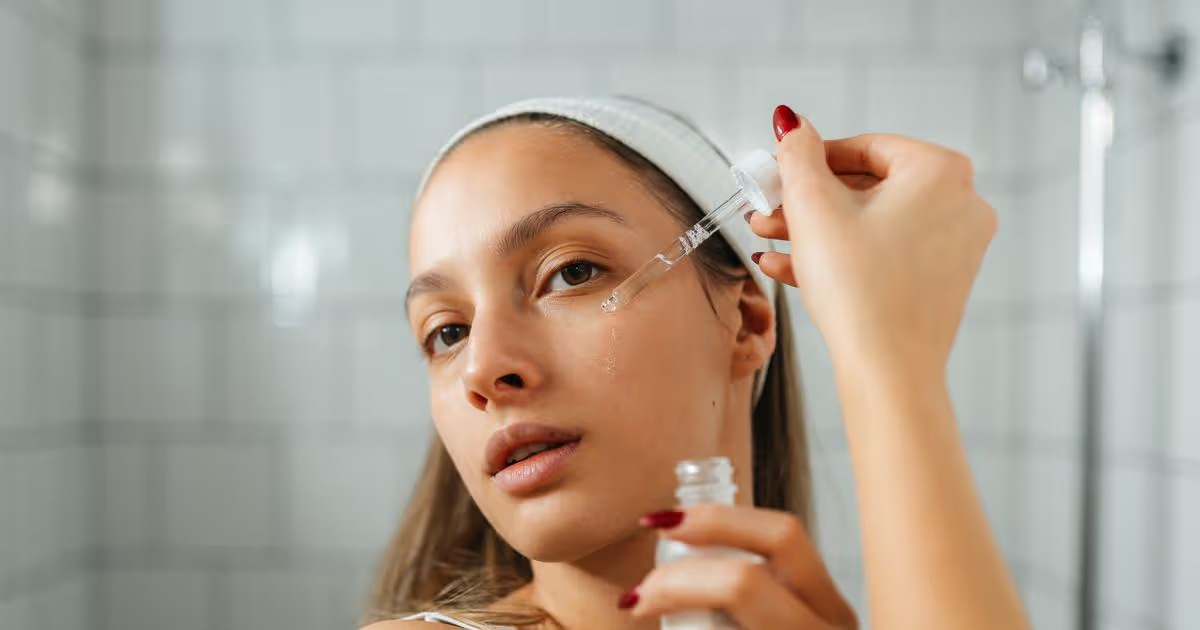
PDRN is a skincare ingredient skyrocketing in popularity this year(Image: Getty)

Every few years there seems to be a new hero skincare ingredient to incorporate into our routines. Hyaluronic acid has been universally revered for its hydration properties, vitamin C has earned essential status for its glow-giving abilities, while retinol is a must for anti-ageing focused evening routines. Now, as we head into 2026, PDRN is taking centre stage – but what exactly is it and how should we be using it?

Already a staple in medical aesthetics and K-beauty, which has dominated social media and beauty aisles over the last 12 months, PDRN is being hailed as the next generation of barrier-first, recovery-led skincare. As such, skincare fans are likely to start seeing it crop up a lot more in high-street launches in the coming months, with many formulas relying on the ingredient to deliver bouncy, hydrated and protected skin.

I asked dermatologists for the low down on the latest skincare essential, and have hunted down some of the top products starring the ingredient available now, perfect for anyone wanting a skincare refresh. I’ve even been using one of them myself for the last couple of weeks, and I’ve already noticed a difference in my complexion.

READ MORE:

What Is PDRN?

PDRN stands for polydeoxyribonucleotide, which is a biological compound made up of short DNA fragments. In skincare, it’s most commonly derived from purified salmon DNA, though fermentation-based and vegan alternatives are now emerging.

Dr Ewa Kania, an aesthetic doctor and regenerative skin specialist, explained: “PDRN is a DNA-fragment-derived regenerative ingredient originally developed for medical wound healing. In skin, it signals fibroblasts and other cells to support collagen and elastin synthesis, enhance barrier repair, improve hydration, and reduce low-grade inflammation.”

PDRN is suitable for most skin types, making it a really universally-loved ingredient(Image: Getty)

Consultant Dermatologist Dr Aiza Jamil added that PDRN has long been used in clinical dermatology before making the jump into at-home products. She added: “It acts as a regenerative ingredient that interacts with cellular mechanisms involved in repair and homeostasis. It was originally used in aesthetic and medical dermatology for wound healing, but is now formulated into topical products like serums, creams, ampoules and toners.”

What does PDRN actually do for skin?

Traditional actives like retinols or AHAs that exfoliate and resurface, PDRN works by supporting the skin’s own repair systems.

“PDRN stimulates pathways involved in tissue repair and cellular renewal,” said Dr Aiza Jamil. “It also improves the skin’s hydration through enhancing moisture retention and structural resilience, supporting the skin’s barrier function”

According to the cosmetic dermatologist, the ingredient is believed to ‘help improve elasticity and texture through influence on collagen pathways and fibroblast stimulation’.

Key benefits of using the ingredient topically include improved barrier strength and resilience, enhanced hydration and plumpness, calmer, less inflamed skin and gradual improvements in elasticity and texture.

Dr Ross Perry, Medical Director of Cosmedics Skin Clinics, describes it as a long-game ingredient. “PDRN encourages the skin to repair itself more efficiently. It helps kick-start fibroblast activity – the cells responsible for collagen and elastin – improving skin quality over time rather than offering a short-term cosmetic fix.”

“It’s not about dramatic overnight changes,” Dr Perry noted. “It’s about improving how the skin functions long term.”

Why PDRN is going to be everywhere in 2026

On TikTok, PDRN has gained viral traction thanks to its nickname – “salmon DNA skincare.” The hashtag #PDRN already has 180K posts, while #GlassSkin has surpassed 1.3 million. Searches for K-beauty on TikTok Shop are up 125% in the last six months of 2025, with #kbeauty now the third most-used beauty hashtag in the UK.

The hashtag #PDRN already has more than 180K posts on TikTok

According to Grace Vernon, Head of Boots Ignite, Foresight & Trends, PDRN is firmly on the radar at the health and beauty retailer, too. “As seen in the Boots Beauty & Wellness Trend Report 2026, PDRN is shaping up to be 2026’s buzziest skincare ingredient. It’s a popular aesthetic treatment, where PDRN is injected straight into the skin to improve regeneration—but skincare products offer a more accessible way to get the benefits (and a lot less painful!).”

“The shift toward ‘recovery-first’ skincare has driven interest in scientifically grounded actives,” Dr Kania added. “Consumers and brands are moving away from aggressive exfoliation and stripping routines toward barrier-supportive, regenerative ingredients. PDRN bridges clinic and daily care with a strong regenerative narrative.”

“Trends such as regenerative treatments and repair and recovery for our skin barrier has become very popular in the past few years, which PDRN champions, so it’s no wonder it is believed to become a leading skincare trend for 2026,” Dr Jamil agrees. “Repair and regeneration has replaced the ‘anti-ageing’ rhetoric. People are focused on cell turnover, barrier protection and hydration from a younger age.”

So it seems that for those left with sensitive or reactive skin having previously taken a ‘more is more’ approach, PDRN could just be the product to combat that.

Who should be using PDRN – and how?

PDRN works best as a supportive, daily active rather than a once-a-week treatment. It layers easily with retinoids, acids and vitamin C, making it ideal for both morning and nightly use. As part of an am skincare routine, it’s ideal for delivering a hydration boost, while evening use is reportedly most effective, working overnight to support skin regeneration.

As for who can use it, Dr Aiza Jamil suggests it is typically suitable for almost all skin types. She said: “It’s generally quite safe for those with sensitive or acne-prone skin. I would stress that PDRN on its own isn’t a miracle worker, but it’s extremely beneficial for recovery, regeneration and barrier support when included in a routine.”

It’s also important to note that topical products won’t replicate injectable results, but they’re excellent for maintenance, prevention and long-term skin health, especially between in-clinic treatments. Dr Ewa Kania added: “Clinically, PDRN fits post-procedure and sensitive skin protocols beautifully. I emphasise repair, resilience and measured results over hype, which helps set realistic expectations while leveraging its robust biological rationale.”

Top PDRN product picks

The PDRN market in the UK is growing rapidly with K-beauty imports and homegrown launches. Dr Ewa Kania has recommended a number of affordable high street options, ranging for those ideal for post-procedure care, to TikTok favourites.

One of her recommendations is the Dr Reju-All Advanced PDRN Rejuvenating Cream, which is £32.89 at Superdrug. She describes it as ‘excellent for post-procedure repair and barrier support’. Often sold-out at Korean pharmacies, according to Glam Touch, it’s designed for oily, dry, and combination skin types and helps the skin recover from daily environmental stress while restoring hydration, glow, and firmness overnight.

Dr Reju-All Advanced PDRN Rejuvenating Cream(Image: Superdrug)

At LookFantastic, the Anua PDRN Hyaluronic Acid Capsule 100 Serum costs £20 and is said to be a ‘great affordable option for sensitive or retinoid-averse skin’ according to the doctor. Consultant Dermatologist, Dr Aiza Jamil, is also a fan of Anua, in particular their PDRN Hyaluronic Acid 100 Moisturising Cream. She said: “It’s formulated with PDRN and Hyaluronic Acid to give the skin a deep boost of hydration and barrier protection.”

A TikTok favourite, Medicube’s PDRN Pink Peptide Serum has been praised by Dr Kania for ‘balancing hydration, radiance and elasticity’. It costs £24 at Boots, with one shopper commenting: “Amazing! This serum has helped my dry skin so so much! I had one stubborn patch around my nose that no moisturiser has helped, but one week of Salmon PDRN and it’s clearing up.”

Medicube PDRN Pink Peptide Serum 30ml(Image: Boots)

However, another shopper claimed it caused them to break out in blemishes, which goes to show that not every skincare product or ingredient will suit everyone. It’s also worth remembering to complete a patch test when introducing any new product or ingredient into your skincare routine, especially as in some rare cases, those with fish allergies may not find the product suitable for them.

For a vegan alternative, there’s the Yepoda The Skinject Effect, which Dr Kania said is made with’exosomes and microspicule delivery, appealing to ethically minded clients and next-gen regenerative positioning’. With its gentle yet powerful formula, it refines skin over time, stimulates collagen production, and supports the skin’s natural barrier.

My personal favourite, though, is the newly-launched Boots PDRN Serum, which was released in January as part of a capsule skincare range from the brand, which draws influence from K-Beauty. It’s priced at a purse-friendly £8, and is said to leave skin ‘feeling firmer, more supple, and radiant after use’.

Boots own brand PDRN serum is one of the most affordable on the market at £8

I’ve been using the serum daily for two weeks and love its lightweight, non-sticky feel. I’ve already noticed a marked improvement in my skin’s overall appearance, looking healthier, brighter and more glowy – and I’m not the only one.

One Boots shopper has commented: “This serum literally makes me skin glow like crazy! My skin feels so hydrated and soft, it’s my go to serum now. The glow it gives is not greasy or wet either so you glow even under makeup.”

Another added: “I’ve only been testing this product for a week so can’t comment on long term benefits, but I’m impressed so far. My skin feels so hydrated, and it looks super glowy! I would definitely repurchase.”

The bottom line?

PDRN isn’t here to replace products containing the likes of retinol or hyaluronic acid, but slots effortlessly into most skincare routines as an additional boost for skin health and glow. As Dr Perry puts it: “It’s not a miracle ingredient. But as part of a considered skincare plan, it can significantly improve how skin behaves, heals and ages.” And we can expect to see a lot more of it knocking around in 2026, that’s for sure.

Tags: , , , , , , ,
How much retinol, Vitamin C and acids does your skin really need? Dermatologists explain

How much retinol, Vitamin C and acids does your skin really need? Dermatologists explain

So what is the right amount? “The goal is consistency and tolerance, not intensity,” said Dr Ho.

1. Vitamin A (retinol and retinoid) 

Optimal concentration: 0.25 – 0.5 per cent for retinol; 0.025 – 0.05 per cent for retinoid, depending on skin type. 

Application: A pea-sized amount for the entire face, twice to three times a week at the start, increasing to nightly if the skin is able to tolerate it. 

Best time: Only at night as retinoids break down under UV and can make skin more sun-sensitive. 

Potential side effects: Retinoid dermatitis (dryness, flaking, redness and a burning sensation) 

2. Vitamin C (L-ascorbic acid, sodium ascorbyl phosphate and magnesium ascorbyl phosphate)

Optimal concentration: Ten to 20 per cent for most skins and 5 to 10 per cent for sensitive skins. Anything above 20 per cent doesn’t necessarily improve efficacy.

Application: A thin, even layer for the face. 

Best time: Mornings to boost your sunscreen’s UV protection and fight daytime free radical damage. 

Potential side effects: Stinging, redness, dryness and even breakouts from overly acidic or high-strength formulations, especially over 20 per cent.

3. Alpha Hydroxy Acids (glycolic acid, lactic acid and citric acid)

Optimal concentration: Five to 10 per cent as a daily leave-on and up to 20 per cent for weekly exfoliating treatments.

Application: A 20-cent coin-sized amount applied in a thin, even layer; avoiding around the eyes and mouth, which can be more sensitive.

Best time: At night as it can increase sun sensitivity during the day. 

Potential side effects: Over-exfoliation can lead to skin tightness, peeling or micro-tears, heightened sensitivity and increased risk of hyperpigmentation. 

4. Beta Hydroxy Acids (salicylic acid)

Optimal concentration: 0.5 to 2 per cent for most skins.

Application: Two to three times a week initially, increasing to daily or every other day. In addition, start at the affected areas (clogged pores and breakouts) or over oilier areas such as the forehead or nose, before extending to the rest of the face. 

Best time: Either morning or night. 

Potential side effects: Excess dryness, irritation and peeling, especially around the nose and mouth. In darker skin tones, it may also trigger post-inflammatory hyperpigmentation. In addition, combining multiple exfoliants, such as BHA with AHA and retinol, can compound irritation risk. 

5. Niacinamide

Optimal concentration: Five per cent, though sensitive skins should opt for 2 to 3 per cent. 

Application: One pump or four to five drops for full-face coverage. 

Best time: Morning and night. 

Potential side effects: While generally well-tolerated, however, too much can over-stimulate the skin and disrupt its natural pH balance. 

Caution: Concentrations above 10 per cent can cause flushing, itching or irritation, especially in sensitive skins. 

6. Hyaluronic Acid 

Optimal concentration: One to 2 per cent. Look for multiple molecular weights of hyaluronic acid for best results. 

Application: One to two pumps onto damp skin to boost hydration effects.

Best time: Twice daily. 

Potential side effects: Though inherently gentle, using too much without proper hydration (that is, sealing with moisturiser after) can paradoxically dehydrate the skin as it’s a humectant that can pull water from the deeper skin layers when skin is dry.

7. PDRN

Optimal concentration: 0.5 to 1 per cent, which translates to 5,000ppm to 10,000ppm.

Application: One pump for the whole face after cleansing and before moisturiser.

Best time: Nightly to support skin repair. Also ideal for post-aesthetic treatment recovery too. 

Potential side effects: Overuse or unregulated concentrations may lead to congestion or temporary breakouts due to its regenerative property. 

5 MORE FACTORS TO CONSIDER TO BOOST SKINCARE EFFICACY

Tags: , , , , ,
Night Skincare Tips for Glowing, Hydrated Skin – Experts Explain

Night Skincare Tips for Glowing, Hydrated Skin – Experts Explain

For additional care, face masks or beauty tools like LED masks or facial massagers can boost results, but they should be applied occasionally.File Photo.

Cleansing helps remove dirt, sweat, pollution and excess oil even on days when there is no makeup applied on the skin.

Night Skincare Tips for Glowing, Hydrated Skin – Experts Explain

Taking care of your skin before you sleep can work wonders for your skin. According to experts, a well-structured nighttime skincare routine gives skin an opportunity to repair and heal itself from daily damage from sun exposure, pollution, makeup or stress and wake up with healthy and rejuvenated skin.

Step 1: Remove makeup and sunscreen.

Dermatologists emphasise that it’s essential to remove makeup or apply sunscreen during the day before going to sleep. They suggest using an oil-based cleanser or micellar water; these are better options for dissolving heavy makeup, sunscreen and the dirt your skin accumulates throughout the day. Leaving makeup or sunscreen overnight can irritate the skin or clog pores.

Step 2: Cleanse gently.

After makeup removal, a gentle facial wash is important. Cleansing helps remove dirt, sweat, pollution and excess oil even on days when there is no makeup applied on the skin. Experts warn against harsh scrubbing or strong soaps, as these are harmful and can strip away the skin’s natural oils, possibly leading to dryness or irritation.

Step 3: Exfoliate – but only occasionally

Exfoliation helps clear dead skin cells and supports skin turnover. Chemical exfoliants like AHAs or BHAs are more effective and gentler than harsh physical scrubs, especially for mature skin. Use exfoliation two to three times a week, but avoid combining exfoliation with retinol treatments on the same night, as this can dry out or irritate skin.

Step 4: Tone and apply targeted treatments

After cleansing or exfoliation, a toner can restore your skin’s pH balance and prime it for more treatment. Experts recommend targeted treatments such as retinol (for ageing concerns), niacinamide (for redness or brightening) or BHA (for acne-prone skin). Retinol should ideally be introduced gradually, starting 1–2 times per week.

Step 5: Hydrate and moisturise

The final step is hydration. Apply serums that give hydration deep into the skin, creams or oils to seal in moisture, and optionally eye creams to address puffiness, dark circles or fine lines. Finish with a nourishing moisturiser to lock everything in overnight.

Extras: Masks or beauty tools (optional)

For additional care, face masks or beauty tools like LED masks or facial massagers can boost results, but they should be applied occasionally. Experts say they are not essential but can complement the nightly routine.

According to dermatologists, a regular nighttime skincare routine – cleansing, treating, hydrating – is “like pressing a reset button” for your skin every night.

Source: Hindustan Times


end-of

Tags: , , , , , , ,
Menstrual facial TikTok trend decoded: CDC and WHO raise red flags and explain what period blood skincare gets wrong

Menstrual facial TikTok trend decoded: CDC and WHO raise red flags and explain what period blood skincare gets wrong

Menstrual facial skincare trend on TikTok: What is really going on

The beauty ecosystem is no stranger to bizarre experiments that go viral overnight, but the menstrual facial trend has pushed the boundary of shock content yet again. TikTok creators are applying their own period blood on their faces as a perceived glow-inducing mask. Influencers are positioning it as natural, potent, and regenerative. The truth is far more complicated. As the hype escalates, consumers need grounded information to cut through the noise and protect their skin health.

Why the menstrual facial trend gained traction

TikTok thrives on novelty-driven virality, and the menstrual facial checks every box. It is raw, visually arresting, and positioned as a secret wellness ritual. For young viewers navigating a crowded skincare landscape, anything marketed as natural often carries instant appeal.
There is also a cultural shift where more creators are dismantling stigma around periods. While this conversation is important, blending it with unverified skincare experiments is a slippery slope. Many users adopt the trend without understanding the biological composition of menstrual blood or the risks of applying it to the skin. The result is a perfect storm where empowerment messaging merges with misinformation.

What menstrual blood contains

Contrary to viral claims, menstrual blood is not simply blood. It is a mixture of blood, vaginal secretions, uterine tissue, bacteria, and cellular debris. It is not sterile. Dermatologists emphasise that anything containing bacteria or pathogens should never be introduced to the skin barrier.

Supporters argue that menstrual blood contains stem cells and growth factors. However, the presence of these elements does not translate into topical skincare benefits. There is no evidence that applying menstrual fluid externally supports collagen regeneration, reduces acne, or accelerates healing. These claims are speculative, not clinically validated.

Live Events

Why dermatologists are sounding the alarm

The US Centers for Disease Control and Prevention (CDC), in its Bloodborne Infectious Diseases-Occupational Safety and Health Topics (NOISH) page, states that” Blood and certain body fluids can contain bloodborne pathogens, including hepatitis B virus (HBV), hepatitis C virus (HCV), and human immunodeficiency virus (HIV). Exposure to these fluids can pose a transmission risk”.In other words, human blood is not a beauty ingredient; it is a biohazard unless handled with medical-grade precautions. The World Health Organisation (WHO), in its Blood Safety guidance, reinforces the same standard: ‘Safe handling of blood and body fluids is central to infection prevention and control. Policies and practices are required to reduce the risk of transmission of bloodborne pathogensThere is also a strong biohazard element. Bodily fluids can transmit harmful microbes. Even one’s own menstrual fluid can become contaminated once outside the body. This is why dermatology protocols use sterile environments for any procedure involving biological materials. Using menstrual blood at home does not meet any safety standards and introduces unnecessary risk.

The psychology behind shock value skincare

The rise of shock skincare reflects how the digital attention economy is evolving. Outlandish rituals outperform traditional beauty content because they provoke reactions. This pushes creators to escalate extremes to stay relevant. Consumers, especially younger ones, often confuse virality with legitimacy. A trend that garners millions of views appears credible by volume alone, even when it is scientifically unsound.

This behaviour mirrors previous online fads such as toothpaste acne masks, sunscreen contouring, and lemon juice brightening. All these trended for their visual impact rather than efficacy. The menstrual facial is simply the latest entrant in this cycle of spectacle over science.

What the trend reveals about misinformation in beauty

The menstrual facial wave highlights a broader industry issue. Skincare consumers are drowning in DIY advice, home remedies, and pseudo-science disguised as empowerment. Social media accelerates this misinformation at scale. Users rarely cross-check claims with qualified experts. When creators use charged language like natural, organic, or holistic, they easily bypass scrutiny.

Platforms are now facing pressure to regulate unverified health and beauty content. Dermatologists, meanwhile, are calling for stronger public literacy around ingredients, hygiene, and safety protocols.

Science-backed alternatives to achieve real skin benefits

Instead of chasing shock trends, consumers can invest in proven and safe methods to support skin health. These include:

  • Professional-grade exfoliation through AHAs or BHAs for glowing skin
  • Clinically validated ingredients like retinol, niacinamide, and vitamin C for rejuvenation
  • Hyaluronic acid serums for hydration
  • Peptide based formulations for anti-ageing support
  • Regular SPF use for protection

These methods are evidence-driven and aligned with dermatology standards. They deliver real results without compromising safety.

The menstrual facial trend may be visually sensational, but it does not translate into real beauty benefits. Skincare should be built on scientific credibility, not shock factor. As consumers become more discerning, they must adopt a critical mindset when engaging with wellness trends online. Viral does not equal valid.

What the beauty community needs today is transparency, accuracy, and responsible experimentation. The menstrual facial offers none of these. Instead of glorifying unverified hacks, the future of skincare lies in informed choices backed by research and guided by experts.

Add as a Reliable and Trusted News Source

Tags: , , , , , , , , , , , , ,
Best oLive
Privacy Overview

This website uses cookies so that we can provide you with the best user experience possible. Cookie information is stored in your browser and performs functions such as recognising you when you return to our website and helping our team to understand which sections of the website you find most interesting and useful.