How to Use Nature's Retinol: Bakuchiol In Your Beauty Routine

How to Use Nature’s Retinol: Bakuchiol In Your Beauty Routine

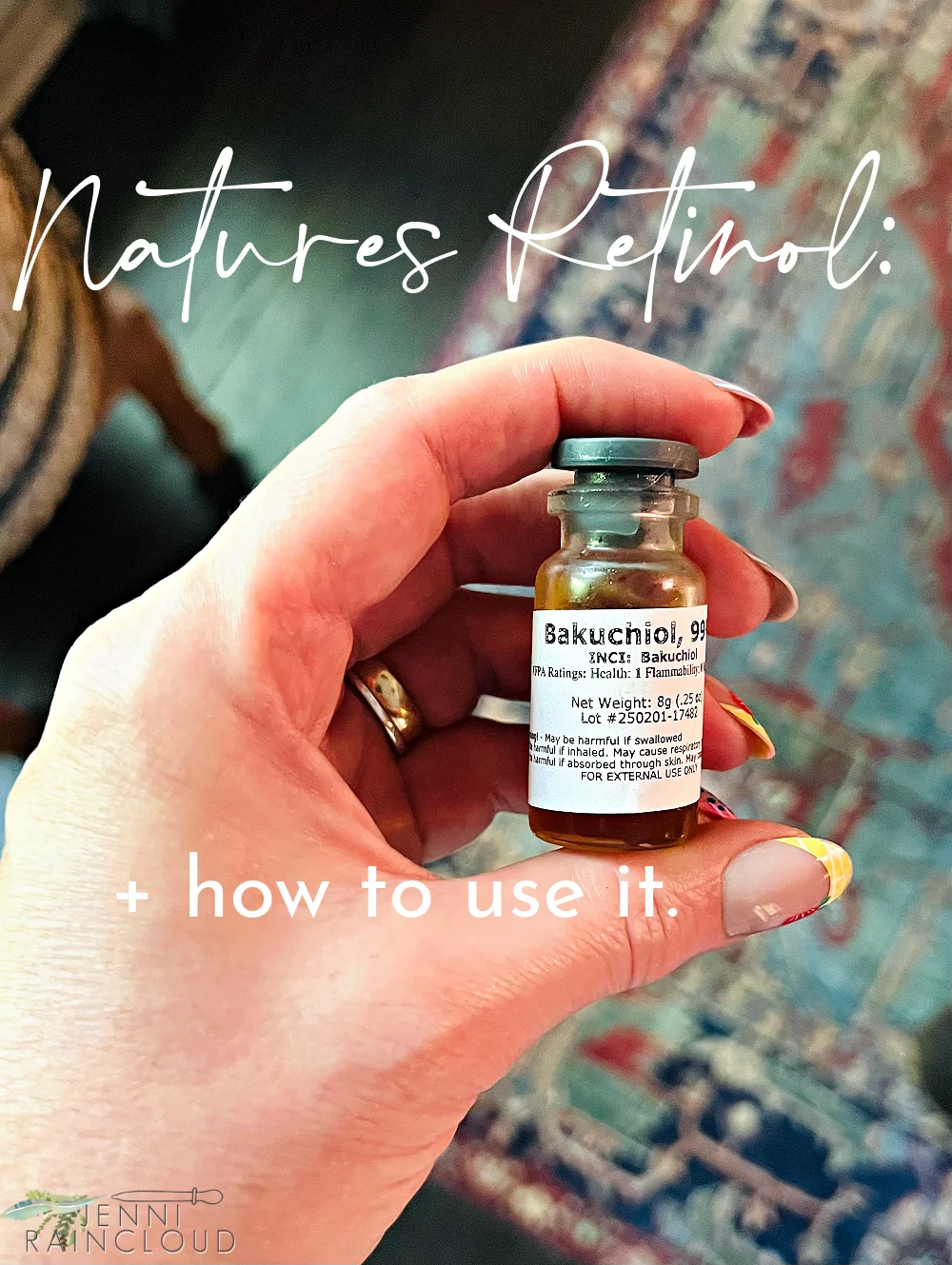
Bakuchiol is a natural retinol alternative. Its effects on the skin are similar to retinol just minus the negative skin reactions retinol often causes. Bakuchiol can be used to reduce sun spots, increase collagen production and protect against collagen breakdown. It can also improve fine lines and wrinkles and has even shown to be helpful with improving acne prone skin. It accelerates cell turnover which is vital as this process slows way down as we age leaving dull, wrinkled dry skin that should’ve been sluffed off. 

What is really cool about Bakuchiol is that it reinforces your skin’s natural structure from within, boosting the strength of building blocks like collagen and elastin.  It also is a strong antioxidant. The appearance of skin aging is influenced by oxidative stress on the skin, especially from environmental factors like pollution and UV rays. But bakuchiol can help strengthen your skin’s resistance to these stressors.

What is Bakuchiol?

Bakuchiol (buh-koo-chee-all) extract is an oil naturally derived from the seeds of the Psoralea corylifolia, more commonly known as the babchi plant. It became a skincare tool in early Indian and Chinese medicine. 

Bakuchiol vs. Retinol:

Retinol is a vitamin A derivative, and is known for its ability to stimulate collagen production, diminish the appearance of fine lines and wrinkles, and improve the overall look of skin.

Retinol is widely acknowledged as an anti-aging ingredient because of its ability to connect to almost any skin cell receptor site, prompting it to simulate the behavior of a healthy, younger skin cell. Retinol is also a powerful antioxidant that is known to interrupt the free-radical damage associated with wrinkles, fine lines, and other signs of aging.

Retinol has become common and can be found in over the counter anti aging products. However, higher doses must be prescribed by a doctor. 

Retinol is commonly known to irritate the skin. It must be used with great caution because its side effects can outweigh its benefits. In fact, pregnant women are warned not to use retinol during pregnancy and users are advised to stay out of the sun while using the treatment. This is where Bakuchiol shines. Bakuchiol has the benefits of retinol with none of the side effects.

Bakuchiol is also a vegan product where retinol is typically not. 

Related Post: DIY Anti Aging Retinol Face Mask

How to Incorporate Bakuchiol in a Natural Beauty Routine? 

As usual, Lotion Crafter to the rescue! They offer Bakuchiol and it can simply be added to oil based recipes at a specific percentage. Find it HERE.

.25 ounces is $15.95. However, you are only adding .5-2% in each recipe. 

Let’s formulate a face oil and eye roll on, shall we? I’m going to use one of my favorite anti aging carrier oils, rosehip seed oil. I typically like to buy it from Mountain Rose Herbs but I often end up grabbing THIS bottle from Amazon because I use it so often. I’m also going to add castor oil, Vitamin E and I love to add carrot seed oil to eye products since it also has cell regenerative properties. Castor oil is so cool-not only does it have some impressive anti aging properties, it also acts as a vehicle to drive other ingredients deeper into the skin tissue.

If you’d like to keep this simple, you could just add 12 drops of bakuchiol to 1 oz. of rosehip and call it good. I’m in the mood to get creative and make two really great products so I’ll share what I did but either way works! 

1 oz. Bakuchiol Face Oil Recipe:

Use a 1 oz treatment pump or dropper bottle Because this face oil is 100% oil based, the shelf life will be around 6 months with no preservative needed. 

10 ml Bakuchiol Eye Serum Recipe:

Use a 10ml glass roll on bottle. No preservative needed here either. With eye roll ons it is nice to store these in a beauty fridge since the cold roller ball can further help reduce inflammation around the eyes. 

Both of these recipes are as simple as adding ingredients into a bottle. I use a small funnel and then once it’s all in, replace the lid and give it a gentle shake. 

You can use both of these products day and/or night since unlike retinol, bakuchiol does not make you UV sensitive. I always like to use a water based product on my skin right before I apply and oil based product. The water helps the skin drink up the oil. An example of a water based product would be a toner or an hyaluronic acid serum. You could also splash a little water on your skin if you don’t have a water based product in your regime.

Where to Get Ingredients:

I always prefer to get my ingredients at Mountain Rose Herbs. They are simply the best quality. They have fair pricing as well. However, I get wanting to use Amazon so I’ve linked all Amazon in the recipe and made a post on my Amazon storefront for really easy shopping.  Most of everything I’ve linked, I’ve personally used. The bakuchiol, CO2llageneer and Q-MAX are Lotion Crafter. They too are affordable and ship very fast. I can not vouch for any of these ingredients on Amazon. 

Bakuchiol promotes collagen, one of the most vital components of radiant, youthful looking skin. Bakuchiol also triggers skin cell repair for a brightening result. These two functions are absolutely vital in skin that is over 30. I love that bakuchiol is gentle. I always opt for a gentle approach to anti aging rather than harsh products, lasers and injectables. 

xx, Jenni

Jennifer Phillips

Jennifer Phillips worked as a licensed aesthetician for over 8 years before creating the DIY skincare blog, Jenni Raincloud and her natural skin care line, J. Raincloud Organics. Jennifer has been blogging full time for 16 years and loves to gain and share knowledge on how to achieve beautiful skin the natural way.

Find me on: Instagram | Facebook

Tags: , , , ,
How July 4th Sun Damage Can Ruin Your Skin’s Retinol Progress

How July 4th Sun Damage Can Ruin Your Skin’s Retinol Progress

This year, more of the country will be outside for longer stretches than at almost any other point in summer, and for anyone using retinol, that shift changes the math on their skincare routine. Retinol is a vitamin A derivative that speeds up cell turnover, softens fine lines, and triggers new collagen production, changes that take weeks or months to show up, according to a 2025 review in the International Journal of Cosmetic Science. The same review explains that ultraviolet exposure breaks down existing collagen and creates new pigmentation and texture damage, which means the two forces, one building and one dismantling, are often happening on the same face at the same time.

Sunscreen is the variable that decides which one wins. Real-world use tends to fall short of what a bottle’s SPF number promises. A clinical study published in the Journal of Investigative Dermatology found that people who applied sunscreen at their usual amount, rather than the thicker layer used in lab testing, got less protection than the labeled SPF, and that closing that gap required both a thicker application and reapplying more often than most people do on their own.

Why Retinol Makes Your Skin More Vulnerable to Sun Damage

That gap matters more for retinol users specifically. Retinol thins the outermost layer of dead skin cells to reveal newer skin underneath, and that newer skin has less natural buffer against UV light. Skipping sunscreen on a day at the beach, or underapplying it on an ordinary Tuesday, does not just add a normal amount of sun exposure. It adds exposure to skin that is already more vulnerable than it was before starting retinol.

Paula Brezavscek sees this constantly at her Coral Gables, Florida practice, where she works as a board-certified physician associate specializing in cosmetic dermatology. “If you’re using retinol without wearing sunscreen every day, you’re working against the benefits you’re trying to achieve,” she explains. “I always tell my patients that sunscreen is what protects the results that retinol helps create.”

RELATED: Can Natural Skincare Really Work? Tata Harper Weighs In

There’s a rumor that layering sunscreen over retinol or vitamin C cancels the ingredients out, like they’re elbowing each other for space. Brezavscek says that’s just not true. “Sunscreen doesn’t make retinol or vitamin C less effective,” she notes. “In fact, they work really well together. Vitamin C helps defend against free radical damage, retinol improves skin quality, and sunscreen protects your skin from future UV damage. Each product has its own role, and together they create a much stronger skincare routine.”

What’s trending in skincare

Common Sunscreen Mistakes That Sabotage Your Skincare Routine

The mistakes Brezavscek actually sees in her patients aren’t about ingredients. They’re about habits. “The biggest mistake is only wearing sunscreen when they’re going to the beach or spending the day outside,” she points out. “Another common mistake is not applying enough. Most people use much less than what’s needed to get the SPF protection listed on the bottle.”

Most people don’t apply enough moisturizer or foundation to get real SPF benefits according to Brezavscek. “If you’re using retinol or having treatments like chemical peels or lasers, I recommend using a separate broad-spectrum SPF 30 or higher every morning,” she describes. “Makeup with SPF is a nice bonus but it shouldn’t be your primary sun protection.”

How to Protect Your Anti-Aging Skincare Investment This Summer

Part of why sunscreen gets skipped is that the consequences of skipping it are not immediate. Retinol users can see results in the mirror within weeks. Sun damage takes far longer to announce itself, and that lag makes it easy to underestimate. “Many people think they’ll notice the effects right away if they skip sunscreen, but that’s usually not what happens,” Brezavscek says. “Sun damage builds over time. Every day of unprotected exposure contributes to collagen loss, pigmentation, and premature aging.” That gradual timeline is also why skin can keep changing years after a routine has stayed the same, since the damage being addressed today was often set in motion long before it became visible.

RELATED: Plastic Surgeon Highlights the New “Bioidentical” Trend Changing How We Approach Facial Aging

For anyone who has spent real money on retinol, peels, or brightening treatments, your sunscreen habit is not a side note to that investment. “Many of the treatments and skincare products we use are designed to repair existing sun damage and improve skin quality,” Brezavscek explains. “If you’re not consistently protecting your skin from UV exposure, you’re creating new damage while trying to fix the old damage.”

Your fix this weekend is not complicated. A broad-spectrum SPF 30 or higher, and apply a nickel-sized amount to your face every two-ish hours outside.

Paula Brezavscek is a board-certified physician associate specializing in cosmetic dermatology.

Tags: , , , , , , ,
How and When to Use Retinol and Vitamin C, According to Experts

How and When to Use Retinol and Vitamin C, According to Experts

Even as a longtime beauty editor, I find it hard to keep up with all the different skincare ingredients out there. Peptides, PDRN, growth factors, ectoin, hypochlorous acid, the list of trending ingredients goes on and on. Despite all the newness, every time I ask a dermatologist what I should be using in my skincare routine, the same two ingredients come up: retinol and vitamin C. When it comes to efficacy, these two ingredients truly work.

“These ingredients are a dream team for tackling dullness, fine lines, hyperpigmentation, acne and acne scarring, and overall skin aging,” says dermatologist Deanne Mraz, MD, noting that retinol and vitamin C are the two ingredients she recommends most to her patients. “From a health perspective, vitamin C neutralizes free radicals and stressors on the skin, while retinol helps the skin to shed unhealthy and potentially pre-cancerous skin cells, so they’re very complementary.”

This is exactly why I compiled this handy guide for combining retinol and vitamin C. Ahead, everything you need to know about using this derm-favorite duo, plus the best retinol and vitamin C products to try right now.

Retinol 101

What is retinol and how does it work?

Retinol is a derivative of vitamin A that’s often used in skincare products to stimulate collagen production (the protein responsible for skin smoothness and firmness) and trigger cell turnover (your skin’s natural renewal process). “By signaling cells to behave like younger cells, retinol can smooth fine lines and wrinkles, fade dark spots and hyperpigmentation, and improve skin’s tone and texture,” explains dermatologist Dendy Engelman, MD.

Retinol is also a fantastic ingredient for treating acne, since it “works on a cellular level to help kickstart your cell turnover rate, reduce inflammation, and decrease oil production—all key functions for keeping pores clear and skin free of breakouts,” says dermatologist Shari Marchbein, MD.

What to look for in a retinol:

Retinol is available in various potencies either over-the-counter or via a prescription and is typically offered in the form of a face serum, gel, or night cream. I personally use an Rx retinol from my dermatologist to help with my acne, but if you go the over-the-counter retinol route, choose a formula that’s labeled “encapsulated.” That means the retinol will be slowly released into the skin to mitigate any irritation and keep the ingredient more stable.

You’ll also want to pay attention to the percentage of retinol in your serum or cream as well. As a general rule, it’s best to start out with a low percentage, like 0.25, and then gradually work your way up to a higher concentration, like 0.5 or 1.0, as your skin tolerates it.

What can retinol not be used with?

While we’re on the topic of retinol, it’s important to know that the ingredient is strong and can cause skin to peel, flake, or become sensitive—especially during the first few weeks of use or when combined with other harsh actives, like AHAs and BHAs. That means that retinol cannot be used at the same time as your leave-on products with glycolic acid, mandelic acid, lactic acid, or salicylic acid.

Vitamin C 101

What is vitamin C and how does it work?

Vitamin C is a powerful antioxidant that can help prevent signs of aging and repair skin damage when used topically. In terms of prevention, vitamin C is excellent at protecting the skin from free radical damage caused by environmental aggressors, such as pollution, infrared light, and blue light, says Dr. Mraz.

“On the reparative side, vitamin C also supports collagen synthesis and helps regulate melanin production to fade hyperpigmentation and give skin nice overall vibrancy and glow,” says Dr. Mraz, adding that research has also shown that vitamin C, which is often found in the form of a serum, can boost the protective benefits of SPF when used together.

What to look for in a vitamin C serum:

Not all vitamin C serums are created equal. According to Dr. Marchbein, the most effective formulas contain one of the seven commonly used forms of vitamin C below:

  • L-Ascorbic Acid: The most powerful and well-studied form of vitamin C. While very effective, it may be too strong for those with sensitive skin. Plus, it’s unstable, so if it’s not properly packaged, it can become inactive.
  • Tetrahexyldecyl Ascorbate (THD): A form of vitamin C that’s as potent as L-ascorbic acid, but much more stable and less irritating to the skin.
  • Sodium Ascorbyl Phosphate/Magnesium Ascorbyl Phosphate: Two stable, hydrating forms of vitamin C that pair well with niacinamide.
  • Sodium Ascorbate/Calcium Ascorbate: Often referred to as vitamin C esters, these are two more stable and non-irritating forms of vitamin C:
  • Ascorbyl Palmitate: One of the least powerful forms of vitamin C, but it’s the most stable (aka least likely to break down when exposed to light or air) and a great choice for sensitive skin.

Also important to note? The percentage of vitamin C used in the formula. In general, vitamin C serums with 10 to 30 percent of the ingredient are more likely to be effective on dark spots and hyperpigmentation, while anything under 10 percent functions as a powerful antioxidant and will protect skin from free radical damage.

And lastly, you’ll want to consider the packaging. Depending on the formulation, vitamin C can oxidize (or become less effective) when exposed to light and air. To ensure your vitamin C serum stays fresh and effective, choose a formula that’s housed in opaque, airtight packaging when possible.

Tips on using retinol and vitamin C together:

What are the risks of using retinol and vitamin C together?

Vitamin C and retinol are both very powerful ingredients, which is in many ways what makes them so worthwhile, but it also means that you need to use them with caution. “Using these ingredients together is great for getting the protective and anti-aging results that you want, says Dr. Engelman, “but the downside is that they can irritate the skin.”

And that’s especially true if you have sensitive skin: “Using both retinol and vitamin C can cause redness, itchiness, sensitivity, and other unwanted side effects,” says Dr. Engelman. That said, you can avoid or lessen irritation by spacing out the time between applying these two ingredients, or by using your vitamin C in the morning and your retinol at night.

Can I use retinol at night and vitamin C in the morning?

In general, yes, retinol is best used at night, and vitamin C is best used in the morning. In the morning, apply your vitamin C serum to clean, dry skin and follow with a face moisturizer for your skin type and sunscreen with SPF 30 or more. If you’re using a face moisturizer with vitamin C, then just SPF on top is fine.

“In the evening, you should apply your retinol to clean, dry skin, and if your skin tends to be on the drier side, you can layer it with a hyaluronic acid serum or hydrating moisturizer,” says Dr. Mraz. And since retinol can cause excessive dryness around the eyes and mouth, Dr. Mraz recommends applying an occlusive ointment, such as Aquaphor or Vaseline, to those areas before using your retinol to create a protective barrier.

And FYI, if you’re someone who can’t be bothered with an a.m. and p.m. routine and just wants to focus on skincare at night, you can use vitamin C and retinol together as long as it’s in the same product (try Neutrogena’s Rapid Tone Repair Correcting Cream or U Beauty’s Resurfacing Compound).

The bottom line:

Our experts all agree that when it comes to preventing and treating acne and acne scars and reversing signs of aging, like fine lines, uneven skin texture, and discoloration, there are no two better ingredients than retinol and vitamin C. “It’s definitely a good idea to use both of these ingredients in your regular skincare routine,” says Dr. Engelman.

Just remember to choose formulas that are right for your skin type and skin concerns and to use your vitamin C in the morning (with SPF, of course) and your retinol in the evening before bed.

Meet the experts:

  • Deanne Mraz, MD, is a board-certified dermatologist and cofounder of Modern Dermatology in Westport, CT, where she and her team offer all types of medical and cosmetic dermatology treatments.
  • Dendy Engelman​, MD, is a board-certified cosmetic dermatologist and Mohs surgeon at Shafer Clinic in New York, NY. Dr. Engelman is an expert in injectables, lasers, and chemical peels.
  • Shari Marchbein, MD, is a board-certified dermatologist and founder of Niche Dermatology in New York, NY, who specializes in cosmetic and medical dermatology.

Why trust Cosmopolitan?

Lauren Balsamo is the beauty director at Cosmopolitan, with more than 13 years of experience researching, writing, and editing beauty stories ranging from the best skincare routine for your 30s to a comprehensive roundup of the best drugstore skincare brands. She regularly tests and analyzes new skincare products and treatments while working with the industry’s top experts to assess new brands, trends, and technologies.

Lauren Balsamo is the beauty director at Cosmopolitan where she writes, edits, and produces all types of beauty content—from product reviews to personal essays and trend reports. She has covered beauty for more than a decade at Cosmopolitan. Follow her on Instagram. 

Tags: , ,
With a New Multivitamin, Has Par Olive Created the Retinol of Ingestible Skin Care?

With a New Multivitamin, Has Par Olive Created the Retinol of Ingestible Skin Care?

The benefits of multivitamins are many. You might take one to balance nutritional gaps, support immune function, or even boost your energy. But have you considered taking one for better skin? Olivia Boyd-Smith, founder of Australia’s leading ingestible brand Par Olive, has—and she has bottled it in her label’s new Advanced Skin Multivitamin, available to shop exclusively for Vogue readers today for 24 hours.

“I wanted to create the retinol of ingestible skin care” and address the root signs of skin aging, Boyd-Smith tells Vogue. That includes the cumulative effect of oxidative stress, chronic inflammation, collagen depletion, and a gradual decline in cellular resilience, according to aesthetic doctor and Par Olive medical director Joseph Hkeik. To address these factors, he thinks of skin health holistically: skin care, relaxation, and nutrition—three pillars around which Advanced Skin is formulated.

Par Olive Advanced Skin Multivitamin

Par Olive

Advanced Skin Multivitamin

  • Why We Love It: For its multivitamin, Par Olive aims to address signs of skin aging with a blend of nine clinically dosed antioxidants, including resveratrol, vitamin C, glutathione, and zinc. Just two capsules per day can illuminate one’s complexion, boost elasticity, reduce inflammation, and support cellular renewal. “We created this for people who are intentional about their skin and understand that prevention is the most intelligent approach to optimal skin health and longevity,” says Boyd-Smith.
  • Key Ingredients: Resveratrol, vitamin C, astaxanthin, lutein, zeaxanthin, glutathione, nicotinamide, riboflavin, zinc
  • Dosage: Two capsules daily with food

Nine master antioxidants were selected to work together, with each supporting a different aspect of skin function, from protecting against daily oxidative stress to reinforcing skin-barrier integrity and cellular repair. “Resveratrol combats oxidative stress, astaxanthin preserves elasticity, vitamin C brightens, glutathione neutralizes free radicals, lutein and zeaxanthin enhance radiance, nicotinamide supports barrier integrity, and zinc balances skin clarity,” Boyd-Smith explains. Each was chosen in collaboration with global skin doctors and longevity experts, clinically dosed, and developed under Australia’s rigorous TGA supplement regulation standards to support cellular renewal, refine texture, restore luminosity, and strengthen resilience.

Photo: Courtesy of Par Olive

Photo: Courtesy of Par Olive

“When [these ingredients are] combined, they create a more complete internal foundation for skin health,” Dr. Hkeik continues. “This allows the skin to function more efficiently, recover better from stress, and maintain its structure over time, which in turn supports and enhances everything we do externally through skin care and treatments.” He emphasizes that because the traditional multivitamin is formulated for overall health, it contains ingredients at lower doses, which often limits their relevance to skin function. The Advanced Skin Multivitamin takes the opposite approach, keeping the complexion as the primary focus. “From a medical perspective, this level of focus matters,” he says. “It allows the formula to support skin health in a meaningful way, rather than simply adding to a general supplement routine.”

Dosage is just two capsules per day taken with food, consistently. “Instead of juggling multiple skin supplements, this single capsule delivers everything the skin needs internally,” says Boyd-Smith, who recommends pairing the multivitamin with Par Olive’s Marine Collagen Superpowder for additional skin structural support. (Research behind the skin benefits of collagen supplementation, a structural protein already found in the body, is plenty.)

Tags: , , , , , , ,
How much retinol, Vitamin C and acids does your skin really need? Dermatologists explain

How much retinol, Vitamin C and acids does your skin really need? Dermatologists explain

So what is the right amount? “The goal is consistency and tolerance, not intensity,” said Dr Ho.

1. Vitamin A (retinol and retinoid) 

Optimal concentration: 0.25 – 0.5 per cent for retinol; 0.025 – 0.05 per cent for retinoid, depending on skin type. 

Application: A pea-sized amount for the entire face, twice to three times a week at the start, increasing to nightly if the skin is able to tolerate it. 

Best time: Only at night as retinoids break down under UV and can make skin more sun-sensitive. 

Potential side effects: Retinoid dermatitis (dryness, flaking, redness and a burning sensation) 

2. Vitamin C (L-ascorbic acid, sodium ascorbyl phosphate and magnesium ascorbyl phosphate)

Optimal concentration: Ten to 20 per cent for most skins and 5 to 10 per cent for sensitive skins. Anything above 20 per cent doesn’t necessarily improve efficacy.

Application: A thin, even layer for the face. 

Best time: Mornings to boost your sunscreen’s UV protection and fight daytime free radical damage. 

Potential side effects: Stinging, redness, dryness and even breakouts from overly acidic or high-strength formulations, especially over 20 per cent.

3. Alpha Hydroxy Acids (glycolic acid, lactic acid and citric acid)

Optimal concentration: Five to 10 per cent as a daily leave-on and up to 20 per cent for weekly exfoliating treatments.

Application: A 20-cent coin-sized amount applied in a thin, even layer; avoiding around the eyes and mouth, which can be more sensitive.

Best time: At night as it can increase sun sensitivity during the day. 

Potential side effects: Over-exfoliation can lead to skin tightness, peeling or micro-tears, heightened sensitivity and increased risk of hyperpigmentation. 

4. Beta Hydroxy Acids (salicylic acid)

Optimal concentration: 0.5 to 2 per cent for most skins.

Application: Two to three times a week initially, increasing to daily or every other day. In addition, start at the affected areas (clogged pores and breakouts) or over oilier areas such as the forehead or nose, before extending to the rest of the face. 

Best time: Either morning or night. 

Potential side effects: Excess dryness, irritation and peeling, especially around the nose and mouth. In darker skin tones, it may also trigger post-inflammatory hyperpigmentation. In addition, combining multiple exfoliants, such as BHA with AHA and retinol, can compound irritation risk. 

5. Niacinamide

Optimal concentration: Five per cent, though sensitive skins should opt for 2 to 3 per cent. 

Application: One pump or four to five drops for full-face coverage. 

Best time: Morning and night. 

Potential side effects: While generally well-tolerated, however, too much can over-stimulate the skin and disrupt its natural pH balance. 

Caution: Concentrations above 10 per cent can cause flushing, itching or irritation, especially in sensitive skins. 

6. Hyaluronic Acid 

Optimal concentration: One to 2 per cent. Look for multiple molecular weights of hyaluronic acid for best results. 

Application: One to two pumps onto damp skin to boost hydration effects.

Best time: Twice daily. 

Potential side effects: Though inherently gentle, using too much without proper hydration (that is, sealing with moisturiser after) can paradoxically dehydrate the skin as it’s a humectant that can pull water from the deeper skin layers when skin is dry.

7. PDRN

Optimal concentration: 0.5 to 1 per cent, which translates to 5,000ppm to 10,000ppm.

Application: One pump for the whole face after cleansing and before moisturiser.

Best time: Nightly to support skin repair. Also ideal for post-aesthetic treatment recovery too. 

Potential side effects: Overuse or unregulated concentrations may lead to congestion or temporary breakouts due to its regenerative property. 

5 MORE FACTORS TO CONSIDER TO BOOST SKINCARE EFFICACY

Tags: , , , , ,
Retinol decoded: Your dermatologist-backed fix for smoother skin, fewer spots, and a stronger anti-ageing routine

Retinol decoded: Your dermatologist-backed fix for smoother skin, fewer spots, and a stronger anti-ageing routine

You know that feeling when no matter how many creams or serums you try, your skin still looks tired, uneven, or shows early signs of ageing? That’s where Retinol comes in, dermatology’s “gold standard” ingredient. A derivative of vitamin A, Retinol is extensively researched and trusted by skin experts for its ability to repair and rejuvenate deeply. Once applied, it converts into retinoic acid in the dermis, working at the cellular level to smooth texture, fade dark spots, and boost collagen production. We spoke with Dr Ridhima Arora, MBBS, MD (Dermatology & VD), Malik Radix Healthcare Pvt. Ltd, and she shared with HealthShots that what makes Retinol truly special is its versatility; it tackles multiple skin concerns simultaneously, from fine lines and uneven tone to stubborn pigmentation. She also emphasised that the best results are achieved when you introduce it gradually, use it correctly, and always pair it with sunscreen. Following these steps makes Retinol safe, effective, and transformative.

Retinol: Transform your skin with dermatologist-backed daily care.(Adobe )

In this article, we break down everything Dr Arora shared with HealthShots about Retinol, how to use it safely, effectively, and consistently, so you can finally see a fundamental transformation in your skin. Think of it as your dermatologist-backed roadmap to healthier, younger-looking skin without guesswork or trial-and-error. With the proper guidance, Retinol isn’t intimidating; it’s empowering.

Benefits of retinol?

  • Wrinkles and fine lines are minimised: Retinol boosts collagen and elastin production, increasing dermal thickness and reducing lines, as shown in clinical studies. Dr Arora notes that it “builds skin’s structural matrix to firm and smooth over time.”
  • Accelerates skin renewal: By increasing cell turnover and shedding old skin, retinol refreshes the surface and improves radiance, as reported by the Journal of Applied Pharmaceutical Science.
  • Acne-controlling: Retinol clears clogged pores and regulates sebum, helping to combat acne and post-inflammatory marks, as reported by the American Journal of Clinical Dermatology.
  • Lightening of the area with discolouration: Studies show that retinol can reduce pigmentation intensity and even out skin tone over 8–12 weeks. Dr Ridhima Arora says it “targets both the cause and appearance of spots for smoother tone.”

8 top-rated retinol serums for healthier-looking skin:

We selected these retinol serums based on Amazon’s highest ratings, overall customer reviews, and consistent feedback on results.

Targeting blemish-prone skin, this CeraVe Resurfacing Retinol Serum combines Retinol, Niacinamide, and Licorice Root Extract to visibly reduce post-acne marks, refine pores, and restore a smoother, even-toned complexion. Lightweight and non-comedogenic, it works without clogging pores or causing irritation. Ideal for those struggling with breakouts, uneven texture, or dark spots, it can be incorporated into your nightly skincare routine for healthier, rejuvenated skin.

Start your night routine with Minimalist Anti-Ageing Night Serum, featuring 0.3% Retinol and CoQ10 to reduce fine lines and wrinkles. Its water-free formula ensures ingredient stability and deeper nourishment, making it ideal for beginners. Suitable for all skin types, this unisex serum works overnight to smooth texture, boost collagen, and rejuvenate skin. Apply nightly after cleansing for firmer, youthful-looking skin and a refreshed morning glow.

Wake up to smoother, revitalised skin with Olay Regenerist Retinol 24 Night Serum. This fragrance-free formula works overnight to reduce fine lines, resurface the skin’s texture, and restore radiance without irritation, making it suitable for all skin types, including standard, oily, dry, and combination skin. Infused with potent retinol, it supports your skin’s natural renewal process, helping maintain a healthy, youthful glow. It’s a simple addition to your nightly skincare routine for visible results.

Tired of dull, ageing skin? Plum 1% Retinol Advanced Anti-Ageing Night Face Serum combines 1% Retinol with Bakuchiol to enhance collagen production, minimise fine lines, and smooth wrinkles. Lightweight and fast-absorbing, it works overnight to renew skin texture. Suitable for all skin types, this serum is loved by Amazon users for its practical and gentle results, making it a key step in your nightly skincare routine.

Want clearer, healthier skin without complicated routines? The Derma Co 0.3% Retinol Serum can be your daily game-changer. Designed to reduce fine lines, wrinkles, and dark spots, it gently renews your skin while keeping it nourished. Lightweight and fast-absorbing, it seamlessly integrates into your routine, helping you achieve smoother, brighter, and more youthful-looking skin so that you can feel confident every day.

Looking for a premium retinol serum that actually delivers? La Roche-Posay 0.3% Retinol Vitamin B3 Serum combines retinol with soothing Vitamin B3 to reduce fine lines, smooth texture, and brighten skin. Lightweight and gentle, it’s perfect for nightly use, helping you achieve a refreshed, youthful glow. Users love how effective yet non-irritating it feels on all skin types.

If you want something for a gentle anti‑ageing boost? The Deconstruct 0.2% Retinol Face Serum combines mild retinol with 1% peptides to smooth fine lines and support skin renewal. Its beginner‑friendly formula is ideal for both men and women starting retinol. Apply a few drops to cleansed skin at night, avoiding the eye area, and follow with a moisturiser. Perfect for sensitive or starter routines, helping you age confidently.

Want a gentle yet effective start with retinol? Foxtale 0.15% Beginner-Friendly Retinol Night Serum minimises fine lines and wrinkles without causing purging. Its mild, low-concentration formula makes it perfect for all skin types, including sensitive skin. Apply a few drops at night to a cleansed face and follow with moisturiser. A gentle starter serum that promotes smoother, younger-looking skin safely.

How to Use Retinol Safely: Tips from Dr Ridhima Arora

  • Start slow: Dr Arora advises beginning with a lower concentration (0.1–0.3%) and applying it only 2–3 nights a week. Gradually increase as your skin builds tolerance.
  • Right timing: Apply on a clean, dry face. A pea-sized amount is enough for the entire face.
  • Moisturise & protect: Follow with a light moisturiser and don’t skip sunscreen (SPF 30+) every morning.
  • Be patient: Your skin might feel dry or slightly flaky initially. Visible results typically appear after 12 to 16 weeks of consistent use.
  • Avoid mixing strong actives: Retinol shouldn’t be combined with potent acids (AHAs/BHAs) or vitamin C, as Dr Arora emphasises to prevent irritation.

This approach ensures maximum benefit while keeping your skin safe and healthy.

Similar stories:

Shop 8 top-selling anti dandruff shampoos for clear and healthy scalp

Looking for a hydrating face wash for dry skin? 8 top-rated winter must-haves you can try

Disclaimer: The products listed are not suggested, endorsed, or promoted by any dermatologist. They have been selected solely based on Amazon ratings, user reviews, and overall feedback to help you make an informed choice. Always consult a qualified skincare professional before incorporating new products into your routine to ensure they suit your skin type and needs.

FAQ’s: Retinol for healthier skin

  • What is Retinol, and why should I use it?

    Retinol is a Vitamin A derivative that boosts collagen, smooths fine lines, evens skin tone, and improves texture.

  • How often should beginners apply Retinol?

    Start 2–3 nights a week with a low concentration (0.1–0.3%) and gradually increase based on tolerance.

  • Can Retinol be used with other skincare ingredients?

    Avoid strong acids (AHAs/BHAs) and Vitamin C when using Retinol to prevent irritation.

  • When can I expect to see results from Retinol?

    Consistent use for 12–16 weeks is typically required to notice smoother, brighter, and healthier-looking skin.

Disclaimer: At Hindustan Times, we help you stay up-to-date with the latest trends and products. Hindustan Times has an affiliate partnership, so we may get a part of the revenue when you make a purchase. We shall not be liable for any claim under applicable laws, including but not limited to the Consumer Protection Act, 2019, concerning the products. The products listed in this article are in no particular order of priority.

Tags: , , , , , , , , ,
Best oLive
Privacy Overview

This website uses cookies so that we can provide you with the best user experience possible. Cookie information is stored in your browser and performs functions such as recognising you when you return to our website and helping our team to understand which sections of the website you find most interesting and useful.