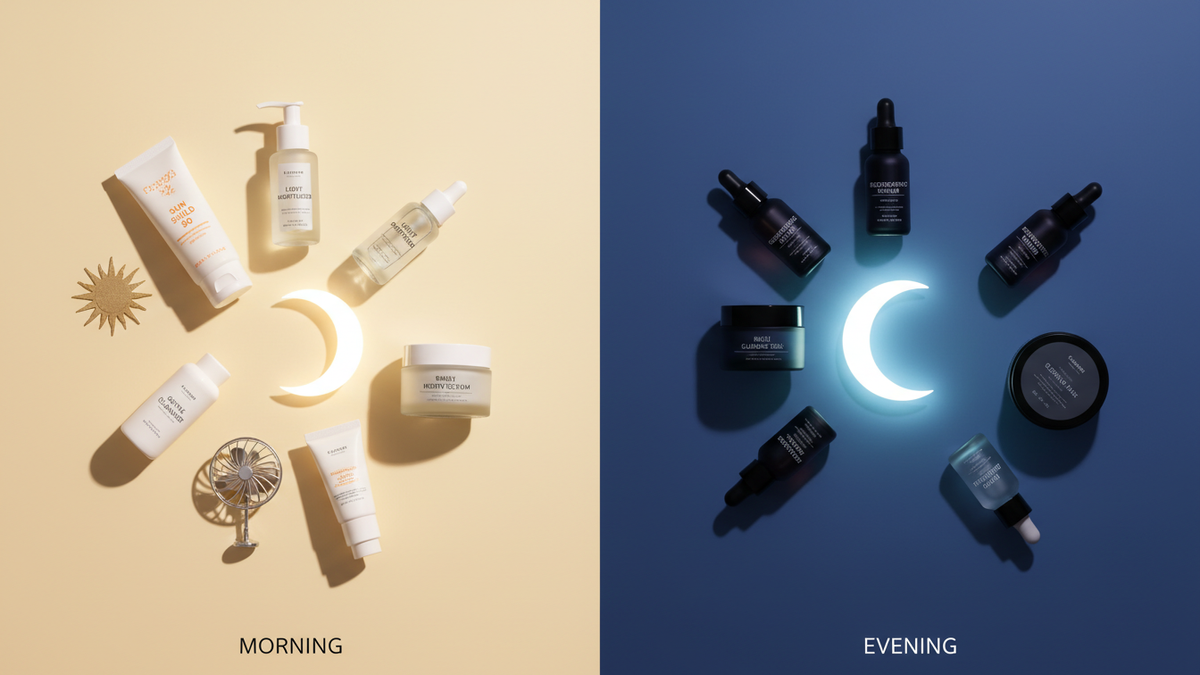
Morning to Night: How Small Daily Rituals Can Help Build Lasting Habits

Morning to Night: How Small Daily Rituals Can Help Build Lasting Habits

A productive morning does not have to begin at 5 am, and a relaxing evening does not require an elaborate skincare routine, an hour of meditation or pages of journaling. For many people, a more practical approach is to develop small, repeatable habits that fit their existing schedules.

Daily rituals can provide structure to otherwise hectic days. Drinking water after waking up, stretching for a few minutes, reviewing the day’s priorities or putting away a phone before bedtime are simple actions that can be incorporated into everyday life.

The challenge is not finding advice about better routines. Social media is filled with carefully planned schedules and elaborate self-care rituals. The real difficulty is maintaining those habits when work runs late, sleep is disrupted or family responsibilities take priority.

Why complicated routines can be difficult to maintain

A routine that demands a complete lifestyle change may be difficult to sustain. Someone accustomed to waking up at 7 am, for instance, may struggle to maintain a 5 am workout schedule.

Introducing several habits simultaneously can also create unnecessary pressure. Missing one workout or skipping a day of journaling may make an otherwise useful routine feel like a failure.

A more manageable approach is to begin with one achievable behaviour and gradually build from there. A 10-minute walk may be easier to maintain than a daily hour-long workout, while writing down one priority may feel more realistic than maintaining a detailed journal.

The objective is not to make every day identical. It is to make beneficial actions easier to repeat.

Create a morning routine around existing habits

Morning rituals are often easier to maintain when they are connected to activities that already form part of the day.

For example, a person could stretch briefly after brushing their teeth, review their calendar while having tea or coffee, or take a short walk after breakfast.

A simple morning routine might include opening the curtains, drinking water, moving for a few minutes and identifying the day’s most important task. There is no need to follow every suggestion. The routine should reflect individual health needs, working hours and responsibilities.

Make evenings a time to reset

Evenings can easily become an extension of the working day. Unfinished tasks, messages and prolonged screen time may leave little room to unwind.

A short evening ritual can help establish a boundary between work and personal time. Preparing clothes for the following day, tidying one small area or writing down unfinished tasks can make the next morning easier to manage.

Keeping a reasonably consistent sleep schedule and allowing time to wind down may also support better sleep habits. Persistent sleep difficulties, however, may require professional advice rather than a routine alone.

Use smaller habits on difficult days

A useful strategy is to create a shorter version of a habit for busy days. Someone who usually exercises for 30 minutes could stretch briefly when time is limited. A person who journals could write one sentence instead of a full page.

The purpose is to make returning to a habit easier, not to demand consistency at the expense of rest or recovery. Illness, exhaustion and unexpected responsibilities should be accommodated.

Track progress without demanding perfection

A simple checklist or calendar can help people recognise patterns and understand what makes a habit easier to maintain.

Missing a day does not erase previous progress. Instead, it can be an opportunity to consider whether the habit needs a different time, a smaller target or a more convenient reminder.

Too many tracking systems, however, can turn a supportive routine into another administrative burden.

Let routines support everyday life

Daily rituals should not become another measure of personal worth. For one person, success may mean walking before work; for another, it may mean having breakfast without checking notifications or preparing for bed at a consistent time.

The most useful routine is not necessarily the most impressive one. It is the one that can be repeated, adapted when circumstances change and resumed without unnecessary guilt.

The takeaway: Start with one manageable habit, connect it to an existing activity and allow room for imperfect days. Small routines can provide structure without making everyday life feel like a constant productivity challenge.

Tags: , , , , , , ,
Vitamin C in the morning, retinol at night? I looked into two ingredients I had been using without much thought|SORA研究所

Vitamin C in the morning, retinol at night? I looked into two ingredients I had been using without much thought|SORA研究所

1. Why are you using that retinol and vitamin C?

Are you using them just because they seem “good for your skin”?

Both vitamin C and retinol are staple skincare ingredients. Since you often see their names in social media posts and reviews, it is easy to think, “It’s safe as long as it’s in there.”
However, if asked, “So, what exactly is it doing for your skin?”, you might find it surprisingly difficult to answer.

Actually, retinol and vitamin C have very different roles

Broadly speaking, these two have completely different areas of expertise.
Vitamin C: Protects the skin from “oxidative damage” caused by UV rays and the like, in charge of defense
Retinol: Supports functions related to skin turnover and firmness, in charge of renovation work

Both are widely used ingredients in skincare, but protecting and rebuilding are different types of work. Also, how much they actually work depends significantly on the type, concentration, and formulation of the ingredient.

First, let’s learn “what kind of effect the ingredient is intended to have”

The fact that their roles are different also means you can choose based on “which one suits my concerns.”

Concerned about dullness or UV damage → Lean towards vitamin C
Concerned about firmness, texture, or fine lines → Lean towards retinol

Keeping this perspective in mind will make choosing products much easier.

2. What is vitamin C doing in the morning?

The main role of vitamin C is “antioxidation”

The primary role of vitamin C is “antioxidation.”

When you are exposed to UV rays, unstable substances called “active oxygen (free radicals)” are generated within the skin. It is believed that these damage skin cells and collagen. Vitamin C has the function of neutralizing this active oxygen.[^1]

What happens to the skin when exposed to UV rays?

Skin damage caused by UV rays is not just about getting red from a sunburn. It is known that over a long period of time, it leads to spots, dullness, and a loss of firmness (so-called “photoaging”).

Using vitamin C in the morning is based on the idea of preparing for the oxidative stress caused by the UV rays and outside air you will be exposed to throughout the day.

It is also related to pores, texture, and clarity

In addition to antioxidation, vitamin C also has

is well-known. [^1]

In Japan, some vitamin C derivatives are approved as active ingredients in quasi-drugs (medicated cosmetics) for their efficacy in “suppressing melanin production and preventing spots and freckles.”

However, this does not promise dramatic changes such as “pores disappearing” or “spots vanishing.” It is best to think of it as an ingredient for “prevention and support” in your daily care.

Note: “Vitamin C derivatives” like C10 are modified forms designed to stabilize vitamin C (ascorbic acid), which is otherwise easily broken down. While they are expected to function as vitamin C within the skin, the efficiency of their conversion varies depending on the type of derivative, and there is less research on them compared to pure vitamin C. [^1]

https://pmc.ncbi.nlm.nih.gov/articles/PMC5605218/

However, it is not a substitute for sunscreen

This is an important point.

The job of vitamin C is to neutralize reactive oxygen species that have already formed. Since its mechanism is different from sunscreen, which blocks ultraviolet rays themselves, it cannot replace sunscreen. Even in research papers, it is positioned as a way to “supplement oxidative damage that cannot be fully prevented by sunscreen alone.” [^1]

I think it is best to imagine morning vitamin C as a “defensive substitute player placed under your sunscreen.”

Vitamin C = morning defense. But the ace is sunscreen.

3. What does retinol do at night?

Retinol is an ingredient that helps with “renovation work” for the skin

Retinol is a type of vitamin A. It is thought to change into retinal and then retinoic acid within the skin, where it plays a role in skin cell turnover and collagen production. [^2][^3]

In other words, it is like supporting the skin renovation work that takes place while you sleep.

Effects on firmness, texture, and fine lines

In a study targeting elderly individuals, it was reported that a group that applied 0.4% pure retinol consistently for 24 weeks saw an improvement in fine lines. [^2]

In Japan, quasi-drugs containing retinol as an active ingredient for “improving wrinkles” have also been approved.

However, this is only if used properly for a set period at a specific concentration and formulation. It does not guarantee that the products you have on hand will yield the same results.

Results do not appear immediately

Since this is renovation work, it is not something that will be completed in a day or two. In the aforementioned study as well, the evaluation was done over a period of months.[^2]

It is an ingredient that would be a waste to give up on after saying, “I used it for a week but nothing changed.”

Beware of irritation, dryness, and peeling

When you first start using retinol, you may experience

  • redness

  • dryness

  • peeling

  • tingling sensations

.[^3][^4] This is not “proof that it is working,” but rather a reaction (side effect) to irritation. Medically, it is sometimes called “retinoid dermatitis.”

It is commonly referred to as “A-reaction,” but there is no need to endure strong irritation and continue using it.

  • Start with a low frequency, such as once every 2 to 3 days at first

  • Do not be greedy with the amount

  • Moisturize thoroughly

It is common to let your skin get used to it using methods such as these.

Also, regarding medical-grade retinoids, there is literature that suggests they should be avoided during pregnancy.[^4] If you are pregnant or breastfeeding, it is safer to consult a doctor in advance even for cosmetic retinol.

Retinol = night shift work. Do not rush, take it little by little.

4. Why vitamin C is for the morning and retinol is for the night

Morning is for protection against UV rays and oxidative stress

To summarize what has been discussed so far, the reason is simple.

Since vitamin C is an “ingredient that prepares you for damage you are about to receive,” its role is easier to understand when used in the morning before being exposed to UV rays.

Retinol is easier to use at night considering light and irritation

There are mainly two reasons why retinol is often used at night.

  1. Some members of the retinol family (retinoids) are easily broken down by light [^4]

  2. When you first start using it, it is prone to causing irritation and dryness, making the skin more sensitive [^4]

It is more logical to use it at night and let it work thoroughly rather than using it during the day amidst UV rays.

Also, while you are using retinol, sunscreen the next morning is more important than ever.

There is no problem with using vitamin C at night

This is something that is surprisingly not well known.

Vitamin C is not an ingredient that must not be used at night. Its antioxidant and melanin-inhibiting effects can be expected both in the morning and at night.

For those who say, “I’m too busy in the morning to have time to apply it,” using it at night is one option.

It is not a case of “it must be morning” or “it won’t work unless it’s at night”

“Vitamin C in the morning, retinol at night” is a “convenient time to use” thought of based on the properties of each.

It is not an absolute rule, and it is fine to just remember it as:

  • Vitamin C: When used in the morning, it easily fits the role of daytime protection

  • Retinol: It is safer to use at night due to light and irritation

that much is fine.

5. Can retinol and vitamin C be used together?

Using both is fine. But there is no need to layer them at the same time

To start with the conclusion, it is fine to use both vitamin C and retinol in your daily skincare routine.

However, “using both” here means using them at different times, such as vitamin C in the morning and retinol at night. It does not mean layering them at the same time. You may see talk online that “using them together cancels out their effects,” but as far as I have researched, I have not found any clear evidence to support that.

On the other hand, I could not find any evidence that layering them together increases their effectiveness. Since both are ingredients that can cause irritation, layering them unnecessarily might only increase the burden on your skin.

Separating them into morning and night is the simplest approach

Vitamin C in the morning, retinol at night. This way of separating them has the following benefits:

It is easier to tell which one is the cause if irritation occurs
You can match them to their respective optimal times (Vitamin C for daytime defense, retinol for nighttime repair)
Since you are layering fewer ingredients at once, it is easier to reduce the burden on your skin

Ultimately, the common advice to use them separately is the most straightforward approach.

Don’t push yourself if you feel irritation

If you experience redness or stinging,

  • reduce the frequency of retinol

  • take a break from one or both for a while

  • consult a dermatologist if symptoms persist

and other such measures are important to avoid overdoing it.

Skincare is not a case of “the more, the better”

Active ingredients do not work faster just because you apply more of them. In fact, it can increase irritation and even damage your skin’s barrier.

Consistency every day with an amount and frequency you can maintain.This is the best shortcut.

6. You can choose skincare based on “ingredients and purpose” rather than brand

Focus on “what is the purpose of using it” rather than the brand name

After reading this far, you will see that what is important is not “which brand” but rather

I think it has become clear that this is the case.

I want to use vitamin C-based ingredients in the morning,
I want to use retinol-based ingredients at night

If you think this way, you will be able to compare other products as well.

Products sold on e-commerce sites are easy to obtain and often reasonably priced, which is a major advantage for maintaining a routine.

Knowing that there are other options for the same purpose also expands the fun of choosing.

So next, I will compare them based on ingredients, price, and ease of use, rather than brand name.

Don’t choose retinol based on concentration alone

When choosing retinol-based products, it is recommended to check not only the concentration number, but also:

  • Type of ingredient: Is it retinol (pure retinol) or a derivative like retinyl palmitate?

  • Consideration for irritation: Is it a low concentration for beginners, or for those who are used to it?

  • Container: Is it a container that is resistant to light and air (such as a tube or airless container)?

as well.

Vitamin C is also not “all the same if it’s 10%”

Vitamin C is the same; even if it says “10% formulation”,

  • Is it pure vitamin C (ascorbic acid)?

  • What type of vitamin C derivative is it (APPS, VC-ethyl, ascorbyl glucoside, etc.)?

  • What is the 10% based on? (Labeling methods vary by product)

can significantly change the contents. If you get into the habit of looking at the ingredient list instead of just comparing numbers, you will be less likely to make mistakes.

Let’s compare price, volume, ingredients, and ease of use

Ultimately, it is realistic to compare them based on the following four points.

Price: Not just the base price, but the price per 1mL
Capacity: How many days it lasts
Ingredients: The type of target ingredient and how it is formulated
Ease of use: Texture, scent, lack of irritation, and ease of continuing

7. Cost-effective alternatives you can choose for the same purpose

Recommended candidates for Vitamin C products

15% Vitamin C derivative
MUJI High Concentration Serum with Vitamin C Derivative
A simple option with 15% Vitamin C derivative
Price: 2,490 yen
Capacity: 30mL
Price per 1mL: approx. 83 yen
[View on Amazon]

Moisturizing gel with Vitamin C derivative
Can be used after serum as a substitute for milky lotion or cream
Melano CC Medicated Whitening Gel for Spot Prevention
Price: 991 yen
Capacity: 100g
Price per 1g: approx. 9.9 yen
[View on Amazon]

Pure Vitamin C + 3 types of Vitamin C derivatives
LITS Moist Perfect Rich Gel C Fragrance-Free 90g
Price: 2,178 yen
Capacity: 90g
Price per 1g: approx. 24.2 yen
[View on Amazon]

Recommended candidates for retinol products

0.1% Retinol derivative
MUJI High Concentration All-in-One Serum with Retinol Derivative
Large 100g capacity + all-in-one
Price: 2,990 yen
Capacity: 100g
Price per 1g: approx. 29.9 yen
[View on Amazon]

Nameraka Honpo Wrinkle Gel Cream
N All-in-One Product Soy Milk Isoflavone 100g
Pure retinol + retinyl palmitate (retinol derivative)
Price: 1,880 yen
Capacity: 100g
Price per 1g: approx. 18.8 yen
[View on Amazon]

Contains retinol derivative
AQUALABEL Special Gel Cream EX (Golden Repair)
5-in-1 all-in-one containing the retinol derivative ‘retinyl acetate’
Price: 1,958 yen
Capacity: 90g
Price per 1g: approx. 21.8 yen
[View on Amazon]

If you are satisfied with your current product, there is no need to force a change

I have introduced alternative candidates here, but if your skin is in good condition with your current product and you are able to continue using it, there is no need to force a change.

The most important thing in skincare is to continue using products that suit your skin.

What is important is not to do it ‘just because,’ but to

be in a state where you can explain, ‘I chose this product because I want this ingredient.’

to be able to explain it.I hope this article serves as an opportunity for you to review your daily skincare routine.

I hope this article serves as an opportunity for you to review your daily skincare routine.

Summary

  • Vitamin C plays a primary role in anti-oxidation. Using it in the morning fits its role as ‘defense’ against UV rays. However, it is not a substitute for sunscreen.

  • Retinol is in charge of ‘nighttime construction’ to support skin turnover and firmness. It is easily broken down by light and can cause irritation, so it is easier to use at night. Expect results over a period of several months.

  • It is not that “it must be morning” or “it won’t work at night,” but rather a matter of the most convenient time to use them.

  • The two can basically be used together. For beginners, it is easier to understand if you separate them into morning and night.

  • Choose products based on ingredients, purpose, price, and ease of continued use rather than brand.

*This article is a summary of information researched by an individual regarding skincare ingredients. Effects vary by individual. If skin problems persist, or if you are pregnant or breastfeeding, please consult a professional such as a dermatologist.

References

[^1]: Al-Niaimi F, Chiang NYZ. Topical Vitamin C and the Skin: Mechanisms of Action and Clinical Applications. J Clin Aesthet Dermatol. 2017;10(7):14-17. https://pmc.ncbi.nlm.nih.gov/articles/PMC5605218/
[^2]: Kafi R, et al. Improvement of naturally aged skin with vitamin A (retinol). Arch Dermatol. 2007;143(5):606-612. https://pubmed.ncbi.nlm.nih.gov/17515510/
[^3]: Oregon State University, Linus Pauling Institute. Vitamin A and Skin Health. https://lpi.oregonstate.edu/mic/health-disease/skin-health/vitamin-A
[^4]: Motamedi M, et al. A Clinician’s Guide to Topical Retinoids. J Cutan Med Surg. (Published online 2021). https://pmc.ncbi.nlm.nih.gov/articles/PMC8750127/
[^5]: Milosheska D, Roškar R. Use of Retinoids in Topical Antiaging Treatments: A Focused Review of Clinical Evidence for Conventional and Nanoformulations. Adv Ther. 2022. https://link.springer.com/article/10.1007/s12325-022-02319-7

Tags: , , , , , ,
DELERE Unveils Caviar PDRN Routine for Morning Anti-Aging

DELERE Unveils Caviar PDRN Routine for Morning Anti-Aging

While retinol dominates nighttime skincare, dermatological experts highlight a critical gap in modern anti-aging: morning defense. Retinol aids nocturnal renewal, but photodegrades under sunlight. Meanwhile, daytime exposure to UV rays, blue light, fine dust, and stress generates free radicals that trigger “Inflammaging”—a state of chronic micro-inflammation that degrades collagen before nightfall. Because sunscreen alone cannot stop oxidative damage, complete skin longevity requires a dedicated morning antioxidant shield.

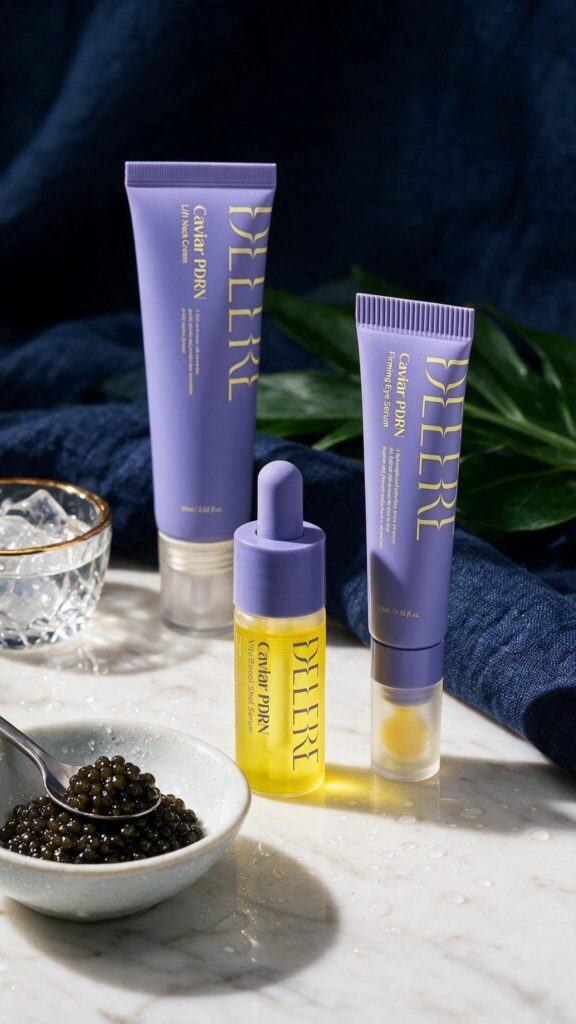
Addressing this gap, high-performance K-beauty brand DELERE introduced an anti-aging system centered on Caviar Omega-3. Containing up to 20 times more omega-3 fatty acids compared with conventional fish oil, caviar creates a proactive barrier against micro-inflammation before visible signs of aging emerge.

To guarantee purity, DELERE operates a 15-year “Farm to Face” model, managing its own sturgeon farm from cultivation to formulation. The brand was founded after a premier Korean cosmetic manufacturer specifically requested DELERE’s harvest over all external sources. Driven to explore its unique potency, founder Su-han Lee conducted years of clinical research. While sturgeons require a full decade for omega-3 and mineral levels to peak—a wait most commercial brands skip—DELERE honors this 10-year maturation, achieving a 168% improvement in skin absorption compared with a conventional serum.

To ensure deep delivery, DELERE overcomes skin barrier limitations with a patented three-tiered system.

Bioavailable Caviar Omega prepares the skin, 100% pure Salmon PDRN stimulates cellular repair, and a patented 3D Hyaluronic Acid matrix (H-Active Booster, Patent No. 10-2609651) encapsulates the active core for loss-free penetration.

This architecture powers DELERE’s new Caviar PDRN collection, headlined by the Vita Boost Shot Serum. Built for the morning routine, its dual-formula activates a freeze-dried capsule formulated with 100% pure Vitamin C directly into the Caviar PDRN serum upon first use to prevent oxidation. Combining Caviar Omega, 4,000ppm Salmon PDRN, 100% Vitamin C, and 5% Glutathione, this two-week program simultaneously targets six key indicators: regeneration, elasticity, tone, texture, hyperpigmentation, and barrier health.

In clinical trials, a single application recorded a 96% barrier recovery rate and an 82% soothing recovery rate. Over two weeks, subjects demonstrated a 123% elasticity increase and a 2.8-fold improvement in blemish reduction compared to standard serums. Certified by Germany’s Dermatest with a 100% user satisfaction rate on sensitive skin, it is ideal for ages 30 to 50 addressing dullness and fatigue. Offered in a 15ml single bottle or a two-bottle set, it is paired with the Firming Eye Serum (Caviar Omega, 300ppm Salmon PDRN, Acetyl Hexapeptide-8) for eye lines and dark circles, and the Lift Neck Cream (Caviar Omega, 500ppm Salmon PDRN, Ceramides) for neck wrinkles, smile lines, and double-chin lifting care.

DELERE’s full Caviar PDRN lineup is now officially available on US Amazon. The collection has already earned high praise from top beauty authorities, with leading creators Skincare with Yuri and Dani Cole highlighting the Vita Boost Shot Serum as an indispensable morning upgrade for radiant skin. To celebrate its North American debut, DELERE is hosting an exclusive Labor Day promotion on Amazon from August 28 through September 7, offering a 20% discount across all four new SKUs.


Post navigation

Tags: , , , , , ,
I Tried Hailey Bieber’s Morning Skin Care & Makeup Routine For 1 Week

I Tried Hailey Bieber’s Morning Skin Care & Makeup Routine For 1 Week

In the beauty world, Hailey Bieber is inescapable. Whether it’s for her mega-viral skin care line, minimalist manicure inspiration, or effortlessly dewy makeup looks, the multi-hyphenate is constantly dominating headlines and starting new trends. It seems like everyone wants to exude her uncomplicated, confident aura by copying her beauty routines. Well, everyone except for maybe me.

I’ve never been one to follow the trends — I march to the beat of my own beauty drum — and similarly, I haven’t caught onto the hype behind Bieber’s brand Rhode. As a beauty editor, I tend to be skeptical of celebrity-founded brands and gravitate toward products with heavy research and clinical results behind them. That said, I am a fan of testing out celebrities’ skin care routines — many of which include high-end, clinically-tested formulas — to see how they can change my complexion. So when my editor suggested I try Bieber’s modest morning routine, which she’s spoken about in her Vogue Beauty Secrets video, I was up for the test.

For two weeks, I ditched my 10-step skin care ritual in favor of Bieber’s relaxed three-step skin and simple morning makeup regimen. Did it change my life? Maybe in some ways. Keep reading for my honest review of Hailey Bieber’s morning routine.

Fast Facts

Price: ~$200. This may sound steep, but many of these products will last a very long time, and you don’t necessarily need to use the same items if you want to replicate her look. Bieber’s exact regimen includes Rhode Glazing Mist ($30), Rhode Glazing Milk ($32), Make Beauty Skin Mimetic Concealer ($28), Kosas Revealer Extra Bright Color Corrector ($32), Anastasia Beverly Hills Clear Brow Gel ($24), Rhode Pocket Blush ($25), Tarte Go With The Faux Freckle Stamp ($26), and the Rhode Peptide Lip Shape ($24).

Who this is best for: Anyone who is constantly running late (ha, me), or who wants to pare back their routine to save time and keep things simple.

What I like: The bare-bones routine made me feel fresh with minimal effort.

What I don’t like: There are some items that are totally unnecessary — I’m looking at you, freckle pen.

My rating: 3.5/5.

Start With Rhode Glazing Mist

The first nonnegotiable step in Bieber’s morning routine is the trusty facial spray from her brand Rhode. Her regimen is already pretty simple, but she says some mornings she’ll only spray this and “walk out the door.”

First impressions: I’ve tried many face mists over the years and honestly, this one did nothing for me. The mister was too fine to feel anything, and it seemed to immediately evaporate into thin air.

How to apply: Close your eyes and liberally mist all over your face.

The results: Personally, I don’t think this did much. I take very good care of my skin and it lives in a constant state of radiance, so this kept me at baseline. I didn’t notice any difference in softness, hydration, or luminosity when I spritzed this on.

Layer Rhode Glazing Milk

This might be the most popular skin care product Bieber makes, and it’s incredibly refreshing to know that she “could not live without it.” After using a face mist, she gently rubs a bit of this milky essence-serum hybrid into her skin to moisturize and strengthen her skin barrier. “It gives your skin this really beautiful, luminous, second-skin kind of look,” she says.

First impressions: I understand the hype behind this viral product. This milk acts as a three-in-one essence, toner, and serum to deeply hydrate skin and boost glowiness. I love how it immediately sank into my complexion and left it feeling pillowy soft.

How to apply: Dab a small dollop onto your hands then smooth it all over your face and neck.

The results: Guess who decided to completely ditch moisturizer — even during my nighttime routine — after using this for a few days. (It’s me.) My skin feels so healthy, bouncy, and soft the moment it melts into my skin, and it imparts a subtle radiance that truly makes me look like I’m glowing from within.

Don’t Skip Sunscreen

Nothing made me happier while watching Bieber’s video than when she whipped out sunscreen. SPF is the most important part of any skin care routine (seriously, ask any dermatologist) because it’s the best defense against sun-induced skin damage, which can lead to skin cancer and premature signs of aging, like fine lines, wrinkles and dark spots. The sunscreen Bieber uses — Isdin Fusion Water Urban SPF 30 — isn’t available in the U.S., but there are plenty of milky formulas that have a similar texture and finish. During this little experiment, I opted for Tatcha The Milky Sunscreen SPF 50.

Dabble On Concealer

Once Bieber is done with skin care, she moves onto her minimal makeup routine, which begins with just a touch of concealer. She bypasses foundation altogether and only applies concealer on areas she feels could use some brightening, like under her eyes, on her forehead, and in the crevices of her nose.

First impressions: A woman after my own heart! Similar to Bieber, I don’t ever wear foundation, and simply opt for a tiny bit of concealer to hide any blemishes and brighten my under-eyes. Her go-to concealer from Make Beauty feels like air and beautifully blends into skin with minimal effort.

How to apply: Dab a small amount of concealer where you need it — like under the eyes, on the sides of your nose, and along your chin — and blend in with either a brush or your hands. Most days, Bieber prefers her fingers. “I’ve yet to find something that’s a better applicator for makeup than your finger,” she says.

The results: This concealing method effortlessly masked any imperfections without completely covering my face. I love that my skin can still breathe while wearing concealer — something that’s appreciated during boiling summer days.

Add Color Corrector As Needed

To look even more awake, alive, and glowy, Bieber adds a little bit of a pale pink color corrector to the corners of her eyes over her concealer. “It gives luminosity to my skin and face,” she says.

First impressions: Not gonna lie, I questioned Bieber’s method with this one. I’ve interviewed dozens of makeup artists over the years, and all of them have recommended applying color correctors or brighteners under your concealer. But for the sake of this experiment, I placed a dab of the pink brightener under my eyes and blended away.

How to apply: Dab a small amount near the inner corners of your eyes and blend using a brush or your finger.

The results: I struggle with very pronounced dark circles that are difficult to cover with concealer alone. The missing piece was this color corrector. The tiniest dab offset the shadows under my eyes to make me look well-rested and bright-eyed. Sorry I ever doubted you with this one, Hails!

Swipe On Clear Brow Gel

I had to do a double-take for this step because Bieber blew past her brow routine in seconds. A quick swipe of a clear brow gel is enough for her.

First impressions: This step feels pointless for someone like me who doesn’t have many brow hairs to be tamed. I have those naturally thin ‘90s brows that don’t benefit from any sort of gel.

How to apply: Simply swipe the spoolie through your eyebrows for a brushed-out, fluffy look.

The results: This didn’t do much for me. I also rewatched Bieber’s video about 10 times to see if it changed her eyebrows, and I genuinely couldn’t see a difference. I think this step is skippable unless you have extra thick brows that could use a little zhuzhing.

Blend In Rhode Pocket Blush

To add a little life to her cheeks, Bieber swipes on her very own Rhode Pocket Blush and skillfully blends it in using her fingers. This seems to be the ultimate busy-girl step because it takes mere seconds to get a flush of color that makes an instantaneous difference in terms of looking more alive.

First impressions: This blush stick blends like a dream. The Sleepy Girl color imparted the perfect flush on my cheeks and completely enlivened my complexion so I looked more awake.

How to apply: Swipe the blush stick directly onto your cheekbones, then blend it with your fingertips.

The results: While this isn’t the most pigmented blush I’ve ever used, it’s one of the most blendable and gave me a perfect sun-kissed look. I love how easy the stick is to pop in my bag and how it feels like nothing on my skin. No doubt I’ll continue reaching for it for the rest of summer.

Similar Products:

Add Faux Freckles If Desired

Not to be dramatic, but I almost threw my laptop when I saw Bieber pull out the freckle pen. As a very freckled person (hi, I’m a redhead) who used to get bullied for having them, I hate that freckles are now seen as trendy. Bieber has natural freckles, and she mentions that after makeup artists began enhancing what she already has with this pen, she incorporated the step into her routine. To each their own, but this is a step I skipped.

Similar Products:

Finish With Rhode Peptide Lip Shape

Bieber’s final step isn’t mascara — she skips that altogether — or another spritz of her face mist. She completes her easy-breezy routine by defining her lips with another product she created: the Rhode Peptide Lip Shape. Bieber outlines her lips to give them “more fullness and volume” and then goes about her day being a mom, and, you know, running a multi-million-dollar company.

First impressions: As a relative newbie to lip liners, this is one of the smoothest I’ve ever used. It’s nearly impossible to create harsh lines with the rounded tip, and it effortlessly glides to give my pout more definition.

How to apply: Glide the pencil along the outline of your mouth to boost volume and definition. Then, use the angled silicone smudger on the other side to diffuse everything.

The results: I don’t look like I got lip injections, per se, but my lips look much more voluminous with a simple swipe of this lip liner. Also, I find so many formulas to be drying (gloss is a requirement over top!). With this, I’m fine to wear it as is because it feels so soft and comfortable.

My Final Thoughts

Mary Honkus

Overall, Bieber’s routine is pretty uncomplicated, and that’s coming from a maximalist who has about 18 steps combined in my morning and evening routines. Following her protocol cut down on my getting-ready time by about 20 minutes, which allowed me to actually be on time for things (score!).

I still think there were quite a few unnecessary details, namely adding faux freckles. I’m covered in real freckles, so I didn’t see a point in painting any more. Also, while brow gel may work for some people, those with thinner arches (like moi) won’t see much benefit from swiping that on.

My suggestion is to take elements of Bieber’s regimen — like the simplistic three-step skin care routine, as well as the minimal makeup steps — and make it your own. That’s what I did. With a few tweaks, like adding some bronzer and mascara, I’ll be sticking to this pared-back routine for the rest of summer.

About Me:

As a beauty writer with nearly a decade of experience, I spend my days testing the latest and greatest beauty products. My skin is pretty chill — aside from occasional hormonal breakouts, it is clear and glowing, no matter what I slather on. My typical skin care routine is lengthy (I’m talking eight to 10 steps), including multiple products and devices, like red light masks and microcurrent.

Don’t miss a thing

Be the first to know what’s trending, straight from Elite Daily

Tags: , , , , , , ,
Herzindagi

5 Morning Habits For Naturally Glowing Skin

Healthy, glowing skin isn’t just about expensive products; it’s a result of consistent daily habits. Your morning routine plays a crucial role in how your skin looks and feels throughout the day. By making a few simple changes, you can enhance your natural glow and keep your skin fresh, hydrated, and radiant. Here are five easy morning habits you can follow for naturally glowing skin.

5 Morning Habits For Naturally Glowing Skin

1. Start Your Day With Hydration

One of the simplest yet most effective habits is drinking water as soon as you wake up. After hours of sleep, your body needs hydration to function properly. Drinking a glass of warm water, with or without lemon, helps flush out toxins and improve blood circulation, giving your skin a natural glow.

2. Cleanse Your Face Gently

Cleansing your face in the morning removes excess oil, sweat, and impurities that accumulate overnight. Use a mild cleanser suitable for your skin type to avoid stripping natural oils. Clean skin allows better absorption of skincare products and keeps your face fresh.

3. Don’t Skip Moisturiser

Moisturising is essential, even if you have oily skin. A good moisturiser locks in hydration, strengthens the skin barrier, and keeps your skin soft and supple. Opt for a lightweight, non-greasy formula during summer for a comfortable feel.

ALSO READ- Top 5 Transfer-Proof Lip Liners To Add To Your Cart In 2026

4. Apply Sunscreen Daily

Sunscreen is your skin’s best friend. Exposure to harmful UV rays can cause dullness, tanning, and premature ageing. Applying sunscreen every morning, even on cloudy days, helps protect your skin and maintain its natural glow.

5. Eat A Healthy Breakfast

What you eat reflects on your skin. A nutritious breakfast rich in fruits, nuts, and vitamins can do wonders for your complexion. Foods high in antioxidants and hydration help nourish your skin from within, giving you that natural radiance.

Conclusion

Achieving glowing skin doesn’t have to be complicated. By incorporating these simple morning habits into your daily routine, you can naturally improve your skin’s health and appearance. Consistency is key. Stick to these habits, and your skin will thank you with a fresh, radiant glow every day. 

Image credits: Freepik

ALSO READ- Korean Skincare Routine For Spring Season: K-Beauty Tips For Radiant Skin

For more such stories, stay tuned to HerZindagi. 

Tags: , , , ,
Smart led mirror

Beyond SPF: Why the WHO’s New UV Radiation Guidelines Should Change Your Morning Routine

Most people still think about sun protection in highly simplified terms. If sunscreen is applied before leaving the house, the job feels complete.

Yet dermatologists and public health researchers have spent years pointing out that UV exposure behaves far less predictably than most daily skincare routines account for, particularly as people spend longer hours moving between outdoor spaces, reflective surfaces, transit systems, and screens throughout the day.

That conversation has intensified as global health organisations place greater emphasis on cumulative exposure rather than isolated sunburn events alone. Skin damage often builds gradually through ordinary routines: morning commutes, outdoor lunches, driving, walking errands, or sitting near windows for long periods without realising how consistently UV radiation reaches the skin.

The skincare industry has responded by shifting more attention toward barrier support, antioxidant protection, hydration balance, and daily resilience alongside traditional sunscreen use. Consumers are becoming increasingly aware that SPF alone rarely addresses every factor contributing to visible skin aging or environmental stress.

This article will explore why updated conversations around UV radiation are changing skincare habits, how cumulative exposure affects the skin over time, and why morning routines increasingly focus on layered protection rather than sunscreen alone.

Why UV Exposure Is More Complex Than Most People Realise

Public understanding of UV damage still tends to revolve around obvious overexposure. Redness, peeling, or painful sunburn remain the most recognisable warning signs, even though long-term skin changes often develop through repeated low-level exposure that appears harmless in the moment.

UV exposure has also changed the way many consumers approach anti-aging skincare. Fine lines are no longer viewed separately from sun damage, dehydration, pigmentation, or barrier stress caused by daily environmental exposure. As a result, the best anti-aging cream is increasingly judged not only by wrinkle-focused ingredients but by how well the formula supports hydration, antioxidant protection, and long-term skin resilience under constant UV pressure.

The World Health Organisation’s guidance around UV radiation emphasises the broader health impact of cumulative ultraviolet exposure, particularly its relationship to premature skin aging, eye damage, immune suppression, and increased skin cancer risk. Those concerns have become increasingly relevant as warmer temperatures and changing outdoor habits alter how much incidental exposure people experience daily.

Morning Routines Are Becoming More Layered

The traditional ‘cleanse, moisturise, SPF’ structure still forms the foundation of many routines, but skincare increasingly focuses on what happens underneath sunscreen rather than sunscreen alone.

Hydration plays a larger role than many people realise because dehydrated skin often becomes more reactive when exposed to heat, sunlight, pollution, or air conditioning throughout the day.

Barrier-supportive ingredients such as ceramides, peptides, antioxidants, and botanical oils are also receiving more attention because they help reinforce the skin’s ability to maintain stability under environmental stress.

That does not mean sunscreen becomes less important. If anything, it becomes part of a broader support system rather than functioning as the single line of defense.

UV Damage Rarely Looks Dramatic at First

One reason cumulative sun damage remains difficult to address is that it develops gradually enough to feel invisible in daily life. Texture changes, pigmentation, dryness, uneven tone, and collagen decline often emerge slowly across years rather than appearing suddenly after one afternoon outdoors.

That delayed effect contributes to why many people underestimate how much ordinary exposure shapes long-term skin condition. Recent reporting from IBTimes on record skin cancer cases highlighted growing concern among health experts around sun exposure habits and the cumulative nature of skin damage.

Consumers are also becoming more aware that recovery matters alongside protection. Skin exposed to repeated environmental stress often benefits from routines focused on maintaining hydration balance, calming irritation, and supporting long-term barrier health rather than relying entirely on corrective treatments later.

Why Barrier Health Has Entered the UV Conversation

The skin barrier has become one of the defining concepts in modern skincare because it influences how the skin responds to almost everything else. UV exposure, pollution, dehydration, exfoliation, and heat all interact with barrier function in ways that affect texture, sensitivity, and visible aging over time.

That growing focus on resilience has shaped a broader movement toward skincare systems designed for ongoing support rather than aggressive correction. Discussions around skin barrier health increasingly frame healthy skin as something maintained gradually through consistency rather than repaired suddenly through extreme intervention.

Several habits now appear repeatedly in routines built around long-term environmental protection:

  • Daily SPF use regardless of season
  • Antioxidant support during daytime routines
  • Consistent hydration maintenance
  • Barrier-supportive ingredients such as ceramides and peptides
  • Reduced over-exfoliation during warmer months
  • Simpler routines focused on long-term consistency

Those habits may seem less dramatic than highly corrective skincare trends, yet they often align more closely with how dermatologists describe sustainable skin maintenance over time.

The Wellness Industry Is Rethinking Prevention

The broader wellness and beauty industries are moving toward prevention-focused thinking in general. Luxury skincare conversations increasingly revolve around maintenance, resilience, and long-term skin function instead of immediate transformation alone.

That shift appears across editorial coverage discussing modern luxury skincare rituals, where routines are framed less as complicated self-optimisation and more as manageable daily support systems that fit naturally into contemporary lifestyles.

There is also a growing overlap between skincare awareness and broader public health conversations. Concerns around healthcare accessibility, preventative care, and long-term health planning have become increasingly visible across multiple sectors, including recent reporting on the wider US healthcare crisis.

Preventative skincare increasingly exists within that same cultural shift toward reducing cumulative damage before more intensive intervention becomes necessary.

The Future of Sun Protection Looks More Holistic

One of the biggest misconceptions around skincare is that UV protection begins and ends with sunscreen application. In reality, healthy skin tends to depend on a much broader network of habits working together consistently over time.

SPF remains essential, but conversations around UV exposure now increasingly include hydration, antioxidant defense, barrier resilience, inflammation management, and environmental recovery as part of the same equation. That broader perspective reflects a more realistic understanding of how skin actually changes across years of daily exposure rather than isolated moments in the sun.

The future of preventative skincare may ultimately become less about chasing perfect skin entirely and more about helping the skin remain stronger, calmer, and more resilient through the environments people move through every day.

Tags: , , , , , ,
Morning skincare mistakes that are ageing your skin faster

Morning skincare mistakes that are ageing your skin faster

Small mistakes in your morning skincare routine can quietly accelerate signs of ageing. From over-cleansing and skipping sunscreen to misusing active ingredients and neglecting moisturiser, these common habits may damage your skin barrier and make fine lines more noticeable over time.

Published Date – 2 June 2026, 04:24 PM


Your morning skincare routine is meant to protect your skin and prepare it for the day ahead, but small daily mistakes can quietly speed up signs of ageing over time. Without realising it, habits such as over-cleansing, skipping sunscreen or layering the wrong products can weaken your skin barrier, reduce its natural glow and make fine lines more noticeable. The good news is that these are easy to fix once you know what to look out for.

Over-cleansing your skin in the morning

Many people assume that washing their face multiple times or using a strong cleanser in the morning will deliver better results. In reality, over-cleansing can strip away the natural oils that help keep the skin barrier healthy and protected. This can lead to dryness, irritation and faster visible ageing. For most skin types, a gentle cleanser or even a simple rinse with water is enough in the morning.

Skipping sunscreen protection

One of the biggest skincare mistakes is skipping sunscreen, especially during the morning rush. UV rays are present even on cloudy days and can reach the skin indoors through windows. Over time, sun exposure breaks down collagen and accelerates the appearance of fine lines, pigmentation and dullness. Applying sunscreen every day is one of the most effective ways to slow the ageing process.

Using too many active ingredients in the morning

Strong active ingredients such as retinol, exfoliating acids and potent serums are often misused in morning skincare routines. These ingredients can make the skin more sensitive to sunlight and irritation. Most dermatologists recommend reserving them for night-time use, when the skin naturally repairs and regenerates itself.

Not moisturising properly

Skipping moisturiser or applying too little can leave your skin dehydrated throughout the day. Dehydrated skin often appears dull and can make fine lines more noticeable. A lightweight and hydrating moisturiser helps maintain the skin’s moisture balance while keeping it smooth, healthy-looking and comfortable.

Tags: , , , , ,
Cricket in L1

Want a secret for glass skin? Try these 8 night serums for naturally glowing skin every morning

A glass-like glow does not happen overnight, but constant use of night serums can be a step towards achieving glowing skin. During the night, your skin increases cell turnover and repairs daily damage caused by sun exposure, pollution, and stress.

Get glass like glow with these night face serums (Pexels)

Applying a night serum before bed helps support this natural renewal process. Ingredients like retinol encourage collagen production, hyaluronic acid boosts hydration, niacinamide strengthens the skin barrier, and peptides improve elasticity and firmness.

How to choose the right night serum?

Know Your Skin Type

Different serums work best for different skin types:

  • Dry skin: Look for hydrating ingredients like hyaluronic acid, ceramides, and squalane.
  • Oily or acne-prone skin: Choose lightweight formulas with niacinamide, salicylic acid, or retinoids.
  • Combination skin: Go for balancing serums that hydrate without heaviness.
  • Sensitive skin: Pick gentle, soothing ingredients such as aloe vera, centella asiatica, or low-strength antioxidants.

    Identify Your Skin Concerns

What issue are you targeting?

  • Ageing/Fine lines: Retinol, peptides, vitamin C
  • Uneven tone/Hyperpigmentation: Vitamin C, niacinamide
  • Dullness: AHA (like glycolic acid), vitamin C
  • Dryness: Hyaluronic acid, ceramides

Check the Ingredient List

  • Avoid unnecessary fillers or harsh fragrances if you have sensitive skin.
  • Retinol, vitamin C derivatives, andpeptides are great but can be strong; introduce slowly.
  • Some ingredients don’t work well together (e.g., pure vitamin C + retinol).

Consider Season and Climate

  • In hot, humid weather, lighter serums help avoid greasiness.
  • In dry, cold weather, richer, hydrating formulas retain moisture.

Read Reviews and Check Brand Credibility

Look for brands with transparent ingredient disclosure.

Check reviews from users with similar skin types.

Top-rated night serums for glowing skin

Regaliz Truderma Night Repair Serum restores skin with powerful peptides, hyaluronic acid, and botanical extracts that hydrate and repair tired skin. This face serum improves elasticity, reduces fine lines, and strengthens the skin barrier while you sleep. Most users report waking up to softer, plumper, and visibly refreshed skin after consistent use. They love its lightweight texture and non-greasy finish, making it ideal for daily nighttime skincare routines focused on anti-ageing and deep nourishment.

Foxtale Collagen-PDRN Cell Renewal Serum boosts collagen production and accelerates cell renewal for firmer, youthful-looking skin. Infused with PDRN and collagen-supporting actives, this face serum improves elasticity, smooths texture, and enhances radiance overnight. Customers praise its fast-absorbing formula and noticeable glow within weeks. Many users highlight reduced dullness and improved skin bounce, making it a popular choice for anti-ageing and skin-repair routines.

Garnier Bright Complete Night Vitamin C Serum targets dark spots and dullness with potent Vitamin C and brightening actives that work while you sleep. It promotes even skin tone, enhances glow, and reduces pigmentation marks. Users appreciate its lightweight consistency and visible brightening results. It also gives a smoother texture and reduces dark spots for radiant, refreshed skin.

Minimalist Anti-Aging Night Serum combines scientifically backed ingredients to reduce wrinkles, fine lines, and uneven texture. This face serum supports collagen production and strengthens the skin barrier for firmer, smoother skin. Users report improved elasticity and a visible reduction in early signs of ageing. Customers value its fragrance-free, lightweight formula that suits sensitive skin while delivering effective anti-ageing results without irritation.

Foxtale 0.15% Beginner Friendly Retinol Night Serum introduces retinol gently to first-time users, helping reduce fine lines, acne marks, and uneven texture. Its balanced 0.15% retinol formula promotes smoother, clearer skin with minimal irritation. Customers love its mild yet effective performance and report brighter, refined skin within weeks. Many beginners highlight reduced breakouts and improved texture without excessive dryness, making it ideal for starting a retinol routine.

Olay Retinol24 Max Night Serum delivers 24-hour hydration with a powerful retinol complex that reduces fine lines, wrinkles, and dark spots. It penetrates deeply to renew skin texture and boost radiance overnight. Users consistently praise its fast absorption and noticeable smoothing effects within weeks. Customers report brighter, firmer skin and minimal irritation compared to traditional retinol formulas, making it a trusted anti-aging night serum.

/PHD/ 0.3% Retinol Face Serum features 0.3% retinol to visibly reduce wrinkles, acne scars, and pigmentation while accelerating cell turnover. It improves firmness and refines pores with consistent nighttime use. Customers report clearer, smoother skin and improved texture after a few weeks. Many users appreciate its potent formulation for advanced retinol users seeking stronger anti-aging results and visible skin renewal.

Foxtale 0.15% Beginner Friendly Retinol Night Serum gently improves skin texture and reduces early signs of aging with beginner-safe retinol strength. It supports collagen production and enhances clarity without overwhelming sensitive skin. Users frequently mention minimal irritation and gradual, visible improvement in fine lines and acne marks. Customers recommend it as an ideal starter retinol serum for smoother, healthier-looking skin.

Similar articles for you

Beyond Vitamin C: Top 8 spot-correcting serums you need to know about

Try these 8 face serums for dry skin to get a hydrated, nourished, and plump look

Tags: , , , , , , ,
Morning vs Night Skincare: Which Routine Matters More in India

Morning vs Night Skincare: Which Routine Matters More in India

Lifestyle

-Oneindia Staff


Updated: Thursday, December 11, 2025, 8:29 [IST]

Morning
and
night
skincare
routines
both
help
keep
skin
healthy.
Morning
care
protects
skin
from
sun,
heat,
dust,
and
pollution.
Night
care
helps
repair
damage
and
supports
skin
renewal
during
sleep.
Many
people
ask
which
routine
matters
more.
The
answer
usually
depends
on
skin
type,
daily
habits,
and
local
weather,
but
both
routines
play
different,
important
roles.

Morning
skincare
focuses
on
protection.
Products
aim
to
shield
skin
from
sun
rays,
pollution,
sweat,
and
make-up.
Night
skincare
focuses
on
repair.
Products
aim
to
support
skin
renewal
and
target
spots,
dullness,
or
fine
lines.
Morning
steps
are
often
lighter
and
quick.
Night
steps
may
be
richer
and
more
focused
on
treatment.

Morning
and
night
skincare
routines
play
essential
roles,
with
morning
care
focused
on
protection
against
sun
and
pollution,
while
nighttime
care
aids
in
repair
and
renewal,
both
crucial
for
healthy
skin.
In
India,
factors
such
as
sun
exposure
and
skin
type
influence
which
aspects
need
more
attention.

In
India,
strong
sun
and
pollution
are
part
of
daily
life.
Morning
skincare
helps
form
a
barrier
between
your
skin
and
harsh
outdoor
factors.
A
good
routine
in
the
morning
reduces
tanning,
sunburn,
and
early
ageing
signs.
It
also
keeps
skin
fresh
through
work,
travel,
and
heat.
Skipping
morning
care
can
make
other
skincare
efforts
less
effective.

Key
Steps
in
a
Morning
Routine

Most
people
do
not
need
a
harsh
face
wash
in
the
morning.
A
gentle
cleanser
or
even
just
water
may
be
enough
for
normal
skin.
After
cleaning,
use
a
light,
hydrating
toner
or
mist
if
your
skin
feels
tight.
Follow
this
with
a
simple
moisturiser
suited
to
your
skin
type.
The
final
and
most
important
step
is
sunscreen.

The
Role
of
Sunscreen
in
Morning
Skincare

Sunscreen
is
often
the
most
important
product
in
a
morning
routine.
It
protects
skin
from
UV
rays,
which
can
cause
dark
spots,
tanning,
fine
lines,
and
even
skin
cancer.
For
Indian
weather,
a
broad
spectrum
sunscreen
with
at
least
SPF
30
is
usually
advised.
Reapply
every
few
hours
if
you
stay
outdoors
or
work
near
windows.

How
Night
Skincare
Helps
Skin
Repair

At
night,
skin
switches
to
repair
mode.
Blood
flow
to
the
skin
increases,
and
cells
renew
faster
than
in
the
day.
A
night
routine
supports
this
natural
process.
It
helps
fade
acne
marks,
sun
damage,
and
rough
texture
over
time.
Night
skincare
also
restores
moisture
lost
from
air
conditioning,
sun,
and
dust
during
the
day.

Key
Steps
in
a
Night
Routine

Night
skincare
often
starts
with
deep
cleansing.
If
you
use
sunscreen
or
make-up,
double
cleansing
can
help.
First
use
a
cleansing
oil
or
balm,
then
a
gentle
face
wash.
After
cleansing,
apply
toner
or
essence
if
you
like.
Next,
use
treatment
products
such
as
serums
or
gels.
Seal
everything
with
a
suitable
night
cream
or
light
lotion.

When
Night
Skincare
May
Matter
More

For
people
dealing
with
acne,
marks,
or
ageing
signs,
night
skincare
may
feel
more
useful.
This
is
because
treatment
products
like
retinol,
exfoliating
acids,
or
spot
gels
usually
work
best
at
night.
Sunlight
can
reduce
the
effect
of
some
actives
or
cause
skin
irritation.
Night
use
allows
strong
products
to
work
in
calm,
stable
conditions.

When
Morning
Skincare
May
Matter
More

If
you
spend
a
lot
of
time
outdoors,
commute
in
traffic,
or
work
near
windows,
morning
skincare
may
matter
more.
Sunscreen
and
a
light
antioxidant
serum
help
defend
skin
from
daily
damage.
For
those
with
sensitive
skin
or
redness,
morning
care
that
calms
and
protects
can
prevent
flare-ups.
In
hot,
humid
cities,
oil
control
in
the
morning
also
helps.

Skin
Type,
Lifestyle,
and
Climate

Oily
skin
may
prefer
lighter
textures
in
both
routines,
such
as
gel
cleansers
and
water-based
moisturisers.
Dry
skin
may
need
cream
cleansers
and
richer
night
creams.
For
people
in
cooler
hill
stations,
extra
hydration
at
night
may
be
key.
Those
in
coastal
or
very
humid
areas
may
rely
more
on
oil
control
and
sunscreen
during
the
day.

Balancing
Both
Routines
for
Indian
Skin

For
many
Indians,
the
best
approach
is
to
give
equal
care
to
both
routines,
but
focus
on
different
goals.
Use
your
morning
skincare
to
protect
from
sun
and
pollution
with
sunscreen
as
the
hero
step.
Use
your
night
skincare
to
repair
and
treat,
using
simple
but
steady
products.
Avoid
harsh
scrubs
and
very
strong
actives
without
guidance.

Simple
Tips
to
Decide
Your
Focus

If
time
is
short
in
the
morning,
never
skip
sunscreen,
even
if
you
cut
other
steps.
If
time
is
short
at
night,
at
least
cleanse
well
and
use
a
basic
moisturiser.
People
with
active
skin
concerns
may
focus
more
on
night
treatment,
while
those
with
outdoor
jobs
may
rely
more
on
morning
care.
Consistency
in
both
routines
gives
the
best
results.

  • After Smriti Mandhana, Nivetha Pethuraj Calls Off Her Marriage?

  • Goa Nightclub Owners Flee to Thailand Amidst Investigation into 25 Deaths

  • Vande Mataram Row: Amit Shah Takes on Priyanka Gandhi, Slams Nehru, Indira Gandhi’s “Divisive Politics”

  • ‘New Science’: Arvind Kejriwal Questions Delhi CM’s Understanding of Air Quality Index

  • Scorpio Horoscope For Today, December 09, Tuesday – Passion Fuels Your Day!

  • BCCI Releases Final IPL 2026 Auction List: 1005 Players Dropped, 35 Surprise Entries and de Kock Returns

  • 8th Pay Commission Confirmed, Rollout Date Still Pending; Here’s What Govt Said In Lok Sabha

  • Leo Horoscope For Today, December 09, Tuesday – Your Leadership Skills Shine Brightly!

  • India Shouldn’t Be In Delusion…: Asim Munir In First Address As Chief of Defence Forces

  • Pisces Horoscope For Today, December 09, Tuesday – Trust Your Intuition!

  • Celebrity Divorce & Breakups In 2025: From Smriti Mandhana To Dhanashree, A Year of High-Profile Separations

  • Donald Trump Threatens New Tariffs on Indian Rice Imports, Citing “Dumping” Concerns

Tags: , , , , ,
Best oLive
Privacy Overview

This website uses cookies so that we can provide you with the best user experience possible. Cookie information is stored in your browser and performs functions such as recognising you when you return to our website and helping our team to understand which sections of the website you find most interesting and useful.