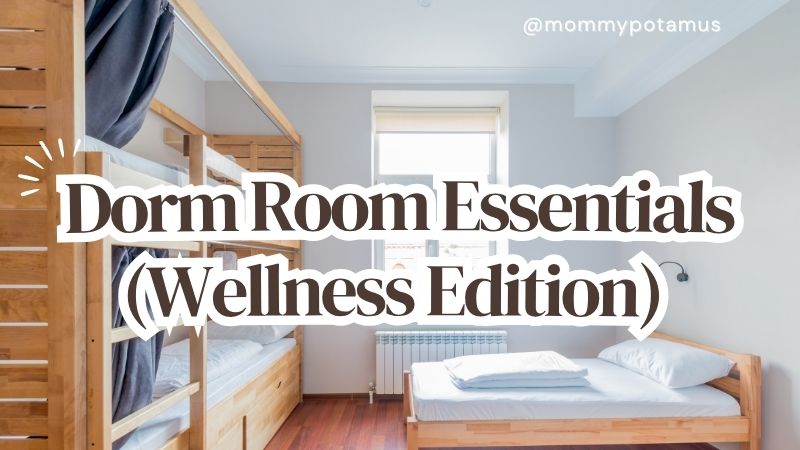
The Complete Dorm Room Essentials List (Wellness Edition)
I’ve been joking with my husband lately that we’re experiencing a “success disaster.”
As in, we raised a daughter who is so much fun to spend time with – and helpful around the house – that we can’t imagine daily life without her.
College move-in day is just around the corner, though, so pretty soon we’ll be redistributing family chores as she learns to navigate life on campus. Together, Kathryn and I spent 6+ months researching dorm room essentials – talking about must-haves, nice-to-haves, healthy swaps and extras that are worth considering if budget allows.
Early on, we didn’t know for sure which dorm (or even university) she would call “home,” so we collected ideas for lofted beds, bunk beds, big and small closets, rooms that provide desks, rooms that don’t, and every residence hall variation that was possible.
Instead of just tucking all that extra information away until my son leaves for college, I thought I’d put together this list for you.
Creating A Healthier Home Away From Home
There are plenty of college checklists out there, and they’re actually very thorough and helpful.
As I was reading them, though, I was constantly making little adjustments using the decades (yep that’s plural now) of experience I have researching – and writing about – non-toxic living.
That’s why the list below is pretty much the same as you will find anywhere, only different. I’m working with a budget, and I’ll bet you are too. That’s why many of the recommended picks below are within the same price range as more conventional options. The difference comes in knowing what to look for, where to look, and how to make strategic choices that create a healthier home away from home.
Instead of polyester microfiber blankets, you’ll find budget-friendly, cozy cotton blankets with OEKO-TEX Standard 100 certification (meaning it has passed testing for harmful substances), plus certified organic options to consider.
And instead of a basic pitcher filter that mostly just deals with chlorine, you’ll find a pitcher filter that removes up to 99.99% of 365+ contaminants.
My goal, whenever possible, is to highlight items that will continue to be useful long after move-in day – as students transition to apartments, shared houses, and eventually homes of their own.
📝 How To Use This List
Below you’ll find good, better, and best options that fit different budgets, priorities, and dorm setups.
It’s a very long list, but please don’t feel like you need everything on it. Most students only need a fraction of what’s on this page. Most double occupancy dorm rooms give students about 75-100 square feet of personal space, which is roughly the size of a parking spot.
The goal is not to cram in as much as possible – it’s to create a multi-functional environment that supports restful sleep, focused study, and a cozy social atmosphere. That’s why I’ve organized this list around how students actually use their space:
Table of Contents
Before buying anything, I strongly recommend waiting until you know your dorm assignment. Every school has different rules, and sometimes even different residence halls on the same campus have their own policies. Be sure to check both the list of prohibited items and the list of items already provided, since things like desks, chairs and dressers are often included.
Room layouts, laundry locations, bathroom setups, campus size, and personal preferences vary widely. What makes one student feel comfortable may be completely unnecessary for another.
That’s why I hope you’ll think of this checklist less as a list to complete and more as a menu of possibilities. Some students will need only the basics, while others may benefit from a few extra comforts or healthy swaps.
As parents, we spend years helping our kids feel safe, comfortable, and cared for. Helping them set up a cozy, organized dorm room is another way we get to do that as they begin building a home away from home.
Sleep Essentials
Sleep is one of the most overlooked aspects of college life. Between late-night study sessions and noisy hallmates, a few thoughtful additions can make a bigger difference than many students realize.
Important Note: Before buying anything for the bed, make sure you know the size of the mattress in your student’s specific dorm room. Not all schools use the same size mattresses, and even different residence halls on the same campus may vary. Depending on the school and dorm, mattresses may be Twin, Twin XL, Full, Full XL, or even Queen size.
The recommendations below are for Twin XL beds, which are by far the most common in college dorms. Fortunately, most products are available in other sizes if needed.
Bedding
Think layers. Dorm rooms can be surprisingly warm, surprisingly cold, or both . . . sometimes in the same week. Instead of relying on one heavy blanket, I prefer building a bed in layers that can easily be added, removed, and rearranged as needed.
Layer 1: Mattress Encasement (Optional)
GOOD: Skip it
BETTER: Utopia
BEST: SureGuard
Most colleges require students to use the mattress provided in the room, so since it’s non-negotiable, it’s not something I’d lose sleep over. (Sorry, I had to.)
These days, most standard dorm mattresses are enclosed in a durable, fluid-proof vinyl or nylon cover that is designed to resist spills, stains, and microbial growth. From my perspective, it doesn’t really make sense to encase them in those situations, because they’re already basically “encased.”
So with that in mind, my first “good, better, best” recommendation for mattress protection is:
- GOOD – Nothing. Seriously. Just wipe it down with non-toxic cleaner and you’re done.
With that said, there are some situations when a mattress encasement is worth considering:
- If the provided mattress is damaged (for example, ripped) it may be more vulnerable to things like bed bugs, which have been found in five-star hotels and, yep, dorm rooms.
- It’s less common these days, but some colleges do still use fabric-covered mattresses.
- Some students will feel better knowing there’s a fresh layer between them and a mattress that has seen a few move-in days. 😄
Mattress encasement uses a zippered cover to completely surround the dorm-provided mattress. The material is typically made with an outer comfort layer (often polyester, cotton, or bamboo) blended with a barrier layer (usually polyurethane, polyethylene, polypropylene, or PVC).
Some companies don’t share much about how their encasements are made, while others have gone through the process to become OEKO-TEX certified, which means that they have passed testing for over 1,000 harmful substances.
Dorm mattresses are usually 6-8 inches thick, so you want a thinner encasement that will fit relatively snugly instead of bunching up or sliding around. With that in mind, here are some options to consider:
- BETTER | Utopia – This OEKO-TEX certified encasement is made with a blend of polyester and thermoplastic polyurethane (TPU). Although I’d prefer for the comfort layer to be made with cotton, I like that this one is machine washable and comes in various thickness options, including 6” and 8”. The 6” is currently sold out, unfortunately.
- BEST | SureGuard – If you’re looking for complete coverage, this is the one I’d choose. It’s machine washable, GREENGUARD Gold certified, and available in a Twin XL size designed specifically for thinner 6-8″ dorm mattresses. I also appreciate that SureGuard is unusually transparent about its materials and uses a cotton terry sleeping surface instead of all polyester.
Quick note: Always make sure the mattress is dry before you place it in an encasement. If you’re using a mattress topper or mattress pad, don’t place it inside a fully zipped encasement. They need airflow to release heat and regulate moisture. Instead, the encasement should go around the dorm mattress only, with the topper or pad placed directly on top.
Layer 2: Mattress Topper
GOOD: CertiPUR-US® certified foam
BETTER | BEST: OEKO-TEX Standard 100, GOTS, GOLS or MADE SAFE certified toppers
Dorm mattresses are about half the thickness of many mattresses at home . . . and some would argue half as comfortable. That’s why a topper is one of the items in this guide that I would consider a top priority. Adding a few inches of cushioning can make a huge difference in comfort and sleep quality.
How Thick Should the Topper Be?
Most dorm mattress toppers come in 2″ and 3″ versions.
2″ toppers provide a firmer feel and are a good choice for students who prefer more structured support.
3″ toppers offer more cushioning and a slightly plusher feel. They tend to be the most popular choice for use with dorm mattresses.
I’d lean toward a 3″ topper for side sleepers and students who enjoy a softer bed. Neither is “better” – it just comes down to personal preference.
A Note About Certifications
Most mattress toppers that are specifically marketed for dorm rooms use CertiPUR-US® memory foam. With “PUR” right there in the name, many people understandably associate it with a completely non-toxic finished product. Unfortunately, that’s not always the case.
CertiPUR-US was created by the polyurethane foam industry to verify that foam meets certain industry-defined standards.
Much of what they look for – including PBDEs, TDCPP, and TCEP – is already heavily restricted or banned in mattresses and upholstered furniture. So essentially, many of the chemicals they test for shouldn’t be in any foam. (Unfortunately, some imported “mystery foams” may contain them anyway.)
They don’t restrict every class of flame retardants, and some critics note that the certification does not evaluate certain chemicals of concern, including some phthalates, amine catalysts, and newer flame retardant compounds.
Also, the certification only applies to the polyurethane foam – not, for example, PFAS finishes, flame barriers, or treatments used on covers and fabrics.
For that reason, I tend to view CertiPUR-US® as a good starting point rather than the finish line. When possible, though, I look for additional certifications such as:
- GREENGUARD Gold for low emissions from the finished product.
- OEKO-TEX Standard 100 for testing textiles and finished components for harmful substances.
- Global Organic Textile Standard (GOTS) for organic cotton and wool.
- Global Organic Latex Standard (GOLS) for organic latex.
- MADE SAFE screens products against a broad banned/restricted substances list, including known or suspected carcinogens, endocrine disruptors, reproductive and developmental toxins, neurotoxins, hazardous flame retardants, high-risk pesticides, toxic solvents, harmful VOCs, and more. It’s one of the broader certifications I look for when trying to evaluate overall ingredient or material safety rather than just one material or one type of emission.
Now that you know what all the certifications mean, let’s get to the recommendations.
GOOD
Viscosoft Reflex Gel Mattress 3“ Topper – If an organic latex topper isn’t in the budget, this is one of the more transparent memory foam options I’ve found. It’s made in the USA and uses CertiPUR-US® certified foam that the company says is made without chemical flame retardants. They also confirmed via email that there are no fire retardants used on the cover, backing, straps, and other materials used in its construction, and that the foam and cover are made without intentionally added PFAS. The cover is OEKO-TEX® Standard 100 certified. ViscoSoft provided more detailed answers than many manufacturers and responded quickly, which I consider a positive sign. They also make a 2” Twin XL topper, but it’s currently sold out.
Sure2Sleep Gel Swirl Memory Foam 2” and 3” Toppers – These made-in-the-USA toppers have a refreshingly simple design. Instead of adding a zippered fabric cover, Sure2Sleep is just a layer of CertiPUR-US® certified memory foam. Most students will place a mattress protector or mattress pad over the topper anyway, so I don’t see the lack of a built-in cover as a drawback. The company told me that the foam is made without flame retardants of any kind, and I appreciate that they answered my questions quickly and provided more transparency than many manufacturers.
Sleepyhead Gel & Super 2” and 3” Mattress Toppers – Sleepyhead toppers are specifically designed for dorm beds and are especially popular with college students. Their lower priced option is the Gel Topper, which uses gel-infused memory foam. They also make a Super Topper, which combines gel and copper-infused memory foam for added freshness. Both are available in 2″ and 3″ versions, with the 2″ offering a firmer feel and the 3″ offering more plush cushioning.
I appreciate that Sleepyhead uses CertiPUR-US® certified foam and OEKO-TEX® Standard 100 certified covers. When I reached out, the company also told me their toppers are designed without intentionally added PFAS, contain no fiberglass in any component, and do not contain toxic chemical flame retardants. The one caveat is price: Sleepyhead costs more than some organic latex options below.
BETTER | BEST
Happsy Organic Mattress 2” Topper – This is the one my daughter has on her bed at home, and she loves it. It’s a 2″ topper made with GOLS-certified organic latex and a GOTS-certified organic cotton cover, and it also carries MADE SAFE and GREENGUARD Gold certifications.
Naturepedic Box-Stitched Organic 3” Topper – This 3″ topper uses GOLS-certified organic latex inside a GOTS-certified organic cotton encasement and is also MADE SAFE and GREENGUARD Gold certified. The box-stitched design gives it a refined, heirloom-quality feel that makes it look and feel more like a finished mattress than a traditional topper.
Sleep On Latex Pure Green 2” and 3” Toppers – This is probably the most customizable latex option I found. It’s made with GOLS-certified organic latex and comes in 1″, 2″, and 3″ thicknesses, plus soft, medium, and firm options. You can also choose whether or not to add an organic cotton cover, which keeps the base price lower. For most dorm beds, I’d look at the 2″ or 3″ soft version depending on how much cushioning your student wants.
Avocado Eco Organic Mattress 2” and 3” Toppers – This one offers a lot of flexibility, too, with 2″ and 3″ options in both Medium Dunlop latex and Plush Talalay latex. Although Dunlop is generally described as firmer and more supportive, the Dunlop toppers I’ve tried still felt soft and plush. I think of Dunlop as the “luxury” option, while Talalay is the “extra luxury” option. It has a lighter, more buoyant feel that many people find especially comfortable for side sleeping.
Layer 3: Mattress Pad
GOOD: 95% Cotton cover
BETTER: Organic cotton + waterproof layer
BEST: Organic cotton + GOTS certified waterproof layer
This protects your mattress topper and helps hold it in place. (Most mattress toppers also have corner straps that can be used to secure it.)
GOOD
Sleep Philosophy Cotton Mattress Pad – Before waterproof membranes became soft, quiet, and breathable, this type of quilted cotton pad was the standard choice for many families. It won’t protect against major spills, but it does provide a washable layer that absorbs perspiration and helps keep the topper underneath clean.
I especially like that the fill is 95% cotton, since most mattress pads use polyester batting. The remaining 5% consists of small amounts of polyester and olefin fibers, which help the pad maintain its shape and durability over time. The shell is made from 100% cotton percale, and the entire pad is OEKO-TEX Standard 100 certified. It’s quiet, breathable, and won’t noticeably change the feel of the topper underneath
If you want more protection without the noisy plastic covers many of us grew up with, today’s waterproof mattress pads have come a long way. Many use thin, flexible membranes that are virtually silent and preserve much of the softness and breathability of the layers underneath.
BETTER
Organic Cotton Mattress Protector – This one is pretty solid in terms of certifications and construction, but may not be the most waterproof option based on reviews.
BEST
Twin XL Happsy Waterproof Organic Mattress Pad (Save 15% with code MP15) I’ve been using the king-size version on my bed for several years and it’s soft, completely quiet, easy to get on-and-off the bed, and durable. The cotton is a soft jersey knit, and the waterproof layer is Global Organic Textile Standard certified, too.
Note:
Most mattress toppers are designed to be used with a mattress pad or protector placed over them. One manufacturer, Sleepyhead, recommends skipping this layer because they believe it can trap heat and moisture and interfere with the feel of the topper. Other companies, including Happsy, specifically design protectors to work with their mattresses and toppers.
Personally, I like having a washable layer between the sheets and topper, but if you choose a particular brand, it’s worth checking whether they have any specific recommendations.
Layer 4: Sheets
GOOD: 100% Cotton
BETTER: OEKO-TEX Standard 100 Conventional Cotton
BEST: 100% Organic Cotton (GOTS certified if possible)
Cotton is best for almost everyone, in almost every climate. It’s the default choice for good reason. It’s soft, breathable, durable, and comfortable year-round. I recommend buying two sets: one on the bed and one in the wash.
You’ll see three main types of cotton sheets:
Percale has a crisp, cool feel with a matte finish. Think classic hotel sheets.
Sateen feels smoother and silkier, with a subtle sheen.
Jersey knit is made from the same type of fabric used in soft t-shirts. It’s stretchy, relaxed, and cozy, which is why it’s especially popular with college students.
Thread count isn’t everything, and bigger numbers aren’t always better. In most cases, I think 200-400 thread count is the sweet spot for sheets that are soft, breathable, and built to last.
Conventional cotton may carry chemical residues or be dyed with toxic colorants, but while it’s not as ideal as certified organic cotton, it’s often a far better choice than synthetics like polyester. When an organic version of an item I need is out of my budget or not available, 100% cotton is what I look for first.
Fortunately, in this category there are some very affordable options, even for GOTS-certified organic cotton.
GOOD
Comfort Spaces Cotton Sheet Set – If you want to avoid polyester, these are a solid place to start. They’re made from 100% cotton and come in several colors and patterns.
BETTER
LANE LINEN OEKO-TEX Standard 100 Sateen Sheet Set – These sets come in a wide range of colors and even a few patterns, making it easier to coordinate with different dorm styles.
BEST
LANE LINEN Organic Cotton Percale Sheet Set – These sets are made with GOTS-certified organic cotton, and I think the price is hard to beat. The percale weave gives them that hotel-sheet feel, and they should continue getting softer with time.
Quince Jersey Knit Organic Cotton Sheet Set – Jersey knit is super cozy and a favorite with students, so it’s not surprising that there’s actually a waitlist for some of the Twin XL colors. Quince describes these sheets as being made from organic cotton and certifies them to OEKO-TEX Standard 100, though I wasn’t able to find information regarding GOTS certification. Still, I consider these “good stuff” and a rare find for Twin XL sheets.
Quince Organic Cotton Percale Sheet Set – Quince also offers organic cotton percale sheets in several colors and styles. They’re soft, breathable, and highly rated.
Layer 5: Blankets
GOOD: 100% Cotton
BETTER: OEKO-TEX Standard 100 Conventional Cotton
BEST: 100% Organic Cotton (GOTS certified if possible)
Unlike Twin XL sheets, which can be hard to find, there are plenty of great blanket options in every style and budget.
Tight woven blankets are the classic all-purpose choice. They’re durable, easy to layer, and work well year-round. Think of the traditional cotton blanket many of us grew up with.
Waffle weave blankets have a textured pattern that creates little pockets of air, making them lightweight, breathable, and ideal for layering. They’re one of my favorite options for dorm rooms because they add warmth without a lot of bulk.
Muslin blankets are made from layers of gauzy cotton fabric that become softer with every wash. They’re especially popular with anyone who prefers a relaxed, cozy feel.
Chunky knit blankets add texture and warmth to a room and are perfect for movie nights, afternoon naps, or curling up with a good book.
Here are a few options worth checking out:
Salt Earth Organic Cotton Waffle Blanket – This lightweight but warm blanket has a classic waffle weave and comes in several gorgeous colors. Reviews consistently mention softness and durability, and I like that it carries both GOTS and OEKO-TEX certifications.
Organic Cotton Mart Waffle Weave Blanket – This blanket is very similar to the one above, but about 12 inches longer and 8 inches wider. It’s also GOTS certified without the luxury-brand price tag.
Kyra Home Organic Cotton Muslin Blanket – If you’ve never tried a muslin blanket before, you may find yourself wanting one for your own bed, too. Made with GOTS-certified organic cotton and OEKO-TEX certified dyes, this one is constructed from multiple layers of gauzy fabric that become softer over time. The Large Throw size is roughly equivalent to many twin blankets, making it a good option for dorm rooms.
Bedsure 100% Cotton Muslin Blanket – This six-layer muslin blanket has a relaxed, lived-in feel that many people love. It’s OEKO-TEX Standard 100 certified, comes in an impressive range of colors, and is one of the more budget-friendly ways to try muslin.
Lane Linen Herringbone Cotton Blanket – This medium-weight herringbone blanket is OEKO-TEX Standard 100 certified, comes in a wide range of colors, and has a traditional look that works with almost any style. I also appreciate that it’s one of the more affordable options in this category.
Bedsure 100% Cotton Woven Blanket – If you prefer a more traditional blanket, this OEKO-TEX Standard 100 certified option offers a tight weave and plenty of color choices. It’s soft, durable, and affordable, making it perfect for everyday use.
Layer 6: Quilts & Duvets
Most dorm bedding sets are made with polyester, but I found plenty of cotton quilts and duvet covers that were reasonably priced.
The options below are easy to layer, easy to wash, and often continue to be useful long after move-in day. A quilt that starts life on a dorm bed may later end up on an apartment couch, guest bed, reading chair, or picnic blanket. A duvet cover can be paired with different inserts as needs and living situations change.
In other words, these aren’t just dorm purchases. They’re pieces that can grow with your student over time.
BOHO Reversible Muslin Quilt – Not technically a quilt, but it’s often used like one. Made from multiple layers of cotton muslin, it has that soft, relaxed texture that many people love. It’s OEKO-TEX Standard 100 certified and comes in a wide variety of colors and patterns, making it an easy way to add personality to a dorm room.
Palassio Cotton Quilt Set – This lightweight quilt set includes matching pillow shams and comes in several colors. The cotton shell and cotton fill create a more traditional quilt feel than muslin, and it’s got a lot of positive reviews.
Horimote Home Cotton Quilt Set – This quilt-and-sham has a box-stitch design that works well for men and women. It’s made from 100% cotton and is OEKO-TEX Standard 100 certified. Reviews frequently mention softness and good washability.
Bare Home Organic Cotton Duvet Cover Set – A duvet cover works a lot like a giant pillowcase for a comforter or duvet insert. It gives students the flexibility to wash or replace the cover separately, switch to a lighter or heavier insert as the seasons change, or update the look of the bed without buying an entirely new comforter. This one is both GOTS-certified and OEKO-TEX Standard 100 certified, comes in Twin XL, and is one of the stronger organic options I found.
Bedsure Cotton Duvet Cover Set – This is a more affordable alternative that is OEKO-TEX Standard 100 certified and available in lots of colors. Like the Bare Home option, it includes the duvet cover and pillow sham, so you can pair it with whatever insert best fits your budget and climate.
Whisper Organics Duvet Insert – One thing I love about this option is that it’s machine washable, which is rare in the world of natural-fiber duvet inserts. It’s made with GOTS-certified organic cotton inside and out, includes corner loops to help keep it securely in place inside a duvet cover, and uses box stitching to keep the fill evenly distributed.
I really think washable options are best for dorm use, but if you’re shopping for a home bedroom rather than a dorm room, this one is worth a look. It’s not washable, but it’s filled with Australian wool wrapped in a cotton shell, and is available in light, medium, and heavyweight versions and includes loops to help secure it inside a duvet cover.
Pillows
GOOD: A pillow that’s comfortable for the student.
BETTER | BEST: A pillow made with natural materials that’s also comfortable 🙂
Unlike mattresses, pillows are incredibly personal. The “best” pillow is the one that keeps your head and neck comfortably aligned in your favorite sleeping position. Some people love a lofty, squishy pillow. Others prefer something lower and more supportive.
Many pillows advertised as “100% cotton” are really just cotton covers wrapped around a conventional polyester fill. If you’re hoping to upgrade the materials inside the pillow as well, here are some options:
GOOD
HCore Contoured Pillow – If a natural latex pillow isn’t in the budget, this is one of the better ergonomic memory foam options I found. It uses CertiPUR-US® certified memory foam and has an OEKO-TEX® Standard 100 certified cover. The cover is made with polyester rather than cotton, and the company doesn’t provide as much material transparency as some of my other recommendations. Still, I think it’s a reasonable option.
BETTER | BEST
Naturepedic Side Sleeper Pillow – This is one of the most comfortable pillows I’ve ever used. The curved shape gives your shoulder somewhere to go when sleeping on your side, and the adjustable shredded latex fill lets you customize the loft until it feels just right. It’s made with GOTS-certified organic cotton and GOLS-certified organic latex, and also carries MADE SAFE and GREENGUARD Gold certifications.
Circadian Latex Pillow – Circadian recently sent me several of their pillows to test, and this one quickly became my daughter’s favorite. It has a wonderful squishy feel that still provides plenty of support, making it a nice choice for people who change positions throughout the night. She’s already claimed this one for her dorm room.
Sleep On Latex Shredded Pillow – If you’re looking for one of the best values in an organic latex pillow, this is the one I’d start with. It uses shredded natural latex inside an organic cotton cover, and like their mattress toppers, Sleep On Latex focuses on simple, high-quality materials without unnecessary extras. The shredded latex gives it a more traditional pillow feel while still providing the resilience that latex is known for.
Organic Textiles Contour Latex Pillow – For students who sleep best with an ergonomic pillow, this one pairs a molded GOLS-certified latex core with a GOTS-certified organic cotton cover. It’s made in the USA and comes in several loft and firmness options, making it easier to find a good fit.
Sleep Environment
Noisy hallways, bright lights, and roommates with different schedules are all part of dorm life. While you can’t control everything, a few simple additions can make it easier to wind down at night and wake up ready to tackle the day.
Pink Noise Machine – Pink noise helps mask hallway conversations, slamming doors, and other unpredictable sounds while providing a softer, more natural alternative to traditional white noise. It can be helpful for sleep and study sessions.
- LectroFan Evo – Compact, simple to use, and offers a wide variety of white, pink, and brown noise options without looping recordings.
- Sound + Sleep SE – My favorite overall. It uses realistic, non-looping nature sounds that automatically adjust to changes in the surrounding noise level, making it a great fit for unpredictable dorm environments.
- 100% TENCEL™ Sleep Mask – Roommates don’t always go to bed at the same time. A comfortable sleep mask can make a big difference when someone else is studying, watching a movie, or getting ready while your student is trying to fall asleep. I like TENCEL because it’s soft, breathable, and blocks light well.
Blue-light blocking glasses – Even if the dorm lighting is fairly warm, phones, tablets, laptops, and televisions can still expose students to a lot of blue light after sunset. A good pair of blue-light blocking glasses can help reduce that exposure during evening study sessions. One challenge with blue-light blocking glasses is that they don’t all block the same amount of light. Some only filter a small percentage, while others block nearly all blue light, and it’s not always obvious from the product description. Here are my top picks for best performance at budget prices:
- Infield – These are super affordable, and have a wraparound design that blocks light from the side. Independent testing found excellent blue- and green-light blocking performance (99.8% of blue light and 92.9% of green light).
- Element Lux Aviators – An option students might actually wear outside the dorm room. They have a classic aviator style while still delivering excellent blue- and green-light blocking in independent testing (99.4% of blue light and 87.8% of green light).
- AnyLuv Aviators – Very affordable second aviator option. Blocks a little less green light than the ones above, but still significantly more than many brands (99.1% of blue light and 76% of green light).
Blackout curtains
MOST AFFORDABLE: OEKO-TEX certified blackout curtains made with synthetic materials
BEST BALANCE: Organic linen or organic cotton with an OEKO-TEX blackout liner
MOST NATURAL: Heavy organic cotton or hemp curtains (possibly layered) that avoid synthetic blackout coatings altogether
GOOD: OEKO-TEX certified blackout curtains
BETTER: Portable blackout curtains that avoid permanent installation
BEST: Organic linen/cotton blackout curtains, if budget allows.
Many dorm rooms come with metal blinds, but they often leave gaps that let light in around the edges. Adding room-darkening curtains can help block early morning sunlight, parking lot lights, and other nighttime light that can make it harder to sleep.
Conventional blackout curtains usually achieve their light-blocking effect with PVC, vinyl, or acrylic foam backings, which can contribute to VOC emissions, especially when they’re new or heated by direct sunlight. Some are also treated with wrinkle-resistant finishes or stain- and water-resistant coatings, including PFAS.
Before you buy, check your student’s window measurements, find out whether curtains (and curtain rods) are allowed, and decide how the curtains will be mounted. The best option depends on the window frame and your school’s housing rules.
How should you hang them?
That depends on your dorm’s rules and window design.
- Tension rods are the simplest option if the window has enough depth inside the frame. They’re inexpensive, require no tools, and work well with lightweight curtains.
- Portable blackout curtains (which I’ll discuss below) are a great choice if you can’t install a curtain rod at all.
- Command Hooks can work with lightweight curtains and rods, but according to the reviews adhesive performance varies depending on the wall surface. They’re not GOTS, GOLS, GREENGUARD Gold, or OEKO-TEX certified . . . just “gets-the-job-done” certified.
- No-drill brackets that attach to the window trim are another option, but only if your dorm allows them and the window frame is compatible.
Most dorm-friendly hanging methods work best with lightweight or medium-weight curtains. Heavier curtains may require sturdier hardware or permanent brackets that aren’t allowed in some residence halls.
Now, let’s look at my favorite options . . .
Synthetic fabrics tend to shed microplastics, so I avoid them when possible. However, even most “natural” blackout curtains with cotton or linen front layers use polyester or another synthetic material to create the light blocking backside. There are some that block light using thick layers of natural fabric, but they tend to cost more than makes sense for a dorm room. Also, the thick fabric may be too heavy for most tension rods.
For this category, I’d focus on avoiding stronger off-gassing materials instead of trying to eliminate every synthetic fiber.
NICETOWN Linen Look Blackout Curtains – These affordable curtains are made with OEKO-TEX Standard 100 certified polyester and are available in dozens of sizes and colors. They’re also machine washable.
Sleepout Portable Blackout Curtains – The portable curtains from Sleepout are one of the most innovative options I found for dorm rooms. Instead of requiring a curtain rod, they attach to the window with patented locking suction cups and can be installed or removed in seconds without damaging the room. The fabric is synthetic, but it’s GREENGUARD Gold and OEKO-TEX Standard 100 certified, and the company says it has been third-party tested to be free of intentionally added PFAS, formaldehyde, phthalates, and azo dyes. If your student can’t install traditional curtains, Sleepout is worth a look. They’re also machine washable.
MagicLinen Curtains –These beautiful European linen curtains are OEKO-TEX certified and available in neutral colors and use a pocket-style top instead of grommet rings. The front-facing layer is linen and the back layer is polyester.
Headboards
Although totally optional, headboards can help a dorm room feel more “pulled together.”
One of my favorite options is rattan that’s finished with raw tung oil, beeswax, or a low-VOC water-based finished. Tufted headboards can add coziness while providing a bit of extra cushion to lean against, but finding an option that fits within a dorm budget may require some creativity. (More on that below.)
Rattan
IKEA TOLKNING Rattan Headboard – This is one of the more interesting budget-friendly headboards I found. It’s made primarily from natural rattan over a steel frame, which avoids many of the engineered wood materials commonly used in inexpensive headboards. It does have a clear acrylic lacquer finish, so it’s not completely free of synthetic materials.
Although this headboard doesn’t carry third-party certifications like GREENGUARD Gold or OEKO-TEX, IKEA publishes one of the more comprehensive chemical policies I’ve found among large furniture retailers. The company states that it avoids adding heavy metals, CMR substances (chemicals linked to cancer, genetic mutations, or reproductive toxicity), most PVC, chemical flame retardants (unless required by law), and formaldehyde-based production methods while maintaining strict limits on formaldehyde emissions.
I evaluate IKEA products on a case-by-case basis, and not everything is an automatic “add to cart” for me. With that said, I consider their level of transparency to be better than many furniture manufacturers in this price range.
Upholstered Headboards
I searched for healthier alternatives to upholstered dorm headboards – including pillow headboards – and found very few options that fit both my material standards and a typical dorm budget. Most use conventional polyurethane foam, polyester fabrics, and engineered wood with very little information about the materials inside.
GREENGUARD Gold Headboards
Pottery Barn Dorm Headboards are lightweight, don’t require a bed frame or permanent installation, and are comfortable and beautiful. Some are also GREENGUARD Gold certified, but that only focuses on chemical emissions (Volatile Organic Compounds, or VOCs), not what’s in the materials.
The two main things that give me pause are that they come with built in charging ports – which is not something I would choose from an EMF/ELF standpoint – and there’s not much information on materials beyond what is listed above.
The company has stated that their performance fabrics may contain PFAS, but I couldn’t confirm if these models do. I’ve reached out to the company for clarification and will update this section if I learn more.
Pillow Headboards
These aren’t headboards in the traditional sense. Instead, they’re oversized back cushions that lean against the wall or head of the bed, creating a more finished look while providing comfortable support for reading, studying, or relaxing.
Unfortunately, this category has many of the same challenges as upholstered headboards. Most use conventional polyurethane foam or polyester fiberfill and provide very little information about the materials inside. There are custom makers using natural materials, but they’re generally much more expensive than most dorm budgets allow. Fortunately, I did find a few that are worth mentioning.
EcoStyle Organic Wedge Pillow – Handmade with natural materials, it provides comfortable back support for reading or studying while avoiding the polyurethane foam found in most wedge pillows. It’s available in custom sizes and fabric options, making it easy to tailor to your space.
EcoStyle Organic Bed Cushion – This long rectangular cushion creates more of a “headboard” look while providing support across a wider area of the bed. It’s available in several custom sizes.
DIY Headboards
If you’re up for it, I think you could pretty easily make a non-toxic upholstered dorm headboard using these instructions and a few material swaps:
- Plywood ➡️ Purebond Plywood by Columbia Forest Products (No-added formaldehyde plywood that’s made with a soy-based glue. Often available at Home Depot.)
- Conventional upholstery Foam ➡️ Organic latex upholstery foam
- Polyester batting ➡️ Natural wool batting
- Synthetic fabric ➡️ GOTS-certified organic cotton canvas or thick linen fabric
Cozy Touches
Study & Productivity
A comfortable, well-designed study space can make it easier to focus during the day without making it harder to fall asleep at night. Here are a few things I’d prioritize.
Lighting
Light doesn’t just help us see – it also helps regulate our internal body clock. Bright, daylight-like light during the day supports alertness, focus, and productivity, while warmer light in the evening signals that it’s time to start winding down.
Instead of buying separate lamps for daytime and nighttime use, I recommend choosing circadian-friendly, flicker-free bulbs that adapt throughout the day. During the day, they provide bright light that’s well suited for studying and other focused tasks. In the evening, they switch to a much warmer, amber glow that minimizes blue- and green-light exposure, helping create a more sleep-friendly environment.
Instead of relying on harsh overhead lighting, I prefer using layers of light. A combination of task lighting and softer ambient lighting is often more comfortable during long study sessions and helps create a calmer, cozier room after sunset.
Instead of buying one lamp that tries to do everything, I’d choose two:
Study Lamp
Ambient Lighting
If space allows, a table lamp or floor lamp that uses a BioLight “day-to-night” color changing bulb or a warm amber bulb can create a cozier room after sunset.
Note: All the bulbs I linked to above are E26, which is the standard medium base used in traditional household lamps and ceiling fixtures.
Desk Organization
Here are some of the simplest ways to create a workspace that feels less cluttered and more functional.
Solid Wood Desk Organizer -An unfinished organizer with compartments for notebooks, pens, and other everyday supplies. I like that it avoids composite wood and painted finishes.
Safco Alloy Steel Desk Organizer – A simple steel organizer that keeps folders, notebooks, and supplies within easy reach while avoiding MDF and particleboard.
Comfort & Ergonomic Support
These are the kinds of extras that really depend on how a student likes to study. Some people are perfectly happy without them, while others appreciate a few comfort upgrades during long study sessions.
EMF Blocking Laptop Mat
If a laptop is frequently used on a bed, couch, or lap, an EMF-blocking laptop mat is worth considering. In addition to creating a shielding layer between the laptop and the body, it also doubles as a portable lap desk by providing a more stable, comfortable surface to work on.
Desk Chair Pad
Most dorm chairs are perfectly usable as they are, but if extra cushioning is needed, cotton and natural latex are my favorite options. They’re durable, breathable, and avoid the polyurethane foam found in many seat cushions.
Cotton Duck Extra Thick Chair Pad – Made with a durable cotton fabric, this cushion comes in several colors and ties securely to most desk chairs.
Natural Latex Chair Pad – Made with GOLS-certified organic latex and a GOTS-certified organic cotton cover. It’s one of the few seat cushions I found that offers both ergonomic support and excellent material transparency.
Tech & Charging
Every college has its own housing rules, and electronics are one area where they can be very specific. Before buying anything that plugs into the wall, take a few minutes to review your school’s approved and prohibited items list.
Some schools require all electrical products to be UL Listed. Others accept ETL Listed products as well, since ETL is another nationally recognized safety testing lab that evaluates products to the same North American safety standards. If your school specifically mentions UL, it’s worth checking whether ETL-listed products are also allowed.
Surge Protectors
A good surge protector is one of the most useful dorm purchases. Most guides recommend having at least two – one for the desk area and another for the other side of the room. A longer cord (around 10 feet) provides much more flexibility when outlets aren’t located where they’re needed.
Some schools specify the maximum cord length, require a minimum surge protection rating (joules), require an on/off switch, or prohibit certain styles of power strips altogether. After you know what you’re looking for, here are some options to consider:
Anker 341 Power Strip Surge Protector (8 Outlets) – This one makes good use of limited dorm space. The outlets are arranged on three sides, which helps keep bulky adapters from crowding each other, and the 45° flat plug makes it easier to place a desk or bed closer to the wall. It includes eight AC outlets, two USB-A ports, and one USB-C port.
Belkin 12-Outlet Surge Protector – A heavy-duty UL Listed option with 12 outlets, USB charging, a flat plug, 3,480 joules of surge protection, and an on/off switch.
GE Surge Protector – A no-frills UL Listed surge protector with a 10-foot cord, flat plug, safety outlet covers, and an on/off switch.
Addtam Surge Protector (6 outlets) – ETL Listed with a flat plug, braided cord, USB-A and USB-C ports, multiple cord lengths, and an on/off switch.
Other Helpful Tech
Extension Cord (if allowed) – Some dorms don’t allow extension cords at all, while others allow only UL Listed or ETL Listed versions.
Extra Phone Charger – Having a second charger for a backpack, bedside table, or study area makes life much easier than constantly moving one charger back and forth.
Ethernet Cable – If your student’s dorm room includes an ethernet port, a wired connection is often faster and more reliable than Wi-Fi, especially during busy evening hours. It also allows internet traffic to travel over the cable instead of the laptop’s Wi-Fi connection, which may reduce the laptop’s wireless transmissions during use. If minimizing wireless exposure is a priority, turning off the computer’s Wi-Fi after connecting to the ethernet provides the greatest reduction. (We use ethernet exclusively at home.)
Many schools can activate inactive network ports with a quick service request. If the laptop doesn’t have an ethernet port, inexpensive USB-C or USB-A Ethernet adapters are pretty easy to find.
Storage & Organization
Every dorm room is a little different, so I prefer storage solutions that are easy to rearrange, repurpose, and take to the next place. The options below strike a good balance between practicality, affordability, and healthier materials where they make the biggest difference.
Under-Bed Storage
For lofted beds, most students choose plastic storage containers, drawer units, or cube shelves with storage bins. Plastic isn’t my favorite material, but I think it makes sense here. Unlike blankets, baskets, and other relatively inexpensive dorm items, quality solid wood storage is a significant investment – and what fits one dorm room may not fit the next.
With that said, I did find one solid wood cube organizer that’s worth considering, plus storage bin options made from natural materials. I’ve also included suggestions for better plastic storage options.
Cube Shelves + Storage Bins
Natural Wood Cube Storage Organizer – Made from FSC-certified solid pine that’s sanded smooth and intended to be used without stain or varnish. It includes three 11-inch storage bins, but there isn’t any information available about what they’re made of. My guess is polypropylene or polyester based on their appearance.
Cotton Rope Storage Bins (11 inch) – My favorite option for cube storage. They have a similar look to wicker but are washable, which makes it much easier to keep a dorm room clean over the course of the school year.
Cotton Rope Storage Bins (Alternate Design) – Another washable cotton rope option with a different woven pattern and handles.
Water Hyacinth Storage Baskets (Set of 6) – If your student loves the woven basket look, these are a beautiful natural-material option. They’re lightweight and fold flat when not in use.
Wicker Storage Baskets (Set of 4)– A similar option that’s a good fit for four-cube organizers.
Drawer Units
If plastic drawers make the most sense, I’d lean toward Sterilite over many of the no-name brands. Their products are made in the USA and the company states they’re BPA-free and phthalate-free.
Storage Boxes
Sterilite also makes stackable, clear storage boxes in a wide range of sizes.
Flexible Storage
Storage needs tend to change throughout the school year, so I like pieces that can adapt right along with them. Here are my top picks:
Rolling carts
Rolling carts are one of the most versatile storage solutions for a dorm room. They work equally well as a bedside table, pantry, coffee station, bathroom organizer, or extra workspace.
Most steel rolling carts are finished with a baked-on powder coating, which generally has very low emissions once cured. However, material transparency varies widely between brands.
The carts below stand out because they’re both GREENGUARD Gold certified, meaning the finished product has been independently tested for low chemical emissions, and CPSIA compliant, which includes limits on lead and certain phthalates.
Two Tier Rolling Cart – A compact option that’s ideal for smaller spaces or use as a bedside table.
Three Tier Rolling Cart – Offers more storage without taking up additional floor space.
Machine Washable Baskets
I recommend washable baskets whenever possible. Dorm rooms collect dust, crumbs, and laundry quickly, and being able to toss a basket into the washing machine makes it much easier to keep the room feeling fresh.
Stainless Steel Baskets
Stainless steel baskets are incredibly durable, and their open-wire design makes it easy to see what’s inside without digging through a bin. They’re a great option for storing snacks, toiletries, cleaning supplies, or other everyday essentials.
Stainless Steel Wire Baskets – Most of the reviews are in Japanese but they seem enthusiastically positive . 🙂
Closet Organization
Closet Rod Doubler – Instantly adds a second hanging rod, making much better use of the vertical space in most dorm closets.
Space Saving Hangers – Made from 304 stainless steel instead of plastic, these cascading hangers help maximize hanging space and are durable enough to be used long after dorm life.
Over-the-Door Full-Length Mirror – If the dorm doesn’t provide one, this can free up valuable floor space. Just be sure to choose a model that’s compatible with your dorm’s door style and thickness.
Furniture
Dorm beds can be set up several different ways, from standard height to fully lofted. The recommendations below are organized by bed configuration so it’s easier to find pieces that fit your student’s room.
Nightstands for Standard & Semi-Lofted Beds
Many dorm beds can be raised well above a standard bed frame. Once you add a dorm mattress and mattress topper, the sleep surface often ends up around 40 inches off the floor. If your student’s bed is set that high, a taller nightstand makes everyday items much easier to reach.
For beds at a more standard height, here are a few options:
IKEA ALEX Drawer Unit – Not my favorite materials overall, but IKEA has been more proactive than many furniture manufacturers about reducing formaldehyde, PVC, brominated flame retardants, phthalates, and other chemicals of concern. I generally have more confidence in their material standards than many similarly priced alternatives.
IKEA TARVA Nightstand – One of my favorite IKEA bedroom pieces. It’s made primarily from untreated solid pine and uses fiberboard only for the drawer bottom and back panel. The clear acrylic finish protects the wood while preserving its natural appearance, and IKEA’s chemical standards are generally more rigorous than many furniture manufacturers in this price range.
IKEA PERJOHAN Storage Stool – Made from untreated solid pine, this versatile piece works equally well as a nightstand, extra seat, or small storage bench. The open compartment underneath is perfect for books or an extra blanket.
Three Tier Rolling Cart – At about 31 inches tall, it’s a practical option for taller beds while adding flexible storage.
Natural Wood Cube Storage Organizer – If more height is needed, the solid wood cube organizer mentioned earlier can be turned vertically to create a 36-inch-tall bedside storage unit.
Nightstands for Fully Lofted Beds & Top Bunks
For fully lofted beds, traditional nightstands aren’t practical. A bedside shelf keeps essentials like a phone, glasses and water bottle within easy reach without taking up floor space.
Most colleges provide a safety rail for lofted beds and top bunks. If yours doesn’t, I strongly recommend adding one. A properly installed bed rail greatly reduces the risk of falls during sleep. The Able Life Bed Rail meets ASTM safety standards and is worth considering if one isn’t already provided.
BedShelfie – Depending on the model, this bedside shelf either clamps to the bed frame or slides between the mattress and bed base.
Adjustable Height Bed Shelf – Unlike most bedside shelves, this one can be raised or lowered to match the student’s preference. A long support arm slides beneath the mattress to provide stability without attaching to the bed frame.
Chairs & Futons
Additional seating is completely optional, and whether it makes sense depends on the size and layout of the room. If there’s enough space, a comfortable chair or futon can create a nice spot to read, study, or hang out with friends.
Folding Butterfly Chair
Butterfly chairs are one of my favorite space-saving seating options because they fold flat when not in use, and the removable cover can be washed if needed.
I wasn’t able to find a budget-friendly chair with a 100% cotton cover, but I did find one with a cotton-blend canvas cover over a bamboo frame. I also contacted the manufacturer, who stated that the fabric is not treated with water-, stain-, or other performance finishes.
Folding Butterfly Chair (Natural) – This set of two comes with washable cotton/polyester canvas covers.
Futons
Many students place a futon beneath a fully lofted bed to create a comfortable spot to study, relax, and spend time with friends. If you’re buying one before move-in, check your school’s loft bed dimensions to make sure it will fit.
KD Frames Unfinished Solid Wood Futon Frame – Made from unfinished solid wood, making it one of the few budget-friendly futon frames that avoids composite wood and factory-applied finishes.
Natural Futon Mattress – The Futon Shop offers several mattresses made with natural materials. One quick note: Many universities don’t require conventional flame retardants, but check with your school.
Kitchen & Food Prep
Many dorms allow students to prepare simple meals and drinks in their rooms, though the rules vary by school. It’s worth checking your housing guidelines before buying any appliances.
Water
40oz Insulated Stainless Steel Clearly Filtered Water Bottle – These bottles are perfect for carrying around campus. They can “transform ordinary tap water into clean and safe drinking water by simply sipping through the straw. Wherever the day takes you, you’ll have peace of mind knowing your tap water is free from up to 99.9% of 220+ contaminants.”
Clearly Filtered Water Pitcher – This is my top countertop filter recommendation in terms of performance and price. Unlike most pitcher filters which barely do more than improve water taste by removing chlorine, it’s certified to remove 365+ contaminants – more than any other model I researched – all while keeping beneficial minerals intact.
Coffee & Tea
Many dorm guides recommend single-serve pod coffee makers, but research has found that plastic coffee pods can shed microplastics during brewing. If your student’s dorm allows it, I think an electric kettle paired with a French press is one of the simplest ways to reduce plastic contact while making excellent coffee.
Electric Kettles (if allowed)
COSORI Electric Kettle – My favorite option. It’s made with 304 stainless steel and has a completely plastic-free interior and spout. It also includes automatic shutoff and boil-dry protection.
Amazon Basics Electric Kettle – Available in both glass and stainless steel versions. The glass version uses a plastic spout, and the clear fill window is made of polypropylene plastic. Both have automatic shutoff and boil-dry protection.
French Presses
Stainless Steel French Press – Double-wall insulated stainless steel keeps coffee hot longer than glass while eliminating the risk of breakage.
Stainless French Press (Alternate Option) – This is the one I own. It’s well made, durable, and has held up very well over time.
Coffee Accessories
Coffee Grinder (if using whole bean coffee) – Features a removable stainless steel grinding cup, making it easier to transfer beans and clean between uses.
Stainless Steel Coffee Tumbler – Perfect for taking to class.
Cooking & Appliances
Instant Pot Duo Plus 6 Quart (if allowed) – If I could only choose one dorm cooking appliance, this would probably be it. It’s great for beginners that don’t need a lot of fancy extra settings, and can be used to make everything from soups and chili to rice, shredded chicken, oatmeal, yogurt, and hard-boiled eggs. Some are “smart,” aka Wi-Fi enabled, but this one is not, which I prefer. Instant Pot also offers a free recipe app with hundreds of ideas.
Beast Blender – One of the quietest personal blenders I found. The model I recommend uses a stainless steel blending container instead of plastic, and protein smoothies can be blended directly in the travel container before heading to class.
Stainless Steel Hot Pot (if allowed) – A simple option for heating soup, chili, leftovers, oatmeal, ramen, pasta, or hot drinks when larger appliances aren’t allowed.
Stainless Steel Rice Cooker (if allowed) – Much more versatile than the name suggests. Besides rice, it can be used to make oatmeal, steamed vegetables, soups, simple one-pot meals, and reheat leftovers.
Mini-Fridge – I’d choose the largest model your school allows. If possible, look for a two-door design with a separate freezer compartment rather than a small freezer built into the refrigerator section. They generally provide more usable space and do a better job maintaining freezer temperatures because the freezer has its own insulated compartment.
Food Prep & Storage Accessories
If your student plans to prepare even a few simple meals, having a handful of quality kitchen basics can make dorm life much easier.
Bamboo Cutting Board – A good alternative to plastic cutting boards, this one is made with FSC Certified bamboo. My favorite thing about it is that there are no glues at all on the cutting surface, and it’s under $20.
Can & Bottle Opener – A sturdy stainless steel opener with comfortable handles. One of those inexpensive tools that’s easy to forget until it’s needed.
Stainless Steel Cooking Utensils – Stainless steel utensils are durable and easy to clean. Here are a few good options:
- 4 Piece Set – A compact starter set made from 304 stainless steel that’s ideal for students with minimal storage space.
- 7 Piece Set– Made from durable 18/8 stainless steel, this is a solid middle-ground option that covers most everyday cooking tasks. Includes a matching countertop storage holder.
- 11 Piece Set – Made from 304 stainless steel with a wider selection of utensils for students who plan to cook more often.
20 Piece Stainless Steel Flatware Set – When it comes to flatware, 18/10 is ideal, 18/8 is nearly identical, and 18/0 is a reasonable budget option. This set from Kingstone seemed too good to be true in terms of price, but they’re a legitimate brand that has been reviewed (and highly rated) by Food & Wine Magazine. Traditional silver stainless steel flatware tends to be the most timeless and durable option. Gold, black, and other colored finishes are usually created using a hard coating process called PVD, which is widely used and generally considered safe, but I personally prefer uncoated stainless because it keeps things simple and avoids questions about the durability and composition of additional surface treatments.
Corelle 30 Ounce Meal Bowls (Set of 4) – One of my favorite dorm dishes. They’re lead- and cadmium-free, lightweight, and versatile enough to work as both a plate and a bowl.
12 Piece Glass Dish Set – A simple glass dinnerware set for students who prefer glass over plastic or ceramic.
OEKO-TEX Certified Cotton Waffle Weave Kitchen Towels – Made from 100% cotton with a waffle weave that dries quickly and becomes more absorbent with use.
Magnetic Spice Rack – Attaches to the side of a refrigerator to free up valuable counter and shelf space.
Over-the-Refrigerator Shelf – A great way to turn unused vertical space into storage. Because each shelf is adjustable, you can move them, remove them, or space them however you like to fit your refrigerator and other essentials.
Glass Food Storage Containers – Great for storing leftovers, meal prep, or snacks without relying on plastic containers.
Dish Drying Rack – If your student will be washing dishes in a communal kitchen or bathroom, dish soap and a kitchen towel may be all that’s needed. If they’re washing more than a few dishes at a time, a dish drying rack may be helpful. The best choice will vary depending on whether the drying rack can be left to drain into a sink or needs to have a tub underneath to catch water.
If your student will have access to a shared kitchen – or plans to cook more than the occasional meal – these additions are also worth considering:
Bathroom Essentials
Whether your student is sharing a community bathroom or has a private one, choosing items that dry quickly and can be washed regularly will help keep the space cleaner and fresher.
Bath Towels
Towels that dry more quickly are less likely to develop funky odors and are ready to use again sooner.
Utopia Quick-Dry Cotton Towel Set – Made from 100% cotton and OEKO-TEX Standard 100 certified.
Cotton Craft Quick-Dry Cotton Towel Set – Another OEKO-TEX Standard 100 certified option that includes bath towels, hand towels, and washcloths.
Cotton Craft Quick-Dry Waffle Bath Towels – Lightweight waffle-weave towels that dry quickly and are OEKO-TEX Standard 100 certified.
Mesh Shower Caddy – Quick drying mesh is the better choice here, even when the mesh is polyester. It dries much faster than solid plastic caddies, allowing water to drain away instead of collecting inside. Available in two sizes.
Natural Rubber Flip-Flops – These are highly rated for comfort and could easily work as shower shoes and everyday shoes.
Cotton Waffle-Weave Bathrobe – Very helpful if the bathroom is communal. Look for lightweight, waffle-weave options that dry quickly.
Private Dorm Bathroom
When it comes to shower curtains, natural fabrics usually require more maintenance than most college students are willing to take on. I’d look for a machine-washable OEKO-TEX Standard 100 polyester curtain paired with a polyester liner. If privacy is important, choose a solid color instead of a clear shower curtain.
Amazon Basics Shower Curtain – OEKO-TEX Standard 100 certified and machine washable.
OEKO-TEX Standard 100 Alvia Spring Shower Curtain Liner – OEKO-TEX Standard 100 certified, machine washable polyester liner.
Shower Curtain Hooks – These make removing the shower curtain (and putting it back on) super easy.
Bath Mats
100% Cotton OEKO-TEX Standard 100 Bath Mat – I recommend keeping two on hand so one can be washed while the other is in use.
Diatomaceous Earth Bath Mat – If budget allows, these dry almost immediately instead of holding moisture like fabric mats. The one I have is out-of-stock, but this one has a 4.6 star rating with over 1K reviews, this one has a 4.6 star rating with over 1.6K reviews and this one has a 4.4 star rating with 4.4K reviews. There are a lot more with different designs, but these are the most budget-friendly.
Personal Care
First Aid
- Good – Any basic first aid kit.
- Better | Best – If your student doesn’t mind cute pandas on a few of their bandages, this PFAS-free kit is an option. Another option is to buy a regular kit and add these PFAS-free bandages to it.
Laundry
Wool Dryer Balls – A reusable alternative to dryer sheets that helps separate clothes in the dryer, improving airflow and shortening drying time. They also help reduce static and soften fabrics naturally.
Handheld 2-In-1 Garment Steamer & Iron – No ironing board needed – just hang the garment on a hanger, steam, and go. Automatic shutoff adds an extra layer of safety.
Folding Drying Rack (if needed) – Helpful for air-drying delicate clothing, wool garments, swimsuits, or anything that shouldn’t go in the dryer. It folds flat when not in use.
Organic Cotton Mesh Laundry Bag (if needed) – Perfect for protecting delicate items during washing.
Laundry Hampers & Baskets
The best laundry solution depends on how far students have to carry their clothes.
For shared laundry facilities across campus:
Cotton Canvas Laundry Backpack – It’s comfortable to carry and machine washable, so students can toss it in with a load and carry their clean clothes back in a clean bag.
For laundry rooms just down the hall:
Cotton Rope Storage Basket – An attractive option that’s also machine washable.
Cleaning Supplies
Not every student will need all of these. Pick the tools that match the room, flooring, etc.
All-Purpose Cleaner
One of the easiest ways to save space in a dorm room is to skip a big collection of specialty cleaners. Most students don’t need separate products for the bathroom, mirrors, countertops, floors, and everything in between.
Instead, I recommend choosing one versatile cleaner that can handle just about any cleaning task. It keeps things simple, takes up less space, and avoids filling a tiny room with heavily fragranced products.
Force of Nature Cleaning Kit – This small appliance that transforms water, salt, and vinegar into a multi-purpose cleaner and disinfectant. It works well on high-touch surfaces, countertops, mirrors, bathrooms, cutting boards, and many hard floors. (As with any appliance, check your school’s policies before bringing it to campus.)
Branch Basics Cleaning Kit – One bottle of concentrate can be diluted for everyday cleaning tasks throughout the room. Just add water and use it for countertops, mirrors, sinks, and more.
Cleaning Tools
- Broom & Dustpan (if needed)
- Vacuum (if needed)
- Mop (if needed)
Trash
Trash Can – Most colleges only allow plastic or metal trash cans, and some provide one. If your student plans to prepare meals in their room, a larger kitchen-size can with a lid may be worth considering.
Air Quality
This is one of the last categories covered in this guide, but it was a top priority when my daughter was deciding which college to attend. Seriously, it carried just as much weight in our decision-making process as the academics.
We’re incredibly grateful that she found a school with an honors program that’s a great fit for her goals and a strong commitment to building maintenance. Even so, the biggest dorm purchase we’ll be making is the same air purifier we use at home: Jaspr.
Technically, it’s an air scrubber rather than a traditional air purifier. It’s larger than many of the models that are typically recommended for dorms, but it has a relatively small “footprint” and is very quiet. Bottom line: I trust it for all the reasons I shared here.
There are a couple of other air purifiers that I think show promise for dorm use, but I’m still evaluating them. I’ll update this section if/when I have additional recommendations. Also, as with any electrical appliance, check your school’s housing policies before bringing it to campus.
EMF Considerations
Unlike EMF-blocking technologies (which I still use on my phone and in other situations), Blushield is an active system that “produces coherent frequencies within the human responsive range, based on nature-mimicking mathematical algorithms.”
I’ve covered before how our brains can entrain with certain frequencies, and according to Blushield our bodies also do the same thing. When coherent frequencies are available alongside the chaotic ones produced by non-native EMFs, Blushield says our bodies will preferentially tune into the coherent ones. Full review here.
Locking Storage
Small Locking Storage Box – A compact option for jewelry, passports, cash, external hard drives, and other small valuables.
Bunk Trunk (Save $30 With Code MOMMYPOTAMUS) – This is a splurge, but I can see why it’s popular. It was created by a parent who wanted a better way for students to make the most of a small dorm room, combining secure storage with a convenient bedside workspace. Made from solid birch, it functions as both a locking storage trunk and a desk when the front panel folds down. After dorm life, the legs can be removed so it continues serving as a locking trunk at home. It’s made by a small family-owned business in California, and my link includes a $30 discount.
Campus Life
Backpacks & Bags
- PFAS-Free Backpack (Guide coming soon)
- Natural Cork Laptop Sleeve – A unique alternative to neoprene and synthetic “vegan leather.” Cork is naturally lightweight, slightly cushioned, easy to wipe clean, and water resistant (though not waterproof). It also develops character over time while using a renewable material that’s harvested without cutting down the tree.
Rainy-Day Essentials
PFAS-Free Poncho – One of my favorite inexpensive dorm hacks is keeping a lightweight poncho tucked inside the backpack. Unlike an umbrella, it protects both the student and the backpack.
If the backpack is too large to fit under the poncho, consider getting it a dedicated PFAS-Free Waterproof Backpack Cover.
Everyday Carry
Safety & Emergency Prep
Hopefully, most of these items will never be needed, but a little preparation now can save a lot of stress later.
Safety
Important Documents & IDs
- Driver’s license
- Insurance card
- Social Security card
Legal Prep
Once a student turns 18, parents generally can’t access medical information or make healthcare and financial decisions on their behalf without permission – even if they’re paying the bills or the student is still covered under the family health insurance plan.
Below is one of those things that hopefully never gets used, but if an emergency happens, you’ll be glad it’s already taken care of.
The Mama Bear Legal Forms Young Adult Power of Attorney Package includes the legal documents many families choose to have in place before college, including a HIPAA authorization, healthcare power of attorney, and durable financial power of attorney. If your student is attending school in another state, the package also includes forms for that state. My link includes 20% off.
Miscellaneous
If you’ve made it this far, you probably realize that creating a dorm room isn’t just about buying things – it’s about figuring out what will actually work for your student’s room.
Every school is a little different. Some allow Instant Pots, some don’t. Some provide mini-fridges, others expect students to bring their own. Bed heights, storage space, bathrooms, kitchen access, and housing rules can vary quite a bit.
When I started researching all of this for my own daughter, I found myself constantly asking, “Wait…did I remember to check that?”
So I put together something that would have made this whole process much easier.
🎓 Free Download: The Wellness Dorm Planner
As you shop, use this printable planner to gather everything you’ll need in one place.
Inside you’ll find questions like:
✅ What furniture and appliances does the school already provide?
✅ What bed height and mattress size will your student have?
✅ Which appliances and power strips are allowed?
✅ Is there room for under-bed storage?
✅ Does the room have an ethernet port?
✅ What should you buy now, and what can wait until after move-in?
Instead of making guesses (or buying things twice), you’ll have a simple roadmap that helps you shop with confidence.
Enter your email below and I’ll send it right over. You’ll also receive my weekly newsletter with practical wellness tips, recipes, and new guides like this one.