sodium for cellular health

Why Getting Enough Salt is Critical For Health

Sodium used to be something I barely thought about. Like many women trying to “do all the right things,” I ate whole foods, drank plenty of water, and avoided “bad” foods. On paper, it looked like a perfect routine. However, I was still having symptoms like low energy and sluggish digestion. 

It wasn’t until I started digging into the science of minerals, especially sodium, that things began to click. For years we’ve been told that sodium is bad and something to be restricted. However, what I’ve learned (and experienced) over the years flips that advice on its head. 

Sodium is one of the most foundational elements in how our bodies generate energy, communicate internally, and even feel safe at a nervous system level. For many of us, the real problem is that we’re not getting enough sodium.

Sodium: and Why Our Cells Crave it

When we hear the word “electrolytes,” it’s easy to think of sports drinks or hydration powders. But at a cellular level, electrolytes are something much more profound. They are what allows electricity to flow throughout the body. 

Sodium, in particular, is one of the primary electrolytes. In simple terms, it carries a positive charge when dissolved in water. This charge is what allows it to conduct electricity. That’s incredibly important because the human body is, at its core, an electrical system.

Every thought, heartbeat, and movement depends on electrical signaling. Without adequate sodium, that signaling becomes less efficient. Research even shows that sodium and potassium ions are constantly moving across cellular and organelle membranes. This highlights just how deeply embedded these minerals are in cellular function.

From my own experience, this was one of the biggest mindset shifts. I stopped thinking about sodium as just something to sprinkle on food and started thinking of it as a conductor. It’s something that allows the body to function smoothly at every level.

Sodium For Cell Power

To understand why sodium matters so much, it helps to zoom in to the level of individual cells.

Every cell in the body maintains a delicate balance of sodium and potassium across its membrane. This balance, aka the sodium-potassium gradient, is what allows cells to generate electrical impulses. These impulses are essential for nearly every function in the body.

One of the most fascinating aspects of this is the sodium-potassium pump. This tiny but powerful mechanism uses energy (in the form of ATP) to push sodium out of the cell and pull potassium in. It’s estimated that this process alone uses a significant amount of the body’s energy, and up to half of our brain’s energy. 

Not Getting Enough

That’s not a small detail. It means that maintaining proper sodium levels isn’t just helpful, it’s energetically prioritized by the body. And when our body is stressed and not getting the energy it needs, it deprioritizes other functions, like digestion and clear thinking. 

When we don’t get enough sodium, several things start to break down, including: 

  • Electrical signaling becomes less efficient
  • Cells struggle to regulate fluid balance
  • Energy production may feel sluggish
  • Brain function can feel “off” or foggy
  • Digestion can feel slow
  • Drier skin and hair from lack of true hydration

I noticed this personally. On days when I wasn’t getting enough sodium, especially if I’d been sweating or drinking more water than usual, I felt noticeably more fatigued and mentally slower. I noticed quite a difference when I started prioritizing getting more sodium. 

Why “More Water” Isn’t Always Better

We’ve all heard the advice to “drink more water.” And while hydration is important, there’s a piece of the puzzle that often gets missed. Hydration isn’t just about water, it’s about balancing fluid and mineral levels. 

Sodium plays a key role in regulating the body’s fluid levels, especially in the space outside our cells. When sodium levels drop too low relative to water intake, cells can begin to swell. This is especially significant in the brain, where even small changes in fluid balance can affect how we feel.

This can show up as:

  • Headaches
  • Brain fog
  • Nausea or fatigue
  • A general sense of feeling “off”

In some cases, what feels like dehydration may actually be the opposite, too much water without enough minerals. This was another area where my own habits needed adjusting. I’d been drinking a lot of plain water, thinking I was helping myself out. However, once I started adding minerals, especially sodium, I found I actually needed less water to feel hydrated. 

Sodium and the Nervous System: A Hidden Safety Signal

One of the most interesting ideas I came across is that sodium can act as a “safety signal” for the body.

Good sodium levels support healthy blood volume and circulation. This helps the brain know that the body is in a stable, well-resourced state. When sodium is too low, the body may interpret this as a form of stress, even if we don’t feel stressed ourselves. 

This can trigger symptoms that feel a lot like anxiety:

  • Racing heart or palpitations
  • Dizziness when standing
  • Restlessness or unease
  • Feeling tired but wired (fatigue paired with difficulty relaxing)

I noticed these symptoms, especially when I was doing all the “healthy” things (eating clean and exercising), but still felt off. In some cases, simply increasing sodium intake made a noticeable difference in how calm and stable I felt.

It’s a powerful reminder that the nervous system doesn’t just respond to thoughts or emotions. It also responds to physical inputs, like minerals.

Rethinking Sodium and Blood Pressure

For decades, sodium has been closely tied with high blood pressure. But when you look more closely at the research, the story becomes much more nuanced. It’s true that high sodium from processed foods, especially in the context of low potassium and low activity levels, can contribute to hypertension in some people. However, that’s not the full picture.

Some research suggests a J-shaped curve, where both very high and very low sodium intakes may be linked with increased health risks. In other words, too little sodium may be just as problematic as too much for certain people. Even more interesting, some experts estimate that about 75% of us may actually see stable or better blood pressure with higher sodium intake. Especially when this sodium comes from whole-food and is balanced with other minerals.

In my own family and clients I’ve worked with, I’ve seen this play out in real life. Focusing on a nutrient-dense diet, adequate mineral intake, consistent movement, and specifically increasing sodium didn’t raise blood pressure. Instead, there was real life data showing it had the opposite effect and improved blood pressure. 

Of course, if you have any health condition it’s worth consulting with a natural healthcare professional you trust for targeted advice. 

Why Modern Lifestyles May Deplete Sodium

One of the biggest disconnects in the sodium conversation is that our lifestyles have changed. An active person who lives in a hot climate or exercises or saunas can lose more minerals in five years than a person who doesn’t do these things will in their whole lifetime. And for anyone who prioritizes whole foods, we’ve eliminated the main source of sodium in modern diets: ultraprocessed foods (which is still a good thing!).

Many healthy habits can actually increase sodium loss:

  • Regular exercise
  • Sauna use
  • Living in hot climates
  • Pregnancy and breastfeeding
  • Low-carb or ketogenic diets
  • Chronic or underlying stress

Sweating alone leads to significant mineral loss. Add in stress, which can increase sodium excretion through the kidneys, and it’s easy to see how someone could become depleted.

This was definitely something I noticed. Between exercise, sauna use, and multiple pregnancies, I likely needed more minerals and sodium than most. And yet, like many women, I’d been conditioned to limit salt rather than consider whether I might need more. Interesting side note: my last pregnancy was by far my easiest, and this was after I started prioritizing sodium intake.

Choosing the Right Sources of Sodium

Not all sodium sources are created equal, and this is an important distinction.

Most of the sodium in the standard American diet comes from highly processed foods. These foods often combine sodium with refined ingredients, unhealthy fats, and additives. This also makes it difficult to isolate sodium as the sole issue. In contrast, using high-quality salt with whole foods creates a very different context.

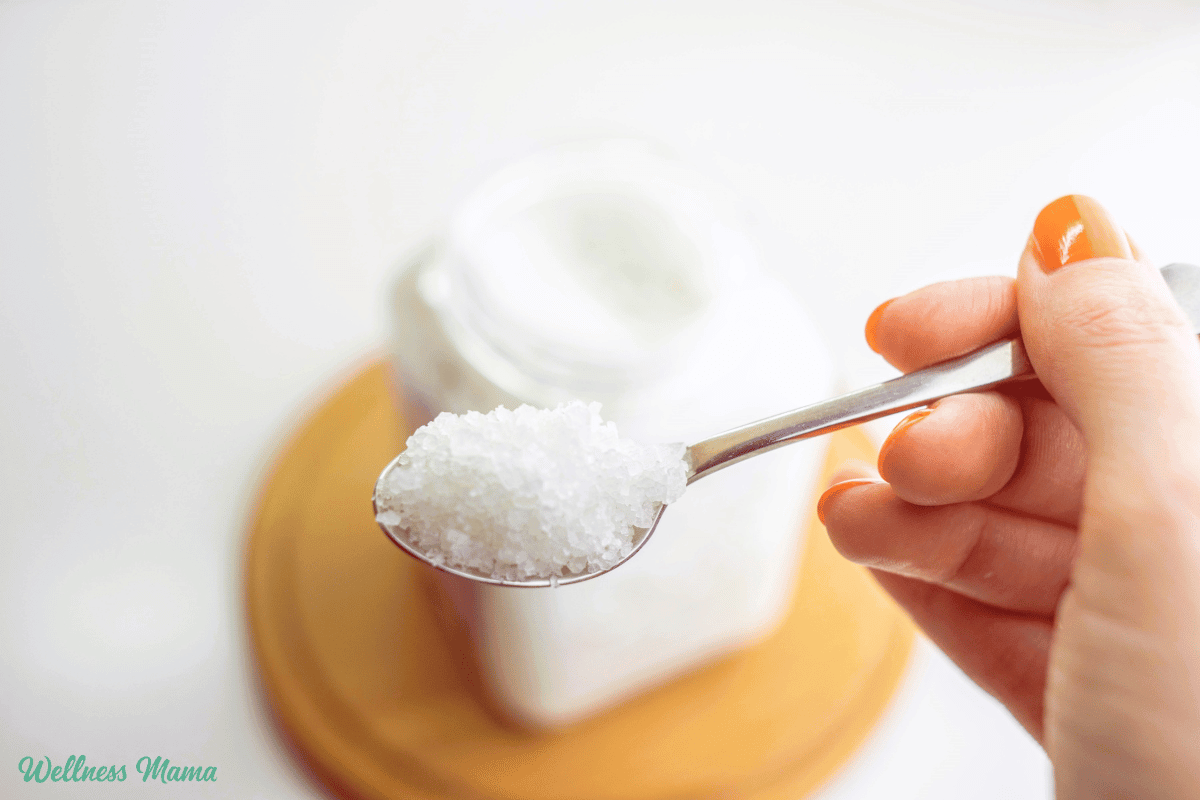
Natural salts, like Himalayan or mined mineral salts, often contain trace minerals and are less processed than conventional table salt. However, even here, quality matters. Some sea salts have microplastics, while certain mined salts can have some levels of heavy metals, including lead. It’s worth doing your research and using what you’re comfortable with. 

This is what I’ve been using lately:

How Much Sodium and Where to Get it

The US sodium guidelines suggest an upper limit of 2.3 grams per day, or about one teaspoon. However, the average person gets about 3.4 grams per day, mostly from ultraprocessed foods. But what is that sweet spot for optimal health? 

It varies by person, but I try to get at least 5 grams a day, sometimes more. Podcast guest and research biochemist Robb Wolf gives a good explanation for why here. 

Personally, I use well-sourced mineral salts and pair them with nutrient-dense foods. I also include naturally salty foods like fermented vegetables and broths, which provide sodium alongside other beneficial compounds. Here’s what else I do:

  • Use healthy salt on seasonal, local foods to taste
  • Mineralized water – I felt a big hydration difference when I started using the Mayu Swirl with minerals (code wellnessmama gives a discount)
  • Using electrolytes and minerals like LMNT or trace minerals
  • Drinking salted broth
  • Eat naturally salty foods like olives, fermented veggies, and pickles, etc.
  • Sip fermented pickled juice
  • Salt tablets (I take these every day in addition to adding salt to food and drinks)
  • Drink sole water first thing in the morning most days

Practical Ways to Support Healthy Sodium Levels

Rather than focusing on strict numbers, I’ve found it helpful to think in terms of context and feedback. Some simple approaches that have worked for me include:

  • Paying attention to how I feel: Energy, clarity, and hydration cues
  • Adjusting intake based on activity level, climate, and stress

One of the most helpful tools has simply been awareness. Noticing patterns, like feeling better with added electrolytes or worse after excessive plain water, can offer valuable clues.

Final Thoughts and A More Nuanced View of Sodium

Sodium is far more than a number on a nutrition label. It’s a foundational component of how the body functions, electrically, neurologically, and even emotionally. It’s responsible for powering cell communication, supporting fluid balance, nervous system stability, and so much more. 

For many of us, especially those focused on whole foods and active lifestyles, the conversation needs to shift from restriction to optimization. The question shouldn’t be, how little sodium we can get away with? A better question is, how can we support our bodies with the right balance of minerals in the context of how we actually live?

Like so many aspects of health, the answer isn’t one-size-fits-all. But in my experience, and even more in the research, sodium deserves a second look. 

Do you try to get more salt or avoid it? Leave a comment and let us know!
Tags: , ,
Dermatologist-Recommend Vitamin C Serums For Sensitive Skin

Dermatologist-Recommend Vitamin C Serums For Sensitive Skin

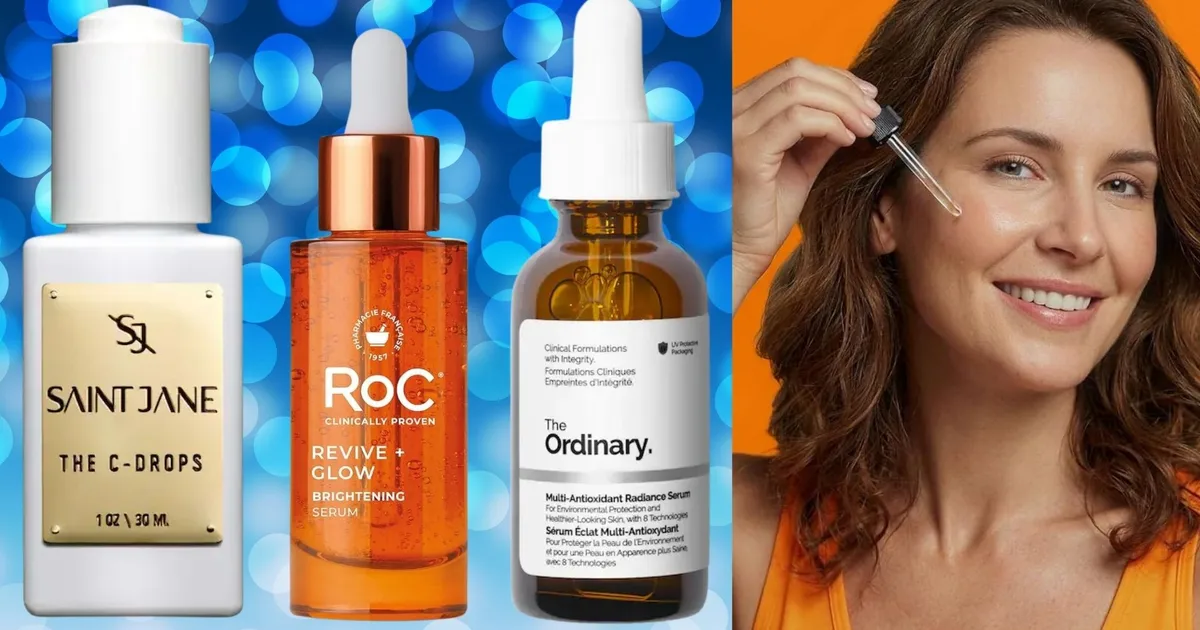
Vitamin C is a powerhouse ingredient in the skincare world, offering brightening, protective and skin-boosting benefits. If you’re someone with sensitive skin, though, you know that the idea of slathering on a vitamin C serum might sound like a one-way ticket to redness and irritation.

“Topical vitamin C can increase collagen production and reduce or prevent dark spots, but it can be irritating because of its acidic nature that can disrupt the skin’s natural barrier, especially in those who have sensitive skin,” said Dr. Jodi LoGerfo, a board-certified dermatologist.

Thankfully, experts say you can get the glow without the sting. The key? Choosing formulas that balance potency with soothing, skin-loving ingredients. We asked top dermatologists to share the vitamin C serums they actually trust to keep a reactive dermis happy. (We’ve also included a few editor’s picks at the end: products that I use and trust for my own sensitive skin.)

Tags: , , , ,
Hindustan Times News

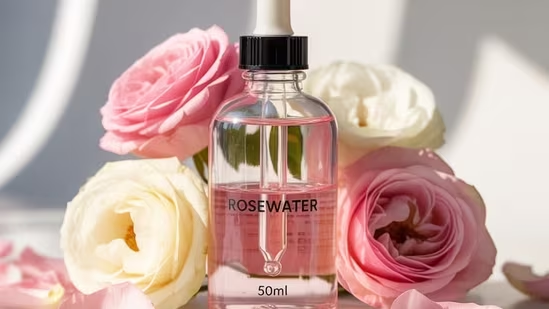
Why is gulab jal the most natural skincare toner you can use: Dermatologist highlights its timeless benefits

Back in time, when there were not many facial mists or toners, one thing that stood out and instantly refreshed the summer mood was Gulab Jal or rose water. I still remember the sweet and calming fragrance lingering in my grandmother’s home. That soft and floral fragrance came from a small glass bottle tucked beside her mirror, filled with gulab jal.

Gulab jal for your face: Use it like a toner or cleanser for a refreshing skin (Pinterest)

Shweta Pandey is a Senior Content Writer at Hindustan Times, with over 12 years of experience in beauty and wellness journalism, specialising in makeup, skincare, and hair care.

She began her professional writing journey in 2011, entering the evolving world of digital lifestyle journalism as beauty and wellness content rapidly transformed in India. Over the years, she has worked with reputed digital media houses like India Today, the Times of India and Skymet Weather, steadily building credibility through well-researched features, product reviews, and trend analyses. Her career reflects consistent growth, moving from content contributor to senior writer. She now plays a key role in shaping editorial strategy, social media content, and ensuring high-quality, reader-focused content that aligns with evolving audience needs.

Shweta’s core expertise spans makeup, skincare, hair care, and holistic health and fitness. She specialises in in-depth beauty product reviews, ingredient analysis, skincare routines, and evidence-based wellness advice. Known for her analytical and data-driven approach, she relies on verified sources, dermatological insights, and expert consultations to ensure credibility. Her field experience includes interviewing Bollywood celebrities, beauty and makeup professionals, tracking consumer trends, and simplifying the top picks.

Shweta holds a Master’s degree in Mass Communication, Advertising, and Journalism and has done Bachelor’s in Commerce from Delhi University. She believes in delivering reader-first insights that empower informed decisions while maintaining transparency, credibility, and trust.

Beyond her writing desk, Shweta enjoys exploring new destinations, experimenting in the kitchen with delightful recipes, and staying in tune with the latest beauty and wellness trends.

Read moreRead less

On summer afternoons, when the heat wrapped itself, she would sprinkle a few cool drops onto her face, her wrists, even the corners of the room. And the air would shift instantly. Back in time, gulab jal went beyond a beauty ritual. It touched everything, from the festive sweets, morning prayers, to tired eyes.

In a world that now rushes toward instant solutions, Gulab Jal remains timeless—simple, pure, and deeply rooted in tradition. It reminds us that self-care can be as effortless as a few drops of rose-infused water. And why it shouldn’t be, after all, Gulab Jal has plenty of skin benefits as well.

There are multiple skin benefits of Gulab Jal, dermatologist, Dr Meenu Malik, Aakash Healthcare, tells HT Shop Now.

Benefits of gulab jal or rose water

Natural toner: Gulab Jal helps tighten pores and refresh the skin without harsh chemicals. It balances the skin’s pH, making it great after cleansing.

Hydration boost: It provides light hydration, which makes your skin feel soft and refreshed, especially useful in hot weather.

Soothes irritation: Because of its anti-inflammatory properties, it can calm redness, mild irritation, and conditions like Acne or sunburn.

Mild antibacterial effect: Rose water has gentle antibacterial properties that may help prevent breakouts and keep skin cleaner.

Brightens complexion: Regular use can give a subtle glow and even out skin tone over time.

Works for all skin types: Whether your skin is oily, dry, or sensitive, Gulab Jal is generally safe and non-irritating.

Refreshes tired eyes: Applying chilled rose water with cotton pads can reduce puffiness and give a cooling effect to the under-eye area.

How to use Gulab Jal in your daily skincare routine

As a toner: Apply gulab jal as a toner with a cotton pad after washing your face It helps tighten pores and refreshes skin.

Face mist: Pour into a spray bottle and spritz anytime. This is great for hydration during the day.

Cleanser (light): Mix with a few drops of glycerin or use alone as a cleanser. It gently removes dirt and excess oil.

Mix with face packs: Add gulab jal to multani mitti, sandalwood powder, or besan. This enhances the soothing and brightening effect.

Under-eye treatment: Soak cotton pads in chilled rose water and place them on eyes to reduce puffiness and tiredness.

Makeup remover (mild): Rose water acts as a makeup remover as well. Just mix with coconut oil and it helps remove light makeup while keeping skin soft

Soothing sunburn or irritation: Apply gulab jal directly to calm redness and inflammation.

7 gulab jal picks for you

Nat Habit delivers freshly prepared gulab jal using traditional distillation to retain natural fragrance and skin benefits. It hydrates, tones, and refreshes while helping soothe irritation and tighten pores. Free from preservatives and additives, it suits daily skincare routines. Customers often say it feels cooling and smells like real roses, though some note the freshness means a shorter shelf life. Many users appreciate its authentic, handmade quality and gentle effect on sensitive skin.

Dabur Gulabari offers an affordable, widely trusted rose water that cleanses, tones, and refreshes skin effectively. Its light floral scent enhances daily skincare while helping remove dirt and excess oil. Customers like its easy availability and budget-friendly price, often calling it a reliable everyday toner. Some users mention the fragrance feels slightly synthetic, but most agree it delivers consistent results for basic skincare needs and works well as a quick face refresher.

WishCare provides steam-distilled rose water made without alcohol or artificial fragrance, designed to hydrate and balance skin pH. It works well as a toner, mist, or makeup prep. Users frequently praise its purity and mild scent, saying it feels gentle and refreshing even on acne-prone skin. A few customers wish for stronger packaging, but overall feedback highlights its natural formulation and effectiveness in calming redness and adding a healthy glow.

UrbanBotanics offers a convenient spray-based rose water that refreshes and tones skin instantly. Its fine mist makes it ideal for on-the-go hydration and makeup setting. Customers enjoy the ease of application and lightweight feel, often mentioning it absorbs quickly without stickiness. Some users feel the fragrance is subtle, while others appreciate that it isn’t overpowering. Overall, it’s valued for practicality, gentle formulation, and suitability for daily use.

Vitro Rose Water Spray provides a simple, refreshing skincare solution that hydrates and revitalizes tired skin. Its spray format allows quick application throughout the day, helping maintain moisture and freshness. Customers often like its cooling sensation and affordability, making it a convenient everyday product. Some reviews mention average packaging quality, but many users still find it effective for basic toning and quick refresh, especially in hot or dry weather conditions.

Khadi Natural blends herbal expertise with rose water to create a gentle toner that cleanses, tightens pores, and refreshes skin. It works well for normal to oily skin types and supports a natural glow. Customers appreciate its herbal approach and mild fragrance, often saying it feels soothing and non-irritating. A few users report slight variations in scent between batches, but overall feedback highlights its affordability and effectiveness as a daily toner.

Disclaimer: At Hindustan Times, we help you stay up-to-date with the latest trends and products. Hindustan Times has an affiliate partnership, so we may get a part of the revenue when you make a purchase. We shall not be liable for any claim under applicable laws, including but not limited to the Consumer Protection Act, 2019, with respect to the products. The products listed in this article are in no particular order of priority.

Tags: , , , , , , , ,
Why watermelon seed oil is trending in skincare

Why watermelon seed oil is trending in skincare

Follow this guide

What’s the story

African watermelon seed oil is becoming a popular skincare ingredient, thanks to its nourishing properties.
Extracted from the seeds of the African watermelon, this oil is rich in essential fatty acids and antioxidants.
It is known for its ability to hydrate and rejuvenate the skin, making it a favorite among those looking for natural skincare solutions.
Here are the benefits and uses of this unique oil.

Rich in essential fatty acids

African watermelon seed oil is packed with essential fatty acids, such as linoleic acid and oleic acid.
These fatty acids are essential for maintaining the skin’s barrier function and preventing moisture loss.
They also help in reducing inflammation and redness, making them ideal for sensitive or acne-prone skin types.
Regular use can lead to a more balanced and healthier-looking complexion.

Antioxidant properties for skin health

The oil also contains antioxidants that protect the skin from environmental stressors, such as pollution and UV rays.
These antioxidants help neutralize free radicals that cause premature aging and damage to the skin cells.
By incorporating African watermelon seed oil into your skincare routine, you can enhance your skin’s resilience against daily aggressors.

Lightweight texture ideal for all skin types

One of the best things about African watermelon seed oil is its lightweight texture. It absorbs quickly into the skin without leaving a greasy residue behind.
This makes it suitable for all skin types, including oily or combination skin.
Its non-comedogenic nature ensures that it does not clog pores while providing deep hydration.

Versatile uses in skincare routines

African watermelon seed oil can be used in various ways in skincare routines.
It can be applied directly on the face as a moisturizer or mixed with other products, like creams or serums, for added benefits.
It can also be used as a carrier oil for essential oils or added to DIY masks for enhanced nourishment.

Cost-effective alternative to luxury oils

While luxury skincare oils can cost a fortune, African watermelon seed oil provides an affordable option without compromising on quality.
It gives similar benefits as high-end products but at a fraction of the cost.
This makes it an attractive choice for those wanting effective skincare solutions on a budget.

Tags: , , , ,
Best oLive
Privacy Overview

This website uses cookies so that we can provide you with the best user experience possible. Cookie information is stored in your browser and performs functions such as recognising you when you return to our website and helping our team to understand which sections of the website you find most interesting and useful.