Skincare for kids? The beauty trend stirring debate among parents and experts

Skincare for kids? The beauty trend stirring debate among parents and experts

Brittany Ouyang does not do much to perfect her three-year-old daughter’s skin, because it happens to be flawless already.

Her routine, if you can call it that, includes water, sunscreen and the occasional moisturiser.

So Ouyang was baffled when her sister sent her an Instagram post recently about a new skincare line that was advertised for children ages three years old and up.

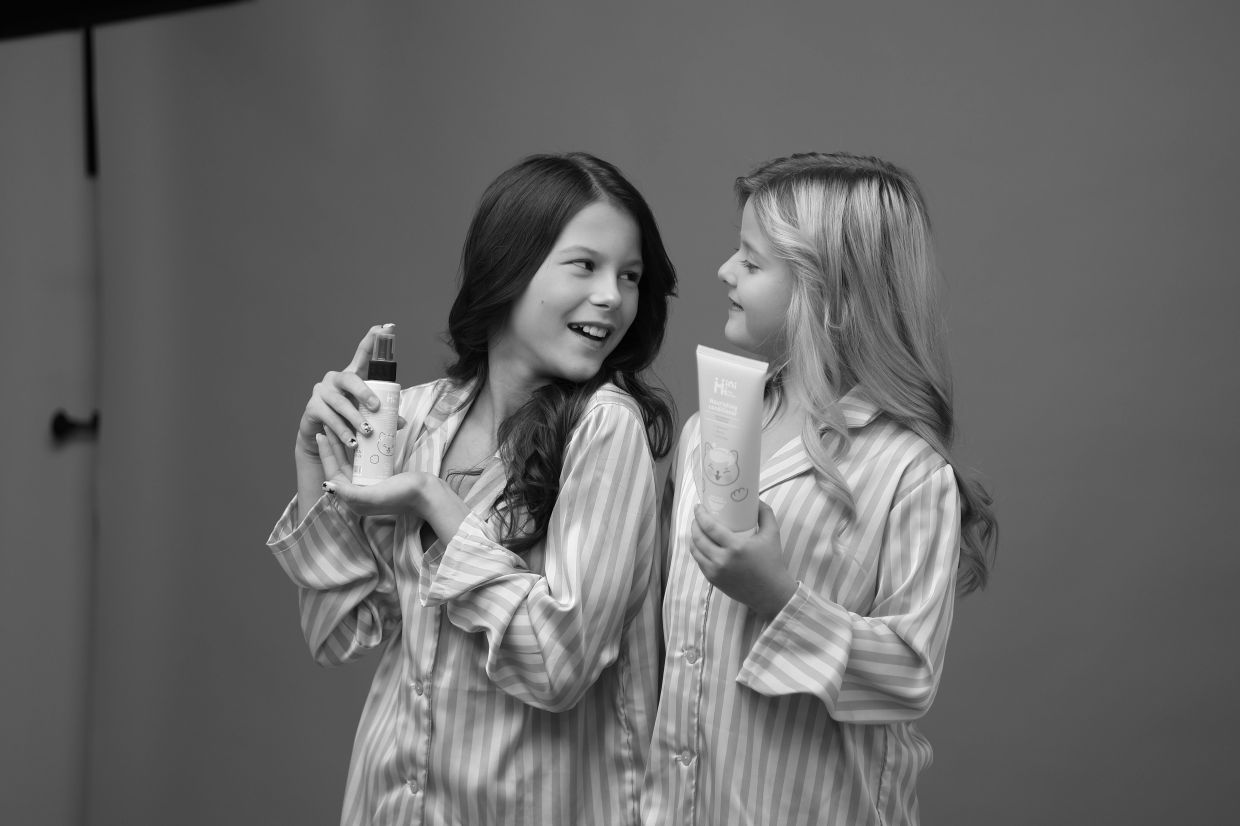
She visited the website for the brand, which is called Rini and was cofounded by actress Shay Mitchell, and saw pictures of poreless children who looked to be 10 years old and younger beaming from behind jellylike face masks enriched with vitamin B12.

“That is ludicrous,” Ouyang, 36, who works in tech and lives near San Francisco, texted her sister.

She joined a chorus of people criticising the company with a post on TikTok: “What kind of capitalist hellscape are we living in?”

Nearly two years after a flurry of press about tweens swarming the aisles of beauty stores like Sephora, skincare lines for preteens and even younger children have become a robust product category – and a battlefield for parents and critics.

Households with children ages seven to 12 spent close to US$2.5bil (approximately RM10.4bil) on skincare last year, up from US$1.8bil (RM7.5bil) in 2022, according to data from NielsenIQ, a consumer research firm.

A growing list of companies offer skin products for preteens that are packaged in containers that look like candy dispensers and advertised with soothing assurances about gentle, dermatologist-approved ingredients.

Read more: In Malaysia and around the world, tweens are fast shaping the beauty industry

Most of these brands are targeting a demographic slightly older than the children who appear in Rini’s marketing materials.

Some, like Bubble Skin Care, which has been selling modestly priced moisturiser to tweens since 2020, and Evereden, a purveyor of melon-scented face wash and sunscreen sets, predated the “Sephora kids” craze.

Newer arrivals are thriving in a social media universe in which preteens demonstrate multistep skin routines for the camera.

In September, the debut of a 15-year-old influencer’s skincare line drew thousands of fans to a mall in New Jersey.

A new brand called Pipa, aimed at customers ages 7 to 12 years old, mails influencers its products in periwinkle boxes that say “Start young” on their lids.

These companies argue that young people who are already curious about skincare need safer alternatives to adult products that can damage sensitive, prepubescent skin.

Other observers see something more pernicious: a way to hook children on unnecessary products, laying the groundwork for ever-earlier anxieties about their appearances.

“Maybe in 20 years, every one-year-old will have a beauty routine,” said Ally Nelson, the host of a psychology and wellness podcast.

She was joking, mostly. The next day, she came across a Fisher-Price teething set that included a toy version of a sheet mask and a rattle shaped like a jade roller.

‘Very dystopian’

Nelson, 33, who lives in Toronto and has a toddler, said she could understand where these companies were coming from.

Young girls have long imitated their mothers by painting their nails or trying on lipstick – activities that tend to be treated as playful flirtations with adulthood.

There’s nothing wrong with a little experimentation, she said, but she worries that preteen skincare routines are allowing the beauty industry to gain a foothold in children’s lives.

A report released by Ulta Beauty last year found that members of Gen Alpha (those born after 2010) started experimenting with beauty products at an average age of eight years old – five years earlier than the generation above them.

“It does feel a little bit predatory,” Nelson said, describing Rini’s marketing imagery as “very dystopian”.

The company does not see it that way.

Mitchell, an actress who appeared in the teen drama Pretty Little Liars and founded the luggage company Beis, devised Rini with Esther Song, a fashion industry alumna and former chief marketing officer for the Parent Co.

In an interview with Elle, the two friends said they had decided to create the company after struggling to wipe face paint from their daughters’ faces after dance camp.

The brand’s introductory offering, sheet masks that retail for US$6 or US$7 (RM25 or RM29) each, come in puppy, panda and unicorn styles.

Through a representative, Mitchell declined an interview that would include questions about criticism of the brand.

In interviews, the founders of other skincare lines that cater to children and preteens said that they took seriously questions about age and appropriateness when developing their products.

Kimberley Ho, the CEO of Evereden, worked with three dermatologists to create the company in 2018, with the goal of providing gentle products for infants.

In 2021, after requests from parents, it introduced a limited number of items formulated for tweens, she said: sunscreen, a cleanser to wash it off and a simple moisturiser.

“With some newer brands, I think that what we’re seeing is, they’re developing products that kids may not necessarily need,” Ho said when asked about Rini.

Evereden, which reported US$100mil (RM414mil) in sales last year, now offers skincare packages for ages three years old and up, including a pale pink “Barbie” moisturiser and cleanser set that retails for US$63 (RM261).

“My eight-year-old calls this her ‘Barbie spa time’ and won’t go to bed without it now,” reads a testimonial the company highlights on its website.

Brooke Jeffy, a dermatologist in Scottsdale, Arizona, who introduced the skincare brand BTWN in 2023, worries that other companies have made compromises as the category has gotten more competitive in recent years, like adding fragrances that can irritate children’s sensitive skin.

She has resisted her marketing team’s suggestions to sell her products in more colorful packaging.

Read more: What do Gen Zs want in beauty? Cool brands, personal expression and inclusivity

Some dermatologists are not buying it.

Dedicated skin products for tweens may be safer than adult serums, but that does not mean children need them, said Molly Hales, a dermatologist and researcher at the University of Chicago.

“A young person who doesn’t have any known, diagnosable skin conditions doesn’t really need to be using products” beyond sunscreen, Hales said.

In an analysis published in June, she and other researchers found that girls on TikTok from the ages of seven to 18 years old were demonstrating skincare routines with an average of six different products, many of them risky for young skin.

Brands are most likely trying to capitalise on the popularity of such videos, she said, and insulating themselves from criticism using the fuzzy, unimpeachable-sounding language of “self-care”.

A beauty industry that specialises in monetising customers’ insecurities might just view children as the next untapped market, said Charlotte Markey, a professor of psychology at Rutgers University and the author of books about adolescent body image. 

No matter how carefully they are formulated, skincare sets for kids send a message that “it’s really important to be on top of all these appearance trends, before you have even hit puberty”.

In her dream world, she added, children would hardly think about their skin at all.

“I’d so much rather they be colouring or something,” she said. – ©2025 The New York Times Company

This article originally appeared in The New York Times.

Tags: , , , , , , , ,
How Millennials Are Redefining Ageing Gracefully

How Millennials Are Redefining Ageing Gracefully

Dr. Ashok B C. HOD – Department of Plastic Reconstructive and Aesthetic surgery & Chief of Medical Services Aster Whitefield Hospital

Millennials and Gen Z are increasingly choosing treatments such as Botox, fillers, chemical peels, and laser toning not to drastically alter their appearance, but to preserve it.

In the age of hyper-visibility and social media filters, beauty goals are evolving from correction to prevention. Increasingly, millennials and Gen Z are embracing ‘preventive aesthetics’ – a proactive approach to skincare that uses subtle, science-backed treatments to delay visible signs of ageing. Rather than waiting for wrinkles to set in, this new generation is focusing on maintenance: protecting collagen, improving texture, and enhancing glow before damage becomes irreversible.

From Botox and dermal fillers to laser toning and microneedling, the idea is not to change one’s appearance but to preserve it.

The New Era Of Preventive Beauty
“Preventive aesthetics means using subtle, early interventions to delay visible aging. Earlier, people in their 40s or 50s sought corrective treatments. Now, even those in their late 20s or 30s are choosing options like botox, fillers, chemical peels, or laser toning to maintain skin quality and prevent deeper wrinkles or pigmentation,” explains Dr. Amey Pednekar, Consultant – Plastic Surgeon, Manipal Hospital, Goa.

When done responsibly and under medical supervision, these treatments can indeed support skin health. “Medical-grade skincare, sunscreen, and minimally invasive procedures form the foundation of safe, effective preventive care. They help maintain natural beauty in its original form for as long as possible,” adds Dr. Pednekar.

Where Prevention Crosses Into Excess
But as the demand grows, experts warn of an emerging downside – the overuse of injectables and energy-based treatments by unqualified providers. “Excessive fillers or unscientific combinations of devices can lead to unnatural results or even permanent complications. This is where a deep understanding of anatomy and physiology becomes invaluable,” cautions Dr. Pednekar.

Dr. Ashok B. C., HOD – Department of Plastic, Reconstructive and Aesthetic Surgery, Aster Whitefield Hospital, Bengaluru, echoes the sentiment. “Preventive aesthetics, when done properly, can reduce side effects and delay the need for invasive procedures. But it must be handled with medical precision. We’re intervening even before signs of aging appear, so any misstep can trigger issues like infection, allergic reactions, or even scarring,” he says.

Knowing The Red Flags
Both experts emphasise that preventive aesthetics isn’t one-size-fits-all. Dr. Ashok stresses the need for self-awareness and psychological screening before beginning any cosmetic treatment. “Body dysmorphic disorder is real. Some individuals seek aesthetic procedures to fix emotional or confidence issues rather than physical concerns. These are red flags that professionals must identify,” he says.

Certain groups – such as those who are pregnant, breastfeeding, or have active skin infections or keloid-prone skin – should also avoid elective aesthetic procedures. “A qualified, experienced aesthetic doctor will always take a detailed medical history and guide patients accordingly,” he adds.

Ultimately, preventive aesthetics isn’t about chasing trends. It’s about balance. The goal, as experts agree, is to age gracefully, not fearfully. When approached with moderation, medical guidance, and a commitment to overall wellness, early aesthetic interventions can support skin longevity without compromising authenticity.

Because the most enduring kind of beauty isn’t just preserved. It’s cared for, consciously and confidently.

By Dr. Ashok B C
HOD – Department of Plastic Reconstructive and Aesthetic surgery & Chief of Medical Services Aster Whitefield Hospital

Tags: , , ,
Onshindo Osaka enters the Romanian market, strengthening the J-Beauty trend in the premium skincare segment

Onshindo Osaka enters the Romanian market, strengthening the J-Beauty trend in the premium skincare segment

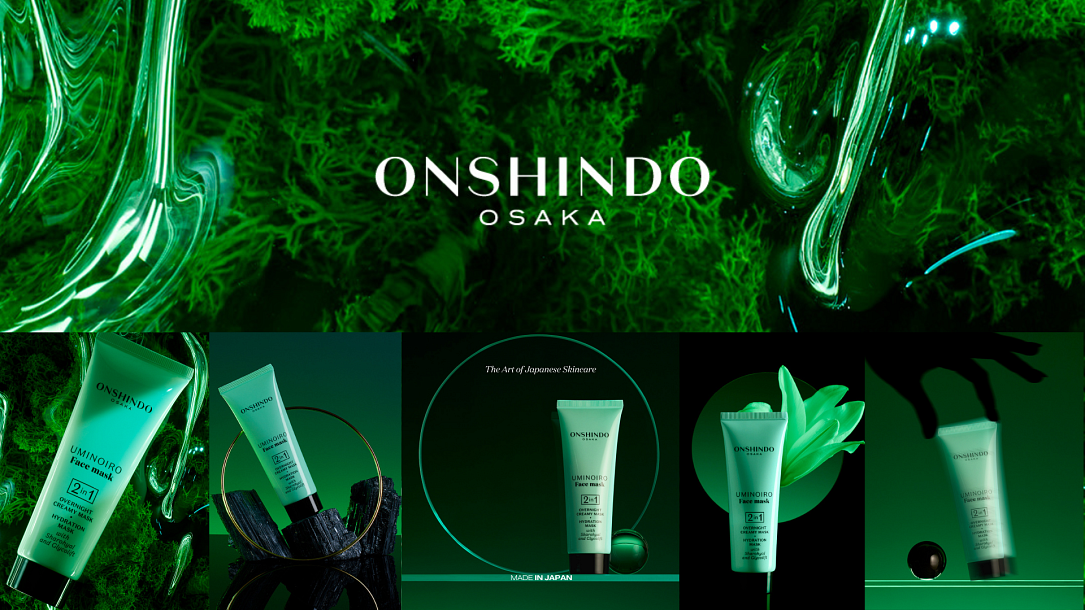
The Japanese premium skincare brand Onshindo Osaka officially enters the Romanian market through its exclusive distributor, Pharma Brands, marking a new milestone in its European expansion strategy. Following its successful launch in Spain, the company aims to capitalize on the growing interest of Romanian consumers in premium skincare products with clinically proven efficacy and authentic origins.

J-Beauty – the Japanese alternative to complex K-Beauty routines

Onshindo Osaka’s entry into the local market comes at a time when the J-Beauty segment — Japan’s minimalist skincare philosophy — is gaining global attention as a balanced alternative to the multi-step routines popularized by K-Beauty.

Japanese skincare emphasizes simplicity, concentrated formulas, and measurable results, combining multifunctional ingredients with biotechnological research.
In this context, Onshindo Osaka positions itself as an authentic premium skincare brand that merges Japanese tradition with scientific innovation.

Crafted in Japan Onshindo products combine rare natural ingredients derived from Japanese flora such as Yuzu extract and Tsubaki oil with patented innovations including Hydraskin, Sharohyal, and Glycolift — recognized for their deep hydration and instant lifting effect.

Clinical tests conducted by J.S. Hamilton Laboratories confirmed improvements in skin firmness, density, and elasticity after 28 days of use. All formulas are dermatologically and ophthalmologically tested.

Romanian consumers, increasingly sophisticated in skincare choices

The launch of Onshindo Osaka in Romania is part of Pharma Brands’ strategy to expand its portfolio of international premium brands within the beauty & health segment.
Starting this autumn, the products will be available in major pharmacies and online platforms including Farmacia Tei, Bebe Tei, Dr.Max, Help Net, eMAG, and SpringFarma.

“With this launch, Romania becomes the second European market where the brand is present. The entry of Onshindo Osaka comes at a time when the premium skincare segment is steadily growing. Local consumers are becoming increasingly discerning — we see a clear shift from brand awareness-based purchases to informed decisions, where product origin, research, and clinically proven efficacy truly matter,” said Rubina Celea, Dermato-Cosmetics Manager at Pharma Brands.

According to global trends, premium consumers are seeking products with transparent compositions and scientifically validated performance, moving beyond decisions driven solely by brand fame.

The launch of Onshindo Osaka reinforces Romania’s position as a key market for premium skincare brands in Central and Eastern Europe.

About Onshindo Osaka

Onshindo Osaka is a Japanese premium skincare brand built on a deep commitment to cosmetics, innovation, and cultural heritage. The brand was created with the vision of combining Japan’s rich botanical resources with advanced biotechnology, delivering effective, high-quality products for a wide range of skin types around the world.

Every formula results from years of research dedicated to achieving the ideal balance of ingredients and textures, thoroughly tested to ensure visible, measurable outcomes. All products are crafted exclusively in Japan, preserving the essence and traditions of Japanese beauty rituals while integrating modern scientific expertise.

Onshindo Osaka’s mission is to share the depth of Japanese cosmetic culture through products that unite nature, science, and refinement, offering consumers a complete and authentic J-beauty experience.

*This is a press release.

Tags: , , , , , , , , , ,
peppermint mocha creamer

Homemade Peppermint Mocha Creamer (Dairy-Free)

It’s no secret that I’m an avid coffee drinker, even if I don’t drink it everyday. I’ve written many posts on the health benefits and controversies of coffee and have a podcast episode on my favorite mushroom coffee. And I have lots (and I do mean LOTS!) of recipes for my favorite coffee shop style drinks. So when I realized I could easily make my own festive peppermint mocha creamer, I was thrilled!

Peppermint Mocha Creamer

Store-bought coffee creamer comes in so many fun flavors. There’s the Chobani peppermint mocha creamer and even Starbucks has their own line of creamers. It’s kind of a bummer they’re so full of ingredients I try to avoid. Ingredients like carrageenan, high-fructose corn syrup, and hydrogenated oils.

And while many stores now have simpler coffee creamer with cleaner ingredients, they still have some downsides. This healthier peppermint mocha creamer is simple, easy, and tastes even better!

Dairy-Free Creamer Options

This coffee creamer is paleo and dairy-free thanks to its coconut milk base. I prefer using coconut milk for my peppermint mocha creamer since it’s naturally so thick and creamy. I like to add healthy fats to my coffee anyway. If you’d rather use a different milk, feel free. Oat milk and cashew milk are especially creamy options. 

I add a little peppermint extract for flavor and maple syrup for natural sweetness. If you’re looking for a sugar free peppermint mocha creamer, try liquid stevia instead. Both the sweetener and flavor can be adjusted to suit your tastes. Want to try a different flavor? Simply swap out the peppermint for another extract, like vanilla, almond, or orange. 

Peppermint Mocha Creamer Recipe

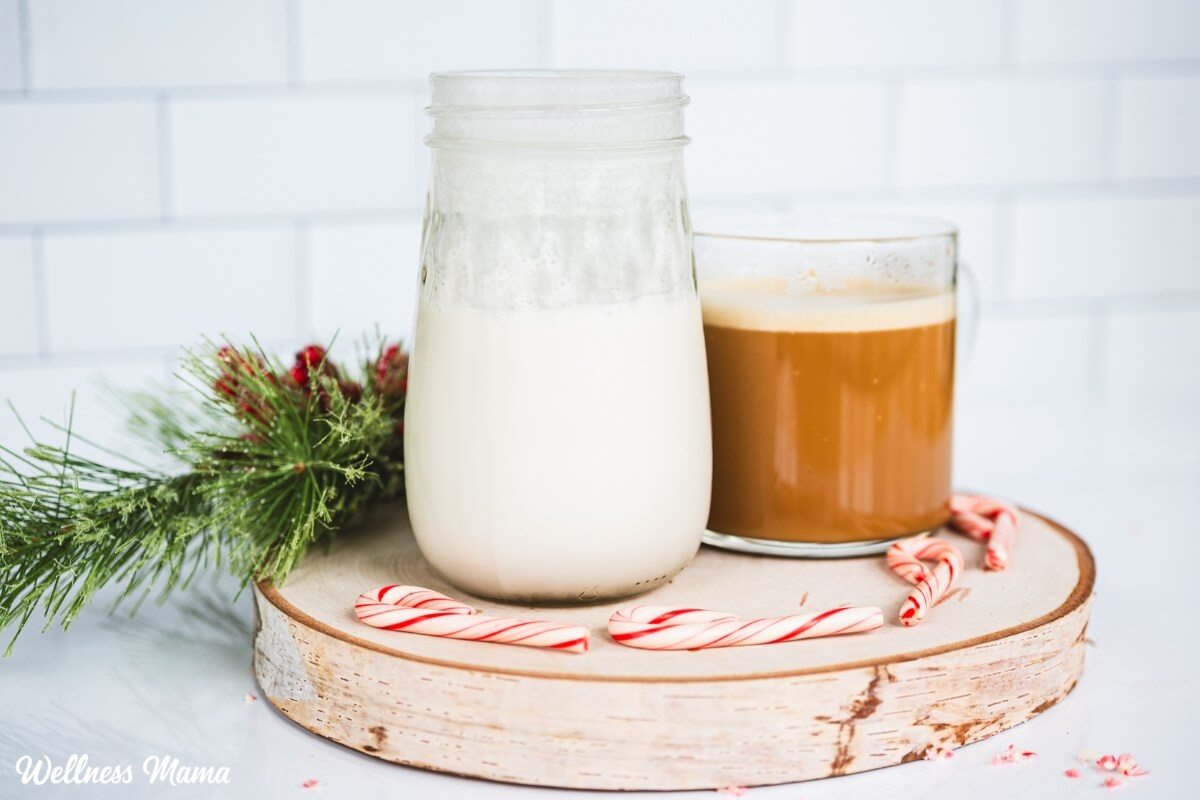
Dairy-free coffee creamer made with coconut milk, peppermint extract, and a touch of maple syrup.

  • Warm the can of coconut milk in a bowl of hot water for about 5 minutes to make it easier to pour.

  • In a pint-size mason jar, combine the coconut milk, peppermint extract, and maple syrup.

  • Put a lid on the mason jar and shake vigorously to mix.

  • Stir into coffee or milk for a festive treat.

  • Store leftovers in the refrigerator and use within 7-10 days.

Nutrition Facts

Peppermint Mocha Creamer Recipe

Amount Per Serving (2 TBSP)

Calories 76
Calories from Fat 63

% Daily Value*

Fat 7g11%

Saturated Fat 6g38%

Polyunsaturated Fat 0.1g

Monounsaturated Fat 0.3g

Sodium 5mg0%

Potassium 97mg3%

Carbohydrates 4g1%

Fiber 0.5g2%

Sugar 2g2%

Protein 1g2%

Vitamin C 0.3mg0%

Calcium 11mg1%

Iron 1mg6%

* Percent Daily Values are based on a 2000 calorie diet.

  • Feel free to adjust the peppermint and syrup up or down to suit your tastes.
  • Omit the cocoa powder if you just want a peppermint creamer.

How to Use Homemade Coffee Creamer (of Any Flavor!)

The most obvious is, of course, to stir it into a fresh cup of coffee. However, there are a lot of other tasty options as well. I like to use it in leftover chilled coffee or cold brew coffee. It’s also great in tea without the cocoa powder if you’re more of a tea drinker.

My kids love it added to hot chocolate or just cold milk for a festive treat. You can also add it to homemade vanilla ice cream to make a shake.

Try a batch of this healthy creamer with vanilla extract instead of mint over steel cut oats for breakfast. I bet this recipe for gingerbread creamer would be delicious that way too!

More Homemade Hot Beverages to Try

When you’re longing for a hot and tasty beverage (that doesn’t cost $7 or more!) try these:

Side note: Don’t throw out your used coffee grounds — they have lots of uses!

Do you make your own coffee creamer? What’s your favorite flavor?

Tags: , , , ,
Best oLive
Privacy Overview

This website uses cookies so that we can provide you with the best user experience possible. Cookie information is stored in your browser and performs functions such as recognising you when you return to our website and helping our team to understand which sections of the website you find most interesting and useful.