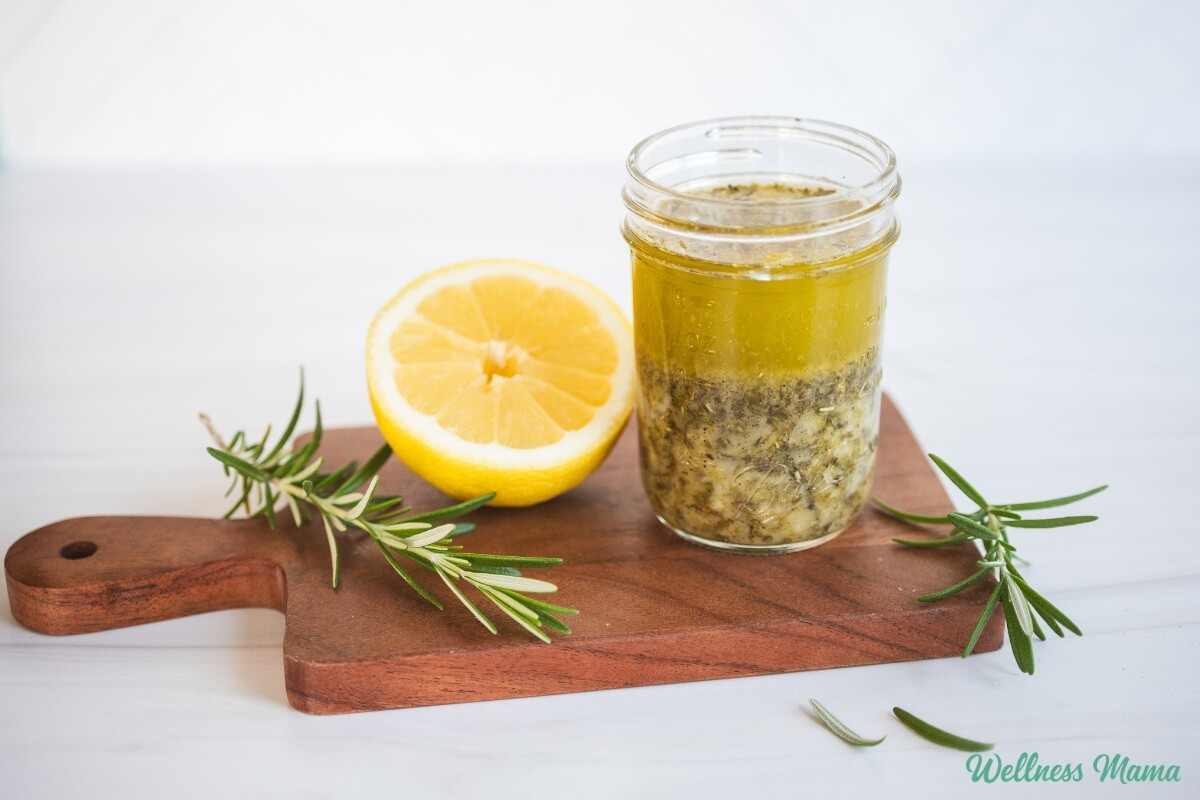
lemon chicken marinade

Herb and Lemon Chicken Marinade

If you live in the US, chances are you eat around 118 pounds of chicken every single year. And while that’s the national average, chicken gets boring when it’s served the same old way. Try this lemon chicken marinade with herbs and garlic for a new way to enjoy a classic protein. 

The acid from the lemon juice helps tenderize the chicken meat, while the herbs and spices give it a great flavor. Perfect for throwing on the grill for a warm summer night!

Lemon Chicken Marinade

Chicken is such a versatile (and affordable) protein and we use it frequently in our home. Everything from easy, Crockpot meals like salsa chicken to mouthwatering Italian chopped chicken salad. I especially love marinades because they infuse the flavor into the meat for even better taste. 

This recipe calls for fresh herbs because I have a variety growing in the garden this time of year. Fresh herbs still have the volatile oils intact that give them a more intense flavor. These volatile oils are the same that you find when buying essential oils. 

If you only have dried herbs though, not to worry! Dried herbs also work, you might just want to let the marinade soak into the meat a little longer. Another tip: keep fresh dried herbs on hand. This way when you pull the spice jar out of the pantry it’s still fragrant, not dusty and bland tasting. I also like to crush the dried herbs in my hand some right before using. This helps release some of those volatile oils (aka more flavor). 

What Meat is Best to Use?

Ok, so technically this recipe is for lemon garlic chicken marinade, but it’s really for more than that. You can use it on any cut of chicken: wings, thighs, legs, or breast. But it’s also a tasty way to eat other meats. Our family also enjoys it on shrimp, salmon, pork chops, or even grilled vegetables.

How to Use the Lemon Chicken Marinade

Sometimes I’ll layer the meat in the bottom of a casserole dish and pour the marinade over that. Flip halfway through marinating. Or these reusable bags from ZipTop also work well too. You just want to make sure the marinade has close contact with the chicken so all the flavors can meld. 

This is a great recipe to make ahead because the chicken can marinate for up to 24 hours. And the longer you wait, the better the flavor. That means throw it together and refrigerate on Friday for supper Saturday.

It’s great on the grill and helps the meat not dry out during cooking. It works just as well for pan-seared chicken or for baked lemon chicken in the oven. And if you want even more lemon flavor, serve with fresh lemon wedges. I’ll often add a sprinkle of chopped parsley for a color pop. 

Herb and Lemon Chicken Marinade

  • ½ cup olive oil
  • ¼ cup fresh lemon juice
  • 1 TBSP lemon zest
  • 4 cloves garlic (minced)
  • 1 TBSP fresh rosemary (chopped, or 1 tsp dried rosemary)
  • 1 TBSP fresh thyme (or 1 tsp dried thyme)
  • 2 TBSP fresh parsley (chopped, or 2 tsp dried parsley)
  • 1 tsp salt
  • ½ tsp black pepper
  • 1 tsp Dijon mustard (optional)
  • In a bowl or mason jar, whisk together the olive oil, lemon juice, lemon zest, garlic, herbs, salt, pepper, and Dijon mustard if using.

  • Place the chicken in a glass container or reusable storage bag and pour the marinade over it. If your mixing bowl is big enough you can just put the chicken in there.

  • Cover and refrigerate for at least 2 hours or up to 24 hours.

  • Remove the chicken from the marinade and discard any remaining lemon chicken marinade.

  • Grill, bake, or pan-sear until the chicken reaches an internal temperature of 165°F.

Nutrition Facts

Herb and Lemon Chicken Marinade

Amount Per Serving (1 serving)

Calories 126
Calories from Fat 126

% Daily Value*

Fat 14g22%

Saturated Fat 2g13%

Polyunsaturated Fat 1g

Monounsaturated Fat 10g

Sodium 299mg13%

Potassium 30mg1%

Carbohydrates 2g1%

Fiber 0.4g2%

Sugar 0.3g0%

Protein 0.3g1%

Vitamin A 135IU3%

Vitamin C 7mg8%

Calcium 11mg1%

Iron 0.4mg2%

* Percent Daily Values are based on a 2000 calorie diet.

  • For extra lemon flavor, serve with fresh lemon wedges and a sprinkle of chopped parsley.
  • This recipe makes enough for 2-3 pounds of chicken or 8-12 servings. 

What to Eat With Lemon Chicken 

There are so many fresh and fun side dishes. Whether you garden or get some from the local farmer’s market, colorful fruits and veggies are plentiful in the summer. And even if you’re not making this in the summer, it still pairs well with other sides.

Try a classic potato dish or a simple green salad for a quick meal. We also like it with grilled asparagus or sauteed summer squash. Here are some other ideas

What are some of your favorite ways to eat chicken? Leave a comment and let us know!

Tags: , , ,
is college worth it

Is College Worth It? Why I’m Asking New Questions

As a high schooler and for most of my adult life, I assumed college was simply the next step. So much of my education was focused on preparing for college, getting good grades, and following the same path that everyone around me seemed to be following. Looking back, I never stopped to ask whether college was even the right choice for me.

Now, as a mom with children facing these same decisions, I find myself asking very different questions. This isn’t about being anti-college, but about challenging assumptions and exploring alternatives. It’s about helping our kids make intentional choices rather than simply following a default path.

The world has changed dramatically, and the conversation around higher education deserves a fresh look.

Why I Started Questioning Is College Worth It?

Like everything in life, my perspective on college is shaped by my own experience. I attended a highly respected university on a full scholarship and stipend. Most college students today though are taking on debt (sometimes a lot of it!). Yet even though I was able to attend college for basically free, I still ended up walking away eventually. 

I started asking deeper questions about education, work, and what success really looked like. I came to realize that I no longer agreed with many of the assumptions that led me there in the first place. That experience was a valuable life lesson. Sometimes the most valuable question isn’t “How do I succeed on this path?” but rather “Is this the right path to begin with?”

I’m not claiming to have all the answers. In fact, the older I get, the more questions I seem to have. Yet, our children deserve the opportunity to ask those questions before investing years of their lives and potentially taking on life changing debt.

The College Landscape Has Changed

One reason this conversation feels so important is that the world looks drastically different now. The computer age has evolved into the age of artificial intelligence which has changed the landscape of future (and current) careers. 

And sadly, student debt has exploded. Millions of people carry loans for decades, and many discover (too late) that student debt operates differently from other forms of debt. I personally know people who have already paid back more than they originally borrowed and still owe substantial balances due to interest. Collectively, American’s hold over 1.6 Trillion in student loan debt.

At the same time, fewer careers require traditional degrees than you would think. While some professions absolutely require specialized education and licensure, many employers are removing degree requirements. Instead, they’re placing greater emphasis on skills, experience, certifications, and showing competence.

There are also more opportunities through entrepreneurship, apprenticeships, trade careers, certifications, and digital skill development. Many of these paths require less time, less money, and people can start earning money much faster.

That doesn’t mean college never makes sense. It simply means that college is no longer the obvious answer for everyone.

The Emotional Side of the Decision

Parents often approach this conversation from a place of love and concern. We want our children to be secure, successful, and have opportunities maybe we didn’t have. For many of us, we were taught that a college degree was the golden ticket to all three.

Because of that, the college topic can become emotionally charged. There’s often a fear that our children will fall behind, miss opportunities, or somehow fail if they choose a different path. Then there’s the social pressure. Parents naturally feel proud when their child is accepted into a prestigious university. And society still tends to treat college admission as a marker of success.

But I’ve come to question whether college acceptance is actually a meaningful measure of either our success as parents or a child’s future happiness.

What most of us truly want is not a degree hanging on the wall. We want our children to build lives they love and find success. We want them to have freedom, purpose, meaningful relationships, financial stability, and the ability to contribute something valuable to the world.

But is college always the most effective way to achieve this in today’s world?

An Expensive Delay

One idea that’s stayed with me is that college sometimes functions as a way to put off decisions, rather than a destination. Many teenagers graduate high school unsure of who they are, what they want, or what they hope their lives will look like. Honestly, many adults still wrestle with those questions.

I know I certainly did. At 18, I hoped college would help me discover my purpose, but it didn’t really. That doesn’t mean college never helps people find direction. However, it’s worth asking whether spending tens or even hundreds of thousands of dollars is the best way to search for answers.

For many students, college becomes a way to postpone difficult questions:

  • What kind of life do I want?
  • What kind of work excites me?
  • What values matter most to me?
  • What am I uniquely gifted to contribute?

Those are important questions and they deserve attention. If the primary reason for attending college is to avoid answering them for another four years, that may be worth examining honestly.

One of the strongest arguments for college is community, which is understandable. Teens naturally crave connection, belonging, friendship, and shared experiences. In fact, those needs are developmentally appropriate and incredibly important.

When I was younger, one of the biggest attractions of college was the idea of continuing life with my friends. The social aspect was far more appealing than sitting in classrooms. But I started asking a different question. Is college the only way (or even the best way) to build meaningful community?

College creates an artificial environment where thousands of people of similar age, experience, and life stage spend time together. While that can be exciting, it’s also very different from how most adult life works.

Real-world communities are usually more diverse. They include people of different ages, backgrounds, professions, experiences, and perspectives. They often form around shared values, common goals, service, faith, work, hobbies, or mutual interests.

In my own life, the relationships that have lasted longest weren’t based on sharing a campus. They were built around shared values and meaningful life experiences. Community matters deeply, but I don’t think college has a monopoly on it.

The Alternatives Many Teens Never Hear About

One thing I wish I had known as a teenager is that there were other options. Growing up, I genuinely viewed college as mandatory, like the 13th grade. Other options weren’t even on my radar. I think young people today deserve a much broader picture.

Trades are one example. Thanks to changing workforce demographics and labor shortages, many skilled trades are experiencing tremendous demand. Skilled tradesmen and other professionals often enjoy strong job security, a good income, and significantly less (or no) long term educational debt.

Apprenticeships provide another path. Instead of paying to learn, students can often earn while they learn. Internships and volunteer opportunities can also create valuable career connections. Many people discover careers they love through real-world experience rather than from sitting inside a classroom.

Travel can be an incredible teacher as well. Exposure to different cultures, lifestyles, and perspectives often provides education that no textbook can replicate. More and more teens are choosing to take a “gap year” to travel and discover what they’re wanting from their future. 

Certifications offer another option. Depending on a student’s interests, certifications in areas like fitness, technology, design, project management, or skilled trades can lead directly to meaningful work. One of my kids is really big into athletics and they’re currently looking into a personal trainer certification. These can be a faster path and even rival the salary of college degrees. 

The goal isn’t to convince every young person to avoid college, but to realize that they have other choices.

The Financial Reality of Student Loans

This is where the conversation gets serious for me. If there’s one area where I have particularly strong feelings, it’s student loan debt. For the past 10 years I’ve purposefully tried to let go of strong opinions of things, but this is one area I’ve actually gotten even stronger on. 

Teenagers are often asked to sign financial agreements involving tens of thousands of dollars before they’ve ever paid rent, managed a household budget, or experienced adult financial responsibilities.

That concerns me. Many young people understandably focus on the promise of future earnings. What they often don’t fully understand is how interest, repayment timelines, and debt obligations can shape their choices for decades.

Debt affects more than finances. It influences career decisions, housing options, family planning, entrepreneurial opportunities, and overall freedom. Meanwhile, someone who enters the workforce earlier may begin earning and investing years before a traditional college graduate enters full-time employment.

Those years matter because compounding works in both directions. Debt compounds, but so do investments, savings, skills, and experience. That’s why I believe every family should carefully examine the true financial cost of higher education before making a decision.

What About Sports?

Sports add another layer to this conversation. Many young athletes are told that college is the main way to continue their athletic careers. Depending on the sport, that may sometimes be true, but it’s still worth asking questions.

If the goal is playing a sport at the collegiate level, college obviously makes sense. But if the goal is long-term athletic development, professional competition, or simply remaining active in a sport, there may be other paths worth exploring. Private coaching, club teams, travel competition, independent training, and specialized development programs are a few. These can provide opportunities outside the traditional college system. 

As a parent, I want my children to understand all of their options before making major commitments. And regardless of what they choose, I want that choice to come from thoughtful consideration not just assumptions.

The Questions I Hope My Kids Ask

As my children approach adulthood, I’m trying less to give answers and more to encourage good questions. These are the questions I wish I’d stopped and asked myself before choosing college. These are the questions I’m prompting my kids to ask as they make these decisions. 

Questions like:

  • What kind of life do you want at 25, 30, or 40?
  • How important is the idea of starting a family and what age do you think you’ll be open to that?
  • What kind of schedule and flow (not just job) do you want as an adult?
  • What does success feel like to you?
  • How important is financial freedom?
  • What skills would you like to develop?
  • What type of work genuinely excites you?
  • What kind of people do you want surrounding you?
  • What lifestyle do you hope to create?
  • What if you don’t need a degree to do what you love?

I also encourage them to think beyond careers. I want them to consider relationships, family, purpose, contribution, community, and the kind of person they hope to become. Ultimately, life is much bigger than a job title.

Is College Worth It?: Final Thoughts

This conversation is really about agency and helping our kids realize they have options. It’s about empowering them to make intentional decisions rather than following a path simply because it’s what everyone else expects. College can absolutely be a valuable choice in certain situations. However, it’s no longer the only path to a meaningful, successful life. And I would argue it’s no longer the best path in many cases. 

As a parent, my goal isn’t to choose for my children. My goal is to support them, help them ask better questions, and trust them to discover their own path. Whether that path includes college, a trade, entrepreneurship, travel, apprenticeships, athletics, or something entirely different.

I want them to move forward with clarity, confidence, and freedom. Most of all, I want them to know that no matter what they choose, they will always have my unconditional love and support.

Are your kids considering college or doing something else? What kinds of questions would you want them to ask when deciding? Share below!

Tags: , ,
Homestead Blog Hop - Homestead tips, ideas, animal care, and recipes every Wednesday

Homestead Blog Hop 603 – Make Picnic Salads and Peach Cake

Welcome to Homestead Blog Hop, a weekly gathering for homesteaders and simple living enthusiasts to share DIY projects, from-scratch recipes, and creative inspiration. This week’s hop features cozy homesteading tips, along with practical ideas that celebrate handmade living and self-sufficiency.

Whether you’re looking for seasonal crafts, homemade treats, or encouragement on your homesteading journey, you’ll find plenty of inspiration to carry into the new year. Grab a cup of tea, explore the featured posts, and join us in sharing your own homestead creations.

Meet Your Homesteading Hosts

We’re Kelly from Simple Life Mom, Liz from The Cape Coop, Natasha from Houseful of Nicholes, and Laurie from Ridgehaven Homestead. Together, we’re passionate about from-scratch living, simple ingredients, frugal habits, and intentional homesteading. We’re delighted to host the Homestead Blog Hop, where you can find fresh inspiration each week for DIY projects, homemade recipes, and practical simple living ideas.

Follow Us for More Homestead Inspiration

Natasha – Houseful of Nicholes
Facebook | Pinterest | X | Instagram

Laurie – Ridge Haven Homestead
Facebook | Pinterest | Instagram

Liz – The Cape Coop
Facebook | Pinterest | X | Instagram

Kelly – Simple Life Mom
Facebook | Pinterest | X | Instagram

FEATURED POSTS from the Last Homestead Blog Hop

Each week, we take turns selecting three featured posts from the Homestead Blog Hop. These features are shared across all of our social media platforms, helping spotlight the creativity and hard work of our fellow homesteaders. Here are the featured posts from last week’s hop:

1. Don’t Toss Those Old Shirts — Make a DIY Fabric Garland from Sonata Home Design

2. Peach Upside Down Cake from Recipes Simple

3. Easy Picnic Salad Recipes for Summer Cookouts from Mommy Hates Cooking

Congrats! Feel free to grab the featured on button for your post.

Just right click and ‘save image as…‘

Guidelines for the Homestead Blog Hop

  1. Click the “Add Your Link” button below and upload a clear, eye-catching image from your project or recipe. Please link directly to the family-friendly post itself, not your blog’s homepage.
  2. You may link up up to three posts each week.
  3. Take time to visit a few other blogs in the hop and leave a thoughtful comment to let them know you stopped by. Community support makes this hop special!
  4. Please include a link back to the Homestead Blog Hop in your post. Posts without a backlink are not eligible to be featured. All featured posts are shared across all hosts’ social media channels.
  5. Share posts that haven’t been linked to the hop before. Older posts are welcome as long as they are new to the hop.
  6. By joining the Homestead Blog Hop, you grant the hosts permission to use one image from your post, with a link back to your site, if your post is selected as a feature next week.
  7. This is a family-friendly link-up designed to encourage, inspire, and support the homesteader in all of us.

Let the Party Begin!

Which project are you excited to try this week? Leave a comment below.

Join Our Homestead Blog Hop Pinterest Board

Follow all of your hosts on Pinterest and send a message if you’d like to be added to our Homestead Blog Hop group board. This board is a great place to share your DIY projects, crafts, and from-scratch recipes with the homesteading community.

Guideline: Only pin posts that you’ve linked up to the Homestead Blog Hop.

Tags: , , , , , ,
mineral matrix

The Mineral Matrix and How it Changes Everything

I’ve tried some crazy health hacks over the years, but lately I’ve realized more and more how it’s the simple things that often make the most impact. Minerals are one of those foundational things. They’re not flashy, but we need them for hundreds of processes in the body. 

Maybe you’ve struggled with low energy, poor sleep, stress, hormone imbalances, or simply feeling like your body isn’t functioning the way it should. If so, minerals may be a missing piece of the puzzle.

This article wraps up my mineral series and brings together everything I’ve covered about sodium, magnesium, potassium, and humic and fulvic acids. While each of these deserves attention individually, their real power comes from how they work together. Understanding this “mineral matrix” changed how I think about health, energy, and healing. 

The Body Is More Electrical Than We Realize

Most of us think of the body as a biochemical machine. We learn about hormones, enzymes, vitamins, neurotransmitters, and nutrients. Those things are all important, but there’s another layer that deserves much more attention than it gets.

Every cell, tissue, and organ relies on electrical communication. The heart beats through electrical conduction. Nerves send electrical signals. Muscles contract because of voltage gradients. Even the brain functions through electrical activity.

Now I see the body as an electrical being first, and biomechanical second. This mindset shift has helped me understand why minerals matter so much. Electricity can’t travel through a vacuum, it needs a medium. When it comes to our cells, that’s water structured around minerals. Distilled water on its own doesn’t conduct electricity, but water with minerals does. 

When we begin looking at the body through this lens, many health challenges start to make more sense. Fatigue, sluggish healing, low mood, poor stress resilience, hormone imbalances, and other chronic symptoms may not simply be biochemical problems. Sometimes they can also involve a loss of cellular voltage.

Voltage is like a life force. When our cell voltage is strong, our body can communicate more efficiently. When voltage drops, the body struggles to perform many of its normal functions.

This is one reason I prioritize minerals before many supplements or protocols. While there is certainly a time and place for targeted interventions, minerals help create the environment that allows the body to function properly in the first place.

Understanding the Mineral Matrix

To understand how minerals support the body’s electrical system, it helps to think of them as members of a team rather than isolated nutrients. Each mineral plays a unique role.

Sodium: The Charger

Sodium is often misunderstood, but it’s a critical foundational piece for electrical communication. It helps maintain blood volume, supports nerve signaling, and contributes to the charge outside of cells.

When sodium levels are too low, people can have symptoms like fatigue, dizziness, low energy, anxiety, or difficulty handling stress. When I’m feeling depleted, one of the first things I reach for is more sodium. 

Magnesium: The Conductor

Magnesium is involved in hundreds of enzymatic reactions throughout the body. It activates ATP for energy, supports relaxation, and helps regulate the nervous system. Magnesium is like the body’s natural brake pedal. While sodium and potassium help create action, magnesium helps the body relax and recover afterward.

Without enough magnesium, countless processes throughout the body become less efficient. That’s why magnesium deficiency can show up in so many different ways. 

Potassium: The Stabilizer

Potassium works primarily inside the cell. It helps maintain cellular voltage, supports insulin sensitivity, regulates heart rhythm, and balances sodium through the sodium-potassium pump. We need a balance of sodium and potassium together for this process to work right. 

Unlike sodium, more potassium is not necessarily better. Our body ideally needs a much narrower range. That said, most of us still don’t get enough from modern diets.

Humic and Fulvic: The Enhancers

Humic and fulvic substances aren’t electrolytes, but I consider them important members of the mineral team.

They help transport minerals, improve mineral bioavailability, support the microbiome, and may enhance communication between cells and mitochondria. I often think of them as translators that help minerals do their jobs more effectively.

Together, these elements form what I call the mineral matrix:

  • Sodium charges
  • Magnesium conducts
  • Potassium stabilizes
  • Humic and fulvic enhance the entire process

Minerals Role in Hormones

Once I understood the mineral matrix, I began noticing how many body systems depend on it. For example, hormones. 

Our bodies need energy to make hormones, and we can’t make energy without magnesium and ATP. Cellular membrane function and voltage really influences our hormone sensitivity. And our ability to clear hormones relies on healthy detox pathways, many of which depend on minerals as cofactors.

I’m not suggesting minerals alone solve hormone issues. Hormonal health is complex. However, I have personally seen improvements in hormone markers and overall well-being as I prioritized mineral intake.

Nervous System Support

The nervous system is another area where minerals play a central role. Sodium helps nerves fire, while potassium helps reset the nerve signal so it can fire again. Lastly, magnesium helps calm the nerve afterward. Without the proper balance of all three, communication becomes less efficient.

This matters because the nervous system is constantly evaluating whether the body is safe or under threat.

Many stress signals are obvious, like emotional stress or lack of sleep. Others are more subtle. Nutrient deficiencies, dehydration, blood sugar instability, and environmental exposures can all be interpreted by the body as forms of stress. Minerals help provide a safety signal to our body to help it function more smoothly. 

Minerals and Sleep

Sleep is often one of the first areas where people notice improvements when they begin replenishing minerals. This is because magnesium supports relaxation and potassium helps stabilize nervous system activity. Sodium then supports healthy stress hormone rhythms and fluid balance.

I’ve noticed huge improvements in my sleep after prioritizing mineral intake and natural light exposure. 

The Mineral Connection to Blood Sugar and Detoxification

Blood sugar regulation is another area where minerals have a surprisingly powerful influence. Potassium supports insulin signaling and magnesium improves insulin sensitivity. Sodium helps us keep the right glucose responses during stressful times. 

As I’ve focused more intentionally on minerals, I’ve noticed more stable blood sugar and energy levels throughout the day.

One reason I find minerals so compelling is that they’re often a relatively inexpensive intervention compared to many other health strategies. They’re not the entire solution, but they provide a strong foundation.

The Mineral Matrix Role in Detox

Detoxification is another area where minerals shine. My views on what detox is and what it really means has changed over the years. I no longer view detox as something we do to the body. Rather, detoxification is something the body already knows how to do remarkably well. The goal is to support the processes that are already there and minerals help make that possible. 

The liver relies on magnesium-dependent enzymes. Potassium supports waste transport at the cellular level. Sodium contributes to hydration, circulation, and lymphatic movement. Humic and fulvic acids help bind unwanted compounds and support their removal through the body’s natural pathways.

When viewed together, minerals become much more than nutrients. They become tools that support communication, transport, and energy production throughout the body.

Why We’re So Mineral Deficient in Modern Life

One reason I believe mineral deficiencies have become increasingly common is that modern life depletes minerals faster than ever. Stress is a major factor. Whether that’s stress from emotional challenges, environmental exposures, inadequate sleep, overtraining, or under-eating, the body uses minerals to respond.

The more stress we have, the more minerals we use. 

Certain life stages dramatically increase these needs as well. Pregnancy and breastfeeding require enormous amounts of minerals to support both mother and baby. Sweating through exercise, sauna use, or hot climates also increases mineral losses.

Mineral Changes in Food, Water, and Environment

How we grow and produce food is also a problem. Modern farming and soil depletion means significantly fewer minerals in many foods. Produce has lower potassium and magnesium levels than ever before in history. Even if we eat a clean, whole foods diet, we’d have to eat way too many calories to get high enough nutrient levels. 

Filtered water presents another challenge. Filters like RO and distilled water are devoid of the minerals our body needs to function and stay hydrated. While filtration is often necessary, when we remove minerals from water, we also need to intentionally replace them elsewhere. 

Then there are environmental factors. Certain chemicals, including glyphosate, can interfere with how well we can use minerals.The result is a perfect storm. Modern life increases mineral losses while at the same time reducing mineral intake.

This helps explain why many people feel noticeably better when they begin replenishing minerals consistently.

What I Personally Do

Everyone’s health needs are a little different, but we all need nutrition in some way. Here’s what I personally do. First thing in the morning I grab my jar of salt water on my nightstand and head outside for some morning sunlight. I really prioritize sodium and aim for at least 5 grams a day, often more. I also salt my food to taste and opt for clean salt sources. 

Additionally, I drink mineralized water throughout the day. This often includes trace minerals, humic and fulvic substances, and occasionally more salt. I continue to support minerals and eat whole foods throughout the day, stopping a few hours before bed. Staying hydrated is important but so is supporting good sleep and not getting up all night to use the bathroom!

For potassium, I focus on whole foods like fruits, root vegetables, and coconut water. I also replenish electrolytes after workouts and sauna sessions. Magnesium is one of the few supplements I take every day. I use Magnesium Breakthrough, magnesium baths, topical magnesium, and magnesium-rich foods whenever possible.

One lesson I’ve learned is that stress management may be just as important as taking minerals. Stress is one of the biggest mineral thieves, and supporting the nervous system helps preserve the minerals we have.

What I Use For the Mineral Matrix

The exact details will look different for everyone, but the principle remains the same: consistently replenish what modern life depletes. Here are some of the products I rely on every week or day to support my mineral status. 

Minerals as Safety Signals

One of the biggest shifts in my health journey came when I stopped viewing the body as something that needed to be fixed. Instead, I now see it as something that needs support and is always on my side. Our bodies already know how to heal, detoxify, balance hormones, and regulate energy. Often, it simply needs the resources to do those jobs effectively. That’s why I think of minerals as safety signals.

  • Sodium supports blood volume and electrical communication. 
  • Magnesium supports relaxation and recovery. 
  • Potassium stabilizes cellular function. 
  • Humic and fulvic substances help reduce burdens that may contribute to stress responses.

Together, they help create an internal environment where the body feels nourished, supported, and resilient. Once those pieces are in place our body can focus on healing. 

Final Thoughts on the Mineral Matrix

If there’s one message I want to pass along, it’s that minerals aren’t optional, but foundational. Every cell and major system relies on them. And in a modern world that constantly depletes them, many of us simply aren’t getting enough.

For me, focusing on these minerals and substances have been one of the biggest needle movers for me in my health journey. And combined with sunlight, quality sleep, gentle movement, and stress reduction, minerals helped put my body in a safe place to heal. Minerals aren’t the entire answer, but they’re a big part of it when it comes to vibrant health. 

Do you prioritize getting enough minerals daily? If not, what are some things you might want to change? Leave a comment and share below!

Tags: ,
Homestead Blog Hop - Homestead tips, ideas, animal care, and recipes every Wednesday

Homestead Blog Hop 602 – Making Strawberry Bread and Homesteading

Welcome to Homestead Blog Hop, a weekly gathering for homesteaders and simple living enthusiasts to share DIY projects, from-scratch recipes, and creative inspiration. This week’s hop features cozy homesteading tips, along with practical ideas that celebrate handmade living and self-sufficiency.

Whether you’re looking for seasonal crafts, homemade treats, or encouragement on your homesteading journey, you’ll find plenty of inspiration to carry into the new year. Grab a cup of tea, explore the featured posts, and join us in sharing your own homestead creations.

Meet Your Homesteading Hosts

We’re Kelly from Simple Life Mom, Liz from The Cape Coop, Natasha from Houseful of Nicholes, and Laurie from Ridgehaven Homestead. Together, we’re passionate about from-scratch living, simple ingredients, frugal habits, and intentional homesteading. We’re delighted to host the Homestead Blog Hop, where you can find fresh inspiration each week for DIY projects, homemade recipes, and practical simple living ideas.

Follow Us for More Homestead Inspiration

Natasha – Houseful of Nicholes
Facebook | Pinterest | X | Instagram

Laurie – Ridge Haven Homestead
Facebook | Pinterest | Instagram

Liz – The Cape Coop
Facebook | Pinterest | X | Instagram

Kelly – Simple Life Mom
Facebook | Pinterest | X | Instagram

FEATURED POSTS from the Last Homestead Blog Hop

Each week, we take turns selecting three featured posts from the Homestead Blog Hop. These features are shared across all of our social media platforms, helping spotlight the creativity and hard work of our fellow homesteaders. Here are the featured posts from last week’s hop:

1. Strawberry Star Bread Recipe from Ann’s Entitled Life

2. Before You Buy Homestead Tools: Ask These Two Questions First from The Once and Future Homestead

3. How To Cook Dandelions Easy and Tasty from Recipe Ideas Shop

Congrats! Feel free to grab the featured on button for your post.

Just right click and ‘save image as…‘

Guidelines for the Homestead Blog Hop

  1. Click the “Add Your Link” button below and upload a clear, eye-catching image from your project or recipe. Please link directly to the family-friendly post itself, not your blog’s homepage.
  2. You may link up up to three posts each week.
  3. Take time to visit a few other blogs in the hop and leave a thoughtful comment to let them know you stopped by. Community support makes this hop special!
  4. Please include a link back to the Homestead Blog Hop in your post. Posts without a backlink are not eligible to be featured. All featured posts are shared across all hosts’ social media channels.
  5. Share posts that haven’t been linked to the hop before. Older posts are welcome as long as they are new to the hop.
  6. By joining the Homestead Blog Hop, you grant the hosts permission to use one image from your post, with a link back to your site, if your post is selected as a feature next week.
  7. This is a family-friendly link-up designed to encourage, inspire, and support the homesteader in all of us.

Let the Party Begin!

Which project are you excited to try this week? Leave a comment below.

Join Our Homestead Blog Hop Pinterest Board

Follow all of your hosts on Pinterest and send a message if you’d like to be added to our Homestead Blog Hop group board. This board is a great place to share your DIY projects, crafts, and from-scratch recipes with the homesteading community.

Guideline: Only pin posts that you’ve linked up to the Homestead Blog Hop.

Tags: , , , , , ,
Homestead Blog Hop - Homestead tips, ideas, animal care, and recipes every Wednesday

Homestead Blog Hop 601 -Apple Sauce, Cole Slaw, and Farmer’s Markets

Welcome to Homestead Blog Hop, a weekly gathering for homesteaders and simple living enthusiasts to share DIY projects, from-scratch recipes, and creative inspiration. This week’s hop features cozy homesteading tips, along with practical ideas that celebrate handmade living and self-sufficiency.

Whether you’re looking for seasonal crafts, homemade treats, or encouragement on your homesteading journey, you’ll find plenty of inspiration to carry into the new year. Grab a cup of tea, explore the featured posts, and join us in sharing your own homestead creations.

Meet Your Homesteading Hosts

We’re Kelly from Simple Life Mom, Liz from The Cape Coop, Natasha from Houseful of Nicholes, and Laurie from Ridgehaven Homestead. Together, we’re passionate about from-scratch living, simple ingredients, frugal habits, and intentional homesteading. We’re delighted to host the Homestead Blog Hop, where you can find fresh inspiration each week for DIY projects, homemade recipes, and practical simple living ideas.

Follow Us for More Homestead Inspiration

Natasha – Houseful of Nicholes
Facebook | Pinterest | X | Instagram

Laurie – Ridge Haven Homestead
Facebook | Pinterest | Instagram

Liz – The Cape Coop
Facebook | Pinterest | X | Instagram

Kelly – Simple Life Mom
Facebook | Pinterest | X | Instagram

FEATURED POSTS from the Last Homestead Blog Hop

Each week, we take turns selecting three featured posts from the Homestead Blog Hop. These features are shared across all of our social media platforms, helping spotlight the creativity and hard work of our fellow homesteaders. Here are the featured posts from last week’s hop:

1. Whole Fruit Organic Apple Sauce from Scratch Made Food

2. 7 Tips for Farmer’s Market Success from Homemade on a Weeknight

3. Homemade Creamy Coleslaw Recipe from Ann’s Entitled Life

Congrats! Feel free to grab the featured on button for your post.

Just right click and ‘save image as…‘

Guidelines for the Homestead Blog Hop

  1. Click the “Add Your Link” button below and upload a clear, eye-catching image from your project or recipe. Please link directly to the family-friendly post itself, not your blog’s homepage.
  2. You may link up up to three posts each week.
  3. Take time to visit a few other blogs in the hop and leave a thoughtful comment to let them know you stopped by. Community support makes this hop special!
  4. Please include a link back to the Homestead Blog Hop in your post. Posts without a backlink are not eligible to be featured. All featured posts are shared across all hosts’ social media channels.
  5. Share posts that haven’t been linked to the hop before. Older posts are welcome as long as they are new to the hop.
  6. By joining the Homestead Blog Hop, you grant the hosts permission to use one image from your post, with a link back to your site, if your post is selected as a feature next week.
  7. This is a family-friendly link-up designed to encourage, inspire, and support the homesteader in all of us.

Let the Party Begin!

Which project are you excited to try this week? Leave a comment below.

Join Our Homestead Blog Hop Pinterest Board

Follow all of your hosts on Pinterest and send a message if you’d like to be added to our Homestead Blog Hop group board. This board is a great place to share your DIY projects, crafts, and from-scratch recipes with the homesteading community.

Guideline: Only pin posts that you’ve linked up to the Homestead Blog Hop.

Tags: , , , , , , , ,
magnesium cell health

The Secret of Magnesium For Cell Health

I’ve been sharing about magnesium’s benefits for over 15 years now on the blog and podcast. It’s one of the few supplements that I take every day because I’ve noticed such a huge difference with it. More recently, I’ve come to realize how much it helps with nervous system regulation and mineral balance. 

Once I started using magnesium regularly I noticed not only did I sleep better, but I handled stress better and didn’t feel so depleted. For me (and so many others) it’s one of those supplements that are core to my wellness routine. 

More people are now aware of magnesium’s benefits, but it does so much more than help with sleep or relaxing. It’s deeply connected to how our cells make energy, how our nervous system communicates, and how we respond to stress. Unfortunately, unless you’re thoughtfully supplementing, you’re very likely not getting enough. 

Magnesium: The Mineral Behind Energy and Calm

Experts estimate magnesium is involved in around 800 (or more!) enzymatic reactions in the body. If you’re making hormones, repairing tissue, digesting food, producing energy, or regulating the nervous system, you can thank magnesium. It’s one reason why magnesium deficiency can show up in so many different ways.

One of magnesium’s most important jobs is helping the body create usable cellular energy. The body’s energy currency is ATP (adenosine triphosphate), but ATP isn’t biologically active on its own. It has to bind to magnesium to actually function. In practical terms, this means magnesium is directly connected to whether our cells can efficiently produce and use energy.

Side Effects of Low Magnesium

When magnesium levels are low the entire body can see the effects. Fatigue, poor recovery, muscle tension, headaches, and brain fog can all be signs that the body doesn’t have the mineral support it needs.

I noticed this during the years when my body was stuck in a highly inflamed state. Even though I’d been taking magnesium for years, I realized I wasn’t always absorbing or tolerating it well because my nervous system and digestion were so dysregulated. At one point, magnesium supplements actually made me itchy, which surprised me because magnesium is supposed to be so good for you.

Eventually, I learned that I had to work up slowly while also addressing larger issues like inflammation, nervous system stress, mast cell activation, and what’s often called the “cell danger response.” Once my body felt safer and calmer overall (and I found magnesium that worked for me) I finally started seeing the positive benefits.

Why Magnesium Needs are So High

Between chronic stress, mineral-depleted soil, filtered water, medications, and even intense exercise, many of us are likely running low without realizing it. As moms with lots of responsibilities and stressful situations, it’s easy to become magnesium deficient. 

Stress, physical or emotional, dramatically changes our magnesium demand. When cortisol and adrenaline levels are chronically too high, it increases how much magnesium our cells use and excrete. It’s our body’s built-in survival response.

This makes sense biologically. In an emergency, the body prioritizes immediate survival over long-term repair. The problem is that many of us now live in a constant low-level stress state. We’re overstimulated, under-rested, chronically busy, and often disconnected from the rhythms that once allowed our nervous system to fully recover.

Stressed? You Need Even More Magnesium!

So now? Our body constantly uses magnesium faster than we can replace it. Over time, this can create a cycle where stress depletes magnesium, and low magnesium makes us feel even more stressed, anxious, tight, or exhausted.

For me, this showed up as the classic “wired but tired” feeling for years. I could push through the day on stress hormones and sheer willpower, but my nervous system never truly relaxed. Once I started viewing magnesium not just as a supplement, but as a foundational safety signal for the body, things began to shift.

Magnesium helps calm the nervous system and relax smooth muscle tissue. Adequate magnesium essentially tells the body that it’s safe enough to move into repair mode. This is one reason people often notice better sleep, less muscle tension, headaches, and constipation, or better stress resilience with more magnesium.

Magnesium Benefits For Women (and Why It’s Different)

Women have different factors that can increase our need for magnesium. Fluctuating hormones through the menstrual cycle (especially right before a period) increase our magnesium needs. Pregnancy and breastfeeding both dramatically increase mineral needs too. 

Perimenopause and menopause add another layer because fluctuating hormones and higher stress loads often increase nervous system sensitivity. Many women notice symptoms like irritability, poor sleep, muscle tension, headaches, or worsening PMS when the body craves more magnesium. 

Looking back, I can see how much this applied in my own life. During pregnancy and postpartum especially, I often felt depleted in ways that I couldn’t fully explain at the time. Now I realize that mineral depletion was likely a much bigger part of the picture than I understood then.

This is also why I think magnesium conversations need more nuance than simply “take magnesium for sleep.” Magnesium is connected to hormone balance, energy production, stress response, muscle function, nervous system regulation, and cellular repair. Sleep benefits are wonderful, but they’re really just one visible piece of a much larger picture.

How Modern Life Sabotages Magnesium Levels

One reason why magnesium deficiency is so common is because modern life seems perfectly designed to burn through it. Our food is no longer mineral rich because the soil is so depleted, even compared to a few generations ago. 

Filtered water can also contribute to the problem. While water filtration is absolutely beneficial, many systems remove naturally occurring minerals as well. Unless we intentionally remineralize our water or prioritize mineral intake elsewhere, this can deplete magnesium even more. 

Here are some more things that deplete magnesium:

  • Intense exercise 
  • Sweating (from sauna or exercise)
  • Poor sleep
  • Ultra-processed or sugary foods 
  • Meds like birth control pills, certain blood pressure pills, and proton pump inhibitors
  • Lots of caffeine or alcohol 
  • Chronic stress (hello mom life!)

I gave up alcohol several years ago, but I do enjoy my coffee. Due to that and my active lifestyle I really pay attention to replenishing minerals. 

The symptoms of low magnesium can be surprisingly broad. In many ways, magnesium deficiency can start to look a lot like modern life itself. Anxiety, insomnia, constipation, migraines, PMS symptoms, muscle cramps, tight shoulders, restless legs, irritability, and heart palpitations can all point toward magnesium depletion.

How Magnesium’s Plays With Other Electrolytes

As important as it is, magnesium doesn’t work alone. Sodium, potassium, and calcium (among others) work together in a tightly coordinated system. Calcium and magnesium work almost like opposites in the body. Calcium helps muscles contract and excites nerves. Magnesium helps muscles relax and calms nerves. We need both, but we need them in balance.

The challenge is that many processed foods and supplements add calcium while fewer people prioritize magnesium. Too much calcium without enough magnesium can contribute to muscle tension, cramps, irritability, and an overstimulated nervous system.

Magnesium also plays a critical role in potassium balance. Potassium is essential for electrical activity in our cells, but we need magnesium to help move potassium into cells. This means low magnesium can create problems even if it seems like we’re getting enough potassium.

This relationship becomes even more important when thinking about energy, muscle function, and heart rhythm. Sodium, potassium, and magnesium all work together to regulate cellular electrical activity. When one is chronically low, the whole system can feel dysregulated.

I’ve noticed that improving magnesium intake worked much better when I also became more intentional about electrolytes overall. Focusing on only one mineral in isolation rarely created the same results as supporting the broader mineral balance together.

The Different Forms of Magnesium Matter

One reason magnesium can feel confusing is that different forms do different things. Many people try one isolated form, don’t feel better, or experience digestive issues, and assume magnesium simply isn’t helpful for them.

  • Magnesium citrate – one of the most common and used for digestion and constipation. For some it can cause loose stools, especially if too much is used. 
  • Magnesium glycinate, or bisglycinate, is bound to glycine and tends to be gentler and more calming. This is one of my favorite forms because glycine also supports relaxation and sleep.
  • Magnesium malate – often used for energy and helps mitochondrial energy production.
  • Magnesium L-threonate –  it can cross the blood-brain barrier and may support cognition, focus, and mood.
  • Magnesium taurate – supports heart health, improves sleep, and supports healthy blood sugar levels.
  • Magnesium orotate – helps with heart health, improves energy and resilience.
  • Magnesium sulfate – also known as Epsom salts, helps relieve constipation and soothe achy muscles.

You could mix and match and guess which ones you need. However, I’ve found the best results with taking a broad-spectrum magnesium supplement with all seven forms. It’s better than guessing which one my body needs most at any given time. Once I switched to BIOptimizers I finally noticed a difference from magnesium supplementation. Even my Oura ring showed the visible results through health metrics. 

Why I Also Love Topical Magnesium

Topical magnesium deserves its own category because it can be incredibly helpful, especially for people with more sensitive digestion. Since it absorbs through the skin, it bypasses the digestive system that can make oral magnesium harder to tolerate.

I especially love topical magnesium after workouts or on sore muscles. Many people also notice benefits when using topical magnesium on their calves or feet before bed, especially for muscle tension or restless legs. I often use it after sauna sessions or intense workouts when I know my mineral demand is higher.

Here are some ways I get topical magnesium:

Why Food Still Matters

Even though I think supplementation is necessary, food sources matter tremendously. Magnesium-rich foods provide not only magnesium, but other supportive nutrients and cofactors.

Some of the best dietary sources include pumpkin seeds, almonds, cashews, leafy greens, avocado, salmon, black beans, and dark chocolate. Interestingly, this may partly explain why many women crave chocolate around their menstrual cycle. The body may actually be seeking magnesium.

That said, I’ve also come to agree with many experts who now acknowledge that getting enough magnesium from food alone has become almost impossible. Soil depletion has changed the nutritional landscape dramatically compared to what previous generations experienced.

In my own life, I view magnesium as a both-and approach. I prioritize nutrient-dense foods while also supplementing intentionally, especially during higher stress periods or times of increased demand.

Magnesium as a Safety Signal for the Nervous System

The more I learn about health, the more I realize the body constantly responds to signals of either safety or danger. Magnesium appears to play a surprisingly important role in that conversation. 

Magnesium supports the parasympathetic nervous system, often called the “rest and repair” side of the nervous system. It helps relax smooth muscles, calm the limbic system, support digestion, and lower the body’s stress threshold.

For many of us living in chronic sympathetic dominance, constantly rushing, multitasking, and overstimulated, this matters a lot. The body can’t fully repair when it constantly thinks it’s in danger. It’s like magnesium is helping the body to take a deep breath out. Sleep becomes deeper, muscles unclench, and stress and recovery are easier.

That doesn’t mean magnesium is a magic cure or the only missing piece. However, it can be a foundational support that helps create an environment where healing and repair become more possible.

What I Use and Where to Get it

I already mentioned which topical products I use above, but you can find my favorite magnesium supplement here. I use Magnesium Breakthrough from BIOptimizers and have for years. It uses 7 different types of magnesium so I don’t have to worry I’m not getting the kind my body needs in the moment. 

Final Thoughts on Magnesium and Cellular Health

Magnesium has remained one of the most consistent parts of my own health journey because I’ve repeatedly noticed how foundational it is. It isn’t just about preventing deficiency symptoms. It’s about supporting the electrical, energetic, and nervous system processes that help the body function well in the first place.

You might not feel instant results, but the body gradually becomes more resilient and more rested. In a world that constantly pulls us into stress and depletion, this kind of support makes a meaningful difference over time.

Do you supplement with magnesium? Have you noticed a difference? Leave a comment and share below!

Tags: , , ,
dandelion salve

How to Make Dandelion Salve (For Sore Muscles and Healthy Skin)

I’ve always had fun making my own lotions, balms, and salves. Not only are they affordable, but it’s a great way to have natural skincare readily at your fingertips. This dandelion salve is one of my latest creations. 

Dandelions boast so many health benefits, it’s a shame that so many people try so hard to get rid of them. The young spring leaves are great in salads. You can use the dried and roasted root as a coffee substitute. And the flower buds make delicious wine, jelly, and more. 

While many people use dandelion internally for liver health and its antioxidant effects, you can also use them topically. 

The Benefits of Dandelion Salve

It’s easy to find plenty of claims when it comes to dandelion salve. And while there isn’t a lot of research to back up those claims, there is plenty of historical use and anecdotal evidence. Here’s some of what the science does have to say.

Research from 2022 looked at dandelion essential oil’s effects on cancer and tumors. They found it had strong antioxidant properties and helped inhibit the growth and reproduction of cancer cells. This study was done on cells and mice in a lab, so more research is needed before coming to conclusions. However, the volatile oil in dandelion shows promise for keeping skin and cells healthy. 

Another study looked at dandelion seed oil specifically. They also found it had potent antioxidant power and inhibited cancerous cell growth. Antioxidants used on the skin, like a dandelion salve, have several health benefits, including:

  • help slow aging and cellular damage
  • improve hydration
  • reduce the appearance of wrinkles
  • stimulate collagen
  • support skin healing 

Traditionally, dandelion salve is used as a mild pain reliever and anti-inflammatory for achy joints and sore muscles. 

Other Ingredients to Brag About

Dandelion is great for so many things, but there are other really helpful ingredients in this salve too. I’ve included shea butter for it’s skin softening properties and to help thicken the salve. Indigenous healers have traditionally used shea butter for muscle aches and strains, arthritis, and healthier skin for many years.

Beeswax also helps thicken the salve and adds a protective layer over the skin. It helps the skin retain moisture, doesn’t clog pores, and has strong antioxidant properties to protect skin cells. Researchers note that beeswax by-products are a rich source of proteins, minerals, and polyphenols.

Essential Oils to Use in Dandelion Salve

Lastly, there are the optional essential oils. This salve works great without them, but they certainly add some powerful therapeutic benefits of their own. You can add muscle soothing essential oils like basil, marjoram, or frankincense. Frankincense is also a powerful skin protect. Lavender is another favorite for all sorts of skin complaints.

For this batch I used frankincense, turmeric, and spikenard essential oil.

How to Make Dandelion Salve

The first step is to get some dandelion flowers. You can find dandelion leaf for sale online, but this plant is also prolific in most backyards. Be sure to harvest from areas that are unsprayed by pesticides and herbicides and not where dogs do their business. Dandelions have long tap roots that are great at soaking up nutrients… and toxins from the soil. 

Most recipes (and this one) use dandelion flowers, but dandelion leaf also has many of the same benefits if its all you can find.

Dry the Dandelions

Once you’ve procured some dandelion flower tops, it’s time to dry them. Some people recommend rinsing the dandelions first, however they tend to clump and get soggy. You can simply lay them out on a clean towel and inspect for any bugs, or wash them off. 

Let them air dry on a clean tea towel for several days until they’re wilted and no longer moist. This works best in a warm, sunny spot. It’s important to dry the flowers to help prevent the oil from getting moldy from water moisture. 

Dandelion Infused Oil

Once the dandelions are completely dry, it’s time to infuse them in oil. Place the dandelion heads into a clean, dry, 8 ounce (or larger) glass jar. Fill the jar about halfway to two-thirds with the dandelions. 

Next, pour your liquid oil of choice on top. Olive oil, avocado oil, and sweet almond oil are some good choices. Coconut oil can work if you make sure it stays in a warm location so the coconut oil doesn’t solidify. Be sure the dandelions are covered, secure the lid on the jar, and let it infuse for several weeks in a sunny spot.

Want a faster method? Check out my guide for how to infuse herbal oils here, including faster infusions. Once infused, use several layers of cheesecloth to filter out the flowers and reserve the oil. This is the oil you’ll use in the dandelion salve recipe. 

Ready to make it? Here’s how! 

DIY Dandelion Salve Recipe

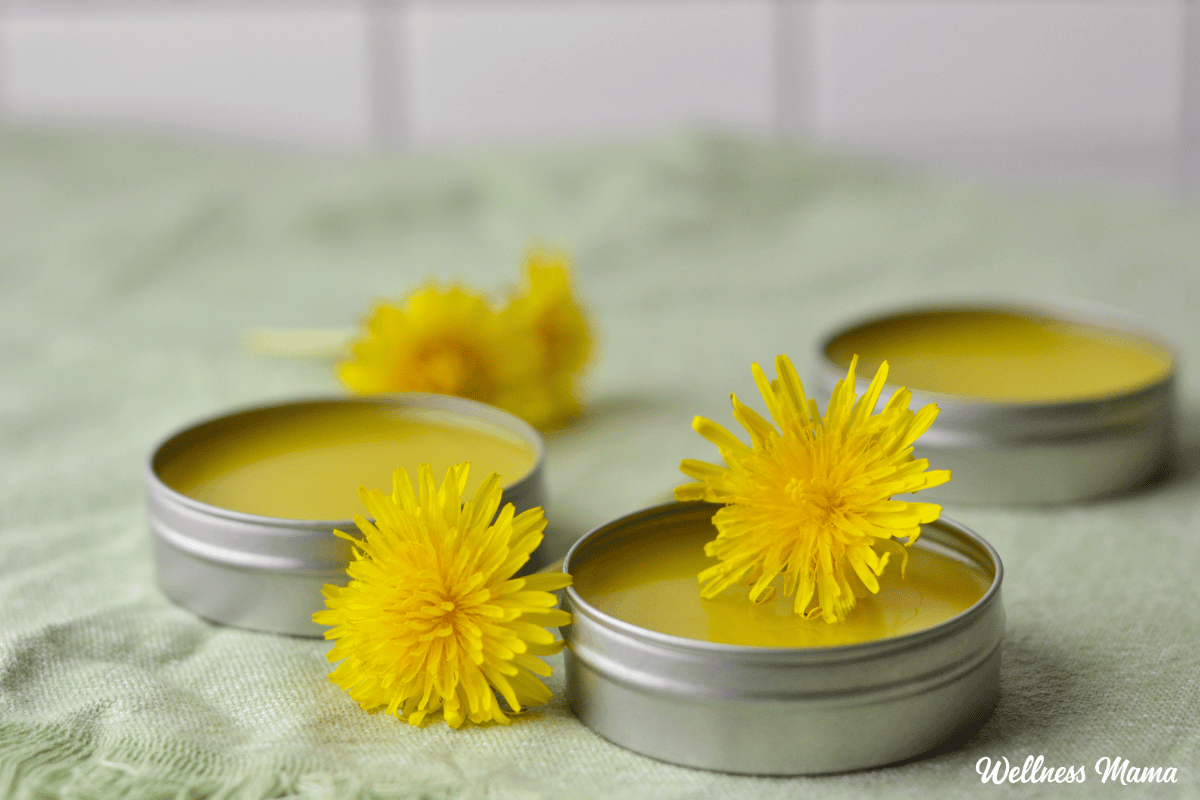
This easy salve recipe uses the humble dandelion for soothing sore muscles, achy joints, and protecting skin.

Prep Time3 minutes

Active Time12 minutes

Cooling Time1 hour

Total Time1 hour 15 minutes

Yield: 5 ounces

Author: Katie Wells

  • In the top of a double boiler or glass bowl add the dandelion oil, shea butter, and beeswax. Heat over medium heat and stir occasionally until completely melted.

  • Once melted turn off the heat and stir in the essential oils and vitamin E oil if using.

  • Immediately pour the salve into glass jars or tins.

  • Put the salve in the fridge to cool until firm, about 1 hour.

Store in a cool, dry place. This salve will last for up to a year when stored properly. Throw it away if the oil starts to smell off or rancid.

More Salve Recipes

Here are some more salve recipes I’ve made over the years to try your hand at.

Have you ever made your own DIY recipes with dandelions before? Leave a comment and share below!
Tags: , , , , ,
ginger dressing

Carrot Ginger Dressing Recipe

Our family goes through a lot of salads during the spring and summer months. It’s a great way to use random garden veggies and get more nutrition in. If you’re tired of the typical vinaigrette and ranch dressing, then try this sesame ginger dressing on your next salad.

You’ll often see a version of this at Japanese restaurants. Japanese ginger dressing basically has the same ingredients as my recipe, but with added soy sauce or miso. 

Carrot Ginger Salad Dressing

I’ve eaten plenty of carrots in my salad before, but actually putting them in the salad dressing wasn’t something I tried until more recently. It adds thickness and flavor in a different way. This dressing tastes fresh and bright thanks to the carrots and lime juice. The fresh ginger adds a bit of spice, the vinegar adds tang, the oil smooths it all together, and the honey adds a touch of sweetness.

Some recipes call for just olive oil or vegetable oil, but I opted to add some toasted sesame oil here. It has a more pronounced, rich, nutty flavor that combines well with the other Asian flavors of the dressing. 

More Than Just a Tasty Topping

This ginger salad dressing is more than just a great way to eat salad. Here are some of the health benefits you’ll get from the ingredients.

  • Carrots – Rich in beta-carotene, the precursor to vitamin A, fiber, potassium, and antioxidants. They also help flush excess estrogen for hormone balance and may balance candida overgrowth. 
  • Ginger – Reduces inflammation, eases nausea, improves digestion, and so much more. Adding ginger not only adds flavor, but helps the body better absorb the other dressing and salad nutrients. 
  • Lime juice – Nice and tangy, lime juice features vitamin C and small amounts of other minerals, like potassium and magnesium
  • Olive oil – Real olive oil is thick, dark, and flavorful. It adds healthy fats for hormone support and a healthy brain boost. 
  • Sesame oil – High in antioxidants and anti-inflammatory compounds. It does have some Omega-6 oils which are balanced out with the Omega-3 fatty acids from the olive oil. 
  • Rice vinegar – I usually use apple cider vinegar in recipes, but rice vinegar has a different flavor profile that goes well in ginger dressing. It’s naturally fermented and may help with immunity, blood pressure regulation, and detox. 

How to Use Carrot Ginger Salad Dressing

You can use this on any salad, but it’s typically served over roughly chopped iceberg lettuce and carrot strands. It also tastes surprisingly good on meat and fish. Try it on roasted veggies or as a dipping sauce for spring rolls. It also tastes really good on salad with some miso marinated eggs!

Here are some more salad recipes to pair your new ginger dressing with:

Tips For Making Ginger Dressing

This dressing is very forgiving. Add more ginger for extra kick or more honey if you prefer it sweeter. If your blender isn’t high-powered, chop the carrots and ginger smaller for a smoother result. I’ll taste it after its blended and usually add a little more salt to taste.

If you have any leftovers then store them in an airtight container in the fridge for up to a week. Some people recommend a max of four days, but we’ve always eaten it pretty quickly. 

And here’s how to make it!

Carrot Ginger Salad Dressing

A delicious, fresh dressing recipe like you’d find at Japanese restaurants. Great on a variety of salads or even as a dip for spring rolls.

  • Add all dressing ingredients to a high-speed blender and blend on high until smooth and creamy. The carrots should fully break down.

  • Add more salt if needed. If it tastes too tangy, add a little more honey to balance.

  • Store in a glass jar in the fridge for up to a week.

Nutrition Facts

Carrot Ginger Salad Dressing

Amount Per Serving (2 TBSP)

Calories 105
Calories from Fat 90

% Daily Value*

Fat 10g15%

Saturated Fat 1g6%

Polyunsaturated Fat 1g

Monounsaturated Fat 7g

Sodium 81mg4%

Potassium 48mg1%

Carbohydrates 5g2%

Fiber 0.4g2%

Sugar 3g3%

Protein 0.2g0%

Vitamin A 1784IU36%

Vitamin C 2mg2%

Calcium 5mg1%

Iron 0.1mg1%

* Percent Daily Values are based on a 2000 calorie diet.

Toss with fresh greens and your favorite toppings, or use as a dip or marinade.

Other Salad Dressing Recipes

Here are some more salad dressing recipes to add to your rotation. I like to keep a few jars of homemade dressing in the fridge to grab as needed during the week. They’re easy to whip up and whole food nutrition!

What are some of your favorite ingredients to use in salads? Leave a comment and let us know!

Tags: , , ,
pregnancy exercises

Pregnancy Exercises For a Fit Pregnancy

As a mom of seven and wellness advocate, I’ve had plenty of experience with pregnancy exercise. And while every pregnancy is a little different, staying fit during pregnancy is a good way to have an easier pregnancy, birth, and beyond. Here’s what I’ve done for my births and what the experts have to say. 

Pregnancy exercise is important to help keep the body moving and flexible and prepare for labor, an intense workout. Research is clear that moms who stay active can have easier deliveries, healthier babies, and recover more quickly.

While exercise is key, don’t forget to support your body in other ways too! A nutrient dense, whole foods diet helps give our body (and baby) what they need. Choosing a healthy prenatal supplement is also key. Pregnancy demands a lot from our bodies (we’re building a human after all!). 

Benefits of a Fit Pregnancy

Exercise during pregnancy provides tons of great benefits for both mom and baby. Not to mention that for a lot of moms, exercising makes them happier, less anxious, and feel more in touch with their growing body. A 2022 meta-analysis found that exercising during pregnancy reduces prenatal depression by 32% and anxiety by 33%. 

So it makes sense for expecting moms to stay as active as possible. And exercise doesn’t just give you a mood boost. Here are some other science-backed benefits of pregnancy exercise: 

  • Increased energy levels
  • Less back pain
  • More regular bowel movements
  • May reduce the risk of gestational diabetes, preeclampsia, and C-sections
  • Healthier weight during pregnancy and postpartum
  • Improves overall fitness (for an easier pregnancy and labor)
  • Strengthens heart and blood vessels

The benefits continue beyond labor and delivery. Researchers note that a healthy diet and physical activity can also help protect against chronic disease later in life for our children.

Which Pregnancy Exercises are Best?

So maybe I’ve convinced you how important it is to stay fit during pregnancy. However, the big question is, what’s the best way to exercise?

Focus on exercises you enjoy. Walking, swimming, stretching, pilates, or other gentle movements are favorites. For an added boost, try exercising outside when possible. Getting natural light, earthing, and vitamin D at the same time is even better. There are many benefits to spending time outside during pregnancy!

According to a 2024 review, different exercises have more benefits during different trimesters. 

“Aquatic activities and yoga helped pregnant women toward the end of their pregnancies, whereas resistance training, dance, and aerobic exercises provided the most benefits during the first trimester. Other studies found that any form of exercise for 30 min a day or every other day for 60 min provided extensive beneficial results. “

That said, some research has shown an increased risk in perineal tears during birth with lots of exercise. This doesn’t mean pregnancy exercise is dangerous and should be avoided, but that the way we go about it is important. More on that later!

Pregnancy Exercises to Avoid

Now is not the best time to take up ice hockey or skydiving! In general though, it’s safe and beneficial for most pregnant mamas to exercise. Unless you have a specific pregnancy complication and your doctor has advised against exercising. 

Dr. Davenport, Executive Director of The Program For Pregnancy & Postpartum Health, says this: 

“Our research found such extensive health benefits & safety of exercise in pregnancy, we removed the requirement to be cleared by your health care provider (in Canada) before you begin or continue exercise.” Dr. Davenport

The only exercises that are recommended to avoid during pregnancy are contact sports or any activity that involves the possibility of falling. According to the American College of Obstetrics and Gynecologists (ACOG), pregnant women should avoid:

  • Contact sports and anything where you could get hit in the abdomen (boxing, soccer, basketball, etc.)
  • Skydiving
  • Exercise where you could fall (skiing, surfing, gymnastics, etc.)
  • Hot yoga or hot pilates, which could make you overheat
  • Scuba diving

That said, I know fit moms who continued to surf and water ski throughout their pregnancy. It’s not a black and white issue, but caution is warranted.

Pregnancy Exercises For a Healthier Mama

So what, exactly, can pregnant women do to exercise? Olympic marathoners Kara Goucher and Paula Radcliffe clocked in 60-80 miles per week running during their pregnancies. Olympic curler Kristie Moore competed in the Olympics while 5 months pregnant. And Connie Neal made headlines by playing Division 1 basketball up through her 8th month. 

I don’t mention these examples to make you feel bad that you’re not perfecting your double-axle while growing adorable little earlobes. However, this shows that we’re a lot more resilient than we give ourselves credit for. Many women find they can maintain most of their previous activities during pregnancy and even increase activity.

Here are some great exercises for pregnancy.

Core and Pelvic Floor Exercises

First up are core and pelvic floor exercises. Some pregnancy experts used to recommend Kegels, but there’s much more to the story. Pelvic floor exercises do not stretch the muscles, and Kegels during pregnancy can do more harm than good. About 80% of women already have pelvic floor muscles that are too tight. 

If you already have pelvic floor and core issues (incontinence, pain during sex, pelvic pain, diastasis recti, etc.), then it’s best to seek advice from a pelvic floor professional. Women’s health physical therapists and fitness experts can really help with all of those minor (and major!) inconveniences and pain. And if you don’t have any issues in that area, you’ll still want to avoid exercises that could create a problem.

The exercise programs over at Fit2b are a Wellness Mama team favorite for this. Women’s fitness expert Beth Learn shares holistic programs for mamas that protect and strengthen the core and pelvic floor (before, during, and after pregnancy). These are really helpful when you want to do activities like yoga, pilates, and strength training during pregnancy, but don’t want to irritate or weaken your muscles. 

Walking

It sounds so simple, but walking really has some impressive benefits. Walking helps increase circulation and aligns the pelvis. My midwife recommended I walk for at least half an hour a day. I found I actually felt best when I was able to walk for about an hour.

Researchers have connected better healing and recovery with about 3,000 steps a day. Walking during pregnancy has health benefits, but so does walking postpartum.

Swimming

Swimming is another excellent pregnancy exercise, as it can help ease the aches and discomfort that come with carrying a baby. It also strengthens stomach muscles, may help align the pelvis, and can even ensure baby is in the correct position for delivery.

Make sure that if you’re not a regular swimmer to start slow and do a gentle warm-up first. Swimming is also good because it makes you feel weightless, temporarily relieving the strain of the baby’s weight. During one pregnancy I even did handstands in the water to try and get baby to flip!

Squats and Weights

Many women are able to do squats, lunges, and lift weights during pregnancy. There’s some evidence that these types of exercises may keep the core strong during pregnancy and improve muscle tone during delivery. Weight bearing exercises during pregnancy help load the tissues and strengthen joints, bones, and muscles. They can help with recovery and improve bone density.

According to a 2022 study, women who continued lifting weights during pregnancy had fewer pregnancy complications than those who quit their lifting routines during pregnancy. And weight lifting didn’t increase perinatal or pelvic floor damage. The mamas in this study were doing Olympic level lifting, yet experienced 51% fewer adverse outcomes. 

We may not all be lifting at an Olympic level, but normal strength training isn’t something to worry about during pregnancy. As long as there’s no pain, pregnant moms should do what they can and enjoy, including lifting weights. If you have certain health issues though, like placenta or cervix issues, then check with your doctor or midwife first.

Exercise By Trimester

Although most exercises are considered helpful for pregnancy, many women find that they’re limited by how they feel. It’s ok to adapt your normal workout routines to accommodate changing hormones and growing bellies.

First Trimester

Known as the undercover trimester, you can hold to your usual workout routine as long as you feel up to it. Your baby is only the size of a lipstick tube by the end of this trimester, so lying on your back, lifting weights, and cardio are all kosher. 

There’s no physical reason yet to skip that 10k or those stretching inversions. However, just because you can still do it doesn’t mean you’ll want to. I remember with my first pregnancy running laps and stopping to throw up in the gym bathroom. Not fun. 

You may also have sore breasts, a super sensitive nose, and become insanely tired. Those are your body’s signals to take it easy. 

Sometimes exercise can help. A brisk walk in the cool air can help with the nausea and give you more energy. If you’re not feeling good, then skip it and don’t beat yourself up over getting some needed rest.

Second Trimester

You’re finally starting to show! And while that makes you adorable in your maternity clothes, it also means your uterus is large enough to start putting pressure on your vena cava when you lie on your back. This doesn’t happen for everyone, but if it does happen for you, you’ll know it. As soon as you start feeling dizzy, light-headed and/or nauseated, sit up! And you should skip back work for the remainder of your pregnancy. 

Another fun thing to look out for is “round ligament pain. ” This can happen when you twist to the side, but it can strike even when you’re standing still. It feels like you’re being zapped with an electric cattle prod. Gentle pelvic floor exercises or visiting a Webster-certified chiropractor are both very helpful here!

The upside to the second trimester is that the morning sickness is usually gone and you should have more energy. You can keep lifting weights and doing cardio as long as it still feels good. Just take extra care to maintain good form. During pregnancy we have the hormone relaxin, which loosens joints and ligaments and makes it easier to get injured. 

Third Trimester

Things are starting to get serious. You have little feet jammed into your lungs, massive heartburn, swollen feet, and the tiredness is back. And while you may feel like clocking out until the baby is born, staying active will help you both mentally and physically, especially as delivery time approaches.

This is the time to really watch your step, however. Your balance may be off, you probably can’t see your feet anymore, and it’s easy to misjudge how far your belly sticks out. Take it easy doing things where you have a risk of falling. 

Also, while those Olympic ladies I mentioned earlier managed to run through their whole pregnancies, I’ve never been able to do that through any of mine. Sometime during the third trimester my hip flexors (the part where your leg attaches to your hip) give out and jogging becomes excruciatingly painful. Plus, they say walking helps get labor going!

Fourth Trimester

Wait, fourth trimester? Yes, the baby has to come out eventually, but those first three months after the baby is born are considered their own trimester. Your body is still going through massive hormonal, physical and mental changes. 

Between sleepless nights, sore nipples, and the post-partum blues, intense workouts are really hard to fit in. And you know what? Rest, recovery, and bonding with baby are important too. 

However, this doesn’t mean you need to lie in bed all day doing nothing (although some days that does sound nice!). Enjoy the baby snuggles, but start moving your body as feels comfortable. Walking and gentle pelvic floor training can help with postpartum recovery and healing, and boost the mood. According to women’s health fitness expert and founder of Fit2B, Beth Learn:

“It’s important to begin walking along with gentle core and pelvic floor training right away. Then once any wounds have healed and vaginal bleeding doesn’t increase with moderate-to-vigorous physical activity, you can do more! You don’t need to wait 6 weeks to exercise.” Beth Learn

Another great post-partum tip is to use a belly wrap (I used this one). It helps your ab muscles knit back together, supports the core, and holds the muscles and organs in during recovery.

Last Thoughts on Fitness During Pregnancy

The trick with pregnancy is moderation. So exercise! But not too much. Or too little. Most of all, just enjoy this time (as much as you can!) because it really is only nine months out of your whole life. 

If you’re already active, continue doing what you’re doing as long as it feels good. And if you’re wanting some more targeted support or need more structure, then a holistic at-home fitness program is a great way to do that.

What’s been your experience with exercise for a healthy pregnancy? Any exercise tips for staying fit? Share below!

Tags: , ,
Best oLive
Privacy Overview

This website uses cookies so that we can provide you with the best user experience possible. Cookie information is stored in your browser and performs functions such as recognising you when you return to our website and helping our team to understand which sections of the website you find most interesting and useful.