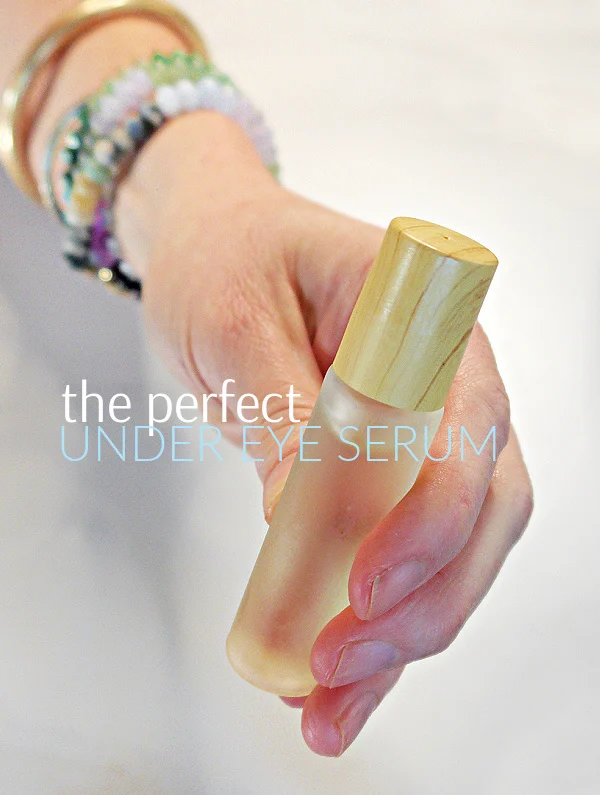
Hand holding a glass roll on bottle with DIY Castor Oil Eye Serum

DIY Castor Oil Eye Serum Roll On

Castor oil is a powerhouse of a natural oil. I have posted about castor oil when it comes to it’s cleansing powers in oil cleansers and it’s hair growth abilities in hair serums but not until recently have I heard how beneficial it actually is for the skin in general. I’ve been seeing so many natural skin care companies selling an eye serum that contains only castor oil and frankincense essential oil so it’s intrigued me to do a little digging to find out why. I’m impressed with what I found and had to share. I think you’ll want to make yourself a DIY castor oil eye serum roll on ASAP!

This DIY eye serum will be the easiest one you’ll ever make. It may actually be the most effective as well. I made this serum for myself a week ago so I can’t speak on whether it has plumped me up under the eyes but I can say that it has thoroughly moisturized under my eyes and smoothed wrinkles. I even think it is reducing my under eye bags which is one of my biggest eye concerns. Let’s get right into why castor oil makes a great anti aging eye serum tool…

What is Castor Oil?

Castor oil is a vegetable oil derived from the castor bean. It contains ricinoleic, linoleic, stearic and oleic fatty acids which are all beneficial to the skin. These fatty acids have powerful anti-inflammatory properties as well as antimicrobial properties. Because it is both hydrophilic (water loving) and lipophilic (oil loving) it penetrates the skin better than most oils. 

Castor oil has been known to actually stimulate the skin’s own collagen which is so easily lost around the eyes. 

Castor oil is also non-comedogenic which means it will not clog pores. 

Why You Should Use Castor Oil Under Your Eyes:

  • Reduces puffiness by encouraging lymphatic drainage.
  • Treats dark circles-There’s actually a PubMed study on this!
  • Reduces wrinkles-The same study linked above showed women seeing an improvement in wrinkles as well as dark circles.
  • Treats swollen eyes–According to a study, applying castor oil around the eyes including the eyelid reduced swelling caused by blepharitis (a condition that causes inflammation and swelling of the eyelids). 
  • Provides deep nourishment thanks to it’s rich fatty acid profile.
  • May plump thin skin-I have heard many claims that castor oil plumps up the skin directly under the eyes were volume loss tends to occur with age due to less collagen production. 
  • Conditions the lashes and brows and possible growth stimulation. If you haven’t tried my DIY lash serum and DIY brow serum you should. Skip store bought lash/brow enhancers-they have side effects you don’t want. 

Why Add Frankincense?

Adding frankincense essential oil to this DIY eye serum is highly recommended. Frankincense is one of my favorite oils to use around the eyes. It helps regenerate cells and stimulates collagen. It also reduces inflammation and is a powerful antioxidant. Plus, it is one of the gentlest oils so using it around your eyes makes sense. It works well with all of castor oils attributes to really pack a punch! 

Why Add Vitamin E?

Vitamin E is a powerful antioxidant and it’s great to add it to any and all oil based skincare products. It will neutralize free radical damage, lock in moisture and encourage cell renewal. Plus, it can help prolong the shelf life of your product. 

Castor Oil & Frankincense DIY Eye Serum Recipe:

Direction:

  1. Add Frankincense to your roll on bottle.
  2. Add Vitamin E if you are using it. 
  3. Top off the bottle with castor oil. 

How to Use:

  1. Roll serum all around the eyes. 
  2. Use at bedtime

Not All Castor Oils Are The Same:

You must look for castor 100% pure, organic and cold pressed. You want to look for the words “hexane free” and it should come in a glass bottle. There are many castor oils on the market that have cheap filler oils in them or are not sourced properly. Don’t waste your money and time. Be sure to get a good quality castor oil like THIS one. 


This is an extremely easy DIY and you really have nothing to lose. Give it a try and report back and I’ll do the same!

xx, Jenni

Jennifer Phillips

Jennifer Phillips worked as a licensed aesthetician for over 8 years before creating the DIY skincare blog, Jenni Raincloud and her natural skin care line, J. Raincloud Organics. Jennifer has been blogging full time for 16 years and loves to gain and share knowledge on how to achieve beautiful skin the natural way.

Find me on: Instagram | Facebook

Tags: , , , , ,
Strawberry Cottage Cheese Ice Cream Recipe (High Protein)

Strawberry Cottage Cheese Ice Cream Recipe (High Protein)

Yesterday my husband walked into our bedroom carrying a plate of freshly-baked kale chips in one hand and his phone – hoisted high above his head like a boom box while blasting a love song from the neon-and-hairspray era – in the other.

That’s midlife, right?

We get to be our quirkiest selves, but we also have to make sure we use all the vegetables in the fridge before the next grocery run.

And eat protein, of course.

Because even if – like me – you never bought into the whole “training for your summer body” idea, you’re probably reading this because you’re training for a different kind of body: one with strong muscles, dense bones, healthy blood sugar, good balance, and the ability to carry your own groceries, travel, and stay fully engaged in life for decades to come.

Protein plays a role in all of those things. It provides the building blocks for muscle tissue, enzymes, hormones, immune molecules, and countless repair processes throughout the body. And because we naturally lose muscle mass as we age, getting enough protein becomes increasingly important for maintaining strength, stability, and resilience.

Skeletal muscle is one of the body’s most metabolically active tissues. It helps regulate blood sugar, influences inflammation, supports healthy immune function, and produces signaling molecules that affect everything from metabolism to brain health.

That’s why I’ve been experimenting with high-protein ice cream.

Not because I’m training for bikini season.

I’m training for my old-lady era.

And while I’m willing to put scrambled eggs in my smoothie on occasion, I also believe food should bring joy. I eat fewer desserts these days, but I enjoy them more, especially when they help me hit my protein goals.

Why Protein Ice Cream Is Tricky

Protein ice cream sounds simple enough: take a healthy ice cream base, add protein powder, freeze, and enjoy.

In reality, getting the right texture is a little more complicated than it sounds.

Traditional ice cream gets its creamy, scoopable texture from a careful balance of fat, sugar, solids, and air. When you reduce the sugar, lower the fat, and add more protein, the texture can shift pretty quickly from “creamy dessert” to “icy brick.”

That’s one reason the Ninja Creami has become so popular for protein ice cream. It can take a frozen solid base and re-spin it into something creamy, even when the recipe is lower in sugar or fat.

A regular ice cream maker works differently. It churns while the base freezes, which is wonderful for traditional ice cream, but lower-sugar, higher-protein mixtures can freeze too hard too quickly around the edges before the center has a chance to churn properly. The result is often icy, crystallized, or just not worth the effort.

I wanted a creamy texture without having to buy another piece of equipment or adding weird thickeners, so I started experimenting with cottage cheese.

When blended until completely smooth, it does a lot of the work that sugar and stabilizers usually do. It adds protein, creaminess, body, and enough structure to give it an ice cream texture.

Does it taste exactly like traditional ice cream? No – it has a bit of a tang that gives it more of a “cream cheese” note, so I leaned into that. I also kept the overall sugar content lower than traditional ice cream, so I figured this recipe would be safe from the not-so-tiny humans in my house.

I was wrong – they polished off the first test batch less than a day after I made it.

One thing to be aware of, though, it that some brands use more salt than others, and that can affect the final flavor. I tried a few and the one I liked best is Good Culture 4%. On its own, leaned a bit salty, so I added a cup of strawberries. Some of my family members liked it, but I personally didn’t and added a second cup. My recommendation is to start with one, taste your mixture after blending, and add more strawberries if needed.

So, how much protein is in this recipe?

The exact amount will vary depending on a few factors, including which protein powder you choose, and even how much air gets incorporated during churning.

In other words, your numbers may not match mine exactly.

To give you a ballpark, using two scoops of Heart & Soil Whey yields about 10 grams of protein per ½-cup serving. That’s a lot more protein than traditional ice cream – enough to make meaningful progress toward daily protein goals, one delicious spoonful at a time.

Strawberry Cream Cheese Protein Ice Cream Recipe

This recipe makes approximately 3.75 – 4 cups.

Prep Time 5 minutes Churning time 20 minutes

Author Heather Dessinger, FDN-P

  • 2 cups whole milk cottage cheese (I recommend 4% milkfat)
  • 1 tbsp vanilla extract (If using vanilla protein powder, start with 1 teaspoon and increase to taste)
  • ¼ cup maple syrup
  • 2 cups chopped strawberries
  • 25-30 grams unflavored or vanilla protein powder (Optional – I used 2 scoops Heart & Soil Whey)

Ice Cream Maker Method

  • Blend in a high powered blender until very smooth.

  • Pour the mixture into your ice cream maker and churn according to your manufacturer’s instructions.

  • When the ice cream is ready it should have a soft serve consistency. You can eat it right away, or if you prefer a firmer consistency transfer it into an airtight container and place in the freezer for 2-4 hours. I like to use a glass loaf pan with a lid.
  • To Serve:If you decide to freeze the ice cream for a firmer texture, you’ll get the creamiest results by letting it soften a bit before serving. I like to think of it more as “well chilled” than deeply frozen. Because cottage cheese-based ice cream can become a little icy when frozen solid, letting it rest on the counter allows it to soften into a smoother, creamier texture that tastes more like traditional ice cream. Depending on the size and depth of your container, this can take anywhere from 10 to 20 minutes.

No Ice Cream Maker Method

  • Blend the ingredients in a high-powered blender until very smooth.

  • Transfer the mixture to a freezer-safe container and place it in the freezer. To help keep the texture creamy, give it a good fold with a spatula every 30 minutes or so. This helps break up ice crystals as they form.

  • Once the mixture becomes too firm to fold easily, just leave it alone and continue chilling until it reaches your desired consistency, about 3–4 hours total.

  • To Serve:Because cottage cheese-based ice cream can become a little icy when frozen solid, letting it rest on the counter allows it to soften into a smoother, creamier texture that tastes more like traditional ice cream. Depending on the size and depth of your container, this usually takes about 10–20 minutes.

Nutrition facts based on Good Culture 4%, 2 scoops of Heart & Soil Whey, and 2 cups of chopped strawberries. 

Serving: 0.5cup | Calories: 107kcal | Carbohydrates: 11g | Protein: 10g | Fat: 2g | Saturated Fat: 2g | Polyunsaturated Fat: 0.1g | Monounsaturated Fat: 0.01g | Cholesterol: 16mg | Sodium: 210mg | Potassium: 135mg | Fiber: 1g | Sugar: 9g | Vitamin A: 4IU | Vitamin C: 21mg | Calcium: 65mg | Iron: 0.2mg

A Note On Ice Cream Makers

When I bought this ice cream maker many years ago, the only materials listed on the product description were stainless steel and plastic. I discovered after it arrived that the inner tub is actually made with anodized aluminum, which is not ideal. Back then, I couldn’t find a truly stainless steel option so I kept it to use on occasion.

Truly stainless steel options are available now, so I’m thinking about replacing mine with the Whynter Ice Cream Maker. It comes in two sizes and uses a powerful built-in compressor freezer that allows you to make ice cream, gelato or sorbet anytime (without needing to pre-freeze the inner canister). The inner bowl is stainless steel and the churn blade is BPA-free plastic.

If budget were not a consideration, I’d go for the Lello 4080 Musso Lussino 1.5-Quart Ice Cream Maker. The bowl and paddle are made with stainless steel, and has a 4.6 star rating and over 1,000 reviews.

Share with a friend! 👇

Tags: , , , , , , ,
My Favorite Whey, Beef & Plant-Based Picks

My Favorite Whey, Beef & Plant-Based Picks

Somewhere around day three of adding scrambled eggs to my breakfast smoothie, I finally decided it was time to research protein powders.

Not because the smoothies weren’t tasty – they actually were – and it was also pretty entertaining to watch my kids noses wrinkle as I threw everything into the blender.

Giving my kids weird childhood stories is not my entire mission in life, though. It’s a fun side benefit, sure, but in this case my real goal is to find a realistic way to consistently get enough protein into my mornings without cooking a full meal.

In midlife, protein is more than a “fitness topic” – it’s foundational to feeling strong, steady, and well-fueled. Yes, muscle matters – a lot – but protein also provides the building blocks for hormones, enzymes, immune function, and the maintenance and repair of skin and vital tissues that help us stay resilient over time. (1) It also plays a major role in maintaining lean muscle mass, preserving bone health, supporting steadier blood sugar, and staying full and well-fueled between meals. (2) (3)

Right now, one of my top priorities is to quickly prep a nourishing breakfast that will keep me feeling satiated throughout the morning, then head outside to get some morning sun and take a short walk. I’m a habit stacker, so I usually sip my smoothie while I walk.

Also, my daughter is getting ready to leave for college, which has made me think more carefully about convenient, high-quality food options that work in real life – including dorm rooms and rushed mornings.

The problem is that many protein powders contain junk fillers, vague additives, or heavily processed ingredients that I personally don’t want to rely on every day. So, for the sake of my smoothie – and the promise of high protein ice cream – I decided to find the best tasting, healthiest options in every category. We’re going to dive into dairy-based whey, dairy-free grass-fed beef isolate, animal-based blends, plant-based protein, and plant + animal protein combinations.

Before we get into the different types of protein powder, let’s talk about how they fit into a whole-food approach.

As always, this article is not medical advice and isn’t meant to diagnose, treat, or cure any condition. Please chat with your healthcare provider about any supplements you’re considering.

🍓Where Protein Powder Fits In Real Life ^

Since you’re reading this article, I’m guessing you don’t have a full-time chef following you around with grilled steak and chimichurri sauce, fluffy omelets, or Moroccan chicken tagine. I don’t either, and while I love meals like that, they don’t always fit neatly into rushed mornings, post-workout windows, or the 3 p.m. moment when dinner still feels very far away.

That’s where protein powders can be genuinely useful – they’re not full meal replacements on their own, but they can be used strategically within a whole-food-based diet to:

  • Get enough protein on busy mornings (or any time of day)
  • Support post-workout recovery
  • Avoid reaching for ultra-processed snacks when life gets busy
  • Create quick, dorm-friendly or travel-friendly options

I’ve used them to make smoothies with the components of a full meal – high-quality protein, fiber, healthy fats, antioxidants, and other micronutrients – plus yummy desserts that work with my midlife body instead of against it.

✅ What I Looked For In A Healthy Protein Powder ^

In my own meals, I aim for variety in order to cover nutritional bases and avoid getting stuck in a rut.

I don’t think anyone needs five different protein powders open on their counter at once, but I did want to find a range of options that I could rotate between. I also wanted to find products that work for different dietary needs – for example, dairy and legume-free options for people who don’t digest those foods well.

No matter the category, though, every protein powder I considered had to meet a few basic standards:

Complete protein – Does it provide all nine essential amino acids, especially enough leucine to support muscle protein synthesis?

Ingredient quality – Are the ingredients simple, recognizable, and free from unnecessary fillers and artificial sweeteners?

Sourcing – Does it start with high-quality ingredients, such as grass-fed dairy, grass-fed beef, or organic plants?

Processing – Is it made in a way that preserves nutrition as much as possible, such as low-temperature processing?

Testing transparency – Does the company test for heavy metals or other contaminants, and are they willing to share results?

❌ What I Avoided ^

Artificial sweeteners – including sucralose and acesulfame potassium, which are common in fitness-style protein powders.

Unnecessary fillers and gums – which can especially be an issue for people who are sensitive to them or using protein powder often.

Poor testing transparency – especially because protein powders can be a source of heavy metal exposure, depending on the ingredients and sourcing.

Collagen marketed like a complete protein – collagen can be very useful, but it does not provide all nine essential amino acids in meaningful amounts, so I don’t consider it a true replacement for whey, beef isolate, egg white, or a complete plant protein blend.

Amino spiking – This is when companies add inexpensive free-form amino acids, such as glycine or taurine, to inflate the protein number on the label. The problem is that those added amino acids are not the same as a complete protein source and may not provide the same muscle-supporting benefits. In some cases, a product that claims 25 grams of protein may provide significantly less complete, usable protein from whey, beef, egg, or a complete plant blend. To spot it, check the ingredient list for separately listed amino acids like L-glycine, L-taurine, L-glutamine, or creatine that appear outside of the main protein source.

Now that we’ve covered the basics, let’s walk through the main types of protein powder and how they compare.

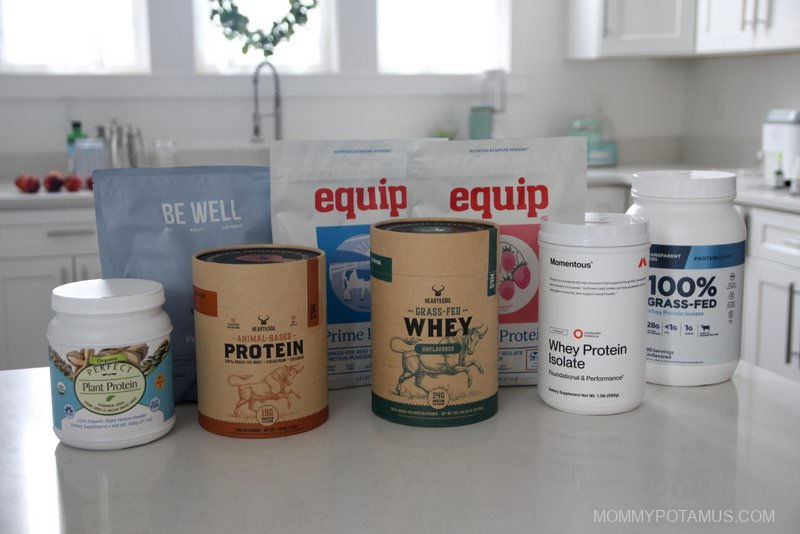
Best Grass-Fed Whey: Heart & Soil Whey
For women who want the strongest amino acid profile with minimal ingredients.

Best Dairy-Free Animal-Based: Equip Prime Protein
For women who want complete protein without dairy and flavors they’ll actually enjoy.

Best Plant-Based Protein: Perfect Supplements
For women who prefer plant-based protein and want a complete amino acid profile from real food ingredients.

Best Multi-Source Animal-Based Blend: Heart & Soil Animal-Based Protein
For women who want complete protein, plus the benefits of collagen and colostrum.

Protein Powder Types ^

Protein is made up of amino acids, which are often called the building blocks of life because the body uses them to build and repair tissues, create enzymes and hormones, support immune function, and maintain muscle mass.

Some protein sources contain all nine essential amino acids the body cannot make on its own, while others are low in one or more. This differencescan really impact how well a powder supports lean muscle mass, overall recovery, and other benefits, so it’s worth taking a closer look before adding one to your cart.

Grass-Fed Whey Protein ^

Whey protein is usually made from the liquid whey that remains after milk is used to make cheese. After the whey is separated from the curds, it’s filtered and dried into powder.

Whey is naturally rich in branched-chain amino acids, especially leucine, which is one of the key amino acids involved in muscle protein synthesis.

Leucine is important because it doesn’t just become part of muscle tissue – it also acts a little like a “start signal” that tells the body it has enough building material to begin repairing and building muscle. One of the ways it does this is by activating a cellular pathway called mTOR, which helps initiate muscle protein synthesis.

In other words, total protein matters, but the amino acid profile matters too. That’s one reason whey has become so popular for muscle recovery and maintenance.

What I Like About It

  • Excellent amino acid profile
  • Naturally high in leucine (many protein powders fall short)
  • Supports muscle recovery and muscle protein synthesis
  • Mixes well and tends to have a creamy texture

What To Watch For

Processing matters with whey because it can affect more than taste and texture. Whey naturally contains delicate protein fractions, including compounds like lactoferrin and immunoglobulins, that may be reduced or damaged by harsher processing methods.

Higher heat, acid processing, ion exchange filtration, and aggressive drying methods can change the structure of proteins and reduce some of whey’s naturally occurring bioactive compounds. It can also change the flavor, which is why some companies add artificial sweeteners or other additives that can contribute to bloating and digestive discomfort.

For that reason, I looked for terms like cold-processed, cold-filtered, low-temperature processed, or undenatured whey, along with clear information about sourcing and third-party testing. These methods help preserve whey’s nutritional profile and neutral flavor. Many people find the more gently processed form easier to digest.

Best For

Women who do well with dairy and want the strongest overall amino acid profile for muscle support and recovery.

Grass-Fed Beef Protein ^

Beef protein powder is usually made by isolating protein from beef, then removing most of the fat and carbohydrates to create a concentrated powder. When it’s truly a beef protein isolate, it can provide all nine essential amino acids while remaining naturally dairy-free and lactose-free.

That makes it a good option for people who don’t do well with whey, but still want an animal-based protein that supports muscle maintenance and recovery.

This category can be tricky, though, because some “beef protein” powders lean heavily on collagen or gelatin. Collagen can be very useful for skin, joints, and connective tissue, but it’s not a complete protein. It doesn’t contain tryptophan, which is an essential amino acid our bodies can’t make, and it’s also low in other essential amino acids like isoleucine, leucine, and methionine.

In other words, collagen powders can be useful, but they don’t rival whey as a primary protein for muscle protein synthesis. Beef protein isolate is different because it contains all nine essential amino acids. Interestingly, studies comparing beef protein isolate with whey have found similar increases in lean body mass when paired with resistance training, with no clear mid- to long-term differences in body composition outcomes. (4) (5) (6)

That said, beef protein and whey have very different amino acid profiles. Whey is naturally richer in leucine and other branched-chain amino acids, while many beef protein isolates contain higher amounts of collagen-associated amino acids like glycine, proline, and hydroxyproline. I think of beef protein isolate as occupying a middle ground between collagen and whey: more complete than collagen, but with a different nutritional emphasis than whey.

So when I’m evaluating beef protein, I want to see specifics about beef protein isolate, all nine essential amino acids, and ideally a published amino acid profile. If a label mainly emphasizes collagen, glycine, proline, skin, joints, or gut support, I think of it more as a collagen product than a primary protein powder.

Why People Love It

  • Naturally dairy-free and lactose-free
  • Provides all nine essential amino acids
  • Helpful for people who want an animal-based option without whey
  • Often blends well into smoothies and recipes

What To Watch For

Label clarity matters in this category. If a product just says “beef protein” but doesn’t clarify whether it’s beef protein isolate or provide amino acid information, I’d look more closely before relying on it as a primary protein powder.

Also, beef protein isn’t quite as neutral in flavor as whey, so companies tend to add flavor to make it more appealing. That can be totally fine if quality ingredients are used; I’m just mentioning it because you’ll probably notice a wide range of flavor options in this category.

Best For

Women who want a dairy-free, animal-based protein and don’t tolerate whey well.

Plant-Based Protein ^

Plant-based protein powders are usually made from ingredients like pea, rice, hemp, pumpkin seed, or sacha inchi. Some use a single protein source, while others combine several plants to create a more balanced amino acid profile.

The biggest thing to know is that plant proteins vary a lot. Some are lower in one or more essential amino acids, which is why I tend to prefer blends over single-source plant proteins when the goal is muscle support and everyday nutrition.

Another thing to consider with plant proteins is how they’re processed. When possible, I prefer gentler processing methods that leave more nutrients intact, and my recommendation in this category reflects that.

What I Like About It

  • Dairy-free
  • Sometimes rich in minerals (depending on the plant source)
  • Blended formulas can provide a more complete amino acid profile

What To Watch For

Plant-based protein powders can be more challenging in terms of taste, texture, and digestibility. Pea and rice protein, for example, can have a chalky or gritty texture, so some companies add gums, fillers, sweeteners, or strong flavors to make them more appealing.

For that reason, I looked for plant proteins made from organic ingredients, with a thoughtfully blended amino acid profile and without artificial sweeteners or unnecessary additives.

Best For

Women who want a dairy-free, beef-free option and do best with a well-formulated plant protein rather than a single-source powder.

A Few Notes On Mixability ^

I tested mixability in the ways I actually use protein powder: smoothies, coffee, and plain water. I don’t expect every powder to perform equally in all three. Unflavored beef protein may disappear beautifully in a smoothie but taste noticeable in water, while whey may work well in coffee if it’s blended with cool liquid first.

A little technique goes a long way, though.

In my experience, a simple handheld milk frother is one of the simplest ways to improve texture and prevent clumps.

For coffee, I’ve found that it’s best to first whisk the protein powder into a small amount of cool milk or water, then slowly add the hot coffee. Otherwise, some proteins – especially whey – can curdle or become grainy when they hit hot liquid directly. Another option is to let the coffee cool a little before using a frother to blend the protein in.

Smoothies are by far the most forgiving option. A blender tends to smooth out clumps and allows the flavors of the other ingredients to become the focus.

Best Grass-Fed Whey Concentrate: Heart & Soil ^

Protein Source: 100% grass-fed whey concentrate from Australian cows
Protein Per Serving: 24-25g
Flavor Tested: Unflavored
Flavor Notes: Neutral enough for coffee and smoothies
Sweeteners: None (Unflavored) / Organic maple syrup (Chocolate Sea Salt)
Third-Party Testing: Yes

Mixability Notes:
Smoothies: Very good
Plain Liquid: Very good; neutral flavor
Coffee: Very good when added correctly. For hot coffee, mix with a little cool or room-temperature milk/water first, then stir it in. For warm coffee, a frother works well.

Why I Recommend It

One morning, after sipping yet another egg smoothie, I opened up my email and discovered a message from Heart & Soil, a whole-food supplement company founded by Paul Saladino, MD. They offered to send me some things to test, and because the timing couldn’t have been better I said yes.

Heart & Soil checks several boxes I care about in a whey concentrate: simple ingredients, grass-fed sourcing, low-temperature processing, third-party testing, and no gums, lecithins, artificial sweeteners, or fillers.

Their unflavored Grass-Fed Whey is made with one ingredient: 100% grass-fed whey concentrate from Australian cows. It’s also one of the only whey proteins I’ve found that starts with fresh milk instead of the leftover whey produced during cheesemaking, which may help retain more naturally occurring bioactive compounds. (The other company is in the Netherlands.)

It provides 24 grams of complete protein per serving, including all nine essential amino acids and 2.5 grams of leucine, which is the amino acid most closely associated with triggering muscle protein synthesis.

They also offer a Chocolate Sea Salt version with 25 grams of protein per serving and just four ingredients – 100% grass-fed whey concentrate from Australian cows, organic maple syrup powder, organic raw cacao powder, and North American pink sea salt.

Both are cold processed using a single-step, low-temperature processing method that helps preserve more of whey’s naturally occurring bioactive compounds.

They’re also NSF Certified for Sport® and independently tested for heavy metals, pesticides, and impurities. I’m far from an elite athlete, but I like the NSF Certification because it means that the claims on the label were independently verified. In a world where counterfeit supplements are a real concern, I’ve become much more selective about sourcing and certifications.

My experience: I like warm – but not hot – coffee, so using a handheld frother to blend a scoop or two of Heart & Soil Whey into my morning coffee makes it feel rich and creamy without any clumps. For hot coffee, I recommend whisking it with a small amount of cool milk or water before adding.

Best for: Women who tolerate dairy well and want a minimally processed, grass-fed whey concentrate with a strong amino acid profile.

Worth noting: Because this is a whey concentrate, not an isolate, it does contain some lactose. The amount is generally low. That may be fine for people who tolerate dairy, but it’s not the best fit for anyone who needs a completely lactose-free option.

Why I recommend it: It’s simple, well-sourced, minimally processed, tested, high in leucine, and free from the additives I try to avoid in protein powders.

Best Grass-Fed Beef Protein: Equip Foods ^

Protein Source: Grass-fed beef isolate plus naturally occurring collagen
Protein Per Serving: 20-21g
Flavor Tested: Unflavored & Strawberry
Flavor Notes: Unflavored has a very slight broth-like flavor when mixed only with water, but it disappears in smoothies.
Sweeteners: Stevia, honey powder, monk fruit extract, or coconut sugar (varies by flavor)
Third-Party Testing: Yes

Mixability Notes:
Smoothies: Very good
Plain Liquid: Very good; unflavored has a slight but noticeable flavor
Coffee: Very good when added correctly. Mix with a little cool or room-temperature milk/water first, then stir it in. For warm coffee, a frother works well.

I first came across Equip Foods after someone mentioned using their protein powder to make ice cream and chewy, gooey cookies. I’m no stranger to turning nutrient-dense ingredients into treats – my kids still adore this vanilla marrow custard I’ve been making since they were little – so I was intrigued.

With flavor options like Chocolate, Cookies & Cream and Salted Caramel, it’s not really a surprise someone used them to make dessert. But as much as the dessert angle got my attention, the ingredient and testing details are what made me click “add to cart.”

Equip uses a minimally processed grass-fed beef isolate with naturally occurring collagen/gelatin that is third-party tested for heavy metals, pesticides, microplastics and more. Some of their flavors are very simple and straightforward – for example, their chocolate flavor uses grass-fed beef protein, cocoa powder and stevia – but they do also use natural flavors in some varieties.

That’s not usually my preference, but they provide a lot more detail than most brands about how those flavors are sourced and tested. According to Equip, the natural flavors they use are made from fruit, herb, and spice sources using steam distillation, then carried on acacia fiber. Because the exact blends are proprietary, they don’t disclose every plant used, which is what I usually look for. However, I appreciate that they explain the process, and they also offer Unflavored and Chocolate options without natural flavors for anyone who prefers to avoid them.

Here’s why: Here’s why: My daughter will be leaving for college soon, and my oldest son isn’t far behind. One thing I’m especially grateful for is that they understand the connection between food and how they feel. Even when they’re out with friends, they tend to choose real food most of the time.

Still, I know there will be rushed mornings, late-night study sessions, and days when convenience wins. That’s why Equip earned a spot on my dorm-room list. It’s a convenient source of high-quality protein, and the variety of flavors makes it much more likely they’ll actually use it.

I’m also keeping both flavored and unflavored versions in my own kitchen because, well… ice cream. (And yes, if enough people ask, I’ll share the recipe.)

My experience: While I was testing protein powders for this article, Equip offered to send me one to try. I chose one with natural flavors – Strawberry – and also bought an unflavored version to try. As someone with a whole collection of strawberry-based recipes, I was rooting for that flavor, but it just wasn’t for me. I’ll definitely reorder because I like the ingredients and appreciate the testing standards. Next time, though, I’m putting Cookies & Cream in my cart.

I’ve only tried the unflavored in coffee. I didn’t add any sweetener, cream or vanilla because I wanted to get a sense of how it tastes in plain coffee. It changes the flavor a little, but didn’t bother me at all and isn’t noticeable with a bit of sweetener / cream. My husband really liked it in his coffee.

The mocha or salted caramel flavors would probably be yummy.

Best for: Women who want a dairy-free, animal-based protein and appreciate having a variety of flavors to choose from.

Worth noting: Beef protein has a different profile than both collagen and whey. Unlike collagen, it provides all nine essential amino acids. However, many beef protein isolates are naturally richer in collagen-associated amino acids like glycine, proline, and hydroxyproline, and lower in leucine than whey. Equip provides about 0.9 grams of leucine per serving, compared to roughly 2.5 grams in many whey proteins. If maximizing muscle protein synthesis is your primary goal, whey still has the advantage. On the other hand, Equip offers a convenient dairy-free option with a broader amino acid profile than collagen alone.

Why I recommend it: I don’t think of Equip as “whey without dairy.” I think of it as a collagen-rich animal protein with its own strengths. Between the simple ingredients, extensive testing, and flavor options that make it genuinely enjoyable to use, it’s one of the few beef protein powders I’d be happy to keep in the house long-term.

🔥 USE CODE MP15 TO SAVE

Best Plant-Based Protein: Perfect Supplements ^

Protein Source: Organic pumpkin seed, hemp seed, and sacha inchi protein
Protein Per Serving: 15g
Flavor Tested: Unflavored
Flavor Notes: Strong nutty/seed flavor with an earthy note. Pairs best with bold flavors.
Sweeteners: None
Third-Party Testing: Yes

Mixability Notes:
Smoothies: Good, especially with banana, cacao, cinnamon, peanut butter, dates, or berries
Plain Liquid/Coffee: Not ideal; it doesn’t dissolve like whey or beef protein
Best Uses: Smoothies, stirred into yogurt, baked into muffins, blended into energy bites, or added to savory dishes where the nutty flavor works.

Single-source plant protein powders are often low in one or more essential amino acids, which can make them less ideal as a primary protein for supporting muscle protein synthesis. For example, pea protein tends to be lower in methionine, while rice protein tends to be lower in lysine.

Perfect Supplements takes a different approach. Instead of relying on one plant, they use a blend of organic pumpkin seed, hemp seed, and sacha inchi seed to create a more complete amino acid profile.

The ingredient list is refreshingly simple, especially for a plant protein. There are no artificial sweeteners, gums, fillers, or flavor enhancers – just three organic plant proteins designed to complement each other nutritionally. Because the formula is seed-based, it also provides naturally occurring minerals like magnesium and potassium.

My experience: I have been a Perfect Supplements customer for many years because I appreciate their approach to creating simple, synergistic formulations with real food ingredients. When I started researching for this article, I asked if they would be willing to send me some of their protein to test, and they generously agreed. It is very different in flavor than the other options. It has a nutty, earthy flavor with a slight bitter edge. That may not sound like a selling point, but the bitter flavor is an indication of potent antioxidant compounds.

I prefer to use it with with thicker consistency foods – yogurt, smoothies, and even savory dishes like lentils.

Best for: Anyone looking for a plant-based or allergy-friendly protein option without nuts, soy, milk, eggs, wheat, or fish.

Worth noting: Plant proteins generally contain less leucine than whey. Perfect Supplements provides about 1 gram of leucine per serving, which is similar to many beef protein isolates and more than many single-source plant proteins. However, whey still provides substantially more leucine and branched-chain amino acids overall. If maximizing muscle protein synthesis is your primary goal, whey remains the gold standard. That said, Perfect Supplements takes a thoughtful approach by combining complementary seed proteins instead of relying heavily on pea protein isolate.

Why I recommend it: While I love and use animal-based proteins, there are times when I crave plant-based foods. Cravings can be cues, so I like having a simple seed-based option to rotate in. Perfect Supplements is my top choice because it’s organic, unsweetened, minimally processed, and made from just three real food ingredients. I also appreciate that, despite its simplicity, the blend provides a more balanced amino acid profile than many single-source plant proteins.

🔥 USE CODE MP10 TO SAVE

Best Multi-Source Animal Based Blend: Heart & Soil ^

Protein Source: Grass-fed whey concentrate, bovine colostrum, and grass-fed cartilage-derived collagen
Protein Per Serving: 24g
Flavor Tested: Unflavored
Flavor Notes: Neutral enough for coffee and smoothies
Sweeteners: None
Third-Party Testing: Yes

Mixability Notes:
Smoothies: Very good
Plain Liquid: Very good; neutral flavor
Coffee: Very good, but I’d be mindful of only adding to warm coffee in order to preserve the valuable colostrum bioactives.

Heart & Soil’s Animal-Based Protein takes a different approach than most protein powders in this guide.

Instead of focusing exclusively on muscle-building protein, it combines three animal-derived ingredients that serve different purposes: whey concentrate for complete protein, colostrum for its naturally occurring immune-supportive compounds – including immunoglobulins and growth factors – and collagen for healthy skin and connective tissue support.

There are at least sixteen types of collagen in our bodies, but most collagen powders focus on just one or two. The cartilage-derived collagen in this blend contains nine types, making it a much more full spectrum option.

In other words, this isn’t just whey protein with a few extras thrown in. It’s a nutrient-dense blend that brings several types of support together in one simple formula.

Like their Grass-Fed Whey, the ingredients are simple: just whey concentrate, collagen, and colostrum. There are no sweeteners, gums, fillers, flavor enhancers, or emulsifiers.

The whey is sourced from 100% grass-fed Australian cows and processed at relatively low temperatures to help preserve naturally occurring bioactive compounds.

Heart & Soil’s products are also packaged in a plastic-free container, which is rare in the protein powder category.

My experience: It has a neutral flavor and blends well in coffee or smoothies.

Best For: Women who want a complete protein source but are also interested in incorporating collagen and colostrum into their routine.

Why I Recommend It: This one takes a broader approach by combining complete protein with ingredients that many people intentionally seek out for connective tissue, gut, and immune support. Whether those additional ingredients are worth prioritizing is a personal decision, but if you’re already interested in collagen or colostrum, I like that they’re combined into a simple formula rather than requiring three separate products.

More Brands To Consider ^

There are a lot, and I mean A LOT, of protein powder brands that claim to have simple ingredients, but a quick look at the label often reveals gums, fillers, or artificial flavors. I did find some solid options that I thought were worth considering, though. Out of those, here are the ones I personally tested and recommend.

Be Well by Kelly

Protein Source: Swedish grass-fed beef protein isolate
Protein Per Serving: 23g
Flavor Tested: Vanilla
Flavor Notes: Mild vanilla flavor
Sweeteners: Organic monk fruit in flavored versions
Third-Party Testing: Yes

Mixability Notes:
Smoothies: Very good
Plain Liquid: Very good
Coffee: Very good when added correctly. For hot coffee, mix with a little cool or room-temperature milk/water first, then stir it in. For warm coffee, a frother works well.

If ingredient simplicity is your top priority, Be Well by Kelly is one of the best beef protein isolates I’ve found. The Vanilla flavor contains just three ingredients: Swedish grass-fed beef protein isolate, organic vanilla bean powder, and organic monk fruit.

Equip and Be Well by Kelly are extremely similar nutritionally, but I gave Equip the top ranking because they do broader independent testing for all the things many brands look for, plus microplastics, BPA/BPS, glyphosate, and composition accuracy.

Compared to Equip, you’ll find slightly more mixed reviews on taste and mixability. Personally, I enjoyed the Vanilla flavor, but I’m also the person who drank scrambled eggs in a smoothie before deciding to research protein powders, so there’s that.

Transparent Labs

Protein Source: Grass-fed whey protein isolate
Protein Per Serving: 28g
Flavor Tested: Unflavored
Flavor Notes: Neutral flavor
Sweeteners: Stevia for flavored versions
Third-Party Testing: Yes

Mixability Notes:
Smoothies: Very good
Plain Liquid: Very good; neutral flavor
Coffee: Very good when added correctly. For hot coffee, mix with a little cool or room-temperature milk/water first, then stir it in. For warm coffee, a frother works well.

Transparent Labs is a good option if you want a lower-lactose option than whey concentrate. It’s sourced from grass-fed cattle, and is free from artificial sweeteners, food dyes, and fillers.

The main tradeoff is that I didn’t find the same emphasis on cold-processing or undenatured whey that I look for in a concentrate.

I tested the unflavored option, which has a neutral flavor and mixes well. That may be in part due to the inclusion of sunflower lecithin, which helps prevent clumping. Unlike soy lecithin, sunflower lecithin is non-GMO and produced using more gentle extraction methods.

The flavored varieties do use natural flavors, but I wasn’t able to find the same level of sourcing detail that some other brands provide.

Momentus

Protein Source: Grass-fed whey protein isolate from European dairy
Protein Per Serving: 20g
Flavor Tested: Unflavored
Flavor Notes: Unflavored version has a mild, neutral flavor
Sweeteners: Stevia or monk fruit extract in flavored versions
Third-Party Testing: Yes; NSF Certified for Sport® and Informed Sport Certified

Mixability Notes:
Smoothies: Very good
Plain Liquid: Very good; neutral flavor
Coffee: Very good when added correctly. For hot coffee, mix with a little cool or room-temperature milk/water first, then stir it in. For warm coffee, a frother works well.

Momentus whey isolate comes from grass-fed European dairy and is cold-processed. One interesting addition to their formula is ProHydrolase®, which is an enzyme blend designed to support protein digestion and absorption.

They offer an unflavored version and options that contain natural flavors, and they outline their approach here.

Bottom line: The combination of grass-fed sourcing, cold processing, and a simple unflavored option makes Momentous a solid choice for readers who value quality control and transparency. The main tradeoff is that at 20 grams of protein per serving, it provides less protein than some of the other whey isolates included in this guide.

Frequently Asked Questions ^

Can I mix protein powder and creatine together?

Yes. Protein powder and creatine can be mixed together, and they support different but complementary goals.

Protein provides amino acids that help build and repair muscle tissue, while creatine helps your muscles produce quick energy for short bursts of effort, like lifting, sprinting, or higher-intensity exercise.

Mixing them into the same smoothie or shake is mostly a convenience thing. It doesn’t make the protein “better,” but it can make your routine simpler – and simple routines are usually the ones we actually keep doing.

Can I Mix Protein Powder Into Hot Coffee Or Tea?

Yes, but there’s a trick to it.

To avoid clumps, mix the protein powder with a small amount of cool or room-temperature liquid first – water, milk, or whatever you’re using – until it forms a smooth paste or shake. Then slowly add the hot coffee or tea.

This helps prevent curdling and gives you a much smoother texture.

Sources ^

  1. Hylton, K. (2023). Physiology, Protein Synthesis. StatPearls Publishing.
  2. Deutz, N. E. P., Bauer, J. M., Barazzoni, R., et. al. (2014). Protein intake and exercise for optimal muscle function with aging: Recommendations from the ESPEN Expert Group. Clinical Nutrition.
  3. Promintzer, M., Krebs, M., Todoric, J., et. al. (2006). Effects of DIetary Protein On Glucose Homeostasis. Current Opinion in Clinical Nutrition and Metabolic Care.
  4. Valenzuela, P. L., Mata, F., Morales, J. S., et. al. (2019). Does beef protein supplementation improve body composition and exercise performance? A systematic review and meta-analysis of randomized controlled trials. Nutrients.
  5. Sharp, M. H., Lowery, R. P., Shields, K. A., et. al. (2015). The effects of beef protein isolate and whey protein isolate supplementation on lean mass and strength in resistance-trained individuals: A double-blind, placebo-controlled study. Journal of the International Society of Sports Nutrition.
  6. Naclerio, F., Seijo, M., Larumbe-Zabala, E., et. al. (2017). Effects of Supplementation with Beef or Whey Protein Versus Carbohydrate in Master Triathletes. Journal of the American College of Nutrition.

Share with a friend! 👇

Tags: , , , ,
natural oral care

The Ultimate Roundup For Naturally Healthy Teeth

I’ve been getting on my soapbox about mouth health for over 15 years now. I’ve interviewed some fascinating oral health experts on the podcast and written tons of articles. This is the ultimate roundup list of everything you need to know about natural oral care!

Our mouth health is about more than just a nice set of pearly whites. It’s an important indicator of overall health. When our body isn’t doing well, it shows up in our smiles. Sore and inflamed gums, yellow or loose teeth, bad breath… these all point to other health issues as a root cause.

I’ve arranged the following information by groups so you can more easily find what your looking for. Think of it as a natural oral health directory. You’ll find everything from natural toothpaste recipes to how to remineralize teeth to my exact oral care routines. Plus, plenty of expert interviews with dentists and other health experts.

Here’s a roundup of all of my oral care recipes, articles, and podcast episodes for easy reference. 

Thoughts on Conventional Dental and Oral Care

Until I got older I never thought to question conventional oral care. I used fluoride toothpaste and went to the dentist twice yearly for a cleaning. After learning about natural mouth health, I started questioning how things were done. Here are some of my thoughts and the research behind conventional dentistry. 

Remineralizing Teeth

After making some changes to my oral care routine and diet, I noticed some big changes in my mouth health. Here’s what I discovered along the way and what’s worked. 

Oral Care Routines

A lot of people ask me what I do exactly or recommend when it comes to natural oral care. Here are the routines I’ve used and a breakdown of why each part is important. 

Oral Care Ingredients

I’ve already covered some of this above, but here’s some more information on specific ingredients in store-bought and my homemade oral care products. 

Toothpaste and Oral Recipes

I like to rotate which products and ingredients I use for maximal health. Lately I’ve been reaching for premade toothpaste because there are some really good ones now. And with everything going on in life, sometimes that’s the simplest thing. If you want to make your own, here’s what’s worked for me in the past to remineralize teeth and have a healthy mouth. 

Teeth Whitening

You can skip the whitening strips with these easy DIY solutions. In general, strengthening teeth and eating nutrient dense foods make teeth whiter. However, these are good for an extra boost to naturally remove stains. 

Oil Pulling

Information on oil pulling and how to do it. It can help whiten teeth (see above) and reduce plaque. My dentist certainly noticed a difference after I started regularly oil pulling!

Podcasts on Natural Oral Care

This mix of solo episodes and expert interviews isn’t in any particular order. It goes beyond conventional dental care and sheds a light on topics like diet, sunlight’s role, what mouth bacteria really mean, and more. I’ve found that they offer some surprising and deep truths!

What are some ways you naturally care for your teeth and oral health? Leave a comment and share below!

Tags: , , , ,
Healthy_Homemade_Fudgsicles

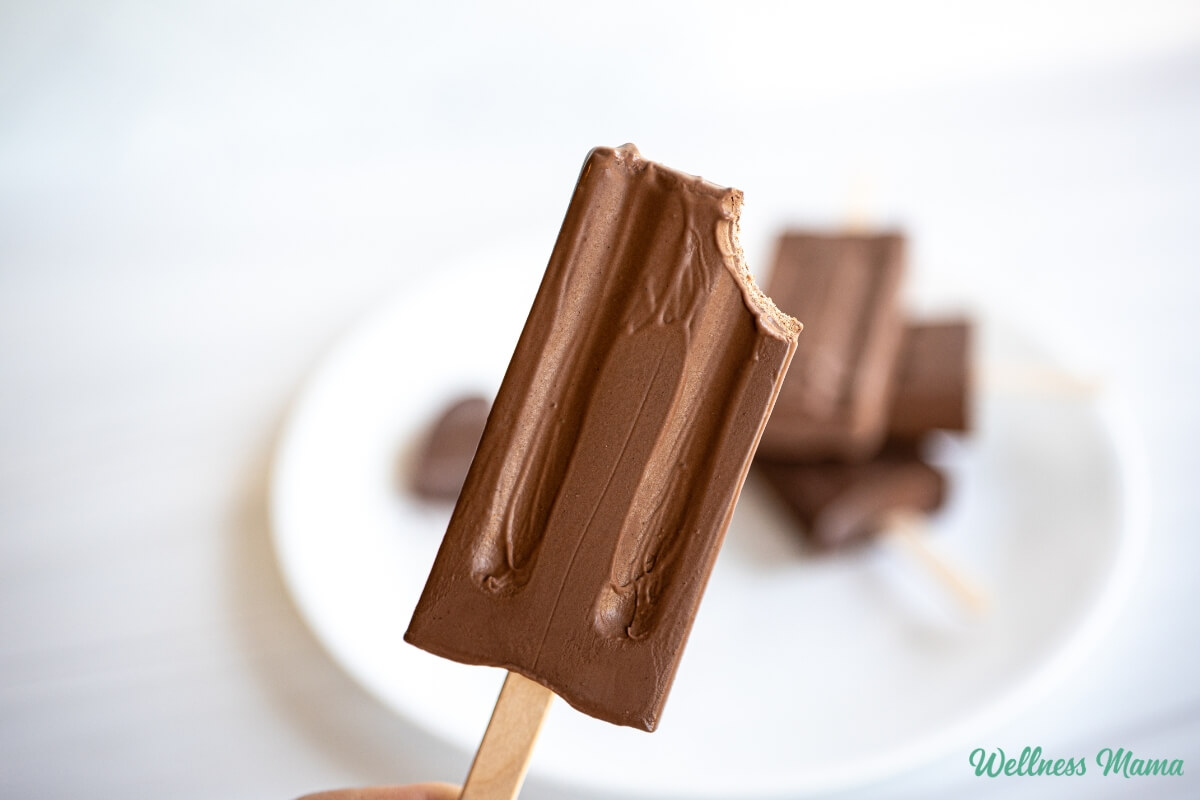
Homemade Fudgesicles Recipe (Clean Ingredients)

Growing up in the south, summer days meant swimming in the pool, late nights, and frozen treats. And while you won’t find me reaching for the frozen fudgesicles at the local store, these homemade fudge pops are the perfect healthy solution. 

I have plenty of popsicle recipes and they’re a big hit around our home. Fudgesicles are creamier and richer with their frozen chocolate fudge taste. I like mine only mildly sweet, but you can adjust the sweetness with raw honey and the kind of chocolate used. 

Homemade Fudgesicles

Real food just tastes better. Like many kids, I was a fan of fudge pops growing up. However, once I switched to whole foods I realized the junk food just didn’t taste as good. 

Homemade fudgesicles not only taste better, but they’re simple to pull together and healthier. You can even make several batches at once to freeze for later. My kids love these! And I’ll keep treats like this stashed in the freezer to pull out when the neighbor kids stop by to play (which is constantly!). 

Fudge Pop Ingredients

A lot of the recipes I saw used things like prepackaged instant pudding mix. Just read the ingredients list on the back of the box and you’ll see why I’d rather skip that. These fudgesicles instead use real chocolate, both chocolate chips and cocoa powder. 

I also used raw whole milk and full-fat canned coconut milk for that rich, creamy taste. If you want yours even creamier, use coconut cream instead of coconut milk. Whole milk is higher in healthy fats for that creamy mouth feel. However, you can use your favorite dairy-free milk if you need a dairy-free version. 

Sweet, Sweet Chocolate

Chocolate has some pretty impressive health benefits… when it’s not drowning in sugar. Semi-sweet or bittersweet chocolate both work well in this recipe. Choose a chocolate you enjoy eating on its own since the flavor really shines through. I prefer really dark chocolate, but you may like something a little sweeter. 

For a sweeter version, add honey a little at a time until it reaches your preferred sweetness. One to two tablespoons works well if you want to add honey. 

Homemade Fudgesicles Recipe

  • Combine the coconut milk, milk, cocoa powder, and sea salt to a small saucepan. Whisk until the cocoa is fully incorporated and no lumps remain.

  • Heat over medium-low heat until the mixture is steaming and just beginning to bubble around the edges. There’s no need to boil it.

  • Remove the pan from the heat and stir in the chopped chocolate. Continue whisking until the chocolate melts completely and the mixture is silky smooth.

  • Taste and add honey if desired, stirring until dissolved.

  • Fill the popsicle molds. Allow the mixture to cool slightly before pouring it into popsicle molds. This helps it thicken slightly and prevents separation.

  • Insert sticks and freeze until completely firm, about 6 hours or overnight.

Nutrition Facts

Homemade Fudgesicles Recipe

Amount Per Serving (1 fudgesicle)

Calories 310
Calories from Fat 225

% Daily Value*

Fat 25g38%

Saturated Fat 18g113%

Trans Fat 0.01g

Polyunsaturated Fat 1g

Monounsaturated Fat 4g

Cholesterol 4mg1%

Sodium 27mg1%

Potassium 397mg11%

Carbohydrates 20g7%

Fiber 5g21%

Sugar 12g13%

Protein 4g8%

Vitamin A 48IU1%

Vitamin C 1mg1%

Calcium 59mg6%

Iron 4mg22%

* Percent Daily Values are based on a 2000 calorie diet.

To release the fudgsicles, briefly run warm water over the outside of the molds. Gently pull on the sticks and serve immediately.

Shelf Life and Storage

Since they’re a frozen treat, you’ll obviously want to keep them in the freezer. They’ll stay fresh for several weeks when stored in an airtight container. You can even make several batches at once and freeze them for later.

More Popsicle Recipes

Here are some more of our family’s favorite sweet treats on hot days!

What are some of your favorite treats for hot days? Leave a comment and let us know!

Tags: , , , ,
The Scents That Made Perfume Fun Again

The Scents That Made Perfume Fun Again

Years ago, I climbed into a giant, egg-shaped happiness detector. Technically, it was a biofeedback machine that was monitoring my brainwaves in real time, and rewarding the “goal” waves with a gentle bell sound.

Before I headed in, the tech told me to think of things that make me happy, because it’s a kind of shortcut to achieving the patterns we were shooting for. I settled in and started thinking of things I filed under that category.

Silence.

I wondered if the machine was broken or the electrodes needed to be adjusted, but before knocking on the door to talk to the tech a brief memory of my son laughing the week before flashed through my mind.

DING.

For the next fifteen minutes or so, I had a weirdly frank conversation with my own brain. Most of the things that made my brain “ring” weren’t achievements or things I’d checked off a list. They were sensory-rich moments connected to the people and places I love most.

You’re probably wondering what any of this has to do with perfume, and that’s a fair question.

One of the fascinating things about scent is that it has a direct line to the parts of the brain involved with memory and emotion – the ones that were generating the most resonant response in the biofeedback machine that day. A song, a photograph, or a familiar place can transport us back to another moment in time, but scents seem to do it with unusual speed and intensity.

Our sense of smell is wired a little differently than our other senses. Before sights, sounds, and touch are fully processed, they first pass through a kind of relay station in the brain. Smell, however, takes a more direct route into regions associated with memory, emotion, and even our stress response.

That’s why certain aromas instantly bring us home again. Fresh bread. Salt air. Pine trees. The smell of sunscreen and coconut on a family vacation.

Pleasant scents don’t just “smell nice.” They can evoke memories, feelings of familiarity, and a sense of comfort that’s hard to put into words.

Which brings me to Good Medicine Beauty Lab.

What Makes Good Medicine Unique

I started making my own perfumes years ago after discovering the health risks of conventional fragrance, but I’m not especially good at it, and I don’t have enough hours in the day to make everything from scratch.

For that reason, I’ve always kept an eye out for truly natural alternatives, and last year I discovered Good Medicine Beauty Lab. After I featured them in my holiday gift guide, they reached out and offered to gift me a large bottle of Love Letter and a mini set of all their perfumes to test.

When I said yes, I was not prepared for how much I would love these perfumes.

They’re not like the simple essential oil blends I’ve been mixing up in a roller bottle. They’re multilayered, living scents that evolve on your skin throughout the day.

Here’s what makes them stand out:

  • Handcrafted in small batches
  • Made with botanical aromatics and resins
  • Free of synthetic fragrance compounds
  • Designed to smell beautiful on skin, not just in the bottle
  • More layered and complex than basic essential oil blends
  • Available in mini sizes so you can explore the collection before choosing a full-size bottle

After testing all five perfumes with my daughter, I understand why the reviews are so enthusiastic. There aren’t any duds in the collection. Every scent is someone’s absolute favorite, and each one has a completely different personality.

My daughter and I had so much fun trying them together, comparing notes, and finding our favorites. It made perfume feel fun again and reminded me how much the little sensory details of life contribute to our experience of it.

Tips For Making Your Botanical Scent Last Longer

Most conventional perfumes are formulated to project strongly and linger for hours with the help of synthetic fragrance compounds and chemical fixatives like diethyl phthalate (DEP) and synthetic musks. DEP is a phthalate, which is a liquid plastic that has been linked to endocrine disruption, reproductive toxicity, neurological issues and liver and kidney strain. (1) (2) Many synthetic musks have similar concerns, and bioaccumulate in the body and the environment. (3)

Good Medicine takes a different approach.

Instead of creating a six-foot cloud of scent, these botanical perfumes wear closer to the body. The experience is more intimate and personal – noticeable to you and the people close to you, but not everyone in the room.

How long they last depends partly on the fragrance itself and partly on your individual chemistry. With that said, there are a few tricks for getting your scent to linger longer.

  • Moisturize first. Fragrance tends to cling better to hydrated skin.
  • Apply to pulse points. Wrists, neck, and even behind the knees help the scent gently radiate.
  • Skip the wrist rub. Rubbing your wrists together can diminish some of the delicate top notes.
  • Keep a travel size nearby. A quick refresh later in the day is easy with one of the mini bottles. Personally, I’d much rather reapply a beautiful botanical perfume once during the day than wear a fragrance that relies on synthetic ingredients.

Now for the fun part: let’s talk about each scent, including the notes, overall feel, and who I think will love it most.

Love Letter

Best For: Coconut lovers, beach girls, romantics, and anyone who wants a scent that feels sunny and uplifting.
Top Notes: Magnolia
Heart Notes: Coconut
Base Notes: Vanilla

If you could bottle warm sunshine, salty air, and the feeling of a favorite summer memory, Love Letter would be pretty close.

This was the first Good Medicine perfume I tried, and it’s still my personal favorite. My husband loves this one on me, and I understand why so many reviewers describe it as nostalgic and mood-boosting.

The coconut and vanilla remind me of warm skin after a day at the beach, and the magnolia adds a light citrus floral note.

To me, Love Letter somehow manages to feel sweet without being sugary, and noticeable without being overpowering. It’s clean and balanced, but also luxurious.

One reviewer described it as “subtle while at the same time intoxicating,” and I think that’s the perfect way to describe it. Another said it smelled “like an instant mood boost,” which also rings true. There’s something undeniably happy about this perfume.

Although many people associate coconut with summer, I plan to wear it year-round. Then again, I live near the ocean, so my sense of what’s “seasonal” may be a little different. 🙂

Love Letter is available as a full-size 1.7 oz perfume spray, a mini spray that’s perfect for sampling or keeping in your bag, a 10 ml almond oil rollerball, or as part of a discovery set.

Free Bird

Best For: Women who love warm amber and vanilla with a smoky finish.
Top Notes: Rosewood
Heart Notes: Buddahwood, Cinnamon, and Jasmine
Base Notes: Amber, Vanilla, Vetivert, and Blonde Tobacco

If you could bottle a quiet evening on the porch, a favorite sweater, and the feeling of having nowhere you need to be, it would smell like Free Bird.

This wasn’t one of the scents I expected to love based on the description, but it surprised me. While Love Letter feels bright and beachy, Free Bird feels warm, grounding and intriguing. It’s complex in a way that’s hard to pin down, and I actually thought I didn’t like it at first. But once I warmed up to it, I really warmed up to it, and it’s now one of my top three favorites.

The amber and vanilla give it a soft sweetness, while the blonde tobacco and vetiver add an earthy, smoky depth that keeps it from feeling too sweet or traditionally feminine.

Free Bird has a slight edge – not overly masculine, but not overly feminine either To me, that quality makes it feel more balanced and interesting. If you’ve ever found yourself wishing women’s perfumes were less sweet and more complex, this one may be a good match for you.

One reviewer said her husband thinks it makes her smell like a “warm vanilla cupcake,” which made me laugh, while another called it “lovely, complex, and just perfect.”

Like all of Good Medicine’s perfumes, Free Bird is noticeable without being overpowering. It’s cozy, subtly sweet, and has a richness that unfolds throughout the day.

Free Bird is available as a full-size 1.7 oz perfume spray, a mini spray that’s perfect for sampling or keeping in your bag, a 10 ml almond oil rollerball, or as part of a discovery set.

Star-Crossed

Best For: Women who love warm, spicy fragrances and anyone looking for something distinctive and a little unexpected.
Top Notes: Sweet Orange, Tangerine, Jasmine, Gardenia
Heart Notes: Frankincense, Amber, Myrrh, Clove, Juniper Berry, Cinnamon, Rose
Base Notes: Balsam Tolu, Vetiver

Star-Crossed reminds me of a wool blanket by the fire, desert rain, and the feeling of getting lost in a good novel.

Along with Love Letter and Free Bird, this is one of my top three favorites. Ask me which one I love most and you’ll probably get a different answer depending on the day.

It feels warm and rich in a way that’s hard to describe. One minute I notice the citrus notes of sweet orange and tangerine, and the next I’m picking up the deep, resinous notes of frankincense, amber, and myrrh.

One reviewer compared it to “a wool blanket around your shoulders near a fire,” and I get that completely. Another called it “spicy, exotic, and completely unique,” which also captures it well.

If Love Letter is sunshine and summer memories, Star-Crossed is cozy evenings and rain on the windows. It’s comforting, grounding, and just a little mysterious, and I can see why so many people say they receive compliments whenever they wear it.

It’s available as a full-size 1.7 oz perfume spray, a mini spray that’s perfect for sampling or keeping in your bag, a 10 ml almond oil rollerball, or as part of a discovery set.

Dream Catcher

Best For: Dreamers, deep thinkers, and anyone who craves a little more breathing room.
Top Notes: Amber
Heart Notes: Myrrh
Base Notes: Frankincense

Dream Catcher is calming without feeling sleepy – more like a deep breath and a clear mind.

Unlike Love Letter’s sunny sweetness or Star-Crossed’s cozy depth, Dream Catcher feels more meditative. Amber, myrrh, and frankincense have an ancient, almost serene quality, which gives this perfume a very different personality from the rest of the collection.

One reviewer said people tell her she smells “like a spa,” and I can see why. Another described it as “very calming,” which also fits. To me, Dream Catcher is the scent I’d reach for when I want something subtle, timeless, and grounding.

It’s available as a full-size 1.7 oz perfume spray, a mini spray that’s perfect for sampling or keeping in your bag, a 10 ml almond oil rollerball, or as part of a discovery set.

Moon Shadow

Best For: Women who like floral-woodsy scents that feel light and fresh.
Top Notes: Persian Rose
Heart Notes: Sandalwood
Base Notes: Cinnamon & Clove Bud

Moon Shadow feels like crisp night air, rose petals, and quiet woods.

I told you there weren’t any duds in this collection, and I meant it, but this was the one scent that didn’t work with my particular body chemistry. Once it settled on my skin, it just wasn’t “me.” It smells great on my daughter, though, so I gifted it to her.

It’s floral and woodsy, but also somehow light and fresh rather instead of heavy. It’s also clearly beloved by the people whose chemistry it works well with – even if, in my house, that chemistry belongs to my daughter.

Moon Shadow is available as a full-size 1.7 oz perfume spray, a mini spray that’s perfect for sampling or keeping in your bag, a 10 ml almond oil rollerball, or as part of a discovery set..

Final Thoughts

I really do think the mini discovery set is the best place to start because these perfumes interact differently with each person’s chemistry.

Love Letter, Free Bird and Star-Crossed are my personal favorites. In their own way, they each make ordinary moments feel a little more special . . . and I didn’t even have to crawl into an egg shaped happiness detector to discover them.

Share with a friend! 👇

Tags: , ,
watermelon electrolyte gummies

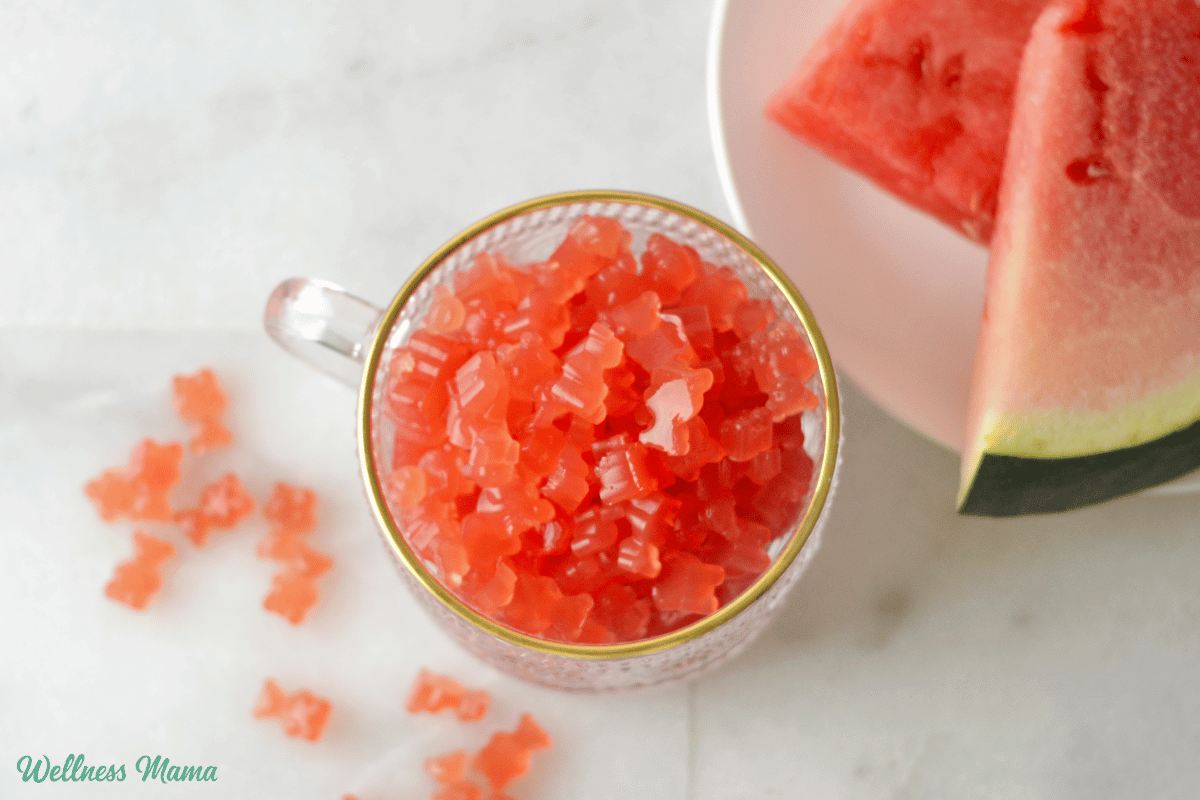
Homemade Electrolyte Gummies Recipe

My kids love homemade gummies and I’m quite the fan myself. They’re a fun way to get gummy candy without the processed ingredients and refined sugar. This version has a delicious fruity flavor and adds electrolytes for better hydration.

Electrolyte Gummy Benefits

In the past few years it seems like there’s a gummy version of almost everything. You can get gummy multivitamins, gummy ACV, and gummy beets. And while people love their gummies, they often contain processed sugars and fillers I’d rather avoid. 

I’ve made a lot of gummies to target a variety of health complaints or just for general wellness. (See the bottom for a full list!). I wanted to try something a little different this time though and incorporate electrolytes like potassium, magnesium, and sodium. We need these all of the time, but we can especially get depleted during hotter months. And if you’re really active or use a sauna, these health habits can deplete electrolytes even more. 

We need electrolytes to power our cells, have energy, and do basically everything in the body. I’ve come to the realization that we are electrical beings first and biomechanical second! So the more that I can do to support that, the better. 

Electrolyte Gummy Ingredients

This ingredient list focuses on nutrient dense, whole food ingredients that taste delicious.

  • Watermelon – Has vitamin A, potassium, magnesium, and antioxidants like vitamin C, carotenoids, lycopene, and cucurbitacin E. It’s really hydrating and there’s some evidence it’s antioxidants help with cancer prevention.
  • Coconut water – Loaded with potassium and has some magnesium and sodium too. You’ll also find phosphorus, vitamin C, and calcium.
  • Electrolyte powder – My favorite is LMNT. It offers a concentrated and balanced blend of magnesium, sodium, and potassium. Most brands don’t have the levels our body actually needs to hydrate.  
  • Raw Honey – Adds a touch of sweetness, antioxidants, and antimicrobial benefits. 
  • Gelatin – Grass-fed gelatin offers naturally occurring collagen for healthier skin, hair, nails, and gut function. 

How To Make Electrolyte Gummies

There are a few different ways to make these. Option 1 is to use watermelon that’s been blended and strained. This creates a thin juice for a more traditional gelatin gummy. Or you can not strain the pulp out to create a higher fiber version. The texture is obviously different, but either way works. 

Tips For Using Gelatin

It’s also important to let the gelatin “bloom” first. This way it dissolves into the liquid instead of getting clumpy and grainy. Just sprinkle the gelatin on top of the juice and wait until it’s absorbed and looks like a wrinkly layer on top. Another tip when making gummies is to not stir too vigorously after adding the gelatin. You want to combine the ingredients, but overwhisking can make it really foamy. 

Some readers ask about a vegan version and I’ve heard agar agar powder works, though I haven’t personally tried it. I’m a big fan of grass-fed gelatin for its health benefits so that’s what I use and recommend. 

Fruity Electrolyte Gummies

These delicious electrolyte gummies are a fun way to get more hydration. Featuring vitamins, minerals, antioxidants, and electrolytes for maximum nourishment!

  • Blend the watermelon until smooth. Pour through a strainer to remove the larger pieces of pulp. You can also leave the fiber in if preferred.

  • Add the fruit juice, coconut water, electrolytes, and honey to a pot and stir to combine. It’s ok if the honey doesn’t fully mix in yet.

  • Evenly sprinkle the gelatin over the top. Allow it to bloom for a minute or until it looks absorbed into the liquid.

  • Gently heat the mixture over low heat, whisking until dissolved.

  • Pour the liquid into your molds and let harden in the fridge for several hours, or until firm.

Nutrition Facts

Fruity Electrolyte Gummies

Amount Per Serving (2 TBSP)

Calories 19
Calories from Fat 1

% Daily Value*

Fat 0.1g0%

Saturated Fat 0.02g0%

Polyunsaturated Fat 0.01g

Monounsaturated Fat 0.01g

Sodium 56mg2%

Potassium 4755mg136%

Carbohydrates 3g1%

Fiber 0.2g1%

Sugar 3g3%

Protein 2g4%

Vitamin A 108IU2%

Vitamin C 2mg2%

Calcium 5mg1%

Iron 0.1mg1%

* Percent Daily Values are based on a 2000 calorie diet.

  • If you don’t have a silicone mold, then grease a glass baking dish and use that instead. Cut the gummies into squares before serving.
  • This recipe makes a little over 3 cups of liquid. The exact amount of gummies depends on the size of your molds. 

The Best Electrolyte Powder

I use LMNT because it uses research backed, balanced amounts of potassium, magnesium, and sodium. They have some delicious flavors or you can use their unflavored “raw” version. Another option is to make your own with their recipe here.

For this recipe I used their Watermelon Salt flavor, but the Lime Salt would taste really good too.

More Gummy Recipes

Here are some more gummy recipes to try. Some are for specific health complaints, but many are just for overall nutrition. 

Do you prioritize getting enough electrolytes? What are some ways you’ve found to do that? Leave a comment and share below!

Tags: , , ,
Dill Pickle Potato Salad

Dill Pickle Potato Salad

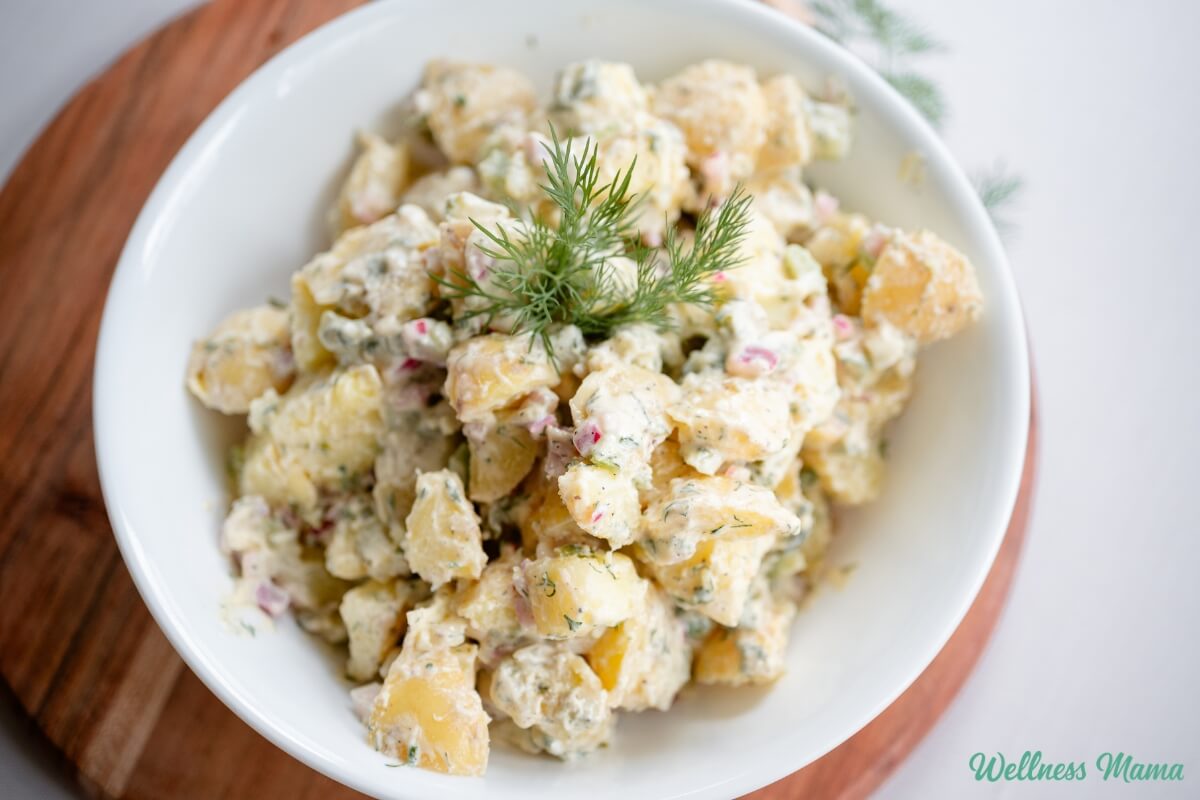
Potatoes are one of those versatile vegetables that seem to regularly make their way onto every dinner table. Creamy potato soup is a cold weather classic, but it can feel too heavy for hotter summer months. Dill potato salad with dill pickles though is the perfect summer side dish.

The Humble (White) Potato

I’ll admit that I haven’t created a ton of recipes with potatoes. I more recently started eating them after sticking mostly with sweet potatoes while I was healing from autoimmune disease. Even though they don’t always get much love, regular potatoes actually have some impressive nutrition. 

The humble potato is actually rich in fiber, potassium, and B vitamins. They even contain about 30% of our daily value of vitamin C! In the past experts warned about eating too many because they’re high in carbs and higher on the glycemic index. However, that only tells part of the story. 

More recently the conversation has changed to include a more nuanced view. Most of the unhealthy side effects of eating lots of potatoes comes from eating fried and highly-processed potatoes, like chips and fast food french fries. When they’re part of a real food meal, paired with healthy fats, and protein, they can be a great addition to the diet.

Now, I’m still not going to sit down and just eat a whole bowl of potatoes for lunch! But eating burgers from the grill with some fresh salad and potato salad as a side is a balanced and delicious meal.

Dill Potato Salad With Pickles

There are so many ways to make potato salad. There’s potato salad with no mayo, potato salad with eggs, and even potato salad with Greek yogurt. And honestly, this recipe is pretty forgiving. I included eggs for a protein boost and some healthy fats, but you can leave them out if desired. If you really like dill pickles, then add some more for even more flavor. 

The dressing is a blend of mayonnaise and Greek yogurt or sour cream. Mayo gives it that thick, creamy taste, and the yogurt or sour cream adds some lightness. However, if you need a dairy free version, then replace the dairy with more mayo. 

I either use homemade mayo with olive and coconut oil, or a clean ingredient store-bought one. This brand uses avocado oil instead of soybean and canola oil. Pickles are another way to increase the nutrition of the dill potato salad. Opt for naturally fermented dill pickles for a probiotic boost!  

The Best Potatoes to Use for Potato Salad

Russets are a classic, affordable potato, but I really like Yukon gold potatoes for this. They hold their texture well and stay creamy without getting mushy. Red potatoes also work well and so would fingerling potatoes. Feel free to use what you have. 

This dill potato salad tastes even better the next day after the flavors have had time to marry. If we’re having a family gathering or BBQ I’ll make it a day or two ahead of time. Not only does it save time on the day of, but it’s tastier too. 

Here’s how to make your very own dill pickle potato salad!

Dill Pickle Potato Salad

Creamy, satisfying potato salad meets dill pickles for the ultimate flavor and crunch. The perfect summer side dish for any get together.

  • 2 and ½ pounds Yukon gold potatoes (cubed)
  • ¾ cup dill pickles (finely chopped)
  • ¼ cup pickle juice
  • 3 hard-boiled eggs (chopped)
  • 2 stalks celery (finely diced)
  • ¼ cup red onion (finely diced)
  • 2 TBSP fresh dill (chopped)
  • 2 green onions (sliced)
  • Bring a large pot of salted water to a boil. Add the potatoes and cook until fork tender, about 12–15 minutes. Drain and let cool slightly.

  • While the potatoes are still warm, drizzle them with the pickle juice and gently toss. Let sit for 10 minutes so the flavor absorbs.

  • In a large bowl, whisk together the mayo, Greek yogurt, Dijon mustard, garlic powder, salt, and pepper.

  • Add the potatoes, chopped pickles, eggs, celery, red onion, dill, and green onions.

  • Gently stir until evenly coated.

  • Chill for at least 1 hour before serving for the best flavor.

Nutrition Facts

Dill Pickle Potato Salad

Amount Per Serving (1 serving)

Calories 296
Calories from Fat 162

% Daily Value*

Fat 18g28%

Saturated Fat 3g19%

Trans Fat 0.04g

Polyunsaturated Fat 10g

Monounsaturated Fat 4g

Cholesterol 79mg26%

Sodium 707mg31%

Potassium 700mg20%

Carbohydrates 28g9%

Fiber 4g17%

Sugar 2g2%

Protein 6g12%

Vitamin A 223IU4%

Vitamin C 30mg36%

Calcium 52mg5%

Iron 2mg11%

* Percent Daily Values are based on a 2000 calorie diet.

  • Top with extra fresh dill and sliced pickles before serving if desired.

What are some of your favorite ways to prepare potatoes? Share below!

Tags: , , ,
25+ Father's Day Gift Ideas (That He'll Love)

25+ Father’s Day Gift Ideas (That He’ll Love)

My husband once shouted “MAYDAY!” through a baby monitor while changing a diaper. I don’t remember the details . . . only that we were both bleary-eyed and navigating parenthood for the first time.

Not long after, he began taking our firstborn out for Saturday morning daddy-daughter coffee dates. Coffee for him, mango for her, and a few hours of uninterrupted sleep for me. 🙂

Those days are long behind us, but from that moment to this, he has shown up in countless ways. Mostly “boring” ones . . . the things you notice only if you’re paying attention. A few memorable ones, like the time he defended our home against rattlesnake with a shovel while we hid in the bathroom.

Personally, I celebrate him every day when I wake up and find freshly brewed coffee waiting for me, but a special day to thank dads is more than called for.

With that in mind, I’ve put together a list of Father’s Day gift ideas that guys will actually love.

Father’s Day Gift Ideas Under $30

1. Cast Iron Smashburger Press – Made from sturdy cast iron, this press has the weight needed to flatten burgers evenly and create a great sear without a lot of effort. It works well on a flat top grill, griddle, cast iron skillet, or regular pan, and can handle the high heat needed for cooking burgers, sandwiches, bacon, and more.

2. Cork Massage Balls for Myofascial Release, Trigger Point Therapy, Muscle Knots & Yoga – These cork massage balls allow your recipient to melt away tension anywhere—just place one under a tight spot and gently lean in. They’re ideal for releasing trigger points, loosening stubborn knots, amd easing plantar fascia tightness.

3. Shower Scalp Massager – In addition to just feeling amazing, this scalp massager helps lift dandruff, increase circulation, and give hair a fuller, denser appearance. It can also be used on the neck and shoulders for tension relief. Fyi, I’ve tested it and it doesn’t tangle long hair, so it’s the kind of gift you can also borrow. 🙂

4. Purity Coffee Single Serve Coffee Sachets (SAVE 20% WITH CODE MP) – Just add water and voila! Each sachet contains the same clean, antioxidant-rich coffee Purity is known for 0 certified organic and screened for mold, mycotoxins, pesticides, and other contaminants. My husband and I always keep a few packages stashed away in our bags for coffee emergencies. 🙂 

5. Hydro Flask 20 Oz. Insulated Coffee Cup – For the guy who likes his coffee hot but doesn’t always get to drink it right away. This insulated stainless steel cup keeps drinks warm longer than a standard mug and works well for slow mornings, road trips, camping, or backyard coffee breaks.

6. Terra Thread Organic Cotton Toiletry Case – Made with organic cotton canvas, this simple toiletry case is perfect for travel, gym bags, or keeping everyday essentials organized. Pair it with homemade tallow balm, beard oil, or travel-size favorites for an easy personalized gift.

7. Solar Phone Charger – This waterproof solar charger comes with three ports so that phones can be charged simultaneously. It also has a built-in flashlight. 

8. 100 Parks, 5,000 Ideas: Where To Go, When To Go, What To See, What To Do – For the guy that’s craving a little adventure, this National Geographic guide to U.S. and Canadian parks is perfect for planning family experiences.

9. Firestarter Set – Have you ever started a fire with nothing but some kindling and striker? Me neither, but your recipient can with the überleben Zünden Fire Starter. It can throw sparks in any weather and at any altitude, and it’s designed to be carried around the neck for easy portability. 

10. PaleoValley Grass-Fed Beef Sticks – This is the only company in the US that uses old-world methods of fermenting so that their beef sticks are shelf stable without the use of chemicals or questionable ingredients. Virtually all other similar snack stick products use GMO corn-based citric acid encapsulated in hydrogenated oils to process their products. Instead, PaleoValley sticks contain gut-friendly probiotics! I personally like the jalapeño flavor, but my kids prefer the original and summer sausage flavors.

11. Old Fashioned Beard Oil from Primally Pure – Crafted with organic ingredients, this beard oil softens scruff while moisturizing the skin underneath. It has a deep, woodsy scent with bright citrus notes for a clean, classic finish.

Gift Ideas Under $50

12. Cork Foam Roller – A foam roller that isn’t made of… foam. Cork offers steady pressure that helps release tight muscles, support mobility, and improve recovery. It’s naturally antimicrobial, eco-friendly, and grippier than standard rollers, making it perfect for deep tissue work or gentle daily maintenance.

13. Terra Thread Organic Cotton Laptop Sleeve – This organic cotton laptop sleeve is a practical upgrade for work, travel, or coffee-shop writing sessions. It has a clean, minimal look, a carrying handle, and enough structure to help protect a laptop without feeling bulky.

14. Hydro Flask 32 Oz Water Bottle – These insulated stainless steel bottles keep drinks cold for up to 24 hours and hot for up to 12 hours. They’re extremely durable and dishwasher safe, making them a great option for workouts, travel, and more. If the guy in your life doesn’t have consistent access to filtered water, I recommend considering the Clearly Filtered bottle instead.

15. Stainless Steel Manual Coffee Grinder – For travel, camping and hiking. It’s compact, doesn’t need electricity, and makes it easier to enjoy good coffee almost anywhere. Because coffee.

Gift Ideas Over $50

16. Clearly Filtered Water Bottle – This filtered water bottle makes it easy to turn ordinary tap water into cleaner, better-tasting water on the go. It’s especially helpful for travel, gyms, restaurants, airports, and anywhere filtered water isn’t readily available. Safely removes up to 99.99% of over 200 contaminants including lead (99.34%0 and fluoride (99.43%).

17. Terra Thread Organic Cotton Duffel Bag – This sturdy organic cotton duffel is roomy enough for weekend trips, gym gear, or road trip essentials, but still simple and classic enough for everyday use. It’s a great non-leather option for guys who value practical, durable gear.

18. Shiatsu Pillow Massager with Heat – We have one of these and it’s amazing for working on the neck, shoulders, lower back, thighs, and calves. The kneading motion plus gentle heat makes it a great gift for anyone who carries tension or could use a little more recovery time built into the day.

19. Toups & Co. Frankincense Tallow Balm (SAVE 10% WITH HEATHERD10) – Because men have skin, too, and this stuff smells amazing. 🙂 Tallow is uniquely compatible with our skin’s biology, leaving it supple and nourished after use.

20. Lifepro DynaMini Handheld Percussion Massage Gun (SAVE $10 WITH CODE MP10) – Great for people who primarily deal with tough muscle knots and aches. This massage gun comes with 5 interchangeable heads that help release tension in both surface and deep tissue layers.

Gift Ideas Over $75

21. SunDown Or Nightfall Glasses (Use code MP10 for 10% Off) – These glasses are designed to support healthier evening light exposure by reducing the wavelengths that can interfere with melatonin production. SunDown lenses are a good option for winding down in the evening while still keeping things relatively natural-looking, while NightFall lenses offer stronger nighttime support by blocking both blue and green wavelengths. They’re a great choice for anyone who watches TV, uses screens at night, or wants a simple way to support better sleep habits without giving up evening routines.

22. Men’s Grooming Bundle from Primally Pure (SAVE 10% with MOMMYPOTAMUS10) – This bundle includes their Bergamot + Eucalyptus Deodorant, Old Fashioned Beard Oil, Clarifying Bar and Soothing Cream – everything needed for a grooming routine without synthetic fragrances or harsh chemicals. Makes a great all-in-one gift for guys who appreciate clean ingredients but want something easy to use.

23. Sound + Sleep SE Noise Machine– White noise machines contain harsh, high-pitched frequencies that can actually raise cortisol levels, which is why many manufacturers have begun offering more soothing colors of noise – particularly pink and brown. In nature, you’ll find pink noise by listening to  the sound of crashing waves or rustling leaves, while brown noise is deeper . . . think rumbling thunder or the low roar of a large waterfall. With 64 settings, the Sound + Sleep SE pretty much has it all.

24. Cooling Bamboo Weighted Blanket from YnM – Perfect for hot sleepers, this blanket helps calm the sympathetic nervous system (fight or flight mode) and increase parasympathetic activity (rest and recuperation mode). It can be used in the daytime to create a sense of well-being.

25. DefenderShield Phone Case – Independently tested by the FCC, this phone case uses conductive, non-conductive and advanced absorption shielding materials together to block, divert, and absorb EMFs, Radio Frequency (RF) and heat radiation.

Gift Ideas Over $100

26. Cork Briefcase – This cork briefcase has the polished look of a classic messenger bag without leather. It’s lightweight, water-resistant, and roomy enough for a laptop and daily essentials, making it a practical work or travel bag for guys who like natural materials and a clean, understated style. Cork is also a great non-toxic alternative to many synthetic materials because it’s a natural, renewable material harvested from cork oak trees and doesn’t require the PVC coatings often found in conventional bags and accessories.

27. Tucktec Folding Kayak – These folding kayaks weigh just 25 lbs each and fold up small enough to fit in the trunk of nearly any car. No roof rack needed!

28. Oura Ring – When I realized how much valuable information I was getting from my Oura ring, I bought one for my husband. He loves it, and weirdly wherever we go other guys ask him all about the features and how comfortable it is. (Very comfortable.) Oura recently created Circles, which allows users to share their Readiness, Sleep and Activity scores with hand-selected family and friends. My husband and I can see each other’s scores in the app, so if they’re lower than usual we will check in and see what the other needs to feel better.

29. Lifepro Vibration Plate – My first experience with whole body vibration therapy was at a wellness clinic, and it made such a difference in my overall well-being that I bought one when I returned home. It supports detoxification (via lymphatic drainage) and calms the sympathetic (fight or flight) nervous system. It can also be used to amplify the effectiveness of exercise, and my husband and I use it for at-home workouts.

30. Apollo Neuro (SAVE 10% WITH CODE MP10) – This wearable device uses subtle vibrations (haptic feedback) to help our brain and body feel safe, resulting in benefits like reduced stress levels, better sleep, and improved focus. It was developed by neuroscientist and psychiatrist Dr. David Rabin MD, PhD and has been validated by “gold standard” double-blind randomized placebo controlled crossover trials.

I’ve written about my experience with the Apollo Neuro here, and you can see all the studies that have been completed or are in progress here.

DIY Father’s Day Gift Ideas

Homemade Beard Oil – This homemade beard oil softens and tames scruff, reduces skin flaking (aka “beardruff”), and smells great. You only need a few ingredients to make it, too.

Bay Rum Aftershave – Clean and woodsy with spicy notes and a hint of citrus, this aftershave smells amazing. 

More Gift Guides

FREE Ebook: DIY Body Care Gifts Made Simple

Do you want to give gorgeous, handcrafted gifts for family and friends, without spending a bunch of time on them?

Then I’d love to give you a free copy of DIY Body Care Gifts Made Simple – my step-by-step guide to making gorgeous handcrafted gifts without stressing yourself out – as a gift for signing up for my newsletter. I’ll show you how to make vintage labels, luxurious lotion bars, lip balms, sugar scrubs, body sprays and more like a pro. Sign up for my newsletter and you’ll be redirected to the download page immediately!\

Share with a friend! 👇

Tags: , , , , ,
fulvic humic acid

Supercharge Cells With Fulvic and Humic Acid

I’ve been using and writing about humic and fulvic minerals for well over a decade now. However, many are still unaware of what they are and how they really work. I wrote about some of the widespread health benefits of them here years ago, but today I wanted to cover a new angle. 

In case you’ve missed it, I’ve been doing a deep dive series into what I call the “master minerals.” Sodium, potassium, and magnesium work in concert together to assist our body at a cellular level. They quite literally help power almost every process in our body.

While humic and fulvic acid aren’t electrolytes like the other three, they play a key role in helping to supercharge cellular energy. If electrolytes are the spark that powers the body, fulvic and humic acids may help carry, organize, and deliver those signals where they need to go. They’re part mineral transporter, part soil intelligence, and part detox support system.

Ancient Minerals: Fulvic and Humic Acid

This actually connects back to something very simple. We’re designed to live much closer to the earth than most of us do now. Historically, people drank mineral-rich spring water, ate food grown in living soil, and consumed trace amounts of microbes and organic compounds naturally present in the environment. Modern life has changed that dramatically.

Today our food is sanitized, processed, and almost always grown in depleted soil. Even healthy diets can lack some of the complex compounds that once came naturally from the earth. Fulvic and humic acids are among those missing pieces. Researchers are increasingly interested in how they can support nutrient absorption, gut health, detox, mitochondrial function, and cell communication.

What Are Fulvic and Humic Acids?

Despite the name, fulvic and humic acids aren’t harsh acids in the way most people think of them. They’re naturally occurring organic compounds formed over long periods of time. Plants and microbes decomposed in healthy soil ecosystems to create fulvic and humic. 

Over many years microbial activity breaks down plant material into highly complex carbon-based substances. They’re rich in trace minerals, amino acids, electrolytes, polyphenols, and other biologically active compounds. Fulvic and humic acids are two of the major fractions created during this process.

These compounds are especially abundant in rich topsoil, ancient peat deposits, compost, and certain mineral-rich shale deposits. In nature, they help regulate soil health, microbial activity, and nutrient transport within plants. Interestingly, many researchers believe they may serve similar functions within the human body.

Although fulvic and humic acids are often grouped together, there are some distinct differences. 

Fulvic Acid

Because of its low molecular weight, fulvic can easily cross cell membranes and travel throughout the body. This is one reason it’s often linked with nutrient transport and making cellular energy. Its small size also allows it to interact with mitochondria, the tiny energy-producing structures inside cells.

Fulvic acid is thought to help shuttle minerals and nutrients into cells more efficiently. Some researchers describe it as a “carrier” or “transport molecule” because it can bind to nutrients and help escort them where they need to go.

Humic Acid

Humic acid is much larger and tends to stay mostly in the digestive tract. Its larger structure gives it different benefits. Humic acid functions like a sponge or magnet in the gut. It can bind unwanted compounds while supporting the gut lining and microbiome. Because of this, it’s often associated with detox, digestive health, and immune support.

Together, fulvic and humic acids create a complementary system. Fulvic acid helps transport and energize, while humic acid helps protect and bind.

Why Fulvic and Humic are Missing in Modern Life 

You’ve probably heard me say this before, but our soil health isn’t what it used to be. Agriculture in the last 50 years or so has dramatically changed soil nutrients. This is also why more people are interested in the conversation on humic and fulvic acids. 

Healthy soil isn’t just dirt. It’s a living ecosystem filled with microbes, fungi, minerals, carbon compounds, and organic matter. Traditional regenerative farming practices once replenished these systems naturally, while modern industrial agriculture does the opposite.

Heavy tilling, pesticides, synthetic fertilizers, and monocropping strips soil of microbial diversity and organic carbon. While crops may still grow, the deeper biological complexity of the soil is depleted over time. If the soil ecosystem weakens, the nutrient density of food declines as well.

Even organic produce isn’t always grown in truly mineral-rich soil. Yes, organic farming can reduce chemical exposure. However, some organic crops are still cultivated in depleted ground that lacks the microbial complexity humans historically had.

And unlike previous generations, most of us no longer eat unwashed roots from the garden or drink naturally mineralized spring water. Our food is far more disconnected from the living microbial environment humans developed alongside.

The Connection Between Fulvic Acid and Nutrient Absorption

One of the most fascinating areas of research around fulvic acid involves mineral transport and absorption. It’s not so much that we are what we eat, but what we absorb. You can consume nutrient-dense foods all day long, but if your body can’t properly transport those nutrients into cells, the benefits are limited.

Fulvic acid may help bridge that gap. Think of fulvic minerals like a taxi that can carry other minerals across cell membranes. So sodium, potassium, and magnesium in theory can work better when fulvic is on board.

Fulvic acid helps activate minerals that are involved in countless processes throughout the body. These include hydration, nervous system regulation, hormone production, and generating ATP.

Potassium, for example, needs to move efficiently inside cells for healthy hydration and nerve signaling. Fulvic acid may help with this intracellular movement. Magnesium is another example. Magnesium participates in hundreds of enzymatic reactions, but it also depends heavily on proper transport and cellular uptake. Fulvic compounds may help improve how effectively we use magnesium.

This is one reason why I combine fulvic acid with electrolytes.

Fulvic and Humic Acid vs. Electrolytes

This distinction is important because fulvic and humic compounds don’t replace electrolytes. Electrolytes like sodium, potassium, and magnesium are electrically charged minerals that directly power cell communication. They help regulate hydration, nerve impulses, muscle contraction, heart rhythm, energy production, and more.

Without enough electrolytes, the body struggles to maintain proper electrical balance. In other words, electrolytes are the raw currency, while fulvic and humic acids help move the currency efficiently throughout the system. This “both-and” relationship may explain why some people notice better hydration and energy when combining the two.

Supporting the Gut and Microbiome

One thing that really caught my attention about humic acid is how it affects the digestive tract. Our gut lining acts as a barrier between the outside world and the internal body. Ideally, it selectively absorbs nutrients while keeping toxins, pathogens, and inflammatory compounds from entering circulation. I will say I did consume a lot of these, especially in my intensive healing phase. 

Chronic stress, processed foods, environmental toxins, alcohol, infections, and certain medications can all weaken this barrier over time. Research suggests humic may help support gut integrity in several ways. 

Support Tight Junctions

The intestinal lining is held together by structures called tight junctions. When these are compromised, unwanted particles can pass into circulation more easily. Humic acid may help support these tight junction proteins and reinforce the gut lining.

Acts as a Prebiotic

Humic compounds also appear to nourish beneficial gut bacteria. In this way, they function somewhat like a prebiotic by helping create an environment where healthy microbes can thrive. Gut bacteria also help regulate immunity, inflammation, neurotransmitter production, nutrient synthesis, and even mood.

Reducing Endotoxin Burden

Certain kinds of harmful bacteria release inflammatory compounds known as endotoxins. When endotoxin levels rise, this can cause more inflammation and immune stress. Humic acid may help by binding unwanted compounds and supporting microbe balance.

Many people report they notice better digestion relatively quickly after adding humic substances, especially when it comes to issues like bloating, regularity, and food tolerance.

Fulvic Acid and Mitochondrial Energy

Mitochondria are often called the “powerhouses” of the cell because they make ATP, the body’s main energy currency. This energy production process depends heavily on electrons moving efficiently through the electron transport chain. Minerals and cellular voltage both play essential roles here.

Fulvic acid can help mitochondria be more efficient by helping transfer electrons and shuttling nutrients. While the effects may be subtle, when mitochondria work better it can touch nearly every aspect of health.

When mitochondria are better supported people can have:

  • More energy
  • Improved resilience
  • Faster recovery
  • Clearer thinking
  • More stable mood
  • Improved exercise capacity

Because energy production affects every organ system, even small improvements in mitochondrial efficiency can create noticeable ripple effects.

Our exposure to environmental toxins has skyrocketed in recent decades. We’re bombarded with everything from PFAS to pesticides to heavy metals, plastics, and air pollution. And while our body has systems designed to handle toxins, there are so many now it can overwhelm those pathways.

It seems like humic acid is especially valuable here. Humic acid binds to unwanted compounds without aggressively stripping beneficial minerals from the body. This is important because some detox methods can also deplete nutrients along with toxins.

Humic acid seems to work more gently and can bind to:

  • Glyphosate
  • Heavy metals
  • Certain pesticides
  • Mold-related toxins
  • Various environmental pollutants

Emerging research is even exploring whether humic substances interact with microplastics. While no supplement can completely eliminate toxin exposure, reducing our overall toxic burden can support energy, immune function, hormone balance, and lessen inflammation.

The Electrical Side of Cellular Health

One of the more intriguing concepts with fulvic and humic acids involves cellular voltage. The human body is fundamentally electrical. Every heartbeat, nerve impulse, thought, and muscle contraction depends on electrical signals.

Cells maintain tiny voltage gradients across their membranes. This electrical charge influences nutrient transport, communication, hydration, and repairs. Electrolytes are central players in this system, but fulvic compounds can support the structure and conductivity around these electrical processes.

Some researchers believe fulvic substances may help:

  • Improve cell hydration
  • Support membrane voltage
  • Enhance electron transfer
  • Improve communication between cells

This doesn’t mean fulvic acid replaces electrolytes. Rather, it may help create a more supportive environment for our cells to communicate more efficiently. The body works best when minerals, hydration, mitochondria, and cell signals work together in harmony.

What I Look for in a Quality Fulvic or Humic Supplement

Quality matters a lot when it comes to fulvic and humic products since they come straight from earth deposits. I’m very careful to choose products sourced from clean ancient deposits or shale and that are third-party tested for purity and heavy metals. There are cheaper agricultural versions available, but those are designed for farming, so I avoid those completely.

I also prefer liquid because it seems to absorb fast and are easy to reach for consistently. As always, I think supplements work best when paired with foundational habits like mineral-rich nutrition, good sleep, movement, hydration, and time outdoors. That said, fulvic and humic minerals have become an impactful addition to my routine.

How I Use Fulvic and Humic Supplements 

Since modern diets have far less of these compounds than previous generations did, supplements can be a good option. You’ll find different forms including capsules, powders, and liquid concentrates. 

I use BEAM Minerals, which combines both fulvic and humic compounds in liquid form. I’ve noticed the biggest difference from those compared to other options I’ve tried over the years. I love that they’re tasteless and easy to add to water, so even my kids will take them without complaint.

Most mornings, I add them to a large glass of mineral water that I drink outside in the sunshine while standing barefoot on the ground. I also often use them after exercise and sauna sessions. When I travel or eat out I’ll use them to help with nutrient absorption and to bind any unwanted toxins in the food. 

I also use them more consistently throughout days that are higher stress or when I’m sick. There isn’t a universal RDA for fulvic and humic so I just started slowly and gradually increased based on what my body was telling me. Since I started taking these I’ve noticed better digestion, more stable energy, and less brain fog.

Final Thoughts on Fulvic and Humic Acid

Fulvic and humic acids may not be as popular as electrolytes but they’re a fascinating missing layer in the wellness conversation. Instead of directly powering our cells like electrolytes, they seem to improve how they communicate, transport, absorb, and detox. 

They’re like the support system behind the scenes, helping nutrients get where they need to go and supporting resilience. In a world increasingly disconnected from healthy soil and natural mineral exposure, this connection may matter more than ever.

Have you ever used fulvic and humic acids before? Leave a comment and share below!

Tags: , , , ,
Best oLive
Privacy Overview

This website uses cookies so that we can provide you with the best user experience possible. Cookie information is stored in your browser and performs functions such as recognising you when you return to our website and helping our team to understand which sections of the website you find most interesting and useful.