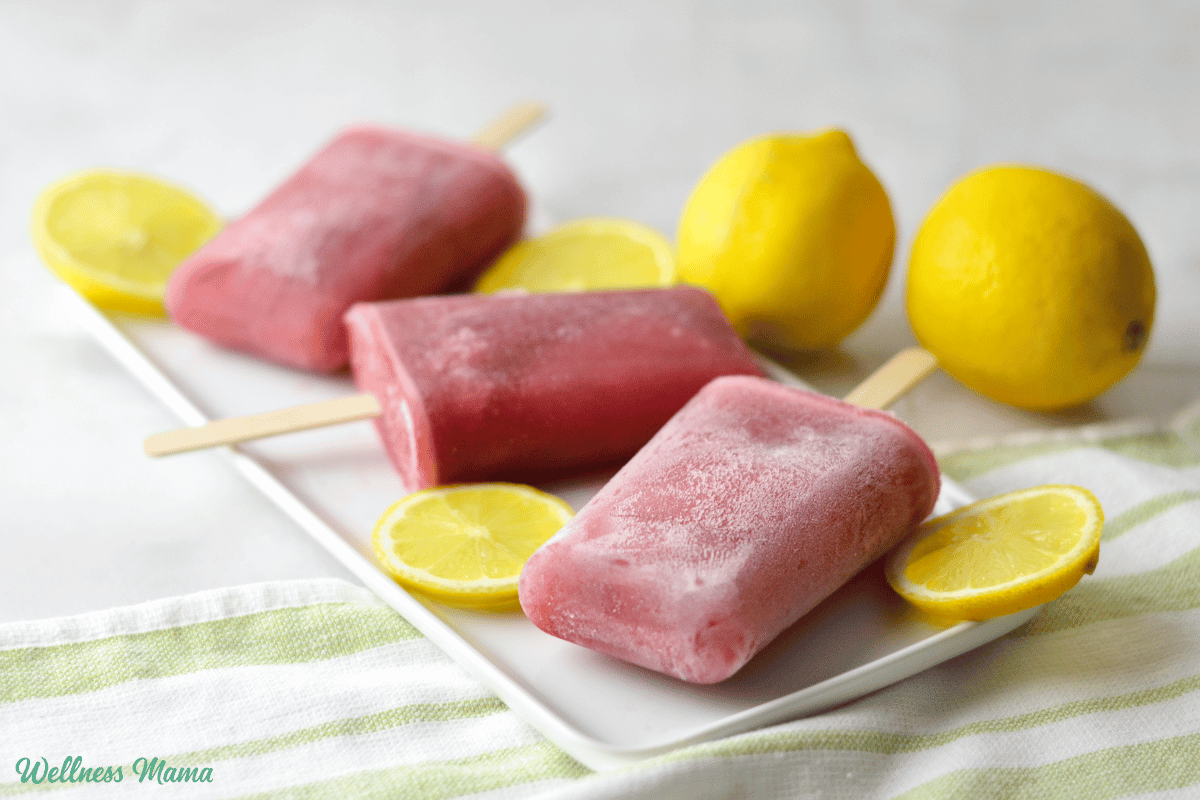
lemonade popsicles

Hibiscus Lemonade Popsicles Recipe

What’s better than an ice cold popsicle on a hot day? A nutrient-dense popsicle made with whole foods and healthy herbs! A few months ago I made mango golden milk popsicles, and recently I tried these hibiscus lemonade popsicles. 

They’re high in vitamin C and antioxidants, perfect for keeping the immune system strong. 

Immune System Support

Not so fun fact… according to Cleveland Clinic enteroviruses sicken more than 15 million Americans every year. And these types of viruses are much more common in the summer months. Public swimming pools, running around with the neighborhood kids, everyone touching the same baseball. There are plenty of reasons why kids still need immune system support all year long. And adults too! 

During cold and flu season I’ll sometimes make these elderberry popsicles. Really, they’re delicious all year round. But there’s something special and classic about an icy pitcher of lemonade in the summertime. These hibiscus lemonade popsicles have the same flavor, but with a fruity twist and in popsicle form. 

Lemon Benefits

Obviously, we need lemons to make lemonade popsicles. They’re naturally rich in vitamin C and flavonoids that are linked with various health benefits. The citric acid can increase urine pH and discourage kidney stones from forming. One study found those who ate more flavonoids had less risk of heart failure, ischemic heart disease, and stroke. 

Nutrient Rich Hibiscus

Hibiscus flowers are gorgeous with their huge, vibrant blooms. They’re also really good for you. They’ve been used traditionally for thousands of years to help cool the body and support the cardiovascular system. In some areas they’ve been used for coughs, sore throats, and upper respiratory congestion.

Hibiscus also helps with digestion and insomnia. Thanks to its high vitamin C and antioxidant levels it helps the immune system and overall cell health. Plus, hibiscus can help prevent urinary tract infections (UTIs) and may inhibit candida and fungal overgrowth. 

Cooling Rosehips

Rosehips are another herb I reach for when I need something high in vitamin C. They’re rich in flavonoid antioxidants and help nourish the body. Rosehips have a cooling and toning action on the body’s tissues, which is perfect for warm summer days. 

These herbal lemonade popsicles are a great way to cool off and stay healthy during the warmer months. But they taste delicious all year long. Here’s how to make them!

Hibiscus Lemonade Popsicles Recipe

  • Boil 3/4 cup of the water and steep the hibiscus and rosehips for 10 minutes. Strain and let cool to room temperature.

  • Add in the rest of the water, honey, and lemon juice and stir well to combine.

  • Pour the lemonade popsicle mixture into your popsicle molds and freeze for several hours or overnight until firm.

Nutrition Facts

Hibiscus Lemonade Popsicles Recipe

Amount Per Serving (1 popsicle)

Calories 49

% Daily Value*

Fat 0.03g0%

Saturated Fat 0.003g0%

Polyunsaturated Fat 0.002g

Sodium 4mg0%

Potassium 29mg1%

Carbohydrates 13g4%

Fiber 1g4%

Sugar 12g13%

Protein 0.1g0%

Vitamin A 122IU2%

Vitamin C 14mg17%

Calcium 8mg1%

Iron 0.1mg1%

* Percent Daily Values are based on a 2000 calorie diet.

  • Run some hot water over the outside of the mold for a few seconds to easily remove the popsicle.
  • The exact amount of popsicles you’ll get depends on the size of your popsicle molds.
  • If you like your popsicles more tart, then go for 5 Tablespoons of lemon juice.

What are some of your favorite ways to get more nutrition into your diet in fun ways? Leave a comment and let us know!

Tags: , , ,
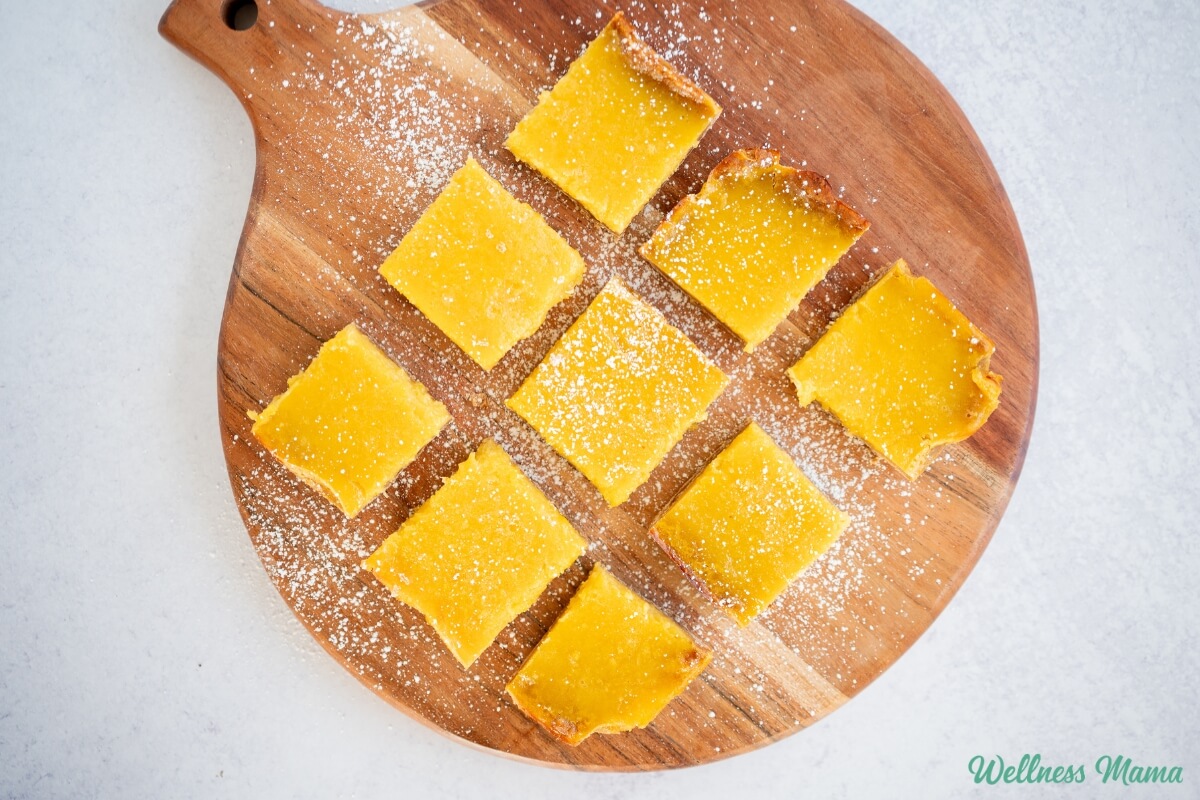
gluten free lemon bars

The Best Healthy Lemon Bars (With Gluten-Free Option)

Living in the south I have plenty of access to fresh citrus fruits, like lemon. That means plenty of lemon poppyseed muffins and healthy, gluten-free lemon bars. They’re a bright and tart way to wrap up a meal in the summer months. 

There are several ways to make this recipe. If you want a gluten-free lemon bars recipe, then make the lemon bars with almond flour crust. Need a dairy-free version? I’ve included an option for vegan lemon bars too. 

Lemon bars have a bright yellow color, an intense lemon flavor, and a buttery crust. 

How to Elevate Lemon Bars

I’ve seen plenty of easy lemon bar recipes that call for a box of cake mix and a can of lemon pie filling. While I’m a big fan of easy, I’m not willing to sacrifice quality ingredients (or taste!). To me, the best lemon bars recipe has old fashioned taste, is thick and chewy with intense lemon flavor, and still on the healthy side. 

Using quality, real food ingredients is the best way to really have the best taste and texture. 

Lemon Bar Ingredients

Like I said, we’re skipping the boxed cake mix and lemon pie filling with processed sugar and added food dye here. The ingredients are still simple though and the recipe isn’t difficult to pull together. 

For the crust you can use organic, unbleached wheat flour, coconut sugar for a caramel like sweetness, and melted butter for richness. If you want a gluten-free version, then an almond flour crust gives it the perfect subtle nuttiness. And if you need dairy-free, coconut oil works well instead of butter.

The filling uses lemon juice for tartness and lemon zest for tons of natural flavor. Whole eggs and arrowroot powder (or more organic flour) provide thickness. And I use raw honey or maple syrup to naturally sweeten. 

Here’s how to make the best regular or gluten-free lemon bars!

The Best Healthy Lemon Bars (With Gluten-Free Option)

These tart, lemon bars make the perfect, gooey dessert.

  • Preheat the oven to 350°F. Line an 8×8 baking dish with parchment paper.

  • In a bowl, mix together the flour, coconut sugar, and salt. Add melted butter and vanilla, stirring until a soft dough forms.

  • Press dough evenly into the bottom of the pan. Bake for 10–12 minutes, until lightly golden.

  • In a bowl, whisk eggs, honey (or maple syrup), lemon juice, lemon zest, and salt until smooth.

  • Whisk in the flour (or arrowroot) until fully combined.

  • Pour the filling over the warm crust. Bake for 20–25 minutes, until the center is just set (it shouldn’t jiggle much).

  • Let cool completely at room temperature, then refrigerate for at least 1 hour before slicing. This helps them set cleanly and improves the texture.

Nutrition Facts

The Best Healthy Lemon Bars (With Gluten-Free Option)

Amount Per Serving (1 bar)

Calories 136
Calories from Fat 63

% Daily Value*

Fat 7g11%

Saturated Fat 4g25%

Trans Fat 0.2g

Polyunsaturated Fat 0.4g

Monounsaturated Fat 2g

Cholesterol 46mg15%

Sodium 136mg6%

Potassium 33mg1%

Carbohydrates 18g6%

Fiber 0.3g1%

Sugar 11g12%

Protein 2g4%

Vitamin A 222IU4%

Vitamin C 2mg2%

Calcium 9mg1%

Iron 1mg6%

* Percent Daily Values are based on a 2000 calorie diet.

  • For clean slices: Use a sharp knife and wipe between cuts
  • Like them sweeter or more tart? Add another tablespoon of lemon juice or a few more tablespoons of honey to taste. 

Tips For Making the Best Lemon Bars

Also known as lemon squares, lemon bars are pretty easy to make. You simply make and pre-bake the crust, pour in the mixed filling, bake, cool, and slice. 

Should I use parchment paper for lemon bars? – I do because they’re much easier to remove from the pan and slice. You don’t want to leave any of that delicious crust stuck to the bottom of the pan!

Why can’t you use a metal pan for lemon bars? – The acid from the lemon can leach some metal from the pan, giving the lemon bars a metallic taste. There’s less of a risk using parchment paper, but many use non-reactive glass to be safe. 

Shelf Life and Storage – These gluten-free lemon bars will keep fresh in the fridge for up to 5 days. Be sure to cover them in the fridge to preserve their custard-like texture. 

Looking For Lemon

Need some more lemon recipes? Or just in the mood for some lemon flavor? Here are some of our favorites!

What are some of your favorite desserts to have on hand? Leave a comment and let us know!

Tags: , , , ,
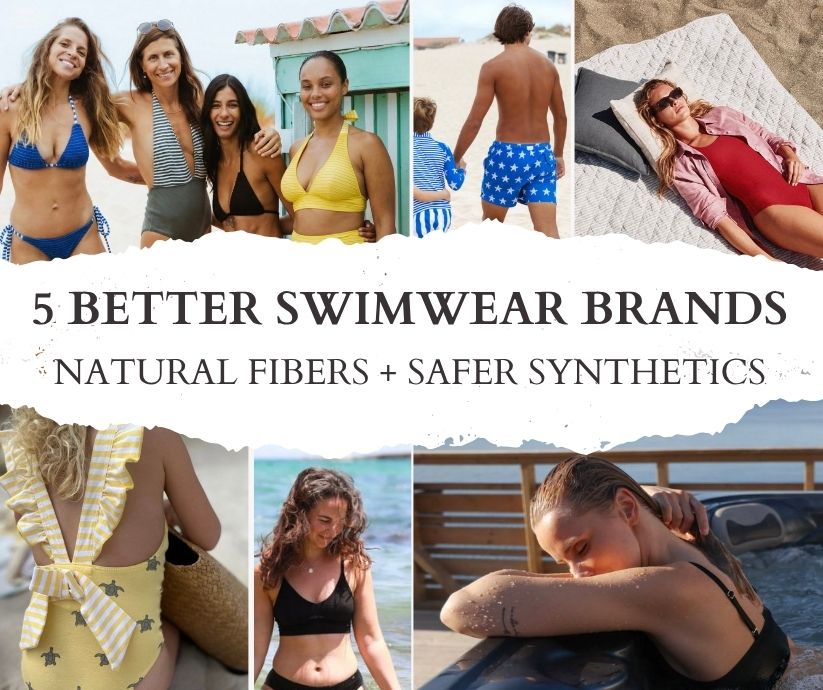
5 Better Swimwear Brands (Natural Fibers + Safer Synthetics)

5 Better Swimwear Brands (Natural Fibers + Safer Synthetics)

My husband once said that if I’m cranky the solution is to put me in water – the ocean, a pool, a bathtub . . . whatever’s closest.

Let’s just say he was not wrong, and we don’t live 10 minutes from the ocean by accident.

For years I’ve been packing up a beach bag with non-toxic sunscreen, water in stainless steel bottles, and snacks tucked into Stasher bags.

All while wearing a swimsuit made from the same petroleum-based fabrics used in most activewear – without giving much thought to what chemicals or treatments might be hiding in it. (I’m not willing to swim in my birthday suit – at least not with people around!)

All of that changed last year when I dove deep (pun intended) into toxins in clothing, natural fiber alternatives, and non-toxic clothing brands. While I was looking for daily staples, I came across swimsuits made with hemp, wool, and even cotton, often blended with PFAS-free synthetics for performance.

Obviously, I had questions, starting with . . .

Do healthy swimsuit options really exist?

If you’re like me, you’ve probably clicked on an ad for “eco-friendly clothing” and realized immediately that everything is made of recycled plastic.

Unfortunately, when plastics containing BPA get a second life as a swimsuit, the BPA doesn’t disappear. It remains part of the garment, where it can easily be absorbed through skin. (1) In fact, research has found that some recycled fabrics contain more BPA than virgin synthetic materials. (2)

Natural fibers are my top choice whenever it’s practical, but if there’s ever a time to bring safer synthetics into the conversation, it’s when we talk about swimsuits.

A Practical Approach To Healthier Swimwear

If you’ve spent any time looking for non-toxic swimwear, you’ve probably realized pretty quickly that this category gets complicated.

Swimwear has unique performance demands. Most people want a suit that stretches, stays in place when wet, dries reasonably quickly, and holds up to movement, saltwater, sunscreen, and chlorine.

That’s one reason most swimsuits – even the healthier options – still usually include at least a small amount of synthetic material.

Personally, I’m okay with that. For me, reducing the amount of petroleum-based fabric while prioritizing PFAS-free materials, safer dyes, and better certifications is still a meaningful step in the right direction.

That’s why I’m going to cover swimwear with natural fibers, safer synthetic fibers, and thoughtful blends that balance comfort, durability, and performance. Before we get to the recommendations, though, it helps to know what we’re trying to avoid.

👎 Common Chemicals Found In Swimwear

A cute swimsuit can still come with some not-so-cute extras.

Depending on the fabric, dyes, and finishes used, swimwear can contain chemical residues linked to skin irritation, hormone disruption, and other concerns. Here are some of the problematic ones found in swimwear:

PFAS
These “forever chemicals” are sometimes used to make fabrics more water- or stain-resistant. They are very common in “quick dry” swimsuits, but may be present even if a suit is not specifically labeled that way. PFAS chemicals have been linked to hormone disruption, immune effects, and increased risk of certain cancers in human and animal studies.

Formaldehyde
Formaldehyde-based resins are used to make fabrics more wrinkle resistant. Clothing treated with formaldehyde can trigger contact dermatitis, eczema, allergic reactions, and skin sensitization. (3) It’s also classified as a known human carcinogen. (4)

Phthalates
Phthalates are added to clothing to make synthetic fabrics softer, stretchier, and more durable. They’re also used to help prints stick, make materials stain or odor-resistant, and give garments a “performance” finish. They can be absorbed through skin contact . . . especially when heat, friction, and sweat are involved. (5)

Azo dyes
These are part of what gives some swimsuits those super bold, vibrant colors. Unfortunately, when azo dyed fabrics come into contact with sweat or bacteria on the skin, some of them can break down into aromatic amines that can cause contact dermatitis, eczema, and allergic sensitization.

Some azo dyes form specific aromatic amines that have been linked to bladder cancer, prompting the European Union and several other countries to restrict or ban dozens of the most hazardous varieties. US restrictions are mostly managed through state-level regulations (for example, California’s Proposition 65) or voluntary industry standards.

Heavy metals
According to a paper published by Yale University’s School of Medicine, “heavy metals such as lead, cadmium, and mercury are frequently used to stabilize pigments and improve colorfastness by preventing color degradation over time.” (6)

Microplastics

Synthetic fabrics also shed microplastics over time, especially during washing. It’s one of the reasons I started prioritizing natural fibers whenever possible. However, for this category, I don’t personally try to avoid synthetics completely. My goal is to reduce the overall percentage when possible and/or choose options that are thoughtfully made with durability, performance and the environment in mind.

✅  Materials To Look For

The good news is that brands are starting to move in a better direction. Here are some of the materials and certifications I looked for while researching healthier swimwear options.

Merino Wool

Merino wool is naturally breathable, odor-resistant, and offers some UV protection. It may not be the first material that comes to mind for swimwear these days, but wool has actually been used for swimming for a long time and is beginning to make a quiet comeback.

Organic Hemp

Hemp is naturally durable and offers some UV resistance. It’s also known for its antimicrobial properties in certain applications.

Organic Cotton

Organic cotton is grown without synthetic pesticides and fertilizers and is often processed with fewer chemical inputs. While it’s not inherently stretchy or quick-drying, it is soft and can be blended with other fibers or woven in unique ways that create more give.

Plant-Based Synthetics

Some newer performance fabrics are made partially from renewable plant sources instead of petroleum. Examples include BioSculpt and Yulex, which use materials derived from things like castor beans or natural rubber.

These fabrics still require processing, but some brands use lower-toxicity chemistry and closed-loop manufacturing systems designed to reduce environmental contamination.

I personally think these materials can be a really good middle-ground option when you need swimwear to perform well for activities like surfing, lap swimming, or active beach days.

OEKO-TEX Certified Synthetics

Some synthetic fabrics are certified to standards that test for harmful chemicals, including PFAS, certain azo dyes, lead, phthalates, and bisphenols.

One I look for often is OEKO-TEX® STANDARD 100, which tests textiles from yarn to finished product, including threads, buttons, and accessories, against a list of more than 1,000 harmful substances. OEKO-TEX also uses stricter requirements for products with more direct skin contact, which makes it especially relevant for swimwear.

For me, this certification is a meaningful step up from conventional synthetic swimwear with no third-party testing or transparency.

You’ll notice that many of the brands below still use a small amount of elastane or nylon for stretch and durability. Personally, I’m okay with that tradeoff when it helps reduce unnecessary chemical treatments and improves durability.

👙 5 Best Sustainable & Non-Toxic Swimwear Brands

Because stock changes from season to season, materials sometimes change, too. Always check the actual fabric description to make sure the piece you’re considering matches what you’re looking for.

Pure Earth Collection – Organic Swimwear for the Whole Family

Best for: Organic cotton swimwear with UPF protection
Certifications: GOTS certified
Materials: 98% organic cotton, 2% lycra
Price range: About $52–$104 on the U.S. site, based on currently listed swim diapers, bikini bottoms, and kids’ swimsuits
Size range: Baby/kids 0–1 through 11–13; women’s S/M–L; adult men’s swimwear is listed, but I’d verify sizing on the specific product page before publishing

Why It Made The Cut

Pure Earth Collection is one of the most unique swimwear brands I found because they offer matching organic cotton swimwear for women, men, kids and babies – not just a handful of options for one age group.

Their Earthcove swim line is made with 98% certified organic cotton and 2% lycra for stretch, with built-in UPF 50+ protection. The brand states that the lycra used is free from PFAS and BPA, and that the finished swimwear is GOTS certified.

I especially like that they’re not just swapping one synthetic for another. Compared with conventional polyester or nylon swimwear, Pure Earth says their organic cotton suits reduce microplastic shedding by 98%, which makes them a strong option for anyone trying to lower their family’s plastic load without giving up stretch completely.

Their kids’ line includes long-sleeve swimsuits, regular swimsuits, and swim diapers, while the women’s line includes one pieces and bikinis. The U.S. site currently ships within the U.S. only, while the U.K. site notes worldwide shipping.

Bottom line: If you’re looking for one of the lowest-plastic swimwear options available – especially for matching family swimwear – Pure Earth Collection is one of the best places to start. Just keep in mind that, like many natural-fiber options, the brand recommends rinsing after chlorine or saltwater exposure to help preserve the fabric.

BRANWYN – Merino Wool Innerwear That Doubles As Swimwear

Best for: Travel, hiking, and spontaneous swims
Certifications: ZQ-certified Merino wool, Responsible Wool Standard (RWS) certified supply chain
Materials: Merino wool blends (varies by style)
Price range: About $38–$98
Size range: XS–XXL

Why It Made The Cut

BRANWYN technically makes innerwear, not swimwear, but there’s a good reason many of their photos feature women swimming, surfing, paddleboarding, wading, and hiking near waterfalls.

Before synthetic swim fabrics took over, wool was actually one of the most common materials used for bathing suits. Merino wool specifically is soft, light, breathable, relatively quick-drying, and a surprisingly awesome choice for swimwear.

BRANWYN pieces are designed for movement, travel, sweating, temperature swings, and outdoor adventures of all kinds. The brand fully embraces that versatility and even encourages using its merino pieces for swimming.

They’re also third-party tested. In 2024 and 2025, Intertek tested their products and found no detectable BPA, PFAS, or phthalates. BRANWYN plans to continue retesting annually.

Personally, I especially like the darker colors for swimming. The black Essential Supreme bra has a very swimsuit-like cut and includes removable cup liners, which I appreciate.

This summer, I’m pairing it with these bottoms, which are super comfy and offer the kind of coverage I actually want when I’m swimming, hiking, or chasing kids around the beach. The fabric has a matte finish, so it doesn’t look exactly like a conventional shiny swimsuit, but it still feels totally wearable for water adventures.

I’m also thiiiis close to clicking “add to cart” on this bralette and bikini bottom in the gorgeous limited edition color, Transformative Teal, that’s pictured above. It’s one of my favorite colors, and even though I usually prefer a little padding in swimwear, this set is tempting enough to make me reconsider.

One important note: BRANWYN confirmed to me that their pieces can be worn in chlorinated pools and hot tubs, just make sure to wash them right away after use and hang to dry. So while I’d absolutely wear these for beach days, lake days, cold plunges, paddleboarding, travel, hiking swims, and occasional pool use, I personally wouldn’t make them a dedicated lap-swimming suit.

If you’re still skeptical, here are some actual user reviews:

COMFY AND PERFECT FOR TRAVEL ADVENTURES

I have been wearing the Essential Busty for awhile and loved that it is thick enough in every way, the wide straps don’t cut into you and offer moderate support for D’s. On a recent trip to Ireland I had the unexpected opportunity to utilize the opening day of a lakeside spa and sauna at a romantic inn. Including a swim in the cold lake and back into the sauna. My Essential Busty and Hipsters looked no different than a swimsuit, and dried quickly for travel, I was ready for the adventure!

BETTER THAN A SWIMSUIT

On a camping trip I was wearing the Branwyn Bralette and hipster underwear. I decided to take a dip in the river –and I am so glad I did! I didn’t feel yucky or soggy. I loved the experience so much that I just bought another Bralette and underwear specifically for swimming at the end of hikes. Previously I have uncomfortably worn bathing suits under my hiking clothes, but it’s very uncomfortable. Never again! Merino wool will be my new “swimsuit” for comfy, quick-drying hiking and camping swims.

Bottom line: This is probably not the brand for competitive swimmers or heavy chlorine exposure. But if your ideal summer includes road trips, paddleboards, alpine lakes, camping, hot springs, hiking, or “might accidentally end up in water” adventures, BRANWYN is one of the most interesting low-plastic options I found.

Quince – Affordable, PFA-Free Swimwear

Best for: Budget-friendly pool and beach swimsuits
Certifications: OEKO-TEX Standard 100
Materials: Body: 78% recycled polyamide, 22% spandex; liner: 90% recycled polyamide, 10% spandex
Price range: About $24.90–$49.90
Size range: XS–XL

Why It Made The Cut

Quince is an option to consider if you want something affordable, familiar-feeling, and practical for regular pool or beach use – but still want better standards than conventional synthetic swimwear with no certification or transparency.

Their suits are fully synthetic, but the fabric is OEKO-TEX certified, PFA-free, chlorine-resistant, and priced far below many premium swim brands.

Their women’s suits come in a wide range of styles, offer removable cups, and are resistant to chlorine, sunscreen, oils, fading, snagging, and pilling. They also offer a pretty decent range of board shorts for men, as well as kids swimwear.

This is a solid option for anyone that wants something more affordable and familiar-feeling than natural fiber swimwear, but also wants better standards than conventional synthetic swimsuits with no certification or transparency.

Bottom line: Quince is a good budget-friendly option for pool days, beach trips, and more – not plastic-free, but better-vetted, PFA-free, chlorine-safe, and much more affordable than many premium swim brands.

Industry of All Nations – 100% Organic Cotton Board Shorts

Best for: Plastic-free board shorts
Certifications: GOTS-certified organic cotton
Materials: 100% organic cotton, including the lining
Price range: About $95–$145
Size range: S–XL (varies by style)

Why It Made The Cut

If you’re looking for swim shorts made without polyester or nylon, Industry of All Nations is one of the most interesting brands I found.

Their board shorts are made from 100% GOTS-certified organic cotton – including the lining – which is incredibly rare for swimwear. Some styles are batik hand-printed and dyed with fermented natural indigo, while others use natural dye baths like rubia cordifolia and chebula seed.

I also like that the design is something most men would actually want to wear beyond the water – relaxed, substantial, and easy to pair with a t-shirt after a swim. For anyone trying to avoid plastic-based swimwear as much as possible, this is one of the cleanest boardshort options I found.

Bottom line: If your goal is to find genuinely plastic-free board shorts – not just “recycled” synthetics – Industry of All Nations is one of the strongest options I came across.

Hanna Andersson – Safer Swimwear for Babies & Kids

Best for: Practical kids’ swimwear
Certifications: OEKO-TEX® STANDARD 100; some pieces contain GRS-certified recycled nylon
Materials: Varies by style; examples include recycled nylon with CREORA® Highclo spandex
Price range: About $40–$69 before sales
Size range: Baby through kids’ size 12, depending on style

Hanna Andersson is not a natural-fiber swimwear option, but it’s one of the more practical safer-synthetic choices for babies and kids – especially if you want cute prints, sun coverage, pool durability, and third-party testing.

Their swimwear is OEKO-TEX® STANDARD 100 certified, and it includes a wide selection – rashguard swimsuits, trunks, one-pieces, two-piece sets, cover-ups, and some family matching options.

If you’re trying to reduce hidden chemical exposure in clothing without completely sacrificing comfort, style, or practicality, these guides may help:

  • The Hidden Chemicals in Modern Clothing + Low-Toxin Choices
    Learn what PFAS, BPA, azo dyes, phthalates, and other common textile chemicals are – plus how to shop more strategically.
  • The Best Non-Toxic Leggings (After 9+ Months of Testing)
    My deep dive into lower-toxin leggings, natural fibers, safer synthetics, and what actually held up in real life.
  • The Natural Clothing Fiber Handbook
    A practical guide to organic cotton, wool, hemp, linen, bamboo, modal, TENCEL™, and other common fabric types.
  • 15+ Non-Toxic Clothing Brands That Look, Feel & Do Good
    The brands I personally look at first when shopping for lower-toxin clothing.

Sources

  1. Center for Environmental Health. (2022). New testing shows high levels of BPA in sports bras and athletic shirts. Center for Environmental Health.
  2. Jurikova, M., et al. (2024). Bisphenols in daily clothes from conventional and recycled materials: Analysis, dermal exposure and associated risks. Environmental Pollution.
  3. Herrero, M., et al. (2022). Early-life exposure to formaldehyde through clothing. Environmental Health Insights.
  4. National Cancer Institute. Formaldehyde and Cancer Risk.
  5. Aldegunde-Louzao, N., Lolo-Aira, M., & Herrero-Latorre, C. (2024). Phthalate esters in clothing: A review. Environmental Toxicology and Pharmacology.
  6. Pinto, V. C. D., & Peleg Mizrachi, M. (2025). The Health Impact of Fast Fashion: Exploring Toxic Chemicals in Clothing and Textiles. Encyclopedia.

Share with a friend! 👇

Share with a friend! 👇

Tags: , , , , ,
tallow balm 2

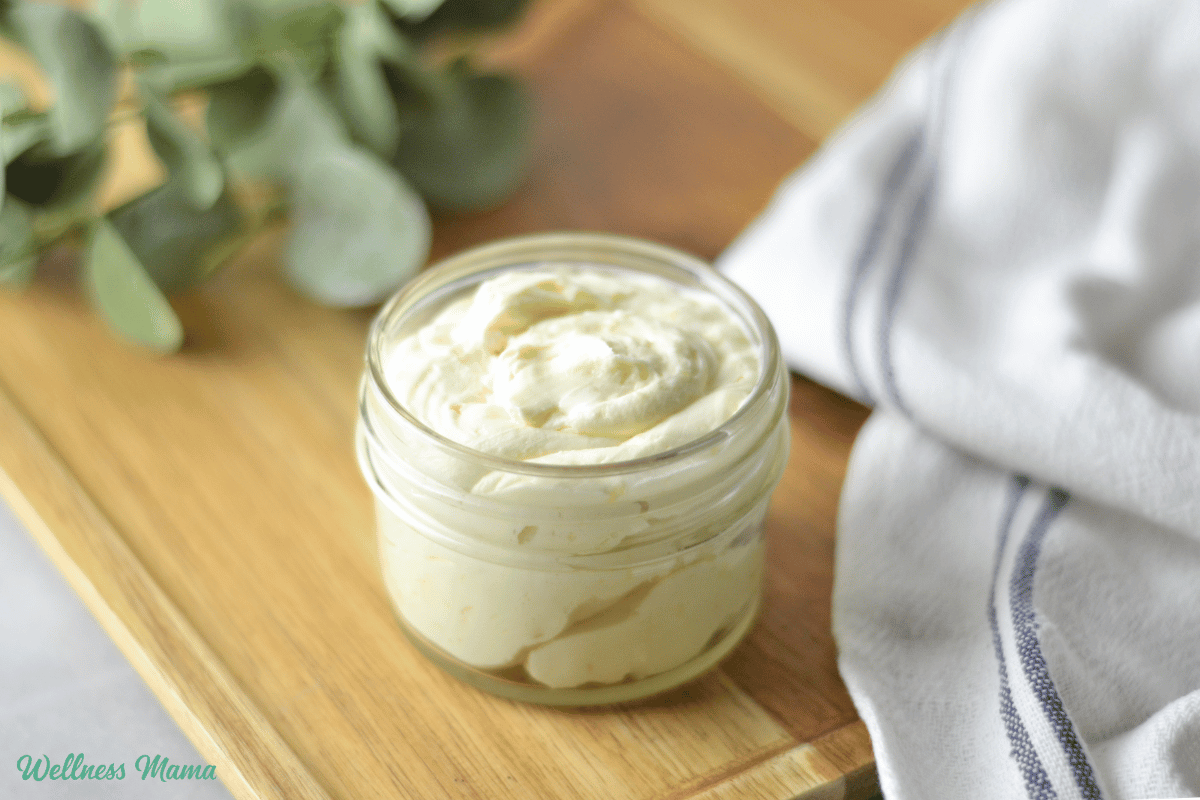
How to Make Tallow Balm

Years ago I discovered the skin health benefits of tallow. While these DIY tallow lotion bars were a favorite, I wanted something with a softer consistency. The result is this nourishing whipped tallow balm, perfect for even sensitive skin. 

I love how it makes my skin feel so silky and soft. Plus it has natural ingredients I feel good about using with my kids too. I really saw a big difference in my son’s eczema scars after using tallow. Here’s why tallow balm is so great, how to use it, and how to make your own!

The Benefits of Tallow Balm

Unlike other moisturizers and lotions with plant oils, tallow balm is a unique creature. It all starts with animal fat (usually beef fat, but mutton works nicely too) that’s then rendered and purified. It’s similar to lard, which comes from pigs. 

The best fat to use for beef tallow comes from grass-fed suet or leaf fat. This leaf fat is what’s found around the kidneys. Tallow balm benefits the skin in so many ways. 

Since tallow comes from an animal source it nourishes and soaks into our skin beautifully. You can use it for lip balm, soap, moisturizers, and salves. As a balm, it helps with dry skin, eczema, and anti-aging. 

Many people use tallow balm for skin because it’s rich in naturally occurring fatty acids that closely resemble our skin’s own oils. It’s perfect for every age from babies on up. I used tallow balm for eczema on my son and it’s great for diaper rash too. 

Tallow Balm Ingredients

You could use just plain tallow on your skin, but it’s very firm and hard to spread. An easier way is to make tallow moisturizer made with a mix of tallow and liquid oils. This makes it much easier to apply and you get the best of both worlds. The result is a deeply nourishing beef tallow moisturizer that works well for both face and body care.

Some recipes add shea butter, coconut oil, or jojoba oil. I like to keep things simple and mainly use extra virgin olive oil here. I’ve also added a little bit of rosehip seed oil. Since rosehip is astringent it helps the tallow soak in a little better, plus it has amazing skin restoring properties. This anti-aging rosehip facial moisturizer is a reader favorite!

You don’t even need beeswax to thicken this. You can also add some of your favorite essential oils, though it’s totally optional. Frankincense, chamomile, and lavender essential oils are some good ones to consider.

How to Make Tallow Balm

This recipe feels like a whipped body butter, or you can skip the whipping step and it feels more like a salve. Either way works, but I prefer the feel of the whipped version. If you’ve been searching for a simple tallow balm recipe, this one works beautifully because it’s customizable and gentle enough for sensitive skin.

Another question I often hear is how to make tallow balm less greasy. Adding lightweight oils like rosehip seed oil and whipping the finished balm both help create a lighter texture that absorbs more easily into the skin. Olive oil is a heavier oil, so you can replace it with a lighter one (like grapeseed) if you need something less moisturizing. 

Where to Get Tallow

Ok, so maybe I’ve sold you on how awesome tallow is for skin… but where do you get it? You might find high-quality grass-fed beef tallow from a local farmer in your area. If not, I also like to get my tallow online here.

Rendered tallow has an off-white color and may or may not have a beefy smell. Further purifying it helps to get rid of the tallow smell and yields a snow-white color.

How to Purify Tallow

If you’re using tallow for cooking (or even soap making) the smell isn’t strong enough to make a difference. For skincare products though you’ll want purified tallow. You can find a tutorial for how to render tallow here, but here’s how to purify it further.

  • Add 2 cups of rendered tallow, 5 cups of water, and 3 Tablespoons of salt to a crockpot. You can also double the amounts used if you have more tallow. 
  • Set it to low and let it simmer for about an hour.
  • Strain the hot liquid into a large bowl through a fine mesh sieve lined with paper towels or a very clean tea towel or t-shirt fabric.
  • Let the bowl cool in the fridge until firm.
  • Remove the block of hardened tallow from the top of the salt water and flip it over. On the underside, you may see some brown bits, scrape all of these off.
  • You can repeat this process once more if desired.
  • Allow the tallow to air dry at room temp so all of the water evaporates (otherwise it can mold).

Once your tallow is purified, you’re ready to make your own whipped tallow balm at home!

Whipped Tallow Balm Recipe

This silky tallow balm is great for dry skin and all sorts of skin irritations. Great for all ages!

Prep Time2 minutes

Active Time10 minutes

Cooling Time30 minutes

Total Time42 minutes

Yield: 6 ounces

Author: Katie Wells

  • Add tallow to the top of a double boiler and melt tallow over low heat.

  • Once it’s completely liquid add the olive oil and stir.

  • Remove from the heat and add essential oils and rosehip seed oil if using.

  • Pour the tallow balm into a glass jar and put it in the refrigerator to harden.

Whipped Tallow Balm

  • For a whipped tallow balm version, pour the balm into a mixing bowl instead before putting it in the fridge. You want it to solidify to the point it’s firm, but not really hard.

  • Whip the tallow balm with the whisk attachment on a stand mixer or a hand mixer. If it’s too hard to whip, then let it set at room temperature just until soft enough to whip.

  • Transfer to a glass jar for storage.

  • Shelf Life and Storage: Store your tallow balm at room temperature away from direct light and heat. It should last for several months if stored properly.
  • This recipe uses a 1% essential oil dilution ratio. If using for children ages 6 months to 3 years old, then reduce the essential oils down to 7 drops total (.25%) or omit.

Optional Herbal Infusion

You can include even more herbal skincare benefits in your tallow balm. Instead of using regular olive oil (or any liquid carrier oil) use herb infused oil instead. Calendula, lavender, chamomile, or plantain herb are some good options for skin. Here’s how to make an herb infused oil. I used some leftover dandelion infused oil for one batch.

Don’t feel like making it? Toups & Co Organics makes some great tallow balms my family loves.

Tallow Balm Recipe FAQ

1. My tallow balm is too hard/soft. 

Some tallow is harder than others, and some people like their tallow balm harder or softer. If you want a softer version, add a little more oil. If you want a harder version, then decrease the oil or add a little beeswax.

2. Can I use tallow balm for my face?

Yes! I do all the time. Whipped tallow balm on my face makes it feel silky smooth. 

3. My tallow smells like beef, can I use it? 

Yes, but purify it first. See the directions above. Mine still had a very slight beef smell after purifying, but it wasn’t strong.

4. I bought tallow from the store/farmer, do I still have to purify it? 

Yes, most likely, unless it’s already been purified several times and doesn’t have a strong beefy smell.

5. Can I use lamb or pig fat? 

Pig fat is lard and is too soft for this recipe (but makes great French fries!). Mutton tallow from lamb should work, but I haven’t tried it. 

Have you ever used tallow on your skin before? What’s your favorite way to use it? Leave a comment and let us know!

Tags: ,
Cucumber_Sandwich

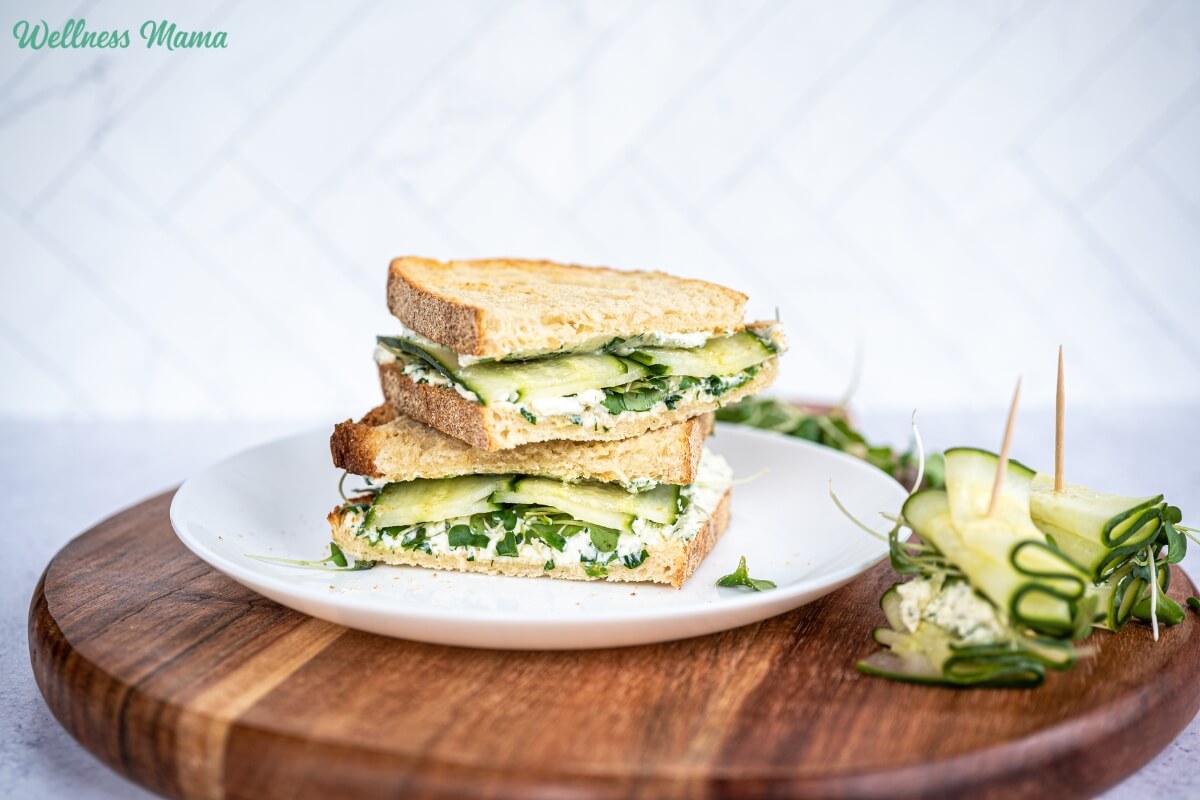
Cucumber Sandwich Bites (Grain-Free Options)

Every summer there are certain garden crops that produce in abundance. Cucumbers are one of those. Even if you don’t grow them yourself, they’re widely available at stores and farmers markets. These simple cucumber sandwiches are a creamy and fresh way to enjoy cucumbers!

Often served at tea parties as finger food, cucumber tea sandwiches are a classic. They’re also a practical and delicious choice for snack time, appetizers, or a simple side dish. 

Cucumber Cream Cheese Sandwiches

Cucumbers have a really high water content, some fiber, and various nutrients. You’ll find vitamin C and K, magnesium, and potassium. They’re a great way to hydrate during the warm summer months. Not only that, but they add a nice refreshing crunch to dishes. 

We use cucumbers a lot chopped up in salads or for pickles, but I wanted to try them in cucumber sandwiches too. 

Supposedly authentic English cucumber sandwiches originated in 1870s British occupied India. The English created them to cope with the heat. Later on they became an afternoon tea time staple. And then Americans added the creamy sauce to go with the bread and cucumbers. 

I added some microgreens for extra flavor and nutrition. Plus they add another pop of color and freshness. 

Different Variations (Including Grain-Free)

For many years I didn’t eat any gluten or grains, but now I’ll eat them on ocassion. Classic cucumber sandwiches use crustless, white bread. This isn’t my first choice for several reasons, but they taste just as good on sprouted grain bread or sourdough. 

If you want to skip the grains, then there are a few different options. We also like using butter lettuce leaves as a sandwich wrap. Another option is to keep it simple and just top the cucumbers with the cream cheese sauce.

I opted for cream cheese for the filling, but some recipes use mayo for a filling. If you need a dairy-free option, try mixing a little mayo with the herbs and seasonings instead. 

Cucumber Sandwich Bites

Creamy and crunchy, cucumber sandwiches are full of classic flavor. Featuring flavorful seasonal ingredients and herbs.

Herbed Cream Cheese Spread

  • 8 oz cream cheese (softened)
  • ¼ cup crumbled feta cheese (or up to 1/2 cup)
  • ¼ cup green onion (thinly sliced)
  • 2 TBSP fresh parsley (chopped)
  • 1 TBSP fresh dill (chopped)
  • 1 tsp lemon juice
  • ¼ tsp garlic powder
  • ¼ tsp onion powder
  • ¼ tsp salt

For Serving

  • 1 cup microgreens
  • black pepper (freshly cracked)
  • butter lettuce leaves (optional, for wraps)
  • sourdough or sprouted grain bread (optional)
  • Slice cucumbers into thin strips or rounds (about ?–¼ inch thick).

  • Place cucumbers in a bowl. Sprinkle with salt and pour in enough vinegar to cover. Let sit for 10–15 minutes.

  • Drain cucumbers and lay them on a clean towel. Pat dry well.

  • In a medium bowl, combine cream cheese, feta, green onion, parsley, dill, lemon juice, garlic powder, onion powder, and salt. Mix until smooth and fully combined.

  • For cucumber bites (no bread): Top cucumber slices with a small amount of cream cheese mixture. Add microgreens and a pinch of black pepper.

  • For lettuce wraps: Spread cream cheese onto lettuce leaves, add cucumbers and microgreens, then fold.

  • For sandwiches: Spread cream cheese onto sliced sourdough or your favorite bread. Layer with cucumbers and microgreens, then slice.

Nutrition Facts

Cucumber Sandwich Bites

Amount Per Serving (1 serving)

Calories 166
Calories from Fat 126

% Daily Value*

Fat 14g22%

Saturated Fat 8g50%

Polyunsaturated Fat 1g

Monounsaturated Fat 4g

Cholesterol 44mg15%

Sodium 484mg21%

Potassium 145mg4%

Carbohydrates 4g1%

Fiber 1g4%

Sugar 2g2%

Protein 4g8%

Vitamin A 735IU15%

Vitamin C 5mg6%

Calcium 84mg8%

Iron 0.4mg2%

* Percent Daily Values are based on a 2000 calorie diet.

Serve immediately for the best texture.

More Cucumber Recipes

Have a bunch of cucumbers that need to be used? Here are some more cucumber recipes to try!

What are some of your favorite refreshing snacks to eat? Leave a comment and let us know!

Tags: , , , ,
Homestead Blog Hop - Homestead tips, ideas, animal care, and recipes every Wednesday

Homestead Blog Hop 598 – Mother’s Day Printables and Crafts

Welcome to Homestead Blog Hop, a weekly gathering for homesteaders and simple living enthusiasts to share DIY projects, from-scratch recipes, and creative inspiration. This week’s hop features cozy homesteading tips, along with practical ideas that celebrate handmade living and self-sufficiency.

Whether you’re looking for seasonal crafts, homemade treats, or encouragement on your homesteading journey, you’ll find plenty of inspiration to carry into the new year. Grab a cup of tea, explore the featured posts, and join us in sharing your own homestead creations.

Meet Your Homesteading Hosts

We’re Kelly from Simple Life Mom, Liz from The Cape Coop, Natasha from Houseful of Nicholes, and Laurie from Ridgehaven Homestead. Together, we’re passionate about from-scratch living, simple ingredients, frugal habits, and intentional homesteading. We’re delighted to host the Homestead Blog Hop, where you can find fresh inspiration each week for DIY projects, homemade recipes, and practical simple living ideas.

Follow Us for More Homestead Inspiration

Natasha – Houseful of Nicholes
Facebook | Pinterest | X | Instagram

Laurie – Ridge Haven Homestead
Facebook | Pinterest | Instagram

Liz – The Cape Coop
Facebook | Pinterest | X | Instagram

Kelly – Simple Life Mom
Facebook | Pinterest | X | Instagram

FEATURED POSTS from the Last Homestead Blog Hop

Each week, we take turns selecting three featured posts from the Homestead Blog Hop. These features are shared across all of our social media platforms, helping spotlight the creativity and hard work of our fellow homesteaders. Here are the featured posts from last week’s hop:

1. Transforming Oui Yogurt Jars: Creating a Window Hanging Flower Display from Steph Creates

2. Mother’s Day Verses for Cards (Printable Ideas Included) from Walking on Sunshine

3. DIY Flower Teacher Gift with Printable Tag from Hunny I’m Home

Congrats! Feel free to grab the featured on button for your post.

Just right click and ‘save image as…‘

Guidelines for the Homestead Blog Hop

  1. Click the “Add Your Link” button below and upload a clear, eye-catching image from your project or recipe. Please link directly to the family-friendly post itself, not your blog’s homepage.
  2. You may link up up to three posts each week.
  3. Take time to visit a few other blogs in the hop and leave a thoughtful comment to let them know you stopped by. Community support makes this hop special!
  4. Please include a link back to the Homestead Blog Hop in your post. Posts without a backlink are not eligible to be featured. All featured posts are shared across all hosts’ social media channels.
  5. Share posts that haven’t been linked to the hop before. Older posts are welcome as long as they are new to the hop.
  6. By joining the Homestead Blog Hop, you grant the hosts permission to use one image from your post, with a link back to your site, if your post is selected as a feature next week.
  7. This is a family-friendly link-up designed to encourage, inspire, and support the homesteader in all of us.

Let the Party Begin!

Which project are you excited to try this week? Leave a comment below.

Join Our Homestead Blog Hop Pinterest Board

Follow all of your hosts on Pinterest and send a message if you’d like to be added to our Homestead Blog Hop group board. This board is a great place to share your DIY projects, crafts, and from-scratch recipes with the homesteading community.

Guideline: Only pin posts that you’ve linked up to the Homestead Blog Hop.

Tags: , , , , , ,
sodium for cellular health

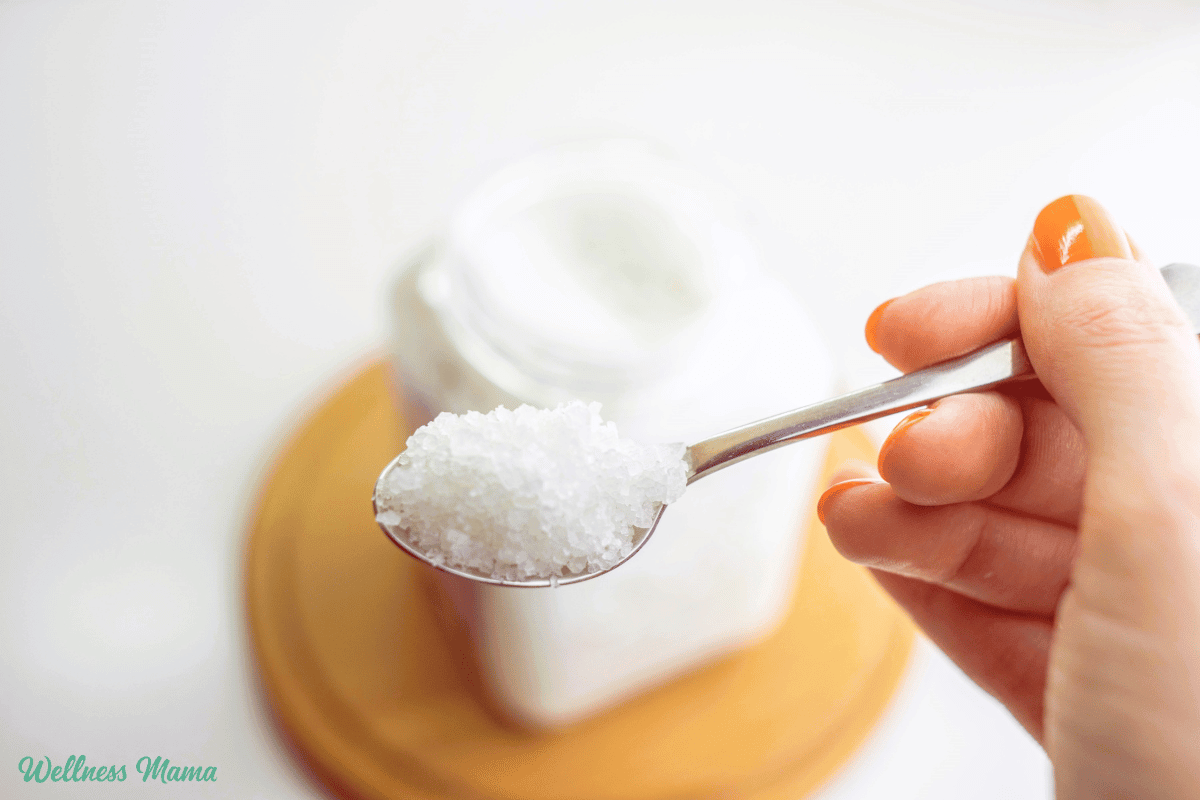
Why Getting Enough Salt is Critical For Health

Sodium used to be something I barely thought about. Like many women trying to “do all the right things,” I ate whole foods, drank plenty of water, and avoided “bad” foods. On paper, it looked like a perfect routine. However, I was still having symptoms like low energy and sluggish digestion. 

It wasn’t until I started digging into the science of minerals, especially sodium, that things began to click. For years we’ve been told that sodium is bad and something to be restricted. However, what I’ve learned (and experienced) over the years flips that advice on its head. 

Sodium is one of the most foundational elements in how our bodies generate energy, communicate internally, and even feel safe at a nervous system level. For many of us, the real problem is that we’re not getting enough sodium.

Sodium: and Why Our Cells Crave it

When we hear the word “electrolytes,” it’s easy to think of sports drinks or hydration powders. But at a cellular level, electrolytes are something much more profound. They are what allows electricity to flow throughout the body. 

Sodium, in particular, is one of the primary electrolytes. In simple terms, it carries a positive charge when dissolved in water. This charge is what allows it to conduct electricity. That’s incredibly important because the human body is, at its core, an electrical system.

Every thought, heartbeat, and movement depends on electrical signaling. Without adequate sodium, that signaling becomes less efficient. Research even shows that sodium and potassium ions are constantly moving across cellular and organelle membranes. This highlights just how deeply embedded these minerals are in cellular function.

From my own experience, this was one of the biggest mindset shifts. I stopped thinking about sodium as just something to sprinkle on food and started thinking of it as a conductor. It’s something that allows the body to function smoothly at every level.

Sodium For Cell Power

To understand why sodium matters so much, it helps to zoom in to the level of individual cells.

Every cell in the body maintains a delicate balance of sodium and potassium across its membrane. This balance, aka the sodium-potassium gradient, is what allows cells to generate electrical impulses. These impulses are essential for nearly every function in the body.

One of the most fascinating aspects of this is the sodium-potassium pump. This tiny but powerful mechanism uses energy (in the form of ATP) to push sodium out of the cell and pull potassium in. It’s estimated that this process alone uses a significant amount of the body’s energy, and up to half of our brain’s energy. 

Not Getting Enough

That’s not a small detail. It means that maintaining proper sodium levels isn’t just helpful, it’s energetically prioritized by the body. And when our body is stressed and not getting the energy it needs, it deprioritizes other functions, like digestion and clear thinking. 

When we don’t get enough sodium, several things start to break down, including: 

  • Electrical signaling becomes less efficient
  • Cells struggle to regulate fluid balance
  • Energy production may feel sluggish
  • Brain function can feel “off” or foggy
  • Digestion can feel slow
  • Drier skin and hair from lack of true hydration

I noticed this personally. On days when I wasn’t getting enough sodium, especially if I’d been sweating or drinking more water than usual, I felt noticeably more fatigued and mentally slower. I noticed quite a difference when I started prioritizing getting more sodium. 

Why “More Water” Isn’t Always Better

We’ve all heard the advice to “drink more water.” And while hydration is important, there’s a piece of the puzzle that often gets missed. Hydration isn’t just about water, it’s about balancing fluid and mineral levels. 

Sodium plays a key role in regulating the body’s fluid levels, especially in the space outside our cells. When sodium levels drop too low relative to water intake, cells can begin to swell. This is especially significant in the brain, where even small changes in fluid balance can affect how we feel.

This can show up as:

  • Headaches
  • Brain fog
  • Nausea or fatigue
  • A general sense of feeling “off”

In some cases, what feels like dehydration may actually be the opposite, too much water without enough minerals. This was another area where my own habits needed adjusting. I’d been drinking a lot of plain water, thinking I was helping myself out. However, once I started adding minerals, especially sodium, I found I actually needed less water to feel hydrated. 

Sodium and the Nervous System: A Hidden Safety Signal

One of the most interesting ideas I came across is that sodium can act as a “safety signal” for the body.

Good sodium levels support healthy blood volume and circulation. This helps the brain know that the body is in a stable, well-resourced state. When sodium is too low, the body may interpret this as a form of stress, even if we don’t feel stressed ourselves. 

This can trigger symptoms that feel a lot like anxiety:

  • Racing heart or palpitations
  • Dizziness when standing
  • Restlessness or unease
  • Feeling tired but wired (fatigue paired with difficulty relaxing)

I noticed these symptoms, especially when I was doing all the “healthy” things (eating clean and exercising), but still felt off. In some cases, simply increasing sodium intake made a noticeable difference in how calm and stable I felt.

It’s a powerful reminder that the nervous system doesn’t just respond to thoughts or emotions. It also responds to physical inputs, like minerals.

Rethinking Sodium and Blood Pressure

For decades, sodium has been closely tied with high blood pressure. But when you look more closely at the research, the story becomes much more nuanced. It’s true that high sodium from processed foods, especially in the context of low potassium and low activity levels, can contribute to hypertension in some people. However, that’s not the full picture.

Some research suggests a J-shaped curve, where both very high and very low sodium intakes may be linked with increased health risks. In other words, too little sodium may be just as problematic as too much for certain people. Even more interesting, some experts estimate that about 75% of us may actually see stable or better blood pressure with higher sodium intake. Especially when this sodium comes from whole-food and is balanced with other minerals.

In my own family and clients I’ve worked with, I’ve seen this play out in real life. Focusing on a nutrient-dense diet, adequate mineral intake, consistent movement, and specifically increasing sodium didn’t raise blood pressure. Instead, there was real life data showing it had the opposite effect and improved blood pressure. 

Of course, if you have any health condition it’s worth consulting with a natural healthcare professional you trust for targeted advice. 

Why Modern Lifestyles May Deplete Sodium

One of the biggest disconnects in the sodium conversation is that our lifestyles have changed. An active person who lives in a hot climate or exercises or saunas can lose more minerals in five years than a person who doesn’t do these things will in their whole lifetime. And for anyone who prioritizes whole foods, we’ve eliminated the main source of sodium in modern diets: ultraprocessed foods (which is still a good thing!).

Many healthy habits can actually increase sodium loss:

  • Regular exercise
  • Sauna use
  • Living in hot climates
  • Pregnancy and breastfeeding
  • Low-carb or ketogenic diets
  • Chronic or underlying stress

Sweating alone leads to significant mineral loss. Add in stress, which can increase sodium excretion through the kidneys, and it’s easy to see how someone could become depleted.

This was definitely something I noticed. Between exercise, sauna use, and multiple pregnancies, I likely needed more minerals and sodium than most. And yet, like many women, I’d been conditioned to limit salt rather than consider whether I might need more. Interesting side note: my last pregnancy was by far my easiest, and this was after I started prioritizing sodium intake.

Choosing the Right Sources of Sodium

Not all sodium sources are created equal, and this is an important distinction.

Most of the sodium in the standard American diet comes from highly processed foods. These foods often combine sodium with refined ingredients, unhealthy fats, and additives. This also makes it difficult to isolate sodium as the sole issue. In contrast, using high-quality salt with whole foods creates a very different context.

Natural salts, like Himalayan or mined mineral salts, often contain trace minerals and are less processed than conventional table salt. However, even here, quality matters. Some sea salts have microplastics, while certain mined salts can have some levels of heavy metals, including lead. It’s worth doing your research and using what you’re comfortable with. 

This is what I’ve been using lately:

How Much Sodium and Where to Get it

The US sodium guidelines suggest an upper limit of 2.3 grams per day, or about one teaspoon. However, the average person gets about 3.4 grams per day, mostly from ultraprocessed foods. But what is that sweet spot for optimal health? 

It varies by person, but I try to get at least 5 grams a day, sometimes more. Podcast guest and research biochemist Robb Wolf gives a good explanation for why here. 

Personally, I use well-sourced mineral salts and pair them with nutrient-dense foods. I also include naturally salty foods like fermented vegetables and broths, which provide sodium alongside other beneficial compounds. Here’s what else I do:

  • Use healthy salt on seasonal, local foods to taste
  • Mineralized water – I felt a big hydration difference when I started using the Mayu Swirl with minerals (code wellnessmama gives a discount)
  • Using electrolytes and minerals like LMNT or trace minerals
  • Drinking salted broth
  • Eat naturally salty foods like olives, fermented veggies, and pickles, etc.
  • Sip fermented pickled juice
  • Salt tablets (I take these every day in addition to adding salt to food and drinks)
  • Drink sole water first thing in the morning most days

Practical Ways to Support Healthy Sodium Levels

Rather than focusing on strict numbers, I’ve found it helpful to think in terms of context and feedback. Some simple approaches that have worked for me include:

  • Paying attention to how I feel: Energy, clarity, and hydration cues
  • Adjusting intake based on activity level, climate, and stress

One of the most helpful tools has simply been awareness. Noticing patterns, like feeling better with added electrolytes or worse after excessive plain water, can offer valuable clues.

Final Thoughts and A More Nuanced View of Sodium

Sodium is far more than a number on a nutrition label. It’s a foundational component of how the body functions, electrically, neurologically, and even emotionally. It’s responsible for powering cell communication, supporting fluid balance, nervous system stability, and so much more. 

For many of us, especially those focused on whole foods and active lifestyles, the conversation needs to shift from restriction to optimization. The question shouldn’t be, how little sodium we can get away with? A better question is, how can we support our bodies with the right balance of minerals in the context of how we actually live?

Like so many aspects of health, the answer isn’t one-size-fits-all. But in my experience, and even more in the research, sodium deserves a second look. 

Do you try to get more salt or avoid it? Leave a comment and let us know!

Tags: , ,
Adobo_Seasoning

Adobo Seasoning Recipe

I regularly make homemade mayo and I’ll often make different flavors, like sriracha or mayo with adobo seasoning. I use so much adobo seasoning that I started making it in bulk at home. It’s delicious on everything from meats to veggies to dips. 

What is Adobo Seasoning?

Adobo seasoning is a mixture of garlic, oregano, pepper and other spices. It’s traditionally used in Latin American, Caribbean, and Filipino cooking to flavor everything from meats to veggies and soups. Adobo usually doesn’t have really heavy, pungent flavors so it’s versatile to use.

In my kitchen, it’s a general all-purpose seasoning that I add to meats, soups, seafood, eggs, roasted vegetables, and many other dishes.

The word adobo stems from the Spanish word “adobar” meaning “to marinate.” There are many variations of this seasoning, including liquid sauce versions that often include vinegar. The base ingredients are garlic, black pepper, turmeric, and oregano, though other spices can be added (I add several others to my variation).

How to Use Adobo Seasoning

This combination of spices adds depth to dishes without overpowering them, and is versatile enough to use on practically everything. You can mix it in while cooking, or use it as a dry rub on meats. It also makes a delicious marinade when mixed with oil, orange juice, lime juice, or vinegar. Just add enough liquid to make a paste and rub it on beef, poultry, fish, etc. 

Here are some other ways I use Adobo seasoning: 

  • In marinades for meats or chicken
  • As an all-purpose seasoning on seafood
  • On grilled meats and vegetables
  • In soups of all kinds
  • In omelets, quiches, or other egg dishes
  • In guacamole
  • Stirred into homemade mayo for a flavor twist

Tips For Making Adobo Seasoning

Adobo seasoning blends include salt so they’re an all in one seasoning when cooking. If you prefer you can leave the salt out or reduce the amount. This makes it easier to control the amount of salt added when cooking, especially if you’re using this with other salty flavors. 

The recipe calls for black or white pepper. They each have a unique flavor, but either will work in adobo seasoning. I prefer to use a blend of both when making this. 

Adobo Seasoning Recipe

Our family loves this adobo seasoning on meats, seafood, guacamole, soups, roasted vegetables, and practically any other dish. I always have some on hand and use it nearly every day!

  • Add all ingredients to a small glass jar or bowl.

  • Stir or shake well until fully combined.

  • Store in an airtight container away from heat and sunlight.

Nutrition Facts

Adobo Seasoning Recipe

Amount Per Serving (1 TBSP)

Calories 22
Calories from Fat 4

% Daily Value*

Fat 0.4g1%

Saturated Fat 0.1g1%

Polyunsaturated Fat 0.1g

Monounsaturated Fat 0.1g

Sodium 880mg38%

Potassium 107mg3%

Carbohydrates 5g2%

Fiber 1g4%

Sugar 0.3g0%

Protein 1g2%

Vitamin A 385IU8%

Vitamin C 1mg1%

Calcium 31mg3%

Iron 1mg6%

* Percent Daily Values are based on a 2000 calorie diet.

If you prefer, you can omit the salt from this recipe and just add it as desired while cooking. 

Shelf Life and Storage

Like any spice, this tastes best when stored in a cool, dark place away from direct light and heat. Right above the stove is not the best place! When stored properly it will stay fresh for about 6 months. Feel free to double the batch if your family loves it as much as we do!

Other Homemade Spices to Try

Like this recipe? I recommend ordering herbs and spices in bulk and making your own spice blends at home. It’s a great way to avoid unwanted additives found in many commercial spice blends, and an easy way to save money. I order most of my herbs and spices in bulk online and make many of my own blends, including:

What’s your favorite type of seasoning? Do you ever make your own? Leave a comment and let us know!

Tags: , ,
Foods That Help Your Body Handle Microplastics (What We Know So Far)

Foods That Help Your Body Handle Microplastics (What We Know So Far)

Close up side shot of microplastics lay on people hand.Concept of water pollution and global warming. Climate change idea.

Some headlines are surprising but true – like the time a German street was covered in chocolate after a factory leak. Others are the kind we really want to be true, or at least as simple as they sound.

Lately I’ve been seeing a lot of headlines about foods that supposedly remove microplastics from the body, so I clicked through and tracked down the research behind them.

Turns out, foods like tamarind and okra do bind and remove microplastics . . . from water.

And if that were the whole story, this would be a very short article.

But once I started digging, I found something more interesting: no food has yet been shown to remove microplastics from human tissues directly, but there are foods that may help your body limit absorption, support elimination, and deal with some of the damage these particles can cause.

How Microplastics End Up Inside Us

Microplastics – tiny pieces of plastic less than 5 millimeters long – are everywhere. They’ve been found in deep ocean trenches, on the summit of Mount Everest, and in the human body, too.

In everyday life, they enter our bodies through several common routes: we breathe them in through household dust, swallow them in food and drinking water, and encounter them daily through synthetic fabrics, plastic packaging, and other plastic-containing products. Research has detected microplastics in human blood, lungs, liver, kidneys, and reproductive organs, as well as other areas like the brain, heart, and placenta. (1)(2)(3)(4)

Microplastic exposure is linked to chronic inflammation, heart disease, fertility problems, and other health issues. (5)(6)

And the concern isn’t just the plastic itself; it’s what the plastic is carrying. These particles can act like tiny sponges for heavy metals and chemicals like BPA or phthalates, which are known endocrine disruptors. In short: they can mess with your hormones and trigger inflammation.

That’s why microplastics have become more than just an environmental issue – they’re increasingly being discussed as a growing public health concern.

I’ve shared several practical ways to reduce your exposure to microplastics, but that still leaves an obvious question:

What about the microplastics we’ve already been exposed to?

I wish I could give you a smoothie recipe or supplement recommendation that would handle everything all at once.

Based on what we know right now, that’s not how it works. But there is some encouraging news.

Researchers are beginning to identify specific compounds that may help the body clear ingested microplastics more effectively. In one recent study, scientists found two strains that stood out for their ability to increase microplastic excretion, reduce the amount remaining in the gut, and lower inflammation in mice. (7)

Beyond that, research also suggests that certain foods may support the systems your body already uses to limit absorption, bind particles in the gut, and move them out efficiently.

Foods That Help Your Body Handle Microplastics

While we can’t fully eliminate exposure, we can support how the body handles it. And we don’t do that by starting a strict “microplastic detox” protocol that ignores everything else the body needs – we do it by supporting the pathways and systems involved in handling them.

When it comes to diet specifically, that means focusing on foods that:

  • Support the gut barrier (our first line of defense) and microbial balance
  • Encourage a healthy gut transit time (getting things moving through your digestive tract so plastic doesn’t sit around)
  • Reduce oxidative stress (the cellular inflammation plastic causes)

Fermented Foods (Gut Barrier + Emerging Binding Research)

This is where probiotic-rich foods stop being “generally healthy” and start getting weirdly specific.

For years, probiotics have mostly been talked about in broad terms: good for the gut, good for digestion, good for immune health.

But when it comes to microplastics, researchers are zooming way in. They’re not asking whether yogurt or kimchi is “good for you” in a general sense. They’re asking whether certain individual strains of bacteria often associated with those foods can bind to microplastics, help move them out through the digestive tract, and reduce some of the inflammation they leave behind.

And so far, the answer appears to be: some of them might. A 2025 study screened 784 bacterial strains and found that two stood out – Lacticaseibacillus paracasei DT66 and Lactiplantibacillus plantarum DT88. In mice, those strains increased fecal microplastic excretion by 34%, reduced the amount left behind in the gut by 67%, and helped lower intestinal inflammation. (7)

Now, at first glance, it would be easy to assume that if one form of Lacticaseibacillus paracasei helps with microplastics, they all probably do. But even when bacteria come from the same general families, that doesn’t mean they all do the same work. A screwdriver and a wrench can sit in the same toolbox and still solve completely different problems.

However, the more researchers look for probiotics that show promise for microplastic removal, the more they seem to find. A newer 2026 study identified a kimchi-derived strain, Leuconostoc mesenteroides CBA3656, that showed strong nanoplastic-binding ability under simulated intestinal conditions and increased fecal nanoplastic excretion by more than twofold in mice. (8)

Now for the important caveat: that does not mean all kimchi, yogurt, kefir, or sauerkraut will automatically do the same thing.

Even if a particular strain is commonly associated with a certain fermented food, there can be a lot of variation from one culture or product to another, especially in wild ferments. Unless a strain is intentionally added or a food is tested, there’s no way to know for sure that it’s there.

That said, I still think fermented foods matter here.

Even when they’re not delivering one of these lab-tested strains, they can support our microbiome and help strengthen the gut barrier, which is one of the body’s first lines of defense.

And if future research continues in this direction, we may eventually see certain strains intentionally cultivated in foods or used in more targeted probiotic supplements.

Looking for a recipe to try this week? I recommend spicy kimchi or garlicky fermented radishes.

Fiber-Rich Foods (Binding + Elimination)

One way to think about fiber is as a bouncer. It helps escort some of the things your body would rather not keep around toward the exit.

That matters here because tiny plastic particles – and the compounds attached to them – are generally better off moving through the digestive tract than lingering in it. This is one reason gut transit time matters: when things move too slowly, the body has a higher chance of reabsorbing some of what it was trying to eliminate.

Fiber also helps on more than one level. Some forms of dietary fiber bind substances in the gut and carry them out through stool, which is one of the body’s main elimination routes. Fiber also supports regularity, nourishes beneficial gut microbes, and helps maintain the intestinal barrier – all of which are relevant here, since microplastic exposure has been linked to gut dysbiosis, increased intestinal permeability, and inflammation. (9)

So while we don’t have studies showing that fiber detoxes microplastics specifically, it does support several of the systems involved in moving unwanted material along and protecting the gut while that happens.

This is one reason foods like beans, lentils, oats, chia seeds, flaxseeds, chickpeas, and vegetables can be so helpful. They support regularity, healthy transit, and the everyday work of moving waste along efficiently.

Antioxidant-Rich Foods (Inflammation Support)

This is where the job shifts from getting things out to helping your body respond with more resilience.

Microplastics aren’t just inert little particles. Research suggests they can stir up oxidative stress and inflammation in a few different ways: by triggering immune responses, disrupting normal cellular energy production, carrying chemical hitchhikers like BPA and heavy metals, and putting pressure on the body’s own antioxidant defenses. (10)

That’s one reason antioxidant-rich foods matter here. In other words, this category is less about escorting unwanted stuff to the exit and more about helping the body deal with the wear and tear it may leave behind. (10)

This is where berries, green tea, herbs, spices, and colorful produce really shine. They don’t appear to remove microplastics directly, but they may help buffer some of the downstream stress associated with exposure. Think of them as part of the cleanup crew: not the ones hauling out the trash bags, but the ones repairing scuffed floors and patching drywall afterward.

Blueberries, raspberries, and strawberries are rich in anthocyanins, while green tea is known for polyphenols like EGCG.

Cruciferous vegetables deserve special mention here, because they’re doing more than one job. Vegetables like broccoli, kale, Brussels sprouts, and cabbage contain compounds such as sulforaphane, which has been widely studied for its ability to support antioxidant defenses and reduce oxidative stress and inflammation through pathways such as Nrf2 activation. (11)

Garlic and onions deserve a mention here too. Their organosulfur compounds have also been studied for antioxidant and anti-inflammatory effects. (12)

Bottom line: antioxidant-rich foods are less about detoxing microplastics and more about supporting cellular resilience while the body deals with an exposure we can reduce, but not avoid completely.

A Practical Place to Start

If you were hoping for a simple list of foods that “remove microplastics,” I get it. I was hoping for that too.

As research continues, maybe we’ll discover more probiotic strains – and possibly even some whole foods – that support microplastic detox more directly. But for now, my takeaway is this: the foundational choices many of us are already trying to make – prioritizing fermented foods, dietary fiber, and antioxidant-rich foods – are likely to be some of the most practical ways to help the body limit absorption, support elimination, and stay more resilient.

In other words, the habits that take effort are often doing more good than we can see.

It also means paying attention to the front end when we can – filtering tap water, using reusable glass or stainless steel instead of a plastic water bottle, switching to glass or stainless steel food containers, filtering indoor air, and reducing exposure from common sources of microplastics where it feels realistic to do so. (You can find more ideas here.)

I’m still working through that process too. Right now I’m researching PFAS-free toilet paper and non-toxic bathing suits because those are two swaps I still haven’t fully made. I’ve tried “better” brands before, but I hadn’t taken the time to really dig into the details until now. It’s a lot. I share what I learn here in the hope that it makes the process a little easier for you too.

And with that in mind, I’m always open to article ideas and research suggestions. If there’s a topic you’d like me to look into next, feel free to leave a comment below

Sources

  1. Roslan, N. S., et al. (2024). Detection of microplastics in human tissues and organs: A scoping review. Journal of Global Health.
  2. Leslie H.A., van Velzen M.J.M., Brandsma S.H., et. al. (2022). Discovery and quantification of plastic particle pollution in human blood. Environment International.
  3. Campen, M., Nihart, A. J., Garcia, M. A., et. al. (2024). Bioaccumulation of microplastics in decedent human brains. medRxiv.
  4. Dzierżyński, E., Gawlik, P. J., Puźniak, D., et. al. (2024). Microplastics in the human body: Exposure, detection, and risk of carcinogenesis — A state-of-the-art review. Cancers.
  5. Marfella, R., Prattichizzo, F., Sardu, C., et. al. (2024). Microplastics and Nanoplastics in Atheromas and Cardiovascular Events. New England Journal of Medicine.
  6. Zhang, C., Chen, J., Ma, S., et. al. (2022). Microplastics May Be a Significant Cause of Male Infertility. American Journal of Men’s Health.
  7. Teng, X., et al. (2025). Novel probiotics adsorbing and excreting microplastics in vivo show potential gut health benefits. Frontiers in Microbiology.
  8. Lee, J., Lee, D., Kwon, M. S., et. al. (2026). Efficient biosorption of nanoplastics by food-derived lactic acid bacterium. Bioresource Technology.
  9. Yang, X. Y., et al. (2026). Gut microbiome remodeling induced by microplastic exposure: A review of mechanisms and health implications. Gut Microbes.
  10. Bora, S. S., et al. (2024). Microplastics and human health: Unveiling the gut microbiome and potential mechanisms of toxicity. Microorganisms.
  11. Cascajosa-Lira, A., Prieto, A. I., Pichardo, S., et. al. (2024). Protective effects of sulforaphane against toxic substances and contaminants: A systematic review. Phytomedicine.
  12. Batiha, G. E. S., Beshbishy, A. M., Wasef, L. G., et. al. (2020). Chemical constituents and pharmacological activities of garlic (Allium sativum L.): A review. Nutrients.

Share with a friend! 👇

Tags: , , ,
mothers day gifts

My Best Gift Ideas for Mom on Mother’s Day

As Mother’s Day approaches, I’ve gotten several requests for gift ideas for Mom. Sometimes regular chocolate doesn’t cut it anymore!

I’ve compiled a list of some things I’d want to get myself or gift my own mom. These are items I’ve personally tried and love using. Feel free to add your favorites in the comments! Some of these definitely aren’t your typical gifts but will help Mom be healthy and happy.

Gifts for Mother’s Day (She Won’t Just Pretend She Loves)

How do you get a gift for the person that gave birth to you, cooked food for your entire childhood, and stayed by your side through teething/tantrums/friend drama/dating and all the other challenges of childhood?

It likely isn’t possible to find one gift that says, “thanks for everything you’ve done for me.” However, I’ve compiled a list of gifts Mom will be able to use and enjoy. These are gifts I’d give to my own mom or that I’d be thrilled to receive from my kids.

Of course, nothing beats a heartfelt letter or handmade gift, but if you’ve already got those covered, here’s a list of some other ideas she’ll love! Some of these brands are offering sales for Mother’s Day, so be sure to check out their sites for any deals. 

Natural Skincare

  • Annmarie Gianni Skincare – I love Annmarie skincare products and how clean and effective they are! Their clean beauty trial includes four different products that leave skin feeling refreshed and toned! Treat the special Mom in your life to an amazing experience (and price!).
  • Alitura – Along with the above I’ve found myself using Alitura’s face mask regularly. I’ve definitely noticed improvements in my skin since adding it into my regular routine. The founder, Andy, was on the podcast and shares his inspirational story of how and why he created this clean line of skin products.
  • OneSkin – I had the founder on the podcast as I was so interested in the science behind their products. They not only have great skin products, but a new hair serum as well. The OS-O1 FACE supplement is one of my go-to products in the morning.
  • Wellnesse Personal Care Products – I helped co-formulate this line of oral care to make Mom feel super pampered (and it’s safe for the whole family!). Better yet, these formulas remineralize teeth with beneficial and science-backed natural ingredients.
  • Toups & Co. – This all natural skincare and makeup line features nourishing tallow and clean ingredients. They’re perfect for skin of any age to help give you more of that youthful glow. 
  • MadeOn – I discovered this small family company years ago and I still love their hard lotion bars. Made with simple ingredients, it’s like a DIY lotion bar without the work!
  • Skinny Confidential – I love their ice roller to help reduce puffiness in my face. Or try their “butter brush” for lymph drainage and exfoliation.
  • Orglamix – Clean makeup, skincare, and wellness products. Not sure what to choose? Get mom a monthly curated beauty subscription box to keep the surprises coming.
  • Castor Oil – Beauty and detox are easy with these less mess castor oil packs from Queen of the Thrones castor oil.

Food and Kitchen

  • Solo Smokeless Outdoor Fire Pit – This stand-alone, sleek-looking fire pit is a Wellness Mama team favorite this year. It burns natural wood, gives off the perfect amount of heat, and keeps irritating smoke away! Ideal for outdoor entertaining.
  • Daily Harvest Smoothie Box – These real-food smoothies are super nourishing and delicious. They’re my quick-fix snack or treat just for me. All you need is a freezer and a blender. The gift box option also lets the recipient pick the varieties, so you don’t have to guess what they would like.
  • Organifi Gold – One of my favorite nighttime rituals, this relaxing drink features superfoods like reishi and lemon balm.
  • New Cookware – If mom’s going to cook dinner it may as well be in style. I know using my beautiful set of non-toxic cookware from Our Place brings me joy every day! I also love this cookware from Caraway. Use the code WELLNESSMAMA for $10 off. (Can’t decide? See my full cookware review here.)
  • Real Plans Membership – I love this meal planning service that lets me plan my meals each week in just minutes and shop in half the time. Give Mom some time off by saving her time on meal planning and prep (and even better, plan and shop for her for a few weeks!).
  • Thrive Market Membership – Thrive Market membership gives Mom access to the best quality organic groceries and beauty products at the best prices.
  • Anything Le Creuset – Incredible dishes. I’ve been collecting a few pieces over the years and am resisting the urge to buy them all!
  • Air Fryer – This Wonder Oven (a non-toxic air fryer combo) is a family and Wellness Mama team favorite. Reheat or cook food fast without a microwave. This can air fry, bake, toast, and more.
  • The Wellness Mama Cookbook or The Wellness Mama 5-Step Lifestyle Detox – Ok, I’m biased, but my cookbook is filled with two hundred delicious real-food recipes that our family loves (and I know yours will, too!).
  • Cheesecake – To go with a cup of tea or simply for a healthier version of this delicious dessert, try a Wonder Monday Cheesecake. Save $5 off your order with the code WELLNESSMAMA5.
  • Olive oil – Handpicked and freshly pressed olive oil is now the only olive oil you’ll find in my kitchen! It’s so fragrant and flavorful compared to the options at the local big box stores.

Clean Water and Drinks

  • Hydroflask Water Bottle – These steel bottles are cute and really functional. They keep liquids cold for up to 24 hours and hot for up to twelve.
  • Clearly Filtered also makes similar stainless steel water bottles but with a filter built-in. It’s an easy way to always have clean, filtered water on the go. They also come in a new 40-oz size shaped like the popular Stanley mugs.
  • RTIC Tumbler – This one performs as well as the high-priced Yeti, and I use mine all the time. Great for coffee, smoothies, and water.
  • Clean Water and more – Our friends at Radiant Life carry so many high-quality products that I couldn’t live without. Moms often worry about the health of their families. Our Radiant Life water filter was one of my favorite gifts ever.
  • French Press Coffee Maker – Coffee is my sanity some days. If the mom in your life is the same way, help her ditch the toxic plastic coffee maker with a glass French press or any of these non-toxic coffee makers.
  • Four Sigmatic Coffee – I guarantee she’s been wanting to try it, and Mother’s Day is the perfect excuse to splurge. It also makes a great “Happy Mother’s Day to me” gift! If she’s not into mushroom coffee, try a bag of smooth, amazing Purity Coffee. I often blend the two.
  • Sip Herbals – Like the taste of coffee but want an alternative? Sip Herbals offers delicious, herbal drinks that are full and smooth, but without the caffeine or coffee.
  • LMNT – If you haven’t treated yourself to this electrolyte drink mix, you are missing out! My favorite flavors? Grapefruit Salt and their brand new Pink Lemonade flavor (available for a limited time).
  • Pique Tea – For the Mom who begins (or ends!) her day with a cup of tea. Pique uses incredibly fresh and pure ingredients and triple screens for toxins. Pair it with a pretty new glass tea pot.
  • Kombucha Brewing – Give mom everything she needs to brew her own kombucha (including classes!). 
  • Healthy Chocolate – Spring and Mulberry offer really tasty chocolate in a variety of unique flavors. Plus they’re sweetened with dates, not refined sugar.

Relaxation and Pampering

  • Myobuddy Massager – An amazing handheld massager. This percussive massager heats up, vibrates, and feels like a real massage. This is an especially great gift for a nursing mom to give her some love on her neck, shoulders, and back. Use the code WELLNESSMAMA for special discounts!
  • Shiatsu Massage Pillow – I received this as a gift and absolutely love it! It rivals an actual massage, and I use it all the time after long days of cooking and running around with the kids.
  • 100% Silk Sleep Mask – A sleep mask that’s actually comfortable. This mulberry silk sleep mask feels lightweight and is great for travel or home. I often use mine!
  • Dry Brush Set – Brushing isn’t just for hair and teeth. Brushing skin can help it stay smooth and supple, move lymph, and may improve collagen. It also feels great and is super-relaxing.
  • Plant Therapy essential oils come in affordable singles and unique blends. They also have essential oil infused lotions, hair care and skincare products, and more.
  • Revive Essential Oils – Another favorite, they have clean essential oils in a variety of singles and unique blends. How about their new Brain Fog Fix or Hello Sunshine blends?
  • Nail Polish – Pick out a few fun colors and have a girls’ spa night in. Add in this fun manicure set.
  • Fontana candles – I finally found a non-toxic candle that I love. Their candles are made with beeswax and coconut and scented with essential oils. They even use wooden wicks. They have some great scents, including lemon meringue and wildflower citrus.
  • Magnesium lotion – Natural magnesium lotion to help with cramps and better sleep. It’s smooth, non-greasy, and so relaxing.

Healthy Lifestyle 

  • Wake-up Light Gentle Alarm Clock – Make waking up less of a chore with this natural alarm clock. Mom can gently wake up to gradual light and sound with this wake-up light.
  • Himalayan Salt Lamp – Mom can enjoy the soothing warm orange glow at night from these beautiful lamps. This one comes in a modern, rectangular design.
  • BON CHARGE – I wear these blue light blocking glasses after dark for better sleep. I also like their red light face mask for an extra skin boost.
  • 10,000 Lux Happy Light – I use this super-bright light in the morning on winter days to keep my cortisol levels healthy.
  • Sauna – While we’re dreaming, how about a sauna? A sound-proof house of her own away from everything that will also improve her health!? She’ll be thanking you for years! I also love this personal sauna and used it for years in my bedroom.
  • Sauna Blanket – Sauna has tons of health benefits, but not everyone has the space for one. This sauna blanket is a great alternative for those who are short on space and/or need to find a budget-friendly sauna. Simply unfold it, plug it in, and relax in the blanket while you watch tv or listen to music or a podcast. Use code WELLNESSMAMA20 for a discount.
  • Apollo Neuro – Unlike other wearable devices, this doesn’t track your stress or sleep, it helps fix them. It releases soothing vibrations that can help mom feel calmer, get better sleep, and be more focused. Use code wellnessmama15 for a discount.
  • Cork Yoga Mat – Most yoga mats are made from plastic, but this one from 42 Birds is made from eco-friendly and sustainable cork.
  • Everbella Collagen – I almost put this in the food section because it tastes so good! Give Mom the gift of collagen for better hair, skin, nails, and gut health with the delicious taste of caramel.
  • Herbs and DIY – Mountain Rose Herbs is one of my favorite herbal companies to buy from. They have everything from bulk organic herbs to teas to bath products to DIY ingredients for all sorts of natural recipes.

Miscellaneous

  • Amazon Gift Cards– Give mom the gift of a gift card. Amazon has tons of items available and this way she can choose exactly what she wants.
  • Wine Bottle Tiki Torch – Upcycle old wine bottles with these adorable tiki-torch kits.
  • Mason Jar Accessories – Mason jars are versatile and get used for a lot around here. Up Mom’s Mason jar game with accessories like soap pump toppers, fermentation lids, sprouting lids, and more.
  • Bag or Purse – Saddleback leather is one of my favorite places to get quality leather bags, wallets, purses, and more. They’re insanely good quality and come with a 100 year warranty.

If timely shipping is a concern, no worries. Slip a picture of the gift in a box or a card and Mom will have something to look forward to.

Bottom Line: Show Mom Lots of Love!

I’m not always a fan of Hallmark holidays, but moms give so much day in and day out (pregnancy and childbirth, just for starters!) and certainly deserve to be celebrated. Show Mom a little (or a lot) of extra love and care this Mother’s Day and every day… hopefully, some of these ideas help!

What have been your favorite Mother’s Day gifts to get or give? Please share below!

Tags: , , , ,
Best oLive
Privacy Overview

This website uses cookies so that we can provide you with the best user experience possible. Cookie information is stored in your browser and performs functions such as recognising you when you return to our website and helping our team to understand which sections of the website you find most interesting and useful.