egg bake

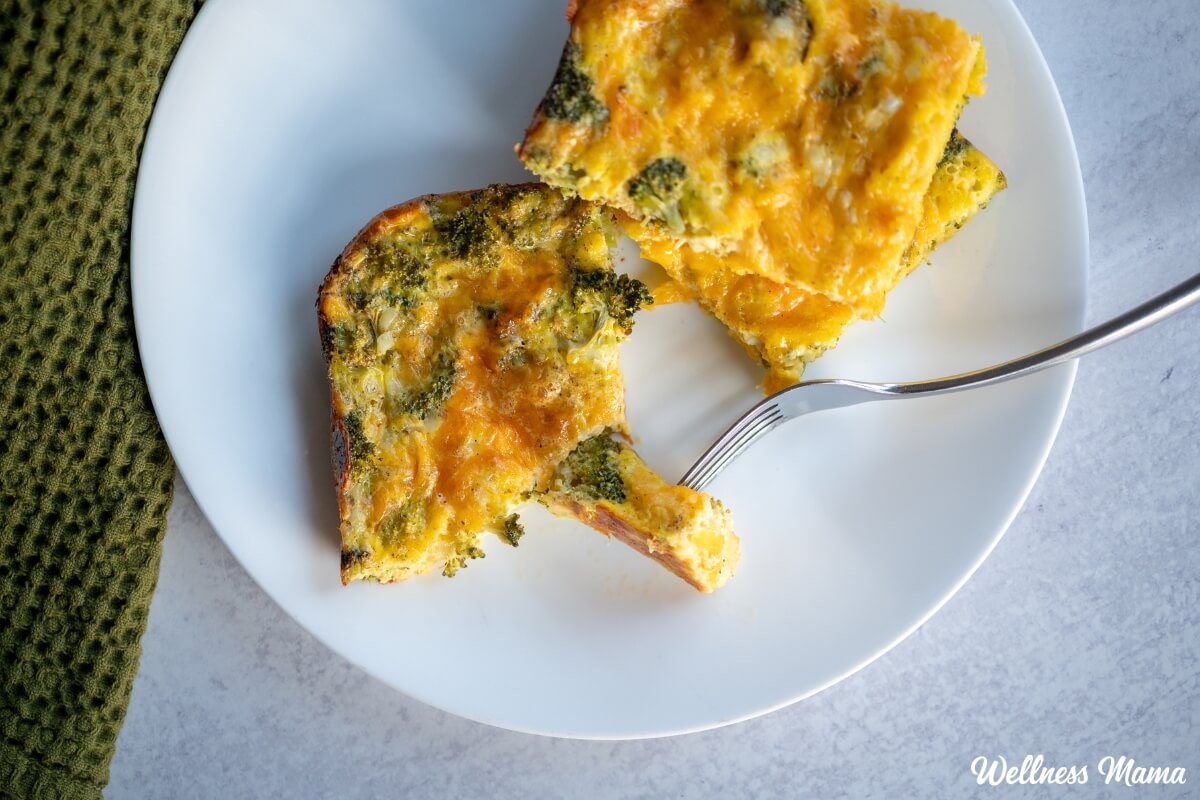
Broccoli Cheddar Egg Bake (Easy High-Protein)

I love having simple breakfast recipes I can make ahead for busy mornings. While smoothies and overnight oats have their place, I also try to prioritize protein in the mornings. This broccoli  cheddar egg bake is a great way to do that. It’s one of those recipes that’s almost effortless to throw together but everyone in my family is a fan. 

The best part is that it only takes a few minutes to mix everything together before the oven does the rest of the work. I can prep it while I’m making coffee, then let it bake while I dive into my morning routine. It also reheats beautifully. I’ll often make dishes like this on the weekend and enjoy leftovers for breakfast or lunch throughout the week.

Why I Love This Broccoli Cheddar Egg Bake

Egg casseroles have always been one of my favorite ways to meal prep because they’re incredibly versatile. This version combines eggs with cottage cheese for an extra boost of protein and a creamy texture without needing heavy cream. The shredded cheddar adds plenty of flavor, while the broccoli brings color, fiber, and nutrients.

I also appreciate that this recipe uses simple ingredients I almost always have on hand. Frozen broccoli works just as well if that’s what you have, making it easy to pull together without a special grocery trip. The seasonings are simple too, allowing the cheese and broccoli to really shine.

This breakfast casserole is naturally gluten-free and works well for everything from weekday breakfasts to weekend brunches. I also like serving it with fresh fruit, sliced avocado, or roasted potatoes for a more complete meal. Since it makes several servings, it’s an easy option when I’m feeding a crowd (like my kids!) or simply trying to get ahead on meal prep.

Tips for the Best Egg Casserole

Thankfully, this recipe is pretty forgiving. Whisking the cottage cheese into the eggs helps create a smooth, fluffy texture, and the broccoli cooks perfectly right in the casserole without getting mushy. Letting the bake rest for a few minutes before slicing also helps everything set, making it easier to serve neat portions.

Leftovers store well in the refrigerator for several days, making this one of my favorite make-ahead breakfasts. I simply warm up a slice in the oven, toaster oven, or air fryer for a quick meal that tastes almost as good as when it was freshly baked.

Whether you’re meal prepping for the week, hosting brunch, or just looking for a nourishing breakfast that doesn’t require standing over the stove, this broccoli cheddar egg bake is a recipe worth keeping on repeat. It’s simple, filling, and made with wholesome ingredients that help make busy mornings a little easier.

Broccoli Cheddar Egg Bake

This delicious egg bake is fully of cheesy broccoli flavor. An easy breakfast that’s dump and go!

  • Preheat the oven to 350°F and grease a 9×13-inch baking dish.

  • In a large bowl, whisk together the eggs, cottage cheese, salt, pepper, garlic powder, and onion powder until smooth.

  • Stir in the broccoli and cheddar cheese.

  • Pour the mixture into the prepared baking dish and spread evenly.

  • Bake for 40–45 minutes, or until the center is set and a knife inserted in the middle comes out clean.

Nutrition Facts

Broccoli Cheddar Egg Bake

Amount Per Serving (1 serving)

Calories 383
Calories from Fat 234

% Daily Value*

Fat 26g40%

Saturated Fat 12g75%

Trans Fat 0.04g

Polyunsaturated Fat 3g

Monounsaturated Fat 7g

Cholesterol 420mg140%

Sodium 889mg39%

Potassium 372mg11%

Carbohydrates 7g2%

Fiber 1g4%

Sugar 3g3%

Protein 30g60%

Vitamin A 1308IU26%

Vitamin C 39mg47%

Calcium 421mg42%

Iron 2mg11%

* Percent Daily Values are based on a 2000 calorie diet.

  • Let rest for 5 minutes before slicing and serving.
  • Refrigerate leftovers in an airtight container for up to 4 days.

Are you an egg casserole fan? What are some of your favorite ingredients to include? Share below!

Tags: , , , , ,
light benefits

Sunlight, Red Light, and How to Harness Light’s Benefits for Health

I’m not exaggerating when I say that light changed my life. This often overlooked wellness tool seems so simple, but it can have really impressive benefits. I’ve talked a lot about sunlight, blue light, red light therapy, and more over the years. Today, I’m putting everything into one easy place for you to learn all about the benefits of light and how it can positively impact your life too. 

There’s some overlap in the following sections, but I’ve tried to separate the info into a few different categories. Many of these articles and podcast episodes are purely about light for health, but some of them include other strategies alongside light exposure. 

Healthy lighting is just one tool in the toolbox. And while it can have some pretty drastic effects, other healthy habits like stress reduction, sleep, hydration, etc. are still important. Though I would argue that healthy light exposure boosts the effects of all of these. 

The Benefits of Sunlight

Overall sunlight is a powerful healing tool. When it hits our skin (and our eyes!) it triggers our body to produce the hormone vitamin D. It helps strengthen the immune system, bone health, boost mood, balance hormones, and so much more. 

Yet many of us are cooped up indoors the majority of the time, under flickering artificial lighting. Experts estimate children spend an average of 4-7 minutes outside. A recent poll showed preschoolers only go out to play once a week, or less on average. 

Adults aren’t faring much better. Most adults report they spend less than an hour outside per day. And for over 18% of us it’s less than 15 minutes a day! Prioritizing getting outside into the light at various times of the day can make a huge difference in health. Here are some more compelling reasons to step outside and into the light!

Morning Light Benefits

Morning light has its own health benefits and deserves its own section in this article. When I was recovering from Hashimoto’s I’d set my alarm, head outside at sunrise, and fall back asleep in the natural light. Hopefully you have more energy than I did back then, but even if you don’t, morning sunlight can help! Morning light is unique because it’s a great source of red light and naturally helps balance circadian rhythms, cortisol levels, and more. It’s become a non-negotiable part of my morning routine!

Cortisol and Circadian Alignment

Sunlight exposure, especially watching the sunrise and sunset, is key for circadian alignment. According to the Cleveland Clinic, the circadian rhythm is our body’s natural 24-hour clock. It’s a system that regulates our sleep-wake cycle, hormones, digestion, stress levels, and more. 

Light also plays a role in cortisol levels, aka our stress hormone. We actually want cortisol, we just want the right amounts at the right time. When we’re exposed to blue light at the wrong time of day and other stressors though, it can throw off our cortisol rhythms. Here’s how to use light to improve both cortisol and circadian rhythms. 

Sunscreen and Sunlight’s Role

I’m not the biggest fan of sunscreen most of the time. Contrary to most conventional dermatologists and doctors, I think we need more sun, not less! That said, burning and skin damage is never a good thing. 

Here’s a balanced approach that covers when sunscreen can be helpful and healthy kinds to use. Plus other ways to protect skin when outside and benefits of sunbathing. 

Red Light Therapy 

Morning and evening sunlight (at sunrise and sunset) offer free red light. Then there are red light therapy devices for a more targeted approach. You’ll find red light face masks, red light blankets and panels, and even red light toothbrushes for gum health! 

Here are my thoughts on red light therapy, its benefits, and how to get it from the best sources. 

Healthy Home Lighting

Many of us don’t think about indoor lighting when it comes to light’s benefits. However, the wrong indoor lighting at the wrong time of day can really sabotage our health efforts. LED lights flicker and cause stress to our nervous system, often too fast for our eyes to notice, yet our brain does. 

Blue light at night from screens and overhead lighting tells our brain that it’s daytime and inhibits us from winding down for sleep. Here are some healthier swaps and solutions and what I do when it comes to indoor lighting. 

More Podcast Episodes On Light’s Benefits

I’ve had the opportunity to chat with some amazing experts over the years on the Wellness Mama podcast. Some of my favorite episodes have been on the benefits of sunlight and how to use different kinds of light for health. I love talking about it so much that I’ve also done several solo podcast episodes on the topic.

You’ll find episodes on how to optimize sunlight exposure, its impact on mitochondria and energy, balancing hormones, and more. 

  • 429: Andy Mant on How Light Can Heal (or Damage) Your Health & Hormones 
  • 609: Dr. Jack Kruse on Junk Light, 5G, Optimizing Sunlight and Longevity
  • 949: Light Masterclass: How to Transform Light From Health Sabotaging to Your Greatest Superpower With Roudy Nassif
  • 822: Light, Mitochondria, DNA: Sunshine Is the Only Way With Dr. Courtney Hunt
  • Episode 1000: What I’ve Learned, Changed, and Still Believe
  • 627: Jim Stephenson on Vitamin D Deficiency: Deconstructing the Deception & Stop Fearing the Sun
  • 1009: Masterclass: Mitochondria, Light, Phospholipids and Cellular Health With Justine Stenger
  • 999: Light and Leptin: Understanding These For Hormones, Fertility, and Health With Sarah Kleiner
  • 691: The 80/20 of Health: Light, Protein, Nutrition and Hormones With Dr. Leland Stillman
  • 301: How to Use Light to Drastically Improve Health With Matt Maruca
  • 245: Ari Whitten on Fighting Fatigue with Sauna, Sun, & Sweating 

Do you prioritize getting sunlight or avoiding certain kinds of light? Have you noticed any positive difference? Leave a comment and share below!

Tags: , , , , , ,
The Complete Dorm Room Essentials List (Wellness Edition)

The Complete Dorm Room Essentials List (Wellness Edition)

I’ve been joking with my husband lately that we’re experiencing a “success disaster.”

As in, we raised a daughter who is so much fun to spend time with – and helpful around the house – that we can’t imagine daily life without her.

College move-in day is just around the corner, though, so pretty soon we’ll be redistributing family chores as she learns to navigate life on campus. Together, Kathryn and I spent 6+ months researching dorm room essentials – talking about must-haves, nice-to-haves, healthy swaps and extras that are worth considering if budget allows.

Early on, we didn’t know for sure which dorm (or even university) she would call “home,” so we collected ideas for lofted beds, bunk beds, big and small closets, rooms that provide desks, rooms that don’t, and every residence hall variation that was possible.

Instead of just tucking all that extra information away until my son leaves for college, I thought I’d put together this list for you.

Creating A Healthier Home Away From Home

There are plenty of college checklists out there, and they’re actually very thorough and helpful.

As I was reading them, though, I was constantly making little adjustments using the decades (yep that’s plural now) of experience I have researching – and writing about – non-toxic living.

That’s why the list below is pretty much the same as you will find anywhere, only different. I’m working with a budget, and I’ll bet you are too. That’s why many of the recommended picks below are within the same price range as more conventional options. The difference comes in knowing what to look for, where to look, and how to make strategic choices that create a healthier home away from home.

Instead of polyester microfiber blankets, you’ll find budget-friendly, cozy cotton blankets with OEKO-TEX Standard 100 certification (meaning it has passed testing for harmful substances), plus certified organic options to consider.

And instead of a basic pitcher filter that mostly just deals with chlorine, you’ll find a pitcher filter that removes up to 99.99% of 365+ contaminants.

My goal, whenever possible, is to highlight items that will continue to be useful long after move-in day – as students transition to apartments, shared houses, and eventually homes of their own.

📝 How To Use This List

Below you’ll find good, better, and best options that fit different budgets, priorities, and dorm setups.

It’s a very long list, but please don’t feel like you need everything on it. Most students only need a fraction of what’s on this page. Most double occupancy dorm rooms give students about 75-100 square feet of personal space, which is roughly the size of a parking spot.

The goal is not to cram in as much as possible – it’s to create a multi-functional environment that supports restful sleep, focused study, and a cozy social atmosphere. That’s why I’ve organized this list around how students actually use their space:

Table of Contents

Before buying anything, I strongly recommend waiting until you know your dorm assignment. Every school has different rules, and sometimes even different residence halls on the same campus have their own policies. Be sure to check both the list of prohibited items and the list of items already provided, since things like desks, chairs and dressers are often included.

Room layouts, laundry locations, bathroom setups, campus size, and personal preferences vary widely. What makes one student feel comfortable may be completely unnecessary for another.

That’s why I hope you’ll think of this checklist less as a list to complete and more as a menu of possibilities. Some students will need only the basics, while others may benefit from a few extra comforts or healthy swaps.

As parents, we spend years helping our kids feel safe, comfortable, and cared for. Helping them set up a cozy, organized dorm room is another way we get to do that as they begin building a home away from home.

Sleep Essentials

Sleep is one of the most overlooked aspects of college life. Between late-night study sessions and noisy hallmates, a few thoughtful additions can make a bigger difference than many students realize.

Important Note: Before buying anything for the bed, make sure you know the size of the mattress in your student’s specific dorm room. Not all schools use the same size mattresses, and even different residence halls on the same campus may vary. Depending on the school and dorm, mattresses may be Twin, Twin XL, Full, Full XL, or even Queen size.

The recommendations below are for Twin XL beds, which are by far the most common in college dorms. Fortunately, most products are available in other sizes if needed.

Bedding

Think layers. Dorm rooms can be surprisingly warm, surprisingly cold, or both . . . sometimes in the same week. Instead of relying on one heavy blanket, I prefer building a bed in layers that can easily be added, removed, and rearranged as needed.

Layer 1: Mattress Encasement (Optional)

GOOD: Skip it
BETTER:
Utopia
BEST:
SureGuard

Most colleges require students to use the mattress provided in the room, so since it’s non-negotiable, it’s not something I’d lose sleep over. (Sorry, I had to.)

These days, most standard dorm mattresses are enclosed in a durable, fluid-proof vinyl or nylon cover that is designed to resist spills, stains, and microbial growth. From my perspective, it doesn’t really make sense to encase them in those situations, because they’re already basically “encased.”

So with that in mind, my first “good, better, best” recommendation for mattress protection is:

  • GOOD – Nothing. Seriously. Just wipe it down with non-toxic cleaner and you’re done.

With that said, there are some situations when a mattress encasement is worth considering:

  • If the provided mattress is damaged (for example, ripped) it may be more vulnerable to things like bed bugs, which have been found in five-star hotels and, yep, dorm rooms.
  • It’s less common these days, but some colleges do still use fabric-covered mattresses.
  • Some students will feel better knowing there’s a fresh layer between them and a mattress that has seen a few move-in days. 😄

Mattress encasement uses a zippered cover to completely surround the dorm-provided mattress. The material is typically made with an outer comfort layer (often polyester, cotton, or bamboo) blended with a barrier layer (usually polyurethane, polyethylene, polypropylene, or PVC).

Some companies don’t share much about how their encasements are made, while others have gone through the process to become OEKO-TEX certified, which means that they have passed testing for over 1,000 harmful substances.

Dorm mattresses are usually 6-8 inches thick, so you want a thinner encasement that will fit relatively snugly instead of bunching up or sliding around. With that in mind, here are some options to consider:

  • BETTER | Utopia – This OEKO-TEX certified encasement is made with a blend of polyester and thermoplastic polyurethane (TPU). Although I’d prefer for the comfort layer to be made with cotton, I like that this one is machine washable and comes in various thickness options, including 6” and 8”. The 6” is currently sold out, unfortunately.
  • BEST | SureGuard – If you’re looking for complete coverage, this is the one I’d choose. It’s machine washable, GREENGUARD Gold certified, and available in a Twin XL size designed specifically for thinner 6-8″ dorm mattresses. I also appreciate that SureGuard is unusually transparent about its materials and uses a cotton terry sleeping surface instead of all polyester.

Quick note: Always make sure the mattress is dry before you place it in an encasement. If you’re using a mattress topper or mattress pad, don’t place it inside a fully zipped encasement. They need airflow to release heat and regulate moisture. Instead, the encasement should go around the dorm mattress only, with the topper or pad placed directly on top.

Layer 2: Mattress Topper

GOOD: CertiPUR-US® certified foam
BETTER | BEST: OEKO-TEX Standard 100, GOTS, GOLS or MADE SAFE certified toppers

Dorm mattresses are about half the thickness of many mattresses at home . . . and some would argue half as comfortable. That’s why a topper is one of the items in this guide that I would consider a top priority. Adding a few inches of cushioning can make a huge difference in comfort and sleep quality.

How Thick Should the Topper Be?

Most dorm mattress toppers come in 2″ and 3″ versions.

2″ toppers provide a firmer feel and are a good choice for students who prefer more structured support.

3″ toppers offer more cushioning and a slightly plusher feel. They tend to be the most popular choice for use with dorm mattresses.

I’d lean toward a 3″ topper for side sleepers and students who enjoy a softer bed. Neither is “better” – it just comes down to personal preference.

A Note About Certifications

Most mattress toppers that are specifically marketed for dorm rooms use CertiPUR-US® memory foam. With “PUR” right there in the name, many people understandably associate it with a completely non-toxic finished product. Unfortunately, that’s not always the case.

CertiPUR-US was created by the polyurethane foam industry to verify that foam meets certain industry-defined standards.

Much of what they look for – including PBDEs, TDCPP, and TCEP – is already heavily restricted or banned in mattresses and upholstered furniture. So essentially, many of the chemicals they test for shouldn’t be in any foam. (Unfortunately, some imported “mystery foams” may contain them anyway.)

They don’t restrict every class of flame retardants, and some critics note that the certification does not evaluate certain chemicals of concern, including some phthalates, amine catalysts, and newer flame retardant compounds.

Also, the certification only applies to the polyurethane foam – not, for example, PFAS finishes, flame barriers, or treatments used on covers and fabrics.

For that reason, I tend to view CertiPUR-US® as a good starting point rather than the finish line. When possible, though, I look for additional certifications such as:

  • GREENGUARD Gold for low emissions from the finished product.
  • OEKO-TEX Standard 100 for testing textiles and finished components for harmful substances.
  • Global Organic Textile Standard (GOTS) for organic cotton and wool.
  • Global Organic Latex Standard (GOLS) for organic latex.
  • MADE SAFE screens products against a broad banned/restricted substances list, including known or suspected carcinogens, endocrine disruptors, reproductive and developmental toxins, neurotoxins, hazardous flame retardants, high-risk pesticides, toxic solvents, harmful VOCs, and more. It’s one of the broader certifications I look for when trying to evaluate overall ingredient or material safety rather than just one material or one type of emission.

Now that you know what all the certifications mean, let’s get to the recommendations.

GOOD

Viscosoft Reflex Gel Mattress 3“ Topper – If an organic latex topper isn’t in the budget, this is one of the more transparent memory foam options I’ve found. It’s made in the USA and uses CertiPUR-US® certified foam that the company says is made without chemical flame retardants. They also confirmed via email that there are no fire retardants used on the cover, backing, straps, and other materials used in its construction, and that the foam and cover are made without intentionally added PFAS. The cover is OEKO-TEX® Standard 100 certified. ViscoSoft provided more detailed answers than many manufacturers and responded quickly, which I consider a positive sign. They also make a 2” Twin XL topper, but it’s currently sold out.

Sure2Sleep Gel Swirl Memory Foam 2” and 3” Toppers – These made-in-the-USA toppers have a refreshingly simple design. Instead of adding a zippered fabric cover, Sure2Sleep is just a layer of CertiPUR-US® certified memory foam. Most students will place a mattress protector or mattress pad over the topper anyway, so I don’t see the lack of a built-in cover as a drawback. The company told me that the foam is made without flame retardants of any kind, and I appreciate that they answered my questions quickly and provided more transparency than many manufacturers.

Sleepyhead Gel & Super 2” and 3” Mattress Toppers – Sleepyhead toppers are specifically designed for dorm beds and are especially popular with college students. Their lower priced option is the Gel Topper, which uses gel-infused memory foam. They also make a Super Topper, which combines gel and copper-infused memory foam for added freshness. Both are available in 2″ and 3″ versions, with the 2″ offering a firmer feel and the 3″ offering more plush cushioning.

I appreciate that Sleepyhead uses CertiPUR-US® certified foam and OEKO-TEX® Standard 100 certified covers. When I reached out, the company also told me their toppers are designed without intentionally added PFAS, contain no fiberglass in any component, and do not contain toxic chemical flame retardants. The one caveat is price: Sleepyhead costs more than some organic latex options below.

BETTER | BEST

Happsy Organic Mattress 2” Topper – This is the one my daughter has on her bed at home, and she loves it. It’s a 2″ topper made with GOLS-certified organic latex and a GOTS-certified organic cotton cover, and it also carries MADE SAFE and GREENGUARD Gold certifications.

Naturepedic Box-Stitched Organic 3” Topper – This 3″ topper uses GOLS-certified organic latex inside a GOTS-certified organic cotton encasement and is also MADE SAFE and GREENGUARD Gold certified. The box-stitched design gives it a refined, heirloom-quality feel that makes it look and feel more like a finished mattress than a traditional topper.

Sleep On Latex Pure Green 2” and 3” Toppers – This is probably the most customizable latex option I found. It’s made with GOLS-certified organic latex and comes in 1″, 2″, and 3″ thicknesses, plus soft, medium, and firm options. You can also choose whether or not to add an organic cotton cover, which keeps the base price lower. For most dorm beds, I’d look at the 2″ or 3″ soft version depending on how much cushioning your student wants.

Avocado Eco Organic Mattress 2” and 3” Toppers – This one offers a lot of flexibility, too, with 2″ and 3″ options in both Medium Dunlop latex and Plush Talalay latex. Although Dunlop is generally described as firmer and more supportive, the Dunlop toppers I’ve tried still felt soft and plush. I think of Dunlop as the “luxury” option, while Talalay is the “extra luxury” option. It has a lighter, more buoyant feel that many people find especially comfortable for side sleeping.

Layer 3: Mattress Pad

GOOD: 95% Cotton cover
BETTER:
Organic cotton + waterproof layer
BEST:
Organic cotton + GOTS certified waterproof layer

This protects your mattress topper and helps hold it in place. (Most mattress toppers also have corner straps that can be used to secure it.)

GOOD

Sleep Philosophy Cotton Mattress Pad – Before waterproof membranes became soft, quiet, and breathable, this type of quilted cotton pad was the standard choice for many families. It won’t protect against major spills, but it does provide a washable layer that absorbs perspiration and helps keep the topper underneath clean.

I especially like that the fill is 95% cotton, since most mattress pads use polyester batting. The remaining 5% consists of small amounts of polyester and olefin fibers, which help the pad maintain its shape and durability over time. The shell is made from 100% cotton percale, and the entire pad is OEKO-TEX Standard 100 certified. It’s quiet, breathable, and won’t noticeably change the feel of the topper underneath

If you want more protection without the noisy plastic covers many of us grew up with, today’s waterproof mattress pads have come a long way. Many use thin, flexible membranes that are virtually silent and preserve much of the softness and breathability of the layers underneath.

BETTER

Organic Cotton Mattress Protector – This one is pretty solid in terms of certifications and construction, but may not be the most waterproof option based on reviews.

BEST

Twin XL Happsy Waterproof Organic Mattress Pad (Save 15% with code MP15) I’ve been using the king-size version on my bed for several years and it’s soft, completely quiet, easy to get on-and-off the bed, and durable. The cotton is a soft jersey knit, and the waterproof layer is Global Organic Textile Standard certified, too.

Note:

Most mattress toppers are designed to be used with a mattress pad or protector placed over them. One manufacturer, Sleepyhead, recommends skipping this layer because they believe it can trap heat and moisture and interfere with the feel of the topper. Other companies, including Happsy, specifically design protectors to work with their mattresses and toppers.

Personally, I like having a washable layer between the sheets and topper, but if you choose a particular brand, it’s worth checking whether they have any specific recommendations.

Layer 4: Sheets

GOOD: 100% Cotton
BETTER: OEKO-TEX Standard 100 Conventional Cotton
BEST: 100% Organic Cotton (GOTS certified if possible)

Cotton is best for almost everyone, in almost every climate. It’s the default choice for good reason. It’s soft, breathable, durable, and comfortable year-round. I recommend buying two sets: one on the bed and one in the wash.

You’ll see three main types of cotton sheets:

Percale has a crisp, cool feel with a matte finish. Think classic hotel sheets.

Sateen feels smoother and silkier, with a subtle sheen.

Jersey knit is made from the same type of fabric used in soft t-shirts. It’s stretchy, relaxed, and cozy, which is why it’s especially popular with college students.

Thread count isn’t everything, and bigger numbers aren’t always better. In most cases, I think 200-400 thread count is the sweet spot for sheets that are soft, breathable, and built to last.

Conventional cotton may carry chemical residues or be dyed with toxic colorants, but while it’s not as ideal as certified organic cotton, it’s often a far better choice than synthetics like polyester. When an organic version of an item I need is out of my budget or not available, 100% cotton is what I look for first.

Fortunately, in this category there are some very affordable options, even for GOTS-certified organic cotton.

GOOD

Comfort Spaces Cotton Sheet Set – If you want to avoid polyester, these are a solid place to start. They’re made from 100% cotton and come in several colors and patterns.

BETTER

LANE LINEN OEKO-TEX Standard 100 Sateen Sheet Set – These sets come in a wide range of colors and even a few patterns, making it easier to coordinate with different dorm styles.

BEST

LANE LINEN Organic Cotton Percale Sheet Set – These sets are made with GOTS-certified organic cotton, and I think the price is hard to beat. The percale weave gives them that hotel-sheet feel, and they should continue getting softer with time.

Quince Jersey Knit Organic Cotton Sheet Set – Jersey knit is super cozy and a favorite with students, so it’s not surprising that there’s actually a waitlist for some of the Twin XL colors. Quince describes these sheets as being made from organic cotton and certifies them to OEKO-TEX Standard 100, though I wasn’t able to find information regarding GOTS certification. Still, I consider these “good stuff” and a rare find for Twin XL sheets.

Quince Organic Cotton Percale Sheet Set – Quince also offers organic cotton percale sheets in several colors and styles. They’re soft, breathable, and highly rated.

Layer 5: Blankets

GOOD: 100% Cotton
BETTER: OEKO-TEX Standard 100 Conventional Cotton
BEST: 100% Organic Cotton (GOTS certified if possible)

Unlike Twin XL sheets, which can be hard to find, there are plenty of great blanket options in every style and budget.

Tight woven blankets are the classic all-purpose choice. They’re durable, easy to layer, and work well year-round. Think of the traditional cotton blanket many of us grew up with.

Waffle weave blankets have a textured pattern that creates little pockets of air, making them lightweight, breathable, and ideal for layering. They’re one of my favorite options for dorm rooms because they add warmth without a lot of bulk.

Muslin blankets are made from layers of gauzy cotton fabric that become softer with every wash. They’re especially popular with anyone who prefers a relaxed, cozy feel.

Chunky knit blankets add texture and warmth to a room and are perfect for movie nights, afternoon naps, or curling up with a good book.

Here are a few options worth checking out:

Salt Earth Organic Cotton Waffle Blanket – This lightweight but warm blanket has a classic waffle weave and comes in several gorgeous colors. Reviews consistently mention softness and durability, and I like that it carries both GOTS and OEKO-TEX certifications.

Organic Cotton Mart Waffle Weave Blanket – This blanket is very similar to the one above, but about 12 inches longer and 8 inches wider. It’s also GOTS certified without the luxury-brand price tag.

Kyra Home Organic Cotton Muslin Blanket – If you’ve never tried a muslin blanket before, you may find yourself wanting one for your own bed, too. Made with GOTS-certified organic cotton and OEKO-TEX certified dyes, this one is constructed from multiple layers of gauzy fabric that become softer over time. The Large Throw size is roughly equivalent to many twin blankets, making it a good option for dorm rooms.

Bedsure 100% Cotton Muslin Blanket – This six-layer muslin blanket has a relaxed, lived-in feel that many people love. It’s OEKO-TEX Standard 100 certified, comes in an impressive range of colors, and is one of the more budget-friendly ways to try muslin.

Lane Linen Herringbone Cotton Blanket – This medium-weight herringbone blanket is OEKO-TEX Standard 100 certified, comes in a wide range of colors, and has a traditional look that works with almost any style. I also appreciate that it’s one of the more affordable options in this category.

Bedsure 100% Cotton Woven Blanket – If you prefer a more traditional blanket, this OEKO-TEX Standard 100 certified option offers a tight weave and plenty of color choices. It’s soft, durable, and affordable, making it perfect for everyday use.

Layer 6: Quilts & Duvets

Most dorm bedding sets are made with polyester, but I found plenty of cotton quilts and duvet covers that were reasonably priced.

The options below are easy to layer, easy to wash, and often continue to be useful long after move-in day. A quilt that starts life on a dorm bed may later end up on an apartment couch, guest bed, reading chair, or picnic blanket. A duvet cover can be paired with different inserts as needs and living situations change.

In other words, these aren’t just dorm purchases. They’re pieces that can grow with your student over time.

BOHO Reversible Muslin Quilt – Not technically a quilt, but it’s often used like one. Made from multiple layers of cotton muslin, it has that soft, relaxed texture that many people love. It’s OEKO-TEX Standard 100 certified and comes in a wide variety of colors and patterns, making it an easy way to add personality to a dorm room.

Palassio Cotton Quilt Set – This lightweight quilt set includes matching pillow shams and comes in several colors. The cotton shell and cotton fill create a more traditional quilt feel than muslin, and it’s got a lot of positive reviews.

Horimote Home Cotton Quilt Set – This quilt-and-sham has a box-stitch design that works well for men and women. It’s made from 100% cotton and is OEKO-TEX Standard 100 certified. Reviews frequently mention softness and good washability.

Bare Home Organic Cotton Duvet Cover Set – A duvet cover works a lot like a giant pillowcase for a comforter or duvet insert. It gives students the flexibility to wash or replace the cover separately, switch to a lighter or heavier insert as the seasons change, or update the look of the bed without buying an entirely new comforter. This one is both GOTS-certified and OEKO-TEX Standard 100 certified, comes in Twin XL, and is one of the stronger organic options I found.

Bedsure Cotton Duvet Cover Set – This is a more affordable alternative that is OEKO-TEX Standard 100 certified and available in lots of colors. Like the Bare Home option, it includes the duvet cover and pillow sham, so you can pair it with whatever insert best fits your budget and climate.

Whisper Organics Duvet Insert – One thing I love about this option is that it’s machine washable, which is rare in the world of natural-fiber duvet inserts. It’s made with GOTS-certified organic cotton inside and out, includes corner loops to help keep it securely in place inside a duvet cover, and uses box stitching to keep the fill evenly distributed.

I really think washable options are best for dorm use, but if you’re shopping for a home bedroom rather than a dorm room, this one is worth a look. It’s not washable, but it’s filled with Australian wool wrapped in a cotton shell, and is available in light, medium, and heavyweight versions and includes loops to help secure it inside a duvet cover.

Pillows

GOOD: A pillow that’s comfortable for the student.
BETTER | BEST: A pillow made with natural materials that’s also comfortable 🙂

Unlike mattresses, pillows are incredibly personal. The “best” pillow is the one that keeps your head and neck comfortably aligned in your favorite sleeping position. Some people love a lofty, squishy pillow. Others prefer something lower and more supportive.

Many pillows advertised as “100% cotton” are really just cotton covers wrapped around a conventional polyester fill. If you’re hoping to upgrade the materials inside the pillow as well, here are some options:

GOOD

HCore Contoured Pillow – If a natural latex pillow isn’t in the budget, this is one of the better ergonomic memory foam options I found. It uses CertiPUR-US® certified memory foam and has an OEKO-TEX® Standard 100 certified cover. The cover is made with polyester rather than cotton, and the company doesn’t provide as much material transparency as some of my other recommendations. Still, I think it’s a reasonable option.

BETTER | BEST

Naturepedic Side Sleeper Pillow – This is one of the most comfortable pillows I’ve ever used. The curved shape gives your shoulder somewhere to go when sleeping on your side, and the adjustable shredded latex fill lets you customize the loft until it feels just right. It’s made with GOTS-certified organic cotton and GOLS-certified organic latex, and also carries MADE SAFE and GREENGUARD Gold certifications.

Circadian Latex Pillow – Circadian recently sent me several of their pillows to test, and this one quickly became my daughter’s favorite. It has a wonderful squishy feel that still provides plenty of support, making it a nice choice for people who change positions throughout the night. She’s already claimed this one for her dorm room.

Sleep On Latex Shredded Pillow – If you’re looking for one of the best values in an organic latex pillow, this is the one I’d start with. It uses shredded natural latex inside an organic cotton cover, and like their mattress toppers, Sleep On Latex focuses on simple, high-quality materials without unnecessary extras. The shredded latex gives it a more traditional pillow feel while still providing the resilience that latex is known for.

Organic Textiles Contour Latex Pillow – For students who sleep best with an ergonomic pillow, this one pairs a molded GOLS-certified latex core with a GOTS-certified organic cotton cover. It’s made in the USA and comes in several loft and firmness options, making it easier to find a good fit.

Sleep Environment

Noisy hallways, bright lights, and roommates with different schedules are all part of dorm life. While you can’t control everything, a few simple additions can make it easier to wind down at night and wake up ready to tackle the day.

Pink Noise Machine – Pink noise helps mask hallway conversations, slamming doors, and other unpredictable sounds while providing a softer, more natural alternative to traditional white noise. It can be helpful for sleep and study sessions.

  • LectroFan Evo – Compact, simple to use, and offers a wide variety of white, pink, and brown noise options without looping recordings.
  • Sound + Sleep SE – My favorite overall. It uses realistic, non-looping nature sounds that automatically adjust to changes in the surrounding noise level, making it a great fit for unpredictable dorm environments.
  • 100% TENCEL™ Sleep Mask – Roommates don’t always go to bed at the same time. A comfortable sleep mask can make a big difference when someone else is studying, watching a movie, or getting ready while your student is trying to fall asleep. I like TENCEL because it’s soft, breathable, and blocks light well.

Blue-light blocking glasses – Even if the dorm lighting is fairly warm, phones, tablets, laptops, and televisions can still expose students to a lot of blue light after sunset. A good pair of blue-light blocking glasses can help reduce that exposure during evening study sessions. One challenge with blue-light blocking glasses is that they don’t all block the same amount of light. Some only filter a small percentage, while others block nearly all blue light, and it’s not always obvious from the product description. Here are my top picks for best performance at budget prices:

  • Infield – These are super affordable, and have a wraparound design that blocks light from the side. Independent testing found excellent blue- and green-light blocking performance (99.8% of blue light and 92.9% of green light).
  • Element Lux Aviators – An option students might actually wear outside the dorm room. They have a classic aviator style while still delivering excellent blue- and green-light blocking in independent testing (99.4% of blue light and 87.8% of green light).
  • AnyLuv Aviators – Very affordable second aviator option. Blocks a little less green light than the ones above, but still significantly more than many brands (99.1% of blue light and 76% of green light).

Blackout curtains

MOST AFFORDABLE: OEKO-TEX certified blackout curtains made with synthetic materials
BEST BALANCE: Organic linen or organic cotton with an OEKO-TEX blackout liner
MOST NATURAL: Heavy organic cotton or hemp curtains (possibly layered) that avoid synthetic blackout coatings altogether

GOOD: OEKO-TEX certified blackout curtains
BETTER: Portable blackout curtains that avoid permanent installation
BEST: Organic linen/cotton blackout curtains, if budget allows.

Many dorm rooms come with metal blinds, but they often leave gaps that let light in around the edges. Adding room-darkening curtains can help block early morning sunlight, parking lot lights, and other nighttime light that can make it harder to sleep.

Conventional blackout curtains usually achieve their light-blocking effect with PVC, vinyl, or acrylic foam backings, which can contribute to VOC emissions, especially when they’re new or heated by direct sunlight. Some are also treated with wrinkle-resistant finishes or stain- and water-resistant coatings, including PFAS.

Before you buy, check your student’s window measurements, find out whether curtains (and curtain rods) are allowed, and decide how the curtains will be mounted. The best option depends on the window frame and your school’s housing rules.

How should you hang them?

That depends on your dorm’s rules and window design.

  • Tension rods are the simplest option if the window has enough depth inside the frame. They’re inexpensive, require no tools, and work well with lightweight curtains.
  • Portable blackout curtains (which I’ll discuss below) are a great choice if you can’t install a curtain rod at all.
  • Command Hooks can work with lightweight curtains and rods, but according to the reviews adhesive performance varies depending on the wall surface. They’re not GOTS, GOLS, GREENGUARD Gold, or OEKO-TEX certified . . . just “gets-the-job-done” certified.
  • No-drill brackets that attach to the window trim are another option, but only if your dorm allows them and the window frame is compatible.

Most dorm-friendly hanging methods work best with lightweight or medium-weight curtains. Heavier curtains may require sturdier hardware or permanent brackets that aren’t allowed in some residence halls.

Now, let’s look at my favorite options . . .

Synthetic fabrics tend to shed microplastics, so I avoid them when possible. However, even most “natural” blackout curtains with cotton or linen front layers use polyester or another synthetic material to create the light blocking backside. There are some that block light using thick layers of natural fabric, but they tend to cost more than makes sense for a dorm room. Also, the thick fabric may be too heavy for most tension rods.

For this category, I’d focus on avoiding stronger off-gassing materials instead of trying to eliminate every synthetic fiber.

NICETOWN Linen Look Blackout Curtains – These affordable curtains are made with OEKO-TEX Standard 100 certified polyester and are available in dozens of sizes and colors. They’re also machine washable.

Sleepout Portable Blackout Curtains – The portable curtains from Sleepout are one of the most innovative options I found for dorm rooms. Instead of requiring a curtain rod, they attach to the window with patented locking suction cups and can be installed or removed in seconds without damaging the room. The fabric is synthetic, but it’s GREENGUARD Gold and OEKO-TEX Standard 100 certified, and the company says it has been third-party tested to be free of intentionally added PFAS, formaldehyde, phthalates, and azo dyes. If your student can’t install traditional curtains, Sleepout is worth a look. They’re also machine washable.

MagicLinen Curtains –These beautiful European linen curtains are OEKO-TEX certified and available in neutral colors and use a pocket-style top instead of grommet rings. The front-facing layer is linen and the back layer is polyester.

Headboards

Although totally optional, headboards can help a dorm room feel more “pulled together.”

One of my favorite options is rattan that’s finished with raw tung oil, beeswax, or a low-VOC water-based finished. Tufted headboards can add coziness while providing a bit of extra cushion to lean against, but finding an option that fits within a dorm budget may require some creativity. (More on that below.)

Rattan

IKEA TOLKNING Rattan Headboard – This is one of the more interesting budget-friendly headboards I found. It’s made primarily from natural rattan over a steel frame, which avoids many of the engineered wood materials commonly used in inexpensive headboards. It does have a clear acrylic lacquer finish, so it’s not completely free of synthetic materials.

Although this headboard doesn’t carry third-party certifications like GREENGUARD Gold or OEKO-TEX, IKEA publishes one of the more comprehensive chemical policies I’ve found among large furniture retailers. The company states that it avoids adding heavy metals, CMR substances (chemicals linked to cancer, genetic mutations, or reproductive toxicity), most PVC, chemical flame retardants (unless required by law), and formaldehyde-based production methods while maintaining strict limits on formaldehyde emissions.

I evaluate IKEA products on a case-by-case basis, and not everything is an automatic “add to cart” for me. With that said, I consider their level of transparency to be better than many furniture manufacturers in this price range.

Upholstered Headboards

I searched for healthier alternatives to upholstered dorm headboards – including pillow headboards – and found very few options that fit both my material standards and a typical dorm budget. Most use conventional polyurethane foam, polyester fabrics, and engineered wood with very little information about the materials inside.

GREENGUARD Gold Headboards

Pottery Barn Dorm Headboards are lightweight, don’t require a bed frame or permanent installation, and are comfortable and beautiful. Some are also GREENGUARD Gold certified, but that only focuses on chemical emissions (Volatile Organic Compounds, or VOCs), not what’s in the materials.

The two main things that give me pause are that they come with built in charging ports – which is not something I would choose from an EMF/ELF standpoint – and there’s not much information on materials beyond what is listed above.

The company has stated that their performance fabrics may contain PFAS, but I couldn’t confirm if these models do. I’ve reached out to the company for clarification and will update this section if I learn more.

Pillow Headboards

These aren’t headboards in the traditional sense. Instead, they’re oversized back cushions that lean against the wall or head of the bed, creating a more finished look while providing comfortable support for reading, studying, or relaxing.

Unfortunately, this category has many of the same challenges as upholstered headboards. Most use conventional polyurethane foam or polyester fiberfill and provide very little information about the materials inside. There are custom makers using natural materials, but they’re generally much more expensive than most dorm budgets allow. Fortunately, I did find a few that are worth mentioning.

EcoStyle Organic Wedge Pillow – Handmade with natural materials, it provides comfortable back support for reading or studying while avoiding the polyurethane foam found in most wedge pillows. It’s available in custom sizes and fabric options, making it easy to tailor to your space.

EcoStyle Organic Bed Cushion – This long rectangular cushion creates more of a “headboard” look while providing support across a wider area of the bed. It’s available in several custom sizes.

DIY Headboards

If you’re up for it, I think you could pretty easily make a non-toxic upholstered dorm headboard using these instructions and a few material swaps:

  • Plywood ➡️ Purebond Plywood by Columbia Forest Products (No-added formaldehyde plywood that’s made with a soy-based glue. Often available at Home Depot.)
  • Conventional upholstery Foam ➡️ Organic latex upholstery foam
  • Polyester batting ➡️ Natural wool batting
  • Synthetic fabric ➡️ GOTS-certified organic cotton canvas or thick linen fabric

Cozy Touches

Study & Productivity

A comfortable, well-designed study space can make it easier to focus during the day without making it harder to fall asleep at night. Here are a few things I’d prioritize.

Lighting

Light doesn’t just help us see – it also helps regulate our internal body clock. Bright, daylight-like light during the day supports alertness, focus, and productivity, while warmer light in the evening signals that it’s time to start winding down.

Instead of buying separate lamps for daytime and nighttime use, I recommend choosing circadian-friendly, flicker-free bulbs that adapt throughout the day. During the day, they provide bright light that’s well suited for studying and other focused tasks. In the evening, they switch to a much warmer, amber glow that minimizes blue- and green-light exposure, helping create a more sleep-friendly environment.

Instead of relying on harsh overhead lighting, I prefer using layers of light. A combination of task lighting and softer ambient lighting is often more comfortable during long study sessions and helps create a calmer, cozier room after sunset.

Instead of buying one lamp that tries to do everything, I’d choose two:

Study Lamp

Ambient Lighting

If space allows, a table lamp or floor lamp that uses a BioLight “day-to-night” color changing bulb or a warm amber bulb can create a cozier room after sunset.

Note: All the bulbs I linked to above are E26, which is the standard medium base used in traditional household lamps and ceiling fixtures.

Desk Organization

Here are some of the simplest ways to create a workspace that feels less cluttered and more functional.

Solid Wood Desk Organizer -An unfinished organizer with compartments for notebooks, pens, and other everyday supplies. I like that it avoids composite wood and painted finishes.

Safco Alloy Steel Desk Organizer – A simple steel organizer that keeps folders, notebooks, and supplies within easy reach while avoiding MDF and particleboard.

Comfort & Ergonomic Support

These are the kinds of extras that really depend on how a student likes to study. Some people are perfectly happy without them, while others appreciate a few comfort upgrades during long study sessions.

EMF Blocking Laptop Mat

If a laptop is frequently used on a bed, couch, or lap, an EMF-blocking laptop mat is worth considering. In addition to creating a shielding layer between the laptop and the body, it also doubles as a portable lap desk by providing a more stable, comfortable surface to work on.

Desk Chair Pad

Most dorm chairs are perfectly usable as they are, but if extra cushioning is needed, cotton and natural latex are my favorite options. They’re durable, breathable, and avoid the polyurethane foam found in many seat cushions.

Cotton Duck Extra Thick Chair Pad – Made with a durable cotton fabric, this cushion comes in several colors and ties securely to most desk chairs.

Natural Latex Chair Pad – Made with GOLS-certified organic latex and a GOTS-certified organic cotton cover. It’s one of the few seat cushions I found that offers both ergonomic support and excellent material transparency.

Tech & Charging

Every college has its own housing rules, and electronics are one area where they can be very specific. Before buying anything that plugs into the wall, take a few minutes to review your school’s approved and prohibited items list.

Some schools require all electrical products to be UL Listed. Others accept ETL Listed products as well, since ETL is another nationally recognized safety testing lab that evaluates products to the same North American safety standards. If your school specifically mentions UL, it’s worth checking whether ETL-listed products are also allowed.

Surge Protectors

A good surge protector is one of the most useful dorm purchases. Most guides recommend having at least two – one for the desk area and another for the other side of the room. A longer cord (around 10 feet) provides much more flexibility when outlets aren’t located where they’re needed.

Some schools specify the maximum cord length, require a minimum surge protection rating (joules), require an on/off switch, or prohibit certain styles of power strips altogether. After you know what you’re looking for, here are some options to consider:

Anker 341 Power Strip Surge Protector (8 Outlets) – This one makes good use of limited dorm space. The outlets are arranged on three sides, which helps keep bulky adapters from crowding each other, and the 45° flat plug makes it easier to place a desk or bed closer to the wall. It includes eight AC outlets, two USB-A ports, and one USB-C port.

Belkin 12-Outlet Surge Protector – A heavy-duty UL Listed option with 12 outlets, USB charging, a flat plug, 3,480 joules of surge protection, and an on/off switch.

GE Surge Protector – A no-frills UL Listed surge protector with a 10-foot cord, flat plug, safety outlet covers, and an on/off switch.

Addtam Surge Protector (6 outlets) – ETL Listed with a flat plug, braided cord, USB-A and USB-C ports, multiple cord lengths, and an on/off switch.

Other Helpful Tech

Extension Cord (if allowed) – Some dorms don’t allow extension cords at all, while others allow only UL Listed or ETL Listed versions.

Extra Phone Charger – Having a second charger for a backpack, bedside table, or study area makes life much easier than constantly moving one charger back and forth.

Ethernet Cable – If your student’s dorm room includes an ethernet port, a wired connection is often faster and more reliable than Wi-Fi, especially during busy evening hours. It also allows internet traffic to travel over the cable instead of the laptop’s Wi-Fi connection, which may reduce the laptop’s wireless transmissions during use. If minimizing wireless exposure is a priority, turning off the computer’s Wi-Fi after connecting to the ethernet provides the greatest reduction. (We use ethernet exclusively at home.)

Many schools can activate inactive network ports with a quick service request. If the laptop doesn’t have an ethernet port, inexpensive USB-C or USB-A Ethernet adapters are pretty easy to find.

Storage & Organization

Every dorm room is a little different, so I prefer storage solutions that are easy to rearrange, repurpose, and take to the next place. The options below strike a good balance between practicality, affordability, and healthier materials where they make the biggest difference.

Under-Bed Storage

For lofted beds, most students choose plastic storage containers, drawer units, or cube shelves with storage bins. Plastic isn’t my favorite material, but I think it makes sense here. Unlike blankets, baskets, and other relatively inexpensive dorm items, quality solid wood storage is a significant investment – and what fits one dorm room may not fit the next.

With that said, I did find one solid wood cube organizer that’s worth considering, plus storage bin options made from natural materials. I’ve also included suggestions for better plastic storage options.

Cube Shelves + Storage Bins

Natural Wood Cube Storage Organizer – Made from FSC-certified solid pine that’s sanded smooth and intended to be used without stain or varnish. It includes three 11-inch storage bins, but there isn’t any information available about what they’re made of. My guess is polypropylene or polyester based on their appearance.

Cotton Rope Storage Bins (11 inch) – My favorite option for cube storage. They have a similar look to wicker but are washable, which makes it much easier to keep a dorm room clean over the course of the school year.

Cotton Rope Storage Bins (Alternate Design) – Another washable cotton rope option with a different woven pattern and handles.

Water Hyacinth Storage Baskets (Set of 6) – If your student loves the woven basket look, these are a beautiful natural-material option. They’re lightweight and fold flat when not in use.

Wicker Storage Baskets (Set of 4)– A similar option that’s a good fit for four-cube organizers.

Drawer Units

If plastic drawers make the most sense, I’d lean toward Sterilite over many of the no-name brands. Their products are made in the USA and the company states they’re BPA-free and phthalate-free.

Storage Boxes

Sterilite also makes stackable, clear storage boxes in a wide range of sizes.

Flexible Storage

Storage needs tend to change throughout the school year, so I like pieces that can adapt right along with them. Here are my top picks:

Rolling carts

Rolling carts are one of the most versatile storage solutions for a dorm room. They work equally well as a bedside table, pantry, coffee station, bathroom organizer, or extra workspace.

Most steel rolling carts are finished with a baked-on powder coating, which generally has very low emissions once cured. However, material transparency varies widely between brands.

The carts below stand out because they’re both GREENGUARD Gold certified, meaning the finished product has been independently tested for low chemical emissions, and CPSIA compliant, which includes limits on lead and certain phthalates.

Two Tier Rolling Cart – A compact option that’s ideal for smaller spaces or use as a bedside table.

Three Tier Rolling Cart – Offers more storage without taking up additional floor space.

Machine Washable Baskets

I recommend washable baskets whenever possible. Dorm rooms collect dust, crumbs, and laundry quickly, and being able to toss a basket into the washing machine makes it much easier to keep the room feeling fresh.

Stainless Steel Baskets

Stainless steel baskets are incredibly durable, and their open-wire design makes it easy to see what’s inside without digging through a bin. They’re a great option for storing snacks, toiletries, cleaning supplies, or other everyday essentials.

Stainless Steel Wire Baskets – Most of the reviews are in Japanese but they seem enthusiastically positive . 🙂

Closet Organization

Closet Rod Doubler – Instantly adds a second hanging rod, making much better use of the vertical space in most dorm closets.

Space Saving Hangers – Made from 304 stainless steel instead of plastic, these cascading hangers help maximize hanging space and are durable enough to be used long after dorm life.

Over-the-Door Full-Length Mirror – If the dorm doesn’t provide one, this can free up valuable floor space. Just be sure to choose a model that’s compatible with your dorm’s door style and thickness.

Furniture

Dorm beds can be set up several different ways, from standard height to fully lofted. The recommendations below are organized by bed configuration so it’s easier to find pieces that fit your student’s room.

Nightstands for Standard & Semi-Lofted Beds

Many dorm beds can be raised well above a standard bed frame. Once you add a dorm mattress and mattress topper, the sleep surface often ends up around 40 inches off the floor. If your student’s bed is set that high, a taller nightstand makes everyday items much easier to reach.

For beds at a more standard height, here are a few options:

IKEA ALEX Drawer Unit – Not my favorite materials overall, but IKEA has been more proactive than many furniture manufacturers about reducing formaldehyde, PVC, brominated flame retardants, phthalates, and other chemicals of concern. I generally have more confidence in their material standards than many similarly priced alternatives.

IKEA TARVA Nightstand – One of my favorite IKEA bedroom pieces. It’s made primarily from untreated solid pine and uses fiberboard only for the drawer bottom and back panel. The clear acrylic finish protects the wood while preserving its natural appearance, and IKEA’s chemical standards are generally more rigorous than many furniture manufacturers in this price range.

IKEA PERJOHAN Storage Stool – Made from untreated solid pine, this versatile piece works equally well as a nightstand, extra seat, or small storage bench. The open compartment underneath is perfect for books or an extra blanket.

Three Tier Rolling Cart – At about 31 inches tall, it’s a practical option for taller beds while adding flexible storage.

Natural Wood Cube Storage Organizer – If more height is needed, the solid wood cube organizer mentioned earlier can be turned vertically to create a 36-inch-tall bedside storage unit.

Nightstands for Fully Lofted Beds & Top Bunks

For fully lofted beds, traditional nightstands aren’t practical. A bedside shelf keeps essentials like a phone, glasses and water bottle within easy reach without taking up floor space.

Most colleges provide a safety rail for lofted beds and top bunks. If yours doesn’t, I strongly recommend adding one. A properly installed bed rail greatly reduces the risk of falls during sleep. The Able Life Bed Rail meets ASTM safety standards and is worth considering if one isn’t already provided.

BedShelfie – Depending on the model, this bedside shelf either clamps to the bed frame or slides between the mattress and bed base.

Adjustable Height Bed Shelf – Unlike most bedside shelves, this one can be raised or lowered to match the student’s preference. A long support arm slides beneath the mattress to provide stability without attaching to the bed frame.

Chairs & Futons

Additional seating is completely optional, and whether it makes sense depends on the size and layout of the room. If there’s enough space, a comfortable chair or futon can create a nice spot to read, study, or hang out with friends.

Folding Butterfly Chair

Butterfly chairs are one of my favorite space-saving seating options because they fold flat when not in use, and the removable cover can be washed if needed.

I wasn’t able to find a budget-friendly chair with a 100% cotton cover, but I did find one with a cotton-blend canvas cover over a bamboo frame. I also contacted the manufacturer, who stated that the fabric is not treated with water-, stain-, or other performance finishes.

Folding Butterfly Chair (Natural) – This set of two comes with washable cotton/polyester canvas covers.

Futons

Many students place a futon beneath a fully lofted bed to create a comfortable spot to study, relax, and spend time with friends. If you’re buying one before move-in, check your school’s loft bed dimensions to make sure it will fit.

KD Frames Unfinished Solid Wood Futon Frame – Made from unfinished solid wood, making it one of the few budget-friendly futon frames that avoids composite wood and factory-applied finishes.

Natural Futon Mattress – The Futon Shop offers several mattresses made with natural materials. One quick note: Many universities don’t require conventional flame retardants, but check with your school.

Kitchen & Food Prep

Many dorms allow students to prepare simple meals and drinks in their rooms, though the rules vary by school. It’s worth checking your housing guidelines before buying any appliances.

Water

40oz Insulated Stainless Steel Clearly Filtered Water Bottle – These bottles are perfect for carrying around campus. They can “transform ordinary tap water into clean and safe drinking water by simply sipping through the straw. Wherever the day takes you, you’ll have peace of mind knowing your tap water is free from up to 99.9% of 220+ contaminants.”

Clearly Filtered Water Pitcher – This is my top countertop filter recommendation in terms of performance and price. Unlike most pitcher filters which barely do more than improve water taste by removing chlorine, it’s certified to remove 365+ contaminants – more than any other model I researched – all while keeping beneficial minerals intact.

Coffee & Tea

Many dorm guides recommend single-serve pod coffee makers, but research has found that plastic coffee pods can shed microplastics during brewing. If your student’s dorm allows it, I think an electric kettle paired with a French press is one of the simplest ways to reduce plastic contact while making excellent coffee.

Electric Kettles (if allowed)

COSORI Electric Kettle – My favorite option. It’s made with 304 stainless steel and has a completely plastic-free interior and spout. It also includes automatic shutoff and boil-dry protection.

Amazon Basics Electric Kettle – Available in both glass and stainless steel versions. The glass version uses a plastic spout, and the clear fill window is made of polypropylene plastic. Both have automatic shutoff and boil-dry protection.

French Presses

Stainless Steel French Press – Double-wall insulated stainless steel keeps coffee hot longer than glass while eliminating the risk of breakage.

Stainless French Press (Alternate Option) – This is the one I own. It’s well made, durable, and has held up very well over time.

Coffee Accessories

Coffee Grinder (if using whole bean coffee) – Features a removable stainless steel grinding cup, making it easier to transfer beans and clean between uses.

Stainless Steel Coffee Tumbler – Perfect for taking to class.

Cooking & Appliances

Instant Pot Duo Plus 6 Quart (if allowed) – If I could only choose one dorm cooking appliance, this would probably be it. It’s great for beginners that don’t need a lot of fancy extra settings, and can be used to make everything from soups and chili to rice, shredded chicken, oatmeal, yogurt, and hard-boiled eggs. Some are “smart,” aka Wi-Fi enabled, but this one is not, which I prefer. Instant Pot also offers a free recipe app with hundreds of ideas.

Beast Blender – One of the quietest personal blenders I found. The model I recommend uses a stainless steel blending container instead of plastic, and protein smoothies can be blended directly in the travel container before heading to class.

Stainless Steel Hot Pot (if allowed) – A simple option for heating soup, chili, leftovers, oatmeal, ramen, pasta, or hot drinks when larger appliances aren’t allowed.

Stainless Steel Rice Cooker (if allowed) – Much more versatile than the name suggests. Besides rice, it can be used to make oatmeal, steamed vegetables, soups, simple one-pot meals, and reheat leftovers.

Mini-Fridge – I’d choose the largest model your school allows. If possible, look for a two-door design with a separate freezer compartment rather than a small freezer built into the refrigerator section. They generally provide more usable space and do a better job maintaining freezer temperatures because the freezer has its own insulated compartment.

Food Prep & Storage Accessories

If your student plans to prepare even a few simple meals, having a handful of quality kitchen basics can make dorm life much easier.

Bamboo Cutting Board – A good alternative to plastic cutting boards, this one is made with FSC Certified bamboo. My favorite thing about it is that there are no glues at all on the cutting surface, and it’s under $20.

Can & Bottle Opener – A sturdy stainless steel opener with comfortable handles. One of those inexpensive tools that’s easy to forget until it’s needed.

Stainless Steel Cooking Utensils – Stainless steel utensils are durable and easy to clean. Here are a few good options:

  • 4 Piece Set – A compact starter set made from 304 stainless steel that’s ideal for students with minimal storage space.
  • 7 Piece Set– Made from durable 18/8 stainless steel, this is a solid middle-ground option that covers most everyday cooking tasks. Includes a matching countertop storage holder.
  • 11 Piece Set – Made from 304 stainless steel with a wider selection of utensils for students who plan to cook more often.

20 Piece Stainless Steel Flatware Set – When it comes to flatware, 18/10 is ideal, 18/8 is nearly identical, and 18/0 is a reasonable budget option. This set from Kingstone seemed too good to be true in terms of price, but they’re a legitimate brand that has been reviewed (and highly rated) by Food & Wine Magazine. Traditional silver stainless steel flatware tends to be the most timeless and durable option. Gold, black, and other colored finishes are usually created using a hard coating process called PVD, which is widely used and generally considered safe, but I personally prefer uncoated stainless because it keeps things simple and avoids questions about the durability and composition of additional surface treatments.

Corelle 30 Ounce Meal Bowls (Set of 4) – One of my favorite dorm dishes. They’re lead- and cadmium-free, lightweight, and versatile enough to work as both a plate and a bowl.

12 Piece Glass Dish Set – A simple glass dinnerware set for students who prefer glass over plastic or ceramic.

OEKO-TEX Certified Cotton Waffle Weave Kitchen Towels – Made from 100% cotton with a waffle weave that dries quickly and becomes more absorbent with use.

Magnetic Spice Rack – Attaches to the side of a refrigerator to free up valuable counter and shelf space.

Over-the-Refrigerator Shelf – A great way to turn unused vertical space into storage. Because each shelf is adjustable, you can move them, remove them, or space them however you like to fit your refrigerator and other essentials.

Glass Food Storage Containers – Great for storing leftovers, meal prep, or snacks without relying on plastic containers.

Dish Drying Rack – If your student will be washing dishes in a communal kitchen or bathroom, dish soap and a kitchen towel may be all that’s needed. If they’re washing more than a few dishes at a time, a dish drying rack may be helpful. The best choice will vary depending on whether the drying rack can be left to drain into a sink or needs to have a tub underneath to catch water.

If your student will have access to a shared kitchen – or plans to cook more than the occasional meal – these additions are also worth considering:

Bathroom Essentials

Whether your student is sharing a community bathroom or has a private one, choosing items that dry quickly and can be washed regularly will help keep the space cleaner and fresher.

Bath Towels

Towels that dry more quickly are less likely to develop funky odors and are ready to use again sooner.

Utopia Quick-Dry Cotton Towel Set – Made from 100% cotton and OEKO-TEX Standard 100 certified.

Cotton Craft Quick-Dry Cotton Towel Set – Another OEKO-TEX Standard 100 certified option that includes bath towels, hand towels, and washcloths.

Cotton Craft Quick-Dry Waffle Bath Towels – Lightweight waffle-weave towels that dry quickly and are OEKO-TEX Standard 100 certified.

Mesh Shower Caddy – Quick drying mesh is the better choice here, even when the mesh is polyester. It dries much faster than solid plastic caddies, allowing water to drain away instead of collecting inside. Available in two sizes.

Natural Rubber Flip-Flops – These are highly rated for comfort and could easily work as shower shoes and everyday shoes.

Cotton Waffle-Weave Bathrobe – Very helpful if the bathroom is communal. Look for lightweight, waffle-weave options that dry quickly.

Private Dorm Bathroom

When it comes to shower curtains, natural fabrics usually require more maintenance than most college students are willing to take on. I’d look for a machine-washable OEKO-TEX Standard 100 polyester curtain paired with a polyester liner. If privacy is important, choose a solid color instead of a clear shower curtain.

Amazon Basics Shower Curtain – OEKO-TEX Standard 100 certified and machine washable.

OEKO-TEX Standard 100 Alvia Spring Shower Curtain Liner – OEKO-TEX Standard 100 certified, machine washable polyester liner.

Shower Curtain Hooks – These make removing the shower curtain (and putting it back on) super easy.

Bath Mats

100% Cotton OEKO-TEX Standard 100 Bath Mat – I recommend keeping two on hand so one can be washed while the other is in use.

Diatomaceous Earth Bath Mat – If budget allows, these dry almost immediately instead of holding moisture like fabric mats. The one I have is out-of-stock, but this one has a 4.6 star rating with over 1K reviews, this one has a 4.6 star rating with over 1.6K reviews and this one has a 4.4 star rating with 4.4K reviews. There are a lot more with different designs, but these are the most budget-friendly.

Personal Care

First Aid

  • Good – Any basic first aid kit.
  • Better | Best – If your student doesn’t mind cute pandas on a few of their bandages, this PFAS-free kit is an option. Another option is to buy a regular kit and add these PFAS-free bandages to it.

Laundry

Wool Dryer Balls – A reusable alternative to dryer sheets that helps separate clothes in the dryer, improving airflow and shortening drying time. They also help reduce static and soften fabrics naturally.

Handheld 2-In-1 Garment Steamer & Iron – No ironing board needed – just hang the garment on a hanger, steam, and go. Automatic shutoff adds an extra layer of safety.

Folding Drying Rack (if needed) – Helpful for air-drying delicate clothing, wool garments, swimsuits, or anything that shouldn’t go in the dryer. It folds flat when not in use.

Organic Cotton Mesh Laundry Bag (if needed) – Perfect for protecting delicate items during washing.

Laundry Hampers & Baskets

The best laundry solution depends on how far students have to carry their clothes.

For shared laundry facilities across campus:

Cotton Canvas Laundry Backpack – It’s comfortable to carry and machine washable, so students can toss it in with a load and carry their clean clothes back in a clean bag.

For laundry rooms just down the hall:

Cotton Rope Storage Basket – An attractive option that’s also machine washable.

Cleaning Supplies

Not every student will need all of these. Pick the tools that match the room, flooring, etc.

All-Purpose Cleaner

One of the easiest ways to save space in a dorm room is to skip a big collection of specialty cleaners. Most students don’t need separate products for the bathroom, mirrors, countertops, floors, and everything in between.

Instead, I recommend choosing one versatile cleaner that can handle just about any cleaning task. It keeps things simple, takes up less space, and avoids filling a tiny room with heavily fragranced products.

Force of Nature Cleaning Kit – This small appliance that transforms water, salt, and vinegar into a multi-purpose cleaner and disinfectant. It works well on high-touch surfaces, countertops, mirrors, bathrooms, cutting boards, and many hard floors. (As with any appliance, check your school’s policies before bringing it to campus.)

Branch Basics Cleaning Kit – One bottle of concentrate can be diluted for everyday cleaning tasks throughout the room. Just add water and use it for countertops, mirrors, sinks, and more.

Cleaning Tools

  • Broom & Dustpan (if needed)
  • Vacuum (if needed)
  • Mop (if needed)

Trash

Trash Can – Most colleges only allow plastic or metal trash cans, and some provide one. If your student plans to prepare meals in their room, a larger kitchen-size can with a lid may be worth considering.

Air Quality

This is one of the last categories covered in this guide, but it was a top priority when my daughter was deciding which college to attend. Seriously, it carried just as much weight in our decision-making process as the academics.

We’re incredibly grateful that she found a school with an honors program that’s a great fit for her goals and a strong commitment to building maintenance. Even so, the biggest dorm purchase we’ll be making is the same air purifier we use at home: Jaspr.

Technically, it’s an air scrubber rather than a traditional air purifier. It’s larger than many of the models that are typically recommended for dorms, but it has a relatively small “footprint” and is very quiet. Bottom line: I trust it for all the reasons I shared here.

There are a couple of other air purifiers that I think show promise for dorm use, but I’m still evaluating them. I’ll update this section if/when I have additional recommendations. Also, as with any electrical appliance, check your school’s housing policies before bringing it to campus.

EMF Considerations

Unlike EMF-blocking technologies (which I still use on my phone and in other situations), Blushield is an active system that “produces coherent frequencies within the human responsive range, based on nature-mimicking mathematical algorithms.”

I’ve covered before how our brains can entrain with certain frequencies, and according to Blushield our bodies also do the same thing. When coherent frequencies are available alongside the chaotic ones produced by non-native EMFs, Blushield says our bodies will preferentially tune into the coherent ones. Full review here.

Locking Storage

Small Locking Storage Box – A compact option for jewelry, passports, cash, external hard drives, and other small valuables.

Bunk Trunk (Save $30 With Code MOMMYPOTAMUS) – This is a splurge, but I can see why it’s popular. It was created by a parent who wanted a better way for students to make the most of a small dorm room, combining secure storage with a convenient bedside workspace. Made from solid birch, it functions as both a locking storage trunk and a desk when the front panel folds down. After dorm life, the legs can be removed so it continues serving as a locking trunk at home. It’s made by a small family-owned business in California, and my link includes a $30 discount.

Campus Life

Backpacks & Bags

  • PFAS-Free Backpack (Guide coming soon)
  • Natural Cork Laptop Sleeve – A unique alternative to neoprene and synthetic “vegan leather.” Cork is naturally lightweight, slightly cushioned, easy to wipe clean, and water resistant (though not waterproof). It also develops character over time while using a renewable material that’s harvested without cutting down the tree.

Rainy-Day Essentials

PFAS-Free Poncho – One of my favorite inexpensive dorm hacks is keeping a lightweight poncho tucked inside the backpack. Unlike an umbrella, it protects both the student and the backpack.

If the backpack is too large to fit under the poncho, consider getting it a dedicated PFAS-Free Waterproof Backpack Cover.

Everyday Carry

Safety & Emergency Prep

Hopefully, most of these items will never be needed, but a little preparation now can save a lot of stress later.

Safety

Important Documents & IDs

  • Driver’s license
  • Insurance card
  • Social Security card

Once a student turns 18, parents generally can’t access medical information or make healthcare and financial decisions on their behalf without permission – even if they’re paying the bills or the student is still covered under the family health insurance plan.

Below is one of those things that hopefully never gets used, but if an emergency happens, you’ll be glad it’s already taken care of.

The Mama Bear Legal Forms Young Adult Power of Attorney Package includes the legal documents many families choose to have in place before college, including a HIPAA authorization, healthcare power of attorney, and durable financial power of attorney. If your student is attending school in another state, the package also includes forms for that state. My link includes 20% off.

Miscellaneous

If you’ve made it this far, you probably realize that creating a dorm room isn’t just about buying things – it’s about figuring out what will actually work for your student’s room.

Every school is a little different. Some allow Instant Pots, some don’t. Some provide mini-fridges, others expect students to bring their own. Bed heights, storage space, bathrooms, kitchen access, and housing rules can vary quite a bit.

When I started researching all of this for my own daughter, I found myself constantly asking, “Wait…did I remember to check that?”

So I put together something that would have made this whole process much easier.

🎓 Free Download: The Wellness Dorm Planner

As you shop, use this printable planner to gather everything you’ll need in one place.

Inside you’ll find questions like:

✅ What furniture and appliances does the school already provide?

✅ What bed height and mattress size will your student have?

✅ Which appliances and power strips are allowed?

✅ Is there room for under-bed storage?

✅ Does the room have an ethernet port?

✅ What should you buy now, and what can wait until after move-in?

Instead of making guesses (or buying things twice), you’ll have a simple roadmap that helps you shop with confidence.

Enter your email below and I’ll send it right over. You’ll also receive my weekly newsletter with practical wellness tips, recipes, and new guides like this one.

Share with a friend! 👇

Tags: , , , , , ,
Homemade_Greek_Seasoning

Homemade Greek Seasoning

One of the best ways to make healthy eating easy is to keep some homemade staples on hand. Simple DIY spice blends and sauces take very little effort but they can make meals so much more flavorful. This Greek seasoning is one staple I like to keep in the pantry! 

Many pre-made seasoning blends use fillers, preservatives, added sugars, or ingredients I wouldn’t use in my kitchen. Making your own is so simple and you can choose exactly what you use (and don’t). Plus the DIY versions often taste better than what’s been sitting on a store shelf for months. 

What Is Greek Seasoning?

Greek seasoning is a flavorful Mediterranean-inspired blend of herbs traditionally used to add depth to meats, vegetables, sauces, and marinades. It combines classic Greek flavors like oregano, basil, dill, garlic, and rosemary. The result is a savory seasoning that works in a variety of recipes.

Oregano is one of the most popular Greek flavors and adds a pungent taste (it’s not just for Italian seasoning!). Then I add herbs like basil, parsley, dill, thyme, and rosemary to hit all the flavor notes. Garlic and onion powder bring that savory base that makes this blend so versatile, while a touch of cinnamon adds some warmth.

It’s also an easy way to include a wide variety of micronutrients, antioxidants, and anti-microbial compounds into everyday meals. People have used herbs for thousands of years not only to make dishes taste good, but because they support overall wellness. 

Why You Should Make Your Own Seasonings

I started making more of my own pantry staples because it’s an easy way to simplify ingredients without sacrificing flavor. And with 7 kids now, it’s cheaper to buy in bulk and mix it yourself! Seasoning blends are one of the easiest swaps because they take only a few minutes to make and last for months.

This Greek seasoning is one of those recipes that’s become a kitchen staple. I love having a jar ready because it instantly upgrades simple meals. A plain chicken breast, roasted vegetables, or even a basic salad instantly gets a flavor upgrade with homemade seasoning. 

It’s also easy to customize. If you love garlic, you can add more. If you prefer a stronger herb flavor, adjust the amounts of oregano, basil, or dill. Homemade recipes are flexible, which is one of the best parts of cooking from scratch.

How to Use Greek Seasoning

This seasoning is so versatile and works well with both quick weeknight meals and more involved recipes. Sprinkle it over chicken before grilling, mix it into burger patties, or use it to season roasted vegetables like zucchini, squash, or asparagus.

One of my favorite ways? Toss some diced potatoes with olive oil, salt, and Greek seasoning then roast. The herbs create a crispy, savory coating that rivals any restaurant dish. 

You can also mix it into homemade salad dressings, sprinkle it over eggs, or stir it into Greek yogurt for a quick and easy dip. It’s a great way to add flavor without needing complicated sauces or extra ingredients.

For an easy meal prep option, try this blend as the base for a simple Greek chicken marinade. Combine Greek seasoning with olive oil and fresh lemon juice, then marinate chicken before grilling. The result is tender, flavorful chicken with a bright Mediterranean flavor.

Here’s how to make it!

Homemade Greek Seasoning

This savory Greek seasoning blend is perfect for meat, veggies, or even mixed into yogurt as a dip. Full of flavor, healthy, and versatile.

Nutrition Facts

Homemade Greek Seasoning

Amount Per Serving (1 teaspoon)

Calories 4

% Daily Value*

Fat 0.04g0%

Saturated Fat 0.02g0%

Polyunsaturated Fat 0.01g

Monounsaturated Fat 0.01g

Sodium 167mg7%

Potassium 23mg1%

Carbohydrates 1g0%

Fiber 0.4g2%

Sugar 0.04g0%

Protein 0.2g0%

Vitamin A 18IU0%

Vitamin C 0.3mg0%

Calcium 17mg2%

Iron 1mg6%

* Percent Daily Values are based on a 2000 calorie diet.

Store in an airtight container for up to 6 months.

More Homemade Seasoning

Looking for some more make it yourself seasoning blends? Here are some of our favorites!

Have you ever used Greek seasoning before? What are your favorite ways to use it? Share below!

Tags: , ,
mineral benefits

The Ultimate List of Mineral Benefits and How to Use Them

If you’ve hung around here for very long you probably know by now how much I love magnesium, sodium, and minerals in general. I noticed a huge difference in my health and energy levels after I prioritized minerals. And I’ve heard from many of you how minerals have changed your health too. 

This roundup post is a collection of all of the articles and podcast episodes I’ve done over the past 15 years on mineral benefits. They cover what they are, why we need them, side effects of not getting enough, and how to optimize mineral levels. This is your one stop resource guide and reference when it comes to everything minerals on Wellness Mama. 

First up, magnesium and sodium!

Magnesium and Sodium Benefits 

Magnesium is one of my favorite things to talk about, but salt is probably a close second. Most of us are deficient in magnesium due to conventional farming practices and modern life. Things like stress, especially chronic low-grade stress, depletes minerals like magnesium. Sugar is another big culprit for magnesium depletion. 

Sodium is another really important mineral for hydration, energy, brain health, and so much more. Unfortunately it’s been demonized in the past several decades. Real salt has been largely replaced by refined salt in highly processed foods. 

Even people with certain health issues, like high blood pressure, can still benefit from more salt. Be sure to check with a natural healthcare practitioner before adding more salt, but there’s some really good info here and from podcast guests below on salt’s benefits. 

Fulvic and Humic Acids

While these aren’t technically electrolytes I’ve still grouped them in this article because they provide trace minerals. Many years ago these substances were naturally rich in our soil after plants decomposed and microbes transformed them. They naturally have trace minerals, amino acids, organic acids, carbon complexes, and unique compounds we don’t find in modern food.

They’re the conductors and transporters that help our system work better. I like to think of fulvic and humic acids as the translator between the food we eat and our cells. Like the spark plugs for nutrient absorption. The following articles tell about their benefits, how I use them, and how to get them. 

DIY Magnesium and Salt Recipes

We’re circling back to magnesium and sodium in this section. While there’s a lot of information on the health benefits of these electrolytes in these articles, it focuses more on the practical. You’ll find recipes for bath salts, detox baths, topical magnesium, scrubs, and more. 

Using sodium and magnesium topically is a great way to get more of their benefits! Plus it’s a relaxing way to pamper yourself a little. Sometimes I’ll make these for myself and my girls. And I’ll often make extra to give to family and friends as gifts. 

Mineral Rich Recipes to Eat

Technically any of the nutrient dense recipes on my site made with whole foods have some minerals in them. Since modern food (even organic) is so much lower in nutrients and minerals than even a hundred years ago, I like to take a targeted approach.

Yes, I supplement as needed, but I like making mineral rich recipes as well. They’re delicious and the kids love them too!

Mineral Mastery Article Series

I love talking about minerals so much that I did a whole dedicated series on them. This series in particular focuses on how minerals support cellular health and energy. Magnesium, potassium, and sodium work together to fuel every cell in the body. This is why when we don’t have enough the side effects can be so wide ranging. 

Mineral Mastery Podcast Series

In addition to the above articles (which are more of the Cliff Notes version), I recorded a whole mineral podcast series. These go into more depth and dig deeper into the science and practical uses of minerals. 

I cover the big three: sodium, magnesium, and potassium. Then I go into fulvic and humic acids benefits for cell health. And finally the series wraps up with an overview of how they all work together and why we need optimal levels of all of them. 

Podcasts About Minerals

Some of my favorite podcast recordings over the years have been on the topic of minerals. I’ve had the privilege of interviewing some of the top experts in these fields and I’ve learned so much from them. These podcasts delve into the benefits of different minerals, how they work in the body, and how to optimize your levels. 

I love listening to podcasts while I’m in the sauna or cleaning and they’re also great during long car trips too!

  • 616: The One About Magnesium – Short Series 
  • 786: Mythbusting Minerals – Understanding Minerals Starts in the Cells with Caroline Alan
  • 787: Plant-Based Minerals: What They Are & How They Work With The Mineral Geek Caroline Alan 
  • 659: Silica, Salt, and Minerals for Collagen and Overall Health with Eidon Minerals
  • 744: Discover Plant-Based Minerals With Caroline Alan
  • 989: Stabilized Ions of Minerals to Trigger Healing Enzymes to Repair and Protect the Body With Dr. Carolyn Dean
  • 662: Why Most of Us Are Mineral Deficient, How to know, and What to Do About It With Barton Scott
  • 988: The Magnesium Miracle: Why It’s the Most Overlooked Mineral in Women’s Health With Dr. Carolyn Dean
  • 638: Dr. Chris Masterjohn on Understanding Key Nutrients: Biotin, Sodium, Potassium, and Omega-3s 
  • 639: Morley Robbins on a Deep Look at My Labs and My Life (What I’m Deficient In)
  • 983: The Surprising Truth About Salt, Inflammation & Longevity: What Most Doctors Get Wrong With Mara Labs
  • 596: Morley Robbins on Magnesium, Stress, Mineral Balance and the Root Cause Protocol
  • 034: All About Topical Magnesium | Wellness Mama Podcast 

Do you prioritize getting enough minerals in your life? How have you incorporated them into your routines? I’d love to hear about it below!

Tags: , , ,
Homestead Blog Hop - Homestead tips, ideas, animal care, and recipes every Wednesday

Homestead Blog Hop 605 – Raising Backyard Hens, plus Recipes

Welcome to Homestead Blog Hop, a weekly gathering for homesteaders and simple living enthusiasts to share DIY projects, from-scratch recipes, and creative inspiration. This week’s hop features cozy homesteading tips, along with practical ideas that celebrate handmade living and self-sufficiency.

Whether you’re looking for seasonal crafts, homemade treats, or encouragement on your homesteading journey, you’ll find plenty of inspiration to carry into the new year. Grab a cup of tea, explore the featured posts, and join us in sharing your own homestead creations.

Meet Your Homesteading Hosts

We’re Kelly from Simple Life Mom, Liz from The Cape Coop, Natasha from Houseful of Nicholes, and Laurie from Ridgehaven Homestead. Together, we’re passionate about from-scratch living, simple ingredients, frugal habits, and intentional homesteading. We’re delighted to host the Homestead Blog Hop, where you can find fresh inspiration each week for DIY projects, homemade recipes, and practical simple living ideas.

Follow Us for More Homestead Inspiration

Natasha – Houseful of Nicholes
Facebook | Pinterest | X | Instagram

Laurie – Ridge Haven Homestead
Facebook | Pinterest | Instagram

Liz – The Cape Coop
Facebook | Pinterest | X | Instagram

Kelly – Simple Life Mom
Facebook | Pinterest | X | Instagram

FEATURED POSTS from the Last Homestead Blog Hop

Each week, we take turns selecting three featured posts from the Homestead Blog Hop. These features are shared across all of our social media platforms, helping spotlight the creativity and hard work of our fellow homesteaders. Here are the featured posts from last week’s hop:

1. Vintage Linen Tissue Pouch from Air Fryer Fanatics

2. Red White and Blue Pinwheels from Organized Island

3. Raising Backyard Hens 101–Getting Back to Basics Part 1 from Two Chicks and a Mom

Congrats! Feel free to grab the featured on button for your post.

Just right click and ‘save image as…‘

Guidelines for the Homestead Blog Hop

  1. Click the “Add Your Link” button below and upload a clear, eye-catching image from your project or recipe. Please link directly to the family-friendly post itself, not your blog’s homepage.
  2. You may link up up to three posts each week.
  3. Take time to visit a few other blogs in the hop and leave a thoughtful comment to let them know you stopped by. Community support makes this hop special!
  4. Please include a link back to the Homestead Blog Hop in your post. Posts without a backlink are not eligible to be featured. All featured posts are shared across all hosts’ social media channels.
  5. Share posts that haven’t been linked to the hop before. Older posts are welcome as long as they are new to the hop.
  6. By joining the Homestead Blog Hop, you grant the hosts permission to use one image from your post, with a link back to your site, if your post is selected as a feature next week.
  7. This is a family-friendly link-up designed to encourage, inspire, and support the homesteader in all of us.

Let the Party Begin!

Which project are you excited to try this week? Leave a comment below.

Join Our Homestead Blog Hop Pinterest Board

Follow all of your hosts on Pinterest and send a message if you’d like to be added to our Homestead Blog Hop group board. This board is a great place to share your DIY projects, crafts, and from-scratch recipes with the homesteading community.

Guideline: Only pin posts that you’ve linked up to the Homestead Blog Hop.

Tags: , , , , , ,
Everyday Dose bag of mushroom coffee and a cup of coffee

I’m Going Broke For Mushroom Coffee…

I’ve been drinking Everyday Dose everyday for over a year now. When I say it’s my favorite part of my day, I mean it. I’ve tried other mushroom coffees and was not impressed. Everyday Dose is like drinking normal coffee but with BIG BENEFITS. You may remember a while ago when I was having a lot of stomach discomfort. I finally realized that my stomach could not handle the acid in regular coffee. Ever since then I’ve drank low acid coffee. When on vacation that has proven to be a problem. I can’t go more than 3 days of regular coffee without those painful symptoms coming back so I end up having to skip my coffee which is not cool. 

Now that I’ve discovered Everyday Dose, I take my coffee on vacation. All you need is warm to hot water and a tablespoon. I really mean it when I say, this coffee is so good I fear my budget for coffee will always have to be bigger than before! 

I typically drink my coffee hot with a tablespoon of heavy whipping cream but sometimes I do like to have an ice coffee. I did share a recipe for a Honey & Sea Salt Iced Coffee using Everyday Dose a little while ago. 

What’s In Everyday Dose?

Everyday Dose Coffee+ contains five clean, functional ingredients:

  • Mushrooms (Lion’s Mane + Chaga) → Supports mental clarity, focus, immune health, and gut balance
  • Grass-Fed, Grass-Finished Collagen Peptides (from bovine) → Promotes healthy skin, hair, nails, and joints
  • L-Theanine → Promotes calm focus and smooth energy without jitters
  • Organic, Fair-Trade Coffee Extract → Clean energy with less caffeine than regular coffee
  • No added sugar, sweeteners, soy, grains, eggs, or cocoa

All ingredients are third-party tested for heavy metals, mycotoxins, allergens, and molds.

Benefits of Drinking Everyday Dose:

  • Tastes so good!
  • No jitters
  • 5 grams of protein!
  • Extra collagen
  • Incredible taste 
  • Sustained energy
  • Brain clarity
  • Gut support

Everyday Dose has a mild and a medium roast. I started out with the mild which has 45 grams of caffeine. I’ve ended up liking a more robust taste and now get the medium which has 90 grams of caffeine which is equivalent to a regular cup of coffee. However, I have yet to feel any jitters and I am very prone to them with regular coffee. If you like Matcha, they’ve got that too. I have it and enjoy it for a Matcha latte in the afternoons! 

Everyday Dose has deals all the time and if you use my links and my code JENNI you get a discount on top of the deal. The starter kit comes with a really nice frother, their coconut creamer and a tablespoon! Plus, they have free shipping and a 45 day money back guarantee. 

Be aware, you will automatically be signed up for a subscription. However, you can cancel or pause it very easily. But I’m sorry in advance because you’re going to love this coffee. 

I am an affiliate of Everyday Dose so if you purchase with my links or coupon code, I will get a small commission to support my Everyday Dose habit-lol!

Try Everyday Dose HERE. 

xx, Jenni

Jennifer Phillips

Jennifer Phillips worked as a licensed aesthetician for over 8 years before creating the DIY skincare blog, Jenni Raincloud and her natural skin care line, J. Raincloud Organics. Jennifer has been blogging full time for 16 years and loves to gain and share knowledge on how to achieve beautiful skin the natural way.

Find me on: Instagram | Facebook

Tags: , ,
Hand holding a glass roll on bottle with DIY Castor Oil Eye Serum

DIY Castor Oil Eye Serum Roll On

Castor oil is a powerhouse of a natural oil. I have posted about castor oil when it comes to it’s cleansing powers in oil cleansers and it’s hair growth abilities in hair serums but not until recently have I heard how beneficial it actually is for the skin in general. I’ve been seeing so many natural skin care companies selling an eye serum that contains only castor oil and frankincense essential oil so it’s intrigued me to do a little digging to find out why. I’m impressed with what I found and had to share. I think you’ll want to make yourself a DIY castor oil eye serum roll on ASAP!

This DIY eye serum will be the easiest one you’ll ever make. It may actually be the most effective as well. I made this serum for myself a week ago so I can’t speak on whether it has plumped me up under the eyes but I can say that it has thoroughly moisturized under my eyes and smoothed wrinkles. I even think it is reducing my under eye bags which is one of my biggest eye concerns. Let’s get right into why castor oil makes a great anti aging eye serum tool…

What is Castor Oil?

Castor oil is a vegetable oil derived from the castor bean. It contains ricinoleic, linoleic, stearic and oleic fatty acids which are all beneficial to the skin. These fatty acids have powerful anti-inflammatory properties as well as antimicrobial properties. Because it is both hydrophilic (water loving) and lipophilic (oil loving) it penetrates the skin better than most oils. 

Castor oil has been known to actually stimulate the skin’s own collagen which is so easily lost around the eyes. 

Castor oil is also non-comedogenic which means it will not clog pores. 

Why You Should Use Castor Oil Under Your Eyes:

  • Reduces puffiness by encouraging lymphatic drainage.
  • Treats dark circles-There’s actually a PubMed study on this!
  • Reduces wrinkles-The same study linked above showed women seeing an improvement in wrinkles as well as dark circles.
  • Treats swollen eyes–According to a study, applying castor oil around the eyes including the eyelid reduced swelling caused by blepharitis (a condition that causes inflammation and swelling of the eyelids). 
  • Provides deep nourishment thanks to it’s rich fatty acid profile.
  • May plump thin skin-I have heard many claims that castor oil plumps up the skin directly under the eyes were volume loss tends to occur with age due to less collagen production. 
  • Conditions the lashes and brows and possible growth stimulation. If you haven’t tried my DIY lash serum and DIY brow serum you should. Skip store bought lash/brow enhancers-they have side effects you don’t want. 

Why Add Frankincense?

Adding frankincense essential oil to this DIY eye serum is highly recommended. Frankincense is one of my favorite oils to use around the eyes. It helps regenerate cells and stimulates collagen. It also reduces inflammation and is a powerful antioxidant. Plus, it is one of the gentlest oils so using it around your eyes makes sense. It works well with all of castor oils attributes to really pack a punch! 

Why Add Vitamin E?

Vitamin E is a powerful antioxidant and it’s great to add it to any and all oil based skincare products. It will neutralize free radical damage, lock in moisture and encourage cell renewal. Plus, it can help prolong the shelf life of your product. 

Castor Oil & Frankincense DIY Eye Serum Recipe:

Direction:

  1. Add Frankincense to your roll on bottle.
  2. Add Vitamin E if you are using it. 
  3. Top off the bottle with castor oil. 

How to Use:

  1. Roll serum all around the eyes. 
  2. Use at bedtime

Not All Castor Oils Are The Same:

You must look for castor 100% pure, organic and cold pressed. You want to look for the words “hexane free” and it should come in a glass bottle. There are many castor oils on the market that have cheap filler oils in them or are not sourced properly. Don’t waste your money and time. Be sure to get a good quality castor oil like THIS one. 


This is an extremely easy DIY and you really have nothing to lose. Give it a try and report back and I’ll do the same!

xx, Jenni

Jennifer Phillips

Jennifer Phillips worked as a licensed aesthetician for over 8 years before creating the DIY skincare blog, Jenni Raincloud and her natural skin care line, J. Raincloud Organics. Jennifer has been blogging full time for 16 years and loves to gain and share knowledge on how to achieve beautiful skin the natural way.

Find me on: Instagram | Facebook

Tags: , , , , ,
Strawberry Cottage Cheese Ice Cream Recipe (High Protein)

Strawberry Cottage Cheese Ice Cream Recipe (High Protein)

Yesterday my husband walked into our bedroom carrying a plate of freshly-baked kale chips in one hand and his phone – hoisted high above his head like a boom box while blasting a love song from the neon-and-hairspray era – in the other.

That’s midlife, right?

We get to be our quirkiest selves, but we also have to make sure we use all the vegetables in the fridge before the next grocery run.

And eat protein, of course.

Because even if – like me – you never bought into the whole “training for your summer body” idea, you’re probably reading this because you’re training for a different kind of body: one with strong muscles, dense bones, healthy blood sugar, good balance, and the ability to carry your own groceries, travel, and stay fully engaged in life for decades to come.

Protein plays a role in all of those things. It provides the building blocks for muscle tissue, enzymes, hormones, immune molecules, and countless repair processes throughout the body. And because we naturally lose muscle mass as we age, getting enough protein becomes increasingly important for maintaining strength, stability, and resilience.

Skeletal muscle is one of the body’s most metabolically active tissues. It helps regulate blood sugar, influences inflammation, supports healthy immune function, and produces signaling molecules that affect everything from metabolism to brain health.

That’s why I’ve been experimenting with high-protein ice cream.

Not because I’m training for bikini season.

I’m training for my old-lady era.

And while I’m willing to put scrambled eggs in my smoothie on occasion, I also believe food should bring joy. I eat fewer desserts these days, but I enjoy them more, especially when they help me hit my protein goals.

Why Protein Ice Cream Is Tricky

Protein ice cream sounds simple enough: take a healthy ice cream base, add protein powder, freeze, and enjoy.

In reality, getting the right texture is a little more complicated than it sounds.

Traditional ice cream gets its creamy, scoopable texture from a careful balance of fat, sugar, solids, and air. When you reduce the sugar, lower the fat, and add more protein, the texture can shift pretty quickly from “creamy dessert” to “icy brick.”

That’s one reason the Ninja Creami has become so popular for protein ice cream. It can take a frozen solid base and re-spin it into something creamy, even when the recipe is lower in sugar or fat.

A regular ice cream maker works differently. It churns while the base freezes, which is wonderful for traditional ice cream, but lower-sugar, higher-protein mixtures can freeze too hard too quickly around the edges before the center has a chance to churn properly. The result is often icy, crystallized, or just not worth the effort.

I wanted a creamy texture without having to buy another piece of equipment or adding weird thickeners, so I started experimenting with cottage cheese.

When blended until completely smooth, it does a lot of the work that sugar and stabilizers usually do. It adds protein, creaminess, body, and enough structure to give it an ice cream texture.

Does it taste exactly like traditional ice cream? No – it has a bit of a tang that gives it more of a “cream cheese” note, so I leaned into that. I also kept the overall sugar content lower than traditional ice cream, so I figured this recipe would be safe from the not-so-tiny humans in my house.

I was wrong – they polished off the first test batch less than a day after I made it.

One thing to be aware of, though, it that some brands use more salt than others, and that can affect the final flavor. I tried a few and the one I liked best is Good Culture 4%. On its own, leaned a bit salty, so I added a cup of strawberries. Some of my family members liked it, but I personally didn’t and added a second cup. My recommendation is to start with one, taste your mixture after blending, and add more strawberries if needed.

So, how much protein is in this recipe?

The exact amount will vary depending on a few factors, including which protein powder you choose, and even how much air gets incorporated during churning.

In other words, your numbers may not match mine exactly.

To give you a ballpark, using two scoops of Heart & Soil Whey yields about 10 grams of protein per ½-cup serving. That’s a lot more protein than traditional ice cream – enough to make meaningful progress toward daily protein goals, one delicious spoonful at a time.

Strawberry Cream Cheese Protein Ice Cream Recipe

This recipe makes approximately 3.75 – 4 cups.

Prep Time 5 minutes Churning time 20 minutes

Author Heather Dessinger, FDN-P

  • 2 cups whole milk cottage cheese (I recommend 4% milkfat)
  • 1 tbsp vanilla extract (If using vanilla protein powder, start with 1 teaspoon and increase to taste)
  • ¼ cup maple syrup
  • 2 cups chopped strawberries
  • 25-30 grams unflavored or vanilla protein powder (Optional – I used 2 scoops Heart & Soil Whey)

Ice Cream Maker Method

  • Blend in a high powered blender until very smooth.

  • Pour the mixture into your ice cream maker and churn according to your manufacturer’s instructions.

  • When the ice cream is ready it should have a soft serve consistency. You can eat it right away, or if you prefer a firmer consistency transfer it into an airtight container and place in the freezer for 2-4 hours. I like to use a glass loaf pan with a lid.
  • To Serve:If you decide to freeze the ice cream for a firmer texture, you’ll get the creamiest results by letting it soften a bit before serving. I like to think of it more as “well chilled” than deeply frozen. Because cottage cheese-based ice cream can become a little icy when frozen solid, letting it rest on the counter allows it to soften into a smoother, creamier texture that tastes more like traditional ice cream. Depending on the size and depth of your container, this can take anywhere from 10 to 20 minutes.

No Ice Cream Maker Method

  • Blend the ingredients in a high-powered blender until very smooth.

  • Transfer the mixture to a freezer-safe container and place it in the freezer. To help keep the texture creamy, give it a good fold with a spatula every 30 minutes or so. This helps break up ice crystals as they form.

  • Once the mixture becomes too firm to fold easily, just leave it alone and continue chilling until it reaches your desired consistency, about 3–4 hours total.

  • To Serve:Because cottage cheese-based ice cream can become a little icy when frozen solid, letting it rest on the counter allows it to soften into a smoother, creamier texture that tastes more like traditional ice cream. Depending on the size and depth of your container, this usually takes about 10–20 minutes.

Nutrition facts based on Good Culture 4%, 2 scoops of Heart & Soil Whey, and 2 cups of chopped strawberries. 

Serving: 0.5cup | Calories: 107kcal | Carbohydrates: 11g | Protein: 10g | Fat: 2g | Saturated Fat: 2g | Polyunsaturated Fat: 0.1g | Monounsaturated Fat: 0.01g | Cholesterol: 16mg | Sodium: 210mg | Potassium: 135mg | Fiber: 1g | Sugar: 9g | Vitamin A: 4IU | Vitamin C: 21mg | Calcium: 65mg | Iron: 0.2mg

A Note On Ice Cream Makers

When I bought this ice cream maker many years ago, the only materials listed on the product description were stainless steel and plastic. I discovered after it arrived that the inner tub is actually made with anodized aluminum, which is not ideal. Back then, I couldn’t find a truly stainless steel option so I kept it to use on occasion.

Truly stainless steel options are available now, so I’m thinking about replacing mine with the Whynter Ice Cream Maker. It comes in two sizes and uses a powerful built-in compressor freezer that allows you to make ice cream, gelato or sorbet anytime (without needing to pre-freeze the inner canister). The inner bowl is stainless steel and the churn blade is BPA-free plastic.

If budget were not a consideration, I’d go for the Lello 4080 Musso Lussino 1.5-Quart Ice Cream Maker. The bowl and paddle are made with stainless steel, and has a 4.6 star rating and over 1,000 reviews.

Share with a friend! 👇

Tags: , , , , , , ,
My Favorite Whey, Beef & Plant-Based Picks

My Favorite Whey, Beef & Plant-Based Picks

Somewhere around day three of adding scrambled eggs to my breakfast smoothie, I finally decided it was time to research protein powders.

Not because the smoothies weren’t tasty – they actually were – and it was also pretty entertaining to watch my kids noses wrinkle as I threw everything into the blender.

Giving my kids weird childhood stories is not my entire mission in life, though. It’s a fun side benefit, sure, but in this case my real goal is to find a realistic way to consistently get enough protein into my mornings without cooking a full meal.

In midlife, protein is more than a “fitness topic” – it’s foundational to feeling strong, steady, and well-fueled. Yes, muscle matters – a lot – but protein also provides the building blocks for hormones, enzymes, immune function, and the maintenance and repair of skin and vital tissues that help us stay resilient over time. (1) It also plays a major role in maintaining lean muscle mass, preserving bone health, supporting steadier blood sugar, and staying full and well-fueled between meals. (2) (3)

Right now, one of my top priorities is to quickly prep a nourishing breakfast that will keep me feeling satiated throughout the morning, then head outside to get some morning sun and take a short walk. I’m a habit stacker, so I usually sip my smoothie while I walk.

Also, my daughter is getting ready to leave for college, which has made me think more carefully about convenient, high-quality food options that work in real life – including dorm rooms and rushed mornings.

The problem is that many protein powders contain junk fillers, vague additives, or heavily processed ingredients that I personally don’t want to rely on every day. So, for the sake of my smoothie – and the promise of high protein ice cream – I decided to find the best tasting, healthiest options in every category. We’re going to dive into dairy-based whey, dairy-free grass-fed beef isolate, animal-based blends, plant-based protein, and plant + animal protein combinations.

Before we get into the different types of protein powder, let’s talk about how they fit into a whole-food approach.

As always, this article is not medical advice and isn’t meant to diagnose, treat, or cure any condition. Please chat with your healthcare provider about any supplements you’re considering.

🍓Where Protein Powder Fits In Real Life ^

Since you’re reading this article, I’m guessing you don’t have a full-time chef following you around with grilled steak and chimichurri sauce, fluffy omelets, or Moroccan chicken tagine. I don’t either, and while I love meals like that, they don’t always fit neatly into rushed mornings, post-workout windows, or the 3 p.m. moment when dinner still feels very far away.

That’s where protein powders can be genuinely useful – they’re not full meal replacements on their own, but they can be used strategically within a whole-food-based diet to:

  • Get enough protein on busy mornings (or any time of day)
  • Support post-workout recovery
  • Avoid reaching for ultra-processed snacks when life gets busy
  • Create quick, dorm-friendly or travel-friendly options

I’ve used them to make smoothies with the components of a full meal – high-quality protein, fiber, healthy fats, antioxidants, and other micronutrients – plus yummy desserts that work with my midlife body instead of against it.

✅ What I Looked For In A Healthy Protein Powder ^

In my own meals, I aim for variety in order to cover nutritional bases and avoid getting stuck in a rut.

I don’t think anyone needs five different protein powders open on their counter at once, but I did want to find a range of options that I could rotate between. I also wanted to find products that work for different dietary needs – for example, dairy and legume-free options for people who don’t digest those foods well.

No matter the category, though, every protein powder I considered had to meet a few basic standards:

Complete protein – Does it provide all nine essential amino acids, especially enough leucine to support muscle protein synthesis?

Ingredient quality – Are the ingredients simple, recognizable, and free from unnecessary fillers and artificial sweeteners?

Sourcing – Does it start with high-quality ingredients, such as grass-fed dairy, grass-fed beef, or organic plants?

Processing – Is it made in a way that preserves nutrition as much as possible, such as low-temperature processing?

Testing transparency – Does the company test for heavy metals or other contaminants, and are they willing to share results?

❌ What I Avoided ^

Artificial sweeteners – including sucralose and acesulfame potassium, which are common in fitness-style protein powders.

Unnecessary fillers and gums – which can especially be an issue for people who are sensitive to them or using protein powder often.

Poor testing transparency – especially because protein powders can be a source of heavy metal exposure, depending on the ingredients and sourcing.

Collagen marketed like a complete protein – collagen can be very useful, but it does not provide all nine essential amino acids in meaningful amounts, so I don’t consider it a true replacement for whey, beef isolate, egg white, or a complete plant protein blend.

Amino spiking – This is when companies add inexpensive free-form amino acids, such as glycine or taurine, to inflate the protein number on the label. The problem is that those added amino acids are not the same as a complete protein source and may not provide the same muscle-supporting benefits. In some cases, a product that claims 25 grams of protein may provide significantly less complete, usable protein from whey, beef, egg, or a complete plant blend. To spot it, check the ingredient list for separately listed amino acids like L-glycine, L-taurine, L-glutamine, or creatine that appear outside of the main protein source.

Now that we’ve covered the basics, let’s walk through the main types of protein powder and how they compare.

Best Grass-Fed Whey: Heart & Soil Whey
For women who want the strongest amino acid profile with minimal ingredients.

Best Dairy-Free Animal-Based: Equip Prime Protein
For women who want complete protein without dairy and flavors they’ll actually enjoy.

Best Plant-Based Protein: Perfect Supplements
For women who prefer plant-based protein and want a complete amino acid profile from real food ingredients.

Best Multi-Source Animal-Based Blend: Heart & Soil Animal-Based Protein
For women who want complete protein, plus the benefits of collagen and colostrum.

Protein Powder Types ^

Protein is made up of amino acids, which are often called the building blocks of life because the body uses them to build and repair tissues, create enzymes and hormones, support immune function, and maintain muscle mass.

Some protein sources contain all nine essential amino acids the body cannot make on its own, while others are low in one or more. This differencescan really impact how well a powder supports lean muscle mass, overall recovery, and other benefits, so it’s worth taking a closer look before adding one to your cart.

Grass-Fed Whey Protein ^

Whey protein is usually made from the liquid whey that remains after milk is used to make cheese. After the whey is separated from the curds, it’s filtered and dried into powder.

Whey is naturally rich in branched-chain amino acids, especially leucine, which is one of the key amino acids involved in muscle protein synthesis.

Leucine is important because it doesn’t just become part of muscle tissue – it also acts a little like a “start signal” that tells the body it has enough building material to begin repairing and building muscle. One of the ways it does this is by activating a cellular pathway called mTOR, which helps initiate muscle protein synthesis.

In other words, total protein matters, but the amino acid profile matters too. That’s one reason whey has become so popular for muscle recovery and maintenance.

What I Like About It

  • Excellent amino acid profile
  • Naturally high in leucine (many protein powders fall short)
  • Supports muscle recovery and muscle protein synthesis
  • Mixes well and tends to have a creamy texture

What To Watch For

Processing matters with whey because it can affect more than taste and texture. Whey naturally contains delicate protein fractions, including compounds like lactoferrin and immunoglobulins, that may be reduced or damaged by harsher processing methods.

Higher heat, acid processing, ion exchange filtration, and aggressive drying methods can change the structure of proteins and reduce some of whey’s naturally occurring bioactive compounds. It can also change the flavor, which is why some companies add artificial sweeteners or other additives that can contribute to bloating and digestive discomfort.

For that reason, I looked for terms like cold-processed, cold-filtered, low-temperature processed, or undenatured whey, along with clear information about sourcing and third-party testing. These methods help preserve whey’s nutritional profile and neutral flavor. Many people find the more gently processed form easier to digest.

Best For

Women who do well with dairy and want the strongest overall amino acid profile for muscle support and recovery.

Grass-Fed Beef Protein ^

Beef protein powder is usually made by isolating protein from beef, then removing most of the fat and carbohydrates to create a concentrated powder. When it’s truly a beef protein isolate, it can provide all nine essential amino acids while remaining naturally dairy-free and lactose-free.

That makes it a good option for people who don’t do well with whey, but still want an animal-based protein that supports muscle maintenance and recovery.

This category can be tricky, though, because some “beef protein” powders lean heavily on collagen or gelatin. Collagen can be very useful for skin, joints, and connective tissue, but it’s not a complete protein. It doesn’t contain tryptophan, which is an essential amino acid our bodies can’t make, and it’s also low in other essential amino acids like isoleucine, leucine, and methionine.

In other words, collagen powders can be useful, but they don’t rival whey as a primary protein for muscle protein synthesis. Beef protein isolate is different because it contains all nine essential amino acids. Interestingly, studies comparing beef protein isolate with whey have found similar increases in lean body mass when paired with resistance training, with no clear mid- to long-term differences in body composition outcomes. (4) (5) (6)

That said, beef protein and whey have very different amino acid profiles. Whey is naturally richer in leucine and other branched-chain amino acids, while many beef protein isolates contain higher amounts of collagen-associated amino acids like glycine, proline, and hydroxyproline. I think of beef protein isolate as occupying a middle ground between collagen and whey: more complete than collagen, but with a different nutritional emphasis than whey.

So when I’m evaluating beef protein, I want to see specifics about beef protein isolate, all nine essential amino acids, and ideally a published amino acid profile. If a label mainly emphasizes collagen, glycine, proline, skin, joints, or gut support, I think of it more as a collagen product than a primary protein powder.

Why People Love It

  • Naturally dairy-free and lactose-free
  • Provides all nine essential amino acids
  • Helpful for people who want an animal-based option without whey
  • Often blends well into smoothies and recipes

What To Watch For

Label clarity matters in this category. If a product just says “beef protein” but doesn’t clarify whether it’s beef protein isolate or provide amino acid information, I’d look more closely before relying on it as a primary protein powder.

Also, beef protein isn’t quite as neutral in flavor as whey, so companies tend to add flavor to make it more appealing. That can be totally fine if quality ingredients are used; I’m just mentioning it because you’ll probably notice a wide range of flavor options in this category.

Best For

Women who want a dairy-free, animal-based protein and don’t tolerate whey well.

Plant-Based Protein ^

Plant-based protein powders are usually made from ingredients like pea, rice, hemp, pumpkin seed, or sacha inchi. Some use a single protein source, while others combine several plants to create a more balanced amino acid profile.

The biggest thing to know is that plant proteins vary a lot. Some are lower in one or more essential amino acids, which is why I tend to prefer blends over single-source plant proteins when the goal is muscle support and everyday nutrition.

Another thing to consider with plant proteins is how they’re processed. When possible, I prefer gentler processing methods that leave more nutrients intact, and my recommendation in this category reflects that.

What I Like About It

  • Dairy-free
  • Sometimes rich in minerals (depending on the plant source)
  • Blended formulas can provide a more complete amino acid profile

What To Watch For

Plant-based protein powders can be more challenging in terms of taste, texture, and digestibility. Pea and rice protein, for example, can have a chalky or gritty texture, so some companies add gums, fillers, sweeteners, or strong flavors to make them more appealing.

For that reason, I looked for plant proteins made from organic ingredients, with a thoughtfully blended amino acid profile and without artificial sweeteners or unnecessary additives.

Best For

Women who want a dairy-free, beef-free option and do best with a well-formulated plant protein rather than a single-source powder.

A Few Notes On Mixability ^

I tested mixability in the ways I actually use protein powder: smoothies, coffee, and plain water. I don’t expect every powder to perform equally in all three. Unflavored beef protein may disappear beautifully in a smoothie but taste noticeable in water, while whey may work well in coffee if it’s blended with cool liquid first.

A little technique goes a long way, though.

In my experience, a simple handheld milk frother is one of the simplest ways to improve texture and prevent clumps.

For coffee, I’ve found that it’s best to first whisk the protein powder into a small amount of cool milk or water, then slowly add the hot coffee. Otherwise, some proteins – especially whey – can curdle or become grainy when they hit hot liquid directly. Another option is to let the coffee cool a little before using a frother to blend the protein in.

Smoothies are by far the most forgiving option. A blender tends to smooth out clumps and allows the flavors of the other ingredients to become the focus.

Best Grass-Fed Whey Concentrate: Heart & Soil ^

Protein Source: 100% grass-fed whey concentrate from Australian cows
Protein Per Serving: 24-25g
Flavor Tested: Unflavored
Flavor Notes: Neutral enough for coffee and smoothies
Sweeteners: None (Unflavored) / Organic maple syrup (Chocolate Sea Salt)
Third-Party Testing: Yes

Mixability Notes:
Smoothies: Very good
Plain Liquid: Very good; neutral flavor
Coffee: Very good when added correctly. For hot coffee, mix with a little cool or room-temperature milk/water first, then stir it in. For warm coffee, a frother works well.

Why I Recommend It

One morning, after sipping yet another egg smoothie, I opened up my email and discovered a message from Heart & Soil, a whole-food supplement company founded by Paul Saladino, MD. They offered to send me some things to test, and because the timing couldn’t have been better I said yes.

Heart & Soil checks several boxes I care about in a whey concentrate: simple ingredients, grass-fed sourcing, low-temperature processing, third-party testing, and no gums, lecithins, artificial sweeteners, or fillers.

Their unflavored Grass-Fed Whey is made with one ingredient: 100% grass-fed whey concentrate from Australian cows. It’s also one of the only whey proteins I’ve found that starts with fresh milk instead of the leftover whey produced during cheesemaking, which may help retain more naturally occurring bioactive compounds. (The other company is in the Netherlands.)

It provides 24 grams of complete protein per serving, including all nine essential amino acids and 2.5 grams of leucine, which is the amino acid most closely associated with triggering muscle protein synthesis.

They also offer a Chocolate Sea Salt version with 25 grams of protein per serving and just four ingredients – 100% grass-fed whey concentrate from Australian cows, organic maple syrup powder, organic raw cacao powder, and North American pink sea salt.

Both are cold processed using a single-step, low-temperature processing method that helps preserve more of whey’s naturally occurring bioactive compounds.

They’re also NSF Certified for Sport® and independently tested for heavy metals, pesticides, and impurities. I’m far from an elite athlete, but I like the NSF Certification because it means that the claims on the label were independently verified. In a world where counterfeit supplements are a real concern, I’ve become much more selective about sourcing and certifications.

My experience: I like warm – but not hot – coffee, so using a handheld frother to blend a scoop or two of Heart & Soil Whey into my morning coffee makes it feel rich and creamy without any clumps. For hot coffee, I recommend whisking it with a small amount of cool milk or water before adding.

Best for: Women who tolerate dairy well and want a minimally processed, grass-fed whey concentrate with a strong amino acid profile.

Worth noting: Because this is a whey concentrate, not an isolate, it does contain some lactose. The amount is generally low. That may be fine for people who tolerate dairy, but it’s not the best fit for anyone who needs a completely lactose-free option.

Why I recommend it: It’s simple, well-sourced, minimally processed, tested, high in leucine, and free from the additives I try to avoid in protein powders.

Best Grass-Fed Beef Protein: Equip Foods ^

Protein Source: Grass-fed beef isolate plus naturally occurring collagen
Protein Per Serving: 20-21g
Flavor Tested: Unflavored & Strawberry
Flavor Notes: Unflavored has a very slight broth-like flavor when mixed only with water, but it disappears in smoothies.
Sweeteners: Stevia, honey powder, monk fruit extract, or coconut sugar (varies by flavor)
Third-Party Testing: Yes

Mixability Notes:
Smoothies: Very good
Plain Liquid: Very good; unflavored has a slight but noticeable flavor
Coffee: Very good when added correctly. Mix with a little cool or room-temperature milk/water first, then stir it in. For warm coffee, a frother works well.

I first came across Equip Foods after someone mentioned using their protein powder to make ice cream and chewy, gooey cookies. I’m no stranger to turning nutrient-dense ingredients into treats – my kids still adore this vanilla marrow custard I’ve been making since they were little – so I was intrigued.

With flavor options like Chocolate, Cookies & Cream and Salted Caramel, it’s not really a surprise someone used them to make dessert. But as much as the dessert angle got my attention, the ingredient and testing details are what made me click “add to cart.”

Equip uses a minimally processed grass-fed beef isolate with naturally occurring collagen/gelatin that is third-party tested for heavy metals, pesticides, microplastics and more. Some of their flavors are very simple and straightforward – for example, their chocolate flavor uses grass-fed beef protein, cocoa powder and stevia – but they do also use natural flavors in some varieties.

That’s not usually my preference, but they provide a lot more detail than most brands about how those flavors are sourced and tested. According to Equip, the natural flavors they use are made from fruit, herb, and spice sources using steam distillation, then carried on acacia fiber. Because the exact blends are proprietary, they don’t disclose every plant used, which is what I usually look for. However, I appreciate that they explain the process, and they also offer Unflavored and Chocolate options without natural flavors for anyone who prefers to avoid them.

Here’s why: Here’s why: My daughter will be leaving for college soon, and my oldest son isn’t far behind. One thing I’m especially grateful for is that they understand the connection between food and how they feel. Even when they’re out with friends, they tend to choose real food most of the time.

Still, I know there will be rushed mornings, late-night study sessions, and days when convenience wins. That’s why Equip earned a spot on my dorm-room list. It’s a convenient source of high-quality protein, and the variety of flavors makes it much more likely they’ll actually use it.

I’m also keeping both flavored and unflavored versions in my own kitchen because, well… ice cream. (And yes, if enough people ask, I’ll share the recipe.)

My experience: While I was testing protein powders for this article, Equip offered to send me one to try. I chose one with natural flavors – Strawberry – and also bought an unflavored version to try. As someone with a whole collection of strawberry-based recipes, I was rooting for that flavor, but it just wasn’t for me. I’ll definitely reorder because I like the ingredients and appreciate the testing standards. Next time, though, I’m putting Cookies & Cream in my cart.

I’ve only tried the unflavored in coffee. I didn’t add any sweetener, cream or vanilla because I wanted to get a sense of how it tastes in plain coffee. It changes the flavor a little, but didn’t bother me at all and isn’t noticeable with a bit of sweetener / cream. My husband really liked it in his coffee.

The mocha or salted caramel flavors would probably be yummy.

Best for: Women who want a dairy-free, animal-based protein and appreciate having a variety of flavors to choose from.

Worth noting: Beef protein has a different profile than both collagen and whey. Unlike collagen, it provides all nine essential amino acids. However, many beef protein isolates are naturally richer in collagen-associated amino acids like glycine, proline, and hydroxyproline, and lower in leucine than whey. Equip provides about 0.9 grams of leucine per serving, compared to roughly 2.5 grams in many whey proteins. If maximizing muscle protein synthesis is your primary goal, whey still has the advantage. On the other hand, Equip offers a convenient dairy-free option with a broader amino acid profile than collagen alone.

Why I recommend it: I don’t think of Equip as “whey without dairy.” I think of it as a collagen-rich animal protein with its own strengths. Between the simple ingredients, extensive testing, and flavor options that make it genuinely enjoyable to use, it’s one of the few beef protein powders I’d be happy to keep in the house long-term.

🔥 USE CODE MP15 TO SAVE

Best Plant-Based Protein: Perfect Supplements ^

Protein Source: Organic pumpkin seed, hemp seed, and sacha inchi protein
Protein Per Serving: 15g
Flavor Tested: Unflavored
Flavor Notes: Strong nutty/seed flavor with an earthy note. Pairs best with bold flavors.
Sweeteners: None
Third-Party Testing: Yes

Mixability Notes:
Smoothies: Good, especially with banana, cacao, cinnamon, peanut butter, dates, or berries
Plain Liquid/Coffee: Not ideal; it doesn’t dissolve like whey or beef protein
Best Uses: Smoothies, stirred into yogurt, baked into muffins, blended into energy bites, or added to savory dishes where the nutty flavor works.

Single-source plant protein powders are often low in one or more essential amino acids, which can make them less ideal as a primary protein for supporting muscle protein synthesis. For example, pea protein tends to be lower in methionine, while rice protein tends to be lower in lysine.

Perfect Supplements takes a different approach. Instead of relying on one plant, they use a blend of organic pumpkin seed, hemp seed, and sacha inchi seed to create a more complete amino acid profile.

The ingredient list is refreshingly simple, especially for a plant protein. There are no artificial sweeteners, gums, fillers, or flavor enhancers – just three organic plant proteins designed to complement each other nutritionally. Because the formula is seed-based, it also provides naturally occurring minerals like magnesium and potassium.

My experience: I have been a Perfect Supplements customer for many years because I appreciate their approach to creating simple, synergistic formulations with real food ingredients. When I started researching for this article, I asked if they would be willing to send me some of their protein to test, and they generously agreed. It is very different in flavor than the other options. It has a nutty, earthy flavor with a slight bitter edge. That may not sound like a selling point, but the bitter flavor is an indication of potent antioxidant compounds.

I prefer to use it with with thicker consistency foods – yogurt, smoothies, and even savory dishes like lentils.

Best for: Anyone looking for a plant-based or allergy-friendly protein option without nuts, soy, milk, eggs, wheat, or fish.

Worth noting: Plant proteins generally contain less leucine than whey. Perfect Supplements provides about 1 gram of leucine per serving, which is similar to many beef protein isolates and more than many single-source plant proteins. However, whey still provides substantially more leucine and branched-chain amino acids overall. If maximizing muscle protein synthesis is your primary goal, whey remains the gold standard. That said, Perfect Supplements takes a thoughtful approach by combining complementary seed proteins instead of relying heavily on pea protein isolate.

Why I recommend it: While I love and use animal-based proteins, there are times when I crave plant-based foods. Cravings can be cues, so I like having a simple seed-based option to rotate in. Perfect Supplements is my top choice because it’s organic, unsweetened, minimally processed, and made from just three real food ingredients. I also appreciate that, despite its simplicity, the blend provides a more balanced amino acid profile than many single-source plant proteins.

🔥 USE CODE MP10 TO SAVE

Best Multi-Source Animal Based Blend: Heart & Soil ^

Protein Source: Grass-fed whey concentrate, bovine colostrum, and grass-fed cartilage-derived collagen
Protein Per Serving: 24g
Flavor Tested: Unflavored
Flavor Notes: Neutral enough for coffee and smoothies
Sweeteners: None
Third-Party Testing: Yes

Mixability Notes:
Smoothies: Very good
Plain Liquid: Very good; neutral flavor
Coffee: Very good, but I’d be mindful of only adding to warm coffee in order to preserve the valuable colostrum bioactives.

Heart & Soil’s Animal-Based Protein takes a different approach than most protein powders in this guide.

Instead of focusing exclusively on muscle-building protein, it combines three animal-derived ingredients that serve different purposes: whey concentrate for complete protein, colostrum for its naturally occurring immune-supportive compounds – including immunoglobulins and growth factors – and collagen for healthy skin and connective tissue support.

There are at least sixteen types of collagen in our bodies, but most collagen powders focus on just one or two. The cartilage-derived collagen in this blend contains nine types, making it a much more full spectrum option.

In other words, this isn’t just whey protein with a few extras thrown in. It’s a nutrient-dense blend that brings several types of support together in one simple formula.

Like their Grass-Fed Whey, the ingredients are simple: just whey concentrate, collagen, and colostrum. There are no sweeteners, gums, fillers, flavor enhancers, or emulsifiers.

The whey is sourced from 100% grass-fed Australian cows and processed at relatively low temperatures to help preserve naturally occurring bioactive compounds.

Heart & Soil’s products are also packaged in a plastic-free container, which is rare in the protein powder category.

My experience: It has a neutral flavor and blends well in coffee or smoothies.

Best For: Women who want a complete protein source but are also interested in incorporating collagen and colostrum into their routine.

Why I Recommend It: This one takes a broader approach by combining complete protein with ingredients that many people intentionally seek out for connective tissue, gut, and immune support. Whether those additional ingredients are worth prioritizing is a personal decision, but if you’re already interested in collagen or colostrum, I like that they’re combined into a simple formula rather than requiring three separate products.

More Brands To Consider ^

There are a lot, and I mean A LOT, of protein powder brands that claim to have simple ingredients, but a quick look at the label often reveals gums, fillers, or artificial flavors. I did find some solid options that I thought were worth considering, though. Out of those, here are the ones I personally tested and recommend.

Be Well by Kelly

Protein Source: Swedish grass-fed beef protein isolate
Protein Per Serving: 23g
Flavor Tested: Vanilla
Flavor Notes: Mild vanilla flavor
Sweeteners: Organic monk fruit in flavored versions
Third-Party Testing: Yes

Mixability Notes:
Smoothies: Very good
Plain Liquid: Very good
Coffee: Very good when added correctly. For hot coffee, mix with a little cool or room-temperature milk/water first, then stir it in. For warm coffee, a frother works well.

If ingredient simplicity is your top priority, Be Well by Kelly is one of the best beef protein isolates I’ve found. The Vanilla flavor contains just three ingredients: Swedish grass-fed beef protein isolate, organic vanilla bean powder, and organic monk fruit.

Equip and Be Well by Kelly are extremely similar nutritionally, but I gave Equip the top ranking because they do broader independent testing for all the things many brands look for, plus microplastics, BPA/BPS, glyphosate, and composition accuracy.

Compared to Equip, you’ll find slightly more mixed reviews on taste and mixability. Personally, I enjoyed the Vanilla flavor, but I’m also the person who drank scrambled eggs in a smoothie before deciding to research protein powders, so there’s that.

Transparent Labs

Protein Source: Grass-fed whey protein isolate
Protein Per Serving: 28g
Flavor Tested: Unflavored
Flavor Notes: Neutral flavor
Sweeteners: Stevia for flavored versions
Third-Party Testing: Yes

Mixability Notes:
Smoothies: Very good
Plain Liquid: Very good; neutral flavor
Coffee: Very good when added correctly. For hot coffee, mix with a little cool or room-temperature milk/water first, then stir it in. For warm coffee, a frother works well.

Transparent Labs is a good option if you want a lower-lactose option than whey concentrate. It’s sourced from grass-fed cattle, and is free from artificial sweeteners, food dyes, and fillers.

The main tradeoff is that I didn’t find the same emphasis on cold-processing or undenatured whey that I look for in a concentrate.

I tested the unflavored option, which has a neutral flavor and mixes well. That may be in part due to the inclusion of sunflower lecithin, which helps prevent clumping. Unlike soy lecithin, sunflower lecithin is non-GMO and produced using more gentle extraction methods.

The flavored varieties do use natural flavors, but I wasn’t able to find the same level of sourcing detail that some other brands provide.

Momentus

Protein Source: Grass-fed whey protein isolate from European dairy
Protein Per Serving: 20g
Flavor Tested: Unflavored
Flavor Notes: Unflavored version has a mild, neutral flavor
Sweeteners: Stevia or monk fruit extract in flavored versions
Third-Party Testing: Yes; NSF Certified for Sport® and Informed Sport Certified

Mixability Notes:
Smoothies: Very good
Plain Liquid: Very good; neutral flavor
Coffee: Very good when added correctly. For hot coffee, mix with a little cool or room-temperature milk/water first, then stir it in. For warm coffee, a frother works well.

Momentus whey isolate comes from grass-fed European dairy and is cold-processed. One interesting addition to their formula is ProHydrolase®, which is an enzyme blend designed to support protein digestion and absorption.

They offer an unflavored version and options that contain natural flavors, and they outline their approach here.

Bottom line: The combination of grass-fed sourcing, cold processing, and a simple unflavored option makes Momentous a solid choice for readers who value quality control and transparency. The main tradeoff is that at 20 grams of protein per serving, it provides less protein than some of the other whey isolates included in this guide.

Frequently Asked Questions ^

Can I mix protein powder and creatine together?

Yes. Protein powder and creatine can be mixed together, and they support different but complementary goals.

Protein provides amino acids that help build and repair muscle tissue, while creatine helps your muscles produce quick energy for short bursts of effort, like lifting, sprinting, or higher-intensity exercise.

Mixing them into the same smoothie or shake is mostly a convenience thing. It doesn’t make the protein “better,” but it can make your routine simpler – and simple routines are usually the ones we actually keep doing.

Can I Mix Protein Powder Into Hot Coffee Or Tea?

Yes, but there’s a trick to it.

To avoid clumps, mix the protein powder with a small amount of cool or room-temperature liquid first – water, milk, or whatever you’re using – until it forms a smooth paste or shake. Then slowly add the hot coffee or tea.

This helps prevent curdling and gives you a much smoother texture.

Sources ^

  1. Hylton, K. (2023). Physiology, Protein Synthesis. StatPearls Publishing.
  2. Deutz, N. E. P., Bauer, J. M., Barazzoni, R., et. al. (2014). Protein intake and exercise for optimal muscle function with aging: Recommendations from the ESPEN Expert Group. Clinical Nutrition.
  3. Promintzer, M., Krebs, M., Todoric, J., et. al. (2006). Effects of DIetary Protein On Glucose Homeostasis. Current Opinion in Clinical Nutrition and Metabolic Care.
  4. Valenzuela, P. L., Mata, F., Morales, J. S., et. al. (2019). Does beef protein supplementation improve body composition and exercise performance? A systematic review and meta-analysis of randomized controlled trials. Nutrients.
  5. Sharp, M. H., Lowery, R. P., Shields, K. A., et. al. (2015). The effects of beef protein isolate and whey protein isolate supplementation on lean mass and strength in resistance-trained individuals: A double-blind, placebo-controlled study. Journal of the International Society of Sports Nutrition.
  6. Naclerio, F., Seijo, M., Larumbe-Zabala, E., et. al. (2017). Effects of Supplementation with Beef or Whey Protein Versus Carbohydrate in Master Triathletes. Journal of the American College of Nutrition.

Share with a friend! 👇

Tags: , , , ,
Best oLive
Privacy Overview

This website uses cookies so that we can provide you with the best user experience possible. Cookie information is stored in your browser and performs functions such as recognising you when you return to our website and helping our team to understand which sections of the website you find most interesting and useful.