Benefits of Beef Liver Supplements + What to Look For

Benefits of Beef Liver Supplements + What to Look For

When my kids were little, I tucked a slow cooker full of fish head stock into a far corner of the kitchen and hoped our babysitter wouldn’t look inside. More recently, I fermented a batch of natto that smelled so much like funky cheese and gym socks that opening the container could clear a room.

These days, I still prioritize traditional, nutrient-dense foods – but in easier, more practical ways. One of my favorite simple habits is to include grass-fed beef liver capsules with breakfast.

Liver may not be especially popular today, but that wasn’t always the case. For thousands of years, many traditional cultures prized liver as an especially nourishing food, sometimes reserving it for growing children and expectant mothers, while hunters also valued it after physically demanding hunts. (1) (2)

Unfortunately, despite many sincere attempts, I’ve never managed to enjoy eating beef liver.

If you don’t love the flavor either, capsules are an easy workaround. Made with desiccated (dried and powdered) grass-fed beef liver, they’re a convenient way to get the benefits of beef liver without actually tasting it.

In this article we’ll dive into what those benefits are, why they’re important, and what to consider when choosing a brand.

As always, none of these statements have been evaluated by the FDA. This article is not medical advice, and it’s not meant to diagnose or treat any condition. Now let’s dive in.

Why The Whole-Food Matrix Matters

Have you ever tried to bake something by tossing a little of everything in your pantry into one bowl? Of course not.

Even when every ingredient is high quality, how they work together matters. Cocoa powder, rapadura sugar, and coconut milk make a delicious dessert, but swap the sugar for cajun seasoning, and . . not so much.

Ingredients matter, but so does the relationship between them, and that’s what makes whole food-based supplements unique. There’s an innate wisdom to nature’s “formulas” – one that factors in synergy, bioavailability, and micronutrient ratios.

For example, with beef liver you don’t just get heme iron, which is generally absorbed more efficiently than non-heme iron – you also get vitamin A and copper, two nutrients that play important roles in normal iron metabolism and utilization.

But beef liver doesn’t just provide nutrients that work well together – it also complements the way most of us eat today. Modern diets tend to emphasize muscle meats like chicken breast, steaks, and ground beef, which are excellent sources of protein but don’t offer the same concentration or variety of micronutrients found in organ meats.

Muscle meats are naturally rich in the amino acid methionine. That’s not a problem – methionine is essential – but the body relies on nutrients like choline and several B vitamins to metabolize and recycle it efficiently. (3)

Liver provides many of the vitamins and minerals involved in methionine metabolism and methylation, supporting the metabolic pathways that rely on those nutrients. In other words, liver doesn’t just add more nutrients to the diet – it provides many of the nutrients that work alongside the ones you’re already eating. (4) (5) (6)

Is Liver Actually “Nature’s Multivitamin”?

When we call something a “superfood,” we usually mean it has a high concentration of one or two uniquely beneficial compounds. Blueberries have anthocyanins, coffee has chlorogenic acid, and broccoli sprouts have sulforaphane.

But when we look at the overall nutrient-density scorecard, beef liver is in a category of its own. It provides an exceptional range of nutrients, including high amounts of preformed vitamin A (retinol), vitamin B12, riboflavin, folate, copper, choline, and highly bioavailable heme iron. It also contains the full spectrum of B vitamins, and smaller amounts of the fat soluble vitamins D, E and K, plus minerals like zinc, phosphorus, selenium, and a variety of naturally occurring compounds including CoQ10, carnitine, carnosine, and taurine.

What makes it even more unique several of its key nutrients are present in highly bioavailable or readily usable forms – ones that are easily recognized by the body.

For example, unlike carrots – which contain beta-carotene (provitamin A) that our bodies have to convert into the active form – liver contains retinol, which is the active form of Vitamin A. That’s a good thing, because nearly half of us may be “poor converters” beta-carotene into vitamin A very efficiently.(7) (8) And weirdly, even when individuals can make the conversion, efficiency drops as the dose of beta-carotene increases.(9)

Ounce for ounce, it’s one of the most nutrient-dense whole foods available – not because it excels in one particular nutrient, but because it delivers an extraordinary range of them. That’s why beef liver has – I believe accurately – earned the nickname “Nature’s Multivitamin.”

Why I Keep Beef Liver Capsules Around

Unlike beef liver, I’ve managed to find ways to enjoy chicken liver, especially in my Superfood Chili, Dirty Rice, and Bacon & Chicken Liver Pâté. But finding high-quality pastured chicken livers where I live can be hit or miss, and making a special trip isn’t always practical.

That’s one reason I keep grass-fed beef liver capsules on hand. They help fill in nutritional gaps on the weeks when organ meats don’t make it to the table.

Because beef liver is so nutrient-dense, its benefits aren’t limited to just one area of health. The vitamins, minerals, and other beneficial compounds it contains support everything from energy metabolism and oxygen transport to vision, immune function, nervous system health, and many of the countless processes your body carries out every day.

Here are a few of the benefits that stand out most.

Supporting Steady Energy

Modern life often keeps us moving long after our energy begins to fade. Work, family, and an ever-growing list of responsibilities require both the wisdom to know what to say ‘no’ to and the stamina for the things worth saying ‘yes’ to.

The connection between liver and physical endurance has been the subject of research lore for decades. In a frequently cited 1951 experiment, rats fed a purified diet containing desiccated liver powder were able to swim considerably longer than rats given the same basic diet with synthetic vitamins. Researchers referred to the unidentified benefit as an “anti-fatigue factor,” but the study could not determine exactly why the liver produced the effect. (10)

Today, many people think the benefit likely came from liver’s unusually broad nutrient profile rather than one mysterious compound. It’s naturally rich in vitamin B12, riboflavin, copper, and highly bioavailable heme iron, all of which play important roles in energy metabolism and oxygen transport.

Riboflavin, for example, helps the body convert the food we eat into ATP – the primary form of usable energy within our cells. Vitamin B12, iron, and copper also play important roles in red blood cell formation and hemoglobin production, which helps explain their connection to oxygen transport.

Liver doesn’t work like coffee, which offers a temporary boost in alertness. Its role is more foundational, supplying nutrients the body uses to support healthy energy levels over time.

Nutrients for a Busy Brain

Some seasons of life can make your brain feel like it has forty-six browser tabs open – and at least two of them are playing music. Between work, family schedules, appointments, and caring for the people who depend on us, there’s a lot to keep track of.

Beef liver contains choline along with several B vitamins and iron, nutrients involved in nervous system function, brain energy metabolism, and the production of neurotransmitters. Together, they support the countless behind-the-scenes processes involved in brain health: memory, concentration, communication between brain cells, and keeping the things that matter to us moving in the right direction.

Nourishing Skin From Within

It’s easy to think of skin care as something that comes in a jar. I love a good topical, too – my DIY Bakuchiol Serum is great for supporting skin elasticity and firmness – but healthy skin also depends on what’s happening beneath the surface.

Vitamin A helps regulate normal skin cell turnover, while nutrients like copper and zinc support collagen formation, tissue repair, and maintenance. Riboflavin and other B vitamins also support cellular energy production and antioxidant defenses that help keep skin healthy.

In other words, beef liver doesn’t replace a skincare routine, but it does provide many of the nutrients skin relies on from the inside out.

A Surprising Connection to the Gut Microbiome

Vitamin A is probably best known for supporting vision and immune function, but researchers have uncovered another interesting connection to gut health.

In one study, researchers introduced 92 different human gut bacteria into mice, then removed vitamin A, folate, iron, or zinc from the diet one at a time. Vitamin A deficiency caused the biggest shift in the microbial community, changing both which bacteria were present and what some of them were doing. When vitamin A was restored, those differences largely disappeared within about two weeks.

That makes more sense when we look at what vitamin A is doing in the gut itself. Its active metabolite, retinoic acid, helps promote the production of IgA – the primary antibody found along mucosal surfaces like the digestive tract. Secretory IgA helps manage which microbes can interact closely with the intestinal lining and plays an important role in keeping the immune system and our resident gut bacteria on good terms.

Vitamin A also helps maintain the intestinal lining and other defenses that create a healthy place for those microbes to live. In that sense, it’s less about creating a “perfect” microbiome and more about helping maintain the neighborhood those microbes depend on.

The study doesn’t tell us that more vitamin A automatically means a healthier gut. It does suggest, though, that getting enough may be an important part of maintaining the intestinal environment that resident gut microbes depend on.

Supporting Your Immune System

Your immune system is constantly working behind the scenes – identifying potential threats, communicating between cells, and deciding when to respond and when to stand down. That kind of coordination requires more than a single “immune nutrient.”

Beef liver provides preformed vitamin A, zinc, copper, selenium, and several B vitamins, along with a small amount of vitamin D. All of these nutrients contribute in different ways to normal immune function. Vitamin A helps maintain the tissues that form the body’s first line of defense, while zinc, copper, selenium, and B vitamins support many of the cellular processes that keep the system communicating and functioning as it should.

So, instead of delivering one isolated ingredient, it supplies a network of nutrients the immune system relies on every day.

Does Liver Store Toxins?

The liver is often described as the body’s filter, but it doesn’t work like the filter in your air conditioner or car, trapping everything that passes through. A better comparison is a chemical processing plant.

In two distinct processes known as Phase 1 and Phase 2 detoxification, it uses enzymes to transform medications, hormones, metabolic byproducts, and many environmental compounds into forms the body can use or eliminate through bile or urine.

In other words, the function of the liver isn’t to store toxins – it’s to neutralize them.

That doesn’t mean liver can never contain contaminants. Like other foods, its quality reflects the animal’s feed, environment, and overall care. That’s why sourcing matters.

I choose liver from responsibly raised, grass-fed cattle, but I don’t rely on those words alone. For supplements, I also look for a company that tests the finished product for heavy metals, pathogens, and other contaminants – and is willing to provide meaningful documentation of the results.

Bottom line: Liver is not a toxic waste bin. It is one of the body’s most sophisticated processing organs, and its role in detoxification is part of the reason it contains such a remarkable concentration of nutrients. With thoughtful sourcing and meaningful testing, that function is not a reason to avoid liver – it’s one more reason to appreciate what an extraordinary food it is.

Safety Considerations

There’s a lot to appreciate about beef liver, but because it’s so nutrient-dense, there are a few important guardrails worth understanding before we talk about what I look for in a supplement.

Pay Attention to Preformed Vitamin A

Liver is naturally high in preformed vitamin A, or retinol. That’s one of its benefits, but it’s also one of the main reasons to check the serving size and consider what else you’re taking. Like vitamin D, there’s a sweet spot for vitamin A consumption – suboptimal intake can lead to deficiency and excessive intake can lead to toxicity, while an appropriate amount supports essential processes throughout the body.

For adults, the established upper limit for preformed vitamin A is 3,000 micrograms of Retinol Activity Equivalents (mcg RAE) per day, which is equivalent to 10,000 IU (1 mcg RAE equals 3.33 IU of retinol). (11) (12). These upper limits apply specifically to preformed vitamin A – the ready-to-use form found naturally in animal foods and also included in some supplements – not to beta-carotene or other provitamin A carotenoids found in carrots and other plants.

Here’s the upper limit breakdown of preformed vitamin A for all ages:

  • Birth to 12 months – 600 mcg (2000 IU)
  • Children 1–3 years – 600 mcg (2000 IU)
  • Children 4–8 years – 900 mcg (3000 IU)
  • Children 9–13 years – 1,700 mcg (5,667 IU)
  • Teens 14–18 years – 2,800 mcg (9,333 IU)
  • Adults 19 years and older – 3,000 mcg (10,000 IU)

That amount includes preformed vitamin A from all sources, including food and supplements, and it’s an upper intake guideline – not a daily goal.

That’s why it’s important to be aware of stacking concentrated sources of preformed vitamin A. Beef liver capsules, cod liver oil, multivitamins, prenatal vitamins, and food sources all contribute to the total.

It’s also important to understand what an upper limit means. The National Academies defines it as the highest level of daily intake likely to pose no risk to almost everyone, and advises the general population not to routinely exceed it. (13)

Here’s how I personally approach these guidelines: One product I have used for years, Perfect Supplements Desiccated Liver, contains 969 IU of vitamin A per adult serving. That’s about 1/10th of the established adult upper limit (UL). I don’t take a multivitamin, but I do sometimes take cod liver oil, so I factor that into my daily intake.

Because foods I regularly eat – including eggs, cheese, butter, and fatty fish – also contribute smaller amounts of preformed vitamin A, I personally leave plenty of room for those sources. My own conservative approach is to keep concentrated supplemental sources below about 5,000 IU on most days, while still paying attention to the total. That isn’t an official guideline; it’s simply the buffer that makes sense for me within the established adult upper limit.

Some traditional-food practitioners argue that these limits are overly conservative, particularly when vitamin A comes from whole foods like liver alongside nutrients such as vitamins D and K. There is some legitimate scientific discussion around those interactions, but current U.S. guidelines do not distinguish between preformed vitamin A from liver and preformed vitamin A from supplements when setting the upper limit. For that reason, I personally use the established limits as conservative guardrails rather than assuming food-based retinol is exempt.

A Special Note About Pregnancy

Vitamin A is especially important during pregnancy because it plays essential roles in fetal growth and development, including formation of the eyes, heart, lungs, and other organs. But pregnancy is also a time when getting the amount right matters even more.

The established upper limit for adults ages 19–50 remains 3,000 mcg RAE (10,000 IU) of preformed vitamin A during pregnancy. Excessive intake of preformed vitamin A can cause birth defects, which is why health authorities recommend avoiding high-dose supplements containing preformed vitamin A during pregnancy.

This is another situation where looking at the whole supplement routine matters. Prenatal vitamins may contain vitamin A as beta-carotene, preformed vitamin A, or a combination of both, and liver capsules, cod liver oil, and food sources can add more. For that reason, anyone who is pregnant, trying to conceive, or could become pregnant should add up their sources of preformed vitamin A and review concentrated liver or cod liver oil supplements with their healthcare practitioner rather than assuming that a standard adult serving is automatically appropriate.

Other Considerations

Beef liver is also rich in iron and copper, which is a benefit for most people but worth keeping in mind if you already supplement with either mineral.

If you have hemochromatosis or another iron-overload condition, check with your doctor before using a liver supplement. Otherwise, the main thing is simply to look at the big picture – especially if you’re taking a supplement that contains iron or copper.

None of this is meant to make beef liver sound complicated or intimidating. The practical takeaway is pretty simple: choose an age-appropriate serving, consider other concentrated sources of vitamin A, iron, and copper already in the diet or supplement routine, and choose a well-sourced product from a company you trust.

With those basics covered, let’s talk about what that actually looks like when you’re standing in front of a shelf . . . or scrolling through dozens of options online.

What I Look For In Beef Liver Supplements

Beef liver capsules are pretty simple by nature – unless it’s a multi-organ blend, there shouldn’t be anything in the bottle besides liver and the capsule itself. With that said, quality can vary quite a bit. Here’s what I look for:

Grass-Fed, Responsibly Raised Cattle

Because an animal’s feed and environment can influence the quality of its organs, sourcing matters. I look for liver from grass-fed cattle raised according to high standards, preferably with clear information about where the cattle come from and how their pastures are managed, including whether pesticides or other chemical treatments are used.

Gentle Processing

Fresh liver contains naturally occurring vitamins, minerals, peptides, and other compounds that can be sensitive to heat and processing. I look for liver that has been freeze-dried or gently desiccated at low temperatures to help protect those nutrients.

Meaningful Testing

“Grass-fed” is important, but it doesn’t tell me everything I want to know. I also look for companies that test their finished product for things like heavy metals and microbial contaminants – and are transparent about the results.

A Clearly Defined Serving

Because liver is so nutrient-dense, I want to know what I’m actually getting. Ideally, a company will tell me both the amount of desiccated liver in each serving and approximately how much fresh liver that represents. I especially appreciate companies that provide vitamin A data, because it makes it much easier to account for other sources in my diet and supplement routine.

Very Few Other Ingredients

Once again, unless it’s a multi-organ blend, I’m just looking for liver – not fillers, proprietary blends, or a long list of unnecessary extras.

The Beef Liver Supplement I Use

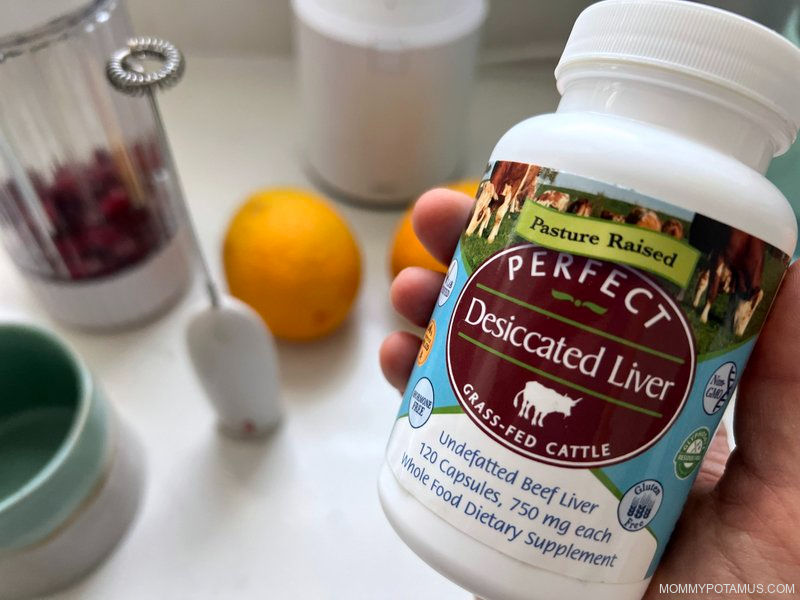
After looking at all of those factors, the one I keep coming back to is Perfect Supplements Desiccated Liver.

Their liver is sourced from Argentinian grass-fed cows graze freely on pasture throughout their lives. They don’t receive hormones or antibiotics, and the pastures aren’t treated with chemical fertilizers or pesticides.

Beyond that, they test for heavy metals, microbial contaminants, and glyphosate residue – and they publish the results on their product page.

That transparency extends to the nutritional information, too. A standard serving provides 3 grams of desiccated grass-fed beef liver – roughly equivalent to eating about three ounces of fresh liver per week – along with 969 IU of naturally occurring vitamin A per serving. I like having that information because it makes it easy for me to factor liver into the rest of my diet rather than guessing.

Most importantly, it gives me a practical way to include a food I value nutritionally but have never managed to enjoy eating.

And for me, that’s really the point.

I’m still a big believer in real, nutrient-dense food. I’m also a big believer in finding realistic ways to actually get those foods – and their benefits – into our lives.

Some weeks that looks like homemade pâté or Superfood Chili. Other weeks, it looks like a few capsules with breakfast. If you want to add them to your routine, you can save 10% with the code below.

Sources

  1. Riang’a, R. M., Broerse, J., & Nangulu, A. K. (2017). Food Beliefs and Practices Among the Kalenjin Pregnant Women in Rural Uasin Gishu County, Kenya. Journal of Ethnobiology and Ethnomedicine.
  2. O’Dea, K. (1991). Traditional Diet and Food Preferences of Australian Aboriginal Hunter-Gatherers. Philosophical Transactions of the Royal Society of London. Series B, Biological Sciences.
  3. Institute of Medicine (US) Standing Committee on the Scientific Evaluation of Dietary Reference Intakes and its Panel on Folate, Other B Vitamins, and Choline. (1998). The B Vitamins and Choline: Overview and Methods. In Dietary Reference Intakes for Thiamin, Riboflavin, Niacin, Vitamin B6, Folate, Vitamin B12, Pantothenic Acid, Biotin, and Choline. National Academies Press.
  4. McCaddon, A., & Miller, J. W. (2023). Homocysteine – A Retrospective and Prospective Appraisal. Frontiers in Nutrition.
  5. Korsmo, H. W., & Jiang, X. (2021). One Carbon Metabolism and Early Development: A Diet-Dependent Destiny. Trends in Endocrinology & Metabolism.
  6. de Souza, A. P., Marinho, V., & Marques, M. R. (2025). The Fundamental Role of Nutrients for Metabolic Balance and Epigenome Integrity Maintenance. Epigenomes.
  7. Tang, G. (2012). Techniques for Measuring Vitamin A Activity from β-Carotene. The American Journal of Clinical Nutrition.
  8. Leung, W. C., Hessel, S., Méplan, C., et al. (2009). Two Common Single Nucleotide Polymorphisms in the Gene Encoding Beta-Carotene 15,15′-Monooxygenase Alter Beta-Carotene Metabolism in Female Volunteers. The FASEB Journal.
  9. Hickenbottom, S. J., Follett, J. R., Lin, Y., et al. (2002). Variability in Conversion of β-Carotene to Vitamin A in Men as Measured by Using a Double-Tracer Study Design. The American Journal of Clinical Nutrition.
  10. Ershoff, B. H. (1951). Effects of Liver Feeding on Swimming Capacity of Rats. Proceedings of the Society for Experimental Biology and Medicine.
  11. National Institutes of Health, Office of Dietary Supplements. (2025). Vitamin A and Carotenoids: Fact Sheet for Health Professionals.
  12. Institute of Medicine (US) Panel on Micronutrients. (2001). Vitamin A. In Dietary Reference Intakes for Vitamin A, Vitamin K, Arsenic, Boron, Chromium, Copper, Iodine, Iron, Manganese, Molybdenum, Nickel, Silicon, Vanadium, and Zinc. National Academies Press.
  13. Institute of Medicine (US) Panel on Micronutrients. (2001). Vitamin A. In Dietary Reference Intakes for Vitamin A, Vitamin K, Arsenic, Boron, Chromium, Copper, Iodine, Iron, Manganese, Molybdenum, Nickel, Silicon, Vanadium, and Zinc. National Academies Press.

Share with a friend! 👇

Tags: , , ,
4 Magic Recipes for Rest and Relaxation

4 Magic Recipes for Rest and Relaxation

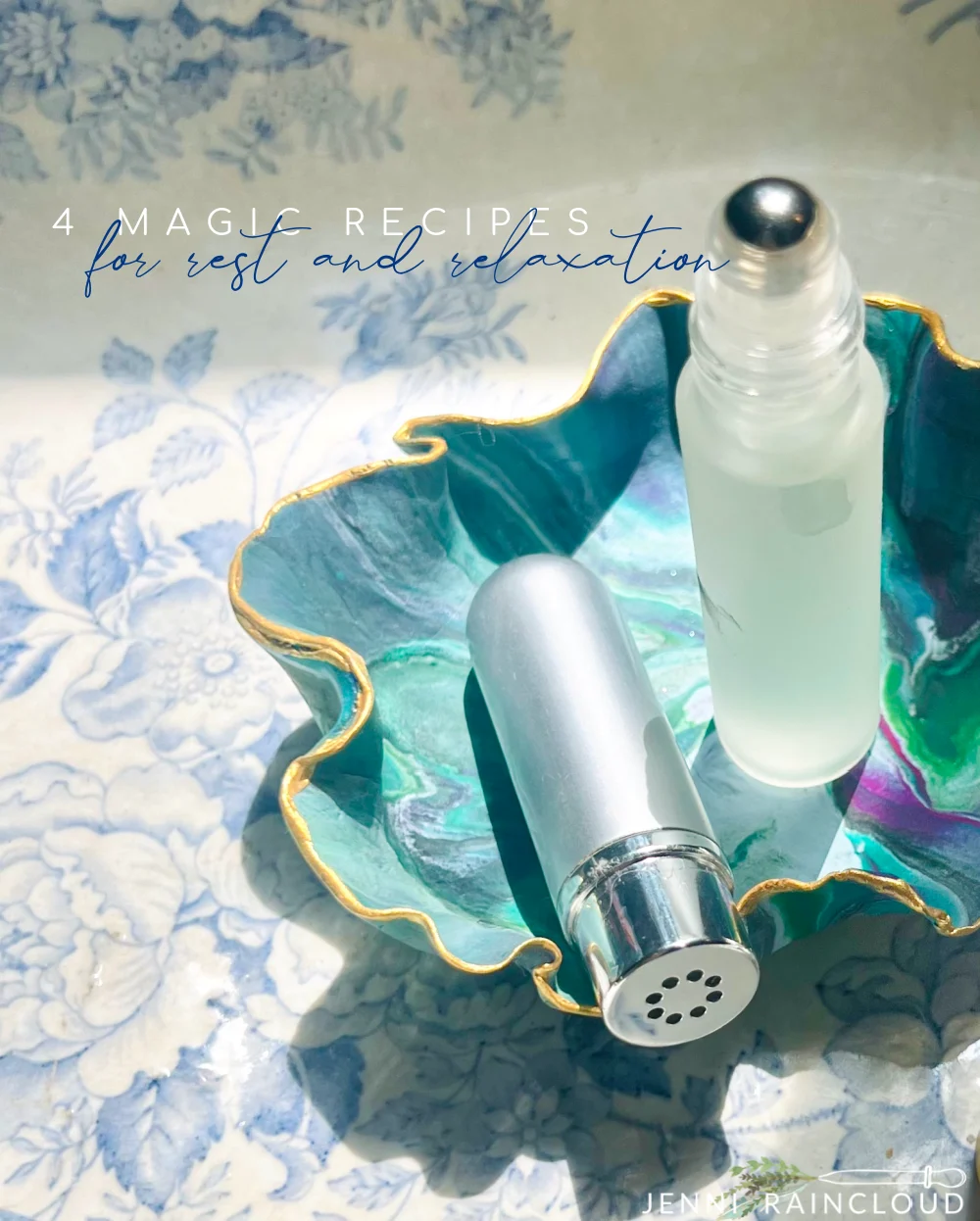
I’m all about the nervous system these days. Over the last decade, life has become increasingly challenging-I think everyone experiences a season like that, especially in middle age. Today I’m sharing a sleep/relaxation roll on recipe, pillow spray, essential oil inhaler and diffuser recipe to help improve sleep, support the nervous system and relax your mind. 

First, can I just say that blogging has become about pleasing Google (fact checking, robot/AI like posts) for a long time now. In fact, blogging all together has become a thing of the past. Most people don’t want to take the time to read a full blog post-bite sized video clips on social media have become the only content that is effective. However, I’m hanging in there and when I share a post about health, I by no means come from a place of authority. I like to write as though we are close and personal friends and am sharing my personal experiences. This is one of those  posts. I research and come to my own conclusions and sometimes it feels worth sharing. I have no credentials when it comes to giving health advice. I just like to share what works for me in the hopes it may work for you too. 

My nervous system has been a big concern of mine for years and so I’m encouraging self awareness and suggesting using essential oils as a tool to start calming the system. It’s always a favorite part of my journey to getting back to a calm nervous system. 

Are You In Fight or Flight?

You’ve probably heard of fight or flight. It is when a stressful life event can cause your body to stay in alert mode in order to protect itself. It’s a self preservation tactic our bodies do to help but when a stressor lingers for weeks, months or even years our nervous system can get stuck. Our body goes into fight or flight by producing too much cortisol. 

A few indicators that your nervous system is stuck in fight or flight:

  • Scaring easily if there is a loud noise or someone sneaks up on you.
  • Gaining belly fat
  • Low energy
  • Waking at 3 am
  • Slow digestion
  • Muscle tension
  • Racing thoughts
  • Shallow breathing

Supporting the body and letting it know it’s safe to come out of fight or flight usually just takes time. However, I proactively work on nurturing myself back to normal, also known as “rest and digest”. 

My tools to calm my nervous system are prayer, reading, jigsaw puzzles, walking, getting in bed early with lots of cats, essential oils, dim lighting and good TV, saying NO to invitations that may heighten stress, THC micro dosed gummies etc. Your tools may look different. The key is to find out healthy ways to relax your mind and body and do those things as much as possible. 

The point of saying all of this is to share a series of DIYs I’ve been loving in my nighttime routine. I love using essential oils and truly believe aromatherapy is a very powerful tools when it comes to relaxing and sleep. 

Related Post: Tips for a Better Night’s Sleep 

4 Best Essential Oils for Relaxation and Sleep:

  • Lavender: Lowers anxiety and heart rate to help you fall asleep faster. Many studies have shown lavender is effective when it comes to the nervous system.
  • Roman Chamomile: Soothes the nervous system, relieves physical tension and stops nighttime waking.
  • Cedarwood: Grounds the body and encourages melatonin production.
  • Ylang Ylang: Helps lower blood pressure and heart rate, encouraging relaxation.

Nervous System Reset Roll On Recipe:

  • 15 drops Lavender
  • 5 drops Roman Chamomile
  • 5 drops Cedarwood 
  • 2 drops Ylang Ylang
  • Top off w/ carrier oil (Fractionated Coconut Oil, Olive Oil, Jojoba, Sweet Almond, Avocado etc.)
  • 10ml glass roll on bottle

I sometimes like to call this roll on, “Liquid Xanax”.  You can carry it with you during the day and/or use it before bed. Roll it on pulse points and on the bottoms of the feet before bed. You should also inhale it by taking slow, deep breaths.

If you’d like to make this for a child, I recommend reducing the amount of essential oils by half. 

TIP: If you’d like to make this in a 1 ounce roller bottle just triple the amount of drops. I found 1 ounce glass roller bottles with rose quartz balls that I’m wanting to use for other recipes-they’re so cool!

Related Post: DIY or BUY Badger’s Sleep Balm Recipe

Sleepy Time Diffuser Blend:

  • 7 drops Lavender 
  • 3 drops Roman 
  • 1 drops Ylang Ylang

Add essential oil drops and water to a diffuser 1 hour before bedtime. Allow to run through the night. 

TIP: If you love the Young Living glass diffuser but don’t want to spend $350+, I’ve had THIS ONE for 2 years now and it’s still going strong. It is identical. 

Related Post: Essential Oil Hack-Diffuser Stations

Time to Unwind Inhaler Recipe:

  • 6 drops Lavender
  • 3 drop Cedarwood
  • 3 drops Roman Chamomile
  • 2 drops Ylang Ylang
  • Inhalers

I love making essential oil inhalers. They are a wonderful (and easy) tool to have on hand for many different occasions. You can use an inhaler as often as needed. You simply remove the lid, hold it under your nose and breath deeply for 1-2 minutes. You can find more information in my Essential Oil Inhaler post along with quite a few inhaler recipes (and cute labels) including an allergy inhaler, an illness inhaler and a nausea inhaler.

Sweet Dreams Pillow Spray Recipe:

Add all ingredients to a glass spray bottle and generously spray your linens, especially your pillows before getting into bed. 

TIP: You can always add more essential oils if you feel the scent isn’t strong enough. I love lavender so I often sneak a bit more after a few sprays. 

Where To Get The Best Essential Oils:

I typically get my essential oils from Plant Therapy. Sometimes I’m in a hurry and get them on Amazon but honestly, ordering them from their website is just as quick and free shipping. Plus, going to their website gives me a chance to check for sales which happen often. I also love Mountain Rose Herbs essential oils. They are great quality as well. Both companies are 3rd party tested, organic and reasonably priced. 

I hope this post has been helpful. I’m very inspired by the art of relaxing. I think it is easier said than done and so many of us live in a stressful environment that is taking a great toll on our overall health. I’d love to start a discussion in the comments and hear how you de-stress and nurture your nervous system! 

xx, Jenni

Jennifer Phillips

Jennifer Phillips worked as a licensed aesthetician for over 8 years before creating the DIY skincare blog, Jenni Raincloud and her natural skin care line, J. Raincloud Organics. Jennifer has been blogging full time for 16 years and loves to gain and share knowledge on how to achieve beautiful skin the natural way.

Find me on: Instagram | Facebook

Tags: , , ,
I Thought 10,000 Steps Was the Goal (Then I Discovered Japanese Walking)

I Thought 10,000 Steps Was the Goal (Then I Discovered Japanese Walking)

Most people think of walking as a low-intensity activity – something you do when you aren’t “really” working out.

But with a small change in how you walk, it can become a pretty effective workout for your heart, muscles, metabolism, and bones.

That’s especially important in midlife, when building lean muscle takes longer, recovery is slower, and just feeling like yourself – or mostly like yourself – often takes a lot more effort. If you’ve been aiming for 10,000 steps a day and it hasn’t moved the needle as much as you hoped, I’m going to share a method for getting more out of your daily walks.

But before we get to that, here’s the weird (and some might say wonderful) story of how we got to that number in the the first place.

Back in 1964, just before the Tokyo Olympic Games, a company started selling a step tracker (pedometer) called the Manpo-kei. When translated, “man” means 10,000, “po” means steps, and “kei” means meter. So, “10,000 Step Meter.”

Why 10,000? Well, many people believe the company chose the name because the Japanese character for 10,000 (“man”) kind of looks like a man walking.

The pedometer was a massive success, and sixty years later we’re all still using the 10,000 number as the gold standard for how much we should walk.

Now, the takeaway here isn’t that 10,000 steps is “wrong.” If anything, the marketing campaign helped popularize one of the healthiest habits most of us can adopt. However, the number itself wasn’t derived from exercise physiology – it was chosen because it made for memorable branding.

And there’s a catch . . .

The problem with walking at a standard pace is that your body is incredibly efficient. Once it adapts to a certain speed, it stops needing to improve. You hit a physiological plateau where your heart rate remains steady, and your muscles burn just enough fuel to keep you going.

You’re moving, and that matters. But your body may not have much reason to adapt or trigger systemic change.

For that, it needs a reason to stop coasting and start adapting again.

Why Steps Are Only Half The Story

For decades, most conversations about walking have centered around steps, miles and minutes . . . basically asking “How much is enough?”

Research shows that some benefits start showing up with as little as 2500 steps, and the benefits build steadily as your daily step count increases.

For most adults, the sweet spot lands around 7,100 steps for reducing the risk of cardiovascular events and 8,800 steps for overall longevity. After that, you’re still moving in the right direction – you just gain a little less with each additional thousand steps. (1) (2)

But step count isn’t the only thing that matters. Researchers also found that walking pace is linked with additional benefits – even when the total number of daily steps stays the same.

In other words, walking more is part of the equation.

How you walk is another.

And to understand that part, we’ll need to turn to actual Japanese researchers – not marketers.

How 3-Minute Shifts Change The Training Effect

Researchers at Shinshu University developed a method called Interval Walking Training (IWT), which is often called Japanese Walking.

The basic method is surprisingly simple:

  • Walk quickly for three minutes.
  • Walk slowly for three minutes.
  • Repeat five times.

Instead of allowing your body to settle into one comfortable, steady pace, Japanese Walking alternates between effort and recovery.

The faster intervals create a stronger demand on the heart, lungs, and lower-body muscles. The slower intervals give you enough time to recover before asking your body to do it again.

By shifting between modes you change the training effect of the walk. Below are some of the key benefits.

During midlife, declining estradiol often shifts the way the body regulates blood sugar, stores fat, and maintains muscle. That’s one reason many women notice that familiar workouts don’t seem to deliver the same results anymore.

Interval walking may help address part of that shift.

Every time you pick up the pace, your working muscles need more immediate energy. To meet that demand, they pull more glucose from the bloodstream. Over time, that repeated pattern may help the body regulate blood sugar more effectively.

In a randomized trial involving adults with type 2 diabetes, interval walking improved several measures of glucose control and reduced visceral fat. Walking continuously for a similar amount of time – and burning a similar number of calories—did not produce the same improvements. (3)

#2 – Raising Your Aerobic Ceiling

One of the biggest benefits of Japanese Walking is that it helps raise your VO₂ max – a metric many longevity researchers consider one of the strongest indicators of long-term health. Think of it as a measure of your body’s aerobic “engine”: how effectively your heart, lungs, blood vessels, and muscles work together to deliver and use oxygen when your body needs it most.

The higher your aerobic capacity, the more reserve you have. You can sustain higher bursts of activity, recover faster between activities, and meet the everyday demands of life with less effort.

A comfortable walk usually isn’t enough to keep improving that engine, but the fast intervals in Japanese Walking ask your cardiovascular system to do more. Your muscles demand more oxygen, your heart pumps harder to deliver it, and over time your body becomes better at meeting those demands.

In the original Shinshu University trial, participants increased their peak aerobic capacity for walking by 9%. Another randomized study involving adults with type 2 diabetes reported a 16.1% increase in VO₂ max. (4) (3)

The interval walkers also reduced resting systolic blood pressure more effectively than participants who walked continuously at a moderate pace.

#3 – Preserving Lower-Body Strength

Midlife is also when maintaining muscle becomes increasingly important – and increasingly difficult.

Japanese Walking isn’t a replacement for strength training, but the faster intervals require more from muscles than typical walking.

In the original trial, interval walkers increased knee-extension strength by 13% and knee-flexion strength by 17%. (4) Those movements involve the quadriceps and hamstrings – the muscles that help us climb stairs, rise from chairs, maintain stability, and move confidently through life.

That’s a meaningful gain from 30 minutes you might already be spending on a walk.

#4 – A Potential Benefit for Bone

In a study of postmenopausal women, five months of Interval Walking Training increased bone mineral density in the spine and femoral neck among women who began the study with lower bone density. (5)

It doesn’t mean Japanese Walking is a replacement for strength training or other forms of bone-loading exercise, but it suggests that increasing the intensity of a walk may provide a positive stimulus for bone health.

Bottom line: If your priorities include preserving strength, improving metabolic health, building cardiovascular fitness, and supporting your bones, adding a pattern of intensity and recovery can help you work toward those goals – without necessarily requiring a longer workout.

Why This Matters More In Midlife

In midlife, many of the things we want exercise to preserve become harder to hold onto.

As hormone levels shift, maintaining muscle, bone, cardiovascular fitness, and healthy blood sugar regulation requires more intention than it once did. That makes things like getting enough protein and the quality of our exercise increasingly important.

The faster intervals in Japanese Walking give the body a stronger training signal – one that asks more of the muscles, cardiovascular system, and metabolism than walking continuously at an easy or moderate pace.

It’s also practical enough to fit into real life:

  • No gym
  • No complicated program
  • No expensive equipment
  • Easy to remember
  • Easy to restart after missing a few days
  • About 30 minutes from start to finish

In other words, Interval Walking Training asks more of your body without asking much more of your schedule.

Your Quick Start Guide To Walking

Japanese Walking is essentially high intensity interval training stripped down to one of its most basic forms. All you need are comfortable walking shoes and a way to keep track of three-minute intervals.

Here’s the basic pattern:

  1. Walk at an easy pace for three minutes.
  2. Increase to a faster, more challenging pace for three minutes.
  3. Slow back down for three minutes.
  4. Continue alternating until you’ve completed five faster intervals and five recovery intervals.

That adds up to about 30 minutes.

How Fast Should the Brisk Intervals Feel?

The easiest way to find the right pace is with the talk test.

During the faster intervals, you should be breathing noticeably harder, but still able to speak in short sentences. If you could comfortably sing a song, it’s probably time to pick up the pace a little. If getting out even a few words feels difficult, ease off.

The goal is not to push as hard as possible. You’re looking for a pace that feels challenging, but still sustainable for the full three minutes.

When the recovery interval begins, slow down enough for your breathing to settle before the next brisk round. The easier intervals are an important part of the workout because they give you enough recovery to repeat a stronger effort several times without wearing yourself out too quickly.

Keep Your Steps Quick, Not Long

When you want to speed up, it’s natural to start reaching farther in front of you – but a longer stride isn’t necessarily a better one.

Instead, focus on taking quicker steps. Keep your posture tall, let your arms swing naturally, and allow your stride to stay comfortable. Your knees and hips will probably appreciate it.

You Don’t Have to Start With All Five Rounds

In the original research, participants completed at least five fast-and-slow cycles, usually four or more days per week. That’s the full protocol, but it’s not necessarily the best place for everyone to begin.

If 30 minutes feels like a lot right now, start with two or three rounds and see how you feel. As your fitness improves, you can gradually add another until all five feel manageable.

A Quick Safety Note

Japanese Walking is generally considered low-impact, but the faster intervals are meant to raise your heart rate. Start at a pace that fits your current fitness level, and check with your healthcare provider first if you have a medical condition or concerns about higher-intensity exercise.

And, of course, stop if your body is telling you something isn’t right.

What About a Weighted Vest?

A weighted vest adds external load, which means your muscles and bones have a little more work to do with each step. Research on the benefits of weighted-vest exercise suggests that it may help support lower-body strength and provide an additional bone-loading stimulus.

I’ve personally found it to be a useful addition to Japanese Walking, but I don’t use it every time. If you’ve read my article on the infradian rhythm, you know I match the intensity of my workouts to where I am in my cycle, how well I slept, and how recovered I feel that day. When I’m feeling energetic and strong, I throw on my vest. If I didn’t sleep well or recovery feels slower, I leave it behind and just walk.

One important note: A weighted vest isn’t part of the original Japanese Walking protocol, and I personally wouldn’t start interval walking and a weighted vest at the same time. By the time I discovered Japanese Walking, I’d already been wearing a vest regularly, so adding the intervals was the only new challenge.

Bottom line: If you decide to try a weighted vest, start light and give your body time to adjust. Adding too much too quickly can affect your posture, make the walk feel awkward, or place more stress on your joints than you intended.

Walking More and Training Better

By alternating effort with recovery, Japanese Walking turns a 30-minute walk into a more focused training session. It can be an incredibly helpful tool in midlife, especially when it’s used alongside strength training, adequate recovery, supportive nutrition, and, for some women, bioidentical hormone therapy.

Free Midlife Field Guide

If you’ve ever found yourself thinking,“Why doesn’t my body respond the way it used to?” . . . this guide was written for you.

It explains what’s changing during midlife physiology and hormone health in plain English, so you can better understand what’s happening inside your body.

Enter your email below and I’ll send it right over. You’ll also receive my weekly newsletter with practical wellness tips, recipes, and new guides like this one.

Sources

  1. Stens, N. A., Bakker, E. A., Mañas, A., et al. (2023). Relationship of Daily Step Counts to All-Cause Mortality and Cardiovascular Events. Journal of the American College of Cardiology.
  2. University of Granada. (2023). 8,000 Steps a Day to Reduce the Risk of Premature Death. ScienceDaily.
  3. Karstoft, K., Winding, K., Knudsen, S. H., et al. (2013). The Effects of Free-Living Interval-Walking Training on Glycemic Control, Body Composition, and Physical Fitness in Type 2 Diabetic Patients: A Randomized, Controlled Trial. Diabetes Care.
  4. Nemoto, K., Gen-no, H., Masuki, S., et al. (2007). Effects of High-Intensity Interval Walking Training on Physical Fitness and Blood Pressure in Middle-Aged and Older People. Mayo Clinic Proceedings.
  5. Martyanti, R. N., Morikawa, M., Hanaoka, M., et al. (2024). Increased Response of Postmenopausal Bone to Interval Walking Training Depends on Baseline Bone Mineral Density. PLOS ONE.

Share with a friend! 👇

Tags: , , , , ,
Homestead Blog Hop - Homestead tips, ideas, animal care, and recipes every Wednesday

Homestead Blog Hop 609 – Homemade Mozzarella, Pickles, and Salmon

Welcome to Homestead Blog Hop, a weekly gathering for homesteaders and simple living enthusiasts to share DIY projects, from-scratch recipes, and creative inspiration. This week’s hop features cozy homesteading tips, along with practical ideas that celebrate handmade living and self-sufficiency.

Whether you’re looking for seasonal crafts, homemade treats, or encouragement on your homesteading journey, you’ll find plenty of inspiration to carry into the new year. Grab a cup of tea, explore the featured posts, and join us in sharing your own homestead creations.

Meet Your Homesteading Hosts

We’re Kelly from Simple Life Mom, Liz from The Cape Coop, Natasha from Houseful of Nicholes, and Laurie from Ridgehaven Homestead. Together, we’re passionate about from-scratch living, simple ingredients, frugal habits, and intentional homesteading. We’re delighted to host the Homestead Blog Hop, where you can find fresh inspiration each week for DIY projects, homemade recipes, and practical simple living ideas.

Follow Us for More Homestead Inspiration

Natasha – Houseful of Nicholes
Facebook | Pinterest | X | Instagram

Laurie – Ridge Haven Homestead
Facebook | Pinterest | Instagram

Liz – The Cape Coop
Facebook | Pinterest | X | Instagram

Kelly – Simple Life Mom
Facebook | Pinterest | X | Instagram

FEATURED POSTS from the Last Homestead Blog Hop

Each week, we take turns selecting three featured posts from the Homestead Blog Hop. These features are shared across all of our social media platforms, helping spotlight the creativity and hard work of our fellow homesteaders. Here are the featured posts from last week’s hop:

1. Grandma’s No Cook Refrigerator Pickles from Recipe Idea Shop

2. Quick Homemade Mozzarella Cheese from The Once and Future Homestead

3. Garlic Butter Salmon from Yummi Haus

Congrats! Feel free to grab the featured on button for your post.

Just right click and ‘save image as…‘

Guidelines for the Homestead Blog Hop

  1. Click the “Add Your Link” button below and upload a clear, eye-catching image from your project or recipe. Please link directly to the family-friendly post itself, not your blog’s homepage.
  2. You may link up up to three posts each week.
  3. Take time to visit a few other blogs in the hop and leave a thoughtful comment to let them know you stopped by. Community support makes this hop special!
  4. Please include a link back to the Homestead Blog Hop in your post. Posts without a backlink are not eligible to be featured. All featured posts are shared across all hosts’ social media channels.
  5. Share posts that haven’t been linked to the hop before. Older posts are welcome as long as they are new to the hop.
  6. By joining the Homestead Blog Hop, you grant the hosts permission to use one image from your post, with a link back to your site, if your post is selected as a feature next week.
  7. This is a family-friendly link-up designed to encourage, inspire, and support the homesteader in all of us.

Let the Party Begin!

Which project are you excited to try this week? Leave a comment below.

Join Our Homestead Blog Hop Pinterest Board

Follow all of your hosts on Pinterest and send a message if you’d like to be added to our Homestead Blog Hop group board. This board is a great place to share your DIY projects, crafts, and from-scratch recipes with the homesteading community.

Guideline: Only pin posts that you’ve linked up to the Homestead Blog Hop.

Tags: , , , , , ,
DIY Eyeglass Cleaner - Jenni Raincloud

DIY Eyeglass Cleaner – Jenni Raincloud

I’ve officially entered into the world of readers. Readers are everywhere-I have at least 4 pairs in different places including the top of my head! I haven’t worn glasses since the 1980s so keeping up with them is a bit of a chore! What’s even a bigger chore is keeping them clean! I mean, we wear glasses to correct the blurriness and more often than not I’m trying to see through smudges on my glasses! I realized that good ole vinegar does not fix smudges well so I started experimenting with a few concoctions to find the best glasses cleaner. I’ve landed on a good recipe and I thought I’d share in case you are in need of a DIY eyeglass cleaner! 

This is a simple recipe that involves water, alcohol and Castile soap. It’s cheap and you can make it in seconds. The most expensive thing about it is finding a spray bottle!

DIY Eyeglass Cleaner Recipe:

  • Fill a spray bottle 3/4th full with alcohol.
  • Add 2-3 drops of Castile soap. (you can use Dawn dish soap if you do not have Castile soap)
  • Top off with distilled water. 
  • Spray Bottle

This recipe isn’t limited to just glasses! You can use either recipe to clean:

  • Eyeglasses
  • Sunglasses
  • Cell phone screens
  • Laptop and tablet screens
  • Camera lenses

For a really deep clean I do use my ultrasonic jewelry cleaner every 1 or 2 weeks. I will say, this little cleaner works amazing on anything you can fit in it. It’s nice to have on hand for jewelry and glasses. However, picking up a book to read or working a puzzle requires immediate clear vision and this DIY eyeglass spray comes in extremely handy and is something I will make over and over again. 

As per usual, I blog about what is relevant in my world. I needed to figure out a solution for my grimy glasses so I thought I’d share! Hope you enjoyed this super easy DIY! 

xx, Jenni

Jennifer Phillips

Jennifer Phillips worked as a licensed aesthetician for over 8 years before creating the DIY skincare blog, Jenni Raincloud and her natural skin care line, J. Raincloud Organics. Jennifer has been blogging full time for 16 years and loves to gain and share knowledge on how to achieve beautiful skin the natural way.

Find me on: Instagram | Facebook

Tags: , , , ,
Cottage Cheese Ice Cream Recipe (High Protein)

Cottage Cheese Ice Cream Recipe (High Protein)

Since you clicked on this article, I’m going to assume one of two things:

  • You’re curious if the recipe title is serious. (It is.)
  • You’re open to the idea that veggies can belong in meatballs and cottage cheese can belong in ice cream.

Whether it’s one or both, welcome. The idea of cottage cheese in dessert might sound a little weird at first, but don’t worry – it becomes a rich, creamy base that lets the sweet tropical mango flavor take the lead.

If you’re wondering, “But WHY does cottage cheese belong in ice cream,” you’re asking the right question. Traditional ice cream relies on a carefully balanced combination of fat, sugar, milk solids, and air to create its creamy texture.

If you try to, say, increase the protein because you’re in midlife and it’s suddenly your favorite macronutrient, chances are you’ll accidentally change that crucial balance and end up banging your spoon against an icy brick.

That’s where cottage cheese comes in. When blended until completely smooth, it allows you to change the ratios while keeping the creaminess and structure that makes ice cream scoopable and satisfying.

This mango version is lower in sugar and higher in protein than traditional ice cream, yet still silky smooth, sweet, and well worth the five-ish minutes of hands-on prep time.

Cottage Cheese Ice Cream Recipe

This mango ice cream is silky smooth, sweet, and well worth the five-ish minutes of hands-on prep time.Makes approximately 3.5 – 4 cups

Prep Time 5 minutes Churing time 20 minutes

Author Heather Dessinger, FDN-P

  • 2 cups whole milk cottage cheese I recommend 4% milkfat
  • 2 cups frozen mango chunks
  • 25-30 grams unflavored or vanilla protein powder Optional – I used 2 scoops Heart & Soil Whey
  • 1½ tsp vanilla extract Start with 1 tsp if using vanilla protein powder and add more to taste
  • 3 tbsp maple syrup

Ice Cream Maker Method

  • Blend in a high powered blender until very smooth.

  • Pour the mixture into your ice cream maker and churn according to your manufacturer’s instructions.

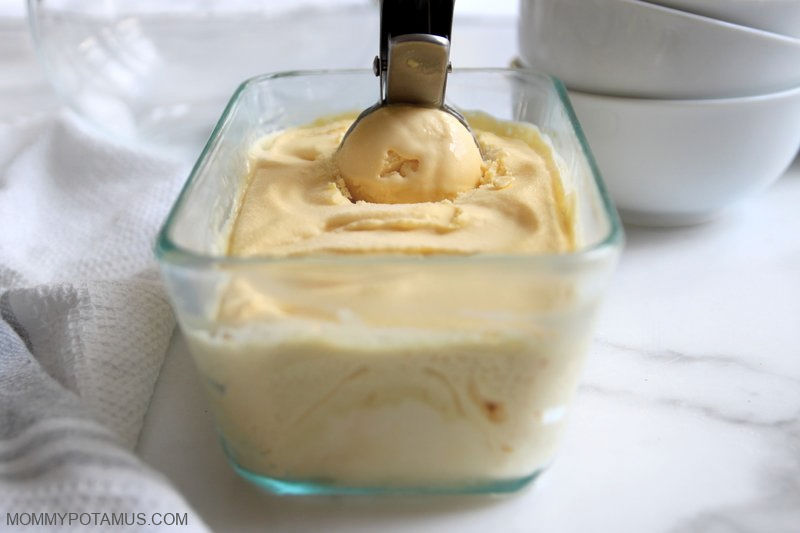
  • When the ice cream is ready it should have a soft serve consistency. You can eat it right away, or if you prefer a firmer consistency transfer it into an airtight container and place in the freezer for 2-4 hours. I like to use a glass loaf pan with a lid.
  • To Serve: If you decide to freeze the ice cream for a firmer texture, you’ll get the creamiest results by letting it soften a bit before serving. I like to think of it more as “well chilled” than deeply frozen.Because cottage cheese-based ice cream can become a little icy when frozen solid, letting it rest on the counter allows it to soften into a smoother, creamier texture that tastes more like traditional ice cream. Depending on the size and depth of your container, this can take anywhere from 10 to 20 minutes.

No Ice Cream Maker Method

  • Blend the ingredients in a high-powered blender until very smooth.

  • Transfer the mixture to a freezer-safe container and place it in the freezer. To help keep the texture creamy, give it a good fold with a spatula every 30 minutes or so. This helps break up ice crystals as they form.

  • Once the mixture becomes too firm to fold easily, just leave it alone and continue chilling until it reaches your desired consistency, about 3–4 hours total.

  • To Serve:Because cottage cheese-based ice cream can become a little icy when frozen solid, letting it rest on the counter allows it to soften into a smoother, creamier texture that tastes more like traditional ice cream. Depending on the size and depth of your container, this usually takes about 10–20 minutes.

Nutrition estimate based on Good Culture 4% and 2 scoops of Heart & Soil Whey. 

Serving: 0.5c | Calories: 111kcal | Carbohydrates: 13g | Protein: 10g | Fat: 3g | Saturated Fat: 2g | Polyunsaturated Fat: 0.03g | Monounsaturated Fat: 0.1g | Cholesterol: 16mg | Sodium: 20mg | Potassium: 142mg | Fiber: 1g | Sugar: 11g | Vitamin A: 446IU | Vitamin C: 15mg | Calcium: 61mg | Iron: 0.1mg

A Note About Ice Cream Makers

When I bought my current ice cream maker years ago, the product description listed only stainless steel and plastic. After it arrived, I discovered that the freezing bowl was actually made from anodized aluminum. It’s not my first choice in terms of material, but at the time I couldn’t find a compressor-style machine with a stainless steel bowl, so I decided to keep it for occasional use.

There are better options available now. If I were buying one today, I’d probably choose the Whynter Ice Cream Maker. It has a built-in compressor, so you can make ice cream, gelato, or sorbet whenever you want without freezing a bowl overnight. It also uses a stainless steel mixing bowl and a BPA-free plastic paddle.

If budget weren’t a factor, my top pick would be the Lello 4080 Musso Lussino Ice Cream Maker. The bowl and paddle are made with stainless steel, and it has a 4.6 star rating and over 1,000 reviews.

Also, if you enjoy this recipe, you might also like my Strawberry Cottage Cheese Ice Cream.

Share with a friend! 👇

Tags: , , , , , ,
The Ugly Truth About Lash/Brow Serums You Need To Know...

The Ugly Truth About Lash/Brow Serums You Need To Know…

If you are using a serum to help grow thicker, longer lashes and/or brows, this post is for you. I’ve always been an advocate of natural ingredients and always vetted my beauty products leaning mainly on DIY recipes but I will admit I’ve cracked in the last year and tried out a few viral products making huge claims and speaking straight to my insecurities on aging.

One of those products I fell for was a lash serum. An influencer was showing before and afters of her lashes. The growth was incredible and I clicked the link in 2 seconds flat. I used the serum and I will say, it worked. However, my eyes burned while applying it and something in my gut made me uneasy about continuing using it.

Turns out, my gut was right and upon further research I found that most lash serums contain a class of ingredient called prostaglandin analogs or PGAs. There are several different ingredients that fall under this class of drug. This type of ingredient causes the fat cells around your eyes to shrink which gives a sunken in, hollow appearance causing a deep shadow all around the eye. PGAs can also cause permanent color changes to the iris, darkening of the eyelid and chronic eye irritation.

PGAs Commonly Found in Lash/Brow Growth Serums:

  • Isopropyl Cloprostenate (IPCP): The most common prostaglandin analog used in over-the-counter (OTC) brow and lash serums including the one I fell for.
  • Ethyl Tafluprostamide (DDDE)
  • Methylamido-dihydro-noralfaprostal (MDN)
  • Bimatoprost: The active ingredient in prescription Latisse, and a prostaglandin derivative.
  • Latanoprost & Travoprost: Primarily used in prescription glaucoma eye drops, but sometimes utilized in off-label serums.

Popular Lash/Brow Growth Serums That Contain PGAs

  • GrandeLASH-MD: Contains Isopropyl Cloprostenate. This is one of the most widely used over-the-counter growth serums on the market.
  • RevitaLash Advanced: Contains Dechloro Dihydroxy Difluoro Ethylcloprostenolamide, a synthetic prostaglandin derivative.
  • Babe Original (Essential Lash Serum): Contains Isopropyl Cloprostenate. Note that they also make a separate “Renewing” SKU which is prostaglandin-free.
  • RapidLash Eyelash Enhancing Serum: Contains Isopropyl Cloprostenate.
  • NeuLash Lash Enhancing Serum: Contains Isopropyl Cloprostenate.
  • Latisse: Contains Bimatoprost (0.03%). This is a FDA-approved, prescription-only lash treatment. 

There Is Good News….

Luckily the side effects of PGAs are fully reversible after a few months of not using the serum. Unfortunately, some side effects of beauty products aren’t reversible.

More good news is that there are other lash and brow serums that do not contain these ingredients. Including my Big Brow Serum I sell on my Etsy shop! My serum contains only plant based ingredients and it works! I use it regularly to keep my brows in tip top shape. Having hypothyroidism causes my brows to thin so using my serum has really kept that at bay. Plus, every time I wax my brows, too much hair gets removed every single time! 

My brow serum won’t work for lashes because it contains essential oils. Some eyes can take a small amount of essential oils, mine cannot so I don’t recommend it for lash use. However, if you are a DIYer, you can find my brow serum recipe HERE and omit the essential oils or use THIS DIY recipe. 

Alternative Lash Serums That Do Not Contain PGAs:

If you’re a brow gal like me, you might want to check out my Brow Post Round Up. This post contains every brow post I’ve ever written including how to shape and dye brows. Dying brows can make a HUGE difference. I don’t go a month without doing it. 

My brow serum is 30% off for a very limited time so grab one while they’re on sale and in stock!! 

xx, Jenni

Jennifer Phillips

Jennifer Phillips worked as a licensed aesthetician for over 8 years before creating the DIY skincare blog, Jenni Raincloud and her natural skin care line, J. Raincloud Organics. Jennifer has been blogging full time for 16 years and loves to gain and share knowledge on how to achieve beautiful skin the natural way.

Find me on: Instagram | Facebook

Tags: , , , ,
Homestead Blog Hop - Homestead tips, ideas, animal care, and recipes every Wednesday

Homestead Blog Hop 608 – Make Copycat Oreos and Natural Cleaners

Welcome to Homestead Blog Hop, a weekly gathering for homesteaders and simple living enthusiasts to share DIY projects, from-scratch recipes, and creative inspiration. This week’s hop features cozy homesteading tips, along with practical ideas that celebrate handmade living and self-sufficiency.

Whether you’re looking for seasonal crafts, homemade treats, or encouragement on your homesteading journey, you’ll find plenty of inspiration to carry into the new year. Grab a cup of tea, explore the featured posts, and join us in sharing your own homestead creations.

Meet Your Homesteading Hosts

We’re Kelly from Simple Life Mom, Liz from The Cape Coop, Natasha from Houseful of Nicholes, and Laurie from Ridgehaven Homestead. Together, we’re passionate about from-scratch living, simple ingredients, frugal habits, and intentional homesteading. We’re delighted to host the Homestead Blog Hop, where you can find fresh inspiration each week for DIY projects, homemade recipes, and practical simple living ideas.

Follow Us for More Homestead Inspiration

Natasha – Houseful of Nicholes
Facebook | Pinterest | X | Instagram

Laurie – Ridge Haven Homestead
Facebook | Pinterest | Instagram

Liz – The Cape Coop
Facebook | Pinterest | X | Instagram

Kelly – Simple Life Mom
Facebook | Pinterest | X | Instagram

FEATURED POSTS from the Last Homestead Blog Hop

Each week, we take turns selecting three featured posts from the Homestead Blog Hop. These features are shared across all of our social media platforms, helping spotlight the creativity and hard work of our fellow homesteaders. Here are the featured posts from last week’s hop:

1. Four Pantry Ingredients That Replace Most Household Cleaners from The Once and Future Homestead

2. Easy Homemade Oreo Cookies Recipe – Copycat Oreos from Ann’s Entitled Life

3. Blistered Green Bean Salad with Smoked Paprika Vinaigrette Feta and Chopped Almonds from Scratch Made Food

Congrats! Feel free to grab the featured on button for your post.

Just right click and ‘save image as…‘

Guidelines for the Homestead Blog Hop

  1. Click the “Add Your Link” button below and upload a clear, eye-catching image from your project or recipe. Please link directly to the family-friendly post itself, not your blog’s homepage.
  2. You may link up up to three posts each week.
  3. Take time to visit a few other blogs in the hop and leave a thoughtful comment to let them know you stopped by. Community support makes this hop special!
  4. Please include a link back to the Homestead Blog Hop in your post. Posts without a backlink are not eligible to be featured. All featured posts are shared across all hosts’ social media channels.
  5. Share posts that haven’t been linked to the hop before. Older posts are welcome as long as they are new to the hop.
  6. By joining the Homestead Blog Hop, you grant the hosts permission to use one image from your post, with a link back to your site, if your post is selected as a feature next week.
  7. This is a family-friendly link-up designed to encourage, inspire, and support the homesteader in all of us.

Let the Party Begin!

Which project are you excited to try this week? Leave a comment below.

Join Our Homestead Blog Hop Pinterest Board

Follow all of your hosts on Pinterest and send a message if you’d like to be added to our Homestead Blog Hop group board. This board is a great place to share your DIY projects, crafts, and from-scratch recipes with the homesteading community.

Guideline: Only pin posts that you’ve linked up to the Homestead Blog Hop.

Tags: , , , , , ,
The Ultimate Christmas in July Gift Guide

The Ultimate Christmas in July Gift Guide

If you’re anything like me, you know that the best handmade gifts can’t always be made at the last minute. Some projects—like cold process soap—need weeks to cure, while others simply take time to gather supplies, create, and package with care. That’s exactly why I love celebrating Christmas in July. It’s the perfect excuse to start planning for a handmade holiday without the stress of a December rush.

Over the years, we’ve hosted some unforgettable Christmas in July gatherings, complete with hilarious White Elephant exchanges that have become family legends. (Yes, the giant Christmas sweater and that infamous pair of underwear made the rounds for years!) Those memories are part of what makes this tradition so much fun.

Whether you’re planning your own Christmas in July celebration or you’re simply someone who likes to get a head start on holiday gift-making, this guide is filled with ideas to inspire you.

Inside, you’ll find handmade gift ideas, natural products I genuinely love, trusted companies I enjoy supporting, and time-tested DIY recipes that are perfect for gifting. I’ve also included a few special splurge-worthy finds if you’re looking to treat someone—or yourself—to something extra special.

From healthy ingredients and beautiful handcrafted products to DIY gifts you can start making today, there’s something here for every maker and every gift list.

Now, let’s dive in and start planning a handmade holiday you’ll actually enjoy creating.

Table of Contents

  • Gold Jewelry for Gifting
  • Handmade Holiday Soap Recipes
  • Luxurious Lotion for Gifts
  • Handmade Soap for Men
  • Herbal Lip Balm Recipes
  • Facial and Body Scrubs
  • Homemade Candles
  • Diffuser Oil Blends
  • Homemade Herbal Teas
  • Handmade Gift Basket Ideas
  • Creative Gift Wrapping & Packaging
  • Final Thoughts

1. Gold Jewelry for Gifting

I actually love the combination of handmade with something polished. It’s an earthy, yet elegant look that’s natural and classy at the same time. Whether it’s a delicate necklace, a pair of simple earrings, or a meaningful bracelet, jewelry has a way of becoming part of someone’s everyday life and become even more special if they are high-quality pieces that are passed down from generation to generation.

If you’re looking for a gift that feels both elegant and personal, this gold jewelry is a wonderful choice. It’s perfect for moms, sisters, friends, teachers, or anyone who appreciates classic style that will last for years to come.

2. Handmade Holiday Soap Recipes

Homemade soap is one of my favorite gifts to make because it’s both beautiful and practical. The only catch is that many cold process soaps need four to six weeks to cure, making Christmas in July the perfect time to start creating.

Whether you love festive scents, herbal ingredients, or naturally colored bars, making soap ahead of time means you’ll have plenty of gorgeous gifts ready when the holidays arrive. Package them with ribbon, kraft paper, or a handmade label for an extra special touch. You can also try some from my shop now.

3. Luxurious Lotion for Gifts

A rich, nourishing lotion is always a welcome gift during the colder months. Homemade lotions made with quality oils and butters feel incredibly luxurious while giving friends and family something they’ll actually use every day.

From lightweight lotions to rich body creams, there are plenty of recipes to suit every skin type. Pair a handmade lotion with coordinating soap or lip balm to create a beautiful spa-inspired gift set. Make your own with my recipes or get some from my shop.

4. Handmade Soap for Men

Finding thoughtful gifts for the men in your life doesn’t have to be difficult. Handmade soaps with earthy, woodsy, citrus, or spicy scents make practical gifts that feel just a little more special than anything you’ll find on a store shelf.

These soaps are perfect for husbands, dads, brothers, grandfathers, or coworkers. Add them to a gift basket with a shaving brush, beard oil, or handcrafted wooden soap dish for a gift that’s both useful and memorable.

5. Herbal Lip Balm Recipes

Lip balm is one of those small gifts that everyone appreciates. They’re inexpensive to make, easy to customize, and perfect for stocking stuffers, teacher gifts, party favors, or adding to larger gift baskets.

Using nourishing oils, beeswax, and herbal infusions creates lip balms that feel wonderful while avoiding unnecessary ingredients. Once you start making your own, you’ll probably find yourself keeping a few extras for your own purse or pocket, too.

6. Facial and Body Scrubs

Sugar and salt scrubs make wonderful homemade gifts because they’re quick to create and instantly feel like a little luxury. They’re perfect for encouraging a little self-care during the busy holiday season.

From gentle facial scrubs to exfoliating body scrubs scented with essential oils, there are endless ways to customize them. Package them in reusable glass jars with festive labels, and you’ll have a gift that’s both beautiful and practical.

7. Homemade Candles

Few things create a cozy holiday atmosphere quite like a beautiful, naturally scented candle. Making your own allows you to choose natural waxes, favorite fragrances, and containers that match your personal style.

Candles make wonderful standalone gifts or can be paired with soap, lotion, tea, or a favorite book for a thoughtful gift basket. They’re one of those handmade gifts that people enjoy long after the holidays are over.

8. Diffuser Oil Blends

Essential oil diffuser blends are a simple way to fill a home with comforting seasonal aromas. Whether you enjoy warm spices, fresh evergreens, bright citrus, or calming lavender, creating custom blends lets you personalize every gift.

Bottle your favorite combinations in small glass bottles with handwritten labels or include printable blend recipes alongside a diffuser. They’re thoughtful gifts for anyone who enjoys creating a peaceful, welcoming home.

9. Homemade Herbal Teas

There’s something comforting about curling up with a warm cup of herbal tea on a cold winter evening. Homemade tea blends are easy to customize using dried herbs, flowers, and spices, making them a thoughtful gift for friends and family.

Package loose-leaf blends in glass jars, reusable tea tins, or kraft bags with brewing instructions and a handwritten note. Pair them with a favorite mug, local honey, or homemade cookies for a cozy gift that’s sure to be appreciated throughout the season.

Gift Baskets

If you’re wondering how to put these all together, then consider making a few different categories and making a gift basket. Gift baskets are incredibly popular around the holidays because they let you combine several small handmade items into one thoughtful gift.

There are many times throughout the year to create gift baskets. Some great ideas include:

  • New neighbor welcome basket
  • Spa gift basket (soap, lotion, lip balm, scrub, candle)
  • Tea lover’s basket (herbal tea, mug, honey, candle)
  • Men’s grooming basket
  • Hostess gift basket

Make all of your gifts or find Handmade Gifts in my Shop.

Handmade Gift Packaging Ideas

Presentation makes handmade gifts feel even more special.

Include ideas like:

  • Kraft boxes
  • Mason jars
  • Muslin bags
  • Twine and dried orange slices
  • Cinnamon sticks
  • Handmade gift tags
  • Wax seals
  • Reusable baskets

Get beautiful gift-wrapping ideas and make handmade wrapping paper here.

Whether you’re making a single thoughtful gift for Christmas in July or planning an entire handmade Christmas, I hope these ideas inspire you to start creating now. A little planning in July can make the holiday season feel far less stressful—and much more enjoyable.

I’d love to hear what handmade gifts you’re making this year, so leave a comment below and share your favorite Christmas in July tradition!

Tags: , , , ,
How to Use Nature's Retinol: Bakuchiol In Your Beauty Routine

How to Use Nature’s Retinol: Bakuchiol In Your Beauty Routine

Bakuchiol is a natural retinol alternative. Its effects on the skin are similar to retinol just minus the negative skin reactions retinol often causes. Bakuchiol can be used to reduce sun spots, increase collagen production and protect against collagen breakdown. It can also improve fine lines and wrinkles and has even shown to be helpful with improving acne prone skin. It accelerates cell turnover which is vital as this process slows way down as we age leaving dull, wrinkled dry skin that should’ve been sluffed off. 

What is really cool about Bakuchiol is that it reinforces your skin’s natural structure from within, boosting the strength of building blocks like collagen and elastin.  It also is a strong antioxidant. The appearance of skin aging is influenced by oxidative stress on the skin, especially from environmental factors like pollution and UV rays. But bakuchiol can help strengthen your skin’s resistance to these stressors.

What is Bakuchiol?

Bakuchiol (buh-koo-chee-all) extract is an oil naturally derived from the seeds of the Psoralea corylifolia, more commonly known as the babchi plant. It became a skincare tool in early Indian and Chinese medicine. 

Bakuchiol vs. Retinol:

Retinol is a vitamin A derivative, and is known for its ability to stimulate collagen production, diminish the appearance of fine lines and wrinkles, and improve the overall look of skin.

Retinol is widely acknowledged as an anti-aging ingredient because of its ability to connect to almost any skin cell receptor site, prompting it to simulate the behavior of a healthy, younger skin cell. Retinol is also a powerful antioxidant that is known to interrupt the free-radical damage associated with wrinkles, fine lines, and other signs of aging.

Retinol has become common and can be found in over the counter anti aging products. However, higher doses must be prescribed by a doctor. 

Retinol is commonly known to irritate the skin. It must be used with great caution because its side effects can outweigh its benefits. In fact, pregnant women are warned not to use retinol during pregnancy and users are advised to stay out of the sun while using the treatment. This is where Bakuchiol shines. Bakuchiol has the benefits of retinol with none of the side effects.

Bakuchiol is also a vegan product where retinol is typically not. 

Related Post: DIY Anti Aging Retinol Face Mask

How to Incorporate Bakuchiol in a Natural Beauty Routine? 

As usual, Lotion Crafter to the rescue! They offer Bakuchiol and it can simply be added to oil based recipes at a specific percentage. Find it HERE.

.25 ounces is $15.95. However, you are only adding .5-2% in each recipe. 

Let’s formulate a face oil and eye roll on, shall we? I’m going to use one of my favorite anti aging carrier oils, rosehip seed oil. I typically like to buy it from Mountain Rose Herbs but I often end up grabbing THIS bottle from Amazon because I use it so often. I’m also going to add castor oil, Vitamin E and I love to add carrot seed oil to eye products since it also has cell regenerative properties. Castor oil is so cool-not only does it have some impressive anti aging properties, it also acts as a vehicle to drive other ingredients deeper into the skin tissue.

If you’d like to keep this simple, you could just add 12 drops of bakuchiol to 1 oz. of rosehip and call it good. I’m in the mood to get creative and make two really great products so I’ll share what I did but either way works! 

1 oz. Bakuchiol Face Oil Recipe:

Use a 1 oz treatment pump or dropper bottle Because this face oil is 100% oil based, the shelf life will be around 6 months with no preservative needed. 

10 ml Bakuchiol Eye Serum Recipe:

Use a 10ml glass roll on bottle. No preservative needed here either. With eye roll ons it is nice to store these in a beauty fridge since the cold roller ball can further help reduce inflammation around the eyes. 

Both of these recipes are as simple as adding ingredients into a bottle. I use a small funnel and then once it’s all in, replace the lid and give it a gentle shake. 

You can use both of these products day and/or night since unlike retinol, bakuchiol does not make you UV sensitive. I always like to use a water based product on my skin right before I apply and oil based product. The water helps the skin drink up the oil. An example of a water based product would be a toner or an hyaluronic acid serum. You could also splash a little water on your skin if you don’t have a water based product in your regime.

Where to Get Ingredients:

I always prefer to get my ingredients at Mountain Rose Herbs. They are simply the best quality. They have fair pricing as well. However, I get wanting to use Amazon so I’ve linked all Amazon in the recipe and made a post on my Amazon storefront for really easy shopping.  Most of everything I’ve linked, I’ve personally used. The bakuchiol, CO2llageneer and Q-MAX are Lotion Crafter. They too are affordable and ship very fast. I can not vouch for any of these ingredients on Amazon. 

Bakuchiol promotes collagen, one of the most vital components of radiant, youthful looking skin. Bakuchiol also triggers skin cell repair for a brightening result. These two functions are absolutely vital in skin that is over 30. I love that bakuchiol is gentle. I always opt for a gentle approach to anti aging rather than harsh products, lasers and injectables. 

xx, Jenni

Jennifer Phillips

Jennifer Phillips worked as a licensed aesthetician for over 8 years before creating the DIY skincare blog, Jenni Raincloud and her natural skin care line, J. Raincloud Organics. Jennifer has been blogging full time for 16 years and loves to gain and share knowledge on how to achieve beautiful skin the natural way.

Find me on: Instagram | Facebook

Tags: , , , ,
Best oLive
Privacy Overview

This website uses cookies so that we can provide you with the best user experience possible. Cookie information is stored in your browser and performs functions such as recognising you when you return to our website and helping our team to understand which sections of the website you find most interesting and useful.