I Thought 10,000 Steps Was the Goal (Then I Discovered Japanese Walking)
Most people think of walking as a low-intensity activity – something you do when you aren’t “really” working out.
But with a small change in how you walk, it can become a pretty effective workout for your heart, muscles, metabolism, and bones.
That’s especially important in midlife, when building lean muscle takes longer, recovery is slower, and just feeling like yourself – or mostly like yourself – often takes a lot more effort. If you’ve been aiming for 10,000 steps a day and it hasn’t moved the needle as much as you hoped, I’m going to share a method for getting more out of your daily walks.
But before we get to that, here’s the weird (and some might say wonderful) story of how we got to that number in the the first place.
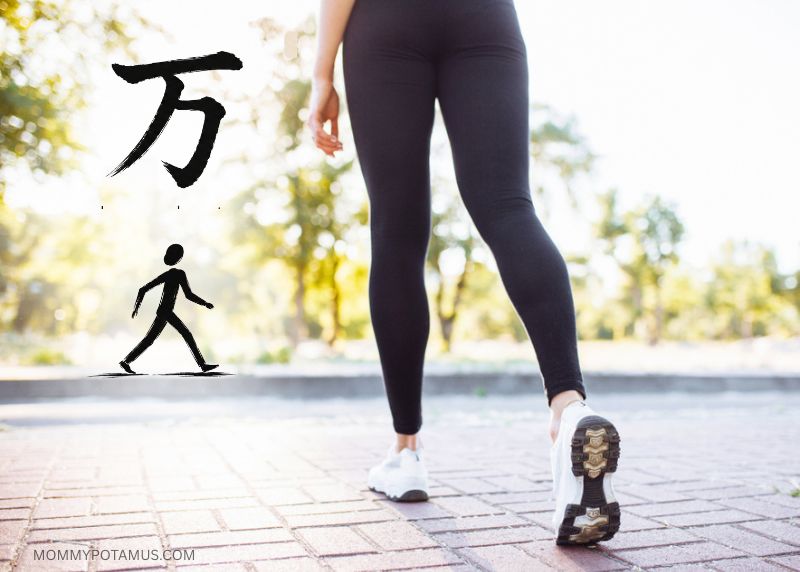
Back in 1964, just before the Tokyo Olympic Games, a company started selling a step tracker (pedometer) called the Manpo-kei. When translated, “man” means 10,000, “po” means steps, and “kei” means meter. So, “10,000 Step Meter.”
Why 10,000? Well, many people believe the company chose the name because the Japanese character for 10,000 (“man”) kind of looks like a man walking.
The pedometer was a massive success, and sixty years later we’re all still using the 10,000 number as the gold standard for how much we should walk.
Now, the takeaway here isn’t that 10,000 steps is “wrong.” If anything, the marketing campaign helped popularize one of the healthiest habits most of us can adopt. However, the number itself wasn’t derived from exercise physiology – it was chosen because it made for memorable branding.
And there’s a catch . . .
The problem with walking at a standard pace is that your body is incredibly efficient. Once it adapts to a certain speed, it stops needing to improve. You hit a physiological plateau where your heart rate remains steady, and your muscles burn just enough fuel to keep you going.
You’re moving, and that matters. But your body may not have much reason to adapt or trigger systemic change.
For that, it needs a reason to stop coasting and start adapting again.
Why Steps Are Only Half The Story
For decades, most conversations about walking have centered around steps, miles and minutes . . . basically asking “How much is enough?”
Research shows that some benefits start showing up with as little as 2500 steps, and the benefits build steadily as your daily step count increases.
For most adults, the sweet spot lands around 7,100 steps for reducing the risk of cardiovascular events and 8,800 steps for overall longevity. After that, you’re still moving in the right direction – you just gain a little less with each additional thousand steps. (1) (2)
But step count isn’t the only thing that matters. Researchers also found that walking pace is linked with additional benefits – even when the total number of daily steps stays the same.
In other words, walking more is part of the equation.
How you walk is another.
And to understand that part, we’ll need to turn to actual Japanese researchers – not marketers.
How 3-Minute Shifts Change The Training Effect
Researchers at Shinshu University developed a method called Interval Walking Training (IWT), which is often called Japanese Walking.
The basic method is surprisingly simple:
- Walk quickly for three minutes.
- Walk slowly for three minutes.
- Repeat five times.
Instead of allowing your body to settle into one comfortable, steady pace, Japanese Walking alternates between effort and recovery.
The faster intervals create a stronger demand on the heart, lungs, and lower-body muscles. The slower intervals give you enough time to recover before asking your body to do it again.
By shifting between modes you change the training effect of the walk. Below are some of the key benefits.
During midlife, declining estradiol often shifts the way the body regulates blood sugar, stores fat, and maintains muscle. That’s one reason many women notice that familiar workouts don’t seem to deliver the same results anymore.
Interval walking may help address part of that shift.
Every time you pick up the pace, your working muscles need more immediate energy. To meet that demand, they pull more glucose from the bloodstream. Over time, that repeated pattern may help the body regulate blood sugar more effectively.
In a randomized trial involving adults with type 2 diabetes, interval walking improved several measures of glucose control and reduced visceral fat. Walking continuously for a similar amount of time – and burning a similar number of calories—did not produce the same improvements. (3)
#2 – Raising Your Aerobic Ceiling
One of the biggest benefits of Japanese Walking is that it helps raise your VO₂ max – a metric many longevity researchers consider one of the strongest indicators of long-term health. Think of it as a measure of your body’s aerobic “engine”: how effectively your heart, lungs, blood vessels, and muscles work together to deliver and use oxygen when your body needs it most.
The higher your aerobic capacity, the more reserve you have. You can sustain higher bursts of activity, recover faster between activities, and meet the everyday demands of life with less effort.
A comfortable walk usually isn’t enough to keep improving that engine, but the fast intervals in Japanese Walking ask your cardiovascular system to do more. Your muscles demand more oxygen, your heart pumps harder to deliver it, and over time your body becomes better at meeting those demands.
In the original Shinshu University trial, participants increased their peak aerobic capacity for walking by 9%. Another randomized study involving adults with type 2 diabetes reported a 16.1% increase in VO₂ max. (4) (3)
The interval walkers also reduced resting systolic blood pressure more effectively than participants who walked continuously at a moderate pace.
#3 – Preserving Lower-Body Strength
Midlife is also when maintaining muscle becomes increasingly important – and increasingly difficult.
Japanese Walking isn’t a replacement for strength training, but the faster intervals require more from muscles than typical walking.
In the original trial, interval walkers increased knee-extension strength by 13% and knee-flexion strength by 17%. (4) Those movements involve the quadriceps and hamstrings – the muscles that help us climb stairs, rise from chairs, maintain stability, and move confidently through life.
That’s a meaningful gain from 30 minutes you might already be spending on a walk.
#4 – A Potential Benefit for Bone
In a study of postmenopausal women, five months of Interval Walking Training increased bone mineral density in the spine and femoral neck among women who began the study with lower bone density. (5)
It doesn’t mean Japanese Walking is a replacement for strength training or other forms of bone-loading exercise, but it suggests that increasing the intensity of a walk may provide a positive stimulus for bone health.
Bottom line: If your priorities include preserving strength, improving metabolic health, building cardiovascular fitness, and supporting your bones, adding a pattern of intensity and recovery can help you work toward those goals – without necessarily requiring a longer workout.
Why This Matters More In Midlife
In midlife, many of the things we want exercise to preserve become harder to hold onto.
As hormone levels shift, maintaining muscle, bone, cardiovascular fitness, and healthy blood sugar regulation requires more intention than it once did. That makes things like getting enough protein and the quality of our exercise increasingly important.
The faster intervals in Japanese Walking give the body a stronger training signal – one that asks more of the muscles, cardiovascular system, and metabolism than walking continuously at an easy or moderate pace.
It’s also practical enough to fit into real life:
- No gym
- No complicated program
- No expensive equipment
- Easy to remember
- Easy to restart after missing a few days
- About 30 minutes from start to finish
In other words, Interval Walking Training asks more of your body without asking much more of your schedule.
Your Quick Start Guide To Walking
Japanese Walking is essentially high intensity interval training stripped down to one of its most basic forms. All you need are comfortable walking shoes and a way to keep track of three-minute intervals.
Here’s the basic pattern:
- Walk at an easy pace for three minutes.
- Increase to a faster, more challenging pace for three minutes.
- Slow back down for three minutes.
- Continue alternating until you’ve completed five faster intervals and five recovery intervals.
That adds up to about 30 minutes.
How Fast Should the Brisk Intervals Feel?
The easiest way to find the right pace is with the talk test.
During the faster intervals, you should be breathing noticeably harder, but still able to speak in short sentences. If you could comfortably sing a song, it’s probably time to pick up the pace a little. If getting out even a few words feels difficult, ease off.
The goal is not to push as hard as possible. You’re looking for a pace that feels challenging, but still sustainable for the full three minutes.
When the recovery interval begins, slow down enough for your breathing to settle before the next brisk round. The easier intervals are an important part of the workout because they give you enough recovery to repeat a stronger effort several times without wearing yourself out too quickly.
Keep Your Steps Quick, Not Long
When you want to speed up, it’s natural to start reaching farther in front of you – but a longer stride isn’t necessarily a better one.
Instead, focus on taking quicker steps. Keep your posture tall, let your arms swing naturally, and allow your stride to stay comfortable. Your knees and hips will probably appreciate it.
You Don’t Have to Start With All Five Rounds
In the original research, participants completed at least five fast-and-slow cycles, usually four or more days per week. That’s the full protocol, but it’s not necessarily the best place for everyone to begin.
If 30 minutes feels like a lot right now, start with two or three rounds and see how you feel. As your fitness improves, you can gradually add another until all five feel manageable.
A Quick Safety Note
Japanese Walking is generally considered low-impact, but the faster intervals are meant to raise your heart rate. Start at a pace that fits your current fitness level, and check with your healthcare provider first if you have a medical condition or concerns about higher-intensity exercise.
And, of course, stop if your body is telling you something isn’t right.
What About a Weighted Vest?
A weighted vest adds external load, which means your muscles and bones have a little more work to do with each step. Research on the benefits of weighted-vest exercise suggests that it may help support lower-body strength and provide an additional bone-loading stimulus.
I’ve personally found it to be a useful addition to Japanese Walking, but I don’t use it every time. If you’ve read my article on the infradian rhythm, you know I match the intensity of my workouts to where I am in my cycle, how well I slept, and how recovered I feel that day. When I’m feeling energetic and strong, I throw on my vest. If I didn’t sleep well or recovery feels slower, I leave it behind and just walk.
One important note: A weighted vest isn’t part of the original Japanese Walking protocol, and I personally wouldn’t start interval walking and a weighted vest at the same time. By the time I discovered Japanese Walking, I’d already been wearing a vest regularly, so adding the intervals was the only new challenge.
Bottom line: If you decide to try a weighted vest, start light and give your body time to adjust. Adding too much too quickly can affect your posture, make the walk feel awkward, or place more stress on your joints than you intended.
Walking More and Training Better
By alternating effort with recovery, Japanese Walking turns a 30-minute walk into a more focused training session. It can be an incredibly helpful tool in midlife, especially when it’s used alongside strength training, adequate recovery, supportive nutrition, and, for some women, bioidentical hormone therapy.
Free Midlife Field Guide
If you’ve ever found yourself thinking,“Why doesn’t my body respond the way it used to?” . . . this guide was written for you.
It explains what’s changing during midlife physiology and hormone health in plain English, so you can better understand what’s happening inside your body.
Enter your email below and I’ll send it right over. You’ll also receive my weekly newsletter with practical wellness tips, recipes, and new guides like this one.
Sources
- Stens, N. A., Bakker, E. A., Mañas, A., et al. (2023). Relationship of Daily Step Counts to All-Cause Mortality and Cardiovascular Events. Journal of the American College of Cardiology.
- University of Granada. (2023). 8,000 Steps a Day to Reduce the Risk of Premature Death. ScienceDaily.
- Karstoft, K., Winding, K., Knudsen, S. H., et al. (2013). The Effects of Free-Living Interval-Walking Training on Glycemic Control, Body Composition, and Physical Fitness in Type 2 Diabetic Patients: A Randomized, Controlled Trial. Diabetes Care.
- Nemoto, K., Gen-no, H., Masuki, S., et al. (2007). Effects of High-Intensity Interval Walking Training on Physical Fitness and Blood Pressure in Middle-Aged and Older People. Mayo Clinic Proceedings.
- Martyanti, R. N., Morikawa, M., Hanaoka, M., et al. (2024). Increased Response of Postmenopausal Bone to Interval Walking Training Depends on Baseline Bone Mineral Density. PLOS ONE.