Why Your Routine Shouldn’t Stop There

Why Your Routine Shouldn’t Stop There

For years, skincare advice stopped at the jawline.

We cleansed, treated, moisturised and protected the face, then left the neck and chest to fend for themselves against sun, perfume, hot showers, posture, sleep creases and whatever active ingredients happened to migrate down.

Now, the neck is having its own skincare moment.

It makes sense. The skin on the neck and décolletage is often exposed to the same UV, pollution and environmental stress as the face, but it tends to get far less attention. It can also be thinner, more delicate and more prone to showing crepiness, lines, redness and uneven tone.

The new neck routine is not about panic-buying a dozen “firming” products. It is about treating the skin below your chin with the same basic respect you give your face: sunscreen in the morning, smart actives at night and enough moisturiser to keep the barrier calm.

In other words, your skincare routine may need to travel south.

Why the neck shows ageing early

Neck skin has a few disadvantages.

It moves constantly. You bend, tilt and turn it all day. You look down at your phone. You sleep on your side. You pull jumpers over it, spray fragrance near it and forget sunscreen on it.

It also has fewer oil glands than some parts of the face, which means it can feel dry or crepey sooner. Add years of sun exposure, natural collagen loss and hormonal changes in midlife, and the neck can start to show lines, laxity and texture changes before you expect it.

This does not mean your neck needs to look “young”. It means it may need different care.

Neck and décolletage age in similar ways to the face because they are chronically exposed to the sun. The same source recommends using many of the same protective and treatment ingredients on the neck and chest, with some caution because the area can be sensitive.

The real first step: sunscreen

If you do only one thing for your neck, make it sunscreen.

UV exposure is one of the biggest drivers of premature skin ageing, including wrinkles, pigmentation, rough texture and loss of elasticity. The neck and chest often get incidental sun during driving, walking, gardening, outdoor exercise and everyday errands.

The expert recommends broad-spectrum, water-resistant sunscreen with SPF 30 or higher.  Use it every day, apply enough, reapply when outdoors and do not stop at the chin.

Bring it down the neck, over the sides of the neck, onto the ears and across the upper chest if exposed.

This is especially important if you use retinoids, exfoliating acids, or clinic treatments, because the skin may become more sun-sensitive or vulnerable to irritation.

Should you use retinol on your neck?

Retinoids are among the most researched skincare ingredients for photoageing. They can support collagen production, improve skin texture and help soften the look of fine lines over time. But the neck is not always as tolerant as the face.

That is why the neck rule is: slower, gentler, less often.

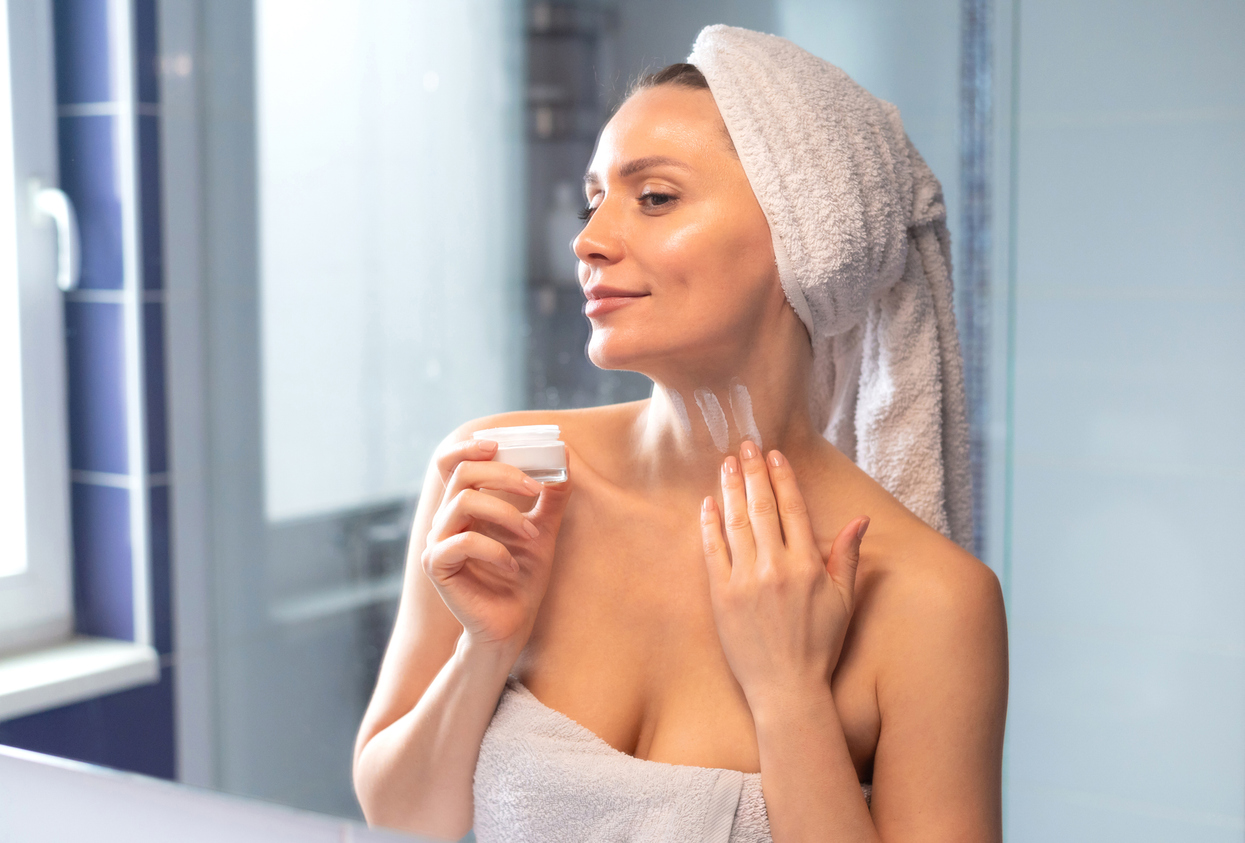
If your face already tolerates retinol or retinal, you may be able to bring a small amount down to the neck one or two nights a week. Follow with moisturiser, and increase only if your skin stays calm. Avoid using strong prescription retinoids on the neck unless your dermatologist or GP has advised it.

If you notice stinging, peeling, itchiness, redness, or a tight burning feeling, pull back. The goal is not to force your neck to “get used to it”. It is to get benefits without wrecking the barrier.

A practical approach is the sandwich method: moisturiser first, a small amount of retinoid, then moisturiser again. This can make the active easier to tolerate.

Where peptides fit

Peptides are having a quiet comeback because they sit in a useful middle ground. They are generally gentler than retinoids and are often used in formulas designed for firmness, hydration and barrier support.

Peptides are short chains of amino acids, the building blocks of proteins such as collagen and elastin. In skincare, they are often included to support the look of smoother, firmer, more resilient skin.

They are not a facelift in a bottle. But for a neck routine, they can be useful because the area often needs consistency more than aggression. A peptide serum or moisturiser may suit people who cannot tolerate retinoids well, or who want a daily product that layers comfortably under sunscreen.

Do you need a separate neck cream?

Not always.

If your face moisturiser is rich enough and does not irritate your neck, you can use the same one below the jawline. If your neck is drier, more sensitive, or more crepey than your face, a dedicated neck cream may feel better because these formulas are often richer and designed to cushion the area.

What matters more than the label is the formula.

Look for ingredients that support hydration and barrier repair, such as glycerin, hyaluronic acid, ceramides, niacinamide and squalane. If you want an active formula, look for retinoids, peptides, antioxidants, or gentle exfoliating ingredients.

Avoid overloading the area with too many actives at once. The neck is one place where more is very often too much.

What about the chest?

The décolletage deserves the same routine.

The chest is exposed to sun, sleep compression and friction from clothing. It can develop pigmentation, redness, creases and crepey texture, especially if it has had years of UV exposure.

Bring your morning sunscreen down across the chest whenever that skin is exposed. At night, extend your moisturiser and gentle actives to the area too.

If you are using retinoids, go slowly here as well. The chest can react with irritation, especially if you are also using exfoliating acids, fragrance-heavy body products, or hot showers.

The bodycare trend is part of the same shift

The neck routine is not happening in isolation. Beauty is moving beyond face-only skincare.

Recent beauty trend coverage has pointed to bodycare becoming more skincare-like, with more interest in retinol body serums, active body washes, exfoliating sprays, lightweight body milks and targeted care for texture, pigmentation and body breakouts.

That shift makes sense. People have become more ingredient-literate. They understand sunscreen, retinoids, peptides and barrier repair on the face, so they are starting to ask why the rest of the skin gets ignored.

The trick is to avoid turning full-body care into another exhausting routine. Your neck and chest do not need 10 steps. They need consistency.

What clinic treatments can do

Skincare can help with prevention, texture, hydration and mild signs of ageing. But it has limits.

If your main concern is significant laxity, deeper horizontal neck lines, crepey skin, sun damage, redness, or pigmentation, clinic treatments may come into the conversation.

Depending on your skin, a dermatologist or qualified cosmetic practitioner may discuss options such as laser, radiofrequency, ultrasound tightening, microneedling, skin boosters, biostimulatory injectables, or prescription skincare.

Technologies such as ultrasound tightening, radiofrequency and laser treatments may be used for sagging skin, depending on the person and concern.

The important word is realistic. No cream or device will make neck skin behave like surgical lifting. If there is significant loose skin, surgery may be the only option that creates a dramatic change. If the concern is mild laxity, texture, or crepiness, non-surgical options may help, but results vary.

A simple neck routine to start

You do not need to overhaul everything. Start here.

Morning:
Cleanse gently, or rinse with water if your skin is dry. Apply a hydrating serum or moisturiser if needed. Finish with broad-spectrum sunscreen, bringing it down the neck and chest.

Evening:
Cleanse away sunscreen. Apply a moisturiser. If your skin tolerates actives, add a gentle retinoid one or two nights a week, or use a peptide serum on non-retinoid nights.

Once or twice a week:
If your neck is rough or dull, you may use a very gentle exfoliant, but do not combine it with retinoids on the same night. If you are prone to irritation, skip exfoliation and focus on moisturising instead.

Every day:
Look up from your phone more often, reapply sunscreen when outdoors and stop treating the neck as an afterthought.

Mistakes that can irritate the neck

The neck often reacts faster than the face, so be careful with these common mistakes:

  • using a strong face retinoid on the neck too often
  • layering retinoids, exfoliating acids and vitamin C too aggressively
  • applying fragrance or essential oils to sensitive skin
  • forgetting sunscreen after using actives
  • scrubbing crepey skin
  • starting multiple new products at once
  • treating redness, itching, or burning as “normal purging”

If your neck becomes inflamed, stop the actives and simplify. Use a gentle cleanser, bland moisturiser and sunscreen until the skin settles. If irritation persists, see your GP or dermatologist.

When to get a skin check

Any new, changing, bleeding, crusting, or non-healing spot on the neck or chest should be checked. These areas get plenty of sun exposure, and cosmetic concerns should never distract from skin cancer awareness.

Australia has one of the highest rates of skin cancer in the world, so a neck and chest routine should not only be about smoothness. It should also be about protection and early detection.

If you are unsure about a spot, book a skin check.

The bottom line

Your neck does not need a complicated routine. It needs the basics you may already be giving your face.

Sunscreen matters most. Retinoids can help if used carefully. Peptides and barrier-supporting ingredients can be useful for firmness, hydration and comfort. Clinic treatments may have a role if skincare is not enough, but they should match the problem you actually have.

The new neck routine is not about chasing perfection. It is about realising that the skin below your chin has been doing the same work as your face, often with far less support.
Tags: , ,
Where Beauty Meets Science: Why MyColla C's "My Brightest Chapter" Event Resonated with Me | Dear Kitty Kittie Kath

Where Beauty Meets Science: Why MyColla C’s “My Brightest Chapter” Event Resonated with Me | Dear Kitty Kittie Kath

     As we enter our 30s and 40s, the way we look at beauty starts to change. It’s no longer just about finding the next skincare product or beauty trend. Instead, it’s about creating daily habits that help us feel confident, healthy, and supported from within. As a mom in my 40s balancing work, parenting, content creation, and an active lifestyle, I’ve realized that self-care isn’t about chasing perfection. It’s about making intentional choices that help me keep up with the life I love.

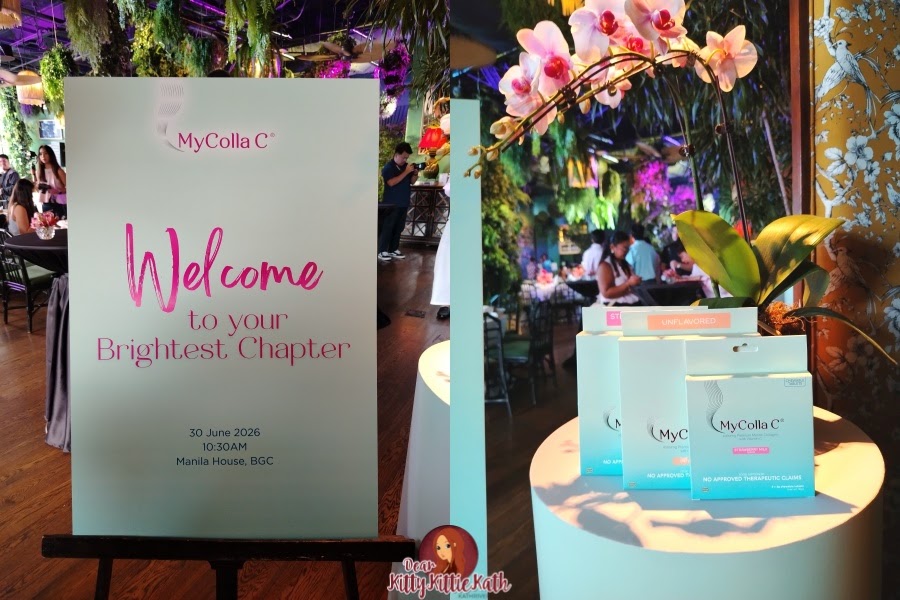
     That’s exactly the message I took home from My Brightest Chapter, the latest launch event of MyColla C. More than introducing a collagen supplement, the event opened meaningful conversations about beauty, wellness, and aging gracefully through science-backed insights and inspiring personal stories. More about the event after the jump, click continue to read more.

Where Beauty Meets Science: Why MyColla C’s “My Brightest Chapter” Event Resonated with Me

Beauty Meets Science

     One of the highlights of the event was the informative talk by Dr. Maika S. Slatensek, who explained collagen in a way that was both practical and easy to understand. She shared that collagen is an important structural protein that helps keep our skin firm, hydrated, and resilient. As we age, our natural collagen production gradually declines, which can lead to visible signs of aging such as dullness, dryness, and reduced skin elasticity. Rather than viewing collagen as a quick beauty fix, Dr. Slatensek encouraged everyone to see it as part of a long-term wellness routine supported by healthy habits and proper nutrition.

Where Beauty Meets Science: Why MyColla C’s “My Brightest Chapter” Event Resonated with Me     She also discussed Marine Collagen, the key ingredient in MyColla C, explaining that it is sourced from fish, rich in Type I Collagen, and hydrolyzed into smaller peptides for easier daily intake. Another key takeaway was the importance of Vitamin C, which plays an essential role in collagen synthesis. Together, these ingredients highlight why supporting collagen production isn’t just about taking collagen alone, it’s also about providing the body with the nutrients it needs to help the process work effectively.Where Beauty Meets Science: Why MyColla C’s “My Brightest Chapter” Event Resonated with Me

Real Conversations About Confidence

     Lifestyle personalities Jackie Go and Apple Mendoza shared their own experiences about navigating different stages of womanhood, balancing multiple roles, and learning to prioritize themselves without guilt. As someone who wears many hats every day, I found their stories relatable. Whether you’re managing a career, raising kids, building a business, or simply trying to stay active, confidence often comes from taking small but consistent steps to care for yourself.

Where Beauty Meets Science: Why MyColla C’s “My Brightest Chapter” Event Resonated with Me

An Interactive Wellness Experience

     Beyond the talks, My Brightest Chapter created several interactive experiences that encouraged guests to reflect on their own wellness journey. Guests explored My Brightest Pages, where they wrote affirmations and intentions, posed for professional photos at My Brightest Portraits, discovered their wellness personality through the My Brightest Era Quiz, and even mixed their own collagen drinks during the My Colla Mix activity. The event felt less like a product launch and more like a celebration of choosing yourself every day.

Where Beauty Meets Science: Why MyColla C’s “My Brightest Chapter” Event Resonated with Me

MyColla C Product Features

     If you’re looking for an easy way to include collagen in your daily wellness routine, here are the key features of MyColla C:

  • 3000mg Premium Hydrolyzed Marine Collagen to support skin rebuild and collagen renewal.
  • With Vitamin C, an essential nutrient that supports collagen synthesis.
  • Features Hydrolyzed Marine Collagen, which is broken down into smaller peptides for easy daily intake.
  • Available in drink powders and chewable tablets to suit different lifestyles.
  • Comes in Strawberry Milk Powder, Unflavored Powder, and Strawberry Milk Tablet variants.
  • Best paired with a balanced diet, regular exercise, and consistent self-care habits.
  • Available at leading drugstores nationwide, including Watsons, Mercury Drug, Southstar Drug, Rose Pharmacy, and St. Joseph Drugstore.

Where Beauty Meets Science: Why MyColla C’s “My Brightest Chapter” Event Resonated with Me

My Final Thoughts

     One thing I appreciated most about My Brightest Chapter is that it shifted the conversation about aging. Instead of focusing on looking younger, it encouraged women to feel stronger, more confident, and more intentional about taking care of themselves.

     As someone constantly juggling motherhood, work, workouts, and everyday responsibilities, that message truly resonated with me. Beauty isn’t about turning back the clock, it’s about supporting yourself through every chapter of life. Sometimes, your brightest chapter doesn’t begin when everything is perfect. It begins the moment you decide to show up for yourself, one healthy habit at a time.

For more information on MyColla C

Follow them on Instagram: @mycollac

Good Times!~

Tags: , , , , , , , , , , ,
Hindustan Times News

Monsoon Skincare Essentials for Oily, Acne-Prone Skin

Monsoon humidity is uniquely challenging for oily and acne-prone skin. The combination of sweat, excess sebum, and slower-drying products creates the perfect environment for breakouts, making this the season when a solid routine matters most. Here are the essentials that actually make a difference, and why each one earns its place in a monsoon routine specifically.

Monsoon Skincare Essentials for Oily, Acne-Prone Skin

Start with your cleanser. An acne face wash with salicylic acid clears out the oil and bacteria that build up faster in humid weather, reaching inside the pores rather than just cleaning the surface. Follow it with a niacinamide serum to regulate oil production throughout the day, since niacinamide also calms the inflammation that tends to flare up more during monsoon breakouts.

Hydration and sun protection round out the essentials. A cica moisturizer keeps the skin barrier calm without adding heaviness, which matters since stripped, dehydrated skin tends to produce even more oil to compensate. Finish every morning with a vitamin c sunscreen, since UV rays pass through clouds, and skipping sunscreen on rainy days undoes the rest of the routine’s progress.

Why Monsoon Is Harder on Oily, Acne-Prone Skin

Higher humidity increases sebum production, since sebaceous glands respond to moisture in the air by producing more oil. That oil mixes with sweat, pollution, and leftover product residue, sitting on the skin longer than it would in drier weather. Damp skin also creates a more hospitable environment for acne-causing bacteria, which is why breakouts often intensify specifically during the rainy months rather than staying consistent year-round.

The Monsoon Skincare Essentials Checklist

1. Salicylic acid face wash, morning and night

An acne face wash built around salicylic acid dissolves trapped sebum and dead skin inside the pore, which a regular cleanser can’t reach. Salicylic acid is a beta hydroxy acid (BHA) that is oil-soluble, allowing it to penetrate deep into pores where it loosens excess sebum, dead skin cells, and debris.

Regular use helps reduce blackheads, whiteheads, and future congestion without aggressively scrubbing the skin. This is the single most important swap for oily, acne-prone skin during monsoon, and the one step that most directly prevents new breakouts from forming.

2. Niacinamide serum to regulate oil

A niacinamide serum applied after cleansing keeps oil production in check through humid afternoons and helps calm the redness that often comes with monsoon breakouts. Applying it to slightly damp skin helps it absorb more effectively before your moisturizer goes on.

3. Lightweight cica moisturizer, never skipped

A cica moisturizer hydrates without adding grease, and the cica itself soothes any irritation caused by humidity, sweat, or active ingredients elsewhere in the routine. Skipping moisturizer because skin feels oily is one of the most common monsoon mistakes, and it typically backfires by triggering even more oil production.

4. Vitamin C sunscreen, reapplied throughout the day

A vitamin C sunscreen protects against UV damage that continues even on overcast, rainy days, while also helping fade any pigmentation left over from summer sun exposure. Reapplication every 3 hours matters more in monsoon than people assume, since humidity and sweat can wear sunscreen off faster than usual.

5. Weekly clay mask for deeper cleansing

Once or twice a week, a clay-based mask draws out the sweat, oil, and impurities that a daily face wash alone can’t fully clear, keeping pores genuinely clean rather than surface-clean. This step becomes especially useful in the monsoon, when product and sweat buildup accumulate faster than usual.

Common Monsoon Mistakes to Avoid

● Skipping moisturizer because skin feels oily. This backfires and triggers more oil production, not less.

● Over-washing your face. Stripping the skin barrier more than twice a day worsens breakouts over time.

● Assuming cloudy days don’t need sunscreen. UV exposure continues regardless of visible sunlight.

● Using heavy, oil-based creams. These can settle within oily skin making pores clogged and breakouts worse rather than better.

Your Monsoon Routine, Morning and Night

Morning: cleanse with your acne face wash, apply niacinamide serum to slightly damp skin, follow with your cica moisturizer, and finish with vitamin C sunscreen before stepping outside, rain or shine. Night: double cleanse if you’ve worn sunscreen or makeup during the day, apply niacinamide serum again, and seal it in with your cica moisturizer. Two to three times a week, swap your evening moisturizer step for a clay mask session to deep clean pores that have accumulated sweat and oil throughout the humid day.

Do You Need to Change Your Skincare Routine Every Monsoon?

Not entirely, but a few swaps make a real difference. If your regular cleanser isn’t oil-focused, switching to a salicylic acid-based acne face wash for the season helps manage the extra sebum humidity causes. Similarly, if you use a richer moisturizer in winter, switching to a lighter cica moisturizer during monsoon prevents the clogged pores that heavier formulas can cause once humidity rises. Sunscreen and a targeted serum, on the other hand, are worth keeping consistent year-round rather than treating as seasonal additions.

Conclusion

Monsoon humidity creates the perfect environment for excess oil, sweat, and debris to accumulate inside pores, increasing the risk of blackheads and breakouts. A consistent routine that combines gentle cleansing, oil-regulating ingredients like niacinamide, pore-clearing actives such as salicylic acid, lightweight hydration, and daily sunscreen is more effective than over-cleansing or harsh scrubbing.

With regular care throughout the season, you can keep pores clear, maintain a healthy skin barrier and reduce recurring congestion. Cleanse with an acne face wash, treat with a niacinamide serum, moisturize with a cica moisturizer, and protect with a vitamin C sunscreen every single day. Stick to these essentials consistently through the season, and breakouts and excess oil become far easier to manage, rain or shine.

Note to readers: This article is part of HT’s paid consumer connect initiative and is independently created by the brand. HT assumes no editorial responsibility for the content, including its accuracy, completeness, or any errors or omissions. Readers are advised to verify all information independently.

Want to get your story featured as above? click here!

Tags: , , , , ,
How to Use Nature's Retinol: Bakuchiol In Your Beauty Routine

How to Use Nature’s Retinol: Bakuchiol In Your Beauty Routine

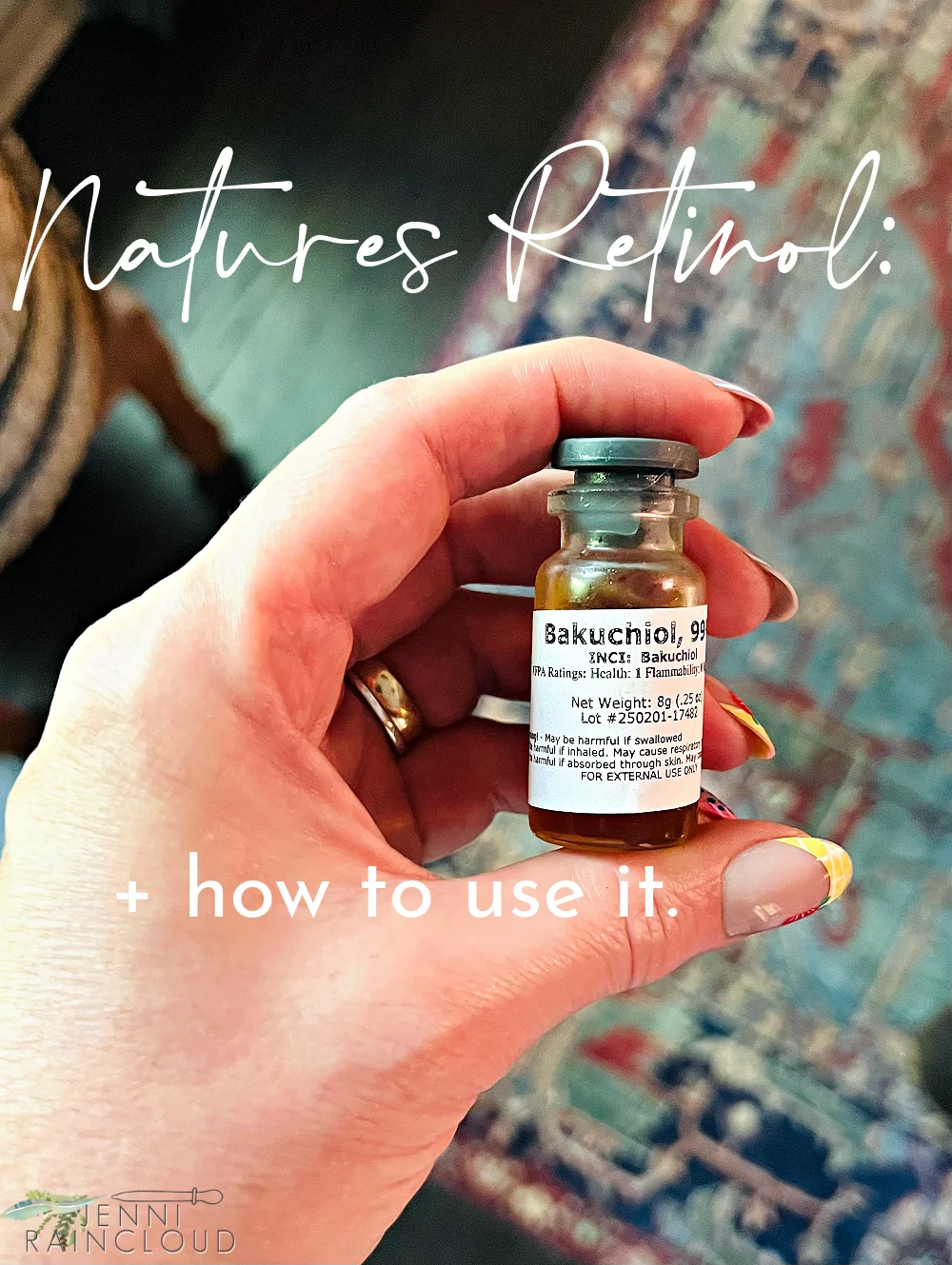
Bakuchiol is a natural retinol alternative. Its effects on the skin are similar to retinol just minus the negative skin reactions retinol often causes. Bakuchiol can be used to reduce sun spots, increase collagen production and protect against collagen breakdown. It can also improve fine lines and wrinkles and has even shown to be helpful with improving acne prone skin. It accelerates cell turnover which is vital as this process slows way down as we age leaving dull, wrinkled dry skin that should’ve been sluffed off. 

What is really cool about Bakuchiol is that it reinforces your skin’s natural structure from within, boosting the strength of building blocks like collagen and elastin.  It also is a strong antioxidant. The appearance of skin aging is influenced by oxidative stress on the skin, especially from environmental factors like pollution and UV rays. But bakuchiol can help strengthen your skin’s resistance to these stressors.

What is Bakuchiol?

Bakuchiol (buh-koo-chee-all) extract is an oil naturally derived from the seeds of the Psoralea corylifolia, more commonly known as the babchi plant. It became a skincare tool in early Indian and Chinese medicine. 

Bakuchiol vs. Retinol:

Retinol is a vitamin A derivative, and is known for its ability to stimulate collagen production, diminish the appearance of fine lines and wrinkles, and improve the overall look of skin.

Retinol is widely acknowledged as an anti-aging ingredient because of its ability to connect to almost any skin cell receptor site, prompting it to simulate the behavior of a healthy, younger skin cell. Retinol is also a powerful antioxidant that is known to interrupt the free-radical damage associated with wrinkles, fine lines, and other signs of aging.

Retinol has become common and can be found in over the counter anti aging products. However, higher doses must be prescribed by a doctor. 

Retinol is commonly known to irritate the skin. It must be used with great caution because its side effects can outweigh its benefits. In fact, pregnant women are warned not to use retinol during pregnancy and users are advised to stay out of the sun while using the treatment. This is where Bakuchiol shines. Bakuchiol has the benefits of retinol with none of the side effects.

Bakuchiol is also a vegan product where retinol is typically not. 

Related Post: DIY Anti Aging Retinol Face Mask

How to Incorporate Bakuchiol in a Natural Beauty Routine? 

As usual, Lotion Crafter to the rescue! They offer Bakuchiol and it can simply be added to oil based recipes at a specific percentage. Find it HERE.

.25 ounces is $15.95. However, you are only adding .5-2% in each recipe. 

Let’s formulate a face oil and eye roll on, shall we? I’m going to use one of my favorite anti aging carrier oils, rosehip seed oil. I typically like to buy it from Mountain Rose Herbs but I often end up grabbing THIS bottle from Amazon because I use it so often. I’m also going to add castor oil, Vitamin E and I love to add carrot seed oil to eye products since it also has cell regenerative properties. Castor oil is so cool-not only does it have some impressive anti aging properties, it also acts as a vehicle to drive other ingredients deeper into the skin tissue.

If you’d like to keep this simple, you could just add 12 drops of bakuchiol to 1 oz. of rosehip and call it good. I’m in the mood to get creative and make two really great products so I’ll share what I did but either way works! 

1 oz. Bakuchiol Face Oil Recipe:

Use a 1 oz treatment pump or dropper bottle Because this face oil is 100% oil based, the shelf life will be around 6 months with no preservative needed. 

10 ml Bakuchiol Eye Serum Recipe:

Use a 10ml glass roll on bottle. No preservative needed here either. With eye roll ons it is nice to store these in a beauty fridge since the cold roller ball can further help reduce inflammation around the eyes. 

Both of these recipes are as simple as adding ingredients into a bottle. I use a small funnel and then once it’s all in, replace the lid and give it a gentle shake. 

You can use both of these products day and/or night since unlike retinol, bakuchiol does not make you UV sensitive. I always like to use a water based product on my skin right before I apply and oil based product. The water helps the skin drink up the oil. An example of a water based product would be a toner or an hyaluronic acid serum. You could also splash a little water on your skin if you don’t have a water based product in your regime.

Where to Get Ingredients:

I always prefer to get my ingredients at Mountain Rose Herbs. They are simply the best quality. They have fair pricing as well. However, I get wanting to use Amazon so I’ve linked all Amazon in the recipe and made a post on my Amazon storefront for really easy shopping.  Most of everything I’ve linked, I’ve personally used. The bakuchiol, CO2llageneer and Q-MAX are Lotion Crafter. They too are affordable and ship very fast. I can not vouch for any of these ingredients on Amazon. 

Bakuchiol promotes collagen, one of the most vital components of radiant, youthful looking skin. Bakuchiol also triggers skin cell repair for a brightening result. These two functions are absolutely vital in skin that is over 30. I love that bakuchiol is gentle. I always opt for a gentle approach to anti aging rather than harsh products, lasers and injectables. 

xx, Jenni

Jennifer Phillips

Jennifer Phillips worked as a licensed aesthetician for over 8 years before creating the DIY skincare blog, Jenni Raincloud and her natural skin care line, J. Raincloud Organics. Jennifer has been blogging full time for 16 years and loves to gain and share knowledge on how to achieve beautiful skin the natural way.

Find me on: Instagram | Facebook

Tags: , , , ,
Best oLive
Privacy Overview

This website uses cookies so that we can provide you with the best user experience possible. Cookie information is stored in your browser and performs functions such as recognising you when you return to our website and helping our team to understand which sections of the website you find most interesting and useful.