Has the word 'holistic' lost its meaning in the beauty industry?

Has the word ‘holistic’ lost its meaning in the beauty industry?

The term “holistic” is widely used across beauty, spa and wellness, but many therapists argue it has become diluted through overuse in marketing. Kathy Scott explores what holistic beauty really means, how the definition has evolved and whether the industry risks losing the term’s original significance.

In beauty and wellness, “holistic” has become one of the most overused words in the room. That is not entirely a bad thing, as it reflects a shift in client thinking.

People are asking better questions and looking beyond quick fixes, showing more interest in sleep, stress, nutrition, hormones and long-term skin health rather than just surface-level results.

The issue is that as “holistic” has become more marketable, it has also become more vague. It is now used to describe a wide range of services and philosophies, many of which differ significantly in training and depth of practice.

When one word is stretched to cover everything, the public loses clarity and practitioners lose distinction.

I say this as someone who identifies as a holistic skin practitioner. My background includes homeopathy, massage, reflexology, beauty and skin, and I came to that title because no single label captured the way I work. My practice sits at the meeting point of beauty and complementary therapy.

What does holistic practice really mean?

Holistic practice goes beyond adding a few wellness questions to a consultation form. It involves working with the whole person rather than focusing only on the visible symptom.

Skin is influenced by far more than products and procedures, and factors such as lifestyle, stress, emotional wellbeing, habits and daily rhythms all play a role.

But for me, genuine holistic practice extends even further. Alongside the physical and emotional aspects, there may also be an energetic or spiritual dimension.

These areas are harder to measure and do not sit neatly within a conventional clinical model, but they are part of many traditional holistic disciplines.

For those trained in that way, this is an integral part of the work. Not every practitioner will work at that level, and not every client will want it, which is entirely valid.

But if we are going to use the word “holistic”, it is worth recognising that, at its deepest level, it has historically meant more than symptom management with a lifestyle layer.

Why is the term ‘holistic’ being used differently across the beauty industry?

Over the past 18 months, I have paid closer attention to how the term is being used across the industry, and a few patterns have emerged.

First, “holistic” is now being used to market services that would never previously have associated themselves with that term. Second, it no longer means the same thing from one business to the next. And third, it has become a buzzword – shorthand for “we care” or “we look at lifestyle too”.

This is where the issue begins. If a clinic describes itself as holistic because it asks about sleep and stress or recommends supplements, that may reflect an effort to see the client in context but it is not enough to claim holistic practice in the fullest sense of the word.

This is not a criticism of therapists or clinic owners who are evolving their services in response to changing client demand. The industry should evolve and take greater account of the wider factors that influence skin health and wellbeing.

However, there is a difference between being holistic-informed and being a qualified holistic practitioner. One may involve expanding consultation style and knowledge of lifestyle factors, while the other is rooted in a deeper framework of training, philosophy and professional boundaries.

What is a holistic skin practitioner?

This lack of clarity matters for clients, who deserve to know what they are booking into. At present, the word “holistic” offers very little certainty. 

One practitioner may be offering an integrative, whole-person approach grounded in years of complementary therapy training, while another may simply be incorporating a broader consultation style alongside a conventional treatment menu, and others using it to signal something natural or wellness-led.

Holistic practice is not defined by the questions you ask alone, but by what you are trained to recognise and hold in the client in front of you. 

Physical symptoms may sit alongside emotional or deeply personal layers, and understanding how to respond, where your role begins and ends, and when to refer on requires both training and experience.

Why training and regulation matter in holistic beauty

This is also why education and regulation matter. Too many short, poorly regulated courses promise professional identity without delivering professional depth.

When complex modalities are condensed into a weekend certificate and sent straight into the marketplace, the public is left to assume that all qualifications are equal, which is not the case.

Practitioners who have invested years in study, practice, supervision and continuing professional development are right to question the impact this has on the credibility of their field.

If we are serious about standards in advanced aesthetics, we should apply the same level of seriousness to holistic practice. Regulation, transparency and training quality should not matter only when a treatment involves a needle. 

They also matter when a practitioner is working with vulnerability, trust, health narratives and the broader wellbeing of the person in front of them.

Is holistic beauty evidence-based?

I also believe we need to challenge the assumption that holistic means soft, vague or less effective. Done well, holistic skin practice can deliver significant and lasting change. 

It simply works from a broader understanding of the person and often from a different philosophy of care.

It asks not only what needs to be treated, but what needs to be understood. It respects the process as well as the outcome. And for those of us who work this way, that is not a weakness.

This is not about ownership of a word, but about responsibility in how it is used. 

Has the word ‘holistic’ lost its meaning?

If “holistic” is to remain meaningful, the industry needs to be more precise about what it describes. 

Clearer distinctions are needed between holistic-inspired branding, holistic-informed consultations and fully qualified holistic practice, and the training behind the title should be recognised and respected.

If every business can call itself holistic, regardless of depth or training, the word risks losing its meaning entirely.

About the expert author

Kathy Scott is a holistic therapist and owner of Ginger Tree Holistic Skin Clinic near Richmond, North Yorkshire, where she specialises in bespoke holistic face and body treatments, combining non-invasive methods with medical-grade products.
Tags: , , , , ,
How K-beauty moved into the UK skincare mainstream

How K-beauty moved into the UK skincare mainstream

The difference is that shoppers are no longer just curious about Korean skincare. They are actively buying into the category, learning how products fit together and searching for formulas that match specific concerns. That move from discovery to repeat purchase is what has helped K-beauty become more than a passing trend.

The numbers reflect this shift. Cosmetics Business reported that searches for Korean skin care on TikTok Shop UK rose 125% in the second half of 2025, while K-beauty baskets were almost 35% higher in value than the overall skin care average. For retailers, that suggests a category with both strong visibility and serious commercial pull.

From Social Discovery to Serious Skincare Demand

Social platforms have played a major role in bringing K-beauty to wider UK audiences. A viral cleanser, toner pad, serum or SPF can introduce shoppers to a brand almost instantly. But social discovery alone does not explain why the category has lasted.

The real strength of K-beauty is that it gives consumers a practical way to approach skincare. Products are often understood through skin concerns, textures and steps: cleansing, hydration, barrier support, sun protection or targeted treatment. That makes the category easy to explore, but also useful enough to return to.

This is why K-beauty now feels less like a novelty and more like part of everyday skincare. UK shoppers are becoming more confident about asking which ingredients suit their skin, how products should be layered and what role each step plays in their daily habits.

Why K-Beauty Is Becoming Easier to Buy in the UK

Availability has also changed the market. A few years ago, many Korean skincare products felt specialist or difficult to access. Now, UK consumers can find K-beauty through high-street retailers, social commerce platforms and dedicated online stores.

Cosmetics Business has reported that Boots expanded its K-beauty range with brands including Anua, Skin1004 and Mixsoon, alongside existing customer favourites such as Laneige and Beauty of Joseon. That kind of retail presence matters because it gives the category more credibility with everyday shoppers. It also makes trial easier, especially for consumers who may have first seen a product online but want to buy from a retailer they recognise.

Specialist retailers still have an important role to play, particularly as the market becomes more crowded. Shoppers may know they are interested in Korean skincare, but still need help choosing between brands, ingredients, product types and skincare steps. As interest grows, specialist Korean skincare UK retailers can help shoppers navigate brands, ingredients, product types and skincare steps with more confidence.

What UK Shoppers Now Expect From K-Beauty

As K-beauty becomes more established, UK shoppers are becoming more selective. They increasingly expect:

  • Clear product information around ingredients, skin concerns and skincare steps
  • Reliable UK availability, rather than products that are difficult to source
  • Confidence that products are authentic and from trusted channels
  • Curated product edits that help shoppers move from viral discovery to confident repeat purchase

This is where K-beauty has an advantage over many trend-led categories. It has the excitement of discovery, but it also has enough structure to support long-term buying behaviour. A shopper might start with one viral product, then gradually explore hydration, SPF, soothing ingredients or barrier care in a more considered way.

What This Means for the Next Phase of UK Skincare

K-beauty’s rise also sits within a wider shift in facial skincare. Mintel estimates that the UK facial skincare category grew by 8.6% in 2025, with trial of K-beauty listed among the factors contributing to that growth. That points to a category that is not sitting outside the mainstream market, but actively influencing how consumers shop for skincare.

For beauty retailers, the opportunity is not simply to add more Korean products to the shelf. The more valuable opportunity is to present them clearly. That means merchandising by concern and product type, explaining benefits in plain language and helping shoppers understand how different items work together.

The next phase of K-beauty in the UK is likely to be shaped by this mix of excitement and education. Social platforms will continue to drive discovery, but long-term growth will depend on trust, availability and useful guidance.

That is how K-beauty has moved into the UK skincare mainstream. It gives consumers the appeal of discovery, while making everyday skincare easier to understand and return to.

Tags: , , ,
tinted lip sunscreen

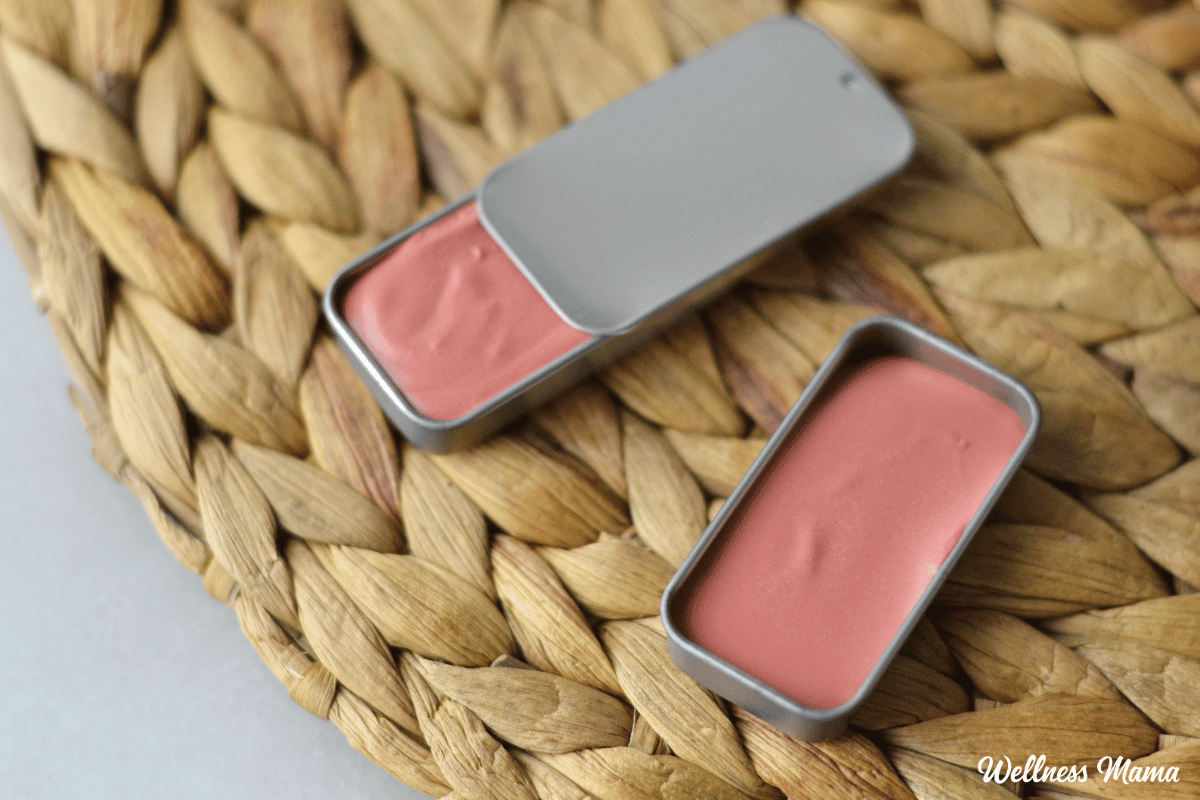
DIY Natural Tinted Lip Sunscreen

For many years now I’ve preached about the benefits of safe sun exposure. The keyword here is safe! And while it has a lot of benefits, sometimes on occasion, I’ll pull out the homemade sunscreen. Many of you have asked for a lip sunscreen with SPF, so I finally got to work in the kitchen and came up with one. 

Why You Should Not (and Should) Use Lip Sunscreen

I’m not usually a fan of sunscreen for several reasons. We need the sun to make the hormone vitamin D, have a strong immune system, regulate hormones, and so much more. Even something as seemingly simple as sunglasses can interfere with that signalling by blocking light receptors in the eyes. 

Most of the time I’ll either seek shade or cover up once my body has had enough sun for the day. While I think the science is clear on the sun’s benefits, it’s also clear that sunburns are damaging! However, if you live in a really sunny climate and you’re outside a lot, out on the boat, surfing, etc., then sunscreen can be helpful sometimes. 

My homemade sunscreen recipe is a fan favorite, but many of you have asked if it can be used on lips. Technically yes, but it might leave a white cast, be hard to apply, and taste kind of funky. Even if you’re not eating it (the ingredients are clean though), small amounts of lip balm still end up in the mouth. But we probably all knew that one kid in grade school who liked eating Chapstick…

Mineral Lip Balm With Sunscreen Ingredients

A lot of the store-bought brands use a whole slew of synthetic ingredients I really don’t want in my mouth (or in my kids’!). Certain UV-blocking ingredients go smoothly onto skin and absorb quickly, which sounds great. However, these sunscreen ingredients like oxybenzone and avobenzone are also toxic to coral reefs, which are essential to ocean life and life on Earth. Not to mention what they do to us once they’re absorbed. 

This lip sunscreen instead uses non-nano and uncoated zinc oxide. It creates a skin barrier and sits on top of skin/lips, reflecting UV rays. It’s one of the safest UV barriers out there. In fact, it’s one of only two that the FDA considers safe and effective for sunscreen. I don’t always agree with the FDA, but I’m with them on this one. The zinc oxide is at 20%, which translates to roughly 10 SPF when you add up all of the ingredients. 10 SPF may not sound like much, but it blocks about 90% of UV rays.

I’ve also added red raspberry seed oil. It has a slight SPF and it’s full of antioxidants that protect the lips from sun damage. You’ll also find this ingredient in my homemade sunscreen recipe. Shea butter is smooth and creamy, nourishes lips, and helps firm up the lip balm. Beeswax provides a protective layer over the lips. 

Lastly, avocado oil provides the bulk of the lip balm and supports collagen to prevent weakened skin cells. Avocado oil also helps calm inflammation, regenerate skin cells, and protect the skin barrier. It’s also rich in carotenoids that offer some UV ray protection. 

Tinted Sunscreen Lip Balm

My original sunscreen recipe is white due to the zinc oxide. Some people are ok with a white cast on their lips, but there’s an easy fix. You can add iron oxide and/or mica to give it a bit of color. Mica reflects light so it will give it a little sparkle.

Iron oxides are nature-identical pigments that lend a rich, burgundy red color. Oxides that naturally come straight from the soil also come with lead and other heavy metal contaminants. Things I don’t want in a lip balm! That’s why iron oxides are now made in a lab to be nature-identical. 

If you don’t have iron oxide on hand, rose kaolin clay offers a similar effect.

DIY Natural Lip Sunscreen

This smooth and creamy lip sunscreen helps protect lips from UV damage.

Prep Time5 minutes

Active Time12 minutes

Cooling Time2 hours

Total Time2 hours 17 minutes

Yield: 1.7 ounces

Author: Katie Wells

  • Add the beeswax, shea butter, and avocado oil to the top of the double boiler or glass bowl. Stir occasionally until melted.

  • Turn off the heat and add the raspberry seed oil and essential oils.

  • Whisk in the powders: zinc oxide, iron oxide, and mica.

  • Remove from heat and stir occasionally as it cools. The powders will want to sink to the bottom so they’ll need to stay mixed in.

  • Once the lip sunscreen is mostly cooled, but still soft enough to pour, pour the mixture into your containers.

The iron oxide adds a pink color and the mica adds a little sparkle. You can use both or neither, but it will have a white cast without any iron oxide. 

Important Note on Photoxic Essential Oils

Certain essential oils can increase the risk of sunburn and skin damage. Needless to say, they should not be used in lip balms! Photoxic essential oils include bergamot, lime, lemon, and grapefruit. Learn more about this topic here.

More Sun Protection

Here are some more DIY sunscreen recipes, plus info on sunscreen pros and cons.

What’s your approach to sun exposure? Leave a comment and let us know!

Tags: , , , ,
Can antioxidants really slow skin aging?

Can antioxidants really slow skin aging?

Follow this guide

What’s the story

Antioxidants are often touted as the holy grail of skincare, promising to fight aging and give you a radiant glow. But, how effective are they really?
This article delves into the science behind antioxidants in skincare, separating fact from myth.
By understanding how antioxidants work, you can make informed decisions about your skincare routine.
Let us explore the role of antioxidants and their real impact on skin health.

Tags: , , ,
Best oLive
Privacy Overview

This website uses cookies so that we can provide you with the best user experience possible. Cookie information is stored in your browser and performs functions such as recognising you when you return to our website and helping our team to understand which sections of the website you find most interesting and useful.