Why watermelon seed oil is trending in skincare

Why watermelon seed oil is trending in skincare

Follow this guide

What’s the story

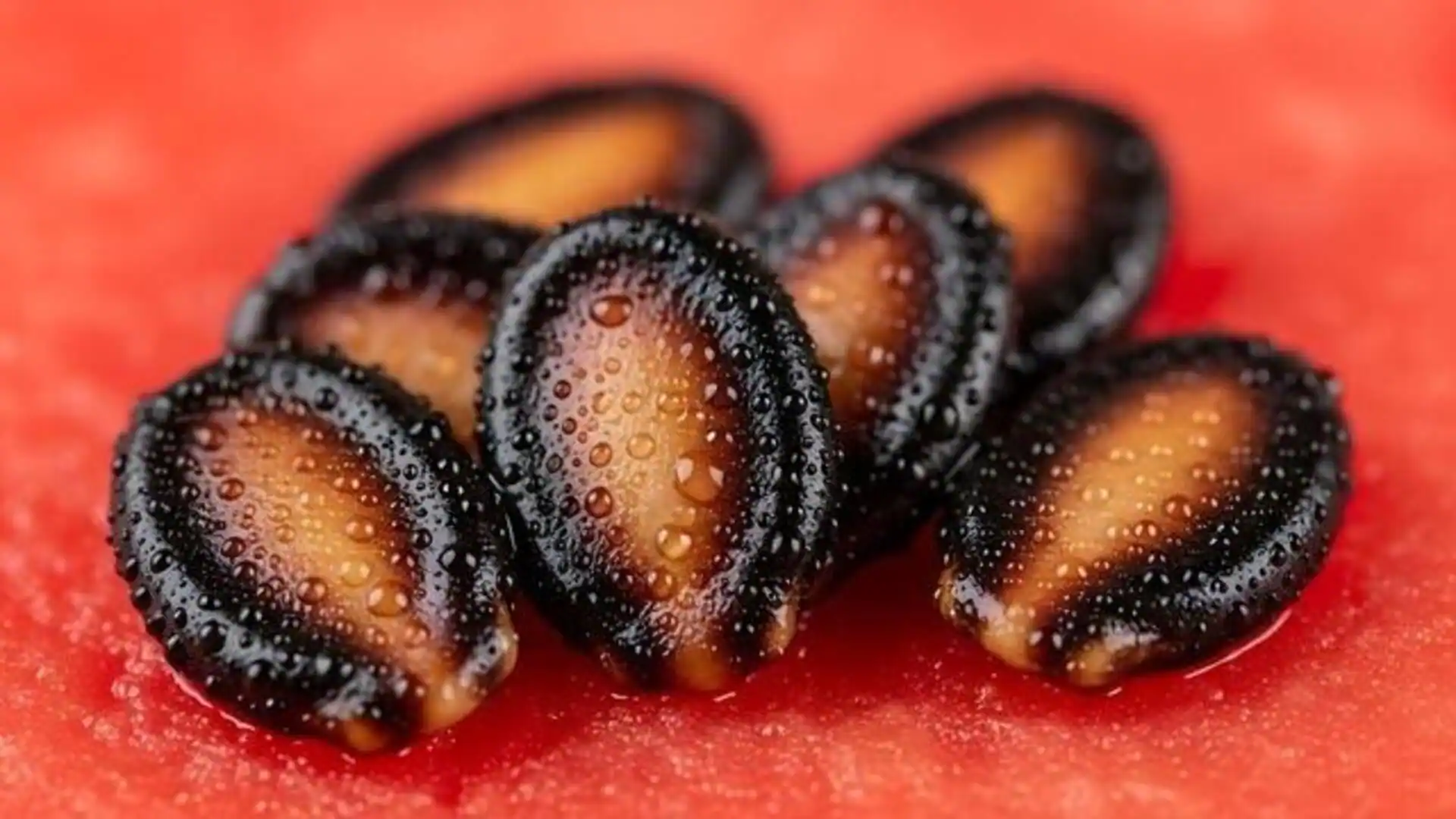
African watermelon seed oil is becoming a popular skincare ingredient, thanks to its nourishing properties.
Extracted from the seeds of the African watermelon, this oil is rich in essential fatty acids and antioxidants.
It is known for its ability to hydrate and rejuvenate the skin, making it a favorite among those looking for natural skincare solutions.
Here are the benefits and uses of this unique oil.

Rich in essential fatty acids

African watermelon seed oil is packed with essential fatty acids, such as linoleic acid and oleic acid.
These fatty acids are essential for maintaining the skin’s barrier function and preventing moisture loss.
They also help in reducing inflammation and redness, making them ideal for sensitive or acne-prone skin types.
Regular use can lead to a more balanced and healthier-looking complexion.

Antioxidant properties for skin health

The oil also contains antioxidants that protect the skin from environmental stressors, such as pollution and UV rays.
These antioxidants help neutralize free radicals that cause premature aging and damage to the skin cells.
By incorporating African watermelon seed oil into your skincare routine, you can enhance your skin’s resilience against daily aggressors.

Lightweight texture ideal for all skin types

One of the best things about African watermelon seed oil is its lightweight texture. It absorbs quickly into the skin without leaving a greasy residue behind.
This makes it suitable for all skin types, including oily or combination skin.
Its non-comedogenic nature ensures that it does not clog pores while providing deep hydration.

Versatile uses in skincare routines

African watermelon seed oil can be used in various ways in skincare routines.
It can be applied directly on the face as a moisturizer or mixed with other products, like creams or serums, for added benefits.
It can also be used as a carrier oil for essential oils or added to DIY masks for enhanced nourishment.

Cost-effective alternative to luxury oils

While luxury skincare oils can cost a fortune, African watermelon seed oil provides an affordable option without compromising on quality.
It gives similar benefits as high-end products but at a fraction of the cost.
This makes it an attractive choice for those wanting effective skincare solutions on a budget.
Tags: , , , ,
Acne

CBD vs THC for Skin Health: Can Cannabis Help with Acne, Eczema, or Aging?

Your skin is the largest organ in your body and one of the most honest indicators of what is happening beneath the surface. Chronic inflammation, hormonal fluctuations, oxidative stress, and a compromised skin barrier do not stay hidden for long. They show up as persistent breakouts, flaking patches, accelerated fine lines, and a general dullness that no amount of expensive moisturizer seems to fully address. For a growing number of people, cannabis-derived compounds have entered the skincare conversation not as a trend but as a legitimate therapeutic consideration, and the distinction between what CBD and THC each bring to the table is worth understanding clearly.

The skincare industry has embraced CBD with enormous enthusiasm over the last several years, to the point where the ingredient appears in everything from luxury serums to drugstore lip balms. That visibility has created both genuine interest and significant confusion. Not all CBD skincare products are created equal, THC has its own distinct and underappreciated role in skin health, and understanding what the science actually supports helps you cut through the marketing noise and make choices that are genuinely useful for your skin.

How Cannabis Interacts with Skin Biology

The reason cannabis compounds have any relevance to skin health at all comes down to a system most people have never heard of: the cutaneous endocannabinoid system. The skin has its own network of cannabinoid receptors, primarily CB1 and CB2, distributed across keratinocytes, sebaceous glands, hair follicles, immune cells, and sensory nerve fibers. This system plays a direct regulatory role in skin cell proliferation, differentiation, immune response, oil production, and barrier function.

When that system is dysregulated, skin problems follow. Overactive sebaceous glands contribute to acne. Dysregulated immune response drives the chronic inflammation underlying eczema and psoriasis. Oxidative stress and declining collagen synthesis accelerate visible aging. The premise behind cannabinoid-based skincare is that topically applied CBD or THC can interact with these receptors locally to help restore balance in the specific tissue where they are applied, without producing any systemic or psychoactive effect.

This local application distinction is important. Topical cannabis products do not penetrate deeply enough to reach the bloodstream in meaningful amounts, which means you get the receptor interaction in the skin without any of the systemic effects associated with consuming cannabis. It is a fundamentally different category of use, and it is one where the barrier between CBD and THC becomes less fraught because neither is producing an intoxicating effect when applied to skin.

CBD for Acne: What the Evidence Supports

Acne is primarily a condition of excess sebum production, bacterial colonization of the follicle, and inflammatory response. CBD addresses at least two of those three drivers meaningfully. Research published in the Journal of Clinical Investigation demonstrated that CBD has a sebostatic effect, meaning it inhibits the excessive production of sebum by sebaceous gland cells. It also demonstrated anti-inflammatory properties specifically in sebaceous tissue, reducing the lipid synthesis that feeds the conditions under which acne-causing bacteria thrive.

Beyond sebum regulation, CBD’s broader anti-inflammatory properties help calm the redness, swelling, and irritation that make acne both visually prominent and physically uncomfortable. For people dealing with hormonal acne that is resistant to conventional topical treatments, a CBD-rich serum or spot treatment used consistently as part of a routine has enough research backing to be worth trialing seriously rather than dismissing.

What CBD does not do well is address the bacterial component of acne on its own. It works best as part of a complete approach that includes a non-stripping cleanser, adequate hydration, and addressing internal drivers like blood sugar regulation and stress management. Treating CBD as a single solution for acne will produce disappointing results. Treating it as a meaningful piece of a broader protocol is a more realistic and effective framing.

CBD and THC for Eczema and Inflammatory Skin Conditions

Eczema, psoriasis, and similar inflammatory skin conditions involve a compromised skin barrier, chronic immune dysregulation, and a cycle of inflammation that is notoriously difficult to break with conventional treatments alone. The CB2 receptors present in skin immune cells are directly relevant here because their activation appears to help modulate the immune response that drives that inflammatory cycle.

CBD applied topically has shown meaningful results in reducing the itching, dryness, and inflammatory flare associated with eczema in several small studies and a larger body of clinical observation. Its barrier-supporting properties, partly through its fatty acid content and partly through its interaction with keratinocyte function, make it useful for addressing the root cause of eczema rather than just temporarily suppressing symptoms.

THC enters this picture in a more nuanced way. At the receptor level, THC binds to both CB1 and CB2 more directly than CBD does, and for conditions involving significant nerve-related itch or pain, that CB1 binding in peripheral sensory nerves can provide relief that CBD alone does not consistently produce. Some dermatological researchers have pointed to the combination of both cannabinoids as more effective for inflammatory skin conditions than either in isolation, which echoes the entourage effect logic familiar from ingestible cannabis use.

The practical limitation is that THC-containing topicals exist in a more restricted regulatory space than CBD products, which means access depends significantly on your location and the legal status of cannabis where you are.

Cannabis and Skin Aging

The anti-aging application of cannabinoids is where the science is earliest and the marketing is most overextended, so some calibration is useful. That said, the theoretical and preliminary evidence is genuinely interesting.

Oxidative stress is one of the primary drivers of accelerated skin aging. Free radicals generated by UV exposure, pollution, stress, and metabolic processes degrade collagen, damage cellular DNA, and disrupt the lipid barrier that keeps skin looking plump and resilient. CBD is a potent antioxidant. Research has indicated it is more effective as an antioxidant than either vitamin C or vitamin E in certain contexts, which means regular topical application has legitimate potential to help neutralize free radical damage before it accumulates into visible aging.

CBD also appears to support collagen synthesis indirectly through its influence on the skin’s inflammatory environment. Chronic low-grade inflammation, a condition sometimes called inflammaging, accelerates the breakdown of collagen and elastin. By reducing that inflammatory baseline in the skin, CBD may help slow the rate at which visible aging progresses. This is a longer game than most skincare marketing acknowledges, but it is a sound biological mechanism worth taking seriously.

THC’s role in aging specifically is less well studied topically, though its antioxidant and anti-inflammatory properties are comparable to CBD at the receptor level. The more relevant consideration for aging-focused users is the combination of cannabinoids with supportive terpenes like pinene and limonene, which themselves have antioxidant properties and appear in well-formulated full-spectrum topical products.

For anyone looking to pair a topical cannabinoid skincare routine with a broader internal wellness approach that includes ingestible CBD or cannabis products, Online Dispensary offers a range of hemp-derived and cannabis options worth exploring across both categories.

How to Choose and Use Cannabis Skincare Products Effectively

The quality gap in CBD skincare is enormous. A product that lists CBD on the label may contain anywhere from a therapeutically irrelevant trace amount to a genuinely effective concentration. Look for products that list the total milligrams of CBD on the packaging and that provide a certificate of analysis from a third-party lab confirming actual cannabinoid content. For topical use, a meaningful concentration starts around 250mg to 500mg of CBD per 30ml of product. Anything substantially below that is unlikely to produce the receptor interaction necessary for a therapeutic effect.

Full-spectrum formulations that retain minor cannabinoids, terpenes, and fatty acids from the hemp plant generally outperform broad-spectrum or isolate products for skin applications, mirroring the entourage effect logic that applies to ingestible cannabis. The supporting compounds enhance both the anti-inflammatory and barrier-supporting properties of CBD in ways that isolated CBD alone does not replicate.

Consistency matters more than any single application. Skin cell turnover cycles take roughly four to six weeks, and the benefits of cannabinoid skincare accumulate over that cycle rather than appearing overnight. Give any new topical a genuine eight-week trial before making a judgment about whether it is working.

Frequently Asked Questions

  1. Can CBD skincare products make you fail a drug test? Topical CBD products applied to the skin do not enter the bloodstream in amounts that would produce a positive drug test result. The skin acts as a barrier that prevents significant systemic absorption from topicals. Transdermal patches that are specifically designed to drive compounds into the bloodstream are a different matter, but standard creams, serums, and balms do not pose a drug testing risk.
  2. Is there a difference between hemp seed oil and CBD oil in skincare? Yes, and it is a significant one that many products obscure. Hemp seed oil is pressed from cannabis seeds and contains no CBD or other cannabinoids. It is a nourishing carrier oil with good fatty acid content, but it does not interact with cannabinoid receptors. CBD oil is derived from the flowers and leaves of the hemp plant and contains actual cannabinoids. Many products use hemp seed oil and imply CBD benefits through their branding without containing any actual CBD.
  3. Can cannabis topicals be used on sensitive skin? CBD is generally well tolerated by sensitive skin and has a low irritation profile compared to many active skincare ingredients. However, formulation matters considerably. A CBD product that also contains fragrance, alcohol, or other common irritants can still provoke a reaction in sensitive skin regardless of the CBD content. Check the full ingredient list rather than focusing solely on the cannabinoid component.
  4. How long does it take to see results from CBD skincare for acne or eczema? For acne, some users notice reduced redness and inflammation within the first week of consistent use, though more significant changes in sebum regulation typically take three to four weeks. For eczema, the timeline is usually longer, with meaningful improvement in barrier function and itch reduction typically appearing after four to eight weeks of daily application. Consistency is the single most important variable in both cases.
  5. Do you need a prescription or medical card to access cannabis skincare products? CBD skincare products derived from hemp containing less than 0.3 percent THC are widely available without a prescription across most of the United States and many other countries. THC-containing topicals fall under cannabis regulations and require access through a licensed dispensary, which in many states requires a medical card or simply proof of legal age depending on whether recreational cannabis is permitted in your jurisdiction.
Tags: , , , , , , ,
5 Best Hydrating Gel Face Washes That Won’t Strip Your Skin's Natural Oils

5 Best Hydrating Gel Face Washes That Won’t Strip Your Skin’s Natural Oils

Best Hydrating Gel Face Washes: You can be using the best skincare products, but if you don’t have a good cleanser, all your steps are useless. Good skincare begins with a clean base, and you need a cleanser that will thoroughly clean your face and not make your face dry. Here’s where hydrating gel face washes come into play. These are made from hydrating ingredients that make sure your skin doesn’t get stripped of its natural oils. A gel face wash is the perfect cleanser for this sunny weather. Let’s dive in to find out the best hydrating gel face washes for summer here.

Top Hydrating Gel Face Washes You Need To Try

Simple Water Boost Micellar Facial Wash

If your skin feels tight and thirsty, this Simple Water Boost Micellar Facial Wash will be your lifesaver. It uses tiny micellar bubbles to grab onto dirt and makeup without harsh scrubbing. Infused with plant-derived PENTAVITIN™ and skin-essential minerals, it delivers instant hydration that continues to work even after rinsing, leaving the face feeling supple.

Minimalist Aquaporin Booster 5% Cleanser

This Minimalist Aquaporin Booster Cleanser is a high-tech cleanser formulated with 5% glyceryl glucoside and glycerin. These two stimulate ‘Aquaporins’, which are the skin’s internal water channels. This process improves the moisture transportation within the cells. It includes multiple humectants like hyaluronic acid and betaine, which make sure that your cleanse doesn’t dry out your skin. With this face wash, you will be able to maintain a healthy pH of 5.5 for all skin types.  

ALSO READ- How To Choose The Best Facewash For Summers For Fresh And Oil-Free Skin

The Derma Co Snail Peptide 96 Hydrating Face Wash

The Derma Co Snail Peptide 96 face wash is amazing for repairing and hydrating your skin. This cleanser features a unique, sticky gel texture derived from 96% Snail Secretion Filtrate. It uses peptides to help your skin bounce back, leaving you looking plump and glowing long after you’ve finished your morning routine.

Pilgrim Korean Rice Water Hydra Glow Gel Face Wash

If you are looking for a face wash that is all about giving you that ‘glass skin’ look, you need to try the Pilgrim Korean Rice Water Hydra Glow Gel Face Wash. It uses rice water, an old-school K-Beauty secret, to help brighten your face while Niacinamide keeps your pores in check. It’s sulfate-free, so it lathers gently and focuses on making your skin look clear, bright, and very fresh!

ALSO READ- How To Choose A Face Wash For Your Skin Type

Pond’s Hydra Light Hydrating Gel Face Wash

This Pond’s Hydra Light Hydrating Gel Face Wash features a 4D hyaluronic acid complex, which contains four different sizes of molecules. This works to hydrate both the surface and deeper layers of your skin. It is designed to remove sweat, oil, and pollution without causing any tightness. The lightweight, non-irritating formula provides a cooling sensation, leaving the skin feeling exceptionally fresh, making it the perfect addition for summer!

Get ready to include a hydrating gel face wash in your skin care routine this summer to protect your skin’s natural oils and hydration. 

Image Credit: Freepik, Nykaa, Amazon

For more such stories, stay tuned to HerZindagi.

The Derma Co Snail Peptide 96 Hydrating Face Wash


Tags: , , , , , , , ,
Bored Panda

Celebrity Skincare Expert’s ‘Genius’ Lip Balm Hack Could Save You Hundreds Per Year

James Vivian, a Melbourne-based dermal therapist known for sharing skincare tips on Instagram, in a March 15 video claimed that lip balms have the potential to serve more than their marketed purpose.

The expert said that lip balms can replace anti-aging products that target a specific, delicate area of the face by providing the same hydrating benefits at a more economical price.

Many on the internet corroborated the claim, with one saying they had been using lip balms in the way the skin expert shared for decades and that it made them look like they were in their “40s instead of 70s.”

Another user who tried the trick after Vivian’s video also said it “worked wonderfully.”

James Vivian advocated the use of lip balms as under-eye creams

Image credits: jamesvivian/Instagram

“As a 42-year-old man who hasn’t spent much time in the sun, really, the area of aging that I’m seeing most on my face is around my eyes,” Vivian said in his video.

The skin around the eyes is one of the thinnest on the body, making it particularly prone to dryness, creasing, and premature aging.

Image credits: jamesvivian/Instagram

Keeping this area hydrated could help minimize the damage, Vivian said, before sharing that he uses no fancy product to achieve the results.

He instead said he swears by using his lip balm to soothe and rejuvenate his under-eyes.

Lip balms are packed with occlusives and emollients — ingredients designed to lock in moisture — which is why Vivian believes they can double as a quick, budget-friendly eye treatment.

Vivian, however, warned against using balms “that fire up the lips” around the eyes.

“The really spicy ones with stimulating ingredients for circulation and plumping, the kind of bee-sting products, I’d keep that away from eye areas,” he said.

He also noted that it’s not a good idea to apply lip balms under makeup, as the thick texture of the product can disrupt concealer and cause creasing.

Jennifer Lopez’s makeup artist, Scott Barnes, encouraged using lip balms under makeup

Image credits: jlo/Instagram

In a May 2024 video, Barnes claimed one of his most reliable makeup hacks is to use Aquaphor (a balm stick by a company called Eucerin) on his clients’ eyes before proceeding with concealer.

The technique prevents concealers from creasing, caking, or breaking down, especially when someone is filming a music video or a movie that goes on for long hours.

Barnes asked his followers to try the hack and let him know if it worked for them.

The hack was soon tested by Glam Girl Gabi, a renowned beauty influencer and a licensed hairstylist and makeup artist.

“I’m going to try the trick all the freaking way. I’m doing the classic bronzy J.LO smoky eye,” Gabi claimed.

Pointing to the fine lines under her eyes, Gabi said, “I really do have an issue with my concealer creasing.”

After applying the lip balm under her eyes, she proceeded to do a full face of makeup, including concealer, foundation, setting powder, and more.

Gabi looked impressed with how her concealer set under her eyes, thanks to the lip balm towards the end.

“I have tried every d**n hack. I’ve tried every single thing. My under-eyes have never looked better,” she said. 

Hours after first doing her makeup, Gabi gave her viewers a video check of whether her eye makeup remained in place.

“They look so much better than they normally look after a few hours. Life-changing, I tell ya,” she shared.

In a separate video, James Vivian warned against spraying perfume directly on the skin

Image credits: jamesvivian/Instagram

Highlighting people’s habit of spraying fragrances right on their neck, Vivian said it could have long-term consequences.

He explained that applying perfume to the skin can trigger a condition known as Poikiloderma of Civatte.

It is a sun-induced skin condition in which the affected area develops reddish-brown pigmentation, mottled discoloration, and thinning of the skin.

While it is not harmful, it is notoriously difficult to treat once it develops.

Laser treatments, along with diligent sun protection, can help improve appearance, but Vivian stressed prevention is far better than cure.

Image credits: Cultura Creative/Adobe Stock (Not the actual photo)

Many perfumes contain photosensitizing ingredients (citrus oils, oakmoss, and certain synthetics like musk ambrette), which can make the skin more sensitive to UV rays.

When applied to sun-exposed areas like the neck, these ingredients can magnify the effects of sun exposure, accelerating pigmentation changes and even breaking capillaries over time.

Vivian advised using scents on clothes, hair, or covered skin, like under the collarbone, to protect oneself against stubborn pigmentation issues later in life.

“I swear to God, I came up with this on my own one day,” a netizen said 

Tags: , , , , , , , , ,
Hindustan Times News

Isha Ambani reveals the secret to her flawless and glowing skin: ‘I do nothing to my skin. No sunscreen, no…’

Indian billionaire Mukesh Ambani’s eldest daughter, Isha Ambani, is known for her incredible sartorial choices, which range from straight-off-the-runway haute couture looks to handcrafted outfits designed by traditional Indian artisans and designer Indian wear. However, it is not just her fashion flair but also her flawless skin that impresses many.

Isha Ambani believes in a minimal skincare routine that involves no products.

Also Read |₹77 lakh. Details”> Even Isha Ambani’s vibrant haute couture dress and bag to host Rihanna at Antilia is worth ₹77 lakh. Details

On several occasions, Isha is often seen sans any makeup or with just a minimal touch-up; a firm believer in a no-makeup makeup look. During a Vogue June 2024 interview, she was asked to share her skincare routine, and here’s what she revealed.

Isha Ambani’s beauty secret

When Isha was questioned about her skincare routine, the business mogul confessed that she has nothing to hide and that she believes in using no products. In a world where consumers are easily swayed by the glamorous new products that are launched every day in the skincare market, Isha’s skincare routine includes no products.

She told the publication, “My beauty secret is that I have no beauty routine or regimen, much to the disappointment of many. I do nothing to my skin. No face wash, no moisturiser, no SPF, nothing.” On April 27, a fan page posted a snippet of the interview on Instagram and praised Isha for her flawless beauty writing, “Isha Ambani proving you don’t need fancy skincare to glow.”

What does science say?

According to a Harvard Health report, all moisturisers help with dry skin for a pretty simple reason: they supply a little bit of water to the skin and contain a greasy substance that holds it in.

Meanwhile, a Johns Hopkins Medicine report claims wearing sunscreen is one of the best and easiest ways to protect your skin’s appearance and health at any age. Used regularly, sunscreen helps prevent sunburn, skin cancer, and premature ageing.

About Isha Ambani

Isha Ambani is the eldest daughter of India’s richest man, Mukesh Ambani, and his wife, Nita Ambani. She also has two brothers, Akash Ambani and Anant Ambani. In December 2018, Isha married her husband, Anand Piramal, the son of billionaire Ajay Piramal. Their pre-wedding celebrations featured a performance by Beyoncé and a star-studded guest list, including Nick and Priyanka Chopra Jonas, Hillary Clinton, and more. Four years later, Isha gave birth to twins Krishna and Aadiya in November 2022.

Note to readers: This article is for informational purposes only and not a substitute for professional medical advice. Always seek the advice of your doctor with any questions about a medical condition.

Tags: , , , , , , ,
5 habits to incorporate in your daily routine if you want to slow skin ageing and look young

5 habits to incorporate in your daily routine if you want to slow skin ageing and look young

You can apply the best products in the world, but if your diet is all over the place, your skin will show it.

What you eat plays a huge role in how your skin looks and feels.

Try adding more:

Fresh fruits (berries, oranges, papaya)

Vegetables (spinach, carrots, broccoli)

Nuts and seeds

Healthy fats like walnuts or flaxseeds

These are packed with nutrients that help your skin stay healthy and deal with damage.

At the same time, try not to overdo sugar and junk food. Too much sugar can damage collagen over time, which leads to faster ageing.

You don’t have to eat perfectly – just be a bit more mindful on most days.

Tags: , , , , , , ,
Kiwano cucumber: A hydrating fruit for skin health

A hydrating fruit for skin health

Follow this guide

What’s the story

African cucumber, popularly known as kiwano, is taking the skincare world by storm. Its hydrating properties are a boon for those looking to revitalize their skin naturally.
Packed with vitamins and antioxidants, African cucumber provides a refreshing alternative to conventional skincare products.
Here’s how this exotic fruit can be incorporated into your daily routine for healthier, more radiant skin.

Nutrient-rich composition

African cucumber is loaded with essential nutrients, such as vitamin C, vitamin A, and potassium.
These nutrients help in promoting collagen production and protecting the skin from free radicals.
The high water content of the fruit also keeps the skin hydrated, making it an ideal choice for dry or dehydrated skin types.

Antioxidant benefits

The antioxidants in African cucumber are essential for fighting oxidative stress on the skin.
These antioxidants minimize the appearance of fine lines and wrinkles by neutralizing free radicals that damage cells.
Regular use of products containing this fruit can improve skin elasticity and give you a youthful appearance.

Versatile skincare uses

African cucumber can be used in various forms in your skincare routine. From face masks to serums, its gel-like texture makes it an ideal ingredient for DIY recipes.
You can blend it with other natural ingredients, like honey or aloe vera, for added benefits.
Its versatility makes it easy to incorporate into different skincare regimens without any hassle.

Easy incorporation tips

To reap the benefits of African cucumber, try adding it to your morning smoothie or juice for an internal hydration boost.
For external application, use it as a facial mask by blending the flesh with honey and applying it on your face for about 15 minutes before rinsing off with warm water.
This simple routine can help refresh tired-looking skin effectively.

Tags: , , ,
Global Cosmetics News

Street Talk 2026: Skin Care – Episode Two: Skin Type – Normal

Featuring: Mia

Summary

Mia describes her skin as normal, but her routine is shaped by past dermatitis and a cautious approach to skincare. After experiencing irritation, she now keeps things simple: water cleansing and a fragrance-free moisturiser recommended by a doctor. Her ideal product is light, natural-feeling and completely fragrance-free.

Meet Mia: Normal Skin, Sensitive History

Mia says her skin is “probably normal”, but she doesn’t follow a traditional skincare routine.

Because she has experienced dermatitis, she avoids unnecessary products and usually washes her face with water only.

Pull quote: “I don’t really have a skincare routine.”

A Doctor-Recommended Minimal Routine

Mia’s current routine is intentionally simple.

She uses:

  • Water to cleanse
  • A natural, fragrance-free moisturiser from the chemist
  • A product she thinks is called Doublebase

This reflects a shift away from complex skincare and towards barrier-friendly basics.

Shopping Habits: In-Store and Practical

Mia usually buys skincare in-store, mentioning retailers such as Space NK and pharmacies.

Her shopping behaviour is practical, cautious and guided by skin tolerance rather than trends.

Treatments: Interested, But Reluctant

Mia says she would consider facials, but remains hesitant because of her dermatitis history.

For her, professional treatments may be appealing, but the risk of irritation creates a clear barrier.

Pull quote: “I’d consider getting facials… but I’m definitely reluctant.”

What She Wants From Skincare

Mia’s ideal product would be:

  • A light moisturiser
  • Completely fragrance-free
  • Natural-feeling
  • Gentle and non-intimidating

She says she is now “quite scared” to put products on her skin after previously being influenced by skincare trends and using a long, heavy routine that she feels damaged her skin.

Pull quote: “I’m quite scared and reluctant to put things on my skin.”

Key Takeaways for Brands

  • “Normal” skin consumers may still have strong sensitivity concerns.
  • Past irritation can push consumers towards minimalist routines.
  • Fragrance-free claims remain highly important for cautious users.
  • Overcomplicated routines can create distrust and category fatigue.
  • Barrier-friendly, light moisturisers offer a clear opportunity.

Tags: , , , , , ,
Dermatologists Say Your Post-Gym Skincare Routine Might Be Causing Breakouts

Dermatologists Say Your Post-Gym Skincare Routine Might Be Causing Breakouts

My pre-workout skincare routine is the height of minimalism. I cleanse, and if I’m running or spending time outside, I’ll slap some SPF and call it a day. After the session, however, that’s when it starts to get more complicated. I have acne-prone skin, so post-workout breakouts are a very real concern for me.

Vogue’s post-gym skincare routine at a glance:

La Roche-Posay Toleriane Dermo-Cleanser

Read more

The Best For Oily Skin: Haruharu Wonder Black Rice Moisture 5.5 Soft Cleansing Gel

Read more

“If your skin seems to punish you for doing something healthy, you’re not imagining it,” skin specialist Libi Roos confirms. “Post-workout breakouts are incredibly common – but also completely fixable once you understand what’s really going on.

I take a “time is of the essence” approach to removing the sweat and bacteria from my face, and even though body acne isn’t something I generally experience, I jump in the shower as quickly as possible as a preventative measure. But why does it occur? “It’s not the sweat,” Roos stresses. “It’s what happens afterwards.”

She is not referring to the workout itself, but the go, go, go nature of modern life. “Sweat is not your enemy. It’s mostly water and salt – your body doing exactly what it should. The problem? Real life. You do the class, take a call on the way home, grab a coffee — and the sweat just sits there. That’s when it starts mixing with sebum (your skin’s natural oil), dead skin cells and bacteria (including whatever was on that Pilates mat). This creates the perfect pore-clogging cocktail. At the same time, your skin is in a more vulnerable state; your barrier is slightly compromised, your pH is disrupted, and your pores are more open from heat. So anything already on your skin – SPF, leftover make-up, pollution (especially in a city like London) – is now part of the problem.”

Tags: , , , , ,
5 easy skincare tips using fruits you already have at home

5 easy skincare tips using fruits you already have at home

We’ve all been there. Staring at the mirror, wondering if that complicated 10-step Korean skincare routine is actually doing anything, or if we just enjoy buying tiny, aesthetic glass bottles. The beauty industry has us convinced that glowing skin requires importing rare ingredients from across the globe. But what if the ultimate skincare hack has been sitting quietly in our local markets all along?

Desi berries are having a major moment in the wellness world right now, and for good reason. While you might drop upwards of ₹3,500 (INR) on a tiny vial of imported antioxidant serum, a hearty haul of these indigenous super-berries will barely dent your wallet at around ₹100 to ₹250 (INR) from the local vendor. They are potent, totally natural, and work from the inside out. If you are looking to upgrade your skin health this season, here are five Indian berries you need to add to your daily diet.

Tags: , , , ,
Best oLive
Privacy Overview

This website uses cookies so that we can provide you with the best user experience possible. Cookie information is stored in your browser and performs functions such as recognising you when you return to our website and helping our team to understand which sections of the website you find most interesting and useful.