Sarah Jessica Parker's divisive skincare routine includes 'any old soap'

Sarah Jessica Parker’s divisive skincare routine includes ‘any old soap’

Sarah Jessica Parker may be known for her flawless complexion and radiant glow, but her skincare routine includes a habit that raises eyebrows in the beauty world – and it all comes down to how she removes her makeup.

The Sex and the City alum, who ushered in her 61st birthday on March 25, has always stayed true to her minimalist approach to skincare. The actress appeared on Caroline Hirons’ podcast to discuss her routine with the esthetician and owner of cosmetic brand Skin Rocks.

“When I go into the bathroom, the first thing I do is take off my false eyelashes and remove my makeup,” shared Sarah Jessica. “Then I use Boots fragrance-free makeup remover wipes , which cost around £1.99, to remove all my makeup. I use them because I’m afraid that the amount of oil or product I’m wearing will clog the sink.” 

© Penske Media via Getty ImagesSarah Jessica Parker turned 61

She continued: “Then I wash my face thoroughly. Some people are a little hesitant when I say I use soap, because facial cleansing is a very serious matter for many, but I don’t care. My husband uses a simple bar of soap and has beautiful skin. It almost makes me angry, because he doesn’t even wear makeup and yet he has perfect skin . So, honestly, I use any soap . I don’t really care.” 

Sarah Jessica is married to Matthew Broderick, and the couple share three children: James Wilkie, 23, and twins Tabitha Hodge and Marion Loretta, 16. According to the actor, his wife “has beautiful skin”. 

© CBS via Getty ImagesMatthew Broderick and Sarah Jessica Parker

Should we be using makeup wipes?

While Sarah Jessica’s unfussy skincare routine works for her, it’s not typically advised by industry experts. Nichola Joss, Sanctuary skincare expert, previously spoke to us about the use of makeup wipes. “Face wipes tend to be a little aggressive on the skin as they drag and pull the skin when being swept across the face,” she shared.

“Dragging and pulling the skin can subsequently cause premature ageing and put stress on the skin. Also, often the ingredients of the face wipes are concentrated onto the wipe which can dry out the skin too.”

Sarah Jessica Parker’s routine

© InstagramThe actress opened up about her beauty routine

The & Just Like That star exclusively shared with HELLO! some of the secrets behind her A-list glow. “Usually, I’ll do two things at most,” she said. “Every now and then, I’ll add a third element.” She added: “Simplicity and efficacy. I have great admiration for women who do nine steps in the morning and at night, but it’s something I don’t have the patience for. I don’t understand why we are asking that of women; all of our time is valuable.”
Tags: , , , , , , ,
Forget 'Botox in a bottle'! Dermatologist reveals exact Korean skincare routine to look ageless in your 40s

Forget ‘Botox in a bottle’! Dermatologist reveals exact Korean skincare routine to look ageless in your 40s

If your social media feed is full of serums promising to “erase” wrinkles and replicate the results of a cosmetic procedure, you’re not alone. The “Botox in a bottle” boom has been hard to ignore, but K-beauty experts say the real anti-ageing secret has nothing to do with a single hero product.

In your forties and beyond, it’s about working smarter, and Korean skincare could be the way to go. Prioritising hydration, skin barrier health and consistency over miracle claims, could this be the real key to maintaining a youthful complexion?

© Getty ImagesA dermatologist has shared Korean beauty products and routines that can support healthy ageing skin

To understand more about K-beauty tips and the routines to try, we caught up with Dr. Marie Jhin, a board-certified dermatologist and the author of The K-Beauty Secrets: Accessible Beauty for Every Woman. 

“In Korea, the focus is never on dramatic changes – it’s on looking refreshed and natural,” she says. “That mindset, combined with the right ingredients and consistency, is what makes K-beauty so effective for women navigating this stage of life.” Here are the skincare routines and habits she recommends…

© Getty Images

Supporting the skin barrier can protect against some signs of ageing

Understand key ageing times

Dr Jhin says there are two key life stages where women might notice accelerated ageing, and says supporting the skin barrier can help to protect against some of the effects.

“Research has identified two distinct peaks in the ageing process — one in your 40s and another in your 60s. That first peak is significant, and understanding why it happens is key to addressing it effectively,” she says.

“In your 40s, your skin undergoes real hormonal shifts — collagen production slows, the skin barrier becomes more fragile, and hydration retention decreases. Korean skincare philosophy approaches this not as ‘anti-aging’ but as skin health preservation — treating the skin with consistency and layering rather than dramatic intervention.”

© Getty Images

The dermatologist recommends the following morning skincare routine

Recommended morning routine

  1. Low-pH gentle cleanser — preserves the acid mantle, which becomes more vulnerable in your 40s.

  2. Hydrating toner/essence — the cornerstone of K-beauty; look for fermented ingredients like galactomyces or bifida ferment lysate to boost radiance and cell renewal.

  3. Vitamin C serum — brightens hyperpigmentation (common in your 40s) and supports collagen synthesis.

  4. Lightweight moisturiser with ceramides — rebuilds the skin barrier.

  5. SPF 50 sunscreen — the single most impactful anti-ageing step, full stop.

© Getty Images

These Korean beauty secrets could transform your evening skincare routine

Recommended evening routine

Meanwhile, the following evening skincare routine incorporates some popular K-beauty products to nourish skin.

  1. Double cleanse — oil cleanser first, then water-based, to ensure actives can fully penetrate.
  2. Exfoliating toner (2-3x weekly) — gentle AHAs like lactic acid to resurface without stripping.

  3. Peptide or PDRN (polynucleotide) serum — signals skin to produce collagen; hugely popular in Korean clinics.

  4. Retinol or bakuchiol — for cell turnover; bakuchiol is the gentler, Korean-favoured alternative for sensitive skin.

  5. Rich moisturiser or sleeping mask — seals everything in overnight.

© Getty Images

These skincare ingredients are hugely popular in Korea

Hero K-Beauty ingredients

When you’re updating your skincare routine, these are the popular Korean beauty ingredients to consider trying, according to the dermatologist.

  • Snail secretion filtrate — repairs, hydrates and firms.
  • Centella asiatica (Cica) — calms inflammation and boosts collagen.
  • Niacinamide — evens skin tone, tightens pores and strengthens the barrier.
  • Hyaluronic acid and polyglutamic acid — multi-depth hydration that plumps skin from within.

© Getty Images

Support circulation with a facial massage

Incorporate a gentle massage

Meanwhile, the skincare expert says that women in their 40s benefit most from collagen-stimulating treatments such as the following:

  • Skin boosters — injectable hydration is hugely popular in Korean clinics, giving a natural, plumped effect.
  • Regenerative treatments using PRP, or polynucleotide (PDRN) injections — derived from salmon DNA, these accelerate collagen repair.
  • Tightening devices such as Ulthera, XREF and Thermage — non-surgical options that lift and firm.
  • Toxins (botulinum toxin) — still the mainstay treatment for ageing skin in the 40s, when used subtly and skilfully.
Tags: , , , , , , , , , ,
How to tweak your skincare routine for spring

How to tweak your skincare routine for spring

Winter is notoriously harsh on skin — cold temperatures, wind exposure, and indoor heating systems can strip the skin of its natural moisture, leaving it dehydrated and vulnerable.

Spring, however, brings warmer temperatures and higher humidity levels. Our skin naturally begins to produce more oil, and sweat production increases. Pores may appear more noticeable, and congestion can become more common. The days are also longer, with stronger UV exposure, and after months of limited sun exposure, skin may be more susceptible to UV damage. Here’s my advice for tweaking your skincare routine for the season ahead.

Introduce a retinol

It’s the perfect time to introduce retinol if you haven’t already, as skin is better able to tolerate actives when the sun is less intense than in the summer months. Starting a retinol in spring allows your skin to acclimatise to it. Winter can lead to dryness, flakiness, and redness, so skin has enough to deal with, without any extra potential irritation from retinol. Retinol’s exfoliating properties can help reverse this damage in spring, leaving your skin looking refreshed and revitalised. By incorporating retinol into your spring skincare routine, you’re also prepping your skin for the sun-exposed days of summer.

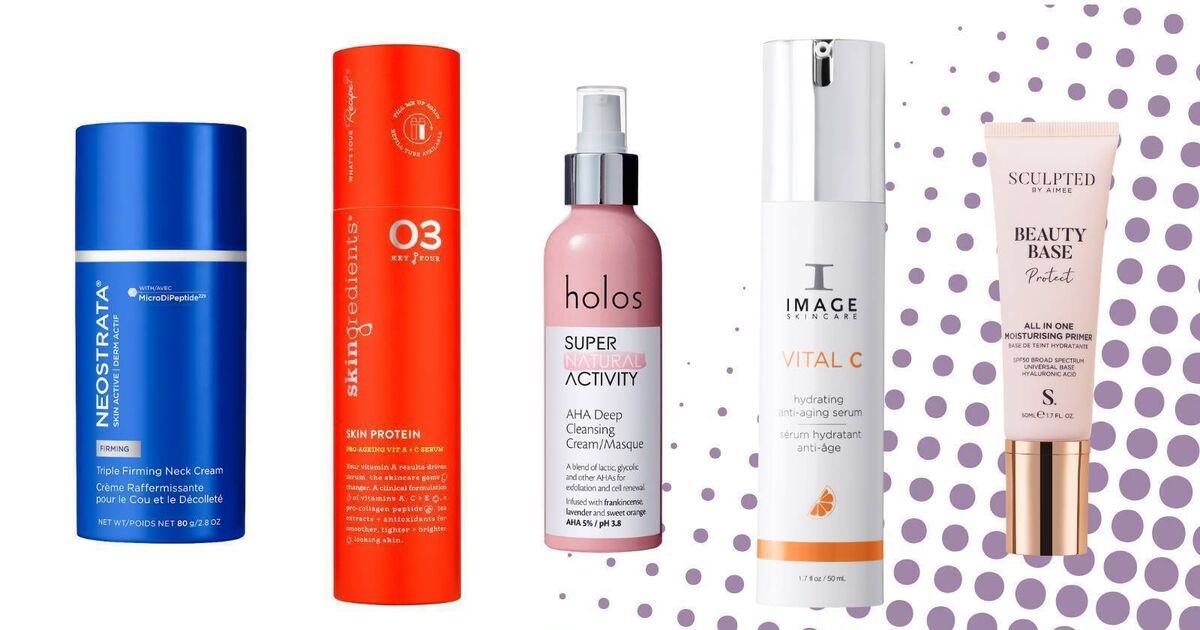
  • Try it: Skingredients skin protein, €55, Meaghers Pharmacy

Skingredients skin protein, €55, Meaghers Pharmacy

Add an exfoliator

Winter can leave skin looking dull, dry, and flaky, and when you add sweat and pollution into the mix, congestion can quickly follow. Introducing an exfoliator into your routine can help restore a healthy, glowing complexion. Exfoliation offers multiple benefits: it smooths rough skin, improves texture, softens the appearance of fine lines, treats and prevents ingrown hairs, evens out tone, brightens dullness, fades dark spots and pigmentation, reduces blemishes, and boosts the
absorption of your other skincare products.

  • Try it: Holos Skincare AHA deep cleansing cream/masque, €42, holos.ie

Holos Skincare AHA deep cleansing cream/masque, €42, holos.ie

Use an antioxidant serum

After months of cold, dry weather, skin can start to look dull, uneven, and tired. Adding a vitamin C serum to your routine can help brighten the complexion and improve the appearance of uneven skin tone. As we spend more time outdoors in spring, environmental stressors can also contribute to dryness, dullness, and a loss of elasticity. Increased sun exposure may lead to sunspots and hyperpigmentation but antioxidant serums such as vitamin C can help protect the skin and reduce these effects. If your skin can’t tolerate vitamin C, there are plenty of other antioxidants to choose from, including Q10, niacinamide, resveratrol, and green tea.

  • Try it: Image Vital C hydrating anti-ageing serum, €90, South William Clinic

Image Vital C hydrating anti-ageing serum, €90, South William Clinic

Don’t neglect the neck

Our necks have been protected under scarves and polo necks until now but they’re more exposed in spring. It’s so important to look after our necks as the skin there is thinner, more sensitive, and has fewer oil glands, so it can become crepey, lose firmness, and start sagging. Double moisturising is one way to correct this and, as the skin on the neck is more prone to sun damage due to its paper-thin texture, always ensure that you use an SPF there too. Make sure to bring your moisturisers, serums, and even retinols down your neck. If you’re starting fresh on your neck, a neck-specific product to retexturise, replump, and firm may be just the ticket.

  • Try it: NeoStrata, €76, Allcare Pharmacy

NeoStrata, €76, Allcare Pharmacy

Don’t forget sunscreen

Another reminder. UV levels begin to increase from early March, meaning the spring sun can be more intense than we realise and our skin isn’t used to it. After winter, skin is less accustomed to UV exposure, so it can be more sensitive when suddenly exposed during outdoor activities. Even though the weather can be changeable and the temperatures chilly, and you mightn’t immediately notice the effects on your skin, the UV Index can already reach levels of three or four during spring. Don’t assume you’re safe just because you’re spending most of your time indoors — while glass blocks most UVB rays (which cause burning), UVA rays (which contribute to premature skin ageing) can penetrate it. Even if you’re heading on a skiing holiday, a high-protection SPF and proper eye protection are essential as snow reflects sunlight and UV rays become more intense at higher altitudes.

  • Try it: Sculpted by Aimee Beauty Base Protect, €30, Boots

Sculpted by Aimee Beauty Base Protect €30 Boots

Switch to a lighter moisturiser

One of the most important skincare changes in spring is switching your moisturiser. Heavy creams that work well during colder months can feel overly rich once temperatures rise. Of course, if your skin is dry year-round and thrives on a thick cream, you can absolutely continue using your winter moisturiser. But if you’ve oily or combination skin, a lightweight lotion or gel cream is better. Lighter formulas provide the hydration your skin needs without feeling heavy or clogging pores. Choosing non-comedogenic formulations can also help prevent congestion and breakouts.

  • Try it: The Ordinary Rice Lipids and Ectoin Micro Emulsion, €16, Space Nk

The Ordinary Rice Lipids and Ectoin Micro Emulsion €16 Space Nk

  • Prices correct at time of print but subject to change.
Tags: , , ,
Dine Out To Cash In: Save on Your Next Meal at Some of Australia’s Best Restaurants

Inside Lucy Folk’s Go-To Skincare and Make-Up Routine

When it comes to skincare and make-up, Lucy Folk keeps things simple. The designer and founder of her eponymous lifestyle and fashion label favours natural formulations, including Janine Knizia, the skincare line by – and named after – Muse & Heroine’s founder.  

For Folk, beauty goes beyond products on a shelf. She takes an inside-out approach, prioritising plenty of water and a diet rich in fermented foods and collagen, alongside rituals that help her feel balanced. 

Here, she opens the bathroom cabinet at her Noosa home and shares the products in her daily routine.

Read on for Folk’s go-to natural deodorant, favourite concealer and the fragrance she’s wearing right now. 

What are the non-negotiables in your daily skincare routine?

I swim in the ocean as much as possible to mineralise my body inside and out, and I love basking in the morning sun. I cleanse morning and night with De Mamiel’s Restorative cleansing balm, washed off with filtered water using organic cotton pads.

I then apply Janine Knizia’s Haute Eau AM firming and renewal concentrate, followed by its Milk Glacé Superliftstar. While the serum sinks in, I use a gua sha tool, and finish with Janine Knizia’s Taffy Crème Super Riche for deep hydration and natural lifting. Sometimes I’ll use the Cecily Braden lymphatic brush post-cleanse before starting the routine. At night, I add Janine Knizia Haute’s Eau PM. 

Diet is everything for me: fermented foods, collagen-rich meals, and plenty of good fats like olive oil, ghee, butter, eggs and avocado. Drinking fresh and good quality water is my number one beauty hack. Capi is the best. (Folk’s father, Pitzy, owns the brand.)

What’s the one product you’d replace immediately if it ran out?

Living Libations Poetic Pits. I adore this natural deodorant and use the Palo Santo scent. I also use their dry shampoo – it is the best. 

What’s your approach to beauty and skincare?

I’ve learnt that simplicity is key. I’m drawn to facials and practitioners who focus on healing from the inside out – this gives me the extra glow. I look for clean products and like to evolve my routine with the seasons, travel and climate. I invest in quality skincare and treatments, but I’ve never had botox or filler. I think ageing is elegant; my mum is my role model – she looks amazing!

What fragrance are you wearing at the moment? Is it the same one you always wear?

Coeur de Bois, which I created in collaboration with [Melbourne-based slow perfume label] Perdrisat, and I released for all my stores. It means “heart of wood” and centres around guaiac wood, which is an aphrodisiac and has the perfect scent strength. You can share it with your boyfriend or use it all for yourself.

The best beauty tip, hack or advice you’ve received?

Love and happiness are the secrets to beauty. And good water … water, water, water, water. Keep things natural!

What’s the newest purchase on your shelf?

A calendula and olive oil sun oil gifted by a friend. I’ve been using it daily all over my body. It’s a sunny-coloured oil rich with skin-soothing resins. 

What make-up products are in your regular rotation?

RMS Beauty’s Uncover-Up concealer – it’s essential for tired eyes. Living Libations Seabuckthorn Hot Lover Lips plumps your lips naturally with its blend of cinnamon, cayenne, turmeric and ginger essential oils. I also love the Merit Clean Lash mascara.

What’s your relationship with skincare and make-up like? Are you a beauty obsessive, a minimalist or somewhere in between?

I love beauty! With make-up and skincare, I am somewhere in between. I think it’s important to feel good, and for your skin to shine and radiate how you feel on the inside. Make-up has never really been a passion of mine – I like to keep it to a minimum.

I’m more drawn to the rituals: applying my creams, following the steps and doing manual face gym to keep my skin supple. I love facials, bodywork and massages, and while I’m not overly disciplined day-to-day, I rely on treatments and a clean lifestyle to keep everything in balance.

Beauty Shelf is Broadsheet’s new series where we take a look inside the cabinets and top drawers of our favourite creatives and discover their go-to skincare, make-up and other beauty must-haves.

We hope you like the products we recommend on Broadsheet. Our editors select each one independently. Broadsheet may receive an affiliate commission when you follow some links. 

Tags: , , , , ,
Why your skincare stops working at a certain age – and how to adjust your routine 

Why your skincare stops working at a certain age – and how to adjust your routine 

Picture: iStock / Jacoblund

As we age, our skin’s needs change. So, our skincare should, too. If you find yourself side-eyeing your usual skincare products because they don’t seem to be working anymore, here’s why it’s happening. Also, find out how to adjust your routine to suit your skin’s changing needs.

You may have noticed that your favourite skincare products don’t work quite the way they used to. This isn’t because the product has suddenly become ineffective, but because the skin’s needs have changed.

Skin often begins to behave differently in the mid-30s and again when a woman enters perimenopause. At this stage, hormonal and structural changes affect how the skin responds to ingredients. But the good news is that a few tweaks to your routines can make a huge difference.

Also see: Why are dermatologists concerned about social media skincare for teens? 

Biological and structural ageing

As we age, the skin’s natural cell turnover slows. Dead skin cells build up more easily, leaving skin looking dull and less responsive to active ingredients. 

At the same time, collagen and elastin production decline. This leads to reduced firmness and elasticity, which topical creams can’t really fix. The skin also produces less oil, making it drier and weakening the skin barrier. For many women, this barrier starts to decline in the mid-30s. 

Perimenopause/menopause

Hormonal changes during perimenopause accelerate these shifts. A drop in oestrogen contributes to a rapid decline in collagen production, while fluctuating androgen levels can lead to adult acne, dryness or sensitivity. As a result, products that once worked well – even a favourite moisturiser – may suddenly seem less effective. 

External factors

Lifestyle plays a role. High sugar intake, poor sleep and lack of sunscreen can impact how skincare performs. Using formulas that no longer suit your skin type and age also irritates and reduces results. 

Also see: Struggling with dark marks? Try this tumeric skincare routine

How to adjust your routine 

1. Prioritise barrier support: 

Your skin barrier protects against pollutants and locks in moisture. Support it with a gentle cleanser and barrier-support ingredients like ceramides. Avoid exfoliants and retinoids until irritation settles. 

2. Switch to richer formulations: 

Hydrating creams and serums can replenish the lipids your skin loses with age. 

3. Introduce stronger activities carefully: 

If your routine has hit a plateau, ingredients such as antioxidants or retinoids can help – but only once the skin barrier is healthy. 

4. In-clinic treatments: 

For deeper structural concerns, treatments such as microneedling and other non-invasive procedures may offer results that topical products cannot. 

The bottom line

Skincare needs evolve with age. By understanding them and adapting your routine, you can continue to support and enjoy healthy, glowing skin. 

Also see: When skincare stops working: The medical reason your skin may be pushing back

Feature Image: Gettys

Complied by Shaneen Noble 

First published on Woman and Home

Be the first to know – Join our WhatsApp channel for content worth tapping into. Click here to join!

Tags: , , , , ,
World Sleep Day: Why rest is the most powerful step in your skincare routine

World Sleep Day: Why rest is the most powerful step in your skincare routine

In a world that rarely switches off, sleep has quietly become one of the most overlooked pillars of wellbeing. Late nights, screen time, constant notifications and mounting stress have made quality rest feel like a luxury rather than a necessity. Yet science reminds us that sleep is not optional. It is incredibly important, particularly when it comes to skin health and visible ageing.

World Sleep Day on 13 March shines a light on the importance of restorative rest. It also offers a chance to see sleep as a part of a broader cycle of care, where thoughtful daytime protection and intentional night-time repair work alongside the body’s natural renewal process.

What really happens to your skin while you sleep

Sleep is the time when the body shifts into repair mode. During deep rest, skin cell regeneration increases, the skin barrier strengthens and micro-damage caused by daily environmental stressors begins to repair itself. Collagen production is more active, inflammation may reduce and moisture balance is better supported. All of these processes directly affect how skin looks and feels when you wake up.

When sleep is compromised, these natural repair mechanisms don’t operate at full capacity. Ongoing lack of quality rest has been linked to accelerated visible signs of ageing, including dullness, fine lines, uneven texture and loss of firmness. For women over 35, whose skin renewal processes naturally begin to slow, the impact of poor sleep can become more noticeable over time. In this context, supporting the skin’s natural repair cycle becomes increasingly important.

Powered by cutting-edge epigenetic skincare innovation, the Nivea Cellular Epigenetics Rejuvenating Serum works to visibly reverse up to 10 signs of ageing in just two weeks, with 98% proven skin rejuvenation, helping to restore firmness, boost hydration, and reveal smoother and radiant skin.

Modern life vs skin recovery

While sleep plays a vital role in skin regeneration, modern lifestyles often work against it. Stressful schedules, irregular sleep patterns and prolonged screen exposure can disrupt the body’s internal rhythm, affecting how efficiently skin responds to its overnight renewal cycle. Over time, this can leave skin looking tired and less resilient, even after nights that feel restful.

A consistent, targeted day-and-night skincare routine is essential in helping to counteract these effects. During the day, the Nivea Cellular Expert Filler Intensive Anti-Age Day Cream SPF15 helps shield the skin from everyday environmental stressors while providing essential hydration and protection. At night, the Nivea Cellular Expert Filler Intensive Anti-Age Night Cream works to support the skin’s natural repair and rejuvenation processes while you sleep, creating a continuous cycle of care that helps maintain smoother, more resilient-looking skin.

As our lives become busier, skincare science is evolving to better support the skin’s natural ability to recover. Brands are consistently exploring new approaches and innovations that help our skin adapt and respond to modern life.

Where epigenetic science comes in

Epigenetics is an area of science that explores how factors such as stress, ageing and lifestyle influence how our genes behave, without changing the genes themselves. In skincare, epigenetic research focuses on supporting the skin’s ability to activate youth-relevant functions that may slow down over time.

Nivea’s advanced Cellular Epigenetics technology is designed to support the skin’s natural repair mechanisms. While sleep triggers the body’s renewal cycle, Nivea Cellular Epigenetics is formulated to support how effectively the skin responds to that process, night after night. In simple terms, it supports skin recovery when modern life does not always allow for perfect rest.

Where science meets self-care

As skin’s natural renewal processes begin to slow, skincare becomes less about quick fixes and more about caring for skin in ways that really make a difference. There is a growing focus on routines that feel nurturing, intentional and backed by credible science. Nivea Cellular Epigenetics reflects this shift by combining decades of skin research with an understanding of how lifestyle choices impact skin health.

Rather than positioning skincare as a substitute for sleep, science reinforces an important idea. The most visible results come when good rest and good skincare work together.

Reclaiming sleep as a beauty ritual

World Sleep Day is a timely reminder that beauty routines do not start at the mirror. They start with how we wind down at the end of each day. Small habits like creating a calmer evening routine, putting our screens away a little earlier and choosing skincare that supports the skin’s overnight repair cycle can turn sleep into a meaningful moment of self-care.

In a world that constantly asks more of us, prioritising rest is no longer a nice-to-have, but an everyday essential. When supported by epigenetic skincare innovation and a simple morning and evening routine, sleep becomes more than just downtime. It becomes a time for renewal, helping skin look more rested, resilient and refreshed with each new day.

Tags: , , , , , , ,
Sunscreen

Expert Shares Why Sunscreen Is the Most Important And Unavoidable Step Skincare Routine

Why Sunscreen Is the Most Important Step in Your Skincare Routine
| Image:
Unsplash

Mercury rises, heat wave, harsh summer and record-breaking temperatures are a few terms that will be frequent over the next few months. As retiring winter paves the way for a hot and humid summer, skincare needs significant changes too. Greasy heavyweight products will be replaced by high-moisture locking skincare essentials. However, one item that will remain constant, and even more important than ever, is sunscreen.

Make sunscreen your best friend this summer 

Dr Rinky Kapoor shares why sunscreen is the most important part of one’s skincare routine. Even though most of us are aware of the importance of a good and effective sunscreen, its relevance is sometimes forgotten. Influencers and targeted ads have done a good job of inculcating the habit of reapplying sunscreen and making terms like ‘broad spectrum’, ‘UV rays’ and ‘SPF’ a part of our daily vocabulary. If you are still doubting why the said lotion is important and if you still think of it as a cosmetic addition to your vanity, it is essential to know the role it plays in blocking sun exposure.

Representational Image | Freepik

As per the expert, “Sunscreen plays a pivotal role in shielding the skin from the long-term consequences of sun exposure. Persistent exposure to sunlight gradually breaks down the skin’s natural defence mechanisms, leading to pigmentation problems, uneven skin tone, dullness, sun spots, premature ageing, and, in serious cases, skin cancer.”

Also Read: 7 Best Night Haircare Hacks To Wake Up With Smooth, Healthy Hair

Is sunscreen only for a sunny day? 

Representational Image | Freepik

Busting another myth, the medical practitioner says, “What many people underestimate is that sun protection is not just an outdoor concern. UV rays are present even on dull days, and they penetrate cloud cover and glass, meaning that everyday indoor and sheltered environments offer far less defence than most assume. The cumulative effect of this ongoing exposure gradually alters skin texture and tone.”

Also Read: How To Pick The Right Face Serum For Your Skin Type?

Why is sunscreen essential? 

Dr Kapoor links several dermatological issues to prolonged sun exposure. She says, “Tanning, persistent pigmentation, and early signs of ageing are among the most common skin concerns patients seek dermatological help for. While a range of treatments can effectively address these issues, they must always be paired with consistent sun protection to maintain results and preserve long-term skin health.”

Representational Image | Freepik

Putting special emphasis on those who have undergone skin procedures, the doctor shares that the absence of sunscreen and increased exposure to the sun can undo the effects of all treatments. “Incorporating sunscreen into a daily skincare routine is one of the simplest yet most powerful steps towards healthier skin. Used consistently, it guards against environmental damage and UV radiation, keeping skin more balanced, resilient, and better positioned to hold onto the results of any treatment over time,” Dr Kapoor concludes.

Also Read: Here’s How Yogurt Can Benefit Your Hair And Scalp – Know How To Use It

Tags: , , , , , , ,
Sara Tendulkar Skincare Routine: Sara Tendulkar proves you don’t need a 10-step routine for glowing skin- Here’s the minimal skincare trick she swears by |

Sara Tendulkar Skincare Routine: Sara Tendulkar proves you don’t need a 10-step routine for glowing skin- Here’s the minimal skincare trick she swears by |

(Image Credits: Instagram) We live in a world obsessed with 10-step skincare routines and product layering, which experts often consider a wrong practice. Well, Sara Tendulkar, known for her naturally glowing skin, agrees. The diva never indulges in heavy products and layering but believes in a minimal skincare approach. Somewhere leaning towards minimalism and consistency, her secret to glowing skin is refreshingly simple. Not many people know, but Sara Tendulkar is a biomedical scientist and nutritionist by training who views her skin through a clinical lens. She believes that the surface of our skin is deeply connected to our internal happenings. This is where the mindset needs to change.

(Image Credits: Instagram)

In an interview with Hindustan Times Shop Now, she shed light on her skincare journey, including her issues fighting PCOS and how it affected her skin. She said, “PCOS brought its set of challenges, especially oily skin and breakouts. It made me more aware of how closely internal health and skin health are linked. I focused on consistency with eating clean, strength training, and simplified and gentle skincare and worked with dermatologists to understand what my skin actually needs rather than chasing quick fixes.”

Skincare for stress and fatigue: 5 ways to revive your tired skin

Understanding the meaning of “doing less,” she said, “My skin is sensitive and acne-prone, so I am very particular about what I use. I gravitate towards gentle cleansers, lightweight moisturisers, and ingredients that help maintain balance without stripping the skin.”

(Image Credits: Pinterest)

What does her routine involve?Her daily ritual usually revolves around cleansing, sun protection, and intense hydration. She said, “My routine is quite simple and consistent. I focus on cleansing well, keeping my skin hydrated, and protecting it from the sun by using sunscreen. I prefer not to overwhelm my skin with too many products, as I have learnt that consistently doing the basics well works far better for me than constantly experimenting.” The result? A dewy and fresh glow that looks effortless, rather than being overworked. Sara proves that in an era where skincare routines are now becoming more complicated, her simple approach is another reminder that minimal rituals remain the most powerful.

Tags: , , , , , , , , , , , ,
Best pre-Eid skincare routine 2026 | how to get glowing skin for Eid | Ramadan skincare tips for dehydrated skin | natural home remedies for Eid glow | when to get a facial before Eid | Pre-Eid skincare habits that actually work during Ramadan fasting

Best pre-Eid skincare routine 2026 | how to get glowing skin for Eid | Ramadan skincare tips for dehydrated skin | natural home remedies for Eid glow | when to get a facial before Eid | Pre-Eid skincare habits that actually work during Ramadan fasting

Eid preparations usually start with outfits and accessories but somewhere along the way, skincare joins the list too. Between long fasting hours, changing weather, and late-night gatherings, the skin can feel a little tired — making a simple pre-Eid reset all the more welcome.

Hydration is key

One of the biggest challenges during Ramadan is maintaining hydration. Yes yes, it’s the age-old advice of drinking your weight, but honestly there is no better or sustainable option out there!

Long hours without water leaves your skin looking tired, which is why replenishing fluids from iftar till sehri becomes very important.

Alongside plain water, many people are now turning to chia seed water for hydration boost. Electrolyte drinks are also becoming popular, particularly for those who spend long days outside or remain active during Ramadan.

Cleansing and Gentle Exfoliation

A good cleansing routine remains the foundation of healthy skin. And no, you need not have five steps for cleaning your face. However, with warmer weather and daily exposure to dust, sweat, and pollution, cleansing twice a day with a mild face wash is a must.

Also, cleansing alone is not always enough. Gentle exfoliation two to three times a week can help the skin appear brighter and smoother. This step allows moisturisers and serums to absorb more effectively.

That said, moderation is key. Do not over-exfoliate! Especially if you don’t want an irritated skin and with micro tears.

The Truth About Glow

If miracle under-eye creams actually worked overnight, dark circles would have gone extinct by now!

Yet as Eid approaches, ads promising instant fixes seem to pop up everywhere.  Rollers, creams and serums all claiming to erase tired eyes in record time.

The truth, however, is far less dramatic.

Dark circles are often linked to genetics, lack of sleep, dehydration, stress, and dry skin. What does help here is a good moisturiser paired with a hydrating serum. Pair it up with a good sunscreen and you have the golden combination. One that can improve the under-eye area, as well as pigmentation around the mouth and chin.

Photo: Sazzad Ibne Sayed


Nourish From Within

Great skincare begins at the iftar table. While our iftar spread often features fried snacks, balancing them with lighter options can make a visible difference to both energy levels and skin health.

Dishes such as chickpea salad, pasta salad or yoghurt-based drinks with limited sugar are refreshing alternatives that nourish the body without overwhelming it.

Word of advice? Cut down the oil now if you don’t want to welcome a breakout right before Eid.

Time Your Facials

Thinking of getting a facial before Eid? Timing matters.

Most skincare experts recommend booking treatments 10 to 12 days before the celebration. This gives the skin enough time to settle in case of temporary redness or irritation. Trying a brand-new facial too close to Eid can be a very risky business; hardly ideal when festivities are just around the corner.

Keep It Simple

When Eid is approaching, simplicity tends to work best.

A routine built around hydration, gentle cleansing, light exfoliation and moisturising is more than enough to keep skin looking fresh and balanced. Be consistent and the glow will follow. 

Tags: , , , , , , , , , , , , , , , ,
Why skincare stops working as you age – and how to fix your routine

Why skincare stops working as you age – and how to fix your routine

As we age, our skin’s needs change. So our skincare should, too. If you find yourself side-eyeing your usual skincare products because they don’t seem to be working anymore, here’s why it’s happening. Also find out how to adjust your routine to suit your skin’s changing needs.

ALSO SEE: Barrier-repair skincare ingredients every woman should know

You may have noticed that your favourite skincare products don’t work quite the way they used to. This isn’t because the product has suddenly become ineffective but because the skin’s needs have changed. 

Skin often begins to behave differently in the mid-30s and again when a woman enters perimenopause. At this stage, hormonal and structural changes affect how the skin responds to ingredients. But the good news is that a few tweaks to your routines can make a huge difference.

Biological and structural ageing

As we age, the skin’s natural cell turnover slows. Dead skin cells build up more easily, leaving skin looking dull and less responsive to active ingredients.

At the same time, collagen and elastin production declines. This leads to reduced firmness and elasticity, which topical creams can’t really fix. The skin also produces less oil, making it drier and weakening the skin barrier. For many women, this barrier starts to decline in the mid-30s.

Perimenopause/menopause

Hormonal changes during perimenopause accelerate these shifts. A drop in oestrogen contribute to a rapid decline in collagen production, while fluctuating androgen levels can lead to adult acne, dryness or sensitivity. As a result, products that once worked well – even a favourite moisturiser – may suddenly seem less effective.

External factors

Lifestyle plays a role. High sugar intake, poor sleep and lack of sunscreen can impact how skincare performs. Using formulas that no longer suit your skin type and age also cause irritation and reduce results.

How to adjust your routine

1. Prioritise barrier support:

Your skin barrier protects against pollutants and locks in moisture. Support it with a gentle cleanser and a barrier-support ingredients like ceramides. Avoid exfoliants and retinoids until irritation settles.

2. Switch to richer formulations:

Hydrating creams and serums can replenish the lipids your skin loses with age.

3. Introduce stronger actives carefully:

If your routine has hit a plateau, ingredients such as antioxidants or retinoids can help – but only once the skin barrier is healthy.

4. In-clinic treatments:

For deeper structural concerns, treatments such as microneedling and other non-invasive procedures may offer results topical products cannot.

The bottom line

Skincare needs evolve with age. By understanding them and adapting your routine, you can continue to support and enjoy healthy, glowing skin.

ALSO SEE: 

These are the skincare ingredients you should never combine

Featured image: Pexels

Tags: , , , , ,
Best oLive
Privacy Overview

This website uses cookies so that we can provide you with the best user experience possible. Cookie information is stored in your browser and performs functions such as recognising you when you return to our website and helping our team to understand which sections of the website you find most interesting and useful.