Homemade_Greek_Seasoning

Homemade Greek Seasoning

One of the best ways to make healthy eating easy is to keep some homemade staples on hand. Simple DIY spice blends and sauces take very little effort but they can make meals so much more flavorful. This Greek seasoning is one staple I like to keep in the pantry! 

Many pre-made seasoning blends use fillers, preservatives, added sugars, or ingredients I wouldn’t use in my kitchen. Making your own is so simple and you can choose exactly what you use (and don’t). Plus the DIY versions often taste better than what’s been sitting on a store shelf for months. 

What Is Greek Seasoning?

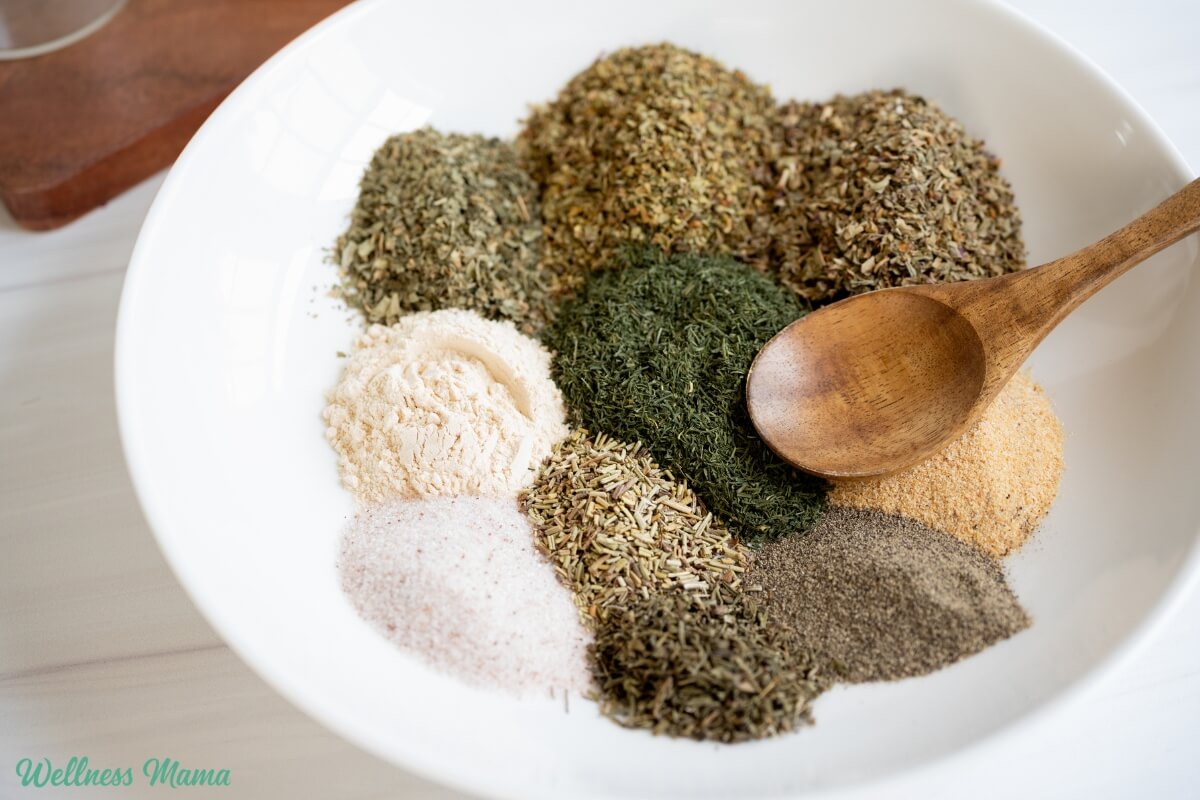
Greek seasoning is a flavorful Mediterranean-inspired blend of herbs traditionally used to add depth to meats, vegetables, sauces, and marinades. It combines classic Greek flavors like oregano, basil, dill, garlic, and rosemary. The result is a savory seasoning that works in a variety of recipes.

Oregano is one of the most popular Greek flavors and adds a pungent taste (it’s not just for Italian seasoning!). Then I add herbs like basil, parsley, dill, thyme, and rosemary to hit all the flavor notes. Garlic and onion powder bring that savory base that makes this blend so versatile, while a touch of cinnamon adds some warmth.

It’s also an easy way to include a wide variety of micronutrients, antioxidants, and anti-microbial compounds into everyday meals. People have used herbs for thousands of years not only to make dishes taste good, but because they support overall wellness. 

Why You Should Make Your Own Seasonings

I started making more of my own pantry staples because it’s an easy way to simplify ingredients without sacrificing flavor. And with 7 kids now, it’s cheaper to buy in bulk and mix it yourself! Seasoning blends are one of the easiest swaps because they take only a few minutes to make and last for months.

This Greek seasoning is one of those recipes that’s become a kitchen staple. I love having a jar ready because it instantly upgrades simple meals. A plain chicken breast, roasted vegetables, or even a basic salad instantly gets a flavor upgrade with homemade seasoning. 

It’s also easy to customize. If you love garlic, you can add more. If you prefer a stronger herb flavor, adjust the amounts of oregano, basil, or dill. Homemade recipes are flexible, which is one of the best parts of cooking from scratch.

How to Use Greek Seasoning

This seasoning is so versatile and works well with both quick weeknight meals and more involved recipes. Sprinkle it over chicken before grilling, mix it into burger patties, or use it to season roasted vegetables like zucchini, squash, or asparagus.

One of my favorite ways? Toss some diced potatoes with olive oil, salt, and Greek seasoning then roast. The herbs create a crispy, savory coating that rivals any restaurant dish. 

You can also mix it into homemade salad dressings, sprinkle it over eggs, or stir it into Greek yogurt for a quick and easy dip. It’s a great way to add flavor without needing complicated sauces or extra ingredients.

For an easy meal prep option, try this blend as the base for a simple Greek chicken marinade. Combine Greek seasoning with olive oil and fresh lemon juice, then marinate chicken before grilling. The result is tender, flavorful chicken with a bright Mediterranean flavor.

Here’s how to make it!

Homemade Greek Seasoning

This savory Greek seasoning blend is perfect for meat, veggies, or even mixed into yogurt as a dip. Full of flavor, healthy, and versatile.

Nutrition Facts

Homemade Greek Seasoning

Amount Per Serving (1 teaspoon)

Calories 4

% Daily Value*

Fat 0.04g0%

Saturated Fat 0.02g0%

Polyunsaturated Fat 0.01g

Monounsaturated Fat 0.01g

Sodium 167mg7%

Potassium 23mg1%

Carbohydrates 1g0%

Fiber 0.4g2%

Sugar 0.04g0%

Protein 0.2g0%

Vitamin A 18IU0%

Vitamin C 0.3mg0%

Calcium 17mg2%

Iron 1mg6%

* Percent Daily Values are based on a 2000 calorie diet.

Store in an airtight container for up to 6 months.

More Homemade Seasoning

Looking for some more make it yourself seasoning blends? Here are some of our favorites!

Have you ever used Greek seasoning before? What are your favorite ways to use it? Share below!

Tags: , ,
person applies eye cream in front of a mirror with autumn leaves visible in the background.png

How to Get Even Skin Tone: Remedies, Products and Routines

Dark spots, red patches, and dull skin are frustrating. If you have been wondering how to get an even skin tone, you are not alone.

Uneven skin tone is one of the most common skincare concerns in the US, and real solutions exist.

This article covers everything you need: the best home remedies for even skin tone, top cosmetic products backed by research, and a clear daily skincare routine for even skin tone that you can start right now.

No confusing science, no overpriced steps. Just a simple, honest plan that works.

What Causes Uneven Skin Tone?

Before you fix a problem, it helps to understand what caused it. Uneven skin tone occurs when your skin produces more melanin in some areas than in others.

That extra melanin shows up as dark patches, discoloration, or dull-looking areas that stand out from the rest of your face or body.

Your skin makes melanin as a defense response. Sun exposure, inflammation, and irritation all trigger that response.

The result is color that looks patchy, blotchy, or uneven across your face or body. Some spots may look brown or gray. Others may look red or purple.

The good news is that understanding the cause helps you pick the right fix and stop the problem from getting worse over time.

The Most Common Triggers

Several things can push your skin to overproduce melanin. Sun exposure is the biggest one.

According to Harvard Health’s guide on hyperpigmentation and sun damage, UV rays from the sun are the most common cause of hyperpigmentation, the medical term for dark spots and uneven skin tone.

Other common triggers include:

  • Acne and breakouts that leave post-acne marks behind
  • Hormonal changes, especially during pregnancy or while on birth control
  • Skin irritation from harsh products or rubbing too hard
  • Repeated friction from tight clothing or rough fabrics

Why this Matters for Your Routine

Once you know your triggers, you can stop making the problem worse. For most US readers, sun exposure and old breakouts are the two biggest causes.

That means daily sunscreen is not optional. It is the single most important step in preventing new dark spots from forming.

What does Even Skin Tone Actually Look Like?

Even skin tone does not mean perfect, filter-smooth skin. It means your skin looks balanced and consistent.

Light and dark patches are less visible. Redness has calmed down. Dull spots have brightened up. Your skin looks like yours, just clearer and healthier.

Realistic Expectations

Many people expect overnight results, but that is not how skin works.

Most pigmentation takes weeks or months to fade because your skin needs time to replace old, discolored cells with fresh ones.

The readers who see the best results are the ones who stay consistent with a simple routine rather than switching products every two weeks.

If your spots are deep or have been there for years, you may also need stronger over-the-counter products or a visit to a dermatologist.

Home care works well for mild to moderate uneven skin tone, but stubborn melasma or long-standing sun damage may require professional treatment.

Home Remedies for Even Skin Tone

Home remedies work best when they support your main skincare routine rather than replace it.

The strongest natural options are the ones that soothe inflammation, gently exfoliate dead skin, or provide antioxidant support.

Here are the best ones to try.

1. Aloe Vera

Aloe vera calms inflammation that leads to dark marks and post-acne discoloration.

It works for nearly every skin type without irritating.

Because inflamed skin is far more likely to leave marks, keeping skin calm with aloe vera helps improve long-term tone.

It is gentle enough for daily use and easy to find at any US drugstore.

How to Use It:

  1. Apply pure aloe vera gel onto clean, dry skin.
  2. Leave on for fifteen to twenty minutes, then rinse with cool water.
  3. Use up to five times a week.

Best For: Sensitive skin, post-acne marks, redness, and inflammation-triggered dark spots.

Rating: 9/10 It cools down angry skin, stops new dark spots from forming, and is safe enough to use almost every day without irritating your skin at all.

2. Turmeric and Honey Mask

Turmeric contains curcumin, a compound with antioxidant and anti-inflammatory properties that may interfere with excess melanin production.

Honey draws moisture into the skin and helps keep the skin barrier comfortable. Together, they make one of the most well-researched natural masks for uneven skin tone.

Consistent use makes a real visible difference in brightness and tone balance over four to six weeks.

How to Use It:

  1. Mix one teaspoon of turmeric with two teaspoons of raw honey.
  2. Apply to your face, leave on for ten minutes, then rinse.
  3. Use once or twice a week.

Best For: Dull skin, dry and irritated skin, and overall brightness.

Rating: 8/10 Turmeric fights dark spots while honey keeps skin moist and calm. It just ranked below aloe because it can stain your skin and clothes yellow.

3. Yogurt

Plain yogurt contains lactic acid, a mild alpha-hydroxy acid that gently exfoliates dead skin cells. This makes skin look fresher, smoother, and more even after use.

Yogurt works best when your uneven tone comes from surface dullness and dead skin buildup rather than deep pigmentation. It is safe for most skin types and available at any grocery store.

How to Use It:

  1. Apply a thin layer of plain unsweetened yogurt to clean skin.
  2. Leave on for fifteen minutes, then rinse with cool water.
  3. Use two to three times a week.

Best For: Surface dullness, rough texture, and mild discoloration.

Rating: 7.5/10 It removes dead skin cells and makes your face look brighter right away. But it cannot fix deep dark spots or stop your skin from making too much color.

4. Green Tea

Green tea is rich in antioxidants that calm oxidative stress and reduce visible redness. It does not directly erase dark spots but reduces chronic inflammation over time, helping your overall tone look more balanced.

It is a low-risk option that works especially well as a soothing toner for reactive or redness-prone skin.

How to Use It:

  1. Brew a strong cup of green tea and let it cool in the fridge.
  2. Apply to your face with a cotton pad after cleansing.
  3. Leave on and do not rinse. Use daily as a toner.

Best For: Redness, reactive skin, and tired-looking, uneven skin.

Rating: 7/10 It calms redness and protects skin from daily damage, but it never goes after dark spots directly. Results are slow and more about balance than actual brightening.

5. Papaya

Papaya contains papain, a natural enzyme that breaks down dead skin proteins and supports gentle surface resurfacing. It gives a mild brightening effect without harsh acids.

It ranks lower because its results are the most surface-level, and natural enzymes can occasionally irritate sensitive skin. It works best for people who want a gentle, minimally active brightening option.

How to Use It:

  1. Mash ripe papaya and apply as a face mask.
  2. Leave on for ten to fifteen minutes, then rinse and follow with moisturizer.
  3. Patch test first. Use once or twice a week.

Best For: Mild dullness, rough texture, and gentle brightening for normal to combination skin.

Rating: 6.5/10 It gives a soft glow and smooths rough skin, but that is about it. It has the least scientific backing and can bother sensitive skin more than the others.

Best Products for Uneven Skin Tone

Home remedies are a great support, but the right cosmetic products will do the heavy lifting when it comes to fading dark spots and reducing discoloration. Here are the key ingredients to look for, along with why they work.

1. Vitamin C Serum

Vitamin C is one of the most researched brightening ingredients in skincare.

It works by blocking the enzyme that triggers melanin production, which means it can prevent new dark spots from forming while gradually lightening existing ones.

It also provides antioxidant protection from UV damage.

What to look for: A serum with ten to twenty percent L-ascorbic acid for the strongest effect. Store it away from light and heat because vitamin C oxidizes quickly.

Recommended pick:TruSkin Vitamin C Serum

Study backing:Journal of Clinical and Aesthetic Dermatology

2. Niacinamide Serum

Niacinamide, also called vitamin B3, is one of the best multitasking ingredients for uneven skin. It reduces the transfer of melanin to the skin surface, which helps lighten dark spots.

It also supports the skin barrier, reduces redness, and controls oil production.

Recommended pick:The Ordinary Niacinamide 10% plus Zinc

Study backing: A study in the British Journal of Dermatology

3. Exfoliating Acids (AHA/BHA)

Alpha hydroxy acids like glycolic acid and lactic acid speed up cell turnover by loosening the bonds between dead skin cells.

This reveals fresher, more even-looking skin underneath.

Beta-hydroxy acids like salicylic acid penetrate deeper into pores and are especially effective if your uneven skin tone is linked to breakouts.

Recommended pick:Paula’s Choice Skin Perfecting 2% BHA Liquid Exfoliant

Study Backing:Journal of the American Academy of Dermatology

4. Broad-Spectrum Sunscreen

No product list for even skin tone is complete without sunscreen. SPF thirty or higher, worn every single day, prevents UV rays from triggering new melanin production.

Without daily sun protection, any brightening product you use will be fighting an uphill battle.

Recommended pick:EltaMD UV Clear Broad-Spectrum SPF 46

Study Backing:Journal of Investigative Dermatology

The Best Skincare Routine for Even Skin Tone

A good skincare routine for an even skin tone has four main jobs: cleanse without irritating, treat discoloration, support the skin barrier, and block UV damage every day.

Morning Routine

Here is the morning routine of your skin care.

Step
What to Do
Purpose

Step 1
Start with a mild, fragrance-free cleanser. Harsh cleansers can strip the skin barrier and worsen uneven skin tone through irritation.
Cleanses the skin while protecting the skin barrier.

Step 2
Apply a few drops of vitamin C serum after cleansing.
Provides antioxidant protection and helps brighten the skin over time.

Step 3
Layer a niacinamide or alpha arbutin serum over the vitamin C serum.
Helps reduce dark spots and improve overall skin tone.

Step 4
Apply a lightweight moisturizer to lock in treatment products.
Supports a healthy skin barrier and prevents dryness.

Step 5
Apply a broad-spectrum sunscreen with SPF 30 or higher every morning. Reapply every two hours when outdoors.
Protects against UV damage and prevents further discoloration.

Evening Routine

Here is the evening routine of your skin care.

Step
What to Do
Purpose

Step 1
If you wear sunscreen or makeup, use a cleansing oil or balm first, then follow with your regular gentle cleanser.
Removes SPF, makeup, dirt, and excess oil from the skin.

Step 2
Use a mild AHA, such as lactic acid or glycolic acid, on alternating nights, two to three nights per week.
Removes dead skin cells and supports better cell turnover.

Step 3
Apply your treatment serum after cleansing or exfoliating.
Supports nighttime skin repair and helps improve uneven tone.

Step 4
Finish with a slightly richer moisturizer at night.
Helps your skin barrier recover while you sleep.

Ingredients to Avoid

These are the ingredients you should avoid for even skin.

  • Avoid using lemon juice on your skin: Although lemon juice contains vitamin C, applying it directly can cause irritation and inflammation
  • Skip harsh physical scrubs: Scrubbing too aggressively can damage the skin barrier, causing redness, irritation, and uneven skin tone.
  • Do not over-exfoliate: Excessive exfoliation can weaken the skin’s protective barrier and make discoloration more noticeable.
  • Choose gentle chemical exfoliants instead: Mild acids, such as lactic acid or glycolic acid, help remove dead skin cells more evenly and effectively than gritty scrubs.
  • Protect your skin barrier: A healthy skin barrier is essential for maintaining an even complexion and preventing new dark marks from forming.

Final Thoughts

Getting an even skin tone is not about finding a single miracle product or a perfect home remedy.

It is about building a consistent routine that prevents new discoloration, fades what is already there, and keeps your skin barrier healthy enough to do its job.

Start with daily sunscreen as your foundation. Add a vitamin C or niacinamide serum to your morning routine.

Exfoliate gently two to three times a week. Support your skin on the other nights with a simple home remedy like aloe vera or a honey-turmeric mask.

And give your skin time. Now you have everything you need to know about achieving an even skin tone.

Pick one or two steps and start today. Your skin will thank you in a few weeks.

Frequently Asked Questions

How Long does it Take to Get Even Skin Tone?

Results depend on how deep your pigmentation is and how consistent you are with your routine.

What is the Best Home Remedy for an Even Skin Tone?

Aloe vera and yogurt are two of the best-supported home remedies for an even skin tone.

Can I Use Vitamin C and Niacinamide Together?

Yes, you can use vitamin C and niacinamide together.

Does Diet Affect Skin Tone?

Diet plays a supporting role in skin health, but is not a direct fix for uneven tone.

Tags: , , , ,
Global Cosmetics News

Street Talk 2026: Skin Care – Episode Ten: Skin Type – Dry Combination

Featuring: Karena

Summary

Karena shares how she manages dry combination skin with a gentle, hydration-focused routine inspired by Korean skincare. Having spent more than 16 years working in the beauty industry, she has simplified her regimen to focus on barrier health, while regular microneedling helps maintain radiance in the face of everyday environmental stressors.

Meet Karena: Balancing Dryness and Oiliness

Karena describes her skin as dry combination, with an oily T-zone and drier cheeks that need consistent hydration.

Rather than trying to treat individual concerns separately, she focuses on keeping her skin balanced with gentle cleansing and regular moisturising.

Pull quote: “I’ve got an oily T-zone, and then I get drier around my cheek area, so I have to make sure I moisturise.”

Back to Basics After Years in Beauty

Having worked in the beauty industry for around 16 years, Karena has tested products from countless brands. That experience has ultimately led her to simplify her skincare routine.

Each evening she follows a structured regimen consisting of:

  • Micellar water or cleansing oil, depending on how her skin feels
  • A second cleanse
  • Toner with a chemical exfoliator
  • Serum
  • Moisturiser
  • Hydrating facial mist
  • Eye cream

She says she increasingly favours Korean skincare, finding the formulations gentler than many conventional products.

Pull quote: “I always take it back to basics. You can’t overwhelm your skin too much.”

Gentle Formulations Take Priority

For Karena, effective skincare isn’t about using more products—it’s about using the right ones.

After years of trying different brands, she believes gentle formulations help maintain the skin barrier while delivering hydration without irritation.

Her routine reflects a wider movement towards minimalist skincare that prioritises long-term skin health over complicated, multi-step routines.

Why In-Store Shopping Still Matters

Although online shopping is convenient, Karena still prefers to buy skincare products in-store.

Being able to feel textures, test formulations and experience products before purchasing gives her greater confidence in her choices.

Pull quote: “I like to touch and feel the product so I know what I’m buying.”

Microneedling for Healthy-Looking Skin

Karena has undergone microneedling around four times and describes it as the only professional treatment she would recommend for herself.

She believes the procedure helps skincare products penetrate more effectively and leaves her skin looking noticeably brighter and healthier.

The glow, she says, typically lasts for several days.

Living in London has also reinforced the importance of maintaining her skin, with pollution becoming another factor influencing her routine.

Pull quote: “The serums penetrate straight into the skin and you get the glow afterwards.”

Although she’s happy with the results, Karena says microneedling is as far as she would go, admitting she’s not comfortable with more invasive cosmetic procedures.

Designing a Skincare Product for Everyone

If Karena could develop her own skincare product, inclusivity would be its defining feature.

Her ideal formula would be:

  • Fragrance-free
  • Soft and nourishing
  • Suitable for all skin types
  • Gentle enough for everyday use

More importantly, she believes skincare should be designed without unnecessary labels or limitations.

Pull quote: “Genderless, ageless, raceless.”

For Karena, the future of skincare lies in products that are accessible, effective and suitable for everyone, regardless of age, gender or ethnicity.

Key Takeaways for Brands

  • Consumers are increasingly returning to simple, barrier-friendly skincare routines.
  • Korean skincare continues to influence preferences for gentle formulations.
  • Double cleansing remains popular among consumers exposed to urban pollution and daily makeup.
  • Microneedling is gaining traction as a treatment focused on skin quality rather than dramatic cosmetic change.
  • Inclusive skincare that is fragrance-free and suitable for all skin types continues to resonate across consumer groups.

Tags: , , , , , , , ,
How Hyderabad's scorching heat is changing beauty and sun-care routines for men and women

How Hyderabad’s scorching heat is changing beauty and sun-care routines for men and women

Hyderabad: Hyderabad’s relentless summer heat is doing more than making people seek shade and air-conditioned spaces. With temperatures frequently crossing 40 degrees Celsius, the city’s extreme weather is significantly influencing beauty, skincare, and sun-care habits among both men and women. From increased sunscreen usage to hydration-focused skincare and protective fashion choices, residents are adapting their daily routines to cope with the harsh climate.

Dermatologists say prolonged exposure to ultraviolet (UV) rays and excessive heat can lead to tanning, pigmentation, premature ageing, sunburn, and dehydration. As awareness about skin health continues to grow, more people are investing in products and routines designed to protect and nourish their skin during the summer months.

“Earlier, sunscreen was considered optional by many people, especially men. Today, we are seeing a noticeable increase in awareness about sun protection across all age groups,” says Dr Priya Sharma, a dermatologist based in Hyderabad in an interview recently. According to experts, broad-spectrum sunscreens with SPF 30 or higher have become an essential part of daily skincare routines, regardless of whether individuals spend long hours outdoors.

The changing weather patterns have also contributed to a shift in consumer preferences. Lightweight, non-greasy moisturisers, hydrating serums containing hyaluronic acid, vitamin C-based products, and cooling face mists are witnessing increased demand. People are increasingly looking for skincare solutions that help maintain hydration without making the skin feel oily in the sweltering heat.

Women in Hyderabad are also modifying their beauty routines to suit the season. Heavy makeup products are gradually being replaced by lightweight formulations, tinted sunscreens, BB creams, and sweat-resistant cosmetics. Many beauty enthusiasts are embracing a more natural look that allows the skin to breathe while still providing adequate protection from environmental stressors.

At the same time, men are becoming more conscious about skincare than ever before. Grooming experts note that male consumers are increasingly purchasing sunscreens, face washes designed for oily skin, anti-tan products, and moisturisers. Social media awareness, celebrity influence, and greater acceptance of male grooming have played a major role in this shift.

Fashion choices are also evolving in response to Hyderabad’s scorching temperatures. Cotton and linen clothing, wide-brimmed hats, sunglasses, umbrellas, and UV-protective accessories have become common sights across the city. Many residents are opting for loose-fitting garments in lighter colours, which help reflect sunlight and keep the body cooler throughout the day.

Hydration has emerged as another key focus area. Nutritionists recommend increasing water intake, consuming seasonal fruits such as watermelon and muskmelon, and incorporating electrolyte-rich beverages into daily diets. Experts warn that dehydration not only affects overall health but can also contribute to dull, dry, and irritated skin.

Bollywood celebrities continue to influence beauty and wellness trends among fans. Actress Deepika Padukone has often emphasised the importance of hydration and sunscreen as part of her skincare routine. Alia Bhatt is known for advocating minimal makeup and healthy skincare habits, while Katrina Kaif frequently highlights the importance of cleansing, moisturising, and sun protection. Male stars such as Hrithik Roshan and Kartik Aaryan have also spoken about maintaining skincare routines, encouraging more men to prioritise skin health.

Social media platforms have further accelerated awareness about sun care. Beauty influencers regularly share information about the importance of reapplying sunscreen every two to three hours, using protective clothing, and adopting dermatologist-approved skincare routines. As a result, consumers are becoming more informed about preventing long-term skin damage caused by excessive sun exposure.

Industry experts believe that Hyderabad’s intense summers are likely to continue shaping beauty and personal care trends in the years ahead. The growing demand for sunscreen, hydration-focused skincare, protective fashion, and wellness products reflects a broader shift towards preventive skin health rather than merely treating problems after they appear.

As temperatures remain high, one thing is clear: sun care is no longer a seasonal trend but an essential lifestyle habit for both men and women. In a city where the sun shows little mercy, protecting the skin has become just as important as staying cool and hydrated.

Tags: , , , , , , , ,
Best oLive
Privacy Overview

This website uses cookies so that we can provide you with the best user experience possible. Cookie information is stored in your browser and performs functions such as recognising you when you return to our website and helping our team to understand which sections of the website you find most interesting and useful.